
Culinary Sauces Market Size and Share
Market Overview
| Study Period | 2022 - 2032 |
|---|---|
| Market Size (2027) | USD 62.17 Billion |
| Market Size (2032) | USD 75.72 Billion |
| Growth Rate (2027 - 2032) | 4.02 % |
| Fastest Growing Market | Asia-Pacific |
| Largest Market | North America |
| Market Concentration | Low |
Major Players *Disclaimer: Major Players sorted in no particular order Image © Mordor Intelligence. Reuse requires attribution under CC BY 4.0. | |
Culinary Sauces Market Analysis by Mordor Intelligence
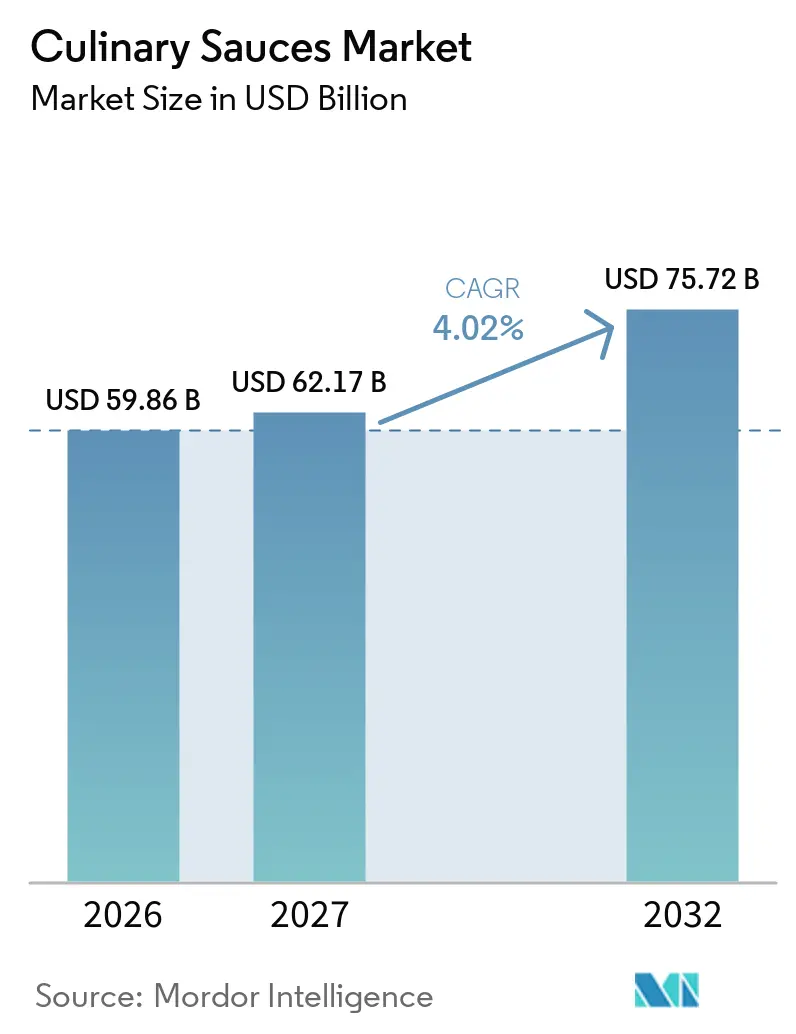
The culinary sauces market size is valued at USD 59.86 billion in 2026, is estimated to grow USD 62.17 billion in 2027, and is forecast to reach USD 75.72 billion by 2032 at a 4.02% CAGR over 2027-2032. The culinary sauces market is evolving as international flavors transition from specialty outlets to mainstream retail assortments and become part of everyday meal planning. Digital food media, diaspora communities, and restaurant menus are increasing consumer familiarity with Korean, Chinese, and Southeast Asian condiments before they encounter these products in stores. This trend creates opportunities for products that combine authentic flavor profiles with formats suited to local cooking habits, including jars, pouches, tubes, and portion-controlled packs. It also requires established brands to update product development strategies previously centered on traditional Western preferences and limited product ranges.
Key Report Takeaways
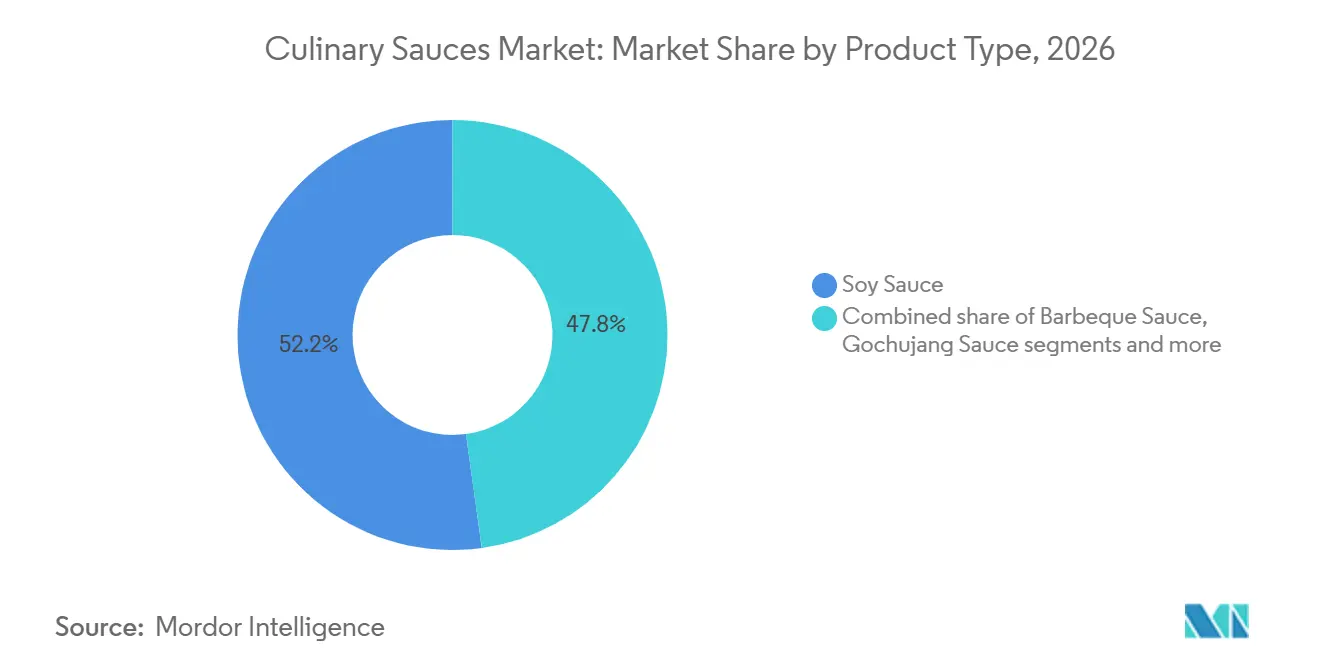
- By product type, soy sauce led the culinary sauces market with a share of 52.17% in 2026, while gochujang sauce is anticipated to register the fastest CAGR of 7.31% during 2027-2032.
- By packaging size, bottles/jars retained a 41.63% share in 2026, and pouches are anticipated to expand at a 5.52% CAGR through 2032.
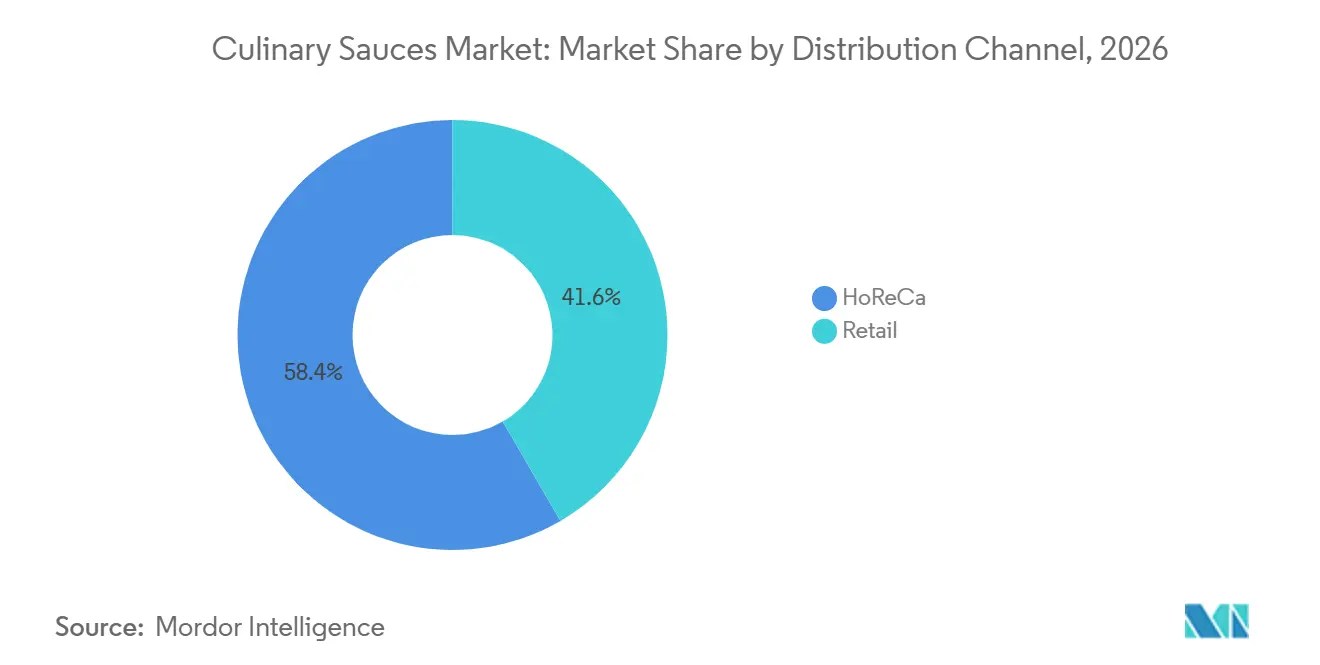
- By distribution channel, retail led the market with a share of 65.23% in 2026, and HoReCa are anticipated to register the fastest CAGR of 5.69% during 2027-2032.
- By geography, North America led the culinary sauces market in 2026 with a 38.12% share, and Asia-Pacific is projected to advance at a 6.47% CAGR through 2032.
Note: Market numbers in this report are based on Mordor Intelligence's proprietary estimation framework, which combines nine months of actuals with Q4 projections for base year 2026.
Global Culinary Sauces Market Trends and Insights
Drivers Impact Analysis*
| Driver | (~) % Impact on CAGR Forecast | Geographic Relevance | Impact Timeline |
|---|---|---|---|
| Rising demand for convenient meal preparation solutions | +1.1% | Global | Short term (≤ 2 years) |
| Rising popularity of international and ethnic cuisines | +0.8% | North America, Europe, Asia-Pacific spill-over to Middle East and Africa | Medium term (2-4 years) |
| Growth in home cooking and at-home meal customization | +0.6% | North America and Europe | Short term (≤ 2 years) |
| Increasing consumption of processed and convenience foods | +0.5% | Asia-Pacific, Middle East and Africa, South America | Medium term (2-4 years) |
| Wider availability through modern retail and e-commerce | +0.5% | Global, with early gains in Asia-Pacific mobile commerce | Short term (≤ 2 years) |
| Increasing use of sauces in food product innovation | +0.3% | Global, led by North America and Western Europe | Long term (≥ 4 years) |
| Source: Mordor Intelligence | |||
Rising Demand for Convenient Meal Preparation Solutions
Time constraints continue to drive demand in the culinary sauces market across household meal occasions, particularly among consumers seeking familiar results with minimal preparation. Consequently, preparation time has become as important as taste, price, brand familiarity, portion size, and storage convenience when consumers select cooking aids. Consumers increasingly expect convenience along with a broader range of global flavors, enabling sauces to deliver variety without complex recipes or numerous separate ingredients. A limited ambient product range can expose brands to competition from faster-moving ethnic and premium offerings, particularly as retailers allocate shelf space to products that provide clear meal solutions. Dual-income urban households in Asia-Pacific further support this demand. In addition, food delivery services and cloud kitchens increase exposure to restaurant-style flavors that consumers may subsequently seek in retail channels.
Rising Popularity of International and Ethnic Cuisines
The growing popularity of international cuisines is driving demand for culinary sauces across household and foodservice applications. Consumers are increasingly exploring global dishes, including Italian pasta, Chinese stir-fries, Thai curries, and Mexican meals, which is increasing demand for sauces that deliver distinctive regional flavors. According to the United States Department of Agriculture’s Foreign Agricultural Service, sauces in India grew by 34% in 2023, as reported in its December 2024 foodservice market report[1]. The report attributed this growth to the rise in dual-income households, greater exposure to global cuisines, and demand for convenient foods. These trends create opportunities for tomato-based, soy-based, chili, and specialty sauces used in international dishes. As restaurants expand their cuisine offerings and consumers recreate these meals at home, culinary sauces serve as convenient ingredients for flavor enhancement and meal preparation.
Growth in Home Cooking and At-Home Meal Customization
Household meal preparation supports demand for culinary sauces, as consumers use ready-made products to simplify cooking and customise the flavours of everyday dishes. According to India's Ministry of Statistics and Programme Implementation, its Time Use Survey 2024, published in March 2025, found that 41.0% of people aged six years and above participated in food and meal management and preparation on a given day[2]. Meal preparation plays a substantial role in daily household activities, providing a direct basis for the use of home-cooking applications. Ready-made tomato-based, pasta, soy-based, and chili sauces enable consumers to prepare a variety of dishes with minimal ingredient preparation while adapting meals to their taste preferences.
Wider Availability Through Modern Retail and E-Commerce
Modern retail and e-commerce expand access to specialty sauces beyond traditional brick-and-mortar stores, particularly in locations with limited shelf space for imported or niche products. Digital platforms enable small brands to reach consumers without incurring the listing fees and promotional budgets typically required by large retail chains. These platforms also allow suppliers to provide detailed information on ingredients, preparation methods, suggested dishes, and serving ideas beyond what a standard shelf label can accommodate. This capability is particularly important for imported, ethnic, and premium products with limited initial demand or unfamiliar usage occasions. Mobile commerce in Asia-Pacific supports product discovery and repeat purchases of imported products, while broader distribution channels provide smaller exporters with access to Western consumers. The culinary sauces market benefits as sellers test local flavor preferences, price points, and pack sizes through smaller online assortments before pursuing a wider launch.
Restraints Impact Analysis*
| Restraint | (~) % Impact on CAGR Forecast | Geographic Relevance | Impact Timeline |
|---|---|---|---|
| Volatility in raw material prices | -0.5% | Global, with acute pressure in Asia-Pacific and North America | Short term (≤ 2 years) |
| Stringent food safety and regulatory requirements | -0.3% | North America, Europe, Asia-Pacific regulatory hubs | Medium term (2-4 years) |
| Short shelf life and product spoilage risks | -0.2% | South America, Middle East and Africa infrastructure constraints | Medium term (2-4 years) |
| Intense market competition and price pressure | -0.3% | Global | Long term (≥ 4 years) |
| Source: Mordor Intelligence | |||
Volatility in Raw Material Prices
Price fluctuations in soybeans, tomatoes, and chili peppers can rapidly compress margins in the culinary sauces market, as these inputs are used across several high-volume product categories. Such volatility makes it challenging for producers to maintain stable pricing, negotiate contracts, and plan production volumes without risking margin erosion or product shortages. These pressures affect fermented sauce producers, as well as companies that use tomato and chili inputs in cooking sauces and condiments. Smaller producers may need to absorb higher costs or delay product development, while larger companies can leverage their purchasing scale and commodity management programs to secure supply.
Food Safety, Shelf Life, and Competitive Pressure
Food safety requirements and shelf-life management may restrain the culinary sauces market by increasing manufacturers’ processing, testing, packaging, and quality-control costs. Inadequate processing or packaging can increase the risk of microbial contamination, product recalls, and reputational damage. In November 2025, the United States Food and Drug Administration published a recall of First & Last tomato-based sauces, including marinara and pasta sauces, because the products were manufactured without an approved processing schedule, creating a potential *Clostridium botulinum* hazard[3]. Such incidents underscore the importance of validated processing methods and stringent food safety controls, which can raise compliance costs for manufacturers. These requirements may particularly challenge smaller producers as they compete with established brands on price, product quality, and shelf life.
*Our forecasts treat driver/restraint impacts as directional, not additive. The impact forecasts reflect baseline growth, mix effects, and variable interactions.
Segment Analysis
By Product Type: Soy Sauce Leads While Gochujang Builds Mainstream Demand
Soy sauce holds a 52.17% share of the culinary sauces market in 2026, making it the largest product category. The category serves as a household condiment, a foodservice ingredient, and an input for packaged food manufacturing, creating a broad and stable demand base. Consumers and foodservice operators use soy sauce in stir-fries, marinades, prepared meals, and professional kitchens across various cuisines. The availability of different formulations, including light, dark, and low-sodium variants, also supports its use across diverse cooking requirements. The established role of soy sauce in both traditional recipes and modern fusion dishes further reinforces its position within the culinary sauces market.
Gochujang sauce is forecast to grow at a CAGR of 7.31% during 2027-2032, making it the fastest-growing product type. Its expanding use reflects increasing consumer familiarity with Korean cuisine and the adaptation of traditional paste into squeezable tubes and drizzle-style sauces that suit everyday cooking habits. Trader Joe's named a gochujang cookie its 2025 Recipe of the Year, while global gochujang product launch increased by 26% between 2020 and 2024. Positioning gochujang as a versatile ingredient for marinades, bowls, sandwiches, snacks, and dips can help products appeal beyond specialty consumers. Pizza and pasta sauces and barbecue sauces remain established high-volume categories in Western markets, while oyster sauce, fish sauce, and chili crisp offer growth opportunities in premium and artisan formats.

By Packaging: Bottles and Jars Retain Scale as Pouches Gain Ground
Bottles and jars account for 41.63% of the culinary sauces market size in 2026, making them the leading packaging format in the culinary sauces market. Household shoppers readily recognize these formats, while glass supports premium product positioning and strong shelf visibility. Bottles and jars also suit familiar home-cooking applications, including table service and recipe preparation. However, glass is heavy to transport, prone to breakage during transit, and increases the logistics burden for e-commerce orders. Sachets and other formats serve different requirements in quick-service restaurants, institutional catering, and other portion-controlled or single-serve applications.
Pouches are forecast to expand at a CAGR of 5.52% through 2032. TNO Brightlands Materials Center reported that its mono-polypropylene retortable pouch for soups and sauces has a 41% to 53% lower carbon footprint than conventional multi-material alternatives. Such developments can address the quality, safety, and recycling concerns that have previously limited the adoption of pouches in premium sauce applications.
By Distribution Channel: Retail Leads as HoReCa Expands
Retail accounts for 65.23% of culinary sauce distribution value in 2026. Hypermarkets and supermarkets will remain the primary purchase locations, as they offer a broad product selection, immediate availability, and shelf space for established household brands. Convenience and grocery stores will cater to shoppers making smaller, more frequent purchases. Online retail is gaining traction for ethnic, specialty, and premium products that lack sufficient scale to secure prime shelf space in physical stores. Digital listings support product discovery and enable smaller regional brands to build awareness without incurring the slotting fees and promotional expenditures associated with large store networks.
The HoReCa segment is forecast to grow at a CAGR of 5.69% during 2027-2032. Restaurant chains, quick-service operators, and caterers are expected to rebuild procurement demand and use culinary-grade products to differentiate menus and improve preparation consistency. Demand will also be supported by the need for bulk packaging, standardized flavour profiles, and versatile sauces suitable for multiple menu applications. The expansion of delivery-focused kitchens and multi-outlet restaurant chains further increase demand for sauces that ensure consistent taste and quality across locations. Large operators also place greater emphasis on supplier food safety certifications and labeling compliance when selecting sauce partners.
Geography Analysis
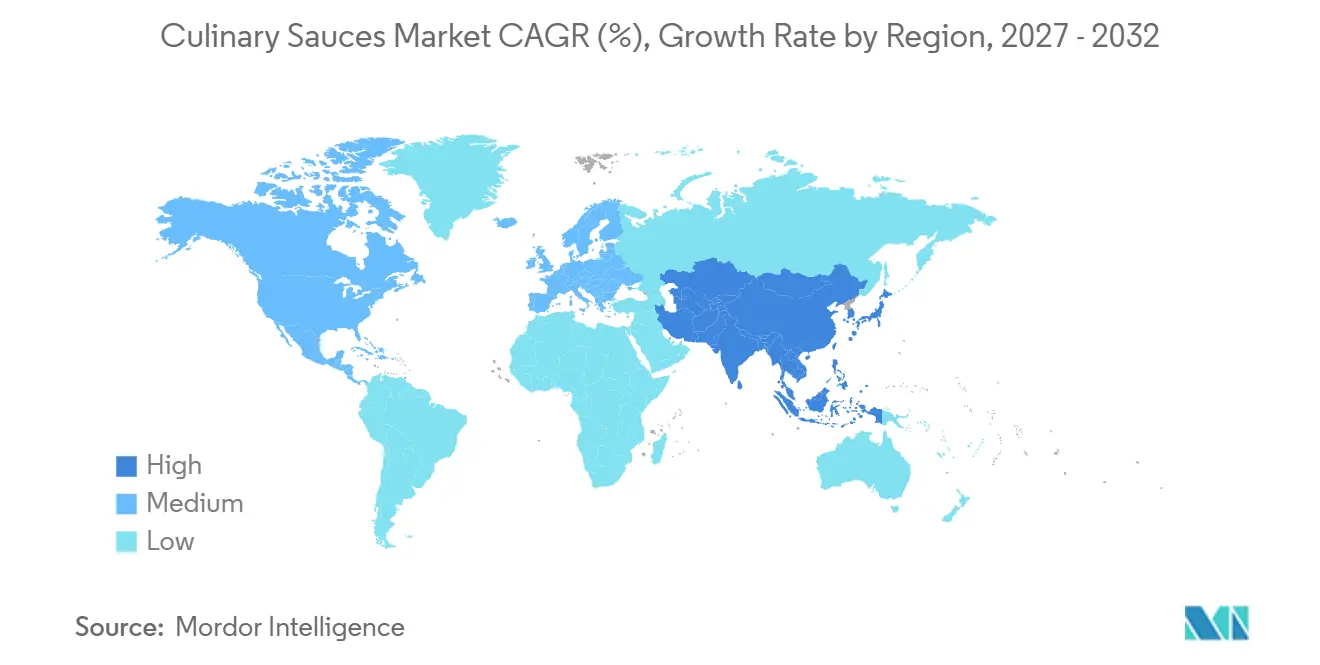
North America accounts for 38.12% of global market value in 2026, supported by extensive modern retail infrastructure, high household sauce consumption, and a well-developed foodservice base. The United States has a large quick-service restaurant sector and strong demand for barbecue sauces, while retailers use dedicated sauce displays to help shoppers navigate an expanding range of flavors. Canada is an early-adopter market for ethnic cooking sauces, supported by a diverse consumer base and demand for products that simplify home meal preparation. Mexico drives regional demand through domestic consumption of tomato- and chili-based sauces and exports of salsa and Latin-inspired condiments to the United States. These interconnected retail and foodservice channels provide suppliers with multiple routes to reach consumers with established and emerging product formats.
Asia-Pacific is forecast to grow at a CAGR of 6.47% from 2027 to 2032. China and Japan are large, mature soy sauce markets that are shifting toward premium products, foodservice applications, and export activity. India, Indonesia, and Thailand offer further demand potential as incomes rise and urban dining occasions increase. Consumption in Southeast Asia is rooted in local spice-led flavor traditions, supporting a broad range of sauce types and preparation styles. South Korea also strengthens the region’s position as a source of sauces for international consumers, particularly as fermented flavors gain wider retail distribution.
Europe holds a significant position in the global culinary sauces market, supported by retail-led distribution, established private-label programs, and growing interest in Asian-inspired condiments. Germany, the United Kingdom, Italy, France, and Spain remain key national markets, although consumer preferences and primary sauce consumption occasions vary across these countries. South America offers growth potential, driven by Brazil’s large population, expanding urban foodservice sector, and rising interest in fusion cuisine. The Middle East and Africa benefit from expanding modern retail networks, alignment with halal certification requirements, and quick-service restaurant growth in the Gulf, creating opportunities for products tailored to local tastes and storage conditions.
Competitive Landscape
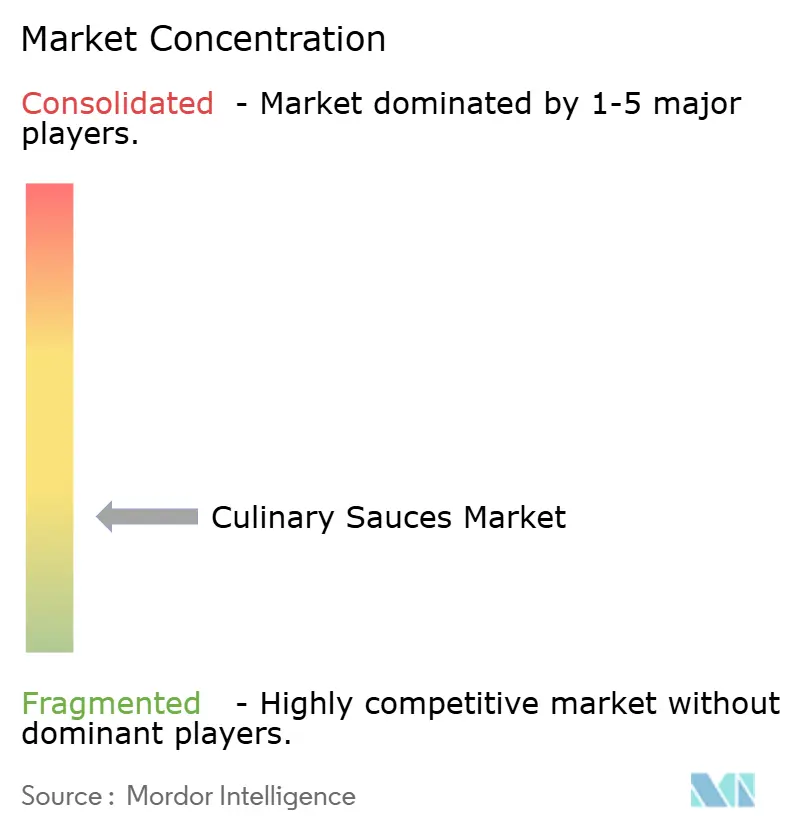
The culinary sauces market has a fragmented structure with no dominant global player. The market includes a broad mix of multinational companies, regional specialists, and direct-to-consumer brands. Competition varies by geography, price point, product type, pack size, and route to market. Therefore, leadership in one category does not necessarily translate into global strength or a reliable position in another. Large packaged food companies benefit from scale in retail distribution, compliance capabilities, procurement, and brand support. Regional businesses compete through local flavor expertise, established relationships, and stronger relevance to domestic cuisines. Small brands can leverage digital channels to reach consumers seeking distinctive or artisanal products and test demand without requiring broad retail distribution or a national sales organization.
Professional kitchen products represent an important opportunity in the culinary sauces market. Commodity price volatility can widen the gap between companies with formal procurement capabilities and those with limited financial flexibility. This gap can affect smaller companies’ ability to launch, promote, and consistently replenish products. Localized ethnic products also present a significant opportunity, particularly when suppliers tailor heat levels, sweetness, texture, pack formats, and suggested applications to local consumer preferences.
Korean exporters, including CJ CheilJedang and Daesang, remain relevant challengers because they combine recognizable cuisine cues with formats suitable for Western retail shelves and foodservice preparation. Fermentation standardization, flavor-profiling tools, and automated quality controls can help larger producers reduce the gap between artisanal and industrial products while maintaining reliable supply across multiple countries. The culinary sauces market favors companies that balance authentic flavor, quality control, compliant labeling, product stability, reliable sourcing, and channel-specific packaging. Consequently, the competitive landscape is likely to remain broad, even as leading companies strengthen their positions in selected categories.
Culinary Sauces Industry Leaders
-
Unilever PLC
-
The Kraft Heinz Company
-
Nestlé S.A.
-
McCormick & Company, Incorporated
-
Conagra Brands, Inc.
- *Disclaimer: Major Players sorted in no particular order
Recent Industry Developments
- September 2026: The Campbell's Company launched its first canned sauce line under the Campbell's brand, featuring Butter Chicken, Thai Curry, Creamy Lemon Garlic, and Smothered Chicken varieties. Priced at USD 2.79 per can, the launch reflects the company’s strategic shift toward globally inspired cooking sauces for home cooks seeking restaurant-style flavors in under 30 minutes.
- May 2026: Mr Bing launched an Asian BBQ sauce range comprising four retail products inspired by Asian flavors, including chili crisp, gochujang, and Thai chili. The company also introduced a foodservice format.
- July 2025: Unilever Food Solutions reported that its Knorr Professional Seasoned Soy Sauce, launched in China in March 2024 for professional kitchen applications, surpassed 1 million chef users within a few months of its launch. The company developed the product using a proprietary blend of yellow and black soybeans to enhance umami and aroma in commercial cooking environments.
Global Culinary Sauces Market Report Scope
Culinary sauces are liquid or semi-solid food preparations used to enhance the flavor, texture, aroma, and moisture of dishes during cooking or serving.
The culinary sauces market is segmented by product type, packaging size, distribution channel, and geography. By product type, the market is segmented into barbeque sauce, soy sauce, pizza and pasta sauce, gochujang sauce, and other sauces. By packaging size, the market is segmented into bottles/jars, pouches, sachets, and other packaging formats. By distribution channel, the market is segmented into HoReCa and retail (hypermarkets/supermarkets, convenience/grocery stores, online retail, other distribution channels). Based on geography, the market is classified into North America, Europe, South America, Asia-Pacific, and the Middle East and Africa. The market forecasts are provided in terms of value (USD).
| Barbeque Sauce |
| Soy Sauce |
| Pizza and Pasta Sauce |
| Gochujang Sauce |
| Other Sauces |
| Bottles/Jars |
| Pouches |
| Sachets |
| Other Packaging Formats |
| HoReCa | |
| Retail | Hypermarkets and Supermarkets |
| Convenience/Grocery Stores | |
| Online Retail | |
| Other Distribution Channels |
| North America | United States |
| Canada | |
| Mexico | |
| Rest of North America | |
| Europe | Germany |
| United Kingdom | |
| Italy | |
| France | |
| Spain | |
| Netherlands | |
| Rest of Europe | |
| Asia-Pacific | China |
| India | |
| Japan | |
| Australia | |
| Indonesia | |
| Thailand | |
| Rest of Asia-Pacific | |
| South America | Brazil |
| Argentina | |
| Rest of South America | |
| Middle East and Africa | South Africa |
| Saudi Arabia | |
| United Arab Emirates | |
| Turkey | |
| Rest of Middle East and Africa |
| By Product Type | Barbeque Sauce | |
| Soy Sauce | ||
| Pizza and Pasta Sauce | ||
| Gochujang Sauce | ||
| Other Sauces | ||
| By Packaging | Bottles/Jars | |
| Pouches | ||
| Sachets | ||
| Other Packaging Formats | ||
| By Distribution Channel | HoReCa | |
| Retail | Hypermarkets and Supermarkets | |
| Convenience/Grocery Stores | ||
| Online Retail | ||
| Other Distribution Channels | ||
| By Geography | North America | United States |
| Canada | ||
| Mexico | ||
| Rest of North America | ||
| Europe | Germany | |
| United Kingdom | ||
| Italy | ||
| France | ||
| Spain | ||
| Netherlands | ||
| Rest of Europe | ||
| Asia-Pacific | China | |
| India | ||
| Japan | ||
| Australia | ||
| Indonesia | ||
| Thailand | ||
| Rest of Asia-Pacific | ||
| South America | Brazil | |
| Argentina | ||
| Rest of South America | ||
| Middle East and Africa | South Africa | |
| Saudi Arabia | ||
| United Arab Emirates | ||
| Turkey | ||
| Rest of Middle East and Africa | ||
Key Questions Answered in the Report
What is the current and projected size of the culinary sauces market, and what growth rate is expected during 2027-2032?
The culinary sauces market was valued at USD 59.86 billion in 2026 and is estimated at USD 62.17 billion in 2027. The market is projected to reach USD 75.72 billion by 2032, growing at a CAGR of 4.02% during 2027-2032.
Which product type held the largest share of the culinary sauces market in 2026?
Soy sauce was the leading product type, accounting for 52.17% of the market share in 2026.
Which packaging format dominated the culinary sauces market in 2026?
Bottles/jars led the market with a 41.63% share in 2026.
Which distribution channel accounted for the largest market share in 2026?
The retail channel dominated the culinary sauces market with a 65.23% share in 2026.
Which region held the largest share of the culinary sauces market in 2026?
North America was the largest regional market, accounting for 38.12% of revenue in 2026.