
Coupling Reagents Market Size and Share
Market Overview
| Study Period | 2021 - 2031 |
|---|---|
| Market Size (2026) | USD 0.99 Billion |
| Market Size (2031) | USD 1.36 Billion |
| Growth Rate (2026 - 2031) | 6.58 % |
| Fastest Growing Market | Asia-Pacific |
| Largest Market | North America |
| Market Concentration | Medium |
Major Players *Disclaimer: Major Players sorted in no particular order Image © Mordor Intelligence. Reuse requires attribution under CC BY 4.0. | |
Coupling Reagents Market Analysis by Mordor Intelligence
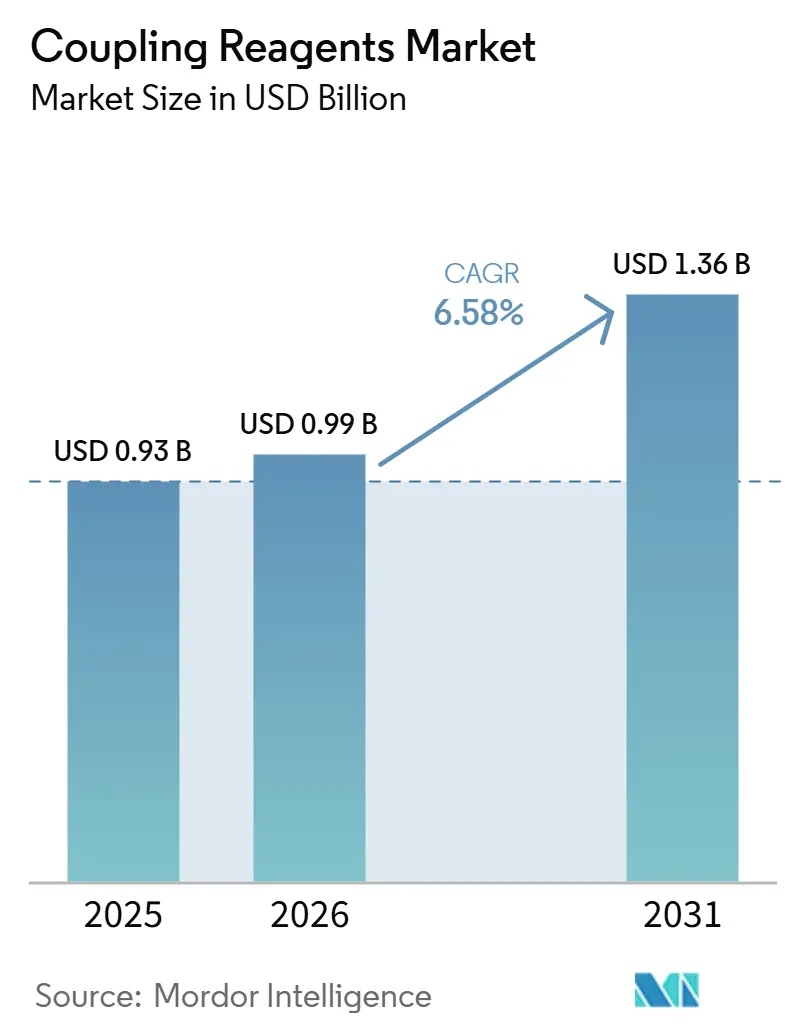
The Coupling Reagents Market size is projected to be USD 0.93 billion in 2025, USD 0.99 billion in 2026, and reach USD 1.36 billion by 2031, and is expected to grow at a CAGR of 6.58% from 2026 to 2031. The coupling reagents market is supported by expanding clinical pipelines for peptide and oligonucleotide therapeutics, increasing pharmaceutical API outsourcing to Contract Development and Manufacturing Organizations (CDMOs), and a shift toward high-purity synthesis chemistries. The FDA is expected to approve 46 novel drugs in 2025, including 3 oligonucleotides and 1 synthetic peptide, which is likely to increase upstream demand for reagents such as O-(7-Azabenzotriazol-1-yl)-N, N, N′, N′-tetramethyluronium hexafluorophosphate (HATU), O-(Benzotriazol-1-yl)-N, N, N′,N′-tetramethyluronium hexafluorophosphate (HBTU), and carbodiimide variants used in synthesis workflows. The commercial scale-up of Glucagon-Like Peptide-1 (GLP-1) receptor agonists is also increasing reagent consumption, as repeated coupling cycles remain central to both solid-phase and liquid-phase peptide synthesis. The coupling reagents market also reflects a focus on documentation, purity control, and supplier qualification, keeping competition centered on quality rather than price in regulated pharmaceutical settings. Supply concentration for key starting materials and the emergence of alternative coupling methods will continue to shape the expansion of the coupling reagents market over the forecast period.
Key Report Takeaways
- By product type, carbodiimide-based reagents held 37.19% of revenue in 2025, while uronium-based reagents are projected to expand at 7.36% CAGR through 2031.
- By application, pharmaceutical API synthesis accounted for 31.66% of revenue in 2025, while oligonucleotide synthesis is forecast to advance at 8.24% CAGR through 2031.
- By geography, North America held 38.74% of global revenue in 2025, while Asia-Pacific is projected to expand at a CAGR of 7.48% through 2031.
Note: Market size and forecast figures in this report are generated using Mordor Intelligence’s proprietary estimation framework, updated with the latest available data and insights as of January 2026.
Global Coupling Reagents Market Trends and Insights
Drivers Impact Analysis*
| Drivers | (~) % Impact on CAGR Forecast | Geographic Relevance | Impact Timeline |
|---|---|---|---|
| Rising Demand for Peptide-Based Therapeutics | +2.0% | Global, concentrated in North America & Europe | Medium term (2-4 years) |
| Expansion of Pharma and Biotech R&D Activities | +1.2% | Global | Medium term (2-4 years) |
| Higher Use in Regulated Industries (Food, Agro) | +0.6% | North America, Europe, APAC | Long term (≥ 4 years) |
| Growth in High-Purity Specialty Chemicals Demand | +0.7% | Global, led by North America & Europe | Medium term (2-4 years) |
| Shift Toward Greener Synthesis Protocols | +0.5% | Europe, North America | Long term (≥ 4 years) |
| Increasing Use in Oligonucleotide Synthesis | +1.8% | North America, Europe, APAC | Short term (≤ 2 years) |
| Source: Mordor Intelligence | |||
Rising Demand for Peptide-Based Therapeutics
Therapeutic peptide approvals remain a key demand driver for the coupling reagents market, as each approved or late-stage peptide program increases reagent consumption across development and manufacturing. The cited approval activity includes the FDA’s approval of a synthetic peptide in 2025 and Ascendis Pharma’s approval for YUVIWEL in February 2026, which sustained commercial focus on peptide manufacturing capacity and reagent readiness[1]Ascendis Pharma A/S, “FDA Approves Once-Weekly YUVIWEL® (navepegritide) for Children with Achondroplasia Aged 2 Years and Older,” Ascendis Pharma, investors.ascendispharma.com. Large-volume peptide products play an important role because their synthesis routes require repeated coupling steps during each amino acid addition cycle. Published 2025 research on liraglutide and tirzepatide synthesis showed that carbodiimide and related coupling systems remain embedded in scalable peptide manufacturing routes. As a result, the coupling reagents market remains linked to both approval volumes and the scale of manufacturing moving into commercial and late-stage supply chains.
Expansion of Pharma and Biotech R&D Activities
Broader pharmaceutical and biotech R&D activity also supports the coupling reagents market, as reagent consumption begins well before a therapy reaches commercial production. Discovery chemists use these materials across parallel synthesis routes, process optimization, and analytical method development, creating recurring small-batch demand throughout the pipeline. Thermo Fisher Scientific announced a USD 2 billion US investment in April 2025, including USD 1.5 billion in manufacturing capital expenditure, to support customer manufacturing and domestic innovation in complex biopharma programs. These capacity additions are relevant to the coupling reagents market because peptide- and RNA-based therapeutics move from research into regulated process development with strict material qualification requirements. This shift creates a broader and more stable demand base across discovery, scale-up, validation, and GMP execution.
Higher Use in Regulated Industries (Food, Agro)
Regulated non-pharma applications, where synthesis precision and compliance are critical, also support the coupling reagents market. Agrochemical synthesis is a key example, as amide bond formation remains central to several high-value crop protection molecules. A 2026 study in Chemistry: A European Journal demonstrated carbonyldiimidazole (CDI)-mediated mechanochemical amidation of herbicides such as mepronil, flutolanil, and fluxapyroxad at the gram scale, with favorable green chemistry metrics. This work indicates that coupling and carbonyl-activation chemistries remain relevant beyond therapeutics, particularly in applications that prioritize performance, reproducibility, and cleaner processing. Over time, these regulated end uses help the coupling reagents market maintain a demand base beyond peptide therapeutics.
Growth in High-Purity Specialty Chemicals Demand
Demand for higher-purity specialty chemicals increasingly shapes the coupling reagents market, as pharmaceutical buyers require tighter impurity control and stronger regulatory documentation. Good Manufacturing Practice (GMP)-grade qualification now acts as a practical gatekeeper for suppliers seeking access to commercial peptide, oligonucleotide, and advanced active pharmaceutical ingredient (API) programs. Companies with established quality systems and broad documentation packages hold a stronger position than suppliers that compete only on price. Bachem and Thermo Fisher Scientific continue to invest in facilities and manufacturing support aligned with regulated customer requirements, reinforcing the value of dependable quality infrastructure. This trend keeps the coupling reagents market oriented toward suppliers that combine chemistry performance with validated purity and compliance standards.
Restraints Impact Analysis*
| Restraints | (~) % Impact on CAGR Forecast | Geographic Relevance | Impact Timeline |
|---|---|---|---|
| High Cost of Advanced Coupling Reagents | -1.2% | Global, most acute in emerging markets | Medium term (2-4 years) |
| Moisture Sensitivity, Storage, and Handling Challenges | -0.6% | Global | Short term (≤ 2 years) |
| Process Substitution Risks (Alternative Coupling Methods) | -0.8% | North America, Europe | Long term (≥ 4 years) |
| Supply Concentration Risk | -0.9% | North America, Europe | Medium term (2-4 years) |
| Source: Mordor Intelligence | |||
High Cost of Advanced Coupling Reagents
The coupling reagents market continues to face pricing constraints, as advanced uronium and phosphonium reagents are priced higher than commodity alternatives. This cost gap is particularly significant for mid-sized Contract Development and Manufacturing Organizations (CDMOs) and academic laboratories, which often do not benefit from large procurement volumes. The source draft noted that HATU (1-[Bis(dimethylamino)methylene]-1H-1,2,3-triazolo[4,5-b]pyridinium 3-oxide hexafluorophosphate) remains a widely used peptide coupling reagent. However, its multi-step synthesis, controlled inert-atmosphere requirements, and specialized purification steps keep costs high. The same draft also stated that newer systems, such as benzotriazole-sulfonate and Oxyma-sulfonate reagents, have not yet become commercially scaled, cost-competitive substitutes at Good Manufacturing Practice (GMP) purity levels. As a result, the coupling reagents market can grow in value while facing purchasing resistance in cost-sensitive applications.
Moisture Sensitivity, Storage, and Handling Challenges
The coupling reagents market also faces constraints from storage and handling requirements, as many reagent classes remain moisture-sensitive during transport and use. Carbodiimides, uronium salts, and phosphonium reagents require controlled storage conditions, which add complexity to inventory management and plant operations. The source draft stated that moisture ingress during long production cycles can reduce coupling efficiency, increase racemization risk, and add to the analytical burden during commercial manufacturing. Cold-chain and inert-gas handling also increase infrastructure costs for suppliers and end users, particularly in cross-border shipments. These constraints make the coupling reagents market more operationally demanding than simpler bulk chemical categories.
*Our forecasts treat driver/restraint impacts as directional, not additive. The impact forecasts reflect baseline growth, mix effects, and variable interactions.
Segment Analysis
By Product Type: Carbodiimide Dominance Tempered by Uronium Momentum
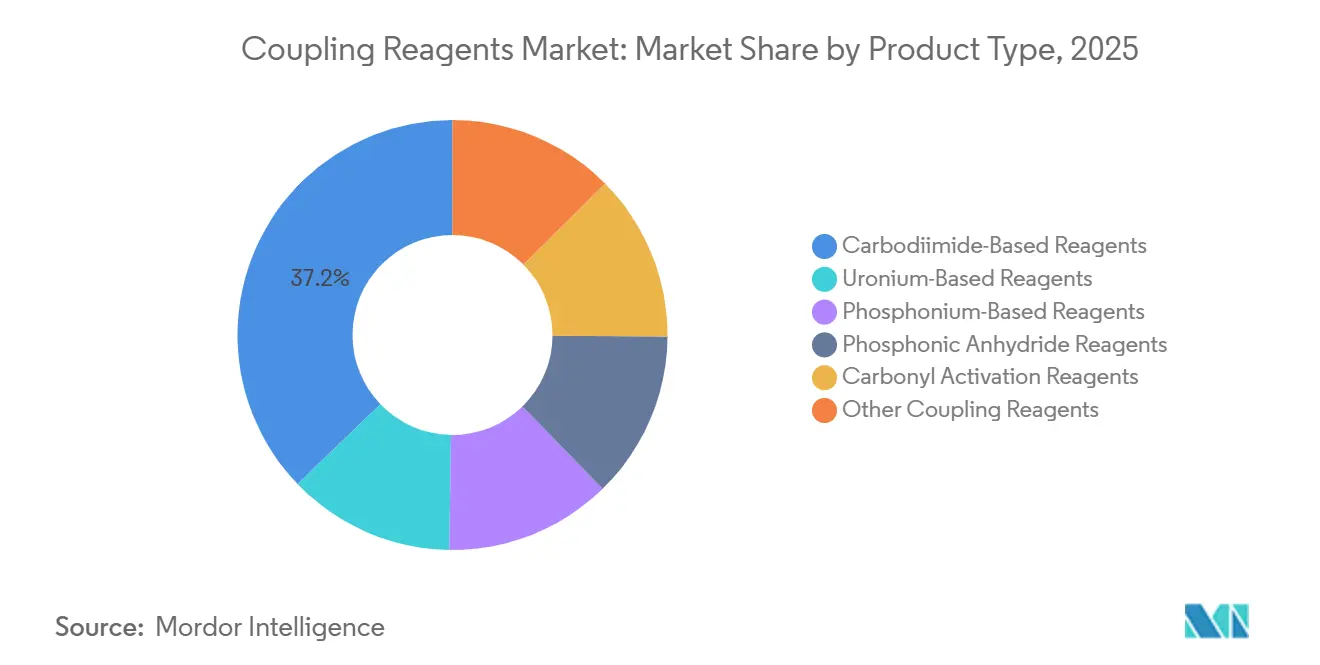
Carbodiimide-based reagents are expected to account for 37.19% of the coupling reagents market share in 2025, maintaining their leading position across pharmaceutical Active Pharmaceutical Ingredient (API) synthesis, bioconjugation, and polymer research. Their position in the coupling reagents market stems from broad familiarity, a flexible application range, and established use in both research and regulated manufacturing. N,N'-Diisopropylcarbodiimide (DIC) remains a preferred carbodiimide for Fmoc solid-phase peptide synthesis because its filterable urea byproduct and compatibility with Oxyma co-reagents support process handling. Water-soluble 1-Ethyl-3-(3-dimethylaminopropyl)carbodiimide (EDC) hydrochloride remains relevant in aqueous bioconjugation workflows, especially when linker attachment and biomolecule compatibility are critical. A 2025 Springer study is expected to show that TBEC, a modified carbodiimide, enables dimethylformamide (DMF)-free, Good Manufacturing Practice (GMP)-compatible liraglutide synthesis, providing a lower-solvent development path for this product class.
The coupling reagents market size for uronium-based reagents is projected to expand at a CAGR of 7.36% between 2026 and 2031, making it the fastest-growing product class. This growth reflects demand for higher coupling efficiency in sterically hindered amino acids and complex oligonucleotide conjugation steps. Phosphonium reagents continue to serve specialty and solution-phase workflows where side-reaction behavior differs from uronium chemistry. Carbonyl activation reagents, such as N,N'-Carbonyldiimidazole (CDI), propylphosphonic anhydride (T3P), and oxalyl chloride, along with phosphonic anhydrides, remain important in selected agrochemical, polymer, and fine chemical routes. Across the coupling reagents industry, GMP-grade purity and International Council for Harmonisation (ICH) Q7-aligned expectations continue to limit supplier switching based solely on price.



By Application: Pharmaceutical API Leadership Meets Oligonucleotide Acceleration
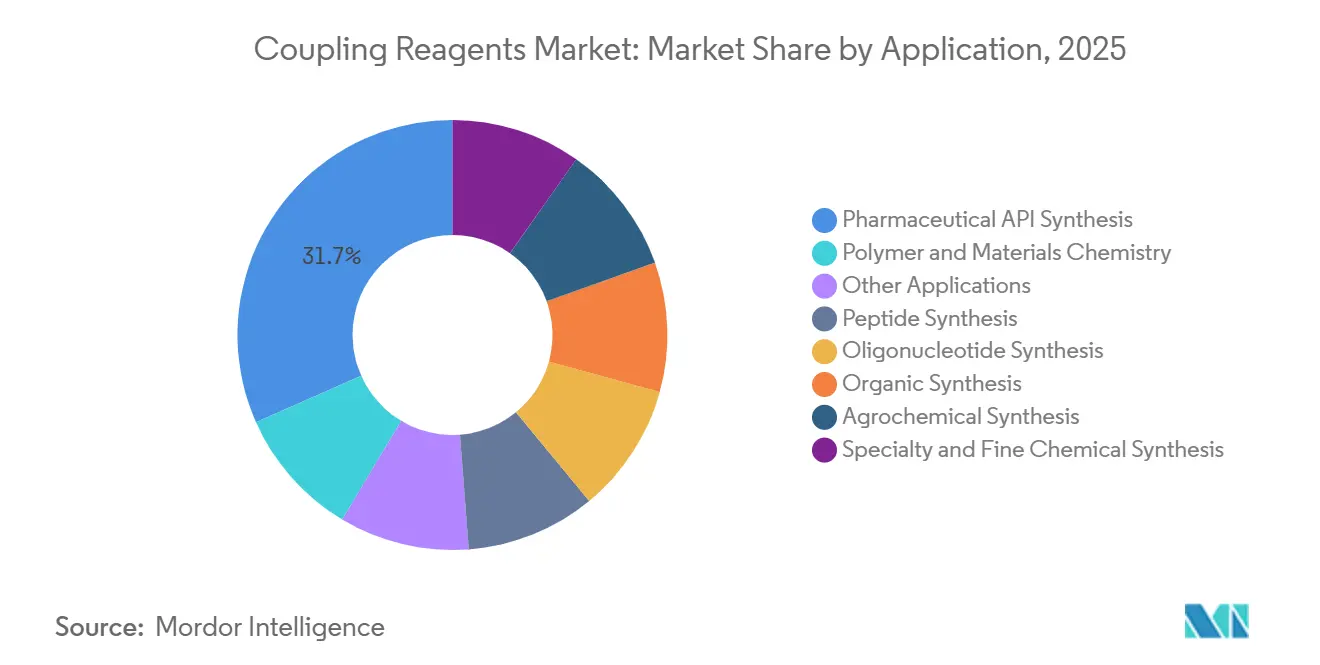
Pharmaceutical API synthesis is expected to account for 31.66% of the coupling reagents market in 2025, making it the largest application segment. This position reflects steady demand across glucagon-like peptide-1 (GLP-1) receptor agonist manufacturing, Antibody-Drug Conjugate (ADC) linker-payload assembly, and expanding biosimilar peptide programs, as noted in the source draft. The coupling reagents market remains strongly tied to this application because reagent quality affects batch reproducibility, impurity control, and regulatory readiness at the commercial scale. Peptide synthesis also remains an important application layer, supporting research-grade, diagnostic, and process-development demand across many end users. Together, these applications keep the coupling reagents industry linked to both high-volume production and early-stage development.
Oligonucleotide synthesis is projected to record the fastest growth rate, at a CAGR of 8.24% through 2031, underscoring its rising role in the coupling reagents market. The source draft links this acceleration to approvals such as fitusiran and plozasiran, both of which depend on tightly controlled conjugation and modified nucleotide chemistry. This part of the coupling reagents market favors premium uronium systems because purity requirements per coupling event are more demanding than simple cycle counts might suggest. Outside therapeutics, agrochemical synthesis remains a smaller but credible outlet, supported by 2026 journal work on mechanochemical amidation routes for commercial herbicide molecules. Specialty and fine chemicals, polymer and materials science, and broader organic synthesis give the coupling reagents industry a more resilient demand mix.
Geography Analysis
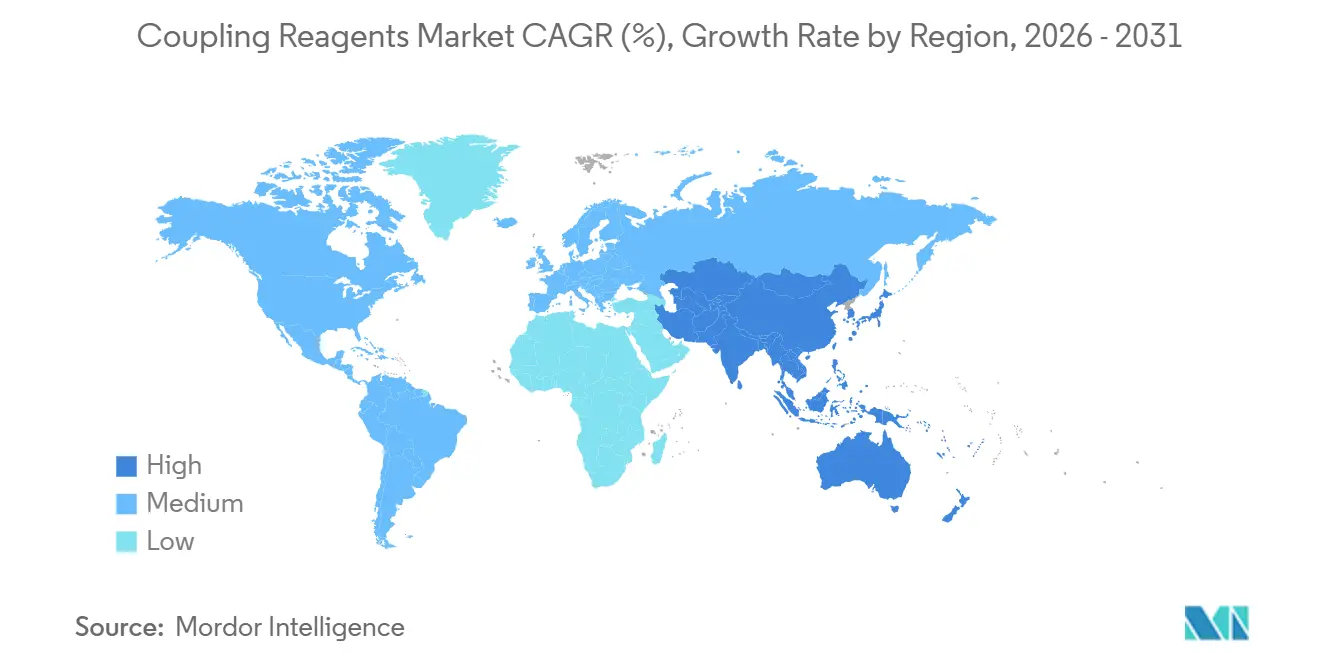
North America accounted for 38.74% of global revenue in 2025, making it the largest regional market for coupling reagents. High pharmaceutical R&D intensity, dense peptide and oligonucleotide manufacturing activity, and FDA GMP requirements support the region and favor high-grade sourcing. These conditions create a coupling reagents market in which buyers prioritize documentation of purity, reproducibility, and audit-ready supplier support. Domestic participation by suppliers such as Thermo Fisher also strengthens local availability and regulatory service capabilities for US-based customers[2]Thermo Fisher Scientific, “Thermo Fisher Scientific Invests to Enhance U.S. Innovation and Support Customers' Manufacturing,” Thermo Fisher Investor News, ir.thermofisher.com. As a result, North America remains an established revenue center for the coupling reagents market.
Asia-Pacific is forecast to expand at a CAGR of 7.48% through 2031, making it the fastest-growing regional market for coupling reagents. Expanding peptide API production, broader pharmaceutical manufacturing activity in China and India, and increasing process capabilities in both solid-phase and liquid-phase synthesis support regional growth. These factors give the coupling reagents market in Asia-Pacific a manufacturing-led growth profile compared with more mature Western markets. At the same time, regional growth remains sensitive to qualification standards, supply consistency, and the pace of improvement in GMP-grade infrastructure. This balance keeps Asia-Pacific central to future volume growth in the coupling reagents market.
Europe remains a key part of the coupling reagents market, with Switzerland, Germany, and the United Kingdom hosting several established suppliers and synthesis capabilities. Bachem invested CHF 332.6 million in fiscal 2025, equal to USD 363 million at the source draft’s stated average 2025 exchange rate, and commissioned Building K in Bubendorf for GMP-scale peptide and oligonucleotide API production, with commercial ramp-up continuing through 2026. Germany’s chemical base also supports specialty synthesis expertise and supplier depth for advanced reagent development. The Rest of World segment remains smaller, but the coupling reagents market is gradually developing there as pharmaceutical manufacturing capacity expands in South America, the Middle East, and Africa.

Competitive Landscape
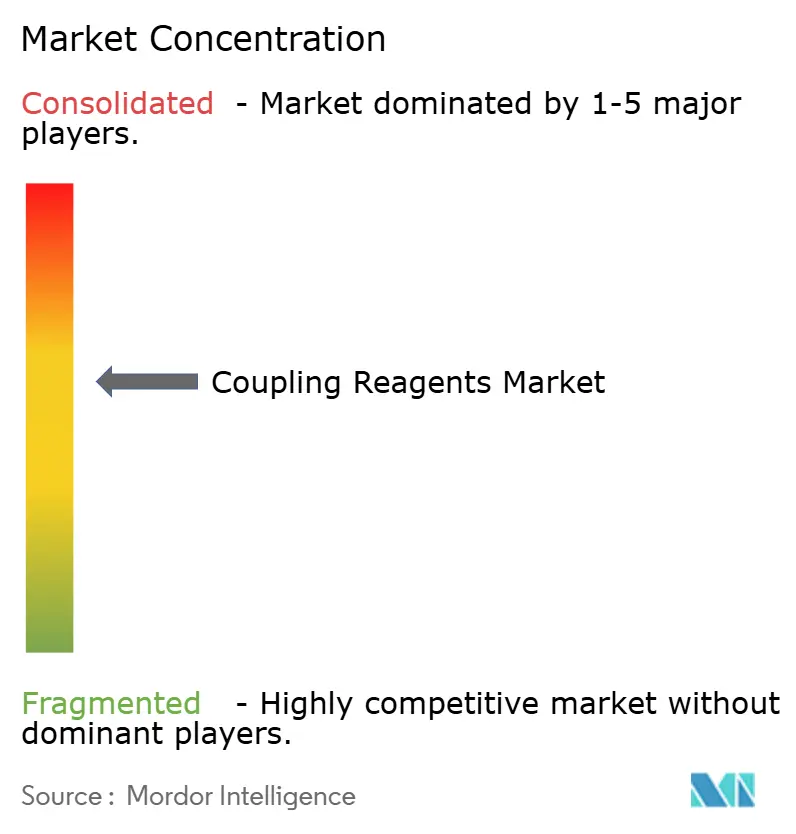
The coupling reagents market is moderately consolidated, with Merck KGaA, Thermo Fisher Scientific, and Bachem AG maintaining established portfolios, quality systems, and customer reach. Competition centers more on purity standards, technical support, and supplier qualification than on headline price discounts. This trend is especially evident in GMP-grade demand, where buyers require complete documentation and consistent performance from milligram to kilogram scale. As a result, the coupling reagents market favors companies that combine manufacturing capabilities with application expertise across peptide, oligonucleotide, and advanced API workflows. This structure supports larger suppliers’ market positions, while specialized firms continue to develop niche offerings.
Bachem has taken strategic steps in the coupling reagents market through its large-scale capacity expansion plans. The company inaugurated Building K in Bubendorf in March 2026, following a fiscal 2025 investment of CHF 332.6 million (~USD 363 million) to strengthen large-volume peptide and oligonucleotide API production. The source draft also noted Bachem’s USD 250 million U.S. investment program for 2026 to 2030, targeting Vista and Torrance, which indicates a push to address higher commercial demand. Thermo Fisher provided another example, with its April 2025 announcement of a USD 2 billion investment program to support domestic innovation and biopharma manufacturing. These moves indicate that scale, quality systems, and customer integration continue to shape competition in the coupling reagents market.
Specialist suppliers also influence the coupling reagents market by focusing on novel chemistries, linker systems, and greener synthesis options rather than trying to match the scale of global leaders. Iris Biotech GmbH's 2025 product activity supports this pattern, as the company expanded its portfolio of coupling reagents, biotinylation agents, and related specialty tools. Academic progress in recyclable benzotriazole-sulfonate and Oxyma-sulfonate systems suggests potential for future commercial differentiation if these chemistries reach industrial scale and meet GMP requirements. The coupling reagents market also leaves room for non-Asian suppliers to win business where customers seek broader sourcing options and lower exposure to concentrated upstream supply chains.
Coupling Reagents Industry Leaders
Merck KGaA
Fluorochem Limited
Tokyo Chemical Industry Co., Ltd.
FUJIFILM Wako Pure Chemical Corporation
Bachem AG
- *Disclaimer: Major Players sorted in no particular order

Recent Industry Developments
- March 2026: Bachem AG inaugurated Building K at its Bubendorf, Switzerland, site, following a CHF 332.6 million (~USD 363 million) investment in fiscal 2025. The facility supports GMP-scale, large-volume peptide and oligonucleotide API manufacturing and expands Bachem's industrial-scale, high-volume CMO capabilities.
- October 2025: Avantor partnered with BlueWhale Bio to deliver an integrated, GMP-ready CAR-T cell activation and expansion reagent platform. The partnership combined next-generation activation and expansion reagents with scalable manufacturing workflows to address cost and variability constraints in CAR-T production.


Global Coupling Reagents Market Report Scope
Coupling reagents are chemical compounds that activate a carboxylic acid in situ by converting a poor leaving group into a reactive intermediate. This mild activation enables amines or alcohols to attack nucleophilically and form amide, peptide, or ester bonds without harsh conditions.
The coupling reagents market is segmented by product type, application, and geography. By product type, the market is segmented into carbodiimide-based reagents, uronium-based reagents, phosphonium-based reagents, phosphonic anhydride reagents, carbonyl activation reagents, and other coupling reagents. By application, the market is segmented into peptide synthesis, pharmaceutical API synthesis, oligonucleotide synthesis, organic synthesis, agrochemical synthesis, specialty and fine chemical synthesis, polymer and materials chemistry, and other applications. The report also covers the market size and forecasts for coupling reagents in 11 countries across major regions. The market sizes and forecasts are provided in terms of value (USD).
| Carbodiimide-Based Reagents |
| Uronium-Based Reagents |
| Phosphonium-Based Reagents |
| Phosphonic Anhydride Reagents |
| Carbonyl Activation Reagents |
| Other Coupling Reagents |
| Peptide Synthesis |
| Pharmaceutical API Synthesis |
| Oligonucleotide Synthesis |
| Organic Synthesis |
| Agrochemical Synthesis |
| Specialty and Fine Chemical Synthesis |
| Polymer and Materials Chemistry |
| Other Applications |
| Asia-Pacific | China |
| India | |
| Japan | |
| South Korea | |
| Rest of Asia-Pacific | |
| North America | United States |
| Canada | |
| Mexico | |
| Europe | Germany |
| United Kingdom | |
| France | |
| Italy | |
| Rest of Europe | |
| Rest of the World | South America |
| Middle-East and Africa |
| By Product Type | Carbodiimide-Based Reagents | |
| Uronium-Based Reagents | ||
| Phosphonium-Based Reagents | ||
| Phosphonic Anhydride Reagents | ||
| Carbonyl Activation Reagents | ||
| Other Coupling Reagents | ||
| By Application | Peptide Synthesis | |
| Pharmaceutical API Synthesis | ||
| Oligonucleotide Synthesis | ||
| Organic Synthesis | ||
| Agrochemical Synthesis | ||
| Specialty and Fine Chemical Synthesis | ||
| Polymer and Materials Chemistry | ||
| Other Applications | ||
| By Geography | Asia-Pacific | China |
| India | ||
| Japan | ||
| South Korea | ||
| Rest of Asia-Pacific | ||
| North America | United States | |
| Canada | ||
| Mexico | ||
| Europe | Germany | |
| United Kingdom | ||
| France | ||
| Italy | ||
| Rest of Europe | ||
| Rest of the World | South America | |
| Middle-East and Africa | ||


Key Questions Answered in the Report
What is current market size of Coupling Reagents Market?
The Coupling Reagents Market size is projected to be USD 0.93 billion in 2025, USD 0.99 billion in 2026, and reach USD 1.36 billion by 2031, and is expected to grow at a CAGR of 6.58% from 2026 to 2031.
Which product type leads revenue generation in 2025?
Carbodiimide-based reagents led in 2025 with 37.19% share, supported by their broad use in pharmaceutical API synthesis, bioconjugation, and polymer research.
Which application is expanding the fastest through 2031?
Oligonucleotide synthesis is the fastest-growing application, with an 8.24% CAGR through 2031, as the regulated manufacturing of modified oligonucleotide drugs continues to rise.
Why is North America the leading regional contributor?
North America accounted for 38.74% of revenue in 2025 due to strong pharmaceutical R&D intensity, established manufacturing activity, and strict GMP-driven demand for premium-grade materials.
Page last updated on:





