
Companion Animal Specialty Drugs Market Size and Share
Market Overview
| Study Period | 2020 - 2031 |
|---|---|
| Market Size (2026) | USD 8.64 Billion |
| Market Size (2031) | USD 13.12 Billion |
| Growth Rate (2026 - 2031) | 8.71 % |
| Fastest Growing Market | Asia-Pacific |
| Largest Market | North America |
| Market Concentration | Medium |
Major Players *Disclaimer: Major Players sorted in no particular order Image © Mordor Intelligence. Reuse requires attribution under CC BY 4.0. | |
Companion Animal Specialty Drugs Market Analysis by Mordor Intelligence
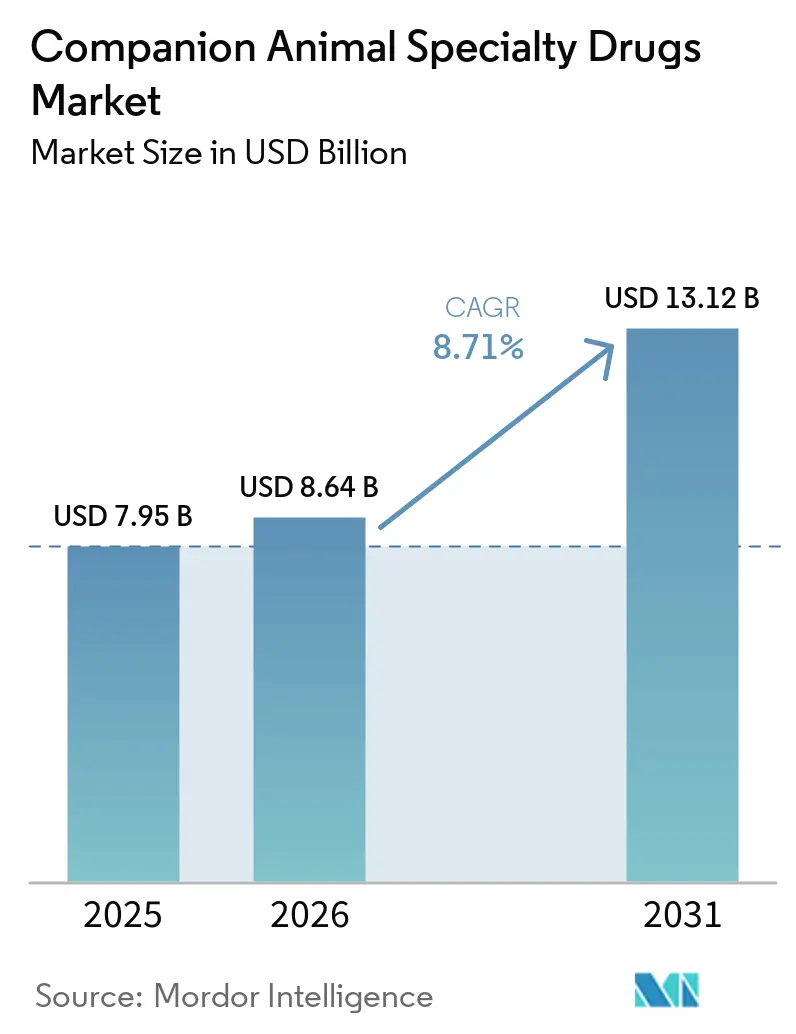
The Companion Animal Specialty Drugs Market size is expected to grow from USD 7.95 billion in 2025 to USD 8.64 billion in 2026 and is forecast to reach USD 13.12 billion by 2031 at 8.71% CAGR over 2026-2031.
The companion animal specialty drugs market is moving toward therapies that require clinical evidence, species-specific development, and repeated veterinary oversight. Long-acting biologics, targeted small molecules, and new cardiology products make it harder for generic products to compete only on price. Chronic conditions are also shifting demand from occasional treatment toward ongoing prescriptions and scheduled follow-up care. Rising ownership and higher spending on veterinary care support this pattern, while the low insurance base leaves the companion animal specialty drugs market exposed to household affordability pressures. Larger manufacturers are responding through protected formulations, broader pipelines, and closer links between medicines, diagnostics, and clinic channels.
Key Report Takeaways
- By product type, Specialty Small-Molecule Drugs held 28.31% of the companion animal specialty drugs market share in 2025, while Long-Acting Injectable Therapies are forecast to expand at an 11.58% CAGR through 2031.
- By therapeutic area, Dermatology and Immunology held 36.24% of the companion animal specialty drugs market share in 2025, while Cardiology and Renal Disease are forecast to expand at a 10.22% CAGR through 2031.
- By animal type, Dogs held 32.64% share in 2025, while Cats are forecast to expand at a 9.82% CAGR through 2031.
- By route of administration, Oral administration held 48.14% share in 2025, while Injectable formats are forecast to expand at a 10.52% CAGR through 2031.
- By distribution channel, Veterinary Hospitals and Clinics held 52.65% share in 2025, while Online and E-Commerce Pharmacies are forecast to expand at a 9.95% CAGR through 2031.
- By geography, North America held 41.61% share in 2025, while Asia-Pacific is forecast to expand at a 10.25% CAGR through 2031.
Note: Market size and forecast figures in this report are generated using Mordor Intelligence’s proprietary estimation framework, updated with the latest available data and insights as of January 2026.
Market Trends and Insights
Drivers Impact Analysis of Companion Animal Specialty Drugs Market*
| Driver | (~) % Impact on CAGR Forecast | Geographic Relevance | Impact Timeline |
|---|---|---|---|
| Pet Humanization and Premiumization of Care | +2.1% | Global, with the highest intensity in North America, Western Europe, and East Asian urban centers | Medium term (2-4 years) |
| Aging Pets and Chronic Disease Management | +1.8% | North America, Western Europe, Japan, with spillover to South Korea and Australia | Long term (≥ 4 years) |
| Veterinary Biologics and Long-Acting Therapies | +1.6% | Global, with first-mover gains in North America and the EU, and early adoption in Asia-Pacific | Long term (≥ 4 years) |
| Pet Insurance and Structured Financing | +1.2% | North America and the EU, with early growth in South Korea, Australia, and Brazil | Medium term (2-4 years) |
| Cat-Specific Therapeutic Innovation | +0.8% | Global, concentrated in North America and the EU, where specialist feline care is established | Medium term (2-4 years) |
| Specialist Referral and Integrated Diagnostics | +0.6% | North America, the EU, Australia, and Japan, with early development in the GCC and South America | Short term (≤ 2 years) |
| Source: Mordor Intelligence | |||
Pet Humanization and Premiumization of Care
Pet owners are increasingly making care choices that resemble those made for human health conditions. Dog ownership reached 53% of U.S. households in 2025, or 71 million households, and veterinary care accounted for 29% of dog-owner spending, the largest individual spending category[1]. Cat ownership increased 5% year over year in the United States in 2025, adding a larger group of owners who may seek specialized treatment. This behavior supports acceptance of medicines that address persistent pain, skin disease, and other conditions that need continuing care. For the companion animal specialty drugs market, this makes premium treatment decisions more closely tied to the animal’s full life cycle. It also favors manufacturers that can show meaningful clinical benefits through the veterinarian rather than relying on product convenience alone.
Aging Pets and Chronic Disease Management
A larger share of veterinary demand now concerns conditions that need repeated monitoring and treatment. Pain management, dermatology, cardiology, and renal care each address diseases that become more common as dogs and cats age. In Germany, pharmaceutical specialty sales for pain-control medications are rising. These show that chronic-care demand supports established treatment categories as well as newer therapies. The companion animal specialty drugs market, therefore, benefits when clinical follow-up becomes part of routine disease management. Scheduled re-dosing can also create more consistent prescription revenue for clinics and manufacturers than a single short treatment course.
Veterinary Biologics and Long-Acting Therapies
Veterinary biologics are adding options in pain, dermatology, and other chronic conditions where owners and clinicians seek durable control. Zoetis completed initial approvals for Lenivia and Portela, long-acting anti-nerve growth factor monoclonal antibodies for dogs and cats, in Canada and the European Union in 2025, and commercial launches are underway in 2026. Merck Animal Health received expanded FDA label approval for BRAVECTO QUANTUM in March 2026, adding 12-month tick control in dogs to the product’s original July 2025 approval. In-clinic injections reduce the risk of missed daily doses and place adherence within the veterinary visit. Zoetis has also identified a renal monoclonal antibody for dogs with chronic kidney disease in its pipeline, with conditional approvals expected in several markets within 12 to 36 months. These products extend the companion animal specialty drugs market into therapeutic categories where convenience, clinical follow-up, and outcome measurement are closely connected.
Pet Insurance and Structured Financing
Insurance coverage can determine whether an owner proceeds with a higher-cost treatment after diagnosis. North America had 7.6 million insured pets at the end of 2025, an in-force increase of 12.4% from 2024[2]. U.S. gross written premiums reached USD 5.68 billion in 2025, growing 19.7%. Insurance can support the use of specialty interventions in oncology, cardiology, dermatology, and pain care when the treatment would otherwise require direct household payment. Yet only 4.27% of U.S. pets were insured in 2025, and cat-specific penetration was 2.29%. The companion animal specialty drugs market has room to expand as insurance enrollment reduces the financial barrier for ongoing treatment.
Restraints Impact Analysis of Companion Animal Specialty Drugs Market*
| Restraint | (~) % Impact on CAGR Forecast | Geographic Relevance | Impact Timeline |
|---|---|---|---|
| High Treatment Cost and Owner Affordability | -1.2% | Global, most acute in North America and the EU, where specialty pricing is highest | Short term (≤ 2 years) |
| Regulatory and Pharmacovigilance Complexity | -0.8% | The EU, North America, and Asia-Pacific | Medium term (2-4 years) |
| Manufacturing and Cold-Chain Constraints | -0.5% | Global, especially Asia-Pacific, the Middle East, Africa, and South America | Long term (≥ 4 years) |
| Antimicrobial and Antiparasitic Resistance Stewardship | -0.4% | Global, with the highest policy pressure in the EU, North America, and Oceania | Medium term (2-4 years) |
| Source: Mordor Intelligence | |||
High Treatment Cost and Owner Affordability
Affordability is the most immediate constraint on premium treatment adoption. In 2026, 81% of surveyed U.S. veterinarians reported that clients had become more price-sensitive in 2025 than in 2024, compared with 72% in the preceding comparison. Higher veterinary costs can lead owners to delay diagnostics or decline therapies that are not viewed as urgent. This creates a gap between clinical need and completed treatment, especially when insurance coverage is absent. The companion animal specialty drugs market can still grow within higher-value care, but its customer base may become more concentrated among owners with a stronger ability to pay. Broader insurance coverage and financing options would reduce this barrier, although coverage remained low in 2025.
Regulatory and Pharmacovigilance Complexity
Specialty medicines face a more demanding path from development to commercial use. Commission Implementing Regulation (EU) 2025/2091 takes effect in July 2026 and establishes binding good manufacturing practice requirements for veterinary medicinal products. The regulation increases the responsibilities of authorization holders who use contract manufacturing sites. Companies must demonstrate compliance across their external manufacturing networks, which can add cost and time before launch. In the United States, biologics and veterinary medicines can also involve distinct regulatory requirements that challenge smaller firms with limited specialist resources. More extensive safety reporting strengthens post-approval oversight, but it also raises the entry threshold for the companion animal specialty drugs market. Firms with established regulatory, quality, and pharmacovigilance capabilities are better placed to manage those demands.
*Our forecasts treat driver/restraint impacts as directional, not additive. The impact forecasts reflect baseline growth, mix effects, and variable interactions.
Companion Animal Specialty Drugs Market Segment Analysis
By Product Type:
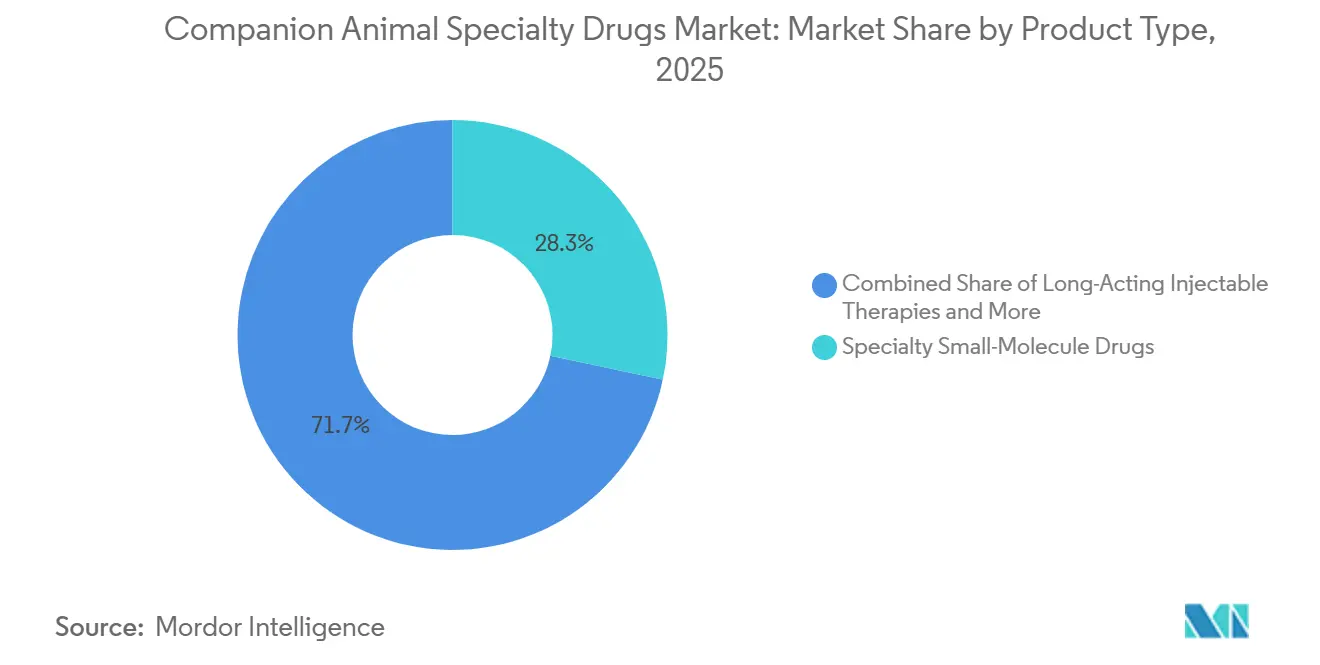
Small Molecules Hold Share While Injectables Define the Next Growth CycleSpecialty Small-Molecule Drugs held 28.31% of the companion animal specialty drugs market size in 2025. Their position reflected the established use of JAK inhibitors, nonsteroidal anti-inflammatory drugs, and other targeted oral medicines in dermatology and pain management. Elanco’s Zenrelia, an abrocitinib treatment for canine atopic dermatitis, was used in 50% of U.S. veterinary clinics by December 2025. It also held a double-digit share of the U.S. JAK category and more than 30% share in Japan. In Germany, 3 new active substances entered the companion animal segment in 2025, including 2 JAK inhibitors for allergic or atopic dermatitis and fluoxetine for separation-anxiety management[3].
Long-Acting Injectable Therapies are forecast to grow at an 11.58% CAGR from 2026 to 2031. These therapies support the companion animal specialty drugs industry through recurring clinic visits for osteoarthritis pain, dermatology, renal disease, and oncology treatment. Biologics, Monoclonal Antibodies, and Specialty Vaccines remain other important product groups. The value of long-acting injections lies in their dosing pattern, because the veterinary team administers the treatment and can assess the patient during the visit. BRAVECTO QUANTUM shows the commercial relevance of this format because its expanded March 2026 FDA label added 12-month tick control with a single injection. This format can reduce missed-dose risk while giving clinics a direct role in administration and follow-up.

By Therapeutic Area:
Dermatology Leads, Cardiology and Renal Disease Emerge as the Next Commercial FrontierDermatology and Immunology held 36.24% share in 2025, making it the largest therapeutic area in the companion animal specialty drugs market. Years of investment in biologics have made atopic dermatitis and allergic skin disease more consistently treated chronic conditions. Oncology, Endocrinology and Metabolic Disease, and Neurology and Behavioral Health represented smaller positions with room to develop. Behavioral treatment demand also remains tied to animals that developed separation-anxiety patterns after long periods in domestic settings.
Cardiology and Renal Disease is forecast to grow at a 10.22% CAGR through 2031. This growth reflects a product pipeline directed at conditions that have received less investment than dermatology and pain. TriviumVet received FDA conditional approval for felycin-CA1, or sirolimus delayed-release tablets, the first drug conditionally approved for feline hypertrophic cardiomyopathy, and launched it in the United States in the summer of 2025. Zoetis has identified renal disease, oncology, and cardiology as representing more than USD 5 billion in total addressable potential. The companion animal specialty drugs market may therefore gain from new products in these conditions, even as their clinical pathways remain less mature than dermatology.
By Animal Type:
Dogs Anchor Spend as the Cat Segment Closes the Innovation GapDogs held 32.64% share in 2025 and remained the largest animal type in the companion animal specialty drugs market. Their role reflected a larger pet population, higher average veterinary spending, and a broader portfolio of dermatology, parasite-control, and pain medicines. Zoetis’ Simparica franchise exceeded USD 1 billion in U.S. sales in 2025 and grew 12% operationally. This result shows the ability of canine-focused medicines to retain substantial sales across a prolonged commercial cycle. Horses were a smaller but premium-priced niche, especially in pain management and orthopedic care. Small mammals and avian species remained relatively underserved, which leaves the companion animal specialty drugs industry with a limited but distinct opportunity for species-focused development.
Cats are forecast to grow at a 9.82% CAGR through 2031. Feline product development historically lagged canine development because cats have drug-metabolism characteristics that require species-specific formulation work. That difficulty has reduced the number of competing feline products and raised the value of successful development programs. Portela received European Union marketing authorization in late 2025 and launched in Canada and the European Union in 2026 as a quarterly-dosing monoclonal antibody for feline osteoarthritis pain. Felycin-CA1 also created a new treatment category for feline hypertrophic cardiomyopathy. Rising cat ownership in the United States supports the longer-term patient base for these therapies.
By Route of Administration:
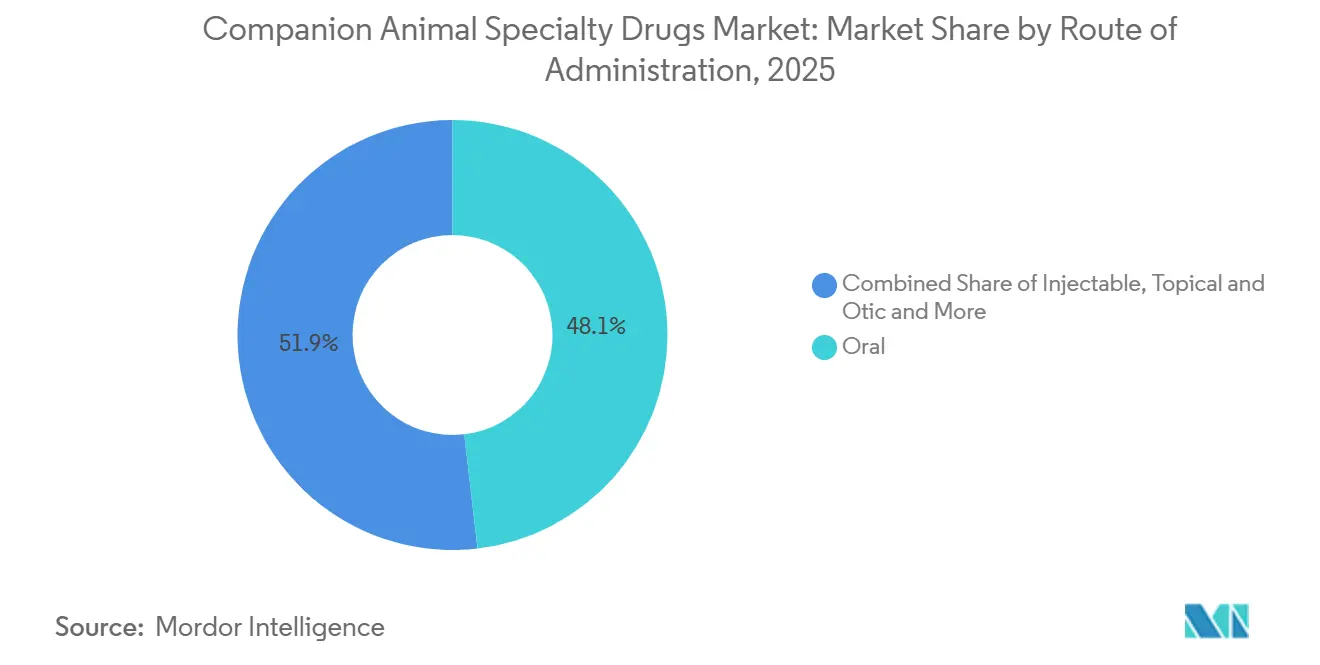
Oral Formats Dominant, Injectable Economics Shift the Long-Term BalanceOral administration held 48.14% share in 2025. Daily tablets and chewable products were widely used in dermatology, anti-infective treatment, and pain management. Their established position came from manufacturing maturity, broad formulary coverage, and the practicality of owner-administered treatment for suitable animals. However, daily treatment can fail when doses are missed, schedules become irregular, or owners stop the course early. These limitations can reduce the real-world effectiveness of oral medicines compared with controlled clinical use. The companion animal specialty drugs market will continue to rely on oral formats where flexibility, familiarity, and broad indication coverage remain important.
Injectable formats are forecast to grow at a 10.52% CAGR from 2026 to 2031. An injection administered in the clinic can support scheduled care and limit the adherence issues associated with daily oral dosing. Dechra launched Solovecin, a cefovecin sodium injectable antibiotic, in the United States in November 2025 for skin infections in dogs and cats, with effectiveness for up to 14 days. The product shows that extended-duration administration is relevant beyond biologic medicines. Topical and Otic products retained a stable but lower-growth role in ear and skin infection care. Commission Implementing Regulation (EU) 2025/2091 also raises compliance demands for sterile injectable manufacturing, which can increase the capital required for new injectable entrants.
By Distribution Channel:
Clinic Networks Dominant, E-Commerce Accelerating Across Repeat Prescription CategoriesVeterinary Hospitals and Clinics held 52.65% share in 2025. Their position rested on prescription-only access for many specialty medicines and the clinical role needed to diagnose, administer, and monitor treatment. Clinic dispensing also gives providers a continuing role in chronic disease management. Retail Pharmacies handled a portion of products with broader access, including selected antiparasitic and dermatology therapies. They remain useful for owners who prefer pharmacy pickup for maintenance medication. The companion animal specialty drugs market still depends on the clinic channel because specialist drugs often require diagnosis, a prescription, and ongoing assessment.
Online and E-Commerce Pharmacies are forecast to expand at a 9.95% CAGR through 2031. The channel is suited to repeat prescription fulfillment when an owner already has a valid clinical treatment plan. Digital fulfillment can make ongoing medication access easier for patients who need regular refills. Growth is strongest in markets where telehealth consultations can support electronic prescriptions, including the United States and Australia. Manufacturers with direct-to-consumer and auto-refill capabilities can build closer relationships with owners while working within prescription requirements. This shift may change how dispensing margins are distributed, although clinics remain central for treatments that require direct administration or clinical review.
Geography Analysis
North America Companion Animal Specialty Drugs Market
North America held 41.61% of the companion animal specialty drugs market in 2025. The region combined high veterinary spending with a large base of specialist referral hospitals and broad uptake of JAK inhibitors and anti-nerve growth factor monoclonal antibodies. Zoetis generated USD 5.097 billion in U.S. revenue in 2025, with 83% from companion animals. Elanco reported 9% organic constant-currency revenue growth across all 4 business quadrants, and its JAK inhibitor was used in 50% of U.S. clinics by year-end 2025. North American pet insurance gross written premiums reached USD 6.2 billion in 2025, while insured pets totaled 7.6 million. Canada is showing greater insurance adoption through employer-sponsored benefits. Mexico remains at an earlier stage, but urban demand and proximity to U.S. veterinary practices support future premium therapy adoption.
Europe Companion Animal Specialty Drugs Market
Europe held the second-largest regional position in the companion animal specialty drugs market. BFT Skin disease treatments and cardiovascular medicines increased 8.0% and 8.2%, respectively, in Germany during 2025. The United Kingdom now follows its own approval pathway through the Veterinary Medicines Directorate. Portela received United Kingdom approval in July 2026, and Lenivia received approval in May 2026. Germany and France shape premium pricing in Europe, while Spain and Italy are developing specialty markets with rising insurance use.
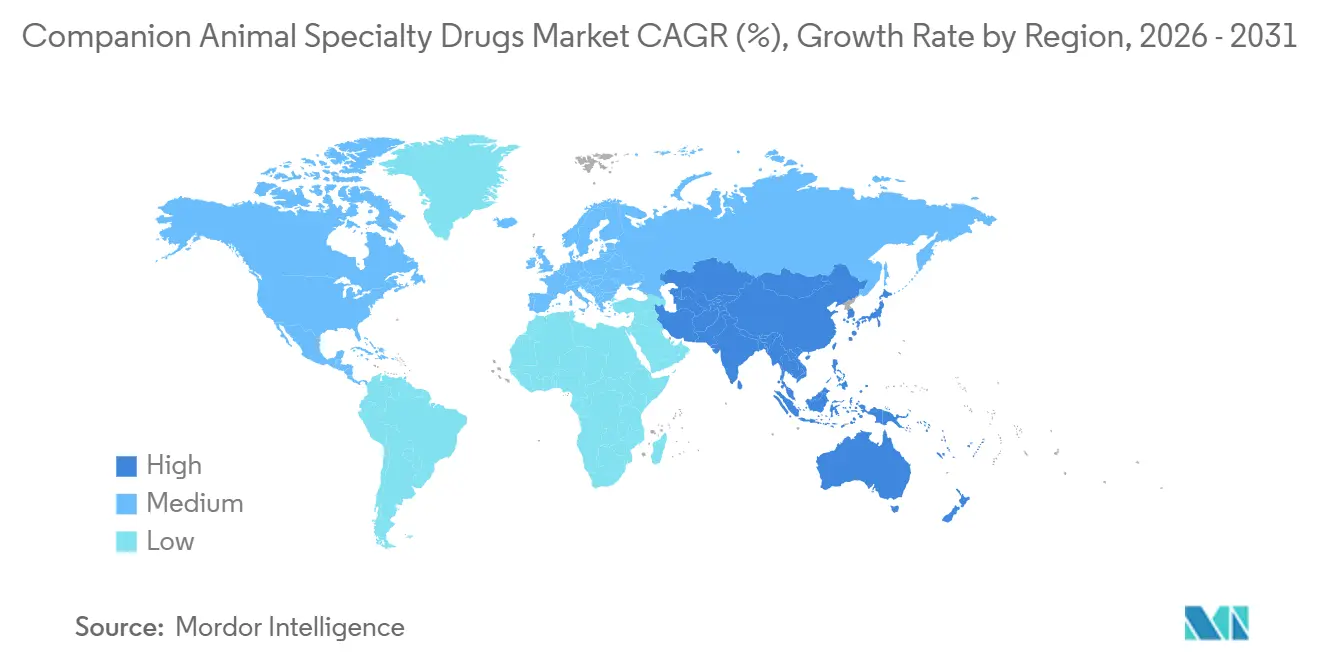
APAC, MEA and South America Companion Animal Specialty Drugs Market
Asia-Pacific is forecast to grow at a 10.25% CAGR through 2031, the fastest regional rate in the companion animal specialty drugs market. Japan’s aging pet population supports chronic disease demand that resembles earlier patterns in North America. South Korea’s antimicrobial surveillance system and Japan’s centralized Ministry of Agriculture, Forestry, and Fisheries approval pathway provide established regulatory settings for premium therapies. China recorded 189 pet drug approvals in 2025, although Zoetis reported a 16% decline in China revenue that year as local import substitution affected multinational sales. India and Australia are emerging contributors through urban pet ownership, veterinary infrastructure, and specialist referral networks. Brazil generated USD 393 million for Zoetis in 2025 and remained its second-largest Latin American revenue base. The GCC, South Africa, Argentina, and Brazil remain smaller markets with developing insurance and specialty care capacity.
Competitive Landscape
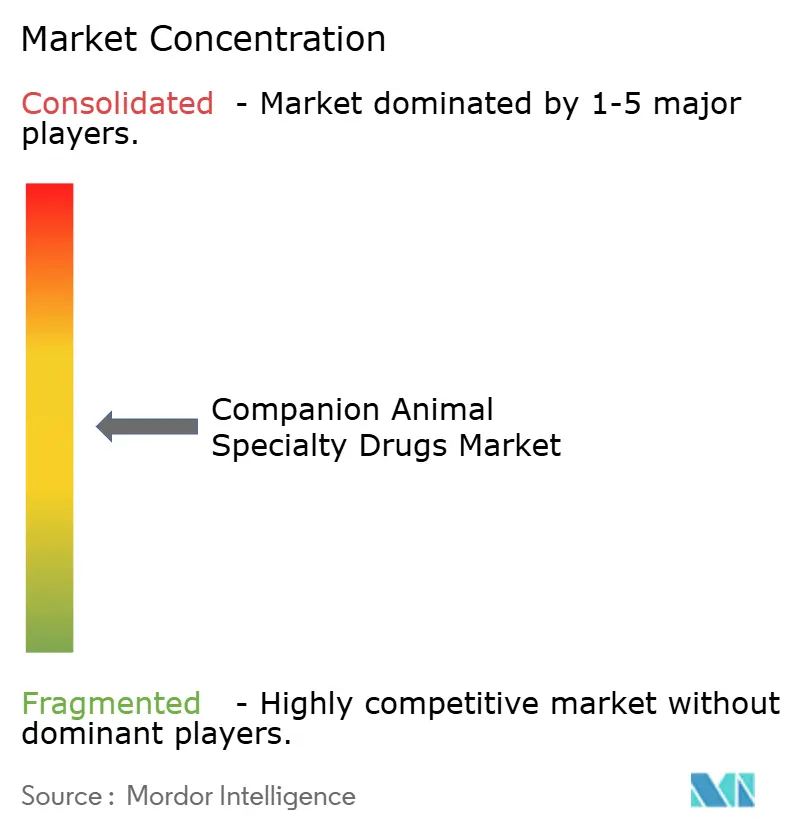
The companion animal specialty drugs market is moderately consolidated among leading global companies and more fragmented among mid-tier and specialist entrants. Zoetis generated USD 9.467 billion in total revenue in 2025. It derived USD 6.587 billion, or 70%, from companion animals and reported a 37.4% core operating margin. Its scale is supported by established brands such as Apoquel and Simparica Trio. Elanco generated USD 4.715 billion in revenue, while restructuring and amortization charges constrained its profitability. Zoetis, Merck Animal Health, Elanco, and Boehringer Ingelheim lead product development, while Dechra and Virbac compete through narrower therapeutic and product positions.
The leading companies are seeking control of differentiated product platforms and the clinical evidence that protects them. Zoetis uses data exclusivity, method-of-use patents, and species-specific formulation patents to support premium pricing across therapeutic classes. Its acquisition of Veterinary Pathology Group in November 2025 added a diagnostics capability that connects pathology services more closely with pharmaceutical development and clinical use. Merck Animal Health expanded BRAVECTO QUANTUM in March 2026 to include 12-month tick control in dogs. These actions show how the companion animal specialty drugs market is being shaped by pipeline depth, protected products, and multiple points of contact with the veterinary care system.
Feline therapeutics and companion animal oncology remain areas with fewer established products. Akston Biosciences started a clinical trial in October 2025 for a PD-L1 immuno-oncology therapy for dogs with solid tumors in partnership with Purdue University’s College of Veterinary Medicine. The program targets a U.S. Department of Agriculture conditional approval pathway in 2027. Virbac is building a vaccine formulation and lyophilization facility in Carros, France, to double companion animal vaccine production capacity. This investment signals confidence in specialty vaccine demand and manufacturing scale. Specialist entrants can gain credibility in areas such as oncology and feline cardiology, but established regulatory systems, diagnostic reach, and distribution networks remain substantial advantages for large companies. The companion animal specialty drugs market, therefore, combines leadership by diversified animal health firms with targeted opportunities for focused developers.
Companion Animal Specialty Drugs Industry Leaders
-
Zoetis Inc.
-
Boehringer Ingelheim Animal Health
-
Elanco Animal Health Incorporated
-
Merck Animal Health
-
Virbac SA
- *Disclaimer: Major Players sorted in no particular order
Companion Animal Specialty Drugs Market Companies Covered in this Report
- Animalcare Group plc
- Bimeda Animal Health
- Boehringer Ingelheim
- Ceva
- Chanelle Pharma
- Dechra Pharmaceuticals Limited
- Elanco
- ELIAS Animal Health
- KRKA, d. d., Novo mesto
- Merck
- Nextmune
- Norbrook Laboratories Limited
- Ourofino Saude Animal Participacoes S.A.
- Phibro Animal Health
- Vetoquinol
- Virbac
- Vivesto AB
- Zoetis
Recent Industry Developments in Companion Animal Specialty Drugs Market
- July 2026: Zoetis received UK Veterinary Medicines Directorate (VMD) approval for Portela (relfovetmab), the first long-acting anti-NGF monoclonal antibody for cats, providing up to 3 months of OA pain relief per subcutaneous injection.
- May 2026: Zoetis received UK VMD approval for Lenivia (izenivetmab), a long-acting anti-NGF monoclonal antibody for dogs delivering 3 months of OA pain management per injection.
Global Companion Animal Specialty Drugs Market Report Scope
As per the scope of the report, companion animal specialty drugs are medications specifically formulated, compounded, or approved for use in companion animals, such as dogs, cats, and other household pets, that require specialized handling, compounding, or administration. These drugs often address complex, chronic, or rare conditions and are typically provided through veterinary specialty pharmacies or veterinary specialists.
The companion animal specialty drugs market is segmented by product type into biologics and monoclonal antibodies, specialty small-molecule drugs, long-acting injectable therapies, specialty vaccines, and other specialty product types. By therapeutic area, the market is segmented into dermatology and immunology, pain and osteoarthritis, oncology, cardiology and renal diseases, endocrinology and metabolic diseases, neurology and behavioral health, and other therapeutic areas. By animal type, the market is segmented into dogs, cats, horses, and other companion animal types. By route of administration, the market is segmented into oral, injectable, topical, otic, and other routes of administration. By distribution channel, the market is segmented into veterinary hospitals and clinics, retail pharmacies, online and e-commerce pharmacies, and other distribution channels. By geography, the market is segmented into North America, Europe, Asia-Pacific, the Middle East and Africa, and South America. The market report also covers the estimated market sizes and trends for 17 countries across major regions globally. For each segment, the market size and forecast are provided in terms of value (USD).
| Biologics and Monoclonal Antibodies |
| Specialty Small-Molecule Drugs |
| Long-Acting Injectable Therapies |
| Specialty Vaccines |
| Other Specialty Product Types |
| Dermatology and Immunology |
| Pain and Osteoarthritis |
| Oncology |
| Cardiology and Renal Disease |
| Endocrinology and Metabolic Disease |
| Neurology and Behavioral Health |
| Other Therapeutic Areas |
| Dogs |
| Cats |
| Horses |
| Other Companion Animal Types |
| Oral |
| Injectable |
| Topical and Otic |
| Other Routes of Administration |
| Veterinary Hospitals and Clinics |
| Retail Pharmacies |
| Online and E-Commerce Pharmacies |
| Other Distribution Channels |
| North America | United States |
| Canada | |
| Mexico | |
| Europe | Germany |
| United Kingdom | |
| France | |
| Italy | |
| Spain | |
| Rest of Europe | |
| Asia-Pacific | China |
| Japan | |
| India | |
| Australia | |
| South Korea | |
| Rest of Asia-Pacific | |
| Middle East and Africa | GCC |
| South Africa | |
| Rest of Middle East and Africa | |
| South America | Brazil |
| Argentina | |
| Rest of South America |
| By Product Type | Biologics and Monoclonal Antibodies | |
| Specialty Small-Molecule Drugs | ||
| Long-Acting Injectable Therapies | ||
| Specialty Vaccines | ||
| Other Specialty Product Types | ||
| By Therapeutic Area | Dermatology and Immunology | |
| Pain and Osteoarthritis | ||
| Oncology | ||
| Cardiology and Renal Disease | ||
| Endocrinology and Metabolic Disease | ||
| Neurology and Behavioral Health | ||
| Other Therapeutic Areas | ||
| By Animal Type | Dogs | |
| Cats | ||
| Horses | ||
| Other Companion Animal Types | ||
| By Route of Administration | Oral | |
| Injectable | ||
| Topical and Otic | ||
| Other Routes of Administration | ||
| By Distribution Channel | Veterinary Hospitals and Clinics | |
| Retail Pharmacies | ||
| Online and E-Commerce Pharmacies | ||
| Other Distribution Channels | ||
| By Geography | North America | United States |
| Canada | ||
| Mexico | ||
| Europe | Germany | |
| United Kingdom | ||
| France | ||
| Italy | ||
| Spain | ||
| Rest of Europe | ||
| Asia-Pacific | China | |
| Japan | ||
| India | ||
| Australia | ||
| South Korea | ||
| Rest of Asia-Pacific | ||
| Middle East and Africa | GCC | |
| South Africa | ||
| Rest of Middle East and Africa | ||
| South America | Brazil | |
| Argentina | ||
| Rest of South America | ||
Key Questions Answered in the Report
What is the projected value of companion animal specialty drugs by 2031?
The category is forecast to reach USD 13.12 billion by 2031, from USD 8.64 billion in 2026, at an 8.71% CAGR.
Which product type is expected to grow the fastest through 2031?
Long-Acting Injectable Therapies are forecast to record the fastest product-type growth at an 11.58% CAGR through 2031.
Why are long-acting injectable treatments becoming more important?
Clinic-administered injections can reduce missed doses and create scheduled follow-up care. BRAVECTO QUANTUM received an expanded FDA label in March 2026 for 12-month tick control in dogs.
Which therapeutic area has the largest share?
Dermatology and Immunology led therapeutic areas with 36.24% share in 2025, supported by long-term treatment of allergic and skin conditions.
What region is forecast to grow the fastest?
Asia-Pacific is forecast to grow at a 10.25% CAGR through 2031, supported by pet population trends, regulatory development, and expanding veterinary care.