
Combined Angiography Market Size and Share
Market Overview
| Study Period | 2020 - 2031 |
|---|---|
| Market Size (2026) | USD 11.22 Billion |
| Market Size (2031) | USD 14.92 Billion |
| Growth Rate (2026 - 2031) | 5.85 % |
| Fastest Growing Market | Asia-Pacific |
| Largest Market | North America |
| Market Concentration | Medium |
Major Players *Disclaimer: Major Players sorted in no particular order Image © Mordor Intelligence. Reuse requires attribution under CC BY 4.0. | |
Combined Angiography Market Analysis by Mordor Intelligence
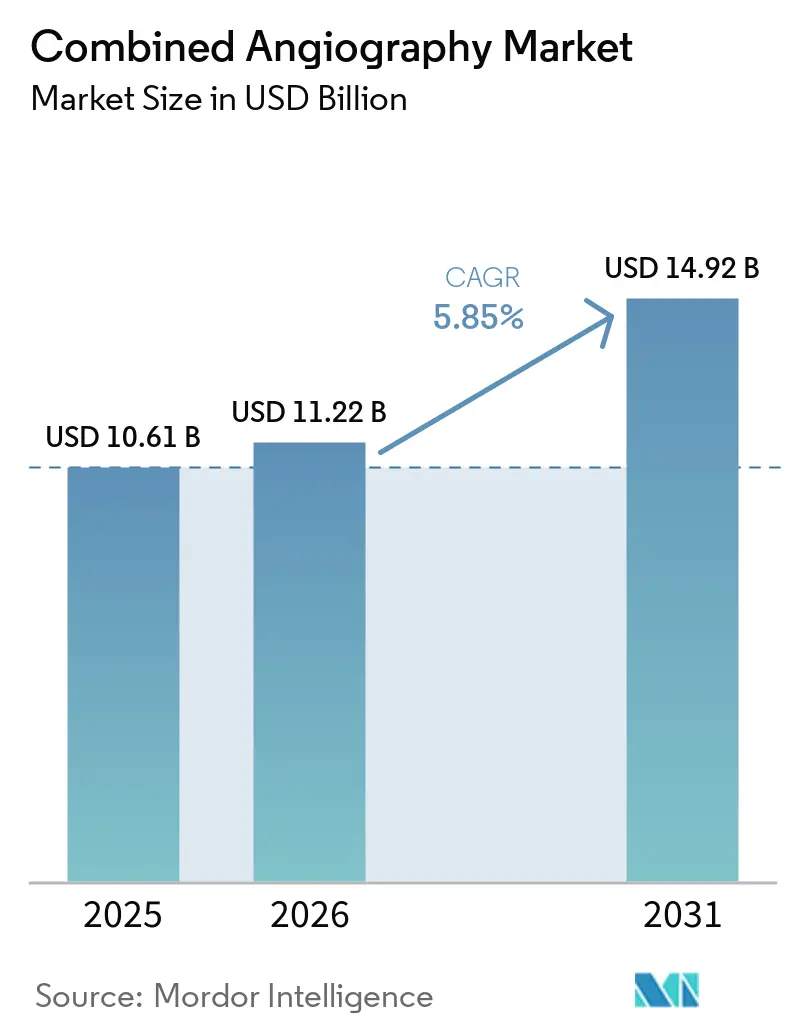
The Combined Angiography Market size is expected to increase from USD 10.61 billion in 2025 to USD 11.22 billion in 2026 and reach USD 14.92 billion by 2031, growing at a CAGR of 5.85% over 2026-2031.
The combined angiography market is supported by hospital investment in multi-modal intervention rooms that unite diagnostic imaging, live procedural guidance, and verification after treatment. Mechanical thrombectomy, transcatheter aortic valve implantation, and transarterial chemoembolization require this integrated approach more often than conventional imaging replacement cycles. Hybrid operating rooms can support a higher volume of endovascular aortic repair cases than single-modality settings, which strengthens the operational case for integrated imaging suites. Vendors are competing through image-processing performance, workflow integration, and software that connects imaging with procedural decisions. Capital requirements, radiation management, workforce availability, and information-system compatibility still affect the pace at which hospitals can deploy these systems.
Key Report Takeaways
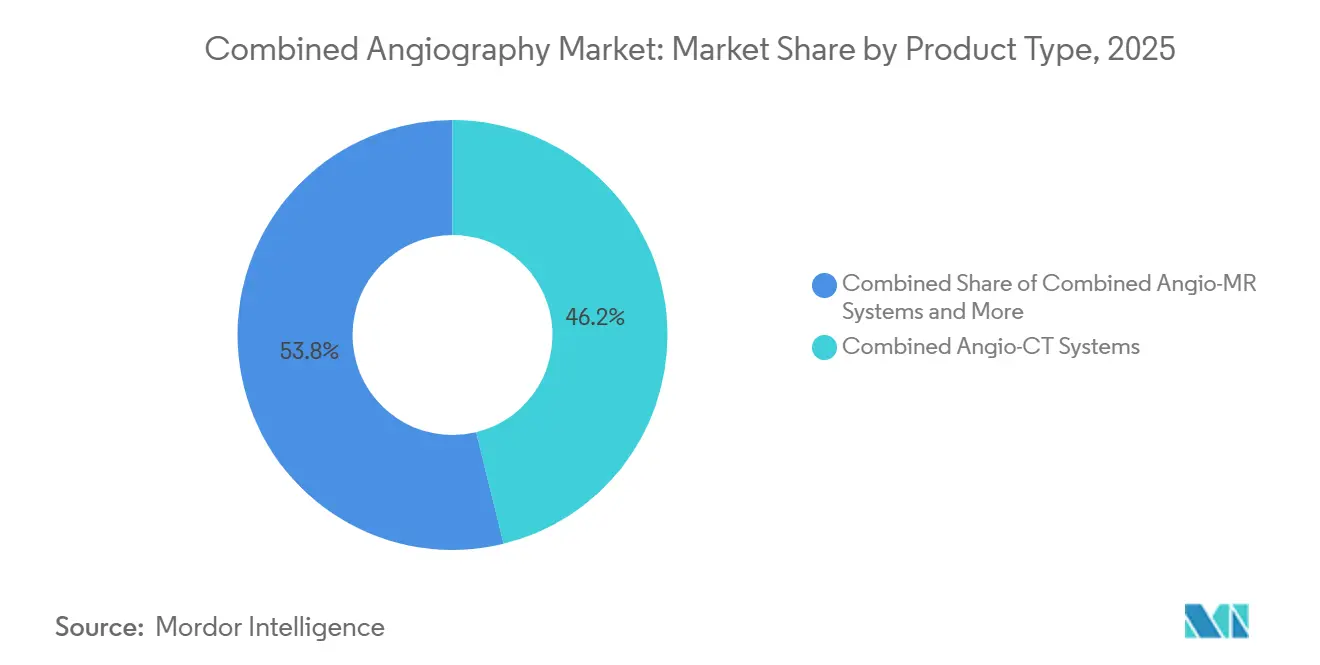
- By product type, Combined Angio-CT Systems held 46.18% of the combined angiography market share in 2025, while Combined Angio-CT-MR Systems are forecast to grow at an 8.5% CAGR through 2031.
- By technology, Digital Subtraction Angiography held 52.26% of the combined angiography market share in 2025, while 3D Angiography is forecast to grow at an 8.9% CAGR through 2031.
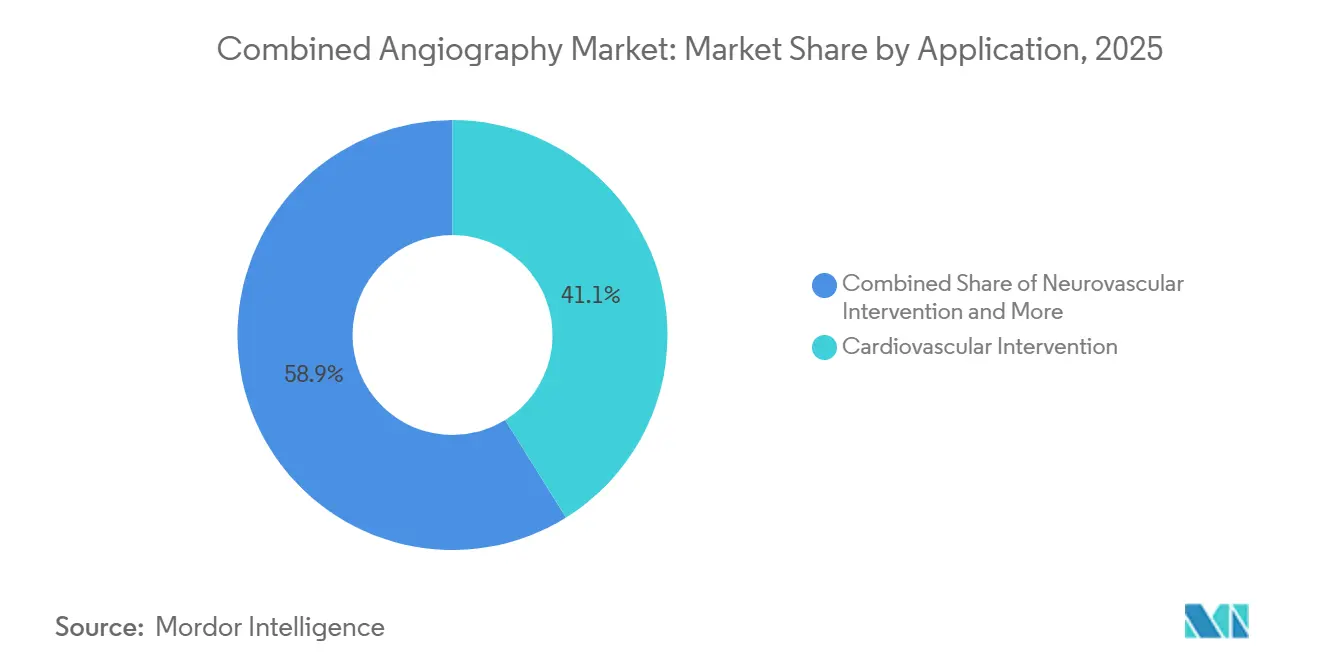
- By application, Cardiovascular Intervention held 41.14% of the combined angiography market size in 2025, while Neurovascular Intervention is forecast to grow at an 8.8% CAGR through 2031.
- By procedure, Coronary Angiography and Percutaneous Coronary Intervention held 36.11% of revenue in 2025, while Stroke Thrombectomy and Cerebral Angiography are forecast to grow at an 8.4% CAGR through 2031.
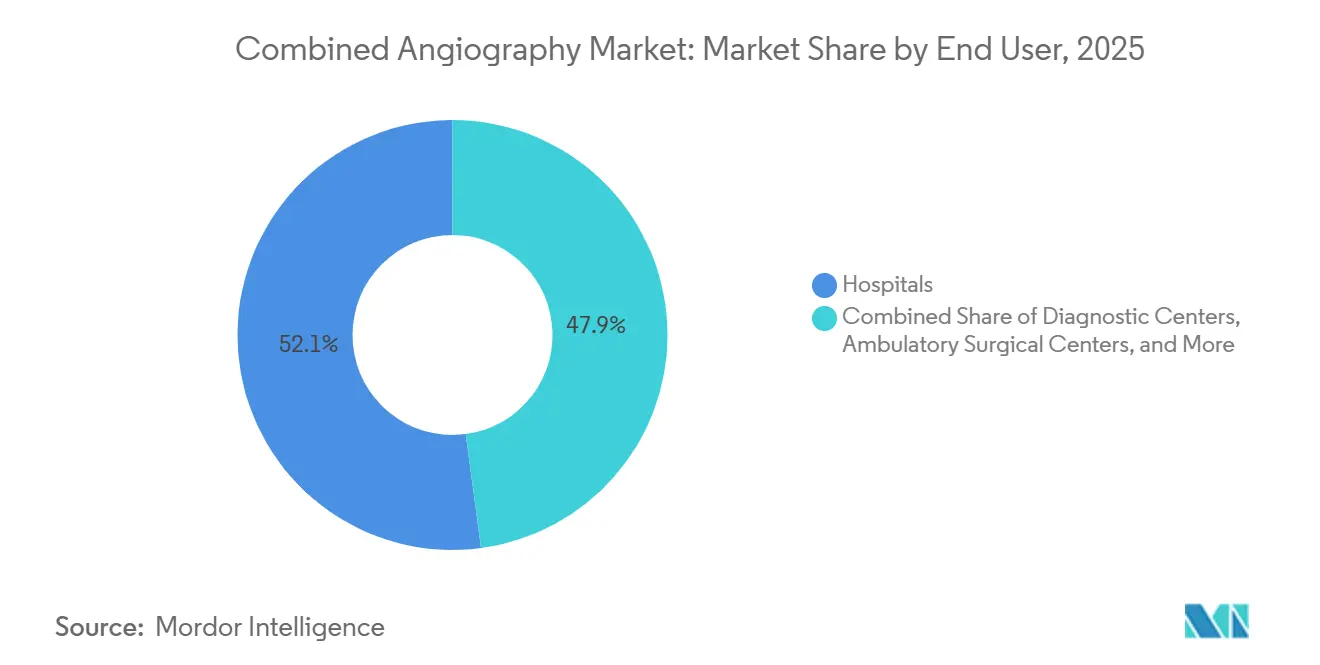
- By end user, Hospitals held 52.11% of revenue in 2025, while Hybrid Operating Rooms are forecast to grow at an 8.5% CAGR through 2031.
Note: Market size and forecast figures in this report are generated using Mordor Intelligence’s proprietary estimation framework, updated with the latest available data and insights as of January 2026.
Market Trends and Insights
Drivers Impact Analysis of Combined Angiography Market*
| Driver | (~) % Impact on CAGR Forecast | Geographic Relevance | Impact Timeline |
|---|---|---|---|
| Rising Cardiovascular, Neurovascular, and Peripheral Intervention Volumes | +1.8% | Global, with concentration in North America, China, and India | Medium term (2-4 years) |
| Shift Toward Hybrid Operating Rooms and Minimally Invasive Treatment | +1.4% | North America and Western Europe are in the early stages in the Asia-Pacific | Long term (≥ 4 years) |
| Patient Transfer Avoidance in Trauma and Complex Interventions | +0.6% | Asia-Pacific, the Middle East and Africa, and South America | Short term (≤ 2 years) |
| Multimodality Image Fusion and Intra-Procedural Decision Support | +0.8% | Global, concentrated in large academic centers across North America, Europe, and the Asia-Pacific | Long term (≥ 4 years) |
| Aging Population and Chronic Disease Burden | +0.7% | Global, with emphasis on Japan, Germany, Italy, and North America | Long term (≥ 4 years) |
| Underused Hybrid Suite Capacity Driving Utilization Optimization | +0.4% | North America and Western Europe | Short term (≤ 2 years) |
| Source: Mordor Intelligence | |||
Rising Cardiovascular, Neurovascular, and Peripheral Intervention Volumes
The combined angiography market benefits as procedure volumes rise across cardiovascular, neurovascular, and peripheral care. Germany's neurovascular networks performed more than 4,400 mechanical thrombectomies annually as of 2023 data, which was 82% above the 2017 to 2019 baseline.[1] More secondary referral hospitals are gaining thrombectomy capability, which broadens demand beyond a small number of academic centers. Combined Angio-CT suites allow CT acquisition without moving the patient between rooms. This can reduce handoff risk during time-sensitive stroke and trauma pathways. At MD Anderson, 69% of transarterial chemoembolization and radioembolization activity shifted toward hybrid Angio-CT rooms after those rooms became available.
Shift Toward Hybrid Operating Rooms and Minimally Invasive Treatment
Hybrid operating rooms are expanding within the combined angiography market because they bring surgery and image-guided treatment into one setting. A high-volume center reported in-hospital mortality of 100% for transcatheter aortic valve replacement surgical bailout in conventional catheterization laboratories, compared with 33.3% in hybrid operating rooms.[2] The difference reflected faster access to definitive surgical treatment. This clinical evidence affects how health systems assess the cost and risk of constructing hybrid rooms. AP-HP Henri Mondor inaugurated an interventional and ambulatory center with an Angio-CT suite in July 2026, showing continued public-hospital investment in this care model.
Multimodality Image Fusion and Intra-Procedural Decision Support
The combined angiography market is moving toward systems that connect pre-procedural images with live fluoroscopy. Siemens Healthineers introduced a CT-guided PCI workflow that transfers CT-based plaque and lumen data into the catheterization laboratory through its Artis platform. A 2026 study found that CT-fluoroscopy fusion during transcatheter aortic valve implantation reduced total air kerma and shortened intervention time in patients with peripheral vascular disease. Such workflows require compatibility across CT, MRI, angiography, and hospital software. This favors purpose-built suites over rooms upgraded through separate purchases. GE HealthCare reported that its CleaRecon DL tool improved cone-beam CT image quality in 98% of cases and interpretation confidence in 94% of cases.
Aging Population and Chronic Disease Burden
Older patients often have complex cardiovascular and neurovascular conditions that increase the need for detailed imaging during treatment. The combined angiography market can address this need by providing anatomical information in the same room as the intervention. Medicare use of adjunctive imaging in percutaneous coronary intervention increased from 15% to 30% between 2016 and 2023.[3] The same analysis associated combined intravascular imaging and physiology use with a lower 2-year major adverse cardiovascular event rate, with an adjusted hazard ratio of 0.87 and a 95% confidence interval of 0.85 to 0.89. Patients with renal insufficiency, prior stroke, or peripheral vascular disease can also benefit from fewer separate imaging encounters. Canon Medical reported that one-room workflows at pediatric sites reduced intrahospital transfers and supported faster treatment initiation for oncology interventions.
Restraints Impact Analysis of Combined Angiography Market*
| Restraint | (~) % Impact on CAGR Forecast | Geographic Relevance | Impact Timeline |
|---|---|---|---|
| High Capital Cost and Room-Construction Complexity | -1.2% | Global, most acute in the Middle East and Africa, South America, and Southeast Asia | Long term (≥ 4 years) |
| Radiation Dose, Contrast Exposure, and Procedure-Safety Concerns | -0.8% | Global | Medium term (2-4 years) |
| Interoperability, Cybersecurity, and Workflow-Integration Risk | -0.5% | Global, particularly North America and Europe | Medium term (2-4 years) |
| Specialist Workforce and Service-Availability Constraints | -0.6% | Global, most acute in the Middle East and Africa, and South America | Long term (≥ 4 years) |
| Source: Mordor Intelligence | |||
High Capital Cost and Room-Construction Complexity
The combined angiography market faces a significant adoption barrier, as a complete suite requires more than an imaging system. Projects require radiation shielding, ceiling systems, power infrastructure, room redesign, and specialized maintenance support. These requirements place combined systems within multi-year hospital capital expenditure plans. Public healthcare systems in the Middle East, South America, and Southeast Asia may experience longer tender cycles, approval backlogs, and foreign exchange constraints for USD-denominated equipment. Consequently, high clinical need does not always translate into installed capacity at the same pace. Although modular upgrades can reduce the initial purchase barrier, their lifecycle costs may remain close to those of a purpose-built room.
Radiation Dose, Contrast Exposure, and Procedure-Safety Concerns
Radiation and contrast management remain important limits on procedure expansion in the combined angiography market. A 2025 randomized controlled trial across 1,068 patients found that generative AI-assisted digital subtraction angiography reduced air kerma by 67% and dose-area product by 68% against standard protocols. These results show the potential of lower-dose imaging, but the approach depends on platform compatibility and operator adoption. Conventional DSA still held a significant revenue in 2025 and uses repeated contrast and X-ray acquisition cycles. A 2025 Scientific Reports study found median dose-area product reductions of 53% to 62% with digital variance angiography protocols.[4] Hospitals must balance higher image detail with exposure limits, staff safety, and the need to keep dose as low as reasonably achievable.
*Our forecasts treat driver/restraint impacts as directional, not additive. The impact forecasts reflect baseline growth, mix effects, and variable interactions.
Combined Angiography Market Segment Analysis
By Product Type:
Angio-CT Systems Lead, Multi-Modal Variants AccelerateCombined Angio-CT Systems held 46.18% of the combined angiography market share in 2025. Their position reflects the established need for CT-quality anatomy and fluoroscopy-guided treatment in the same room. This configuration supports interventional oncology, cardiovascular procedures, and complex endovascular repair. It also reduces the need to reposition a patient between the CT and angiography rooms. Canon Medical presented its Alphenix 4D CT at CIRSE 2025 with a 16-cm wide-area detector, a 0.24-second rotation time, and a high-definition flat-panel angiography C-arm. The platform illustrates how product development is combining CT and angiography functions within a single procedural environment.
Combined Angio-MR Systems serve procedures that need stronger soft-tissue contrast, especially cerebrovascular interventions. Combined Angio-CT-MR Systems are the fastest-growing product group, with an 8.5% CAGR through 2031. These systems can combine CT support for vascular and bone detail with MRI soft-tissue visualization. They suit centers focused on advanced interventional neurology and structural heart disease. Other hybrid angiography systems include mobile biplane systems and portable C-arms with cone-beam CT additions. These alternatives offer hospitals a route to hybrid capability when room-construction budgets are limited. The combined angiography market is therefore expected to move toward more complex multi-modality configurations as integrated procedural rooms become more common.

By Technology:
DSA's Foundational Role Is Challenged by AI-Enhanced 3DDigital Subtraction Angiography held 52.26% of technology revenue in 2025. It remains central to fluoroscopy-guided cardiovascular, neurovascular, and peripheral intervention. Long-standing training, clinical protocols, and a comparatively lower capital requirement support its installed base. Its role is being extended through image-processing tools rather than being rapidly replaced. A multicenter study reported that the SAVE-Net deep-learning frame synthesis approach reduced radiation dose by as much as 85.71% while maintaining real-time inference at 0.04 seconds per frame. These capabilities help preserve DSA's role in navigation and live decision-making.
3D Angiography is forecast to grow at an 8.9% CAGR through 2031, the fastest rate within the technology categories. Cone-beam CT reconstruction and AI-supported visualization give clinicians greater anatomical context than conventional 2D acquisition. The technology is relevant in brain arteriovenous malformation embolization, aneurysm coiling, and transcatheter aortic valve implantation assessment. A 2026 review found that 4D-DSA had diagnostic performance that was equivalent or superior to traditional DSA for brain arteriovenous malformation angioarchitecture. The review also found that 4D-DSA could show arterial aneurysms and shunt zones that conventional approaches may miss. 2D Angiography continues to serve hospitals that require a more accessible entry point to angiographic imaging.
By Application:
Cardiovascular Anchors Volume, Neurovascular Sets the Growth PaceCardiovascular Intervention accounted for 41.14% of the combined angiography market size in 2025. The segment is supported by the scale of percutaneous coronary intervention and the adoption of transcatheter aortic valve replacement. These procedures benefit from hybrid operating rooms and from the ability to connect CT images with live fluoroscopy. Medicare data show a growing use of intravascular imaging during percutaneous coronary intervention. Cardiovascular care is often the first use case that supports a hybrid-suite investment. Hospitals can later broaden the use of the room to neurovascular and peripheral procedures.
Neurovascular Intervention is forecast to grow at an 8.8% CAGR through 2031. The segment follows the expansion of mechanical thrombectomy programs for acute ischemic stroke. In northern New Zealand, endovascular therapy activity rose from 22 procedures in 2015 to 385 procedures in 2024. Peripheral Vascular Intervention and Interventional Oncology also add procedure volume. Interventional oncology particularly favors Angio-CT systems when tumor-directed procedures need spiral CT quality.
By Procedure:
PCI Volume Leads, Stroke Thrombectomy Defines Future GrowthCoronary Angiography and Percutaneous Coronary Intervention held 36.11% of procedure revenue in 2025. The category reflects the broad base of diagnostic catheterization and interventional PCI performed in hospital catheterization laboratories and hybrid operating rooms. Philips launched IntraSight Plus in 2026 as a single-screen platform for diagnosis, virtual treatment planning, device guidance, and result verification during coronary procedures. This approach puts more procedural analysis into the same fluoroscopy session. It supports demand for rooms that can display CT-roadmap data alongside live angiography. Germany's 2026 Hybrid-DRG catalog covers 69 procedures, including coronary angiography, stent implantation, balloon angioplasty, atherectomy, and thrombectomy.
Stroke Thrombectomy and Cerebral Angiography is forecast to grow at an 8.4% CAGR through 2031. Faster treatment pathways are raising the utilization potential of neurovascular suites. At one high-volume center, the mean duration of endovascular thrombectomy fell from 128 minutes in 2013 to 2015 to 41 minutes in 2022 to 2023. The improvement occurred as eligibility criteria broadened. Aneurysm embolization and flow-diverter procedures also benefit from 3D and 4D-DSA capabilities. Peripheral angioplasty, transarterial chemoembolization, and structural heart procedures expand the addressable procedure mix. The combined angiography market can benefit when one suite supports several time-sensitive care pathways.
By End User:
Hospitals Sustain Volume, Hybrid ORs Set Infrastructure DirectionHospitals held 52.11% of end-user revenue in 2025. They have the physical space, engineering resources, and procedure volumes needed to support a combined system. Procurement commonly requires multi-year capital planning and clinical approval across several specialties. These processes favor vendors that can provide installation, training, and long-term service. Hospital systems also use combined rooms across cardiovascular, neurovascular, oncology, and trauma pathways. This broad utilization helps justify an asset with high upfront construction costs.
Hybrid Operating Rooms are forecast to grow at an 8.5% CAGR through 2031. Their growth reflects the need to avoid patient movement during time-critical treatment. The surgical bailout data for transcatheter aortic valve replacement show why access to surgery and imaging in one room matters. Diagnostic centers and ambulatory surgical centers are also entering combined angiography, where reimbursement supports outpatient cardiovascular procedures. Germany's Hybrid-DRG framework provides one such reimbursement setting. Specialized catheterization laboratories and academic centers remain important early users of advanced imaging configurations. Canon Medical reported early Alphenix 4D CT installations at St. Eloi University Hospital in Montpellier and University Children's Hospital Zurich.
Geography Analysis
North America Combined Angiography Market
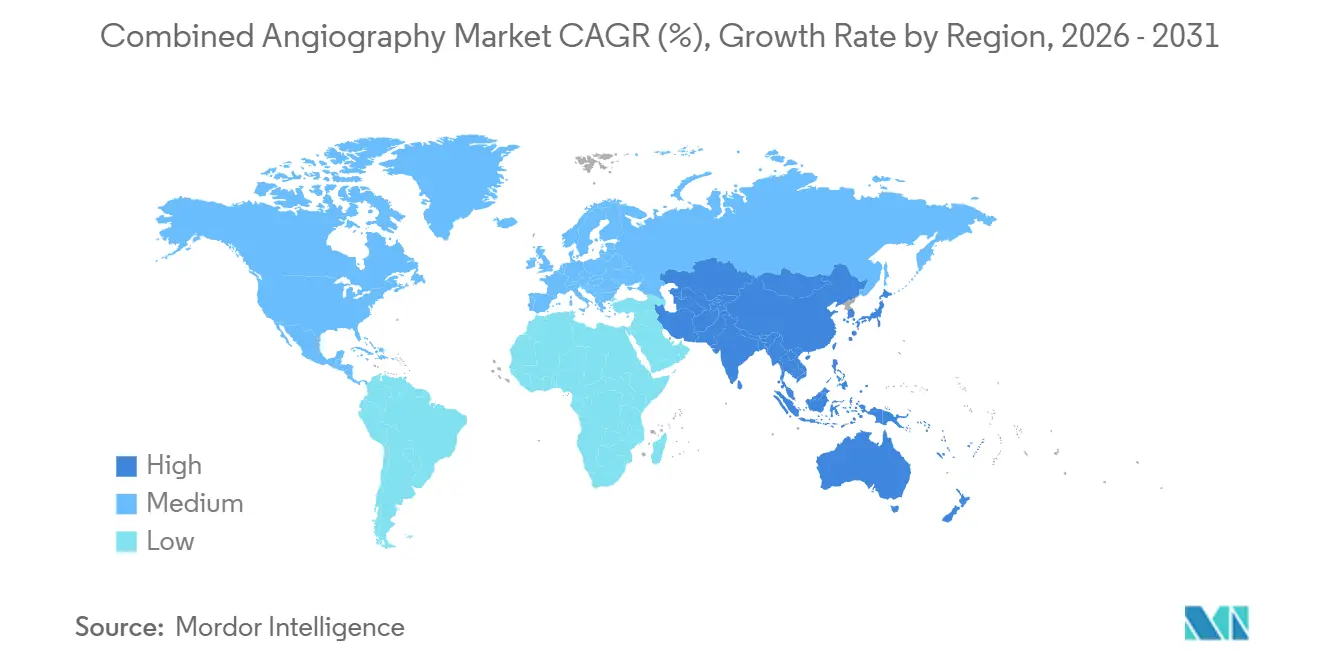
North America held 38.11% of global revenue in 2025, the largest regional combined angiography market share. The United States supports this position through quaternary medical centers, reimbursement for complex structural heart and neurovascular procedures, and clinician adoption of AI-supported imaging. Siemens Healthineers received U.S. FDA clearance in May 2026 for 6 Artis interventional systems with the Optiq AI imaging chain.[5] GE HealthCare received U.S. FDA 510(k) clearance for CleaRecon DL in May 2025. These introductions maintain the region's role in the adoption of advanced combined suites. Canadian transcatheter aortic valve replacement programs used hybrid operating rooms to improve efficiency while maintaining low adverse-event rates between 2019 and 2024. Mexico offers a developing opportunity through private investment at premium referral centers.
Europe Combined Angiography Market
Europe is a major regional market, led by Germany, France, and the United Kingdom. Germany had 10.1 catheterization laboratories per million people and a certified neurovascular network that performed more than 4,400 mechanical thrombectomies annually. Its 2026 Hybrid-DRG framework covers 69 procedures and supports sector-neutral reimbursement for interventional cardiology and peripheral vascular care. This framework supports investment in combined suites for outpatient as well as inpatient use. France is adding capacity through AP-HP Henri Mondor's Angio-CT center, which opened in July 2026. Italy, Spain, and Nordic countries add demand through hospital modernization programs.
APAC, MEA and South America Combined Angiography Market
Asia-Pacific is forecast to grow at an 8.8% CAGR through 2031, the fastest regional rate in the combined angiography market. China, Japan, India, South Korea, and Australia are the principal demand centers. China is replacing older imaging equipment while adding capacity in urban and rural hospitals. Domestic vendors compete more actively in mid-tier tenders, while imported systems remain important at the premium end. Japan's aging population supports cardiovascular and neurovascular procedure activity. India's private hospital chains are increasing cardiac and neurological capacity. South Korea combines a dense tertiary hospital network with investment in medical-device manufacturing. The Middle East and Africa are led by premium-system procurement for GCC referral hospitals. South America is led by Brazil, where private health-plan coverage for structural heart procedures supports interventional cardiology adoption.
Competitive Landscape
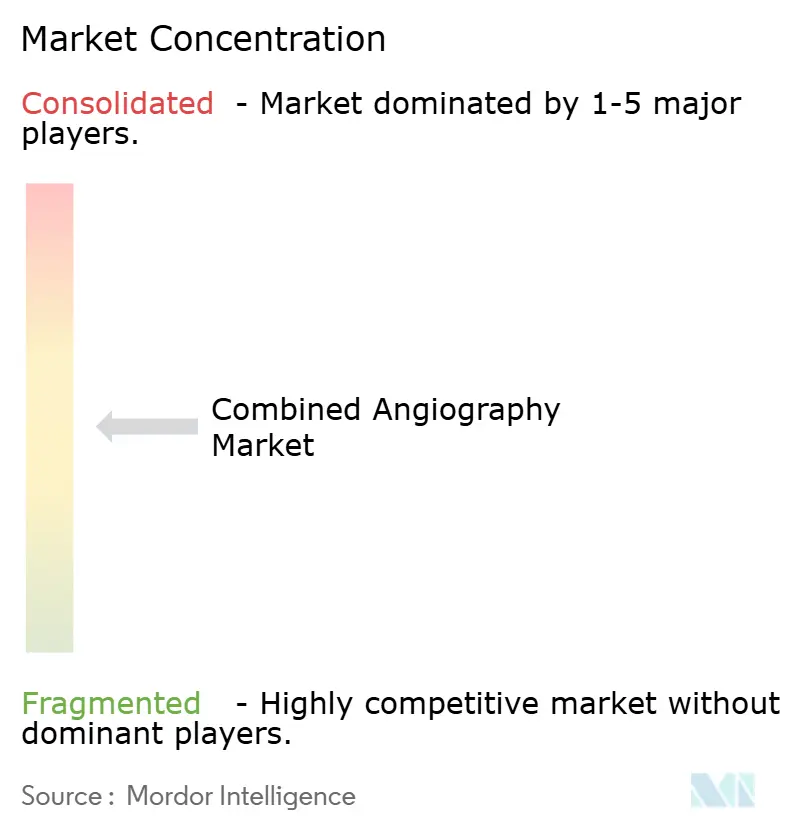
The combined angiography market is moderately consolidated in the premium tier. Siemens Healthineers, Koninklijke Philips, GE HealthCare, and Canon lead high-end Angio-CT and Angio-MR deployments. Their competition is increasingly centered on AI-based imaging chains and workflow integration. Siemens Healthineers received FDA clearance for 6 Artis systems featuring Optiq AI in May 2026. The system applies deep-learning noise reduction across fluoroscopy, acquisition, and DSA modes. GE HealthCare's CleaRecon DL brought AI-supported cone-beam CT reconstruction to its Allia IGS platforms in 2025.
Philips introduced SmartIQ for Azurion in May 2026. The company reported a 58% average reference air-kerma reduction on Azurion M12 and 62% on Azurion M20 against earlier low ClarityIQ settings.[6] Philips also launched IntraSight Plus in 2026 to unite diagnosis, planning, device guidance, and result verification for coronary procedures. These moves show how suppliers are extending differentiation from hardware into the procedural software environment. Canon Medical's Alphenix 4D CT demonstrates the same focus on a one-room workflow. The combined angiography industry also includes mid-tier suppliers such as Shimadzu, Fujifilm, United Imaging Healthcare, Mindray, and Neusoft. These vendors compete on price and performance in mid-volume hospitals, especially across Asia-Pacific and EMEA.
Modular upgrade paths remain relevant for hospitals with fixed C-arms seeking Angio-CT or cone-beam CT capabilities without requiring a complete room rebuild. However, the opportunity remains limited, as upgrades can involve substantial lifecycle costs and complex integration requirements. Software has become a key area of competition as systems incorporate vessel segmentation, hemodynamic assessment, and CT-fluoroscopy registration. When closely integrated with a supplier's imaging platform, these functions can increase switching costs. They also create opportunities for software providers that support multi-vendor suites. Therefore, the competitive landscape favors companies that can integrate imaging hardware, procedural guidance, and hospital information systems. Product reliability, installation support, and operator training remain critical, as these systems support complex, time-sensitive procedures.
Combined Angiography Industry Leaders
-
Canon Inc.
-
GE HealthCare Technologies Inc.
-
Philips Azurion
-
Shimadzu Corporation
-
Siemens Healthineers AG
- *Disclaimer: Major Players sorted in no particular order
Combined Angiography Market Companies Covered in this Report
- Abbott Laboratories
- Agfa-Gevaert
- AngioDynamics
- B. Braun
- Boston Scientific
- Canon
- Cardinal Health
- FUJIFILM
- GE HealthCare Technologies Inc.
- Hologic
- Medtronic
- Mindray
- Neusoft
- Nevada technologies Inc.
- Philips Azurion
- Shimadzu
- Siemens Healthineers
- Terumo
- United Imaging Healthcare Co., Ltd.
- Ziehm Imaging
Recent Industry Developments in Combined Angiography Market
- July 2026: AP-HP Henri Mondor (France) inaugurated a new interventional and ambulatory center anchored by an Angio-CT suite combining multimodal multi-energy CT with flat-panel rotational angiography, representing a major infrastructure commitment by a leading French university hospital network and signaling the mainstreaming of combined Angio-CT configurations in European public hospital systems.
- May 2026: Siemens Healthineers received U.S. FDA 510(k) clearance for six new Artis interventional imaging systems featuring the Optiq AI imaging chain, including floor, biplane, ceiling, and pheno configurations of Artis vision, plus Artis icono. explore and Artis genio. The AI chain applies deep-learning noise reduction in real time across fluoroscopy, acquisition, and DSA modes, broadening AI-enhanced imaging across the Artis product lineup.
- May 2026: Philips launched SmartIQ for its Azurion image-guided therapy platform, a CE-marked coronary imaging technology delivering 58% average reference air-kerma reduction on Azurion M12 and 62% on Azurion M20 compared with prior low ClarityIQ settings. The RADIQAL multicenter randomized trial validating the technology had reached 60% enrollment.
- May 2026: Philips launched IntraSight Plus, receiving both FDA 510(k) clearance and CE mark for this redesigned interventional guidance platform that consolidates diagnosis, virtual treatment planning, device guidance, and result verification on a single screen for coronary procedures, improving workflow efficiency for PCI in combined-suite environments.
Global Combined Angiography Market Report Scope
The combined angiography market comprises the global ecosystem of technologies, imaging systems, software, consumables, and services used to visualize blood vessels, evaluate blood flow, and identify vascular abnormalities through angiographic imaging procedures. These solutions support the diagnosis, treatment planning, and interventional management of cardiovascular, neurovascular, and peripheral vascular diseases across healthcare settings, including hospitals, diagnostic imaging centers, and specialized clinics.
The combined angiography systems market is segmented by product type, technology, application, procedure, end user, and geography. By product type, it is further divided into combined Angio-CT systems, combined Angio-MR systems, combined Angio-CT-MR systems, and other hybrid angiography systems. By technology, it is segmented into Digital Subtraction Angiography (DSA), 2D angiography, 3D angiography, and others. By application, the market is segmented into cardiovascular intervention, neurovascular intervention, peripheral vascular intervention, interventional oncology, interventional radiology, and others. By procedure, the market is segmented into coronary angiography and Percutaneous Coronary Intervention, stroke thrombectomy and cerebral angiography, aneurysm embolization and flow-diverter procedures, peripheral angioplasty and stenting, Transarterial Chemoembolization, and others. By end user, the market is segmented into hospitals, diagnostic centers, ambulatory surgical centers, specialized cath labs, hybrid operating rooms, and academic and research centers. The geography segment is further divided into North America, Europe, Asia-Pacific, the Middle East and Africa, and South America. The report also covers the estimated market sizes and trends for 17 countries across major regions globally. The report offers the market size and forecasts in value (USD) for the above segments.
| Combined Angio-CT Systems |
| Combined Angio-MR Systems |
| Combined Angio-CT-MR Systems |
| Other Hybrid Angiography Systems |
| Digital Subtraction Angiography (DSA) |
| 2D Angiography |
| 3D Angiography |
| Others (3D Rotational Angiography, 4D Angiography, etc.) |
| Cardiovascular Intervention |
| Neurovascular Intervention |
| Peripheral Vascular Intervention |
| Interventional Oncology |
| Interventional Radiology |
| Others (Trauma, Structural Heart Intervention, etc.) |
| Coronary Angiography and Percutaneous Coronary Intervention |
| Stroke Thrombectomy and Cerebral Angiography |
| Aneurysm Embolization and Flow-Diverter Procedures |
| Peripheral Angioplasty and Stenting |
| Transarterial Chemoembolization |
| Others (Ablation and Embolization Combinations, Transcatheter Valve Procedures, etc.) |
| Hospitals |
| Diagnostic Centers |
| Ambulatory Surgical Centers |
| Specialized Cath Labs |
| Hybrid Operating Rooms |
| Academic and Research Centers |
| North America | United States |
| Canada | |
| Mexico | |
| Europe | Germany |
| United Kingdom | |
| France | |
| Italy | |
| Spain | |
| Rest of Europe | |
| Asia-Pacific | China |
| Japan | |
| India | |
| Australia | |
| South Korea | |
| Rest of Asia-Pacific | |
| Middle East and Africa | GCC |
| South Africa | |
| Rest of Middle East and Africa | |
| South America | Brazil |
| Argentina | |
| Rest of South America |
| By Product Type | Combined Angio-CT Systems | |
| Combined Angio-MR Systems | ||
| Combined Angio-CT-MR Systems | ||
| Other Hybrid Angiography Systems | ||
| By Technology | Digital Subtraction Angiography (DSA) | |
| 2D Angiography | ||
| 3D Angiography | ||
| Others (3D Rotational Angiography, 4D Angiography, etc.) | ||
| By Application | Cardiovascular Intervention | |
| Neurovascular Intervention | ||
| Peripheral Vascular Intervention | ||
| Interventional Oncology | ||
| Interventional Radiology | ||
| Others (Trauma, Structural Heart Intervention, etc.) | ||
| By Procedure | Coronary Angiography and Percutaneous Coronary Intervention | |
| Stroke Thrombectomy and Cerebral Angiography | ||
| Aneurysm Embolization and Flow-Diverter Procedures | ||
| Peripheral Angioplasty and Stenting | ||
| Transarterial Chemoembolization | ||
| Others (Ablation and Embolization Combinations, Transcatheter Valve Procedures, etc.) | ||
| Market Size by End User | Hospitals | |
| Diagnostic Centers | ||
| Ambulatory Surgical Centers | ||
| Specialized Cath Labs | ||
| Hybrid Operating Rooms | ||
| Academic and Research Centers | ||
| Market Size by Geography | North America | United States |
| Canada | ||
| Mexico | ||
| Europe | Germany | |
| United Kingdom | ||
| France | ||
| Italy | ||
| Spain | ||
| Rest of Europe | ||
| Asia-Pacific | China | |
| Japan | ||
| India | ||
| Australia | ||
| South Korea | ||
| Rest of Asia-Pacific | ||
| Middle East and Africa | GCC | |
| South Africa | ||
| Rest of Middle East and Africa | ||
| South America | Brazil | |
| Argentina | ||
| Rest of South America | ||
Key Questions Answered in the Report
What is the projected growth rate for combined angiography?
The Combined Angiography Market is projected to grow at a 5.9% CAGR from 2026 to 2031, reaching USD 14.92 billion.
Which product category leads the combined angiography demand?
Combined Angio-CT Systems led with a 46.18% revenue share in 2025 because they allow CT imaging and fluoroscopy-guided treatment in one room.
Why are hybrid operating rooms growing rapidly?
Hybrid operating rooms are forecast to expand at an 8.5% CAGR through 2031 because they avoid patient transfers during complex and time-sensitive procedures.
Which clinical application is expanding fastest?
Neurovascular Intervention is the fastest-growing application at an 8.8% CAGR through 2031, supported by the wider use of mechanical thrombectomy.
How does AI affect angiography procedures?
AI tools can improve image reconstruction, reduce noise, and support lower-dose imaging. GE HealthCare reported improved image quality in 98% of CleaRecon DL cases.
Which region has the fastest growth outlook?
Asia-Pacific is projected to grow at an 8.8% CAGR through 2031, supported by demand in China, Japan, India, South Korea, and Australia.