
Collagenase Clostridium Histolyticum Market Size and Share
Market Overview
| Study Period | 2020 - 2031 |
|---|---|
| Market Size (2026) | USD 150.06 Million |
| Market Size (2031) | USD 211.54 Million |
| Growth Rate (2026 - 2031) | 7.11 % |
| Fastest Growing Market | Asia-Pacific |
| Largest Market | North America |
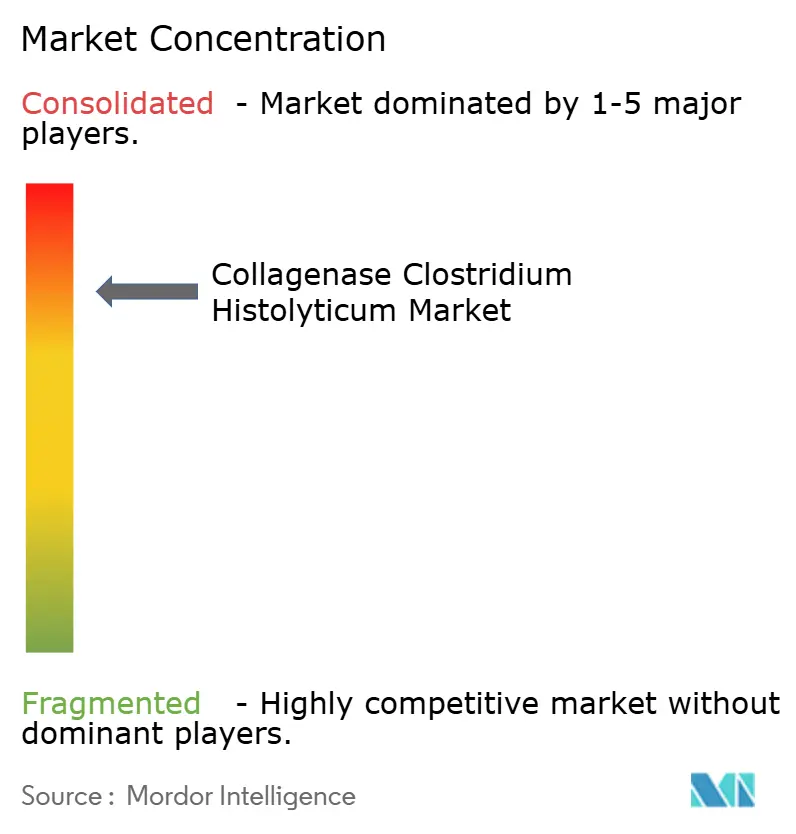
| Market Concentration | High |
Major Players *Disclaimer: Major Players sorted in no particular order Image © Mordor Intelligence. Reuse requires attribution under CC BY 4.0. | |
Collagenase Clostridium Histolyticum Market Analysis by Mordor Intelligence
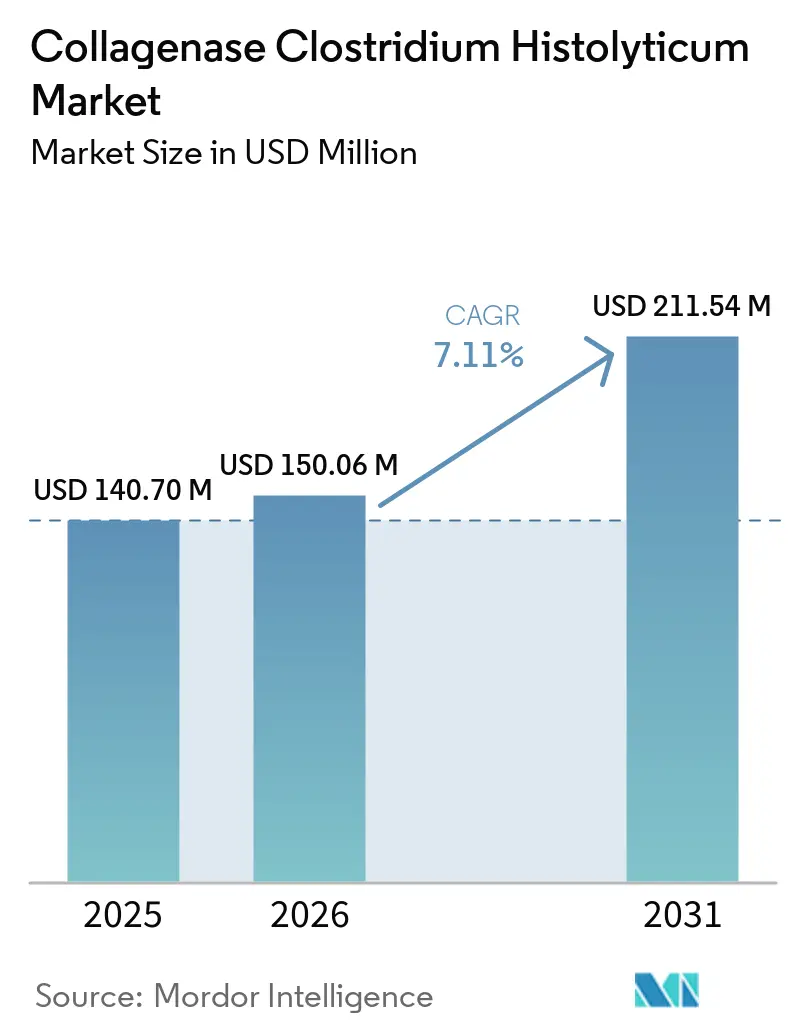
The collagenase Clostridium histolyticum market is expected to grow from USD 140.70 million in 2025 to reach USD 150.06 million in 2026 and is forecasted to reach USD 211.54 million by 2031, growing at a CAGR of 7.11% from 2026 to 2031. The collagenase Clostridium histolyticum market is supported by an aging patient population, wider recognition of fibrotic disorders, and established use of collagenase Clostridium histolyticum, or CCH, in injection-based care. Demand also depends on the ability of providers to offer treatment outside traditional surgical settings. A narrow group of CCH products still accounts for most therapeutic revenue, while new fibrotic indications could widen the treated population over time. High treatment costs, certification requirements, and uneven reimbursement limit adoption where specialty pharmacy systems are less mature. Manufacturing concentration and cold-chain needs further shape how quickly the collagenase Clostridium histolyticum market can expand outside established markets.
Key Report Takeaways
- By indication, Dupuytren's contracture held 41.72% of the collagenase Clostridium histolyticum market share in 2025, while Peyronie's disease is projected to grow at a 7.51% CAGR through 2031.
- By formulation, liquid products accounted for 53.36% of the market in 2025, while lyophilized products are forecasted to advance at an 8.36% CAGR through 2031.
- By end-user, hospitals accounted for 46.22% in 2025, while specialty clinics are forecasted to expand at a 7.92% CAGR through 2031.
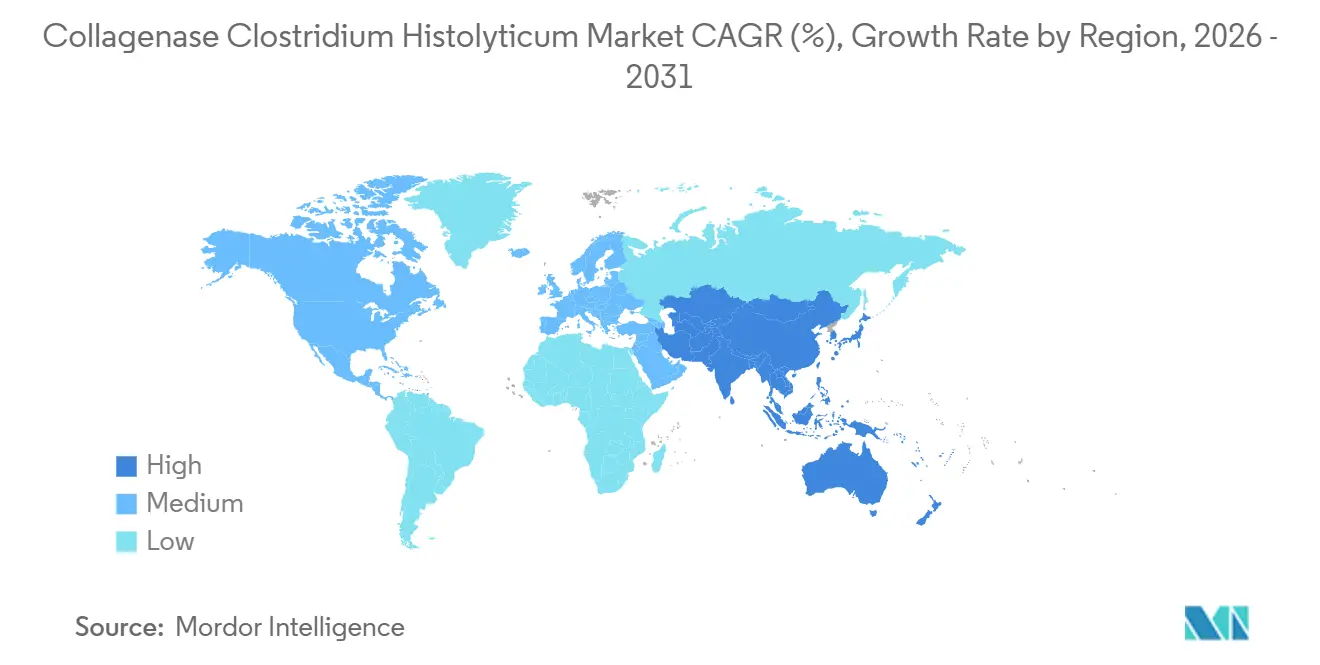
- By geography, North America led with 48.26% in 2025, while Asia-Pacific is projected to grow at a 9.24% CAGR through 2031.
Note: Market size and forecast figures in this report are generated using Mordor Intelligence’s proprietary estimation framework, updated with the latest available data and insights as of January 2026.
Market Trends and Insights
Drivers Impact Analysis of Collagenase Clostridium Histolyticum Market*
| Driver | (~) % Impact on CAGR Forecast | Geographic Relevance | Impact Timeline |
|---|---|---|---|
| Rising Prevalence and Diagnosis of Fibrotic Hand and Urological Disorders | +1.8% | Global, concentrated in North America and Northern Europe | Medium term (2-4 years) |
| Shift Toward Minimally Invasive, Office-Based Treatment | +1.4% | North America and Europe, with spillover to APAC urban centers | Short term (≤ 2 years) |
| Expansion of CCH into New Fibrotic Indications | +1.1% | United States, followed by the European Union | Long term (≥ 4 years) |
| Increasing Specialist Familiarity and Procedure Standardization | +0.7% | North America, Germany, UK, and Australia | Medium term (2-4 years) |
| Aging Population and Accumulated Disease Burden | +1.0% | Global, with the highest effect in Japan, Western Europe, and North America | Long term (≥ 4 years) |
| Reimbursement and Specialty Pharmacy Infrastructure Maturation | +0.6% | North America and selected European markets | Medium term (2-4 years) |
| Source: Mordor Intelligence | |||
Rising Prevalence and Diagnosis of Fibrotic Hand and Urological Disorders
Dupuytren's disease was reported at a 1.99% point prevalence in Dutch primary care, with an incidence of 1.72 per 1,000 person-years.[1] The same study showed a higher prevalence in men and a peak among men aged 71 to 80 years. This age pattern supports sustained demand for the collagenase Clostridium histolyticum market as more patients are screened and referred for hand and urological conditions. Better diagnostic capture can increase treated volumes even where underlying disease prevalence changes slowly. The broader fibrosis burden may also keep attention on enzyme-based approaches across related conditions.
Shift Toward Minimally Invasive, Office-Based Treatment
CCH offers a non-surgical option for patients who may otherwise undergo open procedures or percutaneous needle treatment. A review of 11 studies involving 1,443 patients found comparable efficacy between CCH and percutaneous needle fasciotomy.[2] Office-based administration can reduce the need for anesthesia and hospital resources. This care model fits providers seeking shorter recovery periods and lower facility use. The collagenase Clostridium histolyticum market benefits where clinicians have been trained to administer injections safely. Certification requirements can still slow the shift in areas without formal training programs.
Expansion of CCH into New Fibrotic Indications
The collagenase Clostridium histolyticum market could gain new demand if CCH receives approvals beyond its current core indications. Keenova reported positive Phase 3 results in a 436-patient plantar fibromatosis trial in July 2026. The company stated that the study met its primary endpoint for average daily pain intensity and ranked secondary endpoints related to foot function.[3]The company intends to submit an FDA application in Q4 2026. Its hammer toe program also completed an End-of-Phase 2 FDA meeting, with Phase 3 enrollment planned for Q3 2026.
Increasing Specialist Familiarity and Procedure Standardization
More consistent treatment protocols can make clinicians more confident in using CCH. A Delphi-based survey on CCH treatment for Dupuytren's disease was published in the Journal of Hand Surgery Global Open in 2024. Standard protocols can improve the consistency of dosing, injection technique, and follow-up. They can also reduce training barriers for providers who are considering the treatment. In the collagenase Clostridium histolyticum market, this may strengthen payer confidence where procedure outcomes become more predictable. Updated clinical evidence for Peyronie's disease may similarly support treatment across acute and stable phases.
Restraints Impact Analysis of Collagenase Clostridium Histolyticum Market*
| Restraint | (~) % Impact on CAGR Forecast | Geographic Relevance | Impact Timeline |
|---|---|---|---|
| Serious Procedure-Related Injury and Hypersensitivity Risk | -0.6% | Global, with highest clinical risk visibility in North America | Short term (≤ 2 years) |
| High Per-Course Treatment Cost and Reimbursement Friction | -0.8% | Europe excluding UK, Asia-Pacific emerging markets, and Latin America | Medium term (2-4 years) |
| Restricted Prescriber Access and Training Requirements | -0.5% | Asia-Pacific, Middle East and Africa, and South America | Medium term (2-4 years) |
| Concentrated Manufacturing and Cold-Chain Dependence | -0.3% | Asia-Pacific, Middle East and Africa, and South America | Long term (≥ 4 years) |
| Source: Mordor Intelligence | |||
Serious Procedure-Related Injury and Hypersensitivity Risk
Safety concerns can affect both prescriber confidence and patient willingness to consider CCH. A 2025 review comparing CCH with limited fasciectomy reported a higher recurrence risk for CCH and identified higher rates of hematoma, local pain, and edema in several studies. Hypersensitivity reactions and the risk of tendon rupture require providers to select and monitor patients carefully. These risks may weigh more heavily in community settings with less experience in managing complications. The FDA's REMS requirements reinforce the need for trained prescribers and appropriate handling. The collagenase Clostridium histolyticum market may therefore remain concentrated in specialized settings even as new indications emerge.
High Per-Course Treatment Cost and Reimbursement Friction
High treatment cost remains a barrier where national health systems compare CCH with lower-cost surgical options. In Germany, a university hospital guide states that collagenase treatment for Dupuytren's contracture is available through import from the United States. Import dependence makes access difficult for many patients. The collagenase Clostridium histolyticum market needs reimbursement decisions that recognize any savings from reduced recovery time and avoided surgery. Without this evidence, payer restrictions may continue to limit use in Europe and emerging markets.
*Our forecasts treat driver/restraint impacts as directional, not additive. The impact forecasts reflect baseline growth, mix effects, and variable interactions.
Collagenase Clostridium Histolyticum Market Segment Analysis
By Indication:
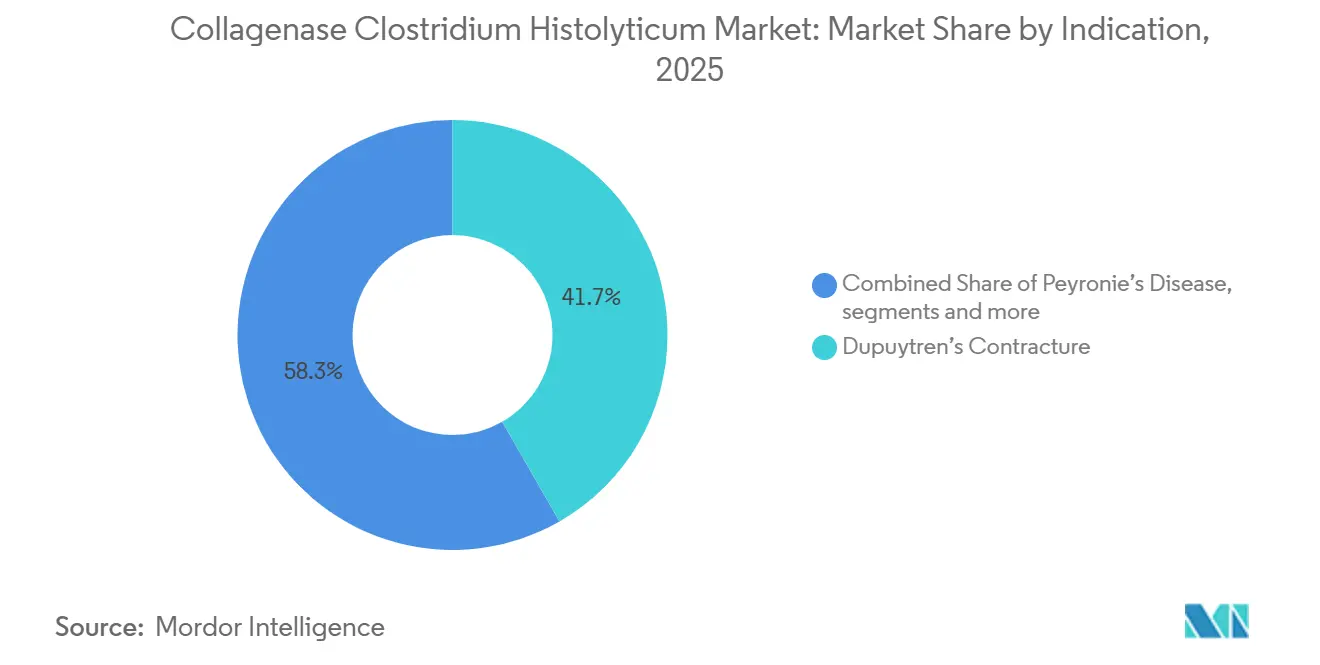
Dupuytren's Contracture Leads Revenue While Peyronie's Disease Grows FastestDupuytren's contracture accounted for 41.72% of the 2025 collagenase Clostridium histolyticum market. Its established clinical use and broad prescriber base make it the main revenue contributor. Dutch primary-care evidence reported a 1.99% prevalence of Dupuytren's disease, with a strong association with older age. The condition is particularly relevant in North America and Northern Europe, where diagnosis pathways and trained providers are more developed. Plantar fibromatosis is an emerging opportunity rather than a current approved core use. Other potential uses include frozen shoulder and related fibrotic conditions that remain investigational.
Peyronie's disease is projected to grow at a 7.51% CAGR through 2031, the fastest rate among indications. Keenova stated in January 2026 that 100,000 Peyronie's disease patients had been treated with XIAFLEX. The condition has limited evidence-backed enzymatic alternatives, which supports the position of CCH within its approved population. Updated evidence found comparable outcomes when CCH was used in acute and stable disease phases. Earlier treatment could increase patient volumes if clinical guidance reflects this evidence. The collagenase Clostridium histolyticum market also benefits from awareness activities that reach patients and partners who may not otherwise seek care. This wider recognition may help reduce underdiagnosis in a condition that has often remained untreated.

By Formulation:
Liquid Products Hold the Larger Base While Lyophilized Products Offer Faster GrowthLiquid formulations held 53.36% of the collagenase Clostridium histolyticum market in 2025. Their lead reflects established handling processes in North American and Western European clinics. Trained injection teams are accustomed to existing storage, preparation, and appointment schedules. This operational familiarity creates switching costs for providers even where clinical outcomes are comparable. Liquid products are therefore likely to retain importance in hospital and specialty clinic settings.
Lyophilized formulations are projected to grow at an 8.36% CAGR through 2031. Their storage and distribution characteristics can be more suitable for locations with less reliable cold-chain infrastructure. Longer stability windows may also give ambulatory centers more flexibility in scheduling treatment. This can help clinics stock products closer to the point of care. The collagenase Clostridium histolyticum industry may see formulation choice become more important as treatment sites move beyond major hospital centers.
By End-User:
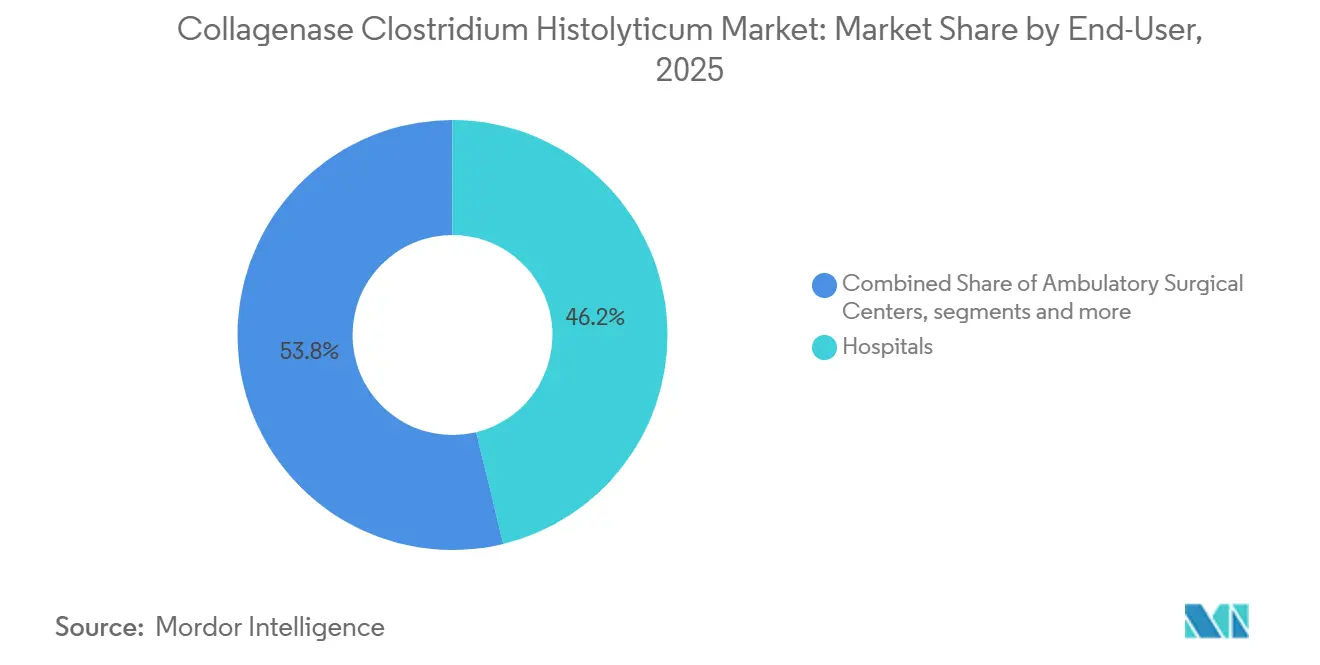
Hospitals Retain the Largest Role While Dermatology Clinics ExpandHospitals accounted for 46.22% of the 2025 collagenase Clostridium histolyticum market. They were early treatment sites because academic centers and orthopedic departments helped establish clinical protocols. Hospitals also have the staff and facilities needed to manage certified administration and adverse events. Ambulatory surgical centers now have a growing role as procedures become more standardized. This gradual move beyond the hospital setting can support broader access in the collagenase Clostridium histolyticum market.
Specialty clinics are forecasted to grow at a 7.92% CAGR through 2031, making them the fastest-growing end-user group. Their growth points to a broader outpatient base for injectable specialty treatments. Coverage for administration can still differ across payers and affect clinic economics. This uneven reimbursement can slow adoption even where clinicians have the necessary skills. The collagenase Clostridium histolyticum market depends on aligning referral, training, and payer processes for outpatient sites.
Geography Analysis
North America Collagenase Clostridium Histolyticum Market
North America accounted for 48.26% of the collagenase Clostridium histolyticum market in 2025. The region benefits from FDA-approved treatment pathways, established specialty pharmacies, and a large trained provider base. Keenova reported USD 546.3 million in XIAFLEX net sales for FY2025 and USD 134 million for Q1 2026, which was 11% higher year over year. The United States drives regional use, while Canada and Mexico have less developed coverage for injectable treatments in these indications.
Europe Collagenase Clostridium Histolyticum Market
Europe has an established regulatory base but uneven patient access. The European Medicines Agency authorized XIAPEX for Dupuytren's contracture in 2011 and for Peyronie's disease in 2015. The United Kingdom and France have relatively stronger use within public health systems. Germany remains constrained because treatment may require imports from the United States. Italy's experience with more than 2,200 patients provides a sizable clinical reference for regional discussions on access.
APAC, MEA and South America Collagenase Clostridium Histolyticum Market
Asia-Pacific is forecasted to grow at a 9.24% CAGR through 2031, the highest regional rate in the collagenase Clostridium histolyticum market. A 2024 study reported that the total number of treated patients fell 43%, while surgical volumes rose to 1.5 times the 2019 level. This experience indicates that demand may remain untreated when enzymatic therapy is unavailable. Regulatory progress in Japan and China, together with growing specialist communities in Australia, South Korea, and India, can support future uptake. The rest of the world, including regions like the Middle East, Africa, and South America, remains early-stage regions, with private healthcare development offset by regulatory and cold-chain constraints.
Competitive Landscape
The collagenase Clostridium histolyticum market is highly concentrated in therapeutic CCH products. Keenova markets XIAFLEX in the United States, while Recordati Rare Diseases holds European commercial rights for XIAPEX. The European authorization provides the regulatory basis for XIAPEX sales in approved indications. Biologic complexity, specialist certification, and established provider relationships make direct entry difficult. Patent coverage for the core molecule extends through July 2028, supporting the current leader's pricing position. The competitive structure favors companies that can manage clinical evidence, controlled distribution, and provider education together.
Nordmark is an important upstream participant because it produces collagenase, an active pharmaceutical ingredient in Germany. Its manufacturing capability supports both therapeutic and research uses of the enzyme. Worthington Biochemical and Thermo Fisher Scientific supply research-grade enzymes for cell therapy and tissue engineering applications. These activities expand the use of collagenase without directly replicating the therapeutic CCH product model. MediWound began a Phase 2 head-to-head study of EscharEx against collagenase in venous leg ulcers in 2025.
Keenova is using its established product and clinical framework to pursue new indications. The company reported positive plantar fibromatosis Phase 3 results in July 2026 and intends to file an FDA application in Q4 2026. These actions aim to increase use within the existing certified provider network and support new patient referrals. Competitive activity is likely to focus on indication expansion, supply reliability, and access rather than near-term direct product substitution.
Collagenase Clostridium Histolyticum Industry Leaders
-
Endo International plc
-
Swedish Orphan Biovitrum AB (Sobi)
-
Worthington Biochemical Corporation
-
BioSpecifics Technologies Corp.
-
Keenova Therapeutics plc
- *Disclaimer: Major Players sorted in no particular order
Collagenase Clostridium Histolyticum Market Companies Covered in this Report
- Abbvie
- Amano Enzyme Inc.
- BioSpecifics Technologies Corp.
- Endo International
- Horizon Therapeutics
- Ipsen
- Keenova Therapeutics plc
- MediWound Ltd.
- Nordmark Arzneimittel GmbH & Co. KG
- Recordati Rare Diseases
- Revance Therapeutics, Inc.
- Sanofi
- Swedish Orphan Biovitrum
- Teva Pharmaceutical Industries
- Worthington Biochemical Corporation
Recent Industry Developments in Collagenase Clostridium Histolyticum Market
- July 2026: Keenova Therapeutics reported positive Phase 3 results for XIAFLEX in plantar fibromatosis (trial EN3835-309 PFI, 436 patients), meeting its primary endpoint on average daily pain intensity and ranking secondary endpoints on the Foot Function Index; the company intends to submit an FDA application in Q4 2026 and projects approximately 300,000 patients annually could seek treatment upon approval.
- May 2026: Keenova presented updated clinical findings on XIAFLEX for Peyronie's disease with ventral curvature at the American Urological Association (AUA) Annual Meeting, demonstrating consistent effectiveness and safety across curvature presentations, expanding the label-supportable patient population.
- May 2026: Keenova launched a new Dupuytren's contracture awareness campaign targeting patients and referring physicians, complementing its February 2026 digital campaign for Peyronie's disease on streaming and social platforms, including Prime Video, HBO Max, and Hulu.
Global Collagenase Clostridium Histolyticum Market Report Scope
According to the report’s scope, the collagenase Clostridium histolyticum market refers to the global segment for injectable collagenase enzymes derived from Clostridium histolyticum, primarily used in healthcare for the non‑surgical treatment of fibrotic disorders such as Dupuytren’s contracture and Peyronie’s disease. It is a niche therapeutic market within the broader collagenase enzyme market, driven by demand for minimally invasive therapies, regulatory approvals, and expanding clinical adoption.
The collagenase Clostridium histolyticum market is segmented into indication, formulation, end-user, and geography. By indication, the market is segmented into Dupuytren’s contracture, Peyronie’s disease, cellulite, and other indications. By formulation, the market is segmented into liquid and lyophilized. By end-user, the market is segmented into hospitals, ambulatory surgical centers, and dermatology clinics. By geography, the market is segmented into North America, Europe, Asia-Pacific, and the Rest of the World. The report offers values (USD) for all the above segments.
Segmentation Overview
| Dupuytren's Contracture |
| Peyronie's Disease |
| Cellulite |
| Other Indications |
| Liquid |
| Lyophilized |
| Hospitals |
| Ambulatory Surgical Centers |
| Specialty Clinics |
| North America | United States |
| Canada | |
| Mexico | |
| Europe | Germany |
| United Kingdom | |
| France | |
| Italy | |
| Spain | |
| Rest of Europe | |
| Asia-Pacific | China |
| Japan | |
| India | |
| Australia | |
| South Korea | |
| Rest of Asia-Pacific | |
| Rest of the World |
| By Indication | Dupuytren's Contracture | |
| Peyronie's Disease | ||
| Cellulite | ||
| Other Indications | ||
| By Formulation | Liquid | |
| Lyophilized | ||
| By End-User | Hospitals | |
| Ambulatory Surgical Centers | ||
| Specialty Clinics | ||
| By Geography | North America | United States |
| Canada | ||
| Mexico | ||
| Europe | Germany | |
| United Kingdom | ||
| France | ||
| Italy | ||
| Spain | ||
| Rest of Europe | ||
| Asia-Pacific | China | |
| Japan | ||
| India | ||
| Australia | ||
| South Korea | ||
| Rest of Asia-Pacific | ||
| Rest of the World | ||
Key Questions Answered in the Report
What is driving demand for collagenase treatments?
Aging populations, improved diagnosis of fibrotic disorders, and demand for minimally invasive care support the demand. The market is valued at USD 140.70 million in 2025 to reach USD 150.06 million in 2026 and is forecasted to reach USD 211.54 million in 2031 at a 7.11% CAGR.
Which collagenase indication holds the largest share?
Dupuytren's contracture held 41.72% in 2025, supported by established clinical use and an extensive prescriber base.
Which collagenase application is growing the fastest?
Peyronie's disease is projected to grow at a 7.51% CAGR through 2031, supported by broader awareness and evidence for treatment during acute and stable phases.
Which region has the strongest growth outlook?
Asia-Pacific is forecasted to grow at a 9.24% CAGR through 2031, although reimbursement, regulatory progress, and supply infrastructure will shape actual uptake.