
Chagas Disease Treatment Market Size and Share
Market Overview
| Study Period | 2020 - 2031 |
|---|---|
| Market Size (2026) | USD 0.55 Billion |
| Market Size (2031) | USD 0.8 Billion |
| Growth Rate (2026 - 2031) | 7.80 % |
| Fastest Growing Market | Asia-Pacific |
| Largest Market | North America |
| Market Concentration | Medium |
Major Players *Disclaimer: Major Players sorted in no particular order Image © Mordor Intelligence. Reuse requires attribution under CC BY 4.0. | |
Chagas Disease Treatment Market Analysis by Mordor Intelligence
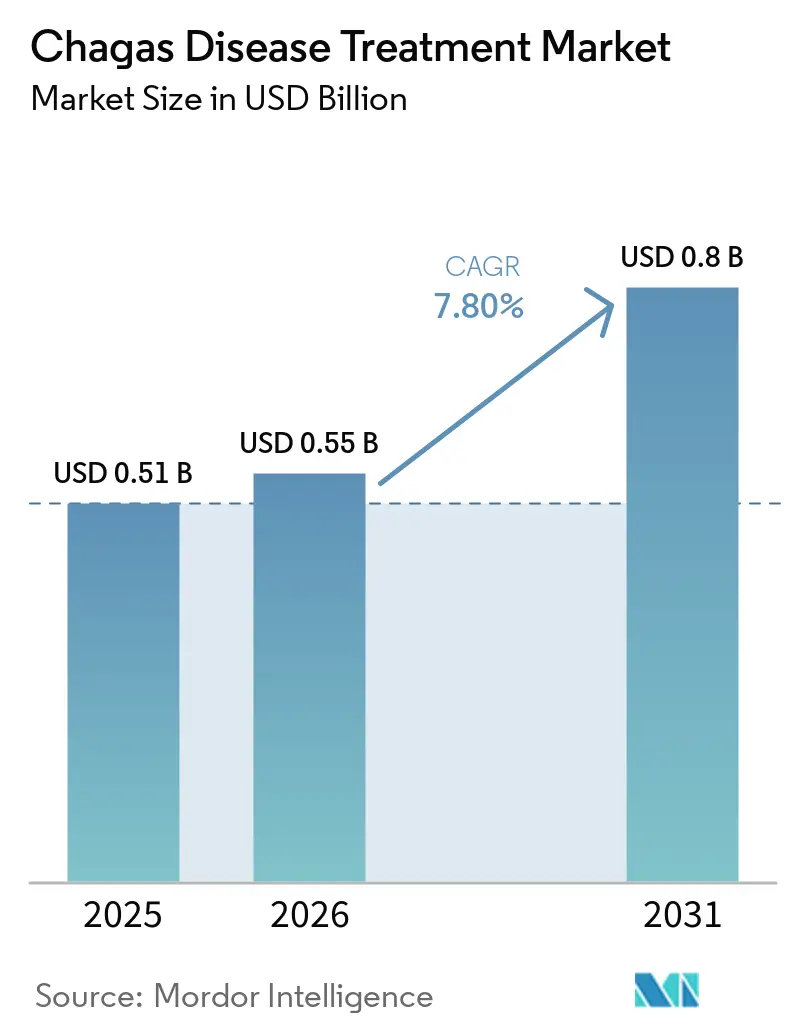
The Chagas Disease Treatment Market size is expected to increase from USD 0.51 billion in 2025 to USD 0.55 billion in 2026 and reach USD 0.8 billion by 2031, growing at a CAGR of 7.80% over 2026-2031.
The Chagas disease treatment market is supported by the endemic disease burden across 21 Latin American countries and increasing cases among migrant communities in North America and Europe. Globally, 6 million to 8 million people were living with Trypanosoma cruzi infection, while fewer than 10% had received a diagnosis and only 1% had received timely treatment. Formal screening pathways in non-endemic healthcare systems support treatment uptake by converting more confirmed cases into treatment. Donation programs and public procurement sustain access but limit pricing flexibility and private research incentives. Key opportunities include improved screening, expanded pediatric access, and early treatment delivery models.
Key Report Takeaways
- By product type, benznidazole held 68.40% of revenue in 2025, while nifurtimox recorded the highest forecast CAGR at 10.23% through 2031.
- By treatment type, etiological antiparasitic treatment held 61.45% of revenue in 2025, while symptomatic and organ-specific treatment projected a CAGR at 9.80% through 2031.
- By disease phase and clinical form, chronic Chagas disease held 65.77% of revenue in 2025, while acute Chagas disease projected a CAGR at 9.45% through 2031.
- By dosage form, tablets held 75.6% of revenue in 2025, while injectables projected a CAGR at 10.56% through 2031.
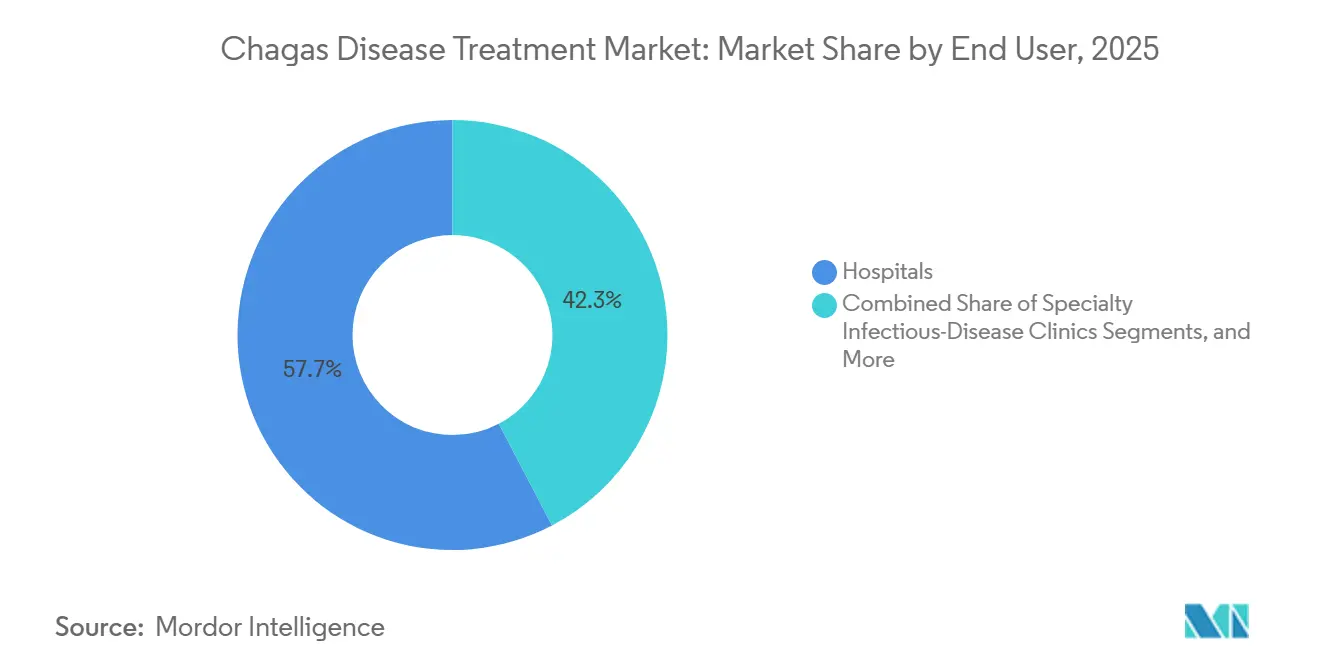
- By end user, hospitals held 57.66% of revenue in 2025, while specialty infectious-disease clinics projected a CAGR at 8.88% through 2031.
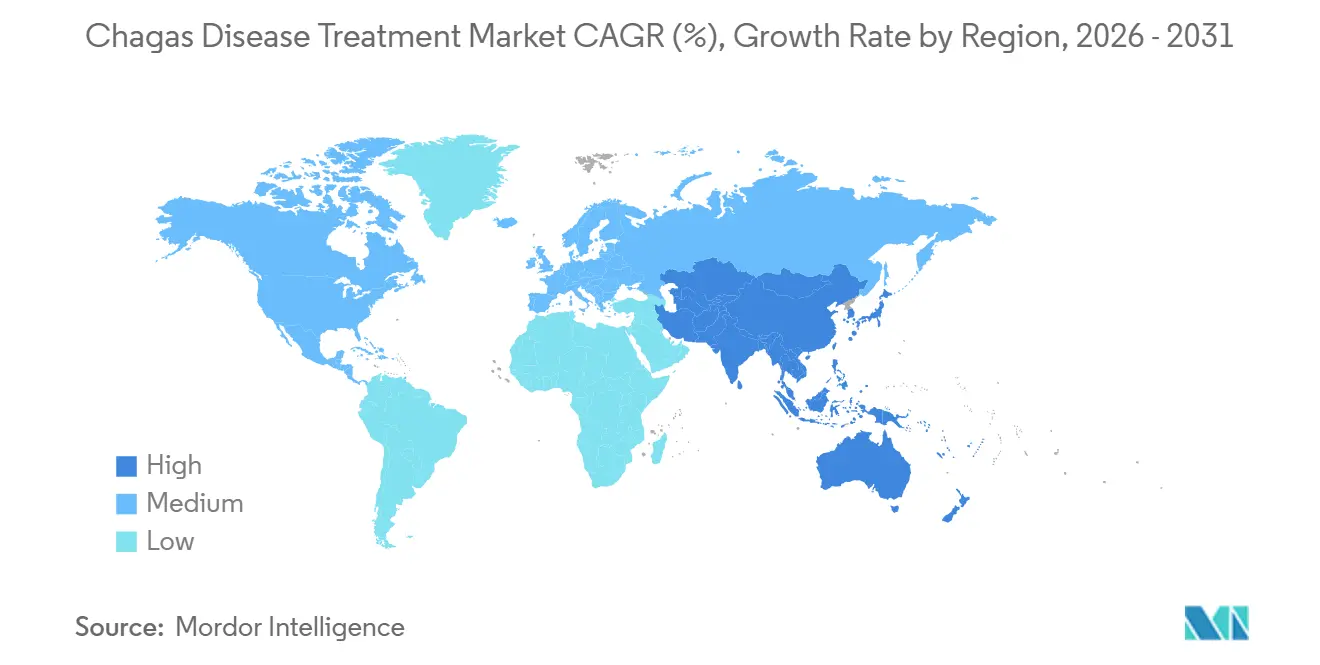
- By geography, North America held 39.44% of revenue in 2025, while Asia-Pacific recorded the highest forecast CAGR at 11.88% through 2031.
Note: Market size and forecast figures in this report are generated using Mordor Intelligence’s proprietary estimation framework, updated with the latest available data and insights as of January 2026.
Market Trends and Insights
Drivers Impact Analysis of Chagas Disease Treatment Market*
| DRIVER | (~) % IMPACT ON CAGR FORECAST | GEOGRAPHIC RELEVANCE | IMPACT TIMELINE |
|---|---|---|---|
| Screening of migrant and at-risk populations | +1.5% | North America and Europe | Short term (≤ 2 years) |
| Expansion of congenital chagas test-and-treat programs | +1.1% | Latin America, North America, and Europe | Short term (≤ 2 years) |
| Who and paho drug access and elimination programs | +1.3% | Global, including 21 endemic countries in the Americas | Medium term (2-4 years) |
| Commercialization of pediatric benznidazole presentations | +1.2% | Latin America and North America | Short term (≤ 2 years) |
| Decentralized care pathways and remote-area treatment delivery | +1.0% | South America and Central America | Medium term (2-4 years) |
| Shorter-duration and lower-dose regimen development | +0.8% | Global | Long term (≥ 4 years) |
| Source: Mordor Intelligence | |||
Migrant Screening Mandates Create High-Conversion Treatment Demand in Non-Endemic Markets
In July 2025, Washington State issued a provider alert recommending Chagas screening for patients who had lived in Mexico, Central America, or South America for 6 months or longer. The alert expanded institutional screening protocols used at Boston Medical Center and NYC Health + Hospitals.[1] A 2026 study reported 7.8% seroprevalence among screened migrants in Barcelona, including 12.9% among Bolivian nationals. Specialist settings in non-endemic countries initiated treatment for 80% to 85% of confirmed diagnoses, compared with less than 30% in parts of Latin America, strengthening the Chagas disease treatment market through faster specialist care and reimbursement access.[2]
Congenital Test-And-Treat Programs Accelerate Pediatric Formulation Demand
Congenital transmission remained a leading route for new Chagas infections in non-endemic countries. Treatment during the first year of life achieved cure rates above 90%, compared with 10% to 20% in the chronic phase. PAHO’s 2025 program framework set a 95% etiological treatment target for children under 14 who tested positive for T. cruzi, as well as pregnant women and newborns under its EMTCT Plus approach.[3] The 12.5 mg pediatric benznidazole tablet developed by DNDi, Laboratorio ELEA Phoenix, and Mundo Sano Foundation improved dosing precision, while DNDi’s collaboration with CONICET evaluated MultiCruzi-measured antibody decline in children as a surrogate regulatory endpoint.
WHO And PAHO Programs Sustain Volume While Setting Endemic-Market Pricing Ceilings
Multilateral procurement served as both a demand base and pricing constraint for the Chagas disease treatment market. In January 2025, PAHO distributed more than 1.3 million nifurtimox tablets to 19 endemic countries, enabling more than 4,500 complete treatments. In November 2025, WHO and Bayer renewed their 2025-2030 collaboration, committing USD 15.5 million in donated medicines and USD 9.45 million in program support. These programs supported treatment data and continuity while limiting commercial pricing in public procurement settings.
Pediatric Drug Registrations Unlock Commercial Formulary Access in High-Value Markets
In October 2025, Spain authorized nifurtimox reimbursement under its National Health System, marking the first formal listing of a Chagas medicine in a European national formulary and replacing the foreign-drug exemption route. The decision provided a reference point for Italy, France, and Germany as they considered similar access pathways. The FDA established a pediatric regulatory precedent for benznidazole through its approval pathway. These developments created a clearer route to pediatric formulary inclusion when approvals aligned with practical formulations and screening programs.
Restraints Impact Analysis of Chagas Disease Treatment Market*
| RESTRAINT | (~) % IMPACT ON CAGR FORECAST | GEOGRAPHIC RELEVANCE | IMPACT TIMELINE |
|---|---|---|---|
| Asymptomatic infection and low diagnosis-to-treatment conversion | -1.3% | Global, with the highest relevance in Latin America | Short term (≤ 2 years) |
| Adverse-event burden and treatment discontinuation | -1.0% | Global | Medium term (2-4 years) |
| Fragile and donor-dependent product supply chains | -0.8% | South America and the Middle East and Africa | Medium term (2-4 years) |
| Weak commercial incentives for new chemical entities | -0.6% | Global | Long term (≥ 4 years) |
| Source: Mordor Intelligence | |||
Asymptomatic Presentation Suppresses Diagnosis-To-Treatment Conversion Rates
Only 10% of people living with Chagas disease had received a diagnosis, and 1% had received timely treatment, limiting the addressable patient pool. Up to 70% of chronic patients remained asymptomatic for years or decades. A 2026 DNDi-supported field study in Santiago del Estero, Argentina, identified fewer than 50 infections among 1,380 people screened through active community rapid testing, despite trained staff. Guatemala clinic records covering 590 patients showed that 77.5% initiated therapy, highlighting the need for health-system investment to improve diagnosis-to-care conversion.
Adverse-Event Burden Drives Discontinuation And Limits Effective Utilization
A 2025 Boston Medical Center analysis found that 84.3% of patients who started benznidazole experienced at least one adverse event. Allergic, gastrointestinal, and neuropsychiatric reactions affected 47.0%, 45.8%, and 39.8% of patients, respectively, while rash led to discontinuation in 22.9% of cases. Guatemala clinic records showed a 71.5% adverse-reaction rate and multisystem reactions in 59% of cases. The NuestroBen Phase III trial enrolled 540 participants in Argentina and Bolivia to compare two- and four-week benznidazole regimens with the standard eight-week course, with results expected by late 2028.
*Our forecasts treat driver/restraint impacts as directional, not additive. The impact forecasts reflect baseline growth, mix effects, and variable interactions.
Chagas Disease Treatment Market Segment Analysis
By Product Type:
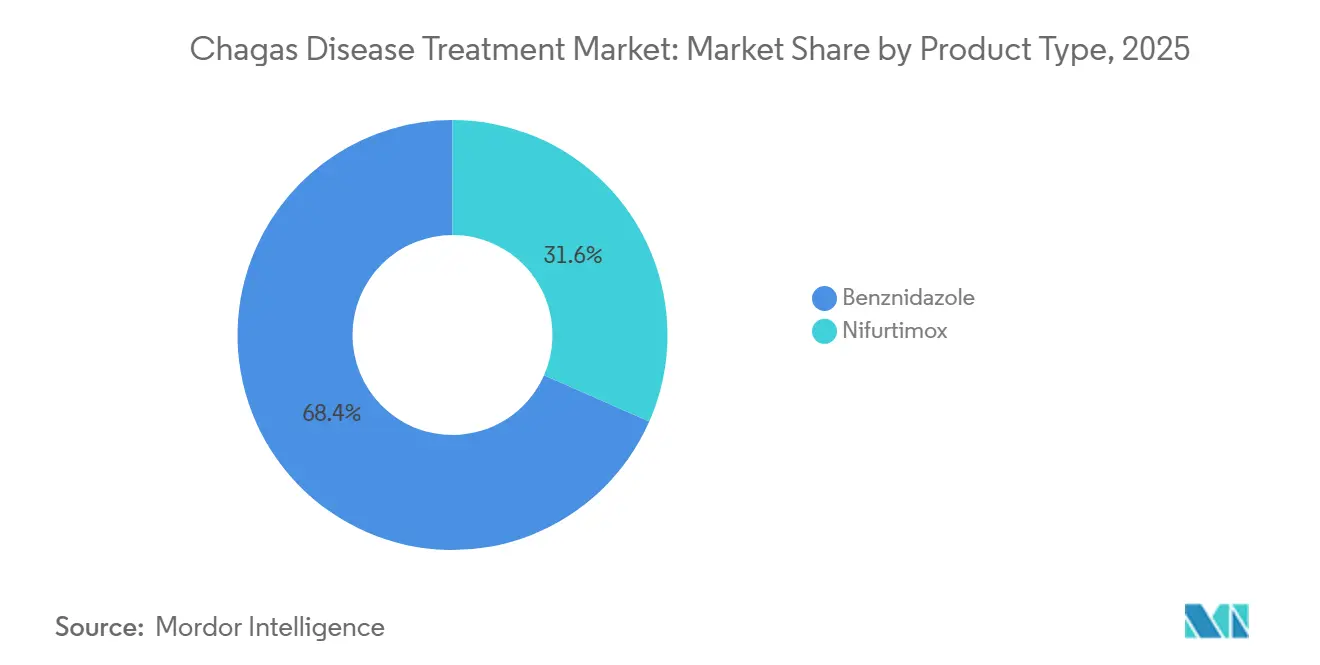
Benznidazole Leads While Nifurtimox Gains Regulatory SupportBenznidazole held 68.40% of product-type revenue in 2025, supported by its WHO first-line designation, pediatric approval, and manufacturing base in Argentina and Brazil. It accounted for the largest share of the Chagas disease treatment market within the product category. Price differences between North American and European pharmacies and PAHO-supported supply in endemic countries limited revenue capture. Its US orphan-drug exclusivity expired in August 2024, although limited manufacturer interest has constrained generic competition.
Nifurtimox is forecast to expand at a CAGR of 10.23% through 2031, the fastest rate in this product category. Spain added the product to its formulary in October 2025, broadening patient access, while Bayer’s 30 mg disintegrating pediatric tablet supports treatment for younger patients. WHO and PAHO access programs continue to sustain availability in endemic countries. Growth depends on screening, reimbursement, and providers’ ability to manage treatment tolerability.

By Treatment Type:
Antiparasitic Protocols Lead While Organ-Specific Care Broadens DemandEtiological antiparasitic treatment accounted for 61.45% of treatment-type revenue in 2025. The segment led revenue because parasite elimination remains the clinical priority in acute and pediatric cases, with cure rates approaching or exceeding 90% when treatment begins early. Medicines targeting T. cruzi directly remain central to clinical care and public procurement. Public programs also prioritize treatment for diagnosed children and newborns.
Symptomatic and organ-specific treatment is forecast to grow at a CAGR of 9.80% through 2031. Growth is supported by cardiomyopathy and gastrointestinal complications affecting 20% to 30% of chronic patients. In April 2026, Brazil’s Ministry of Health and Fiocruz launched Phase 2 of a selenium trial for chronic chagasic cardiomyopathy, committing BRL 8.6 million, equivalent to USD 1.6 million. Dedicated cardiac therapies could broaden the revenue base, while long-term follow-up supports demand among patients with chronic complications.
By Disease Phase and Clinical Form:
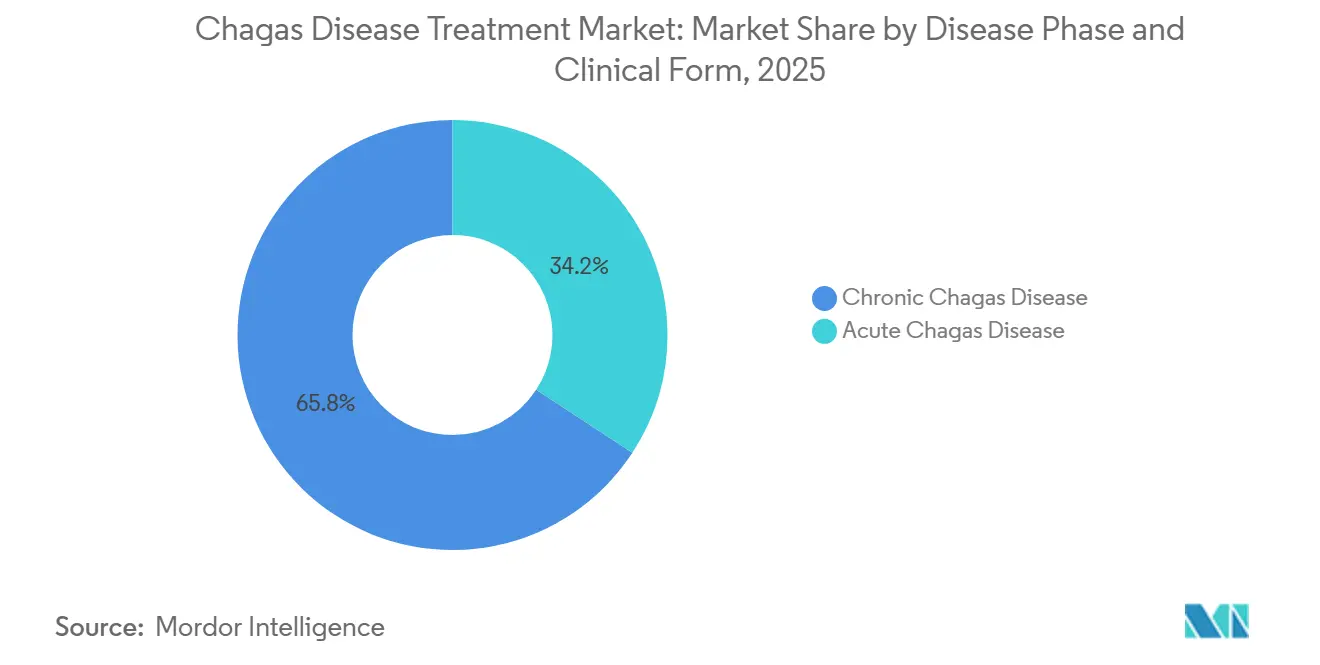
Chronic Disease Anchors Revenue While Acute Detection RisesChronic Chagas disease accounted for 65.77% of disease-phase revenue in 2025, supported by a large patient reservoir. Many patients are identified through migrant screening rather than symptom-driven diagnosis. The NuestroBen Phase III trial is evaluating shorter benznidazole regimens for chronic indeterminate patients across eight sites in Argentina and Bolivia, with results expected by the end of 2028. Earlier diagnosis and improved treatment completion remain key market requirements.
Acute Chagas disease is forecast to grow at a CAGR of 9.45% through 2031. Brazil recorded 627 acute cases in preliminary 2025 data, with 97% reported in the North and largely linked to foodborne transmission, according to the supplied research. WHO and PAHO congenital elimination goals classify congenital infections as acute disease, creating demand for prompt treatment. Decentralized testing and improved point-of-care diagnostics can strengthen early diagnosis, referral, and pediatric treatment demand.
By Dosage Form:
Tablets Dominate While Injectables Serve Acute-Care SettingsTablets held 75.6% of dosage-form revenue in 2025. Oral medicines remain the standard of care for established Chagas disease therapies and support outpatient treatment courses lasting 60 to 90 days. Their ease of administration supports delivery beyond tertiary hospitals, although adverse-event monitoring remains necessary. Pediatric tablet options also improve dose management for younger patients.
Injectables are forecast to grow at a CAGR of 10.56% through 2031, the highest rate in the dosage-form category. Growth reflects hospital-based treatment for severe acute, congenital, and immunosuppression-reactivated infections. A 2025 scientific study developed lipid-based self-emulsifying nifurtimox systems and poly(ε-caprolactone) implants with enhanced anti-T. cruzi activity in animal models. Suspension and experimental nanocapsule formats remain in early development and are not expected to materially affect revenue before 2028.
By End User:
Hospitals Lead While Specialty Clinics ExpandHospitals held 57.66% of end-user revenue in 2025. They led the segment by managing severe acute cases, cardiac complications, and supervised treatment initiation. Hospitals also provide specialist support for adverse-event management, complex disease, and reactivated infections. Public referral systems frequently direct patients to hospitals following a positive test, reinforcing their role in diagnosis, treatment initiation, and clinical monitoring.
Specialty infectious disease clinics are forecast to grow at a CAGR of 8.88% through 2031. Boston Medical Center’s Strong Hearts program screened 14,354 patients through 2023 and reported a 0.7% prevalence rate, according to the supplied research. Similar care models are being replicated at NYC Health + Hospitals Bellevue and Metropolitan campuses. The Novartis-supported Sertão do Pajeú project in Pernambuco and DNDi programs in Colombia, Guatemala, and Bolivia are assessing local treatment delivery and community health worker models.
Geography Analysis
North America Chagas Disease Treatment Market
North America held 39.44% of the Chagas disease treatment market share in 2025, making it the largest regional contributor. The United States supported this position through FDA-approved medicines, specialist infectious disease networks, and private insurance reimbursement. An estimated 300,000 people with T. cruzi infection live in the United States. CDC training and state provider alerts improved physician awareness, while higher diagnosis-to-treatment conversion supported commercial medicine use. Canada benefited from growing Latin American immigration, while Mexico contributed to the endemic demand, partly served through PAHO procurement.
South America Chagas Disease Treatment Market
South America carried the largest endemic patient burden, but donation and public procurement programs limited its commercial revenue share. Brazil remained the largest treatment setting by patient volume, reporting 8,106 chronic cases in preliminary 2025 data, concentrated in Minas Gerais, Bahia, and Goiás. In April 2026, Brazil committed BRL 12 million, equivalent to USD 2.2 million, for surveillance and vector control in 155 priority municipalities across 17 states. Argentina produced benznidazole, the active pharmaceutical ingredient, and the 12.5 mg pediatric tablet, while Laboratorio ELEA Phoenix co-sponsored the NuestroBen Phase III trial. In 2025, Colombia adopted rapid diagnostic tests into its official Chagas algorithm, potentially expanding detection from hospitals to community settings.
APAC and EMEA Chagas Disease Treatment Market
Asia-Pacific is projected to grow at an 11.88% CAGR through 2031, representing the fastest regional growth rate in the Chagas disease treatment market. Japan and Australia improved detection among Latin American migrants through tertiary infectious disease departments, while commercial distribution generated higher revenue per treated patient than donation-based supply. Europe also expanded, as Spain’s October 2025 formulary decision provided a reference for other countries, and the Italian screening analysis supported national programs. The Middle East and Africa remained at an early awareness stage, with cases primarily linked to Latin American labor migrants in Gulf Cooperation Council countries.
Competitive Landscape
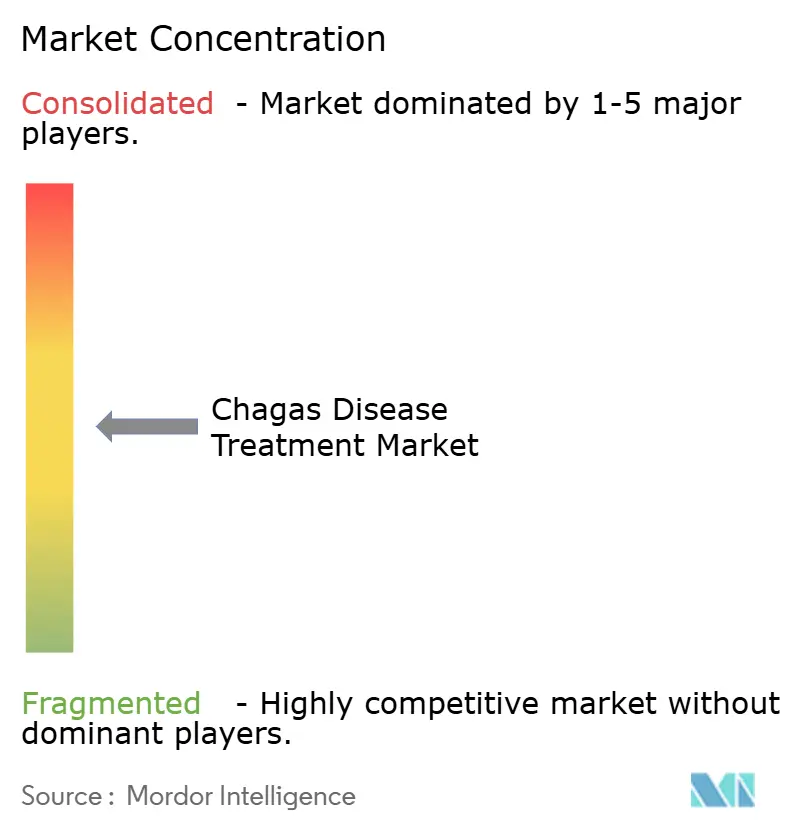
The Chagas disease treatment market has a moderately concentrated supply base, with nonprofit and for-profit channels operating in parallel. Bayer AG and Insud Pharma, through the Mundo Sano Foundation, supplied a significant share of global medicines through WHO and PAHO arrangements. In 2025, Bayer and WHO renewed their collaboration, including USD 15.5 million in donated medicines, strengthening nifurtimox availability in national treatment programs. While donations improve access in endemic countries, they limit pricing opportunities for new manufacturers.
Laboratorio ELEA Phoenix co-sponsors the NuestroBen Phase III trial to support adult indications for shorter benznidazole regimens. This evidence could enable reimbursed sales in countries where adult use remains off-label. In June 2026, AN2 Therapeutics reported 100% parasitic elimination in naturally infected non-human primates at human-attainable exposures and planned a Phase II trial in adults with chronic Chagas disease for late 2026. AN2-502998, co-developed with DNDi, could expand treatment options beyond the two established medicines if clinical benefits are confirmed.
Novartis’s Phase II LXE408 study recruited participants from April 2025, including patients with chronic Chagas disease. Adult regulatory approvals in the United States and European Union remained uncertain, as off-label prescribing could create reimbursement gaps. Fixed-dose regimens for chagasic cardiomyopathy could form a separate treatment category. In 2025, DNDi consolidated early discovery activities through a global hit-to-lead consortium involving Shionogi, the University of Dundee, Nagasaki University, and the University of Osaka.
Chagas Disease Treatment Industry Leaders
-
GlaxoSmithKline plc
-
Bayer AG
-
Novartis AG
-
Sanofi
-
F. Hoffmann-La Roche Ltd
- *Disclaimer: Major Players sorted in no particular order
Chagas Disease Treatment Market Companies Covered in this Report
- AN2 Therapeutics, Inc.
- Anacor Pharmaceuticals, Inc.
- AstraZeneca
- Bayer
- Collaborations Pharmaceuticals, Inc.
- Daiichi Sankyo
- Eisai
- Epichem Pty Ltd
- Roche
- GlaxoSmithKline
- Grupo Praxis Pharmaceutical S.A.
- Insud Pharma, S.L.U.
- Johnson & Johnson
- Kancera AB
- Laboratorio Elea Phoenix S.A.
- Maprimed S.A.
- Merck
- Nortec Quimica S.A.
- Novartis
- Oblita Therapeutics BVBA
- Pfizer
- Sanofi
Recent Industry Developments in Chagas Disease Treatment Market
- June 2026: AN2 Therapeutics reported positive Phase 1 and non-human primate results for AN2-502998, achieving 100% parasite elimination at human-attainable exposures, and planned a Phase 2 trial in chronic Chagas disease for late 2026.
- April 2026: Brazil's Ministry of Health allocated BRL 12 million (USD 2.2 million) for Chagas disease surveillance and vector control across 155 municipalities and BRL 8.6 million (USD 1.6 million) for Phase 2 of the Fiocruz selenium trial.
- November 2025: WHO and Bayer AG renewed their 2025–2030 collaboration, committing 18 million nifurtimox tablets and vials valued at USD 15.5 million, alongside USD 9.45 million in program support.
- October 2025: Spain's AEMPS authorized and listed nifurtimox under the Spanish National Health System, replacing the foreign-drug exemption pathway and potentially setting a precedent for other European Union member states.
Global Chagas Disease Treatment Market Report Scope
As per the scope of the report, chagas disease is a tropical illness caused by the parasite Trypanosoma cruzi, spread mainly by insect bites. Treatment uses anti-parasite drugs like benznidazole or nifurtimox to kill the parasite. These drugs work best during the early stage. Later chronic stages require symptom management for heart or gut issues.
The Chagas disease treatment market is segmented by product type, treatment type, disease phase and clinical form, dosage form, end user, and geography. By product type, the market includes benznidazole and nifurtimox. By treatment type, the market is segmented into etiological antiparasitic treatment and symptomatic and organ-specific treatment. By disease phase and clinical form, the market is categorized into acute Chagas disease and chronic Chagas disease. By dosage form, the market is segmented into tablets, injectables, and others. By end user, the market is segmented into hospitals, specialty infectious disease clinics, primary care and community health centers, and home-based treatment and follow-up. By geography, the market is analyzed across North America, Europe, Asia-Pacific, the Middle East and Africa, and South America. The report also covers the estimated market sizes and trends for 17 countries across major regions globally. The report offers market sizes and forecasts in terms of value (USD) for the above segments.
| Benznidazole |
| Nifurtimox |
| Etiological Antiparasitic Treatment |
| Symptomatic and Organ-Specific Treatment |
| Acute Chagas Disease |
| Chronic Chagas Disease |
| Tablet |
| Injectables |
| Others |
| Hospitals |
| Specialty Infectious-Disease Clinics |
| Primary-Care and Community Health Centers |
| Home-Based Treatment and Follow-Up |
| North America | United States |
| Canada | |
| Mexico | |
| Europe | Germany |
| United Kingdom | |
| France | |
| Italy | |
| Spain | |
| Rest of Europe | |
| Asia-Pacific | China |
| India | |
| Japan | |
| Australia | |
| South Korea | |
| Rest of Asia-Pacific | |
| Middle East and Africa | GCC |
| South Africa | |
| Rest of Middle East and Africa | |
| South America | Brazil |
| Argentina | |
| Rest of South America |
| By Product Type | Benznidazole | |
| Nifurtimox | ||
| By Treatment Type | Etiological Antiparasitic Treatment | |
| Symptomatic and Organ-Specific Treatment | ||
| By Disease Phase and Clinical Form | Acute Chagas Disease | |
| Chronic Chagas Disease | ||
| By Dosage Form | Tablet | |
| Injectables | ||
| Others | ||
| By End User | Hospitals | |
| Specialty Infectious-Disease Clinics | ||
| Primary-Care and Community Health Centers | ||
| Home-Based Treatment and Follow-Up | ||
| By Geography | North America | United States |
| Canada | ||
| Mexico | ||
| Europe | Germany | |
| United Kingdom | ||
| France | ||
| Italy | ||
| Spain | ||
| Rest of Europe | ||
| Asia-Pacific | China | |
| India | ||
| Japan | ||
| Australia | ||
| South Korea | ||
| Rest of Asia-Pacific | ||
| Middle East and Africa | GCC | |
| South Africa | ||
| Rest of Middle East and Africa | ||
| South America | Brazil | |
| Argentina | ||
| Rest of South America | ||
Key Questions Answered in the Report
What is the projected value of the Chagas disease treatment market by 2031?
The Chagas disease treatment market is projected to reach USD 0.80 billion by 2031, from USD 0.55 billion in 2026, at a CAGR of 7.80%.
Which Chagas disease therapy holds the largest revenue share?
Benznidazole held 68.40% of product-type revenue in 2025, supported by its established role as a first-line therapy.
Which Chagas disease therapy is growing fastest?
Nifurtimox is forecast to grow at a 10.23% CAGR through 2031, supported by pediatric access and recent regulatory progress.
What is driving demand for Chagas disease treatment?
Expanded migrant screening, congenital test-and-treat programs, and pediatric formulations are increasing the number of patients who can enter care.
Which region leads Chagas disease treatment revenue?
North America held 39.44% of revenue in 2025, supported by specialist care networks and commercial reimbursement.
What limits wider treatment access for Chagas disease?
Low diagnosis rates, asymptomatic infection, treatment adverse events, and donor-dependent supply chains restrict access and treatment completion.