
Cesium Hydroxide Market Size and Share
Market Overview
| Study Period | 2022 - 2032 |
|---|---|
| Market Size (2027) | USD 61.93 Million |
| Market Size (2032) | USD 81.78 Million |
| Growth Rate (2027 - 2032) | 5.72 % |
| Fastest Growing Market | Asia-Pacific |
| Largest Market | North America |
| Market Concentration | Medium |
Major Players *Disclaimer: Major Players sorted in no particular order Image © Mordor Intelligence. Reuse requires attribution under CC BY 4.0. | |
Cesium Hydroxide Market Analysis by Mordor Intelligence
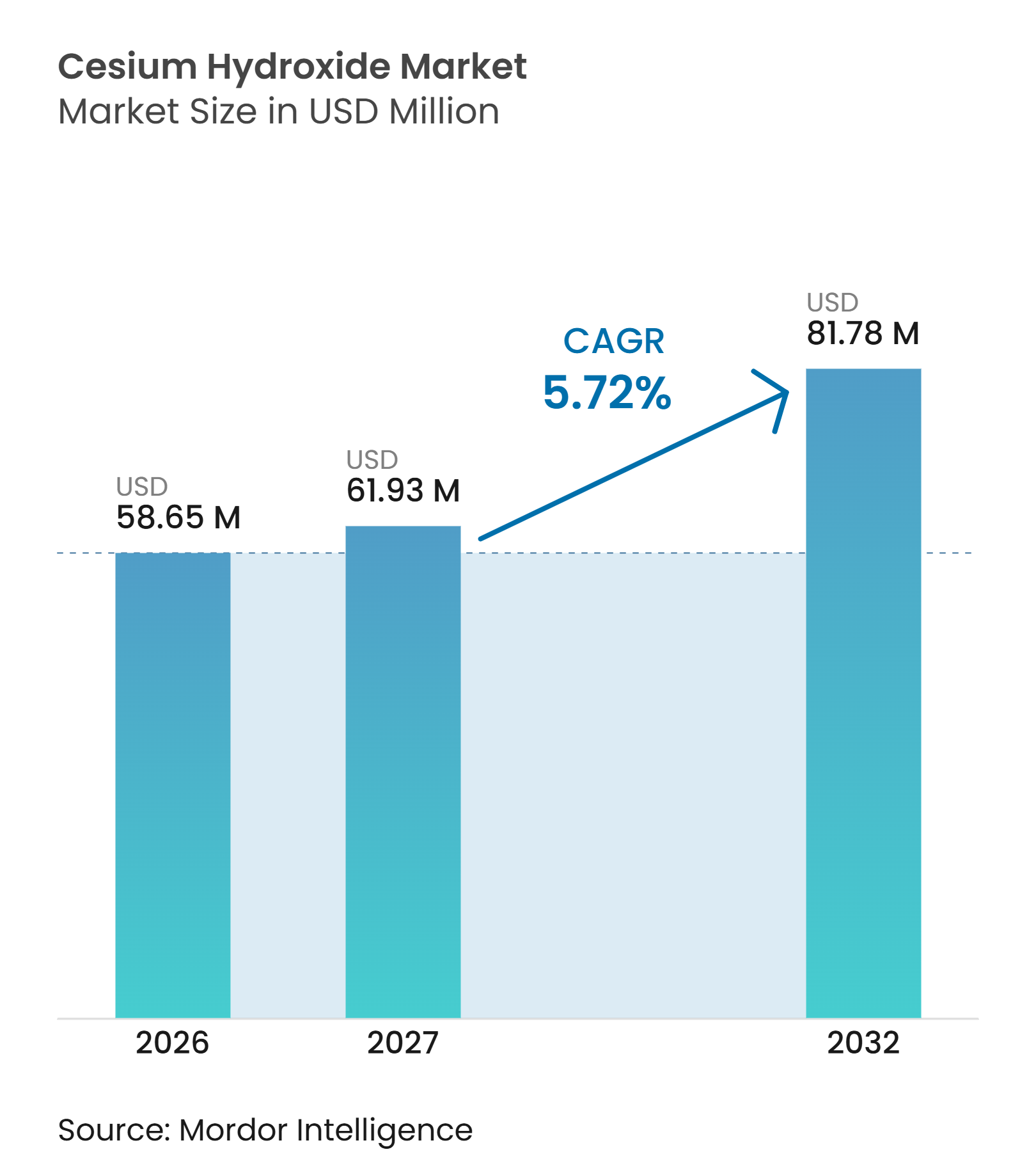
The Cesium Hydroxide Market size was valued at USD 58.65 million in 2026 and is estimated to grow from USD 61.93 million in 2027 to reach USD 81.78 million by 2032, at a CAGR of 5.72% during the forecast period (2027-2032). The cesium hydroxide market is shaped by specialized demand in industrial catalysis, semiconductor processing, and electrolyte research. Supply remains limited because primary pollucite production is concentrated, while several mining projects are still in development. Lepidolite recovery provides a second supply route because it is linked to lithium processing, although purity requirements limit its use in electronics and pharmaceutical applications. Producers are therefore competing on reliable supply, impurity control, lot traceability, and application support.
Key Report Takeaways
- By source, lepidolite held 50.13% of the cesium hydroxide market share in 2026, while pollucite is projected to advance at a 6.51% CAGR through 2032.
- By product form, cesium hydroxide monohydrate held 61.45% of the cesium hydroxide market share in 2026 and is projected to advance at a 6.78% CAGR through 2032.
- By application, catalyst held 36.56% of the cesium hydroxide market share in 2026, while electrolyte is projected to advance at a 7.12% CAGR through 2032.
- By end-use industry, chemical held 47.78% of the cesium hydroxide market share in 2026, while pharmaceutical is projected to advance at a 7.45% CAGR through 2032.
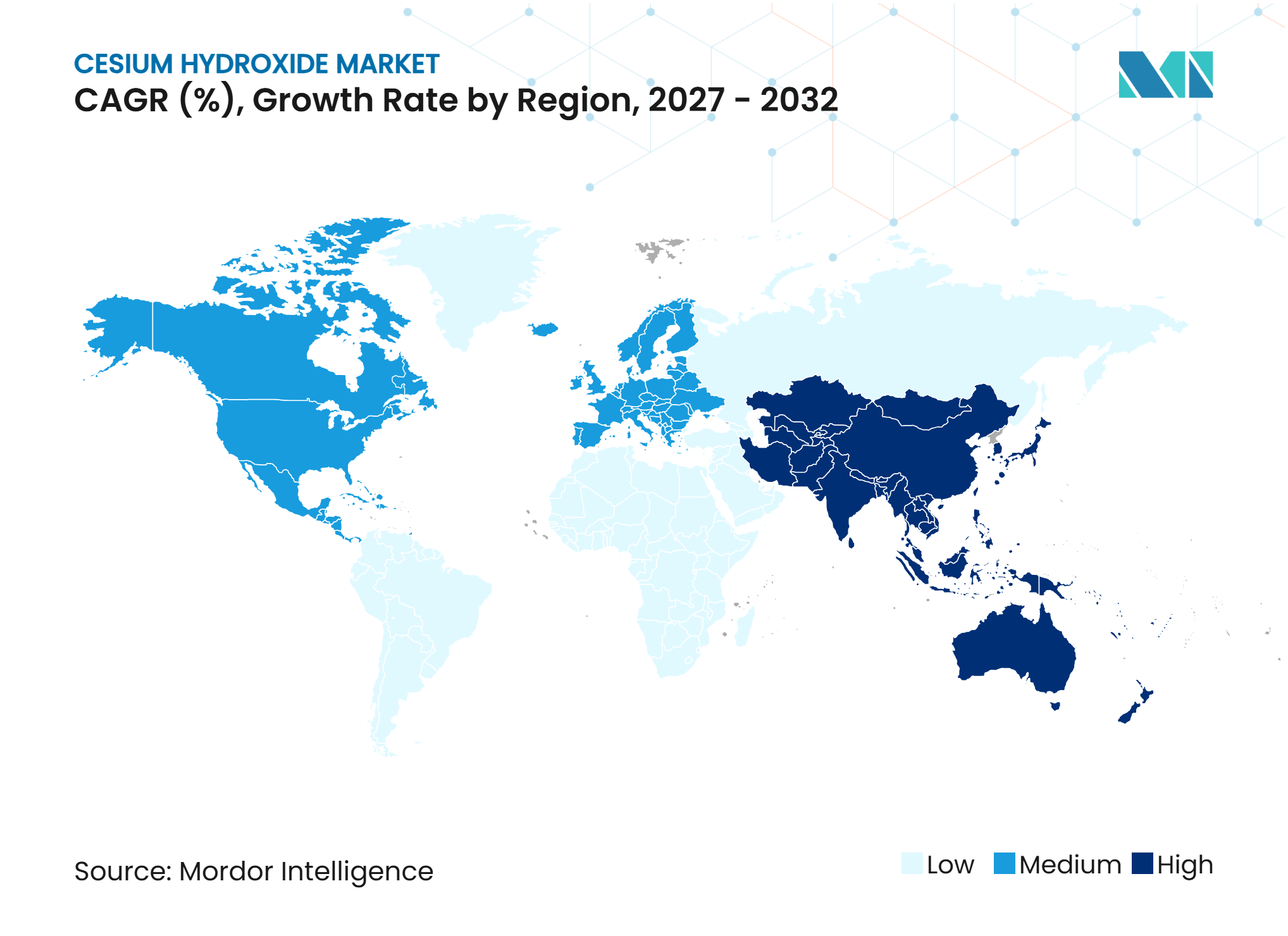
- By geography, North America held 38.89% of the cesium hydroxide market share in 2026, while Asia-Pacific is projected to advance at a 7.37% CAGR through 2032.
Note: Market numbers in this report are based on Mordor Intelligence's proprietary estimation framework, which combines nine months of actuals with Q4 projections for base year 2026.
Market Trends and Insights
Drivers Impact Analysis of Cesium Hydroxide Market*
| Driver | (~) % Impact on CAGR Forecast | Geographic Relevance | Impact Timeline |
|---|---|---|---|
| Semiconductor and MEMS Fabrication Demand | +2.1% | Global, concentrated in North America, East Asia (Taiwan, South Korea, Japan, China) | Medium term (2-4 years) |
| Specialty Catalysis and Chemical Synthesis | +1.5% | Global; North America and Europe as production hubs | Long term (>= 4 years) |
| Advanced Battery and Electrolyte R&D | +0.8% | APAC core (China, Japan, South Korea), spillover to North America and Europe | Medium term (2-4 years) |
| High-Purity Electronic and Optical Materials | +0.6% | North America, Japan, Germany, South Korea | Medium term (2-4 years) |
| Recovery of Cesium from Lithium and Pegmatite Tailings | +0.4% | China, Canada, Zimbabwe, Namibia | Long term (>= 4 years) |
| Source: Mordor Intelligence | |||
Semiconductor and MEMS Fabrication Demand
Semiconductor and microelectromechanical systems (MEMS) manufacturing supports a specialized part of the cesium hydroxide market because these users often need tightly controlled wet-chemical steps. Cesium hydroxide is used as an anisotropic silicon etchant in microelectromechanical systems fabrication and in high-purity cleaning processes for silicon carbide and gallium nitride wafers. Each advanced process step raises the value of repeatable reagent quality, lot consistency, and technical support at the point of use. Cesium hydroxide can offer selectivity in process lines where mobile-ion contamination limits the use of other alkali materials, though qualification requirements slow the introduction of new grades. Merck KGaA opened a semiconductor materials site in Kaohsiung, Taiwan, in December 2025 to support advanced chip supply chains, reinforcing the concentration of advanced wet-chemistry demand near Asian fabrication clusters.
Specialty Catalysis and Chemical Synthesis
Specialty catalysis gives the cesium hydroxide market exposure to established chemical production as well as newer synthesis routes. The United States Geological Survey reported that cesium compounds are used as catalysts in applications that include sulfuric acid production and specialty chemical synthesis[1]. Cesium hydroxide supports methyl methacrylate and polyol-related processes, where buyers value controlled reaction conditions and consistent material quality over low purchase cost. This use profile makes customer specifications and process performance more important than short-term price changes in bulk chemicals. Albemarle stated in its 2025 filing that it supplies specialty cesium products to chemical and pharmaceutical customers from its Langelsheim site in Germany, and the facility offers cesium hydroxide solution for industrial applications. This broad use base helps the cesium hydroxide industry retain demand even when individual end markets slow, while it also gives suppliers several routes to develop customized grades.
Advanced Battery and Electrolyte R&D
Electrochemical research is creating a small but expanding opportunity for the cesium hydroxide market. Research published in 2025 found superprotonic conductivity above 3 × 10⁻³ S/cm at 30 °C in hexagonal cesium hydroxide hydrate. The reported behavior supports research into intermediate-temperature fuel cells and electrolysis devices, where ionic transport can affect system design and efficiency. Cesium compounds are also under study as electrolyte additives and interface stabilizers in lithium-ion, sodium-ion, and solid-state battery systems. These uses favor cesium hydroxide monohydrate because its fixed water-to-cesium ratio helps formulate controlled electrolyte compositions and enables more consistent laboratory comparisons. The commercial base remains early, but research demand gives suppliers a path into applications that require high purity, tailored specifications, and application-level technical support.
High-Purity Electronic and Optical Materials
High-purity electronic and optical uses support demand for tightly specified cesium compounds in the cesium hydroxide market. Cesium-containing surface treatments are relevant to photocathodes and electron-emission applications because cesium can reduce a target surface’s work function. Materion reported that its Electronic Materials segment grew organically by 8% in 2025, supported by semiconductor material recovery and precision-optics demand. These end uses require reproducible composition, detailed records, and stable lots because material variation can affect sensitive device performance. International Organization for Standardization (ISO) 9001:2015 quality systems and lot-tracing practices create entry barriers for suppliers serving precision applications and raise the importance of established relationships. The cesium hydroxide market therefore benefits when producers extend their electronics-grade materials portfolios, although qualification periods can defer revenue from new customers.
Restraints Impact Analysis of Cesium Hydroxide Market*
| Restraint | (~) % Impact on CAGR Forecast | Geographic Relevance | Impact Timeline |
|---|---|---|---|
| Scarcity and Concentrated Pollucite Supply | -1.8% | Global; most acute in North America, Europe as net-import regions | Long term (>= 4 years) |
| Corrosive Handling and Compliance Costs | -0.9% | North America and Europe where TSCA, REACH, and OSHA requirements are most stringent | Medium term (2-4 years) |
| Small-Batch Qualification and Customer-Switching Friction | -0.5% | Global; most prevalent in semiconductor and pharmaceutical end-uses | Medium term (2-4 years) |
| Source: Mordor Intelligence | |||
Scarcity and Concentrated Pollucite Supply
Supply concentration remains the central structural restraint on the cesium hydroxide market. The United States Geological Survey stated that one Canadian company reported intermittent cesium production from the Tanco Mine in 2025, while other projects were at feasibility or exploration stages. This limited production base exposes buyers to disruptions from a single mining and processing chain and makes supply planning more important for downstream users. Tailings recovery at the Bikita Mine in Zimbabwe provides an additional route, but material from secondary sources can require further refining for electronic-grade use. Lepidolite processing may broaden supply as lithium conversion capacity expands, yet commercial recovery depends on technical performance, recovery economics, and the purity grade required by each customer. Small batch sizes also make supplier qualification slow, particularly for semiconductor and pharmaceutical customers that require process or lot approval before changing sources.
Corrosive Handling and Compliance Costs
Cesium hydroxide requires careful handling because it is corrosive and can cause severe skin and eye damage. The U.S. Environmental Protection Agency and the Occupational Safety and Health Administration formalized a memorandum in January 2025 to coordinate work on chemical risk evaluation and workplace safety under the Toxic Substances Control Act[2]. Manufacturers must maintain safety data sheets, containment procedures, neutralization plans, worker training, and compliant waste management arrangements. These measures add costs for research laboratories, active pharmaceutical ingredient facilities, and smaller specialty chemical users that may operate with limited dedicated handling infrastructure. European buyers also operate within the Registration, Evaluation, Authorisation and Restriction of Chemicals (REACH) framework, which supports documentation and safe-use requirements. Compliance costs can delay substitution decisions where another alkaline reagent can meet a process requirement, even when cesium hydroxide offers favorable performance.
*Our forecasts treat driver/restraint impacts as directional, not additive. The impact forecasts reflect baseline growth, mix effects, and variable interactions.
Cesium Hydroxide Market Segment Analysis
By Source:
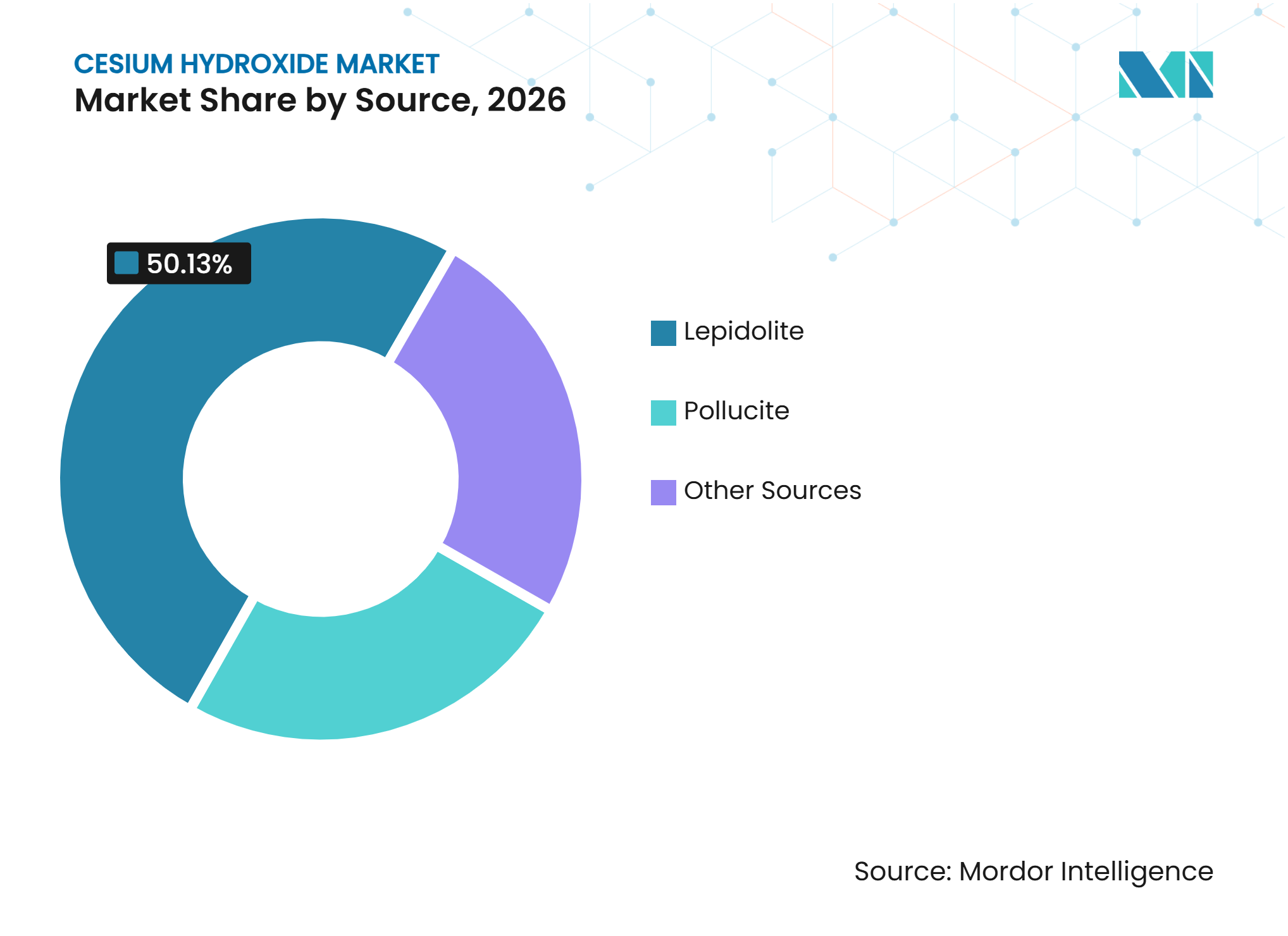
Lepidolite Leads Revenue, While Pollucite Supports Faster GrowthLepidolite held 50.13% of the cesium hydroxide market share in 2026. Its position reflects co-occurrence with lithium pegmatites, which links cesium recovery to lithium processing and battery-related refinery activity. This route can increase the availability of cesium-bearing residues without requiring primary cesium mining. The United States Geological Survey identified pegmatite-hosted deposits as important sources of lithium, cesium, and rubidium resources.
Pollucite is projected to advance at a 6.51% CAGR through 2032 as direct cesium ore projects progress. Power Metals Corp. reported 97% cesium recovery in final test work for its Case Lake pollucite concentrate in July 2025. The result supported the metallurgical case for technical-grade cesium chemicals. Other sources, including brines and rare-earth by-products, remain at an earlier commercial stage. Purity requirements will determine whether these sources can serve higher-value electronic and pharmaceutical uses. In the cesium hydroxide industry, lepidolite supports available supply while pollucite remains important for applications that demand high-purity feedstock.



By Product Form:
Cesium Hydroxide Monohydrate Leads Both Scale and GrowthCesium hydroxide monohydrate held 61.45% of the cesium hydroxide market share in 2026 and is projected to advance at a 6.78% CAGR through 2032. Its fixed water-to-cesium ratio supports precise stoichiometry in electrolyte and pharmaceutical formulations. The material is also suited to research on proton-conducting and electrochemical systems. The 2025 conductivity study of cesium hydroxide hydrate provided a scientific basis for continued interest in this form.
Cesium hydroxide solution remains relevant for industrial catalysis and other uses that do not require a defined hydrate form. Thermo Fisher Scientific Inc. lists both aqueous cesium hydroxide and cesium hydroxide hydrate in its catalog for research and industrial customers. Quality documentation is particularly important for buyers in pharmaceutical and analytical applications. Thermo Fisher Scientific Inc. also published a 2025 certificate of analysis for cesium hydroxide hydrate produced in Germany. The cesium hydroxide market size for monohydrate benefits from this combination of current application fit and emerging electrochemical research.
By Application:
Catalyst Supports Revenue, While Electrolyte ExpandsCatalyst held 36.56% of the cesium hydroxide market share in 2026. The segment is supported by chemical synthesis, sulfuric acid production, and specialty polymer-related processes. The United States Geological Survey identified catalysts as an established use for cesium compounds. These processes reward consistent reagent performance because changes in catalyst behavior can affect plant efficiency and product quality.
Electrolyte is projected to advance at a 7.12% CAGR through 2032. Growth is linked to work on solid-state and alkaline electrochemical systems, where material performance can depend on ionic transport and interface stability. Etchant retains a role in microelectromechanical systems fabrication, although process compatibility limits use in certain semiconductor lines. Other applications include specialized glass, ceramics, and ion-exchange materials for radioactive-waste treatment. This mix gives the cesium hydroxide market exposure to both established industrial chemistry and new materials development.
By End-Use Industry:
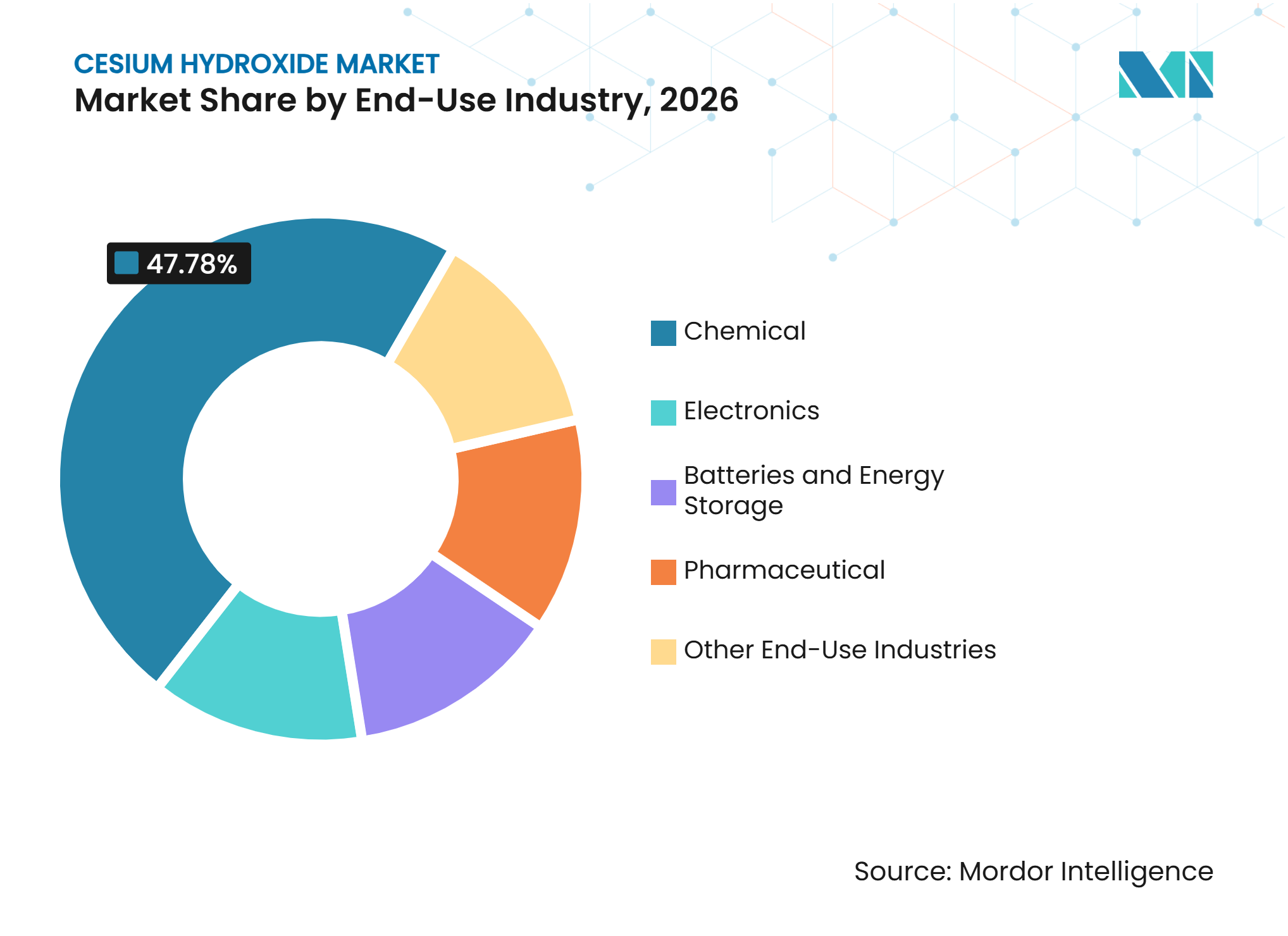
Chemical Provides Scale, While Pharmaceutical Grows FasterChemical held 47.78% of the cesium hydroxide market share in 2026. Demand comes from inorganic salt production, fine-chemical synthesis, and specialty polymer manufacturing. These customers use cesium hydroxide as a reagent or catalyst promoter where controlled chemical behavior is important. Albemarle Corporation describes cesium-based reagents as inputs used in drug-synthesis pathways as well as other specialty chemical applications.
Pharmaceutical is projected to advance at a 7.45% CAGR through 2032. Cesium reagents are used in selected organic synthesis reactions that support the construction of active pharmaceutical ingredients. A 2025 review described the continuing use of cesium carbonate in organic synthesis, which is relevant to the broader role of cesium reagents in pharmaceutical chemistry. Electronics, batteries, and energy storage provide additional demand through wafer-cleaning and electrolyte research. Defense, photonics, and nuclear applications require specialized grades.

Geography Analysis
North America
North America held 38.89% of the cesium hydroxide market share in 2026. Demand is supported by active pharmaceutical ingredient manufacturers, specialty chemical producers, and advanced-materials users in the United States. The United States remained fully reliant on imports for cesium minerals in 2025, according to the United States Geological Survey, which encourages downstream buyers to seek regional supply routes. In December 2025, Power Metals Corp. announced an offtake agreement with Albemarle Corporation that included up to CAD 5 million (approximately USD 3.63 million) in prepayments for cesium oxide concentrate from Case Lake in Ontario, subject to specified approvals and milestones. Toxic Substances Control Act and Occupational Safety and Health Administration requirements shape the handling systems used across the region.
Asia-Pacific
Asia-Pacific is projected to advance at a 7.37% CAGR through 2032, supported by Chinese recovery activity and semiconductor manufacturing in Japan, South Korea, Taiwan, and China. The cesium hydroxide market size in the region benefits from the proximity of lepidolite processing, specialty chemical production, and electronics fabrication. Merck KGaA’s Kaohsiung site was inaugurated in December 2025 after a EUR 500 million (approximately USD 582 million) investment to support advanced semiconductor materials production. Product qualification and purity controls remain central to regional purchasing decisions, especially in electronic chemicals.
Europe, South America, and Middle East and Africa
Europe is supported by its specialty chemical base and by producers serving pharmaceutical, catalyst, and high-purity materials customers. Merck KGaA stated that demand from artificial intelligence applications continued to support Semiconductor Materials growth in 2025. Germany remains important because it hosts suppliers with established quality and documentation systems, including ChemPur GmbH, which supplies cesium materials and operates an ISO 9001:2015-certified quality system. South America has a smaller base centered on pharmaceutical research and specialty chemical synthesis in Brazil and Argentina. Middle East and Africa demand is more limited, although Zimbabwe has supply-side relevance through the Bikita Mine and Saudi Arabia represents a downstream specialty chemical node.
Competitive Landscape
Market Concentration
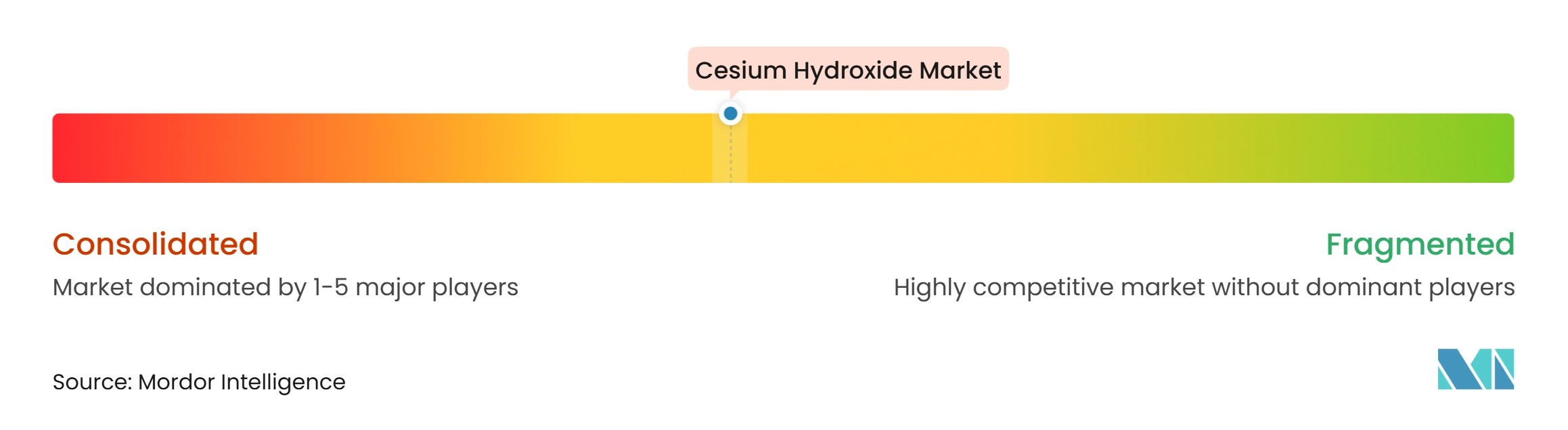
The cesium hydroxide market is moderately concentrated, with top players including American Elements, Albemarle Corporation, Merck KGaA, Thermo Fisher Scientific Inc., and Cabot Corporation. The United States Geological Survey reported intermittent Canadian primary production in 2025, which demonstrates the narrow nature of the global supply base. Albemarle Corporation participates as an integrated supplier of cesium products for chemical and pharmaceutical applications. The company’s Case Lake offtake agreement is a practical response to the need for diversified concentrate supply.
Merck KGaA uses its semiconductor materials operations to work with advanced chip manufacturing customers. Its December 2025 Kaohsiung investment added thin-film materials, formulation materials, and specialty gases for semiconductor production. Thermo Fisher Scientific Inc. supports customers through catalog supply and quality documentation for cesium hydroxide products. American Elements, ChemPur GmbH, Noah Chemicals, Stanford Materials Corporation, and Strem Chemicals, Inc. offer cesium compounds for research and specialty customers through their product portfolios. Competition in this part of the value chain centers on purity, packaging, documentation, and customer support.
Electronic-grade and pharmaceutical-grade material requirements favor suppliers with established quality systems, batch records, and impurity-control capabilities. Small order sizes can reduce the appeal of purely volume-driven competition, while sensitive processes make material or supplier requalification difficult. Materion Corporation’s Electronic Materials performance in 2025 indicates continued demand for high-purity materials in semiconductor and precision-optics uses. Opportunities remain for dependable regional sources that can meet tight specifications. The cesium hydroxide market is therefore defined by constrained upstream material availability and differentiated downstream service.
Cesium Hydroxide Industry Leaders
-
American Elements
-
Albemarle Corporation
-
Merck KGaA
-
Thermo Fisher Scientific Inc.
-
Cabot Corporation
- *Disclaimer: Major Players sorted in no particular order
Cesium Hydroxide Market Companies Covered in this Report
- Albemarle Corporation
- American Elements
- Cabot Corporation
- ChemPur GmbH
- Ereztech LLC
- ESPI Metals
- GFS Chemicals
- Jiangxi Dongpeng New Materials Co., Ltd.
- Materion Corporation
- Merck KGaA
- Noah Chemicals
- ProChem, Inc.
- Stanford Materials Corporation
- Strem Chemicals, Inc.
- Thermo Fisher Scientific Inc.
Recent Industry Developments in Cesium Hydroxide Market
- September 2026: PMET completed Phase 2 bench-scale testwork with Koch Technology Solutions to evaluate a more selective processing route for recovering high-purity cesium chemicals from pollucite concentrate at its Shaakichiuwaanaan project in Canada. The process demonstrated the potential to produce multiple cesium-based chemical products, supporting downstream availability of cesium compounds, including hydroxide, for industrial catalyst applications.
- December 2025: Albemarle Corporation secured an offtake agreement with Power Metals Corp. for cesium oxide concentrate from the Case Lake Project in Ontario, Canada, backed by a prepayment commitment of up to CAD 5 million (approximately USD 3.63 million). The agreement supports the supply of cesium feedstock for downstream cesium chemicals, including cesium hydroxide.
Global Cesium Hydroxide Market Report Scope
Cesium hydroxide (CsOH) is a highly alkaline inorganic compound produced from cesium-bearing minerals and available in aqueous solution or solid forms. It offers strong basicity and high chemical reactivity, making it suitable for specialized chemical synthesis, electrochemical processes, and semiconductor manufacturing. It is used in applications such as etching, electrolyte formulation, catalysis, and the production of advanced electronic and energy storage materials.
The Cesium Hydroxide Market is segmented by source, product form, application, end-use industry, and geography. By source, the market is segmented into lepidolite, pollucite, and other sources. By product form, the market is segmented into cesium hydroxide solution and cesium hydroxide monohydrate. By application, the market is segmented into etchant, electrolyte, catalyst, and other applications. By end-use industry, the market is segmented into chemical, electronics, batteries and energy storage, pharmaceutical, and other end-use industries. The report also covers the market size and forecasts for cesium hydroxide in 15 countries across major regions. For each segment, the market sizing and forecasts have been done on the basis of value (USD).
Segmentation Overview
| Lepidolite |
| Pollucite |
| Other Sources |
| Cesium Hydroxide Solution |
| Cesium Hydroxide Monohydrate |
| Etchant |
| Electrolyte |
| Catalyst |
| Other Applications |
| Chemical |
| Electronics |
| Batteries and Energy Storage |
| Pharmaceutical |
| Other End-Use Industries |
| Asia-Pacific | China |
| India | |
| Japan | |
| South Korea | |
| ASEAN Countries | |
| Rest of Asia-Pacific | |
| North America | United States |
| Canada | |
| Mexico | |
| Europe | Germany |
| United Kingdom | |
| France | |
| Italy | |
| NORDIC Countries | |
| Rest of Europe | |
| South America | Brazil |
| Argentina | |
| Rest of South America | |
| Middle East and Africa | Saudi Arabia |
| South Africa | |
| Rest of Middle East and Africa |
| By Source | Lepidolite | |
| Pollucite | ||
| Other Sources | ||
| By Product Form | Cesium Hydroxide Solution | |
| Cesium Hydroxide Monohydrate | ||
| By Application | Etchant | |
| Electrolyte | ||
| Catalyst | ||
| Other Applications | ||
| By End-Use Industry | Chemical | |
| Electronics | ||
| Batteries and Energy Storage | ||
| Pharmaceutical | ||
| Other End-Use Industries | ||
| By Geography | Asia-Pacific | China |
| India | ||
| Japan | ||
| South Korea | ||
| ASEAN Countries | ||
| Rest of Asia-Pacific | ||
| North America | United States | |
| Canada | ||
| Mexico | ||
| Europe | Germany | |
| United Kingdom | ||
| France | ||
| Italy | ||
| NORDIC Countries | ||
| Rest of Europe | ||
| South America | Brazil | |
| Argentina | ||
| Rest of South America | ||
| Middle East and Africa | Saudi Arabia | |
| South Africa | ||
| Rest of Middle East and Africa | ||
Key Questions Answered in the Report
What is the size of the cesium hydroxide market?
The cesium hydroxide market size was valued at USD 58.65 million in 2026 and is estimated to grow from USD 61.93 million in 2027 to reach USD 81.78 million by 2032, at a CAGR of 5.72% during the forecast period (2027-2032).
What is driving demand for cesium hydroxide?
Semiconductor processing, specialty catalysis, high-purity electronic materials, and electrolyte research support demand.
Which source held the largest share in 2026?
Lepidolite held a 50.13% of the market share in 2026, supported by its link to lithium-bearing pegmatite processing.
Which application is projected to grow fastest through 2032?
Electrolyte is projected to advance at a 7.12% CAGR through 2032 as electrochemical materials research expands.