
Centesis Catheters Market Size and Share
Market Overview
| Study Period | 2020 - 2031 |
|---|---|
| Market Size (2026) | USD 0.72 Billion |
| Market Size (2031) | USD 1 Billion |
| Growth Rate (2026 - 2031) | 6.70 % |
| Fastest Growing Market | Asia-Pacific |
| Largest Market | North America |
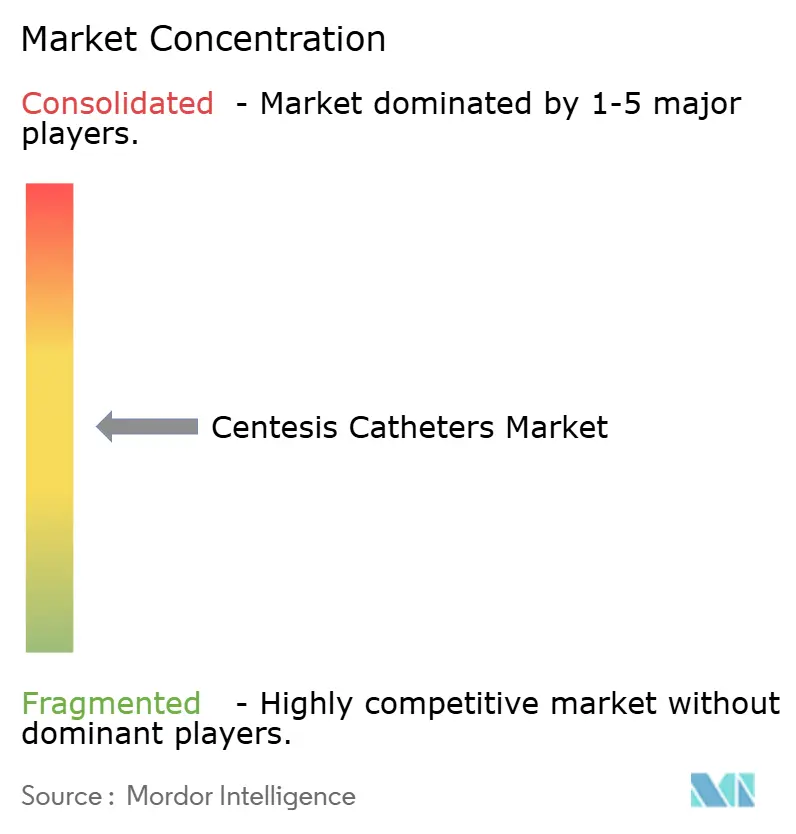
| Market Concentration | Medium |
Major Players *Disclaimer: Major Players sorted in no particular order Image © Mordor Intelligence. Reuse requires attribution under CC BY 4.0. | |
Centesis Catheters Market Analysis by Mordor Intelligence
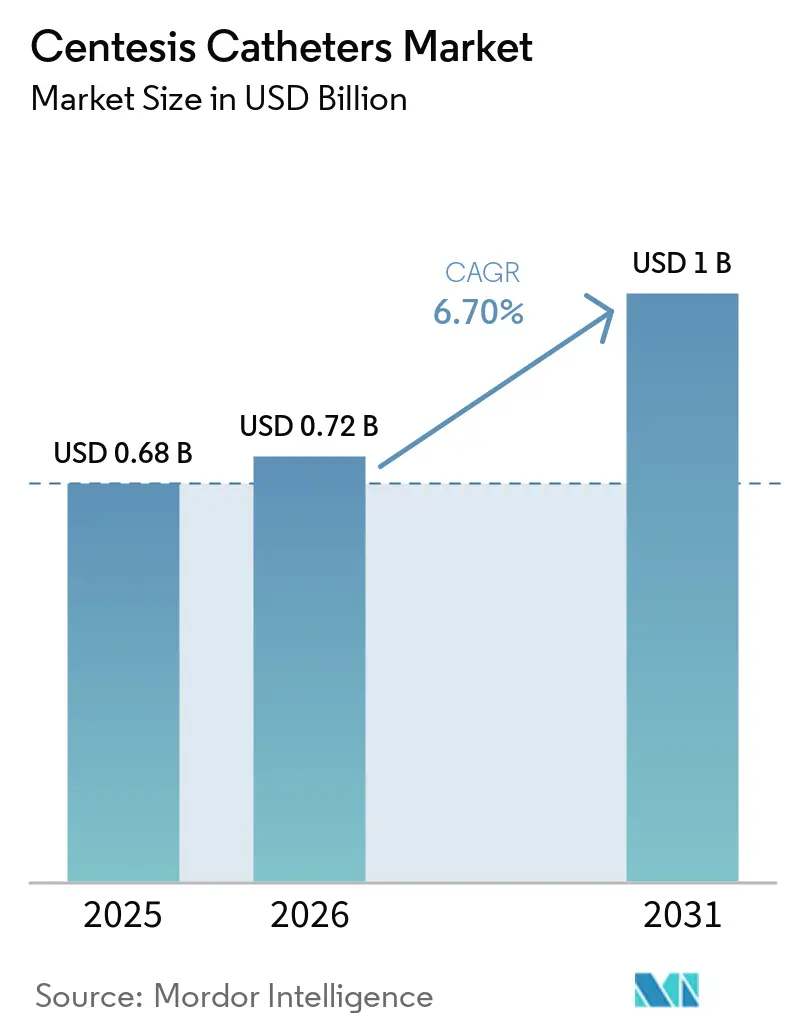
The Centesis Catheters Market size is projected to be USD 0.68 billion in 2025, USD 0.72 billion in 2026, and reach USD 1 billion by 2031, growing at a CAGR of 6.70% from 2026 to 2031.
Growth is tied to the growing clinical burden of chronic liver disease, malignant ascites, and pleural effusion, which require repeated fluid drainage. Wider use of image guidance is also changing how clinicians select and place these devices. Hospitals are increasingly evaluating closed drainage systems in addition to catheter performance because they can support safer and more consistent procedures. The centesis catheters market also benefits as outpatient and home-based care become more practical for selected patients. Reimbursement differences and procedure-related complications remain important limits on wider adoption.
Key Report Takeaways
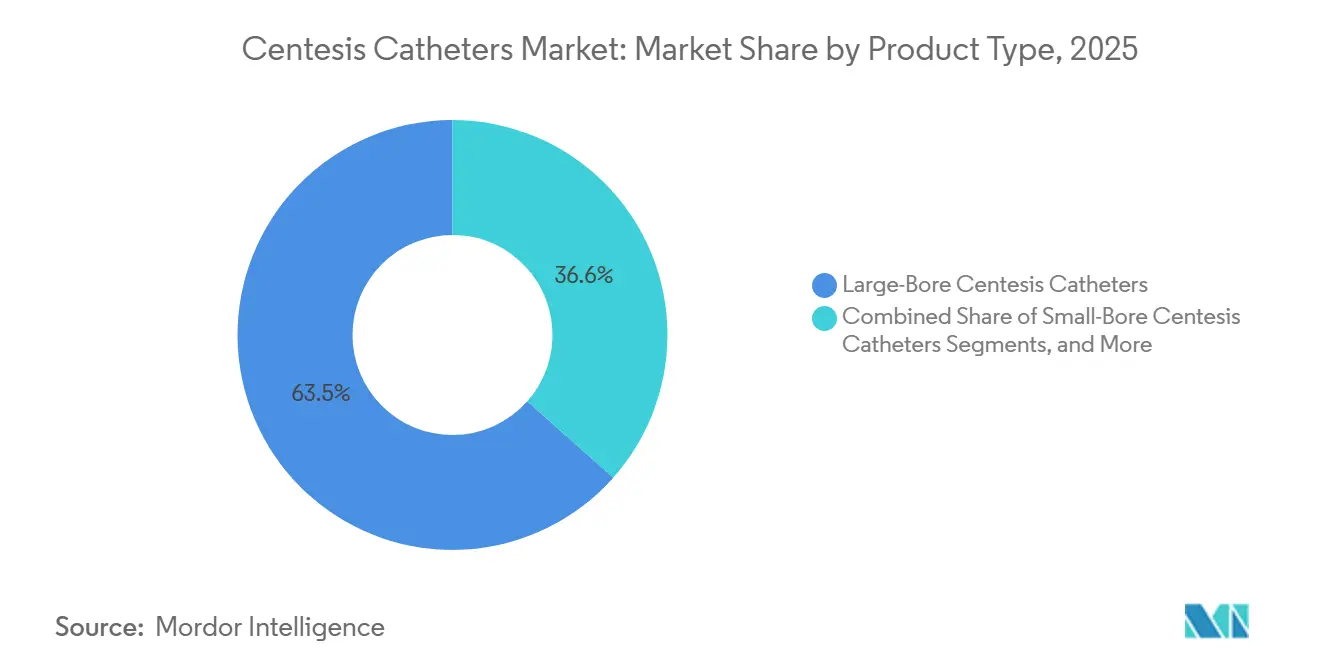
- By product type, large-bore catheters held 63.45% of revenue in 2025, while small-bore catheters are projected to grow at an 8.12% CAGR through 2031.
- By procedure, paracentesis accounted for 56.77% of revenue in 2025, while thoracentesis is projected to expand at a 9.80% CAGR through 2031.
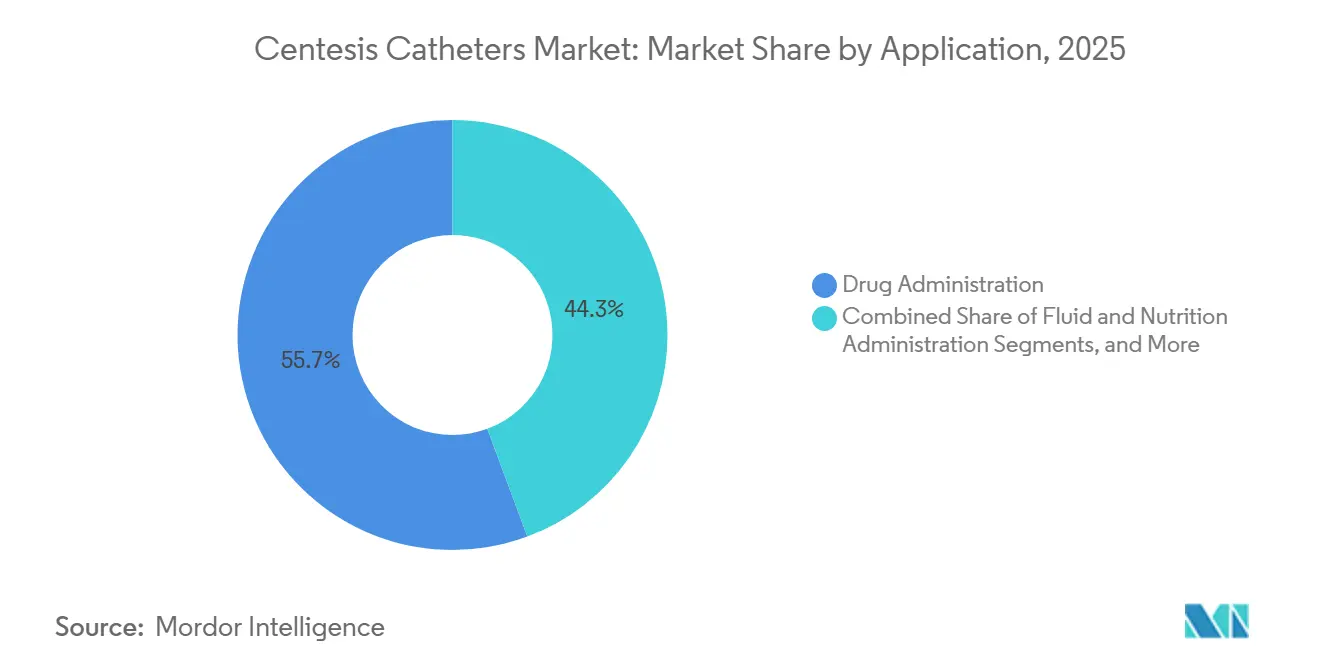
- By application, drug administration held 55.66% of revenue in 2025, while fluid and nutrition administration is projected to record an 11.45% CAGR through 2031.
- By end user, hospitals and health systems accounted for 65.89% of revenue in 2025, while specialty clinics are projected to grow at an 8.56% CAGR through 2031.
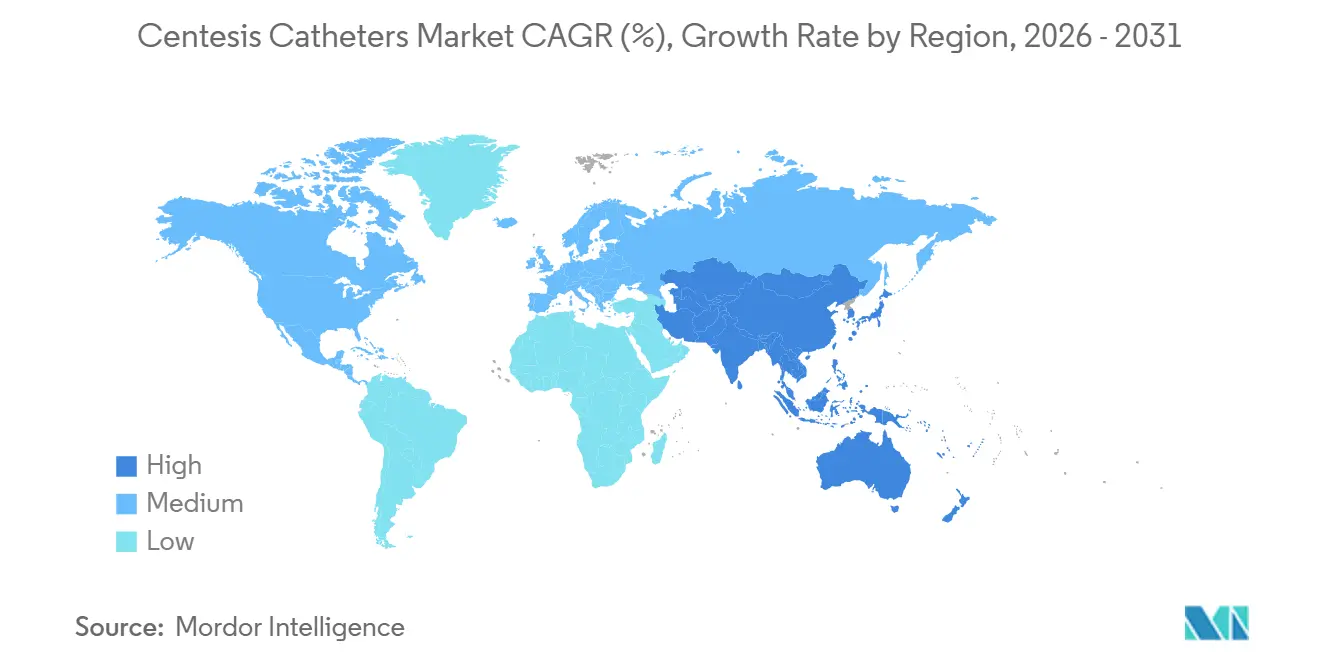
- By geography, North America held 42.35% of revenue in 2025, while Asia-Pacific is forecast to advance at a 10.88% CAGR through 2031.
Note: Market size and forecast figures in this report are generated using Mordor Intelligence’s proprietary estimation framework, updated with the latest available data and insights as of January 2026.
Market Trends and Insights
Drivers Impact Analysis of Centesis Catheters Market*
| DRIVER | (~) % IMPACT ON CAGR FORECAST | GEOGRAPHIC RELEVANCE | IMPACT TIMELINE |
|---|---|---|---|
| Rising procedure volumes for ascites and pleural effusion | +2.1% | Global | Short term (≤ 2 years) |
| Increasing adoption of image-guided centesis | +1.8% | North America and Europe | Short term (≤ 2 years) |
| Expansion of ambulatory and outpatient procedures | +0.9% | North America, Europe, and Asia-Pacific | Medium term (2-4 years) |
| Growing demand for recurrent and home-based fluid drainage | +1.0% | North America and Europe, with spillover to Asia-Pacific | Medium term (2-4 years) |
| Standardization of closed, valved drainage workflows | +0.5% | Global | Medium term (2-4 years) |
| Expansion of palliative drainage for advanced cancer | +0.8% | North America, Europe, and Asia-Pacific | Long term (≥ 4 years) |
| Source: Mordor Intelligence | |||
Rising Procedure Volumes for Ascites and Pleural Effusion
Healthcare providers increasingly manage ascites and pleural effusion as chronic conditions requiring planned, repeated drainage, creating recurring demand for the centesis catheters market. An analysis of NHANES data from 2017 to 2024 reported a 35.0% age-adjusted prevalence of steatotic liver disease among U.S. adults, representing nearly 72 million people, with metabolic disease-related fibrosis also increasing. Another study projected that metabolic dysfunction-associated steatotic liver disease prevalence among U.S. adults will increase from 33.7% in 2020 to 41.4% by 2050, while MASH-related cirrhosis cases will nearly double.[1] The World Health Organization stated that hepatitis B and C together cause more than 1.1 million deaths annually and can progress to cirrhosis and ascites. The patient base is becoming younger and more clinically complex as obesity and type 2 diabetes increase among individuals with liver disease.[2] These patients may require drainage over extended care periods, increasing catheter demand without a comparable rise in new diagnoses.
Increasing Adoption of Image-Guided Centesis
Ultrasound guidance has become a standard approach for paracentesis and thoracentesis in North American and European hospitals, reducing reliance on landmark-based placement and improving procedural consistency. A 2025 retrospective review of 134 ultrasound-guided pigtail catheter placements, primarily using 8-10 French catheters, reported a technical success rate above 95%. These findings supported image-guided pleural drainage and increased demand for catheters designed for imaging visibility. This shift encourages hospitals to replace basic products with more specialized systems. Echogenic needle tips, radiopaque catheter bodies, and kink-resistant materials are increasingly important product features. Products such as iVASC M·Drain and Galt Medical Centeze demonstrate the integration of these features into drainage systems. As hospitals standardize image-guided care, features once limited to premium products are becoming broader product specifications. Companies that can upgrade products at scale and provide clinical support may gain an advantage over suppliers of basic catheter-only products.
Ambulatory Care and Recurrent Home-Based Drainage
Ambulatory care and home-based drainage reduce the need for repeated inpatient admissions among selected patients. Tunneled indwelling catheters enable fluid drainage over time rather than through separate episodic procedures. A 2026 study of 124 patients using second-generation Aspira 15.5-Fr tunneled peritoneal catheters reported 100% technical success, a 45.4% reduction in hospital visits between 30 and 90 days after placement, and improvement across all 11 measured ascites symptoms, including bloating, mobility, and pain. These findings supported structured home-based drainage programs for patients with malignant ascites. Evidence from pleural care indicated a similar trend. The AMPLE-1 trial reported a median hospitalization of 1 day for patients with indwelling pleural catheters, compared with 4 days for patients receiving chest drainage with talc pleurodesis. The ASAP trial found that daily indwelling pleural catheter drainage achieved auto-pleurodesis in 47% of patients, nearly twice the alternate-day rate. These results increased interest in valves, drainage bags, and systems that patients or caregivers can manage outside hospital settings.
Palliative Drainage and Closed Workflow Standardization
Malignant ascites and pleural effusion are common and challenging complications in advanced ovarian, colorectal, breast, and lung cancers. When systemic therapy does not provide adequate control, drainage becomes central to symptom management. A 2025 study at a French comprehensive cancer center found that non-tunneled semi-permanent bedside catheters in the 10-12 French range reduced hospital visit requirements among patients with refractory malignant ascites. The findings supported small-bore designs that can be placed and managed without relying on interventional radiology at every stage of care. Closed and valved workflows improve drainage management across inpatient, outpatient, and home-care settings. The IPC-Plus trial reported pleurodesis in 43% of patients who received talc through an indwelling pleural catheter after 10 days of daily drainage, compared with 23% in the placebo group. This result expanded the role of indwelling pleural catheters from symptom management to treatment delivery.
Restraints Impact Analysis of Centesis Catheters Market*
| RESTRAINT | (~) % IMPACT ON CAGR FORECAST | GEOGRAPHIC RELEVANCE | IMPACT TIMELINE |
|---|---|---|---|
| Premium pricing and reimbursement variability | -0.9% | Global, particularly Asia-Pacific and South America | Short term (≤ 2 years) |
| Procedure-related complications and device recalls | -0.6% | North America and Europe | Short term (≤ 2 years) |
| Training dependence for safe placement and drainage-volume control | -0.4% | Global, particularly Asia-Pacific and the Middle East and Africa | Medium term (2-4 years) |
| Limited interoperability between catheters, tubing, and collection systems | -0.3% | Global | Long term (≥ 4 years) |
| Source: Mordor Intelligence | |||
Premium Pricing and Reimbursement Variability
Branded closed-system kits often cost more than bare-catheter alternatives, particularly in Asia-Pacific and South America, where government reimbursement schedules determine procedure payments. In the United States, CMS procedure codes for paracentesis and thoracentesis did not differentiate between single-use closed drainage kits and open catheter-only setups. Providers may therefore struggle to recover premium kit costs through procedure revenue, limiting adoption in cost-sensitive hospitals. European reimbursement systems can create similar barriers. Swiss DRG information classified percutaneous abdominal drainage under CHOP code 54.91 and DRG Z65A, with a base cost weight of 0.783, while DRG E73B included volume-based adjustments for pleural drainage. These structures may favor shorter drainage volumes and discourage long-dwell catheters, despite their comfort benefits and higher daily device costs.
Procedure Safety, Training, and System Compatibility
Complications remain a key clinical restraint for tunneled drainage systems. Secondary bacterial peritonitis, protein depletion from poorly controlled large-volume drainage, and catheter dislodgement may limit use outside experienced centers. The 2026 Aspira study reported moderate complications requiring device removal in 8.1% of patients and secondary bacterial peritonitis in 6.5% of the cohort. A review of indwelling pleural catheters for benign effusions reported a 17.2% overall complication rate, including empyema in 2.3% of cases. These risks increase concerns around expansion into community and home settings and highlight the need for skilled placement, controlled drainage volumes, and access to albumin replacement protocols where appropriate.
*Our forecasts treat driver/restraint impacts as directional, not additive. The impact forecasts reflect baseline growth, mix effects, and variable interactions.
Centesis Catheters Market Segment Analysis
By Product Type:
Large-Bore Catheters Retain Scale While Small-Bore Designs Gain UseLarge-bore catheters held a 63.45% share of the centesis catheters market in 2025. These products, typically 12 French (Fr) and above, supported inpatient paracentesis procedures requiring rapid removal of large fluid volumes. They remained widely used in hepatology and oncology wards for fluid accumulation associated with diaphragmatic compression and acute dyspnea. Hospital protocols and group purchasing organization contracts supported their continued use, reinforcing their stable market position.
The others category includes specialized pigtail configurations and trocar-based drainage systems for niche interventional radiology procedures, including multiloculated collections and empyema. Side-hole placement and locking-tail designs support the management of complex fluid collections. Small-bore catheters are forecast to grow at a CAGR of 8.12% from 2026 to 2031; a review of 134 ultrasound-guided 8–10 Fr pigtail placements reported a technical success rate above 95% in pleural drainage. ISO 10993 requirements and FDA 21 CFR 880 regulations apply to both product groups, with compliance costs supporting the pricing power of established suppliers.

By Procedure:
Paracentesis Has Volume While Thoracentesis Moves Toward Outpatient CareParacentesis accounted for 56.77% of procedure-based revenue in 2025. Repeat treatment for cirrhotic and malignant ascites supported demand, as some patients required drainage every 10–14 days. NHANES findings showed that steatotic liver disease affected 35.0% of US adults between 2017 and 2023, supporting continued demand for drainage services. Group purchasing organization contracts also facilitated recurring purchases of paracentesis kits, while the others category included arthrocentesis and pericardiocentesis procedures requiring specialized designs.
Thoracentesis is forecast to grow at a CAGR of 9.80% from 2026 to 2031, driven by the transition of pleural drainage toward ambulatory care. AMPLE-1 reported median hospitalization of one day for indwelling pleural catheter patients, compared with four days for patients treated with chest drainage and talc pleurodesis. A 2025 study found ambulatory chest drainage and talc pleurodesis to be feasible and safe for malignant pleural effusion. This model reduces hospitalization costs and supports demand for valve-gated and self-sealing catheter systems for use beyond inpatient wards.
By Application:
Drug Administration Leads While Fluid and Nutrition Delivery AccelerateDrug administration accounted for 55.66% of application-based revenue in 2025. Centesis catheters deliver intraperitoneal chemotherapy, intrapleural sclerosants, and targeted cancer therapies into effusion cavities, expanding their role beyond drainage. The IPC-Plus trial showed that talc administered through an indwelling pleural catheter increased pleurodesis rates in malignant pleural effusion. Blood transfusion, hemodialysis, and peritoneal dialysis access provide additional specialized applications.
Fluid and nutrition administration is forecast to grow at a CAGR of 11.45% from 2026 to 2031, the highest rate among applications in the centesis catheters market. Growth reflects the broader use of catheter access in palliative oncology and high-acuity pediatric care. European payers increasingly approved home-based nutritional delivery through peritoneal access for certain palliative oncology patients. Avanos Medical acquired Nexus Medical in September 2025, including the TKO anti-reflux needleless connector for high-acuity nutrition delivery in neonatal and pediatric intensive care units.
By End User:
Hospitals Lead While Specialty Clinics ExpandHospitals and health systems accounted for 65.89% of end-user revenue in 2025. They performed a substantial share of paracentesis and thoracentesis procedures across hepatology, pulmonology, and oncology departments, supported by interventional radiology infrastructure for image-guided placement. Multi-year purchasing arrangements through group purchasing organizations reinforced this position. Teleflex received a national group purchasing agreement with Premier, Inc. in July 2026 for central venous access products across its 4,400-member health system network, highlighting institutional procurement of related catheter families.
Cancer treatment centers and ambulatory surgical centers represent secondary but increasingly relevant end-user channels. Home healthcare remained the smallest setting, although compact, valve-gated indwelling pleural catheter systems improved the practicality of assisted drainage. Specialty clinics are forecast to grow at a CAGR of 8.56% from 2026 to 2031; a 2025 Danish study of 63 patients reported that 76% of peritoneal catheter patients had no hospital visits for catheter-related complications, while 30% drained fluid at home. ISO 13485 requirements and CMS quality-reporting requirements for ambulatory surgical centers can favor established brands with documented post-market surveillance.
Geography Analysis
North America Centesis Catheters Market
North America held 42.35% of global revenue in 2025, representing the largest centesis catheters market share. High procedure volumes, established image-guided drainage practices, and a mature group purchasing organization structure supported regional demand. U.S. facilities accounted for most revenue as centesis procedures expanded in outpatient oncology and hepatology care. Nearly 72 million U.S. adults had steatotic liver disease during 2017-2023, while fibrosis increased alongside metabolic disease, supporting repeated fluid-drainage procedures through 2031. Canada and Mexico contributed smaller but growing demand through image-guided and home-drainage pathways.
Europe Centesis Catheters Market
Europe was the second-largest regional market, led by Germany, France, the United Kingdom, and Italy. The United Kingdom had structured indwelling pleural catheter programs supported by community nursing. A February 2025 study reported that patient resources and educational videos for indwelling pleural catheter care reduced unplanned healthcare encounters and improved caregiver competency scores. ewimed collected indwelling pleural catheter implantation information from German centers for 15 years in its 2025 report, based on 2024 data. Italy and Spain expanded palliative centesis protocols in cancer centers, although DRG structures could restrain the uptake of premium closed systems.
APAC, MEA and South America Centesis Catheters Market
Asia-Pacific is forecast to grow at a CAGR of 10.88% through 2031, making it the fastest-growing region in the centesis catheters market. China and India offer the largest incremental volume opportunities as hospital capacity and chronic disease management develop. Japan and South Korea adopted higher-specification catheter technologies, supported by advanced critical-care facilities and aging populations, while Blue Neem Medical Devices and Polymedicure Ltd. increased product-quality competition in India and China. Middle East and Africa demand was supported by tertiary hospital investment in Gulf Cooperation Council countries, while South America, led by Brazil and Argentina's private healthcare sectors, is expected to grow more slowly than Asia-Pacific through 2031.
Competitive Landscape
The centesis catheters market is moderately consolidated, with leading suppliers holding strong positions. BD, Merit Medical Systems, Teleflex, Cook Medical, and Argon Medical Devices leverage hospital protocols, group purchasing organization relationships, and integrated catheter-kit offerings. These companies offer purchasing units that combine needles, drainage bags, valves, and catheters. This approach increases the importance of related consumables, including replacement bags, tubing, and valves. In institutional purchasing decisions, training support and post-market surveillance data can be as important as catheter design. Leading companies use these capabilities to maintain protocol-based relationships. Regional manufacturers in China and India continue to compete for lower-acuity and price-sensitive tenders.
In September 2024, BD acquired Edwards Lifesciences' Critical Care unit for USD 4.2 billion. The transaction strengthened BD's position in fluid management and monitoring and supported bundled contracting in intensive care and critical care procurement. In January 2025, Argon Medical acquired the SeQure and DraKon microcatheters from Guerbet SA. The acquisition expanded Argon's interventional oncology portfolio from diagnostic biopsy to therapeutic delivery and aligned with supplier efforts to serve additional stages of patient care, including fluid management. In September 2025, Avanos Medical acquired Nexus Medical to strengthen its nutrition and medication-delivery capabilities in critical care. The transaction is relevant to catheter companies because nutritional delivery and drainage access increasingly overlap in high-acuity care settings.
Digital drainage control remains an early-stage opportunity outside specialized respiratory centers. Bearpac Medical's Passio handheld pump was associated with lower patient-reported pain during drainage than conventional vacuum-bottle systems in a preliminary evaluation. Antimicrobial coatings remain a design opportunity for centesis products, as infection and peritonitis are major reasons for catheter removal. Teleflex's Arrowg+ard Blue Plus antimicrobial line has been clinically associated with a 70.5% reduction in central line-associated bloodstream infections compared with uncoated catheters, although this evidence relates to central venous applications rather than centesis catheters.
Centesis Catheters Industry Leaders
-
B. Braun Melsungen AG
-
Becton, Dickinson and Company
-
Cardinal Health, Inc.
-
Cook Medical LLC
-
Merit Medical Systems, Inc.
- *Disclaimer: Major Players sorted in no particular order
Centesis Catheters Market Companies Covered in this Report
- AngioDynamics
- Argon Medical Devices
- Avanos Medical
- Axiom Medical, Inc.
- B. Braun
- Beckton Dickinson
- Blue Neem Medical Devices Pvt. Ltd.
- Boston Scientific
- Cardinal Health
- Canadian Hospital Specialties Ltd.
- Cook Group
- Galt Medical Corp.
- KM Medical, Inc.
- Medical Components, Inc.
- Medtronic
- Merit Medical Systems
- Mermaid Medical
- Ningbo Honde Medical Instruments Co., Ltd.
- PFM Medical, Inc.
- Polymedicure Ltd.
- REDAX S.p.A.
- Rocket Medical plc
- Teleflex
- UreSil, LLC
- Utah Medical Products
Recent Industry Developments in Centesis Catheters Market
- July 2026: Teleflex secured a national purchasing agreement with Premier for central venous access products across its network of 4,400 health systems.
- January 2025: Argon Medical acquired the SeQure and DraKon microcatheters from Guerbet SA, expanding its interventional oncology portfolio into therapeutic delivery.
Global Centesis Catheters Market Report Scope
As per the scope of the report, a centesis catheter is a thin, flexible tube mounted over a hollow needle, used in medicine to puncture a body cavity or organ and drain unwanted fluid. Doctors use these devices to remove fluid samples for testing or to relieve dangerous pressure and swelling.
The centesis catheters market is segmented by product type, procedure, application, end user, and geography. By product type, the market includes small-bore centesis catheters, large-bore centesis catheters, and others. By procedure, the market is segmented into paracentesis, thoracentesis, and others. By application, the market is categorized into drug administration, fluid and nutrition administration, blood transfusion, and hemodialysis. By end user, the market is segmented into hospitals and health systems, specialty clinics, ambulatory surgical centers, cancer treatment centers, home healthcare, and others. By geography, the market is analyzed across North America, Europe, Asia-Pacific, the Middle East and Africa, and South America. The report also covers the estimated market sizes and trends for 17 countries across major regions globally. The report offers market sizes and forecasts in terms of value (USD) for the above segments.
Segmentation Overview
| Small-Bore Centesis Catheters |
| Large-Bore Centesis Catheters |
| Others |
| Paracentesis |
| Thoracentesis |
| Others |
| Drug Administration |
| Fluid & Nutrition Administration |
| Blood Transfusion |
| Hemodialysis |
| Hospitals & Health Systems |
| Specialty Clinics |
| Ambulatory Surgical Centers |
| Cancer Treatment Centers |
| Home Healthcare |
| Others |
| North America | United States |
| Canada | |
| Mexico | |
| Europe | Germany |
| United Kingdom | |
| France | |
| Italy | |
| Spain | |
| Rest of Europe | |
| Asia-Pacific | China |
| India | |
| Japan | |
| Australia | |
| South Korea | |
| Rest of Asia-Pacific | |
| Middle East and Africa | GCC |
| South Africa | |
| Rest of Middle East and Africa | |
| South America | Brazil |
| Argentina | |
| Rest of South America |
| By Product Type | Small-Bore Centesis Catheters | |
| Large-Bore Centesis Catheters | ||
| Others | ||
| By Procedure | Paracentesis | |
| Thoracentesis | ||
| Others | ||
| By Application | Drug Administration | |
| Fluid & Nutrition Administration | ||
| Blood Transfusion | ||
| Hemodialysis | ||
| By End User | Hospitals & Health Systems | |
| Specialty Clinics | ||
| Ambulatory Surgical Centers | ||
| Cancer Treatment Centers | ||
| Home Healthcare | ||
| Others | ||
| By Geography | North America | United States |
| Canada | ||
| Mexico | ||
| Europe | Germany | |
| United Kingdom | ||
| France | ||
| Italy | ||
| Spain | ||
| Rest of Europe | ||
| Asia-Pacific | China | |
| India | ||
| Japan | ||
| Australia | ||
| South Korea | ||
| Rest of Asia-Pacific | ||
| Middle East and Africa | GCC | |
| South Africa | ||
| Rest of Middle East and Africa | ||
| South America | Brazil | |
| Argentina | ||
| Rest of South America | ||
Key Questions Answered in the Report
What is the projected value of the centesis catheters market by 2031?
The centesis catheters market is projected to reach USD 1.0 billion by 2031, from USD 0.72 billion in 2026, at a CAGR of 6.70%.
Which catheter type held the largest share in 2025?
Large-bore catheters held 63.45% of revenue in 2025 because they remain established in high-volume inpatient drainage workflows.
Which procedure is expected to grow the fastest through 2031?
Thoracentesis is forecast to grow at a 9.80% CAGR as pleural drainage shifts toward outpatient and ambulatory care.
Why are indwelling catheters gaining attention in cancer care?
They can reduce repeat hospital visits and support home-based drainage for patients with malignant ascites or pleural effusion.
Which region is expected to expand the fastest?
Asia-Pacific is projected to record a 10.88% CAGR through 2031, supported by hospital expansion and chronic disease management in China and India.
What can limit wider use of centesis catheters?
Reimbursement variability, premium kit costs, procedure complications, training requirements, and limited system compatibility can slow adoption.