
Cardiovascular Diagnostics Market Size and Share
Market Overview
| Study Period | 2020 - 2031 |
|---|---|
| Market Size (2026) | USD 26.92 Billion |
| Market Size (2031) | USD 35.19 Billion |
| Growth Rate (2026 - 2031) | 5.50 % |
| Fastest Growing Market | Asia-Pacific |
| Largest Market | North America |
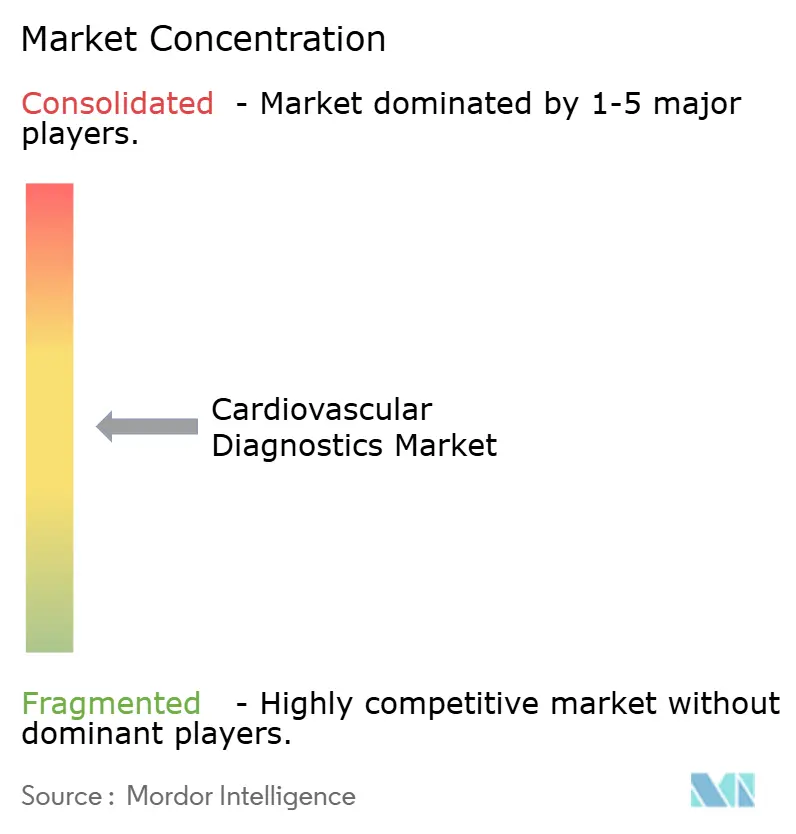
| Market Concentration | Medium |
Major Players *Disclaimer: Major Players sorted in no particular order Image © Mordor Intelligence. Reuse requires attribution under CC BY 4.0. | |
Cardiovascular Diagnostics Market Analysis by Mordor Intelligence
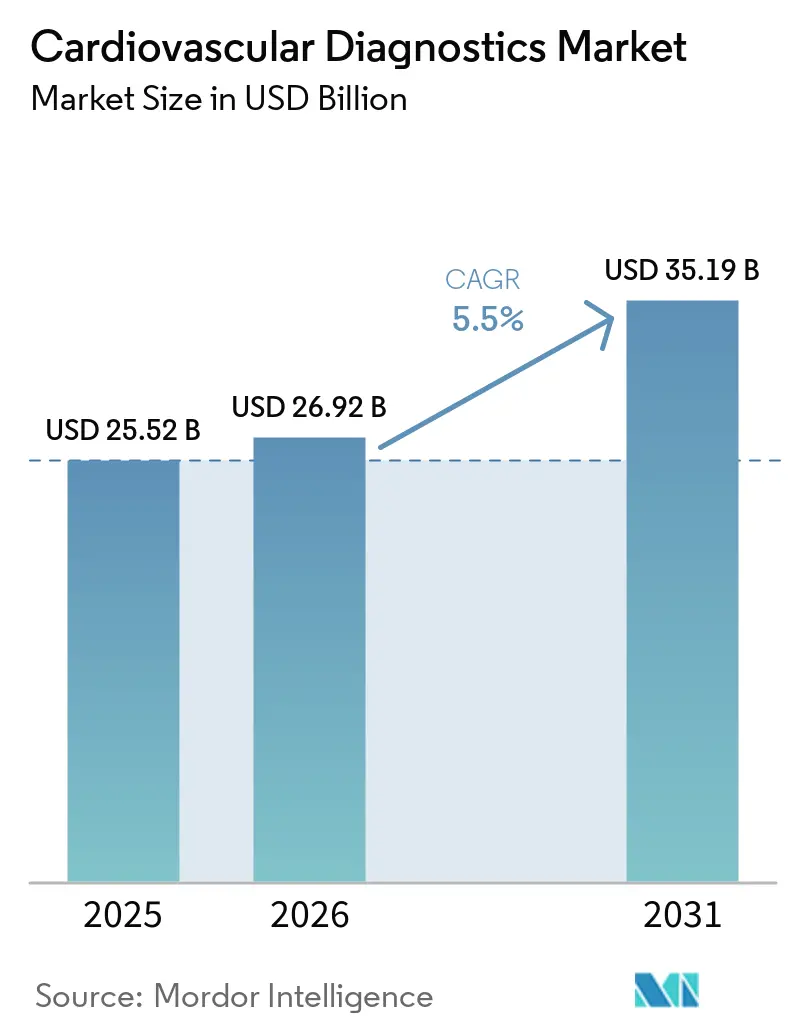
The Cardiovascular Diagnostics Market size is expected to grow from USD 25.52 billion in 2025 to USD 26.92 billion in 2026 and is forecast to reach USD 35.19 billion by 2031 at 5.5% CAGR over 2026-2031.
The cardiovascular diagnostics market is supported by population aging, metabolic risk factors, and a growing need for earlier cardiac assessment. Care providers are using a wider mix of imaging, biomarkers, electrocardiography, and remote monitoring rather than relying on a single test. This change supports repeat testing across hospital networks, diagnostic chains, ambulatory settings, and home-based care pathways. Vendors are responding by connecting devices, clinical software, assays, and workflow tools across the care pathway. Reimbursement for software-enabled diagnostics and the security of connected systems remain important limits on wider adoption.
Key Report Takeaways
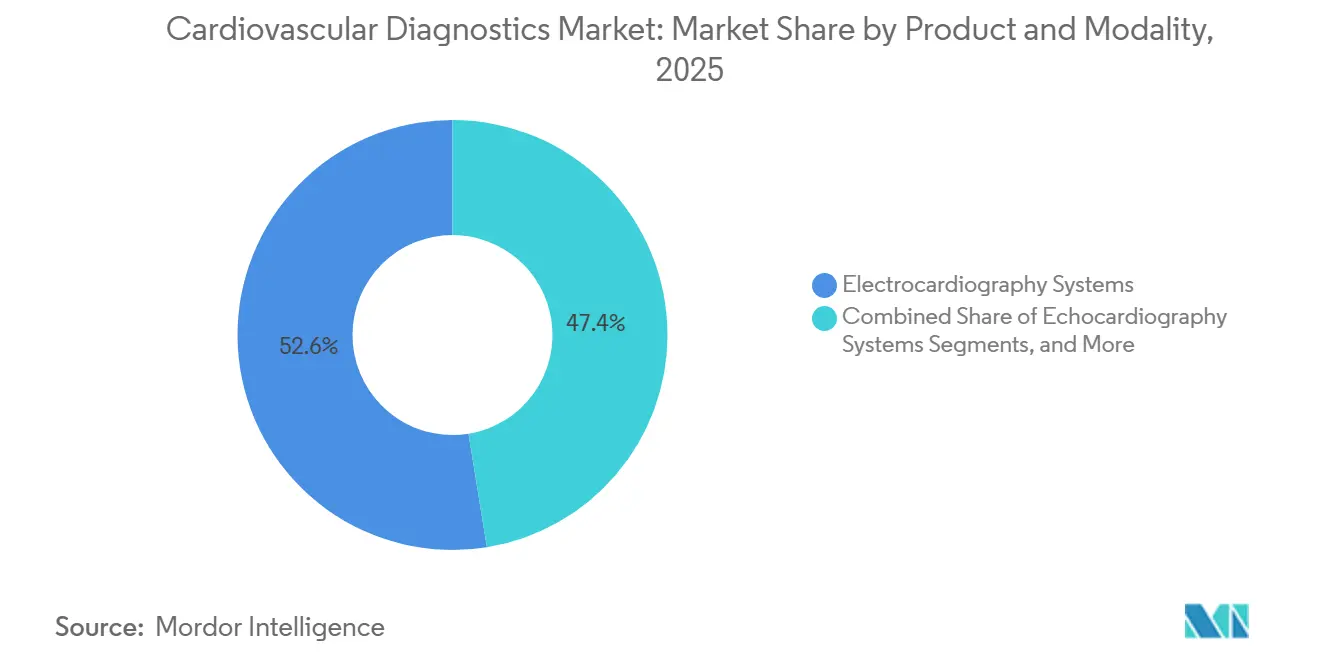
- By product and modality, Electrocardiography Systems led with 52.56% share of the cardiovascular diagnostics market in 2025, while Echocardiography Systems is projected to grow at a 7.15% CAGR through 2031.
- By point-of-care testing, Analyzers held 47.76% of segment revenue in 2025, while Angiotensin Test Kits are projected to expand at an 8.80% CAGR through 2031.
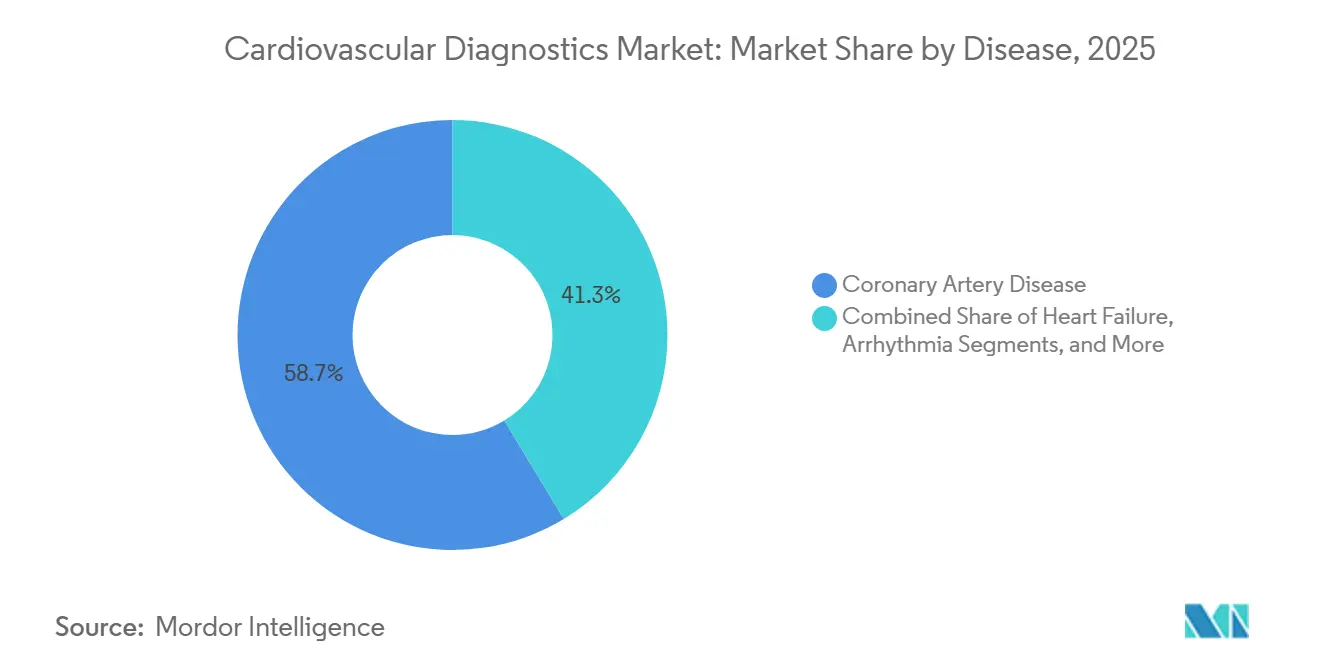
- By disease, Coronary Artery Disease accounted for 58.66% of revenue in 2025, while Arrhythmias is projected to advance at a 7.45% CAGR through 2031.
- By end user, Hospitals & Health Systems held 63.56% of revenue in 2025, while Diagnostic Laboratories is projected to grow at a 9.56% CAGR through 2031.
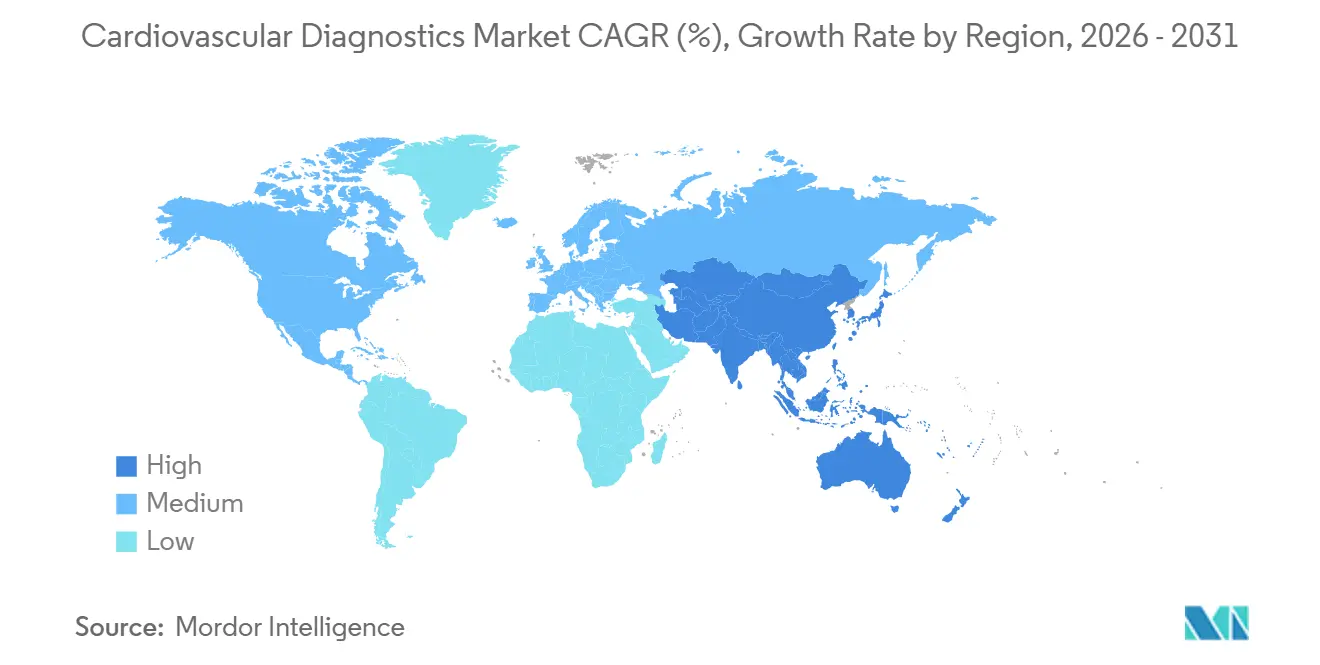
- By geography, North America held 39.44% of global revenue in 2025, while Asia-Pacific is forecast to expand at an 8.88% CAGR through 2031.
Note: Market size and forecast figures in this report are generated using Mordor Intelligence’s proprietary estimation framework, updated with the latest available data and insights as of January 2026.
Market Trends and Insights
Drivers Impact Analysis of Cardiovascular Diagnostics Market*
| DRIVER | (~) % IMPACT ON CAGR FORECAST | GEOGRAPHIC RELEVANCE | IMPACT TIMELINE |
|---|---|---|---|
| Rising cardiovascular disease burden and population aging | +1.3% | Global | Long term (≥ 4 years) |
| High-sensitivity cardiac biomarker adoption | +1.0% | North America and Europe, growing in Asia-Pacific | Medium term (2-4 years) |
| Point-of-care and decentralized testing | +0.9% | Global, strongest in Asia-Pacific and Middle East & Africa | Short term (≤ 2 years) |
| AI-enabled imaging and electrocardiography | +0.8% | North America and Europe | Medium term (2-4 years) |
| Hospital-to-home diagnostic continuity | +0.6% | North America and Europe | Medium term (2-4 years) |
| Ambient-temperature assays and tier-2 and tier-3 distribution | +0.4% | Asia-Pacific, Middle East & Africa, and South America | Long term (≥ 4 years) |
| Source: Mordor Intelligence | |||
Rising Cardiovascular Disease Burden and Population Aging
The cardiovascular diagnostics market has a broad demand base, as cardiovascular conditions require ongoing monitoring. A 2025 analysis in the Journal of the American College of Cardiology reported 626 million prevalent cardiovascular disease cases worldwide in 2023, compared with 311 million in 1990. Population aging and the continued prevalence of hypertension, obesity, and dyslipidemia are increasing screening and follow-up requirements. Patients may require electrocardiography, biomarker testing, imaging, and stress testing across different stages of care. Screening programs in India and Japan also support the early identification and referral of at-risk individuals.
High-Sensitivity Cardiac Biomarker Adoption
High-sensitivity troponin assays are improving acute coronary syndrome triage by delivering more precise results earlier in the care pathway. Roche reported that its Elecsys Troponin T hs Gen 6 test achieved a 99.7% negative predictive value in the TSIX study and supported the discharge of 56.6% of emergency department patients within the first hours of presentation. The company also reported a 10-fold improvement in resistance to hemolysis compared with the prior formulation. Standardized sample handling and clinical cutoffs can support consistent laboratory use, while European rapid rule-out guidelines are influencing adoption across Asia-Pacific. This trend is increasing demand for high-throughput immunoassay analyzers and point-of-care platforms.
Point-of-Care Testing and Care Continuity
Point-of-care cardiac testing can reduce the time between sample collection and clinical decision-making. A 2026 study described a dual-mode assay that measured CK-MB, NT-proBNP, and cardiac troponin I from 50 µL of serum in less than 23 minutes. The study reported a Pearson correlation of 0.988 for cTnI against reference assays and a cost of goods of USD 6.44 for the multiplex cartridge, compared with USD 12.73 for three single-analyte cartridges. These systems can reduce emergency department crowding and support chronic disease monitoring beyond central laboratories. Connected testing also extends care from hospital assessment to home monitoring, improving access in areas with limited referral centers.
AI-Enabled Imaging and Electrocardiography
AI-enabled imaging and electrocardiography are becoming increasingly integrated into routine clinical workflows. GE HealthCare introduced Vivid Pioneer in August 2025 after receiving CE Mark and FDA 510(k) clearance. The company stated that the system delivered up to 360% faster AI performance than its predecessor and generated ejection fraction and strain analyses in less than nine seconds through Easy AFI. Faster measurements can reduce operator dependence and help clinicians manage higher imaging volumes. Software capabilities, workflow integration, and reimbursement coverage are becoming increasingly important alongside device specifications. The cardiovascular diagnostics market therefore favors vendors that integrate validated algorithms into existing care settings.
Restraints Impact Analysis of Cardiovascular Diagnostics Market*
| RESTRAINT | (~) % IMPACT ON CAGR FORECAST | GEOGRAPHIC RELEVANCE | IMPACT TIMELINE |
|---|---|---|---|
| High capital cost and workflow-integration complexity | -0.7% | Global, most severe in Middle East & Africa and South America | Long term (≥ 4 years) |
| Reimbursement pressure and evidence uncertainty | -0.5% | North America and Europe | Medium term (2-4 years) |
| False-positive cascades from multimodal ai and biomarker testing | -0.4% | North America and Europe | Medium term (2-4 years) |
| Cybersecurity, algorithm drift, and interoperability liability | -0.3% | Global | Long term (≥ 4 years) |
| Source: Mordor Intelligence | |||
Capital Cost, Workflow Integration, and Digital Risk
Premium cardiac imaging systems require substantial capital planning, which can delay adoption outside well-funded medical centers. Secondary and tertiary hospitals in sub-Saharan Africa, Southeast Asia, and Latin America may need public funding or development financing to procure advanced systems. Implementation can also require links with imaging archives and electronic health records, staff training, and cybersecurity validation. These tasks can extend deployment by 6 to 18 months at a site. Leasing and long-term partnership models can reduce upfront costs, but smaller institutions may not qualify for these arrangements. Multimodal testing can also create false-positive findings, while algorithm drift and data exchange failures increase clinical and legal risk for connected platforms.
Reimbursement Pressure and Evidence Requirements
Payer coverage for AI-enabled cardiac diagnostics remains uneven. Some AI-assisted electrocardiography and coronary CT analyses have established payment routes, but many AI-generated findings remain bundled within existing payment codes. Health technology assessment bodies in Europe often require randomized controlled evidence in addition to regulatory clearance. This can create a 2- to 3-year gap between CE Mark and routine reimbursement for new assays or software. Developers must therefore support both regulatory work and clinical evidence generation. The financial burden is harder for smaller companies, which can strengthen the position of established diagnostic platforms in the cardiovascular diagnostics market.
*Our forecasts treat driver/restraint impacts as directional, not additive. The impact forecasts reflect baseline growth, mix effects, and variable interactions.
Cardiovascular Diagnostics Market Segment Analysis
By Product and Modality:
Electrocardiography Retains the Broadest Use Base While Echocardiography Grows FastestElectrocardiography Systems held 52.56% of the cardiovascular diagnostics market share in 2025. The segment supports applications ranging from resting 12-lead ECGs to Holter monitoring and implantable loop recorders. Its broad adoption reflects established clinical use, lower unit costs, and demand across acute and routine care. Wearable ECG devices and implantable recorders are expanding continuous monitoring beyond episodic testing. iRhythm Technologies received FDA 510(k) clearance for its ZEUS Platform in June 2026 and stated that its third-generation algorithm could reduce clinician review time by 50% and generate USD 100 million in cumulative cost savings over five years.
Echocardiography Systems are forecast to grow at a 7.15% CAGR from 2026 to 2031. Growth is driven by automation that reduces operator dependence and supports broader adoption. GE HealthCare stated that Vivid Pioneer reduced ejection fraction analysis to less than nine seconds through Easy AFI, while 4D Auto LHQ automated left-heart quantification workflows. Three-dimensional and four-dimensional imaging support structural heart procedure planning, including TAVI and MitraClip. Cardiac imaging systems, vascular diagnostic devices, ECG electrodes, and contrast media support diagnostic applications, recurring testing, and procedure volumes across the cardiovascular diagnostics industry.

By Point-of-Care Testing:
Analyzers Support Acute Triage While Angiotensin Test Kits Expand Risk StratificationAnalyzers accounted for 47.76% of point-of-care testing revenue in 2025. In emergency departments, troponin, BNP, and D-dimer results directly influence patient disposition decisions. Faster results can reduce overcrowding, lower episode costs, and mitigate risks associated with delayed triage. Clinical guidance on high-sensitivity troponin implementation provides analytical criteria for system validation, creating a clearer procurement path for smaller institutions. Analyzers strengthen the cardiovascular diagnostics market by delivering central-laboratory-quality results closer to patients.
Angiotensin Test Kits are forecast to grow at an 8.80% CAGR through 2031. Growth reflects a shift toward more comprehensive cardiovascular risk assessment beyond acute diagnostic thresholds. Research on renin-angiotensin system peptide panels supports sex- and ethnicity-specific reference ranges when standardized sample protocols are used. Lipoprotein Test Kits and High-Sensitivity CRP Kits remain relevant for dyslipidemia and inflammation assessment, while Fibrinogen and Serum Uric Acid Test Kits support growing cardiovascular risk protocols in Europe and Asia-Pacific. These tests expand the cardiovascular diagnostics industry into primary care risk management.
By Disease:
Coronary Artery Disease Anchors Testing Volume While Arrhythmia Monitoring Advances FasterCoronary Artery Disease accounted for 58.66% of revenue in 2025. Patients with coronary artery disease may undergo biomarker testing, stress ECG, echocardiography, coronary CT angiography, and follow-up imaging over several years, supporting recurring testing volumes. Noninvasive coronary imaging has gained a larger role alongside traditional angiography. Siemens Healthineers introduced an integrated CT-guided PCI workflow at EuroPCR 2026 that combines Syngo.CT Coronary Cockpit and Syngo PCI Connect on Artis angiography systems. The system transfers coronary CT plaque analysis, lumen dimensions, and planned stent markers to the catheterization laboratory.
Arrhythmias are projected to grow at a 7.45% CAGR from 2026 to 2031. Wearable ECG patches, implantable loop recorders, and AI-supported rhythm analysis enable earlier detection beyond episodic hospital visits. This is particularly significant for atrial fibrillation, as many cases remain undiagnosed until symptoms appear or a related event occurs. A 2026 review found that AI-ECG wearable systems can shift surveillance from episodic hospital assessment to continuous out-of-hospital monitoring and identified arrhythmia screening as the most clinically mature AI-ECG use case. Heart Failure, Valvular Heart Disease, Cardiomyopathy, Peripheral Artery Disease, Hypertension, and Atherosclerosis also require biomarker and imaging surveillance, sustaining demand across the cardiovascular diagnostics market.
By End User:
Hospitals Lead Capital Purchases While Diagnostic Laboratories Grow FastestHospitals & Health Systems held 63.56% of revenue in 2025. They provide emergency cardiac triage, electrophysiology, structural heart intervention, and cardiac imaging, creating demand for broad diagnostic portfolios. Procurement is shifting toward platform partnerships rather than individual equipment purchases. Siemens Healthineers and Cleveland Clinic announced a 10-year strategic alliance in July 2026 covering diagnostic imaging, interventional cardiology, and radiation oncology. The alliance added more than 30 Siemens Healthineers personnel and covered CT imaging, MRI, and cardiology protocol optimization, favoring established providers in the cardiovascular diagnostics market.
Diagnostic Laboratories are projected to grow at a 9.56% CAGR from 2026 to 2031. Independent and hospital-affiliated laboratories are adding high-sensitivity troponin, NT-proBNP, and lipoprotein subfraction panels. Automation is reducing cost per test and supporting viable economics at lower throughput levels. Specialty cardiology clinics require echocardiography and vascular diagnostics as structural heart services expand into ambulatory settings. Ambulatory surgical centers, physician offices, and academic and research institutes require pre-procedure clearance, chronic-risk screening, and algorithm validation, while home care remains an earlier-stage opportunity for wearable ECG and remote patient monitoring.
Geography Analysis
North America Cardiovascular Diagnostics Market
North America held 39.44% of global revenue in 2025, supported by a high concentration of acute cardiac care centers and an established reimbursement environment for cardiac technologies. The region’s diagnostic infrastructure enabled the integration of imaging, biomarkers, electrocardiography, and software across care pathways. GE HealthCare launched Flyrcado, or flurpiridaz F 18, PET myocardial perfusion imaging in the United States at the ACC Annual Session in March 2025. Canada and Mexico expanded diagnostic laboratory capacity, while the United States remained the primary source of regional demand.
Europe Cardiovascular Diagnostics Market
Europe demonstrated mature demand for cardiovascular diagnostics, supported by large hospital systems and specialist cardiology centers. Germany, the United Kingdom, and France remained key demand centers, while stringent health technology assessment requirements favored clinically validated products. Roche received CE Mark for Elecsys Troponin T hs Gen 6 in 2025, and the TSIX program included more than 4,000 patients. The EU Medical Device Regulation strengthened quality requirements through post-market surveillance but extended approval timelines. Siemens Healthineers equipped the Heart and Vascular Center at University Medical Center Hamburg-Eppendorf with 13 angiography systems, a photon-counting CT system, and a 3T MRI in 2025.
APAC, MEA and South America Cardiovascular Diagnostics Market
Asia-Pacific is forecast to grow at an 8.88% CAGR through 2031, representing the fastest regional growth rate in the cardiovascular diagnostics market. China’s Healthy China 2030 initiative, India’s expanding diagnostic chain network, and the adoption of AI-enabled monitoring supported demand. China had 310 million people aged 60 and above by 2025, increasing the need for large-scale screening. Japan and South Korea directed resources toward earlier detection and referral, while Siemens Healthineers Korea signed an MOU with Phantomics in 2025 to integrate Myomics AI-based cardiac MRI analysis into clinical workflows. Middle East & Africa and South America remained earlier-stage regions, although Gulf Cooperation Council investments and hospital modernization in Brazil supported adoption in urban centers.
Competitive Landscape
The cardiovascular diagnostics market is moderately concentrated among major platform suppliers, while specialized AI software remains fragmented. GE HealthCare, Siemens Healthineers, Koninklijke Philips, Abbott, and Roche Diagnostics compete through imaging hardware, clinical software, assay portfolios, and service contracts. Their scale supports integrated solutions across the cardiac care pathway and strengthens long-term health system partnerships. Siemens Healthineers’ 10-year alliance with Cleveland Clinic reflects this strategy. Boston Scientific also agreed in late 2025 to become the exclusive distributor in the United States and Japan for Siemens Healthineers’ next-generation AcuNav 4D intracardiac echocardiography catheter, expanding access to procedural cardiology channels.
AI-focused companies address specific workflow needs that larger vendors have not fully automated. HeartFlow received FDA 510(k) clearance for an updated plaque analysis algorithm and subsequently secured coverage from UnitedHealthcare and Cigna. The company reported a 21% improvement in plaque detection compared with its earlier algorithm. Ultromics and Powerful Medical offer echocardiography and ECG interpretation tools that operate on existing hardware, reducing capital requirements for community hospitals and specialty clinics. Clear processes for software updates, explainability, and algorithm monitoring help vendors address legal and clinical concerns.
Established vendors retain an advantage where buyers require integrated imaging, assays, software, and service support. Smaller AI developers can gain traction when targeted tools address defined clinical tasks without replacing installed equipment. This creates pressure on mid-tier hardware providers that lack broad platforms or differentiated software. Buyers increasingly view AI features as standard capabilities rather than premium offerings. Companies that demonstrate clinical value and support reimbursement discussions are better positioned to maintain pricing, while managing cybersecurity, interoperability, and evidence requirements. The available information does not provide a combined market-share figure for leading companies; therefore, a concentration score cannot be calculated using the stated share-based method.
Cardiovascular Diagnostics Industry Leaders
-
Becton, Dickinson and Company
-
bioMérieux SA
-
Bio-Rad Laboratories, Inc.
-
F. Hoffmann-La Roche Ltd
-
Thermo Fisher Scientific Inc.
- *Disclaimer: Major Players sorted in no particular order
Cardiovascular Diagnostics Market Companies Covered in this Report
- Abbott Laboratories
- AliveCor
- Beckton Dickinson
- bioMérieux
- Bio-Rad Laboratories
- Boston Scientific
- Canon
- Danaher
- DiaSorin
- Edward Lifesciences
- Roche
- FUJIFILM
- GE HealthCare Technologies Inc.
- HeartFlow, Inc.
- Koninklijke Philips
- Masimo
- Medtronic
- Midmark
- Powerful Medical s.r.o.
- QuidelOrtho
- Schiller
- Mindray
- Siemens Healthineers
- Thermo Fisher Scientific
- Ultromics Ltd.
- Werfen SA
Recent Industry Developments in Cardiovascular Diagnostics Market
- August 2026: Medtronic received an expanded CE Mark for its Affera Mapping and Ablation System with the Sphere-9 Catheter to treat ventricular arrhythmias, including ventricular tachycardia and premature ventricular complexes; the FDA also granted Breakthrough Device Designation.
- July 2026: Siemens Healthineers and Cleveland Clinic formed a 10-year strategic alliance covering diagnostic imaging, interventional cardiology, and radiation oncology, supported by more than 30 on-site personnel and over 100 collaborative research projects.
- June 2026: iRhythm Technologies received FDA 510(k) clearance for its AI-enabled ZEUS ambulatory cardiac monitoring platform, whose third-generation algorithm was projected to reduce clinician review time by 50% and save USD 100 million over five years.
- May 2026: Siemens Healthineers launched an integrated CT-guided PCI workflow at EuroPCR 2026, enabling the direct transfer of coronary CT analysis and planned-stent markers to catheterization laboratories without repeat contrast imaging.
- December 2025: Abbott received FDA approval for its Volt Pulsed Field Ablation System to treat atrial fibrillation, supported by the VOLT-AF IDE study involving 392 patients across 40 international sites.
Global Cardiovascular Diagnostics Market Report Scope
As per the scope of the report, Cardiovascular diagnostics refers to the medical tests, tools, and procedures used to evaluate the structure and function of the heart and blood vessels. These methods help doctors detect heart disease, find blocked arteries, check heart rhythms, and assess overall heart health.
The cardiovascular diagnostics market is segmented by product and modality, point-of-care testing, disease, end user, and geography. By product and modality, the market includes electrocardiography systems, echocardiography systems, cardiac imaging systems, vascular diagnostic devices, and cardiac diagnostic consumables and accessories. Electrocardiography systems include resting electrocardiography systems, stress ECG systems, Holter monitoring devices, event monitoring devices, implantable loop recorders, and mobile and wearable ECG devices. Echocardiography systems include 2D echocardiography, 3D/4D echocardiography, Doppler echocardiography, and stress echocardiography. Cardiac imaging systems include cardiac CT, cardiac MRI, nuclear cardiac imaging, and coronary angiography. Vascular diagnostic devices include Doppler ultrasound, vascular ultrasound, ankle-brachial index (ABI) systems, and peripheral vascular testing systems. Cardiac diagnostic consumables and accessories include ECG electrodes, ECG cables/leads, contrast media, imaging consumables, and other accessories. By point-of-care testing, the market is segmented into analyzers, lipoprotein test kits, angiotensin test kits, fibrinogen test kits, serum uric acid test kits, high-sensitivity CRP kits, and others. By disease, the market is categorized into coronary artery disease, heart failure, arrhythmias, valvular heart disease, cardiomyopathy, congenital heart disease, peripheral artery disease, hypertension, atherosclerosis, and other cardiovascular diseases. By end user, the market is segmented into hospitals and health systems, diagnostic laboratories, specialty cardiology clinics, ambulatory surgical centers, physician offices, academic and research institutes, and home care settings. By geography, the market is analyzed across North America, Europe, Asia-Pacific, the Middle East and Africa, and South America. The report also covers the estimated market sizes and trends for 17 countries across major regions globally. The report offers market sizes and forecasts in terms of value (USD) for the above segments.
Segmentation Overview
| Electrocardiography Systems | Resting Electrocardiography Systems |
| Stress ECG | |
| Holter Monitoring Devices | |
| Event Monitoring Devices | |
| Implantable Loop Recorders | |
| Mobile and Wearable ECG Devices | |
| Echocardiography Systems | 2D Echocardiography |
| 3D/4D Echocardiography | |
| Doppler Echocardiography | |
| Stress Echocardiography | |
| Cardiac Imaging System | Cardiac CT |
| Cardiac MRI | |
| Nuclear Cardiac Imaging | |
| Coronary Angiography | |
| Vascular Diagnostics Devices | Doppler ultrasound |
| Vascular ultrasound | |
| Ankle-brachial index (ABI) systems | |
| Peripheral vascular testing systems | |
| Cardiac Diagnostic Consumables & Accessories | ECG electrodes |
| ECG cables/leads | |
| Contrast media | |
| Imaging consumables | |
| Other accessories |
| Analyzers |
| Lipoprotein Test Kit |
| Angiotensin Test Kit |
| Fribrinogen Test Kit |
| Serum Uric Acid Test Kit |
| High Sensitivity CRP Kits |
| Others |
| Coronary Artery Disease |
| Heart Failure |
| Arrhythmias |
| Valvular Heart Disease |
| Cardiomyopathy |
| Congenital Heart Disease |
| Peripheral Artery Disease |
| Hypertension |
| Atherosclerosis |
| Other Cardiovascular Diseases |
| Hospitals & Health systems |
| Diagnostic Laboratories |
| Specialty Cardiology Clinics |
| Ambulatory Surgical Centers |
| Physician Offices |
| Academic and Research Institutes |
| Home Care Settings |
| North America | United States |
| Canada | |
| Mexico | |
| Europe | Germany |
| United Kingdom | |
| France | |
| Italy | |
| Spain | |
| Rest of Europe | |
| Asia-Pacific | China |
| India | |
| Japan | |
| Australia | |
| South Korea | |
| Rest of Asia-Pacific | |
| Middle East and Africa | GCC |
| South Africa | |
| Rest of Middle East and Africa | |
| South America | Brazil |
| Argentina | |
| Rest of South America |
| By Product and Modality | Electrocardiography Systems | Resting Electrocardiography Systems |
| Stress ECG | ||
| Holter Monitoring Devices | ||
| Event Monitoring Devices | ||
| Implantable Loop Recorders | ||
| Mobile and Wearable ECG Devices | ||
| Echocardiography Systems | 2D Echocardiography | |
| 3D/4D Echocardiography | ||
| Doppler Echocardiography | ||
| Stress Echocardiography | ||
| Cardiac Imaging System | Cardiac CT | |
| Cardiac MRI | ||
| Nuclear Cardiac Imaging | ||
| Coronary Angiography | ||
| Vascular Diagnostics Devices | Doppler ultrasound | |
| Vascular ultrasound | ||
| Ankle-brachial index (ABI) systems | ||
| Peripheral vascular testing systems | ||
| Cardiac Diagnostic Consumables & Accessories | ECG electrodes | |
| ECG cables/leads | ||
| Contrast media | ||
| Imaging consumables | ||
| Other accessories | ||
| By Point Of Care Testing | Analyzers | |
| Lipoprotein Test Kit | ||
| Angiotensin Test Kit | ||
| Fribrinogen Test Kit | ||
| Serum Uric Acid Test Kit | ||
| High Sensitivity CRP Kits | ||
| Others | ||
| By Disease | Coronary Artery Disease | |
| Heart Failure | ||
| Arrhythmias | ||
| Valvular Heart Disease | ||
| Cardiomyopathy | ||
| Congenital Heart Disease | ||
| Peripheral Artery Disease | ||
| Hypertension | ||
| Atherosclerosis | ||
| Other Cardiovascular Diseases | ||
| By End User | Hospitals & Health systems | |
| Diagnostic Laboratories | ||
| Specialty Cardiology Clinics | ||
| Ambulatory Surgical Centers | ||
| Physician Offices | ||
| Academic and Research Institutes | ||
| Home Care Settings | ||
| By Geography | North America | United States |
| Canada | ||
| Mexico | ||
| Europe | Germany | |
| United Kingdom | ||
| France | ||
| Italy | ||
| Spain | ||
| Rest of Europe | ||
| Asia-Pacific | China | |
| India | ||
| Japan | ||
| Australia | ||
| South Korea | ||
| Rest of Asia-Pacific | ||
| Middle East and Africa | GCC | |
| South Africa | ||
| Rest of Middle East and Africa | ||
| South America | Brazil | |
| Argentina | ||
| Rest of South America | ||
Key Questions Answered in the Report
What is the projected value of cardiovascular diagnostics by 2031?
The cardiovascular diagnostics market is forecast to reach USD 35.19 billion by 2031, from USD 26.92 billion in 2026, at a 5.50% CAGR.
Which product category leads cardiovascular diagnostics?
Electrocardiography Systems led with 52.56% of revenue in 2025 because they are used across resting, ambulatory, and implantable monitoring.
Which cardiovascular diagnostic product is growing fastest?
Echocardiography Systems is forecast to grow at a 7.15% CAGR through 2031, supported by automation and wider use of 3D and 4D imaging.
Why are cardiac biomarker tests becoming more important?
High-sensitivity troponin testing can help clinicians rule out acute myocardial infarction earlier and supports faster emergency department decisions.
Which region will grow fastest through 2031?
Asia-Pacific is forecast to grow at an 8.88% CAGR, supported by health infrastructure investment, diagnostic chain expansion, and older populations.
What is the largest end-user group for cardiovascular diagnostic systems?
Hospitals & Health Systems held 63.56% of revenue in 2025 because they provide emergency care, imaging, electrophysiology, and structural heart services.