
Carbodiimide Coupling Reagents Market Size and Share
Market Overview
| Study Period | 2021 - 2031 |
|---|---|
| Market Size (2026) | USD 373.86 Million |
| Market Size (2031) | USD 538.73 Million |
| Growth Rate (2026 - 2031) | 7.58 % |
| Fastest Growing Market | Asia-Pacific |
| Largest Market | North America |
| Market Concentration | Medium |
Major Players *Disclaimer: Major Players sorted in no particular order Image © Mordor Intelligence. Reuse requires attribution under CC BY 4.0. | |
Carbodiimide Coupling Reagents Market Analysis by Mordor Intelligence
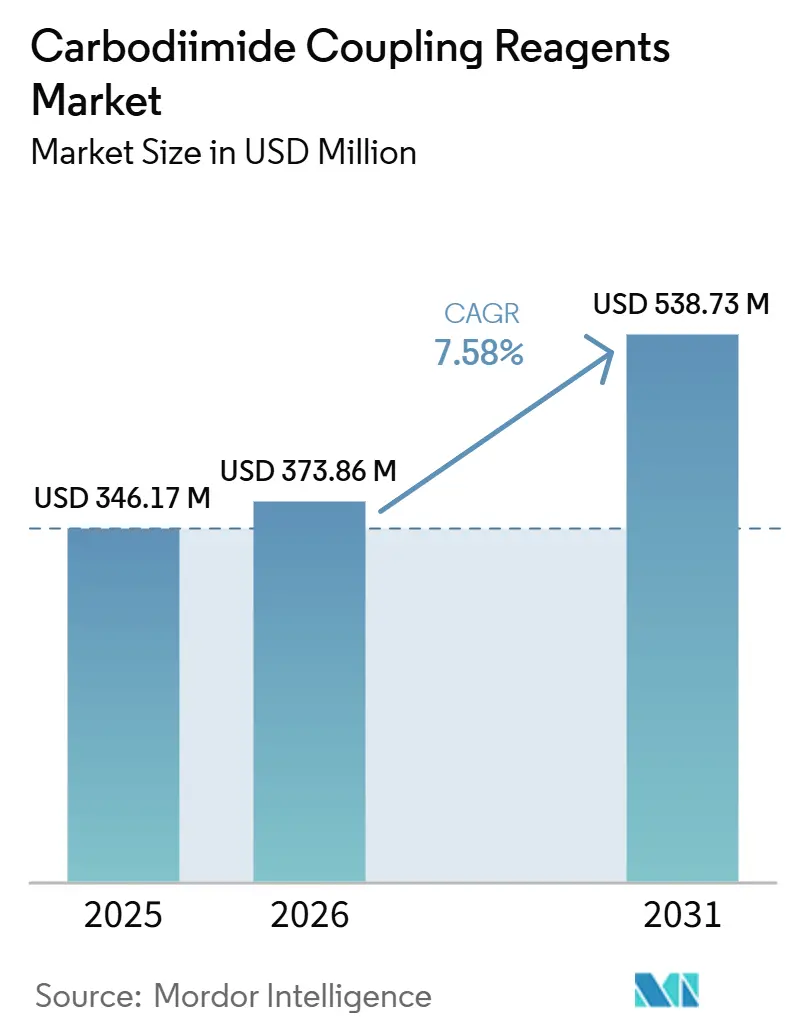
The Carbodiimide Coupling Reagents Market size is expected to increase from USD 346.17 million in 2025 to USD 373.86 million in 2026 and reach USD 538.73 million by 2031, and is expected to grow at a CAGR of 7.58% over 2026-2031. Expansion in peptide drug manufacturing, bioconjugation workflows, and nucleic acid programs supports the carbodiimide coupling reagents market, as these applications require efficient amide bond formation at research and production scales. Demand is shifting toward water-soluble grades because they simplify purification, reduce solvent handling, and support process expectations for waste reduction and documented manufacturing control. The growth of contract development and manufacturing organizations (CDMOs) further shapes the carbodiimide coupling reagents market, as procurement becomes more centralized and tied to formal qualification, traceability, and good manufacturing practice (GMP) documentation requirements under International Council for Harmonization (ICH) Q7. Competition remains moderate, with large global suppliers offering broad portfolios and compliance capabilities, while specialist manufacturers compete on synthesis flexibility, custom supply, and price. However, the carbodiimide coupling reagents market continues to face substitution pressure from uronium and phosphonium systems in difficult peptide sequences, keeping product quality, application fit, and regulatory support central to supplier strategy.
Key Report Takeaways
- By product type, 1-Ethyl-3-(3-dimethylaminopropyl)carbodiimide (EDC) held 41.82% of the carbodiimide coupling reagents market share in 2025, while CMC is projected to expand at an 8.91% CAGR through 2031.
- By solubility, water-soluble formulations accounted for 58.75% share of the carbodiimide coupling reagents market size in 2025 and are projected to grow at an 8.17% CAGR through 2031.
- By application, pharmaceutical active pharmaceutical ingredient (API) synthesis accounted for 28.62% share of the carbodiimide coupling reagents market size in 2025, while bioconjugation is projected to advance at a 9.43% CAGR through 2031.
- By geography, North America held 38.66% of the carbodiimide coupling reagents market share in 2025, while Asia-Pacific is forecast to record the highest CAGR at 8.74% through 2031.
Note: Market size and forecast figures in this report are generated using Mordor Intelligence’s proprietary estimation framework, updated with the latest available data and insights as of January 2026.
Market Trends and Insights
Drivers Impact Analysis of Carbodiimide Coupling Reagents Market*
| Drivers | (~) % Impact on CAGR Forecast | Geographic Relevance | Impact Timeline |
|---|---|---|---|
| Expanding peptide therapeutics pipeline | +1.8% | Global, with North America and Europe as primary clinical and commercial hubs | Short term (≤ 2 years) |
| Rising bioconjugation demand from the Antibody-Drug Conjugate (ADC) pipeline | +1.4% | North America and Europe for innovator manufacturers, Asia-Pacific for Contract Development and Manufacturing Organization (CDMO) capacity | Short term (≤ 2 years) |
| Higher use in oligonucleotide synthesis for RNA therapeutics and antisense drugs | +1.0% | North America and Europe, with early adoption in Asia-Pacific oligonucleotide CDMOs | Medium term (2-4 years) |
| Growth of CDMOs and pharmaceutical outsourcing | +0.8% | Global, with Asia-Pacific and North America as leading CDMO geographies | Medium term (2-4 years) |
| Shift toward water-soluble formulations for green chemistry and waste reduction | +0.6% | North America and Europe | Medium term (2-4 years) |
| Higher use in specialty polymer crosslinking and hydrolysis stabilization | +0.4% | Europe, with emerging adoption in the Asia-Pacific | Long term (≥ 4 years) |
| Source: Mordor Intelligence | |||
Expanding Peptide Therapeutics Pipeline
The expanding peptide drug pipeline is supporting the carbodiimide coupling reagents market, as commercial peptide manufacturing requires repeatable coupling performance, controlled impurity profiles, and reliable access to high-purity reagents. Multiple peptide and oligonucleotide products are expected to be part of the 2025 TIDES approval cycle, indicating that these modalities are moving beyond niche development programs into a broader commercial production base[1]Dalia AlShaer, “2025 FDA TIDES (Peptides and Oligonucleotides) Harvest,” Pharmaceuticals, pmc.ncbi.nlm.nih.gov. FDA records for 2025 are also expected to show a continued flow of novel drug approvals, supporting the manufacturing environment for high-value peptide synthesis and related coupling steps. At the production scale, manufacturers use carbodiimides not only in discovery work but also in fragment coupling and functionalization steps that recur across commercial batch campaigns. Therefore, demand is linked to ongoing manufacturing rather than one-time laboratory use. Process relevance is also expected to continue under greener synthesis requirements, as published 2025 work is expected to show carbodiimide-mediated liraglutide production under dimethylformamide (DMF)-free conditions with high efficiency. This supports continued use as sustainability requirements become stricter. As a result, the carbodiimide coupling reagents market remains linked to the production outlook for peptide therapeutics, especially where validated process chemistry is as important as reaction speed.
Rising Bioconjugation Demand from the ADC Pipeline
The carbodiimide coupling reagents market is also supported by rising bioconjugation demand, as EDC and related systems remain widely used for carboxyl-to-amine coupling in protein crosslinking, immunoconjugates, and related biologic workflows. This demand is becoming more relevant as antibody-drug conjugate (ADC) manufacturing scales up, because linker attachment and associated preparation steps require aqueous-phase, well-understood chemistry that manufacturers can document and reproduce across batches. FUJIFILM’s March 2026 investment in VALANX Biotech to strengthen ADC Contract Development and Manufacturing Organization (CDMO) capabilities is expected to indicate that the ADC production base continues to expand and become more structured. That expansion supports the carbodiimide coupling reagents market because reagent demand in ADC work is tied to a continuing manufacturing cycle, not only to early development experiments. Suppliers that provide controlled impurity profiles, application support, and quality documentation are better positioned for this demand, as bioconjugation customers require consistency across both development and commercial operations. As a result, bioconjugation is becoming a key growth channel for the carbodiimide coupling reagents market, especially in programs that prefer validated workflows over less familiar alternatives.
Higher Use in Oligonucleotide Synthesis
The carbodiimide coupling reagents market is gaining broader relevance in oligonucleotide-related work, as RNA therapeutics and antisense programs expand the need for synthesis support and analytical characterization. The product mix reflects this shift through CMC, the fastest-growing product type in the current forecast, which indicates rising interest in specialty carbodiimide applications beyond standard peptide coupling. This trend does not yet change EDC’s volume leadership, but it widens the end-use profile of the carbodiimide coupling reagents market toward nucleic acid workflows that often value differentiated performance over bulk scale. The same trend aligns with broader investment in green and specialized carbodiimide chemistry, where companies are exploring new reagent classes to provide greater solvent flexibility and more tailored use cases. As ribonucleic acid (RNA) drug programs move deeper into regulated development, suppliers with specialty carbodiimide expertise are likely to see demand, as these workflows often require more specialized technical positioning than standard commodity reagent sales. Over time, this trend creates a more diverse demand base for carbodiimide coupling reagents and reduces reliance on a single therapeutic workflow.
Growth of CDMOs and Pharmaceutical Manufacturing Outsourcing
Outsourcing is reshaping the carbodiimide coupling reagents market, as contract development and manufacturing organizations (CDMOs) are increasingly involved in procurement, vendor qualification, and process documentation across peptide, oligonucleotide, and biologics manufacturing. International Council for Harmonization guideline Q7 (ICH Q7) continues to guide how GMP-grade materials are specified and controlled in active pharmaceutical ingredient (API) production, underscoring the importance of traceability, batch records, and qualified vendor systems in reagent purchasing. This shift favors suppliers that provide strong documentation packages and consistent production quality, rather than those that primarily compete on price or lab-scale familiarity. Public capacity moves support this pattern, including FUJIFILM Wako’s 2024 installation of new equipment to triple production capacity for GMP-compliant raw materials used in pharmaceutical manufacturing. Avantor also expanded its U.S. biomanufacturing support infrastructure in 2025 and 2026, reflecting the broader trend toward more structured, larger-scale sourcing in life sciences manufacturing. As a result, the carbodiimide coupling reagents market is moving toward institutional buying patterns where compliance depth and supply assurance matter as much as reaction performance.
Restraints Impact Analysis of Carbodiimide Coupling Reagents Market*
| Restraints | (~) % Impact on CAGR Forecast | Geographic Relevance | Impact Timeline |
|---|---|---|---|
| Availability of alternative coupling reagents with stronger racemization control | -1.2% | Global, with the strongest pressure in North America and Europe | Short term (≤ 2 years) |
| Side product formation and purification complexity | -0.8% | Global, with a stronger effect in pharmaceutical API synthesis and GMP-grade production | Medium term (2-4 years) |
| Occupational handling hazards and compliance costs | -0.6% | Europe and North America | Medium term (2-4 years) |
| Tight Good Manufacturing Practice (GMP) quality and documentation requirements for supplier qualification | -0.5% | Global, concentrated in regulated pharmaceutical and Contract Development and Manufacturing Organization (CDMO) markets | Long term (≥ 4 years) |
| Source: Mordor Intelligence | |||
Availability of Alternative Coupling Reagents
The carbodiimide coupling reagents market continues to face competition from uronium and phosphonium systems, as many peptide manufacturers prefer reagents that offer stronger racemization control in difficult sequences. Bachem’s 2024 guidance on peptide synthesis emphasizes the roles of various coupling reagents and additives, indicating that carbodiimides operate in a technically selective reagent environment. This trend is most relevant in high-value peptide programs, where each coupling step affects final purity, downstream purification requirements, and batch economics. New plants and automated workflows can add to this challenge. Once manufacturers design a platform around a different reagent system, switching back to carbodiimides becomes less attractive unless the change delivers a clear cost or process benefit. Therefore, the carbodiimide coupling reagents market must maintain its share by focusing on application fit, documentation quality, and product formulation, rather than relying solely on established use. Suppliers that do not adapt to this shift could lose position in the most technically demanding areas of peptide manufacturing.
Side Product Formation and Purification Complexity
The carbodiimide coupling reagents market also faces a practical restraint from side-product formation, as carbodiimide-mediated reactions can generate impurities that increase purification effort and costs in regulated manufacturing. Bachem’s 2024 guidance highlights N-acylurea formation as a recurring issue in carbodiimide-based synthesis, indicating that this process concern has a direct operational impact. The burden becomes more visible at larger scales, as additional filtration, added scavengers, and more complex impurity control can slow manufacturing and complicate raw material qualification. Thermo Fisher Scientific's technical guidance also highlights the difference between water-soluble EDCs and older carbodiimides, such as DCC, where byproduct handling is less convenient and more disruptive to process flow [2]Thermo Fisher Scientific, “Carbodiimide Crosslinker Chemistry,” Thermo Fisher Scientific, thermofisher.com. In GMP settings, a reaction system can appear acceptable at bench scale but become less attractive when manufacturers consider yield loss, impurity clearance, and cycle time together. This factor is one reason the carbodiimide coupling reagents market is shifting toward grades and workflows that minimize downstream cleanup burdens.
*Our forecasts treat driver/restraint impacts as directional, not additive. The impact forecasts reflect baseline growth, mix effects, and variable interactions.
Carbodiimide Coupling Reagents Market Segment Analysis
By Product Type:
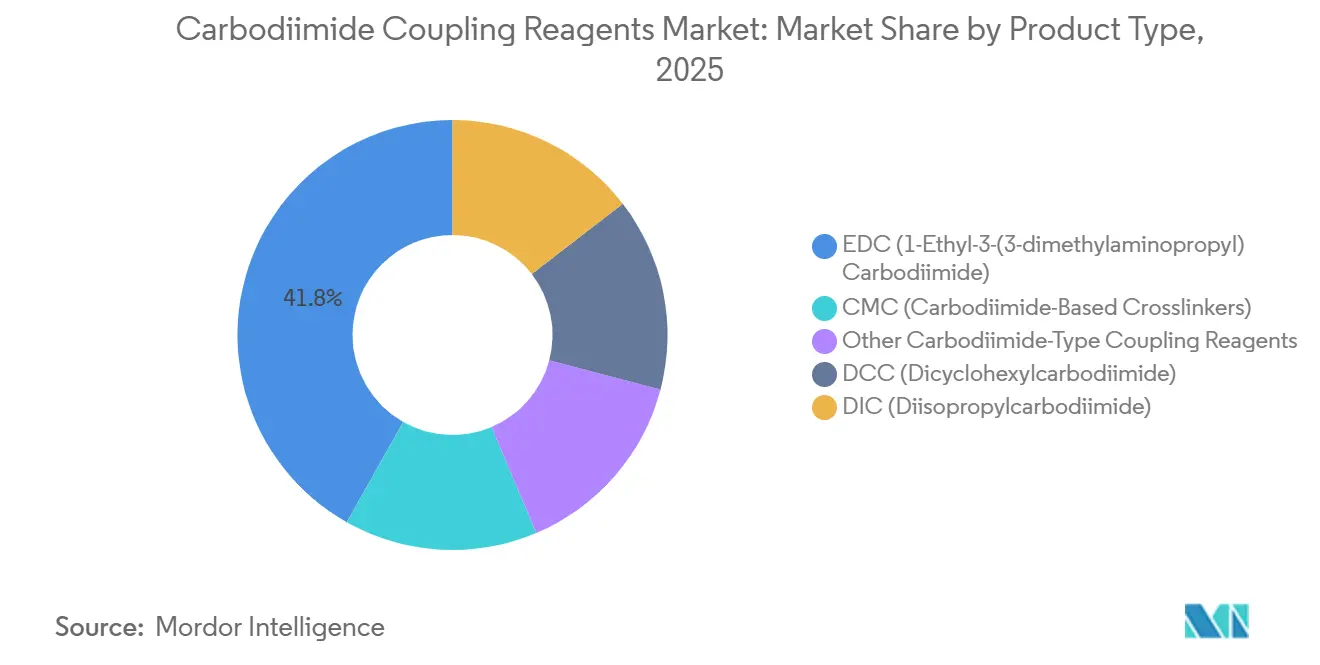
EDC Leads Revenue While CMC Posts the Fastest GrowthEDC is expected to account for 41.82% of the carbodiimide coupling reagents market share in 2025, making it the leading product type by revenue in the current market structure. Its position stems from its broad use in peptide synthesis, protein crosslinking, immunoconjugation, and selected nucleic acid workflows, where users require a reagent that performs effectively in aqueous or mixed systems. The carbodiimide coupling reagents market continues to rely on EDC because its water-soluble urea byproduct can often be removed through simple washing steps, reducing the purification burden compared with older pathways that generate insoluble byproducts. This process advantage is relevant at larger manufacturing scales, where downstream cleanup can affect cycle time, filtration requirements, and labor intensity across repeated campaigns. Therefore, EDC maintains a significant position in the carbodiimide coupling reagents market, as its chemistry aligns with biological applications and current manufacturing practices.
CMC is projected to grow at a CAGR of 8.91% through 2031, making it the fastest-growing product type during the forecast period. Its growth reflects a more specialized layer of demand within the carbodiimide coupling reagents market, as suppliers serve analytical, nucleic acid, and differentiated synthesis use cases rather than only high-volume peptide production. This specialty profile supports value growth because customers in narrower technical workflows often prioritize fit and reproducibility over volume-based pricing. DCC and DIC remain relevant in laboratory synthesis, ester formation, and solvent-based peptide workflows, but their operating profiles are less favorable when cleanup simplicity and handling controls are critical. The product mix is also expanding as newer carbodiimide derivatives are explored for greener synthesis conditions, indicating continued innovation even though commercial volumes remain concentrated in a few established products. As a result, product type competition in the carbodiimide coupling reagents market remains balanced between scale-oriented incumbents and smaller specialty positions that can grow faster from a lower base.



By Solubility:
Water-Soluble Grades Hold the LeadWater-soluble formulations are expected to account for 58.75% of the carbodiimide coupling reagents market size in 2025 and are projected to expand at a CAGR of 8.17% through 2031. This segment leads because pharmaceutical and biologics workflows increasingly favor reagents that operate in buffered media, reduce solvent dependence, and enable simpler post-reaction cleanup. The carbodiimide coupling reagents market is seeing this preference strengthen as manufacturers place greater emphasis on process mass intensity, waste control, and solvent management at early process stages. Published 2025 work on scalable amidation in water supports this direction by showing that aqueous systems can achieve high conversion without relying on older, less favorable solvent systems. This combination of process efficiency and environmental fit explains why water-soluble grades hold the largest current share and one of the stronger growth profiles in the carbodiimide coupling reagents market.
Organic solvent-soluble carbodiimides, mainly dicyclohexylcarbodiimide (DCC) and diisopropylcarbodiimide (DIC), still have a role where substrates, protecting groups, or workflow designs make aqueous conditions less suitable. These reagents remain relevant in solid-phase peptide synthesis and selected organic synthesis routes, especially where established plant practices already rely on polar aprotic solvent systems. Even so, the carbodiimide coupling reagents market is shifting structurally toward water-soluble options because they align more closely with current customer expectations for safety, waste reduction, and easier validation of manufacturing steps. Research on alternative media for 1-ethyl-3-(3-dimethylaminopropyl)carbodiimide (EDC)-mediated amide synthesis also supports this transition by showing that greener solvent systems can still deliver effective coupling performance. Over the forecast period, the economics of purification and solvent handling are likely to keep water-soluble grades in a stronger position. Therefore, the solubility split in the carbodiimide coupling reagents market now reflects process discipline and compliance priorities as much as core reaction chemistry.
By Application:
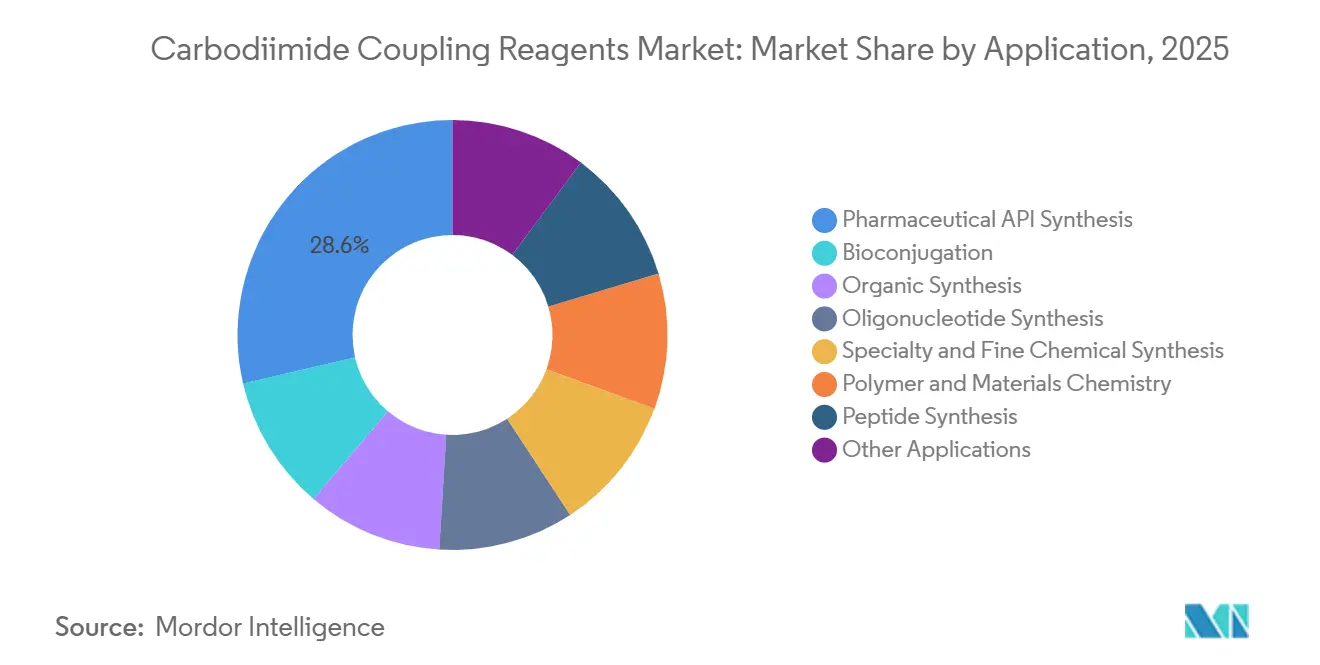
Pharmaceutical API Synthesis Holds the Lead While Bioconjugation Grows FastestPharmaceutical API synthesis is expected to account for 28.62% of the carbodiimide coupling reagents market in 2025, making it the largest application segment in the base year. This application involves the use of carbodiimide chemistry in the synthesis of complex drug substances, particularly when route designs require solution-phase coupling, modified amino acid handling, or controlled amide bond formation. The carbodiimide coupling reagents industry continues to depend heavily on this application because approved peptide therapies create recurring API manufacturing demand rather than one-time development consumption. Peptide synthesis remains a major component of this application mix, while oligonucleotide and fine chemical routes add a broader set of consumption points across specialized manufacturers. Therefore, the carbodiimide coupling reagents market maintains a significant production anchor in API synthesis even as newer use cases develop in parallel.
Bioconjugation is projected to grow at a 9.43% CAGR through 2031, making it the fastest-growing application during the current forecast period. This growth is driven not only by research activity but also by the expanding manufacturing base for antibody-drug conjugates (ADCs) and other conjugated biologic formats that use carboxyl-to-amine coupling in controlled production settings. This part of the carbodiimide coupling reagents market tends to favor reagents with consistent aqueous performance, strong documentation, and established technical familiarity, which keeps 1-ethyl-3-(3-dimethylaminopropyl)carbodiimide (EDC) closely tied to the segment's growth path. Oligonucleotide synthesis, specialty chemicals, organic synthesis, and polymer applications also diversify the application profile, with polycarbodiimide work in materials showing that demand extends beyond pharmaceutical end use. This broader application base reduces dependence on any single end market and supports a more balanced long-term demand structure. Even so, the carbodiimide coupling reagents market is likely to record its strongest application momentum where biologics complexity and manufacturing scale increase together.
Geography Analysis
North America Carbodiimide Coupling Reagents Market
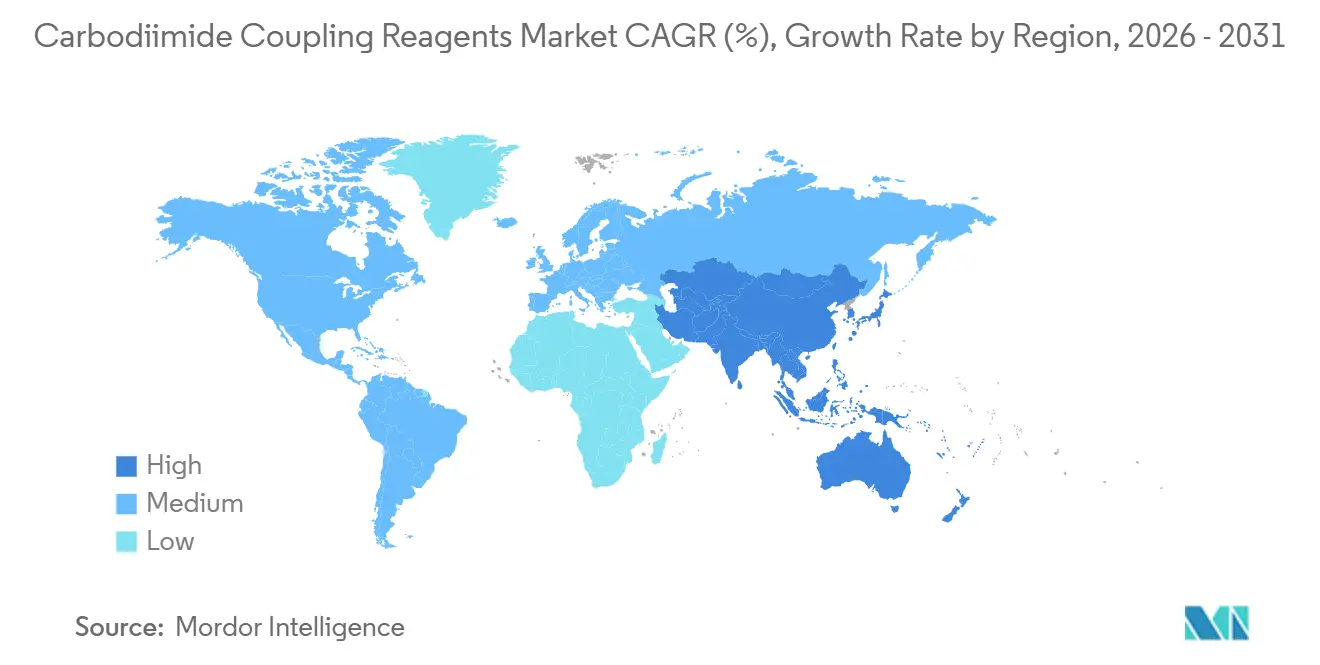
North America is expected to account for 38.66% of the carbodiimide coupling reagents market share in 2025, making it the largest regional segment in the base year. The region benefits from a concentration of pharmaceutical innovators, contract research organizations, and contract development and manufacturing organizations (CDMOs), which operate under documented quality systems and prefer premium reagent grades with full traceability. The United States is expected to remain the main regional demand center, as FDA novel drug approvals in 2025 are anticipated to support manufacturing activity in peptide- and related-therapeutic areas that use carbodiimide chemistry at scale. Supplier capacity additions are also expected to support the region’s position, including Avantor’s planned hydration expansion in 2025 and its biomanufacturing infrastructure expansion in the United States in 2026. Canada contributes through biotechnology research and manufacturing support activity, while Mexico continues to emerge as a pharmaceutical production node in the region.
APAC Carbodiimide Coupling Reagents Market
Asia-Pacific is projected to register a CAGR of 8.74% through 2031, making it the fastest-growing geography in the carbodiimide coupling reagents market. The region’s growth is linked to the scale of manufacturing in India and China, where outsourced pharmaceutical production and process chemistry demand continue to expand. This growth pattern also reflects a shift toward Asia-Pacific as a production hub for complex drug substances, biologics support materials, and specialty intermediates used in regulated manufacturing. Japan contributes through its high-purity chemical supply, led by companies such as FUJIFILM Wako Pure Chemical and Tokyo Chemical Industry, which serve pharmaceutical and advanced research customers with documented reagent portfolios. South Korea adds momentum through its biologics and high-potency manufacturing buildout, especially in workflows connected to oncology and conjugated therapeutic formats. As a result, Asia-Pacific is becoming a key growth engine for the carbodiimide coupling reagents market, although North America is expected to retain the market share lead in the base year.
EMEA and South America Carbodiimide Coupling Reagents Market
Europe remains the second-largest regional market, supported by Germany’s position in pharmaceutical fine chemicals, research-linked manufacturing, and the supply of Good Manufacturing Practice (GMP)-grade specialty reagents. Germany hosts key suppliers and specialist manufacturers, including Merck KGaA and Iris Biotech, maintaining the region’s relevance in both supply and demand. Regulatory requirements also have a stronger effect in Europe, as handling, labeling, and qualification standards increase the value of established compliance systems and documented raw material control. France and Switzerland support the region through fine chemical capabilities and the presence of major pharmaceutical companies, while the United Kingdom remains a significant customer base despite increased qualification complexity across overlapping regulatory frameworks. South America, the Middle East, and Africa currently remain smaller in size, but all three regions show gradual demand growth as research activity and early-stage active pharmaceutical ingredient (API) synthesis continue to expand.

Competitive Landscape
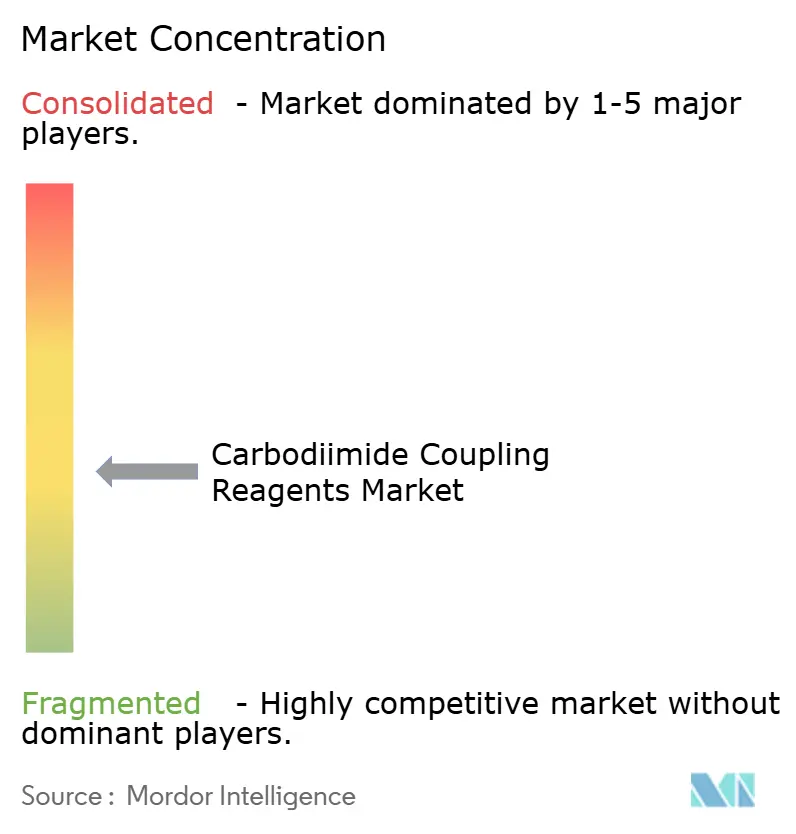
The carbodiimide coupling reagents market is moderately fragmented, with large life sciences suppliers and smaller specialist manufacturers competing on purity, application support, regulatory documentation, and delivery reliability. Merck KGaA, Thermo Fisher Scientific, and FUJIFILM Wako Pure Chemical maintain established positions by combining broad portfolios with compliance capabilities and customer relationships in regulated life sciences markets. Specialist companies, such as GL Biochem, Iris Biotech, and Suzhou Highfine Biotech, remain relevant because customers in custom synthesis and niche workflows continue to value flexible supply and product-specific expertise. This supplier mix keeps the carbodiimide coupling reagents market competitive without making it overly concentrated, as no single supplier controls it. Pricing remains important, but documentation quality and reproducible manufacturing support are becoming stronger differentiators as procurement shifts toward larger institutional buyers.
Large suppliers are increasingly using portfolio expansion and adjacent manufacturing capabilities to strengthen their positions in the carbodiimide coupling reagents market. Merck KGaA’s June 2026 agreement to acquire Bio-Techne for USD 11.3 billion would expand its reach in reagents, analytical tools, and advanced therapies across life sciences. Thermo Fisher Scientific’s 2025 acquisition of Solventum's Purification & Filtration business would also expand its offering in synthesis and downstream processing. FUJIFILM’s 2026 investment in VALANX Biotech would support integrated ADC capabilities, which is relevant because bioconjugation is one of the faster-growing end uses for carbodiimide reagents. These moves indicate that leadership in the carbodiimide coupling reagents market is increasingly linked to broader life sciences infrastructure rather than stand-alone reagent catalogs. They also raise the competitive threshold for smaller suppliers that lack comparable scale in quality systems, adjacent services, or customer access.
At the same time, the carbodiimide coupling reagents market still offers opportunities for focused suppliers that can address specific customer needs more effectively than larger generalists. One opportunity is GMP-grade, pre-formulated carbodiimide and additive kits for targeted applications, such as ADC bioconjugation or RNA-related quality workflows, because many customers still develop these protocols internally rather than purchase validated reagent packages. Another opportunity lies in greener carbodiimide designs and solvent-flexible systems, where newer chemistry research suggests potential for differentiated products beyond traditional EDC, DCC, and DIC use cases. GL Biochem’s disclosed manufacturing scale also shows that specialist peptide-oriented suppliers can compete when they align capacity, technical focus, and custom service. Overall, the carbodiimide coupling reagents market remains competitive enough to support specialization, but it is also moving toward higher qualification standards that favor suppliers with proven manufacturing discipline.
Carbodiimide Coupling Reagents Industry Leaders
Merck KGaA
Thermo Fisher Scientific Inc.
Tokyo Chemical Industry Co., Ltd.
FUJIFILM Wako Pure Chemical Corporation
Enamine
- *Disclaimer: Major Players sorted in no particular order
Carbodiimide Coupling Reagents Market Companies Covered in this Report
- AAPPTec
- Avantor, Inc.
- Biosolve Chimie
- BLD Pharmatech Ltd.
- Carl Roth GmbH + Co. KG
- Chem-Impex
- Enamine
- Fluorochem Ltd.
- FUJIFILM Wako Pure Chemical Corporation
- GL Biochem (Shanghai) Ltd.
- Iris Biotech GmbH
- J and K Scientific Ltd.
- Merck KGaA
- Suzhou Highfine Biotech Co., Ltd.
- Thermo Fisher Scientific Inc.
- Tokyo Chemical Industry Co., Ltd.

Recent Industry Developments in Carbodiimide Coupling Reagents Market
- June 2026: Merck KGaA agreed to acquire Bio-Techne Corporation for approximately USD 11.3 billion, marking the German life sciences company’s largest acquisition since its purchase of Sigma-Aldrich in 2014. The transaction is expected to expand Merck’s capabilities in reagents, proteins, antibodies, analytical technologies, and advanced-therapy manufacturing. The deal is expected to close by late 2026 or early 2027, subject to regulatory and shareholder approvals.
- September 2025: Thermo Fisher Scientific completed the acquisition of Solventum’s Purification & Filtration business for approximately USD 4.0 billion in cash. The acquired business now operates as Thermo Fisher’s Filtration and Separation segment within its Life Sciences Solutions division. The acquisition expands the company’s downstream separation capabilities, complementing its coupling reagent and synthesis chemistry portfolio.


Global Carbodiimide Coupling Reagents Market Report Scope
Carbodiimide coupling reagents, such as DCC, DIC, and EDC, are dehydrating agents used in organic synthesis to convert carboxylic acids into amides, esters, or anhydrides. They activate the carboxylic acid by forming a reactive intermediate, which then undergoes nucleophilic attack by an amine or alcohol.
The carbodiimide coupling reagents market is segmented by product type, solubility, application, and geography. By product type, the market is segmented into EDC (1-Ethyl-3-(3-dimethylaminopropyl) Carbodiimide), DCC (dicyclohexylcarbodiimide), DIC (diisopropylcarbodiimide), CMC (carbodiimide-based crosslinkers), and other carbodiimide-type coupling reagents. By solubility, the market is segmented into water-soluble carbodiimides and organic solvent-soluble carbodiimides. By application, the market is segmented into peptide synthesis, pharmaceutical API synthesis, bioconjugation, organic synthesis, oligonucleotide synthesis, specialty and fine chemical synthesis, polymer and materials chemistry, and other applications. The report also covers the market size and forecasts for carbodiimide coupling reagents in 16 countries across major regions. The market sizes and forecasts are provided in terms of value (USD).
| EDC (1-Ethyl-3-(3-dimethylaminopropyl) Carbodiimide) |
| DCC (Dicyclohexylcarbodiimide) |
| DIC (Diisopropylcarbodiimide) |
| CMC (Carbodiimide-Based Crosslinkers) |
| Other Carbodiimide-Type Coupling Reagents |
| Water-Soluble Carbodiimides |
| Organic Solvent-Soluble Carbodiimides |
| Peptide Synthesis |
| Pharmaceutical API Synthesis |
| Bioconjugation |
| Organic Synthesis |
| Oligonucleotide Synthesis |
| Specialty and Fine Chemical Synthesis |
| Polymer and Materials Chemistry |
| Other Applications |
| Asia-Pacific | China |
| India | |
| Japan | |
| South Korea | |
| Rest of Asia-Pacific | |
| North America | United States |
| Canada | |
| Mexico | |
| Europe | Germany |
| United Kingdom | |
| France | |
| Italy | |
| Russia | |
| Rest of Europe | |
| South America | Brazil |
| Argentina | |
| Rest of South America | |
| Middle-East and Africa | Saudi Arabia |
| South Africa | |
| Rest of Middle-East and Africa |
| By Product Type | EDC (1-Ethyl-3-(3-dimethylaminopropyl) Carbodiimide) | |
| DCC (Dicyclohexylcarbodiimide) | ||
| DIC (Diisopropylcarbodiimide) | ||
| CMC (Carbodiimide-Based Crosslinkers) | ||
| Other Carbodiimide-Type Coupling Reagents | ||
| By Solubility | Water-Soluble Carbodiimides | |
| Organic Solvent-Soluble Carbodiimides | ||
| By Application | Peptide Synthesis | |
| Pharmaceutical API Synthesis | ||
| Bioconjugation | ||
| Organic Synthesis | ||
| Oligonucleotide Synthesis | ||
| Specialty and Fine Chemical Synthesis | ||
| Polymer and Materials Chemistry | ||
| Other Applications | ||
| By Geography | Asia-Pacific | China |
| India | ||
| Japan | ||
| South Korea | ||
| Rest of Asia-Pacific | ||
| North America | United States | |
| Canada | ||
| Mexico | ||
| Europe | Germany | |
| United Kingdom | ||
| France | ||
| Italy | ||
| Russia | ||
| Rest of Europe | ||
| South America | Brazil | |
| Argentina | ||
| Rest of South America | ||
| Middle-East and Africa | Saudi Arabia | |
| South Africa | ||
| Rest of Middle-East and Africa | ||


Key Questions Answered in the Report
What is current market size of Carbodiimide Coupling Reagents Market?
The Carbodiimide Coupling Reagents Market size is expected to increase from USD 346.17 million in 2025 to USD 373.86 million in 2026 and reach USD 538.73 million by 2031, growing at a CAGR of 7.58% over 2026-2031.
Which product type leads to current revenue in this field?
EDC led with 41.82% share in 2025 because it has broad use across peptide synthesis, crosslinking, and bioconjugation, and it also offers easier byproduct removal in many workflows.
Which end use is growing fastest through 2031?
Bioconjugation is the fastest-growing application with a 9.43% CAGR, supported by rising ADC manufacturing activity and greater use of controlled conjugation workflows.
Why are water-soluble carbodiimides gaining preference?
Water-soluble grades held a 58.75% share in 2025 and are projected to grow at an 8.17% CAGR, as they reduce solvent handling, simplify purification, and better align with current sustainability and GMP expectations.
Page last updated on:





