
Brazil Premium Confectionery Market Size and Share
Market Overview
| Study Period | 2021 - 2031 |
|---|---|
| Forecast Data Period | 2026 - 2031 |
| Base Year Market Size (2025) | USD 2 Billion |
| Market Size (2026) | USD 2.13 Billion |
| Market Size (2031) | USD 3.02 Billion |
| Growth Rate (2026 - 2031) | 7.24 % |
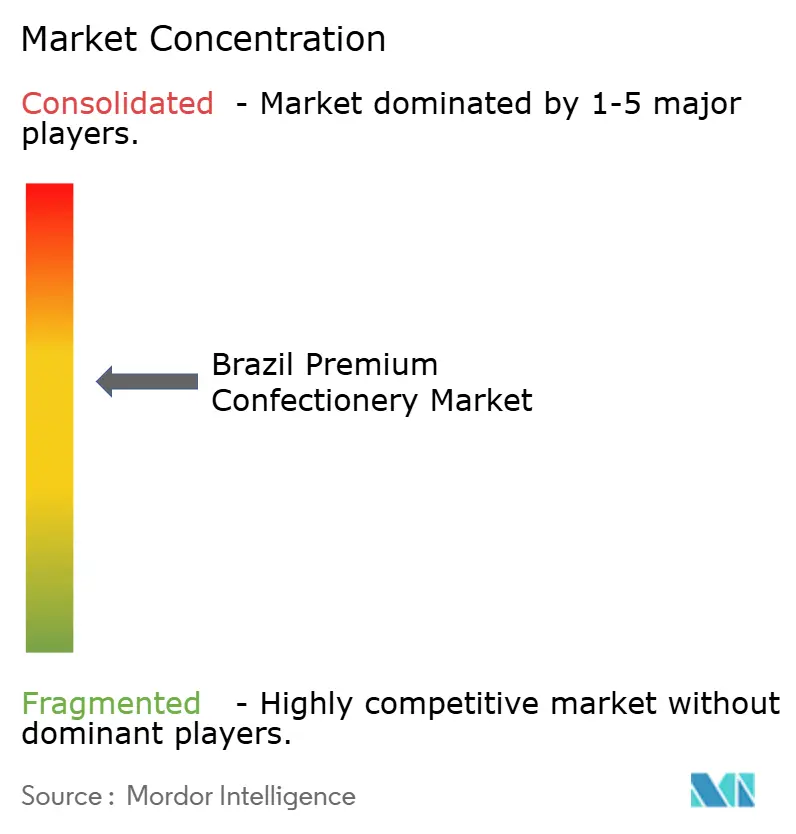
| Market Concentration | Medium |
Major Players
*Disclaimer: Major Players sorted in no particular order Image © Mordor Intelligence. Reuse requires attribution under CC BY 4.0. |
|
Brazil Premium Confectionery Market Analysis by Mordor Intelligence
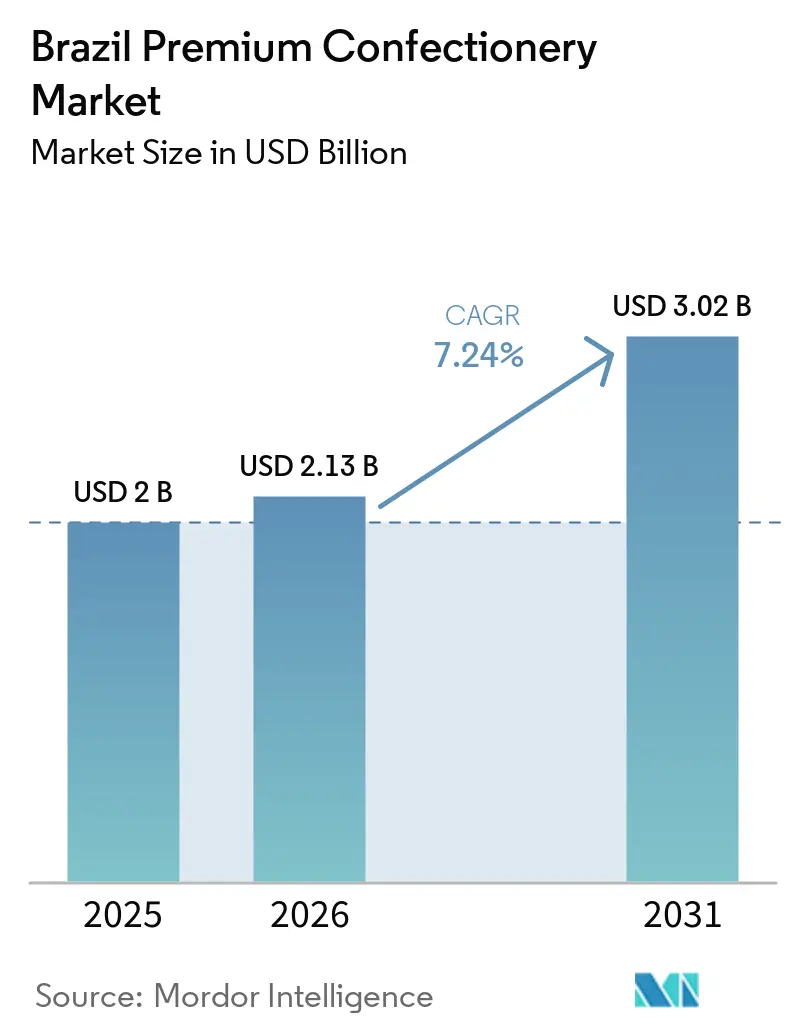
The Brazil premium confectionery market size is expected to grow from USD 2.00 billion in 2025 to USD 2.13 billion in 2026 and is forecast to reach USD 3.02 billion by 2031 at a 7.24% CAGR over 2026-2031. The market is driven by growing consumer preference for high-quality chocolates, artisanal products, and premium gifting. This is supported by increasing interest in products with higher cocoa content, distinctive flavors, and ethical sourcing. Domestic specialty manufacturers and multinational brands continue to expand their premium portfolios through product innovation and wider availability across modern retail and online channels. The market is also benefiting from the growth of Brazil's bean-to-bar segment and rising demand for traceable, locally sourced cocoa. However, volatility in cocoa and sugar prices, seasonal demand patterns, and distribution challenges across the country's diverse geography continue to influence market dynamics and competitive strategies.
Key Report Takeaways
- By product type, chocolate held 69.43% of Brazil premium confectionery value in 2025, while snack bars are forecast to grow at an 8.23% CAGR across Brazil from 2026 to 2031.
- By packaging type, multipacks accounted for 58.83% of Brazil premium confectionery value in 2025, while single serve formats are forecast to grow at a 7.91% CAGR across Brazil from 2026 to 2031.
- By price range, entry premium products held 52.13% of Brazil premium confectionery value in 2025, while ultra-premium/luxury are forecast to grow at an 8.53% CAGR across Brazil from 2026 to 2031.
- By distribution channel, supermarkets/hypermarkets held 38.75% of Brazil premium confectionery value in 2025, while online retail stores are forecast to grow at a 9.01% CAGR across Brazil from 2026 to 2031.
Note: Market size and forecast figures in this report are generated using Mordor Intelligence’s proprietary estimation framework, updated with the latest available data and insights as of January 2026.
Brazil Premium Confectionery Market Trends and Insights
Drivers Impact Analysis*
| Driver | (~) % Impact on CAGR Forecast | Geographic Relevance | Impact Timeline |
|---|---|---|---|
| Premiumization of everyday indulgence and gifting | +2.1% | National, concentrated uptake in São Paulo, Rio de Janeiro, and Belo Horizonte metropolitan areas | Medium term (2-4 years) |
| Growing preference for dark, high-cocoa, and better-for-you premium chocolate | +1.3% | Southeast and South Brazil; affluent urban demographics | Long term (≥ 4 years) |
| Expansion of premium confectionery distribution through modern retail and e-commerce | +1.5% | National, with early gains in São Paulo e-commerce corridor expanding to Northeast and Central-West | Medium term (2-4 years) |
| Growth of artisanal bean-to-bar and craft chocolate brands | +0.8% | Southeast urban centers (São Paulo, Rio de Janeiro), extending to South and Brasília | Long term (≥ 4 years) |
| Product innovation through limited editions, regional flavors, and premium ingredients | +0.9% | National, particularly strong in Southeast during Easter and Valentine's Day windows | Short term (≤ 2 years) |
| Rising demand for traceable, ethically sourced, sustainable, and single-origin certified chocolate | +0.6% | National, with early adopter concentration in upper-income urban demographics | Long term (≥ 4 years) |
| Source: Mordor Intelligence | |||
Premiumization of everyday indulgence and gifting
Demand for premium confectionery in Brazil is growing as consumers increasingly seek higher-quality chocolates with distinctive flavors, premium ingredients, and attractive packaging for personal consumption and gifting occasions. The industry is responding with continuous product innovation, including premium seasonal collections, artisanal offerings, and differentiated flavor profiles that encourage year-round consumption beyond traditional festive periods. According to the Brazilian Association of Chocolate, Peanut and Candy Industries (ABICAB), the Brazilian chocolate industry introduced 134 new products for Easter 2026, a 43% increase over the previous year, reflecting manufacturers' growing investment in premium product development and consumer-focused innovation[1]Source: Brazilian Association of Chocolate, Peanut and Candy Industries, "The chocolate industry presents more than 130 new products for Easter 2026.", abicab.org.br. This expanding variety of premium offerings is reinforcing the shift toward higher-value confectionery purchases and supporting sustained market growth.
Growing preference for dark, high-cocoa, and better-for-you premium chocolate
Growing consumer preference for dark, high-cocoa, and better-for-you chocolate is supporting demand for premium confectionery in Brazil. Consumers are increasingly associating dark chocolate with superior quality, lower sweetness, and healthier indulgence, prompting manufacturers to expand premium product portfolios with higher cocoa content and clean-label formulations. A 2025 study by researchers from the Instituto Federal da Bahia and UNICAMP found that among consumers of specialty dark chocolate, 80.2% considered cocoa percentage an important label attribute, 69.2% valued information on the cocoa's place of origin, and 65.7% considered certifications and quality seals important when making purchasing decisions[2]Source: Instituto Federal da Bahia, "PROFILE AND CONSUMPTION HABITS OF INTENSE AND PREMIUM CHOCOLATE IN BRAZIL", proceedings.science. These evolving preferences are prompting manufacturers to differentiate premium products through higher cocoa content, transparent sourcing, and quality certifications.
Expansion of premium confectionery distribution through modern retail and e-commerce
The expansion of modern retail formats and e-commerce is improving consumer access to premium confectionery products across Brazil, enabling both multinational and domestic specialty brands to strengthen their presence beyond traditional specialty stores. Wider availability through supermarkets, premium food retailers, brand-owned online stores, and digital marketplaces has enhanced product visibility while supporting direct-to-consumer sales and premium gifting purchases. According to the U.S. International Trade Administration, 94 million Brazilians made online purchases in 2025, an increase of 3 million shoppers compared with 2024, reflecting the continued expansion of digital retail channels and creating broader opportunities for premium confectionery brands to reach consumers nationwide[3]Source: International Trade Administration, "Brazil Country Commercial Guide", trade.gov. This growing omnichannel retail ecosystem is supporting wider product availability and contributing to long-term market growth.
Growth of artisanal bean-to-bar and craft chocolate brands
The growth of artisanal bean-to-bar and craft chocolate brands is contributing to the expansion of Brazil's premium confectionery market by increasing the availability of high-quality, differentiated products. These manufacturers focus on small-batch production, direct sourcing of Brazilian cocoa, and close control over the chocolate-making process to deliver distinctive flavor profiles and premium quality. Their emphasis on single-origin cocoa, transparency, sustainability, and craftsmanship appeals to consumers seeking authentic premium confectionery. As a result, the continued expansion of artisanal producers is increasing product diversity, strengthening the premium positioning of the market, and broadening consumer appreciation of fine chocolate.
Restraints Impact Analysis*
| Restraint | (~) % Impact on CAGR Forecast | Geographic Relevance | Impact Timeline |
|---|---|---|---|
| Volatility in cocoa and sugar prices increasing production costs | -1.8% | Global, with direct margin pass-through across all Brazilian premium price tiers | Short term (≤ 2 years) |
| Cold-chain and last-mile distribution challenges beyond major urban centers | -0.9% | North, Northeast, and Central-West Brazil; secondary cities nationally | Long term (≥ 4 years) |
| Price sensitivity limiting adoption of premium confectionery | -1.2% | Northeast and North Brazil; lower-middle income demographics nationally | Long term (≥ 4 years) |
| Intense competition from mainstream and affordable brands | -0.8% | National, particularly in supermarket and hypermarket channels | Medium term (2-4 years) |
| Source: Mordor Intelligence | |||
Volatility in cocoa and sugar prices increasing production costs
Volatility in cocoa and sugar prices is increasing production costs and creating margin pressures across Brazil's premium confectionery market. Premium chocolate manufacturers are particularly exposed to cocoa price fluctuations due to their greater reliance on higher cocoa content and premium-quality ingredients, limiting their ability to absorb rising input costs without increasing retail prices. Higher production costs can also constrain product innovation, reduce profitability, and weaken the competitiveness of smaller artisanal manufacturers with limited purchasing power. As a result, persistent raw material price volatility remains a key restraint on the growth and expansion of the premium confectionery market.
Cold-chain and last-mile distribution challenges beyond major urban centers
Cold-chain and last-mile distribution challenges beyond major urban centers remain a significant restraint for Brazil's premium confectionery market. Premium chocolate products require controlled storage and transportation conditions to preserve their quality, texture, and appearance, particularly given Brazil's warm and humid climate. Maintaining temperature-controlled logistics across remote regions increases distribution costs and limits product availability outside established metropolitan markets. These logistical constraints restrict market penetration for premium and artisanal brands, limiting their ability to expand into underserved regions while maintaining consistent product quality.
*Our forecasts treat driver/restraint impacts as directional, not additive. The impact forecasts reflect baseline growth, mix effects, and variable interactions.
Segment Analysis
By Product Type: Chocolate Anchors Value While Snack Bars Challenge Format Boundaries
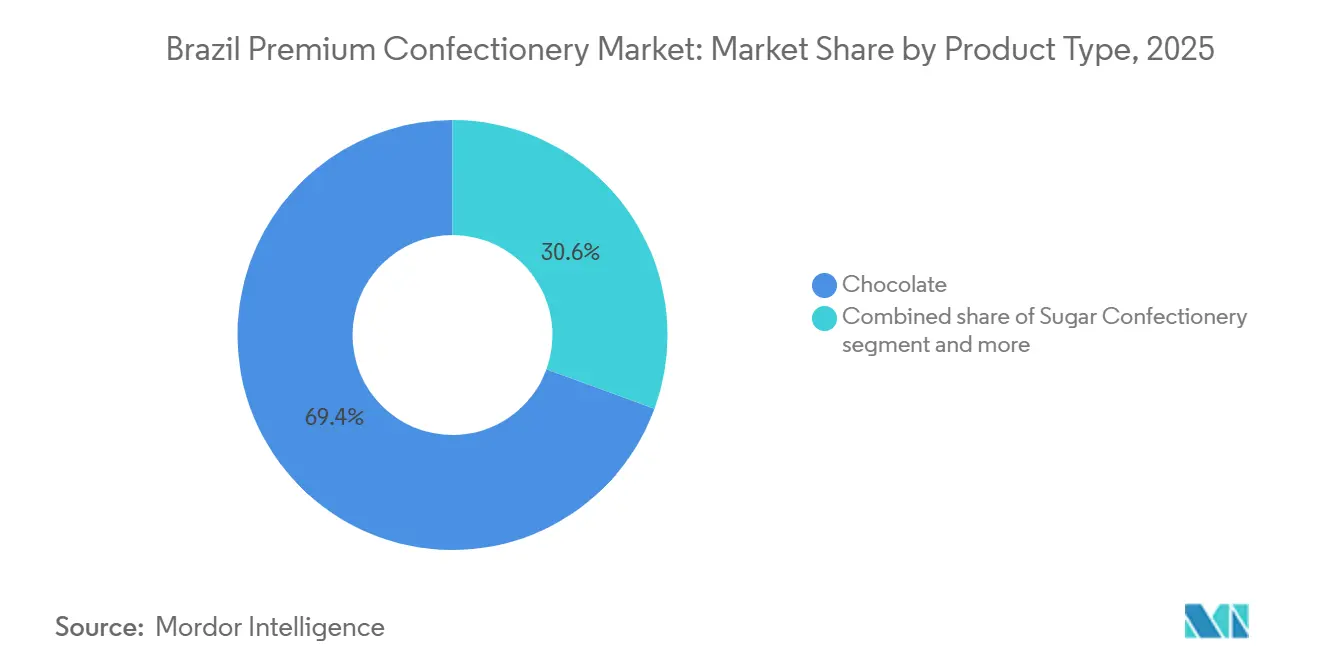
Chocolate accounted for the largest share of the Brazil premium confectionery market, representing 69.43% of total market revenue in 2025. The segment's dominance is supported by strong consumer preference for premium chocolates across everyday indulgence, gifting, and seasonal occasions. Demand continues to grow for products featuring higher cocoa content, artisanal production methods, single-origin cocoa, and premium ingredients. Manufacturers continue to expand their portfolios through dark chocolate, filled chocolates, and limited-edition offerings. Growing consumer interest in quality, provenance, and differentiated flavor profiles further reinforces the segment's position.
Snack bars are projected to register the fastest growth, expanding at a CAGR of 8.23% during 2026–2031. Growth is driven by increasing demand for convenient premium snacks that combine indulgence with perceived nutritional benefits. Manufacturers are introducing snack bars featuring premium chocolate, nuts, fruits, and other high-quality ingredients to appeal to consumers seeking portable and portion-controlled products. Continued product innovation, together with expanding availability through modern retail and e-commerce channels, is further supporting the segment's growth.


By Packaging Type: Multipacks Dominate Value, Single Serve Positions for Sustained Growth
Multipacks accounted for the largest share of the Brazil premium confectionery market, representing 58.83% of total revenue in 2025. The segment's dominance is driven by strong demand for premium chocolates purchased for gifting, family consumption, and seasonal celebrations, where larger pack sizes offer greater product variety and premium presentation. Manufacturers continue to introduce premium assortments and gift-ready packaging to cater to festive occasions and corporate gifting, while modern retail and specialty chocolate stores further support the segment's widespread availability.
The single-serve segment is projected to register the fastest growth, expanding at a CAGR of 7.91% during 2026–2031. Growth is supported by rising consumer preference for convenient, portion-controlled indulgence and more frequent premium chocolate purchases. Smaller pack sizes offer greater affordability, encourage product trial, and align with changing consumption habits centered on everyday indulgence rather than seasonal purchases alone. Increasing availability through convenience stores, modern retail outlets, and e-commerce platforms is further supporting the expansion of the single-serve segment.
By Price Range: Entry Premium Holds the Market But Ultra-Premium Redefines Aspiration
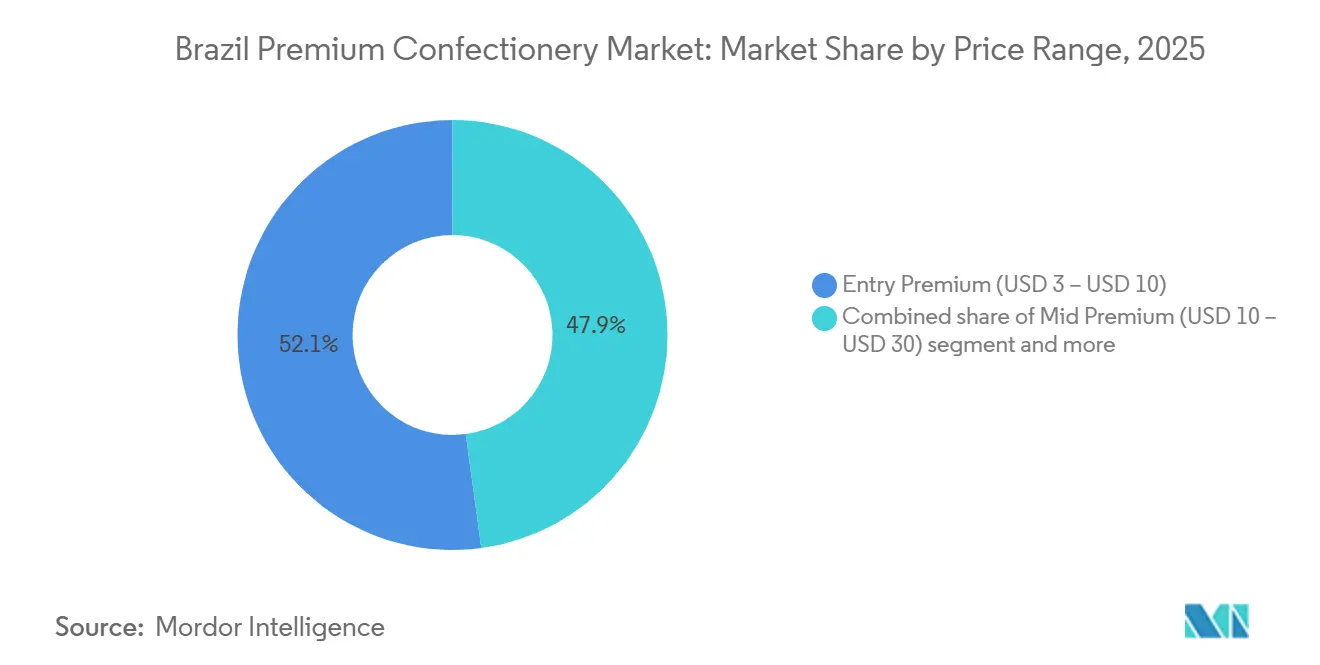
The entry premium segment (USD 3–10) accounted for the largest share of the Brazil premium confectionery market, representing 52.13% of total revenue in 2025. The segment's position is supported by its balance of affordability and premium quality, making it accessible to a broad consumer base seeking higher-quality confectionery products without the high price of luxury offerings. Manufacturers continue to expand this segment through premium ingredients, attractive packaging, and product innovation across chocolates, gift assortments, and seasonal collections, strengthening its appeal across both everyday indulgence and gifting occasions.
The ultra-premium/luxury segment (USD 30 and above) is projected to register the fastest growth, expanding at a CAGR of 8.53% during 2026–2031. Growth is driven by increasing demand for artisanal chocolates, single-origin cocoa products, imported luxury brands, and exclusive limited-edition collections among consumers seeking differentiated premium experiences. Rising interest in craftsmanship, product provenance, premium packaging, and high-quality ingredients is encouraging manufacturers to expand their luxury portfolios and reinforce the segment's premium positioning.

By Distribution Channel: Supermarkets Lead But Online Retail Stores Reshapes Category Access
Supermarkets and hypermarkets accounted for the largest share of the Brazil premium confectionery market, representing 38.75% of total revenue in 2025. This segment's position is supported by its extensive retail network, broad product assortment, and ability to offer premium confectionery alongside everyday grocery purchases. These outlets provide consumers with convenient access to both domestic and international premium brands and benefit from strong seasonal demand during major gifting occasions. Established cold-storage infrastructure and promotional capabilities further strengthen their position in the market.
Online retail stores are projected to register the fastest growth, expanding at a CAGR of 9.01% during 2026–2031. Growth is driven by increasing consumer preference for online shopping, greater availability of premium confectionery through brand-owned websites and digital marketplaces, and expanding nationwide delivery services. E-commerce enables specialty and artisanal brands to reach consumers beyond major metropolitan areas while offering a wider product selection, exclusive collections, and convenient gifting options. Continued investments in omnichannel retail strategies and digital customer engagement are further supporting the expansion of this distribution channel.
Geography Analysis
Southeast Brazil accounts for the largest share of the Brazil premium confectionery market. The region benefits from high urbanization, greater disposable incomes, and a well-developed retail ecosystem comprising supermarkets, specialty chocolate stores, premium boutiques, and e-commerce channels. Strong consumer demand for premium chocolates for everyday consumption and gifting, along with the presence of established domestic and international brands, continues to support market growth in the region.
Central-West Brazil is projected to register the fastest growth during the forecast period. Rising household incomes, expanding modern retail infrastructure, and increasing availability of premium confectionery products are supporting market expansion across the region. Growing e-commerce adoption and increasing consumer interest in premium food and gifting products are further contributing to the region's growth.
South, Northeast, and North Brazil continue to present significant opportunities for the premium confectionery market. The South benefits from an established premium chocolate culture and a strong presence of specialty manufacturers, while the Northeast and North are witnessing increasing consumer awareness of premium confectionery and expanding retail access. Continued investments in modern retail, digital commerce, and distribution networks are expected to improve product availability and support market development across these regions.
Competitive Landscape
The Brazil premium confectionery market is moderately concentrated, with competition among established domestic manufacturers and multinational confectionery companies. Leading players compete through premium product innovation, strong brand recognition, extensive retail networks, and seasonal gifting portfolios, while emphasizing product quality, premium ingredients, and differentiated consumer experiences. The market also includes a growing number of artisanal and bean-to-bar chocolate producers that compete on craftsmanship, traceability, and locally sourced cocoa.
Major companies operating in the market include Cacau Show Ltda., Nestlé S.A., Mondelēz International, Inc., Ferrero International S.A., and Chocoladefabriken Lindt & Sprüngli AG. These companies continue to strengthen their market positions through portfolio expansion, premium product launches, wider distribution across modern retail and e-commerce channels, and investments in premium packaging and seasonal collections. Their broad brand portfolios and established distribution networks enable them to serve a wide range of premium consumer preferences across Brazil.
Alongside these companies, domestic premium chocolate manufacturers and artisanal producers such as Dengo Chocolates, Baianí Chocolates, Nugali Chocolates, Luisa Abram, and Mestiço Chocolates are expanding their presence by emphasizing bean-to-bar production, single-origin Brazilian cocoa, sustainability, and product authenticity. Growing consumer demand for premium, ethically sourced, and craft confectionery products is creating opportunities for these emerging brands to strengthen their positions through product differentiation and direct-to-consumer sales channels.
Brazil Premium Confectionery Industry Leaders
-
Cacau Show Ltda.
-
Nestlé S.A.
-
Mondelēz International, Inc.
-
Ferrero International S.A.
-
Chocoladefabriken Lindt & Sprüngli AG
- *Disclaimer: Major Players sorted in no particular order

Recent Industry Developments
- February 2026: Nestlé-owned Grupo CRM, the parent company of Kopenhagen and Brasil Cacau, increased its marketing investment for the 2026 Easter season by 70% compared with the previous year and expanded production by around 20% to support anticipated seasonal demand. The company also announced plans to open 150 new stores in 2026, further strengthening the retail presence of its premium confectionery brands across Brazil.
- December 2025: Mágio Chocolates launched a limited-edition premium chocolate collection inspired by the Yanomami and Ye'kwana Indigenous communities and the work of photographer Sebastião Salgado. Produced using Amazonian cocoa, the collection reinforces the brand's focus on premium, origin-based chocolates while highlighting sustainability, Brazilian cocoa heritage, and artisanal craftsmanship.
- February 2025: Cacau Show announced plans to expand internationally by opening its first stores outside Brazil during the second half of 2025, with target markets including Europe, Latin America, and North America. The expansion forms part of the company's long-term growth strategy to strengthen the global presence of Brazilian premium confectionery brands.


Brazil Premium Confectionery Market Report Scope
The Brazil premium confectionery market comprises high-quality confectionery products positioned above mass-market offerings, distinguished by premium ingredients, superior craftsmanship, innovative flavors, premium packaging, and enhanced consumer experiences. The market serves consumers seeking indulgent, gifting, and artisanal confectionery products with greater emphasis on quality and product differentiation. The market is segmented by product type into chocolate, sugar confectionery, snack bars, and gums. Packaging types include single serve and multipacks. By price range, the market covers entry premium, mid premium, and ultra-premium/luxury products. Distribution channels include supermarkets/hypermarkets, convenience/grocery stores, online retail stores, and other distribution channels.
| Chocolate |
| Sugar Confectionery |
| Snack Bar |
| Gums |
| Single Serve |
| Multipacks |
| Entry Premium (USD 3 - USD 10) |
| Mid Premium (USD 10 - USD 30) |
| Ultra-Premium/Luxury (USD 30 and Above) |
| Supermarkets/Hypermarkets |
| Convenience/Grocery Stores |
| Online Retail Stores |
| Other Distribution Channels |
| By Product Type | Chocolate |
| Sugar Confectionery | |
| Snack Bar | |
| Gums | |
| By Packaging Type | Single Serve |
| Multipacks | |
| By Price Range | Entry Premium (USD 3 - USD 10) |
| Mid Premium (USD 10 - USD 30) | |
| Ultra-Premium/Luxury (USD 30 and Above) | |
| By Distribution Channel | Supermarkets/Hypermarkets |
| Convenience/Grocery Stores | |
| Online Retail Stores | |
| Other Distribution Channels |


Key Questions Answered in the Report
What is the forecast for Brazil premium confectionery through 2031?
The sector is projected to increase from USD 2.13 billion in 2026 to USD 3.02 billion by 2031 at a 7.24% CAGR. Growth depends on premium product demand extending beyond seasonal gifting occasions.
Which product category has the largest value share in Brazil?
Chocolate led with 69.43% of 2025 value, supported by strong gifting demand and a broad range of molded, filled, and artisanal products. Seasonal Easter sales remain central to this category’s value base.
Which sales channel is growing fastest in Brazil?
Online retail stores are forecast to expand at a 9.01% CAGR from 2026 to 2031, aided by wider regional access and repeat purchases.
What packaging format is gaining demand among buyers?
Single serve products are forecast to grow at a 7.91% CAGR, supported by smaller-ticket purchases and online delivery convenience. The format also supports product trials by consumers new to premium offerings.
Page last updated on:





