
Brain Fitness Market Size and Share
Market Overview
| Study Period | 2020 - 2031 |
|---|---|
| Market Size (2026) | USD 10.48 Billion |
| Market Size (2031) | USD 16.67 Billion |
| Growth Rate (2026 - 2031) | 9.73 % |
| Fastest Growing Market | Asia-Pacific |
| Largest Market | North America |
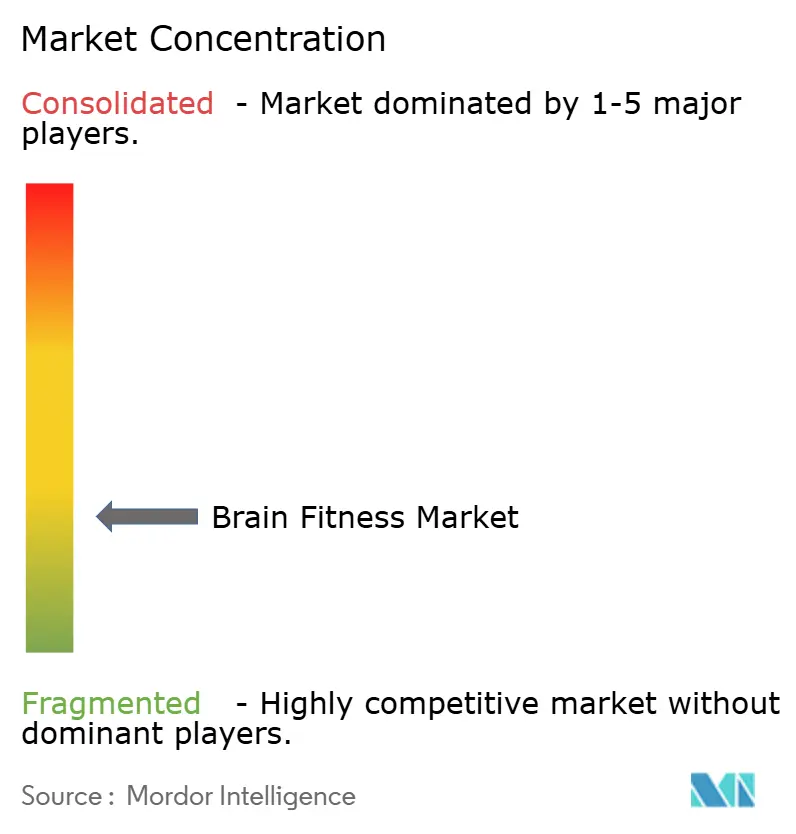
| Market Concentration | Low |
Major Players *Disclaimer: Major Players sorted in no particular order Image © Mordor Intelligence. Reuse requires attribution under CC BY 4.0. | |
Brain Fitness Market Analysis by Mordor Intelligence
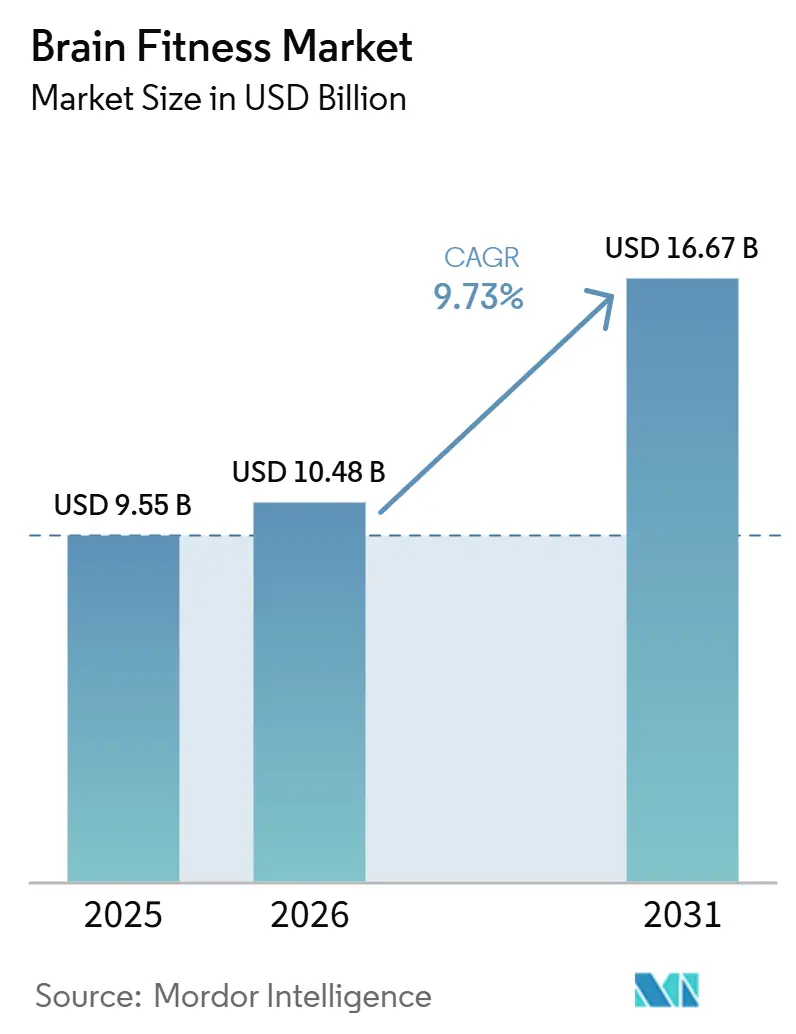
The Brain Fitness Market size is projected to be USD 9.55 billion in 2025, USD 10.48 billion in 2026, and reach USD 16.67 billion by 2031, growing at a CAGR of 9.73% from 2026 to 2031.
Aging populations, a higher burden of neurological conditions, and wider use of digital cognitive care support demand across consumer and clinical settings. The World Health Organization stated in July 2026 that up to 45% of dementia risk could be prevented or delayed through action on modifiable factors, strengthening the case for cognitive prevention programs. Employers are also treating brain health programs as tools for workforce resilience, which expands the addressable base beyond individual users and care providers. Competition depends increasingly on clinical evidence, privacy safeguards, and the ability to combine digital access with guided care. The brain fitness market also faces a clear coverage challenge because payers require proof that gains on digital tasks improve daily function.
Key Report Takeaways
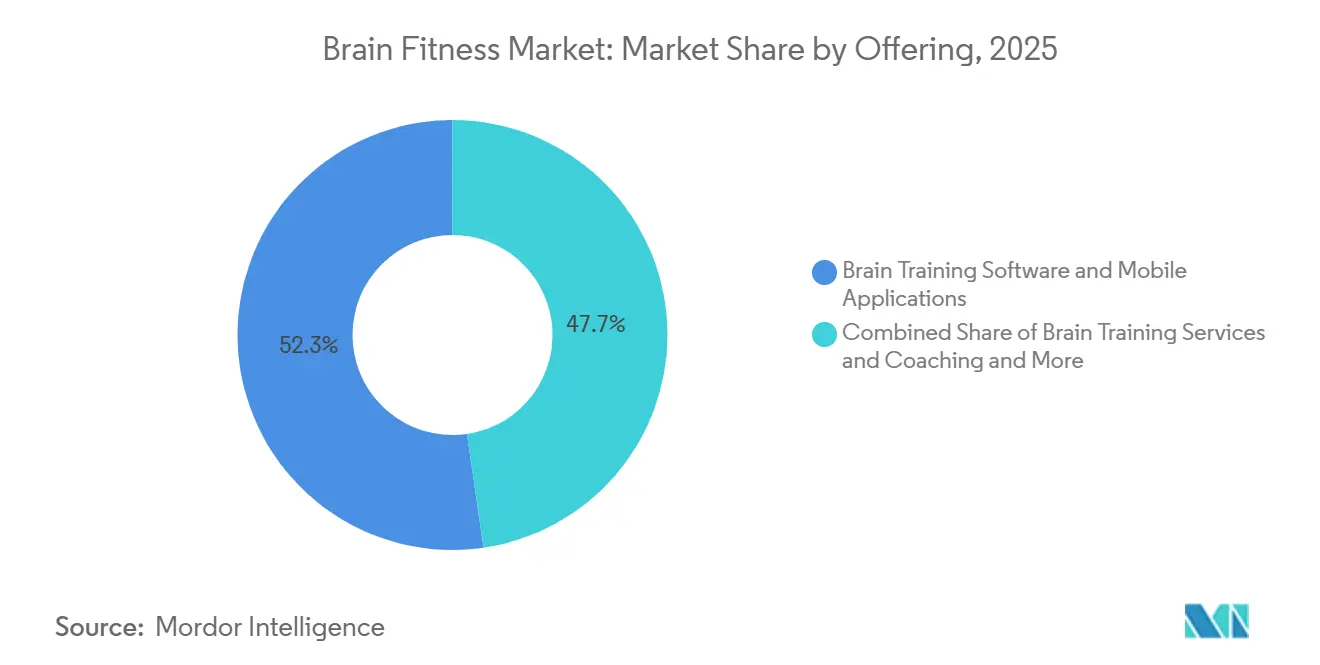
- By offering, brain training software and mobile applications held 52.31% of the brain fitness market share in 2025, while brain training services and coaching are expected to record the highest CAGR at 15.58% through 2031.
- By delivery modality, mobile applications accounted for 64.24% of revenue in 2025, while wearable and sensor-enabled platforms are projected to grow at a 16.22% CAGR through 2031.
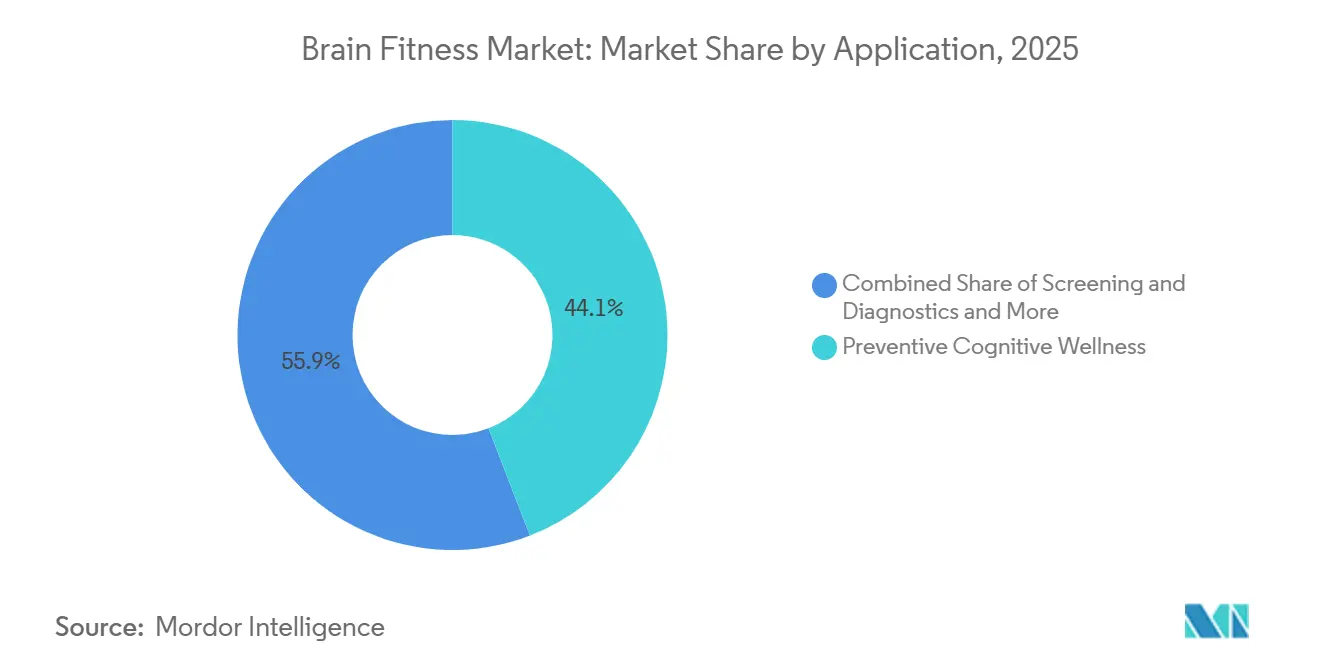
- By application, preventive cognitive wellness represented 44.14% of the brain fitness market size in 2025, while screening and diagnostics are forecast to expand at a 12.82% CAGR through 2031.
- By end user, individual consumers held 58.65% of revenue in 2025, while healthcare providers and clinics are projected to advance at a 15.95% CAGR through 2031.
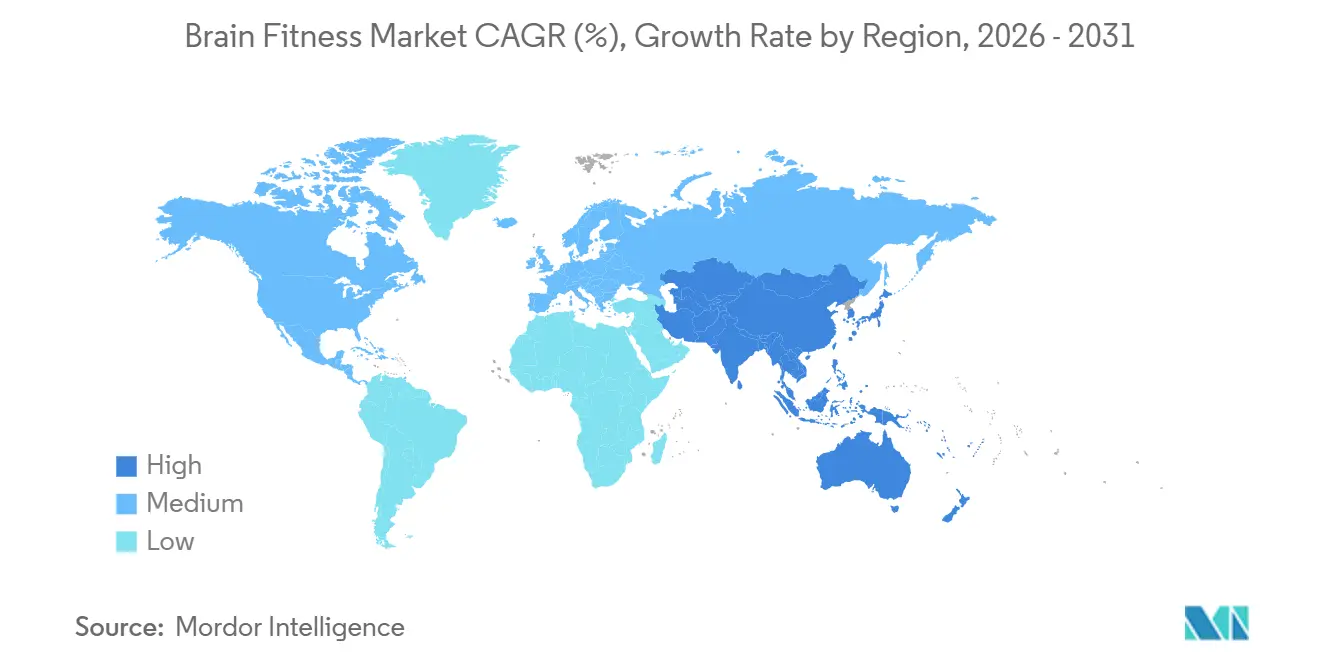
- By geography, North America held 46.61% of revenue in 2025, while Asia-Pacific is projected to grow at a 13.25% CAGR through 2031.
Note: Market size and forecast figures in this report are generated using Mordor Intelligence’s proprietary estimation framework, updated with the latest available data and insights as of January 2026.
Market Trends and Insights
Drivers Impact Analysis of Brain Fitness Market*
| Driver | (~) % Impact on CAGR Forecast | Geographic Relevance | Impact Timeline |
|---|---|---|---|
| Aging Population and Cognitive Health Awareness | +2.0% | Global, most acute in Japan, Western Europe, and North America | Medium term (2-4 years) |
| Rising Dementia, ADHD, Stroke, and TBI Burden | +1.8% | Global, with high burden in North America, Europe, and Asia-Pacific | Long term (≥ 4 years) |
| Digital Therapeutics and Remote Cognitive Care Expansion | +2.3% | North America and Europe, with expansion across Asia-Pacific and the Middle East and Africa | Medium term (2-4 years) |
| AI-Personalized and Gamified Cognitive Training | +2.5% | Global, with early adoption in North America and East Asia | Short term (≤ 2 years) |
| Cognitive Training in Education and Workplace Wellness | +1.5% | North America, Europe, and East Asia | Short term (≤ 2 years) |
| Neuroadaptive Training Through Passive Biometrics and Wearables | +1.7% | North America and East Asia, with expansion into the Middle East and Africa | Long term (≥ 4 years) |
| Source: Mordor Intelligence | |||
Aging Population and Rising Cognitive-Health Awareness
The brain fitness market is increasingly supported by public health priorities linked to healthy aging and cognitive independence. The World Health Organization reports that the global population aged 60 years or older reached 1.1 billion in 2023 and is projected to reach 2.1 billion by 2050. Its July 2026 guidance identifies cognitive training and stimulation as preventive measures for adults with normal cognition or mild cognitive impairment[1]. This guidance gives health systems, insurers, and public programs a clearer basis for considering structured cognitive programs. It also shifts procurement attention toward products that can show suitable evidence, reliable access, and appropriate support for older adults. In Japan and other aging economies, the brain fitness market has a stronger connection to care planning because cognitive decline affects health spending and long-term independence.
Increasing Prevalence of Dementia, ADHD, Stroke, and Traumatic Brain Injury
The growing burden of neurological and neurodevelopmental conditions creates demand for assessment, prevention, and rehabilitation tools. A 2025 study in Frontiers in Aging Neuroscience examined increasing dementia burden and substantial cross-country inequalities among adults aged 65 years or older. The study supports the need for scalable care pathways where specialist capacity remains limited. Cognitive platforms can help standardize measurement, guide follow-up, and support longitudinal monitoring when their use is clinically validated. The expansion of anti-amyloid treatment pathways further raises the need for consistent cognitive baselines before treatment decisions. The brain fitness market, therefore, has an opportunity in clinical workflows, but providers will expect evidence that digital results are reliable and meaningful for patient care.
Expansion of Digital Therapeutics and Remote Cognitive Care
Digital delivery allows cognitive assessment and training to reach users outside specialist clinics. A 2025 review in npj Digital Medicine documented the expanding number of approved digital therapeutic products across major regulatory systems. Regulatory acceptance gives clinical platforms a clearer route to institutional adoption when they meet applicable device and evidence requirements. Remote access can reduce travel demands for patients and can support follow-up across large geographic areas. It also makes digital cognitive care relevant to research studies, clinics, and consumer programs that need flexible delivery. The brain fitness market benefits when remote products maintain data quality, appropriate clinical oversight, and an accessible user experience rather than relying only on convenience.
AI-Personalized and Gamified Cognitive Training
Personalized cognitive training is becoming more relevant as platforms use performance data to adjust task difficulty and feedback. A 2026 study in the Journal of NeuroEngineering and Rehabilitation found that tablet-based attention training with single-channel EEG neurofeedback improved attention and cognitive control in children with ADHD. A 2026 study in the Journal of Neural Engineering reported cognitive and brain-function improvements after personalized AI-supervised EEG neurofeedback training among adults aged 41 to 64 years. These findings support the use of personalization when it is based on validated signals and clinically suitable protocols. Gamified formats can improve participation, but design quality and evidence remain more important than visual engagement alone. For the brain fitness market, developers who combine adaptive software with documented outcomes can differentiate themselves from general wellness applications.
Restraints Impact Analysis of Brain Fitness Market*
| Restraint | (~) % Impact on CAGR Forecast | Geographic Relevance | Impact Timeline |
|---|---|---|---|
| Limited Transfer of App-Based Training Gains to Real-World Function | -1.2% | Global, especially app-heavy consumer markets | Medium term (2-4 years) |
| Lengthy Clinical Validation and Regulatory Approval Timelines | -0.9% | North America and Europe | Long term (≥ 4 years) |
| Privacy, Consent, and Secondary-Use Risks from Cognitive Data | -0.7% | North America and Europe | Medium term (2-4 years) |
| Low Long-Term Adherence After Initial User Acquisition | -0.8% | Global, especially consumer-facing settings | Short term (≤ 2 years) |
| Source: Mordor Intelligence | |||
Limited Transfer of App-Based Training Gains to Real-World Function
The main clinical constraint for the brain fitness market is the limited evidence that task improvement transfers to everyday functioning. A second-order meta-analysis covering 233 datasets found no far-transfer effect after accounting for placebo effects and publication bias[2]. This distinction matters because payers and providers need evidence that a program improves meaningful outcomes, not only trained exercises. Companies seeking reimbursement must therefore conduct longer studies with functional outcomes, which raises cost and development time. Products built around driving simulation, occupational decisions, or activities of daily living may present a stronger case because their outcomes are closer to real-world demands. The brain fitness market will remain divided between general wellness products and clinical programs that can establish this broader value.
Lengthy Clinical Validation and Regulatory Approval Timelines
Clinical products for cognitive conditions require evidence programs that are more demanding than those for general wellness applications. Digital studies can face participant dropout, which increases the effort needed to retain valid follow-up data. Developers must also design appropriate comparator experiences when assessing behavioral interventions. These requirements create entry barriers for smaller firms that lack clinical operations, regulatory expertise, and long-term funding. They also favor companies that have established study infrastructure or partnerships with health systems and academic centers. The brain fitness market can gain institutional credibility through validation, but the associated time and cost slow product launches and limit the number of platforms that can pursue regulated care channels.
*Our forecasts treat driver/restraint impacts as directional, not additive. The impact forecasts reflect baseline growth, mix effects, and variable interactions.
Brain Fitness Market Segment Analysis
By Offering:
Software Platforms Lead While Coaching Services Scale FastBrain training software and mobile applications held 52.31% of revenue in 2025. The segment benefits from broad consumer awareness, immediate digital access, and self-directed use across a wide range of age groups. Its scale also includes a wide variation in quality, from general wellness games to products developed for defined clinical needs. Lumos Labs received FDA clearance in December 2025 for its prescription digital therapy for adult ADHD, which shows how clinically focused software can move beyond consumer positioning. The reported trial results identified clinically meaningful attention gains in 44.2% of participants. Neurofeedback, virtual reality, and augmented reality products remain smaller revenue categories, yet they receive attention because they can support more immersive and measurable interventions. The brain fitness industry is moving toward clearer separation between products designed for casual use and platforms designed for clinical workflows. That separation is likely to influence procurement standards, trial design, and reimbursement discussions.
Brain training services and coaching are projected to grow at a 15.58% CAGR from 2026 to 2031. This pace reflects demand for structured facilitation where users need help with adherence, behavior change, and interpretation of results. GoMo Health launched Employee Resiliency, The Brain Studio, with the Center for BrainHealth in February 2026, combining behavioral science with brain health programming for employer settings. Guided programs can support corporate wellness clients and pharmaceutical research customers that require consistent protocols. Coaching also offers a route to improve long-term engagement, an area where self-guided applications often face limits. The brain fitness market size for coaching services is supported by the shift toward supported delivery rather than app access alone. Providers that can link coaching to validated content and measurable outcomes may have a more durable position in institutional accounts. This offering can also complement software platforms instead of replacing them.

By Delivery Modality:
Mobile Access Anchors Demand as Wearables Reshape the FrontierMobile applications held 64.24% of delivery-modality revenue in 2025. Smartphones provide the most familiar access point for individual users and enable frequent engagement outside clinics. This advantage also creates reliance on consumer devices that may limit the precision of certain clinical assessments. Web-based platforms remain useful for enterprise programs and trials that need browser access, cross-device consistency, and centrally managed security. Desktop and console systems retain a place in neuropsychology and research environments where detailed assessment tools are required. The brain fitness market continues to use mobile access as its main delivery route because it reduces barriers to routine participation. However, mobile providers must demonstrate that ease of access does not weaken data quality or clinical suitability. Delivery strategies increasingly combine mobile participation with clinician dashboards and structured follow-up.
Wearable and sensor-enabled platforms are forecast to grow at a 16.22% CAGR from 2026 to 2031. Their growth is tied to the ability to capture passive biometric information alongside active training activity. A 2025 study in Medical Engineering & Physics examined neural mechanisms of alpha-band EEG neurofeedback using portable devices. The 2026 ADHD study also showed that integrating a single-channel frontal EEG signal into a tablet game improved attention and cognitive control after 1 month. These results support the use of simpler hardware in appropriate neuroadaptive programs. The brain fitness market can benefit from sensors that improve personalization without creating an overly difficult setup for users. Companies that pair proprietary sensor capabilities with validated software may strengthen their intellectual property as hardware becomes more widely available. Privacy, consent, and clear data governance will remain essential because these platforms collect sensitive cognitive information.
By Application:
Preventive Wellness Anchors the Market as Diagnostics AcceleratesPreventive cognitive wellness held 44.14% of application revenue in 2025. It serves health-conscious consumers, older adults seeking to preserve independence, and employees participating in workplace programs. The World Health Organization's July 2026 guidance supports cognitive training and stimulation as preventive measures for people with normal cognition or mild cognitive impairment. This support may widen institutional interest in preventive programs within health systems and insurance offerings. The brain fitness market share of preventive wellness reflects its broad user base and lower barriers to entry compared with clinical diagnosis. Cognitive rehabilitation also remains important for people recovering from stroke, traumatic brain injury, and neurodegenerative conditions. In European settings, reimbursement for digital rehabilitation can support this use case where social health insurance covers eligible care. Providers need to distinguish prevention claims from medical claims to maintain appropriate evidence and regulatory standards.
Screening and diagnostics are projected to grow at a 12.82% CAGR from 2026 to 2031. Demand comes from the need to establish cognitive baselines and identify impairment earlier in care pathways. Linus Health reported in June 2025 that its digital assessment platform could identify indicators of cognitive impairment before symptom onset or conventional detection. Posit Science reported in July 2025 that its BrainHQ Freeze Frame assessment predicted independent living capability among older adults and could be completed in 4 minutes on standard devices. These developments show why healthcare organizations are interested in scalable, repeatable digital assessment. The brain fitness market needs validated thresholds and careful integration into clinical referral pathways for this application to grow responsibly. Screening tools can expand access, but they do not remove the need for professional evaluation when results indicate possible impairment. Clear communication to patients and providers is therefore central to adoption.
By End User:
Individual Consumers Dominant, While Healthcare Channels AccelerateIndividual consumers held 58.65% of end-user revenue in 2025. This position reflects the accessibility of consumer applications and broad interest in memory, attention, and healthy aging. Consumer acquisition becomes more difficult in mature app categories where users have many low-cost or free alternatives. Long-term retention also depends on whether users perceive practical value after the initial period of use. The brain fitness market has relied on consumer demand, but its next phase depends on stronger links between content, support, and validated outcomes. Individual users will continue to be relevant because they provide a broad reach and direct feedback on product usability. Companies can improve this channel by offering understandable goals, suitable onboarding, and options for professional guidance. The segment will remain diverse because users vary widely in age, digital familiarity, health status, and willingness to pay.
Healthcare providers and clinics are projected to grow at a 15.95% CAGR from 2026 to 2031. Their procurement approach differs from consumer app purchasing because evidence, interoperability, and reimbursement matter more than freemium conversion. A 2025 meta-analysis in Behavioral Sciences found that computerized cognitive training improved global cognition in adults aged 55 years or older with mild cognitive impairment, with higher gamification associated with larger effect sizes. Senior care facilities are also underserved because residents may need staff support and simpler onboarding processes. Corporate organizations expanded structured cognitive programs in 2025, while a 2025 study in Sustainability found improvements in inhibitory control, psychological hardiness, and stress resilience among high-pressure corporate professionals who received multimodal cognitive fitness training. Academic institutions, government health agencies, and military programs remain smaller but demanding users that can generate evidence used across the wider brain fitness market. Clinical providers will favor platforms that fit existing records, referral pathways, and patient support processes. This end-user shift raises the importance of evidence-led partnerships and implementation services.
Geography Analysis
North America Brain Fitness Market
North America held 46.61% of global revenue in 2025. The region benefits from mature digital health infrastructure, health system purchasing capacity, and established regulatory pathways for clinical software. Multiple Medicare Advantage plans covered BrainHQ as a benefit in 2025, according to Posit Science. The region also has a large concentration of digital health investment and clinical research resources. These factors support product development and institutional adoption across the brain fitness market.
APAC Brain Fitness Market
Asia-Pacific is forecast to grow at a 13.25% CAGR from 2026 to 2031. Japan's aging population supports insurer and employer interest in cognitive health services. NeU Corporation joined Asahi Life Insurance's Minna no Anshin 100 Year Project in March 2026 to provide cognitive brain training services to policyholders through smartphones and tablets[3]. China has expanded the regulatory recognition of digital health products, according to the 2025 npj Digital Medicine review. Cambridge Cognition partnered with Ivory in February 2026 to deploy CANTAB Pathway across Indian healthcare and consumer health settings in 6 regional languages. India has a particular need for remote assessment because of limited specialist availability, making digital access relevant for both clinical and consumer use.
EMEA and South America Brain Fitness Market
Europe, the Middle East and Africa, and South America accounted for the remaining revenue. Europe has concentrated neurology and neuropsychology capabilities in Germany, the United Kingdom, and France. Its medical device framework and social health insurance systems can support clinically validated digital rehabilitation. MindMaze enrolled the first patients in the SwissNeuroRehab study in July 2026 through the Neurorehab4EU consortium across Switzerland, France, and Italy. The Middle East and Africa remain at an earlier stage, while South America, led by Brazil, offers potential through expanding telemedicine infrastructure. Regional uptake will depend on local reimbursement, clinical capacity, language adaptation, reliable access to digital care, health system readiness, and adoption across care settings.
Competitive Landscape
The brain fitness market remains fragmented because no single company leads consumer applications, clinical platforms, and neurofeedback hardware at the same time. This fragmentation leaves room for specialized companies that focus on evidence, delivery partnerships, or a specific care setting. Cambridge Cognition partnered with Ivory in February 2026 to extend CANTAB Pathway across Indian healthcare and consumer health markets in 6 regional languages. The partnership shows how companies can use local delivery partners to improve access and language coverage. MindMaze and Vibra Healthcare signed a channel partnership in May 2026 to deploy MindMaze's FDA-cleared digital neurotherapeutics platform across United States health systems. These examples show the value of moving beyond direct consumer sales toward institutional channels with more demanding requirements.
Clinical evidence is becoming a central source of differentiation. Posit Science reported in October 2025 on a National Institutes of Health-funded McGill University study of BrainHQ exercises and acetylcholine production. CogniFit presented its Digital Cognitive Twins framework in September 2025, positioning continuously updated cognitive profiles as a tool for personalized brain health. Such capabilities may be more credible to physicians and health systems than self-directed applications when they are supported by appropriate validation. Companies are also exploring passive biometric information from trackers, earbuds, and smart glasses. These products could widen participation beyond people who actively seek brain training, but only if their measurements are validated, and privacy protections are clear.
The brain fitness market has open opportunities in employer coaching, senior care deployment, and pharmaceutical clinical trial services. These areas have less direct competition than consumer app categories and place greater value on service quality and operational support. Companies that can combine evidence, workflow integration, and support may be better positioned than firms that rely on low-cost consumer acquisition. Smaller developers may face difficulty because privacy compliance and clinical studies require substantial investment. Partnerships with insurers, health systems, academic centers, and employers can help spread these costs and create more credible routes to adoption. The competitive environment will continue to reward firms that show practical benefits, establish trustworthy data practices, and adapt products for specific user groups.
Brain Fitness Industry Leaders
-
Lumos Labs, Inc.
-
Elevate Labs
-
Posit Science Corporation (BrainHQ)
-
CogniFit Inc.
-
BRAINBOW LIMITED (Peak)
- *Disclaimer: Major Players sorted in no particular order
Brain Fitness Market Companies Covered in this Report
- Advanced Brain Technologies
- Akili
- BRAINBOW LIMITED (Peak)
- Brainwell
- Cambridge Cognition Holdings plc
- CNS Vital Signs, LLC
- Cogmed
- CogniFit Inc.
- Cogstate Ltd
- Constant Therapy Health, Inc.
- Elevate Labs
- HappyNeuron
- Linus Health, Inc.
- Lumos Labs, Inc.
- MindMaze SA
- Myndlift Ltd.
- NeuroNation
- NeuronUP S.L.
- Neurotrack Technologies
- Posit Science Corporation (BrainHQ)
- SMARTfit Inc.
- Synaptikon GmbH
Recent Industry Developments in Brain Fitness Market
- May 2026: MindMaze Therapeutics and Vibra Healthcare signed a definitive channel partnership to deploy MindMaze's FDA-cleared digital neurotherapeutics platform across US health systems; a preceding two-year, 5-site deployment by Vibra demonstrated that high-dose, high-intensity neurotherapy is operationally scalable without clinician burden.
- February 2026: Cambridge Cognition partnered with Ivory (India) to deploy CANTAB Pathway across Indian healthcare and consumer health markets in 6 regional languages, targeting scale across hospitals, clinics, and health-tech ecosystems.
Global Brain Fitness Market Report Scope
As per the scope of the report, brain fitness refers to the overall health and optimal functioning of the brain, encompassing cognitive abilities such as memory, attention, problem-solving, and mental agility.
The brain fitness market is segmented by offering into brain training software and mobile applications, cognitive assessment and training platforms, brain training services and coaching, neurofeedback and brain training tools, virtual reality and augmented reality tools, and other offerings. By delivery modality, the market is segmented into mobile applications, web-based platforms, desktop and console-based platforms, wearable and sensor-enabled platforms, and other delivery modalities. By application, the market is segmented into preventive cognitive wellness, cognitive rehabilitation, screening and diagnostics, clinical trials and pharmaceutical research, corporate productivity and employee wellness, and other applications. By end user, the market is segmented into individual consumers, healthcare providers and clinics, corporate organizations, senior care facilities, and other end users. By geography, the market is segmented into North America, Europe, Asia-Pacific, the Middle East and Africa, and South America. The market report also covers the estimated market sizes and trends for 17 countries across major regions globally. For each segment, the market size and forecast are provided in terms of value (USD).
| Brain Training Software and Mobile Applications |
| Cognitive Assessment and Training Platforms |
| Brain Training Services and Coaching |
| Neurofeedback and Brain Training Tools |
| Virtual Reality and Augmented Reality Tools |
| Other Offerings |
| Mobile Applications |
| Web-Based Platforms |
| Desktop and Console-Based Platforms |
| Wearable and Sensor-Enabled Platforms |
| Other Delivery Modalities |
| Preventive Cognitive Wellness |
| Cognitive Rehabilitation |
| Screening and Diagnostics |
| Clinical Trials and Pharmaceutical Research |
| Corporate Productivity and Employee Wellness |
| Other Applications |
| Individual Consumers |
| Healthcare Providers and Clinics |
| Corporate Organizations |
| Senior Care Facilities |
| Other End Users |
| North America | United States |
| Canada | |
| Mexico | |
| Europe | Germany |
| United Kingdom | |
| France | |
| Italy | |
| Spain | |
| Rest of Europe | |
| Asia-Pacific | China |
| Japan | |
| India | |
| Australia | |
| South Korea | |
| Rest of Asia-Pacific | |
| Middle East and Africa | GCC |
| South Africa | |
| Rest of Middle East and Africa | |
| South America | Brazil |
| Argentina | |
| Rest of South America |
| By Offering | Brain Training Software and Mobile Applications | |
| Cognitive Assessment and Training Platforms | ||
| Brain Training Services and Coaching | ||
| Neurofeedback and Brain Training Tools | ||
| Virtual Reality and Augmented Reality Tools | ||
| Other Offerings | ||
| By Delivery Modality | Mobile Applications | |
| Web-Based Platforms | ||
| Desktop and Console-Based Platforms | ||
| Wearable and Sensor-Enabled Platforms | ||
| Other Delivery Modalities | ||
| By Application | Preventive Cognitive Wellness | |
| Cognitive Rehabilitation | ||
| Screening and Diagnostics | ||
| Clinical Trials and Pharmaceutical Research | ||
| Corporate Productivity and Employee Wellness | ||
| Other Applications | ||
| By End User | Individual Consumers | |
| Healthcare Providers and Clinics | ||
| Corporate Organizations | ||
| Senior Care Facilities | ||
| Other End Users | ||
| By Geography | North America | United States |
| Canada | ||
| Mexico | ||
| Europe | Germany | |
| United Kingdom | ||
| France | ||
| Italy | ||
| Spain | ||
| Rest of Europe | ||
| Asia-Pacific | China | |
| Japan | ||
| India | ||
| Australia | ||
| South Korea | ||
| Rest of Asia-Pacific | ||
| Middle East and Africa | GCC | |
| South Africa | ||
| Rest of Middle East and Africa | ||
| South America | Brazil | |
| Argentina | ||
| Rest of South America | ||
Key Questions Answered in the Report
What is the projected value of the brain fitness market by 2031?
The brain fitness market is projected to reach USD 16.67 billion by 2031, growing at a 9.73% CAGR from 2026 to 2031.
Which offering has the highest growth forecast in brain fitness?
Brain training services and coaching are projected to grow at a 15.58% CAGR through 2031. Guided delivery can support adherence and provides a structured option for employers, research clients, and care programs.
Why are wearable cognitive platforms growing quickly?
Wearable and sensor-enabled platforms are forecast to grow at a 16.22% CAGR through 2031.
Which application is expanding most rapidly?
Screening and diagnostics are forecast to grow at a 12.82% CAGR through 2031.
Which end users are creating the strongest clinical demand?
Healthcare providers and clinics are projected to advance at a 15.95% CAGR through 2031.
Which region is growing fastest for brain fitness solutions?
Asia-Pacific is forecast to grow at a 13.25% CAGR through 2031.