
Biologics Container Closure Inspection Systems Market Size and Share
Market Overview
| Study Period | 2020 - 2031 |
|---|---|
| Market Size (2026) | USD 595.98 Million |
| Market Size (2031) | USD 930.53 Million |
| Growth Rate (2026 - 2031) | 9.32 % |
| Fastest Growing Market | Asia-Pacific |
| Largest Market | North America |
| Market Concentration | Medium |
Major Players *Disclaimer: Major Players sorted in no particular order Image © Mordor Intelligence. Reuse requires attribution under CC BY 4.0. | |
Biologics Container Closure Inspection Systems Market Analysis by Mordor Intelligence
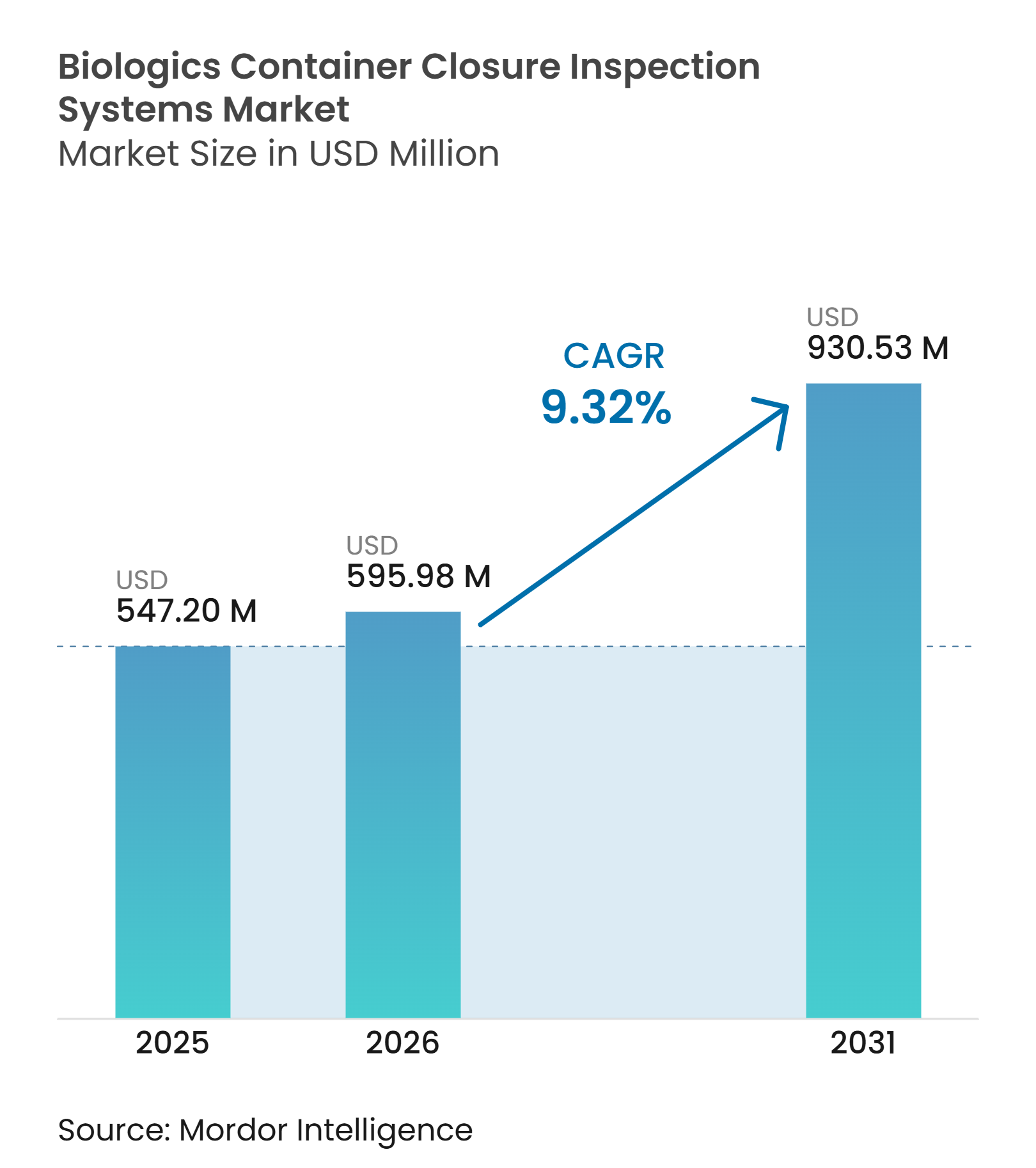
The biologics container closure inspection systems market size is projected to expand from USD 547.20 million in 2025 and USD 595.98 million in 2026 to USD 930.53 million by 2031, registering a CAGR of 9.32% between 2026 to 2031. Growth is tied to the move from probabilistic testing toward deterministic container closure integrity testing, or CCIT, in sterile biologics manufacturing. The U.S. Food and Drug Administration issued draft guidance in August 2026 that treats container closure suitability as a lifecycle requirement for human drugs and biological products. The guidance also covers combination products, including prefilled syringes, autoinjectors, and infusion systems, which brings device and container qualification into the same assessment process. Manufacturers are therefore seeking inspection platforms that can combine visual inspection, CCIT, and traceability within a validated production footprint. Capacity additions at CDMOs in Asia-Pacific, North America, and Europe are expected to support new equipment procurement, while capital intensity and the limited supply of qualified validation specialists may slow deployment at smaller sites.
Key Report Takeaways
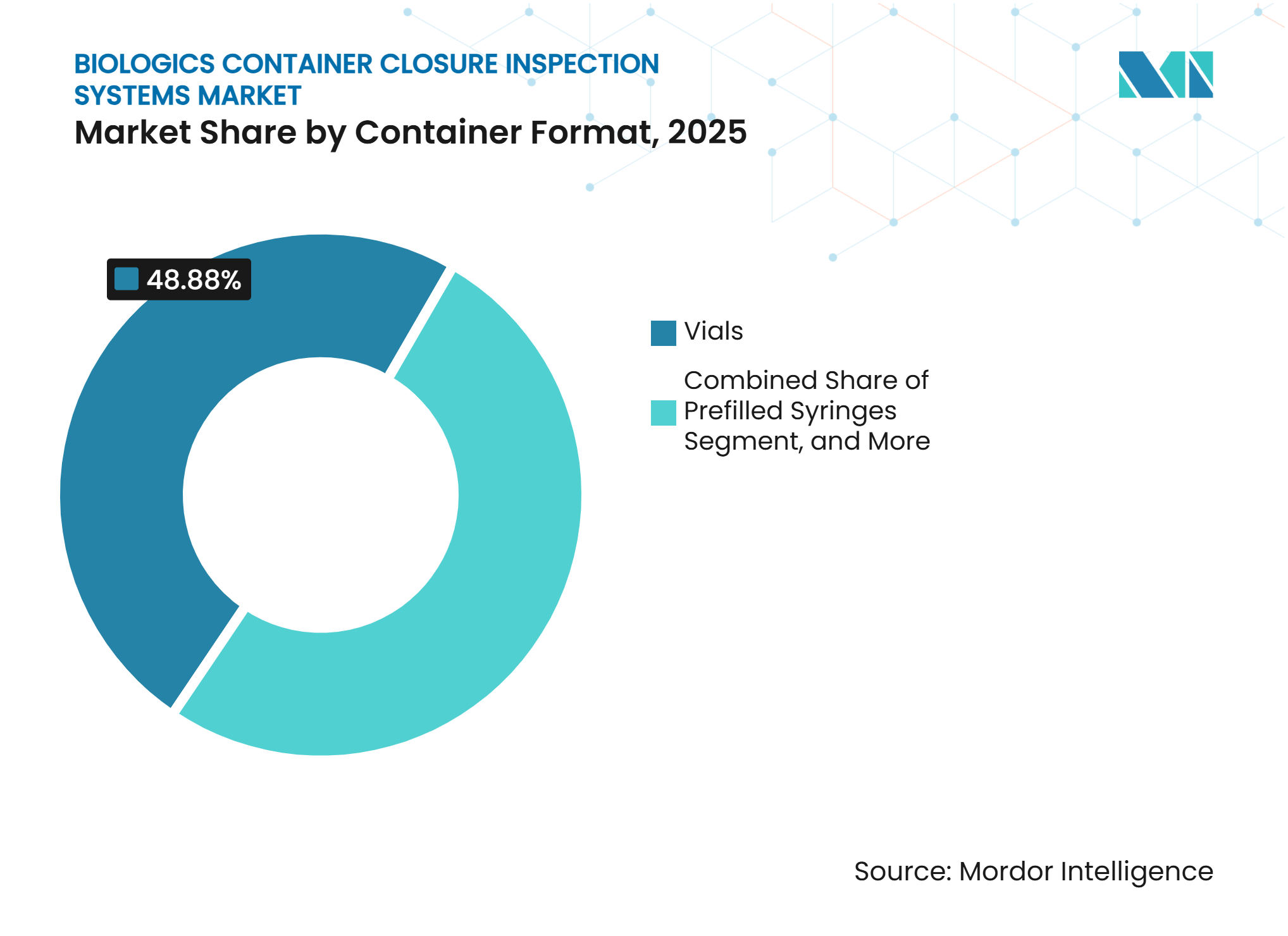
- By container format, vials held 48.88% of the biologics container closure inspection systems market share in 2025, while prefilled syringes are expected to grow at a 10.19% CAGR through 2031.
- By inspection mode, fully automated inline systems held 68.89% of the biologics container closure inspection systems market share in 2025 and are projected to grow at a 10.37% CAGR through 2031.
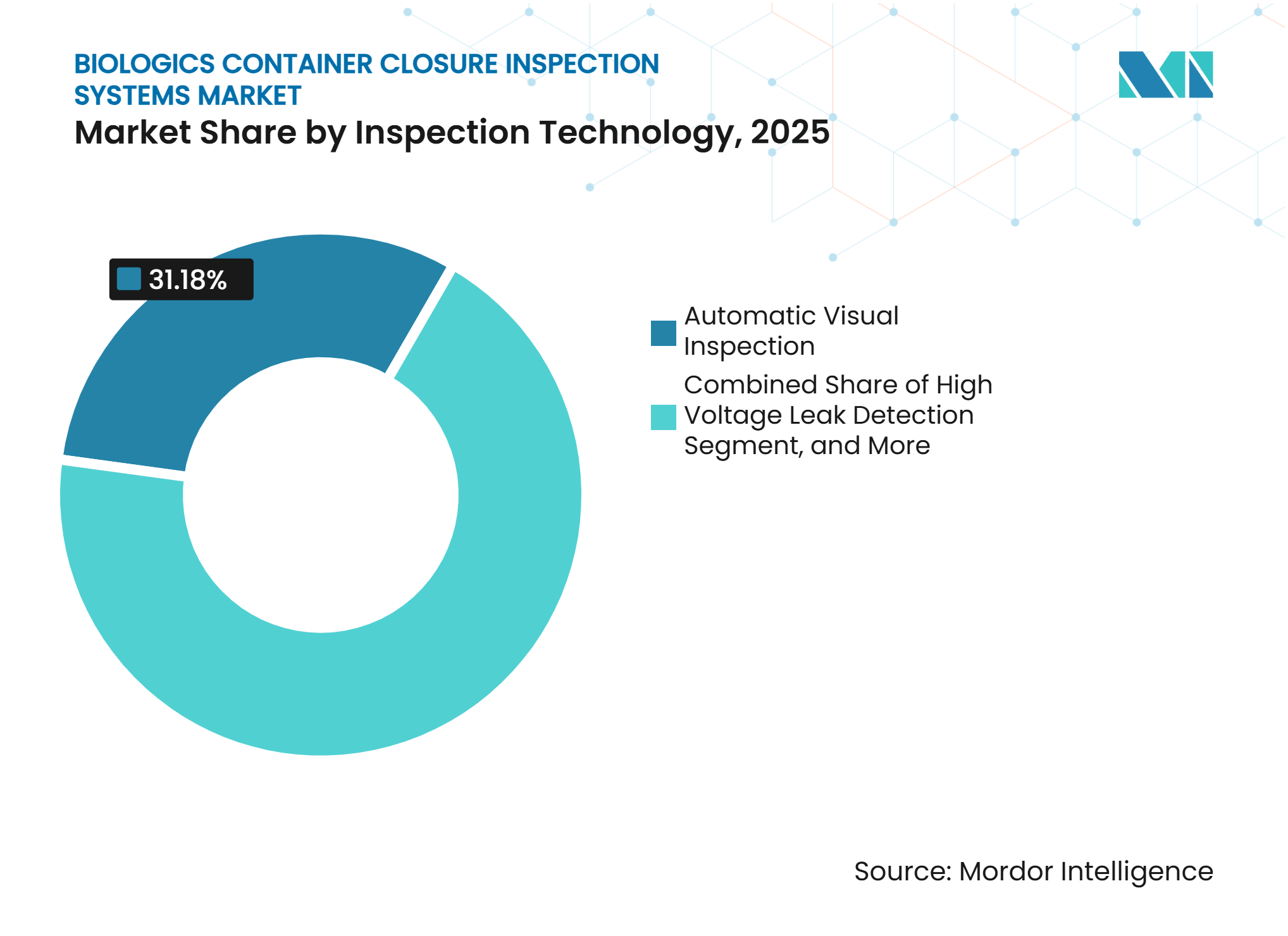
- By inspection technology, automatic visual inspection accounted for 31.18% of revenue in 2025, while headspace gas analysis is projected to grow at a 10.23% CAGR through 2031.
- By end user, biopharmaceutical manufacturers held 47.88% of revenue in 2025, while cell and gene therapy manufacturers are projected to expand at a 10.52% CAGR through 2031.
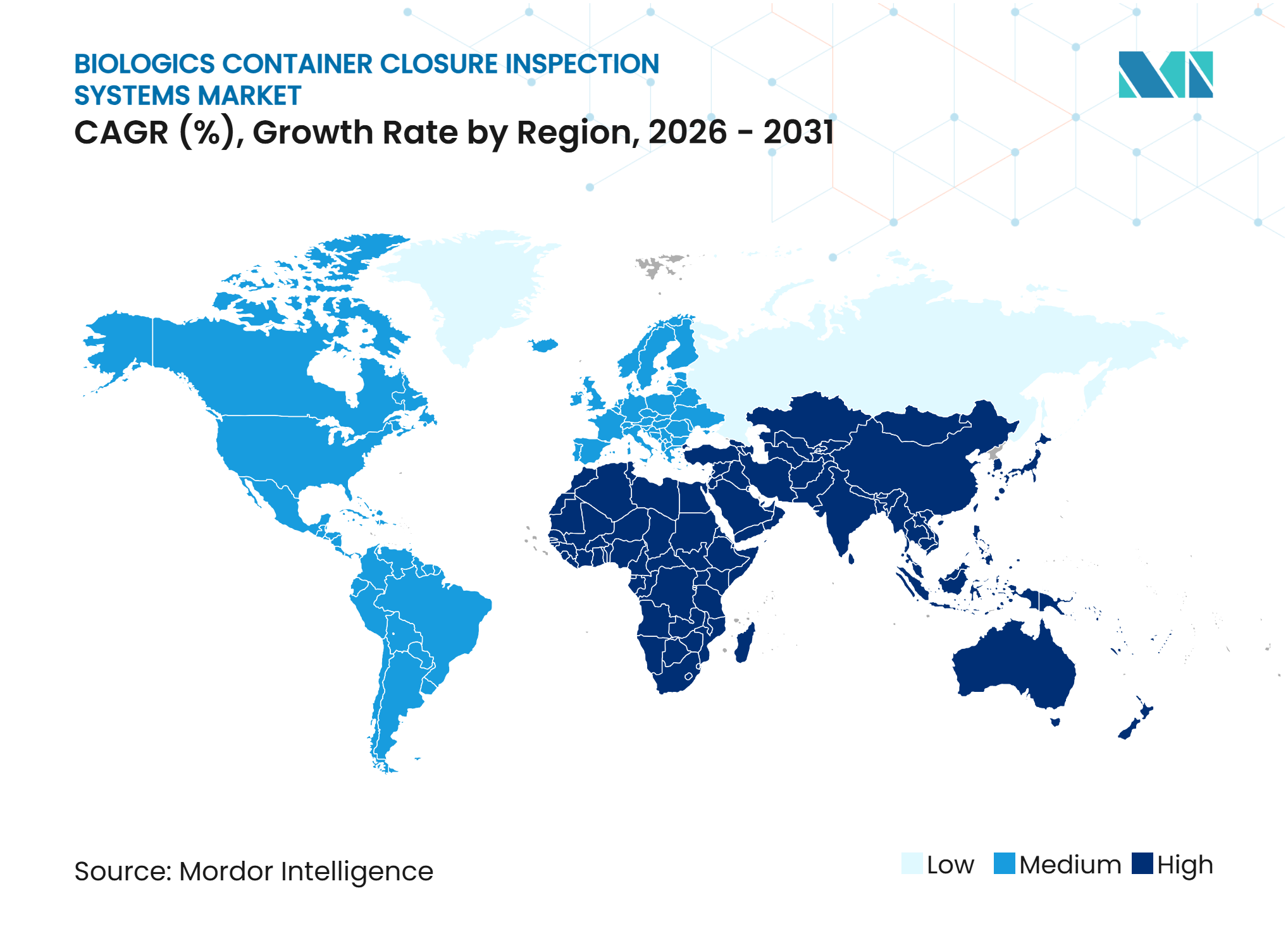
- By geography, North America accounted for 34.96% of revenue in 2025, while Asia-Pacific is projected to grow at a 10.87% CAGR through 2031.
Note: Market size and forecast figures in this report are generated using Mordor Intelligence’s proprietary estimation framework, updated with the latest available data and insights as of January 2026.
Market Trends and Insights
Drivers Impact Analysis of Biologics Container Closure Inspection Systems Market*
| Driver | (~) % Impact on CAGR Forecast | Geographic Relevance | Impact Timeline |
|---|---|---|---|
| Expansion of Biologics and Sterile Injectable Pipelines | +3.2% | Global, with concentration in North America, Europe, and East Asia | Long term (≥ 4 years) |
| Shift Toward Prefilled Syringes and Autoinjectors | +2.0% | North America and Europe core, spillover to Asia-Pacific | Medium term (2-4 years) |
| Deterministic CCIT Adoption Under Updated Sterile Manufacturing Expectations | +1.8% | Global, early adoption in the U.S. and Europe, with regulatory uptake accelerating in Asia-Pacific | Medium term (2-4 years) |
| Integration of AI-Based Defect Classification and Process Analytics | +1.2% | North America and Europe, with emerging use in South Korea and Japan | Medium term (2-4 years) |
| Growth of CDMO and Flexible Fill-Finish Capacity | +0.9% | Asia-Pacific core, with spillover to North America and Europe | Short term (≤ 2 years) |
| Validation of Low-Volume, High-Value Biologic Containers | +0.5% | North America and Europe, with early gains in South Korea and Singapore | Long term (≥ 4 years) |
| Source: Mordor Intelligence | |||
Expansion of Biologics and Sterile Injectable Pipelines
The biologics container closure inspection systems market is supported by biologics pipelines, which drive purchases of inspection equipment at clinical and commercial fill-finish facilities. Biologics and biosimilars accounted for more than 42% of recent FDA drug approvals, and these products generally require sterile parenteral packaging and 100% visual inspection. GLP-1 receptor agonists, including subcutaneous semaglutide products, use capacity that also serves oncology biologics. This competition can tighten the availability of prefilled syringe inspection lines before normal capital replacement cycles begin. WuXi Biologics completed the topping-out of its Singapore CRDMO Hub drug product facility in June 2026.[1] The facility is expected to produce 100 million prefilled syringes and vials annually when it becomes operational, and every unit will require validated inspection before release.
Shift Toward Prefilled Syringes and Autoinjectors
The biologics container-closure inspection systems market is adapting as biologics packaging shifts from vials to prefilled syringes and autoinjectors for several self-administered therapies. Prefilled syringe inspection must assess barrel geometry, plunger position, needle shields or tip caps, flanges, closure integrity, and particles. These containers are rotationally asymmetric and lack the flat inspection surface associated with vial workflows. Antares Vision Group introduced its CY Series in April 2026 for liquid prefilled syringes. The system combines automatic visual inspection and high-voltage leak detection at speeds of up to 200 syringes per minute. The FDA draft guidance includes combination products within its container-closure framework, which requires manufacturers to address drug-product and device-related qualification simultaneously.
Deterministic CCIT Adoption Under Updated Sterile Manufacturing Expectations
The biologics container-closure inspection systems market is evolving as deterministic CCIT methods become more central to sterile product qualification. USP <1207> identifies package integrity approaches for sterile products, while EU GMP Annex 1 strengthened lifecycle expectations for sterile manufacturing. Dye ingress and microbial immersion tests are being displaced in primary validation programs by headspace gas analysis, high-voltage leak detection, and vacuum decay. Those approaches generate quantitative records that can be reviewed during regulatory inspections. The transition can initially increase false rejects for lyophilized and protein-containing biologics before process analytics reduce avoidable rejections. The ECA Visual Inspection Working Group clarified in 2025 that lifecycle CCI control and batch-release testing have different roles, and that 100% testing is unnecessary when a robust control strategy is documented.
Integration of AI-Based Defect Classification and Process Analytics
The biologics container closure inspection systems market is also being shaped as AI use extends beyond particle and cosmetic defect classification to include process analytics and recipe management. Körber demonstrated an AI-driven system at Interphex in April 2026 that distinguished bubble artifacts from actual defects in high-concentration monoclonal antibody products. Its intended use is to reduce false rejects for high-value biologics, including GLP-1 injectables. Cell and gene therapy products present a different training challenge because living cells can resemble particles during visual inspection. Inspection models must learn the acceptable variation for each autologous product, thereby limiting the direct transfer of models between products. A 2025 PDA Journal article reported that standard pharmacopoeial particle inspection methods have material limitations when applied to turbid cell suspensions.
Restraints Impact Analysis of Biologics Container Closure Inspection Systems Market*
| Restraint | (~) % Impact on CAGR Forecast | Geographic Relevance | Impact Timeline |
|---|---|---|---|
| High Capital Cost and Validation Burden | -2.3% | Global, with a greater effect on smaller CDMOs and emerging markets | Long term (≥ 4 years) |
| Complex Method Selection Across Product and Closure Designs | -1.1% | Global, most acute in North America and Europe where regulatory rigor is highest | Medium term (2-4 years) |
| False Rejects From Bubbles, Protein Aggregates, and Container Variability | -0.7% | Global, with greater intensity in biologics-dominant markets | Medium term (2-4 years) |
| Limited Availability of CCIT and Vision-Validation Expertise | -0.4% | Global, most acute in Asia-Pacific growth markets and emerging CDMOs | Short term (≤ 2 years) |
| Source: Mordor Intelligence | |||
High Capital Cost and Validation Burden
The biologics container closure inspection systems market incurs costs because fully automated, inline platforms with integrated CCIT require substantial investment in equipment, validation, training, and regulatory preparation. The burden is most difficult for clinical-stage companies and smaller CDMOs that cannot spread fixed costs across large volumes. Lifecycle expectations require a new validation effort when the container closure system, formulation, or manufacturing process changes. This can make each biologic molecule a separate validation event even when its physical container remains unchanged. Cell and gene therapy programs produce 3-6 million units per batch, whereas blockbuster biologics can reach 50-100 million units, increasing the per-unit validation cost for smaller programs. Formal change control under U.S. and EU manufacturing rules can extend platform adoption timelines by 12-24 months.
Complex Method Selection Across Product and Closure Designs
The biologics container closure inspection systems market faces a selection challenge because no single CCIT method suits every biologics container, product state, risk profile, and sensitivity requirement. USP <1207.1> calls for a method selection process that considers these product-specific conditions. Headspace gas analysis supports lyophilized biologics because it is non-destructive and can detect leaks after cryogenic cycling. It cannot be used where there is no inert-gas headspace, including certain liquid products and polymer containers. High-voltage leak detection is suitable for conductive liquid products, but cannot inspect lyophilized cakes or non-aqueous formulations. Supporting 4 container types and 3 product states can require at least 12 validated technology combinations, slowing adoption in mixed-format portfolios.
*Our forecasts treat driver/restraint impacts as directional, not additive. The impact forecasts reflect baseline growth, mix effects, and variable interactions.
Biologics Container Closure Inspection Systems Market Segment Analysis
By Container Format:
Vials Led, While Prefilled Syringes Change Platform RequirementsVials held 48.88% of revenue in 2025. Their position reflects the large installed base of monoclonal antibodies, cytokines, and vaccines packaged in glass vials for hospitals and clinical settings. Vial inspection equipment also has the deepest validation history and the broadest range of available platforms. This maturity makes vials the practical default for biologics container-closure inspection systems in market launches that require a fast route to commercial production. Prefilled syringes are the fastest-growing format through 2031 as GLP-1, anti-inflammatory, and oncology biologics increasingly support self-administration. Ready-to-use nested containers also fit contamination-control expectations under EU GMP Annex 1.
Prefilled syringes require concurrent inspection of the plunger, flange, needle shield, barrel, particles, and closure integrity. Existing lines designed for vials generally need major capital changes before they can perform those tasks. This requirement supports the demand for dedicated platforms in the biologics container-closure inspection systems market. Cartridges support pen injectors and autoinjectors used in diabetes and growth hormone therapies. Ampoules remain relevant for single-use biologics with lower commercial volumes. These smaller formats may draw new investment as combination product requirements broaden under the FDA draft guidance.



By Inspection Mode:
Inline Automation Remains Central to Commercial ProductionFully automated inline inspection held 68.89% of 2025 revenue and is projected to expand at a 10.37% CAGR through 2031. The segment led the biologics container closure inspection systems market in terms of size because isolator-based aseptic filling integrates fill-finish operations and inspection within closed barriers. Offline benchtop inspection does not readily fit this production architecture. Sterile injectable products also face 100% inspection expectations in major regulated jurisdictions. These conditions reduce the role of statistical sampling as an alternative for commercial production. Inline systems consequently remain the preferred option for high-volume facilities.
Semi-automated platforms serve clinical development batches that do not meet the economic threshold for inline validation. They also support high-mix, low-volume CDMO facilities with frequent product changes in personalized medicine programs. Körber launched the ALVA fully automatic inspection machine at Interpack 2026 for rapid changes across syringes, vials, and cartridges. The design addresses a gap in the biologics container-closure inspection systems market between premium high-throughput lines and diverse small-batch requirements. Offline and benchtop systems still support method development, stability testing, and incoming quality control. Their role is stable for small clinical programs where the capital demands of inline automation are not justified.
By Inspection Technology:
Visual Inspection Leads, While Headspace Analysis ExpandsAutomatic visual inspection held 31.18% of revenue in 2025. It remains essential because injectable products require visual inspection in FDA-, EMA-, and PMDA-regulated settings. Automatic visual inspection is increasingly the base element of systems that add headspace analysis, high-voltage leak detection, or vacuum decay. This combined approach brings several inspection methods into a single validated equipment footprint. Manufacturers can therefore reduce the need for separate procurement and validation decisions. The pattern favors platforms that integrate visual inspection and CCIT.
Headspace gas analysis is projected to expand at a 10.23% CAGR from 2026 to 2031. It can detect leaks that occur during cryogenic storage and reseal at ambient temperatures. This capability supports its use in lyophilized biologics, mRNA products, and cryopreserved cell therapies. A 2024 PDA Journal study reported an R² above 0.98 for headspace carbon dioxide analysis and helium leak detection across ISO 2R and ISO 10R vial formats.[2] High-voltage leak detection serves conductive liquid biologics, vacuum and pressure decay support closure qualification, and X-ray imaging helps characterize particles in opaque products. Syntegon introduced OpaqView in 2026 to detect particles in opaque injectables that conventional visual inspection cannot reliably evaluate.

By End User:
Biopharmaceutical Manufacturers Lead, While Advanced Therapies Add DemandBiopharmaceutical manufacturers accounted for 47.88% of the biologics container-closure inspection systems market in 2025. Their scale and exposure to FDA and EMA license requirements make inspection performance central to batch release. Commercial products face limited tolerance for release failures linked to inspection nonconformance. Cell and gene therapy manufacturers are projected to be the fastest-growing end-user group at a 10.52% CAGR through 2031. Their growth reflects complex inspection needs rather than high unit volumes. Autologous therapies can vary in appearance from batch to batch, requiring tailored inspection methods.
Cell therapy suspensions contain living material that can resemble particles, which makes standard AI model development less transferable. Research has identified limitations in standard particle methods for these turbid preparations. CDMOs and contract fill-finish providers aggregate demand because they can use equipment across multiple clients and formats. Vaccine manufacturers retain established infrastructure developed during COVID-19 capacity expansions and may upgrade it for combined CCIT use. Academic and hospital pharmacies form a smaller, growing group as specialized biologics compounding expands under Section 503B requirements. EU GMP Annex 1 and FDA cGMP Part 211 requirements apply across these end-user categories.
Geography Analysis
North America held 34.96% of revenue in 2025. The biologics container closure inspection systems market benefits from the region's high concentration of FDA-licensed biologics plants and validated automated inspection equipment. FDA enforcement and warning letters concerning CCIT can accelerate replacement and revalidation decisions. The FDA draft guidance issued in August 2026 raises expectations for lifecycle assessment and combination products. PCI Pharma Services announced investments exceeding USD 1 billion in U.S. and European sterile fill-finish expansion, including capacity for 70 million prefilled syringes and cartridges and 40 million vials each year.[3] Europe was the second-largest geography, with Germany, the United Kingdom, France, Italy, and Switzerland forming the core markets.
The biologics container-closure inspection systems market in Europe has continued to respond to EU GMP Annex 1, which has shaped investments in sterile manufacturing since its August 2023 implementation. The regulation places lifecycle CCIT and contamination-control documentation within sterile product manufacturing requirements. Italy hosts Antares Vision Group, Stevanato Group, and Brevetti CEA, which supports supplier and manufacturer collaboration. The United Kingdom continues to align with EU GMP Annex 1 standards after Brexit. South America is smaller, with Brazil and Argentina adopting inspection technologies as exporters align with FDA and EMA import requirements.
Asia-Pacific is projected to grow at a 10.87% CAGR through 2031. The biologics container closure inspection systems market is supported as China, Japan, South Korea, and India expand domestic biologics pipelines and CDMO fill-finish capacity. China is tightening expectations for container closure integrity and particulate-control data in biologic injectables. India is expanding capacity for prefillable syringes and complex closures through its pharmaceutical Production Linked Incentive scheme. Japan maintains stringent inspection requirements, while South Korea is adding large-scale biologics capacity and the Middle East and Africa remain early-stage markets led by manufacturing upgrades in the United Arab Emirates and Saudi Arabia.
Competitive Landscape
Market Concentration
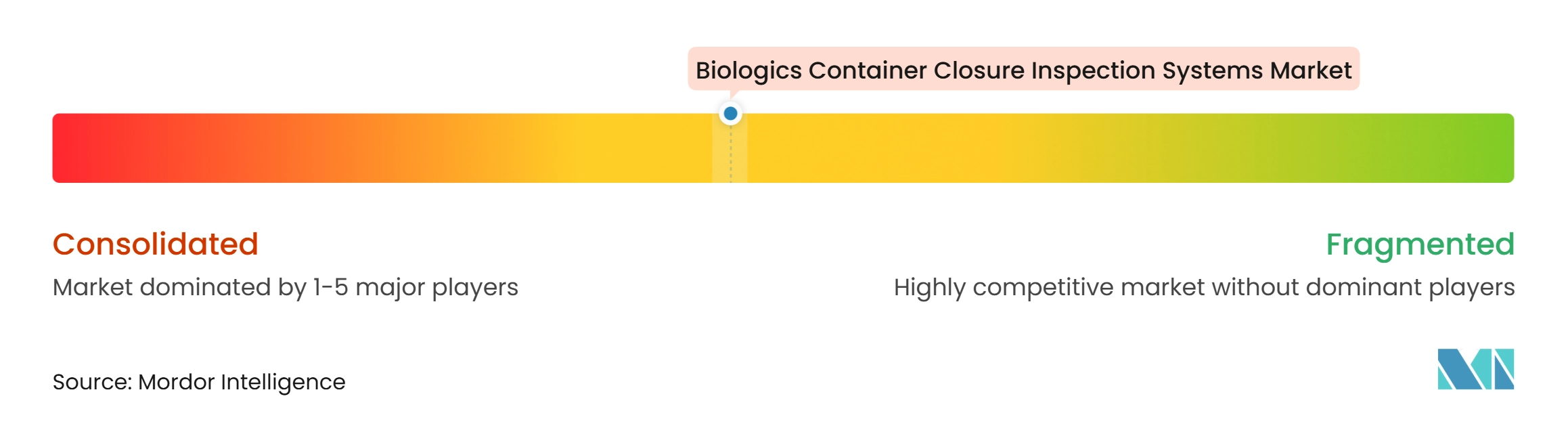
The biologics container closure inspection systems market is moderately consolidated, with Antares Vision Group S.p.A., Syntegon Technology GmbH, Körber AG, and Stevanato Group S.p.A. as the leading players. In the biologics container-closure inspection systems market, these suppliers compete with premium automated systems that combine hardware, software, CCIT, and traceability. Established vendors have a stronger position because validated platforms and regulatory documentation are difficult for smaller companies to replicate. Cleanroom economics also favor integrated systems over separate inspection and CCIT equipment. FDA cGMP Part 211, EU GMP Annex 1, and USP <1207> requirements function as practical barriers to entry.
Syntegon launched AIM9 in February 2026 with a processing capacity of up to 600 vials per minute. The platform integrates headspace gas analysis and high-voltage leak detection, and its bubble-masking function is designed to reduce false rejects in high-concentration biologics. Antares Vision Group introduced the CY Series for liquid prefilled syringes in April 2026.[4] The system combines visual inspection with high-voltage leak detection and examines prefilled syringe components. Stevanato Group is building a position around multi-container flexibility through its MAVIS visual inspection platform, which covers syringes, cartridges, vials, and ampoules across liquid, lyophilized, and gel-like formulations.
Within the biologics container closure inspection systems market, opportunity remains in purpose-built systems for autologous cell and gene therapies with batches below 1 million units. Modular systems for Asian CDMOs moving from manual to automated inspection are another opening. AI-native software providers may challenge proprietary inspection software by offering vendor-agnostic systems across hardware configurations. Cognex Corporation and Keyence Corporation provide machine vision hardware and algorithms used by specialized pharmaceutical platform suppliers.
Biologics Container Closure Inspection Systems Industry Leaders
-
Antares Vision Group S.p.A.
-
Syntegon Technology GmbH
-
Körber AG
-
Stevanato Group S.p.A.
-
Brevetti CEA S.p.A.
- *Disclaimer: Major Players sorted in no particular order
Biologics Container Closure Inspection Systems Market Companies Covered in this Report
- Antares Vision Group S.p.A.
- Syntegon Technology GmbH
- Körber AG
- Stevanato Group S.p.A.
- Brevetti CEA S.p.A.
- Mettler-Toledo International Inc.
- Cognex Corporation
- Thermo Fisher Scientific Inc.
- Keyence Corporation
- WIPOTEC-OCS GmbH
- Optel Group
- Jekson Vision
- ACG Worldwide
- Sensum d.o.o.
- DAIICHI JITSUGYO VISWILL CO., LTD.
- Nikka Densok Limited
Recent Industry Developments in Biologics Container Closure Inspection Systems Market
- August 2026: The US FDA released a draft guidance entitled "Container Closure Systems for Human Drugs and Biological Products," superseding its 1999 guidance. The draft elevates CCIT to a critical lifecycle element, extends requirements to combination products including prefilled syringes and autoinjectors, and mandates expanded extractables and leachables evaluation, representing the most comprehensive revision to US container closure regulation in over 25 years and expected to trigger a broad inspection platform revalidation cycle across the industry.
- August 2026: Jubilant Pharmova received USFDA clearance for commercial batch manufacturing on Line 3 at its Spokane, Washington facility, a new isolator-based sterile injectable line representing a Phase 1 investment of USD 132 million. The company has a total multi-phase expansion target of USD 300 million to double manufacturing capacity by FY28. The clearance adds sterile fill-finish capacity requiring validated container closure inspection integration.
- August 2026: Altruist Biologics, an Innovent Biologics subsidiary, completed the first commercial process performance qualification campaign for its 20,000L stainless steel bioreactors at its Hangzhou site in China, a milestone that advances the CDMO toward commercial-scale production requiring integrated fill-finish and container-closure inspection capabilities.
- June 2026: WuXi Biologics completed the modular topping-out of its Drug Product facility at the Singapore CRDMO Hub in Tuas Biomedical Park. The facility, expected to produce 100 million units of prefilled syringes and vials annually when operational, will be among the largest biologics fill-finish sites in Southeast Asia, generating substantial demand for validated container closure inspection platforms.
Global Biologics Container Closure Inspection Systems Market Report Scope
The biologics container closure inspection systems market includes technologies and equipment designed to inspect the integrity, quality, and safety of containers and closure systems used for biologic drugs. These systems detect defects such as cracks, leaks, particulates, improper seals, and cosmetic imperfections in vials, syringes, ampoules, cartridges, and other biologics packaging formats to support product quality, regulatory compliance, and patient safety.
The Biologics Container Closure Inspection Systems Market Report is Segmented by Container Format (Vials, Prefilled Syringes, Cartridges, Ampoules, and Other Container Formats), Inspection Mode (Fully Automated Inline, Semi-Automated, and Offline/Benchtop), Inspection Technology (Automatic Visual Inspection, High Voltage Leak Detection, Headspace Gas Analysis, Vacuum and Pressure Decay, X-Ray and Computed Imaging, and Other Inspection Technologies), End-User (Biopharmaceutical Manufacturers, CDMOs/Contract Fill-Finish, Vaccine Manufacturers, Cell and Gene Therapy Manufacturers, and Other End-Users), and Geography (North America, South America, Europe, Asia-Pacific, Middle East, and Africa). The Market Forecasts are Provided in Terms of Value (USD).
Segmentation Overview
| Vials |
| Prefilled Syringes |
| Cartridges |
| Ampoules |
| Other Container Formats |
| Fully Automated Inline |
| Semi-Automated |
| Offline / Benchtop |
| Automatic Visual Inspection |
| High Voltage Leak Detection |
| Headspace Gas Analysis |
| Vacuum and Pressure Decay |
| X-Ray and Computed Imaging |
| Other Inspection Technologies |
| Biopharmaceutical Manufacturers |
| CDMOs / Contract Fill-Finish |
| Vaccine Manufacturers |
| Cell and Gene Therapy Manufacturers |
| Other End-Users |
| North America | United States |
| Canada | |
| Mexico | |
| South America | Brazil |
| Argentina | |
| Chile | |
| Rest of South America | |
| Europe | Germany |
| United Kingdom | |
| France | |
| Italy | |
| Spain | |
| Rest of Europe | |
| Asia-Pacific | China |
| Japan | |
| India | |
| South Korea | |
| Australia | |
| Rest of Asia-Pacific | |
| Middle East | United Arab Emirates |
| Saudi Arabia | |
| Turkey | |
| Rest of Middle East | |
| Africa | South Africa |
| Egypt | |
| Rest of Africa |
| By Container Format | Vials | |
| Prefilled Syringes | ||
| Cartridges | ||
| Ampoules | ||
| Other Container Formats | ||
| By Inspection Mode | Fully Automated Inline | |
| Semi-Automated | ||
| Offline / Benchtop | ||
| By Inspection Technology | Automatic Visual Inspection | |
| High Voltage Leak Detection | ||
| Headspace Gas Analysis | ||
| Vacuum and Pressure Decay | ||
| X-Ray and Computed Imaging | ||
| Other Inspection Technologies | ||
| By End-User | Biopharmaceutical Manufacturers | |
| CDMOs / Contract Fill-Finish | ||
| Vaccine Manufacturers | ||
| Cell and Gene Therapy Manufacturers | ||
| Other End-Users | ||
| By Geography | North America | United States |
| Canada | ||
| Mexico | ||
| South America | Brazil | |
| Argentina | ||
| Chile | ||
| Rest of South America | ||
| Europe | Germany | |
| United Kingdom | ||
| France | ||
| Italy | ||
| Spain | ||
| Rest of Europe | ||
| Asia-Pacific | China | |
| Japan | ||
| India | ||
| South Korea | ||
| Australia | ||
| Rest of Asia-Pacific | ||
| Middle East | United Arab Emirates | |
| Saudi Arabia | ||
| Turkey | ||
| Rest of Middle East | ||
| Africa | South Africa | |
| Egypt | ||
| Rest of Africa | ||
Key Questions Answered in the Report
What is the biologics container closure inspection systems market size?
The market is projected to grow from USD 595.98 million in 2026 to USD 930.53 million by 2031, at a 9.32% CAGR.
Why are deterministic CCIT methods becoming more important for biologics?
In the biologics container closure inspection systems market, regulatory expectations increasingly favor quantitative and auditable integrity testing across the sterile product lifecycle.
Which container format leads demand for inspection systems?
Vials held 48.88% of revenue in 2025, supported by their established use in commercial biologics and vaccines.
Why are prefilled syringes increasing inspection requirements?
In the biologics container closure inspection systems market, their inspection requires checks for multiple components, particles, and closure integrity within one production process.
Which region is expected to grow fastest through 2031?
Asia-Pacific is projected to expand at a 10.87% CAGR as biologics and CDMO fill-finish capacity increase.
Who are the leading suppliers of inspection platforms?
Antares Vision Group, Syntegon, Körber, and Stevanato Group are active in integrated automated inspection platforms.