
Beauty Supplements Market Size and Share
Market Overview
| Study Period | 2021 - 2031 |
|---|---|
| Market Size (2026) | USD 8.65 Billion |
| Market Size (2031) | USD 14.06 Billion |
| Growth Rate (2026 - 2031) | 10.20 % |
| Fastest Growing Market | Europe |
| Largest Market | North America |
| Market Concentration | Medium |
Major Players *Disclaimer: Major Players sorted in no particular order Image © Mordor Intelligence. Reuse requires attribution under CC BY 4.0. | |
Beauty Supplements Market Analysis by Mordor Intelligence
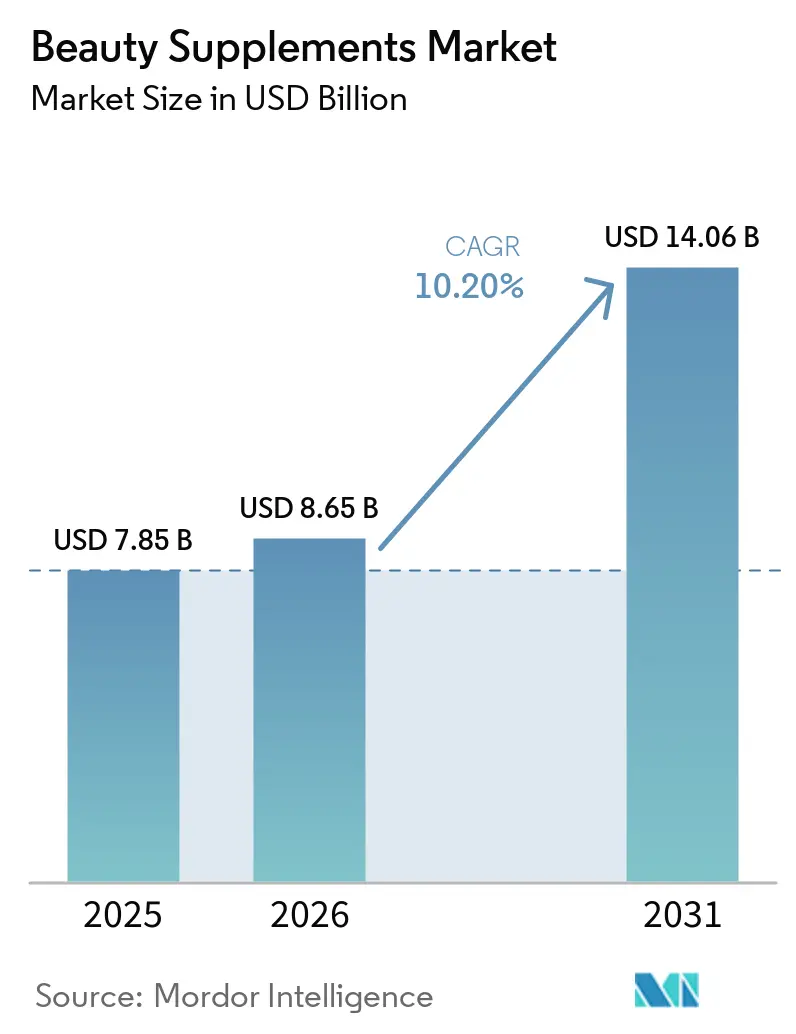
The beauty supplements market was valued at USD 7.85 billion in 2025 and is estimated to grow from USD 8.65 billion in 2026 to reach USD 14.06 billion by 2031, at a CAGR of 10.20% during the forecast period (2026-2031). The market is benefiting from consumers who now consider oral products alongside topical routines for skin, hair, and nail care. Preventive self-care also supports repeat purchases, particularly when products address visible concerns such as hydration, hair thinning, and healthy aging. Clinical research has become more important to the category as consumers increasingly expect a clear rationale for product claims. This favors brands that can support formulation choices with trial evidence, transparent ingredient information, and formats that fit daily routines. The market also presents room for specialist brands, as large consumer health companies and direct-to-consumer businesses serve different needs across ingredients, product forms, and retail channels.
Key Report Takeaways
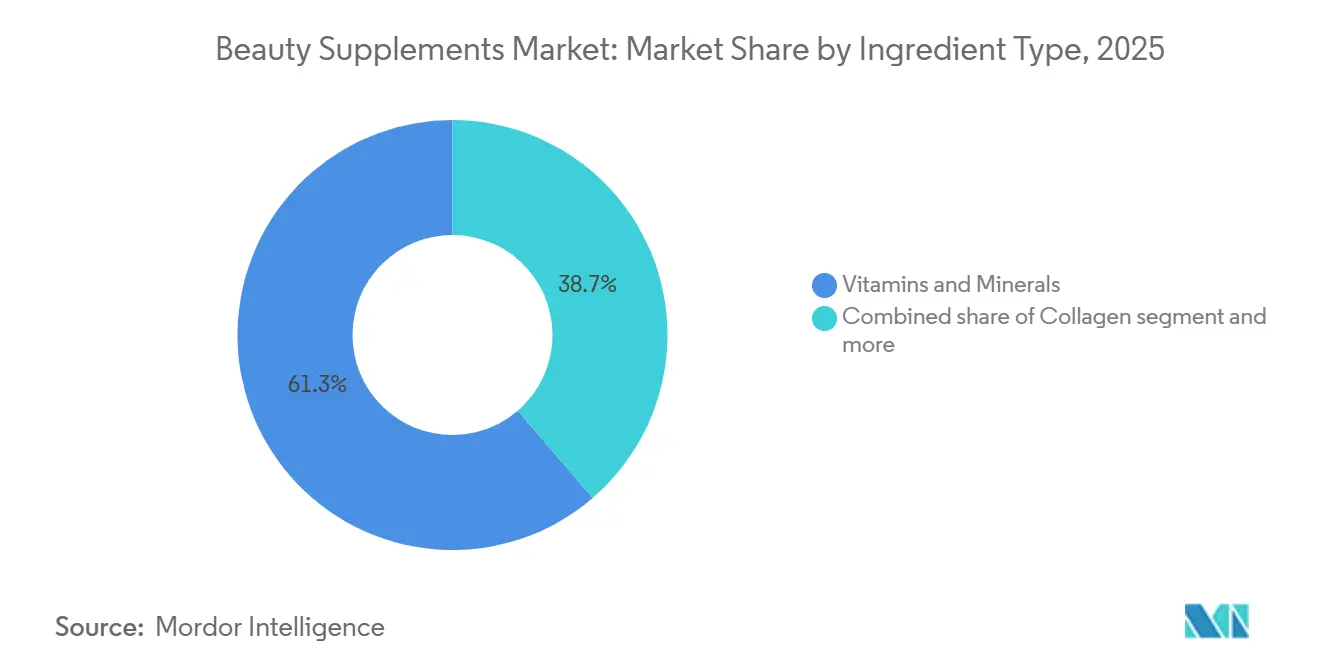
- By ingredient type, vitamins and minerals held 61.31% of the beauty supplements market share in 2025, while collagen is projected to record the highest CAGR of 12.56% through 2031.
- By product form, tablets held 58.81% of the beauty supplements market share in 2025, while gummies are projected to record the highest CAGR of 11.83% through 2031.
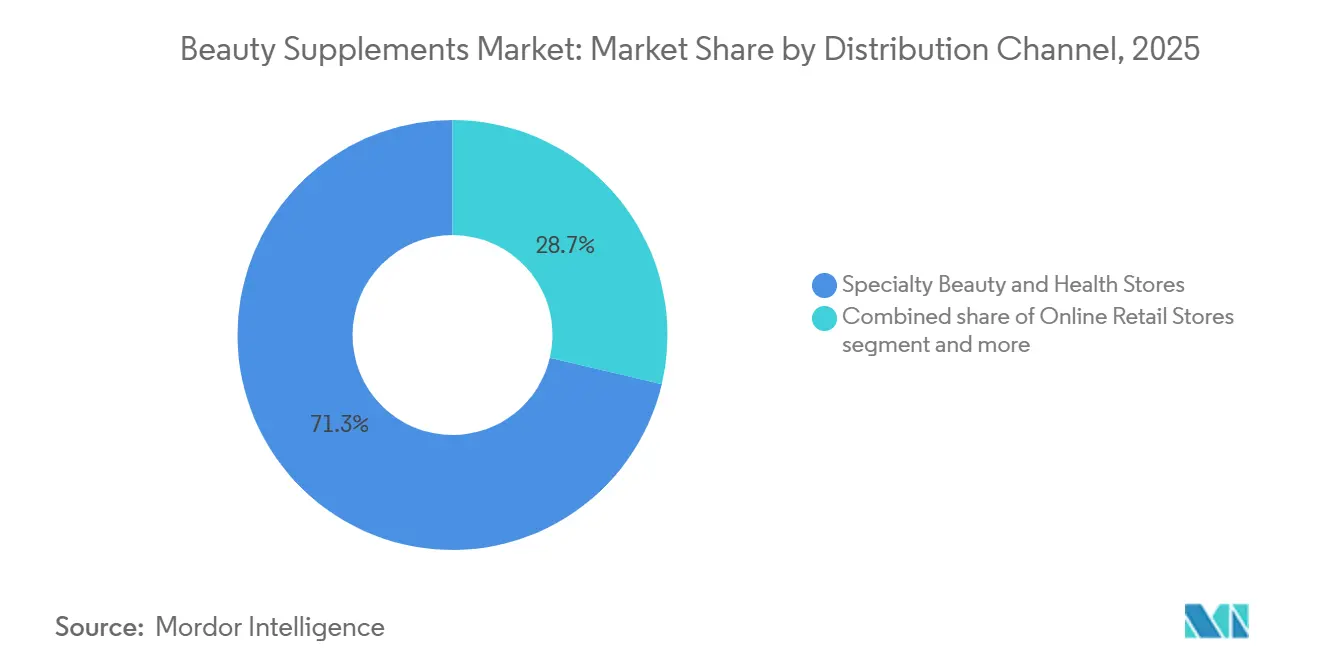
- By distribution channel, specialty beauty and health stores held 71.33% of the beauty supplements market share in 2025, while online retail stores are projected to record the highest CAGR of 13.71% through 2031.
- By geography, North America held 21.68% of the global beauty supplements market share in 2025, while Europe is projected to record the highest regional CAGR of 12.08% through 2031.
Note: Market size and forecast figures in this report are generated using Mordor Intelligence’s proprietary estimation framework, updated with the latest available data and insights as of January 2026.
Market Trends and Insights
Drivers Impact Analysis of Beauty Supplements Market*
| Driver | (~) % Impact on CAGR Forecast | Geographic Relevance | Impact Timeline |
|---|---|---|---|
| Beauty-from-within and preventive self-care adoption | +2.3% | Global; most pronounced in North America, Europe, and East Asia | Short term (≤ 2 years) |
| Increasing demand for anti-aging solutions | +2.1% | Global; core growth in North America, Europe, and China | Medium term (2–4 years) |
| Growing consumer focus on skin health and appearance | +1.6% | Global; strong momentum in Asia-Pacific | Short term (≤ 2 years) |
| Influence of social media and beauty influencers | +1.2% | North America, Europe, Southeast Asia | Short term (≤ 2 years) |
| Gut-Skin, stress-hair and longevity positioning | +0.9% | North America, Europe, Japan, South Korea | Medium term (2–4 years) |
| Clinically substantiated collagen and bioactive formulations | +1.4% | Global; strongest pull in Europe and East Asia | Long term (≥ 4 years) |
| Source: Mordor Intelligence | |||
Beauty-From-Within and Preventive Self-Care Adoption
The growing shift toward beauty-from-within and preventive self-care is encouraging consumers to invest in nutritional products that support both appearance and overall wellness. This trend is particularly evident among affluent consumers, who spend significantly more on beauty. World Data Lab findings indicate that affluent consumers spent USD 647 per capita on beauty in 2026, compared with USD 115 among core-middle consumers, approximately six times more[1]. This spending gap reflects a broader pattern in which higher-income consumers are more likely to adopt holistic wellness routines that extend beyond topical skincare to include ingestible solutions. As awareness of the connection between nutrition and skin health grows, consumers are increasingly seeking products that address beauty concerns from the inside out. This greater willingness to spend on premium beauty and wellness solutions is creating opportunities for beauty supplements such as collagen, vitamins, minerals, antioxidants, and botanical formulations, as consumers increasingly incorporate ingestible products into their regular beauty and preventive self-care routines.
Increasing Demand for Anti-Aging Solutions
Aging populations are driving demand for anti-aging and healthy-aging solutions, as consumers increasingly seek products that help maintain skin health, vitality, and youthful appearance. This trend is particularly pronounced in markets with older demographic profiles. United Nations data shows that around 30.0% of Japan's population was aged 65 and above in 2025, while Hong Kong's share is projected to rise from 23.7% to 46.4%, highlighting the growing pool of consumers potentially seeking age-related beauty and wellness solutions[2]. As people live longer, interest in preventive and maintenance-oriented beauty and wellness products is rising, with consumers across age groups looking to address concerns such as skin elasticity, hydration, and overall vitality. This demographic shift is creating opportunities for beauty supplements containing collagen, antioxidants, vitamins, minerals, and botanical ingredients positioned around healthy aging, skin health, and age-related beauty concerns. Manufacturers are responding by developing targeted formulations that address specific aging-related concerns, while retailers and brands are expanding their anti-aging product ranges to cater to this growing consumer base.
Influence of Social Media and Beauty Influencers
The growing influence of social media platforms and beauty influencers is accelerating awareness, product discovery, and consumer adoption of beauty supplements. Consumers increasingly rely on digital content, reviews, recommendations, and influencer-led routines when exploring new beauty and wellness products. Influencers across platforms such as Instagram, YouTube, and TikTok regularly feature beauty supplements as part of their personal care routines, driving visibility and normalizing the concept of beauty-from-within among their followers. This influence is particularly significant in highly digital beauty markets such as South Korea, where around 45.8% of survey respondents in 2024 identified Instagram as their most frequently used social media platform[3]. The strong engagement with visual platforms such as Instagram provides beauty supplement brands with an effective channel to showcase product benefits, demonstrate beauty-from-within routines, and leverage influencer credibility to drive consumer trial and purchase. As influencer marketing continues to grow, brands are increasingly partnering with micro and macro influencers to reach targeted consumer segments, build trust, and convert digital engagement into product sales.
Gut-Skin, Stress-Hair, and Longevity Positioning
The relationship between gut health and skin outcomes has gained increasing scientific attention. A 2025 systematic review covering 60 randomized controlled trials found that probiotic, prebiotic, and synbiotic interventions improved severity measures in atopic dermatitis, psoriasis, acne vulgaris, and melasma. This evidence supports more targeted product development in the beauty supplements market, particularly as consumers seek products that address multiple wellness concerns. The findings also encourage formulators to move beyond general wellness claims toward ingredient combinations with condition-specific evidence. OLLY launched Precise Probiotics in April 2026, including a skin support variant formulated to support skin hydration and pH balance. The launch reflects a broader shift among supplement brands toward products that connect internal health mechanisms with visible skin outcomes. Stress-linked hair thinning also drives demand for condition-specific formulas, with consumers increasingly looking for products backed by clinical or dermatological credibility rather than general nutritional support.
Restraints Impact Analysis of Beauty Supplements Market*
| Restraint | (~) % Impact on CAGR Forecast | Geographic Relevance | Impact Timeline |
|---|---|---|---|
| Counterfeit and adulterated product risk | -0.8% | Global; most acute in cross-border e-commerce and Southeast Asia | Short term (≤ 2 years) |
| Raw-material volatility and sustainable-input constraints | -0.6% | Global; particularly for marine collagen and plant-based inputs | Medium term (2–4 years) |
| Gummy stability, sugar and premium-price trade-offs | -0.4% | North America, Europe | Short term (≤ 2 years) |
| Consumer skepticism and lack of scientific evidence for claims | -0.7% | Global | Long term (≥ 4 years) |
| Source: Mordor Intelligence | |||
Counterfeit and Adulterated Product Risk
The presence of counterfeit and adulterated products is constraining growth in the beauty supplements market by undermining consumer trust and raising concerns about product safety, authenticity, ingredient quality, and efficacy. Beauty supplements often contain premium ingredients such as collagen, vitamins, minerals, botanical extracts, and specialty compounds, making them susceptible to substitution, dilution, or mislabeling. Products with inaccurate ingredient or health claims make consumers hesitant to purchase unfamiliar brands, while legitimate manufacturers face pressure to invest in authentication technologies, testing, certifications, and supply chain traceability. These factors increase compliance and quality-assurance costs and limit the adoption of beauty supplements, particularly in markets where regulatory oversight and counterfeit-control mechanisms are less developed.
Raw-Material Volatility and Sustainable-Input Constraints
Fluctuations in the availability and quality of key ingredients can restrain the beauty supplements market by creating challenges in maintaining consistent product quality, formulation, and supply. Beauty supplements increasingly rely on specialty inputs such as collagen, marine-derived ingredients, botanical extracts, vitamins, minerals, and plant-based compounds. Some of these inputs are vulnerable to variations in agricultural yields, marine resources, sourcing conditions, and sustainability requirements. Growing consumer preference for organic, sustainably sourced, traceable, and ethically produced ingredients can further narrow the pool of suitable suppliers and increase procurement and certification requirements. These constraints can raise manufacturers' sourcing and quality-control costs, complicate production planning, and make it more difficult for brands to maintain competitive pricing and consistent product availability.
*Our forecasts treat driver/restraint impacts as directional, not additive. The impact forecasts reflect baseline growth, mix effects, and variable interactions.
Beauty Supplements Market Segment Analysis
By Ingredient Type:
Vitamins and Minerals Lead While Collagen ExpandsVitamins and minerals accounted for 61.31% of the beauty supplements market in 2025. Biotin, vitamin C, and zinc support this position, as many consumers already recognize these micronutrients in hair, skin, and nail products. This familiarity gives brands an accessible starting point for broader beauty-focused formulations, reducing the need for extensive consumer education at the point of sale. Omega-3 and omega-6 fatty acids remain relevant through skin barrier and anti-inflammatory positioning, with growing interest in their role in managing conditions such as dryness and sensitivity.
Collagen is projected to be the fastest-growing ingredient type, at a 12.56% CAGR through 2031. China's oral collagen category has significant potential, with collagen holding a prominent share. This reflects strong consumer demand for ingestible formats that target skin elasticity and hydration from within. Powders, beverages, and gummies give collagen brands multiple routes to reach consumers with different routines, allowing for broader retail and direct-to-consumer distribution. Probiotics, postbiotics, and longevity ingredients make up the other category, supporting more complex multi-ingredient offerings that single-ingredient brands may find difficult to replicate.

By Product Form:
Tablets Retain Their Position While Gummies GrowTablets held 58.81% of the beauty supplements market size in 2025. Their position reflects a lower cost per dose, broad formulation flexibility, and an established presence in pharmacy and specialist retail channels. Tablets also offer longer shelf life and easier dosage standardization compared to other formats, making them a practical choice for both manufacturers and consumers. Capsules and softgels appeal to consumers seeking oil-based or bioavailability-focused formulas, including omega-3 products. Powders continue to serve sports-adjacent wellness consumers who use collagen or protein products as part of a daily routine, often mixing them into beverages or meals for added convenience.
Gummies are projected to expand at an 11.83% CAGR through 2031, the fastest pace among product forms. Their appeal comes from taste, convenience, and the potential to encourage regular use, particularly among consumers who find traditional tablets or capsules less appealing. H&H Group's Swisse launched Glam Bites in December 2025 with zero added sugar and no artificial sweeteners, sugar alcohols, or gluten. This launch illustrates how gummy products are moving beyond candy-like positioning toward more technically developed delivery formats, with manufacturers increasingly focusing on cleaner ingredient profiles and functional ingredient concentrations. Sugar, stability, and price remain practical constraints for the format, limiting the range of active ingredients that can be effectively delivered through gummies.
By Distribution Channel:
Specialty Stores Lead While Online Retail RisesSpecialty beauty and health stores accounted for 71.33% of the beauty supplements market share in 2025. These stores provide guidance that is relevant when consumers compare products with different clinical support, ingredients, and price points. Nutrafol's rollout across 500 Ulta Beauty locations in 2025 demonstrated how specialty retail can support condition-specific products. Supermarkets and hypermarkets extend reach and category access, although private-label pressure can constrain premium positioning. Direct-to-consumer subscriptions offer an additional channel for brands that use tailored recommendations and clinical consultations to build repeat purchasing.
Online retail is projected to grow at a 13.71% CAGR through 2031, the highest rate among distribution channels. The beauty supplements market benefits from online discovery, as consumers can compare product formats, ingredients, reviews, and educational content before purchasing. Direct-to-consumer websites also allow brands to collect first-party data and recommend products based on consumer needs. Social commerce can shorten the path from discovery to purchase, but it also increases exposure to misleading claims and counterfeit products. Subscription programs may improve retention where customers identify a clear routine and acceptable value. Physical specialty retail is likely to remain important, as expert guidance helps premium brands establish credibility.
Geography Analysis
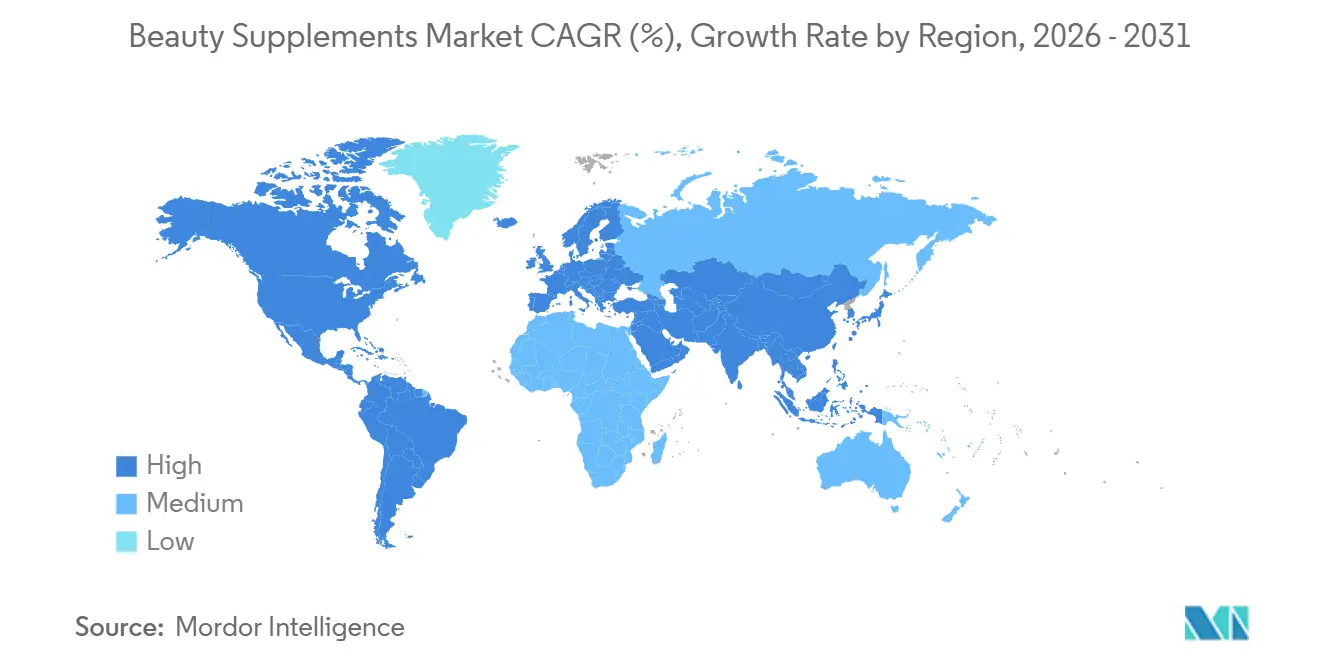
North America accounted for 21.68% of the beauty supplements market share in 2025, the largest regional share. Mature specialty retail, subscription-led direct-to-consumer businesses, and strong beauty awareness support demand in the region. The United States accounts for most regional revenue, as consumers increasingly link general health supplements to beauty-specific needs. Consumer needs related to hair thinning, skin volume loss, and micronutrient replenishment create further product opportunities. Canada and Mexico remain secondary growth markets, with Mexico showing growing interest in premium wellness products as rising middle-class incomes support spending on personal care and nutrition.
Europe is projected to grow at a 12.08% CAGR through 2031, the fastest rate among the geographic segments. The region combines premium demand in the United Kingdom, Germany, France, and Italy with a regulatory environment that rewards disciplined product development. Directive 2002/46/EC and related requirements for nutrient sources and claims can raise compliance costs for new entrants, but these requirements can also strengthen consumer confidence in brands that meet them. European consumers are likely to respond most strongly to evidence-led products that explain benefits within permitted claim rules. Demand for clean-label formulations and transparency in ingredient sourcing further shapes purchasing decisions across the region.
Asia-Pacific contains varied markets, with China and Japan serving as major volume centers and India offering longer-term potential driven by a growing urban middle class and rising awareness of preventive health. South America is supported by Brazil's established collagen heritage and a broad consumer base familiar with ingestible beauty products, while the Middle East and Africa benefit from younger populations and increasing disposable income in the UAE and Saudi Arabia. However, import dependence and price sensitivity continue to limit near-term adoption in some of these markets.
Competitive Landscape
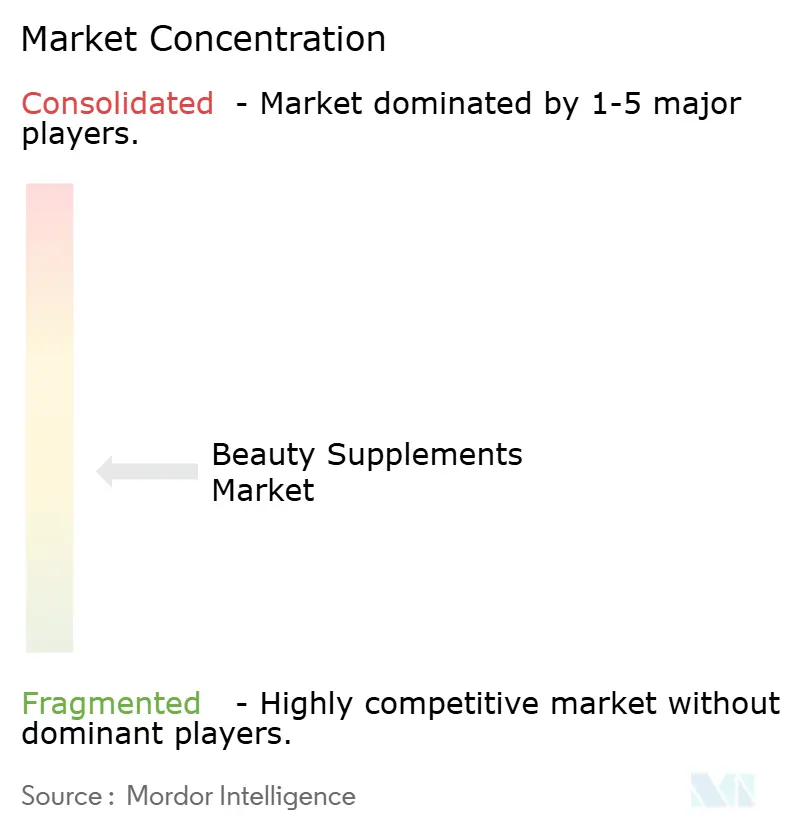
The beauty supplements market remains moderately consolidated, with leadership divided across regions, ingredients, formats, and sales channels rather than concentrated in any single company. Nestlé, through Vital Proteins, Unilever, through OLLY, and Haleon, through Centrum, have wide distribution capabilities and established consumer health platforms. Specialist brands such as Nutrafol and HUM Nutrition compete through more focused product architectures and direct consumer relationships. This mix creates room for both large consumer goods companies and premium science-led businesses to compete on the basis of evidence, format design, retailer access, and consumer trust.
Beyond product innovation, portfolio breadth and strategic positioning are becoming increasingly important to the competitive landscape. Large consumer health and beauty companies can leverage established distribution networks, retail relationships, and cross-category portfolios to scale beauty supplements, while specialist brands can differentiate through targeted formulations, premium ingredients, clinical positioning, and stronger digital engagement. Partnerships with retailers, beauty platforms, healthcare professionals, and e-commerce channels can further improve consumer reach and credibility.
Technology and evidence are also shaping competition. Folli's microencapsulation platform, TopGum's fiber-based gummy approach, and Cymbiotika's liposomal delivery illustrate attempts to improve product differentiation. Haleon's 2026 report on the COSMOS analysis gives Centrum Silver a clinical reference point that may strengthen brand trust. The competitive advantage of individual companies will depend on their ability to combine credible science, convenient formats, quality control, and a clear channel strategy. Brands relying solely on broad beauty claims may find it harder to stand out as consumer scrutiny increases.
Beauty Supplements Industry Leaders
-
Amway Corp
-
Herbalife Nutrition Ltd.
-
Shiseido Company, Limited
-
Unilever PLC
-
Otsuka Holdings Co., Ltd.
- *Disclaimer: Major Players sorted in no particular order
Beauty Supplements Market Companies Covered in this Report
- Nestle S.A.
- Amway Corp
- Herbalife Nutrition Ltd.
- Shiseido Company, Limited
- Unilever PLC
- Otsuka Holdings Co., Ltd.
- Meiji Holdings Co., Ltd.
- Nu Skin Enterprises, Inc.
- H&H Group
- Haleon Group of Companies
- Vitabiotics Ltd.
- Nature's Sunshine Products, Inc.
- GNC Holdings, LLC
- Nutrafol
- HUM Nutrition
- Vital Proteins
- Gelita AG
- Nitta Gelatin Inc.
- Vida Glow
- OLLY Public Benefit Corporation
Recent Industry Developments in Beauty Supplements Market
- August 2026: Lemme launched a beauty supplement, Lemme NAD+, a daily NMN-based supplement combining Lutemax SkinGlo, resveratrol, and spermidine to support cellular health, healthy aging, and skin radiance. The launch highlights the growing convergence of longevity and beauty-from-within supplements, with Lemme positioning the product around both healthy aging and skin appearance.
- April 2026: UKHAIR by UKLASH launched its Advanced Hair Supplements, introducing vegan, sugar-free capsules containing AnaGain™ NU, biotin, vitamin C, and ginseng root extract to support healthier-looking hair from within.
- July 2025: Nutrafol launched its hair-growth supplements at Ulta Beauty, expanding access to products including Nutrafol Women, Women's Balance, Postpartum, and Skin, alongside topical haircare products. The launch strengthens the integration of ingestible supplements into mainstream beauty retail and reflects the growing inside-out approach to hair and beauty wellness.
Global Beauty Supplements Market Report Scope
Beauty supplements are oral dietary or nutritional products formulated with vitamins, minerals, amino acids, botanical extracts, antioxidants, or other bioactive ingredients to support the health and appearance of skin, hair, and nails from within. They are typically positioned around benefits such as skin hydration and elasticity, hair strength and growth, nail health, and antioxidant or collagen support. The beauty supplements market is segmented by ingredient type, product form, distribution channel, and geography. By ingredient type, the market is segmented into collagen, vitamins and minerals, omega-3 and omega-6 fatty acids, and other ingredient types. By product form, the market is segmented into tablets, capsules, powders, and other forms. By distribution channel, the market is segmented into supermarkets and hypermarkets, online retail stores, and other distribution channels. By geography, the market is segmented into North America, Europe, Asia-Pacific, South America, and the Middle East and Africa. The report provides market size and forecasts in value terms (USD) for all the above segments.
Segmentation Overview
| Collagen |
| Vitamins and Minerals |
| Omega-3 and Omega-6 Fatty Acids |
| Hyaluronic Acid |
| Antioxidants |
| Others |
| Tablets |
| Capsules |
| Powders |
| Gummies |
| Softgels |
| Others |
| Supermarkets and Hypermarkets |
| Specialty Beauty and Health Stores |
| Online Retail Stores |
| Direct-to-Consumer and Subscription |
| Others |
| North America | United States |
| Canada | |
| Mexico | |
| Rest of North America | |
| Europe | United Kingdom |
| Germany | |
| France | |
| Italy | |
| Spain | |
| Russia | |
| Sweden | |
| Belgium | |
| Poland | |
| Netherlands | |
| Rest of Europe | |
| Asia-Pacific | China |
| Japan | |
| India | |
| Thailand | |
| Singapore | |
| Indonesia | |
| South Korea | |
| Australia | |
| New Zealand | |
| Rest of Asia-Pacific | |
| South America | Brazil |
| Argentina | |
| Colombia | |
| Chile | |
| Rest of South America | |
| Middle East and Africa | United Arab Emirates |
| South Africa | |
| Saudi Arabia | |
| Nigeria | |
| Egypt | |
| Morocco | |
| Turkey | |
| Rest of Middle East and Africa |
| By Ingredient Type | Collagen | |
| Vitamins and Minerals | ||
| Omega-3 and Omega-6 Fatty Acids | ||
| Hyaluronic Acid | ||
| Antioxidants | ||
| Others | ||
| By Product Form | Tablets | |
| Capsules | ||
| Powders | ||
| Gummies | ||
| Softgels | ||
| Others | ||
| By Distribution Channel | Supermarkets and Hypermarkets | |
| Specialty Beauty and Health Stores | ||
| Online Retail Stores | ||
| Direct-to-Consumer and Subscription | ||
| Others | ||
| Geography | North America | United States |
| Canada | ||
| Mexico | ||
| Rest of North America | ||
| Europe | United Kingdom | |
| Germany | ||
| France | ||
| Italy | ||
| Spain | ||
| Russia | ||
| Sweden | ||
| Belgium | ||
| Poland | ||
| Netherlands | ||
| Rest of Europe | ||
| Asia-Pacific | China | |
| Japan | ||
| India | ||
| Thailand | ||
| Singapore | ||
| Indonesia | ||
| South Korea | ||
| Australia | ||
| New Zealand | ||
| Rest of Asia-Pacific | ||
| South America | Brazil | |
| Argentina | ||
| Colombia | ||
| Chile | ||
| Rest of South America | ||
| Middle East and Africa | United Arab Emirates | |
| South Africa | ||
| Saudi Arabia | ||
| Nigeria | ||
| Egypt | ||
| Morocco | ||
| Turkey | ||
| Rest of Middle East and Africa | ||
Key Questions Answered in the Report
What is the forecast growth rate for beauty supplements?
The market is projected to grow at a 10.20% CAGR from 2026 to 2031, reaching USD 14.06 billion by 2031.
Which ingredient is growing fastest in beauty supplements?
Collagen is the fastest-growing ingredient type, with a projected CAGR of 12.56% through 2031.
Why are collagen supplements popular for skin care?
Clinical studies cited in this report found improvements in measures including skin hydration, moisture, elasticity, and wrinkle volume for certain collagen formulations.
Which sales channel is expanding most quickly?
Online retail is projected to grow at a 13.71% CAGR through 2031, while specialty beauty and health stores held the largest channel share in 2025.