
Babesiosis Treatment Market Size and Share
Market Overview
| Study Period | 2020 - 2031 |
|---|---|
| Market Size (2026) | USD 91.29 Million |
| Market Size (2031) | USD 120.65 Million |
| Growth Rate (2026 - 2031) | 5.72 % |
| Fastest Growing Market | Asia-Pacific |
| Largest Market | North America |
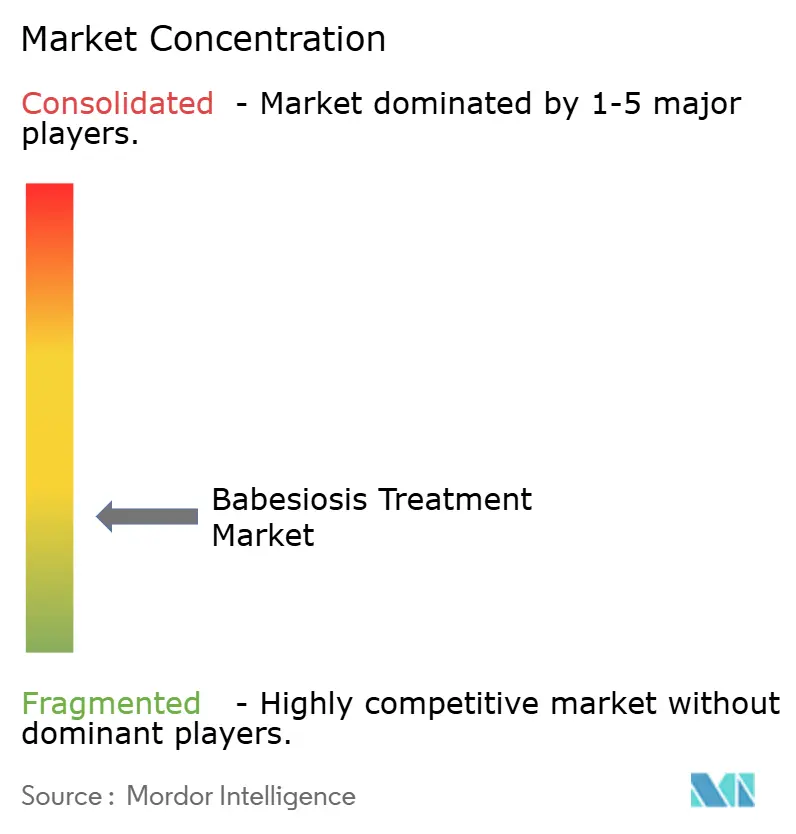
| Market Concentration | Low |
Major Players *Disclaimer: Major Players sorted in no particular order Image © Mordor Intelligence. Reuse requires attribution under CC BY 4.0. | |
Babesiosis Treatment Market Analysis by Mordor Intelligence
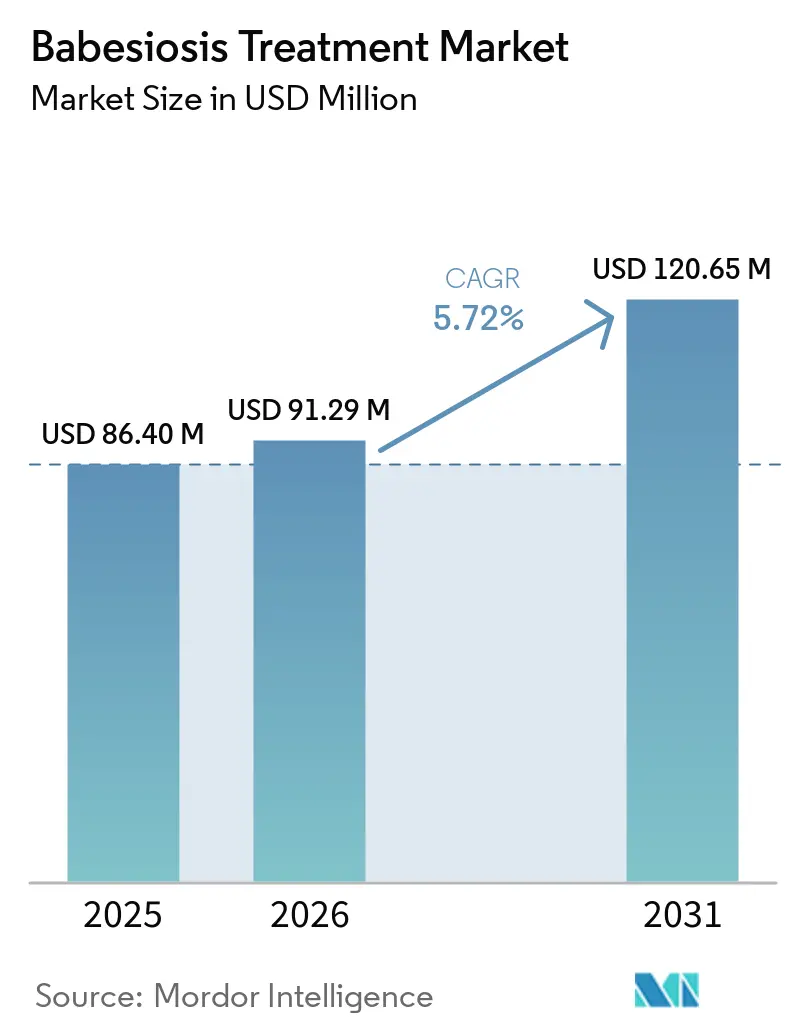
The Babesiosis Treatment Market size is expected to increase from USD 86.40 million in 2025 to USD 91.29 million in 2026 and reach USD 120.65 million by 2031, growing at a CAGR of 5.72% over 2026-2031.
The Babesiosis Treatment Market is growing because the reported disease is spreading across a wider area, and more cases are being identified through surveillance and testing. U.S. surveillance recorded 3,586 cases in 2023, compared with 2,111 in 2022, while endemic states increased from 7 to 13 since systematic surveillance began in 2011.[1] The treatment opportunity is also becoming more complex because older, immunocompromised, and asplenic patients often need longer courses and repeat care. Generic supply, hospital access, and reliable injectable capacity remain more important competitive factors than branded product differentiation. The absence of an FDA-approved treatment specifically labeled for human babesiosis limits promotional activity and keeps pricing tied to established generic medicines.
Key Report Takeaways
- By drug class, antiprotozoal agents led with 41.76% revenue share in 2025, while combination products are forecast to expand at a 6.89% CAGR through 2031.
- By route of administration, oral delivery held 76.16% revenue share in 2025, while parenteral delivery is forecast to expand at a 6.91% CAGR through 2031.
- By patient population, adults held 51.38% revenue share in 2025, while geriatric patients are forecast to expand at a 7.13% CAGR through 2031.
- By distribution channel, hospital pharmacies held 46.29% revenue share in 2025, while online pharmacies are forecast to expand at a 7.47% CAGR through 2031.
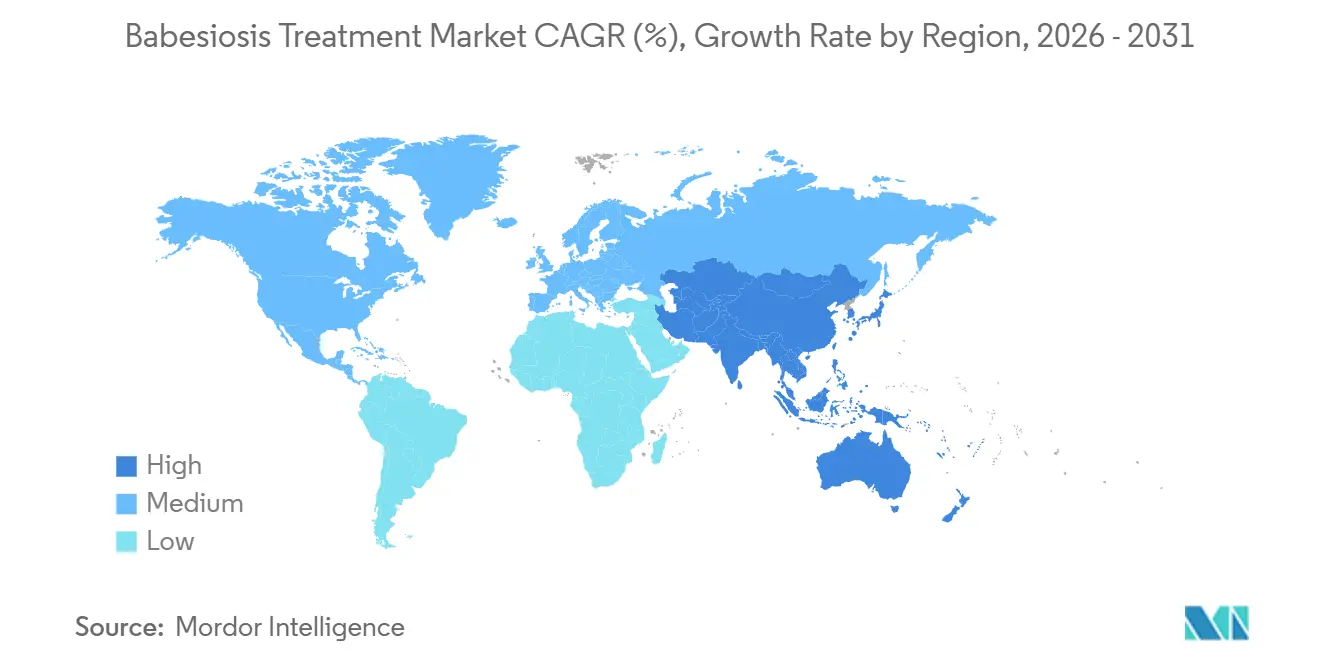
- By geography, North America held 53.17% revenue share in 2025, while Asia-Pacific is forecast to expand at a 6.68% CAGR through 2031.
Note: Market size and forecast figures in this report are generated using Mordor Intelligence’s proprietary estimation framework, updated with the latest available data and insights as of January 2026.
Market Trends and Insights
Drivers Impact Analysis of Babesiosis Treatment Market*
| Driver | (~) % Impact on CAGR Forecast | Geographic Relevance | Impact Timeline |
|---|---|---|---|
| Expanding Tick-Borne Exposure and Geographic Range | +1.4% | North America and Northern Europe | Long term (≥ 4 years) |
| Rising Case Detection Through Molecular Testing | +1.1% | Global | Medium term (2-4 years) |
| Mandatory Blood Donor Screening in U.S. Endemic States | +0.8% | North America | Short term (≤ 2 years) |
| Growing Immunocompromised and Older Patient Pool | +0.6% | Global | Long term (≥ 4 years) |
| Persistent Relapsing Disease Creating Demand for New Regimens | +0.5% | North America and EU | Medium term (2-4 years) |
| Cross-Species One Health Surveillance and Veterinary Treatment Demand | +0.3% | Global | Long term (≥ 4 years) |
| Source: Mordor Intelligence | |||
Expanding Tick-Borne Exposure and Geographic Range
The Babesiosis Treatment Market is gaining a broader patient base as the range and active season of ticks expand. A 2025 study that followed 1,130 patients between 1993 and 2024 reported annual case growth of 14.2% and found that the mean transmission season in New England lengthened from 2.2 months before 2000 to 11 months in 2023.[2] This longer exposure window increases the need for year-round diagnostic readiness and medicine availability in endemic states. CDC surveillance also shows that endemic U.S. states doubled from 7 to 13 after surveillance began in 2011. In the mid-Atlantic, locally acquired infections and infected Ixodes scapularis ticks confirm that the risk is extending beyond established northeastern centers. The Babesiosis Treatment Market, therefore, depends less on a short seasonal procurement cycle and more on standing clinical and pharmacy preparedness.
Rising Case Detection Through Molecular Testing
Molecular testing is increasing the number of infections that can be confirmed and treated before serious illness develops. A 2024 direct PCR study reported 98% concordance with laboratory PCR and produced results from unextracted whole blood in less than 60 minutes. This type of workflow can help emergency departments assess Babesia alongside Anaplasma and Ehrlichia without depending on reference laboratory infrastructure. A 2026 fluorescent RPA study detected B. microti at 0.046 parasites per microliter and confirmed 21 positive cases in a febrile patient cohort. Better species identification also matters because B. divergens can produce severe disease in asplenic patients and may require intensive intravenous treatment. The Babesiosis Treatment Market benefits when diagnosis moves from uncertain clinical suspicion to a timely laboratory-confirmed prescription pathway.
Mandatory Blood Donor Screening in U.S. Endemic States
Mandatory donor testing has made Babesia a more visible concern for blood centers and hospital systems. FDA guidance requires year-round nucleic acid testing in 15 states and Washington, D.C., for blood establishments that collect in those areas. In the first year of American Red Cross screening, 365 NAT-positive donations were identified, many from asymptomatic donors. These results showed that parasitemia can exist without a patient seeking care for symptoms. Clinical guidance published in 2025 also established a management and monitoring pathway for asymptomatic donors who test positive. The Babesiosis Treatment Market gains from greater institutional familiarity because clinicians are more likely to recognize, confirm, and monitor infection in areas where blood screening is routine. Similar discussions in Canada and Europe could strengthen awareness over time, although they have not yet established a comparable screening framework.
Growing Immunocompromised and Older Patient Pool
The growing use of oncology therapies and the aging of the population are increasing the demand for longer and more complex treatment. A 2025 multicenter cohort of 225 patients found that immunocompromised or asplenic patients accounted for 50% of hospitalizations and had acute kidney injury in 24% of cases, compared with 11% among immune-intact patients.[3] These patients also received exchange transfusions 3 times more often than immune-intact patients. All 9 recurrences in the cohort occurred in immunocompromised or asplenic patients, and B-cell-depleting treatment was associated with an odds ratio of 9.4 for recurrence. Patients who were both immunocompromised and asplenic required a median of 43 treatment days, compared with 10 days for immune-intact patients. This pattern supports demand for hospital, specialty pharmacy, injectable, and multi-drug treatment options in the Babesiosis Treatment Market.
Restraints Impact Analysis of Babesiosis Treatment Market*
| Restraint | (~) % Impact on CAGR Forecast | Geographic Relevance | Impact Timeline |
|---|---|---|---|
| Absence of an FDA-Approved Human Babesiosis Treatment | -1.6% | Global | Long term (≥ 4 years) |
| Low Disease Awareness and Frequent Misdiagnosis | -0.9% | APAC, MEA, and South America | Long term (≥ 4 years) |
| Atovaquone Resistance and Relapse in Immunocompromised Hosts | -0.7% | North America | Medium term (2-4 years) |
| Low Commercial Incentive for Rare-Disease Drug Development | -0.5% | Global | Long term (≥ 4 years) |
| Source: Mordor Intelligence | |||
Absence of an FDA-Approved Human Babesiosis Treatment
No medicine has an FDA-approved label specifically for human babesiosis, so current prescribing depends on clinical guidance and off-label use. IDSA recommends atovaquone plus azithromycin as the preferred regimen for most symptomatic patients, with clindamycin plus quinine as an alternative. This position limits direct product promotion, reimbursement certainty, and incentives to develop differentiated therapies. Tafenoquine is being evaluated through an expanded-access study, and 60 Degrees Pharmaceuticals reported in October 2025 that the first completed patient had no detectable Babesia. Further pivotal evidence would still be needed before a full FDA approval could be sought. The Babesiosis Treatment Market consequently remains shaped by generic prescribing practices rather than by a branded treatment launch.
Low Disease Awareness and Frequent Misdiagnosis
Babesiosis can be missed because fever, hemolytic anemia, fatigue, and thrombocytopenia overlap with malaria, ehrlichiosis, and viral illnesses. CDC identifies asymptomatic infection and nonspecific symptoms as factors that contribute to underreporting. Blood smear microscopy requires skilled staff and may not detect low parasitemia, while confirmatory PCR is not available in every setting. France registered a prospective multicenter study in 2026 to characterize human babesiosis in metropolitan France, showing that epidemiological and clinical understanding remains incomplete even in developed health systems. Misattribution to malaria or typhoid can limit recognition in the Asia-Pacific, while laboratory access gaps have a similar effect in sub-Saharan Africa and South America. Resistance and relapse among immunocompromised patients add further pressure because failure of the established atovaquone-based approach may require more complex treatment after delayed recognition.
*Our forecasts treat driver/restraint impacts as directional, not additive. The impact forecasts reflect baseline growth, mix effects, and variable interactions.
Babesiosis Treatment Market Segment Analysis
By Drug Class:
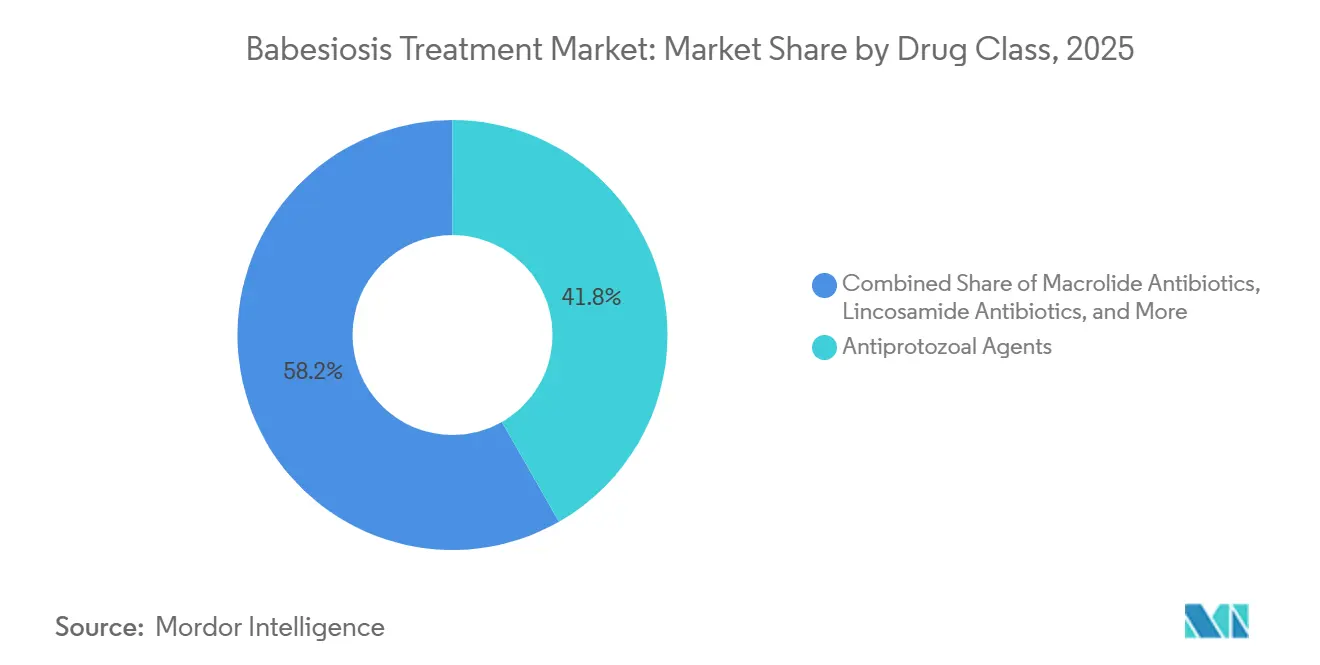
Antiprotozoal Therapies Remain the Core Treatment Option as Combination Use ExpandsAntiprotozoal agents accounted for 41.76% of the Babesiosis treatment segment share in 2025, supported by atovaquone's role in the preferred treatment regimen. IDSA identifies atovaquone plus azithromycin as the main option for symptomatic patients, which makes atovaquone central to both routine outpatient care and many salvage approaches. Macrolides, primarily azithromycin, hold the next major position because they are the standard companion medicine in this preferred combination. Lincosamides and quinoline derivatives continue to serve patients who cannot use the primary regimen or need an alternative approach. Clindamycin has an additional advantage because oral and injectable forms allow it to be used across outpatient and hospital settings. The other category includes intravenous quinine and doxycycline-based approaches used for non-B. microti infections, particularly some European B. divergens cases. This treatment mix keeps the Babesiosis Treatment Market tied to established generic molecules, even when clinical severity differs by patient or species.
Combination products are forecast to grow at a 6.89% CAGR through 2031, the highest rate among drug classes. The pace reflects more frequent use of multi-drug protocols for relapsing, refractory, or severe infection. In the 2025 Massachusetts multicenter cohort, 8% of hospitalized patients received triple therapy with atovaquone, azithromycin, and clindamycin. Atovaquone-proguanil has also been used as a salvage combination in immunocompromised patients. Tafenoquine-based treatment is under clinical investigation, and the first expanded-access patient clearance reported in October 2025 provides an early clinical signal. Combination use can increase medicine consumption per episode, but the lack of a formal label keeps these regimens dependent on physician judgment. Persistent relapsing disease therefore creates demand for new regimens, while limited development incentives constrain the number of purpose-built options.

By Route of Administration:
Oral Therapy Holds the Largest Position While Parenteral Care Expands in HospitalsOral delivery held 76.16% of the route-of-administration share in 2026 because many immunocompetent outpatients receive an oral atovaquone suspension and azithromycin regimen for 7 to 10 days. CDC clinical care guidance lists atovaquone plus azithromycin as the preferred option for most symptomatic cases. Oral access is reinforced by multi-manufacturer generic supply from Lupin, Cipla, Aurobindo, Teva, Viatris, and Glenmark. This supplier base supports price competition and broad access after a laboratory diagnosis. It also allows patients to continue therapy after discharge from the hospital. The oral route remains important because many mild-to-moderate cases can be managed without an extended inpatient stay. Its position in the Babesiosis Treatment Market reflects practical outpatient treatment rather than a shift toward a new drug class.
Parenteral delivery is forecast to expand at a 6.91% CAGR through 2031, driven by severe disease and the clinical needs of immunocompromised patients. Intravenous azithromycin may be used during initial hospital treatment until a patient is stable enough to transition to oral therapy. Fresenius Kabi USA supplies an intravenous azithromycin formulation, while Hikma Pharmaceuticals USA markets clindamycin in 5% dextrose injection, which started marketing in June 2024. The longer transmission season in New England has increased the need for standing injectable inventories rather than purely seasonal stocking. Ready-to-use intravenous bags also fit hospital pharmacy automation programs and can support faster preparation. Injectable manufacturing capacity is, therefore, a practical competitive advantage for suppliers serving severity-driven care. This part of the Babesiosis Treatment Market is smaller than oral care, but it is linked to patients with the longest and most resource-intensive treatment courses.
By Patient Population:
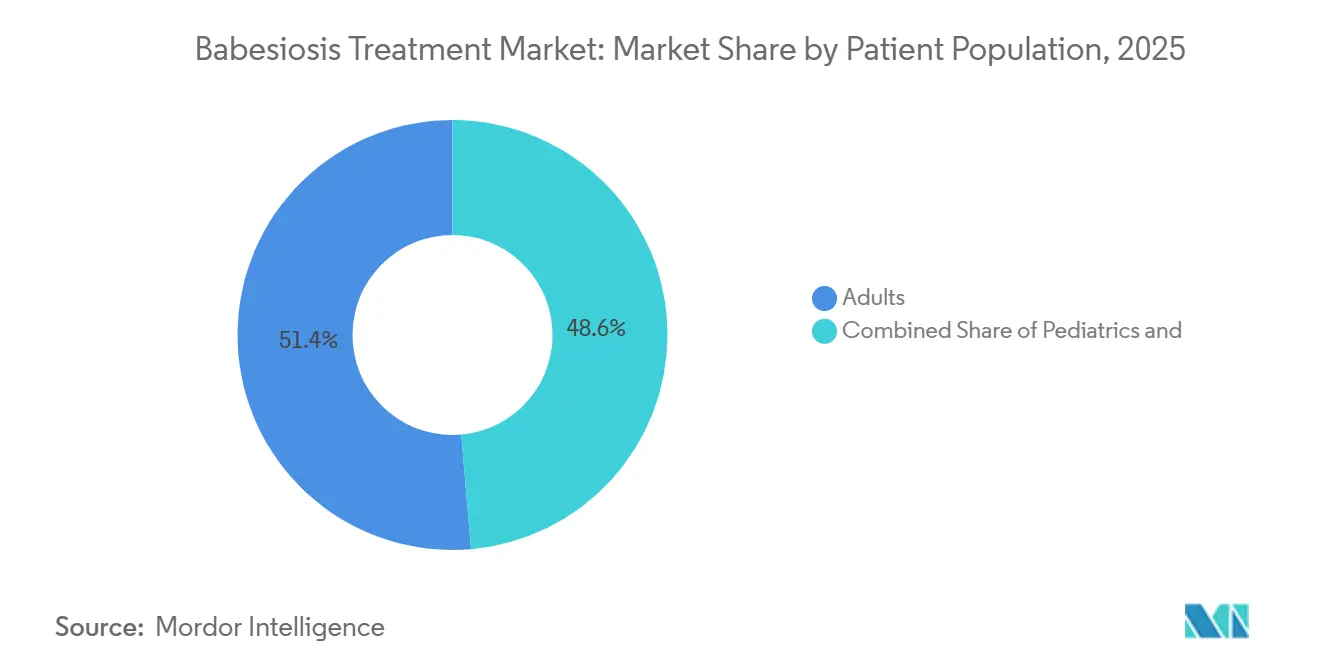
Adults Generate the Largest Volume While Geriatric Patients Require Longer TreatmentAdults accounted for 51.38% of patient volume in 2025, making them the largest patient group in the Babesiosis Treatment Market. In the 2025 Massachusetts cohort, the mean patient age was 66 years, which places many patients near the boundary between adult and geriatric classifications. Adult cases are numerically important because reported infections are concentrated in regions with established surveillance and older populations. Pediatric cases represent the smallest group because disease in immunocompetent children is usually milder and can be managed with weight-based oral atovaquone dosing. Hospitalization is less common in this group than in vulnerable older patients. Available generic oral suspension also supports dosing across pediatric, adult, and geriatric care. The adult segment will remain the main source of treatment volume while diagnosis expands across endemic and newly affected areas.
Geriatric patients are forecast to grow at a 7.13% CAGR through 2031, supported by immunosenescence, functional asplenia, and a greater prevalence of hematologic malignancy treatment. The Babesiosis Treatment Market size for this group grows not only with case numbers but also with longer therapy per episode. Patients who were both immunocompromised and asplenic required a median of 43 days of treatment, which was 4.3 times the 10-day course among immune-intact patients. Every recurrence in that cohort occurred in immunocompromised or asplenic patients. Repeated treatment can increase demand across hospital and specialty channels, especially when relapse follows B-cell-depleting treatment. Lupin maintains an FDA-approved generic atovaquone oral suspension that supports access to a key medicine across age groups. The clinical burden of older patients gives suppliers an incentive to maintain reliable oral and injectable availability, despite the absence of a disease-specific approved label.
By Distribution Channel:
Hospital Pharmacies Lead While Online Pharmacies Extend Access After DiagnosisHospital pharmacies held 46.29% of distribution revenue in 2025 because severe cases require institutional assessment, intravenous treatment, and closely managed medicine supply. The Babesiosis treatment segment share of hospital pharmacies is supported by procurement procedures for injectable azithromycin and clindamycin in endemic-state facilities. A longer period of tick activity has also moved procurement toward standing formulary availability rather than seasonal orders. Specialty pharmacies support complex multi-week courses for chronically immunocompromised patients. Retail pharmacies provide an important step-down route for patients moving from hospital care to oral treatment. Hospitals continue to have the strongest channel position because treatment decisions for severe infection are commonly initiated in inpatient settings. This structure favors suppliers that can meet hospital quality, inventory, and injectable packaging requirements.
Online pharmacies are forecast to expand at a 7.47% CAGR through 2031 as telehealth and electronic prescribing improve fulfillment for confirmed outpatient cases. This channel can serve patients in non-endemic areas who receive an atovaquone-azithromycin prescription after PCR confirmation. Generic availability supports online price competition and reduces the cost barrier for oral medicines. The FDA competitive generic therapy program has also encouraged multi-manufacturer access to medicines relevant to current treatment protocols. Online dispensing does not replace in-person diagnosis because a laboratory-confirmed result remains necessary before prescribing. The channel is therefore additive to clinical testing and physician care rather than an alternative diagnostic model. Its faster growth in the Babesiosis Treatment Market reflects improved access after diagnosis, while hospital pharmacies retain their role in severe and complex cases.
Geography Analysis
North America Babesiosis Treatment Market
North America accounted for 53.17% of the Babesiosis treatment segment share in 2025, supported by developed surveillance, blood safety requirements, and treatment access. The United States reported 3,586 cases in 2023, with an incidence of 1.06 per 100,000 people. New York reported 1,169 cases, and Massachusetts reported 841, together representing more than half of the national annual total. Locally acquired infection is also documented in Maryland, Virginia, and West Virginia, where infected ticks have been identified at some Virginia sites. Canada has not established mandatory donor NAT requirements for Babesia. However, ecological change is creating a near-border exposure corridor through Ontario and Quebec. Mexico remains a small contributor, with sporadic cases generally linked to cross-border travel.
EMEA and South America Babesiosis Treatment Market
Europe has a smaller population than North America, but its clinical pattern creates a need for intensive hospital management. B. divergens transmitted by Ixodes ricinus is important in Europe, and severe infection is concentrated among asplenic patients. Untreated infection in this group can have a case-fatality rate of up to 40%, which raises the need for rapid diagnosis and intensive treatment. France, Germany, and the United Kingdom account for many recorded European cases. France's 2026 multicenter registry aims to document the epidemiological, clinical, and therapeutic features of human babesiosis in metropolitan France. In northern Europe, Ixodes ricinus shifted its range by nearly 400 km across the Boreal biogeographical region between 1979 and 2020. The Middle East, Africa, and South America remain early-stage areas because surveillance and laboratory infrastructure limit recognized case volumes.
APAC Babesiosis Treatment Market
Asia-Pacific is forecast to grow at a 6.68% CAGR through 2031, making it the fastest-growing regional part of the Babesiosis Treatment Market. China is the primary contributor, with more than 300 symptomatic human cases documented through 2025 across 17 provinces. B. microti has been reported in southern regions, while B. venatorum has been reported in the northeast. A 2024 pilot study screened 92,700 donors across 3 provincial-level administrative divisions and identified the first Babesia-related co-infection in Chinese blood donors. Japan, South Korea, India, and Australia have also reported isolated human cases under academic investigation. China's regulatory system has not issued formal treatment guidelines, so prescribing and procurement remain fragmented. This limits near-term scale but gives early suppliers an opening if surveillance and standardized clinical pathways develop.
Competitive Landscape
The Babesiosis Treatment Market is fragmented because no company has an FDA-approved labeled medicine for human babesiosis. Teva Pharmaceutical Industries, Cipla Limited, Sun Pharmaceutical Industries, Aurobindo Pharma, Sandoz Group, Dr. Reddy's Laboratories, Hikma Pharmaceuticals, and Fresenius Kabi compete through generic supply, formulations, and price. Their relevant portfolios cover oral and injectable atovaquone, azithromycin, clindamycin, and quinine. Supply reliability is particularly important because hospital clinicians need access to injectable medicines for severe cases. Manufacturing quality is also a competitive issue. The FDA issued a warning letter and import alert to Viatris's Indore facility in December 2024 for quality control violations affecting 11 distributed products, including atovaquone formulations. Such disruptions can shift institutional procurement toward alternative qualified suppliers.
Hikma is strengthening its position in sterile injectables through manufacturing investment. In June 2025, the company announced USD 1 billion of U.S. manufacturing and research investment through 2030, supporting capacity for essential generic medicines. In June 2026, Hikma committed USD 267 million across its Bedford and Columbus, Ohio facilities for aseptic vial filling, lyophilization, and intravenous bag production. These moves strengthen domestic capacity for injectable azithromycin and clindamycin used in severe management protocols. Pfizer India and Cipla also entered a December 2025 licensing and distribution arrangement that gave Cipla exclusive rights to market Dalacin C, including clindamycin capsules and injections, in India. The agreement shows the value of established antibiotic brands and distribution access in markets where treatment pathways are still developing. These strategies are directed at manufacturing and access rather than babesiosis-specific clinical claims.
The clearest opportunity in the Babesiosis Treatment Market is a therapy or combination supported by a disease-specific regulatory pathway. No listed generic supplier has filed an NDA or clinical efficacy supplement for a human babesiosis indication. Tafenoquine from 60 Degrees Pharmaceuticals is the only branded pipeline candidate named in the supplied material. Its expanded-access study may establish a premium niche if subsequent evidence supports a full FDA submission. GSK's atovaquone-proguanil has been used off label in salvage regimens without a related indication expansion filing. Ready-to-use intravenous bags and other hospital-ready formats may gain share as parenteral treatment increases. The Babesiosis Treatment Market remains oriented toward generic supply and hospital-ready formulations until a company establishes stronger clinical evidence for a disease-specific treatment.
Babesiosis Treatment Industry Leaders
-
Dr. Reddy's Laboratories
-
Hikma Pharmaceuticals PLC
-
Pfizer Inc.
-
Teva Pharmaceutical Industries Ltd.
-
Viatris Inc.
- *Disclaimer: Major Players sorted in no particular order
Babesiosis Treatment Market Companies Covered in this Report
- Alkem Laboratories
- Amneal Pharmaceuticals
- Apotex
- Aurobindo Pharma
- Bionpharma, Inc.
- Cipla
- Dr. Reddy’s Laboratories
- Endo International
- Fresenius
- Glenmark Pharmaceuticals
- GlaxoSmithKline
- Hetero Drugs Limited
- Hikma Pharmaceuticals
- Lupin
- Pfizer
- Sandoz Group AG
- Sun Pharmaceuticals Industries
- Teva Pharmaceutical Industries
- Viatris
- Zydus Lifesciences
Recent Industry Developments in Babesiosis Treatment Market
- June 2026: Hikma Pharmaceuticals committed USD 267 million across its Bedford and Columbus, Ohio manufacturing facilities, adding aseptic vial filling, lyophilization, and IV bag production capabilities; the investment directly expands domestic sterile injectable supply of azithromycin and clindamycin formulations used in severe babesiosis management protocols.
- October 2025: 60 Degrees Pharmaceuticals announced that the first patient in its tafenoquine expanded-access trial (NCT06478641) tested negative for Babesia, marking the first prospective non-Yale clinical confirmation of tafenoquine efficacy in clearing B. microti in immunosuppressed patients with relapsing babesiosis.
- June 2025: Hikma Pharmaceuticals USA committed USD 1 billion in US manufacturing and R&D expansion by 2030, targeting sterile injectable capacity at Ohio, New Jersey, and Cleveland sites and reinforcing domestic supply chains for injectable antibiotics directly relevant to hospital-based babesiosis treatment.
- December 2025: Pfizer India and Cipla Limited executed a brand licensing and distribution partnership under which Cipla received exclusive rights to market and sell Dalacin C (clindamycin capsules and injections) across India, expanding access to this lincosamide antibiotic used as the alternative babesiosis treatment regimen.
Global Babesiosis Treatment Market Report Scope
The Babesiosis Treatment Market refers to the global market for therapies and medications used to manage and treat babesiosis, a tick-borne parasitic infection caused by Babesia species. The market includes pharmaceutical manufacturers and distributors involved in delivering effective treatment options to affected patients. Market growth is driven by the increasing incidence of tick-borne diseases, rising awareness of early diagnosis and treatment, and ongoing advancements in anti-infective and supportive care therapies.
The babesiosis treatment market is segmented by drug class, route of administration, patient population, distribution channel, and geography. By drug class, it is further divided into antiprotozoal agents, macrolide antibiotics, lincosamide antibiotics, quinoline derivatives, combination products, and others. By route of administration, it is segmented into oral and parenteral. By patient population, the market is segmented into pediatric, adults, and geriatric. By distribution channel, the market is segmented into hospital pharmacies, retail pharmacies, online pharmacies, and specialty pharmacies. The geography segment is further divided into North America, Europe, Asia-Pacific, the Middle East and Africa, and South America. The report also covers the estimated market sizes and trends for 17 countries across major regions globally. The report offers the market size and forecasts in value (USD) for the above segments.
Segmentation Overview
| Antiprotozoal Agents |
| Macrolide Antibiotics |
| Lincosamide Antibiotics |
| Quinoline Derivatives |
| Combination Products |
| Others |
| Oral |
| Parenteral |
| Pediatric |
| Adults |
| Geriatric |
| Hospital Pharmacies |
| Retail Pharmacies |
| Online Pharmacies |
| Specialty Pharmacies |
| North America | United States |
| Canada | |
| Mexico | |
| Europe | Germany |
| United Kingdom | |
| France | |
| Italy | |
| Spain | |
| Rest of Europe | |
| Asia-Pacific | China |
| Japan | |
| India | |
| Australia | |
| South Korea | |
| Rest of Asia-Pacific | |
| Middle East and Africa | GCC |
| South Africa | |
| Rest of Middle East and Africa | |
| South America | Brazil |
| Argentina | |
| Rest of South America |
| By Drug Class | Antiprotozoal Agents | |
| Macrolide Antibiotics | ||
| Lincosamide Antibiotics | ||
| Quinoline Derivatives | ||
| Combination Products | ||
| Others | ||
| By Route of Administration | Oral | |
| Parenteral | ||
| By Patient Population | Pediatric | |
| Adults | ||
| Geriatric | ||
| By Distribution Channel | Hospital Pharmacies | |
| Retail Pharmacies | ||
| Online Pharmacies | ||
| Specialty Pharmacies | ||
| By Geography | North America | United States |
| Canada | ||
| Mexico | ||
| Europe | Germany | |
| United Kingdom | ||
| France | ||
| Italy | ||
| Spain | ||
| Rest of Europe | ||
| Asia-Pacific | China | |
| Japan | ||
| India | ||
| Australia | ||
| South Korea | ||
| Rest of Asia-Pacific | ||
| Middle East and Africa | GCC | |
| South Africa | ||
| Rest of Middle East and Africa | ||
| South America | Brazil | |
| Argentina | ||
| Rest of South America | ||
Key Questions Answered in the Report
What is driving demand for babesiosis treatment?
The Babesiosis Treatment Market is supported by wider tick exposure, more molecular testing, and increased recognition through blood donor screening. These factors increase the number of confirmed cases requiring care and improve the likelihood that patients enter a formal treatment pathway. U.S. surveillance recorded 3,586 cases in 2023, and the number of endemic states increased from 7 to 13 after systematic surveillance began in 2011.
What is the projected Babesiosis Treatment Market growth rate?
The Babesiosis Treatment Market is forecast to grow at a 5.72% CAGR from 2026 to 2031 and reach USD 120.65 million by 2031. Its expansion is tied to broader disease recognition, longer treatment courses for high-risk patients, and the continued use of established generic therapies. The market was valued at USD 86.40 million in 2025 and is estimated at USD 91.29 million in 2026. North America remains the leading region, while Asia-Pacific has the fastest projected regional growth rate.
Which medicines are most often used for babesiosis?
In the Babesiosis Treatment Market, atovaquone plus azithromycin is the preferred treatment for most symptomatic cases, while clindamycin plus quinine is an alternative regimen. Treatment selection can change when patients have severe disease, relapse, medicine intolerance, or significant immune suppression. In the 2025 multicenter cohort, 8% of hospitalized patients received triple therapy with atovaquone, azithromycin, and clindamycin.
Why are older patients important for treatment demand?
Within the Babesiosis Treatment Market, geriatric patients are forecast to grow at a 7.13% CAGR. Immunocompromised or asplenic patients can require substantially longer treatment courses, which increases medicine demand per episode and reinforces the role of hospital and specialty pharmacy care.
Why do hospital pharmacies lead distribution?
Hospital pharmacies held 46.29% share in 2025 because severe cases often require inpatient assessment and intravenous medicine supply. The Babesiosis Treatment Market also relies on this channel for standing inventories when clinical risk extends beyond a short seasonal period.
Is there an FDA-approved medicine specifically for human babesiosis?
No medicine has an FDA-approved human babesiosis label, so current treatment relies on off-label use of established medicines and clinical guidance. This leaves the Babesiosis Treatment Market dependent on generic supply reliability, clinician familiarity, and guideline-based prescribing rather than an approved branded product. Tafenoquine is being studied through expanded access, but further pivotal evidence would be required before a full FDA approval could be pursued.