
Argentina Pet Nutraceuticals Market Size and Share
Market Overview
| Study Period | 2021 - 2031 |
|---|---|
| Forecast Data Period | 2026 - 2031 |
| Base Year Market Size (2025) | USD 40.09 Million |
| Market Size (2026) | USD 43.77 Million |
| Market Size (2031) | USD 68.49 Million |
| Growth Rate (2026 - 2031) | 9.37 % |
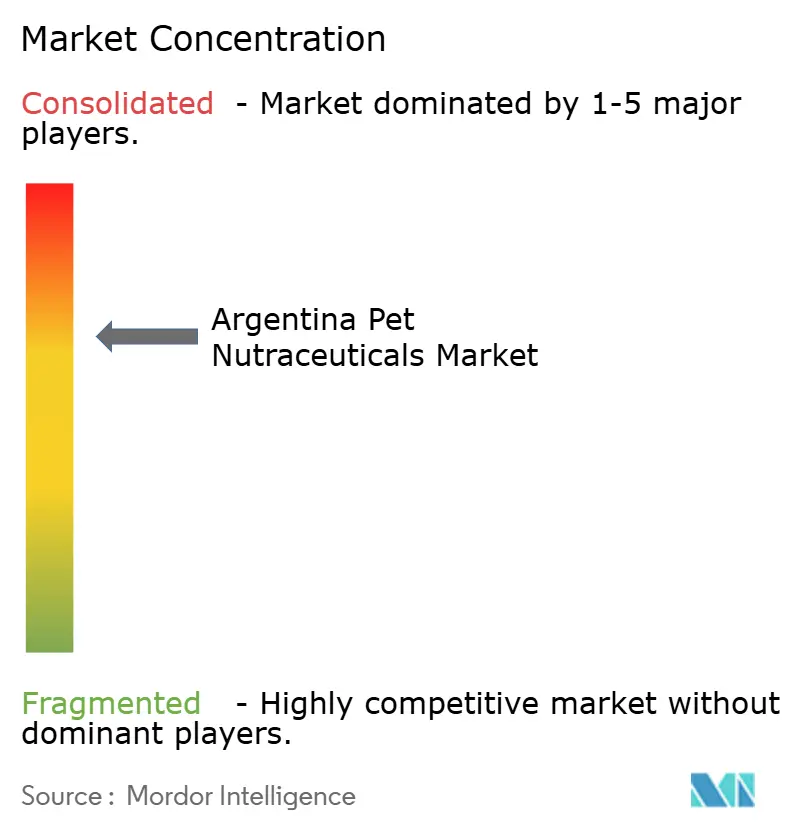
| Market Concentration | Medium |
Major Players *Disclaimer: Major Players sorted in no particular order Image © Mordor Intelligence. Reuse requires attribution under CC BY 4.0. | |
Argentina Pet Nutraceuticals Market Analysis by Mordor Intelligence
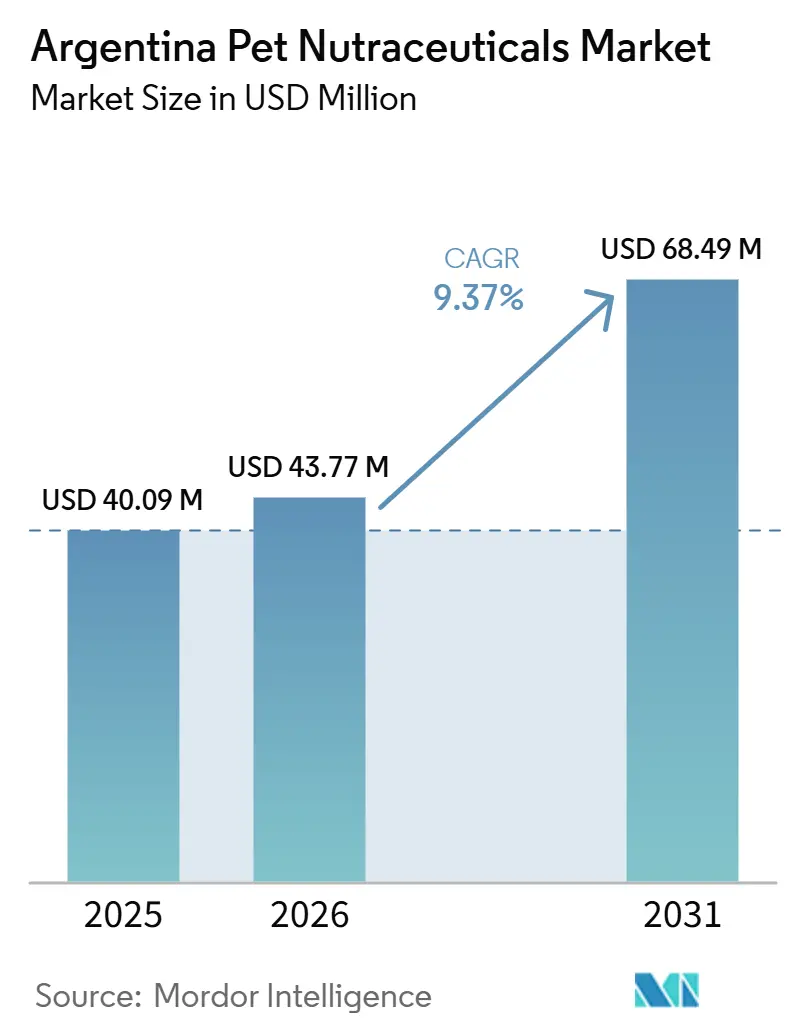
The Argentina pet nutraceuticals market size was valued at USD 40.09 million in 2025 and is projected to reach USD 43.77 million in 2026 and USD 68.49 million by 2031, growing at a CAGR of 9.37% during 2026-2031. The market is being supported by a steady shift toward preventive pet care as dogs and cats are treated more like long-term family companions rather than occasional household dependents. Pet ownership in Argentina remains significant, with pets present in nearly 80% of households in 2025, sustaining a broad consumer base for companion animal products. Dogs continue to dominate household pet ownership, while cats also maintain a significant presence, supporting demand across premium food, healthcare, and pet care categories.[1]Source: TN.com.ar, “La Revolución Pet-Friendly, Ocho de Cada Diez Hogares Argentinos Conviven con Perros y Gatos,” TN, tn.com.ar. Demand is also being driven by pets adopted during the pandemic period, which are now entering midlife, increasing interest in joint, digestive, skin, and cognitive support products. The Argentina pet nutraceuticals market is also benefiting from premium diet recovery, wider veterinary recommendations, and a retail structure that now combines specialty stores with faster online fulfillment in cities such as Rosario and Córdoba. Competitive activity remains firm as multinational pet nutrition and animal health companies continue to expand therapeutic nutrition and supplement portfolios, and their omnichannel presence to defend share and capture new wellness demand.
Key Report Takeaways
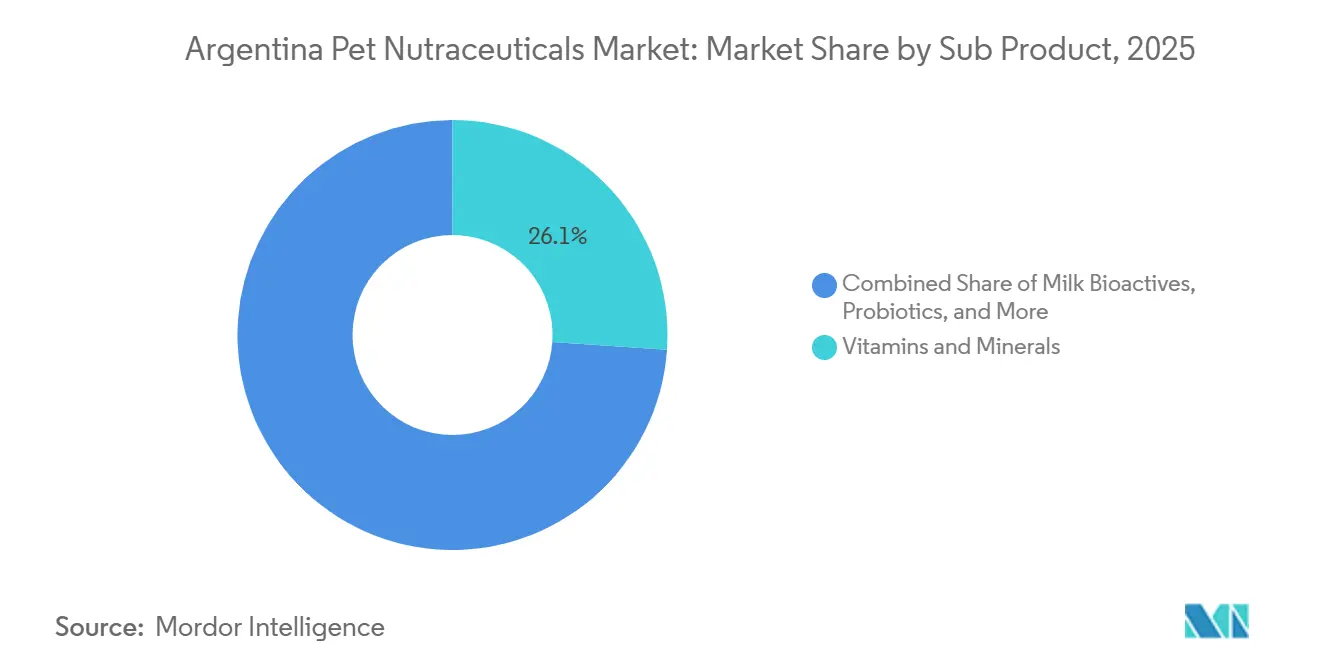
- By sub product, vitamins and minerals held 26.1% of the Argentina pet nutraceuticals market share in 2025, while omega-3 fatty acids are projected to expand at 9.9% CAGR through 2031.
- By pets, dogs accounted for 53.7% of the Argentina pet nutraceuticals market size in 2025, while cats are forecast to grow at 12.2% CAGR through 2031.
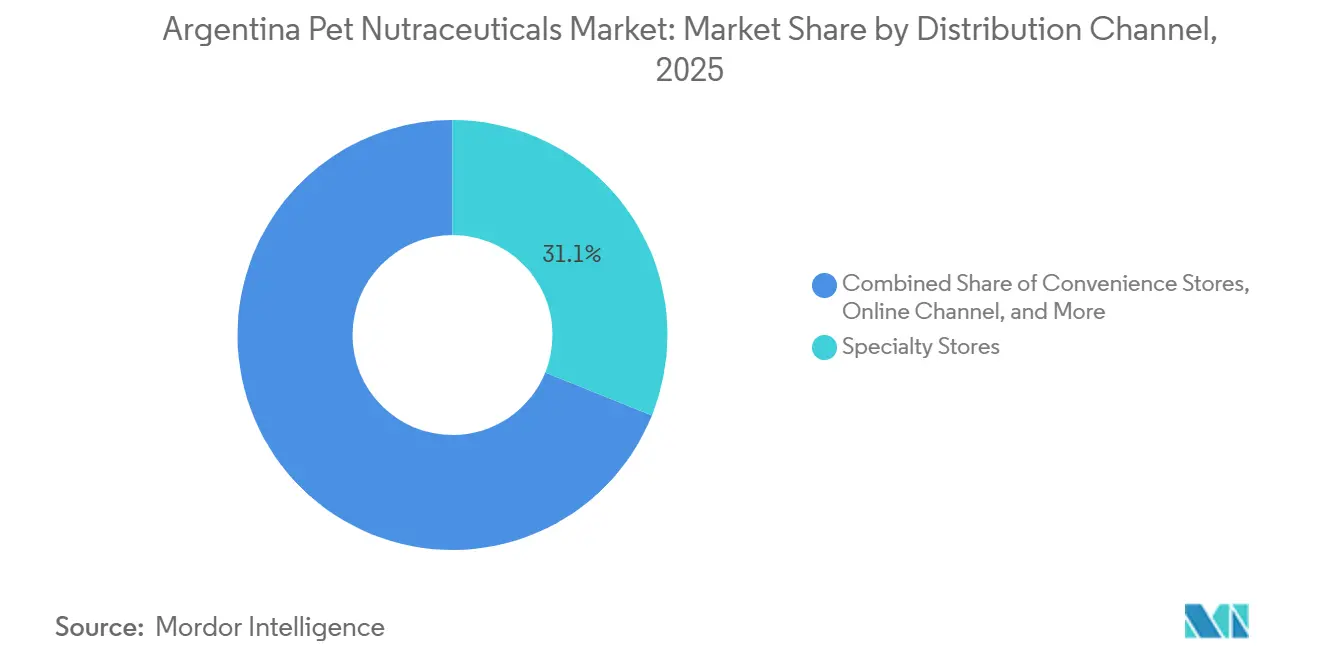
- By distribution channel, specialty stores led with a 31.1% share in 2025, while the online channel is projected to advance at 10.5% CAGR through 2031.
Note: Market size and forecast figures in this report are generated using Mordor Intelligence’s proprietary estimation framework, updated with the latest available data and insights as of January 2026.
Argentina Pet Nutraceuticals Market Trends and Insights
Drivers Impact Analysis*
| Driver | (~) % Impact on CAGR Forecast | Geographic Relevance | Impact Timeline |
|---|---|---|---|
| Rising pet humanization and preventive wellness adoption | +2.5% | National, with peak intensity in Buenos Aires, Córdoba, and Rosario | Short term (≤ 2 years) |
| Premiumization of pet diets and functional supplement uptake | +2.0% | Buenos Aires AMBA core, with spillover to Mendoza and Santa Fe | Medium term (2-4 years) |
| Wider veterinary recommendation of condition-specific nutraceuticals | +1.5% | National, with a stronger effect in urban centers with higher veterinary density | Medium term (2-4 years) |
| Growth of organized and omnichannel pet retail in Argentina | +1.2% | National, with early gains in Buenos Aires, Rosario, and Córdoba | Short term (≤ 2 years) |
| Rising demand for joint, digestive, and skin health solutions in aging pets | +1.3% | National | Medium term (2-4 years) |
| Expansion of local formulation and import substitution for packaged supplements | +0.8% | National, with concentration in the Buenos Aires industrial belt and Santa Fe | Long term (≥ 4 years) |
| Source: Mordor Intelligence | |||
Rising Pet Humanization and Preventive Wellness Adoption
Pet humanization in Argentina has moved beyond a cultural theme and has become a direct driver of regular spending on wellness products for companion animals. A survey in Argentina found that 94% of pet owners viewed animals as family members, and Buenos Aires had more households with pets than with children under 10 years old[2]Source: Clarín, “Nuevos Negocios Alrededor de los Perros y Gatos,” Clarín, clarin.com. This behavior supports repeat demand for probiotics, omega fatty acids, vitamins, and calming products because those purchases are treated more like routine care than occasional extras. Declining birth rates have also strengthened the emotional role of pets in Argentine households and shifted spending priorities toward care categories that owners perceive as essential. In higher-income urban homes, this makes preventive nutrition spending more resilient than many other discretionary pet purchases. This pattern gives the Argentina pet nutraceuticals market a stable demand base that is tied to daily care behavior rather than one-time treatment.
Premiumization of Pet Diets and Functional Supplement Uptake
Premiumization in the Argentina pet nutraceuticals market is being driven by enhancements in product quality and a focus on targeted health benefits. Leading companies are expanding their product portfolios with an emphasis on functional nutrition, particularly in areas such as joint care, allergy management, and urinary health. These developments are shaping demand patterns across the region. Additionally, consumer behavior is evolving as pet owners increasingly recognize the importance of proper nutrition and supplements, leading to a greater willingness to invest in health-focused and functional formulations. During periods of economic pressure, many consumers opted for lower-cost alternatives. However, the market is now transitioning from volume-driven growth to value-driven consumption, emphasizing higher-quality, purpose-specific products. This shift is benefiting categories such as omega-3 fatty acids and probiotics, which are part of the premium functional segment. As economic conditions stabilize, premiumization is aiding the recovery of value in the market, with targeted supplement usage becoming a regular aspect of pet care rather than an occasional choice.
Wider Veterinary Recommendation of Condition-Specific Nutraceuticals
Veterinary recommendations remain the most credible channel for driving nutraceutical adoption in the Argentina pet nutraceuticals market. Urban concentration significantly influences this trend, as large pet populations in major cities provide veterinarians with greater scale, visibility, and influence within the country’s primary pet care centers. Leading companies are enhancing their therapeutic nutrition strategies through innovations such as microbiome-focused solutions and multi-condition formulas for kidney, skin, mobility, and weight management, thereby reinforcing the clinical relevance of nutraceutical products. Simultaneously, the growth of companion animal health businesses across Latin America underscores the rising importance of vet-linked wellness and nutrition portfolios. Expanding clinical research and evidence-based studies are bolstering the role of veterinarians in shaping treatment and feeding practices. As veterinarians increasingly normalize the use of condition-specific supplements, awareness is extending into specialty retail and e-commerce channels, facilitating repeat purchases beyond clinical settings. This trend positions veterinary education as a sustained growth driver for the pet nutraceuticals market in Argentina, rather than a limited professional influence.
Growth of Organized and Omnichannel Pet Retail in Argentina
Retail formalization is providing the Argentina pet nutraceuticals market with a more structured pathway for growth, as supplement purchases often require product explanation, trust, and consistent availability. Specialty stores remained the leading distribution channel, reflecting the importance of expert guidance, personalized recommendations, and in-store assistance in this category. Chains such as Puppis, Plus Pet, and Pet Market integrate physical store networks with e-commerce, offering brands opportunities for consumer education alongside digital convenience. The online channel is anticipated to witness the fastest growth during the forecast period, supported by the expansion of delivery networks into major cities beyond the Buenos Aires metropolitan area, including Rosario and Córdoba. Argentina's CAENA (Cámara Argentina de Empresas de Nutrición Animal) registry lists over 6,000 registered pet food products, with 80% targeting dogs and 20% targeting cats, reflecting a diverse range of products available through formal retail channels[3]Source: Pet Worldwide, “Steadily Growing,” Pet Worldwide, petworldwide.net. This expanded assortment facilitates the discovery of newer supplement categories that may face challenges in informal or limited retail settings. As organized retail and digital fulfillment continue to advance, the market becomes increasingly accessible for both global and local brands across various city tiers.
Restraints Impact Analysis*
| Restraint | (~) % Impact on CAGR Forecast | Geographic Relevance | Impact Timeline |
|---|---|---|---|
| Price sensitivity and volatile consumer purchasing power | -1.5% | National, with stronger pressure in lower-income provinces and informal economic zones | Short term (≤ 2 years) |
| Limited veterinary standardization for supplement recommendations | -0.8% | National, with greater impact in rural and semi-urban veterinary markets | Medium term (2-4 years) |
| Import dependency for specialized ingredients and finished products | -1.2% | National, with import controls affecting Buenos Aires and Santa Fe ports | Medium term (2-4 years) |
| Product registration, labeling, and compliance friction | -0.5% | National, with uniform application through SENASA rules | Short term (≤ 2 years), Medium term (2-4 years) |
| Source: Mordor Intelligence | |||
Price Sensitivity and Volatile Consumer Purchasing Power
Price sensitivity remains a significant short-term constraint on the Argentina pet nutraceuticals market, as demand for supplements tends to decline when household budgets are strained. Recent trends indicate a shift towards lower-cost options, with many consumers transitioning from premium products to more affordable alternatives within pet nutrition. This trend restricts access to high-quality nutraceutical products, even as pet owners continue to prioritize their pets' well-being. The impact is more pronounced in regions with limited purchasing power, where affordability heavily influences buying decisions. While higher-income urban households sustain demand due to stronger pet humanization trends, this resilience is less apparent in mid-income and rural areas. Consequently, some consumers focus on essential nutrition and postpone discretionary wellness purchases until financial conditions improve. This dynamic contributes to overall market growth but results in uneven adoption across income groups and geographic regions within the Argentina pet nutraceuticals market.
Limited Veterinary Standardization for Supplement Recommendations
Veterinary guidance is influential in this category, but recommendation practices are not yet standardized across the full country, which limits the speed of adoption in the Argentina pet nutraceuticals market. Larger cities such as Buenos Aires have stronger specialist density and broader access to current clinical protocols, while rural and semi-urban areas rely more heavily on general veterinary practice. That gap matters because owners often wait for professional validation before buying probiotics, omega supplements, joint support, or calming products. Leading companies are investing to narrow this gap through veterinary education, including Hill’s symposium programming and Mars Veterinary Health’s publications. Even so, uneven clinical confidence means some conditions receive strong supplement support while others are still handled mainly through general dietary advice. This slows the formation of repeat purchases outside the main urban veterinary hubs. Until protocols become more uniform, the market is likely to grow faster in cities where specialist recommendation is already well established.
*Our forecasts treat driver/restraint impacts as directional, not additive. The impact forecasts reflect baseline growth, mix effects, and variable interactions.
Segment Analysis
By Sub Product: Vitamins and Minerals Lead Current Demand While Omega-3 Drives the Growth Curve
Vitamins and minerals held 26.1% of the Argentina pet nutraceuticals market share in 2025, which made them the largest sub-product segment in the market. Their lead reflects broad veterinary familiarity, accessible price points, and a long-standing owner preference for straightforward preventive support products. Probiotics, proteins, and peptides also hold significant roles, with gut health support gaining credibility as scientific research becomes more visible in companion animal nutrition. Milk Bioactives remain smaller in value terms, but they matter strategically because local firms are already testing niche uses such as goat-milk-based solutions for sensitive felines.
The Argentina pet nutraceuticals market size for omega-3 fatty acids is projected to expand at 9.9% CAGR through 2031, making it the fastest-growing sub-product category. Growth is supported by greater awareness of dermatological care, joint comfort, and cognitive support for aging dogs and cats. Other Pet Nutraceuticals and Supplements should expand gradually as regional research and development capabilities improve, especially through platforms such as Kemin’s Vargeão center in Brazil.



By Pets: Dogs Lead the Base While Cats Set the Faster Pace
Dogs accounted for 53.7% of the Argentina pet nutraceuticals market size in 2025, which kept them as the largest pet segment by revenue. Their lead reflects the scale of the national dog population and a more established habit of buying preventive supplements for canine mobility, skin, coat, and digestive needs. This makes dogs the most developed user base for condition-specific nutraceutical routines in the Argentina pet nutraceuticals market. The segment is also becoming more clinical and specialized, with growing emphasis on targeted formulations and structured supplement use.
Cats are forecast to grow at 12.2% CAGR through 2031, which makes them the fastest-growing pet segment in the Argentina pet nutraceuticals market. Cat ownership reached 55% of households in 2025, and females under 35 were identified as the fastest-adopting group, which supports a longer runway for targeted feline care. This segment has room to grow, as cats have historically received less supplement attention than dogs, even though longevity and chronic care needs are increasing. Expanding product innovation in weight management, mobility, and overall wellness is strengthening this opportunity, while other pet categories continue to form a smaller but gradually diversifying niche within the market.
By Distribution Channel: Specialty Stores Hold the Lead While Online Retail Builds Momentum
Specialty stores accounted for 31.1% of the Argentina pet nutraceuticals market in 2025, which kept them as the leading distribution channel. Their importance stems from the advice-led nature of supplement purchases, as owners often want staff guidance, product comparisons, and reassurance about use cases. Supermarkets and Hypermarkets remain an important secondary route because they offer convenience and household trip consolidation for repeat pet buyers. Convenience Stores and Other Distribution Channels still play a role in lower-frequency or access-driven purchases, especially outside the main specialty retail clusters.
The Argentina pet nutraceuticals market size for the online channel is projected to expand at 10.5% CAGR through 2031, making it the fastest-growing route to market. Rosario and Córdoba are helping that shift by supporting e-commerce warehousing and faster last-mile delivery beyond the Buenos Aires concentration. Subscription behavior and premium ingredient acceptance also support online growth because owners can reorder condition-specific products more easily through digital channels. SENASA (National Service for Agrifood Health and Quality) registration rules add another layer of support for formal channels because registered products have a clear advantage in organized physical and digital retail systems.
Geography Analysis
Buenos Aires remains the largest urban base within the Argentina pet nutraceuticals market in 2025 because it combines higher-income households, dense veterinary access, and a deep specialty retail network. The city holds the deepest concentration of pet care demand in the country, supported by a large population of both dogs and cats. The wider AMBA (Área Metropolitana de Buenos Aires) region adds further scale and enables faster product turnover, particularly for premium, imported, and therapeutic nutrition offerings. Omnichannel chains such as Puppis and Plus Pet have also made Buenos Aires the main testing ground for new supplement formats and international launches.
Córdoba and Rosario form the next layer of growth in the Argentina pet nutraceuticals market, with each city supporting demand through distinct channels. Rosario has become particularly important as a logistics and e-commerce hub for the Litoral and Pampeana regions, enabling online supplement brands to extend their reach beyond the Buenos Aires metropolitan concentration. Córdoba shows strong alignment with pet humanization trends, as younger urban households demonstrate high pet ownership and an increasing willingness to spend on preventive care.
Mendoza, San Miguel de Tucumán, and other interior provinces represent a lower-penetration but steadily developing segment of the Argentina pet nutraceuticals market. While pet ownership is widespread across the country, adoption of premium supplements remains lower in these regions due to limited access to veterinary specialists and less developed specialty retail infrastructure. These areas rely more on convenience outlets, general veterinary clinics, and online channels for access to wellness products. As e-commerce logistics improve and more affordable local formulations become available, preventive nutrition is anticipated to reach a broader base of households across interior Argentina.
Competitive Landscape
The Argentina pet nutraceuticals market was moderately concentrated, with leading players accounting for a significant share of total revenue in 2025. Major companies such as Nestlé S.A. (Purina), Mars, Incorporated, Colgate-Palmolive Company (Hill’s Pet Nutrition, Inc.), Virbac, and Zoetis Inc. led the category through broad pet health portfolios, strong veterinary access, and wide distribution networks. At the same time, a fragmented layer exists beneath these leaders, where companies such as Vetoquinol S.A., Elanco Animal Health Incorporated, and Nutramax Laboratories Veterinary Sciences, Inc. compete through targeted, condition-specific offerings. White space remains more visible in premium local formulations, particularly in niche feline and sensitive-pet solutions, keeping competition active across both scientific positioning and route-to-market execution.
Elanco Animal Health Incorporated’s February 2025 launch of the Pet Protect line was one of the clearest strategic moves in the Argentina pet nutraceuticals market because it extended veterinarian-formulated supplements into large retail channels under the Advantage platform[4]Source: Elanco Animal Health Incorporated, “Elanco Releases 2024 Impact Report and Introduces New Framework,” Elanco Investor Relations, investor.elanco.com. New product lines have extended veterinarian-formulated supplements into broader retail channels, while continued launches in areas such as microbiome health, kidney care, skin conditions, mobility, and weight management are strengthening clinical relevance. In parallel, the addition of digital tools and research-driven engagement is enhancing consumer interaction beyond traditional retail presence. These trends indicate that market leadership is sustained by a combination of clinical credibility, brand strength, and ongoing product innovation.
Supply chain depth is also becoming a more visible competitive factor in the Argentina pet nutraceuticals market. Regional partnerships and innovation investments are strengthening access to functional ingredients and formulation capabilities, supporting faster and more reliable product development. Companies that combine veterinary credibility with dependable ingredient sourcing gain an advantage when import conditions tighten or when speed to market becomes critical. As a result, the market is anticipated to remain moderately concentrated, with established players benefiting from scale while specialized companies continue to expand within focused niche segments.
Argentina Pet Nutraceuticals Industry Leaders
Nestle S.A. (Purina)
Mars, Incorporated
Colgate-Palmolive Company (Hill’s Pet Nutrition, Inc.)
Virbac
Zoetis Inc.
- *Disclaimer: Major Players sorted in no particular order

Recent Industry Developments
- June 2026: Colgate-Palmolive Company (Hill's Pet Nutrition, Inc.) launched dual-condition therapeutic diets targeting kidney, skin, and gastrointestinal health. This strengthens the Argentina pet nutraceuticals market by expanding condition-specific clinical nutrition, increasing veterinary adoption, and driving demand for premium therapeutic nutraceuticals.
- March 2026: ADM introduced a joint health postbiotic for pets, expanding its functional ingredient portfolio. This strengthens the Argentina pet nutraceuticals market by broadening the availability of science-backed joint health solutions, supporting innovation in premium pet supplements, and increasing demand for functional nutraceutical products.
- March 2026: Nestlé S.A. (Purina) inaugurated a major wet pet food factory in Brazil, marking a significant regional investment and expanding supply across South America, including Argentina. The facility strengthens production capacity and supports wider distribution of premium products.


Argentina Pet Nutraceuticals Market Report Scope
Pet nutraceuticals are functional nutritional products formulated for pets that provide health benefits beyond basic nutrition, supporting specific functions such as joint health, digestion, immunity, skin and coat condition, and overall wellness. They typically include omega-3 fatty acids, probiotics, vitamins, minerals, proteins, peptides, and bioactive compounds.
The Argentina Pet Nutraceuticals Market Report is Segmented by Sub Product (Milk Bioactives, Omega-3 Fatty Acids, Probiotics, Proteins and Peptides, Vitamins and Minerals, and Other Nutraceuticals), by Pets (Cats, Dogs, and Other Pets), and by Distribution Channel (Convenience Stores, Online Channel, Specialty Stores, Supermarkets and Hypermarkets, and Other Distribution Channels). The Market Forecasts are Provided in Terms of Value (USD) and Volume (Metric Tons).
| Milk Bioactives |
| Omega-3 Fatty Acids |
| Probiotics |
| Proteins and Peptides |
| Vitamins and Minerals |
| Other Pet Nutraceuticals |
| Cats |
| Dogs |
| Other Pets |
| Convenience Stores |
| Online Channel |
| Specialty Stores |
| Supermarkets and Hypermarkets |
| Other Distribution Channels |
| By Sub Product | Milk Bioactives |
| Omega-3 Fatty Acids | |
| Probiotics | |
| Proteins and Peptides | |
| Vitamins and Minerals | |
| Other Pet Nutraceuticals | |
| By Pets | Cats |
| Dogs | |
| Other Pets | |
| By Distribution Channel | Convenience Stores |
| Online Channel | |
| Specialty Stores | |
| Supermarkets and Hypermarkets | |
| Other Distribution Channels |


Key Questions Answered in the Report
How large is the Argentina pet nutraceuticals sector in 2026?
It is estimated at USD 43.77 million in 2026 and is projected to reach USD 68.49 million by 2031 at a 9.37% CAGR.
Which product category leads current revenue?
Vitamins and Minerals led with 26.1% share in 2025, supported by broad veterinary familiarity and more accessible price points.
Which pet type is growing the fastest in Argentina?
Cats are forecast to grow at 12.2% CAGR through 2031, helped by rising urban ownership and stronger product attention from suppliers.
Why are specialty stores still important for supplement sales?
Specialty Stores held 31.1% of 2025 sales because supplement buying often depends on advice, product explanation, and trust in formal retail channels.
What is the main risk holding back growth?
Price sensitivity remains the biggest short-term brake because many owners move down the value ladder when purchasing power weakens.
Page last updated on:





