
Aquaculture Equipment Market Size and Share
Market Overview
| Study Period | 2022 - 2032 |
|---|---|
| Market Size (2027) | USD 18.53 Billion |
| Market Size (2032) | USD 26.58 Billion |
| Growth Rate (2027 - 2032) | 7.48 % |
| Fastest Growing Market | Asia-Pacific |
| Largest Market | Asia-Pacific |
| Market Concentration | Low |
Major Players *Disclaimer: Major Players sorted in no particular order Image © Mordor Intelligence. Reuse requires attribution under CC BY 4.0. | |
Aquaculture Equipment Market Analysis by Mordor Intelligence
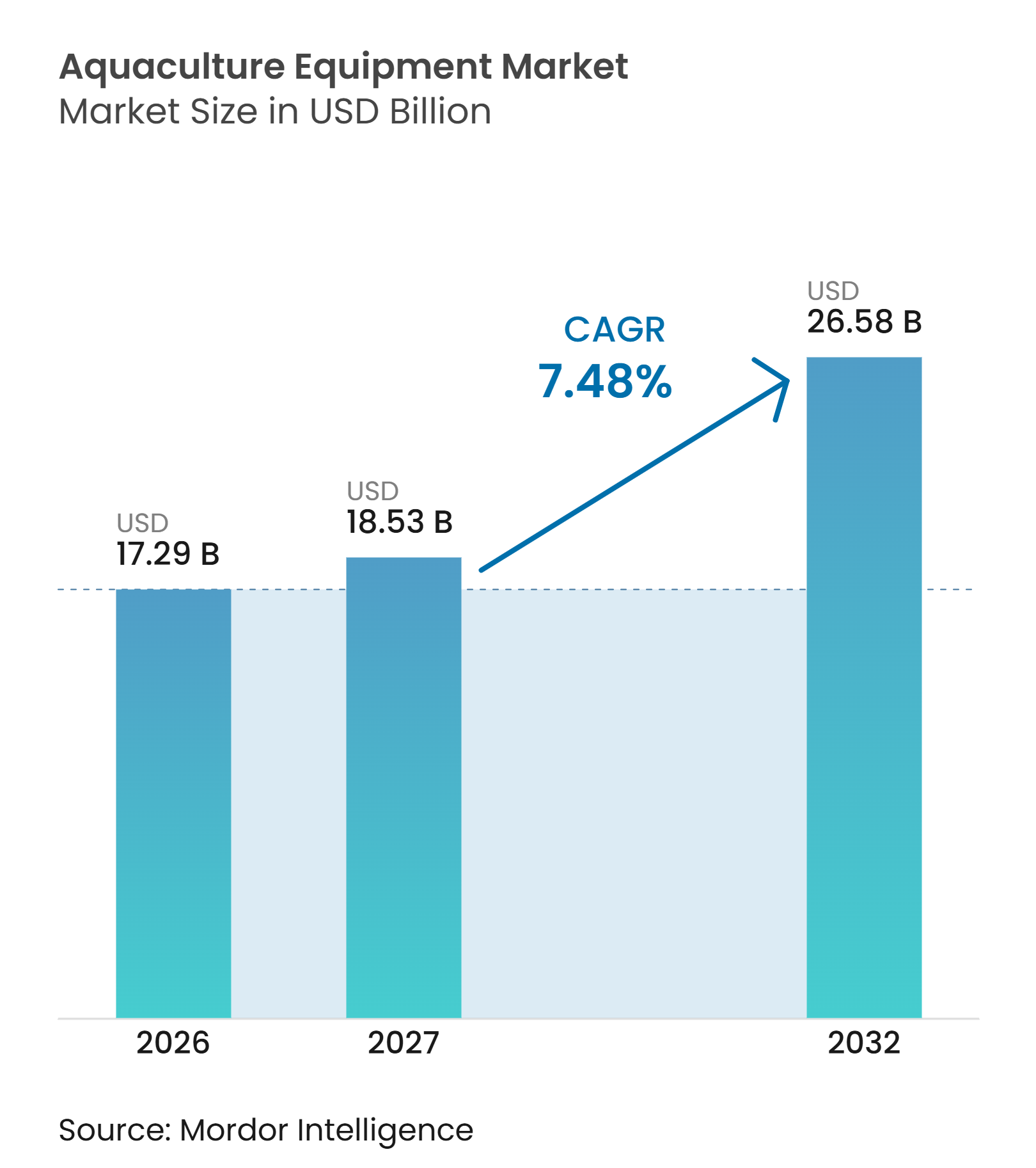
The aquaculture equipment market size was USD 17.3 billion in 2026 and is forecast to grow from USD 18.53 billion in 2027 to USD 26.6 billion by 2032 at a CAGR of 7.48% from 2027 to 2032. Rising demand for aquatic food is increasing reliance on farmed production, particularly where wild capture volumes remain constrained. The Food and Agriculture Organization of the United Nations (FAO) reported in 2026 that Asia supplied 76% of global aquatic animal and algae production in 2024, supporting a large installed base for farm equipment in the region. Equipment demand is also shifting toward connected feeding, water-quality control, and biosecurity systems as farm operators seek more consistent production outcomes. The aquaculture equipment market benefits as farms transition from manual processes to monitored, equipment-intensive operations. However, power costs, limited access to financing, and a shortage of trained operators can slow the adoption of complex systems.
Key Report Takeaways
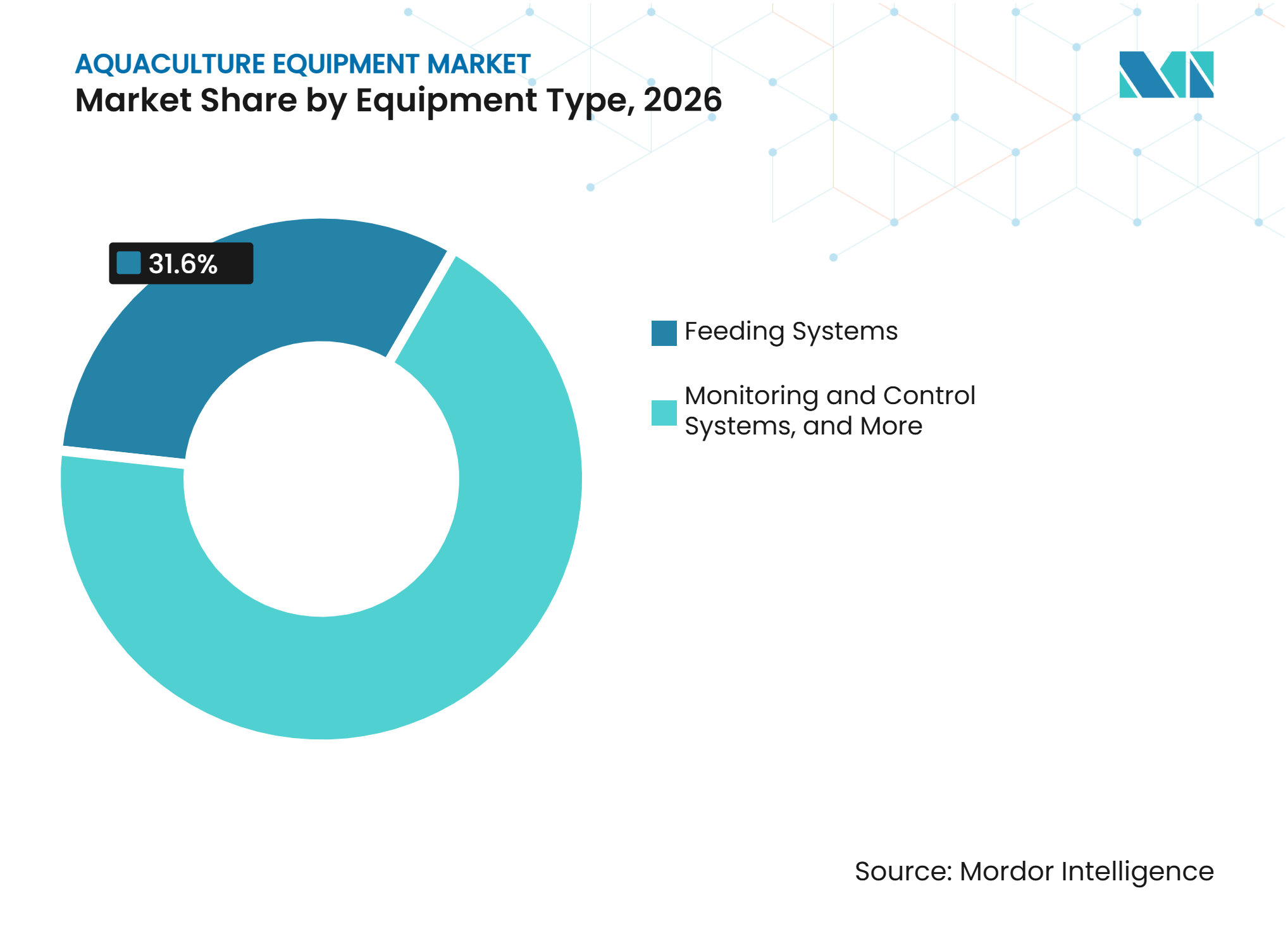
- By equipment type, feeding systems held 31.6% of the aquaculture equipment market share in 2026, while monitoring and control systems are forecast to grow at a CAGR of 10.2% from 2027 to 2032.
- By farm type, cage culture held 31.0% of the aquaculture equipment market size in 2026, while recirculating aquaculture systems (RAS) are forecast to grow at a CAGR of 8.5% from 2027 to 2032.
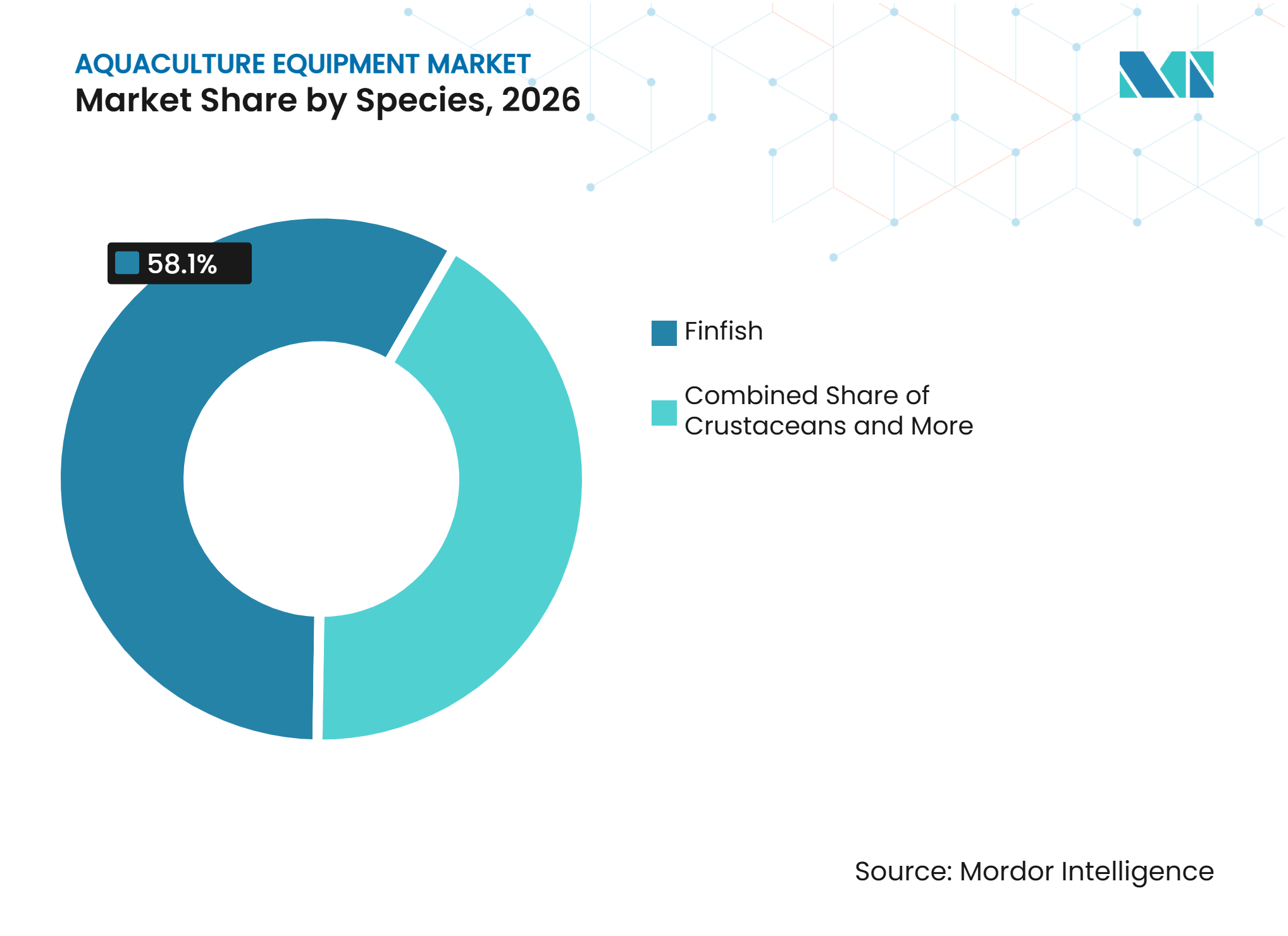
- By species, finfish held 58.1% of the market share in 2026, while crustaceans are forecast to grow at a CAGR of 7.8% from 2027 to 2032.
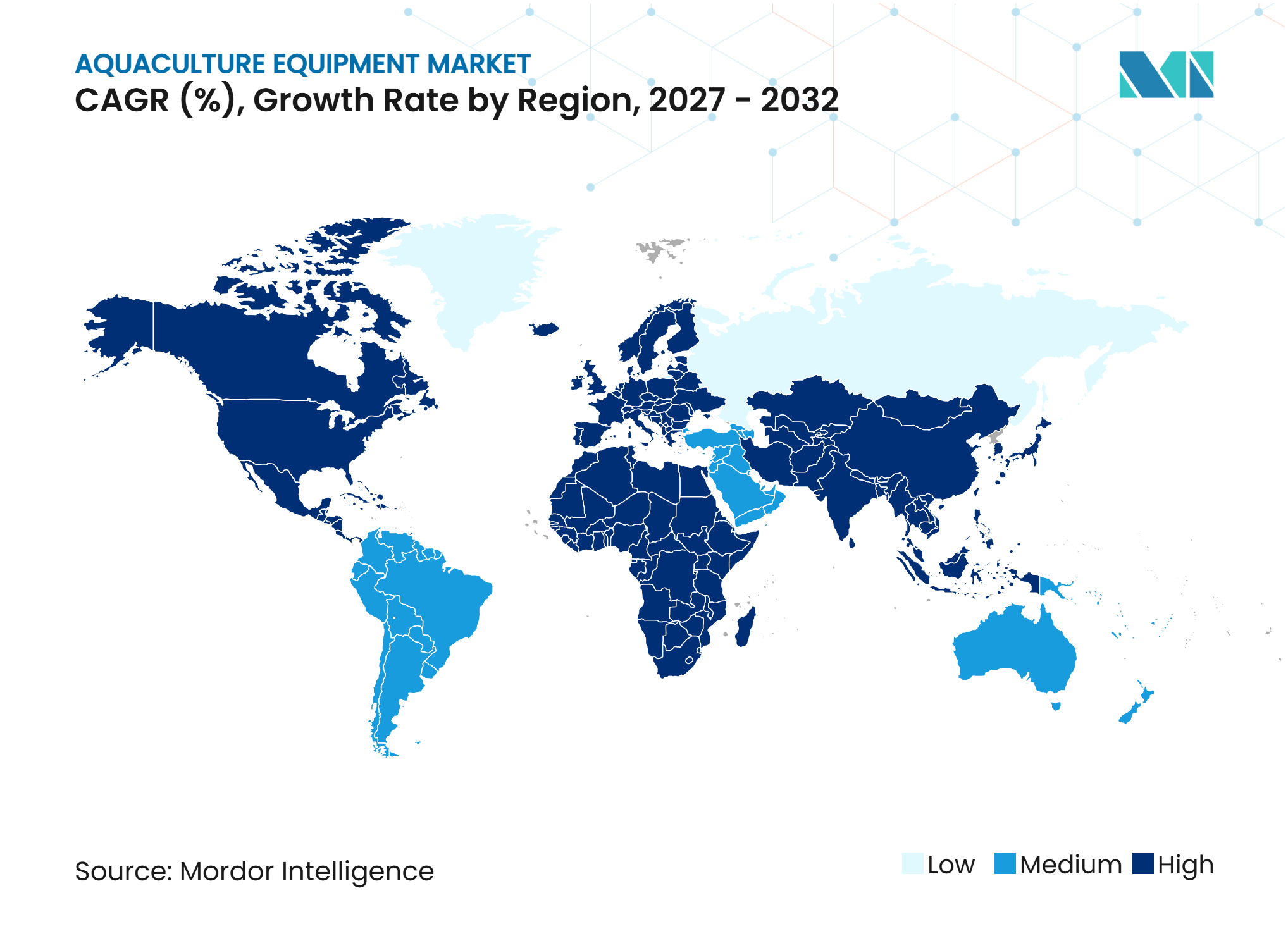
- By geography, Asia-Pacific held 44.2% of the market share in 2026 and is forecast to grow at a CAGR of 7.8% from 2027 to 2032.
Note: Market numbers in this report are based on Mordor Intelligence's proprietary estimation framework, which combines nine months of actuals with Q4 projections for base year 2026.
Market Trends and Insights
Drivers Impact Analysis of Aquaculture Equipment Market*
| Driver | % Impact on CAGR Forecast | Geographic Relevance | Impact Timeline |
|---|---|---|---|
| Rising Seafood Demand and Aquaculture Production | +1.6% | Global | Long term (4 years or more) |
| Automation to Reduce Feed Waste and Labor Costs | +1.4% | Global, fastest adoption in North America and Europe | Medium term (2-4 years) |
| Expansion of Recirculating Aquaculture Systems and Land-Based Farming | +1.3% | North America, Europe, Asia-Pacific, Western Asia | Medium term (2-4 years) |
| Tightening Water Quality, Biosecurity and Traceability Requirements | +1.1% | Europe, North America, Asia-Pacific | Short term (2 years or less) |
| Modular Retrofit Demand From Aging Pond and Cage Fleets | +0.9% | Asia-Pacific, South America, Africa | Medium term (2-4 years) |
| Equipment Data Interoperability and Serviceability as Procurement Criteria | +0.7% | North America, Europe | Short term (2 years or less) |
| Source: Mordor Intelligence | |||
Rising Seafood Demand and Aquaculture Production
Rising global demand for aquatic foods is increasing the need for farmed seafood production and supporting investment in aquaculture equipment. According to the Organisation for Economic Co-operation and Development (OECD) and the Food and Agriculture Organization (FAO) Agricultural Outlook 2026–2035, global consumption of aquatic foods is projected to increase by 12% over the next decade, with aquaculture anticipated to supply 62% of aquatic products for human consumption by 2035[1]. As wild-capture fisheries remain relatively stable, additional production is increasingly dependent on aquaculture, supporting demand for aeration, feeding, water-quality monitoring, and other farm equipment. Growing aquaculture activity in key producing countries, including India and Vietnam, is expanding the need for equipment suited to pond, cage, and intensive farming systems. This expansion creates opportunities for suppliers that can provide reliable and efficient equipment tailored to different production environments and farm scales.
Automation to Reduce Feed Waste and Labor Costs
Feed represents a significant share of operating costs in aquaculture, making efficient feed management a key priority for producers. A 2025 study published in Aquaculture journal found that a vision-language-model-based feeding system reduced feed waste by 28% and saved 135 kg of feed per day in a commercial tilapia pond[2]. Nutreco also reported in 2025 that its Eruvaka platform had deployed more than 60,000 intelligent feeding devices across 12 countries, highlighting the growing adoption of automated feeding technologies in commercial aquaculture. Automated feeding systems can help multi-site farms reduce feed losses, improve feeding consistency, and manage labor requirements across dispersed operations. As producers increasingly prioritize feed efficiency and operational automation, demand for intelligent feeders, sensors, and integrated farm-management systems is anticipated to support growth in the aquaculture equipment market.
Expansion of Recirculating Aquaculture Systems and Land-Based Farming
The expansion of recirculating aquaculture systems (RAS) and land-based farming is supporting demand for specialized aquaculture equipment, as these systems require integrated filtration, disinfection, oxygenation, water treatment, and monitoring technologies. In June 2025, Norway amended its regulations for land-based aquaculture, introducing updated requirements that include treatment measures for incoming water, reflecting the growing regulatory focus on biosecurity and controlled production systems. As land-based aquaculture projects expand, their higher equipment intensity creates opportunities for suppliers of water treatment, life-support, and farm-control systems, although project economics remain dependent on capital availability and energy efficiency.
Modular Retrofit Demand From Aging Pond and Cage Fleets
Many established pond and cage farms rely on incremental equipment upgrades rather than complete system replacement, supporting demand for modular feeding units, water-quality sensors, aeration systems, and net-handling components. This approach can lower the initial capital requirement for operators by allowing new technologies to be integrated with existing farm infrastructure. A 2025 assessment by the Network of Aquaculture Centres in Asia-Pacific (NACA) highlighted the predominance of small-scale farmers in its regional context, noting that 90% of farmers were small-scale operators, reinforcing the need for practical and accessible aquaculture technologies[3]. Modular equipment designs can therefore expand market access across regions with diverse levels of farm mechanization, while reliable after-sales service and spare-parts availability remain important for minimizing operational disruptions.
Restraints Impact Analysis of Aquaculture Equipment Market*
| Restraint | % Impact on CAGR Forecast | Geographic Relevance | Impact Timeline |
|---|---|---|---|
| High Upfront Capital Expenditure and Financing Constraints | -1.4% | Global, most acute in Africa and South America | Long term (4 years or more) |
| Energy Intensity of Recirculating and Water Treatment Systems | -1.1% | North America, Europe, Western Asia | Medium term (2-4 years) |
| Shortage of Skilled Operators in Remote Farming Locations | -0.8% | Africa, Asia-Pacific, South America | Long term (4 years or more) |
| Corrosion, Biofouling and Replacement-Part Downtime in Saline Environments | -0.6% | Global marine farming zones | Medium term (2-4 years) |
| Source: Mordor Intelligence | |||
High Upfront Capital Expenditure and Financing Constraints
Advanced aquaculture systems, particularly recirculating aquaculture systems (RAS), require substantial upfront investment in tanks, filtration, water treatment, oxygenation, monitoring, and supporting infrastructure, which can limit equipment adoption among smaller and independent farms. The World Bank's 2025 publication, A Trillion Dollar Investment Opportunity in Sustainable Aquaculture highlights the significant financing requirements across sustainable aquaculture and identifies instruments such as sustainability-linked loans and blue bonds as potential mechanisms for mobilizing investment. Large integrated producers are generally better positioned to secure financing for complex facilities and specialized equipment, while smaller farms may retain lower-capital production systems with fewer technology-intensive components. Limited access to affordable financing can therefore delay investment in advanced equipment and slow the adoption of technology-intensive aquaculture systems. Leasing and equipment-as-a-service models could help reduce initial capital barriers, although their availability and adoption remain uneven across aquaculture markets.
Shortage of Skilled Operators in Remote Farming Locations
The adoption of advanced aquaculture equipment can be constrained by shortages of technical skills, particularly at remote farming locations where access to trained operators and maintenance support is limited. A 2025 publication by the Network of Aquaculture Centres in Asia-Pacific (NACA) highlighted that many small-scale farmers lack the digital literacy and technical capacity needed to use complex applications and interpret technical data effectively. This skills gap can reduce the value farms obtain from sensors, automated feeders, and digitally controlled water-treatment systems, while increasing dependence on external technical support. Remote diagnostics, intuitive user interfaces, and simplified maintenance procedures can help reduce these barriers and improve equipment usability. Consequently, suppliers that combine advanced equipment with accessible technical support and user-friendly operating systems may be better positioned to expand adoption across remote and small-scale aquaculture operations.
*Our forecasts treat driver/restraint impacts as directional, not additive. The impact forecasts reflect baseline growth, mix effects, and variable interactions.
Aquaculture Equipment Market Segment Analysis
By Equipment Type:
Monitoring Systems Lead the Next Upgrade CycleFeeding systems held 31.6% of the aquaculture equipment market share in 2026. This position reflects the importance of feed management across cage, pond, flow-through, and RAS facilities. Feeding equipment supports more consistent feed delivery and can reduce labor requirements at sites with multiple production units. Its value increases further when linked to biomass data and appetite monitoring. A 2025 study published by the Institute of Electrical and Electronics Engineers (IEEE) showed that flow-speed measurement and underwater imaging can improve the recognition of fish feeding behavior. Water treatment, circulation, aeration, and oxygenation equipment support intensive farms where dissolved oxygen and effluent control are critical. Nets, cages, handling equipment, and harvesting equipment remain necessary for cage operations and scale with stocking requirements. The breadth of these needs keeps equipment purchases tied to both operating cycles and farm expansion plans.
Monitoring and control systems are forecast to grow at a CAGR of 10.2% from 2027 to 2032. This growth rate is supported by demand for real-time information on biomass, oxygen, fish welfare, and feeding conditions. Aquabyte introduced its Hydra 360 system in May 2026, combining cameras, sonar, and sensors to provide wider cage coverage. Integrated systems can reduce the number of separate devices at each cage while increasing the data available to farm managers. Demand for monitoring and control systems is further supported by the growing need for continuous operational visibility. Regulatory and traceability requirements also strengthen demand for equipment that records and shares production information. Suppliers with proven components and service capacity may be better positioned where farms depend on uninterrupted sensor performance. These systems are also central to the shift from manual observation to data-based farm management.



By Farm Type:
Recirculating Aquaculture Systems (RAS) Investment Reshapes the Equipment MixCage culture held 31.0% of the market share in 2026. It remains a widely used commercial model for Atlantic salmon, sea bass, sea bream, tilapia, and carp. Its large installed base supports spending on feeding systems, monitoring platforms, mooring equipment, and net handling. Some cage fleets in established markets require modernization rather than complete replacement. This creates demand for retrofit packages that address operational issues without requiring a new farm layout. Pond culture and flow-through systems continue to serve high-volume production in Asia and South America. Their equipment demand is concentrated in lower-cost aeration, automated feeding, and basic water-quality monitoring. Farm type therefore influences both the average equipment value per site and the service model suppliers must offer.
Recirculating Aquaculture Systems (RAS) is forecast to grow at a CAGR of 8.5% from 2027 to 2032. Its appeal stems from controlled water use, biosecurity, and flexibility in locating production closer to end markets. Norway's June 2025 regulatory change increased compliance requirements for water treatment at land-based facilities. These requirements incorporate filtration, disinfection, and monitoring equipment into project design. The aquaculture equipment market size for RAS is tied to large capital projects that require a full set of water and control technologies. However, electricity demand and project financing can delay installations. Suppliers that reduce power consumption and simplify commissioning can strengthen the practical case for land-based farms. RAS also generates recurring service opportunities, as filters, sensors, and control systems require ongoing maintenance.
By Species:
Crustaceans Drive the Fastest Equipment ModernizationFinfish held 58.1% of the market share in 2026. The segment includes production systems for Atlantic salmon, tilapia, carp, sea bass, and sea bream. Finfish farms require a broad range of equipment, including cages, nets, feeding units, monitoring tools, and water-control systems. Atlantic salmon farming is particularly equipment-intensive, as offshore production relies on complex cage, mooring, feeding, and welfare-monitoring infrastructure. Species diversification is also driving demand for equipment used in mollusks, seaweed, sea urchins, and freshwater crustaceans. Equipment requirements vary by species due to differences in feeding behavior, water conditions, and production density. Suppliers need product designs that address this variation without adding unnecessary complexity, which supports a broad supplier base across the aquaculture equipment market.
The crustaceans segment is forecast to grow at a CAGR of 7.8% from 2027 to 2032. Shrimp farms in South and Southeast Asia are adopting connected feeding and monitoring tools to improve feed efficiency and manage water conditions. In 2026, Nutreco reported that its Eruvaka connected ecosystem supported shrimp production across 12 countries. The equipment mix for crustaceans includes automated feeders, aerators, water-quality sensors, and farm-management platforms. These products can be introduced as upgrades at existing ponds, making adoption more accessible than a full facility rebuild. Scientific literature published in 2025 also identified automated feeders with integrated sensors and on-site computing as important for reducing feed waste. Wider adoption of these tools among smaller shrimp producers would further support the aquaculture equipment market. Reliable local service remains important, as connected systems require ongoing calibration and troubleshooting.

Geography Analysis
Asia-Pacific
Asia-Pacific held 44.2% of the aquaculture equipment market share in 2026 and is forecast to grow at a CAGR of 7.8% from 2027 to 2032. Asia-Pacific is a major market for aquaculture equipment, supported by its extensive aquaculture production base. The Food and Agriculture Organization (FAO) identified Asia as a major global producer of aquatic animals and algae in 2024. China remains the leading producer, while India and Vietnam provide important opportunities for pond, cage, and intensive farming equipment. Water-quality monitoring and biosecurity equipment are increasingly relevant as farms adopt more intensive systems. Japan is advancing land-based production and digital farm management, supporting demand for modular equipment and local service.
North America
North America is attracting investment in RAS infrastructure and digital farm management. Biosecurity requirements and premium species production support spending on water treatment, oxygenation, monitoring, and automated feeding. The United States Environmental Protection Agency (EPA) effluent requirements and British Columbia compliance practices make continuous environmental monitoring valuable at regulated sites. In 2025, Innovasea partnered with Grieg Seafood to deploy precision aquaculture tools across Canadian sites.
Europe, Africa, Western Asia, South America, Oceania, and Russia
Europe remains an important center for cage farming equipment and RAS development, supported by Norway's salmon industry and traceability requirements. The European Commission presented its Vision 2040 for fisheries and aquaculture in October 2026, with a focus on digital traceability across the supply chain. Africa is developing equipment demand from a lower installed base, with food security and shrimp farming supporting project activity. Western Asia is attracting land-based investment where water management and production security are priorities. South America, Oceania, and Russia face varying conditions related to financing, service, site access, and imports.
Competitive Landscape
Market Concentration
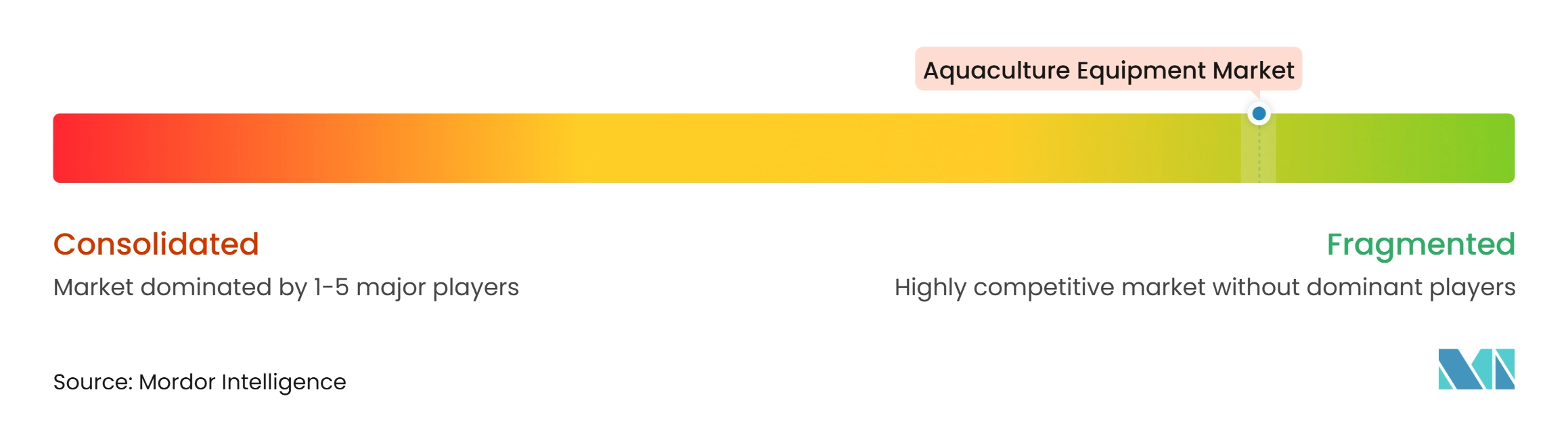
The aquaculture equipment market was fragmented in 2026, with AKVA group ASA (Egersund Group AS), Scale Aquaculture AS (Scale Aquaculture Group AS), Innovasea Systems, Inc., AquaMaof Aquaculture Technologies Ltd., and Aquaculture Systems Technologies, LLC identified as the major players. Their competitive positions are supported by broad equipment portfolios, engineering capabilities, digital technologies, and experience serving different aquaculture production systems. Companies compete through equipment reliability, system integration, automation, monitoring capabilities, technical support, and after-sales service. These factors encourage product development and portfolio expansion aimed at improving feeding, water management, fish handling, and farm monitoring across land-based and sea-based aquaculture operations.
Specialized suppliers also compete by addressing specific operational requirements, including water-quality monitoring, oxygen management, biomass estimation, and remote farm management. Companies such as OxyGuard, Aquabyte, and other technology-focused providers can differentiate through specialized equipment and digital platforms that complement broader farm operations. This positioning enables smaller suppliers to target specific production challenges while competing through technological capabilities, product specialization, and focused customer support.
Opportunities remain for companies offering affordable modular equipment, flexible financing and leasing options, and stronger local service networks. Larger companies can broaden their portfolios through product development, acquisitions, and investments in integrated automation and digital technologies, while specialized suppliers can compete through focused solutions and technical expertise. As aquaculture farms increasingly adopt automated and data-driven production systems, the ability to combine reliable equipment with compatible software, responsive technical support, and integrated service capabilities is anticipated to become an increasingly important competitive factor.
Aquaculture Equipment Industry Leaders
-
AKVA group ASA (Egersund Group AS)
-
Scale Aquaculture AS (Scale Aquaculture Group AS)
-
Innovasea Systems, Inc.
-
AquaMaof Aquaculture Technologies Ltd.
-
Aquaculture Systems Technologies, LLC
- *Disclaimer: Major Players sorted in no particular order
Aquaculture Equipment Market Companies Covered in this Report
- AKVA group ASA (Egersund Group AS)
- Scale Aquaculture AS (Scale Aquaculture Group AS)
- Innovasea Systems, Inc.
- AquaMaof Aquaculture Technologies Ltd.
- Aquaculture Systems Technologies, LLC
- Poseidon Ocean Systems Ltd.
- ELDI Norway AS (Hampiðjan hf.)
- CPI Equipment Inc.
- Eruvaka Technologies Private Limited (Nutreco)
- Vaki Fiskeldiskerfi ehf.
- Gael Force Group Limited (Gael Force Group Holdings Limited)
- OxyGuard International A/S
- FREA Solutions ApS
- UMITRON PTE. LTD.
- Aquabyte, Inc. (Vitruvian Partners)
Recent Industry Developments in Aquaculture Equipment Market
- September 2026: Innovasea Systems, Inc. expanded its BiomassPro solution with a rainbow trout biomass estimation algorithm, broadening the system's species coverage and supporting the use of automated biomass monitoring across additional aquaculture species.
- July 2026: Scale Aquaculture AS and Nærøysund Aquaservice collaborated on a hybrid feeding solution designed to enable farms to convert feed transport from pneumatic to water-based delivery using existing feed-barge infrastructure, supporting innovation in aquaculture feeding equipment.
- May 2026: Aquabyte, Inc. unveiled its Hydra 360 system at HavExpo in Bergen, integrating camera, sonar, and sensor technologies into a single platform for cage monitoring, biomass estimation, lice counting, and fish welfare analysis, expanding the capabilities of digital monitoring equipment used in aquaculture operations.
- April 2026: i2S launched aqua4, a real-time farm-management platform that integrates environmental, fish-behavior, production, camera, and equipment-status data, supporting the growing integration of digital monitoring and management systems in aquaculture farms.
Global Aquaculture Equipment Market Report Scope
Aquaculture equipment refers to machinery, systems, and technological tools used to establish, operate, monitor, and maintain aquaculture production facilities. It includes equipment used for feeding, aeration and oxygenation, water treatment and circulation, fish handling and harvesting, farm monitoring, and cage and net management across commercial aquaculture operations. Equipment used primarily for capture fisheries, recreational fishing, aquarium maintenance, and seafood processing outside the aquaculture farm is excluded from the market scope. The Aquaculture Equipment Market Report is Segmented by Equipment Type (Aeration and Oxygenation Equipment, Feeding Systems, Handling, Grading, Harvesting and Transfer Equipment, Monitoring and Control Systems, Nets, Cages and Net Handling Equipment, Water Treatment and Circulation Equipment, and Other Aquaculture Equipment), by Farm Type (Cage Culture, Flow-Through Systems, Pond Culture, and Recirculating Aquaculture Systems), by Species (Finfish, Crustaceans, Mollusks, and Other Aquaculture Species), and by Geography (North America, South America, Europe, Asia-Pacific, Middle East, and Africa). The Market Forecasts are Provided in Terms of Value (USD).
Segmentation Overview
| Aeration and Oxygenation Equipment |
| Feeding Systems |
| Handling, Grading, Harvesting and Transfer Equipment |
| Monitoring and Control Systems |
| Nets, Cages and Net Handling Equipment |
| Water Treatment and Circulation Equipment |
| Other Aquaculture Equipment |
| Cage Culture |
| Flow-Through Systems |
| Pond Culture |
| Recirculating Aquaculture Systems |
| Finfish |
| Crustaceans |
| Mollusks |
| Other Aquaculture Species |
| North America | United States |
| Canada | |
| Mexico | |
| Rest of North America | |
| South America | Brazil |
| Argentina | |
| Rest of South America | |
| Europe | Germany |
| France | |
| United Kingdom | |
| Italy | |
| Spain | |
| Russia | |
| Rest of Europe | |
| Asia-Pacific | China |
| India | |
| Japan | |
| South Korea | |
| Australia | |
| Vietnam | |
| Rest of Asia-Pacific | |
| Middle East | Turkey |
| Saudi Arabia | |
| United Arab Emirates | |
| Rest of Middle East | |
| Africa | South Africa |
| Egypt | |
| Rest of Africa |
| By Equipment Type | Aeration and Oxygenation Equipment | |
| Feeding Systems | ||
| Handling, Grading, Harvesting and Transfer Equipment | ||
| Monitoring and Control Systems | ||
| Nets, Cages and Net Handling Equipment | ||
| Water Treatment and Circulation Equipment | ||
| Other Aquaculture Equipment | ||
| By Farm Type | Cage Culture | |
| Flow-Through Systems | ||
| Pond Culture | ||
| Recirculating Aquaculture Systems | ||
| By Species | Finfish | |
| Crustaceans | ||
| Mollusks | ||
| Other Aquaculture Species | ||
| By Geography | North America | United States |
| Canada | ||
| Mexico | ||
| Rest of North America | ||
| South America | Brazil | |
| Argentina | ||
| Rest of South America | ||
| Europe | Germany | |
| France | ||
| United Kingdom | ||
| Italy | ||
| Spain | ||
| Russia | ||
| Rest of Europe | ||
| Asia-Pacific | China | |
| India | ||
| Japan | ||
| South Korea | ||
| Australia | ||
| Vietnam | ||
| Rest of Asia-Pacific | ||
| Middle East | Turkey | |
| Saudi Arabia | ||
| United Arab Emirates | ||
| Rest of Middle East | ||
| Africa | South Africa | |
| Egypt | ||
| Rest of Africa | ||
Key Questions Answered in the Report
What is the size of the aquaculture equipment market?
The aquaculture equipment market size was USD 17.29 billion in 2026 and is forecast to grow to USD 26.58 billion by 2032 at a CAGR of 7.48% over 2027-2032.
Which equipment category has the largest share?
Feeding systems held 31.6% of revenue in 2026 because feed management remains central to farm costs and production control.
Why are recirculating aquaculture systems (RAS) becoming more important?
RAS supports controlled water use and biosecurity, but its adoption depends on the availability of capital, affordable electricity, and technical support.
Which aquaculture equipment category is forecast to grow the fastest?
Monitoring and control systems are forecast to grow at a CAGR of 10.2% from 2027 to 2032 as farms adopt real-time water-quality, biomass, and welfare monitoring.