
Antimicrobial Regenerative Wound Matrix Market Size and Share
Market Overview
| Study Period | 2020 - 2031 |
|---|---|
| Market Size (2026) | USD 1.41 Billion |
| Market Size (2031) | USD 1.96 Billion |
| Growth Rate (2026 - 2031) | 6.78 % |
| Fastest Growing Market | Asia-Pacific |
| Largest Market | North America |
| Market Concentration | Medium |
Major Players *Disclaimer: Major Players sorted in no particular order Image © Mordor Intelligence. Reuse requires attribution under CC BY 4.0. | |
Antimicrobial Regenerative Wound Matrix Market Analysis by Mordor Intelligence
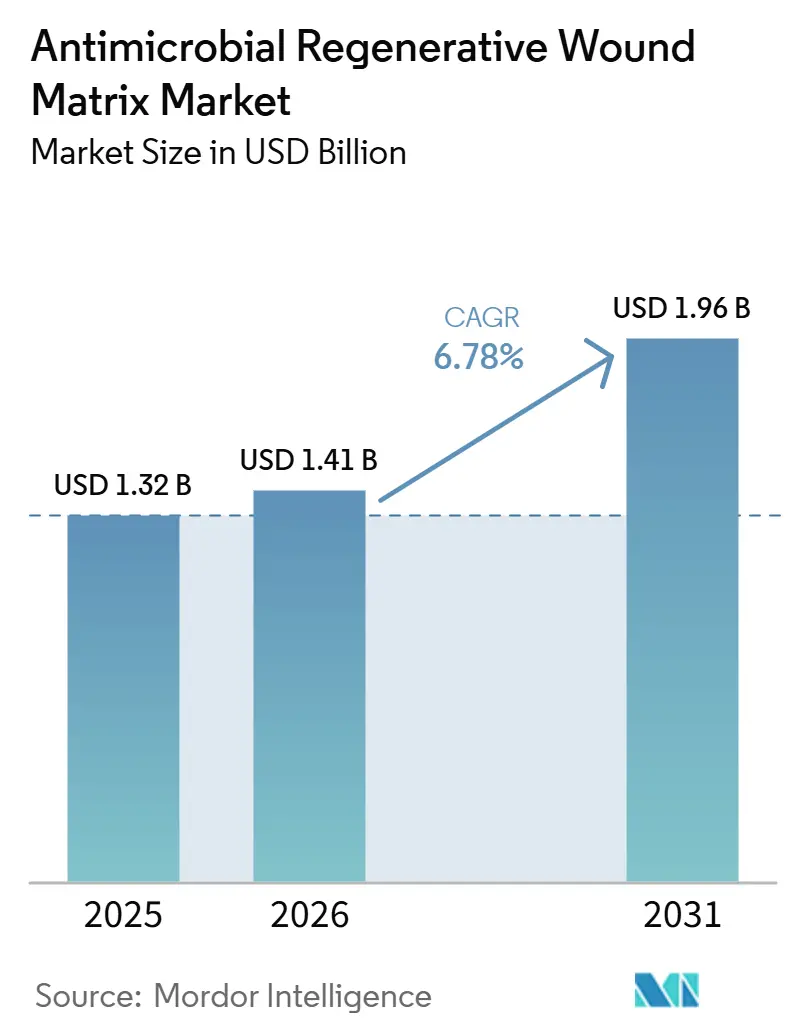
The Antimicrobial Regenerative Wound Matrix Market size is expected to increase from USD 1.32 billion in 2025 to USD 1.41 billion in 2026 and reach USD 1.96 billion by 2031, growing at a CAGR of 6.78% over 2026-2031.
The antimicrobial regenerative wound matrix market is being supported by rising chronic wound volumes, persistent infection burden in hard-to-heal wounds, and wider clinical use of products that combine infection control with tissue regeneration in one platform. The January 2026 CMS reimbursement reset has split the category between Section 351 biologic-licensed products and non-licensed matrices, which is changing pricing power and care-site economics across the United States. That shift is pushing more treatment activity toward hospital-based wound centers, where evidence-backed products have a stronger case than products that depended on reimbursement spread. In the antimicrobial regenerative wound matrix market, companies that invest in randomized trials, regulatory depth, and manufacturing quality are better positioned for formulary access, while reimbursement-sensitive suppliers face near-term volatility. Consolidation activity, including Solventum's acquisition of Acera Surgical, also shows that strategic value is concentrating around differentiated scaffold technology and dual-function platforms.
Key Report Takeaways
- By material, natural polymers led the antimicrobial regenerative wound matrix market with a 63.31% share in 2025, while synthetic polymers are projected to grow at a 7.38% CAGR through 2031.
- By wound type, chronic wounds led the antimicrobial regenerative wound matrix market with a 58.44% share in 2025 and are expected to record the highest projected CAGR at 8.52% through 2031.
- By application, diabetic foot ulcers led the antimicrobial regenerative wound matrix market with a 32.24% share in 2025, while burns are projected to grow at the fastest CAGR of 8.52% through 2031.
- By end user, hospitals led the antimicrobial regenerative wound matrix market with a 44.64% share in 2025, while ambulatory surgical centers are projected to grow at a 7.72% CAGR through 2031.
- By technology, lyophilization led the antimicrobial regenerative wound matrix market with a 32.26% share in 2025, while 3D bioprinting is projected to grow at the fastest CAGR of 8.95% through 2031.
- By geography, North America led the antimicrobial regenerative wound matrix market with a 36.61% share in 2025, while Asia-Pacific is projected to grow at the fastest CAGR of 8.65% through 2031.
Note: Market size and forecast figures in this report are generated using Mordor Intelligence’s proprietary estimation framework, updated with the latest available data and insights as of January 2026.
Market Trends and Insights
Drivers Impact Analysis of Antimicrobial Regenerative Wound Matrix Market*
| Driver | (~) % Impact on CAGR Forecast | Geographic Relevance | Impact Timeline |
|---|---|---|---|
| Rising Chronic Wound Prevalence and Infection Burden | +2.1% | Global | Long term (≥ 4 years) |
| Shift Toward Outpatient and Home-Based Wound Care | +1.5% | North America & EU core, spill-over to APAC | Medium term (2-4 years) |
| Demand for Dual-Function, Infection-Controlling Regenerative Products | +1.3% | Global | Medium term (2-4 years) |
| Faster Adoption of Advanced Biomaterials and Nanofiber Scaffolds | +1.0% | APAC core, North America & Europe | Long term (≥ 4 years) |
| Hospital Efforts to Reduce Readmissions and Rework From Wound Infections | +0.8% | North America & EU | Medium term (2-4 years) |
| Expanding Reimbursement Support for Advanced Wound Care in Mature Markets | +0.7% | North America, select EU markets | Short term (≤ 2 years) |
| Source: Mordor Intelligence | |||
Rising Chronic Wound Prevalence and Infection Burden
Chronic wound prevalence continues to create a durable treatment base for the antimicrobial regenerative wound matrix market because diabetic foot ulcers, venous leg ulcers, and pressure injuries often remain open for long periods. Global diabetic foot ulcer prevalence among adults with diabetes stands at 6.3%, and North America recorded the highest regional rate near 13%. Recurrence can reach 65% within 3 to 5 years after initial healing, which keeps repeat treatment demand high once a patient enters advanced wound care pathways. This pattern matters because infection control is not a secondary feature in chronic wound care, and delayed antimicrobial management can prolong healing and increase the need for repeat procedures. Hospital cost pressure reinforces that approach because surgical site infections were associated with 11.6 additional length-of-stay days and USD 30,689 in added hospital-reported cost per case in a 2025 multi-hospital analysis. That cost profile gives hospital value analysis committees a clear basis to consider premium matrices when they can shorten closure time and reduce repeat intervention.
Shift Toward Outpatient and Home-Based Wound Care
The shift toward outpatient and home-based care is changing how the antimicrobial regenerative wound matrix market is accessed, especially in the United States. CMS changed payment for most skin substitutes on January 1, 2026, moving them to a flat national incident-to supply rate while Section 351 biologics kept ASP+6% treatment. Vizient noted that the national rate of USD 127.28 per square centimeter does not support the economics of many physician office applications, which has already pushed some mobile wound providers out of affected settings. This is sending more wound care volume toward hospital outpatient wound centers and away from office models that relied on product spread rather than clinical differentiation. Products that arrive in simpler, point-of-care-ready formats fit this environment better than products that need more complex preparation before application. Manufacturers are still pursuing decentralized channels, as shown by MTF Biologics naming New Horizon Medical Solutions as exclusive distributor of AmnioBand Membrane for post-acute and outpatient markets in May 2026.
Demand for Dual-Function, Infection-Controlling Regenerative Products
Clinicians are increasingly favoring products that address infection and regeneration at the same time, which is sharpening product selection in the antimicrobial regenerative wound matrix market. Organogenesis reported in April 2026 that PuraPly AM, a collagen matrix with PHMB antimicrobial, met the primary endpoint in a 170-patient randomized controlled trial against standard care alone. The company also reported statistical significance at p<0.0477, which strengthens the product's clinical positioning in hard-to-heal wounds[1]Organogenesis Holdings Inc., “Organogenesis Achieves Primary Endpoint in Randomized Controlled Trial of PuraPly AM,” Organogenesis, investors.organogenesis.com. ConvaTec received EU and UK approval for ConvaNiox in April 2025, and the company reported 60% more diabetic foot ulcers healed than standard care in a separate randomized controlled trial. ConvaTec is also pursuing U.S. regulatory clearance in 2026, which shows that antimicrobial mechanism innovation is moving from regional launch to broader commercialization. These programs show that dual-function platforms with published clinical evidence are gaining a stronger position with formulary decision makers and reimbursement reviewers.
Faster Adoption of Advanced Biomaterials and Nanofiber Scaffolds
Advanced biomaterials and nanofiber scaffolds are expanding the technical direction of the antimicrobial regenerative wound matrix market beyond preservation-led formats. A 2026 Frontiers in Microbiology study described a Janus nanofiber dressing with an outer quaternary ammonium and PCL antibacterial layer and an inner collagen-PCL layer that supported fibroblast migration and neovascularization. The same study reported near-complete tissue regeneration, organized collagen deposition, re-epithelialization, and inhibition of both Staphylococcus aureus and Escherichia coli in vivo. A 2026 Life review also highlighted 3D bioprinted bilayer wound systems designed to combine antibacterial and pro-healing functions for diabetic wounds. These platforms strengthen the case for more precise scaffold engineering, but they also demand specialized electrospinning or bioprinting capacity that is harder to scale than established lyophilization lines. As clinical validation improves, adoption is likely to move faster than commercial scale-up unless manufacturers expand controlled-environment production capacity.
Restraints Impact Analysis of Antimicrobial Regenerative Wound Matrix Market*
| Restraint | (~) % Impact on CAGR Forecast | Geographic Relevance | Impact Timeline |
|---|---|---|---|
| High Cost of Combination Product Development and Sterilization | -1.8% | Global | Long term (≥ 4 years) |
| Regulatory Complexity for Biologic-Device and Antimicrobial Claims | -1.2% | North America & EU | Medium term (2-4 years) |
| Collagen and Bioactive Raw Material Supply Concentration | -0.9% | Global | Medium term (2-4 years) |
| Limited Clinical Evidence for Some Next-Generation Matrices | -0.7% | Global | Long term (≥ 4 years) |
| Source: Mordor Intelligence | |||
High Cost of Combination Product Development and Sterilization
High development and sterilization costs continue to slow broader expansion in the antimicrobial regenerative wound matrix market. Companies that combine antimicrobials with biologically active scaffolds must fund device-drug or device-biologic workstreams, which raises both development time and validation cost. Terminal sterilization options such as lyophilization, gamma irradiation, and electron beam processing must preserve scaffold structure while maintaining antimicrobial stability, which adds technical risk before commercialization. These programs also require added biocompatibility and material testing when active agents are built into collagen or synthetic matrices. MPM Medical expanded into a registered 10,000 sq ft facility in Mesquite, Texas, with advanced collagen processing capacity and multiple lyophilizers, and the company linked that move to supply chain instability and rising manufacturing costs. For smaller developers, this cost structure narrows margins and limits serious combination product development to firms with existing biomanufacturing assets or strong capital backing.
Regulatory Complexity for Biologic-Device and Antimicrobial Claims
Regulatory complexity remains a major restraint for the antimicrobial regenerative wound matrix market because antimicrobial claims can change both the approval path and the reimbursement outcome. FDA combination product rules require manufacturers to show that an antimicrobial mechanism adds benefit without introducing disproportionate safety risk, and pathway selection can move from 510(k) to PMA or BLA depending on primary mode of action. The 2026 CMS reimbursement change makes that choice even more important because Section 351 biologic licensure now carries a direct payment advantage over non-licensed products in outpatient care. FDA posted a Class 2 recall for Integra LifeSciences' Cytal Wound Matrix 2-Layer in April 2026 because of out-of-specification endotoxin results. That event shows how manufacturing control, biologic processing discipline, and device quality systems are all being judged together in this category. The result is a higher compliance burden for any company that wants to scale advanced matrices with active antimicrobial positioning.
*Our forecasts treat driver/restraint impacts as directional, not additive. The impact forecasts reflect baseline growth, mix effects, and variable interactions.
Antimicrobial Regenerative Wound Matrix Market Segment Analysis
By Material:
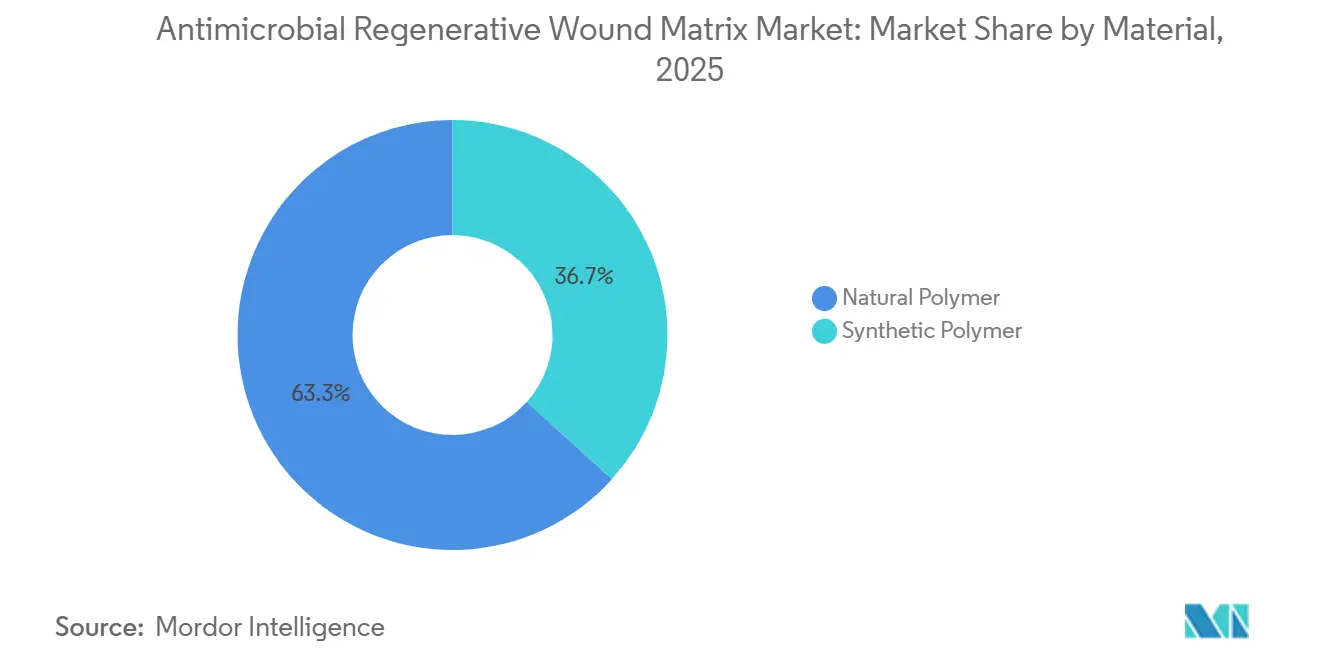
Natural Scaffolds Anchor the Market While Synthetics AccelerateNatural polymers held 63.31% of antimicrobial regenerative wound matrix market share in 2025, which kept them in the leading material position. Their lead comes from long clinical familiarity, established production workflows, and a regulatory history that clinicians and procurement teams can interpret with less uncertainty. Collagen, hyaluronic acid, and extracellular matrix-based substrates remain central because they support fibroblast adhesion, retain growth factors, and provide a three-dimensional wound bed structure that is already familiar in clinical use. These features align well with how hospitals and wound specialists evaluate closure support in chronic wounds and complex surgical cases. As a result, natural scaffolds still set the reference point for product performance, handling, and expected healing support across much of the category.
Synthetic polymers are projected to grow at a 7.38% CAGR from 2026 to 2031, which makes them the faster-moving material category in the antimicrobial regenerative wound matrix market. Solventum's USD 725 million acquisition of Acera Surgical in December 2025 showed that fully engineered synthetic tissue matrices are attracting strategic value well beyond current revenue scale. Interest in synthetics also reflects the appeal of engineered consistency, differentiated mechanics, and lower dependence on animal-derived inputs. Procurement teams are watching the supply concentration of bovine and porcine collagen because livestock disease events, tariff shifts, and export restrictions can tighten input availability. That exposure is encouraging multisource purchasing and gradual synthetic diversification, especially in institutions that now evaluate supply resilience alongside clinical outcomes.


By Wound Type:
Chronic Wounds Command Share and Set the Growth PaceChronic wounds held a 58.44% share in 2025 and are projected to grow at the fastest CAGR of 8.52% from 2026 to 2031. This dual leadership shows that the antimicrobial regenerative wound matrix market is being shaped most heavily by wound categories that are treatment intensive and slow to close. Diabetic foot ulcers, venous leg ulcers, and pressure injuries share a common clinical profile with biofilm colonization, impaired growth factor activity, and prolonged healing. That burden often requires repeated antimicrobial management, advanced dressings, debridement, and scaffold support across multiple care visits. In that setting, a product that combines antimicrobial protection with regenerative support has clearer clinical differentiation than a sequential treatment pattern built around separate products.
Trial design has followed that demand pattern, with Organogenesis and Aroa Biosurgery both selecting chronic non-healing diabetic foot ulcers as core indications in 2026 programs that met primary endpoints. Acute wounds held the remaining 41.56% share in 2025 and remained concentrated in surgical wound dehiscence and trauma cases. Acute care use is less sensitive to price in high-acuity settings, but it also faces stronger competition from simpler dressing formats and procedure-led purchasing decisions. Growth in acute wounds therefore tracks clinical volume more than biomaterial innovation alone. For that reason, chronic wound management continues to absorb a larger share of product development, trial spending, and formulary competition across the antimicrobial regenerative wound matrix market.
By Application:
Diabetic Foot Ulcers Drive Volume, Burns Attract Next-Gen SolutionsDiabetic foot ulcers accounted for 32.24% of the market in 2025, making them the largest application in the antimicrobial regenerative wound matrix market. This position reflects a large global disease pool, long healing cycles, and repeat treatment demand after recurrence. A 2025 review reported diabetic foot ulcer prevalence at 6.3% among adults with diabetes, and recurrence can reach 65% within 3 to 5 years after healing. A separate 2025 study noted that diabetic foot ulcers are linked to 84% of diabetes-related lower-limb amputations worldwide, which strengthens the case for infection-controlling matrices in limb preservation pathways. The segment also carries a high care burden because repeated infection management and delayed closure can extend treatment intensity across multiple episodes.
Burns are projected to grow at the fastest CAGR of 8.52% from 2026 to 2031 as biofabrication methods widen the clinical reach of regenerative materials beyond traditional graft settings[2]Abdulrazak A. et al., “Advances in Stem Cell-Based Tissue-Engineered Skin Substitutes for Burns,” Trends in Biotechnology, cell.com. Electrospinning, freeze-drying, 3D bioprinting, and spray-on systems are expanding how stem cell-based and synthetic wound matrices can be used in acute burn management. Pressure ulcers and venous leg ulcers remain important but more stable applications, and competition there depends more on cost per healed wound than on novelty. Surgical wounds and other uses round out the category, while real-world evidence programs such as Integra's Myriad MASTRR registry continue to build the case for broader institutional standardization. This mix keeps diabetic foot ulcers at the center of current revenue while burns pull more attention from next-generation platform developers.
By End User:
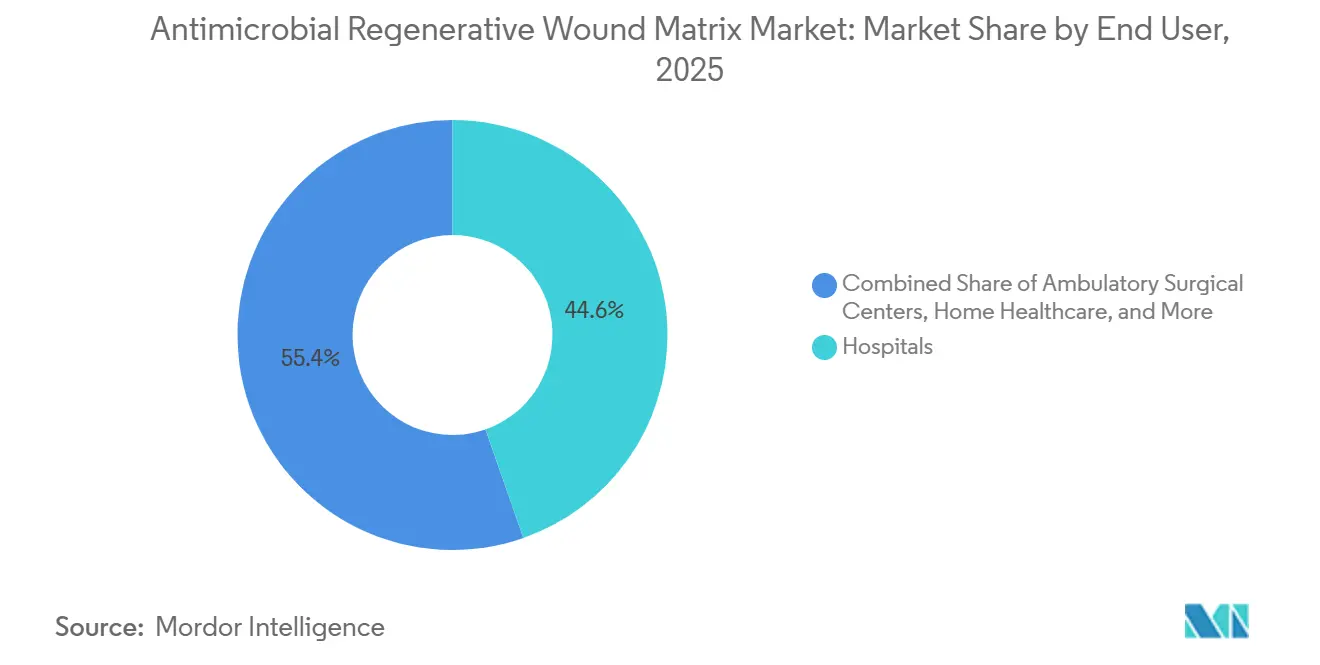
Hospitals Hold the Core, Ambulatory Centers Gain MomentumHospitals held 44.64% of antimicrobial regenerative wound matrix market share in 2025, which gave them the leading end-user position. Their lead reflects a concentration of high-complexity chronic wound and surgical wound cases, deeper specialist coverage, and stronger alignment with inpatient reimbursement. Hospitals also became a more stable setting after the 2026 outpatient skin substitute reform because office-based application economics weakened for many non-licensed matrices. That combination keeps hospitals at the center of premium wound matrix adoption and evidence-based formulary review. The hospital channel also benefits when buyers place more weight on product quality, trial support, and manufacturing reliability than on reimbursement spread alone.
Ambulatory surgical centers are projected to grow at a 7.72% CAGR from 2026 to 2031 as care migration continues and simplified application workflows become more important. Clinics and specialty wound centers still manage a large share of diabetic foot ulcer and venous leg ulcer cases, so their growth remains close to the overall market pace. Home healthcare is also gaining attention in the antimicrobial regenerative wound matrix market, especially for post-acute patients who need continuity after discharge. MTF Biologics reinforced that direction in May 2026 by naming New Horizon Medical Solutions as the exclusive distributor of AmnioBand Membrane for post-acute and outpatient markets. Even with that push, the CMS reset means decentralized care models need products and channels that can work within tighter payment and workflow limits.

By Technology:
Lyophilization Scales While 3D Bioprinting Reshapes the PipelineLyophilization held a 32.26% share of the technology segment in 2025, which kept it as the leading production and preservation pathway. Its position reflects high-batch manufacturing, ambient shelf stability, and regulatory familiarity built over many years of collagen-based and extracellular matrix product use. Those advantages still matter because commercial scale, storage simplicity, and dossier consistency remain critical in the antimicrobial regenerative wound matrix market. Lyophilization also fits current hospital and distributor expectations around handling, inventory management, and reliable shelf life. Electrospinning and nanofiber approaches are growing where fiber precision and controlled loading matter more than legacy production scale.
3D bioprinting is projected to grow at the fastest CAGR of 8.95% from 2026 to 2031, which places it 218 basis points above the overall market rate. A 2026 iScience study described ready-to-use 3D bioprinted scaffolds from natural materials loaded with a patient's PRGF for personalized skin regeneration. That direction supports more customized wound care, especially in diabetic wound settings where compartmentalized healing functions matter. Commercial expansion will still depend on higher throughput, tighter print fidelity, and more mature GMP automation, since those constraints remain less burdensome for lyophilization-based incumbents. The technology mix therefore continues to balance near-term manufacturing practicality with longer-term customization potential.
Geography Analysis
North America Antimicrobial Regenerative Wound Matrix Market
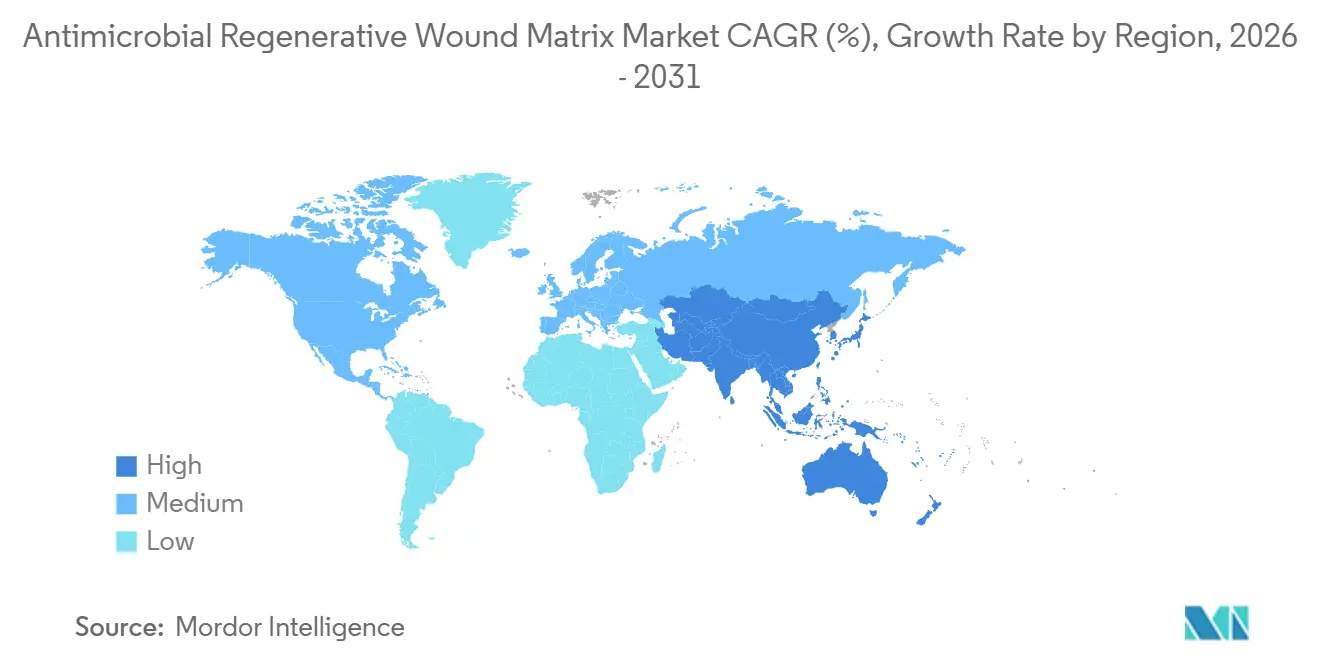
North America held 36.61% of antimicrobial regenerative wound matrix market share in 2025, which kept it as the largest regional block. The region combines dense hospital outpatient wound care infrastructure, high chronic disease burden, and a reimbursement system that supported advanced wound care adoption for years. A 2025 diabetic foot ulcer review placed North America at the highest regional prevalence level near 13% among people with diabetes, which reinforces the region's treatment intensity. The January 2026 CMS reset created short-term pricing pressure, but it also accelerated consolidation toward hospital-based wound centers where higher-evidence matrices hold a stronger position[3]Vizient Inc., “Who Really Has Skin in the Game? CMS's 2026 Reset and the Future of Wound Care,” Vizient, vizientinc.com.
Europe Antimicrobial Regenerative Wound Matrix Market
Europe remained the second-largest regional block, supported by aging populations, strong multidisciplinary wound pathways, and a high burden of venous leg ulcers in markets such as the United Kingdom and Germany. The region also serves as an important early validation setting for advanced wound products with robust clinical packages. Smith+Nephew launched ALLEVYN COMPLETE CARE Foam Dressing in March 2026 and continued its European rollout through 2026, showing continued investment in premium wound care formats. ConvaTec received EU and UK approval for ConvaNiox in April 2025 and is using that base to support a U.S. submission in 2026. Germany, France, the United Kingdom, and Scandinavia anchor regional demand, while Southern and Eastern Europe are moving at a slower pace because of capacity limits and price sensitivity.
APAC, MEA and South America Antimicrobial Regenerative Wound Matrix Market
Asia-Pacific is projected to grow at the fastest CAGR of 8.65% from 2026 to 2031 in the antimicrobial regenerative wound matrix market. Growth in the region is being supported by rising diabetes burden, hospital capacity expansion, and regulatory modernization across major markets such as China and India. China and India offer the largest patient pools, while Japan remains a mature wound care market and South Korea and Australia are developing demand for premium regenerative products. In the Middle East and Africa, GCC countries are leading adoption through tertiary care investment and procurement modernization, while South Africa faces slower progress because access and funding remain uneven. South America is centered on Brazil and Argentina, where large urban hospital systems are driving use, but reimbursement support for advanced wound care remains less developed than in North America and Europe.

Competitive Landscape
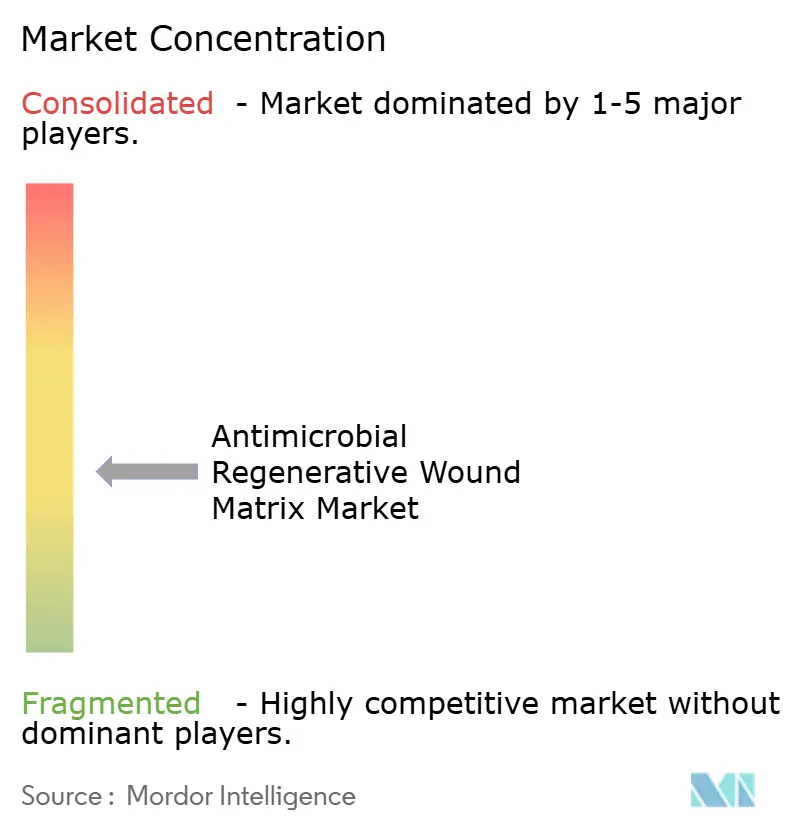
The antimicrobial regenerative wound matrix market is moderately concentrated, with large multinationals and specialized biologics companies competing for hospital and outpatient formulary access. Leading participants include Integra LifeSciences, Solventum, MiMedx, ConvaTec, and Smith+Nephew, while Organogenesis, Aroa Biosurgery, and MTF Biologics remain important specialists. Competition is not based only on distribution reach because regulatory status, clinical evidence, and manufacturing reliability now influence purchasing decisions more directly. Solventum's December 2025 acquisition of Acera Surgical for USD 725 million is the clearest example of strategic value being assigned to proprietary scaffold technology. That transaction points to a market where engineered tissue matrices can command premium valuations even before full category consolidation.
Group purchasing access is another major competitive lever in the antimicrobial regenerative wound matrix market because hospital formulary committees often sit behind national or regional contracting structures. MiMedx used that route in February 2026 when it signed an exclusive distribution agreement with Summit Products Group for NovaForm Wound Matrix, Hydrelix Collagen Matrix, and G4Derm Plus, supported by Premier and Vizient agreements for national launch. The January 2026 CMS payment reset is also acting as a competitive filter, since Section 351 biologic-licensed products retained ASP+6% reimbursement while most other skin substitutes moved to flat-rate payment. That shift favors companies that already invested in regulatory strategy and high-quality evidence, and it makes reimbursement-dependent growth models less durable. Organogenesis and Aroa Biosurgery both advanced randomized controlled trial programs in 2026, which supports stronger formulary discussions in a market that now rewards clinical proof more directly.
White space remains for novel antimicrobial mechanisms such as nitric oxide delivery, antimicrobial peptide-loaded scaffolds, and phage-incorporated fibrous dressings, although none has yet matched the scale of established matrix categories. Smaller challengers such as Aroa Biosurgery, Omeza, and ProgenaCare Global are building positions in selected wound types through evidence generation, niche specialization, and channel partnerships. Manufacturing discipline is also a competitive variable, as the 2026 FDA recall of Cytal Wound Matrix 2-Layer showed that quality failures can quickly affect credibility in advanced wound care. The result is moderate-to-high competitive intensity in the antimicrobial regenerative wound matrix market, with continued consolidation likely around differentiated platforms rather than commodity-style volume competition.
Antimicrobial Regenerative Wound Matrix Industry Leaders
Smith and Nephew plc
Solventum Corporation
Integra LifeSciences Holdings Corporation
Organogenesis Inc.
Aroa Biosurgery Ltd.
- *Disclaimer: Major Players sorted in no particular order
Antimicrobial Regenerative Wound Matrix Market Companies Covered in this Report
- AdMedSol
- Aroa Biosurgery Ltd.
- B. Braun
- Baxter
- ConvaTec Group plc
- DeRoyal Industries
- DSM Biomedical
- Harbor Medtech Inc.
- Integra LifeSciences
- Medline Industries
- MIMEDX Group
- Molnlycke Health Care
- MTF Biologics
- Omeza LLC
- Organogenesis
- ProgenaCare Global
- RenovoDerm
- Smiths Group
- Solventum Corporation

Recent Industry Developments in Antimicrobial Regenerative Wound Matrix Market
- February 2026: MiMedx Group Inc. signed an exclusive agreement with Summit Products Group to distribute three innovative 510(k)-cleared products that strengthen its Surgical & Wound product portfolio: Hydrelix, NovaForm, and G4Derm Plus.
- January 2026: BioLab Holdings Inc., a Phoenix-based medical manufacturer specializing in advanced wound protection technologies, made a strategic investment in Imbed Biosciences Inc., a Wisconsin-based medical device company behind the fully synthetic SAM Antimicrobial Technology and Microlyte, a wound matrix based on SAM Technology.


Global Antimicrobial Regenerative Wound Matrix Market Report Scope
As per the scope of the report, antimicrobial regenerative wound matrix is a specialized biomaterial designed to promote wound healing while preventing or controlling infection. It combines regenerative properties, such as providing a scaffold to support tissue growth and repair, with antimicrobial agents that inhibit bacterial or microbial contamination. This dual functionality helps facilitate tissue regeneration in complex or contaminated wounds, such as chronic or infected wounds, by supporting healing processes and reducing the risk of infection.
The antimicrobial regenerative wound matrix market is segmented by material into natural polymer and synthetic polymer; by wound type into acute wounds and chronic wounds; by application into diabetic foot ulcers, pressure ulcers, venous leg ulcers, burns, surgical wounds, and other applications; by end user into hospitals, ambulatory surgical centers, clinics and specialty clinics, home healthcare, and other end users; by technology into lyophilization, electrospinning, nanofibers, and 3D bioprinting; and by geography into North America, Europe, Asia-Pacific, Middle East and Africa, and South America. The market report also covers the estimated market sizes and trends for 17 countries across major regions globally. For each segment, the market size and forecast are provided in terms of value (USD).
| Natural Polymer |
| Synthetic Polymer |
| Acute Wounds |
| Chronic Wounds |
| Diabetic Foot Ulcers |
| Pressure Ulcers |
| Venous Leg Ulcers |
| Burns |
| Surgical Wounds |
| Other Applications |
| Hospitals |
| Ambulatory Surgical Centers |
| Clinics and Specialty Clinics |
| Home Healthcare |
| Other End Users |
| Lyophilization |
| Electrospinning |
| Nanofibers |
| 3D Bioprinting |
| North America | United States |
| Canada | |
| Mexico | |
| Europe | Germany |
| United Kingdom | |
| France | |
| Italy | |
| Spain | |
| Rest of Europe | |
| Asia-Pacific | China |
| Japan | |
| India | |
| Australia | |
| South Korea | |
| Rest of Asia-Pacific | |
| Middle East and Africa | GCC |
| South Africa | |
| Rest of Middle East and Africa | |
| South America | Brazil |
| Argentina | |
| Rest of South America |
| By Material | Natural Polymer | |
| Synthetic Polymer | ||
| By Wound Type | Acute Wounds | |
| Chronic Wounds | ||
| By Application | Diabetic Foot Ulcers | |
| Pressure Ulcers | ||
| Venous Leg Ulcers | ||
| Burns | ||
| Surgical Wounds | ||
| Other Applications | ||
| By End User | Hospitals | |
| Ambulatory Surgical Centers | ||
| Clinics and Specialty Clinics | ||
| Home Healthcare | ||
| Other End Users | ||
| By Technology | Lyophilization | |
| Electrospinning | ||
| Nanofibers | ||
| 3D Bioprinting | ||
| By Geography | North America | United States |
| Canada | ||
| Mexico | ||
| Europe | Germany | |
| United Kingdom | ||
| France | ||
| Italy | ||
| Spain | ||
| Rest of Europe | ||
| Asia-Pacific | China | |
| Japan | ||
| India | ||
| Australia | ||
| South Korea | ||
| Rest of Asia-Pacific | ||
| Middle East and Africa | GCC | |
| South Africa | ||
| Rest of Middle East and Africa | ||
| South America | Brazil | |
| Argentina | ||
| Rest of South America | ||


Key Questions Answered in the Report
What is the current size of the antimicrobial regenerative wound matrix market?
The antimicrobial regenerative wound matrix market was valued at USD 1.32 billion in 2025 and is forecast to reach USD 1.96 billion by 2031 at a 6.78% CAGR.
Which application generates the highest revenue in this space?
Diabetic foot ulcers accounted for 32.24% of revenue in 2025, making them the largest application because they combine high prevalence, recurrence, and infection burden.
Which region is growing the fastest for antimicrobial regenerative wound matrices?
Asia-Pacific is projected to record the fastest CAGR at 8.65% through 2031, supported by rising diabetes burden, hospital investment, and regulatory modernization.
Why are hospitals still the main end users?
Hospitals held 44.64% share in 2025 because they manage more high-complexity chronic and surgical wounds, have specialist teams, and remain better positioned under current reimbursement structures.
Which technology is expanding the fastest?
3D bioprinting is projected to grow at an 8.95% CAGR through 2031, ahead of the overall market, because it supports more customized and compartmentalized wound healing designs.
How did the 2026 CMS reimbursement change affect competition?
The 2026 CMS reset favored Section 351 biologic-licensed products by preserving ASP+6% treatment, while many other skin substitutes moved to flat-rate payment, which increased pressure on reimbursement-dependent suppliers.
Page last updated on:





