
Antimicrobial Peptides Market Size and Share
Market Overview
| Study Period | 2020 - 2031 |
|---|---|
| Market Size (2026) | USD 4.58 Billion |
| Market Size (2031) | USD 6.66 Billion |
| Growth Rate (2026 - 2031) | 7.78 % |
| Fastest Growing Market | Asia-Pacific |
| Largest Market | North America |
| Market Concentration | Medium |
Major Players *Disclaimer: Major Players sorted in no particular order Image © Mordor Intelligence. Reuse requires attribution under CC BY 4.0. | |
Antimicrobial Peptides Market Analysis by Mordor Intelligence
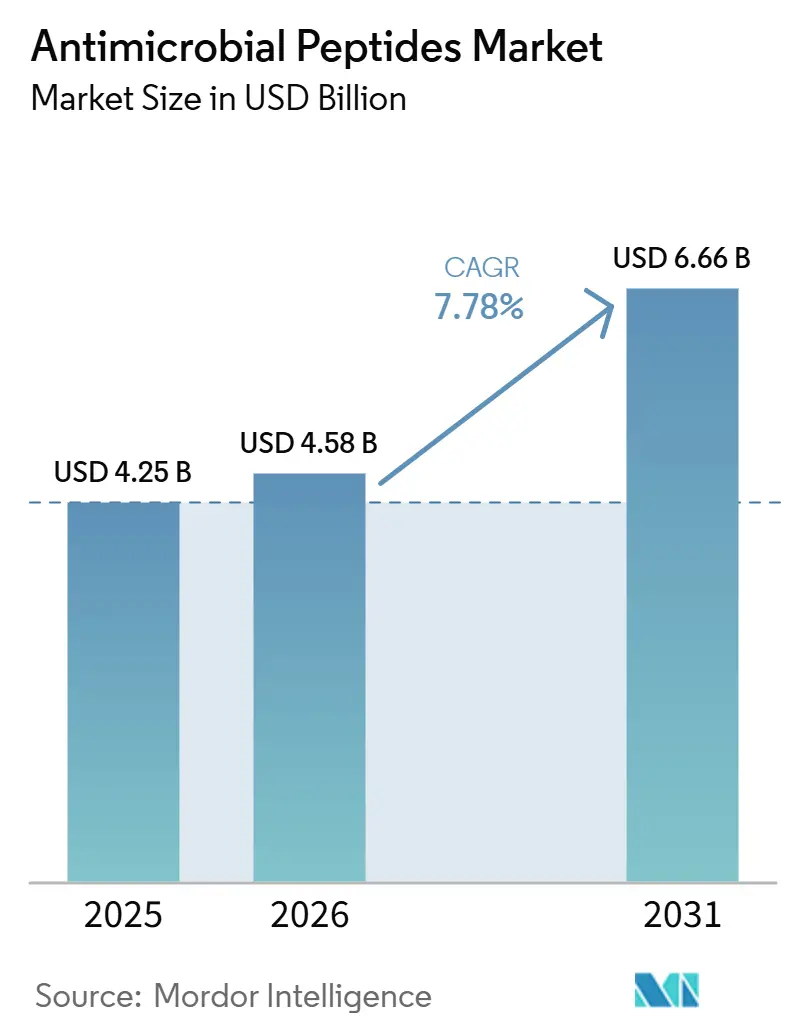
The Antimicrobial Peptides Market size is expected to grow from USD 4.25 billion in 2025 to USD 4.58 billion in 2026 and is forecast to reach USD 6.66 billion by 2031 at 7.78% CAGR over 2026-2031.
The antimicrobial peptides market is being shaped by the rising need for anti-infective options that can still perform when standard antibiotics are losing reliability against resistant bacteria, and that pressure is moving peptide programs from exploratory work into active funding, development, and procurement pathways. The antimicrobial peptides market is also benefiting from broader use cases beyond systemic treatment, especially in wound care, infection prevention, and device coatings, where localized action lowers some of the delivery barriers that have slowed therapeutic adoption. Competitive activity is centered on synthesis capacity, formulation know-how, and AI-guided design, which is giving both large peptide manufacturers and smaller platform-led companies clear room to compete on different strengths. Public and translational funding continues to steady the development pipeline, which matters because it reduces early clinical risk and helps downstream private capital move into peptide candidates that previously struggled to secure backing. The main limit on faster expansion remains clinical translation, since instability, cost, and narrow therapeutic windows still make buyers more cautious in the highest-value hospital settings.
Key Report Takeaways
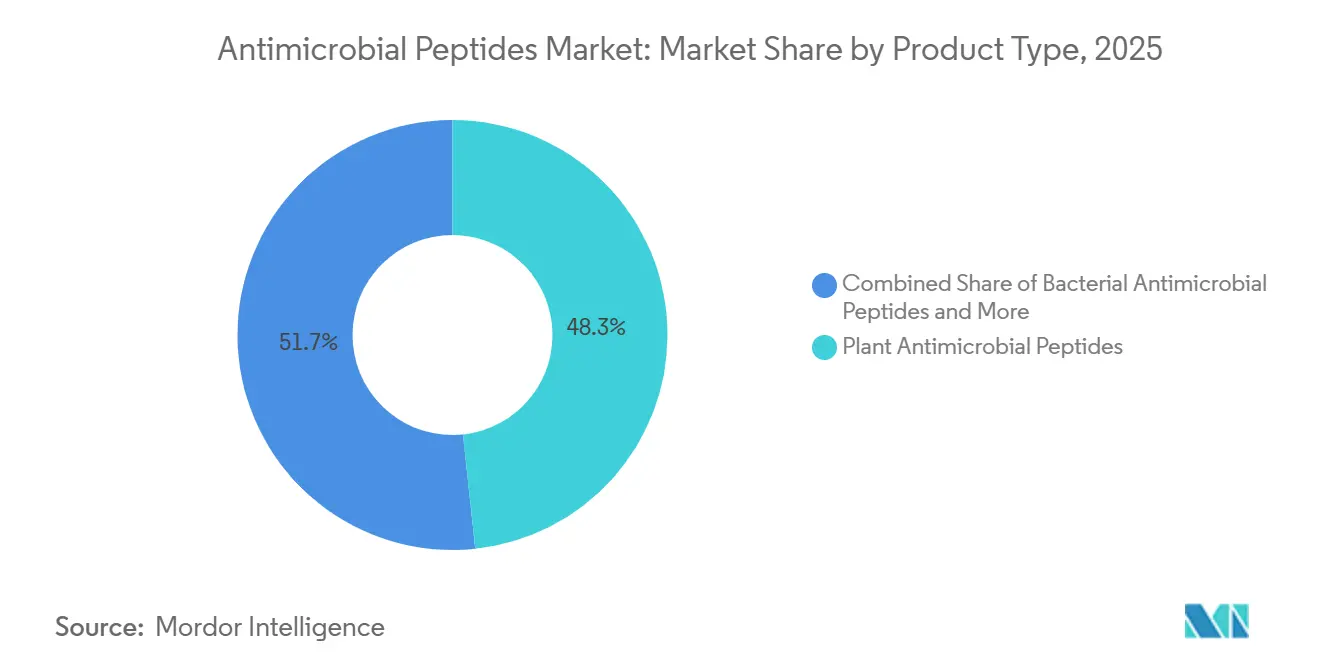
- By product type, Plant Antimicrobial Peptides held 48.31% share in 2025, and the same segment is forecast to expand at 8.38% CAGR through 2031.
- By source, Natural Sources held 38.44% share in 2025, while Synthetic Peptides are projected to record the highest CAGR at 8.52% through 2031.
- By application, Healthcare and Therapeutics accounted for 44.24% share in 2025, and the same segment is expected to advance at 8.52% CAGR through 2031.
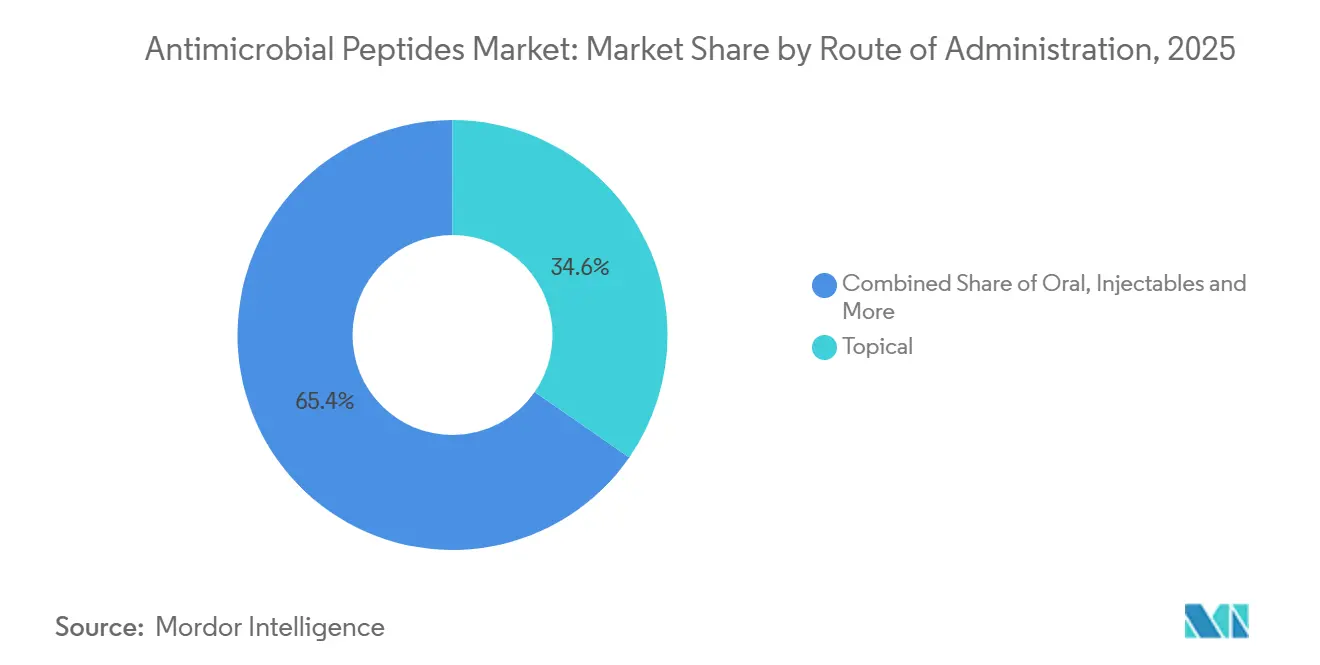
- By route of administration, Topical held 34.64% share in 2025, while Oral is forecast to grow at 8.72% CAGR through 2031.
- By end use, Pharmaceuticals held 52.26% share in 2025, while Biotechnology is projected to expand at 8.95% CAGR through 2031.
- By geography, North America held 38.61% of the antimicrobial peptides market share in 2025, while Asia-Pacific is forecast to expand at 8.65% CAGR through 2031.
Note: Market size and forecast figures in this report are generated using Mordor Intelligence’s proprietary estimation framework, updated with the latest available data and insights as of January 2026.
Market Trends and Insights
Drivers Impact Analysis of Antimicrobial Peptides Market*
| Driver | (~) % Impact on CAGR Forecast | Geographic Relevance | Impact Timeline |
|---|---|---|---|
| Rising Antimicrobial Resistance and Multidrug-Resistant Pathogens | +2.2% | Global, with acute intensity in South-East Asia, Eastern Mediterranean, and Sub-Saharan Africa | Short term (≤ 2 years) |
| Expanding Use in Infection Prevention, Wound Care, and Device Coatings | +1.5% | North America and Europe for clinical use, Asia-Pacific for manufacturing coatings | Medium term (2-4 years) |
| Higher Success Potential of Engineered Peptides Versus Conventional Small-Molecule Antibiotics | +1.1% | North America, Europe, and Japan | Medium term (2-4 years) |
| AI-Guided Peptide Design and Next-Gen Delivery Systems Improving Developability | +0.9% | North America, China, and EU biotech hubs | Medium term (2-4 years) |
| Rising Demand for Non-Antibiotic Bioactives in Cosmetics, Food Preservation, and Veterinary Use | +0.7% | Europe for clean-label food, Asia-Pacific for veterinary use, North America for personal care | Long term (≥ 4 years) |
| Translational Funding for Anti-Infective and Peptide Platforms | +0.8% | Global, with the United States, the United Kingdom, Germany, and Japan as major funders | Medium term (2-4 years) |
| Source: Mordor Intelligence | |||
Rising Antimicrobial Resistance and Multidrug-Resistant Pathogens
The antimicrobial peptides market is being pushed forward by the clear rise in resistant bacterial infections across both advanced and developing health systems. The October 2025 WHO warning showed widespread resistance to commonly used antibiotics, which has kept antimicrobial resistance at the center of treatment planning and stockpile decisions[1]World Health Organization and Pan American Health Organization, “WHO Warns of Widespread Resistance to Common Antibiotics Worldwide,” PAHO, paho.org. The Lancet also projected 39.1 million deaths directly attributable to bacterial antimicrobial resistance between 2025 and 2050, which strengthens the urgency behind alternatives that work through different killing mechanisms. In the antimicrobial peptides market, that urgency matters because peptides disrupt bacterial membranes through multi-modal action rather than depending on one narrow target. Hospital buyers are therefore becoming more willing to review peptides earlier in the treatment pathway, especially where resistance has already made standard options less dependable. This is changing the commercial discussion from scientific interest alone to practical readiness for future procurement in resistant infection settings.
Expanding Use in Infection Prevention, Wound Care, and Device Coatings
The antimicrobial peptides market is also expanding through applications that do not rely on full systemic drug adoption. Device coatings and topical wound care use peptides at the site of infection risk, which lowers exposure concerns and makes the value proposition easier for many buyers to assess. A 2025 Phase 1 study of TCP-25 in wounds linked to dystrophic epidermolysis bullosa reported safety, tolerability, and possible support for wound healing, which gave the field a useful clinical proof point for topical peptide bioactives. That result supports a broader commercial pattern in which device makers and wound care suppliers can evaluate peptide formulations before broad therapeutic approvals become available. The antimicrobial peptides market benefits from this path because revenue can begin building through localized and specialty uses while larger systemic programs are still maturing. This gives mid-sized manufacturers a reason to plan custom synthesis and formulation capacity ahead of broader hospital uptake.
AI-Guided Peptide Design and Next-Gen Delivery Systems Improving Developability
The antimicrobial peptides market is changing as AI tools shorten the path between concept generation and candidate testing. In place of long screening cycles built around large natural libraries, generative models can now produce candidate sequences in silico and narrow the wet-lab burden to validation and refinement. A 2025 Nature Microbiology study reported that an LLM-based sequential pipeline generated novel antimicrobial peptides active against multidrug-resistant clinical isolates of Klebsiella pneumoniae and Pseudomonas aeruginosa. A May 2026 paper in npj Antimicrobials and Resistance also showed that the fine-tuned transformer model AmpGPT2 produced candidates with measurable activity against Streptococcus pneumoniae. The antimicrobial peptides market is therefore drawing in AI-native firms that can enter with lighter asset bases and still compete on discovery speed. This is also helping engineered and recombinant formats narrow the practical gap with natural-source options by improving sequence selection before expensive scale-up begins.
Translational Funding for Anti-Infective and Peptide Platforms
The antimicrobial peptides market is receiving important support from public and translational funding programs that reduce early-stage financing pressure. CARB-X opened its 2026 funding round on February 26, 2026, and direct-acting therapeutics against Gram-negative bacteria remained one of the stated focus areas, which aligns well with peptide development priorities[2]CARB-X, “CARB-X Launches 2026 Funding Round to Address Global Burden of AMR,” CARB-X News, carb-x.org. In January 2026, Wellcome renewed its partnership with CARB-X with up to USD 60 million for 2026-2028, which reinforced continuity in this funding channel. This matters because non-dilutive support helps companies carry peptide programs through the point where later investors can assess them against clearer technical milestones. The antimicrobial peptides market gains from that structure since synthetic and engineered peptide programs often need exactly this kind of early de-risking before they can attract broader commercial capital. The result is a pipeline that remains more durable than private funding alone would normally allow in a technically demanding field.
Restraints Impact Analysis of Antimicrobial Peptides Market*
| Restraint | (~) % Impact on CAGR Forecast | Geographic Relevance | Impact Timeline |
|---|---|---|---|
| Proteolytic Instability and Short In Vivo Half-Life | -1.2% | Global, affecting all therapeutic and injectable peptide programs | Long term (≥ 4 years) |
| High Cost of Solid-Phase Synthesis and Purification | -0.9% | More acute in emerging markets with limited peptide manufacturing infrastructure, partly mitigated in North America and Europe | Medium term (2-4 years) |
| Narrow Therapeutic Window and Cytotoxicity Risk | -0.6% | Global, with the strongest effect on intravenous and systemic delivery programs | Medium term (2-4 years) |
| Weak Commercial Pull From Conservative Hospital Procurement and Reimbursement Scrutiny | -0.5% | North America and Europe | Medium term (2-4 years) |
| Source: Mordor Intelligence | |||
Proteolytic Instability and Short In Vivo Half-Life
The antimicrobial peptides market still faces a major constraint from the rapid degradation of many natural peptide sequences in vivo. Unmodified linear peptides can be cleaved quickly by common proteases, which makes systemic and oral delivery much harder than the biological activity alone might suggest. Developers are responding with D-amino acid substitution, fluorination, cyclization, and nanocarrier approaches, but each step adds manufacturing burden and formulation complexity. A 2025 Journal of Medicinal Chemistry study showed that the fluorinated analogue FuK achieved a serum half-life above 1,440 minutes compared with fewer than 225 minutes for the parent peptide. Even with that gain, the antimicrobial peptides market still has to absorb the cost of more advanced synthesis workflows before many systemic products can compete comfortably on price and scale. This keeps the best commercial positioning with companies that own delivery know-how rather than with producers that only offer standard peptide synthesis.
High Cost of Solid-Phase Synthesis and Purification
The antimicrobial peptides market is also restrained by the cost structure of solid-phase peptide synthesis and downstream purification. These economics are especially difficult for smaller developers because peptide candidates can require specialized chemistry long before order volumes become large enough to support more efficient production terms. The burden is somewhat lower for companies working with established manufacturing partners, yet the overall cost profile still limits access for many agricultural, cosmetic, and early clinical programs. Bachem reported a CHF 332.6 million (USD 250 million) investment program in 2025. expansion plan for 2026-2030, which shows that leading manufacturers still see capacity as a strategic bottleneck rather than a solved issue. In the antimicrobial peptides market, that keeps pricing power concentrated with established suppliers that have regulatory experience and reliable throughput. It also means that cost relief is likely to arrive unevenly, with research-grade and smaller commercial volumes benefiting later than broad peptide demand might suggest.
*Our forecasts treat driver/restraint impacts as directional, not additive. The impact forecasts reflect baseline growth, mix effects, and variable interactions.
Antimicrobial Peptides Market Segment Analysis
By Product Type:
Plant-Derived Peptides Anchor Commercial DemandPlant Antimicrobial Peptides held 48.31% of the antimicrobial peptides market share in 2025, which made them the largest product type in the antimicrobial peptides market. Their lead reflects the commercial familiarity of defensins and thionins across pharmaceutical, agricultural, and food-related uses. The same segment is also forecast to expand at 8.38% CAGR through 2031, which shows that plant-derived formats are still gaining ground rather than simply defending a mature base. Plant peptides benefit from wide proteomic diversity and from the lower extraction burden that can be achieved with high-biomass crops such as soybean, wheat, and potato. That combination keeps them attractive for buyers that need functional efficacy without taking on the cost and design complexity of more engineered peptide classes.
The antimicrobial peptides market continues to treat plant-derived options as the most practical entry point for non-therapeutic formulations because they fit clean-label and compliance-driven purchasing behavior in several end uses. In Europe, demand is reinforced by food-contact and personal care requirements that favor ingredients backed by clear compliance documentation, and this supports continued demand for well-characterized plant peptide lots. In Asia-Pacific, suppliers with regulatory readiness are also positioned to move earlier in food-safety and specialty ingredient channels, which helps explain why plant sequences remain central to regional commercial planning. Bacterial antimicrobial peptides are gaining visibility in probiotics and microbiome-directed products, while animal-derived peptides, especially cathelicidin-linked formats, are drawing attention in wound-care development programs. Insect-derived peptides remain smaller in revenue terms, yet they are being watched for crop-protection use because one active can potentially cover both insecticidal and antibacterial roles, which gives them a practical formulation advantage.



By Source:
Synthetic Peptides Reshape the Supply EquationNatural Sources held 38.44% share in 2025, which kept them in the leading source position within the antimicrobial peptides market. That lead came from established extraction methods and from the cleaner product perception that natural materials still hold in cosmetics, functional food, and some specialty care uses. Even so, Synthetic Peptides are forecast to record the highest CAGR at 8.52% through 2031, which makes source competition one of the clearest structural shifts in the antimicrobial peptides market. Synthetic formats are gaining because they allow tighter control over sequence design, purity, and batch reproducibility when activity needs to be tuned against defined resistant strains. This is especially important as discovery programs move away from broad exploratory libraries and toward more deliberate sequence engineering.
The antimicrobial peptides industry is therefore becoming more dependent on synthesis quality and design precision than on raw biological origin alone. Recombinant peptides are also expanding where fermentation can offer a workable cost profile for selected sequences, especially in biotechnology-led settings that can absorb process development with a longer view. Engineered peptides remain the highest-value source class on a unit basis because they include D-amino acids, stapled structures, or unnatural residues that are often aimed at difficult systemic indications. The antimicrobial peptides market is also seeing a narrower cost gap between natural and synthetic approaches because added SPPS capacity in India, Spain, and Sweden has made mid-scale commercial synthesis more competitive than it had been in earlier years. That narrowing does not remove the scale advantage of natural materials, but it does improve the commercial position of synthetic programs that need repeatable design and cleaner optimization loops.
By Application:
Healthcare Maintains Leadership While Adjacent Uses DeepenHealthcare and Therapeutics accounted for 44.24% of the antimicrobial peptides market size in 2025, and it is also projected to expand at 8.52% CAGR through 2031. That combination shows that the largest application area in the antimicrobial peptides market is still adding momentum rather than flattening out. The segment remains supported by active clinical work, translational funding, and a persistent need for alternatives where resistance has weakened confidence in standard anti-infective regimens. It is also where the strongest case exists for premium pricing because efficacy against hard-to-treat infections carries value that lower-risk end uses cannot match. This keeps healthcare at the center of investment even while commercial adoption remains selective.
The antimicrobial peptides market is nonetheless broadening because non-pharma applications are building a more diversified revenue base around the core healthcare segment. Agriculture and Animal Health remains an important secondary outlet, supported by demand for peptide-based options that fit stewardship goals and help reduce routine dependence on classical antibiotic approaches. A 2025 review in Antibiotics reinforced the viability of antimicrobial peptides against key veterinary pathogens in poultry and swine systems, which supports continued interest in farm and animal health applications. Cosmetics and Personal Care is also expanding as brands look for low-concentration bioactive ingredients that support preservative-sensitive product positioning. Smaller categories such as food preservation and specialty aquaculture remain narrower in volume, but they can offer better margins where regulatory dossiers are already in place and buyers value traceable technical documentation.
By Route of Administration:
Topical Uses Lead While Oral Delivery Gains AttentionTopical administration held 34.64% share in 2025, which kept it in the lead among delivery routes in the antimicrobial peptides market. Topical use remains the most practical path because it avoids many of the pharmacokinetic and systemic exposure issues that still slow wider peptide adoption. It also fits well with wound care, surface protection, and localized infection control, where targeted action can create value without requiring broad body distribution. Oral delivery, however, is forecast to expand at 8.72% CAGR through 2031, which makes it the fastest-moving route in the antimicrobial peptides market. That growth reflects progress in nanocarriers, fluorination, and cyclization strategies that are intended to protect peptide sequences from gastrointestinal degradation.
The antimicrobial peptides market still relies heavily on injectable delivery for systemic programs, especially in hospital settings where acute infection management can justify higher handling complexity. Even so, injectables face continued pressure from cytotoxicity concerns and from the narrow therapeutic window that still defines many promising but difficult candidates. Inhalation is another route with visible technical interest, especially for pulmonary infections linked to pathogens such as Pseudomonas aeruginosa, although the clinical path remains earlier and more selective than topical or injectable use. The antimicrobial peptides industry is therefore advancing route innovation in a stepwise way, with the fastest near-term commercial wins still coming from delivery formats that lower biological and regulatory uncertainty. This route mix explains why topical products still anchor present revenue while oral work attracts future-oriented investment.
By End Use:
Pharmaceuticals Hold the Base While Biotechnology Expands FasterPharmaceuticals held 52.26% share among end users in 2025, which made them the largest revenue contributor in the antimicrobial peptides market. Their position is tied to the clinical pipeline and to the associated demand for GMP-grade custom synthesis, analytical support, and specialized formulation work. Buyers in this group continue to drive the highest-value development programs because they are the ones most directly linked to therapeutic approvals and institutional treatment adoption. At the same time, Biotechnology is projected to expand at 8.95% CAGR through 2031, which makes it the fastest-growing end-use segment in the antimicrobial peptides market. That faster growth reflects rising demand for research platforms, AI-enabled discovery services, preclinical synthesis, and smaller but higher-value engineered sequences.
The antimicrobial peptides market is seeing biotechnology buyers shape the upstream opportunity set because they often purchase advanced sequences in low volumes but at attractive revenue per kilogram. This creates a strong incentive for manufacturers to invest in discovery-support capabilities rather than competing only on catalog supply and bulk output. Veterinary Clinics also remain relevant because stewardship pressure in animal care is pushing interest toward options that may carry a lower resistance-induction risk than conventional treatments. The Others category, which includes food producers, research organizations, and academic programs, is still more supply-driven, yet it is benefiting as greater synthesis capacity slowly improves access to research-grade materials. In practical terms, the antimicrobial peptides market is becoming more balanced across end users, but pharmaceuticals still provide the core demand base while biotechnology drives the strongest incremental momentum.
Geography Analysis
North America Antimicrobial Peptides Market
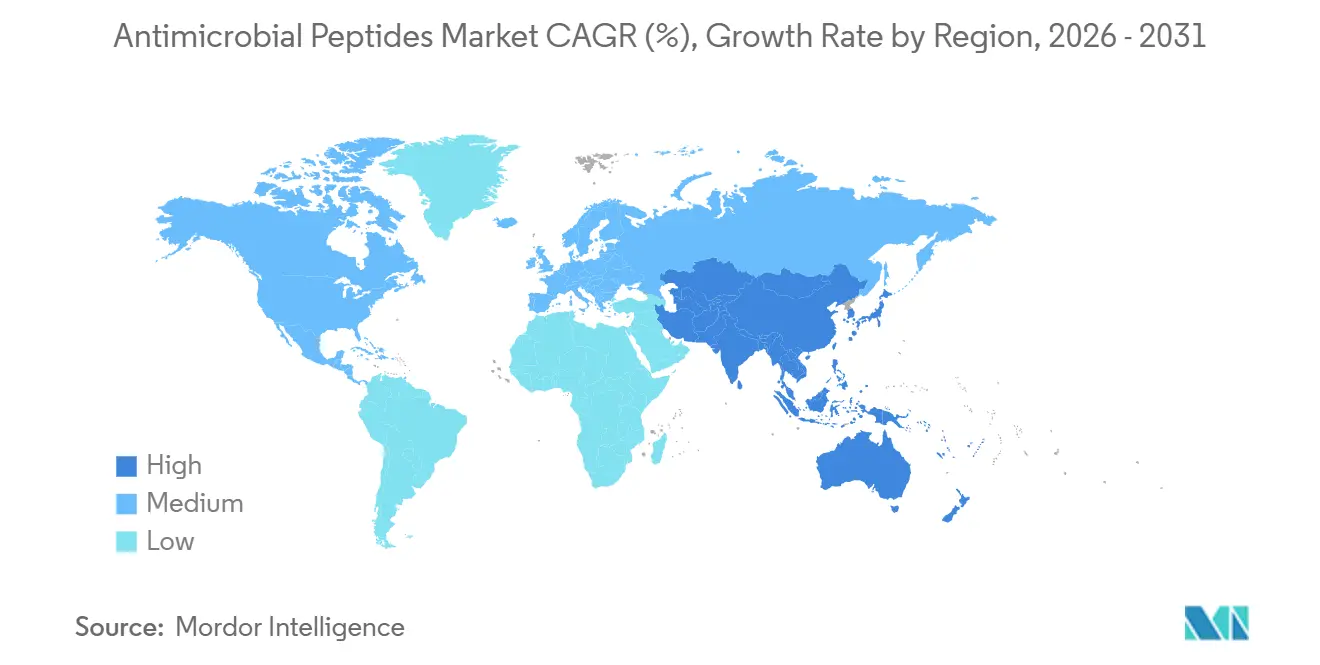
North America accounted for 38.61% of the antimicrobial peptides market share in 2025, which kept it in the leading regional position. The region benefits from the United States' strength in clinical pipeline activity, peptide manufacturing relationships, and public support for anti-infective development. BARDA's cumulative investment of more than USD 2.7 billion in antimicrobial products continues to signal policy-level commitment, and that backing has helped move peptide programs closer to viable commercial pathways. Canada and Mexico contribute through research collaboration and manufacturing services, yet the United States remains the main revenue anchor in the antimicrobial peptides market. North American demand is also encouraging long-term supply planning with overseas manufacturers, which means regional consumption strength does not always translate into the same level of local manufacturing share.
Europe Antimicrobial Peptides Market
Europe held the second-largest regional position in the antimicrobial peptides market, with Germany and the United Kingdom standing out for pharmaceutical-grade peptide work and deep scientific infrastructure. A November 2024 research announcement tied to the German Research Foundation highlighted continued work on the antimicrobial selectivity of lugdunin through collaboration between Friedrich-Alexander University Erlangen-Nürnberg and the University of Göttingen. In Germany, the economic burden of multidrug-resistant nosocomial infections reached EUR 1.1 billion (USD 1.26 billion) in 2025, which is making the cost of resistance a more direct procurement argument inside hospitals. Europe also supports non-therapeutic demand in the antimicrobial peptides market because buyers in food-contact and personal care applications place value on traceability, compliance, and documentation quality.
APAC, MEA and South America Antimicrobial Peptides Market
Asia-Pacific is forecast to grow at 8.65% CAGR through 2031, which makes it the fastest-growing regional block in the antimicrobial peptides market. China is building around synthetic peptide innovation and agricultural applications, while Japan continues to contribute through high-grade manufacturing and ongoing participation in anti-infective funding networks. India is adding SPPS capacity through a broader peptide manufacturing buildout, and that capacity can support antimicrobial peptide programs as order patterns diversify. The antimicrobial peptides market is also gaining from the region's ability to combine lower-cost production expansion with strong local demand for advanced bioactive ingredients. Middle East and Africa, along with South America, still represent smaller shares, yet the resistance burden across several low- and middle-income settings creates a long-run need base that is structurally important for the antimicrobial peptides market.

Competitive Landscape
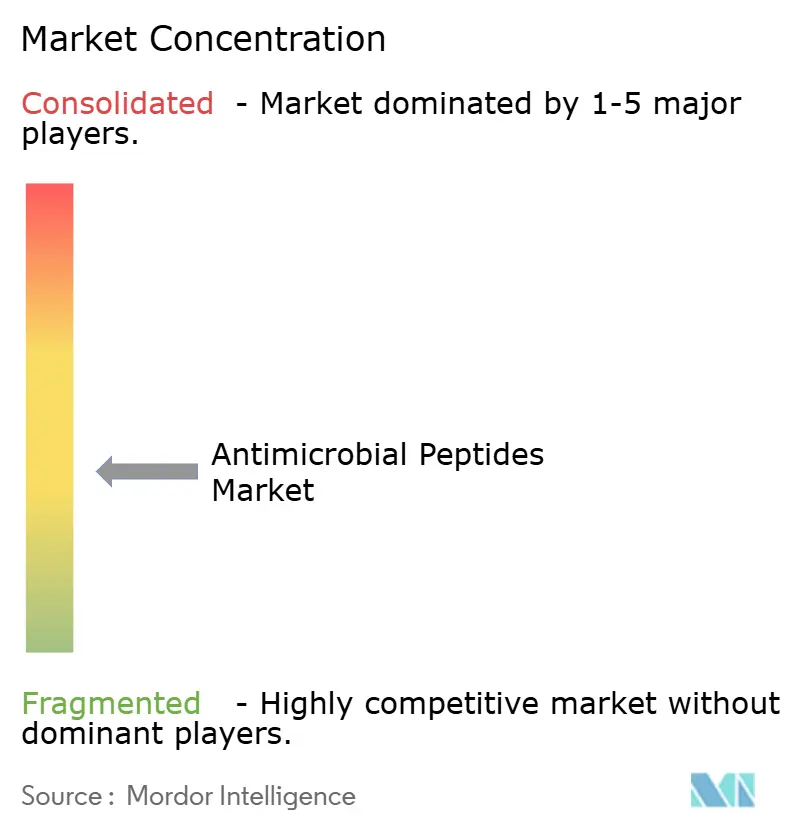
The antimicrobial peptides market remains moderately fragmented, and no single company controls more than a mid-single-digit revenue share. Competition is split between large peptide manufacturers that compete on scale, quality systems, and delivery reliability, and discovery-focused platforms that compete on screening capability, design tools, and intellectual property creation. This structure means the antimicrobial peptides market does not reward one business model alone, because commercial success depends on whether the customer problem is supply, speed, optimization, or regulatory readiness. It also means smaller specialists can still carve out strong positions when they solve a difficult formulation or discovery bottleneck better than larger peers.
The antimicrobial peptides market is clearly seeing a capital race among major manufacturers. Bachem reported a USD 250 million U.S. expansion plan for 2026-2030, which shows that large suppliers are preparing for durable peptide demand rather than short-term order spikes[3]Bachem Holding AG, “Bachem Reports Strong Sales Growth and Sustained High Profitability,” Bachem News, bachem.com. Bachem also secured financing for strategic growth initiatives in 2025, including a CHF 500 million (USD 618.9 million) revolving credit facility, which strengthens its ability to defend its share through capacity and execution rather than through price alone. In the antimicrobial peptides market, that kind of balance sheet support can matter as much as discovery strength because customers in clinical and commercial settings value continuity and audit readiness.
The antimicrobial peptides market is also opening space for platform-led and funding-supported challengers. CARB-X funded Peptilogics in January 2025 to develop a broad-spectrum therapeutic for fracture-related infections, which illustrates how specialized developers can progress credible peptide assets without the full capital base of large pharmaceutical companies. AI-assisted sequence design is adding to that pressure because it allows leaner teams to enter with stronger starting candidates and lower early screening waste. Patent opportunity remains important because AI-generated sequences can extend beyond natural prior art and give early movers stronger control over differentiated peptide libraries. The antimicrobial peptides market therefore favors companies that combine sequence intelligence, scalable synthesis, and usable delivery solutions instead of relying on one capability in isolation. Regulatory quality remains a baseline requirement, but strong audit performance and dependable execution are becoming more visible differentiators as procurement expands across both advanced and emerging markets.
Antimicrobial Peptides Industry Leaders
Bachem Holding AG
Lonza Group AG
PolyPeptide Group
WuXi AppTec
GenScript Biotech Corporation
- *Disclaimer: Major Players sorted in no particular order
Antimicrobial Peptides Market Companies Covered in this Report
- Abzena
- AMP Biotech
- AnaSpec, Inc.
- Bachem Holding
- Bio-Techne
- Creative Peptides
- Genscript
- JPT Peptide Technologies GmbH
- Lonza Group
- Merck
- Novozymes A/S
- PeptiDream Inc.
- Phoenix Biotechnology, Inc.
- PolyPeptide Group
- Synpeptide Co., Ltd.
- Thermo Fisher Scientific
- WuXi App Tec

Recent Industry Developments in Antimicrobial Peptides Market
- June 2026: PolyPid Ltd. completed its rolling NDA submission to the FDA for D-PLEX100, a peptide-based product designed to help prevent surgical site infections in colorectal surgery patients. The company expects a potential FDA decision in Q1 2027 under PDUFA timelines, making this an important clinical-stage milestone for wound-prevention AMPs.
- April 2026: PeptiDream Inc. announced that a global collaboration partner began a Phase 1 clinical trial for a non-radiopharmaceutical peptide program developed through its Peptide Discovery Platform System (PDPS). The trial reflects the continued growth of PeptiDream’s clinical-stage partnered pipeline in 2026.


Global Antimicrobial Peptides Market Report Scope
As per the scope of the report, antimicrobial peptides are small, naturally occurring proteins or peptides produced by a wide range of organisms, including humans, animals, plants, insects, and microorganisms, as part of their innate immune system. They help protect the host against bacteria, fungi, viruses, and parasites by disrupting microbial cell membranes or interfering with essential cellular processes.
The antimicrobial peptides market is segmented by product type into plant antimicrobial peptides, bacterial antimicrobial peptides, animal antimicrobial peptides, and insect antimicrobial peptides; by source into natural sources, synthetic peptides, recombinant peptides, and engineered peptides; by application into healthcare and therapeutics, agriculture and animal health, cosmetics and personal care, and other applications; by route of administration into topical, oral, injectables, inhalation, and other routes of administration; by end use into pharmaceuticals, biotechnology, veterinary clinics, and others; and by geography into North America, Europe, Asia-Pacific, Middle East and Africa, and South America. The market report also covers the estimated market sizes and trends for 17 countries across major regions globally. For each segment, the market size and forecast are provided in terms of value (USD).
| Plant Antimicrobial Peptides |
| Bacterial Antimicrobial Peptides |
| Animal Antimicrobial Peptides |
| Insect Antimicrobial Peptides |
| Natural Sources |
| Synthetic Peptides |
| Recombinant Peptides |
| Engineered Peptides |
| Healthcare and Therapeutics |
| Agriculture and Animal Health |
| Cosmetics and Personal Care |
| Other Applications |
| Topical |
| Oral |
| Injectables |
| Inhalation |
| Other Routes of Administration |
| Pharmaceuticals |
| Biotechnology |
| Veterinary Clinics |
| Others |
| North America | United States |
| Canada | |
| Mexico | |
| Europe | Germany |
| United Kingdom | |
| France | |
| Italy | |
| Spain | |
| Rest of Europe | |
| Asia-Pacific | China |
| Japan | |
| India | |
| Australia | |
| South Korea | |
| Rest of Asia-Pacific | |
| Middle East and Africa | GCC |
| South Africa | |
| Rest of Middle East and Africa | |
| South America | Brazil |
| Argentina | |
| Rest of South America |
| By Product Type | Plant Antimicrobial Peptides | |
| Bacterial Antimicrobial Peptides | ||
| Animal Antimicrobial Peptides | ||
| Insect Antimicrobial Peptides | ||
| By Source | Natural Sources | |
| Synthetic Peptides | ||
| Recombinant Peptides | ||
| Engineered Peptides | ||
| By Application | Healthcare and Therapeutics | |
| Agriculture and Animal Health | ||
| Cosmetics and Personal Care | ||
| Other Applications | ||
| By Route of Administration | Topical | |
| Oral | ||
| Injectables | ||
| Inhalation | ||
| Other Routes of Administration | ||
| By End Use | Pharmaceuticals | |
| Biotechnology | ||
| Veterinary Clinics | ||
| Others | ||
| By Geography | North America | United States |
| Canada | ||
| Mexico | ||
| Europe | Germany | |
| United Kingdom | ||
| France | ||
| Italy | ||
| Spain | ||
| Rest of Europe | ||
| Asia-Pacific | China | |
| Japan | ||
| India | ||
| Australia | ||
| South Korea | ||
| Rest of Asia-Pacific | ||
| Middle East and Africa | GCC | |
| South Africa | ||
| Rest of Middle East and Africa | ||
| South America | Brazil | |
| Argentina | ||
| Rest of South America | ||


Key Questions Answered in the Report
What is the current value of antimicrobial peptides in 2026?
The antimicrobial peptides market stands at USD 4.58 billion in 2026 and is forecast to reach USD 6.66 billion by 2031 at a CAGR of 7.78%.
What is driving demand for peptide-based anti-infectives?
The strongest driver is the continued rise in antimicrobial resistance, which is pushing health systems and developers toward alternatives that work through different mechanisms than standard antibiotics.
Which product type leads revenue today?
Plant Antimicrobial Peptides lead with 48.31% share in 2025, supported by their broad use across pharmaceutical, agricultural, and food-related applications.
Which source category is growing the fastest?
Synthetic Peptides are projected to post the fastest growth at 8.52% CAGR through 2031 because they offer better design precision, reproducibility, and optimization control.
Which region is growing the fastest?
Asia-Pacific is the fastest-growing region, with an 8.65% CAGR through 2031, helped by expanding synthesis capacity and rising use across healthcare and agricultural channels.
Why are topical uses still ahead of oral delivery?
Topical administration held 34.64% share in 2025 because it avoids many systemic delivery problems, while oral delivery is growing faster at 8.72% CAGR through 2031 as formulation methods improve peptide stability.
Page last updated on:





