
Amaranth Oil Market Size and Share
Market Overview
| Study Period | 2021 - 2031 |
|---|---|
| Market Size (2026) | USD 935.68 Million |
| Market Size (2031) | USD 990.52 Million |
| Growth Rate (2026 - 2031) | 5.52 % |
| Fastest Growing Market | Asia-Pacific |
| Largest Market | North America |
| Market Concentration | Medium |
Major Players *Disclaimer: Major Players sorted in no particular order Image © Mordor Intelligence. Reuse requires attribution under CC BY 4.0. | |
Amaranth Oil Market Analysis by Mordor Intelligence
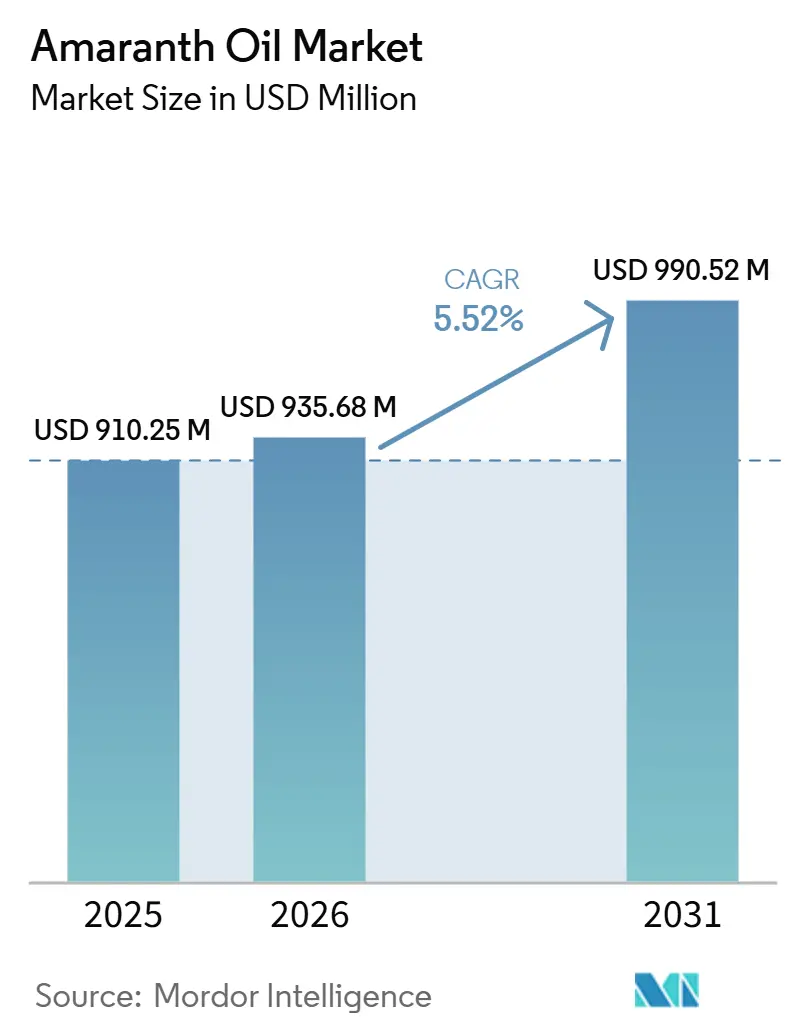
The Amaranth oil market size is expected to grow from USD 910.25 million in 2025 to USD 935.68 million in 2026 and is forecast to reach USD 990.52 million by 2031 at 5.52% CAGR over 2026-2031. The Amaranth oil market is supported by demand for plant-derived lipids in cosmetics, nutraceuticals, and functional foods. Amaranth oil combines squalene, linoleic acid, oleic acid, tocopherols, and phytosterols in one ingredient, which supports its premium position in these uses. The shift from shark-derived squalene to botanical alternatives is widening interest among cosmetic formulators. Low seed oil content keeps extraction costs high and limits rapid volume expansion. Companies therefore compete through certified sourcing, extraction quality, traceability, and supply reliability rather than price alone, which gives established processors an advantage when customers need evidence that oil can meet premium requirements, and makes supplier relationships valuable when buyers need consistent documentation, dependable origin information, and repeatable product performance across product lines that use specialized botanical oils as visible ingredients in consumer-facing formulations.
Key Report Takeaways
- By form, unrefined oil held 75.48% of the Amaranth oil market share in 2025, while refined oil is projected to grow at a 6.82% CAGR through 2031.
- By extraction method, supercritical CO2 extraction accounted for 45.21% of the Amaranth oil market share in 2025, while cold pressing is forecast to expand at a 6.47% CAGR through 2031.
- By category, conventional oil held 67.85% of the Amaranth oil market share in 2025, while organic oil is projected to expand at a 6.68% CAGR through 2031.
- By application, food and beverages held 38.26% of the Amaranth oil market share in 2025, while cosmetics and personal care is forecast to grow at a 7.02% CAGR through 2031.
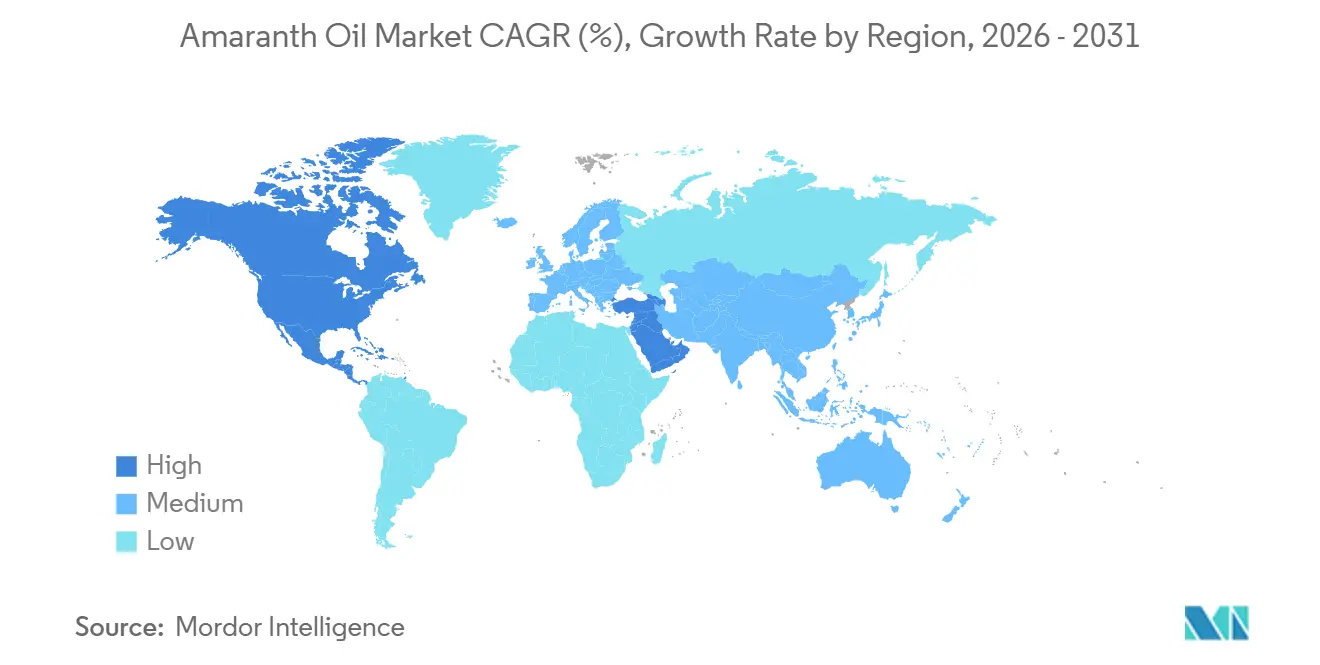
- By geography, North America accounted for 41.28% of the Amaranth oil market share in 2025, while Asia-Pacific is projected to advance at a 6.63% CAGR through 2031.
Note: Market size and forecast figures in this report are generated using Mordor Intelligence’s proprietary estimation framework, updated with the latest available data and insights as of January 2026.
Market Trends and Insights
Drivers Impact Analysis of Amaranth Oil Market*
| Driver | (~) % Impact on CAGR Foecasts | Geographic Relevance | Impact Timeline |
|---|---|---|---|
| Growing Demand for Natural and Plant-Based Ingredients | +1.8% | Global | Medium term (2-4 years) |
| Expansion of Squalene-Rich Anti-Aging and Skin-Barrier Formulations | +1.2% | North America and Europe, spill-over to Asia-Pacific | Medium term (2-4 years) |
| Rising Demand for Cold-Pressed Specialty Oils | +0.7% | North America and Europe | Short term (≤ 2 years) |
| Advancements in Oil Extraction Technologies | +0.9% | Global | Long term (≥ 4 years) |
| Growth of Plant-Based Functional Foods and Dietary Supplements | +1.1% | North America, Asia-Pacific | Medium term (2-4 years) |
| Increasing Consumer Preference for Clean-Label Products | +0.6% | Europe core, spill-over to North America | Short term (≤ 2 years) |
| Source: Mordor Intelligence | |||
Growing Demand for Natural and Plant-Based Ingredients and Clean-Label Products
The amaranth oil market benefits from rising demand for natural ingredients with clear botanical origins, traceability, and alignment with clean-label positioning. Cosmetic and nutraceutical companies are increasingly replacing select synthetic emollients and marine-derived actives as consumers evaluate ingredient sourcing, sustainability, and processing practices more closely. According to research published in Frontiers on grain amaranth and its food applications, amaranth grain oil can serve as a plant-based substitute for shark squalene [1]Source: D. Mekonnen et al., “Grain Amaranth, a Potential and Resilient Food Crop,” Frontiers in Sustainable Food Systems, frontiersin.org.. This functionality strengthens its relevance for prestige skincare brands that require traceable, plant-derived squalene and seek alternatives that support ethical and sustainable sourcing claims. Unrefined and cold-pressed formats also support the minimal-processing claims used by clean-label brands, as these formats help preserve the oil’s natural positioning and botanical identity. These requirements favor suppliers that can document origin, extraction conditions, processing methods, and finished-oil composition while providing the transparency needed for premium cosmetic and nutraceutical formulations.
Expansion of Squalene-Rich Anti-Aging and Skin-Barrier Formulations
The Amaranth oil market is gaining support from skincare formulations that use squalene as an active lipid rather than only as an emollient. A 2026 study reported that amaranth oil contained 6.90 g to 7.90 g of squalene per 100 g, alongside linoleic acid, oleic acid, tocopherols, and phytosterols[2]Source: P. Paśko et al., “Amaranth Oil for Dermatologic Conditions: Inflammation Control and Cytotoxicity Assessment in Skin-Related Cell Models,” Molecules, pmc.ncbi.nlm.nih.gov.. The same work examined effects linked to inflammation control and skin-related cell models, which supports formulators' interest in barrier-repair and photoaging products. FLAVEX lists an organic amaranth seed CO2 extract with ISO 9001, ISO 14001, HACCP, Clean at Sephora, and Credo Clean Standard references. Such documentation is increasingly important when premium brands select botanical inputs.
Advancements in Oil Extraction Technologies and Cold-Pressed Specialty Oils
The amaranth oil market relies on extraction methods that preserve squalene content, maintain oil quality, and support clean processing claims. A 2025 review describes supercritical CO2 extraction as a suitable method for recovering valuable compounds from biomass while avoiding residues associated with conventional solvent-based processes. Studies on supercritical CO2 extraction also highlight mild operating conditions, lower exposure to heat, and shorter processing times as key advantages for protecting sensitive oil fractions and maintaining their functional properties. Processors that can offer both supercritical CO2 and conventional extraction routes can serve buyers with different quality, certification, scalability, and cost requirements.
Growth of Plant-Based Functional Foods and Dietary Supplements
The amaranth oil market also benefits from the expanding use of amaranth in functional foods and dietary supplements, as manufacturers increasingly incorporate nutrient-dense ingredients into health-focused product formulations. In the cited research, grain amaranth contained 13.56% protein and a 7.20% lipid fraction, compared with 6.67% protein and 2.22% lipids for rice, highlighting its stronger nutritional profile. The oil’s tocopherols, phytosterols, and squalene strengthen its positioning in fortified foods, supplements, and beverage formats aimed at consumers seeking wellness-oriented products. Microencapsulation can further extend its application beyond conventional liquid oils by enabling stable powdered formats for protein supplements, meal replacements, and other functional food products. As the functional food base grows, manufacturers may require higher volumes of amaranth seed, thereby supporting demand for the seed supply used by the amaranth oil industry.
Restraints Impact Analysis of Amaranth Oil Market*
| Restraint | (~) % Impact on CAGR Forecasts | Geographic Relevance | Impact Timeline |
|---|---|---|---|
| Low Seed Oil Yield and High Feedstock Cost | -0.8% | Global, concentrated in South America and South Asia | Long term (≥ 4 years) |
| Fragmented Cultivation and Seasonal Quality Variability | -0.4% | South America (Andean Highlands), South Asia | Medium term (2-4 years) |
| Regulatory Dossiers for Food and Supplement Uses | -0.3% | EU, North America | Medium term (2-4 years) |
| Adulteration and Authentication Risk in Premium Botanical Oils | -0.3% | Global | Short term (≤ 2 years) |
| Source: Mordor Intelligence | |||
Low Seed Oil Yield, Feedstock Cost, and Fragmented Cultivation
The amaranth oil market faces a persistent cost constraint because amaranth seeds contain only 6.00% to 8.00% oil by weight, compared with 40.00% to 45.00% for sunflower and rapeseed. This low oil content means processors must source and handle significantly larger seed volumes to produce commercial quantities of oil, even before accounting for extraction losses. The original supply context indicates that producing 1 liter of oil requires 8 kg to 12 kg of seed, which adds pressure to raw material procurement, logistics, and processing economics. Research on Peruvian kiwicha described production across smallholder farms in Andean highland departments and noted limited optimization for industrial oil yields. This fragmented production base can create seasonal variations in supply and quality, as output often depends on localized farming practices, harvest timing, and post-harvest handling. It also increases procurement and certification costs for organic material sourced from Peru and Bolivia, particularly when buyers need traceability, consistent quality, and reliable volumes from dispersed suppliers.
Regulatory Dossiers and Adulteration Risk in Premium Botanical Oils
The Amaranth oil market requires stronger product documentation as food, supplement, and cosmetic buyers place more weight on compliance and authentication. Food and supplement uses in Europe must meet technical dossier requirements under the EU Novel Food Regulation, which favors suppliers with structured extraction and quality records. Premium oils are also exposed to dilution risk because their squalene content gives them a higher value than conventional carrier oils. A 2025 study examined multivariate methods for identifying adulteration in vegetable oils, showing why analytical authentication is important for high-value oil supply chains. Another 2025 study assessed amaranth oil and its bioactive compounds through Fourier transform infrared spectroscopy. Buyers increasingly need batch-level origin records, phytosterol profiles, and spectroscopy-based checks before approving premium oil.
*Our forecasts treat driver/restraint impacts as directional, not additive. The impact forecasts reflect baseline growth, mix effects, and variable interactions.
Amaranth Oil Market Segment Analysis
By Form:
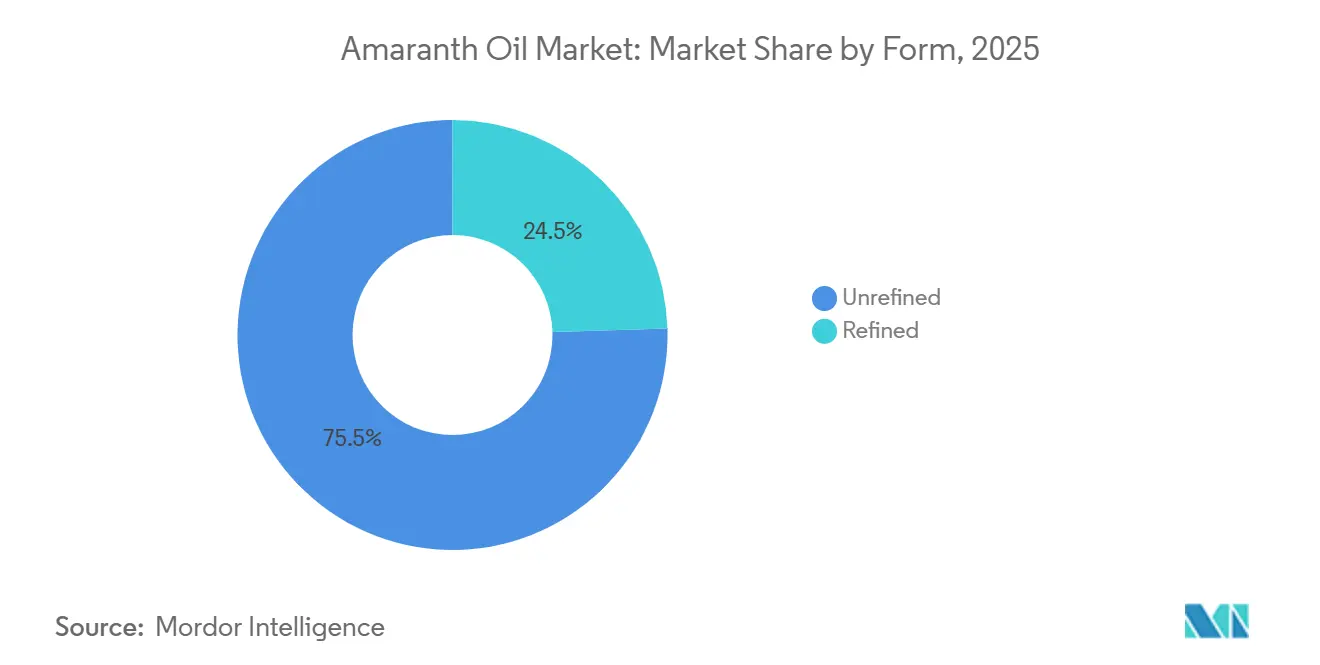
Unrefined Oil Leads While Refined Oil ExpandsUnrefined oil held 75.48% of the Amaranth oil market size by form in 2025. This leading position reflects demand for oil with its native squalene, tocopherols, and phytosterols retained, particularly where brands present the ingredient as a recognizable botanical component rather than as a neutral processing aid. Cosmetic and nutraceutical buyers often select this format when the full phytochemical profile is part of their product proposition. The format also matches clean-label commitments and retail standards that favor limited processing. FLAVEX identifies its organic CO2 extract with Clean at Sephora and Credo Clean Standard references, which illustrates the documentation used in premium channels. Unrefined oil can, however, vary across batches because the reported squalene concentration ranged from 6.90 g to 7.90 g per 100 g. This variation can be challenging for industrial buyers that require consistent active-ingredient specifications.
Refined oil is projected to record the highest growth rate in the form split, at a 6.82% CAGR from 2026 to 2031. The Amaranth oil market size for refined oil is supported by processed-food manufacturers, pharmaceutical emulsion producers, and industrial cosmetic manufacturers. These customers prioritize neutral flavor, extended shelf life, and predictable batch performance, since the oil must work alongside several ingredients without changing the intended sensory profile or disrupting a standardized manufacturing process. Neutralization, bleaching, and deodorization can provide a format that is easier to blend into more complex products. The growing use of refined oil indicates that larger manufacturers are considering amaranth as an ingredient beyond smaller premium formulations. This creates a reason for processors to add refining capacity alongside primary extraction. It also allows the Amaranth oil industry to serve applications where consistency matters more than the complete native bioactive profile.


By Extraction:
Supercritical CO2 Leads While Cold Pressing AcceleratesSupercritical CO2 extraction accounted for 45.21% of the Amaranth oil market size by extraction method in 2025. The method supports premium cosmetic and pharmaceutical procurement because it preserves valuable compounds while avoiding conventional solvent residues. A review of supercritical CO2 technology described its use in recovering antioxidants, polyphenols, and essential fatty acids from biomass. This method fits buyers that need clear analytical documentation and a carefully controlled extraction process, especially when procurement teams must assess a supplier's residue controls, material specifications, and suitability for higher-value finished products. FLAVEX lists organic certification and ISO 9001, ISO 14001, and HACCP references for its amaranth seed CO2 extract. The method's position therefore reflects both quality requirements and the importance of certification in the Amaranth oil market. It can also help suppliers support traceability discussions with regulated customers.
Cold pressing is forecast to expand at a 6.47% CAGR between 2026 and 2031. Its lower capital requirement makes it accessible to processors that cannot invest in pressurized supercritical CO2 systems. The method also suits buyers that associate cold-pressed oils with minimal processing, a preference that is relevant when finished products emphasize ingredient simplicity, a short processing description, and a visible connection to the original seed. The Amaranth oil market can therefore support parallel demand for cold-pressed and CO2-extracted formats. Buyers increasingly compare finished-oil squalene content and other quality measures, not only the extraction label. This comparison can narrow the premium difference between the two methods. Suppliers that validate composition, origin, and processing quality can compete more effectively across both formats.
By Category:
Conventional Oil Leads While Organic Oil Gains SupportConventional oil held 67.85% of the Amaranth oil market size by category in 2025. Its position is linked to use in cost-sensitive food channels, larger pharmaceutical procurement programs, and established supplement supply chains. Many commercial growing areas do not have the organic certification systems needed for certified supply. Conventional supply is therefore the practical option for volume buyers in many locations. The category's share reflects availability as well as purchasing preferences, because buyers that need stable volume cannot always source material from the smaller number of farms and processors operating under recognized organic certification systems. It also means that the broader Amaranth oil market remains dependent on cultivation systems outside certified cooperative networks. As certified cultivation expands, the difference between conventional and organic availability may narrow.
Organic oil is expected to grow at a 6.68% CAGR from 2026 to 2031. Premium cosmetic companies seek certified raw materials because certification can support sourcing claims and ingredient transparency. Peru, Bolivia, and India are relevant origins for this category because they are connected to organic cultivation and botanical ingredient supply. The original research referenced trade activity that linked Peruvian Andean grain producers with international buyers, but the cited intermediary source does not meet the required source standard and is not used here. The commercial opportunity remains tied to the ability of growers and processors to secure recognized organic certification, maintain the related records through the supply chain, and deliver enough consistent material for cosmetic and nutrition customers. Organic supply also requires longer procurement planning because documentation and sourcing conditions can add complexity. This gives certified processors a stronger position in the premium Amaranth oil market.
By Application:
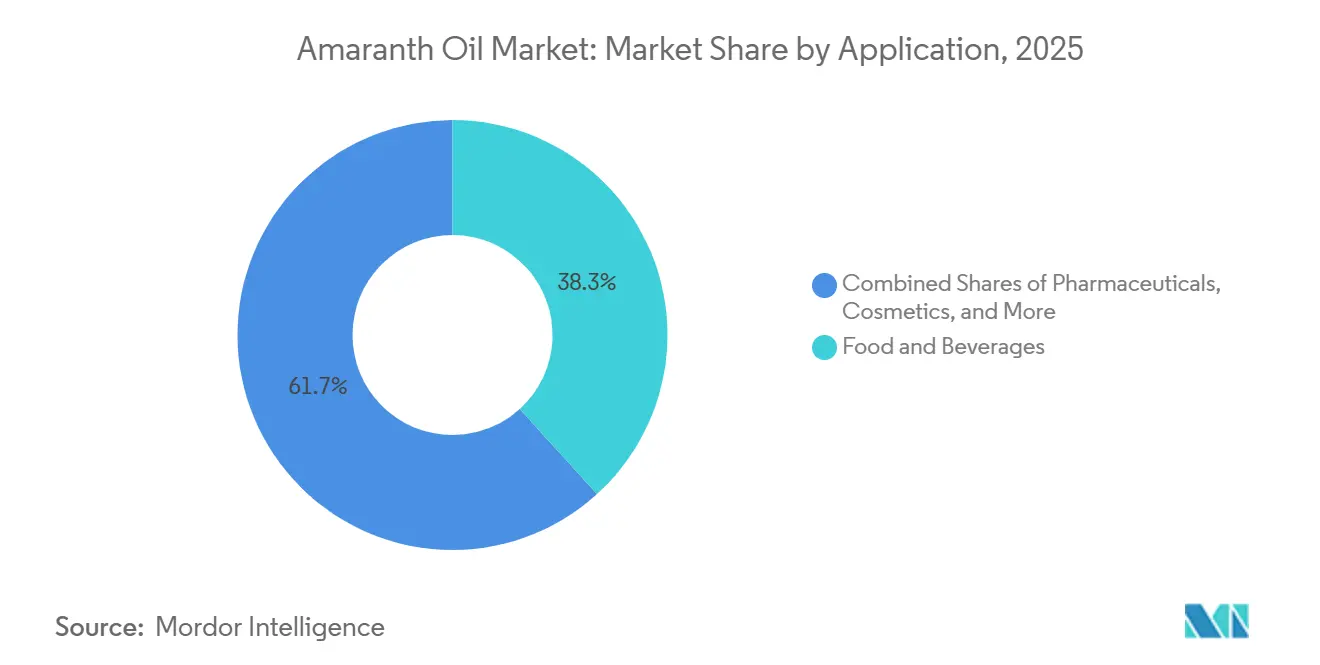
Food and Beverages Lead While Cosmetics and Personal Care Grows FastestFood and beverages held 38.26% of the Amaranth oil market size by application in 2025. The segment uses the oil in health-positioned edible blends, functional snacks, and fortified beverage formats. Grain amaranth is a pseudocereal, which supports its relevance in gluten-free formulations and allergen-aware product lines. Tocopherols and phytosterols support the ingredient's role in food products positioned around nutrition and wellness, while the oil format allows manufacturers to incorporate these components into blends and fortified products without changing the broader use case of the food. Pharmaceuticals and dietary supplements also form an important application group because buyers value phytosterols and squalene. Other applications include microencapsulated formats for sports nutrition and research into bio-lubricants. These uses make food applications a broad revenue base for the Amaranth oil market.
Cosmetics and personal care is forecast to grow at a 7.02% CAGR from 2026 to 2031. This rate reflects formulators' interest in plant-derived squalene for barrier-repair serums, anti-aging moisturizers, eye creams, and hair care products. The 2026 dermatologic study supports attention to amaranth oil's composition and effects in skin-related models. Competition for premium, unrefined, squalene-rich batches may increase as cosmetic demand rises. Cosmetics can support higher unit pricing than lower-margin food applications, which can influence how processors grade available batches and how they allocate oil with stronger squalene levels or more complete certification records. Processors may therefore direct their highest-quality batches to personal-care customers. This could tighten supply for premium food formulations while making certification and batch consistency more important across the Amaranth oil industry.

Geography Analysis
North America Amaranth Oil Market
North America held 41.28% of the Amaranth oil market share in 2025. The region benefits from an established specialty-ingredient distribution network and a substantial base of natural and organic product launches. The United States drives much of this demand through nutraceutical brands seeking plant-based alternatives to marine-derived squalene. Its dietary supplement and functional food channels also place value on clean-label sourcing, which gives distributors and manufacturers a reason to seek materials supported by origin records, composition information, and a clear account of the extraction method. The GRAS framework lowers barriers for ingredient commercialization in applicable food and supplement uses. Canada is a secondary opportunity where natural health product rules provide structured approval pathways for botanical ingredients. These features make North America the largest regional market for the period covered.
APAC Amaranth Oil Market
Asia-Pacific is projected to grow at a 6.63% CAGR from 2026 to 2031. India and China are relevant because of expanding amaranth grain cultivation and broader demand for functional nutrition. K-beauty and J-beauty formats have also familiarized consumers with premium botanical oils in daily skincare. India is a notable supply location for science-based botanical actives and related manufacturing capabilities. South Korea, Japan, Vietnam, and Singapore are high-value formulation markets for squalene-rich skincare ingredients. The region's combination of production potential and cosmetic demand strengthens its role in the Amaranth oil market, because processors can serve local formulation demand while also participating in the wider supply of specialty botanical ingredients.
EMEA and South America Amaranth Oil Market
Europe remains a premium extraction and formulation center, particularly in Germany, France, and the Czech Republic. REACH requirements and EU Organic certification favor processors that can show robust compliance documentation. South America, led by Peru and Bolivia, remains important for certified organic seed supply, although fragmented cultivation and seasonal quality differences mean that buyers must actively manage sourcing schedules and documentation requirements. Research also identified Southern African Development Community countries, including South Africa, as a possible additional cultivation area for grain amaranth. Middle East and Africa remains at an earlier stage, with the UAE and Saudi Arabia serving mainly as import and distribution points for premium natural oils. Geographic diversification could reduce the Amaranth oil market's exposure to seasonal supply variability in existing production regions.

Competitive Landscape
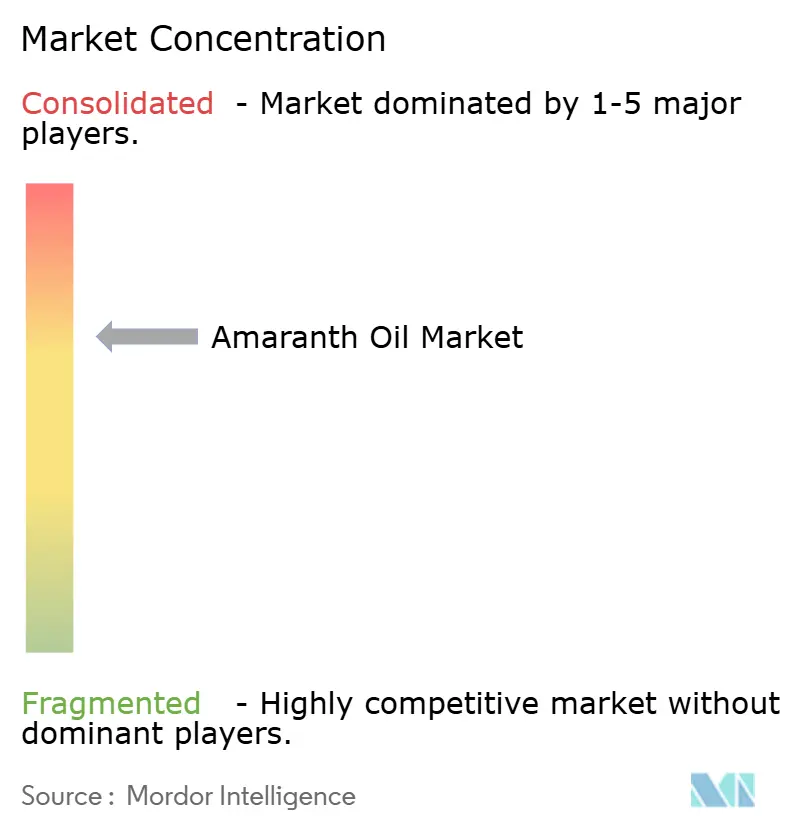
The Amaranth oil market has a concentration score of 7 out of 10 because the available assessment identifies a moderately consolidated specialty-processing structure, while the upstream seed supply base remains fragmented. FLAVEX Naturextrakte GmbH, Sabinsa Corporation, and AMR Amaranth A.S. are established names in the competitive set. These companies compete through extraction capability, organic and quality certifications, and traceability rather than low pricing. FLAVEX lists ISO 9001, ISO 14001, HACCP, and organic information for its amaranth seed CO2 extract. This type of documentation can create a barrier for suppliers without established compliance systems, since premium customers may need evidence that a material meets quality, origin, and processing expectations before it is used in a finished formulation. It also reflects the procurement expectations of premium cosmetics and nutraceutical customers.
FLAVEX has described investments in solar energy, a high-temperature heat pump, and propane refrigeration with heat recovery at its extraction site. These measures support the company's extraction infrastructure and sustainability positioning in European procurement, where buyers can consider operational practices alongside product quality, certification status, and the supplier's ability to maintain reliable deliveries. Sabinsa presented botanical actives at SupplySide Connect New Jersey in April 2026, emphasizing ingredients for functional foods and supplements[3]Source: Sabinsa Corporation, “Sabinsa Brings Decades of Clinical Science to SupplySide Connect New Jersey 2026,” Sabinsa Corporation, sabinsa.com.br.. This move extends its activity into application areas related to ingestible beauty and botanical nutrition. Companies with certified seed relationships and the capacity to supply both cold-pressed and supercritical CO2 formats have a clear strategic advantage. That combination can reduce procurement risk for customers that need flexibility across product types.
Smaller suppliers, including Proderna Biotech Pvt. Ltd. and Connoils India Private Limited, can differentiate through traceability records and custom extraction specifications. Direct sourcing relationships with Andean and South Asian cooperatives can also improve access to certified feedstock. At the same time, direct procurement by cosmetic and nutraceutical brands can place pressure on distributors with limited value-added services. Adulteration risk increases the value of analytical testing and full batch documentation, particularly for suppliers seeking to protect a premium oil position and for customers that need assurance that the delivered material matches its declared botanical origin. Early commercial interest in algae-amaranth blends points to combined formulations that pair omega-3 content with amaranth-derived squalene. Such formulations may be relevant to pharmaceutical delivery and nutricosmetic applications. The competitive outlook in the Amaranth oil market therefore depends on quality control, certification depth, and secure seed access.
Amaranth Oil Industry Leaders
AOS Products Private Limited
All Organic Treasures GmbH
Oterra Group
Elementa Natural Ingredients, Inc.
Connoils India Private Limited
- *Disclaimer: Major Players sorted in no particular order
Amaranth Oil Market Companies Covered in this Report
- Akay Natural Ingredients (P) Limited
- All Organic Treasures GmbH
- Amaranth Bio Company
- AMR Amaranth A.S.
- AOS Products Private Limited
- Aroma-Zone
- Botanic Innovations, LLC
- Connoils India Private Limited
- Elementa Natural Ingredients, Inc.
- FLAVEKO Trade spol. s r.o.
- FLAVEX Naturextrakte GmbH
- Henry Lamotte Oils GmbH
- Jedwards International, Inc.
- Kancor Ingredients Limited
- Natural Sourcing, LLC
- Nature's Way Products, LLC
- Nans Products Private Limited
- Proderna Biotech Pvt. Ltd.
- R. J. B. Oil Industries
- RusOliva Pvt. Ltd.
- Sabinsa Corporation
- SanaBio GmbH
- The Amaranth Seed Company
- W. ULRICH GmbH

Recent Industry Developments in Amaranth Oil Market
- February 2026: Akay Natural Ingredients Private Limited inaugurated a new corporate office in Ambunad, Kochi, Kerala, with Oterra Group CEO Martin Sonntag presiding. The event marks the completion of group-level restructuring following the Oterra Singapore acquisition and signals expanded botanical ingredient export capacity across Europe, the US, and APAC.
- June 2024: FLAVEX Naturextrakte GmbH launched a new line of organic amaranth seed oil products, expanding its specialty botanical oil portfolio with a formulation improving squalene yield by 15%, specifically targeting the growing demand for natural skincare actives in the European cosmetics channel.


Global Amaranth Oil Market Report Scope
| Refined Amaranth Oil |
| Unrefined Amaranth Oil |
| Cold Pressing |
| Organic Solvent Extraction |
| Supercritical CO2 Extraction |
| Conventional |
| Organic |
| Food and Beverages |
| Pharmaceuticals |
| Cosmetics and Personal Care |
| Dietary Supplements |
| Others |
| North America | United States |
| Canada | |
| Mexico | |
| Rest of North America | |
| Europe | Germany |
| United Kingdom | |
| France | |
| Italy | |
| Spain | |
| Netherlands | |
| Sweden | |
| Poland | |
| Belgium | |
| Rest of Europe | |
| Asia-Pacific | China |
| India | |
| Japan | |
| Australia | |
| South Korea | |
| Vietnam | |
| Indonesia | |
| Thailand | |
| Singapore | |
| Rest of Asia-Pacific | |
| South America | Brazil |
| Argentina | |
| Chile | |
| Peru | |
| Colombia | |
| Rest of South America | |
| Middle East and Africa | United Arab Emirates |
| Saudi Arabia | |
| South Africa | |
| Nigeria | |
| Egypt | |
| Morocco | |
| Turkey | |
| Rest of Middle East and Africa |
| By Form | Refined Amaranth Oil | |
| Unrefined Amaranth Oil | ||
| By Extraction | Cold Pressing | |
| Organic Solvent Extraction | ||
| Supercritical CO2 Extraction | ||
| By Category | Conventional | |
| Organic | ||
| By Application | Food and Beverages | |
| Pharmaceuticals | ||
| Cosmetics and Personal Care | ||
| Dietary Supplements | ||
| Others | ||
| By Geography | North America | United States |
| Canada | ||
| Mexico | ||
| Rest of North America | ||
| Europe | Germany | |
| United Kingdom | ||
| France | ||
| Italy | ||
| Spain | ||
| Netherlands | ||
| Sweden | ||
| Poland | ||
| Belgium | ||
| Rest of Europe | ||
| Asia-Pacific | China | |
| India | ||
| Japan | ||
| Australia | ||
| South Korea | ||
| Vietnam | ||
| Indonesia | ||
| Thailand | ||
| Singapore | ||
| Rest of Asia-Pacific | ||
| South America | Brazil | |
| Argentina | ||
| Chile | ||
| Peru | ||
| Colombia | ||
| Rest of South America | ||
| Middle East and Africa | United Arab Emirates | |
| Saudi Arabia | ||
| South Africa | ||
| Nigeria | ||
| Egypt | ||
| Morocco | ||
| Turkey | ||
| Rest of Middle East and Africa | ||


Key Questions Answered in the Report
What is the projected value of the Amaranth oil market by 2031?
The Amaranth oil market is forecast to reach USD 990.52 million by 2031, growing at a 5.52% CAGR from 2026 to 2031.
Which application uses the most amaranth oil?
Food and beverages led applications with 38.26% share in 2025, supported by use in edible blends, snacks, and fortified beverages.
Why is amaranth oil used in skincare?
It contains squalene, tocopherols, phytosterols, linoleic acid, and oleic acid, which support use in barrier-repair and anti-aging formulations.
Which extraction method leads amaranth oil supply?
Supercritical CO2 extraction led with 45.21% share in 2025, while cold pressing is forecast to grow at a 6.47% CAGR through 2031.
Page last updated on:





