
Agricultural Trailer Market Size and Share
Market Overview
| Study Period | 2022 - 2032 |
|---|---|
| Market Size (2027) | USD 34.48 Billion |
| Market Size (2032) | USD 44.70 Billion |
| Growth Rate (2027 - 2032) | 5.33 % |
| Fastest Growing Market | Asia-Pacific |
| Largest Market | Europe |
| Market Concentration | Low |
Major Players *Disclaimer: Major Players sorted in no particular order Image © Mordor Intelligence. Reuse requires attribution under CC BY 4.0. | |
Agricultural Trailer Market Analysis by Mordor Intelligence
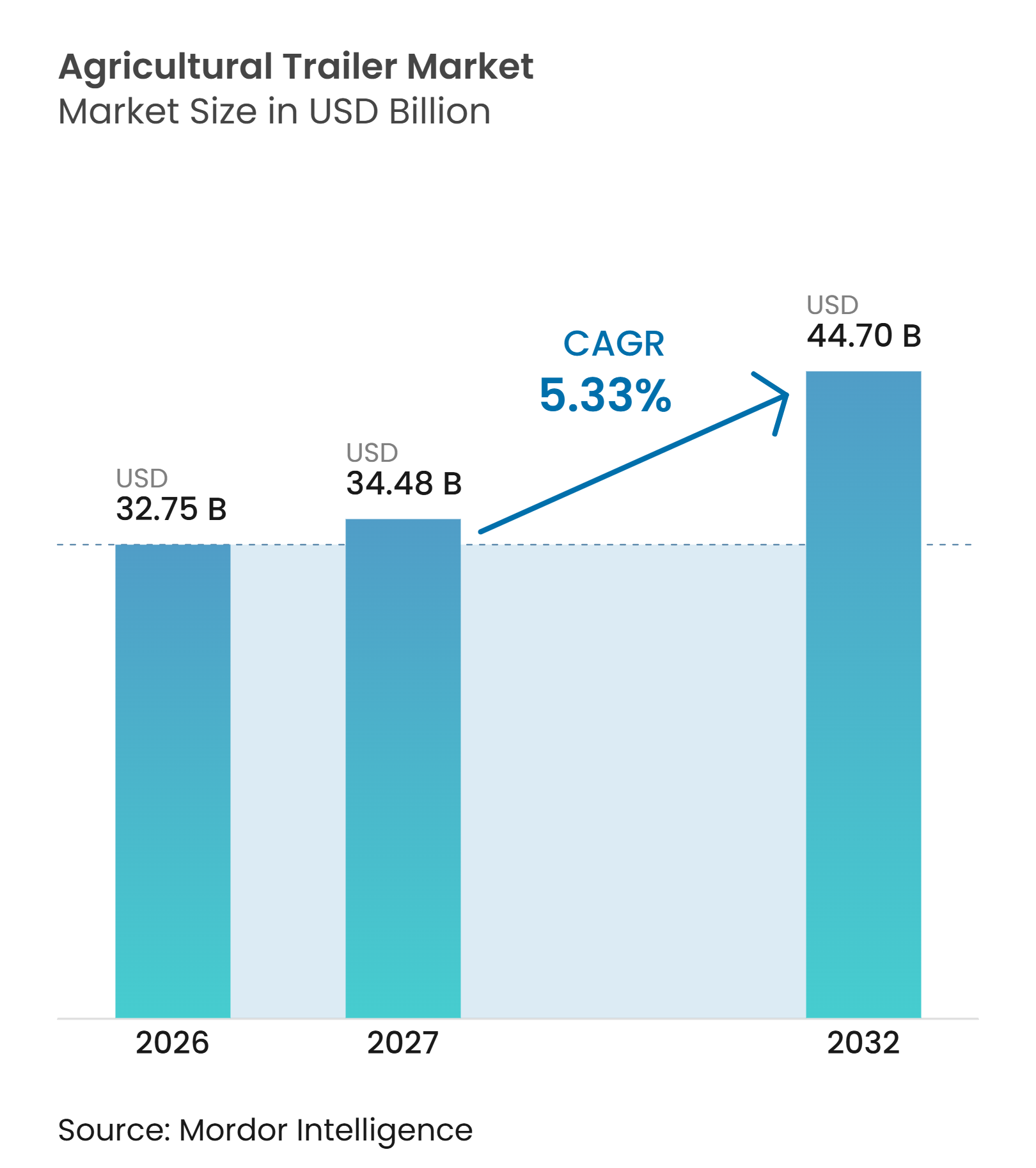
The agricultural trailer market was valued at USD 32.75 billion in 2026 and is forecast to grow from USD 34.48 billion in 2027 to USD 44.70 billion by 2032, at a CAGR of 5.33% from 2027 to 2032. Larger farms and shorter harvest windows are increasing demand for equipment that can move more material in fewer trips. Buyers are replacing light single-axle units with multi-axle trailers where payload, unloading time, and crop protection affect harvesting productivity. Subsidies in China and India support mechanization, while replacement demand continues in mature European farm fleets. Connected trailers are becoming part of farm logistics, as data exchange helps operators plan loading and unloading around combine activity. These conditions are driving demand across entry-level equipment for small farms and higher-specification equipment for commercial operations.
Key Report Takeaways
- By product type, tipping trailers accounted for 40.9% of the agricultural trailer market share in 2026, while flatbed trailers are forecast to grow at a CAGR of 7.3% from 2027 to 2032.
- By capacity, the above 10 to 20 tons segment accounted for 39% of the agricultural trailer market size in 2026, while the above 20 tons segment is forecast to grow at a CAGR of 6.7% from 2027 to 2032.
- By axle type, single-axle trailers accounted for 57% of the market share in 2026, while four-or-more-axle trailers are forecast to grow at a CAGR of 6.9% from 2027 to 2032.
- By application, crop transportation accounted for 36% of the market share in 2026, while livestock transportation is forecast to grow at a CAGR of 6.4% from 2027 to 2032.
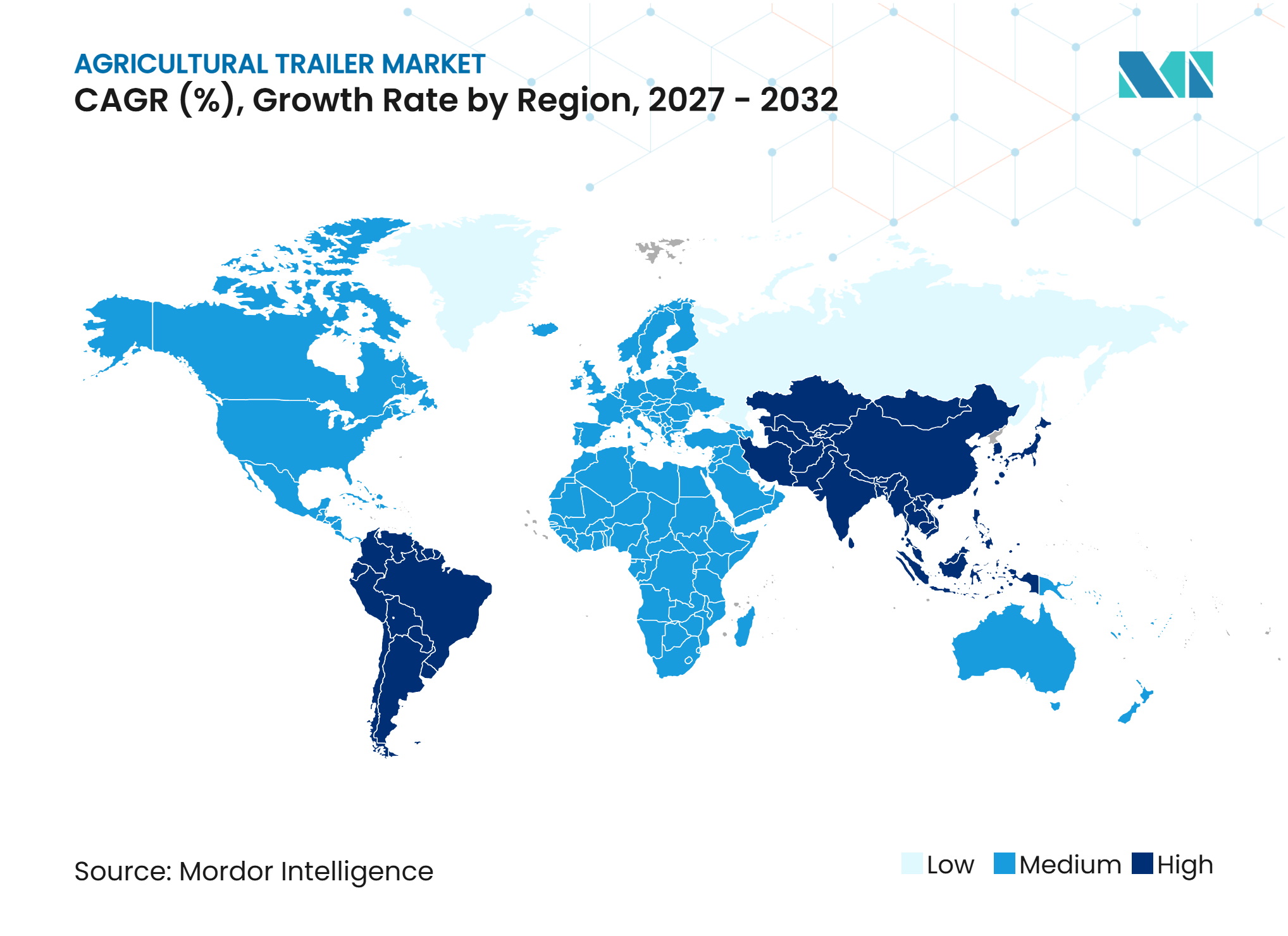
- By geography, Europe accounted for 36% of the market share in 2026, while Asia-Pacific is forecast to grow at a CAGR of 6.5% from 2027 to 2032.
Note: Market numbers in this report are based on Mordor Intelligence's proprietary estimation framework, which combines nine months of actuals with Q4 projections for base year 2026.
Market Trends and Insights
Drivers Impact Analysis of Agricultural Trailer Market*
| Driver | (~) % Impact on CAGR Forecast | Geographic Relevance | Impact Timeline |
|---|---|---|---|
| Farm Labor Shortages and Higher Wage Costs | +1.2% | Global, strongest in North America, Western Europe, and Australia | Short term (≤ 2 years) |
| Harvest-Window Throughput and Field-to-Storage Bottlenecks | +1.0% | Global, strongest in North America, Europe, and China | Short term (≤ 2 years) |
| Farm Mechanization Subsidies and Equipment Financing | +0.9% | Asia-Pacific, with relevance in France, Poland, and Spain | Medium term (2-4 years) |
| Contractor Fleets and Custom Hiring Expansion | +0.7% | Global, notably India, Brazil, Germany, and South Africa | Medium term (2-4 years) |
| Trailer Telematics and Tractor-Trailer Interoperability | +0.5% | North America and Europe, with later adoption in Asia-Pacific | Long term (≥ 4 years) |
| Higher Payload Demand from Farm Consolidation | +0.6% | North America, Europe, Australia, and Brazil | Long term (≥ 4 years) |
| Source: Mordor Intelligence | |||
Farm Labor Shortages and Higher Wage Costs
A tighter agricultural labor supply is increasing the value of trailers that reduce the number of workers needed per transport cycle. In the United States, the number of H-2A positions certified by the Department of Labor reached 384,900 in fiscal year 2024, reflecting continued employer reliance on temporary agricultural labor [1]. A 2025 research article published in the journal Applied Economic Perspectives and Policy, using panel data from California farmers, found that labor shortages were associated with a 21-percentage-point increase in the probability of raising wages and a 9-percentage-point increase in the probability of changing cultivation practices [2]. Hydraulic push-off systems, self-loading bale platforms, and automated unloading mechanisms can reduce manual handling requirements and enable fewer operators to manage loading and unloading. These capabilities are particularly relevant during harvest periods, when delays in transferring crops from combines to trailers can disrupt field operations. As a result, labor constraints are strengthening demand for agricultural trailers with labor-saving features, particularly among farms seeking to maintain harvesting and transportation throughput with smaller workforces.
Harvest-Window Throughput and Field-to-Storage Bottlenecks
Harvest periods are often short, making trailer availability critical to maintaining harvesting throughput. A shortage of trailers during peak combine operations can delay crop collection and create bottlenecks that affect subsequent field activities. Higher-capacity, multi-axle trailers can reduce the number of trips between fields and storage facilities, particularly where road conditions, tractor power, and loading infrastructure support heavier payloads. Krampe Fahrzeugbau GmbH's Radium 830S silage wagon has a transport volume of 42 m³ and a reported unloading time of 45 seconds, illustrating how higher capacity and faster unloading can help reduce turnaround times during harvesting operations. In addition, ISOBUS-compatible data exchange can improve coordination between combines and transport equipment by providing information on trailer fill status and supporting timely dispatch decisions. These requirements are encouraging demand for agricultural trailers with higher payload capacities, faster unloading systems, and connectivity features that help reduce field-to-storage delays during peak harvesting periods.
Farm Mechanization Subsidies and Equipment Financing
Public support for agricultural mechanization can improve farmers' capacity to invest in equipment and accelerate replacement cycles where limited cash flow would otherwise delay purchases. For example, the maximum subsidy for replacing a cotton picker increased from CNY 60,000 (USD 8,365) to CNY 80,000 (USD 11,195) per unit [3]. Similarly, Spain allocated EUR 9.55 million (USD 10.4 million) through its 2025 Plan Renove program, which included precision agriculture components among eligible expenditures. Although these initiatives do not necessarily directly cover agricultural trailers, broader mechanization investments can encourage farms to upgrade complementary equipment for harvesting and material transport. Access to equipment financing and predictable subsidy programs can further ease capital constraints, supporting trailer purchases among farms expanding their mechanized operations.
Contractor Fleets and Custom Hiring Expansion
Custom-hiring operators allow farms to access transportation capacity without purchasing and maintaining every piece of equipment themselves. This model is particularly useful when harvesting activities are concentrated within short seasonal windows and smaller farms cannot justify the investment in high-capacity trailers. As custom-hiring operations expand, contractors require versatile equipment that can serve multiple customers, crop types, and field conditions with minimal configuration changes. Tipping, flatbed, and equipment transport trailers support these varied requirements, enabling operators to serve different agricultural activities with a shared fleet. This model is relevant in markets such as India, Brazil, Germany, and South Africa, where agricultural contractors can aggregate seasonal demand across multiple farms. As a result, the expansion of custom-hiring services is supporting demand for versatile agricultural trailers, as contractors invest in fleet capacity, durability, and configurations that improve equipment utilization across different operations.
Restraints Impact Analysis of Agricultural Trailer Market*
| Restraint | (~) % Impact on CAGR Forecast | Geographic Relevance | Impact Timeline |
|---|---|---|---|
| High Upfront Cost and Seasonal Asset Utilization | -0.8% | Global, strongest in South Asia, Africa, and South America | Short term (≤ 2 years) |
| Road-Trailer Compliance and Cross-Border Homologation | -0.5% | Europe, North America, and Australia | Medium term (2-4 years) |
| Fragmented Farm Structures and Uneven Payback | -0.7% | Asia-Pacific, Africa, South America, and Southern Europe | Long term (≥ 4 years) |
| Steel, Axle, Hydraulic, and Tire Cost Volatility | -0.6% | Global, notably North America, Germany, and Brazil | Medium term (2-4 years) |
| Source: Mordor Intelligence | |||
High Upfront Cost and Seasonal Asset Utilization
Agricultural trailer demand is often concentrated around harvesting periods, leaving many units underutilized for much of the year. This seasonal usage pattern makes the initial investment difficult to justify, particularly for smaller farms with limited operating volumes. Tandem- and triple-axle trailers carry higher acquisition costs that are difficult to recoup when annual utilization remains low. As a result, some buyers retain older equipment, share trailers with neighboring farms, or rely on custom-hiring operators instead of purchasing new units. Financing constraints can further delay replacement decisions, particularly when crop prices are uncertain or access to dealer credit is limited. This restraint is especially relevant to specialized livestock and equipment transport trailers, where demand may be tied to specific operating requirements rather than recurring harvest activities. Consequently, extended equipment replacement cycles can limit new trailer purchases, even as manufacturers introduce products with improved unloading, handling, and safety features.
Road-Trailer Compliance and Cross-Border Homologation
Road weight limits, dimensional restrictions, braking standards, and lighting requirements vary across agricultural trailer markets, influencing the axle configurations, payload capacities, and gross vehicle weights that manufacturers can offer in different countries. EU Council Directive 96/53/EC establishes maximum authorized weights and dimensions for specified categories of road vehicles and their trailers operating within the European Union, covering both national and international traffic. Manufacturers must also address national roadworthiness requirements and applicable UNECE regulations governing braking and lighting systems. Differences in technical specifications, testing procedures, and approval requirements can necessitate market-specific product modifications and additional certification, increasing compliance costs and extending market-entry timelines. These requirements place a greater burden on manufacturers serving multiple countries, particularly smaller suppliers with limited regulatory and engineering resources. Consequently, regulatory fragmentation can restrict cross-border product standardization, increase the cost of market expansion, and favor established manufacturers with the technical capabilities and approval experience needed to navigate different regulatory frameworks.
*Our forecasts treat driver/restraint impacts as directional, not additive. The impact forecasts reflect baseline growth, mix effects, and variable interactions.
Agricultural Trailer Market Segment Analysis
By Product Type:
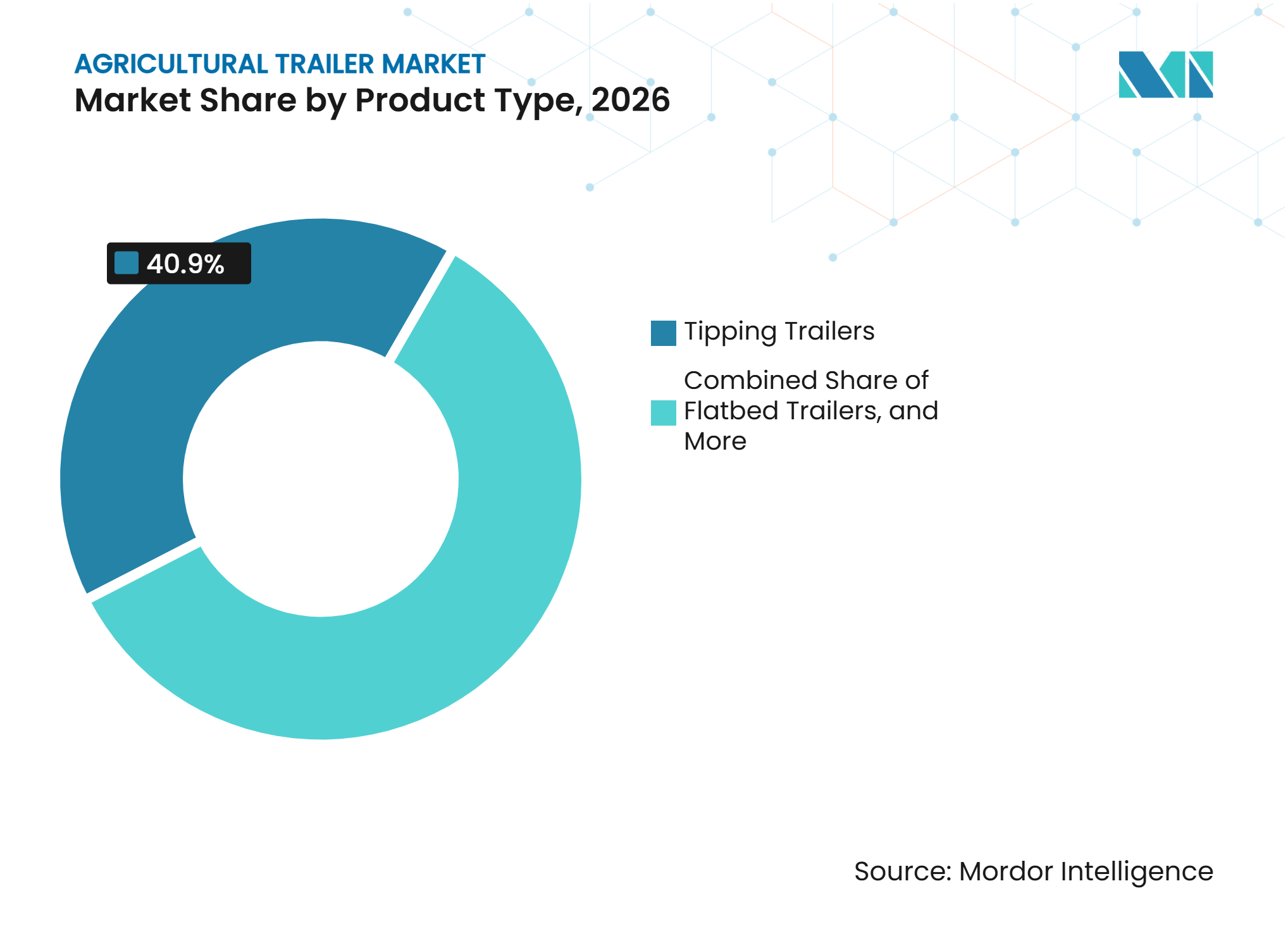
Tipping Trailers Lead Demand, While Flatbed Trailers Grow FastestTipping trailers accounted for 40.9% of market share in 2026, owing to their widespread use for transporting grain, silage, root crops, compost, and other bulk agricultural materials. Their hydraulic tipping mechanisms allow efficient unloading at storage facilities, processing sites, and farms, reducing manual handling during repeated transport operations. Demand remains strong in cereal and forage production systems, where seasonal harvesting generates substantial volumes of materials that require frequent movement from fields to storage or processing locations. Their versatility across different agricultural applications also supports their continued adoption among farmers and agricultural contractors.
Flatbed trailers are forecast to grow at a CAGR of 7.3% from 2027 to 2032, driven by demand from contractors and large farms for transporting machinery, oversized implements, and equipment between fields and operating sites. Other trailer types also serve specialized agricultural transport requirements. Grain trailers support harvest operations in North American grain-producing regions and Australian broadacre systems, while bale trailers serve grassland and hay operations in Western Europe and New Zealand. Tank trailers support the transport of slurry and liquid fertilizer in Northern Europe, and livestock trailers incorporate ventilation, animal welfare, loading, and cleaning requirements. In July 2026, Krampe Fahrzeugbau GmbH expanded its FlexMount modular mounting system to BigBody body tippers and RamBody push-off trailers, enabling operators to install or retrofit selected accessories without drilling or welding.



By Capacity:
Above 10 to 20 Tons Lead While Above 20 Tons Grow FastestThe above 10 to 20 tons segment accounted for 39% of the market share in 2026. This mid-range class suits the tractor-and-trailer weight combinations commonly used by arable farms in Europe and North America. A tandem-axle trailer carrying 18 to 20 tons can often operate on rural road networks without special permits, making it practical for regular field-to-storage work. Higher-capacity trailers reduce the number of loads required during harvesting and can keep pace with more productive combines.
Trailers above 20 tons are forecast to grow at a CAGR of 6.7% from 2027 to 2032, supported by consolidation among larger operations that require greater throughput across larger acreages. Triple- and multi-axle units can lower transport costs per ton by replacing several shorter trips and reducing waiting at the field edge. The up to 10 tons class remains important across Asia, Africa, and South America, where many smallholder and mixed farms need lower-cost equipment. These operators often need trailers that work with existing tractors and do not require specialized road access. Price competition and limited dealer financing constrain growth in that capacity range.
By Axle Type:
Single-Axle Trailers Lead, While Four-or-More-Axle Trailers Grow FastestSingle-axle trailers accounted for 57% of the market share in 2026, supported by their lower price, lighter draft weight, and compatibility with smaller tractors. These benefits remain important where farm roads are narrow, tractor power is limited, or annual transport volumes are modest. Tandem-axle models serve the middle of the agricultural trailer market in Europe by balancing payload allowance, stable handling, and normal road use.
Four-or-more-axle trailers are forecast to grow at a CAGR of 6.9% from 2027 to 2032, supported by demand for higher-payload equipment among large farms and contractor fleets. Triple-axle systems are gaining relevance in larger arable regions, including France, Germany, and North America, where operators require greater payloads and predictable road performance. Four-or-more-axle configurations distribute weight across more points of contact, supporting heavier loads where local regulations permit. Directive 96/53/EC establishes maximum authorized weight and dimension limits for specified categories of road vehicles and their trailers operating within the European Union.
By Application:
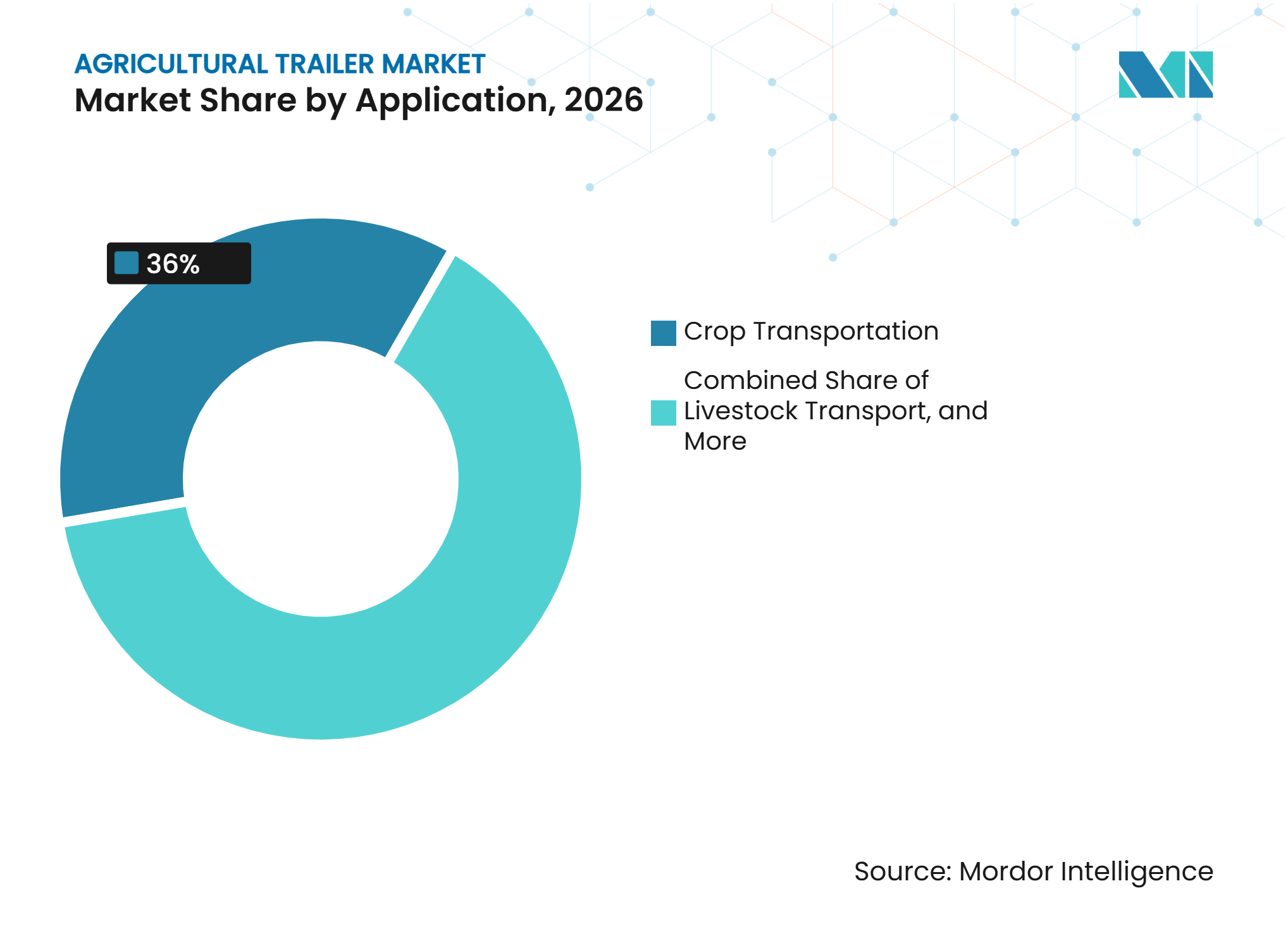
Crop Transportation Lead While Livestock Transport Grows FastestCrop transportation accounted for 36% of the market share in 2026. Crop trailers move cereal, oilseed, and vegetable volumes from fields to storage facilities, processing points, and distribution centers. Demand is particularly strong during harvest periods, when timely movement of harvested crops helps prevent combine delays and maintain field productivity. Trailer capacity and unloading efficiency are important considerations for farms handling large seasonal harvests. Grain trailers support bulk crop movement, while specialized bodies accommodate different types of produce and handling requirements. Their use across arable farming systems makes crop transportation a major application for agricultural trailers.
Livestock transportation is forecast to grow at a CAGR of 6.4% from 2027 to 2032, supported by consolidation in beef, pork, and poultry supply chains. This application requires trailers that meet animal welfare and ventilation standards while maintaining efficient loading and unloading. Agricultural input transportation supports field operations by moving fertilizer, seed, and crop protection products, while manure and slurry applications use purpose-built tankers for controlled spreading and injection. Equipment transport also benefits from the growing size and weight of tractors, harvesters, and planters, particularly when fleets serve several locations. In June 2025, Welgro and AB Texel jointly developed the FLEXbulk, a five-chamber semi-trailer designed to transport animal feed to livestock farms and raw feed materials to manufacturers, enabling multiple cargo flows to be combined and reducing empty journeys.

Geography Analysis
Europe
Europe accounted for 36% of market share in 2026. Germany, France, and Poland have productive arable areas, active contractor networks, established dealer service networks, and a replacement cycle shaped by mature, mechanized fleets. The average size of agricultural holdings in the European Union was 24.7 hectares in 2023, reflecting the scale of agricultural operations across the region. This supports demand for tandem and triple-axle units that can handle larger farm workloads. European agricultural trailer manufacturers must account for road-weight and dimensional restrictions, applicable vehicle type-approval requirements, and emerging data-access obligations for connected equipment. These regulatory frameworks influence trailer configurations, payload specifications, product certification, and the development of connected features.
Asia-Pacific
Asia-Pacific is forecast to grow at a CAGR of 6.5% from 2027 to 2032, making it the fastest-growing regional segment. China, India, and Australia each support demand through different farm structures, crop systems, and equipment needs. China expanded its agricultural machinery scrappage and renewal subsidy program in February 2025, adding six machinery categories to the eligible list and increasing subsidy ceilings for selected equipment to accelerate machinery replacement and modernization. India supports smaller and mid-range equipment through mechanization programs, while Australia requires high-capacity chaser-bin and grain-cart combinations for broadacre grain operations. Japan relies on compact trailers suited to its paddy-focused production system, whereas China's agricultural trailer market is supported by ongoing agricultural mechanization and equipment modernization initiatives. These varied regional requirements create opportunities for specialist manufacturers to serve diverse agricultural transportation needs beyond Europe.
North America, South America, the Middle East, and Africa
North America benefits from farm consolidation and contractor demand in the Midwest and Great Plains. South America offers opportunities as mechanization expands across Brazil's soybean and corn-producing areas and Argentina's beef and grain logistics chains, although commercial farms coexist with fragmented smallholder structures. In the Middle East, food-security investments support demand for agricultural equipment used in controlled-environment and high-value crop logistics. Africa's market development is linked to improvements in equipment financing and road infrastructure, with South Africa and Nigeria serving as important markets. Local distributor partnerships can also support manufacturers seeking to expand their presence across the region.
Competitive Landscape
Market Concentration
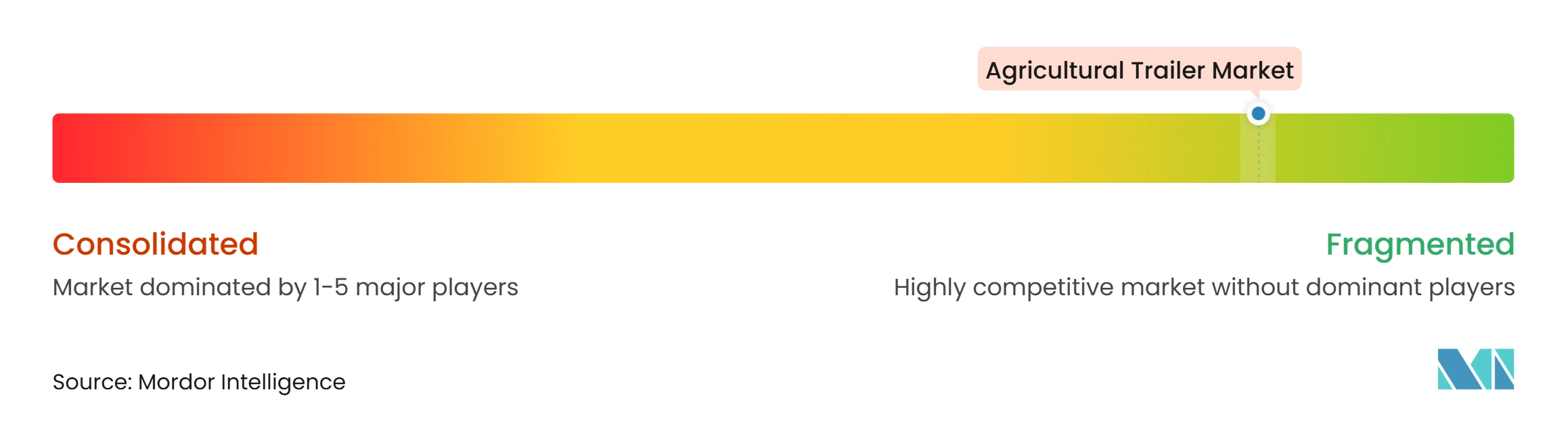
The agricultural trailer market was fragmented in 2026, with competition shaped by regional service networks, spare parts availability, and compliance with local road and axle-load requirements. Ets JOSKIN SA and Fliegl Agrartechnik GmbH compete through broad product portfolios covering tipping, push-off, bale, and livestock trailers. In June 2024, KRONE Group announced an investment in Schwarzmüller Group and a strategic partnership to expand production networks and strengthen service coverage across the European commercial vehicle market. Product breadth and local dealer coverage remain important because users often need different trailer types across a single farming year.
Modular product architecture is becoming increasingly important as buyers seek greater utility from a trailer platform. Krampe Fahrzeugbau GmbH's FlexMount system enables selected accessories to be installed or retrofitted without drilling or welding, making it easier for operators to adapt trailer configurations to changing requirements. The Radium 830S can also be equipped with an AI rear-view camera with person-detection capabilities to support operator safety during unloading. These features demonstrate how manufacturers can compete through adaptable design and safety technology rather than capacity alone.
Metal-Fach Sp. z o.o., Pronar Sp. z o.o., and Farmtech d.o.o. compete in parts of Central and Eastern Europe through multi-axle specifications at lower price points. EU type approval and UNECE braking and safety requirements can strengthen the position of manufacturers that already manage certification across several countries. Precision load sensors, cameras, and ISOBUS connectivity are increasingly relevant to large farms and contractors. Demco Manufacturing Co. focuses on grain, liquid-tender, side-dump, and header-transport products for North American operating conditions. The agricultural trailer market remains competitive because regional suppliers can defend their positions through service, pricing, and knowledge of local standards.
Agricultural Trailer Industry Leaders
-
Ets JOSKIN SA
-
Fliegl Agrartechnik GmbH
-
Bernard Krone Holding SE & Co. KG
-
Wielton S.A.
-
Richard Western Ltd.
- *Disclaimer: Major Players sorted in no particular order
Agricultural Trailer Market Companies Covered in this Report
- Ets JOSKIN SA
- Fliegl Agrartechnik GmbH
- Bernard Krone Holding SE & Co. KG
- Wielton S.A.
- Richard Western Ltd.
- Humbaur GmbH.
- Krampe Fahrzeugbau GmbH
- Pöttinger Landtechnik GmbH
- Metal-Fach Sp. z o.o.
- Pronar Sp. z o.o.
- Bailey Trailers Limited
- Farmtech d.o.o.
- Wilson Trailer Company
- M.H. EBY, Inc.
- Demco Manufacturing Co.
Recent Industry Developments in Agricultural Trailer Market
- October 2026: Leboulch, a JOSKIN brand, introduced the Galion bale trailer in trailed and semi-mounted configurations, with lengths ranging from 6 m to 11.7 m. The trailer features a 110 cm floor height and adjustable front and rear ladders for transporting round and square bales. Manufactured in Normandy, the model also incorporates galvanized components and configurable braking systems.
- July 2026: Krampe Fahrzeugbau GmbH expanded its patented FlexMount modular mounting system to BigBody body tippers and RamBody push-off trailers, following its introduction on FlexBody three-way tippers. The system allows selected accessories, including covers, lighting, cameras, access ladders, and load-securing equipment, to be installed or retrofitted without drilling or welding.
- January 2026: JOSKIN S.A. presented a double-axle Delta-Cap three-way tipping trailer at LAMMA 2026 in the United Kingdom, with a stated volume of 19 m³. The model expands the company's product offering beyond its established tanker and chain-slat silage trailer lines.
Global Agricultural Trailer Market Report Scope
Agricultural trailers are non-powered transport units designed to be towed by tractors or other agricultural vehicles to carry crops, livestock, farm inputs, machinery, and other materials used in farming operations.
The Agricultural Trailer Market is Segmented by Product Type (Tipping Trailers, Flatbed Trailers, Grain Trailers, Equipment-Transport Trailers, Tank Trailers, Bale Trailers, Livestock Trailers, and Other Product Types), by Capacity (Up to 10 Tons, Above 10–20 Tons, and Above 20 Tons), by Axle Type (Single Axle, Tandem Axle, Triple Axle, and Four-or-More-Axle), by Application (Crop Transportation, Livestock Transport, Agricultural Input Transportation, Manure and Slurry Handling, Farm Equipment Transport, and Other Transportation), and by Geography (North America, South America, Europe, Asia-Pacific, Middle East, and Africa). The Market Forecasts are Provided in Terms of Value (USD).
Segmentation Overview
| Tipping Trailers |
| Flatbed Trailers |
| Grain Trailers |
| Equipment-Transport Trailers |
| Tank Trailers |
| Bale Trailers |
| Livestock Trailers |
| Other Product Types |
| Up to 10 Tons |
| Above 10 to 20 Tons |
| Above 20 Tons |
| Single Axle |
| Tandem Axle |
| Triple Axle |
| Four-or-More-Axle |
| Crop Transportation |
| Livestock Transport |
| Agricultural Input Transportation |
| Manure and Slurry Handling |
| Farm Equipment Transport |
| Other Transportation |
| North America | United States |
| Canada | |
| Mexico | |
| Rest of North America | |
| South America | Brazil |
| Argentina | |
| Rest of South America | |
| Europe | Germany |
| France | |
| United Kingdom | |
| Italy | |
| Russia | |
| Rest of Europe | |
| Asia-Pacific | China |
| India | |
| Japan | |
| Australia | |
| Rest of Asia-Pacific | |
| Middle East | Turkey |
| Saudi Arabia | |
| United Arab Emirates | |
| Rest of Middle East | |
| Africa | South Africa |
| Nigeria | |
| Rest of Africa |
| By Product Type | Tipping Trailers | |
| Flatbed Trailers | ||
| Grain Trailers | ||
| Equipment-Transport Trailers | ||
| Tank Trailers | ||
| Bale Trailers | ||
| Livestock Trailers | ||
| Other Product Types | ||
| By Capacity | Up to 10 Tons | |
| Above 10 to 20 Tons | ||
| Above 20 Tons | ||
| By Axle Type | Single Axle | |
| Tandem Axle | ||
| Triple Axle | ||
| Four-or-More-Axle | ||
| By Application | Crop Transportation | |
| Livestock Transport | ||
| Agricultural Input Transportation | ||
| Manure and Slurry Handling | ||
| Farm Equipment Transport | ||
| Other Transportation | ||
| By Geography | North America | United States |
| Canada | ||
| Mexico | ||
| Rest of North America | ||
| South America | Brazil | |
| Argentina | ||
| Rest of South America | ||
| Europe | Germany | |
| France | ||
| United Kingdom | ||
| Italy | ||
| Russia | ||
| Rest of Europe | ||
| Asia-Pacific | China | |
| India | ||
| Japan | ||
| Australia | ||
| Rest of Asia-Pacific | ||
| Middle East | Turkey | |
| Saudi Arabia | ||
| United Arab Emirates | ||
| Rest of Middle East | ||
| Africa | South Africa | |
| Nigeria | ||
| Rest of Africa | ||
Key Questions Answered in the Report
What is the forecast value of the agricultural trailers market?
The agricultural trailer market is forecast to grow from USD 34.48 billion in 2027 to USD 44.70 billion by 2032, at a CAGR of 5.33% from 2027 to 2032.
Which product type accounts for the largest share of the agricultural trailer market?
Tipping trailers accounted for 40.9% of the agricultural trailer market share in 2026, supported by their use in transporting grain, silage, root crops, compost, and other bulk agricultural materials.
Which agricultural trailer product type is growing fastest?
Flatbed trailers are forecast to grow at a CAGR of 7.3% from 2027 to 2032, supported by demand from contractors and large farms for transporting machinery, oversized implements, and equipment between fields and operating sites.
Which region is forecast to grow fastest in the agricultural trailer market?
Asia-Pacific is forecast to grow at a CAGR of 6.5% from 2027 to 2032, supported by mechanization programs and growth in commercial farming.