
Agricultural Grow Bags Market Size and Share
Market Overview
| Study Period | 2022 - 2032 |
|---|---|
| Market Size (2027) | USD 478 Million |
| Market Size (2032) | USD 645 Million |
| Growth Rate (2027 - 2032) | 6.18 % |
| Fastest Growing Market | Asia-Pacific |
| Largest Market | Asia-Pacific |
| Market Concentration | Medium |
Major Players *Disclaimer: Major Players sorted in no particular order Image © Mordor Intelligence. Reuse requires attribution under CC BY 4.0. | |
Agricultural Grow Bags Market Analysis by Mordor Intelligence
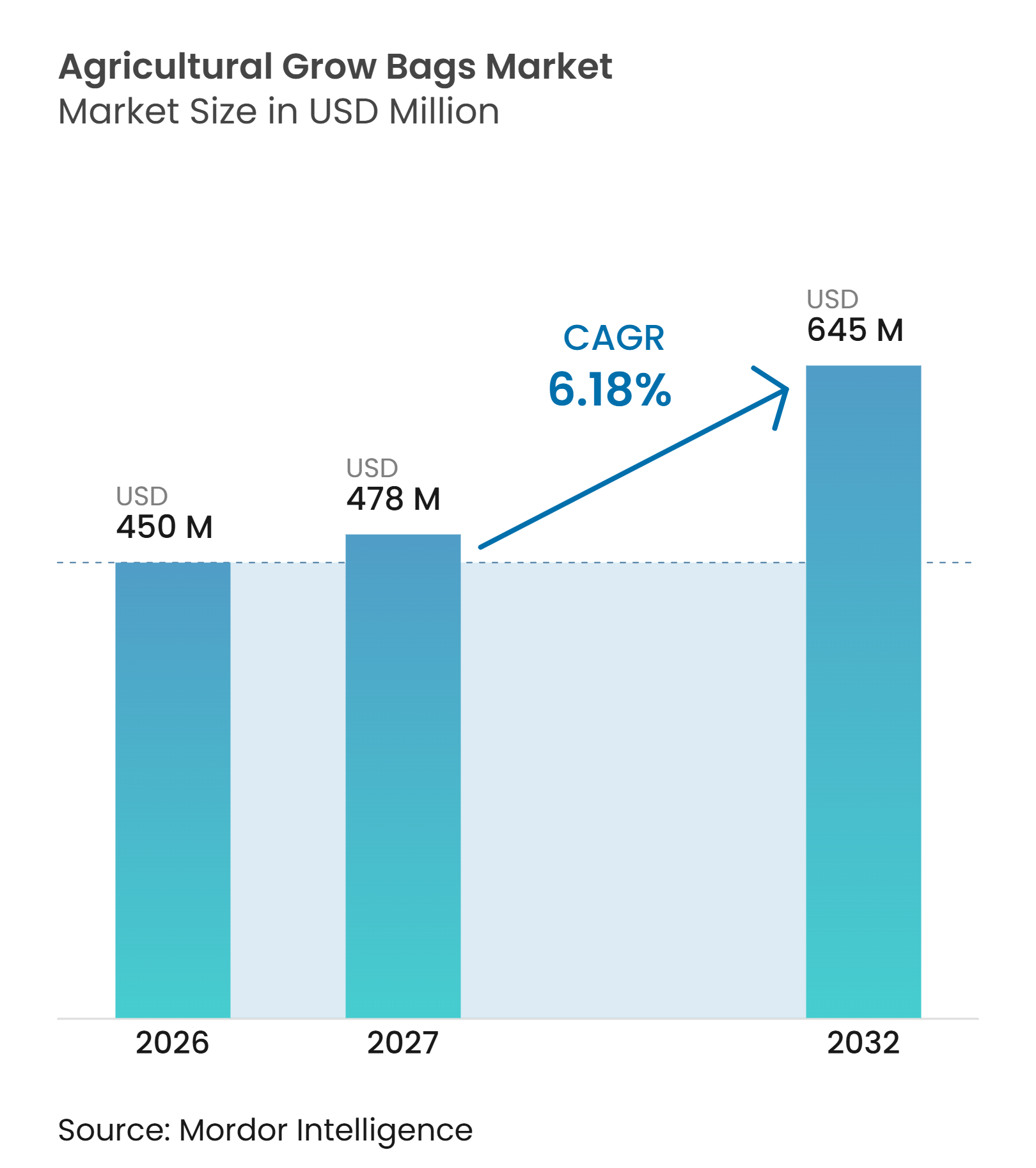
The agricultural grow bags market size was valued at USD 450 million in 2026 and is forecast to grow from USD 478 million in 2027 to USD 645 million by 2032, at a CAGR of 6.18% from 2027 to 2032. The market is supported by commercial growers shifting from soil beds to controlled-substrate systems for vegetables, berries, nursery plants, and ornamental crops, particularly where consistent conditions are required across repeated harvest cycles. Grow bags combine a container with a managed root-zone medium, making water retention, drainage, and nutrient application more consistent during a crop cycle and allowing producers to replace the growing medium without the soil-treatment requirements of conventional beds. The market benefits from the expansion of protected cultivation, as bags are compatible with drip irrigation, fertigation, crop replacement schedules, and the higher planting densities used by commercial greenhouse operators for tomatoes, peppers, strawberries, cucumbers, and other high-value crops.
Key Report Takeaways
-
- By product type, upright grow bags accounted for 74% of the agricultural grow bags market share in 2026 and are forecast to grow at a CAGR of 6.5% from 2027 to 2032.
- By material, plastic-based grow bags accounted for 42% of the agricultural grow bags market size in 2026, while biodegradable grow bags are forecast to grow at a CAGR of 9.0% from 2027 to 2032.
- By application, fruits and vegetables accounted for 48% of the market share in 2026, while herbs and medicinal crops are forecast to grow at a CAGR of 8.4% from 2027 to 2032.
- By distribution channel, offline channels accounted for 62% of the market share in 2026, while online channels are forecast to grow at a CAGR of 8.0% from 2027 to 2032.
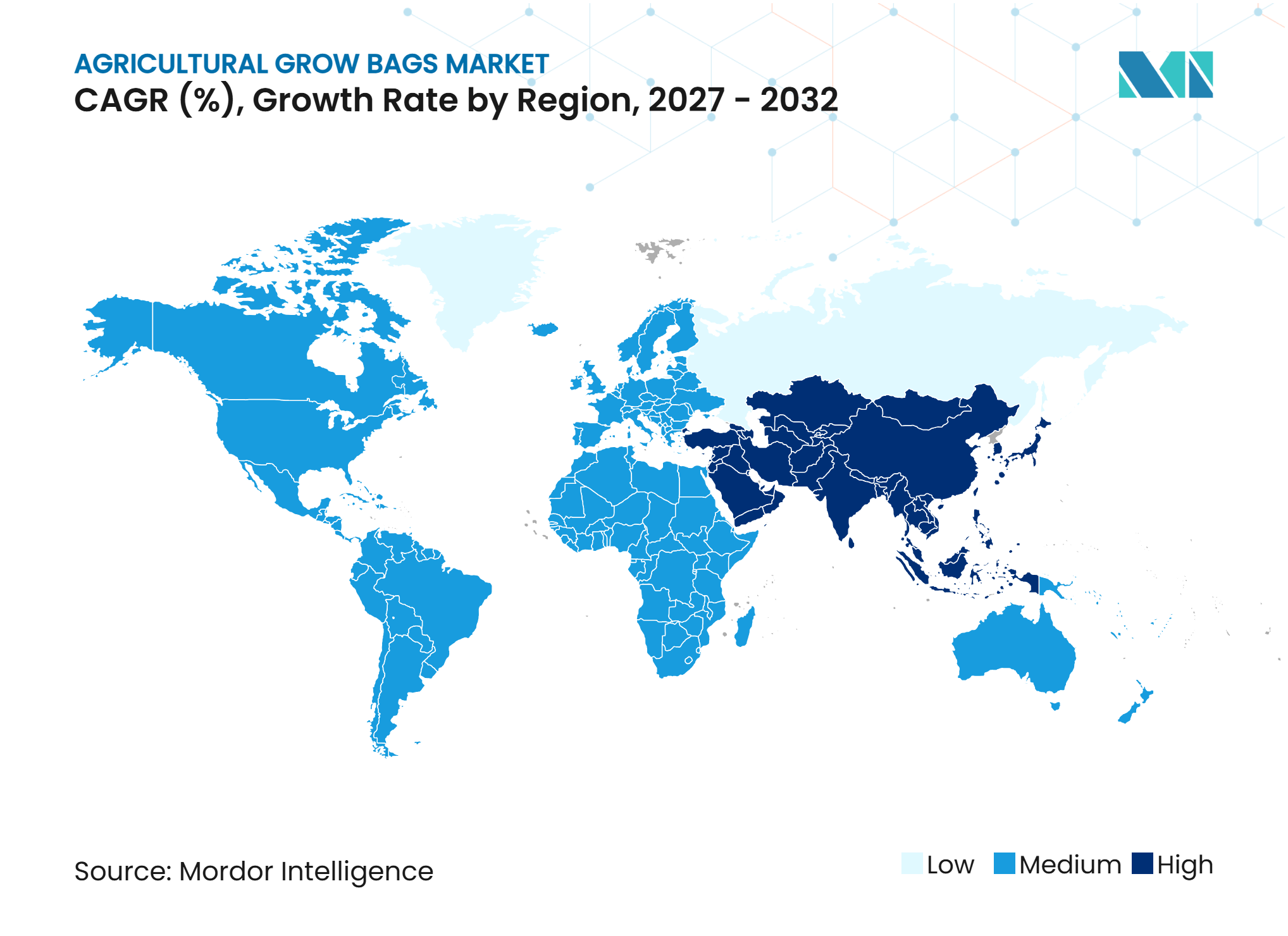
- By geography, Asia-Pacific accounted for 35% of the market share in 2026 and is forecast to grow at a CAGR of 7.2% from 2027 to 2032.
Note: Market numbers in this report are based on Mordor Intelligence's proprietary estimation framework, which combines nine months of actuals with Q4 projections for base year 2026.
Market Trends and Insights
Drivers Impact Analysis of Agricultural Grow Bags Market*
| Driver | (~) % Impact on CAGR Forecast | Geographic Relevance | Impact Timeline |
|---|---|---|---|
| Protected Cultivation and Soilless Farming Adoption | +1.8% | Global, with peak relevance in China, India, Spain, the Netherlands, and Brazil | Medium term (2-4 years) |
| Water-Efficient Drip Irrigation Integration | +1.2% | Asia-Pacific and Middle East core, with expansion into South America | Short term (≤ 2 years) |
| Commercial Nursery and Soft-Fruit Production Expansion | +1.0% | Europe and North America core, with expansion into Asia-Pacific | Medium term (2-4 years) |
| Government Support for Controlled-Environment Agriculture | +0.7% | Asia-Pacific core, Middle East, South America | Long term (≥ 4 years) |
| Productivity Gains in Degraded or Low-Quality Soils | +0.5% | Asia-Pacific, Africa, and South America | Medium term (2-4 years) |
| Crop-Specific Coco-Chip and Coco-Pith Formulations | +0.4% | Global, with early gains in the Netherlands, India, Spain, and Australia | Short term (≤ 2 years) |
| Source: Mordor Intelligence | |||
Protected Cultivation and Soilless Farming Adoption
Grow bags provide an alternative growing environment where poor soil quality, limited land availability, or unfavorable climate conditions constrain open-field production. The Food and Agriculture Organization of the United Nations (FAO) states that hydroponic systems can enable year-round crop production in challenging climates when integrated with protected cultivation technologies. These systems can also provide a water-saving and input-efficient approach to cultivation, particularly in areas with poor soil quality or limited arable land [1]. The adoption of greenhouse and soilless cultivation supports demand for grow bags by enabling growers to maintain more controlled root-zone conditions, manage irrigation, and renew growing media between crop cycles. This is particularly relevant in areas affected by soil contamination, limited arable land, and shorter outdoor growing seasons, linking grow bag demand to investments in greenhouse infrastructure and controlled-environment production.
Water-Efficient Drip Irrigation Integration
Drip irrigation complements grow bag cultivation by delivering water and nutrients directly to the growing medium, allowing growers to manage moisture levels within the root zone. A 2025 study published in the Journal of the Saudi Society of Agricultural Sciences recorded a green bean yield of 33.6 metric tons per hectare under subsurface drip irrigation at 80% of crop water requirements, compared with 28.7 metric tons per hectare under surface drip irrigation at the same irrigation level in Egypt [2]. The findings indicate that subsurface drip irrigation can improve crop productivity under specific greenhouse conditions. The integration of drip irrigation with grow bags supports demand by enabling more precise water and nutrient delivery than conventional soil-based cultivation, while sensor-based monitoring can further improve control over growing-medium moisture and nutrient levels.
Commercial Nursery and Soft-Fruit Production Expansion
Commercial nurseries and soft-fruit producers use grow bags to maintain consistent growing conditions across repeated production cycles. Strawberry, blueberry, and raspberry cultivation benefits from controlled root zones that support drainage, aeration, and moisture management while reducing dependence on variable soil conditions. In these applications, substrate composition, including chip size and the pith-to-chip ratio, influences drainage and moisture retention during periods of high water demand. Consistent and documented substrate blends also help commercial growers maintain uniform growing conditions and predictable crop schedules. The use of grow bags in nursery operations, including container propagation of ornamental and forest plants, further broadens demand beyond export-oriented greenhouse production. As commercial nursery capacity and protected soft-fruit cultivation expand, the need for standardized growing containers and managed substrates can support growth in the agricultural grow bags market.
Government Support for Controlled-Environment Agriculture
Government support for protected cultivation can reduce the initial investment required for growers to establish greenhouse production systems. In India, the National Horticulture Board (NHB) provides credit-linked subsidies under the Mission for Integrated Development of Horticulture (MIDH) for eligible commercial horticulture projects in protected conditions, covering 50% of the eligible project cost, subject to a maximum subsidy of INR 1 crore (USD 0.10 million) per project. Additional assistance is available for eligible projects in northeastern, Himalayan, and scheduled areas. These initiatives can indirectly support the agricultural grow bags market by encouraging investments in polyhouses, net houses, and hydroponic greenhouses, where grow bags are used as growing containers. Similarly, food security initiatives in the United Arab Emirates and Saudi Arabia are supporting investments in controlled-environment agriculture, including hydroponic and substrate-based cultivation facilities. The expansion of these projects can create additional demand for grow bags and associated growing media.
Restraints Impact Analysis of Agricultural Grow Bags Market*
| Restraint | (~) % Impact on CAGR Forecast | Geographic Relevance | Impact Timeline |
|---|---|---|---|
| High Upfront Cost for Premium Fabric and Substrate Grow Bags | -0.8% | Highest for small growers in India, Africa, Brazil, and Mexico | Medium term (2-4 years) |
| Volatile Polymer, Coir, and Freight Costs | -0.7% | Global, with acute impact in import-dependent markets and long-distance supply corridors | Short term (≤ 2 years) |
| Limited Collection Systems for Used Grow Bags | -0.4% | Europe, North America, and Australia, with peak impact in advanced greenhouse clusters | Long term (≥ 4 years) |
| Inconsistent Quality and Limited Product Standardization | -0.3% | Highest where imported and informal products compete with certified commercial systems | Medium term (2-4 years) |
| Source: Mordor Intelligence | |||
High Upfront Cost for Premium Fabric and Substrate Grow Bags
Premium fabric grow bags and pre-filled coco slabs generally involve higher upfront costs than basic polyethylene nursery bags and conventional growing media. Additional expenses for substrate buffering, pH calibration, and crop-specific formulations can further increase initial investment requirements. These costs can extend the payback period for growers in price-sensitive markets, particularly in Africa and South America, where access to affordable financing and subsidies may be limited. Commercial growers with greater access to capital and established crop contracts are better positioned to absorb these expenses than small-scale producers. Consequently, higher initial investment can restrict the adoption of premium grow bag systems and limit market penetration among cost-conscious growers.
Volatile Polymer, Coir, and Freight Costs
Polymer resin, coconut coir, and ocean freight are key input costs for agricultural grow bag manufacturers. Fluctuations in coir availability and transportation costs can disrupt procurement schedules and increase production expenses. In Vietnam, adverse weather conditions, including prolonged drought, irregular rainfall, and saltwater intrusion, affected coconut production in Ben Tre Province during 2025. Lower coconut availability put pressure on raw material procurement for coconut fiber processors and downstream coir product manufacturers. Shipping disruptions on Asia-Europe routes also increased transit distances and created uncertainty around delivery schedules for imported substrate materials. These pressures can narrow manufacturer margins and lead to higher prices for growers, particularly when suppliers have limited flexibility to absorb cost increases. In Coimbatore, India, coir units reduced operations from two daily shifts to one in September 2025 amid coconut husk shortages, labor constraints, and export-related challenges. Such cost and supply fluctuations can affect product affordability and limit manufacturers' ability to maintain consistent supply to the agricultural grow bags market.
*Our forecasts treat driver/restraint impacts as directional, not additive. The impact forecasts reflect baseline growth, mix effects, and variable interactions.
Agricultural Grow Bags Market Segment Analysis
By Product Type:
Upright Bags Lead and Grow FastestUpright grow bags accounted for 74% of the market share in 2026 and are forecast to grow at a CAGR of 6.5% from 2027 to 2032. Their format aligns with greenhouse layouts for tomatoes, peppers, and berries, where plants are trellised vertically. The design supports drip irrigation and fertigation schedules in high-density plantings and makes substrate replacement easier between crop cycles. Commercial growers in Europe, North America, and Asia-Pacific use this format because it fits established protected-cultivation workflows.
Jiffy Group offers an integrated coco growing system that combines propagation blocks with grow bags. The system allows roots to grow from the propagation block into the surrounding grow bag after transplantation, supporting continued root development during crop cultivation . Horizontal bags are used for strawberry and other soft-fruit crops, where flat placement supports runner management and in-row spacing. Open-top bags and specialty blueberry containers address narrower applications, including Japanese and other niche soft-fruit markets. These crop-specific formats offer additional growth opportunities in the agricultural grow bags market, even though upright bags remain the standard commercial option.
By Material:
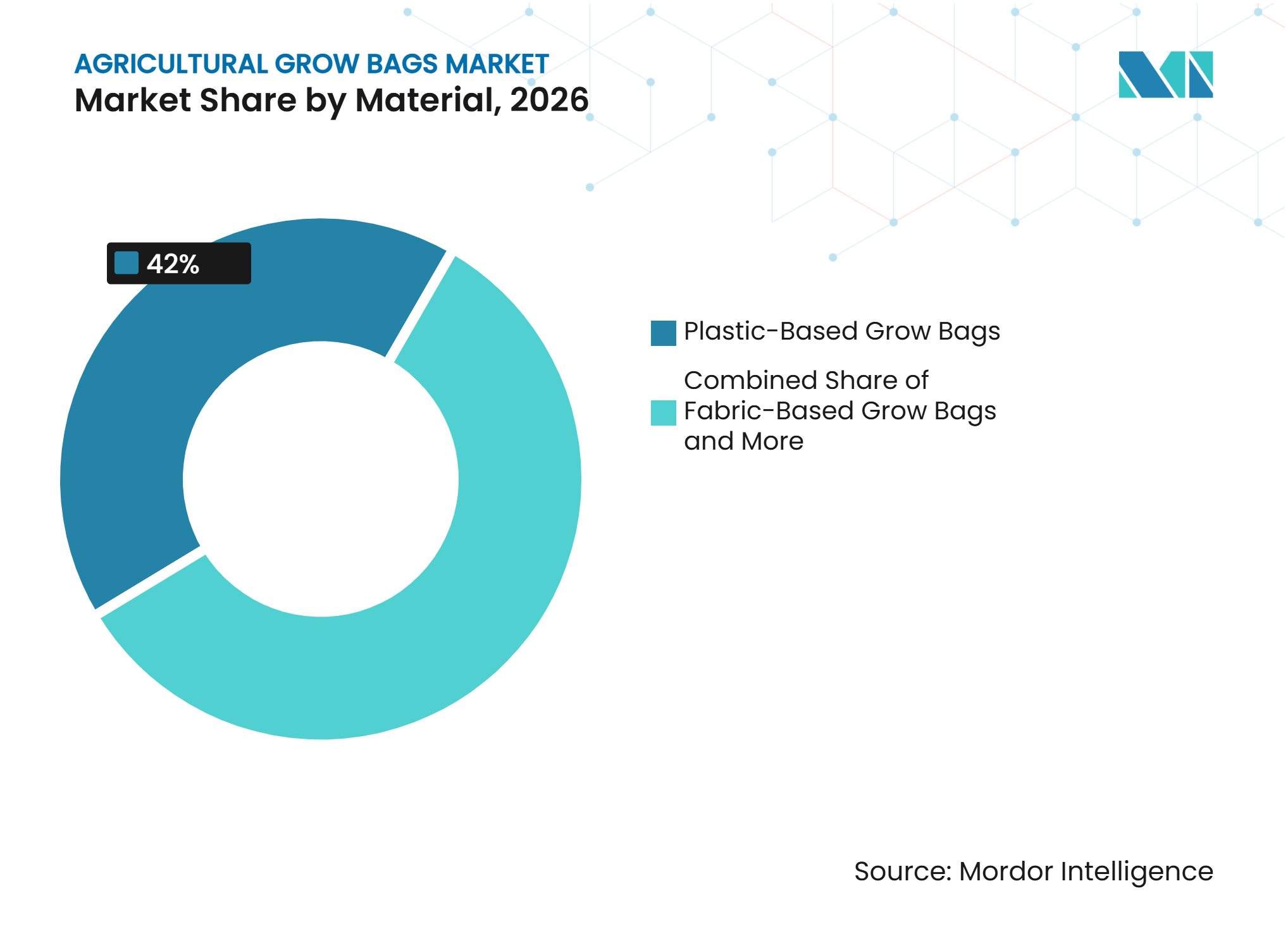
Plastic-Based Bags Lead, While Biodegradable Formats Gain GroundPlastic-based grow bags accounted for 42% of the market value in 2026, supported by their lower cost, established ultraviolet stabilization, and widespread familiarity among growers. Fabric-based grow bags are used in applications where air pruning can help limit root circling, particularly in nursery and container cultivation. Natural fiber-based grow bags are used in home gardening and ornamental applications, where materials such as coir, jute, and sisal meet specific grower preferences. These material options allow suppliers to address different crop requirements and price points.
Biodegradable grow bags are forecast to grow at a CAGR of 9.0% from 2027 to 2032. Wageningen University & Research reported that biodegradable grow bags maintained the required mechanical strength throughout a tomato crop cycle and supported crop performance comparable to that of conventional bags [3]. Following harvesting, the bags demonstrated industrial compostability and met the requirements of EN 13432. In March 2025, Jiffy Group increased the recycled plastic content in all new grow bag orders to 40%, up from 20%, reducing its reliance on virgin plastic in its horticultural products. These developments highlight the growing importance of material performance, recycled content, and end-of-life considerations in the agricultural grow bags market.



By Application:
Fruits and Vegetables Lead, While Herbs and Medicinal Crops Grow FastestFruits and vegetables accounted for 48% of the market share in 2026. Tomato, strawberry, pepper, and cucumber producers use grow bags because consistent root zones can support high-density greenhouse production. Grow bags can also reduce the need for soil sterilization or fumigation between crop cycles, offering operational benefits as labor costs increase. Controlled-environment cultivation in Europe, North America, and Asia-Pacific sustains demand from commercial vegetable growers.
Herbs and medicinal crops are forecast to grow at a CAGR of 8.4% from 2027 to 2032. These crops require precise substrate management, as growing conditions can influence yield, crop quality, and the consistency of plant-based ingredients. Flowers and ornamental plants are supported by the established use of grow bags in commercial floriculture and nursery production across markets such as the Netherlands, Colombia, and India. Other commercial applications include tobacco seedling production and tree nurseries. The need for traceability and food safety documentation in soft fruit production can further support the adoption of managed substrate systems.
Distribution Channel:
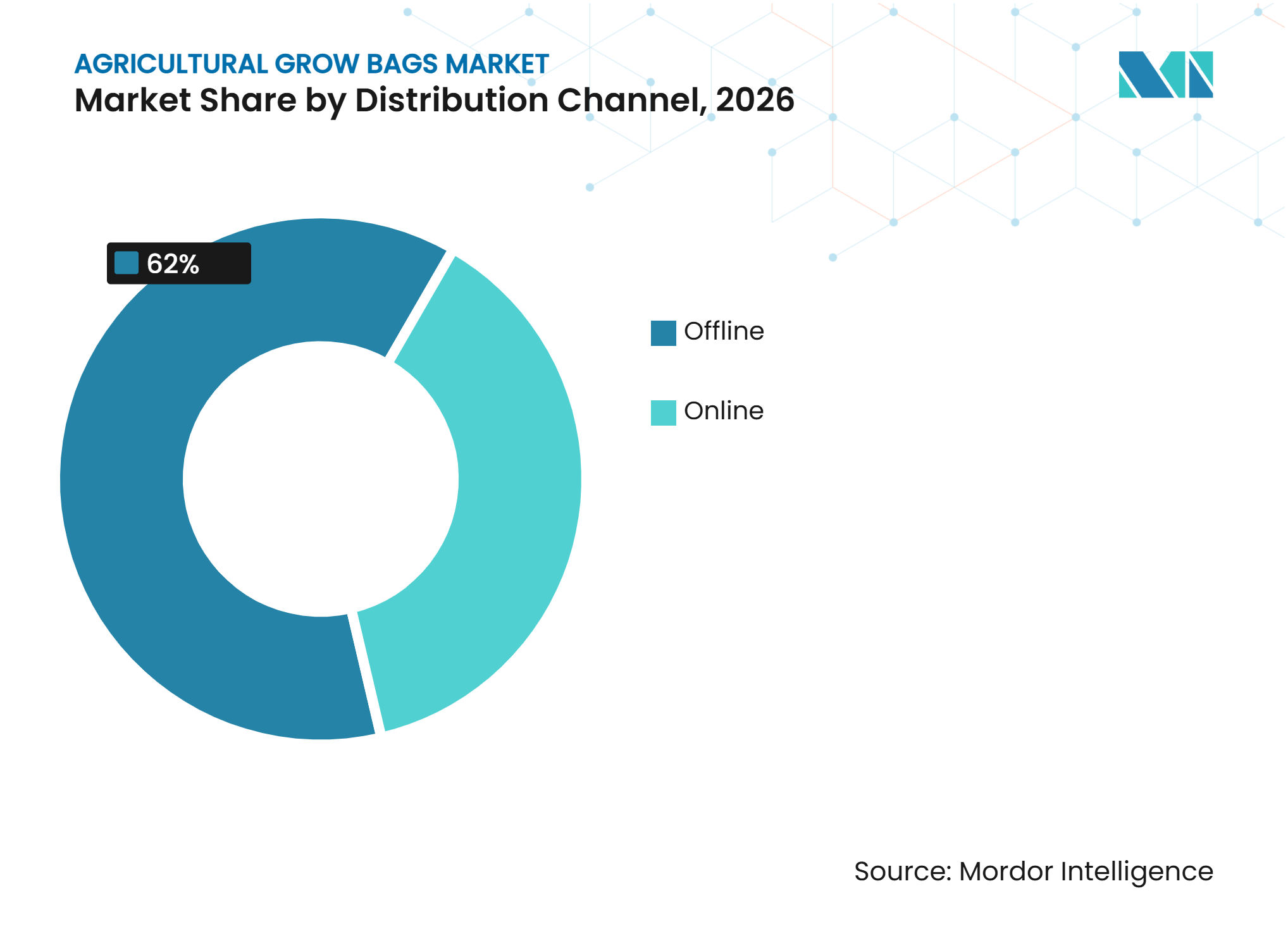
Offline Channels Lead as Online Distribution ExpandsOffline channels accounted for 62% of the market share in 2026. Garden centers, nurseries, wholesalers, and specialist distributors remain important because commercial bags and substrate slabs often require pallet delivery and technical support. Established supplier relationships are especially important for large-volume greenhouse purchasers. Physical distribution also provides local advice and recurring logistics for professional growers. These advantages keep offline channels central to commercial procurement.
Online channels are forecast to grow at a CAGR of 8.0% from 2027 to 2032. Digital platforms can improve access for smaller commercial growers and home gardeners who lack a local specialist retailer. VIVOSUN uses direct-to-consumer online retail to reach home gardeners, hobby growers, and small-scale cultivators, extending its distribution beyond traditional agricultural supply channels. Online channels complement professional procurement rather than replace it, as commercial operators still require large-volume delivery and technical support.

Geography Analysis
Asia-Pacific
Asia-Pacific accounted for 35% of the market share in 2026 and is forecast to grow at a CAGR of 7.2% from 2027 to 2032. China's investment in controlled-environment agriculture and food security infrastructure supports the adoption of substrate systems. India adds demand through subsidized polyhouses and a large base of growers not yet using greenhouse systems. The National Horticulture Board provided credit-linked subsidies covering up to 50% of eligible project costs for protected cultivation projects during fiscal year 2025–26, subject to a maximum subsidy of INR 1 crore (USD 0.10 million) per project. Australia contributes stable premium demand from berry and tomato production, while Japan and South Korea present opportunities through precision horticulture and specialty e-commerce.
North America
North America has mature greenhouse operations in the United States and Canada that use coco substrate and fabric containers for vegetables and berries. Higher-technology greenhouses and high tunnels support the use of grow bags, as bags allow root-zone management and replacement between crop cycles. In July 2025, Canada's Premier Tech integrated Dutch growing media producer Van der Knaap Group into its Growers and Consumers division, combining their substrate portfolios and production capabilities to strengthen support for growers across North America and Europe. Mexico represents a separate demand base through the export of vegetables cultivated in expanding greenhouse systems. Its water-stressed northern regions also align drip irrigation with bag-based production. The region remains oriented toward high-value crops and technically managed production systems.
Diverse Growth Across Remaining Markets
Europe's agricultural grow bags market is supported by established greenhouse and horticultural production in countries such as Germany, France, the Netherlands, and Spain. Growing attention to recycled materials, biodegradable alternatives, and end-of-life management is creating opportunities for suppliers offering differentiated growing bag materials. Spain and the Netherlands remain important markets for professional coco grow bags used in strawberry, tomato, and ornamental production. South America benefits from Brazil's berry and tropical fruit production and Argentina's nursery sector, which support demand for grow bags in commercial cultivation. In the Middle East, food security initiatives in Saudi Arabia and the United Arab Emirates are supporting investments in hydroponic and greenhouse facilities, creating opportunities for grow bag adoption. Africa also presents growth opportunities in South Africa, Kenya, and Egypt, although financing constraints, infrastructure gaps, and distribution challenges among smallholder growers continue to limit market penetration.
Competitive Landscape
Market Concentration
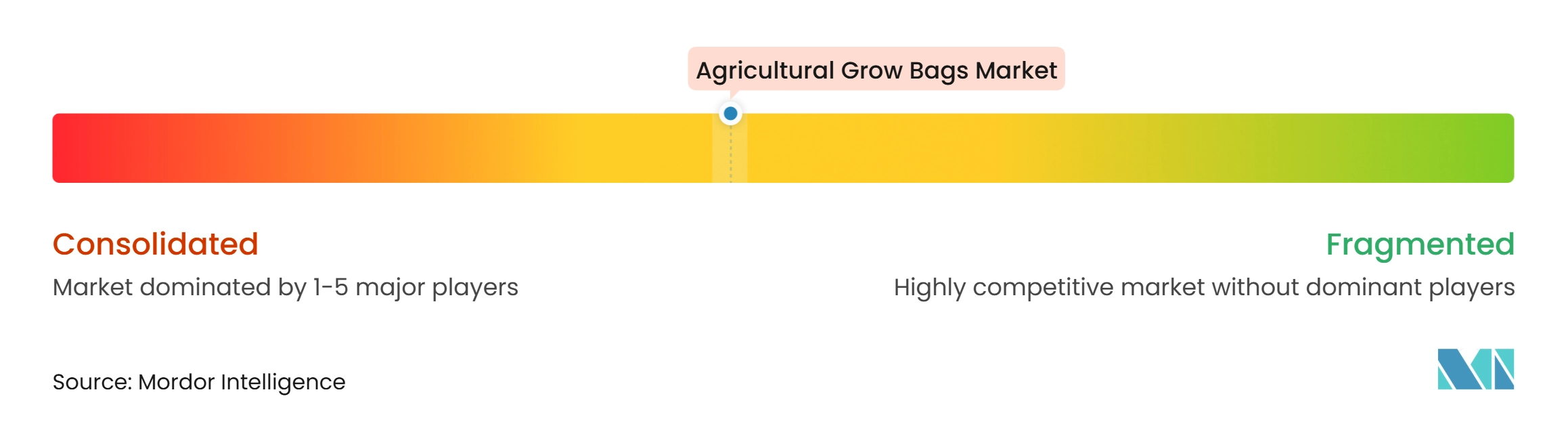
The agricultural grow bags market was moderately consolidated in 2026, with competition shaped by product portfolios, manufacturing capabilities, access to raw materials, pricing, and distribution networks. Dutch Plantin B.V. offers a portfolio of coco-based grow bags, supported by its manufacturing facilities in India and coconut sourcing networks in India and Sri Lanka. Jiffy Products International B.V. offers several coco-based grow bag variants, including High Yield, Husk Chips, and 50-50 substrate blends, available in Finesse and Essence configurations. Regional producers, particularly in India, China, and Australia, compete through local supply, pricing, and proximity to growers.
In July 2025, Premier Tech integrated Van der Knaap Group B.V. into its Growers and Consumers division, adding expertise in coco-based growing media and expanding its international manufacturing footprint. Van der Knaap Group B.V.'s existing production facilities in Sri Lanka, India, and the Dominican Republic further strengthened the combined group's access to coconut-based raw materials and horticultural supply networks. In March 2025, Jiffy Group increased the recycled plastic content in its grow bag orders to 40%, up from 20% previously, as part of its efforts to reduce virgin plastic consumption. Van der Knaap Group B.V. continued expanding production capacity at its existing facilities in Sri Lanka, India, and the Dominican Republic to meet rising demand for coco-based growing media.
Rain Science Grow Bags and High Caliper Growing LLC target commercial cannabis and high-value vegetable producers, with product positioning focused on root-zone performance and crop management. VIVOSUN, by comparison, focuses on direct-to-consumer digital retail for home and hobby growers. Other areas of product development include biodegradable polymers, sensor-enabled root-zone monitoring, and double-layer coir constructions, addressing demand for improved material performance, resource efficiency, and traceable sourcing. Overall, competition depends on product quality, material innovation, supply continuity, distribution reach, and pricing. International suppliers leverage broad portfolios and established supply relationships, while regional manufacturers remain competitive through local availability, customer relationships, and cost-effective alternatives.
Agricultural Grow Bags Industry Leaders
-
Dutch Plantin B.V.
-
Jiffy Products International B.V.
-
FibreDust LLC
-
Van der Knaap Group B.V.
-
Enduro Pack Pty Ltd
- *Disclaimer: Major Players sorted in no particular order
Agricultural Grow Bags Market Companies Covered in this Report
- Dutch Plantin B.V.
- Jiffy Products International B.V.
- FibreDust LLC
- Van der Knaap Group B.V.
- Enduro Pack Pty Ltd
- Rain Science Grow Bags
- Pelemix Ltd
- Growinnovate Pty Ltd
- Cape Agricultural Products (Pty) Ltd
- Singhal Industries Private Limited
- CoCo Green (Pvt.) Ltd.
- Pioneer Agro Industry
- Sinowell Trading Limited (VIVOSUN)
- High Caliper Growing LLC
- Averna & Dudeck Enterprises LLC
Recent Industry Developments in Agricultural Grow Bags Market
- February 2026: Pelemix launched CoirFlex, a grow bag featuring a dual-action coir substrate process, a reflective silver-colored outer layer for root-zone temperature management, and O+ microperforations to improve oxygen availability. The product is available in three substrate formats and is designed to support different crop requirements. Pelemix reported potential yield improvements of up to 15% per crop cycle compared with conventional grow bag designs.
- September 2025: Pelemix introduced coco coir grow bags for strawberry cultivation, featuring pre-washed and buffered substrate in UV-treated polyethylene bags. The products are available in different sizes and substrate mixes to accommodate crop requirements and growing conditions, including greenhouse and open-field cultivation.
- August 2025: Van der Knaap Group B.V. introduced Forteco Fusion, a loose-filled coco grow bag manufactured at its facility in the Netherlands using 100% coco material. Available in 80 cm and 100 cm formats, the product has an air content of approximately 30% by volume and is supplied ready for use. The company made it available year-round, with a few-week lead time, to meet demand for organic substrates in vegetable cultivation.
Global Agricultural Grow Bags Market Report Scope
Agricultural grow bags are specialized containers designed to support plant cultivation by providing a defined space for root growth and substrate retention. They serve as an alternative to conventional in-ground cultivation and rigid pots, offering flexibility in crop placement and growing-system management.
The Agricultural Grow Bags Market Report is Segmented by Product Type (Upright Grow Bags, Horizontal Grow Bags, and Others), by Material (Plastic-Based Grow Bags, Fabric-Based Grow Bags, Natural Fiber-Based Grow Bags, Biodegradable Grow Bags), by Application (Fruits and Vegetables, Flowers and Ornamentals, Herbs and Medicinal Crops, and Other Crops), by Distribution Channel (Online and Offline), and by Geography (North America, South America, Europe, Asia-Pacific, Middle East, and Africa). The Market Forecasts are Provided in Terms of Value (USD).
Segmentation Overview
| Upright Grow Bags |
| Horizontal Grow Bags |
| Others |
| Plastic-Based Grow Bags |
| Fabric-Based Grow Bags |
| Natural Fiber-Based Grow Bags |
| Biodegradable Grow Bags |
| Fruits and Vegetables |
| Flowers and Ornamental Plants |
| Herbs and Medicinal Crops |
| Other Crops |
| Online |
| Offline |
| North America | United States |
| Canada | |
| Mexico | |
| Rest of North America | |
| South America | Brazil |
| Argentina | |
| Rest of South America | |
| Europe | Germany |
| United Kingdom | |
| France | |
| Spain | |
| Italy | |
| Russia | |
| Rest of Europe | |
| Asia-Pacific | China |
| India | |
| Japan | |
| South Korea | |
| Australia | |
| Rest of Asia-Pacific | |
| Middle East | Turkey |
| Saudi Arabia | |
| United Arab Emirates | |
| Rest of Middle East | |
| Africa | South Africa |
| Egypt | |
| Rest of Africa |
| By Product Type | Upright Grow Bags | |
| Horizontal Grow Bags | ||
| Others | ||
| By Material | Plastic-Based Grow Bags | |
| Fabric-Based Grow Bags | ||
| Natural Fiber-Based Grow Bags | ||
| Biodegradable Grow Bags | ||
| By Application | Fruits and Vegetables | |
| Flowers and Ornamental Plants | ||
| Herbs and Medicinal Crops | ||
| Other Crops | ||
| By Distribution Channel | Online | |
| Offline | ||
| By Geography | North America | United States |
| Canada | ||
| Mexico | ||
| Rest of North America | ||
| South America | Brazil | |
| Argentina | ||
| Rest of South America | ||
| Europe | Germany | |
| United Kingdom | ||
| France | ||
| Spain | ||
| Italy | ||
| Russia | ||
| Rest of Europe | ||
| Asia-Pacific | China | |
| India | ||
| Japan | ||
| South Korea | ||
| Australia | ||
| Rest of Asia-Pacific | ||
| Middle East | Turkey | |
| Saudi Arabia | ||
| United Arab Emirates | ||
| Rest of Middle East | ||
| Africa | South Africa | |
| Egypt | ||
| Rest of Africa | ||
Key Questions Answered in the Report
What is the forecast value of the agricultural grow bags market?
The market is forecast to grow from USD 478 million in 2027 to USD 645 million by 2032, at a CAGR of 6.18% from 2027 to 2032.
Which product type holds the largest share of the agricultural grow bags market?
Upright grow bags accounted for 74% of market value in 2026, supported by their use in commercial greenhouse cultivation, drip irrigation, and fertigation systems.
Which material segment is forecast to grow fastest in the agricultural grow bags market?
Biodegradable grow bags are forecast to grow at a CAGR of 9.0% from 2027 to 2032, supported by the development of compostable materials and demand for alternatives to conventional plastics.
Which region holds the largest share of the agricultural grow bags market?
Asia-Pacific accounted for 35% of market value in 2026 and is forecast to grow at a CAGR of 7.2% from 2027 to 2032.