
A2 Milk Market Size and Share
Market Overview
| Study Period | 2021 - 2031 |
|---|---|
| Market Size (2026) | USD 4.64 Billion |
| Market Size (2031) | USD 7.84 Billion |
| Growth Rate (2026 - 2031) | 11.06 % |
| Fastest Growing Market | Asia-Pacific |
| Largest Market | Asia-Pacific |
| Market Concentration | Medium |
Major Players *Disclaimer: Major Players sorted in no particular order Image © Mordor Intelligence. Reuse requires attribution under CC BY 4.0. | |
A2 Milk Market Analysis by Mordor Intelligence
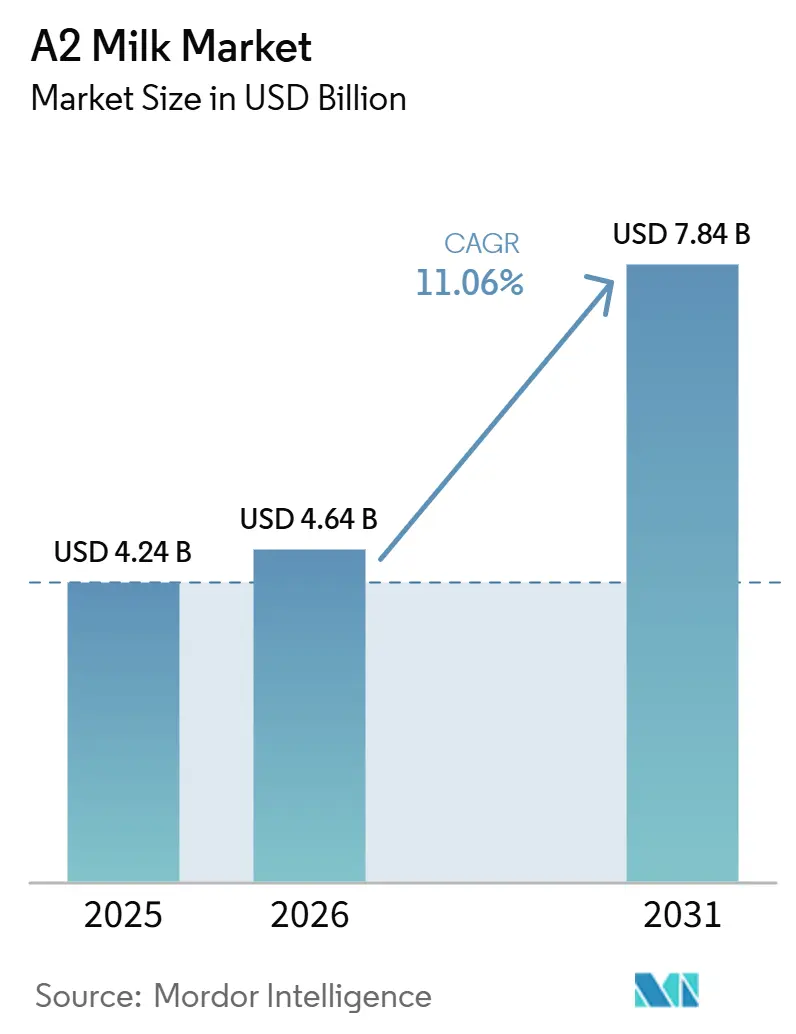
The a2 milk market size is expected to grow from USD 4.24 billion in 2025 to USD 4.64 billion in 2026 and is forecast to reach USD 7.84 billion by 2031 at 11.06% CAGR over 2026-2031. The a2 milk market is benefiting from demand for dairy products that address digestive comfort, clear product differentiation, dependable traceability, and familiar everyday use across retail settings. Clinical research has strengthened the basis for digestive-health positioning, although individual tolerance and outcomes vary across consumers. The category also benefits from premium dairy demand in urban markets and from the development of specialized infant and adult nutrition products. Across the a2 milk market, companies are using product science, verified milk supply, online distribution, and packaging formats to defend premium prices and encourage repeat purchases among informed consumers.
Key Report Takeaways
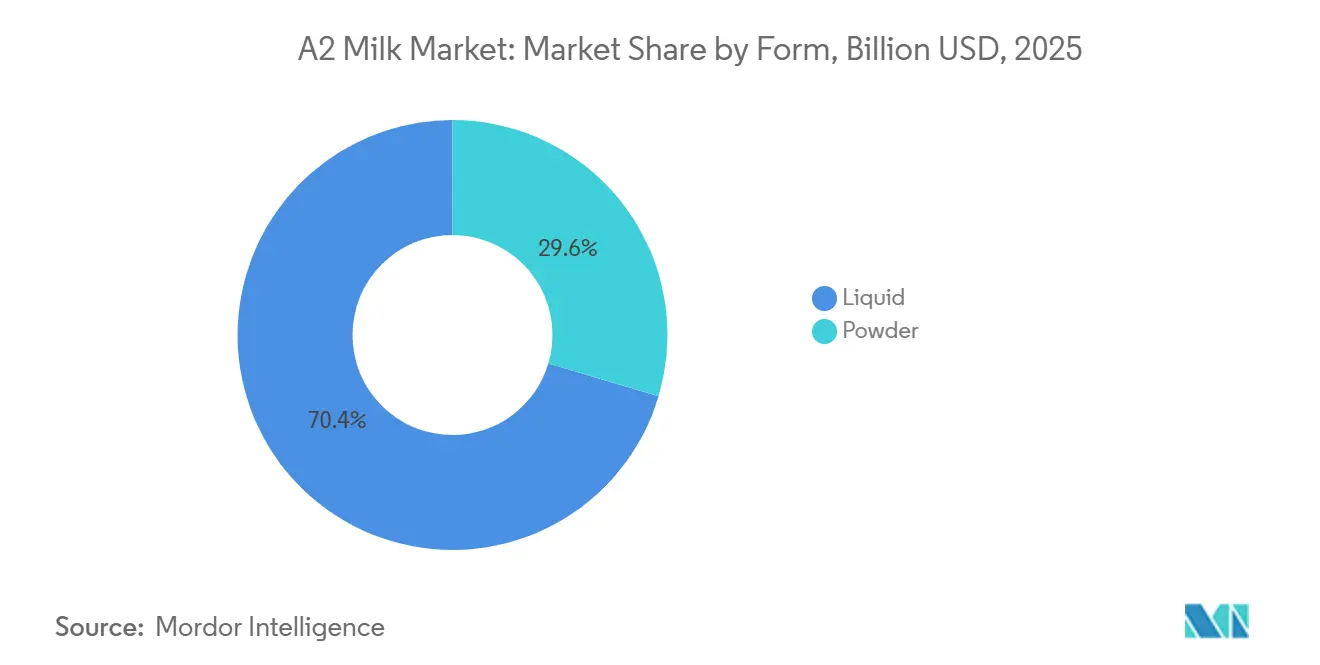
- By form, liquid milk held 70.41% category share in 2025, while powder is projected to grow at a 13.12% CAGR through 2031.
- By packaging, plastic bottles accounted for 31.56% category share in 2025, while tetra packs are projected to grow at a 12.88% CAGR through 2031.
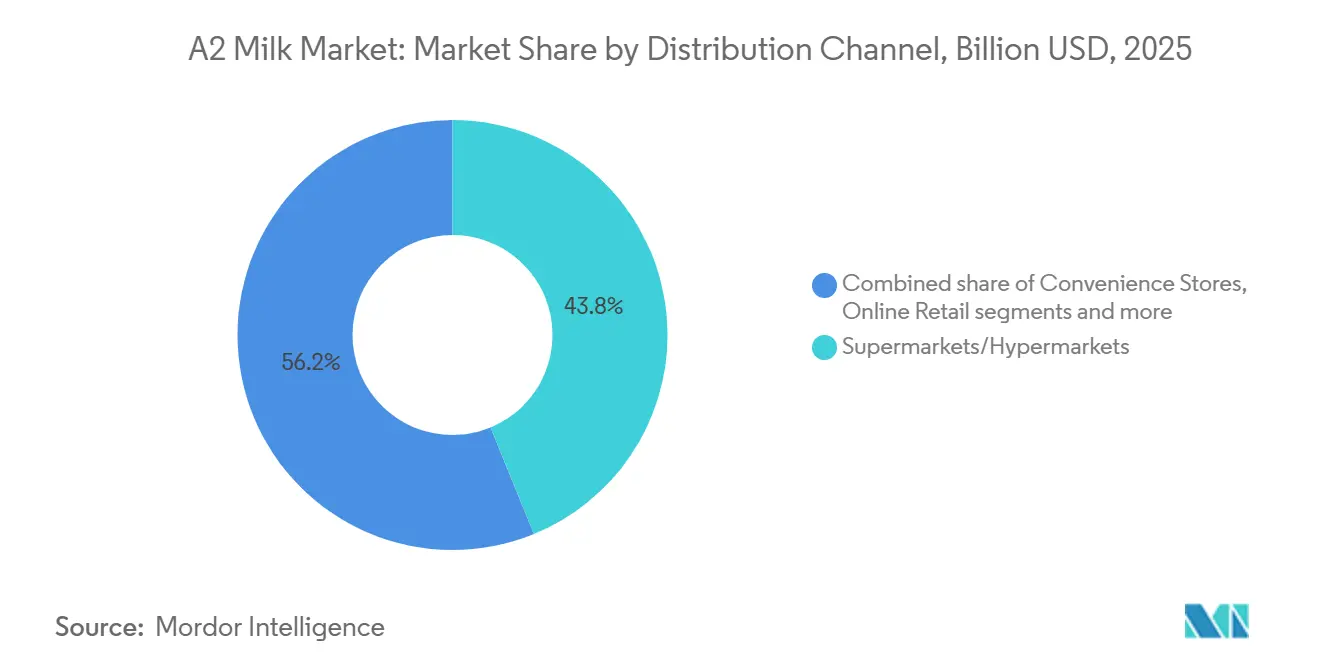
- By distribution channel, supermarkets and hypermarkets held 43.81% channel share in 2025, while online retail is projected to grow at a 13.77% CAGR through 2031.
- By geography, Asia-Pacific accounted for 40.14% regional share in 2025 and is projected to grow at a 12.45% CAGR through 2031.
Note: Market size and forecast figures in this report are generated using Mordor Intelligence’s proprietary estimation framework, updated with the latest available data and insights as of January 2026.
Market Trends and Insights
Drivers Impact Analysis of A2 Milk Market*
| Driver | (~) % Impact on CAGR Forecast | Geographic Relevance | Impact Timeline |
|---|---|---|---|
| Rising consumer awareness of A2 beta-casein and its perceived digestive benefits | +2.4% | Global, led by Australia, China, United States | Short term (≤ 2 years) |
| Increasing adoption of A2 milk in infant nutrition and specialized dietary products | +2.1% | Asia-Pacific core, spill-over to North America | Medium term (2–4 years) |
| Increasing prevalence of lactose intolerance and milk-digestion concerns | +1.8% | Asia-Pacific (70–98%), Africa (70–90%), Global | Medium term (2–4 years) |
| Rising health and wellness consciousness among urban consumers | +1.5% | North America, Europe, Urban Asia-Pacific | Medium term (2–4 years) |
| Growing demand for organic, natural, and minimally processed dairy products | +1.2% | North America, Europe, India | Long term (≥ 4 years) |
| Premiumization of the dairy industry and willingness to pay for differentiated milk | +1.0% | North America, Europe, China, Australia | Long term (≥ 4 years) |
| Source: Mordor Intelligence | |||
Rising consumer awareness of A2 beta-casein and its perceived digestive benefits
The A2 milk market benefits from a growing body of research examining the relationship between beta-casein type and digestive outcomes. A 2025 randomized, double-blind, crossover study is expected to show changes in gut microbiota after two weeks of consuming milk containing only A2 beta-casein, including increases in Bifidobacterium and Blautia compared with conventional A1/A2 milk[1]Source: Plos One, “Beneficial effect of consuming milk containing only A2 beta-casein on gut microbiota: A single-center, randomized, double-blind, cross-over study”, journals.plos.org. A 2026 crossover trial is also expected to report lower flatulence and abdominal pain with A2A2 beta-casein milk than with A1A2 milk among middle-aged and older adults. This evidence gives brands a clearer foundation for explaining the product to consumers and health professionals. It also supports suppliers that can verify beta-casein composition and substantiate product claims.
Increasing adoption of A2 milk in infant nutrition and specialized dietary products
Infant nutrition represents a high-value application within the A2 milk market, as parents often prioritize product quality, composition, and traceability. The a2 Milk Company reported 13.6% year-over-year growth in infant formula revenue in the first half of fiscal 2026[2]Source: The a2 Milk Company, “1H26 Results Media Release”, thea2milkcompany.com. Its domestic online share in China reached 4.4% during the same period. In early 2025, the company introduced a2 Genesis in Hong Kong with three human milk oligosaccharides and A2 protein, expanding its nutrition portfolio beyond protein differentiation. The company also stated that it planned to launch four pediatric supplements under its a2 Zhi Yi brand in China in the third quarter of 2026. These products can strengthen consumer engagement as children progress through different nutrition needs.
Increasing prevalence of lactose intolerance and milk-digestion concerns
The increasing prevalence of lactose malabsorption and broader consumer concerns related to milk digestion are supporting demand for alternative and specialized dairy products such as A2 milk. According to the U.S. National Institute of Diabetes and Digestive and Kidney Diseases (NIDDK), approximately 68% of the global population has lactose malabsorption, creating a substantial consumer base for dairy products positioned as easier to digest, including A2 milk[3]Source: National Institute of Diabetes and Digestive and Kidney Diseases, “Definition & Facts for Lactose Intolerance”, niddk.nih.gov. Although lactose malabsorption is distinct from A1 beta-casein sensitivity, growing awareness of digestive discomfort associated with dairy consumption is encouraging consumers to explore milk products with differentiated protein profiles. A2 milk is increasingly marketed as a premium option for consumers seeking potentially better-tolerated dairy products.
Rising health and wellness consciousness among urban consumers
Urban consumers are increasingly prioritizing nutritious, premium, and differentiated food products as awareness of health and wellness continues to rise. Greater attention to the nutritional composition and potential digestive effects of everyday foods, including dairy, is encouraging consumers to explore alternatives to conventional milk. This shift is supporting interest in specialized dairy products such as A2 milk, which is positioned around its differentiated beta-casein protein profile. Higher disposable incomes and greater exposure to nutrition-related information are also enabling consumers to spend more on premium dairy products. The growing influence of wellness trends, social media, and online health information is further increasing awareness of functional and specialized foods.
Restraints Impact Analysis of A2 Milk Market*
| Restraint | (~) % Impact on CAGR Forecast | Geographic Relevance | Impact Timeline |
|---|---|---|---|
| Higher retail prices compared with conventional cow’s milk | -2.2% | Global, most acute in South Asia and Africa | Long term (≥ 4 years) |
| Limited availability of certified A2 milk-producing cattle | -1.5% | Global supply-side, most acute in North America and Europe | Medium term (2–4 years) |
| Higher costs associated with segregated procurement and supply-chain management | -1.3% | Global, particularly emerging markets | Medium term (2–4 years) |
| Limited consumer understanding of the scientific differences between A1 and A2 milk | -0.9% | Europe, South America, Middle East and Africa | Long term (≥ 4 years) |
| Source: Mordor Intelligence | |||
Higher retail prices compared with conventional cow’s milk
A2 milk generally carries a higher retail price than conventional cow’s milk, which can limit its adoption among price-sensitive consumers. The premium pricing is often associated with specialized sourcing, selective breeding of A2-producing cows, dedicated processing requirements, and additional quality-control measures. This price difference can discourage consumers from switching from conventional milk, particularly in markets where milk is purchased as a daily household staple. Lower- and middle-income consumers may continue to prioritize affordability over the perceived benefits of A2 milk. The higher price can also restrict consumption frequency and reduce the potential for widespread penetration beyond premium consumer segments.
Limited availability of certified A2 milk-producing cattle
The limited availability of certified A2 milk-producing cattle is restricting the scalability and supply consistency of the A2 milk market. A2 milk production requires cows carrying specific genetic traits that enable them to produce only the A2 beta-casein protein, making herd selection and genetic verification essential. The relatively limited supply of verified A2-producing cattle can constrain the availability of suitable animals for dairy farmers and processors. Building dedicated A2 herds also requires time, investment, and specialized breeding programs, which can increase production costs. In addition, maintaining genetic purity and ensuring regular testing across the supply chain can add operational complexity. These limitations may restrict the ability of producers to expand output rapidly in response to rising consumer demand.
*Our forecasts treat driver/restraint impacts as directional, not additive. The impact forecasts reflect baseline growth, mix effects, and variable interactions.
A2 Milk Market Segment Analysis
By Form:
Powder's Export-Driven Trajectory Masks Liquid's Enduring Volume LeadershipLiquid milk dominated the A2 milk market by form, accounting for 70.41% of the category share in 2025. Its leading position is supported by strong consumer familiarity and established consumption habits across households. Liquid A2 milk is commonly preferred for direct consumption, daily breakfast use, tea and coffee preparation, and other household applications. The segment also benefits from broad availability through supermarkets, grocery stores, specialty retailers, and online channels. In addition, the perception of liquid milk as a fresh and minimally processed product supports its appeal among health-conscious consumers.
A2 milk powder is projected to be the fastest-growing form segment, registering a CAGR of 13.12% through 2031. The strong growth outlook is driven by the product's longer shelf life and greater convenience compared with refrigerated liquid milk. Powdered A2 milk can be stored and transported more easily, making it suitable for consumers in regions with limited cold-chain infrastructure. Its portability also supports demand among households seeking convenient nutrition solutions for travel, work, and everyday consumption. Manufacturers are increasingly developing A2 milk powder products for infants, children, adults, and specialized nutritional applications, thereby expanding the consumer base.



By Packaging:
Aseptic Innovation Driving Tetra Pack's Fastest-Growing PositionPlastic bottles represented the largest packaging segment in the A2 milk market, accounting for 31.56% of the category share in 2025. Their leading position is supported by their widespread use across retail and modern grocery channels. Plastic bottles are lightweight, durable, and convenient for consumers, making them suitable for regular household consumption and on-the-go usage. The packaging format also offers flexibility in terms of size, allowing brands to serve individual consumers as well as families. In addition, established filling, transportation, and refrigeration infrastructure supports the broad distribution of A2 milk in plastic bottles.
Tetra packs are projected to be the fastest-growing packaging segment in the A2 milk market, registering a CAGR of 12.88% through 2031. Growth is being supported by the format's ability to provide convenient, lightweight, and space-efficient packaging for consumers and retailers. Tetra packs can offer enhanced product protection and support longer shelf life, particularly when combined with suitable processing and packaging technologies. Their efficient storage and transportation characteristics also help reduce logistical requirements across the supply chain.
By Distribution Channel:
Supermarkets Anchor Share as Online Channels Compound Category ReachSupermarkets and hypermarkets represented the leading distribution channel in the A2 milk market, accounting for 43.81% of the channel share in 2025. Their dominance is supported by extensive store networks and high consumer footfall, providing broad access to A2 milk products. These outlets typically offer a wide range of milk formats, brands, pack sizes, and price points, enabling consumers to compare products in a single location. The presence of dedicated refrigerated sections also supports the effective distribution and storage of liquid A2 milk. In addition, promotional campaigns, discounts, loyalty programs, and private-label offerings can encourage trial and repeat purchases.
Online retail is projected to be the fastest-growing distribution channel in the A2 milk market, registering a CAGR of 13.77% through 2031. The segment is benefiting from rising consumer adoption of e-commerce and the growing preference for convenient home delivery. Online platforms provide consumers with access to a broader selection of A2 milk brands, product formats, pack sizes, and subscription options compared with many physical stores. The channel also allows consumers to compare prices, product attributes, nutritional information, and customer reviews before making purchasing decisions.
Geography Analysis
APAC A2 Milk Market
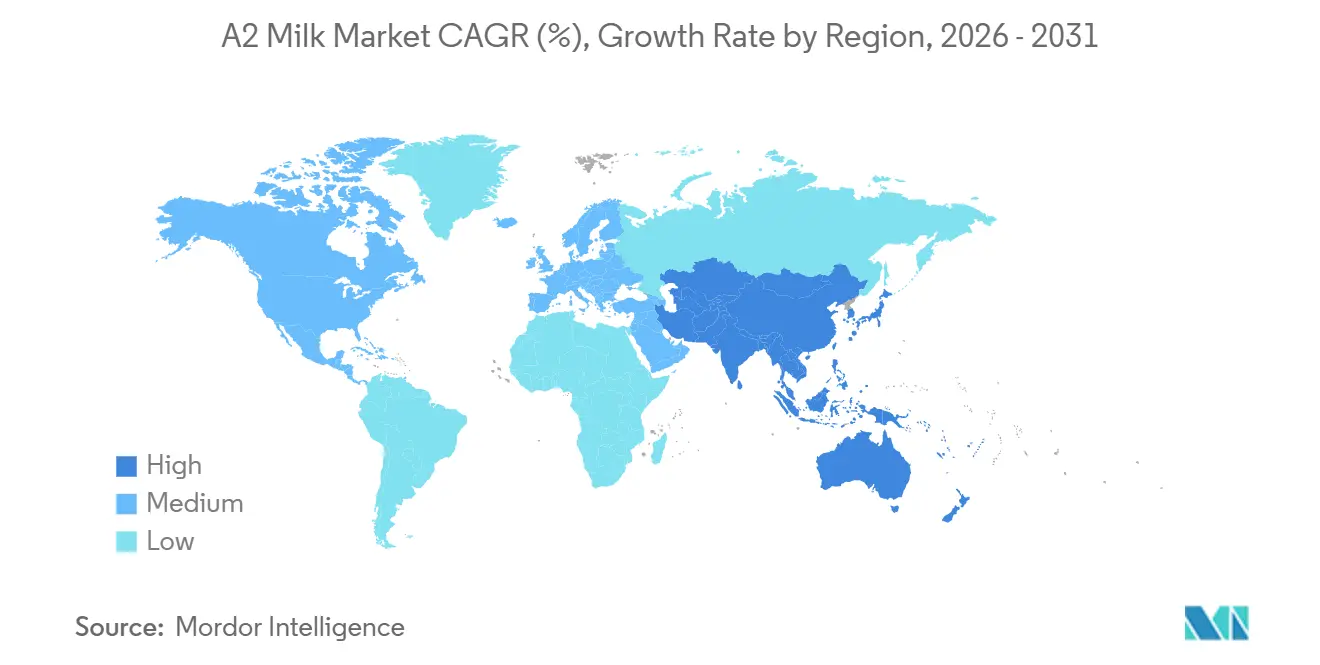
Asia-Pacific represented the largest regional market for A2 milk, accounting for 40.14% of the global share in 2025, and is projected to expand at a 12.45% CAGR through 2031. The region’s dominance is supported by increasing consumer awareness of A2 milk and growing interest in dairy products perceived as easier to digest. Rising disposable incomes, urbanization, and the expansion of modern retail and e-commerce platforms are improving access to premium dairy products across major markets. Countries such as China, Australia, New Zealand, and India are contributing to regional demand through increasing product availability and growing consumer acceptance. The region also benefits from established dairy industries and the presence of major A2 milk producers and suppliers.
Europe and North America A2 Milk Market
Europe and North America represent mature but important markets for A2 milk, supported by established dairy consumption patterns and strong consumer interest in premium and specialized nutrition products. In Europe, demand is being supported by growing awareness of digestive health, clean-label products, and differentiated dairy offerings, while developed retail infrastructure facilitates the distribution of A2 milk through supermarkets, specialty stores, and online platforms. North America is also benefiting from rising consumer interest in functional nutrition and premium dairy products, alongside the expansion of natural and health-focused product categories.
South America and MEA A2 Milk Market
South America and the Middle East and Africa are expected to represent emerging growth opportunities for the A2 milk market through 2031. In South America, increasing urbanization, improving retail infrastructure, and rising consumer interest in premium dairy products are supporting market development. The Middle East and Africa are also witnessing gradual growth in demand due to expanding modern retail networks, rising disposable incomes in several markets, and increasing awareness of specialized nutritional products.

Competitive Landscape
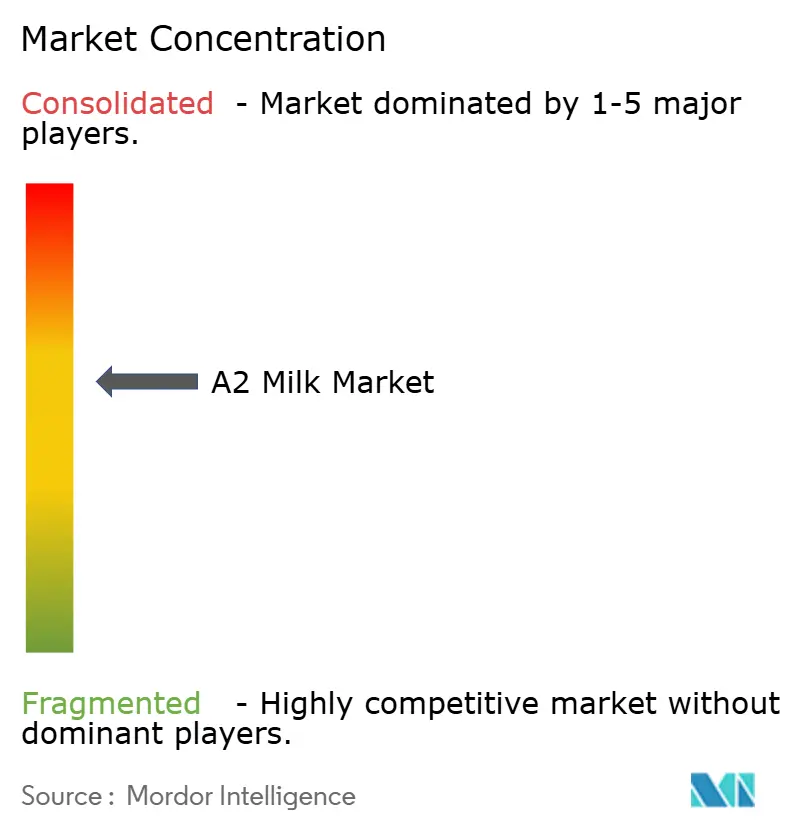
The A2 milk market is moderately fragmented, with The a2 Milk Company serving as the strongest branded intellectual property anchor. The company benefits from its strong association with the A2 beta-casein proposition and a well-established branded product portfolio across key markets. Its brand recognition and focus on A2-specific positioning provide a significant competitive advantage in a market where consumer awareness and trust are important purchase factors. Competition is also supported by established dairy companies, regional producers, and specialized A2 milk brands.
The competitive environment is shaped by a combination of multinational dairy companies, regional brands, and emerging niche players. Larger dairy companies benefit from established procurement networks, processing capabilities, extensive distribution systems, and strong relationships with modern retail and foodservice channels. Regional and specialized players, in contrast, often compete through local sourcing, targeted consumer segments, premium positioning, and direct-to-consumer channels.
Competition is expected to intensify as consumer awareness of A2 milk expands and manufacturers seek to capitalize on the broader premium dairy trend. Companies are investing in marketing campaigns, digital engagement, retail partnerships, and educational initiatives to strengthen consumer understanding of A2 milk products. E-commerce is also becoming increasingly important by enabling specialized brands to reach consumers beyond traditional retail networks. In addition, companies are focusing on supply-chain efficiency and geographic expansion to improve product availability and manage premium pricing pressures.
A2 Milk Industry Leaders
The a2 Milk Company Limited
Danone S.A.
Fonterra Co-operative Group Limited
Nestlé S.A.
Groupe Lactalis
- *Disclaimer: Major Players sorted in no particular order
A2 Milk Market Companies Covered in this Report
- The a2 Milk Company Limited
- Danone S.A.
- Fonterra Co-operative Group Limited
- Nestlé S.A.
- Groupe Lactalis
- Noumi Limited
- Gujarat Cooperative Milk Marketing Federation Limited
- Dairy Farmers of America, Inc.
- Provilac Dairy Farms Private Limited
- Vedaaz Organics Private Limited
- Erden Creamery Private Limited
- Ripley Farms LLC
- Ratnawali Dairy Products LLP
- Freedom Foods Group Limited
- Taw River Dairy Limited
- Vrindavan Dairy Farm
- Mittal Happy Cows Dairy Farms LLP
- Hetha Organics LLP
- P9 Farm Private Limited
- Oshun Food Products Private Limited

Recent Industry Developments in A2 Milk Market
- April 2026: Tetra Pak, in collaboration with Italian dairy company Sterilgarda Alimenti, launched the first 1-liter, family-size aseptic carton that incorporated a paper-based barrier. When combined with plant-based polymers, the packaging increased renewable content to 90% and helped reduce the overall carbon footprint, supporting the shift toward more sustainable aseptic packaging solutions.
- February 2026: Tetra Pak extended its paper-based barrier technology to high-speed filling lines in Asia, marking a broader application of the technology across regional production environments. The company reported that the Maeil Dairies carton contained 87% renewable content and reduced the carbon footprint by 26% compared with conventional aseptic cartons.
- September 2025: The a2 Milk Company completed the acquisition of Yashili New Zealand’s Pokeno manufacturing facility for NZD 282 million, or USD 168 million. The facility supported integrated nutritional manufacturing and China-label infant formula production, strengthening the company’s manufacturing capabilities and supply chain control.


Global A2 Milk Market Report Scope
A2 milk is milk that contains only the A2 type of beta-casein protein, a naturally occurring protein found in cow’s milk. The a2 milk market is segmented by form, packaging, distribution channel and geography. Based on the form, the market is segmented by liquid and powder. Based on the packaging, the market is segmented into plastic bottles, glass bottles, pouches, tetra packs, cans and other formats. Based on the distribution channel, the market is segmented into supermarkets/hypermarkets, convenience stores, online retail stores and other distribution channels. By geography, the market is segmented into North America, Europe, Asia-Pacific, South America, and Middle-East and Africa. For each segment, the market sizing and forecasting have been done in value terms (USD).
| Powder |
| Liquid |
| Plastic Bottles |
| Glass Bottles |
| Pouches |
| Tetra Packs |
| Cans and Other Formats |
| Supermarkets/Hypermarkets |
| Convenience Stores |
| Online Retail Stores |
| Other Distribution Channels |
| North America | United States |
| Canada | |
| Mexico | |
| Rest of North America | |
| Europe | Germany |
| United Kingdom | |
| Italy | |
| France | |
| Spain | |
| Rest of Europe | |
| Asia-Pacific | China |
| India | |
| Japan | |
| Australia | |
| Indonesia | |
| Rest of Asia-Pacific | |
| South America | Brazil |
| Argentina | |
| Rest of South America | |
| Middle East & Africa | South Africa |
| Saudi Arabia | |
| United Arab Emirates | |
| Rest of Middle East and Africa |
| By Form | Powder | |
| Liquid | ||
| By Packaging | Plastic Bottles | |
| Glass Bottles | ||
| Pouches | ||
| Tetra Packs | ||
| Cans and Other Formats | ||
| By Distribution Channel | Supermarkets/Hypermarkets | |
| Convenience Stores | ||
| Online Retail Stores | ||
| Other Distribution Channels | ||
| By Geography | North America | United States |
| Canada | ||
| Mexico | ||
| Rest of North America | ||
| Europe | Germany | |
| United Kingdom | ||
| Italy | ||
| France | ||
| Spain | ||
| Rest of Europe | ||
| Asia-Pacific | China | |
| India | ||
| Japan | ||
| Australia | ||
| Indonesia | ||
| Rest of Asia-Pacific | ||
| South America | Brazil | |
| Argentina | ||
| Rest of South America | ||
| Middle East & Africa | South Africa | |
| Saudi Arabia | ||
| United Arab Emirates | ||
| Rest of Middle East and Africa | ||


Key Questions Answered in the Report
How large is the a2 milk market?
The market is projected to grow from USD 4.64 billion in 2026 to USD 7.84 billion by 2031.
Which a2 milk product form is growing fastest?
Powder is the fastest-growing form and is projected to expand at a 13.12% CAGR through 2031. Its storage and cross-border shipping advantages support infant and adult nutrition products.
Which sales channel is expanding fastest for a2 milk products?
Online retail is projected to grow at a 13.77% CAGR through 2031. It supports subscriptions, product education, and cross-border purchases.
Which region leads demand for a2 milk?
Asia-Pacific led with 40.14% share in 2025 and is projected to grow at a 12.45% CAGR through 2031.
Page last updated on:





