GRID - Global Robotics Intelligence Database
Identify high-value robotics companies by role, market and adoption signal
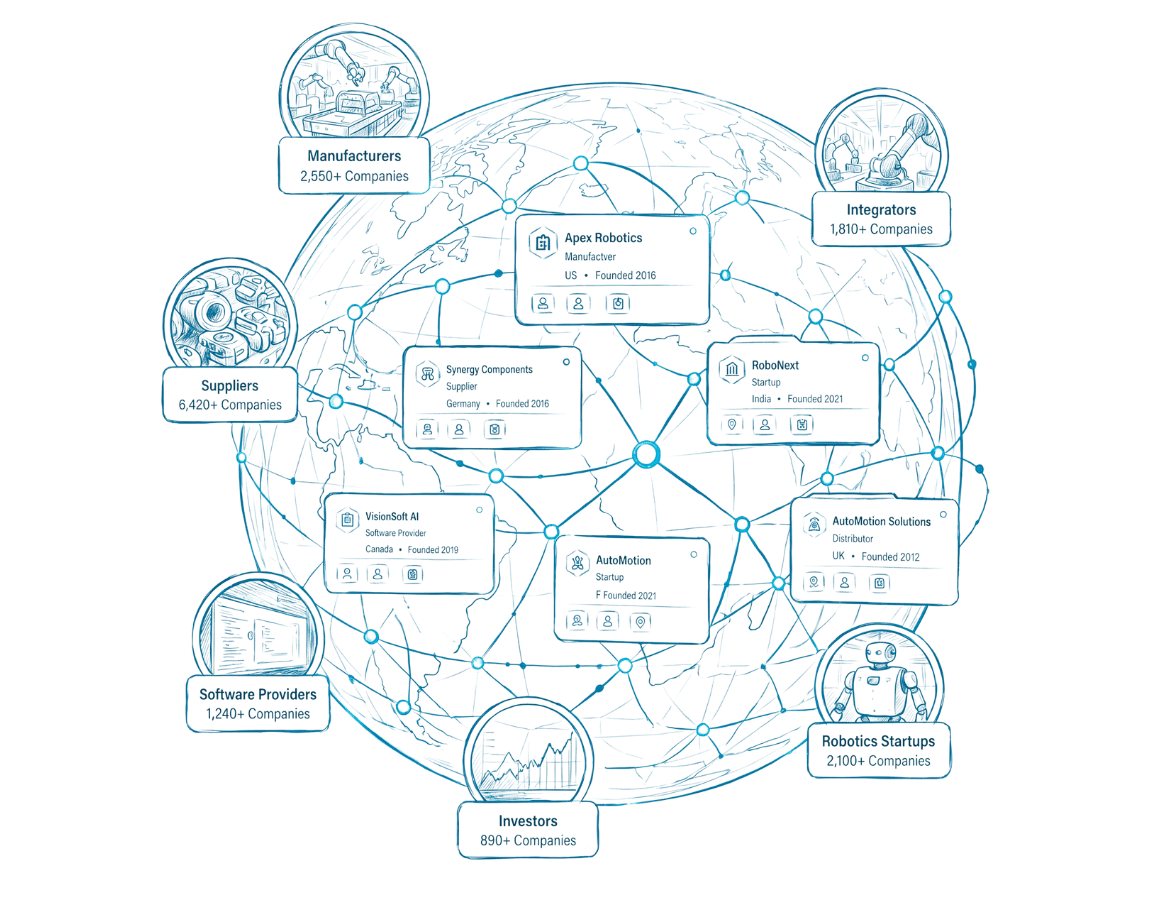
Move beyond generic company lists. GRID structures robotics companies by market role, geography, sector exposure, robot category, linked deployments and activity signals, helping teams separate relevant accounts, suppliers, startups, vendors and ecosystem participants from undifferentiated names
Join us today
Why Choose Robotics Company Intelligence?
Identify the robotics companies relevant to your market
Move beyond generic company lists. GRID helps users find robotics companies, automation companies, robotics startups, robotics firms and robotics vendors by market role, geography, sector exposure, robot category, linked deployments and activity signals.
Company intelligence beyond static lists
A flat robotics company list creates extra work. GRID structures company records so users can separate robot manufacturers, robotics suppliers, robotics integrators, software providers, distributors, buyers, investors and other ecosystem participants.
Role classification that supports action
The value of a company record depends on accurate market-role tagging. A company may be a manufacturer, supplier, integrator, software provider, distributor, buyer, investor or emerging robotics startup. GRID connects these roles to sector exposure, geography, category relevance, deployment activity and market signals.
Signals that make a company commercially relevant
A company becomes more actionable when it is linked to deployments, tenders, awards, launches, hiring, funding, regulation, facility expansion or risk events. These links help users separate passive company names from companies showing market movement.
Decisions supported by company records
Key questions company intelligence helps commercial, strategy and investment teams answer.
Which robotics companies are active in a specific country, region or sector?
Which companies are manufacturers, suppliers, integrators, distributors, buyers or investors?
Which robotics startups are linked to funding, hiring, launches or partnerships?
Which companies appear in deployments, facilities or market signals?
Which accounts belong in sales, strategy or investment watchlists?
Buyer Workflows
Build target-account universes and prioritize companies with linked activity.
Map the robotics ecosystem by role, geography and sector.
Identify manufacturers, integrators and buyers relevant to category demand.
Screen robotics startups, funding signals and category movement.
Maintain normalized company records with source and update context.
Representative Record Fields
| Record Type | Description |
|---|---|
Company name | Normalized company name and profile record. |
Market role | OEM, manufacturer, supplier, integrator, software provider, distributor, buyer, investor or other role. |
Geography | Headquarters, operating markets and visible regional exposure. |
Sector exposure | Automotive, electronics, logistics, healthcare, food, metals, pharmaceuticals and other sectors. |
Linked activity | Deployments, facilities, tenders, awards, launches, hiring, patents, funding and risk events. |
Frequently Asked Questions
What is included in Robotics Company Intelligence?
It includes normalized company records classified by role, geography, sector, robot category and linked activity. The goal is to help users move from company names to account, partner or market decisions.
Can users filter robotics companies by role, sector and geography?
Yes. The record structure supports role, country, region, sector, robot category, linked activity and update context so users can narrow a broad robotics universe into a relevant market view.
How does GRID distinguish manufacturers, suppliers, integrators and buyers?
GRID uses market-role classification. This prevents users from reviewing undifferentiated names and helps them separate OEMs, component suppliers, integrators, buyers, investors and adjacent ecosystem participants.
Does GRID include robotics startups and emerging companies?
Yes. Startup and emerging-company records can be linked to hiring, product launches, patents, or category signals so users can understand why the company is relevant.
How are company records linked to deployments and market signals?
Company records can connect to deployment records, facility records, tenders, awards, launches, hiring, patents, expansion signals and risk events. These links turn company discovery into a connected intelligence workflow.
Does GRID cover robotic process automation companies?
No. The current scope focuses on physical robotics, automation systems, deployment activity, facilities and market signals.
