
Vivianite Fertilizers Market Size and Share
Market Overview
| Study Period | 2021 - 2031 |
|---|---|
| Market Size (2026) | USD 0.2 Billion |
| Market Size (2031) | USD 0.3 Billion |
| Growth Rate (2026 - 2031) | 8.45 % |
| Fastest Growing Market | Asia-Pacific |
| Largest Market | Europe |
| Market Concentration | Low |
Major Players *Disclaimer: Major Players sorted in no particular order Image © Mordor Intelligence. Reuse requires attribution under CC BY 4.0. | |
Vivianite Fertilizers Market Analysis by Mordor Intelligence
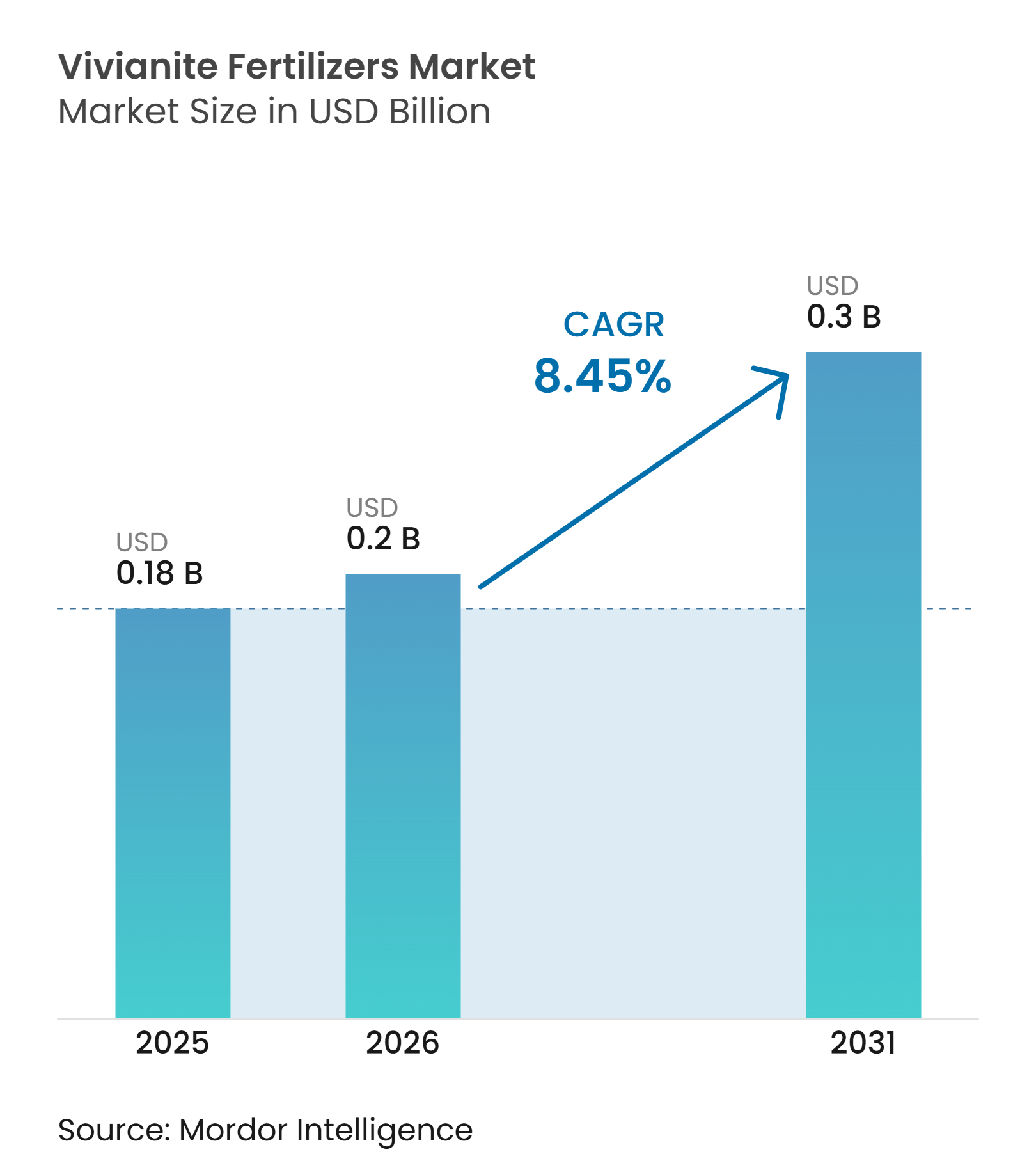
The vivianite fertilizer market was valued at USD 0.18 billion in 2025 and is projected to grow from USD 0.20 billion in 2026 to USD 0.30 billion by 2031, registering a CAGR of 8.45% during the forecast period 2026 to 2031. Growth is driven by the conversion of phosphorus from wastewater sludge into a usable fertilizer input. European policy is making phosphorus recovery a clearer operating requirement for larger wastewater treatment facilities, shifting sludge from a disposal obligation to a potential input for fertilizer production. Supply security is also a factor, as imported phosphate products remain important in several agricultural regions. Companies are therefore combining recovery technology, feedstock access, product testing, and fertilizer distribution partnerships. Agronomic trials are also helping establish vivianite's effectiveness as a phosphorus source across different soil types and crop systems. As regulatory frameworks and market infrastructure develop further, vivianite is anticipated to gain broader acceptance as a recovered phosphorus fertilizer in both European and international markets.
Key Report Takeaways
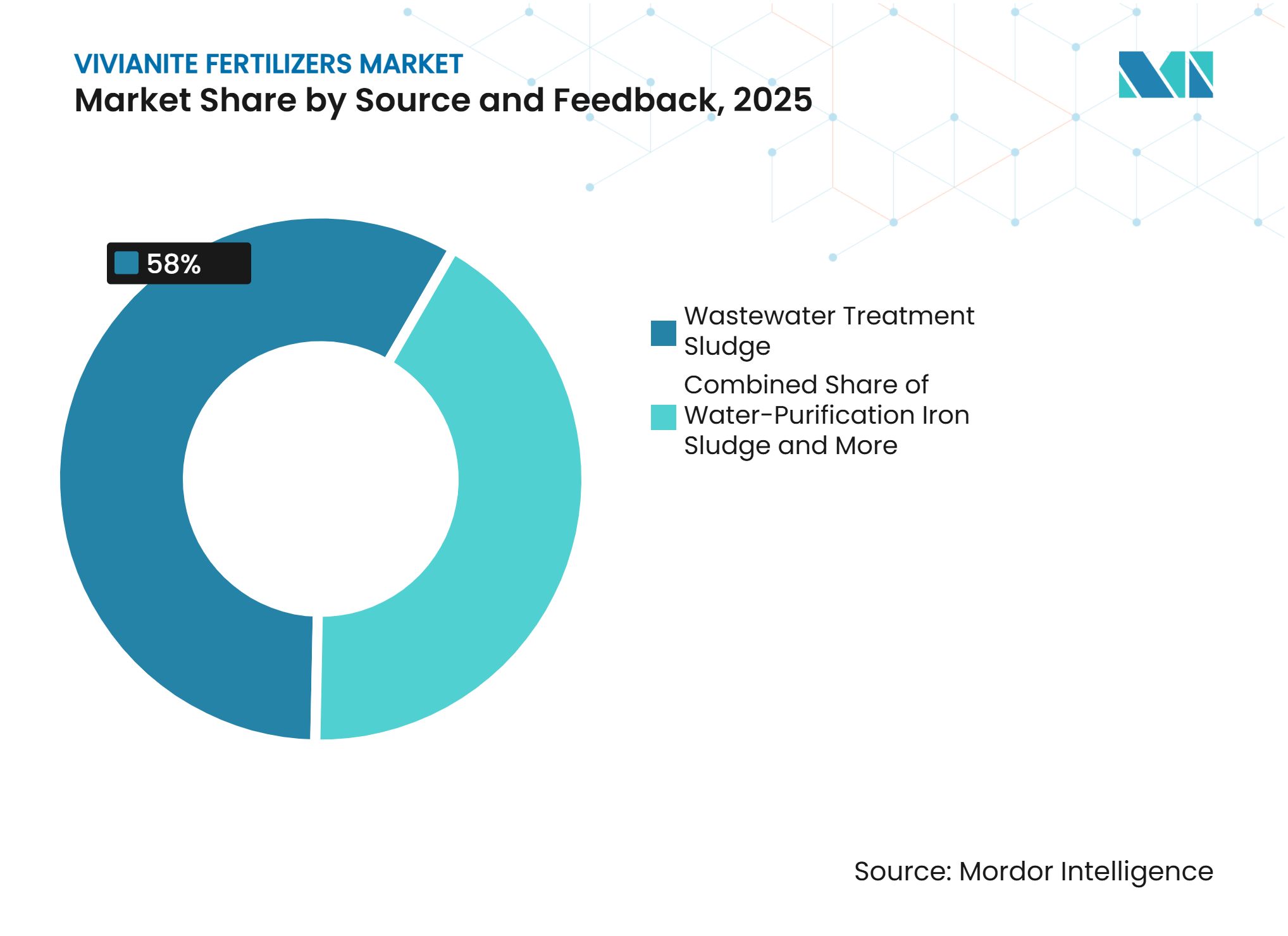
- By source and feedstock, wastewater treatment sludge was the largest segment and held 58.0% of the vivianite fertilizers market share in 2025, while microbially mediated feedstock is the fastest-growing segment and is anticipated to expand at an 11.2% CAGR between 2026 and 2031.
- By form, powder was the largest segment and held 62.0% of the vivianite fertilizers market size in 2025, while granules are the fastest-growing segment and are anticipated to expand at a 10.6% CAGR between 2026 and 2031.
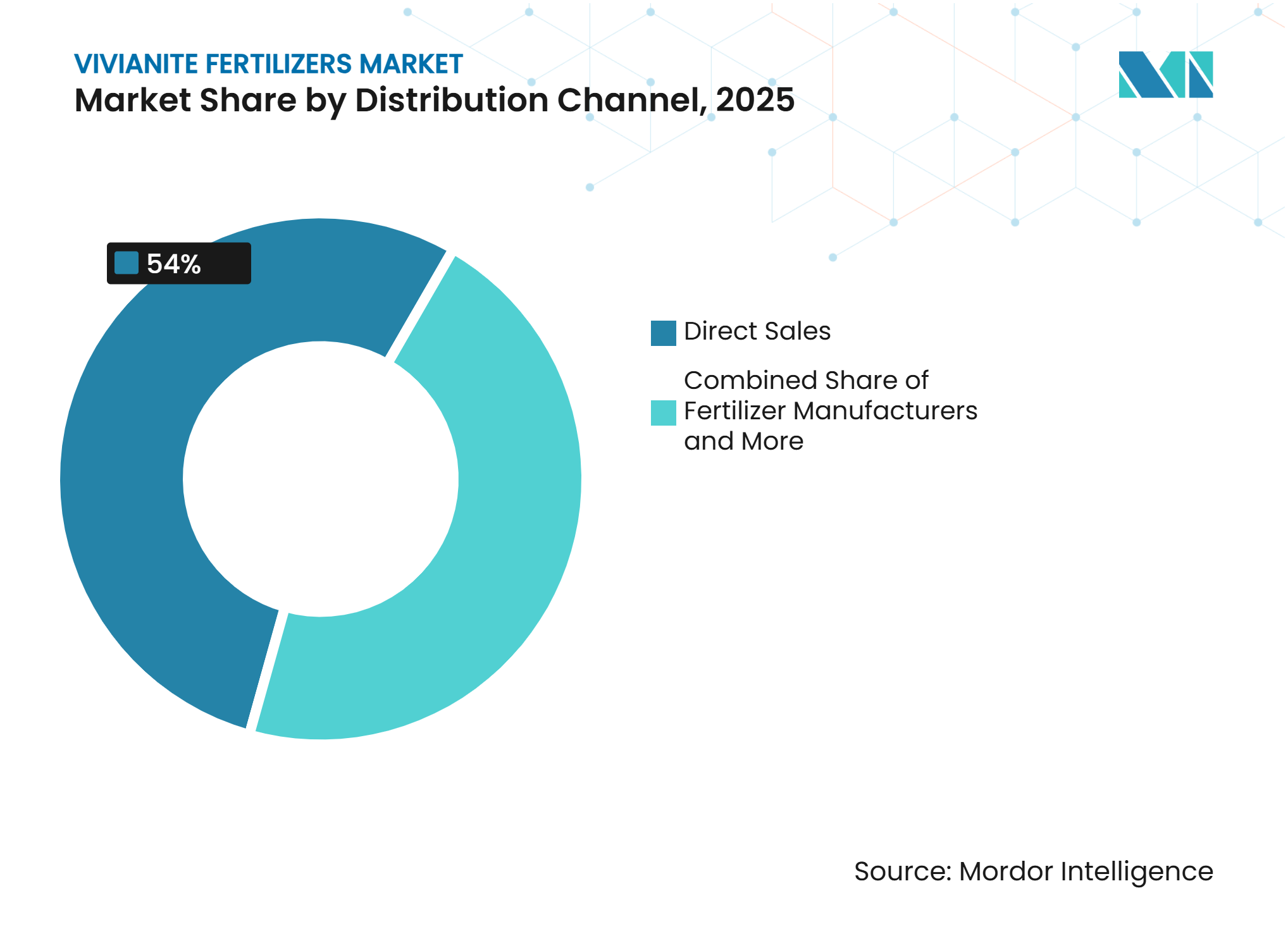
- By distribution channel, direct sales was the largest segment and held 54.0% of the market share in 2025, while wastewater utilities is the fastest-growing segment and is anticipated to expand at a 10.0% CAGR between 2026 and 2031.
Note: Market size and forecast figures in this report are generated using Mordor Intelligence’s proprietary estimation framework, updated with the latest available data and insights as of January 2026.
Market Trends and Insights
Circular Phosphorus Recovery Policies
Stricter European policies on phosphorus recovery from wastewater are creating a supportive regulatory environment for technologies that recover phosphorus as reusable mineral products, including vivianite. The revised European Union Urban Wastewater Treatment Directive requires the European Commission to establish minimum phosphorus reuse and recycling rates by January 2, 2028, increasing the focus on resource recovery alongside conventional wastewater treatment. This policy direction encourages wastewater operators to evaluate recovery technologies based on their ability to produce marketable phosphorus materials while meeting treatment requirements. The LIFE Phos4EU project in the Netherlands, which started in 2023 and ends in 2030, provides a practical application, targeting the recovery of 631,000 kg of vivianite, with 80% intended for direct fertilizer use[1]. This links wastewater phosphorus recovery with a defined agricultural end use and supports the development of vivianite as a circular fertilizer input. As regulatory requirements for nutrient recovery become more established, demand for technologies capable of recovering and upgrading vivianite is anticipated to increase, particularly in wastewater systems using iron-based phosphorus precipitation.
Wastewater Treatment Plants as Secondary Phosphorus Mines
Municipal wastewater treatment plants are emerging as a potential secondary source of phosphorus, offering a distributed feedstock base for recovery without requiring additional mining capacity or agricultural land use. The 2025 development of the Emter GmbH facility in Altenstadt, Bavaria, which can process up to 50,000 metric tons of dried sewage sludge annually and produce approximately 15,000 metric tons of phosphate fertilizer, demonstrates the commercial viability of integrating sludge treatment with phosphorus recovery and fertilizer production[2]. Advances in integrated treatment and crystallization technologies are improving the feasibility of recovering vivianite directly within wastewater treatment processes, potentially reducing the need for dedicated recovery infrastructure. As utilities increasingly pursue resource recovery alongside wastewater treatment and regulatory compliance, plants with suitable phosphorus-removal processes and established outlets for recovered materials could provide a growing feedstock base for the vivianite fertilizer market.
Import Dependency for Phosphate Rock
Dependence on imported phosphate rock and other phosphate inputs creates a strategic incentive for countries to evaluate recovered phosphorus as a complementary domestic source. The European Union's resource-recovery policy framework increasingly supports the recovery and reuse of phosphorus from wastewater, providing a pathway for recovered materials such as vivianite to contribute to regional phosphorus supply. However, import dependency alone does not guarantee commercial adoption of vivianite fertilizers, as recovered products must meet local registration, quality, and agronomic requirements. In markets such as India and Southeast Asia, where conventional fertilizers benefit from established regulatory frameworks and subsidy mechanisms, vivianite-based products may face additional barriers before achieving comparable market access. Consequently, the opportunity for the vivianite fertilizer market is strongest in countries where phosphate import exposure coincides with supportive phosphorus-recovery policies, product-recognition frameworks, and suitable wastewater infrastructure.
Retrofit Potential of Magnetic Vivianite Separation
The retrofit potential of magnetic vivianite separation presents opportunities to integrate phosphorus recovery into existing wastewater treatment infrastructure without requiring complete plant reconstruction. A 2024 Water Research study published on ScienceDirect found that the recovery process remained robust across sludge dry-matter contents of 1.8% to 3.3% and was not significantly affected by sludge viscosity, indicating that the technology can accommodate variations in sludge characteristics. This operational flexibility is relevant to the vivianite fertilizer market because wastewater treatment plants handle variable sludge conditions, and consistent recovery performance can reduce the technical risks associated with retrofitting recovery systems. Magnetic separation can also reduce phosphorus and iron concentrations in the remaining sludge, potentially providing additional benefits for downstream sludge management. As wastewater operators increasingly evaluate resource-recovery technologies, the ability to integrate vivianite recovery with existing treatment processes can improve the commercial feasibility of deployment and support the expansion of the vivianite fertilizer market.
Restraints Impact Analysis of Vivianite Fertilizers Market*
| Restraint | (~) % Impact on CAGR Forecast | Geographic Relevance | Impact Timeline |
|---|---|---|---|
| Low solubility and delayed nutrient availability | -1.5% | Global agricultural markets | Long term (≥ 4 years) |
| Inconsistent composition of waste-derived vivianite | -1% | Global, especially Germany, Spain, China, and India | Medium term (2-4 years) |
| Limited field-scale agronomic evidence | -1.2% | Global agricultural markets | Medium term (2-4 years) |
| Granulation-induced mineral-phase transformation | -0.7% | Europe and Asia-Pacific | Long term (≥ 4 years) |
| Source: Mordor Intelligence | |||
Low Solubility and Delayed Nutrient Availability
Vivianite's low solubility can limit its effectiveness as a direct substitute for highly soluble phosphate fertilizers, as phosphorus release depends on soil conditions such as pH and redox status. A 2025 study published in SOIL by the European Geosciences Union found that vivianite's phosphorus fertilizer replacement value was generally lower than that of soluble fertilizers in neutral soils, although its relative effectiveness improved under more acidic conditions[3]. This variability makes soil conditions and application strategy important determinants of product performance and can limit adoption where growers require rapid and predictable phosphorus availability. Vivianite's iron content provides an additional agronomic benefit, particularly in soils susceptible to iron deficiency, but this does not fully offset concerns regarding phosphorus release. Blending vivianite with more soluble phosphate sources can improve nutrient availability, although formulation requirements and the need to match products with local soil conditions add complexity to commercialization. As a result, the vivianite fertilizer market remains constrained by the need to demonstrate consistent field performance across diverse soil and cropping conditions.
Limited Field-Scale Agronomic Evidence
The vivianite fertilizer market remains constrained by limited field-scale evidence demonstrating consistent agronomic performance across different crops, soil types, and climatic conditions. Much of the available evidence is generated under controlled conditions, which may not fully capture the variability encountered in commercial farming. This evidence gap can make agronomists, distributors, and growers cautious about large-scale procurement because product performance and phosphorus availability may vary with soil characteristics and management practices. It can also increase the time and cost required to generate the agronomic data needed for product registration and market acceptance. The constraint is particularly relevant in emerging markets, where diverse cropping systems and soil conditions require localized validation. Consequently, limited multi-season field validation can slow the transition of vivianite-based fertilizers from pilot applications to broader commercial adoption.
*Our forecasts treat driver/restraint impacts as directional, not additive. The impact forecasts reflect baseline growth, mix effects, and variable interactions.
Vivianite Fertilizers Market Segment Analysis
By Source and Feedstock:
Wastewater Sludge Supports Supply While Biovivianite DevelopsWastewater treatment sludge held 58.0% of the vivianite fertilizer market share in 2025, reflecting the availability of iron-based phosphorus removal streams and the suitability of anaerobically digested municipal sludge for vivianite recovery. Water-purification iron sludge and phosphorus-rich industrial wastewater from food processing, dairy, and chemical operations represent smaller but viable feedstock sources, particularly where iron and phosphorus concentrations support economically feasible recovery. Natural vivianite deposits primarily provide a compositional benchmark for product development and blending applications.
Microbially mediated feedstock is projected to expand at an 11.2% CAGR between 2026 and 2031, making it the fastest-growing segment as producers explore biological pathways for controlled vivianite formation and recovery. The segment's growth, however, remains dependent on improving production consistency, yield, crystallinity, and scalability. Overall, the availability and composition of suitable feedstocks, together with recovery efficiency and compatibility with existing treatment infrastructure, will determine the commercial development of different vivianite feedstock segments.



By Form:
Powder Leads While Granules Face Processing ConstraintsPowder accounted for 62.0% of the vivianite fertilizer market share in 2025, supported by its bioavailability in flooded and reducing soil conditions. A 2024 study published in the American Chemical Society (ACS) journal evaluated powder-form vivianite with particles near 5 µm in flooded phosphorus-fixing rice paddy soils. The study recorded fertilizer efficiency up to three times that of triple superphosphate in flooded acidic soil and equivalent performance in calcareous flooded conditions. Concentrated vivianite product serves as an intermediate that can lower transport costs before blending.
Granules are forecast to grow at a 10.6% CAGR between 2026 and 2031, the fastest rate among all forms. Granules improve handling, reduce dust exposure, and allow standardized NPK labeling preferred by commercial agronomists and distributors. High temperature and acidity during NPK granulation can transform crystalline iron phosphate into amorphous iron phosphate, which is less available to plants. Low-temperature granulation and protective coating methods are being used to address this issue.
By Distribution Channel:
Direct Sales Lead While Utilities Build Co-Product RoutesDirect sales accounted for 54.0% of the 2025 revenue base, primarily through agreements between wastewater utilities, fertilizer producers, and research programs applying recovered material on nearby farmland. Regulation (EU) 2019/1009 requires documented safety and performance data before broad commercial sale, so many transactions remain research or pilot contracts. Fertilizer producers in Spain, Germany, and the Netherlands have relevant NPK blending capability and could increase incorporation once granulation issues are resolved.
Wastewater utilities are forecast to grow at a 10.0% CAGR between 2026 and 2031, the highest rate among distribution channels. The UPPWATER program is developing routes for direct fertilizer use, coagulant recovery, and lithium iron phosphate (LiFePO₄) battery cathode precursors, enabling utilities to direct recovered material to the highest-value outlet. Agricultural cooperatives and specialty distributors recorded limited volumes in 2026 but have the potential to improve specialty fertilizer access for smallholder farmers in South America and Asia-Pacific.

Geography Analysis
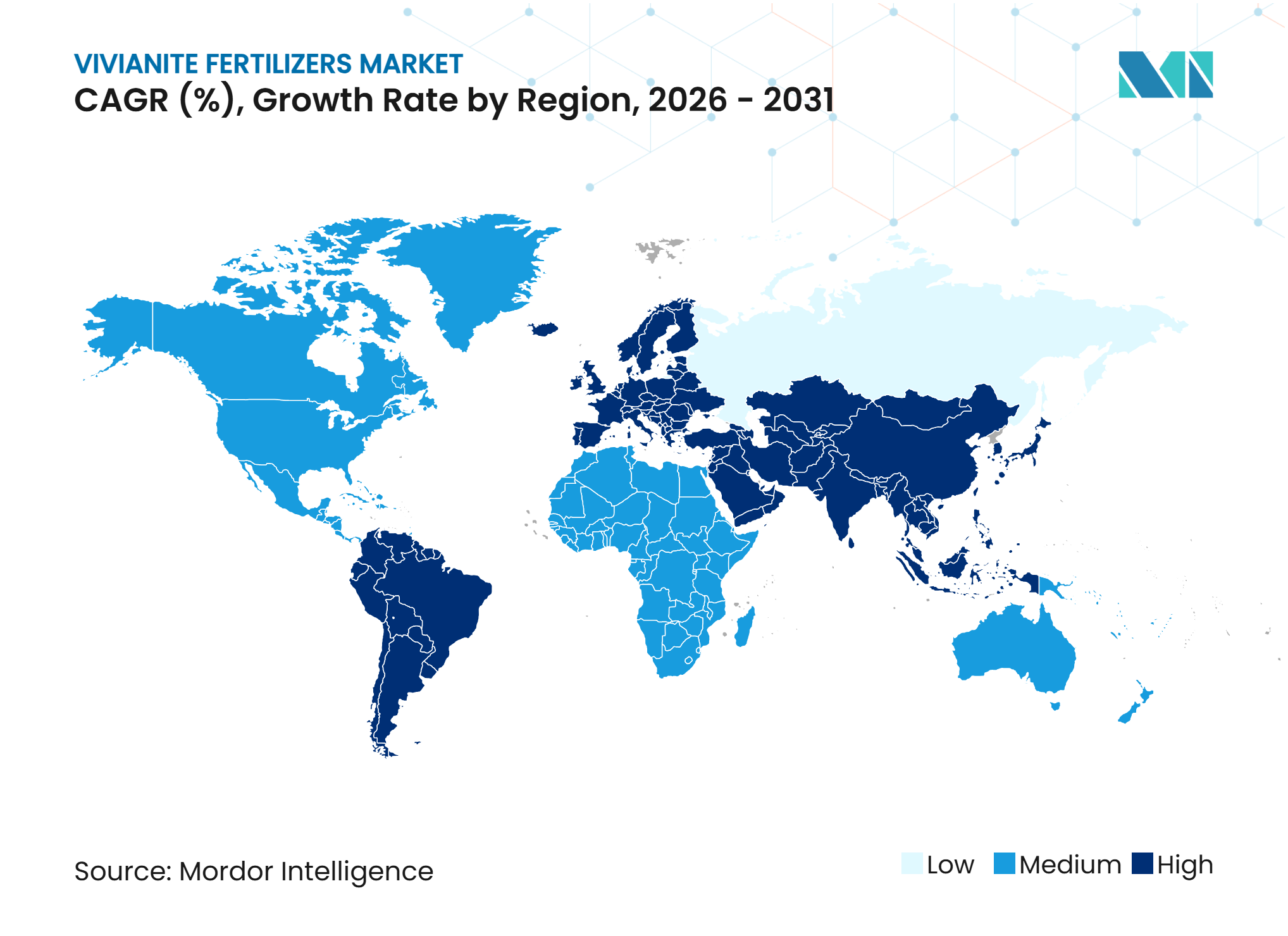
Europe accounted for 44.0% of the global vivianite fertilizer market in 2025, making it the largest regional market. The region's position is supported by stringent phosphorus-recovery requirements, established wastewater-treatment infrastructure, active development of phosphorus-recovery technologies, and dependence on imported phosphate resources. The Netherlands, Germany, and Denmark represent the most commercially advanced markets, supported by ongoing efforts to recover phosphorus from wastewater and sewage sludge. Spain also offers opportunities through recovered-phosphorus fertilizer blending, while tighter environmental requirements are anticipated to further support interest in secondary phosphorus sources.
Asia-Pacific is projected to be the fastest-growing regional market, registering a 10.4% CAGR during the forecast period 2026–2031. China and India present the strongest long-term demand potential due to their large agricultural sectors, phosphate-input requirements, and expanding wastewater-treatment infrastructure. China is also developing microbial and biological phosphorus-recovery pathways, while Australia offers potential applications in acidic agricultural soils. Japan and South Korea provide additional opportunities through advanced research and technology development. The region's combination of agricultural demand, increasing wastewater generation, and growing interest in nutrient recovery is anticipated to support faster market development, although regulatory recognition and commercial-scale recovery infrastructure remain important factors for adoption.
North America, South America, and the Middle East & Africa represent smaller but emerging markets for vivianite fertilizer. North American development is supported by established wastewater-treatment infrastructure and ongoing phosphorus-recovery projects, while Brazil and other South American markets offer potential due to their large agricultural sectors and prevalence of acidic soils. The Middle East is increasingly investing in wastewater treatment and water reuse, creating opportunities for nutrient-recovery technologies, while Africa's potential is linked to its agricultural base and established phosphate industry. However, these regions remain at earlier stages of commercial vivianite development, with adoption influenced by technology availability, regulatory frameworks, recovery economics, and the availability of suitable phosphorus- and iron-rich feedstocks.
Competitive Landscape
Market Concentration
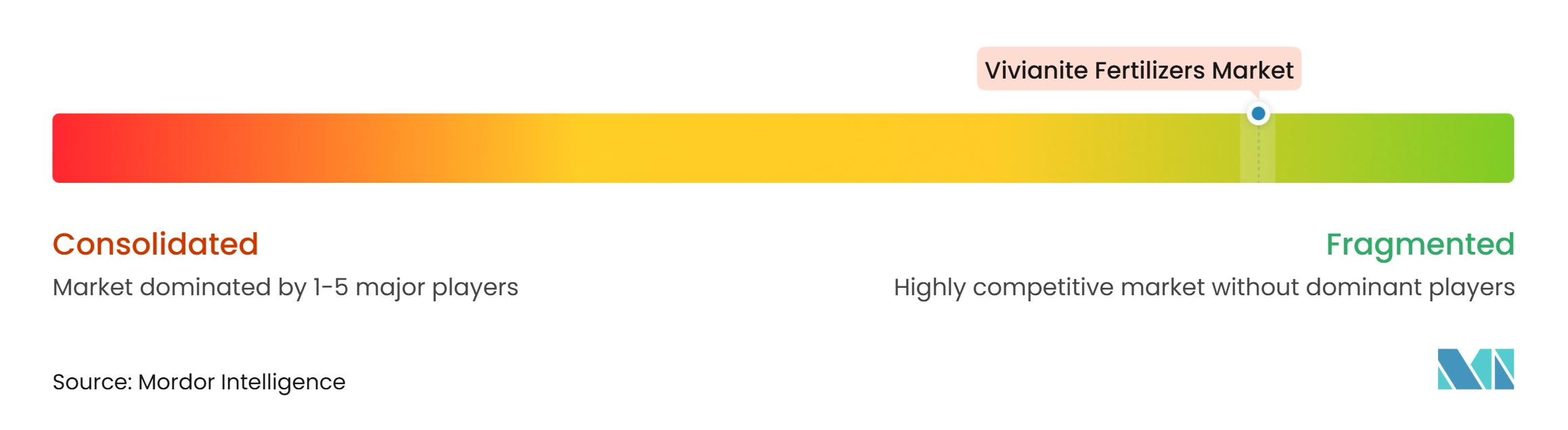
The vivianite fertilizer market is fragmented, with the top five companies collectively holding a small share in 2025. Competition is primarily technology-driven, with participants differentiating through phosphorus-recovery technologies, process efficiency, feedstock access, engineering capabilities, and the ability to convert recovered vivianite into commercially viable fertilizer products. Unlike conventional commodity fertilizer markets, competitive positioning is less dependent on scale and price and more dependent on intellectual property, technology scalability, partnerships with wastewater utilities, and agronomic validation. Companies operate across different stages of the value chain, including wastewater treatment, mineral recovery, fertilizer processing, engineering, and downstream commercialization, making partnerships, licensing arrangements, and project-level collaborations important strategies for establishing commercial positions.
Royal HaskoningDHV, Fertiberia, and ACCIONA Agua represent different positions within this emerging value chain. Royal HaskoningDHV is involved in the development and scale-up of magnetic vivianite recovery technology, while Fertiberia's involvement in recovered-phosphorus processing reflects interest from established fertilizer producers in incorporating secondary phosphorus sources into fertilizer products. ACCIONA Agua's participation in phosphorus-recovery development highlights the role of water-treatment and engineering companies in advancing recovery technologies toward commercial deployment. These activities indicate that collaboration between technology developers, wastewater utilities, engineering companies, and fertilizer manufacturers is likely to remain important as the market develops.
Competition is also anticipated to increase around recovery efficiency, downstream processing, product quality, and the ability to establish commercially viable fertilizer applications. Technologies that can integrate with existing wastewater infrastructure, improve recovery economics, and generate consistent fertilizer-grade products are likely to gain an advantage. As the market moves beyond pilot-scale projects, companies will need to demonstrate reliable recovery performance, regulatory compliance, agronomic effectiveness, and dependable downstream outlets. Competitive positioning is therefore anticipated to depend increasingly on technology ownership, scalability, wastewater-plant integration, and successful commercialization rather than conventional fertilizer production scale.
Vivianite Fertilizers Industry Leaders
-
Fertiberia S.A.
-
Kemira Oyj
-
Royal HaskoningDHV N.V.
-
Veolia SE
-
Emmerson PLC
- *Disclaimer: Major Players sorted in no particular order
Vivianite Fertilizers Market Companies Covered in this Report
- Fertiberia S.A.
- Kemira Oyj
- Royal HaskoningDHV N.V.
- Veolia SE
- ACCIONA, S.A.
- AquaMinerals B.V.
- Emmerson PLC
Recent Industry Developments in Vivianite Fertilizers Market
- April 2026: Haskoning completed the patent transfer for ViviMag, a magnetic separation technology that recovers vivianite from iron-rich sewage sludge. The company is now advancing the technology toward a full-scale demonstration in the Netherlands, strengthening its position in phosphorus-recovery technology and creating a potential upstream supply route for vivianite fertilizer.
- April 2025: LIFE Phos4EU expanded its industry collaboration for vivianite valorization: The project brought together Brabantse Delta, Limburg Water Board, ACCIONA, AquaMinerals, STOWA, Kemira, Wetsus, Delft University of Technology, ICL, Rijn en IJssel Waterboard, and Haskoning to scale ViviMag recovery and evaluate downstream uses of recovered vivianite, including fertilizer applications.
- March 2025: Wetsus launched a research project focused specifically on upgrading and valorizing vivianite recovered from sewage sludge, with industrial partners working toward routes for producing phosphorus fertilizer and iron products. The initiative indicates movement beyond simply recovering vivianite toward developing commercially usable products and value chains.
Global Vivianite Fertilizers Market Report Scope
Vivianite fertilizers are phosphorus-based fertilizers produced from vivianite (iron(II) phosphate, Fe₃(PO₄)₂·8H₂O), a naturally occurring iron phosphate mineral that can also be recovered from iron-rich sewage sludge during wastewater treatment.
The Vivianite Fertilizers Market is Segmented by Source and Feedstock (Wastewater Treatment Sludge, Water-Purification Iron Sludge, and More), by Form (Powder, Granules, and More), by Distribution Channel (Direct Sales, Fertilizer Manufacturers, and More), and by Geography (North America, South America, and More). The Market Forecasts are Provided in Value (USD) and Volume (Metric Tons).
Segmentation Overview
| Wastewater Treatment Sludge |
| Water-Purification Iron Sludge |
| P-Rich Industrial Wastewater |
| Natural Vivianite Deposits |
| Microbially Mediated Feedstock |
| Powder |
| Granules |
| Concentrated Vivianite Product |
| Vivianite-Containing NPK Blend |
| Vivianite-Superphosphate Blend |
| Direct Sales |
| Fertilizer Manufacturers |
| Wastewater Utilities |
| Agricultural Cooperatives |
| Specialty Fertilizer Distributors |
| North America | United States |
| Canada | |
| Mexico | |
| Rest of North America | |
| South America | Brazil |
| Argentina | |
| Rest of South America | |
| Europe | Germany |
| Spain | |
| France | |
| The Netherlands | |
| Italy | |
| Russia | |
| Rest of Europe | |
| Asia-Pacific | China |
| India | |
| Japan | |
| South Korea | |
| Australia | |
| Rest of Asia-Pacific | |
| Middle East | Saudi Arabia |
| United Arab Emirates | |
| Turkiye | |
| Rest of Middle East | |
| Africa | Morocco |
| South Africa | |
| Egypt | |
| Rest of Africa |
| By Source and Feedstock | Wastewater Treatment Sludge | |
| Water-Purification Iron Sludge | ||
| P-Rich Industrial Wastewater | ||
| Natural Vivianite Deposits | ||
| Microbially Mediated Feedstock | ||
| By Form | Powder | |
| Granules | ||
| Concentrated Vivianite Product | ||
| Vivianite-Containing NPK Blend | ||
| Vivianite-Superphosphate Blend | ||
| By Distribution Channel | Direct Sales | |
| Fertilizer Manufacturers | ||
| Wastewater Utilities | ||
| Agricultural Cooperatives | ||
| Specialty Fertilizer Distributors | ||
| By Geography | North America | United States |
| Canada | ||
| Mexico | ||
| Rest of North America | ||
| South America | Brazil | |
| Argentina | ||
| Rest of South America | ||
| Europe | Germany | |
| Spain | ||
| France | ||
| The Netherlands | ||
| Italy | ||
| Russia | ||
| Rest of Europe | ||
| Asia-Pacific | China | |
| India | ||
| Japan | ||
| South Korea | ||
| Australia | ||
| Rest of Asia-Pacific | ||
| Middle East | Saudi Arabia | |
| United Arab Emirates | ||
| Turkiye | ||
| Rest of Middle East | ||
| Africa | Morocco | |
| South Africa | ||
| Egypt | ||
| Rest of Africa | ||
Key Questions Answered in the Report
What is the size of the vivianite fertilizer market?
The vivianite fertilizer market was USD 0.20 billion in 2026 and is forecasted to reach USD 0.30 billion by 2031, at an 8.45% CAGR between 2026 and 2031.
Which region leads vivianite fertilizer adoption?
Europe leads in 2026, supported by phosphorus recovery requirements and active recovery technology development.
Which product form is growing fastest?
Granules are forecasted to grow at a 10.6% CAGR between 2026 and 2031 because they improve handling and support standardized NPK labeling.
What restricts wider use of vivianite fertilizer?
Low solubility in many soils and limited multi-season field evidence restrict wider commercial use.