
Vietnam Pet Treats Market Size and Share
Market Overview
| Study Period | 2021 - 2031 |
|---|---|
| Forecast Data Period | 2026 - 2031 |
| Base Year Market Size (2025) | USD 63.03 Million |
| Market Size (2026) | USD 66.89 Million |
| Market Size (2031) | USD 90.18 Million |
| Growth Rate (2026 - 2031) | 6.16 % |
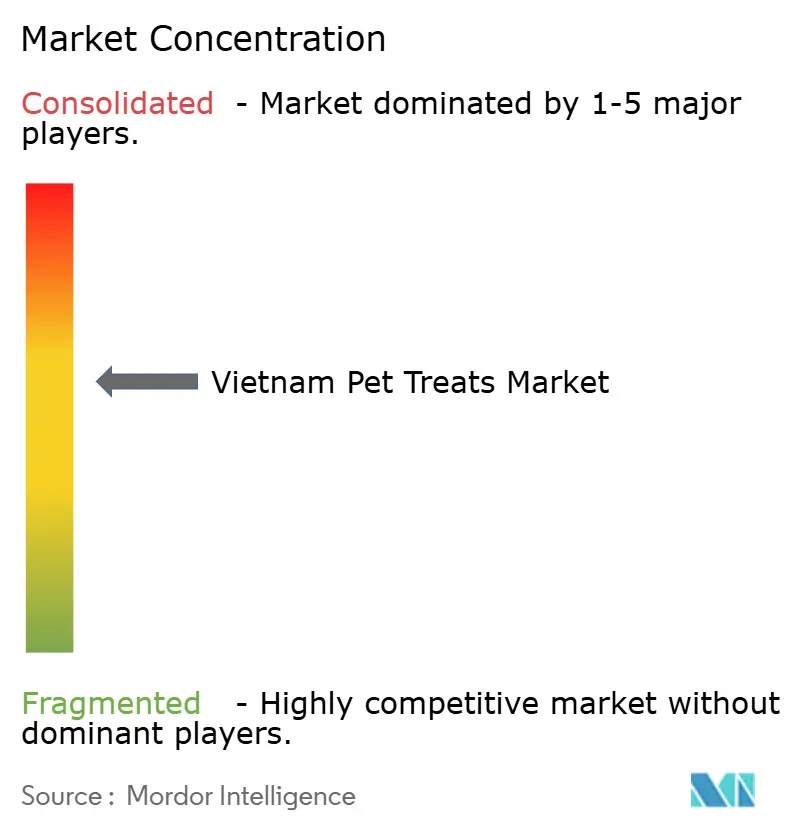
| Market Concentration | Medium |
Major Players *Disclaimer: Major Players sorted in no particular order Image © Mordor Intelligence. Reuse requires attribution under CC BY 4.0. | |
Vietnam Pet Treats Market Analysis by Mordor Intelligence
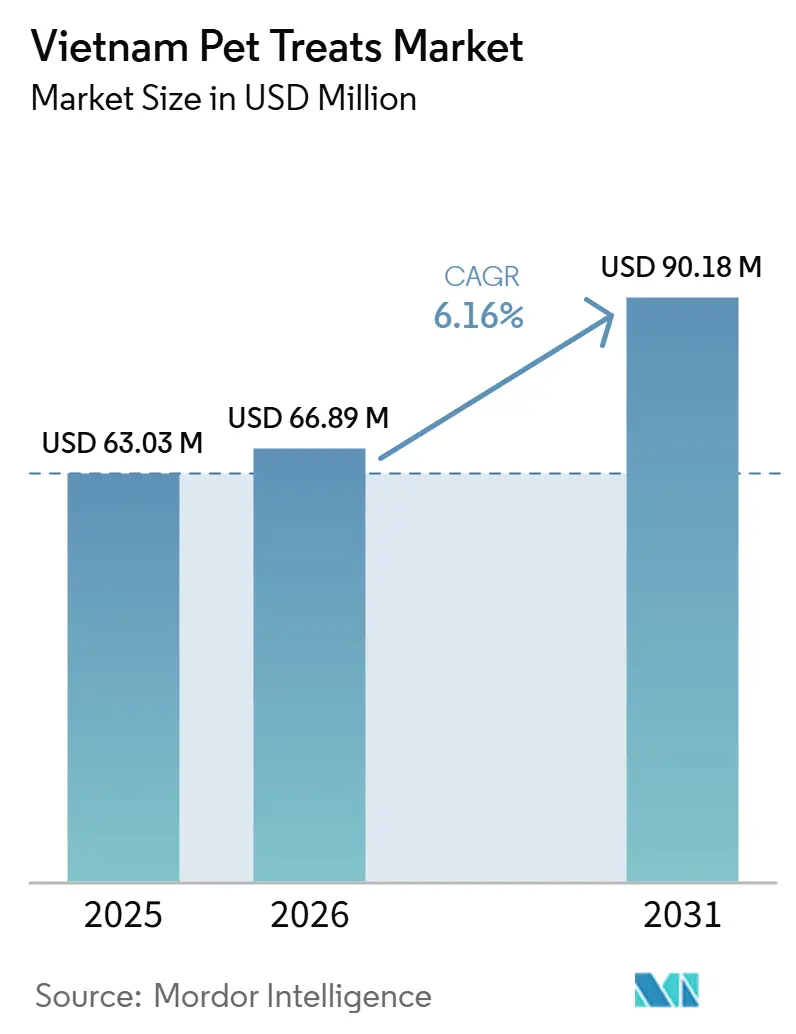
The Vietnam pet treats market size was valued at USD 63.03 million in 2025 and is estimated to grow from USD 66.89 million in 2026 to reach USD 90.18 million by 2031, at a CAGR of 6.16% during the forecast period 2026 to 2031. The Vietnam pet treats market is supported by a pet population that exceeded 31.4 million in 2024 and is projected to move past 33 million in 2026, providing a broad consumer base that continues to drive demand for pet treats[1]Source: International Pet Food, “Korean Petfood Firms Target Vietnam Growth,” International Pet Food, internationalpetfood.com. The market is also benefiting from the increasing number of multi-pet households, which is contributing to higher purchase frequency and regular treat consumption within the same household. Premium and imported products are gaining wider acceptance as urban consumers increasingly rely on digital platforms to access brands not readily available through traditional retail channels, thereby supporting the expansion of online and specialty retail sales. The Vietnam pet treats market is further strengthened by veterinary recommendations, encouraging pet owners to shift from basic products to premium dental and functional treats, leading to repeat purchases. Competition remains moderate, although the market continues to face challenges in expanding premium soft and freeze-dried treats beyond major cities because maintaining product quality during transportation and storage remains difficult.
Key Report Takeaways
- By sub-product, the crunchy treats segment was the largest with a 24.3% revenue share in 2025, while freeze-dried and jerky treats are forecast to expand at a 7.1% CAGR from 2026 to 2031.
- By pets, dogs held 65.9% of the Vietnam pet treats market share in 2025, while cats are projected to be the fastest-growing segment with a CAGR of 7.2% from 2026 to 2031.
- By distribution channel, specialty stores accounted for 73.6% of the Vietnam pet treats market size in 2025, while the online channel is the fastest-growing segment with a 6.9% CAGR from 2026 to 2031.
Note: Market size and forecast figures in this report are generated using Mordor Intelligence’s proprietary estimation framework, updated with the latest available data and insights as of January 2026.
Vietnam Pet Treats Market Trends and Insights
Drivers Impact Analysis*
| Driver | (~) % Impact on CAGR Forecast | Geographic Relevance | Impact Timeline |
|---|---|---|---|
| Premiumization of pet snack purchases in urban households | +1.4% | Ho Chi Minh City and Hanoi core, Da Nang secondary | Medium term (2-4 years) |
| Rising multi-pet and snack-occasion buying behavior | +0.9% | Vietnam tier 1 cities | Short term (≤ 2 years) |
| Expansion of specialty pet retail and clinic-assisted selling | +0.8% | Urban Vietnam, spillover to provincial capitals | Medium term (2-4 years) |
| Social media-led demand for functional and visual appeal treats | +0.7% | Urban Vietnam, digital-native consumers | Short term (≤ 2 years) |
| Growth of freeze-dried and jerky formats in health-oriented snacking | +0.9% | Ho Chi Minh City and Hanoi premium buyers | Medium term (2-4 years) |
| Local sourcing of meat by-products for lower-cost treat formulation | +0.4% | National, with early gains in southern provinces | Long term (≥ 4 years) |
| Source: Mordor Intelligence | |||
Premiumization of Pet Snack Purchases in Urban Households
Urban households are increasingly purchasing pet treats as part of routine pet care rather than as an occasional product. Rising pet humanization and higher spending on pet wellness are contributing to greater demand for premium pet treats in urban areas. This trend is particularly evident among young pet owners living in apartments in major cities such as Ho Chi Minh City and Hanoi, where pets are increasingly regarded as companion animals. These consumers place greater emphasis on ingredient quality, functional benefits, and product credibility when selecting pet treats. As a result, premium dental chews, freeze-dried protein treats, and branded cat treats are gaining stronger market acceptance than conventional biscuit-based products. In the Vietnam pet treats market, companies offering high-quality products, reliable functional claims, and consistent product availability are better positioned to maintain premium pricing and strengthen their competitive position.
Rising Multi-Pet and Snack-Occasion Buying Behavior
Multi-pet ownership is becoming an important demand driver for the Vietnam pet treats market. The growing number of households with more than one pet is increasing the frequency of treat purchases, as owners buy products for multiple animals on a regular basis. This trend is supporting volume growth beyond the rise in the overall pet population because households with multiple pets purchase a wider variety of treats more frequently. These households also incorporate treats into daily activities such as reward-based training, bonding, and mealtime enrichment, encouraging demand across several product categories. As a result, consumers are increasingly purchasing mixed baskets that include crunchy treats, dental chews, lickable treats, and freeze-dried toppers. In the Vietnam pet treats market, companies with broad product portfolios and multiple price points are better positioned to increase consumer spending while offering premium options within the same brand portfolio.
Expansion of Specialty Pet Retail and Clinic-Assisted Selling
Specialty retail is still the main trust channel in the Vietnam pet treats market. Specialty stores held 73.6% of distribution value in 2025, and this lead came from deeper assortments, better staff guidance, and stronger perceived quality control than general trade outlets offered. Pet Lovers Centre has used a specialty-led retail model in Southeast Asia that helps buyers compare imported and premium lines in a controlled shopping environment. Veterinary clinics also play an important role by recommending functional and dental treats, increasing consumer confidence in premium products and encouraging repeat purchases. In addition, import inspection requirements introduced under Circular 01/2024 have increased the importance of retailers that can clearly communicate product certification and regulatory compliance to consumers[2]Source: Ministry of Agriculture and Rural Development, Vietnam, “Circular 01/2024/TT-BNN&PTNT, HS Code List and Import Inspection for Agricultural Products,” Ministry of Agriculture and Rural Development, Vietnam, thuvienxuatnhapkhau.com. In the Vietnam pet treats market, specialty retailers and veterinary-linked sales channels continue to play a greater role in driving premium product adoption than mass retail outlets.
Social Media-Led Demand for Functional and Visual Appeal Treats
Digital influence is shortening the time between awareness and purchase in the Vietnam pet treats market. Vietnam had 80 million internet users and 127 million mobile connections in 2024, giving pet brands wide exposure through short-form video and mobile-led discovery[3]Source: GlobalPETS, “Country Report, Vietnam and Cambodia, Rising Middle Class Drives Pet Boom in Neighboring Nations,” GlobalPETS, globalpetindustry.com. This matters because treat purchases are often emotional, visual, and easy to test at low unit value. Perfect Companion Group Co., Ltd. ran a 3D out-of-home campaign for SmartHeart Cat in Hanoi and Ho Chi Minh City in December 2024, and amplified it through social content aimed at younger cat owners. Visual appeal is now shaping product development as much as function, especially in paw-shaped treats, colorful freeze-dried cuts, and lickable tubes. Nu Pet’s freeze-dried product line shows how local producers are combining nutrition messaging with product formats that are easy to present online. In the Vietnam pet treats market, brands that can make a product both useful and visually clear have a better chance of turning browsing behavior into repeat purchases.
Restraints Impact Analysis*
| Restraint | (~) % Impact on CAGR Forecast | Geographic Relevance | Impact Timeline |
|---|---|---|---|
| Rural price sensitivity and channel fragmentation | -1.0% | National, most acute in rural provinces and the Mekong Delta | Short term (≤ 2 years) |
| Imported ingredient dependence for premium treats | -0.9% | National, strongest in premium imported formats | Medium term (2-4 years) |
| Compliance cost burden for labeling and food safety rules | -0.7% | National, with stronger effect at import gateways | Medium term (2-4 years) |
| Cold-chain and shelf-life constraints for certain treat formats | -0.5% | National, most acute outside tier 1 cities | Long term (≥ 4 years) |
| Source: Mordor Intelligence | |||
Rural Price Sensitivity and Channel Fragmentation
Rural affordability remains a real limit on the Vietnam pet treats market. The largest cities support premium growth, but a large share of the population still lives outside those urban centers, where discretionary pet spending is much lower. In these areas, treats are often occasional purchases instead of daily routine items. The problem is not just lower income, but also limited product choice at the point of sale. Small pet shops, mixed grocery outlets, and mobile vendors usually stock only a few basic treat SKUs, so the trial of premium formats stays weak. Products priced above VND 50,000 per unit (USD 1.9) in 2025 were harder to sell as repeat purchases in lower-income districts. International brands also face a route-to-market problem because they must redesign pack size, pricing, and distribution together before rural expansion can work. In the Vietnam pet treats market, this keeps premium demand concentrated in urban areas and slows the pace of national category expansion.
Imported Ingredient Dependence for Premium Treats
Premium products in the Vietnam pet treats market continue to depend on imported ingredients that are not widely available at commercial scale within the country. These include omega-3 concentrates, specialized protein ingredients, probiotics, and flavoring systems used in functional pet treats. As a result, fluctuations in exchange rates, higher freight costs, and delays in import processing can increase production costs and retail prices, making demand for premium products more sensitive to market conditions. Regulatory requirements also add complexity because imported animal origin pet food products are subject to quality inspection under Circular 01/2024, which can extend import processing time and increase inventory management requirements. In the Vietnam pet treats market, these factors create greater challenges for premium product categories that must sustain higher prices while managing the risk of supply disruptions.
*Our forecasts treat driver/restraint impacts as directional, not additive. The impact forecasts reflect baseline growth, mix effects, and variable interactions.
Segment Analysis
By Sub Product: Crunchy Leads Volume, Freeze-Dried Commands Premium Margins
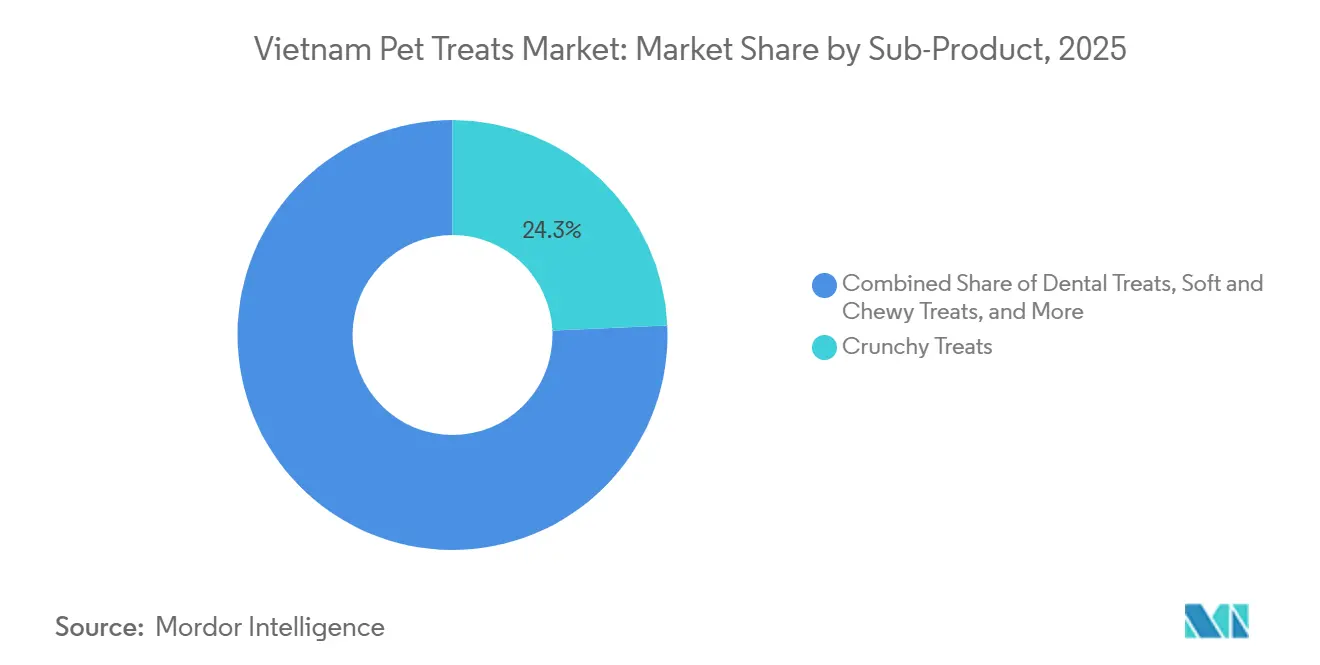
Crunchy treats held 24.3% of the Vietnam pet treats market share in 2025, making them the largest sub-product category by revenue. Their lead came from familiarity, broad shelf presence, and price accessibility across different income groups. In the Vietnam pet treats industry, crunchy formats work well for first-time buyers because they are simple to understand and easy to compare on the shelf. Dental treats, soft and chewy treats, and other formats also kept visible positions, with dental chews benefiting from stronger credibility in specialty and clinic-linked channels.
Freeze-dried and jerky treats are projected to grow at a 7.1% CAGR through 2031, which makes them the fastest-growing sub-product group in the Vietnam pet treats market. Their momentum comes from clean-label appeal, visible ingredient quality, and a storage profile that fits urban households better than fresh treats do. Nu Pet has used FDA and ISO 22000 certifications as a trust signal for its locally positioned freeze-dried line, which is important in a category where consumers look for proof of quality before paying more [4]Source: NUPET, “Freeze-Dried PetQ Product Documentation,” NUPET, nupet.vn. Inaba Foods’ plant expansion in Thailand in September 2025 also points to stronger regional preparation for continued growth in premium wet and treat formats across Southeast Asia.



By Pets: Dogs Drive Volume, Cats Drive Growth and Margin
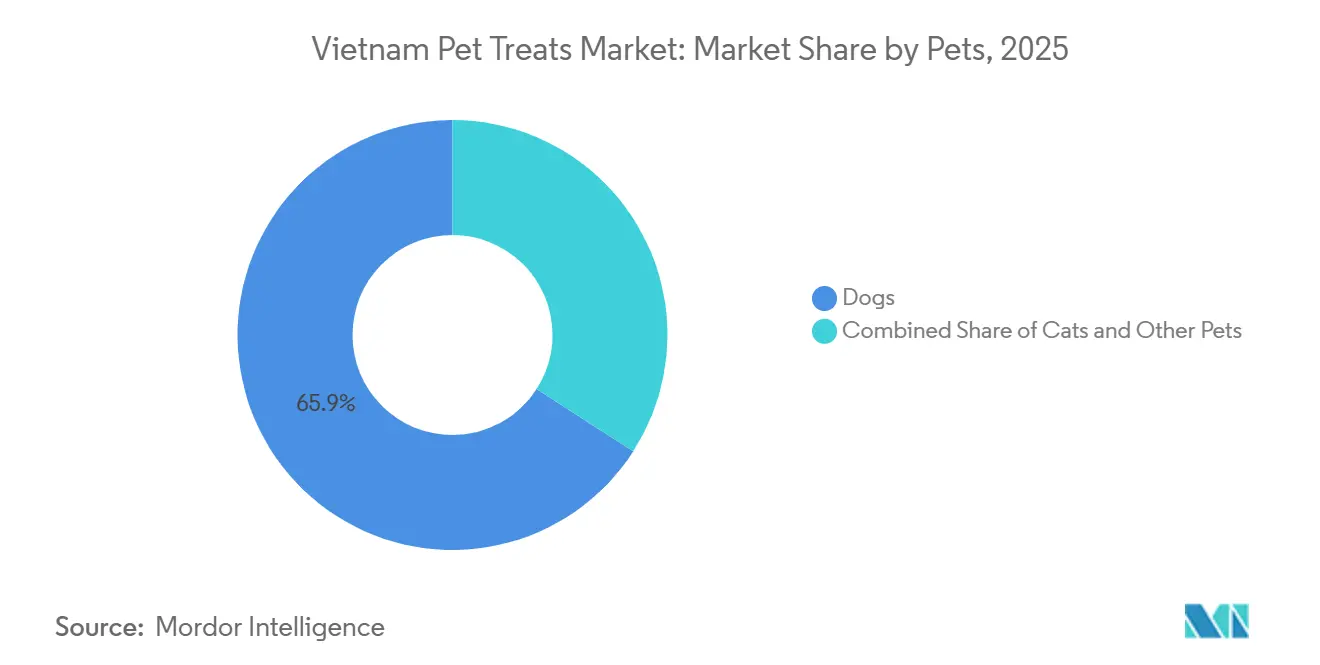
Dogs accounted for 65.9% of the Vietnam pet treats market size in 2025, reflecting their larger pet population and the established practice of using treats for training and daily care. The high ownership of dogs continues to support strong demand for reward-based treats used during training, bonding, and routine pet care activities. As a result, dog treats remain the largest contributor to overall market revenue. Companies with comprehensive dog treat portfolios and efficient distribution networks are well positioned to maintain their market presence in the Vietnam pet treats market.
Cats are forecast to expand at a 7.2% CAGR through 2031, making them the fastest-growing pet type in the Vietnam pet treats market. Pet Food Industry reported in 2024 that Vietnam’s cat population was growing at 4% annually, with strong adoption among younger urban professionals who value a lower-maintenance companion profile[5]Source: Pet Food Industry, “Demographic Shifts Drive Pet Food Growth in Asia-Pacific,” Pet Food Industry, petfoodindustry.com. This buyer group has shown a stronger willingness to spend on lickable treats and functional formats than volume alone would imply. Inaba Foods strengthened this position in 2025 by expanding its CIAO Premium Churu line with 6 functional ingredients, including lactic acid bacteria and N-acetylglucosamine.
By Distribution Channel: Specialty Stores Dominant, Online Accelerating
Specialty stores accounted for 73.6% of the Vietnam pet treats market in 2025, placing them well ahead of other distribution channels by value. Their position is supported by product assortment depth, in-store product explanation, staff guidance, and proximity to veterinary clinics. Within the Vietnam pet treats market, this channel remains the primary point where premium products are introduced, compared, and validated before repeat purchase. Pet Lovers Centre's specialty retail presence in Ho Chi Minh City reflects the continued role of curated pet retail in building category confidence.
The online channel is projected to grow at a 6.9% CAGR through 2031, making it the fastest-growing distribution format in the Vietnam pet treats market. E-commerce is enabling consumers in tier 1 and tier 2 cities to access imported and niche brands without relying on wider physical store availability. Nu Pet's direct website presence alongside Shopee, Lazada, and Zalo illustrates how local brands are using digital channels to offset limited shelf space and maintain direct access to repeat buyers. Online retail is also becoming a practical entry route for foreign brands that have not yet established full formal distribution within Vietnam.
Geography Analysis
Ho Chi Minh City and Hanoi account for the largest share of premium and imported pet treat sales in the Vietnam pet treats market. These metropolitan areas have the highest concentration of pet ownership, well-developed specialty retail networks, and stronger consumer purchasing power than other regions. Premium dental chews, lickable cat treats, and freeze-dried proteins are already visible in curated shelf sets across these urban centers. Pet Lovers Centre’s Ho Chi Minh City presence shows the kind of premium assortment that city buyers now expect from a credible specialty outlet.
Da Nang, Can Tho, and other provincial cities represent the next phase of market expansion in the Vietnam pet treats market. Demand for pet treats is increasing in these cities, although household spending remains below the levels observed in Ho Chi Minh City and Hanoi. Consumers continue to favor economy and mid-priced products available through convenience stores and independent pet retailers. At the same time, the rapid growth of e-commerce is improving access to a broader range of domestic and imported pet treat products, supporting market expansion beyond major metropolitan areas.
Rural areas across the Mekong Delta, the Central Highlands, and the northern upland provinces represent a distinct demand profile in the Vietnam pet treats market. Treats are purchased less frequently in these regions due to lower income levels, limited distribution networks, and weaker brand familiarity. Domestic and regionally integrated processors that offer smaller pack sizes and lower price points could improve market reach over time. Charoen Pokphand Foods' manufacturing presence in Vietnam illustrates the type of local operating base that can support value-oriented expansion if rural demand becomes more consistent.
Competitive Landscape
The Vietnam pet treats market was moderately concentrated in 2025, with the top 5 players accounting for a significant share of total revenue. Mars, Incorporated, Nestlé (Purina), Charoen Pokphand Group, Colgate-Palmolive Company (Hill’s Pet Nutrition, Inc.), and Perfect Companion Group Co., Ltd. were the main scale players in the category. Their lead came from wider distribution, stronger brand recall, and better access to premium shelf space. Mars, Incorporated, and Nestlé (Purina) remained strong through broad dog and cat treat recognition, while Charoen Pokphand Group and Perfect Companion Group Co., Ltd. benefited from regional operating depth and pricing discipline. Colgate-Palmolive Company (Hill’s Pet Nutrition, Inc.) held a more specialized position where veterinary trust could support repeat purchase even at higher price points.
The next layer of competition in the Vietnam pet treats market is built around format strength and product credibility rather than scale alone. Inaba Foods Co., Ltd. is well placed in cat treats, especially through CIAO Churu and the 2025 expansion of CIAO Premium Churu with 6 functional ingredients. Colgate-Palmolive Company (Hill’s Pet Nutrition, Inc.) also expanded its broader nutrition platform in 2025 through ActivBiome+ portfolio updates globally, including Vietnam, which show a clear push into higher-value pet nutrition spaces. These moves matter because the Vietnam pet treats market is rewarding suppliers that can combine science-backed positioning with recognizable formats.
The Vietnam pet treats market continues to offer opportunities for companies specializing in freeze-dried treats, innovative cat treats, and clinically supported dental products. Increasing consumer preference for premium nutrition, trusted product quality, and specialized pet care is creating favorable conditions for differentiated product offerings. Companies with strong omnichannel distribution, reliable quality standards, and consistent product availability are well positioned to strengthen their market presence while maintaining competitive pricing.
Vietnam Pet Treats Industry Leaders
Mars, Incorporated
Charoen Pokphand Group
Colgate-Palmolive Company (Hill’s Pet Nutrition, Inc.)
Perfect Companion Group Co., Ltd.
Nestlé (Purina)
- *Disclaimer: Major Players sorted in no particular order

Recent Industry Developments
- May 2026: Virbac's C.E.T. AQUADENT FR3SH Dental Solution received the Veterinary Oral Health Council (VOHC) Seal of Acceptance for plaque and tartar control in dogs, while the company also introduced URSOLYX Soft Chews for cats to expand its functional companion animal portfolio. This strengthens innovation in premium dental and functional pet treats, supporting demand for health-focused products.
- February 2026: Pet Honesty LLC launched Brush Buddies, a daily dental chew for dogs featuring a patent-pending design and a postbiotic formulation targeting multiple aspects of oral health. This expands the premium dental treats segment and encourages greater adoption of functional pet treats.
- April 2025: Colgate-Palmolive Company (Hill's Pet Nutrition) launched ActivBiome+ Multi-Benefit technology across its Hill's Science Diet portfolio, reinforcing its presence in the premium functional pet nutrition segment. The innovation supports growing demand in Vietnam for health-oriented pet treats that promote digestive and immune wellness, aligning with the country's increasing pet humanization and premiumization trends.


Vietnam Pet Treats Market Report Scope
Pet treats are commercial food products formulated specifically for pets. They are not designed to provide complete and balanced nutrition but are intended for occasional feeding as rewards, during training, or for enjoyment. As a subset of pet food, these treats are typically made from ingredients such as meat, grains, or vegetables and should be offered in moderation to maintain a balanced diet.
The Vietnam pet treats market report is segmented by sub product (dental treats, crunchy treats, soft and chewy treats, freeze-dried and jerky treats, and other pet treats), by pets (cats, dogs, and other pets), and by distribution channel (convenience stores, online channel, specialty stores, and more). The market forecasts are provided in terms of value (USD) and volume (metric tons).
| Dental Treats |
| Crunchy Treats |
| Soft and Chewy Treats |
| Freeze-Dried and Jerky Treats |
| Other Treats |
| Dogs |
| Cats |
| Other Pets |
| Convenience Stores |
| Online Channel |
| Specialty Stores |
| Supermarkets and Hypermarkets |
| Other Distribution Channels |
| By Sub Product | Dental Treats |
| Crunchy Treats | |
| Soft and Chewy Treats | |
| Freeze-Dried and Jerky Treats | |
| Other Treats | |
| By Pets | Dogs |
| Cats | |
| Other Pets | |
| By Distribution Channel | Convenience Stores |
| Online Channel | |
| Specialty Stores | |
| Supermarkets and Hypermarkets | |
| Other Distribution Channels |


Key Questions Answered in the Report
What is the 2031 value outlook for Vietnam pet treats?
The Vietnam pet treats market is forecast to reach USD 90.18 million by 2031, up from USD 66.89 million in 2026, with a 6.16% CAGR over 2026 to 2031.
Which sub product category leads sales in Vietnam?
Crunchy treats led revenue with a 24.3% share in 2025, supported by broad availability and lower price barriers.
Which pet type is growing fastest in treat consumption?
Cats are the fastest-growing pet type, with a projected 7.2% CAGR through 2031.
Why do specialty stores still lead treat sales?
Specialty stores held 73.6% of distribution value in 2025 because they offer deeper assortments, better product explanations, and stronger trust for premium purchases.
What is helping premium formats grow faster than mass products?
Premium growth is being supported by multi-pet households, stronger urban spending, clinic-assisted selling, and rising demand for freeze-dried and functional treats.
Page last updated on:


 Your data is secure and never sold or shared.


