
Veterinary Glucometers Market Size and Share
Market Overview
| Study Period | 2021 - 2032 |
|---|---|
| Market Size (2027) | USD 281.39 Million |
| Market Size (2032) | USD 442.37 Million |
| Growth Rate (2026 - 2032) | 9.47 % |
| Fastest Growing Market | Asia-Pacific |
| Largest Market | North America |
| Market Concentration | Medium |
Major Players *Disclaimer: Major Players sorted in no particular order Image © Mordor Intelligence. Reuse requires attribution under CC BY 4.0. | |
Veterinary Glucometers Market Analysis by Mordor Intelligence
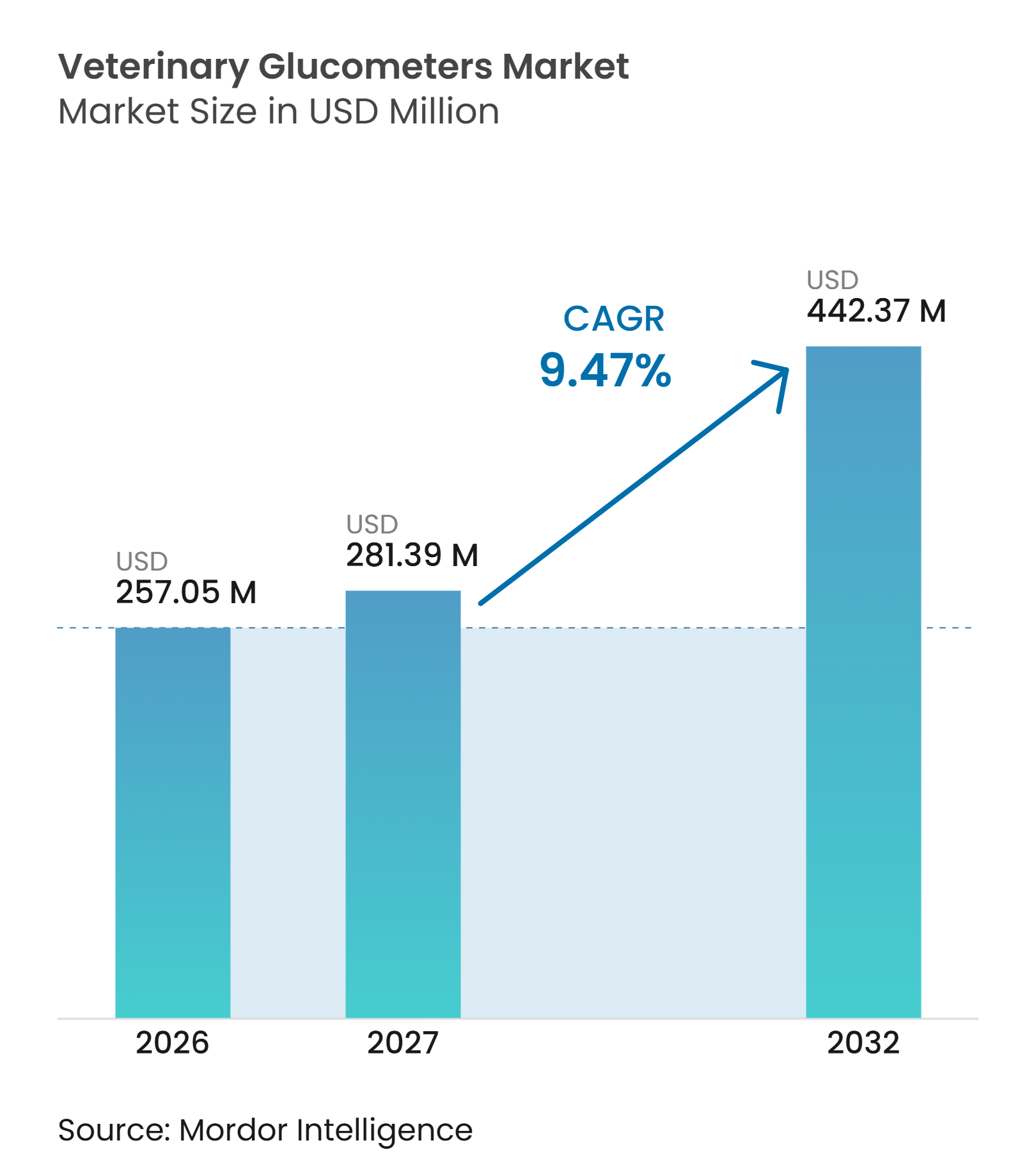
The Veterinary Glucometers Market size is projected to be USD 257.05 million in 2026, USD 281.39 million in 2027, and reach USD 442.37 million by 2032, growing at a CAGR of 9.47% from 2027 to 2032.
Demand is moving from occasional clinic testing toward home monitoring and continuous glucose tracking. The 2026 AAHA guidance recommends against routine in-hospital glucose curves for cats because stress-related hyperglycemia can affect results. This change favors home-use meters and continuous glucose monitoring systems that allow clinicians to review results remotely. The veterinary glucometers market also benefits from higher pet ownership, broader point-of-care testing, and a growing focus on chronic disease management. Competition is becoming more focused on clinical accuracy, species-specific calibration, connected data tools, and recurring revenue from strips and sensors, because suppliers must balance an affordable initial purchase with the clinical confidence, workflow fit, and ongoing consumable availability that influence whether a meter remains in use after diagnosis.
Key Report Takeaways
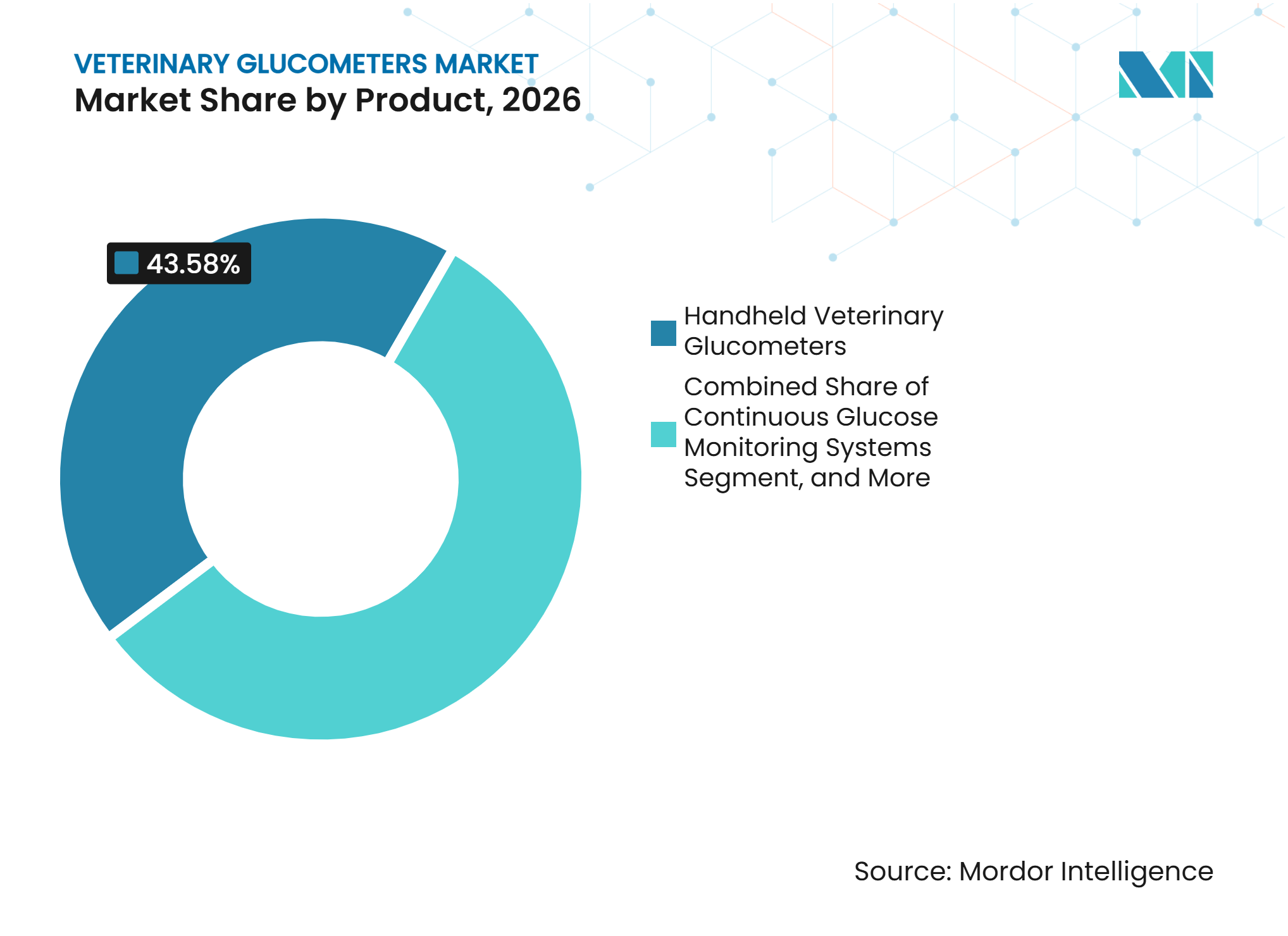
- By product, handheld veterinary glucometers held 43.58% of revenue in 2026, while continuous glucose monitoring systems are forecast to grow at a CAGR of 9.82% through 2032 in the veterinary glucometers market.
- By animal type, companion animals held 67.21% of revenue in 2026, while livestock animals are forecast to grow at a CAGR of 10.13% through 2032.
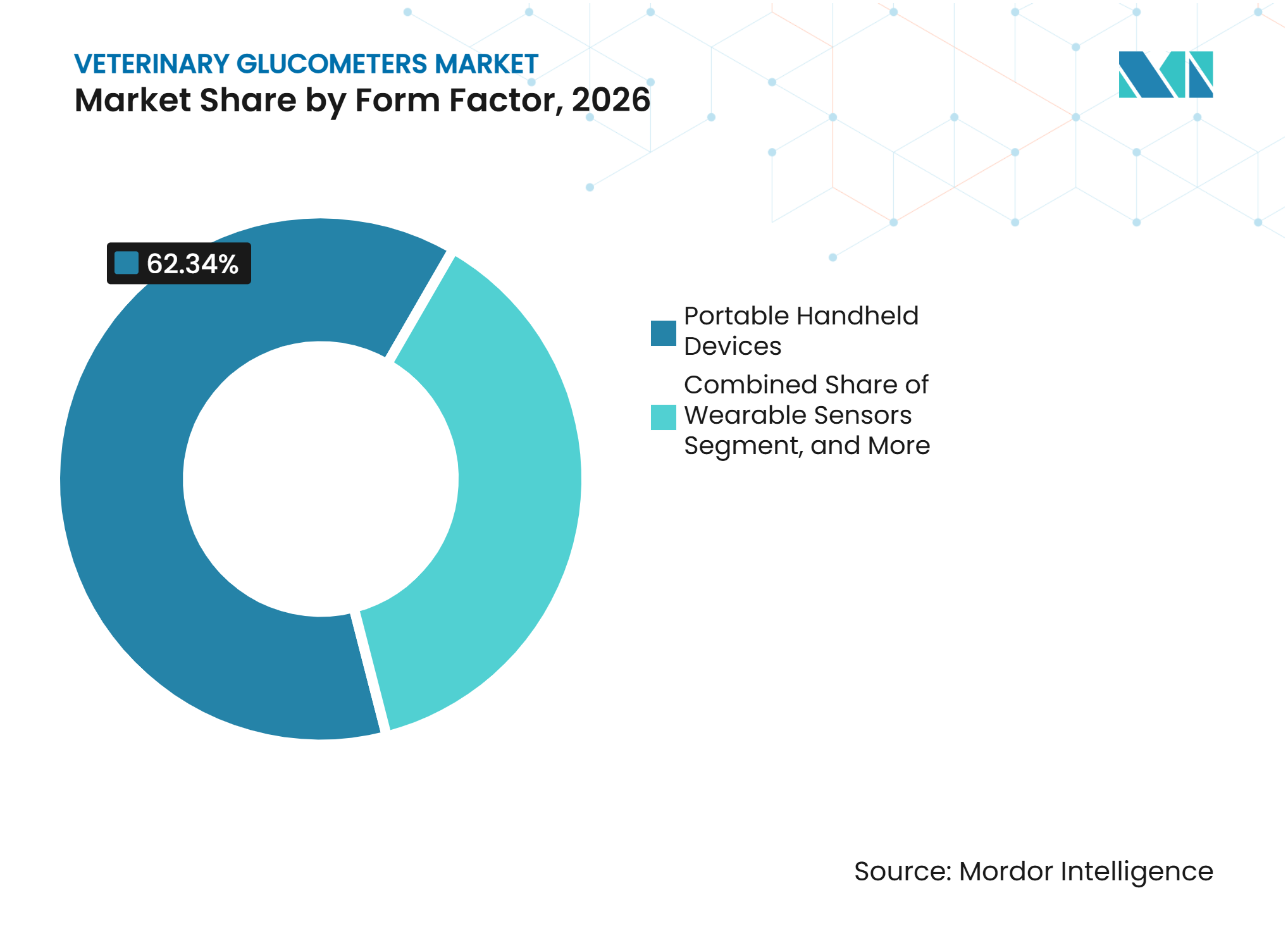
- By form factor, portable handheld devices held 62.34% of revenue in 2026, while wearable sensors are forecast to grow at a CAGR of 10.54% through 2032 in the veterinary glucometers market.
- By distribution channel, direct sales held 42.73% of revenue in 2026, while online pharmacies and e-commerce are forecast to grow at a CAGR of 10.76% through 2032.
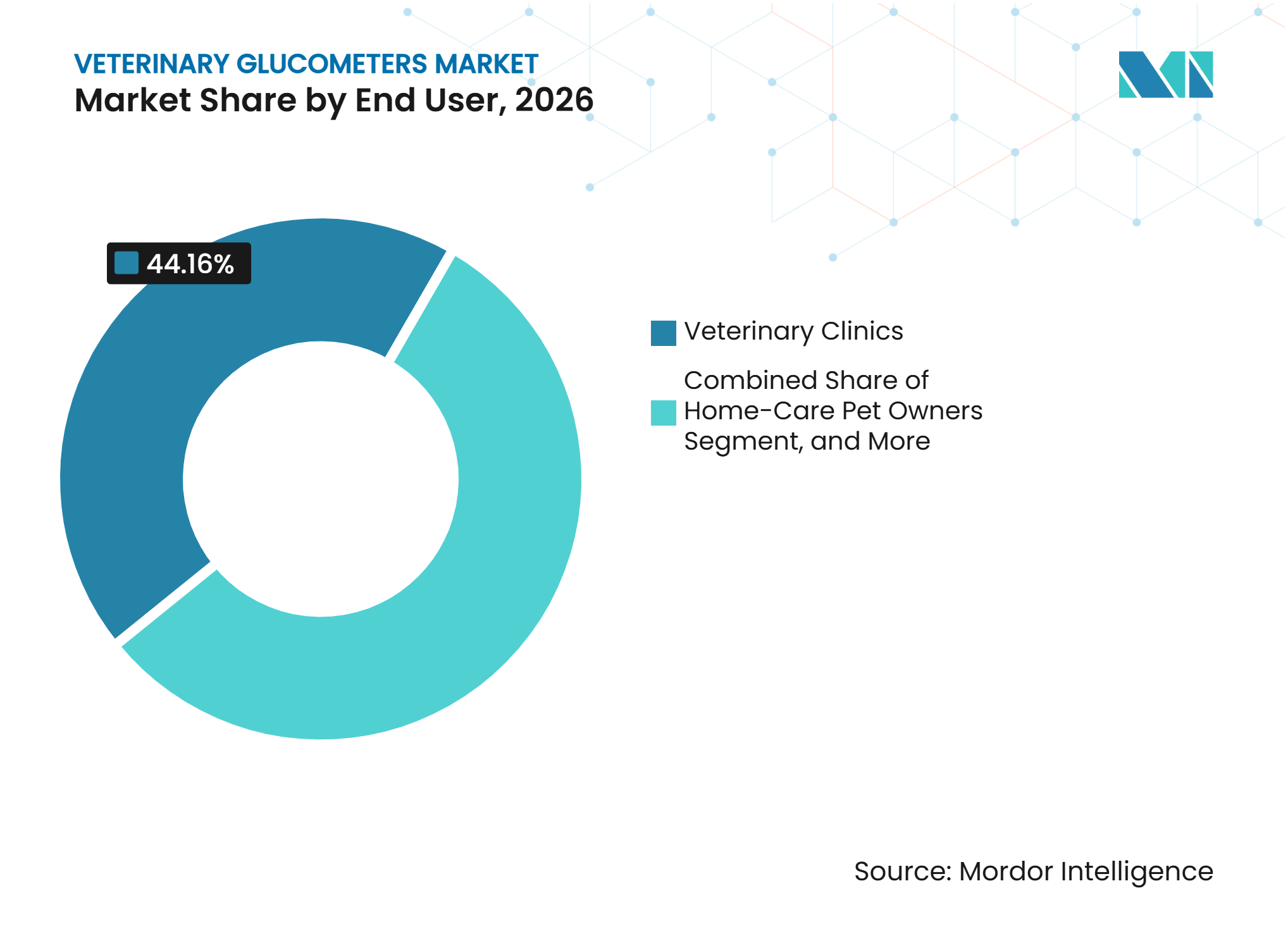
- By end user, veterinary clinics held 44.16% of revenue in 2026, while home-care pet owners are forecast to grow at a CAGR of 11.24% through 2032.
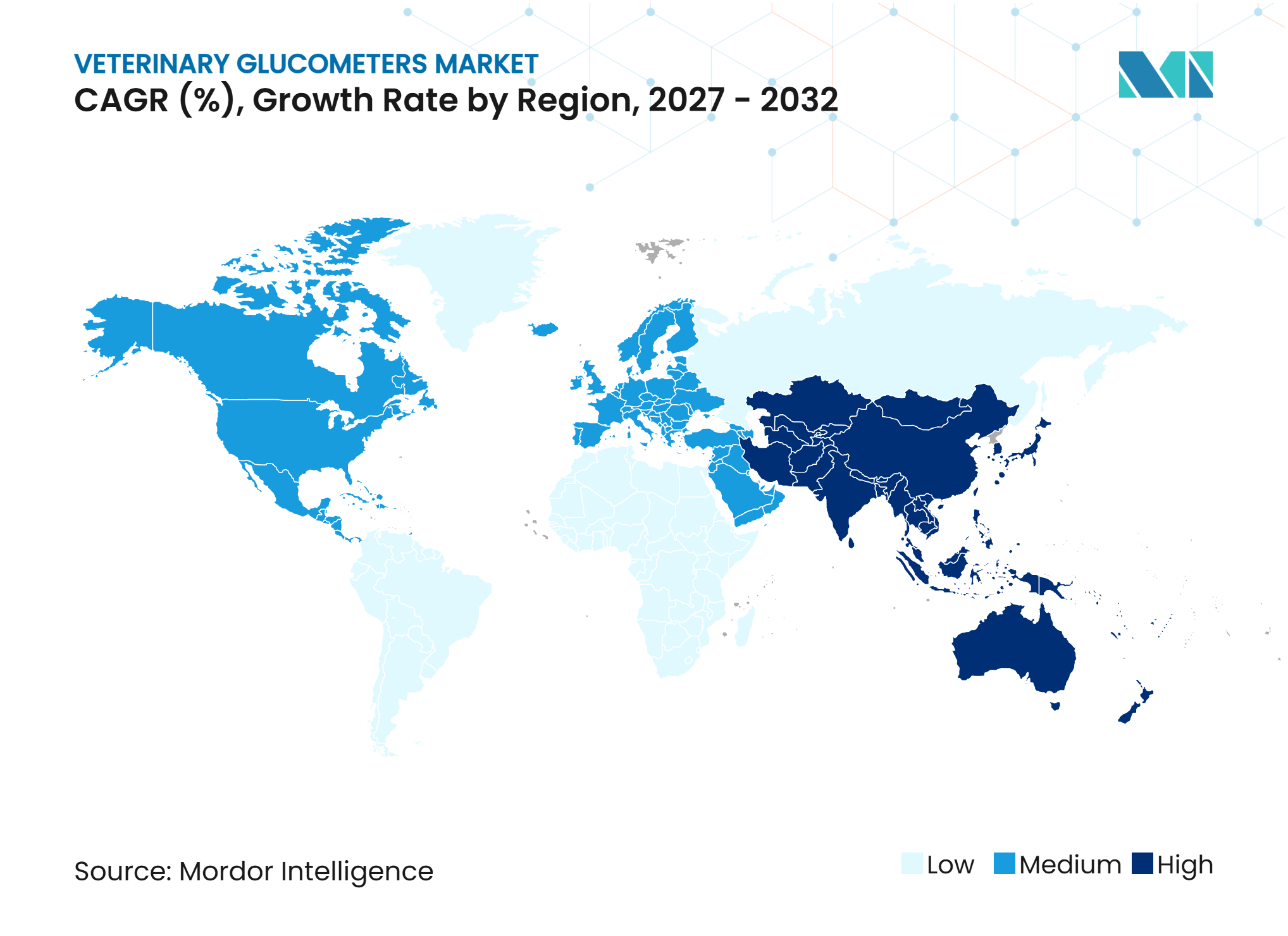
- By geography, North America held 39.45% of revenue in 2026, while Asia-Pacific is forecast to grow at a CAGR of 11.64% through 2032 in the veterinary glucometers market.
Note: Market numbers in this report are based on Mordor Intelligence's proprietary estimation framework, which combines nine months of actuals with Q4 projections for base year 2026.
Market Trends and Insights
Drivers Impact Analysis of Veterinary Glucometers Market*
| Driver | (~) % Impact on CAGR Forecast | Geographic Relevance | Impact Timeline |
|---|---|---|---|
| Rising Prevalence of Diabetes in Companion Animals | +2.2% | Global, highest concentration in North America and Western Europe | Long term (≥ 4 years) |
| Growth in Pet Ownership and Pet Humanization | +1.9% | Global, most pronounced in North America and urban Asia-Pacific | Medium term (2-4 years) |
| Increasing Adoption of Point-of-Care Diagnostics | +1.5% | North America and Europe core, with spill-over to APAC and MEA | Medium term (2-4 years) |
| Expansion of Home-Based Veterinary Diabetes Management | +1.3% | North America and Western Europe, emerging in Japan and South Korea | Long term (≥ 4 years) |
| Species-Specific Calibration and Digital Data Integration | +0.9% | Global, with early gains in North America and the United Kingdom | Medium term (2-4 years) |
| Reduced Reliability of Stress-Affected In-Clinic Glucose Curves | +1.0% | North America and Europe, driven by AAHA and iCatCare guideline adoption | Short term (≤ 2 years) |
| Source: Mordor Intelligence | |||
Rising Prevalence of Diabetes in Companion Animals
Older, obese, and indoor-sedentary pets are the populations most associated with this disease burden. These groups are expanding in higher-income pet-owning households. A Nationwide analysis found that feline diabetes cost USD 2,240 annually on average in the United States during 2025. The 2025 iCatCare guidelines state that many human meters underestimate feline glucose concentrations because feline blood differs from human blood. This clinical gap supports demand for devices calibrated specifically for veterinary patients in the veterinary glucometers market, because owners and clinicians need readings that can be interpreted against animal-specific physiology rather than relying on a lower-cost device that may systematically understate feline glucose concentrations.
Growth in Pet Ownership and Pet Humanization
The AVMA reported that 43.7% of United States households owned dogs in 2026, representing 88.9 million dogs.[1] It also reported that 34.1% of households owned cats, representing 77.0 million cats. Average annual veterinary spending was USD 595 for dog-owning households and USD 426 for cat-owning households. Australia recorded pet ownership in 73% of households in March 2025, compared with 61% before the pandemic.[2] The APPA documented a 23% year-over-year increase in United States cat ownership during 2024, reaching 49 million cat-owning households.[3] Larger pet populations and owner willingness to fund monitoring support the veterinary glucometers market, particularly where households treat diabetes management as an ongoing care need and make repeat purchases of strips, sensors, and related monitoring supplies over the life of a pet’s condition.
Increasing Adoption of Point-of-Care Diagnostics
Point-of-care glucometry is becoming a core part of chronic disease management in the veterinary glucometers market. Veterinary-calibrated meters, including AlphaTrak 3, iPet Pro, Advocate PetTest, VetMate, and VQ Pet H, can provide results in 5 to 10 seconds.[4] These devices can use blood samples as small as 0.3 μL and report accuracy greater than 95%. Such features make owner-performed testing more practical than it was a decade ago. Practices are also incorporating glucometer results into practice management systems. This integration can strengthen clinical workflow links and support repeat purchases of strips and sensors within the veterinary glucometers market, since a meter that fits the practice’s routine gives clinicians a consistent view of readings while reducing the burden on owners who would otherwise need to record and share results manually.
Expansion of Home-Based Veterinary Diabetes Management
The 2026 AAHA Diabetes Management Guidelines for Cats state that in-hospital blood glucose curves are not recommended for routine feline monitoring. The guidance cites day-to-day glucose variation and stress-related hyperglycemia as reasons that single clinic curves may not support insulin-dose adjustments. A 2025 study found hyperglycemia in 6 of 10 healthy cats on hospital arrival. The same study found that cats needed at least 6 hours of acclimatization before reliable measurements could be obtained. GluCurve Pet CGM became commercially available in Canada in May 2026 and provides readings every 3 minutes for 14 days with veterinary portal data upload. These conditions support a shift toward home monitoring and connected care in the veterinary glucometers market, where readings can reflect a pet’s usual environment and allow practitioners to review glucose patterns without requiring a repeated, time-consuming hospital visit for a single curve.
Restraints Impact Analysis of Veterinary Glucometers Market*
| Restraint | (~) % Impact on CAGR Forecast | Geographic Relevance | Impact Timeline |
|---|---|---|---|
| High Cost of Veterinary-Specific Glucometers, Sensors, and Test Strips | -1.7% | Global, most acute in Latin America, MEA, and price-sensitive APAC | Long term (≥ 4 years) |
| Availability of Lower-Cost Human Glucose Meters | -1.5% | Global, highest in markets with limited veterinary-exclusive product access | Medium term (2-4 years) |
| Sensor Detachment and Short Wear Life in Active Animals | -0.9% | Global, heightened in outdoor and working-animal markets | Medium term (2-4 years) |
| Limited Veterinary Validation and Regulatory Clarity for Adapted Human CGMs | -0.6% | North America and Europe, FDA and EMA oversight zones | Short term (≤ 2 years) |
| Source: Mordor Intelligence | |||
High Cost of Veterinary-Specific Glucometers, Sensors, and Test Strips
Device cost limits monitoring adoption, especially where veterinary insurance coverage is limited. Some owners may therefore reduce monitoring or stop tracking glucose levels. Veterinary-calibrated devices also have a price premium over comparable human products. This price difference is more significant in Latin America, MEA, and price-sensitive APAC markets. Recurring sensor and strip costs remain a central affordability issue for the veterinary glucometers market, because the expense continues after the initial device purchase and can affect whether an owner follows the intended monitoring schedule throughout the course of diabetes management.
Availability of Lower-Cost Human Glucose Meters
Human meters adapted for veterinary use remain a lower-cost substitute for some pet owners. A 2025 Tufts study found that the FreeStyle Libre 2 and 14-day systems placed 100% of dog glucose readings within Clarke error-grid zones A and B. This level of performance was considered suitable for routine owner monitoring in canine patients. It can reduce the immediate need for veterinary-specific devices in price-sensitive settings. However, some FreeStyle Libre 3 and 3 Plus sensor lots were recalled in December 2025 for inaccurately low glucose readings. This recalls attention to the balance between lower acquisition cost and veterinary validation, since a device can appear attractive at purchase but still create concern if clinicians lack confidence that a glucose reading is sufficiently reliable for routine monitoring decisions in an animal patient.
*Our forecasts treat driver/restraint impacts as directional, not additive. The impact forecasts reflect baseline growth, mix effects, and variable interactions.
Veterinary Glucometers Market Segment Analysis
By Product:
CGMs Rising, Handhelds Anchoring RevenueHandheld veterinary glucometers held 43.58% of revenue in 2026. Their installed base includes veterinary practices, home-care users, and diagnostic laboratories, while low unit costs support continued adoption across a broad range of users. Their broad species compatibility also supports routine testing. A 2025 study found that the AlphaTrak3 beta prototype met ISO accuracy standards in 95.1% of measurements from 103 clinical canine patients. This published validation supports the role of handheld devices in established monitoring workflows. At the same time, the installed base of clinics and home-care users gives suppliers a continuing demand base for routine meter replacement and recurring strips without displacing the established role of point testing.
Continuous glucose monitoring systems are projected to grow at a CAGR of 9.82% through 2032, and the 2026 AAHA feline guidance supports this growth by recommending against routine in-hospital glucose curves. Flash glucose monitoring systems, led by off-label use of the FreeStyle Libre range, remain an established niche. The December 2025 FreeStyle Libre 3 sensor recall strengthened clinician attention to purpose-built veterinary systems. Veterinary blood analyzers with integrated glucose testing remain relevant in emergency and critical-care workflows. Test strips remain the highest-volume consumable segment by unit and support recurring manufacturer revenue because every handheld testing routine requires a continuing supply after the initial meter purchase and keeps this product category relevant even as continuous systems gain greater clinical attention.


By Animal Type:
Companion Animal Dominance, Livestock Gains GroundCompanion animals held 67.21% of revenue in 2026. Cats and dogs form the core demand base because diabetes management is well established in developed veterinary systems, and older and obese pets create a continuing need for regular glucose checks. Pet owner spending also supports home-use monitoring. The AVMA reported 88.9 million dogs and 77.0 million cats in the United States in 2026. These ownership levels support the segment’s large revenue base.
Livestock animals are projected to grow at a CAGR of 10.13% through 2032. Precision agriculture applications include real-time ketosis monitoring in dairy cattle, and a 2025 validation study of the CentriVet handheld glucometer measured glucose in bovine follicular fluid with acceptable correlation to ELISA reference methods. The result supports potential use in livestock reproductive management. Equine animals are a smaller emerging group within the veterinary glucometers market. Insulin dysregulation and equine metabolic syndrome are increasing clinical areas of focus, creating a specialized monitoring need outside conventional companion animal diabetes management and extending the relevance of validated glucose tools to veterinary work involving horses.
By Form Factor:
Portables Dominate, Wearables AcceleratePortable handheld devices held 62.34% of revenue by form factor in 2026. Their veterinary glucometers market size reflects fast result delivery, low sample requirements, and established clinical use. Veterinary meters can produce results in 5 to 10 seconds and can also work with samples as small as 0.3 μL. These characteristics support use in clinics and in home-care settings. Portability remains especially useful where a pet requires regular spot checks, since a small meter can be used within clinic workflows or by owners at home without requiring the application, retention, or replacement schedule associated with a wearable sensor.
Wearable sensors are projected to grow at a CAGR of 10.54% through 2032. Continuous interstitial monitoring reduces dependence on episodic blood sampling, and the 2025 canine study found a correlation of r = 0.904 between sensor readings and PBGM measurements. Protective garments extended average wear time to 8.2 days, compared with 5.8 days without garments. Detachment and short wear time remain obstacles for active animals. Product design and retention methods will shape whether wearable systems can realize their forecast potential, because an uninterrupted sensor record matters to the practical value of continuous monitoring and because owners may hesitate to repeat a purchase when a device detaches before the intended monitoring period.

By Distribution Channel:
Direct Sales Lead, E-Commerce DisruptsDirect sales held 42.73% of revenue in 2026. The veterinary glucometers market depends on manufacturers and distributors selling devices to veterinary practices, with sales that can include service agreements and consumable supply arrangements. Clinics also provide initial device selection and owner instruction. This creates durable practice relationships for suppliers. Direct sales therefore remain the leading route for clinical deployment, as device suppliers and distributors can support initial selection, provide supplies, and work through established veterinary practice relationships that remain important when a diabetic pet begins a formal monitoring routine.
Online pharmacies and e-commerce are projected to grow at a CAGR of 10.76% through 2032. Convenience, price visibility, and auto-ship options support online purchases of recurring consumables, and this channel can give owners direct access to test strips and sensors once a device is selected. It can also complement clinic-based dispensing rather than fully replace it. Veterinary pharmacies remain important for first-time dispensing and education. Digital fulfillment is broadening the channels available to the veterinary glucometers market, especially for follow-on strip and sensor purchases. At the same time, the veterinary pharmacy retains a practical role for first-time dispensing, education, and patient-specific advice after a clinician has made the initial recommendation.
By End User:
Clinics Lead, Home-Care Owners Fastest GrowingVeterinary clinics held 44.16% of revenue in 2026. Their position reflects their role in diabetes diagnosis and initial device prescription, and clinics influence the meter selected for home monitoring. This influence can shape brand loyalty across the consumable supply chain. Hospitals also manage complex cases such as perioperative monitoring and diabetic ketoacidosis. Diagnostic centers support referral-based endocrinology work and institutional demand for laboratory-grade analyzers, which means clinical demand includes routine owner monitoring but also higher-acuity settings where professionals need integrated testing options for complex diabetic management.
Home-care pet owners are projected to grow at a CAGR of 11.24% through 2032. The veterinary glucometers market size for this group is supported by guidance that shifts more routine monitoring into the home. At the same time, AAHA advises against routine in-hospital glucose curves for cats. Connected devices can upload readings to veterinary portals for clinician review. These tools reduce the need for owners to record every reading manually. Better data exchange can support owner adherence and clinical follow-up because the owner can share a record rather than relying on memory or manual logs, and the veterinary team can review patterns when discussing insulin management or a future monitoring plan.
Geography Analysis
North America: Largest Market, Deep Clinical Infrastructure
North America held 39.45% of the veterinary glucometers market share in 2026, supported by high pet ownership, substantial veterinary spending, and clinical systems that can support long-term monitoring. The AVMA recorded 88.9 million dogs and 77.0 million cats in the United States in 2026, while average annual spending was USD 595 for dog-owning households and USD 426 for cat-owning households. The 2026 AAHA guidance favors home monitoring and CGM over routine in-hospital glucose curves for cats, which gives connected meters and remote data sharing a clearer role in care pathways. Pet insurance covered USD 4.74 billion in total written premium at year-end 2024, with penetration reaching 5.46% for United States dogs and 2.04% for cats. This combination of insurance, established clinical guidance, and owner spending supports recurring purchases of test strips and sensors while making specialty monitoring more accessible to medically engaged households.
Asia-Pacific: Fastest Growing, Mobile-First Adoption
Asia-Pacific is projected to grow at a CAGR of 11.64% through 2032, making it the fastest-growing geography in the veterinary glucometers market. Companion animal ownership is increasing in China, Japan, South Korea, India, and Australia, although purchasing patterns vary sharply by country and by the availability of local strips and distributor support. Australia recorded pet ownership in 73% of households during March 2025, including dogs in 49.3% of households and cats in 33.6% of households. Japan, South Korea, and urban China represent the premium end of regional demand, while other markets place greater value on dependable handheld devices and lower ongoing monitoring costs. Mobile-first owner engagement and telemedicine-integrated follow-up are widening direct-to-owner access, but veterinary practices remain important for diagnosis, device recommendation, and patient education.
Regional Diversity Shapes Distinct Market Profiles
Europe is the second-largest veterinary glucometers market, with Germany, the United Kingdom, and France supported by mature companion animal care, high per-pet spending, and established diagnostic protocols. Clinical validation remains important across Europe because practices use standardized care pathways and operate within a regional environment that emphasizes reliable point-of-care testing. The Middle East and Africa are earlier-stage markets, with the GCC supported by premium private practices and South Africa showing demand in urban companion animal diagnostics. Latin America combines companion animal diagnostics and livestock monitoring demand in Brazil and Mexico, while price sensitivity elsewhere sustains human-meter use and creates room for suppliers that strengthen distribution and explain species-specific calibration.
Competitive Landscape
Market Concentration
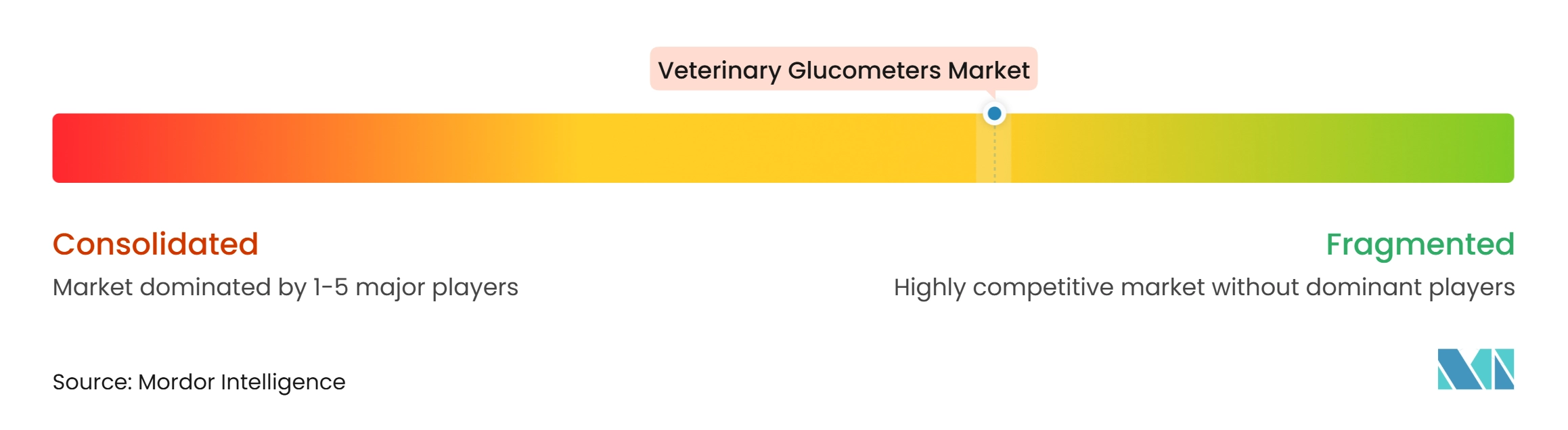
The veterinary glucometers market is moderately consolidated at the premium device tier, where Zoetis, Abbott, and Nova Biomedical have the strongest professional recognition in the supplied research. Zoetis competes through veterinary-oriented glucose monitoring, while Abbott maintains an off-label presence through FreeStyle Libre systems used in animal monitoring. Nova Biomedical remains part of the premium competitive set because veterinary professionals recognize its diagnostic positioning. Clinical accuracy and species-specific calibration are important points of differentiation because they address the limitations of using human devices for animal patients. The 2025 AlphaTrak3 beta prototype study reported ISO-standard accuracy in 95.1% of measurements from 103 clinical canine patients, giving veterinary-focused suppliers an evidence base against lower-cost alternatives.
ALR Technologies commercially launched the GluCurve Pet CGM in Canada during May 2026, introducing a continuous monitoring system built exclusively for cats and dogs. The device provides glucose readings every 3 minutes for up to 14 days and provides veterinary portal data upload, which supports remote insulin management. Its introduction creates a clearer purpose-built choice in a category that has partly relied on adapted human CGMs. The December 2025 recall of certain FreeStyle Libre 3 and 3 Plus sensor lots for inaccurate low-glucose readings also drew attention to the risk of relying on devices outside their original intended setting. This setting gives veterinary-specific CGM suppliers an opportunity to compete through validation, documented accuracy, and data sharing designed for veterinary care.
ALR Technologies signed a June 2026 letter of intent to acquire CGM Medical Technology Singapore for USD 45 million plus 200 million shares, which would consolidate GluCurve Pet CGM manufacturing and extend human CGM development capacity. The company had already entered a June 2025 manufacturing agreement for GluCurve Pet CGM production, showing an effort to establish production infrastructure for both veterinary and human applications. Zoetis acquired the Veterinary Pathology Group during 2025, expanding its diagnostic presence in the United Kingdom and Ireland. Regional device makers from Taiwan, South Korea, and China continue to compete mainly through price and distribution breadth. At the same time, premium suppliers rely more on veterinary evidence, established clinician relationships, and recurring sales of strips and sensors.
Veterinary Glucometers Industry Leaders
-
Abbott Laboratories
-
ACON Laboratories Inc.
-
ARKRAY Inc.
-
F. Hoffmann-La Roche Ltd
-
Zoetis Inc. (AlphaTRAK)
- *Disclaimer: Major Players sorted in no particular order
Veterinary Glucometers Market Companies Covered in this Report
- Abbott Laboratories
- AccuBioTech
- Acon Laboratories
- AgaMatrix
- Apex Biotechnology Corp. (PetSure)
- Arkray
- Bionime
- CEI Technology Inc.
- Roche
- i-SENS Inc.
- Lifescan
- MED TRUST Handelsgesellschaft mbH (WellionVet)
- Nova Biomedical
- TaiDoc Technology
- Teco Diagnostics
- Trividia Health
- Ultimed
- VivaChek Laboratories Inc.
- Woodley Equipment Company
- Zoetis Inc. (AlphaTRAK)
Recent Industry Developments in Veterinary Glucometers Market
- June 2026: ALR Technologies SG Ltd. entered a Letter of Intent to acquire 100% equity of CGM Medical Technology Singapore Pte. Ltd. for USD 45 million plus 200 million shares, consolidating manufacturing of the GluCurve Pet CGM and extending capacity toward human-market CGM development, a dual-market scale strategy that could substantially reduce per-unit costs for the veterinary device.
- May 2026: ALR Technologies officially launched the GluCurve Pet CGM for commercial sale in Canada, making it the first diabetic monitoring system built exclusively for veterinary use on cats and dogs available to North American consumers, with glucose readings every 3 minutes for up to 14 days and veterinary portal data upload for remote insulin management.
- December 2025: Abbott Diabetes Care issued a recall for certain lots of FreeStyle Libre 3 and 3 Plus sensors due to risk of inaccurately low glucose readings that could cause serious complications. The FDA’s Center for Veterinary Medicine shared an Early Alert flagging risks in veterinary settings where these sensors are used off-label, sharpening regulatory scrutiny of unapproved human CGMs in animal healthcare.
Global Veterinary Glucometers Market Report Scope
As per the scope of the report, veterinary glucometers are specialized blood glucose monitoring devices designed and calibrated specifically for animals to measure glucose concentrations in whole blood samples. These devices help veterinarians and pet owners monitor and manage diabetes mellitus and other glucose-related disorders in companion animals such as dogs and cats, and in some cases, horses and livestock.
The veterinary glucometers market is segmented by product, animal type, form factor, distribution channel, end user, and geography. By product, the market is segmented into handheld veterinary glucometers, continuous glucose monitoring systems, flash glucose monitoring systems, veterinary blood analyzers with glucose testing, veterinary glucose test strips, and others. By animal type, the market is segmented into companion animals, livestock animals, and equine animals. By form factor, the market is segmented into portable handheld devices, wearable sensors, and benchtop & integrated analyzers. By distribution channel, the market is segmented into direct sales, veterinary pharmacies, online pharmacies/E-commerce, and others. By end user, the market is segmented into veterinary hospitals, veterinary clinics, home-care pet owners, veterinary diagnostic centers, and others. By geography, the market is segmented into North America, Europe, Asia-Pacific, the Middle East and Africa, and South America. The market report also covers estimated market sizes and market trends for 17 countries across major regions worldwide. The report offers market value (in USD) for the above segments.
Segmentation Overview
| Handheld Veterinary Glucometers |
| Continuous Glucose Monitoring Systems |
| Flash Glucose Monitoring Systems |
| Veterinary Blood Analyzers with Glucose Testing |
| Veterinary Glucose Test Strips |
| Others |
| Companion Animals |
| Livestock Animals |
| Equine Animals |
| Portable Handheld Devices |
| Wearable Sensors |
| Benchtop and Integrated Analyzers |
| Direct Sales |
| Veterinary Pharmacies |
| Online Pharmacies/E-commerce |
| Others |
| Veterinary Hospitals |
| Veterinary Clinics |
| Home-Care Pet Owners |
| Veterinary Diagnostic Centers |
| Others |
| North America | United States |
| Canada | |
| Mexico | |
| Europe | Germany |
| United Kingdom | |
| France | |
| Italy | |
| Spain | |
| Rest of Europe | |
| Asia-Pacific | China |
| India | |
| Japan | |
| Australia | |
| South Korea | |
| Rest of Asia-Pacific | |
| Middle East and Africa | GCC |
| South Africa | |
| Rest of Middle East and Africa | |
| South America | Brazil |
| Argentina | |
| Rest of South America |
| By Product | Handheld Veterinary Glucometers | |
| Continuous Glucose Monitoring Systems | ||
| Flash Glucose Monitoring Systems | ||
| Veterinary Blood Analyzers with Glucose Testing | ||
| Veterinary Glucose Test Strips | ||
| Others | ||
| By Animal Type | Companion Animals | |
| Livestock Animals | ||
| Equine Animals | ||
| By Form Factor | Portable Handheld Devices | |
| Wearable Sensors | ||
| Benchtop and Integrated Analyzers | ||
| By Distribution Channel | Direct Sales | |
| Veterinary Pharmacies | ||
| Online Pharmacies/E-commerce | ||
| Others | ||
| By End User | Veterinary Hospitals | |
| Veterinary Clinics | ||
| Home-Care Pet Owners | ||
| Veterinary Diagnostic Centers | ||
| Others | ||
| By Geography | North America | United States |
| Canada | ||
| Mexico | ||
| Europe | Germany | |
| United Kingdom | ||
| France | ||
| Italy | ||
| Spain | ||
| Rest of Europe | ||
| Asia-Pacific | China | |
| India | ||
| Japan | ||
| Australia | ||
| South Korea | ||
| Rest of Asia-Pacific | ||
| Middle East and Africa | GCC | |
| South Africa | ||
| Rest of Middle East and Africa | ||
| South America | Brazil | |
| Argentina | ||
| Rest of South America | ||
Key Questions Answered in the Report
What is driving demand for veterinary glucometers?
Diabetes management is shifting toward home monitoring because AAHA advises against routine in-hospital glucose curves for cats, where stress-related hyperglycemia can affect the usefulness of a single clinical reading.
Which product category is growing fastest?
Continuous glucose monitoring systems are forecast to grow at a CAGR of 9.82% through 2032, as home monitoring and remote review become more relevant in chronic diabetes care.
Why are handheld veterinary glucometers still widely used?
Handheld devices held 43.58% of revenue in 2026 because they are established across clinics, home care, and diagnostic laboratories, with low unit costs and rapid readings supporting routine spot testing.
Which animal group creates the largest demand base?
Companion animals held 67.21% of revenue in 2026, supported by established diabetes management for cats and dogs, alongside a large base of owners who need recurring monitoring supplies.
Which region is expanding most quickly?
Asia-Pacific is forecast to grow at a CAGR of 11.64% through 2032, supported by companion animal ownership, mobile-first engagement, and a growing choice of direct-to-owner fulfillment options, although veterinary practices retain a central role in diagnosis, product recommendation, owner education, and the clinical follow-up needed when a pet begins or changes a diabetes monitoring routine, particularly where a meter must fit local strip availability, household budgets, and the practical needs of a long-term care plan for diabetes in companion animals.
What limits wider adoption of wearable glucose sensors?
Sensor detachment and short wear life can constrain use in active animals, although protective garments extended average wear time to 8.2 days in a 2025 canine study, compared with 5.8 days without garments.