
Veterinary Consumables Market Size and Share
Market Overview
| Study Period | 2021 - 2032 |
|---|---|
| Market Size (2027) | USD 1.32 Billion |
| Market Size (2032) | USD 1.93 Billion |
| Growth Rate (2026 - 2032) | 7.79 % |
| Fastest Growing Market | Asia-Pacific |
| Largest Market | North America |
| Market Concentration | Medium |
Major Players *Disclaimer: Major Players sorted in no particular order Image © Mordor Intelligence. Reuse requires attribution under CC BY 4.0. | |
Veterinary Consumables Market Analysis by Mordor Intelligence
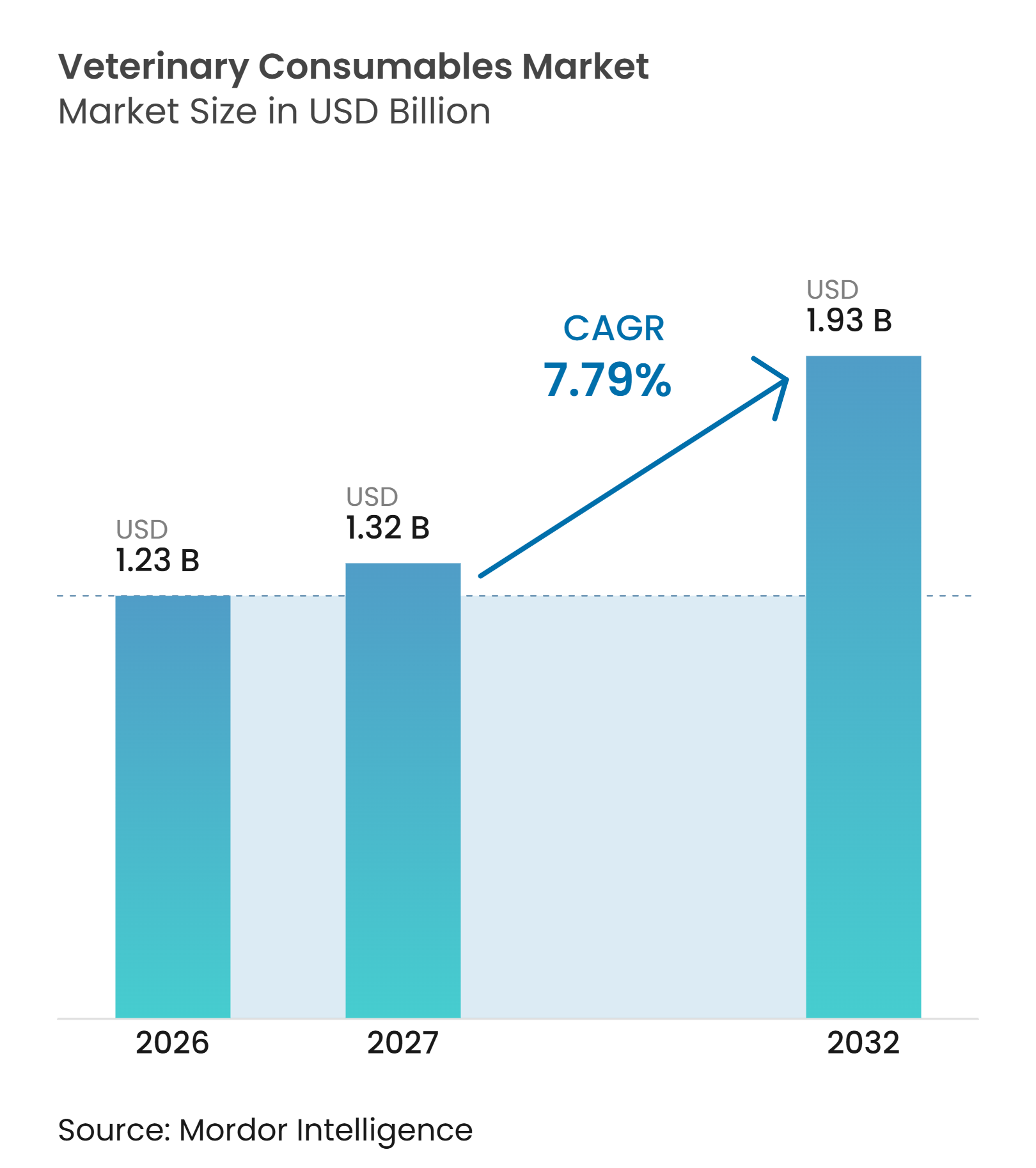
The Veterinary Consumables Market size is projected to expand from USD 1.23 billion in 2026 and USD 1.32 billion in 2027 to USD 1.93 billion by 2032, registering a CAGR of 7.79% between 2027 and 2032.
The veterinary consumables market is supported by expanding companion animal ownership, higher clinical activity, and broader use of preventive and specialty care. U.S. pet industry spending reached USD 158 billion in 2025, and veterinary care represented 31% of dog-owner spending, which supports demand for diagnostic, surgical, and monitoring supplies. Disease surveillance adds a separate source of demand because testing programs require collection materials, reagents, and other diagnostic products across farms, veterinary laboratories, mobile units, and public health programs. Recurring purchases are becoming more important as clinics install analyzers and imaging systems that use dedicated supplies over their operating lives, making equipment placement relevant to later procurement volumes and supplier relationships. Cost pressure, uneven access to trained professionals, and the management of single-use waste remain constraints for the veterinary consumables market.
Key Report Takeaways
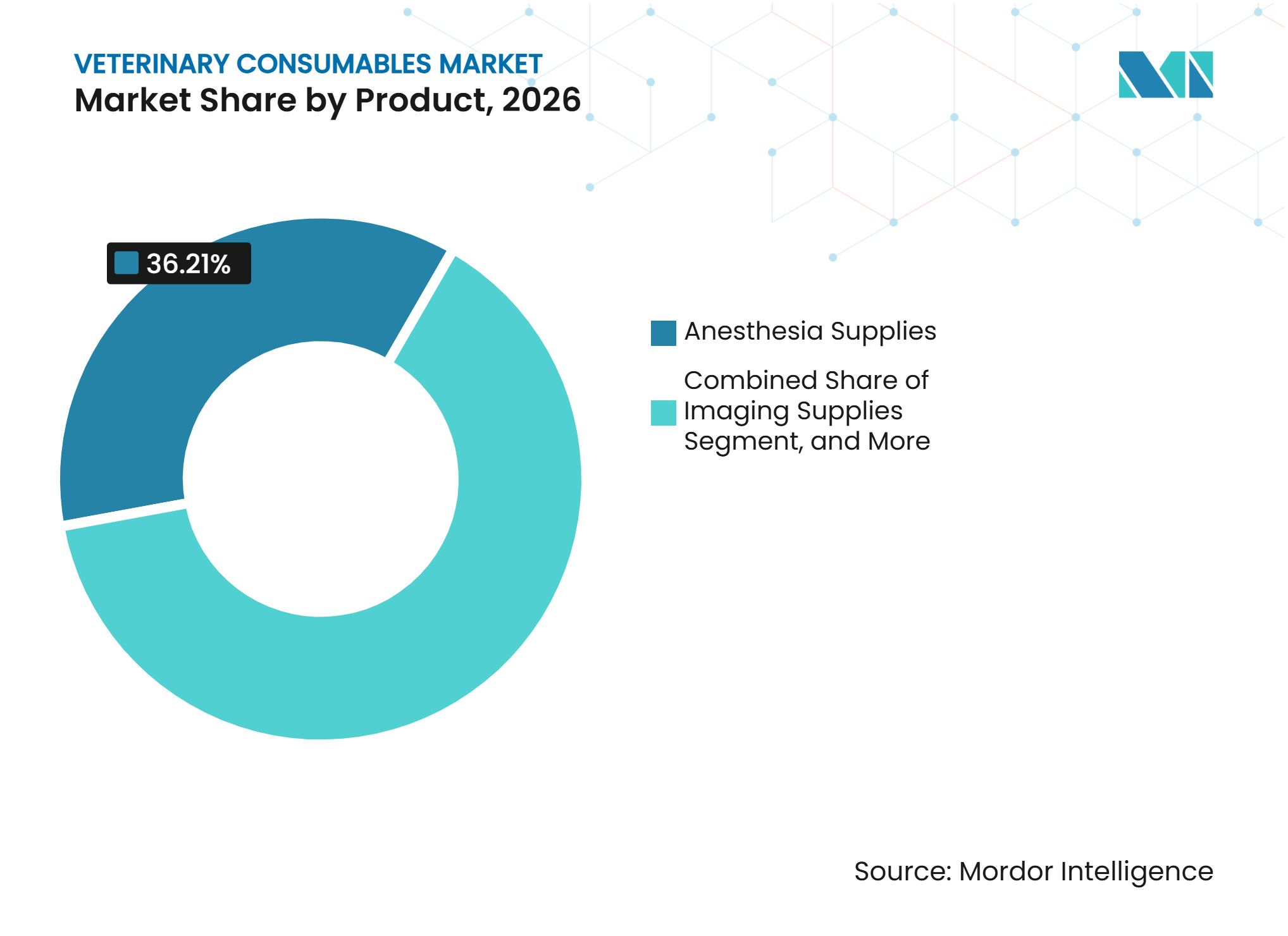
- By product, anesthesia supplies held 36.21% of the revenue share in 2026, while imaging supplies are forecast to expand at an 8.14% CAGR through 2032 in the veterinary consumables market.
- By animal type, companion animals held 64.37% of the revenue share in 2026, while livestock animals are forecast to expand at an 8.43% CAGR through 2032.
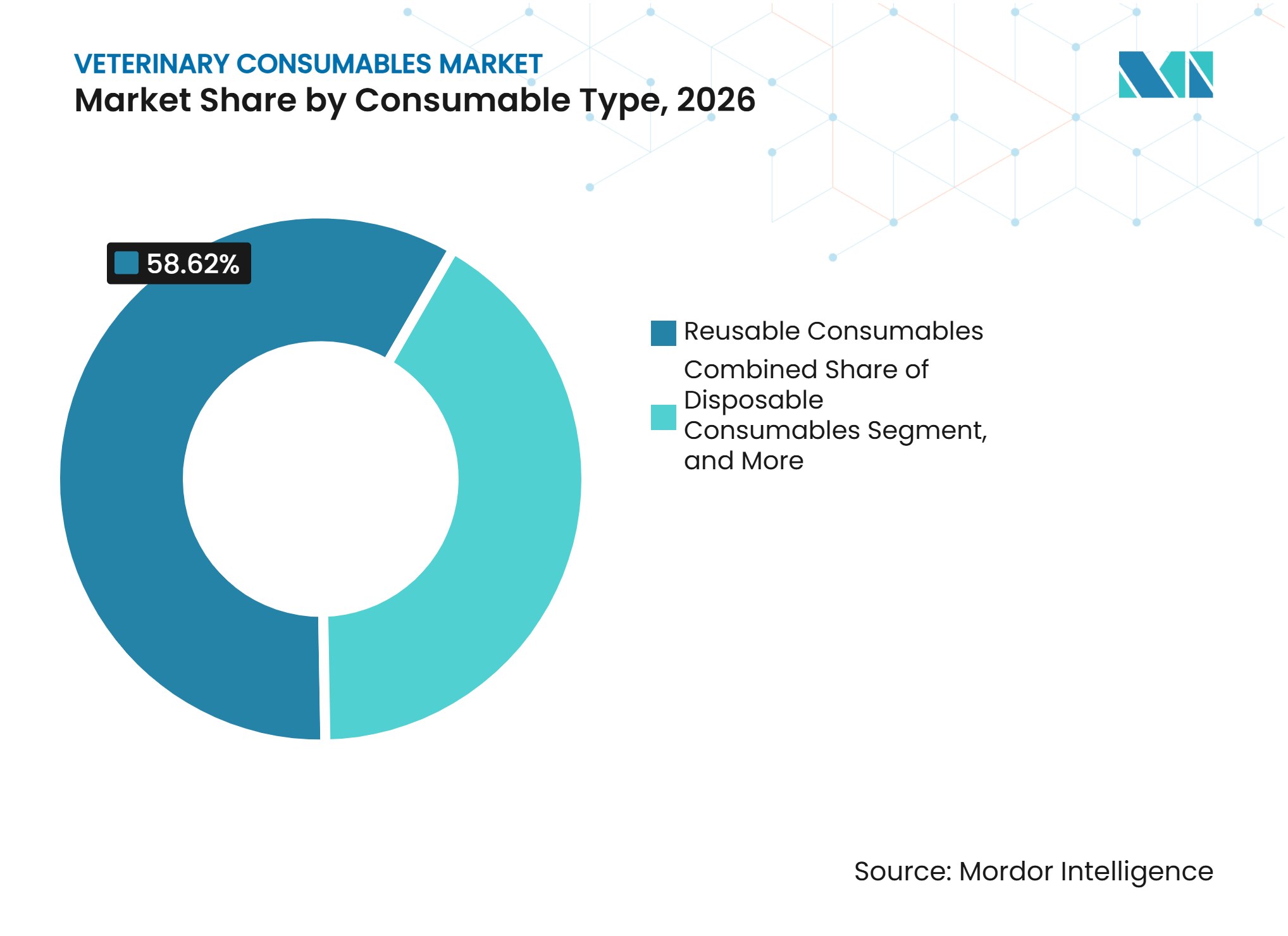
- By consumable type, reusable consumables held 58.62% of the revenue share in 2026, while disposable consumables are forecast to expand at a 9.26% CAGR through 2032 in the veterinary consumables market.
- By end user, veterinary clinics held 53.48% of the revenue share in 2026, while veterinary diagnostic centers are forecast to expand at a 9.54% CAGR through 2032.
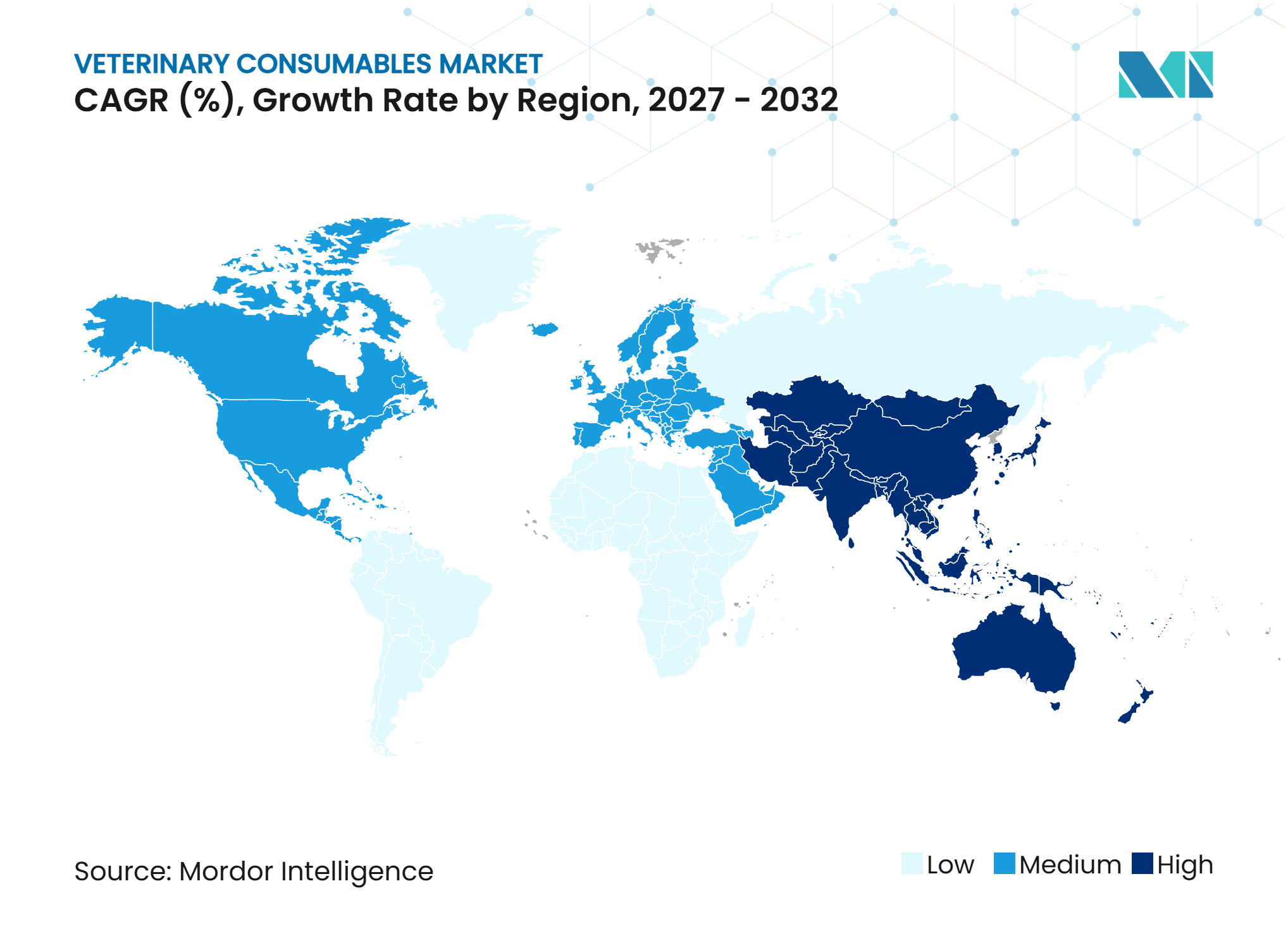
- By geography, North America held 36.74% of the revenue share in 2026, while Asia-Pacific is forecast to expand at a 10.35% CAGR through 2032 in the veterinary consumables market.
Note: Market numbers in this report are based on Mordor Intelligence's proprietary estimation framework, which combines nine months of actuals with Q4 projections for base year 2026.
Market Trends and Insights
Drivers Impact Analysis of Veterinary Consumables Market*
| Driver | (~) % Impact on CAGR Forecast | Geographic Relevance | Impact Timeline |
|---|---|---|---|
| Rising Pet Ownership and Companion Animal Adoption | +2.0% | Global, particularly North America, Europe, and urban Asia-Pacific | Long term (≥ 4 years) |
| Increasing Animal Healthcare Expenditure | +1.5% | Global, highest in North America and Western Europe | Medium term (2-4 years) |
| Expansion of Veterinary Clinics, Hospitals, and Diagnostic Laboratories | +1.3% | Global, with strong gains in China, India, and GCC | Long term (≥ 4 years) |
| Growing Animal Disease and Zoonotic Surveillance | +1.2% | Global, with elevated urgency in Asia-Pacific, Middle East and Africa, and Europe | Short term (≤ 2 years) |
| Recurring Demand from Installed Diagnostic and Point-of-Care Platforms | +1.0% | North America and Europe core, spillover to Asia-Pacific | Medium term (2-4 years) |
| Emergency and Mobile Veterinary Care Expanding Respiratory and Critical-Care Consumables | +0.7% | North America core, with early gains in the United Kingdom and Australia | Medium term (2-4 years) |
| Source: Mordor Intelligence | |||
Rising Pet Ownership and Companion Animal Adoption
Companion animal ownership is increasing the clinical intensity of veterinary care, not only the number of pets in households. In 2025, 71 million U.S. households owned dogs, equal to 53% of all households and up from 51% in 2024. This group is more likely to treat veterinary care as a routine household expense and to seek diagnostic workups, elective procedures, and follow-up visits when a clinician identifies a need for additional investigation or ongoing monitoring. Each activity uses supplies for testing, anesthesia, sterile preparation, monitoring, and recovery. Growth is therefore moving demand toward products used repeatedly within a single patient episode. The veterinary consumables market benefits when practices can deliver this care in a clinic, specialty hospital, or mobile setting rather than refer patients elsewhere, because more of the patient pathway then remains within the provider’s own service model.
Increasing Animal Healthcare Expenditure
U.S. pet industry spending reached USD 158 billion in 2025 and is expected to rise to USD 165 billion in 2026. Veterinary care accounted for 31% of spending by dog owners, making it the largest reported category in their pet budgets. The spending mix favors essential care supplies because diagnostics, surgical support, and critical care are tied to treatment decisions that practices and owners make after a clinical examination or an urgent presentation. Some pet owners reduced total pet spending during 2025, but care-related purchases retained a more resilient position than discretionary products. Insurance coverage can further reduce the immediate cost hurdle for a more complex procedure. Production animal care provides an additional demand stream when farms adopt formal health and biosecurity protocols.
Expansion of Veterinary Clinics, Hospitals, and Diagnostic Laboratories
New clinical capacity supports recurring use of consumables because each additional examination room, operating room, laboratory bench, or intensive care bed needs routine supplies for patient preparation, testing, treatment, cleaning, and follow-up care. The veterinary consumables industry benefits when diagnostic testing is completed during the initial visit rather than after referral, and the veterinary consumables market can gain from more regular use of kits and reagents at the point of care. UC Davis announced USD 110.5 million in philanthropic support in 2025 to increase its DVM class size from 600 to 800 students and annual patient capacity from 50,000 to 70,000 visits. The expansion illustrates how teaching hospitals can add both training capacity and clinical throughput. More training places may help address the staffing constraint that limits procedure volumes in many markets. Diagnostic laboratories also create demand for sample collection, reagents, storage materials, and quality-controlled workflows.
Growing Animal Disease and Zoonotic Surveillance
Animal disease surveillance creates immediate demand for sample tubes, PCR kits, reagents, biosafety materials, and other testing supplies used for detection, confirmation, reporting, and ongoing monitoring across affected animal populations. WOAH reported 1,022 avian influenza outbreaks in mammals across 55 countries during 2024, more than double the 459 outbreaks reported in 2023.[1] WOAH also noted that 47% of listed animal diseases have zoonotic potential, which links animal health surveillance with public health preparedness.[2] France and Italy reported their first Lumpy Skin Disease outbreaks in July 2025, while African Swine Fever reached Sri Lanka far from the nearest earlier outbreak. These events can require new testing networks and more consistent supply chains across farms, laboratories, and government programs. The veterinary consumables market therefore has exposure to both companion animal care and disease-control activity in livestock systems, which have different purchasing cycles but both require reliable clinical supplies.
Restraints Impact Analysis of Veterinary Consumables Market*
| Restraint | (~) % Impact on CAGR Forecast | Geographic Relevance | Impact Timeline |
|---|---|---|---|
| High Cost of Advanced Veterinary Procedures and Consumables | -1.2% | Global, most acute in Latin America, South/Southeast Asia, and MEA | Long term (≥ 4 years) |
| Shortage of Skilled Veterinarians in Developing Regions | -0.8% | APAC core (India, Southeast Asia), MEA, and South America | Long term (≥ 4 years) |
| Variable Reimbursement, Insurance Coverage, and Owner Affordability | -0.7% | Global, most pronounced outside North America and Western Europe | Medium term (2–4 years) |
| Single-Use Waste, Sterilization Burden, and Sustainability Costs | -0.5% | Europe and North America, with regulatory spill-over to APAC | Medium term (2–4 years) |
| Source: Mordor Intelligence | |||
High Cost of Advanced Veterinary Procedures and Consumables
Advanced imaging supplies, specialized anesthesia circuits, and critical care products can be difficult to afford where veterinary spending per animal is low. In these settings, out-of-pocket payment can limit the use of premium products and restrict clinical choices to basic materials. Independent practices may also select lower-specification alternatives when their margins are under pressure. Raw materials, packaging, and logistics add to procurement costs across the supply chain, and the effect can be difficult for independent practices to absorb when patient volumes or household budgets are limited. Regulatory expectations for quality and labeling can raise the cost of compliant products, especially for smaller manufacturers. The veterinary consumables market may therefore grow more slowly where clinics cannot transfer higher procedure costs to owners or institutions, even when there is a recognized clinical need for advanced treatment.
Shortage of Skilled Veterinarians in Developing Regions
A lack of trained veterinary professionals limits the number of procedures that facilities can complete, even when demand for care exists. This affects the use of surgical supplies, anesthesia products, monitoring materials, and diagnostic tools because those products are consumed only when trained staff can assess patients, complete procedures, and manage recovery. The constraint delays adoption in high-potential markets rather than removing the need for care. Specialty hospitals in more developed markets also face staffing gaps that can slow the rollout of new imaging and critical care services. UC Davis is expanding its DVM class from 600 to 800 students with support announced in 2025, but training new professionals takes time.[3] Capacity limits are likely to remain relevant to the veterinary consumables market while clinics work to recruit, train, and retain staff.
*Our forecasts treat driver/restraint impacts as directional, not additive. The impact forecasts reflect baseline growth, mix effects, and variable interactions.
Veterinary Consumables Market Segment Analysis
By Product:
Anesthesia Supplies Lead While Imaging Supplies Grow FastestAnesthesia supplies accounted for 36.21% of the veterinary consumables market size in 2026, supported by routine surgery, dental procedures, and specialty interventions. These products are used throughout patient preparation, airway management, inhalation anesthesia, monitoring, and recovery, which means a single procedure can require several compatible supplies delivered at the point of care. Companion animal hospitals increasingly provide orthopedic, dental, soft-tissue, and emergency procedures that depend on reliable anesthesia workflows. The installed base of operating rooms and emergency facilities also supports repeat purchasing of circuits, endotracheal tubes, masks, and related disposables. Product reliability and clinical familiarity remain important purchasing factors for practices. Suppliers with broad anesthesia portfolios can support routine care as well as more complex cases.
Imaging supplies are forecast to grow at an 8.14% CAGR through 2032, making them the fastest product category in the veterinary consumables market. Digital radiography and portable ultrasound allow practices to perform more diagnostic work during the visit. IDEXX introduced the ImageVue DR50 Plus at VMX 2025, combining AI-supported imaging with practice-management and telemedicine workflows.[4] The platform is designed to lower radiation exposure by up to 25% compared with its predecessor, which supports its use in a broader set of clinical settings. Monitoring and ventilator supplies also benefit when hospitals expand intensive care services. Surgical consumables remain relevant as clinics adopt minimally invasive techniques that need dedicated drapes, irrigation materials, and accessories.


By Animal Type:
Companion Animals Retain Scale While Livestock Care ExpandsCompanion animals represented 64.37% of the veterinary consumables market size in 2026. This position reflects higher spending per visit, the growing use of preventive services, and a wider range of diagnostic options. Routine wellness care creates steady demand for syringes, sample collection products, reagents, wound care materials, and monitoring supplies that are used before, during, and after standard consultations and preventive interventions. Owners are also seeking more advanced services for oncology, cardiac conditions, and neurological concerns. These procedures require a larger and more specialized set of consumables than basic consultations. Companion animal care is therefore central to the recurring revenue base of many suppliers serving the veterinary consumables market through daily clinic purchasing cycles.
Livestock animals are expected to grow at an 8.43% CAGR through 2032 as surveillance and biosecurity programs become more formalized. Animal health events can require testing at the farm, regional laboratory, and national surveillance levels. WOAH documented expanding disease risks across several livestock systems and called attention to diagnostic tools that can distinguish vaccinated from infected animals. Standardized sampling and testing protocols can make procurement more regular for farms and public programs. Production systems use large volumes of products for injection, sample collection, disease monitoring, and protective handling. The veterinary consumables industry gains a separate avenue for demand when animal health requirements are embedded in farm and trade practices.
By Consumable Type:
Reusable Products Hold the Base and Disposables Gain PaceReusable consumables accounted for 58.62% of the veterinary consumables market share in 2026. Their position reflects longstanding use of autoclavable drapes, gowns, instruments, and some endoscopic accessories. Reusable products can suit settings with established sterilization processes and staff trained to manage instrument reprocessing, storage, inspection, and preparation between scheduled procedures. They also remain relevant where clinics seek to control spending on routine surgical materials. The installed base of sterilization equipment gives practices a practical reason to continue using these products. Their role is especially durable in facilities that have predictable procedure volumes and established infection-control routines.
Disposable consumables are forecast to grow at a 9.26% CAGR through 2032. Corporate veterinary groups are increasingly standardizing sterile, single-use products to improve traceability and procedure flow. The approach can reduce the handling burden between cases and can support consistent protocols across multi-site networks, particularly where central procurement teams set specifications for routine materials. Sustainability requirements are prompting suppliers and clinics to reconsider selected products, particularly high-volume ancillary items. CVS Group introduced reusable sharps bins across its UK practices in June 2025, removing 21,000 single-use bins and reducing annual carbon dioxide emissions by 30 tonnes. The veterinary consumables market is likely to retain single-use products for core sterile applications while reuse expands selectively where it is clinically appropriate and operationally practical for the provider.

By End User:
Clinics Lead and Diagnostic Centers Advance QuicklyVeterinary clinics held 53.48% of the revenue share in 2026. They are the primary location for wellness visits, preventive care, vaccination, basic surgery, and first-line diagnostic work. This creates high-volume demand for syringes, intravenous sets, wound care products, swabs, sample tubes, and reagents, which clinics use across preventive visits, minor procedures, diagnostic workups, and follow-up appointments. Clinics also serve as the first point of referral for patients who require hospital or specialty services. Their purchases are usually frequent and tied to daily caseloads rather than a limited number of large projects. Group practice models can add purchasing consistency by setting product specifications across several sites.
Veterinary diagnostic centers are forecast to grow at a 9.54% CAGR through 2032. Reference laboratories and in-clinic analyzers are increasing the range of testing that can be completed close to the patient. IDEXX reported that VetLab consumables revenue increased 19.7% in the first quarter of 2026, alongside a 12% increase in its global premium instrument installed base. The company also reported more than 1,100 inVue Dx cytology analyzer placements during the quarter. These placements link an instrument purchase to future demand for dedicated tests and reagents. Hospitals and academic facilities remain important users because complex inpatient care has a high need for anesthesia, monitoring, critical care, and imaging products.
Geography Analysis
North America
North America held 36.74% of the veterinary consumables market share in 2026. The region combines high household spending on pets with a dense network of general practices, specialty hospitals, and diagnostic facilities. U.S. pet industry spending reached USD 158 billion in 2025, giving veterinary care a strong base for continued clinical purchases. Dog-owning households allocated 31% of their pet spending to veterinary care, which supports the use of diagnostic, surgical, and monitoring supplies. BluePearl Pet Hospital expanded its Monterey, California, facility from 8,000 square feet to 15,000 square feet in August 2025 and added a CT machine. Such expansion raises local capacity for emergency, imaging, anesthesia, and monitoring workflows. Regulatory influence also supports diagnostic use in livestock settings, including HPAI H5N1 testing requirements. The market structure favors suppliers that can provide dependable distribution and products that meet clinic quality requirements.
Asia-Pacific
Asia-Pacific is expected to grow at a 10.35% CAGR through 2032, the highest regional rate in the veterinary consumables market. Urban pet ownership, expanding veterinary services, and production animal surveillance all contribute to demand. China provides a large urban companion animal base, while India has room to expand institutional veterinary capacity. Disease control needs also support demand for sampling supplies, reagents, and field-ready diagnostic products. The regional opportunity depends on reliable distribution, including cold-chain handling for diagnostic materials where needed, as clinics and laboratories seek dependable access to products with defined storage and handling requirements. Practices are adopting in-clinic analyzers and portable equipment, which can create recurring purchases of compatible supplies. Mindray Animal Medical opened a European Training Center in June 2025, showing how Asia-Pacific-based manufacturers are building clinical education and commercial reach beyond their home markets. Suppliers serving the veterinary consumables market that pair training, equipment support, and consumables may be better placed to serve a fragmented provider base.
Europe, Middle East and Africa, and South America
Europe is a mature part of the veterinary consumables market, where clinical demand is shaped by compliance factors and sustainability expectations. Reusable products and waste-reduction programs receive more attention in Europe, although sterile single-use supplies remain important for many procedures. CVS Group’s reusable sharps bin program shows that clinics can change selected waste streams without replacing core clinical supplies. Middle East and Africa remain earlier in their infrastructure buildout, with demand linked to livestock health programs and the development of animal care capacity. WOAH’s reporting on new Lumpy Skin Disease events in Europe highlights the cross-border nature of surveillance needs and the importance of prepared testing systems. South America is supported by large production animal systems, where injectable consumables and diagnostic reagents are used in disease-control programs. Investment can vary with agricultural conditions and producer budgets. Across these mixed geographies, suppliers in the veterinary consumables market need product portfolios that address both companion animal clinics and institutional livestock health requirements.
Competitive Landscape
Market Concentration
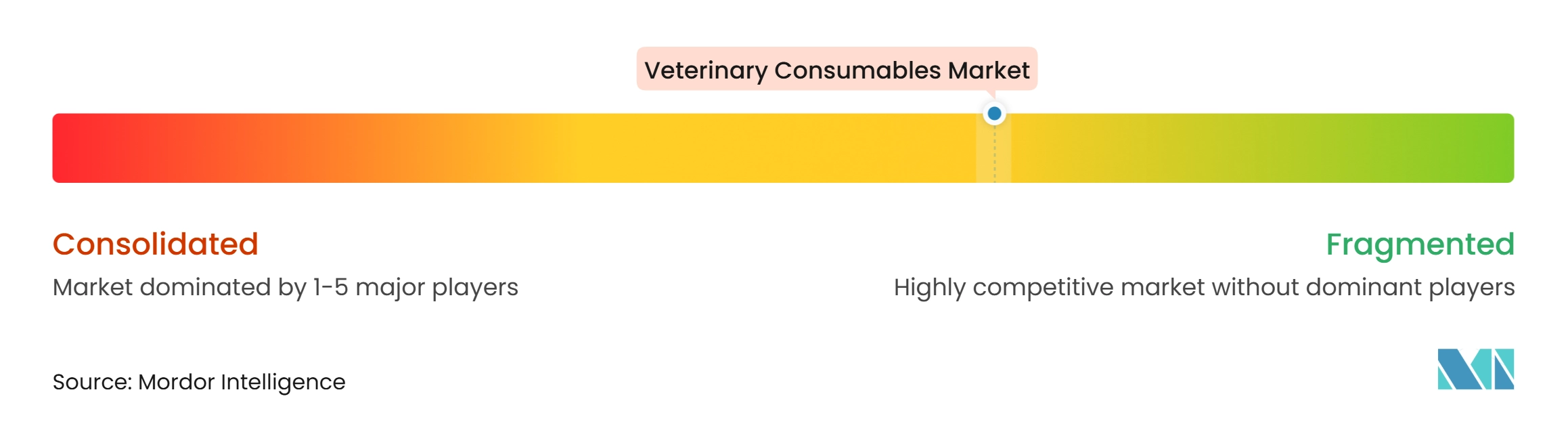
The veterinary consumables market is moderately fragmented because no supplier holds a commanding global position across every product category. Diagnostics-led businesses can build durable positions when their instruments require dedicated reagents and test kits. IDEXX reported 19.7% growth in VetLab consumables revenue during the first quarter of 2026. The result exceeded its total company revenue growth of 14.3% during the same period. This model gives suppliers recurring revenue after a clinic commits to a platform, which distinguishes those suppliers within the veterinary consumables market. In anesthesia, infusion, monitoring, and sterile products, competition is more dependent on product reliability, distribution coverage, and compliance credentials.
IDEXX is extending its diagnostics offering through the inVue Dx cytology analyzer, which had more than 1,100 placements in the first quarter of 2026. The analyzer expands testing into cytology and related clinical uses, which can create recurring demand for a new set of consumables. The company’s 12% increase in premium instrument installed base during the quarter illustrates the link between placements and later test consumption. Mindray Animal Medical is building its profile in monitoring, anesthesia, imaging, and critical care. Its European Training Center opened in The Hague in June 2025 and provided education on ultrasound, monitoring, anesthesia, intensive care, and digital radiography. This investment can support adoption by giving veterinary professionals experience with the company’s equipment and related supplies.
Quality systems and regulatory compliance can be important barriers in surgical and sterile consumables because providers need confidence that materials are documented, consistently supplied, and suitable for patient-facing use. ISO 13485 practices and relevant USDA and FDA expectations can favor suppliers that have established documentation, manufacturing controls, and distribution processes. CVS Group’s June 2025 deployment of reusable sharps bins across its UK practices is another example of a strategic purchasing change that affects ancillary consumable demand. BluePearl’s expanded Monterey facility, including a new CT machine, demonstrates how provider investment can increase demand for higher-acuity supplies.
Veterinary Consumables Industry Leaders
-
B. Braun SE
-
bioMérieux SA
-
Cardinal Health Inc.
-
Johnson & Johnson Inc. (Ethicon US LLC)
-
Medtronic plc
- *Disclaimer: Major Players sorted in no particular order
Veterinary Consumables Market Companies Covered in this Report
- Antech Diagnostics
- B. Braun
- bioMérieux
- Burtons Medical Equipment Ltd.
- Cardinal Health
- Covetrus
- Digicare Animal Health
- Dispomed Ltd
- FUJIFILM Wako Pure Chemical Corporation
- ICU Medical
- IDEXX
- Johnson & Johnson Inc. (Ethicon US LLC)
- Jørgen Kruuse A/S
- Jorgensen Laboratories LLC
- Medtronic
- Mindray Animal Medical
- Neogen
- Patterson Companies
- Vetland Medical Sales & Services LLC
- VetOne (MWI Animal Health)
Recent Industry Developments in Veterinary Consumables Market
- September 2025: The University of California, Davis School of Veterinary Medicine announced a USD 110.5 million philanthropic expansion, including a USD 50 million challenge grant, to increase DVM class size from 600 to 800 students and raise annual patient capacity from 50,000 to 70,000, expanding the institutional demand base for clinical consumables.
- August 2025: BluePearl Pet Hospital, Mars Veterinary Health, relocated and expanded its Monterey, California, facility from 8,000 to 15,000 square feet, adding a new CT machine and expanding capacity for anesthesia, monitoring, and imaging consumables in a 24-hour emergency and specialty care setting.
- June 2025: Mindray Animal Medical opened its European Training Center in The Hague, Netherlands, the first veterinary-specific academic education hub dedicated to European professionals, incorporating ultrasound, monitoring, anesthesia, ICU, and digital radiography training with more than 200 guests from Europe, China, and the United States attending the inauguration.
Global Veterinary Consumables Market Report Scope
As per the scope of the report, veterinary consumables are disposable or short-use products routinely used in animal healthcare, veterinary clinics, hospitals, and diagnostic laboratories. These products include syringes, needles, gloves, catheters, wound dressings, specimen collection items, and surgical disposables. They are essential for maintaining hygiene, preventing infections, ensuring accurate diagnosis, and supporting effective treatment of companion and livestock animals.
The veterinary consumables market is segmented by product, animal type, consumable type, end user, and geography. By product, the market is segmented into anesthesia supplies, ventilator supplies, monitoring supplies, imaging supplies, surgical consumables, critical care consumables, and others. By animal type, the market is segmented into companion animals and livestock animals. By consumable type, the market is segmented into disposable consumables and reusable consumables. By end user, the market is segmented into veterinary hospitals, veterinary clinics, veterinary diagnostic centers, and others. By geography, the market is segmented into North America, Europe, Asia-Pacific, the Middle East and Africa, and South America. The market report also covers estimated market sizes and market trends for 17 countries across major regions worldwide. The report offers market value (in USD) for the above segments.
Segmentation Overview
| Anesthesia Supplies |
| Ventilator Supplies |
| Monitoring Supplies |
| Imaging Supplies |
| Surgical Consumables |
| Critical Care Consumables |
| Others |
| Companion Animals |
| Livestock Animals |
| Disposable Consumables |
| Reusable Consumables |
| Veterinary Hospitals |
| Veterinary Clinics |
| Veterinary Diagnostic Centers |
| Others |
| North America | United States |
| Canada | |
| Mexico | |
| Europe | Germany |
| United Kingdom | |
| France | |
| Italy | |
| Spain | |
| Rest of Europe | |
| Asia-Pacific | China |
| India | |
| Japan | |
| Australia | |
| South Korea | |
| Rest of Asia-Pacific | |
| Middle East and Africa | GCC |
| South Africa | |
| Rest of Middle East and Africa | |
| South America | Brazil |
| Argentina | |
| Rest of South America |
| By Product | Anesthesia Supplies | |
| Ventilator Supplies | ||
| Monitoring Supplies | ||
| Imaging Supplies | ||
| Surgical Consumables | ||
| Critical Care Consumables | ||
| Others | ||
| By Animal Type | Companion Animals | |
| Livestock Animals | ||
| By Consumable Type | Disposable Consumables | |
| Reusable Consumables | ||
| By End User | Veterinary Hospitals | |
| Veterinary Clinics | ||
| Veterinary Diagnostic Centers | ||
| Others | ||
| By Geography | North America | United States |
| Canada | ||
| Mexico | ||
| Europe | Germany | |
| United Kingdom | ||
| France | ||
| Italy | ||
| Spain | ||
| Rest of Europe | ||
| Asia-Pacific | China | |
| India | ||
| Japan | ||
| Australia | ||
| South Korea | ||
| Rest of Asia-Pacific | ||
| Middle East and Africa | GCC | |
| South Africa | ||
| Rest of Middle East and Africa | ||
| South America | Brazil | |
| Argentina | ||
| Rest of South America | ||
Key Questions Answered in the Report
What is the projected growth rate for veterinary consumables?
The category is projected to grow at a 7.79% CAGR from 2027 to 2032, reaching USD 1.93 billion by 2032.
Which veterinary consumable category is growing fastest?
Disposable consumables have the highest projected growth rate at 9.26% CAGR through 2032.
Why are companion animals important to veterinary supply demand?
Companion animals accounted for 64.37% of revenue in 2026, supported by preventive care, diagnostics, and more complex clinical workups.
Which end users purchase the most veterinary consumables?
Veterinary clinics held 53.48% of revenue in 2026 because they provide high volumes of routine care, testing, and low-complexity procedures.
What is driving demand for livestock veterinary supplies?
Disease surveillance, biosecurity protocols, and formalized testing requirements support demand for sample collection and diagnostic products.
Which region will grow fastest through 2032?
Asia-Pacific is forecast to grow at a 10.35% CAGR, supported by urban pet ownership, expanding veterinary services, and livestock surveillance.