
Vestibular Testing Systems Market Size and Share
Market Overview
| Study Period | 2020 - 2031 |
|---|---|
| Market Size (2026) | USD 250.93 Million |
| Market Size (2031) | USD 344.28 Million |
| Growth Rate (2026 - 2031) | 6.53 % |
| Fastest Growing Market | Asia-Pacific |
| Largest Market | North America |
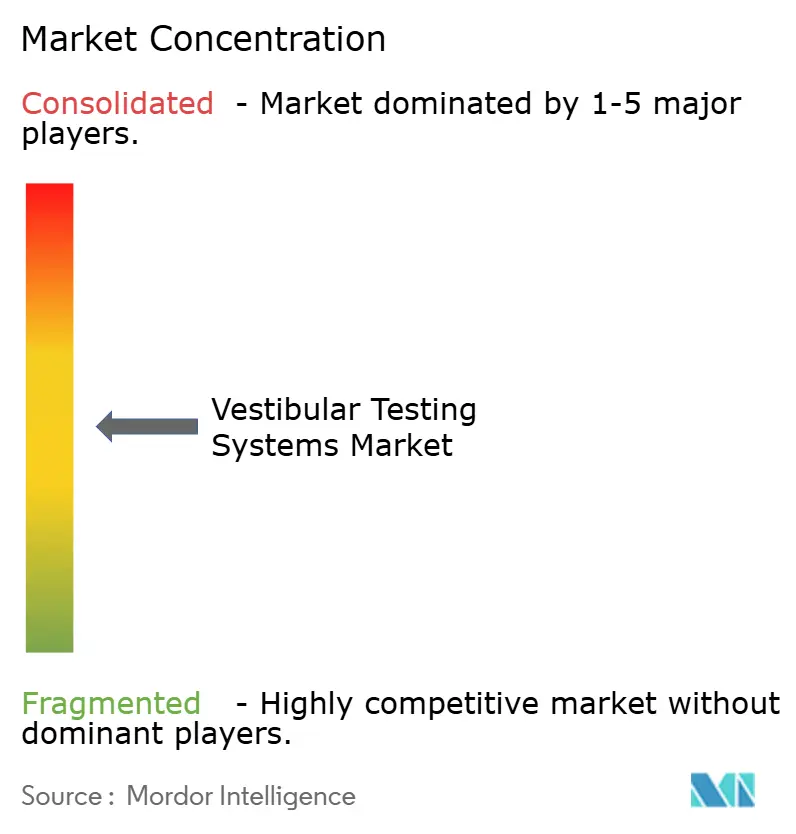
| Market Concentration | Medium |
Major Players *Disclaimer: Major Players sorted in no particular order Image © Mordor Intelligence. Reuse requires attribution under CC BY 4.0. | |
Vestibular Testing Systems Market Analysis by Mordor Intelligence
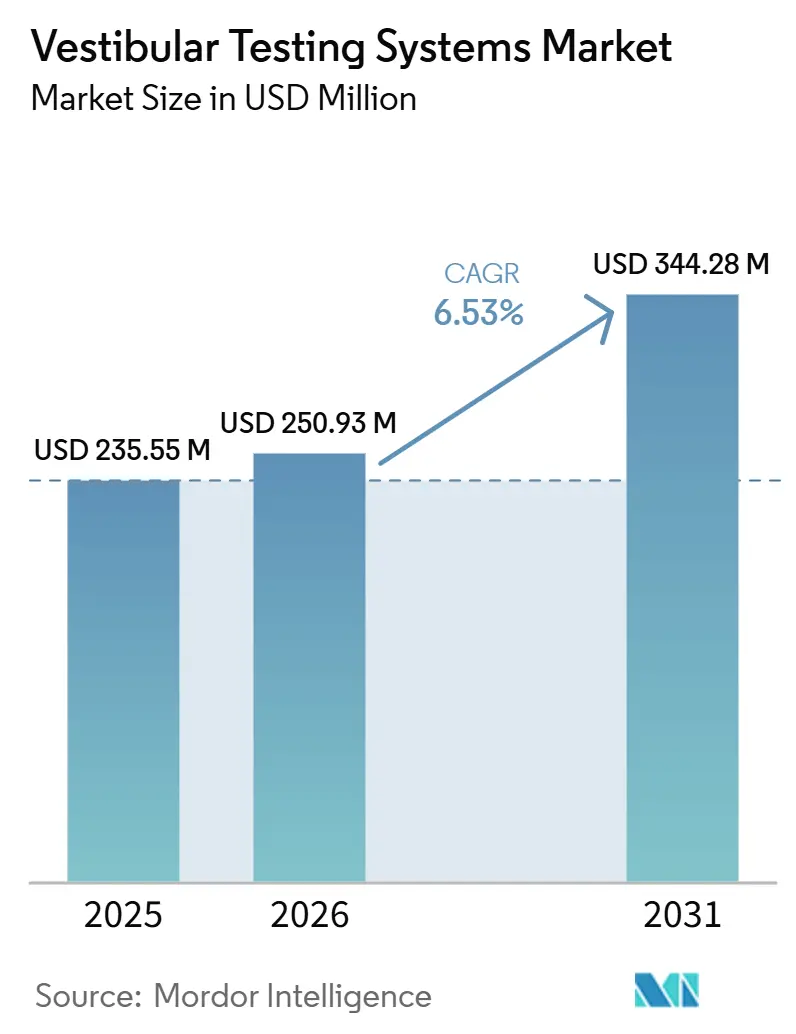
The Vestibular Testing Systems Market size is expected to grow from USD 235.55 million in 2025 to USD 250.93 million in 2026 and is forecast to reach USD 344.28 million by 2031 at 6.53% CAGR over 2026-2031.
Demand is supported by an older population and a large unmet need for objective assessment of dizziness and balance disorders, which are often linked with falls and other health conditions. Care is moving beyond specialist diagnostic laboratories as portable equipment, automated interpretation, and rehabilitation programs make testing more practical in outpatient settings. Concussion care and post-COVID dizziness are widening the clinical settings that use vestibular assessment, including sports medicine, emergency care, and rehabilitation. Reimbursement gaps, capital costs, and shortages of trained specialists continue to slow adoption, although they also encourage demand for simpler systems that need less specialist time. Competition increasingly centers on software, reporting, and integration with clinical workflows rather than on hardware specifications alone.
Key Report Takeaways
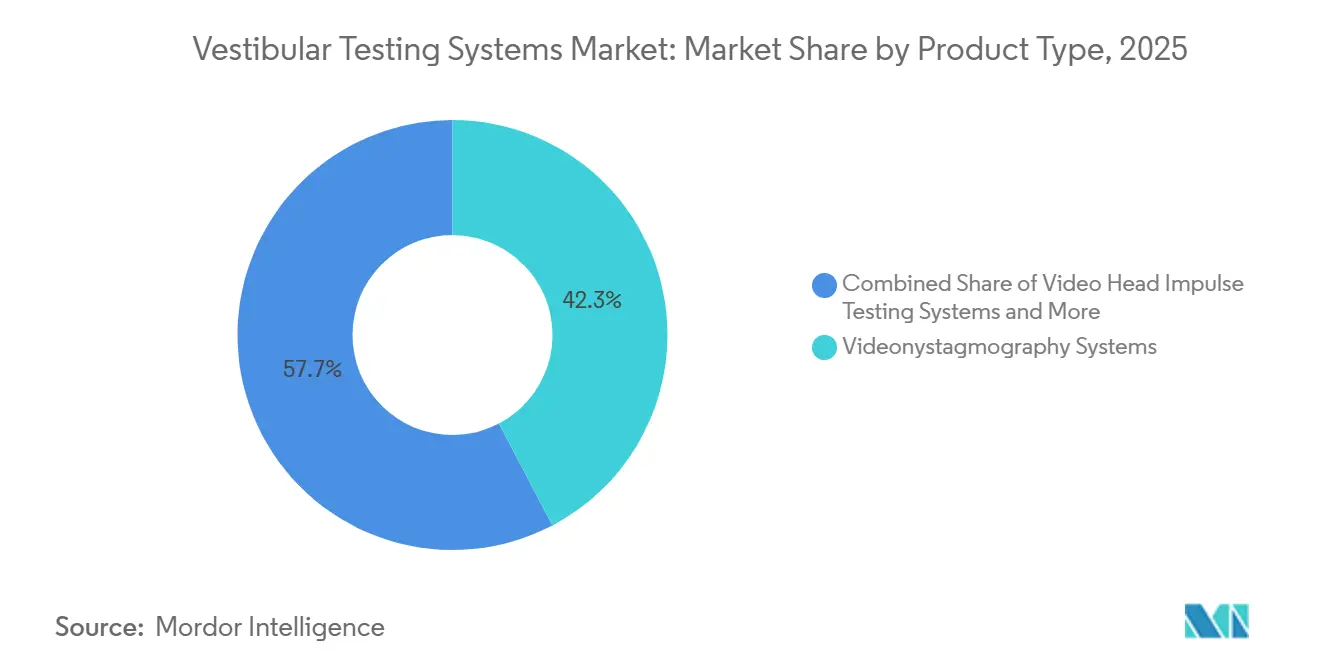
- By product type, videonystagmography systems led with 42.31% revenue share in 2025, while video head impulse testing systems are forecast to expand at an 8.58% CAGR through 2031.
- By technology, digital technology held 55.24% revenue share in 2025, while AI and ML-enabled technology is expected to have the highest CAGR at 10.22% through 2031.
- By application, diagnosis of vestibular disorders accounted for 54.14% revenue share in 2025, while concussion and mild traumatic brain injury assessment is expected to advance at an 8.82% CAGR through 2031.
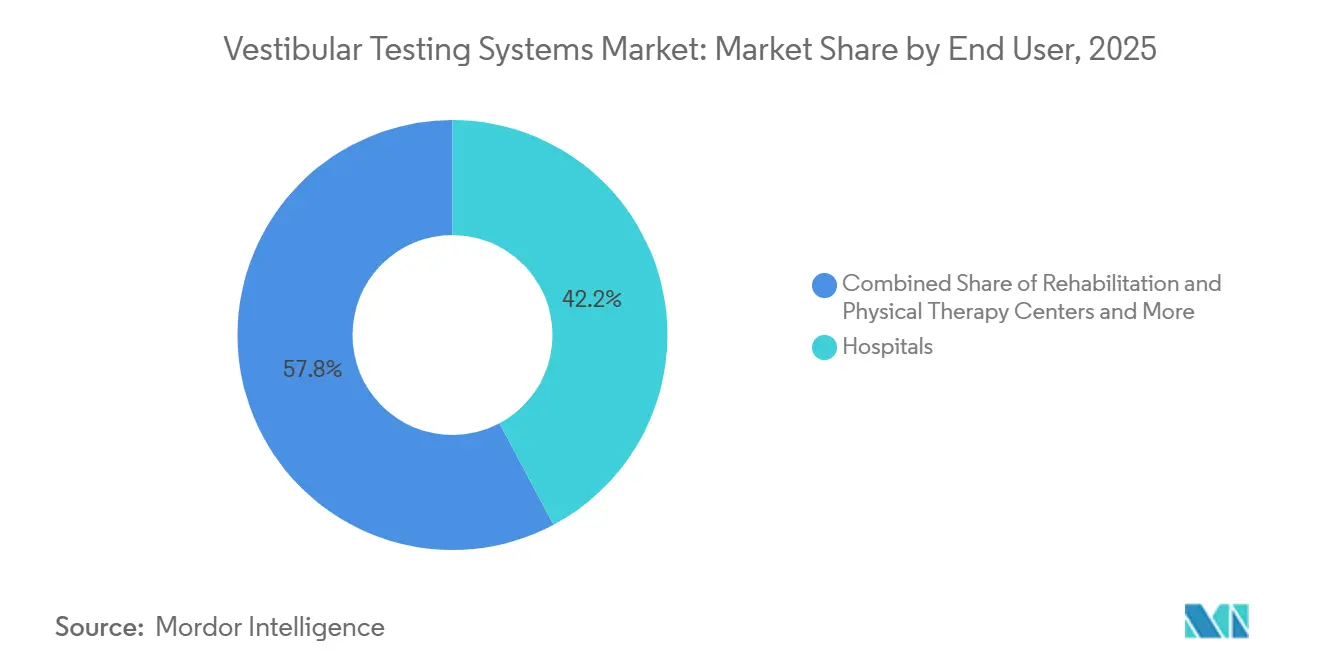
- By end user, hospitals held 42.21% revenue share in 2025, while rehabilitation and physical therapy centers are expected to record the highest CAGR at 8.85% through 2031.
- By distribution channel, direct sales accounted for 64.56% revenue share in 2025, while online and digital procurement is forecast to expand at a 10.55% CAGR through 2031.
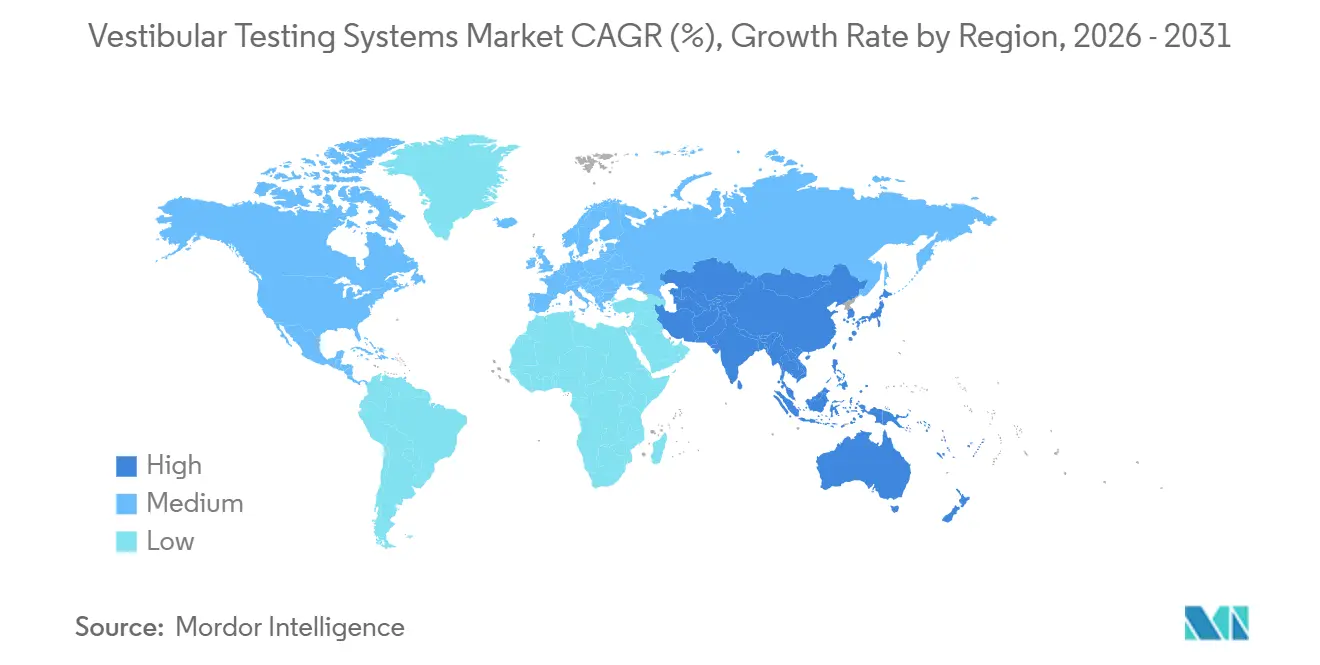
- By geography, North America held 38.61% revenue share in 2025, while Asia-Pacific is forecast to expand at a 7.25% CAGR through 2031.
Note: Market size and forecast figures in this report are generated using Mordor Intelligence’s proprietary estimation framework, updated with the latest available data and insights as of January 2026.
Global Vestibular Testing Systems Market Trends and Insights
Drivers Impact Analysis*
| Driver | (~) % Impact on CAGR Forecast | Geographic Relevance | Impact Timeline |
|---|---|---|---|
| Aging Population and Rising Vestibular Dysfunction | +1.4% | Global | Long term (≥ 4 years) |
| Greater Clinical Adoption of Objective Vestibular Testing | +1.1% | North America and EU | Medium term (2-4 years) |
| Integrated VNG, vHIT, VEMP and Rotary Chair Workflows | +0.8% | North America, EU, and Japan | Medium term (2-4 years) |
| Expansion of Vestibular Rehabilitation and Fall-Prevention Programs | +0.9% | North America, APAC core, and spillover to MEA | Medium term (2-4 years) |
| Portable and AI-Enabled Testing for Decentralized Care | +1.0% | Global | Short term (≤ 2 years) |
| Vestibular Assessment Demand in Concussion and Post-COVID Care | +0.7% | North America and EU | Short term (≤ 2 years) |
| Source: Mordor Intelligence | |||
Aging Population and Rising Vestibular Dysfunction
Age remains a strong predictor of declining vestibular function and supports sustained demand for diagnostic testing. A 2025 population study found that people in their 70s were 3.98 times more likely than people in their 40s to show corrective saccades on video head impulse testing. The same work identified hypertriglyceridemia and hearing levels at 4,000 Hz as related risk factors. These links connect vestibular assessment with metabolic, hearing, primary care, and specialist referral pathways. England’s falls services still showed limited vestibular management capacity despite updated guidance, leaving a gap between clinical recommendations and available care. The 2025 National Falls Prevention Action Plan also calls for wider use of evidence-based interventions, supporting equipment needs in community and rehabilitation settings[1]National Council on Aging, “2025 National Falls Prevention Action Plan,” National Council on Aging, ncoa.org.
Greater Clinical Adoption of Objective Vestibular Testing
Objective testing is gaining importance as clinicians seek clearer evidence than bedside assessments can provide. Dizziness can require several specialist visits and years before its cause is identified, which creates demand for more structured diagnostic pathways. The American Academy of Audiology issued pediatric guidance in July 2025 that recommends the structured use of vHIT, cVEMP, VNG, and rotary chair protocols. This guidance brings pediatric audiology and ENT departments into the addressable clinical base. The Barány Society is developing a vestibular training curriculum for neurology trainees that is intended to standardize competency expectations. A 2025 review also described vHIT as an increasingly useful first-line test because it is portable and evaluates all 6 semicircular canals.
Integrated VNG, vHIT, VEMP, and Rotary Chair Workflows
Integrated testing workflows make it easier for providers to assess several parts of vestibular function within one clinical pathway. VNG, vHIT, VEMP, and rotary chair testing each address different elements of a complete evaluation. Their combined use is especially relevant in hospitals, academic centers, and pediatric audiology departments. The 2026 pediatric consensus statement identifies cVEMP, vHIT, caloric testing, and rotary chair testing as an age-appropriate structured battery. For the vestibular testing systems market, integrated software can bring results from these systems into a more consistent reporting process. This supports purchases that consider the entire vestibular pathway rather than a single device. The vestibular testing systems market benefits when multi-modal care becomes easier to operate and explain to referring clinicians.
Expansion of Vestibular Rehabilitation and Fall-Prevention Programs
Rehabilitation and fall-prevention programs create a continuing need for assessment before and during treatment. These programs connect diagnostic evidence with care for dizziness, mobility, and balance problems. The National Council on Aging’s 2025 plan calls for stronger evidence-based falls prevention efforts in the United States. A 2024 study reported clinically meaningful improvement after standardized vestibular rehabilitation for unilateral vestibular hypofunction. This evidence supports the value of regular measurement in rehabilitation settings across the vestibular testing systems market. It also strengthens the case for portable equipment that therapists can use close to where treatment occurs. The vestibular testing systems market gains support as providers build balance care around measurable patient progress.
Restraints Impact Analysis*
| Restraint | (~) % Impact on CAGR Forecast | Geographic Relevance | Impact Timeline |
|---|---|---|---|
| High Capital Cost and Procedure Cost | -0.9% | Global, strongest in APAC and MEA | Long term (≥ 4 years) |
| Limited Reimbursement and Inconsistent Coding Coverage | -1.0% | North America, state-level Medicaid, and EU | Medium term (2-4 years) |
| Shortage of Trained Vestibular Specialists | -0.7% | Global | Long term (≥ 4 years) |
| Inter-System Variability, Calibration Burden and Protocol Fragmentation | -0.6% | Global | Medium term (2-4 years) |
| Source: Mordor Intelligence | |||
High Capital Cost and Procedure Cost
The cost of comprehensive testing equipment remains a barrier for smaller providers and lower-resource care settings. Multi-modal systems require specialized equipment, dedicated space, maintenance, and trained personnel. This burden is especially relevant to rehabilitation and physical therapy centers, which are the fastest-growing end-user group. Their purchasing decisions often prioritize flexible deployment and lower upfront commitments. Leasing and subscription models can reduce the immediate budget burden for portable systems in the vestibular testing systems market. The vestibular testing systems market may gain broader access as modular purchasing models become more common.
Limited Reimbursement and Inconsistent Coding Coverage
Reimbursement rules remain uneven across U.S. payers and European health systems. CMS covers vestibular function testing through LCD L33966 when medical requirements are met. However, some Medicaid policies do not cover VEMP-specific codes, which can discourage full testing batteries. The 2025 Medicare fee schedule also showed limited professional reimbursement for caloric vestibular testing[2]American Speech-Language-Hearing Association, “2025 Medicare Fee Schedule for Audiologists,” American Speech-Language-Hearing Association, asha.org. European manufacturers must address national reimbursement processes because device safety requirements do not establish payment coverage. These conditions can delay assessment even when a clinician recognizes a need for objective testing in the vestibular testing systems market.
*Our forecasts treat driver/restraint impacts as directional, not additive. The impact forecasts reflect baseline growth, mix effects, and variable interactions.
Segment Analysis
By Product Type: VNG Supports Established Demand While vHIT Gains Clinical Use
Videonystagmography systems held 42.31% of the vestibular testing systems market share in 2025. This position reflects their long-standing use in ENT, audiology, and neurology departments. VNG is commonly associated with caloric irrigation testing for unilateral vestibular assessment. Its established role also fits existing coding and clinical workflow patterns. Video head impulse testing systems are forecast to grow at an 8.58% CAGR through 2031. Their appeal comes from short testing times, portable deployment, and evaluation of all 6 semicircular canals. A 2025 study showed that ML-supported vHIT could distinguish stroke from vestibular neuritis with accuracy comparable to expert clinicians. This evidence can support uptake in emergency departments and other time-sensitive settings. The vestibular testing systems industry is consequently seeing a shift toward products that make objective assessment easier to deploy.
VEMP, rotary chair, and computerized dynamic posturography systems serve complementary clinical needs. VEMP evaluates otolith pathway integrity in patients with suspected vestibular dysfunction. Rotary chair systems measure bilateral vestibular hypofunction over frequency ranges that caloric irrigation cannot cover. Computerized dynamic posturography assesses sensory organization in patients with more complex balance disorders. The 2026 pediatric consensus statement recommends cVEMP for infants and adds vHIT, rotary chair, and VNG as children develop. This clinical pathway can support multi-product purchasing in children’s hospitals and pediatric ENT departments. Integrated platforms can consolidate several tests within one clinical acquisition. That approach can simplify reporting and reduce the practical burden of operating separate systems. The vestibular testing systems market still relies on this full product range for complex cases.



By Technology: Digital Platforms Lead While AI and ML Expand Diagnostic Capability
Digital technology accounted for 55.24% of the category revenue share in 2025. Hospital VNG and VEMP systems rely on high-resolution eye tracking and automated analysis. Academic medical centers and high-volume audiology departments have supported this installed base. Digital reporting also helps clinicians document results and compare follow-up examinations. AI and ML-enabled technology is forecast to grow at a 10.22% CAGR through 2031. A 2025 NPJ Digital Medicine study showed that machine-learning methods could classify 6 common vestibular disorders from structured clinical inputs. The conditions included Menière’s disease, BPPV, and persistent postural-perceptual dizziness. These tools can give providers more consistent decision support when expert interpretation is scarce. The vestibular testing systems market can therefore benefit from software that makes complex results easier to use.
Software-first vestibular diagnostics show the potential of eye-movement analysis through commercial head-mounted displays. This model reduces dependence on proprietary imaging hardware. It also changes how providers may evaluate the cost and deployment of vestibular diagnostics. Conventional and hybrid systems remain relevant in cost-sensitive markets and in smaller European hospitals. These buyers may place greater weight on service access and total ownership costs. Hybrid platforms allow legacy users to improve analysis capabilities without replacing all equipment. The vestibular testing systems industry will continue to require both advanced software and practical upgrade paths. This balance supports different procurement needs across regional healthcare settings.
By Application: Diagnosis Leads While Concussion Assessment Expands
Diagnosis of vestibular disorders accounted for 54.14% of the category revenue share in 2025. Dizziness-related consultations in otolaryngology and neurology remain the main source of testing demand. French health data for 2022 and 2023 identified 1.28 million adults who were diagnosed or treated for vestibular disease. This evidence indicates the scale of diagnosis-led demand within a mature healthcare setting. Balance disorder assessment closely follows diagnosis because the two areas share referral pathways. Both uses can also require repeat testing to monitor patient progress and rehabilitation outcomes. Clinical need is reinforced when falls, hearing concerns, and neurological symptoms appear together. These links keep diagnosis at the center of the vestibular testing systems market. The underlying care pathway remains anchored in ENT, audiology, and neurology services.
Concussion and mild traumatic brain injury assessment is forecast to grow at an 8.82% CAGR through 2031. Return-to-play protocols have expanded the use of vestibular and oculomotor screening across professional and collegiate sports. Vestibular rehabilitation monitoring is also growing with rehabilitation center capacity. Audiological and neurotological testing remains relevant for cochlear implant workups and vestibular schwannoma evaluation. The 2026 pediatric consensus statement brings vestibular rehabilitation monitoring into another patient age group. Post-COVID vestibular symptoms provide another reason for monitoring in clinical practice. These applications broaden the age range and clinical indications served by testing systems. They also extend procurement discussions to sports medicine and rehabilitation providers. The vestibular testing systems market is becoming less dependent on the traditional specialist diagnostic laboratory.
By End User: Hospitals Retain Scale While Rehabilitation Centers Grow Faster
Hospitals held 42.21% of the category revenue share in 2025. Their lead reflects stronger capital capacity and established ENT and audiology departments. Hospitals also perform complex tests that need dedicated space and trained operators. Rotary chair and computerized dynamic posturography systems fit particularly well within this setting. Referrals from neurology, emergency medicine, and otolaryngology support high utilization. CMS coverage for medically necessary vestibular function tests also supports hospital testing activity. Specialty clinics and centers form another important buyer group. They include neurotology practices and high-volume audiology clinics with balance laboratory capabilities. The vestibular testing systems market therefore continues to depend on hospitals for comprehensive diagnostic capacity.
Rehabilitation and physical therapy centers are forecast to grow at an 8.85% CAGR through 2031. These centers increasingly connect assessment with continuing balance treatment and fall-prevention programs. A 2024 clinical study found meaningful improvement in Dizziness Handicap Inventory scores after structured vestibular rehabilitation for unilateral vestibular hypofunction[3]S. Handa et al., “Clinical Impact of Vestibular Rehabilitation in Patients with Chronic Unilateral Vestibular Deficit: Proportion of Improvement and Fall Risk Reduction,” Journal of the Society for Exercise and Rehabilitation, jstage.jst.go.jp. Outcomes evidence supports continued investment in standardized assessment within these centers. Diagnostic laboratories remain important for research institutions and occupational health programs. Military and aerospace health services also represent a smaller use case for portable vestibular assessment. The vestibular testing systems industry is thus reaching care settings that combine diagnostics with ongoing therapy. Portable products are particularly relevant where a full hospital balance laboratory is not feasible.
By Distribution Channel: Direct Sales Lead While Digital Procurement Accelerates
Direct sales accounted for 64.56% of the category revenue share in 2025. Complex diagnostic equipment often needs configuration, clinical training, and continuing service support. Hospitals commonly evaluate multi-modal systems through tenders and direct discussions with manufacturer specialists. This process helps buyers assess clinical protocols as well as hardware features. Direct engagement is especially important when systems must meet advanced technical validation requirements. Medical device distributors serve regions where manufacturers do not have local sales teams. They provide local service coverage in Southeast Asia, the Middle East, and parts of South America. Their role remains important for buyers that need local technical support and clinical training. The vestibular testing systems market retains a strong consultative sales model for high-end equipment.
Online and digital procurement is forecast to grow at a 10.55% CAGR through 2031. Smaller rehabilitation centers and outpatient practices are more likely to seek portable systems through simplified purchasing routes. Digital procurement aligns with equipment leasing and subscription access for lower-cost devices. This approach can shift a purchase from a large capital decision to a more manageable operating expense. It can also increase access for buyers who do not need a full multi-modal diagnostic suite. Manufacturers are responding with online product channels and digital training resources. The approach complements rather than replaces direct sales for complex clinical installations. The vestibular testing systems market can use both channels as its end-user base becomes more diverse. Digital channels are likely to be most relevant where users favor self-directed purchasing and portable deployment.
Geography Analysis
North America held 38.61% of the vestibular testing systems market share in 2025. Well-funded hospital audiology departments, CPT-based reimbursement, and specialist referral networks support the region’s position. The United States is the main revenue contributor and has a growing network of vestibular rehabilitation providers. New York expanded evidence-based falls prevention programs in October 2025 for adults over 60. Such programs can create a stronger local basis for vestibular screening and rehabilitation. Mexico is also contributing through greater ENT capacity and hospital modernization. Europe ranked second, with Germany and France as its main national markets.
The United Kingdom, France, Spain, and Italy have steady demand from aging populations and greater clinical standardization. France’s patient and research community has continued to promote wider access to vestibular care through focused meetings and engagement. European safety and performance requirements support device access, but national reimbursement decisions still differ by country. This fragmentation increases the effort needed to commercialize systems across several European markets. Scandinavia, Benelux, and Central Europe offer further potential as tertiary hospitals upgrade their testing capabilities. Academic ENT centers and aging demographics underpin clinical demand in Germany. Reimbursement conditions can nevertheless limit the speed of adoption outside major hospital systems. The vestibular testing systems market in Europe remains clinically established but commercially uneven across national settings.
Asia-Pacific is forecast to grow at a 7.25% CAGR through 2031. Japan and South Korea have rapidly aging populations, while China and India are investing in healthcare infrastructure. Japan had 29% of its population aged 65 and above in 2024, which supports demand for geriatric diagnostics. A 2025 South Korean population study also improved understanding of vestibular risk factors. Major Indian academic centers are establishing dedicated vestibular laboratories and adopting imported VNG and vHIT systems. The Middle East and Africa are concentrated in GCC academic hospitals and South African tertiary centers. South America is led by Brazil and Argentina, where large urban hospitals are modernizing diagnostic infrastructure. Public reimbursement limits remain relevant in Brazil, which can restrain broader testing access.

Competitive Landscape
The vestibular testing systems market is moderately consolidated among leading original equipment manufacturers. Interacoustics A/S, part of William Demant Group, Natus Medical Incorporated, and Neuro Kinetics, Inc. have broad portfolios across VNG, vHIT, VEMP, rotary chair, and posturography systems. Their positions reflect multi-product capability and established clinical relationships. The wider supplier base includes BioMed Jena GmbH, Framiral, Homoth Medizinelektronik GmbH, Instrumentation DIFRA SA, ECLERIS S.R.L., and INVENTIS/SYNAPSYS. These companies hold focused positions in specific product types and regional markets. Software integration, automated reporting, and electronic health record connectivity are becoming more important sources of differentiation. The clinical value of a system increasingly depends on how clearly it supports interpretation and reporting. Hardware performance remains important, but it is no longer the only basis for competitive strength.
Natus Sensory restored the Otometrics brand in April 2026 and placed its hearing and balance portfolio under the Otometrics division. The company also stated that new product developments are planned for 2026 and later years. This move signals a product refresh cycle among suppliers with large installed bases. Natus Sensory previously introduced the ICS Dizcovery VNG in the United States during 2025. Interacoustics continues to develop software functionality for the diagnostic evaluation of dizzy patients. These actions show that suppliers are improving the usefulness of existing clinical platforms across the vestibular testing systems market. The vestibular testing systems market is therefore likely to see competition based on product updates and software-led workflow improvements. Larger suppliers can use their installed base to support adoption of new modules and services.
White-space opportunities remain strongest in AI-supported interpretation and modular systems for outpatient care. Hardware and software systems can serve different clinical needs within the Class II nystagmograph framework. Smaller companies are pursuing flexible models that reduce the service and distribution burden associated with traditional equipment sales. These challengers are more focused on outpatient and rehabilitation users than on high-acuity hospital contracts. Their relevance is growing because rehabilitation centers and digital procurement are the fastest-growing end-user and channel categories.
Vestibular Testing Systems Industry Leaders
Interacoustics A/S
Natus Medical Incorporated
Neuro Kinetics, Inc.
Micromedical Technologies
INVENTIS S.r.l.
- *Disclaimer: Major Players sorted in no particular order

Recent Industry Developments
- April 2026: Natus Sensory Inc. announced the restoration of the Otometrics brand, unifying all existing and future Hearing & Balance solutions, including the ICS vestibular diagnostics portfolio, under the Otometrics division of Natus Sensory.
- July 2025: The American Academy of Audiology published a Clinical Consensus Statement on Assessment of Vestibular Function in the Pediatric Population, formally recommending a structured battery including cVEMP as first line, followed by vHIT, caloric testing, and rotary chair as children develop. The policy document extends the clinical mandate for vestibular testing into pediatric audiology departments, creating new procurement justification across children’s hospitals and pediatric ENT centers.


Global Vestibular Testing Systems Market Report Scope
| Videonystagmography Systems |
| Video Head Impulse Testing Systems |
| Vestibular-Evoked Myogenic Potential Systems |
| Rotary Chair Systems |
| Computerized Dynamic Posturography Systems |
| Other Product Types |
| Conventional Technology |
| Digital Technology |
| Hybrid Technology |
| Artificial Intelligence and Machine Learning-Enabled Technology |
| Other Technologies |
| Diagnosis of Vestibular Disorders |
| Balance Disorder Assessment |
| Vestibular Rehabilitation Monitoring |
| Concussion and Mild Traumatic Brain Injury Assessment |
| Audiological and Neurotological Testing |
| Other Applications |
| Hospitals |
| Specialty Clinics and Centers |
| Diagnostic Laboratories |
| Rehabilitation and Physical Therapy Centers |
| Other End Users |
| Direct Sales |
| Medical Device Distributors |
| Online and Digital Procurement |
| North America | United States |
| Canada | |
| Mexico | |
| Europe | Germany |
| United Kingdom | |
| France | |
| Italy | |
| Spain | |
| Rest of Europe | |
| Asia-Pacific | China |
| Japan | |
| India | |
| Australia | |
| South Korea | |
| Rest of Asia-Pacific | |
| Middle East and Africa | GCC |
| South Africa | |
| Rest of Middle East and Africa | |
| South America | Brazil |
| Argentina | |
| Rest of South America |
| By Product Type | Videonystagmography Systems | |
| Video Head Impulse Testing Systems | ||
| Vestibular-Evoked Myogenic Potential Systems | ||
| Rotary Chair Systems | ||
| Computerized Dynamic Posturography Systems | ||
| Other Product Types | ||
| By Technology | Conventional Technology | |
| Digital Technology | ||
| Hybrid Technology | ||
| Artificial Intelligence and Machine Learning-Enabled Technology | ||
| Other Technologies | ||
| By Application | Diagnosis of Vestibular Disorders | |
| Balance Disorder Assessment | ||
| Vestibular Rehabilitation Monitoring | ||
| Concussion and Mild Traumatic Brain Injury Assessment | ||
| Audiological and Neurotological Testing | ||
| Other Applications | ||
| By End User | Hospitals | |
| Specialty Clinics and Centers | ||
| Diagnostic Laboratories | ||
| Rehabilitation and Physical Therapy Centers | ||
| Other End Users | ||
| By Distribution Channel | Direct Sales | |
| Medical Device Distributors | ||
| Online and Digital Procurement | ||
| By Geography | North America | United States |
| Canada | ||
| Mexico | ||
| Europe | Germany | |
| United Kingdom | ||
| France | ||
| Italy | ||
| Spain | ||
| Rest of Europe | ||
| Asia-Pacific | China | |
| Japan | ||
| India | ||
| Australia | ||
| South Korea | ||
| Rest of Asia-Pacific | ||
| Middle East and Africa | GCC | |
| South Africa | ||
| Rest of Middle East and Africa | ||
| South America | Brazil | |
| Argentina | ||
| Rest of South America | ||


Key Questions Answered in the Report
What is the projected value of vestibular testing systems by 2031?
The category is forecast to reach USD 344.28 million by 2031, expanding from USD 250.93 million in 2026 at a 6.53% CAGR.
Which product category led revenue in 2025?
Videonystagmography systems led product revenue with 42.31% share in 2025, reflecting their established role in specialist diagnostic workflows.
Which technology is expected to grow the fastest?
AI and ML-enabled technology is projected to grow at a 10.22% CAGR through 2031 as providers seek automated interpretation and more portable care models.
Why are rehabilitation centers becoming important buyers?
Rehabilitation and physical therapy centers are forecast to grow at an 8.85% CAGR through 2031, supported by balance care, fall prevention, and ongoing treatment needs.
Which region is projected to grow the fastest?
Asia-Pacific is expected to grow at a 7.25% CAGR through 2031, supported by aging populations and healthcare investment in major countries.
What factors limit broader adoption of vestibular equipment?
Capital costs, uneven reimbursement, a shortage of trained specialists, and calibration or protocol differences can delay purchasing and test use.
Page last updated on:





