
United States Nutraceuticals Market Size and Share
Market Overview
| Study Period | 2022 - 2032 |
|---|---|
| Forecast Data Period | 2027 - 2032 |
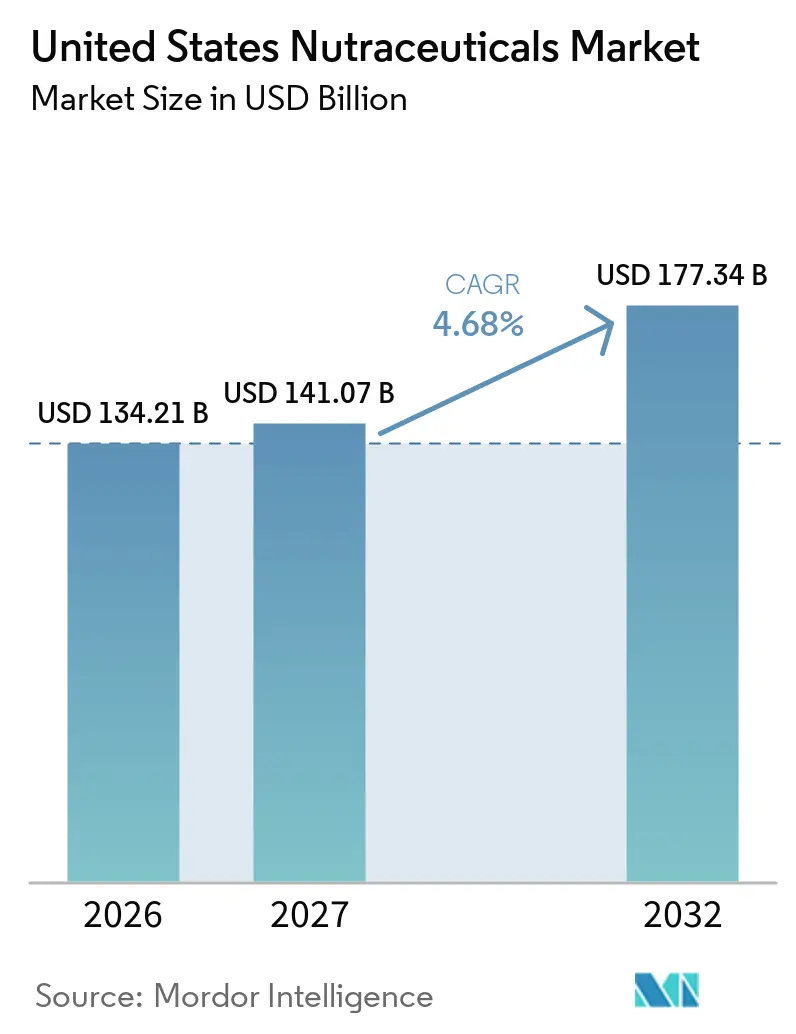
| Base Year Market Size (2026) | USD 134.21 Billion |
| Market Size (2027) | USD 141.07 Billion |
| Market Size (2032) | USD 177.34 Billion |
| Growth Rate (2027 - 2032) | 4.68 % |
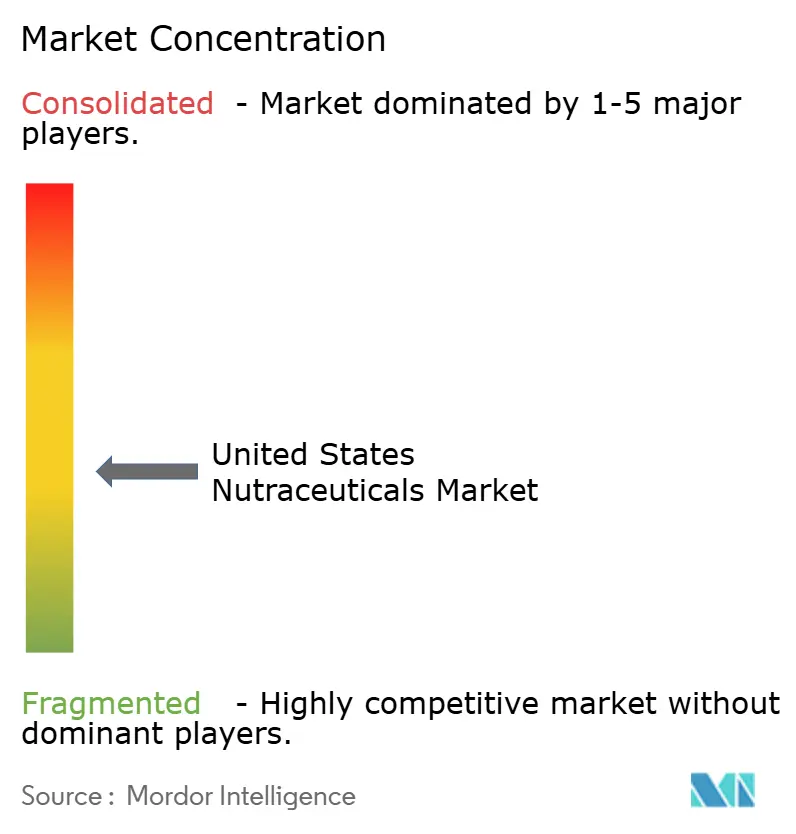
| Market Concentration | Low |
Major Players *Disclaimer: Major Players sorted in no particular order Image © Mordor Intelligence. Reuse requires attribution under CC BY 4.0. | |
United States Nutraceuticals Market Analysis by Mordor Intelligence
The United States nutraceuticals market size is expected to grow from USD 134.21 billion in 2026 to USD 141.07 billion in 2027 and is forecast to reach USD 177.34 billion by 2032 at 4.68% CAGR over 2027-2032. The market is supported by routine use of products for energy, digestion, immunity, and healthy aging, rather than purchases made only when consumers feel unwell. Consumer demand is moving toward products with clear ingredients, credible quality controls, and formats that fit daily eating and drinking habits. GLP-1 medication use changes the product mix by reducing some conventional weight-management purchases while supporting demand for protein, digestive health, and micronutrient products. The US nutraceuticals market also faces tighter scrutiny of product claims and safety, which raises the value of documented evidence and transparent supply chains.
Key Report Takeaways
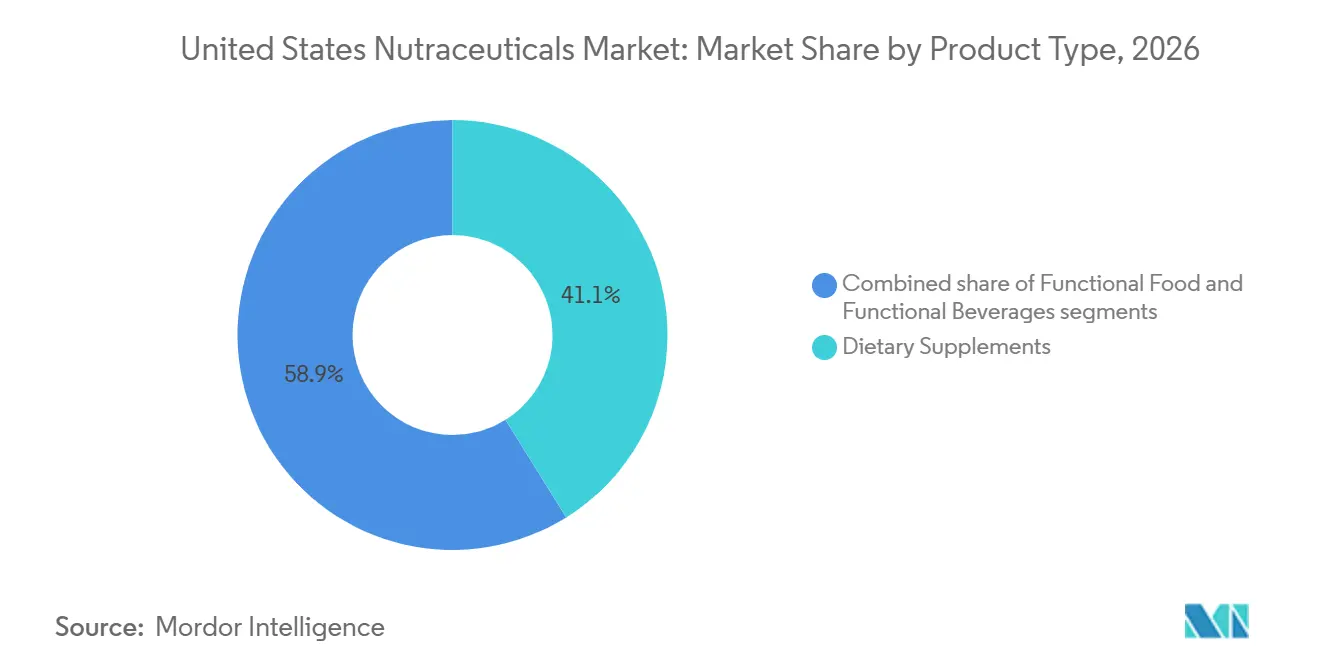
- By product type, dietary supplements held 41.12% revenue share in 2026, while functional beverages is projected to grow at a CAGR of 6.25% through 2032.
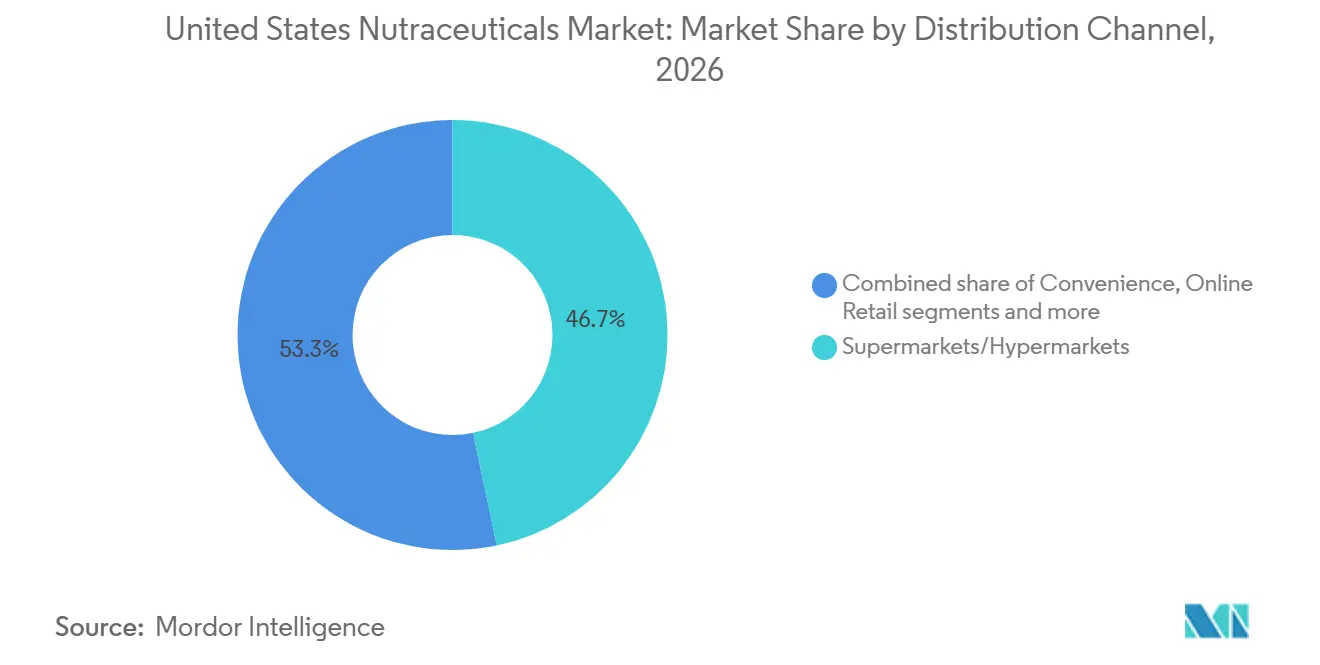
- By distribution channel, supermarkets and hypermarkets held 46.71% of the United States nutraceuticals market share in 2026, while online retail is projected to grow at a CAGR at 6.35% through 2032.
Note: Market numbers in this report are based on Mordor Intelligence's proprietary estimation framework, which combines nine months of actuals with Q4 projections for base year 2026.
Market Trends and Insights
Drivers Impact Analysis of United States Nutraceuticals Market*
| Driver | (~) % Impact on CAGR Forecast | Geographic Relevance | Impact Timeline |
|---|---|---|---|
| Increasing consumer focus on preventive healthcare and wellness | +1.5% | National; highest consumer intensity in West and Northeast US | Long term (≥ 4 years) |
| Rising demand for dietary supplements to address nutritional deficiencies | +0.8% | National; disproportionate impact in lower-income and minority communities | Medium term (2–4 years) |
| Growing consumer interest in immunity-supporting products | +0.7% | National; amplified in urban and high-density population centres | Medium term (2–4 years) |
| Increasing prevalence of lifestyle-related health conditions | +0.6% | National; South and Midwest carry higher chronic disease burden | Long term (≥ 4 years) |
| Rising demand for functional foods and beverages with added health benefits | +0.5% | West and South US lead consumption; national retail expansion ongoing | Medium term (2–4 years) |
| Growing adoption of sports nutrition and protein supplements | +0.4% | National; fastest growth in Gen Z and millennial demographics | Short term (≤ 2 years) |
| Source: Mordor Intelligence | |||
Increasing Consumer Focus on Preventive Healthcare and Wellness
The United States nutraceuticals market benefits as consumers make supplements part of routines for energy, cognition, digestive health, and healthy aging. This use pattern favors repeat purchasing because several health goals can sit within the same daily regimen. GLP-1 medication users may shift purchases toward protein, digestive products, and micronutrient replenishment, rather than leave the category entirely. This shift brings nutrition needs into discussions that previously focused mainly on weight management. Products supported by clear ingredient information and appropriate scientific evidence are better placed to serve consumers who are building more deliberate wellness routines. The market therefore has room for products that address everyday health needs without relying on broad or unclear claims.
Rising Demand for Dietary Supplements to Address Nutritional Deficiencies
Growing awareness of micronutrient deficiencies and the importance of preventive healthcare is supporting demand for dietary supplements in the United States nutraceuticals market. Consumers are increasingly incorporating vitamins, minerals, multivitamins, and targeted nutritional formulations into their daily routines to address potential dietary gaps and maintain overall wellness. According to the U.S. Centers for Disease Control and Prevention (CDC), approximately 1 in 8 women aged 12–49 years in the United States has iron deficiency, highlighting the importance of adequate nutrient intake among specific population groups[1].The CDC also identifies infants, children, adolescent girls, pregnant women, and women of reproductive age as groups particularly vulnerable to micronutrient deficiencies. These concerns are encouraging demand for supplements formulated to support iron intake, bone health, immunity, and other nutritional needs.
Growing Consumer Interest in Immunity-supporting Products
Growing consumer awareness of preventive healthcare and immune health is driving demand for immunity-supporting products in the United States nutraceuticals market. Consumers are increasingly seeking dietary supplements containing vitamins, minerals, probiotics, and botanical ingredients to support normal immune function and overall wellness. According to the U.S. National Institutes of Health (NIH), adequate intake of vitamins A, C, D, and E, along with zinc and selenium, is important for maintaining proper immune function, while deficiencies in these nutrients can impair immune responses and increase susceptibility to infections[2]. This awareness is encouraging manufacturers to develop multivitamins, immune-support supplements, and functional foods and beverages fortified with essential nutrients.
Increasing Prevalence of Lifestyle-related Health Conditions
The increasing prevalence of lifestyle-related health conditions, including obesity, diabetes, cardiovascular disease, and metabolic disorders, is supporting demand for nutraceutical products in the United States. Sedentary lifestyles, poor dietary habits, and insufficient physical activity are contributing to the growing burden of chronic diseases, encouraging consumers to adopt nutrition-focused approaches to health management. According to the U.S. Centers for Disease Control and Prevention (CDC), approximately 3 in 4 American adults have at least one chronic condition, while more than half have two or more chronic conditions[3]. This growing disease burden is increasing consumer interest in dietary supplements, functional foods, and functional beverages formulated to support heart health, metabolic wellness, weight management, and general nutrition.
Restraints Impact Analysis of United States Nutraceuticals Market*
| Restraint | (~) % Impact on CAGR Forecast | Geographic Relevance | Impact Timeline |
|---|---|---|---|
| Stringent regulatory requirements and limitations on health claims | -1.0% | National; state-level restrictions add compliance layers | Medium term (2–4 years) |
| Consumer concerns regarding product safety and adverse effects | -0.5% | National; more pronounced in online and DTC channels | Short term (≤ 2 years) |
| Inconsistent product quality and risks of contamination or adulteration | -0.4% | National; global supply chains create concentrated import-dependence risks | Medium term (2–4 years) |
| Limited scientific evidence supporting certain nutraceutical health claims | -0.3% | National; premium and practitioner channels most affected | Long term (≥ 4 years) |
| Source: Mordor Intelligence | |||
Stringent Regulatory Requirements and Limitations on Health Claims
The regulatory framework governing nutraceutical products in the United States creates compliance challenges for manufacturers, particularly regarding product labeling, ingredient safety, and health-related marketing claims. The U.S. Food and Drug Administration (FDA) distinguishes between health claims, nutrient content claims, and structure/function claims, each of which is subject to specific regulatory requirements. Health claims generally require FDA authorization or must meet applicable qualified-claim procedures, while supplement manufacturers must substantiate structure/function claims and submit the required notification to the FDA within 30 days of marketing. Manufacturers must also ensure that claims are truthful and not misleading, with applicable disclaimers displayed on supplement labels.
Consumer Concerns Regarding Product Safety and Adverse Effects
Concerns regarding the safety, quality, and potential adverse effects of nutraceutical products pose a restraint on the United States nutraceuticals market. Consumers may hesitate to purchase dietary supplements and functional products because of potential side effects, interactions with prescription medications, excessive nutrient intake, and inconsistencies in product quality. According to the U.S. Food and Drug Administration (FDA), dietary supplements are not approved for safety and effectiveness before being marketed, placing the initial responsibility for product safety on manufacturers and distributors. The FDA also warns that certain supplements can cause harmful reactions when taken in excessive amounts, combined with other supplements, or used alongside medications. These risks can undermine consumer confidence, increase scrutiny of product ingredients and labeling, and encourage cautious purchasing behavior.
*Our forecasts treat driver/restraint impacts as directional, not additive. The impact forecasts reflect baseline growth, mix effects, and variable interactions.
United States Nutraceuticals Market Segment Analysis
By Product Type:
Dietary Supplements Hold the Largest Position While Functional Beverages Grow FastestDietary Supplements accounted for the largest share of the United States nutraceuticals market by product type, capturing 41.12% of total revenue in 2026. The segment's leading position is supported by growing consumer awareness of preventive healthcare and the increasing adoption of products that address specific nutritional requirements. Consumers increasingly incorporate vitamins, minerals, probiotics, protein supplements, and other nutritional formulations into their daily wellness routines. Rising interest in immunity support, digestive health, bone health, and healthy aging further sustains demand for dietary supplements across different age groups.
Functional Beverages are projected to be the fastest-growing product type in the United States nutraceuticals market, registering a CAGR of 6.25% through 2032. Growth is driven by increasing consumer preference for convenient beverage formats that combine hydration with added nutritional and functional benefits. Products fortified with vitamins, minerals, probiotics, protein, prebiotics, and plant-based ingredients are gaining traction among health-conscious consumers. The growing demand for energy support, digestive wellness, immunity enhancement, and sports nutrition is encouraging manufacturers to diversify their functional beverage portfolios.

By Distribution Channel:
Supermarkets and Hypermarkets Lead While Online Retail ExpandsSupermarkets and Hypermarkets accounted for the largest share of the United States nutraceuticals market by distribution channel, capturing 46.71% of the market in 2026. Their leading position is supported by extensive retail networks, broad product assortments, and convenient access to nutritional products during routine grocery shopping. These outlets offer consumers a wide range of nutraceuticals, including vitamins, minerals, dietary supplements, protein products, functional foods, and health-oriented beverages. The ability to compare brands, product formulations, pack sizes, and prices in a single location further supports purchasing decisions. In addition, established retailer relationships with manufacturers and the availability of promotional discounts, loyalty programs, and private-label products help attract price-conscious consumers.
Online Retail is projected to be the fastest-growing distribution channel in the United States nutraceuticals market, registering a CAGR of 6.35% through 2032. Growth is driven by the increasing adoption of e-commerce platforms and the convenience of purchasing nutraceutical products without visiting physical stores. Online channels provide access to extensive product portfolios, including specialized supplements, functional nutrition products, and formulations that may have limited availability in local retail outlets. Detailed product descriptions, ingredient information, customer reviews, and brand comparisons also help consumers evaluate products before purchasing.
Geography Analysis
The United States represents a major market for nutraceuticals, supported by high consumer awareness of preventive healthcare, rising expenditure on wellness products, and increasing demand for nutrition-based solutions. The market benefits from an established dietary supplement industry, extensive retail infrastructure, and the presence of leading manufacturers offering vitamins, minerals, probiotics, protein products, and functional beverages. Growing concerns regarding lifestyle-related health conditions and age-related nutritional requirements are encouraging consumers to incorporate nutraceutical products into their daily routines.
Regional demand within the United States is influenced by differences in population concentration, income levels, healthcare awareness, and consumer purchasing behavior. States such as California, Texas, Florida, and New York offer substantial demand opportunities because of their large populations and extensive consumer markets. Urban centers with established fitness industries and wellness-oriented lifestyles support demand for sports nutrition, protein supplements, functional beverages, and specialized dietary formulations.
Meanwhile, an aging population is contributing to demand for products associated with bone health, cardiovascular wellness, cognitive function, and general nutritional support. The growing availability of personalized nutrition solutions and products targeting specific health objectives is also encouraging manufacturers to diversify their offerings. Furthermore, the expansion of health-focused retail outlets and digital distribution channels is improving access to nutraceutical products across metropolitan and suburban markets.
Competitive Landscape
The United States nutraceuticals market is fragmented, with large diversified companies, specialist manufacturers, and direct-to-consumer brands competing across several channels. Nestlé, Abbott, Danone, Haleon, and PepsiCo have broad retail reach and the resources to invest in product science. Glanbia, USANA, Herbalife, and NOW Health Group compete through specialist formulations and channel relationships. This mix leaves room for smaller companies that build trust through clear product positioning and quality practices. The market does not appear dominated by a small group of suppliers, which keeps competition active across price, formulation, format, and distribution.
Company strategies increasingly focus on quality evidence, supply transparency, and product formats that fit daily use. NOW Health Group implemented a next-generation DNA sequencing laboratory at its Sparks, Nevada facility to verify botanical identity across more than 2,000 ingredients. This type of investment responds to retailer and consumer interest in traceable, well-documented supply chains. Glanbia’s planned investment to add 4,500 tonnes of US whey protein isolate capacity by 2027 addresses continuing protein demand.
The market also shows continued interest in premium supplement brands and practitioner-oriented products. Larger companies can use acquisitions to add specialized formulations, direct customer relationships, and established professional networks. Specialist brands can respond by emphasizing transparent testing, focused health needs, and product education. This setting makes regulatory discipline important because a strong product message cannot compensate for unsupported claims. It also gives retailers and healthcare practitioners a greater role in deciding which brands earn consumer confidence.
United States Nutraceuticals Industry Leaders
-
Nestlé S.A.
-
Abbott Laboratories
-
PepsiCo, Inc.
-
Amway Corporation
-
Herbalife Ltd.
- *Disclaimer: Major Players sorted in no particular order
United States Nutraceuticals Market Companies Covered in this Report
- Nestlé S.A.
- Abbott Laboratories
- PepsiCo, Inc.
- Herbalife Ltd.
- Amway Corporation
- General Mills, Inc.
- Bayer Aktiengesellschaft
- Haleon plc
- Glanbia plc
- Church & Dwight Co., Inc.
- The Procter & Gamble Company
- Reckitt Benckiser Group plc
- Danone S.A.
- Kellanova
- The Coca-Cola Company
- The Clorox Company
- Pfizer Inc.
- USANA Health Sciences, Inc.
- Jamieson Wellness Inc.
- NOW Health Group, Inc.
Recent Industry Developments in United States Nutraceuticals Market
- August 2026: NOON launched nationwide at Target, introducing a shelf-stable, ready-to-drink breakfast product containing 20 g of protein and 5 g of fiber, with no added sugar. The launch reflects growing demand for convenient, nutrient-dense meal options.
- April 2026: NNB Nutrition announced that its GeniusPure alpha-GPC ingredient was being incorporated into functional ready-to-drink beverages from Update, Bucked Up and Life Cider X. The launches targeted cognitive performance, hydration, energy and focus, highlighting the use of science-backed ingredients in functional beverage development.
- April 2026: USANA Health Sciences launched Glow, its first dedicated skin-health supplement. The daily capsule combines ingredients such as rose extract, vitamin C, astaxanthin, and grape seed extract to support skin radiance, collagen production, and skin health, extending the company's portfolio into beauty-from-within nutrition.
- March 2025: Herbalife expanded its personalized nutrition capabilities by announcing plans to acquire Pro2col Health and Pruvit Ventures, alongside a 51% stake in Link BioSciences. The proposed transactions were intended to combine biometric-based nutrition recommendations with customized supplement manufacturing, strengthening Herbalife’s consumer wellness offering.
United States Nutraceuticals Market Report Scope
Nutraceuticals are products derived from food sources that provide nutritional value and health benefits beyond basic nutrition, including support for overall wellness, disease risk reduction, and the maintenance of physiological functions. The United States nutraceuticals market is segmented by product type and distribution channel. Based on product type, the market is segmented into functional food, functional beverage and dietary supplements. Based on distribution channel, the market is segmented into supermarkets/hypermarkets, convenience stores, specialty stores, online retail stores and other distribution channels. The market sizing has been done in value terms in USD for all the above mentioned segments.
Segmentation Overview
| Functional Food | Cereals |
| Bakery and Confectionery | |
| Dairy | |
| Snacks | |
| Other Functional Foods | |
| Functional Beverage | Energy Drinks |
| Sports Drinks | |
| Fortified Juice | |
| Dairy and Dairy-Alternative Beverages | |
| Other Functional Beverages | |
| Dietary Supplements | Vitamins and Minerals |
| Botanicals | |
| Enzymes | |
| Fatty Acids | |
| Collagen | |
| Other Dietary Supplements |
| Supermarkets and Hypermarkets |
| Convenience Stores |
| Specialty Stores |
| Online Retail Stores |
| Other Distribution Channels |
| By Product Type | Functional Food | Cereals |
| Bakery and Confectionery | ||
| Dairy | ||
| Snacks | ||
| Other Functional Foods | ||
| Functional Beverage | Energy Drinks | |
| Sports Drinks | ||
| Fortified Juice | ||
| Dairy and Dairy-Alternative Beverages | ||
| Other Functional Beverages | ||
| Dietary Supplements | Vitamins and Minerals | |
| Botanicals | ||
| Enzymes | ||
| Fatty Acids | ||
| Collagen | ||
| Other Dietary Supplements | ||
| By Distribution Channel | Supermarkets and Hypermarkets | |
| Convenience Stores | ||
| Specialty Stores | ||
| Online Retail Stores | ||
| Other Distribution Channels | ||
Key Questions Answered in the Report
What is the projected value of US nutraceuticals by 2032?
The market is projected to reach USD 177.34 billion by 2032.
Which product type leads US nutraceuticals?
Dietary Supplements lead with 41.12% share in 2026. Their range spans vitamins, minerals, botanicals, fatty acids, enzymes, and collagen products that serve several consumer health needs.
Which product category is growing fastest?
Functional Beverages are projected to record the highest CAGR at 6.25% through 2032.
Which distribution channel has the largest share?
Supermarkets and Hypermarkets lead with 46.71% share in 2026.
Why is online retail important for nutraceutical brands?
Online Retail is projected to grow at a 6.35% CAGR through 2032.