
Traumatic Brain Injury Treatment Market Size and Share
Market Overview
| Study Period | 2020 - 2031 |
|---|---|
| Market Size (2026) | USD 2.30 Billion |
| Market Size (2031) | USD 3.20 Billion |
| Growth Rate (2026 - 2031) | 6.88 % |
| Fastest Growing Market | Asia-Pacific |
| Largest Market | North America |
| Market Concentration | Medium |
Major Players *Disclaimer: Major Players sorted in no particular order Image © Mordor Intelligence. Reuse requires attribution under CC BY 4.0. | |
Traumatic Brain Injury Treatment Market Analysis by Mordor Intelligence
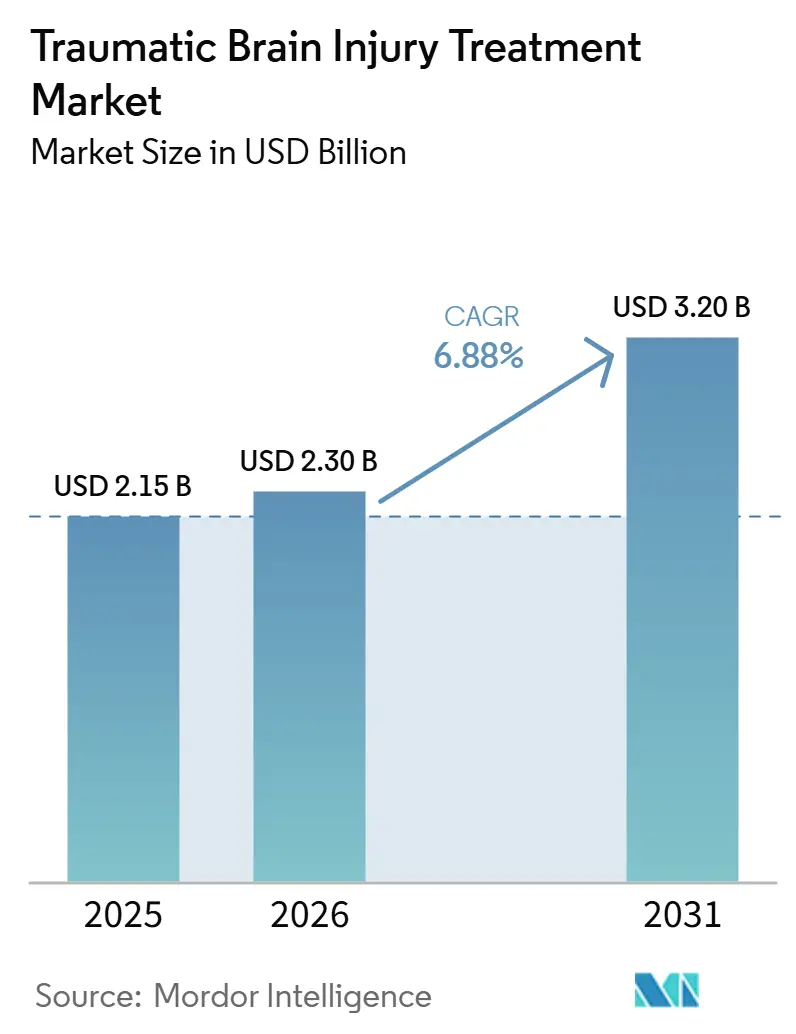
The Traumatic Brain Injury Treatment Market size is projected to expand from USD 2.15 billion in 2025 and USD 2.30 billion in 2026 to USD 3.20 billion by 2031, registering a CAGR of 6.88% between 2026 to 2031.
The traumatic brain injury treatment market is supported by a large global injury burden and broader access to trauma and neurocritical care. Falls, road traffic collisions, and sports-related impacts continue to bring patients into formal care pathways. Better survival after acute injury also increases demand for rehabilitation, monitoring, and long-term symptom management. The lack of widely approved disease-modifying medicines keeps care focused on supportive drugs, surgery, and rehabilitation. This structure leaves room for new therapies while sustaining demand across established treatment settings.
Key Report Takeaways
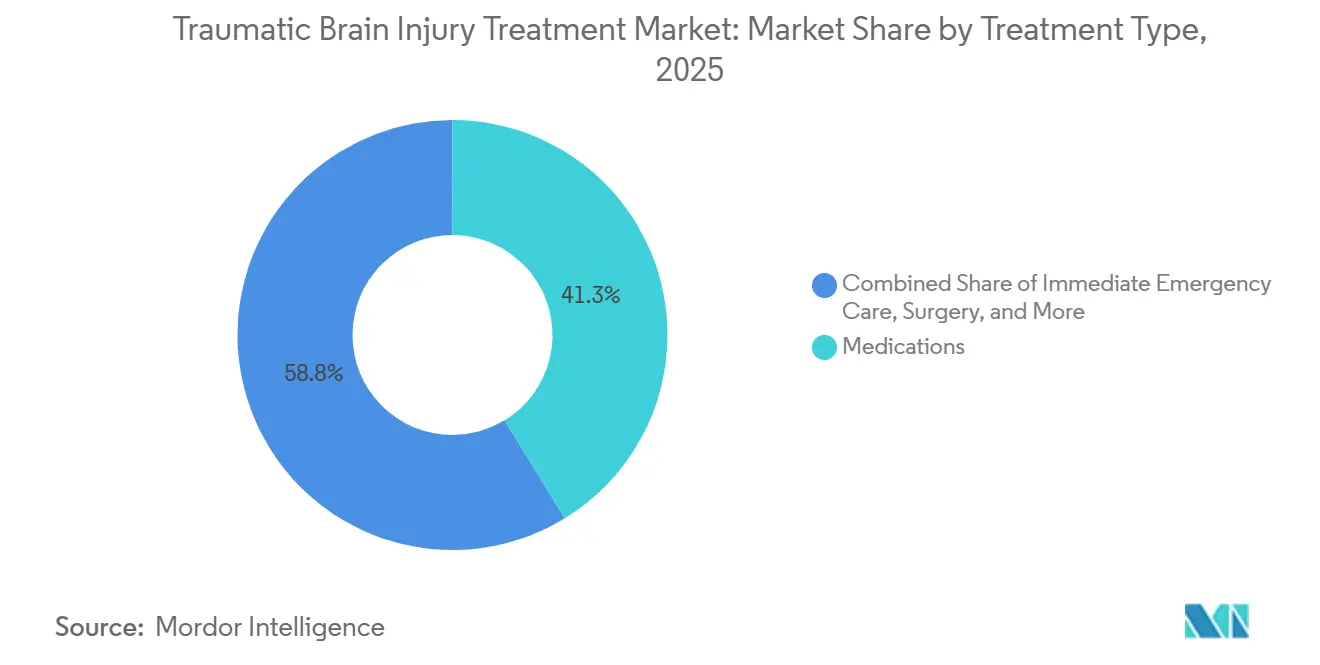
- By treatment type, medications held 41.25% of the traumatic brain injury treatment market share in 2025, while rehabilitation therapies are forecast to expand at a 7.54% CAGR through 2031.
- By care phase, acute hospital and neurocritical care held 43.95% of the traumatic brain injury treatment market share in 2025, while chronic outpatient and community care is forecast to expand at a 8.02% CAGR through 2031.
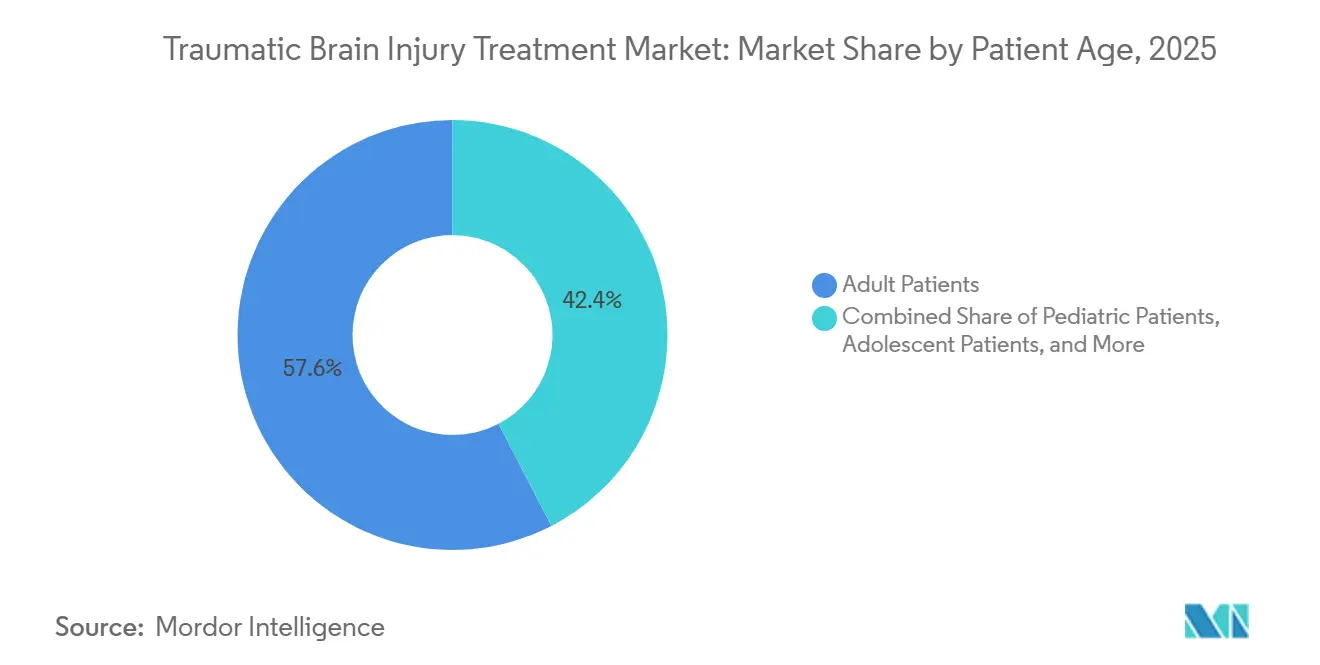
- By patient age, adults held 57.61% of the market share in 2025, while geriatric patients are forecast to expand at a 8.19% CAGR through 2031.
- By cause of injury, falls held 33.87% of the market share in 2025, while sports and recreational injuries are forecast to expand at a 8.14% CAGR through 2031.
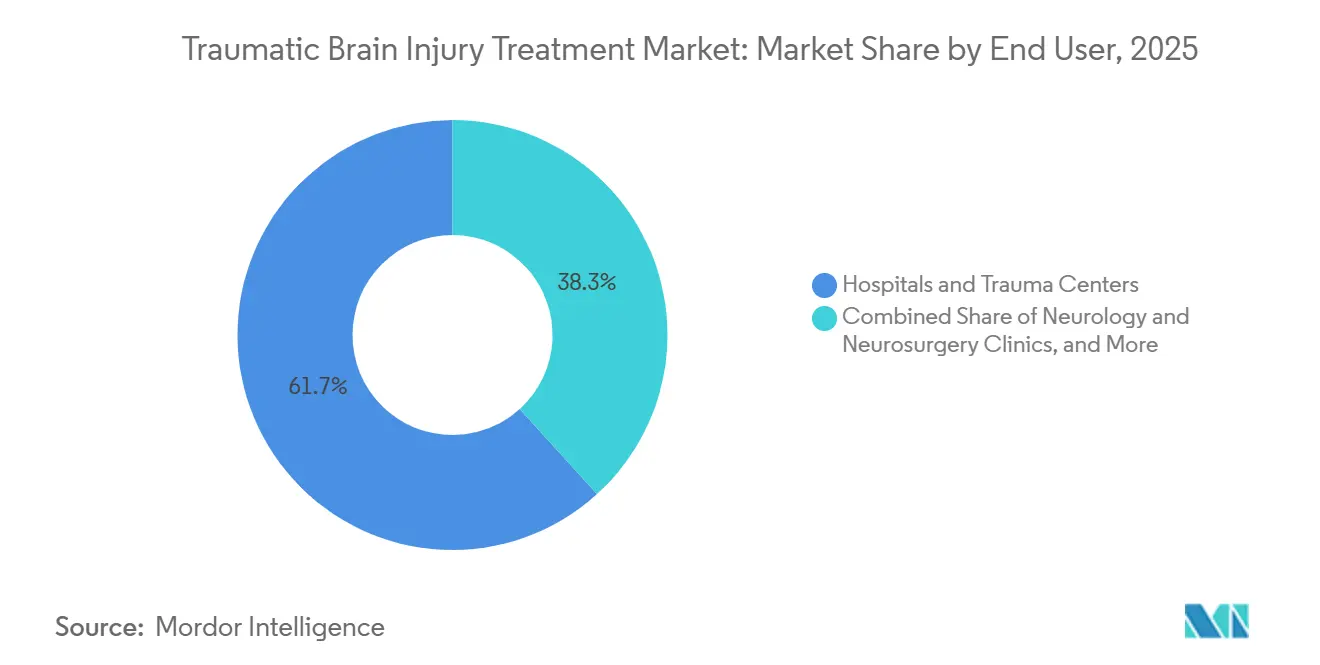
- By end user, hospitals and trauma centers held 61.74% of the market share in 2025, while home care and community care are forecast to expand at a 7.30% CAGR through 2031.
- By distribution channel, hospital pharmacies held 60.44% of the market share in 2025, while specialty pharmacies are forecast to expand at a 7.47% CAGR through 2031.
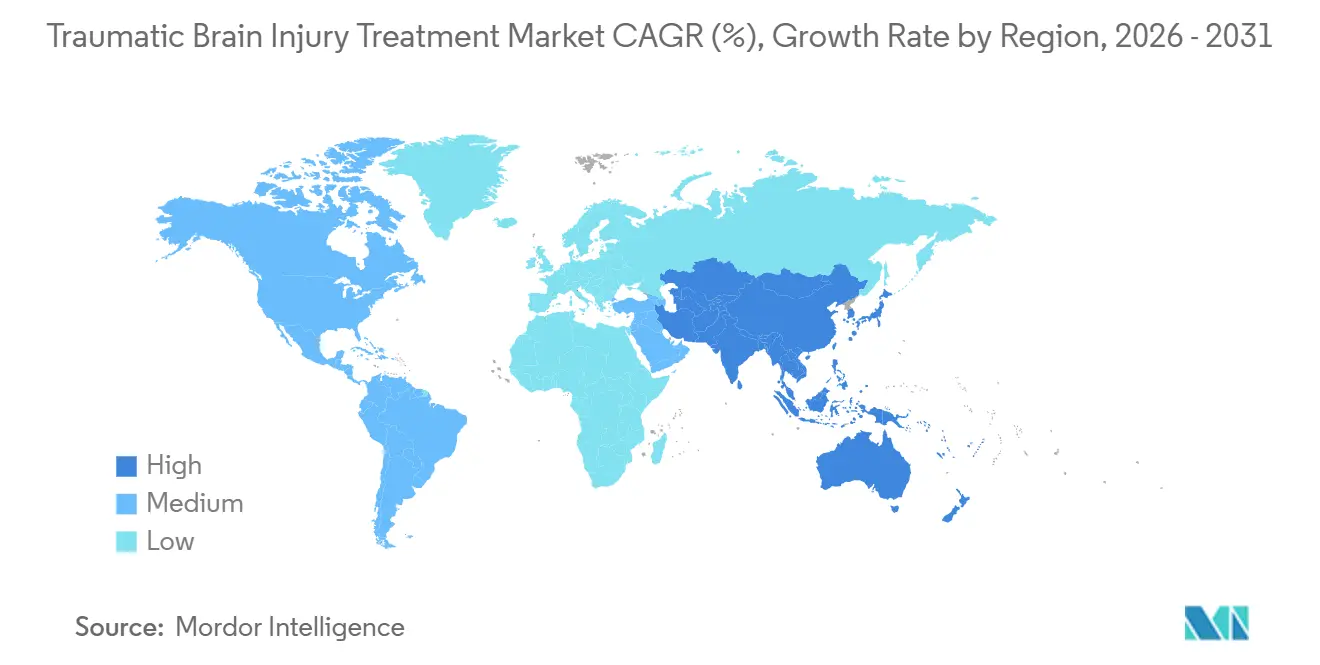
- By geography, North America held 41.63% of the traumatic brain injury treatment market share in 2025, while Asia-Pacific is forecast to expand at a 8.22% CAGR through 2031.
Note: Market size and forecast figures in this report are generated using Mordor Intelligence’s proprietary estimation framework, updated with the latest available data and insights as of January 2026.
Global Traumatic Brain Injury Treatment Market Trends and Insights
Drivers Impact Analysis*
| Driver | (~) % Impact on CAGR Forecast | Geographic Relevance | Impact Timeline |
|---|---|---|---|
| Rising TBI Incidence From Falls, Road Traffic, and Sports Injuries | +2.1% | Global, highest in North America & East Asia | Short term (≤ 2 years) |
| Expansion of Neurocritical Care and Trauma Networks | +1.5% | North America, Europe, APAC core | Medium term (2–4 years) |
| Increasing Adoption of Objective Mild TBI Assessment | +1.2% | North America, spill-over to EU | Short term (≤ 2 years) |
| Growth of Long-Term Neurorehabilitation and Survivorship Care | +1.3% | Global, fastest in North America & Europe | Medium term (2–4 years) |
| Biomarker-Guided and Precision TBI Management | +0.9% | North America & EU, early gains in APAC | Long term (≥ 4 years) |
| Intranasal, Cell-Based, and Neuroprotective Pipeline Innovation | +0.8% | North America, Japan | Long term (≥ 4 years) |
| Source: Mordor Intelligence | |||
Rising TBI Incidence From Falls, Road Traffic, and Sports Injuries
The traumatic brain injury treatment market draws its most stable demand from the volume of new injuries. In the United States, 68,663 TBI-related deaths were recorded in 2023.[1]Centers for Disease Control and Prevention, “TBI Data,” CDC Traumatic Brain Injury and Concussion, cdc.gov Falls accounted for nearly half of TBI-related hospitalizations nationally. Sports participation and concussion protocols bring more mild injuries into documented clinical care. Better awareness and helmet use can reduce mortality while increasing the number of survivors needing continued care.
Expansion of Neurocritical Care and Trauma Networks
The traumatic brain injury treatment market benefits when hospitals build more capable trauma and neurocritical care services. Designated trauma centers increase the intensity of acute triage and treatment after severe injury. The Brain Trauma Foundation guidelines support intracranial pressure monitoring and structured sedation-analgesia management in severe TBI care. These practices support demand for monitoring catheters, osmolar diuretics, and vasoactive medicines. A January 2025 study found that intensivist-led catheter placement reduced intracranial hypertension exposure time compared with neurosurgeon-managed placement.[2]Czosnyka, M., et al., “The Brussels Consensus for Non-Invasive ICP Monitoring When Invasive Systems Are Not Available in the Care of TBI Patients,” Intensive Care Medicine, link.springer.com The wider use of protocol-driven neuro-ICU care can extend device and medication use into less established settings.
Increasing Adoption of Objective Mild TBI Assessment
Objective assessment is expanding the traumatic brain injury treatment market by identifying mild injuries that previously escaped formal management. In April 2024, the FDA cleared Abbott’s i-STAT TBI cartridge for point-of-care assessment in acute and urgent care settings. The cartridge measures GFAP and UCH-L1 in whole blood and returns results in around 15 minutes. Blood testing can support triage decisions and reduce unnecessary CT imaging. A 2025 study found that age-adjusted GFAP and UCH-L1 cutoffs improved diagnostic accuracy for patients older than 50. Formal diagnosis creates additional opportunities for rehabilitation, medication management, and chronic monitoring. The traumatic brain injury treatment market, therefore, gains from lower diagnostic barriers in community and outpatient settings.
Growth of Long-Term Neurorehabilitation and Survivorship Care
Improved survival produces a larger group of patients with ongoing cognitive, motor, and behavioral needs. The traumatic brain injury treatment market increasingly serves patients beyond the emergency and inpatient phases. TBI can produce persistent symptoms that require rehabilitation and follow-up care. CMS support for remote monitoring and digital health services encourages investment in connected follow-up programs. A 2025 study validated Strategic Memory Advanced Reasoning Training for warfighters with persistent cognitive complaints after mild TBI. Wearables, cognitive assessment applications, and telehealth therapy can help providers manage patients after discharge. This shift supports sustained use of services while moving part of the care pathway closer to the home.
Restraints Impact Analysis*
| Restraint | (~) % Impact on CAGR Forecast | Geographic Relevance | Impact Timeline |
|---|---|---|---|
| Absence of Broadly Approved Disease-Modifying Pharmacotherapies | -1.5% | Global | Long term (≥ 4 years) |
| Heterogeneous Injury Phenotypes and Weak Trial Endpoint Consistency | -1.0% | Global | Long term (≥ 4 years) |
| Time-Critical Treatment Windows and Delayed Care Pathways | -0.7% | MEA, South America, Rest of APAC | Medium term (2–4 years) |
| Specialist, Rehabilitation and Advanced Monitoring Capacity Gaps | -0.6% | MEA, Rest of APAC, South America | Long term (≥ 4 years) |
| Source: Mordor Intelligence | |||
Absence of Broadly Approved Disease-Modifying Pharmacotherapies
The traumatic brain injury treatment market, therefore, remains centered on symptom control, supportive medicines, surgery, monitoring, and rehabilitation. SHINKEI Therapeutics completed its Phase 2 SHINKEITBI trial for MR-301, an intravenous amantadine HCl formulation. The program is preparing for an End-of-Phase 2 FDA meeting on a potential Phase 3 design. Current prescribing remains dispersed across generic and off-label products, which limits pricing power for most participants. A TBI-specific disease-modifying treatment could rapidly change the competitive balance because the unmet need is significant. Until then, pharmacological revenue remains below the level associated with proprietary, approved therapies.
Heterogeneous Injury Phenotypes and Weak Trial Endpoint Consistency
TBI ranges from mild concussion to severe penetrating and blast-related trauma. This clinical diversity complicates the selection of patients and outcome measures in trials. Studies may use different combinations of functional scales, cognitive tests, biomarkers, and independence measures. The lack of a common pivotal endpoint has raised development risk for new treatments. Precision approaches using molecular and biomarker information may improve patient stratification in future studies. The traumatic brain injury treatment market will continue to face slower pharmaceutical development until trial design becomes more consistent. This restraint is most important for companies seeking to move treatments from clinical research into routine care.
*Our forecasts treat driver/restraint impacts as directional, not additive. The impact forecasts reflect baseline growth, mix effects, and variable interactions.
Segment Analysis
By Treatment Type: Medications Anchor Share While Rehabilitation Scales
Medications held 41.25% of the traumatic brain injury treatment market share in 2025. Osmolar diuretics, anti-seizure medicines, sedatives, antidepressants, antipsychotics, and stimulants support acute and chronic care. Their broad use reflects the need to manage intracranial pressure, seizures, agitation, mood symptoms, and sleep issues. Immediate emergency care and surgery address the most severe presentations. Decompressive craniectomy, hematoma evacuation, and intracranial pressure diversion are intensive episodes of care. Their utilization is limited by the share of patients with injuries severe enough to require intervention. Hospitals remain central because these procedures require specialized teams and equipment.
Rehabilitation therapies are projected to grow at a 7.54% CAGR through 2031. Physical, cognitive, speech, and neuropsychological therapies address deficits that can persist for years after injury. The traumatic brain injury treatment market size for rehabilitation expands as more patients survive the acute phase. Digital therapy, virtual reality, robotics-assisted rehabilitation, and adaptive programs are being used to support engagement and measurable recovery.



By Care Phase: Acute Care Anchors Revenue, Chronic Outpatient Care Leads Growth
Acute hospital and neurocritical care held 43.95% of the market share in 2025. Intracranial pressure monitoring, sedation, neurosurgical access, and multimodal monitoring make inpatient treatment resource-intensive. The acute setting manages the period in which rapid stabilization can prevent further neurological harm. Prehospital and emergency stabilization provide the first entry point into this care pathway. Advanced trauma life support protocols guide early assessment and transport decisions. Field assessment and biomarker testing may improve triage before hospital arrival. The traumatic brain injury treatment market remains strongly tied to hospital capability during this stage.
Chronic outpatient and community care is forecast to grow at a 8.02% CAGR through 2031. Better survival and reimbursement for ambulatory management are shifting patients after recovery into longer-term services. Veterans with TBI may require continuing management for cognitive, psychiatric, and pain-related symptoms. Post-acute inpatient rehabilitation remains important for patients with moderate and severe injuries. These patients often need intensive therapy before returning to community settings. This mix increases the importance of coordinated transitions between hospital, rehabilitation, clinic, and home care providers.
By Patient Age: Adults Lead by Volume, Geriatric Patients Lead by Growth Rate
Adults held 57.61% of the traumatic brain injury treatment market share in 2025. Motor vehicle crashes, sports, workplace incidents, and assaults expose adults to a broad range of injury mechanisms. Their large case volume supports demand across emergency, surgical, medication, and rehabilitation services. Adult patients also use long-term care for mood, memory, and functional symptoms. Health systems must manage varied clinical needs within this broad patient group. Occupational injury and road safety conditions create meaningful differences across countries. The adult segment, therefore, remains a major base for treatment volume.
Geriatric patients are forecast to grow at a 8.19% CAGR through 2031. Falls, anticoagulant use, and diagnostic delays increase both risk and care complexity for older adults. The CDC reports that symptoms in older adults can be mistaken for other age-related conditions. Sports concussion protocols and return-to-learn programs shape adolescent care. Pediatric TBI requires age-adjusted medicines and rehabilitation approaches that account for development. These age-specific needs require care plans that extend beyond immediate injury treatment.
By Cause of Injury: Falls Hold the Largest Share, Sports Injuries Grow Fastest
Falls held 33.87% of the traumatic brain injury treatment market share in 2025. Global burden data identified falls as the leading mechanism across many ages and geographies. Older adults are particularly exposed because balance problems and frailty increase fall risk. Falls often require assessment even when the initial injury appears mild. The resulting care may include imaging, monitoring, medication, and rehabilitation. This pattern supports demand across the full traumatic brain injury treatment market. Fall prevention can reduce injury risk, but survivors may require prolonged treatment when damage occurs.
Sports and recreational injuries are forecast to grow at a 8.14% CAGR through 2031. Greater participation in contact sports and broader concussion surveillance are increasing formally managed cases. Standard protocols encourage assessment, recovery planning, and return-to-play decisions. Motor vehicle injuries remain a major cause, with severity influenced by road quality, helmet use, seatbelt use, and emergency response. Military and blast-related injuries remain a specialized area of treatment and research. Occupational and violence-related injuries continue to support demand where safety and compensation systems are less developed.
By End User: Hospitals Command Share, Home Care Disrupts the Model
Hospitals and trauma centers held 61.74% of the traumatic brain injury treatment market share in 2025. They provide emergency stabilization, surgery, intensive monitoring, and inpatient medical management. This role is unlikely to change substantially because severe TBI requires specialized facilities. Neurology and neurosurgery clinics manage complex follow-up and coordinate referrals. These clinics also manage long-term neuropsychiatric symptoms and medication needs. Ambulatory centers are gaining relevance for mild TBI follow-up. The traumatic brain injury treatment market continues to depend on clear referral links between these settings.
Home care and community care are forecast to grow at a 7.30% CAGR through 2031. Remote monitoring and digital health reimbursement create incentives for health systems to support patients outside facilities. Telehealth cognitive therapy, wearable seizure monitoring, and app-based neuropsychological testing can extend follow-up into the home. This model can reduce the need for routine facility visits while retaining clinical oversight. It is especially relevant for chronic symptoms that require repeated assessment. Provider adoption depends on reimbursement, patient connectivity, and coordination with clinical teams. Home-based services complement rather than replace hospital-based acute treatment.
By Distribution Channel: Hospital Pharmacies Dominate, Specialty Channel Emerges
Hospital pharmacies held 60.44% of the distribution channel share in 2025. Inpatient formularies shape the purchasing of osmolar agents, anti-seizure medicines, sedatives, and hemostatic products. This channel reflects the concentration of early treatment in hospital care. Direct institutional procurement also matters for capital equipment, intracranial pressure monitoring supplies, and intravenous medicines. Large facilities may purchase these products outside conventional pharmacy routes. The traumatic brain injury treatment industry, therefore, depends on both clinical and procurement decisions at major institutions. Product access is closely tied to hospital purchasing structures.
Specialty pharmacies are forecast to grow at a 7.47% CAGR through 2031. Novel cell therapies, intranasal biologics, and precision neuroprotective products may need cold-chain logistics and specialized dispensing. Retail and independent pharmacies support chronic outpatient prescriptions for mood, anxiety, psychosis, and attention symptoms. Online and digital channels are emerging alongside telepharmacy and remote monitoring services. These channels are most relevant after patients leave inpatient care. Their development depends on the pace of digital health adoption and the arrival of more complex therapies. The traumatic brain injury treatment market may use a broader channel mix as chronic management becomes more decentralized.
Geography Analysis
North America held 41.63% of the global traumatic brain injury treatment market revenue in 2025. The region benefits from dense trauma networks, extensive acute care coverage, and early use of biomarker diagnostics. The FDA clearance of Abbott’s whole-blood TBI test supported point-of-care assessment for mild injuries. The United States contributes the largest regional revenue base. More than 485,000 TBI cases among service members since 2000 support a lasting demand in military and veterans’ health systems. Remote monitoring reimbursement also supports outpatient and home care after discharge.
Asia-Pacific is forecast to grow at a 8.22% CAGR through 2031. Japan approved Akuugo conditionally in August 2024, granted full approval in October 2025, and listed it under National Health Insurance in May 2026. SanBio is targeting 20-30 specialized treatment centers for early deployment. Japan also has academic research programs exploring cerebrovascular neuroprotection in TBI models. East Asia recorded 9.52 million prevalent TBI cases in 2021, with China representing a large share of regional volume. India’s trauma care expansion and road injury burden support future demand, while lower-cost monitoring and diagnostics may be important in other emerging regions.
Europe has established clinical standards across Germany, the United Kingdom, France, Italy, and Spain. National neurosurgery guidance and EMA frameworks influence treatment protocols. French guidelines released in 2025 covered the acute management of adult and pediatric TBI. The guidance supports continued investment in monitoring, surgical, and hemostatic products. A January 2026 published German study identified 122.5 days as an optimal interval between decompressive craniectomy and cranioplasty for reducing postoperative complications.[3]Schuss, P., et al., “Optimal Time Between Decompressive Craniectomy and Cranioplasty to Reduce the Risk of Complications,” Neurosurgical Review, link.springer.com Central and Eastern Europe have a higher TBI burden than Western Europe. This gap points to unmet need and room for broader treatment access.

Competitive Landscape
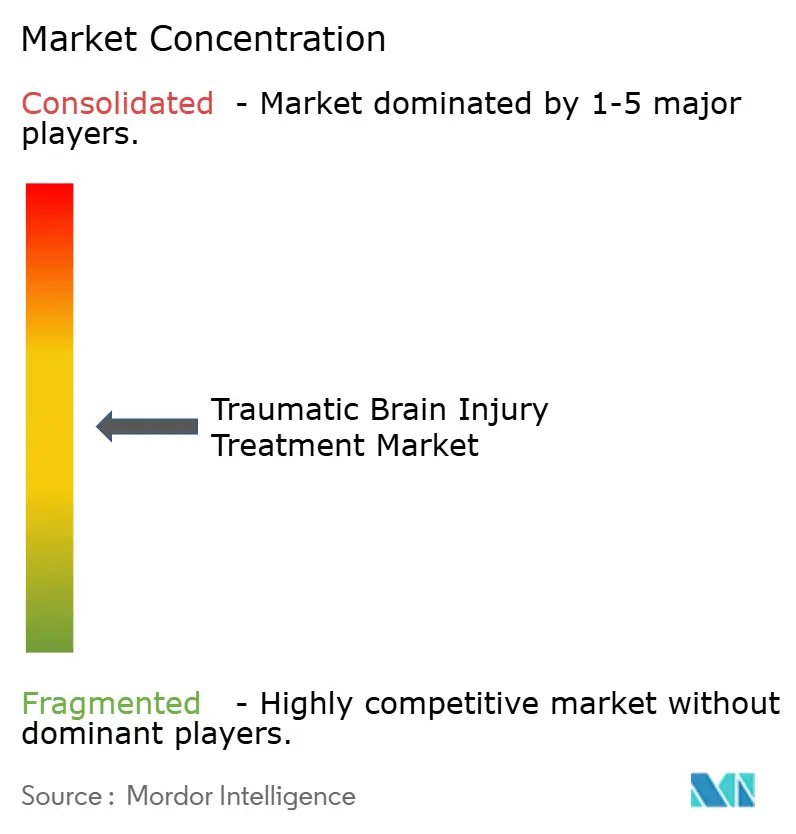
The traumatic brain injury treatment market is moderately fragmented. Medical device companies have established positions in neurosurgical care, while medicines are dispersed across generic products, specialty therapies, and clinical-stage companies. No participant holds a decisive share across all treatment approaches. Medtronic received FDA approval for BrainSense Adaptive DBS in February 2025. The system is a sensing-enabled neurostimulation platform with relevance to future neurological monitoring applications. Stryker’s MedSurg and Neurotechnology segment represented 58% of total company revenue in the first half of 2025. It's Aria Drill, CORE 2 Console, and Sonopet iQ support neurosurgical intervention categories.
The traumatic brain injury treatment market also has a large pharmacological opening because no broadly approved TBI-specific disease-modifying medicine is available. SanBio commercially launched Akuugo in Japan in May 2026. The launch established a cell therapy category for TBI-related chronic motor paralysis. SHINKEI is pursuing a 505(b)(2) pathway for its reformulated amantadine candidate MR-301. Technology suppliers are also building positions through cognitive rehabilitation platforms, wearable monitoring, and biomarker-supported triage. These approaches broaden competition beyond traditional hospital equipment and generic medicines.
Competitive position depends on evidence, regulatory progress, and access to acute and post-acute care channels. Large device companies retain advantages in established hospital relationships and neurosurgical portfolios. Smaller developers can differentiate through targeted therapies and digital models. The traumatic brain injury treatment market may see acquisition activity when late-stage programs approach major milestones. Providers will assess new products on clinical utility, reimbursement, logistics, and fit with existing care pathways. The market concentration is medium because the largest companies are important in specific device categories, but no company has a decisive combined share across treatment modalities.
Traumatic Brain Injury Treatment Industry Leaders
Integra LifeSciences Holdings Corporation
Medtronic plc
Pfizer Inc.
SanBio Co., Ltd.
Stryker Corporation
- *Disclaimer: Major Players sorted in no particular order

Recent Industry Developments
- June 2026: Oragenics, Inc. achieved full activation of all 3 Australian Phase IIa trial sites (Mackay Base Hospital, Alfred Health, Royal Adelaide Hospital) for ONP-002, an intranasal neurosteroid for mild TBI; no serious adverse events have been reported, and a Phase IIa data readout is targeted for Q4 2026; the company simultaneously submitted a Type B meeting request to the FDA on June 26, 2026, to advance the U.S. regulatory pathway for ONP-002.
- May 2026: SanBio Co., Ltd commercially launched Akuugo (vandefitemcel) in Japan, the world's first cell therapy approved for TBI-related chronic motor paralysis, following National Health Insurance listing on May 20, 2026; peak annual sales are projected at JPY 2.8 billion (USD 18.5 million) with an initial commercial target of 20-30 specialized treatment centers.
- July 2026: Oragenics dosed the first patient in its Phase IIa clinical trial of ONP-002 at Mackay Base Hospital, Queensland, marking the first human dosing of a pharmacological intranasal neurosteroid candidate for concussion and mTBI intervention, with the program designed to support a subsequent IND application to the FDA.
- March 2026: SHINKEI Therapeutics announced two concurrent milestones: completion of the multicenter, randomized Phase 2 SHINKEITBI trial for MR-301 (IV amantadine HCl) in severe TBI, conducted across U.S. sites with the Duke Clinical Research Institute, with the company now preparing an End-of-Phase 2 FDA meeting; and FDA clearance of the IND for MR-101 to proceed to Phase 1 safety trials in healthy volunteers via the 505(b)(2) pathway.


Global Traumatic Brain Injury Treatment Market Report Scope
According to the report's scope, traumatic brain injury (TBI) treatment encompasses medical, surgical, rehabilitative, and monitoring interventions used to manage brain injuries caused by external trauma, including falls, motor vehicle accidents, sports injuries, occupational incidents, military blast exposures, and other traumatic events. Treatment approaches range from emergency stabilization and acute neurocritical care to long-term rehabilitation and chronic outpatient management.
Treatment Type, Care Phase, Patient Age, Cause of Injury, End User, Distribution Channel, and Geography segment the Traumatic Brain Injury Treatment Market. By Treatment Type, the market is segmented into Immediate Emergency Care, Medications, Surgery, and Rehabilitation Therapies. By Care Phase, the market is segmented into Prehospital and Emergency Stabilization, Acute Hospital and Neurocritical Care, Post-Acute Inpatient Rehabilitation, and Chronic Outpatient and Community Care. By Patient Age, the market is segmented into Pediatric Patients, Adolescent Patients, Adult Patients, and Geriatric Patients. By Cause of Injury, the market is segmented into Falls, Motor Vehicle Traffic Injuries, Sports and Recreational Injuries, Occupational and Industrial Injuries, Military and Blast-Related Injuries, Assault and Violence-Related Injuries, and Other Traumatic Causes. By End User, the market is segmented into Hospitals and Trauma Centers, Neurology and Neurosurgery Clinics, Ambulatory Care Centers, Home Care and Community Care, and Other End Users. By Distribution Channel, the market is segmented into Hospital Pharmacies, Retail and Independent Pharmacies, Specialty Pharmacies, Direct Institutional Procurement, and Online and Digital Channels. Geographically, the market is analyzed across North America, Europe, Asia-Pacific, the Middle East and Africa, and South America.The market report also covers the estimated market sizes and trends for 17 countries across major regions globally. For each segment, the market size and forecast are provided in terms of value (USD).
| Immediate Emergency Care | |
| Medications | Diuretics and Hyperosmolar Agents |
| Anti-Seizure Drugs | |
| Analgesics and Sedatives | |
| Antidepressants and Anxiolytics | |
| Antipsychotics and Neuropsychiatric Treatments | |
| Hemostatic Agents | |
| Stimulants and Dopaminergic Agents | |
| Other Medications | |
| Surgery | Decompressive Craniectomy |
| Hematoma Evacuation | |
| Cranioplasty and Skull-Fracture Repair | |
| Intracranial Pressure Diversion and Drainage | |
| Minimally Invasive and Image-Guided Neurosurgery | |
| Rehabilitation Therapies | Physical and Occupational Therapy |
| Speech, Language and Swallowing Therapy | |
| Cognitive Rehabilitation | |
| Neuropsychological and Behavioral Therapy | |
| Spasticity Management | |
| Other Rehabilitation Therapies |
| Prehospital and Emergency Stabilization |
| Acute Hospital and Neurocritical Care |
| Post-Acute Inpatient Rehabilitation |
| Chronic Outpatient and Community Care |
| Pediatric Patients |
| Adolescent Patients |
| Adult Patients |
| Geriatric Patients |
| Falls |
| Motor Vehicle Traffic Injuries |
| Sports and Recreational Injuries |
| Occupational and Industrial Injuries |
| Military and Blast-Related Injuries |
| Assault and Violence-Related Injuries |
| Other Traumatic Causes |
| Hospitals and Trauma Centers |
| Neurology and Neurosurgery Clinics |
| Ambulatory Care Centers |
| Home Care and Community Care |
| Other End Users |
| Hospital Pharmacies |
| Retail and Independent Pharmacies |
| Specialty Pharmacies |
| Direct Institutional Procurement |
| Online and Digital Channels |
| North America | United States |
| Canada | |
| Mexico | |
| Europe | Germany |
| United Kingdom | |
| France | |
| Italy | |
| Spain | |
| Rest of Europe | |
| Asia-Pacific | China |
| Japan | |
| India | |
| Australia | |
| South Korea | |
| Rest of Asia-Pacific | |
| Middle East and Africa | GCC |
| South Africa | |
| Rest of Middle East and Africa | |
| South America | Brazil |
| Argentina | |
| Rest of South America |
| By Treatment Type | Immediate Emergency Care | |
| Medications | Diuretics and Hyperosmolar Agents | |
| Anti-Seizure Drugs | ||
| Analgesics and Sedatives | ||
| Antidepressants and Anxiolytics | ||
| Antipsychotics and Neuropsychiatric Treatments | ||
| Hemostatic Agents | ||
| Stimulants and Dopaminergic Agents | ||
| Other Medications | ||
| Surgery | Decompressive Craniectomy | |
| Hematoma Evacuation | ||
| Cranioplasty and Skull-Fracture Repair | ||
| Intracranial Pressure Diversion and Drainage | ||
| Minimally Invasive and Image-Guided Neurosurgery | ||
| Rehabilitation Therapies | Physical and Occupational Therapy | |
| Speech, Language and Swallowing Therapy | ||
| Cognitive Rehabilitation | ||
| Neuropsychological and Behavioral Therapy | ||
| Spasticity Management | ||
| Other Rehabilitation Therapies | ||
| By Care Phase | Prehospital and Emergency Stabilization | |
| Acute Hospital and Neurocritical Care | ||
| Post-Acute Inpatient Rehabilitation | ||
| Chronic Outpatient and Community Care | ||
| By Patient Age | Pediatric Patients | |
| Adolescent Patients | ||
| Adult Patients | ||
| Geriatric Patients | ||
| By Cause of Injury | Falls | |
| Motor Vehicle Traffic Injuries | ||
| Sports and Recreational Injuries | ||
| Occupational and Industrial Injuries | ||
| Military and Blast-Related Injuries | ||
| Assault and Violence-Related Injuries | ||
| Other Traumatic Causes | ||
| By End User | Hospitals and Trauma Centers | |
| Neurology and Neurosurgery Clinics | ||
| Ambulatory Care Centers | ||
| Home Care and Community Care | ||
| Other End Users | ||
| By Distribution Channel | Hospital Pharmacies | |
| Retail and Independent Pharmacies | ||
| Specialty Pharmacies | ||
| Direct Institutional Procurement | ||
| Online and Digital Channels | ||
| By Geography | North America | United States |
| Canada | ||
| Mexico | ||
| Europe | Germany | |
| United Kingdom | ||
| France | ||
| Italy | ||
| Spain | ||
| Rest of Europe | ||
| Asia-Pacific | China | |
| Japan | ||
| India | ||
| Australia | ||
| South Korea | ||
| Rest of Asia-Pacific | ||
| Middle East and Africa | GCC | |
| South Africa | ||
| Rest of Middle East and Africa | ||
| South America | Brazil | |
| Argentina | ||
| Rest of South America | ||


Key Questions Answered in the Report
What is driving demand for traumatic brain injury treatment?
Falls, road traffic injuries, sports impacts, wider trauma access, and long-term care needs are supporting demand.
How large is the traumatic brain injury treatment market?
It is projected to grow from USD 2.46 billion in 2026 to USD 3.20 billion by 2031 at a 6.88% CAGR.
Which treatment type has the largest share?
Medications held 41.25% of revenue in 2025 because they are used in acute and chronic symptom management.
Which care setting is growing fastest?
Home care and community care is forecast to grow at a 7.30% CAGR through 2031.
Which region is expanding fastest?
Asia-Pacific is projected to grow at a 8.22% CAGR through 2031, supported by Japan and China.
Are disease-modifying therapies available for TBI?
No broadly approved TBI-specific disease-modifying pharmacotherapy was available as of 2026, although Akuugo entered Japan for chronic motor paralysis.
Page last updated on:





