
Tomato-based Products Market Size and Share
Market Overview
| Study Period | 2021 - 2031 |
|---|---|
| Market Size (2026) | USD 68.14 Billion |
| Market Size (2031) | USD 84.39 Billion |
| Growth Rate (2026 - 2031) | 4.37 % |
| Fastest Growing Market | Asia-Pacific |
| Largest Market | Europe |
| Market Concentration | Medium |
Major Players *Disclaimer: Major Players sorted in no particular order Image © Mordor Intelligence. Reuse requires attribution under CC BY 4.0. | |
Tomato-based Products Market Analysis by Mordor Intelligence
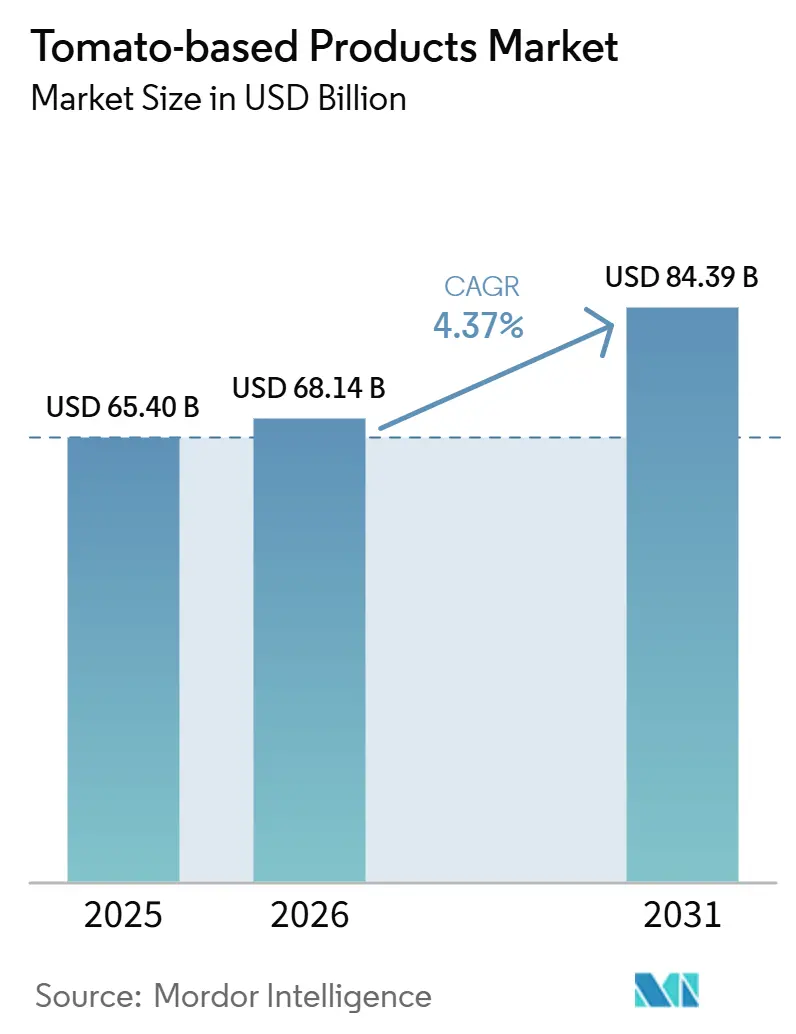
The tomato-based products market size was USD 65.4 billion in 2025 and is estimated to grow to USD 84.39 billion by 2031, at a CAGR of 4.37% during the forecast period from 2026 to 2031. Steady demand from household cooking, restaurants, ready meals, soups, and snack seasonings supports the market, as tomato-based ingredients remain widely used for flavor, color, texture, and recipe consistency. The continued expansion of convenience foods is increasing the use of sauces, pastes, purees, ketchup, diced tomatoes, and other shelf-stable formats across retail and foodservice channels. Foodservice operators require consistent ingredients, standardized quality, and larger pack sizes, which is reshaping procurement strategies, packaging formats, and supplier relationships. Manufacturers are also focusing on product differentiation through clean-label formulations, organic variants, reduced-sugar and reduced-sodium options, and origin-specific positioning to meet evolving consumer preferences. Clean-label, organic, and origin-specific products offer processors opportunities for premium pricing when supported by credible certification, transparent sourcing, and reliable traceability systems. However, weather disruptions and higher costs for tomatoes, energy, packaging, and transport continue to limit profitability, particularly for processors exposed to seasonal supply fluctuations and volatile input prices.
Key Report Takeaways
- By product type, tomato sauces held 32.71% of the tomato-based products market share in 2025, while tomato soup is projected to grow at a 5.46% CAGR through 2031.
- By category, conventional products accounted for 85.62% of the tomato-based products market size in 2025, while organic products are forecast to expand at a 6.11% CAGR through 2031.
- By packaging format, tins and cans held 69.51% of the tomato-based products market share in 2025, while pouches are expected to grow at a 5.88% CAGR through 2031.
- By distribution channel, retail accounted for 57.13% of the 2025 value, while foodservice is projected to grow at a 6.51% CAGR through 2031.
- By Geography, Europe held 33.40% of the tomato-based products market share in 2025, while Asia-Pacific is projected to grow at a 5.98% CAGR through 2031.
Note: Market size and forecast figures in this report are generated using Mordor Intelligence’s proprietary estimation framework, updated with the latest available data and insights as of January 2026.
Global Tomato-based Products Market Trends and Insights
Drivers Impact Analysis*
| Driver | (~) % Impact on CAGR Forecast | Geographic Relevance | Impact Timeline |
|---|---|---|---|
| Expansion of foodservice and quick-service restaurant demand | +1.1% | Global; Asia-Pacific core, spill-over to the Middle East, Africa, and Latin America | Short term (≤ 2 years) |
| Convenience-led consumption of shelf-stable meal ingredients | +0.9% | Global | Medium term (2–4 years) |
| Globalization of Italian, Mexican, Indian, and Asian cuisines | +0.8% | Global, with early gains in North America, Europe, and the Asia-Pacific | Long term (≥ 4 years) |
| Premiumization through clean-label, organic, and origin-assured products | +0.6% | North America and Europe, premium-tier urban markets in the Asia-Pacific | Medium term (2–4 years) |
| Tomato paste and puree adoption in industrial food formulations | +0.5% | Global; industrial food hubs in North America, Europe, and China | Medium term (2–4 years) |
| Underutilized tomato-processing capacity in emerging markets | +0.4% | Middle East and Africa (West Africa, Egypt) and the Asia-Pacific (India, Southeast Asia) | Long term (≥ 4 years) |
| Source: Mordor Intelligence | |||
Expansion of foodservice and quick-service restaurant demand
The rapid expansion of foodservice outlets and quick-service restaurants (QSRs) is significantly driving demand for tomato-based products, as ketchup, tomato sauces, pizza sauces, tomato paste, and canned tomatoes remain essential ingredients across burgers, pizzas, pasta, sandwiches, and ready-to-eat meals. According to the National Restaurant Association, the United States restaurant industry is projected to reach USD 1.55 trillion in sales in 2026, supported by strong consumer demand for dining out, while the continued growth of delivery, takeaway, and drive-thru formats is further increasing the consumption of tomato-based condiments and cooking ingredients. Reflecting this trend, manufacturers are introducing products tailored to foodservice and premium menu applications. In January 2025, Mutti expanded its professional foodservice portfolio with premium Italian tomato products for chefs and restaurant operators, while in 2026, Kraft Heinz introduced new globally inspired Heinz sauce variants for foodservice and retail channels to capitalize on rising QSR demand. The proliferation of international restaurant chains, cloud kitchens, and convenience-led dining formats continues to strengthen institutional demand for high-quality, value-added tomato ingredients, supporting sustained growth across the global tomato-based products market.
Globalization of Italian, Mexican, Indian, and Asian cuisines
The globalization of Italian, Mexican, Indian, and Asian cuisines is accelerating demand for tomato-based products by expanding the use of tomato sauces, purees, pastes, and canned tomatoes across both home cooking and commercial food preparation. Rising consumer interest in authentic international flavors has encouraged retailers and food manufacturers to diversify their product portfolios with region-specific tomato ingredients. According to the Food and Agriculture Organization (FAO), global tomato production continues to exceed 190 million metric tons annually, ensuring a stable supply of raw materials for value-added tomato products used in international cuisines. Additionally, the Specialty Food Association reports sustained growth in consumer demand for globally inspired and specialty food products, reflecting increasing adoption of ethnic meal solutions. Capitalizing on this trend, Mutti introduced its Pesto Rosso (Red Pesto) in 2025, offering an Italian-inspired tomato-based condiment for premium meal preparation. In 2026, Barilla expanded its premium pasta sauce portfolio with new Italian recipe variants developed using high-quality tomatoes and regional ingredients. As cross-cultural food consumption becomes increasingly mainstream, demand for authentic, premium, and cuisine-specific tomato products continues to support growth across the global tomato-based products market.
Premiumization through clean-label, organic, and origin-assured products
The growing consumer preference for clean-label, organic, and origin-assured foods is driving demand for premium tomato-based products, as buyers increasingly seek products made with simple ingredients, minimal processing, and transparent sourcing. Consumers are showing greater willingness to pay premium prices for products carrying organic certifications, non-GMO claims, and protected geographical indications (PGIs), particularly in Europe and North America. According to the IFOAM – Organics International and the Research Institute of Organic Agriculture (FiBL), the global organic food market continues to expand, supported by increasing certified organic farmland and rising consumer demand for sustainably produced foods. Manufacturers are responding by strengthening their premium portfolios. In 2025, Mutti expanded its Organic Tomato Products range across European retail markets using 100% Italian organically grown tomatoes with full traceability. In 2026, Cirio introduced a new premium range of origin-certified Italian tomato products highlighting regional sourcing and clean-label formulations to meet growing demand for authentic, high-quality ingredients. The convergence of transparency, sustainability, and provenance is encouraging manufacturers to differentiate their offerings through premium positioning, thereby supporting value growth in the global tomato-based products market.
Underutilized tomato-processing capacity in emerging markets
Underutilized tomato-processing capacity in emerging markets presents a significant opportunity for the global tomato-based products market by enabling manufacturers to increase value addition, reduce post-harvest losses, and strengthen domestic processing industries. Countries such as India, Egypt, Brazil, and several African nations produce substantial volumes of fresh tomatoes, yet only a small proportion is processed into products such as tomato paste, puree, sauces, and canned tomatoes compared to leading processing nations. According to the Food and Agriculture Organization (FAO), developing economies continue to account for a growing share of global tomato production, creating considerable potential for expanding local processing infrastructure and export-oriented manufacturing. Governments are also supporting agro-processing investments through food processing and value-addition initiatives. Reflecting this opportunity, Tetra Pak introduced enhanced tomato processing solutions in 2025 to improve processing efficiency and product quality for manufacturers, while JBT Marel expanded its advanced tomato processing technologies in 2026, enabling processors in emerging markets to improve yield, reduce waste, and produce higher-value tomato products. These investments are expected to improve processing utilization rates and support long-term growth in the global tomato-based products market.
Restraints Impact Analysis*
| Restraint | (~) % Impact on CAGR Forecast | Geographic Relevance | Impact Timeline |
|---|---|---|---|
| Climate-driven volatility in tomato yields and Brix levels | -0.7% | Global; Southern Europe, California, and China most exposed | Medium term (2–4 years) |
| Raw tomato, energy, packaging, and logistics cost volatility | -0.5% | Global | Short term (≤ 2 years) |
| High sugar, salt, and additive concerns in mainstream formulations | -0.3% | North America and Europe | Medium term (2–4 years) |
| Seasonal processing windows and limited cold-storage infrastructure | -0.2% | The Asia-Pacific and Middle East and Africa | Long term (≥ 4 years) |
| Source: Mordor Intelligence | |||
Climate-driven volatility in tomato yields and Brix levels
Supply-side weather disruptions are increasingly compressing processing margins and disrupting annual production plans with greater frequency and severity. In 2025, global processed tomato output is expected to fall by 12.1% to 40.29 million metric tons. China’s contribution is expected to decline by 53.1% to 4.9 million metric tons, primarily due to spring rains, wind, and storms in Inner Mongolia. Spain’s harvest is expected to contract by 28.3% to 2.40 million metric tons due to severe drought in Andalucía, according to the Weather Prediction Center[1]Source: World Processing Tomato Council, “World Processing Tomato Council,” WPTC, wptc.to. Yield shortfalls extend beyond volume losses. Drought conditions and extreme heat reduce Brix levels in field tomatoes, resulting in lower concentrate quality, higher rejection rates, and increased blending costs at the factory level. A peer-reviewed study published in BMC Plant Biology (2025) on climate impacts in high-tech Turkish greenhouse tomato production identified yield losses of 12.56% attributable to climate change. The study recommended fog-cooling systems designed at 30–40% above standard capacity to offset future heat stress (BMC Plant Biology, 2025)[2]Source: BMC Plant Biology Editorial Office, “BMC Plant Biology,” BMC Plant Biology, bmcplantbiol.biomedcentral.com. For industrial processors operating under open-field contracts, this volatility remains difficult to hedge, particularly during peak processing windows from July to September, when processors consume most of the annual energy and raw material budget.
Raw tomato, energy, packaging, and logistics cost volatility
Multi-dimensional input cost inflation continues to erode margin predictability for manufacturers across the tomato-based products value chain. Packaging accounts for a disproportionately large share of product-level costs and carbon footprints. A peer-reviewed Life Cycle Assessment found that packaging represents 56.7%–66% of total CO2 emissions per unit in the operations of a Southern Italian tomato processor. Glass jar packaging has the highest environmental and cost burden per unit, while multilayer pouch packaging generates only 0.051 kg CO2 per 500 g of tomato puree, representing an 80% reduction compared to glass. This gap creates sustainability and procurement incentives for manufacturers to accelerate packaging format transitions. Energy costs create additional pressure during peak processing periods. Mutti S.p.A. disclosed that in 2025, it consumes approximately three-quarters of its annual energy budget during the July–September harvest season, making summer energy prices a direct earnings risk. Producers without hedged energy contracts or on-site renewable generation remain the most exposed to this structural cost vulnerability.
*Our forecasts treat driver/restraint impacts as directional, not additive. The impact forecasts reflect baseline growth, mix effects, and variable interactions.
Segment Analysis
By Product Type: Sauce Formats Lead; Soup Channels Health Upgrade
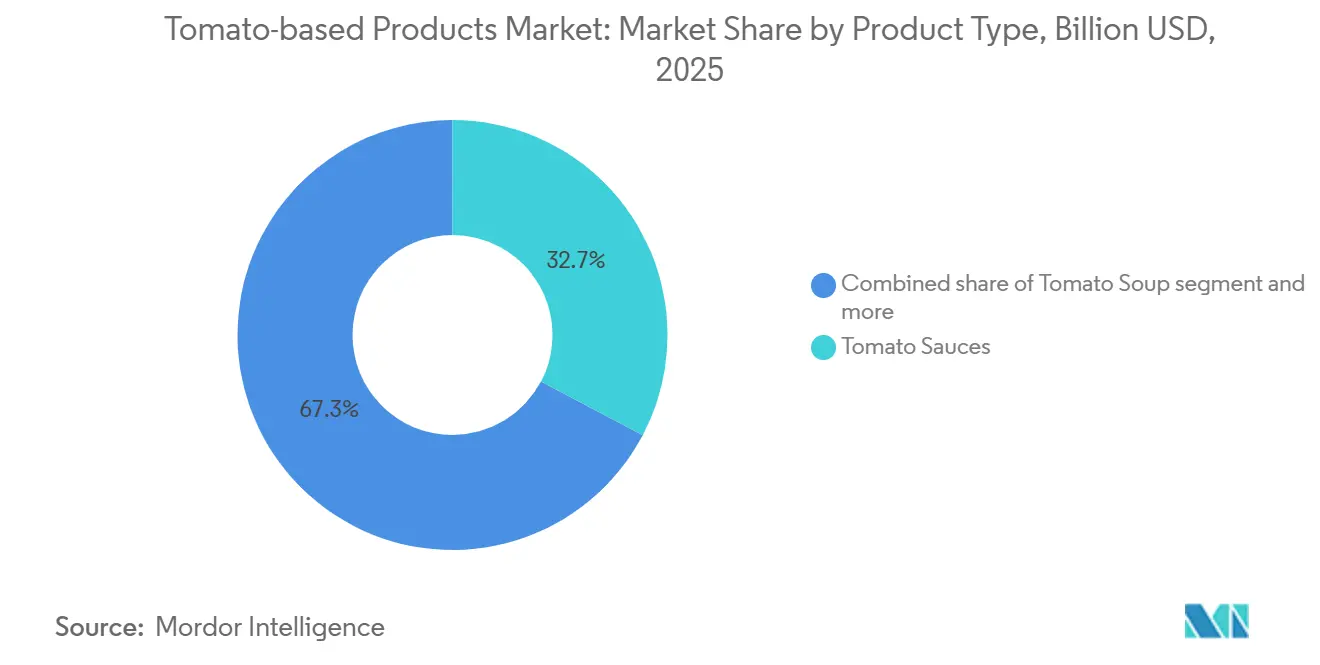
Tomato sauces are projected to account for the broadest category footprint, representing 32.71% of global market value in 2025. Their versatility supports use across household cooking, pizza toppings in QSR chains, and base sauces in packaged ready meals. Ketchup, the second-largest format, is expected to maintain resilient volumes through bulk procurement by foodservice operators. Kraft Heinz, which describes itself as the world's largest buyer of processing tomatoes, sold approximately 600 million bottles of Heinz ketchup globally in 2024. Tomato paste and puree serve as the principal industrial ingredient formats, capturing significant B2B demand from soup, ready meal, and snack seasoning manufacturers that require standardized Brix-level inputs. Canned tomatoes, dehydrated tomato powder, and tomato juice and beverages complete the portfolio, with powder gaining traction in Asia-Pacific instant noodle and snack seasoning formulations.
Tomato soup is projected to be the fastest-growing product format, registering a CAGR of 5.46% during 2026–2031. Functional and protein-enriched reformulations targeting health-conscious consumers are expected to increasingly drive this growth, rather than legacy condensed can formats. Campbell's is expected to launch a protein soup lineup in July 2026, featuring five varieties with 20 grams of protein per can[3]Source: The Campbell’s Company, “The Campbell’s Company,” The Campbell’s Company, thecampbellscompany.com. The company plans to distribute the products initially through Amazon before rolling them out to US retail at USD 3.19 per can, repositioning tomato-based soups as nutritionally complete meal replacements. This product innovation signals a broader category opportunity: tomato-based soups positioned around functional nutrition are differentiating from the commoditized condensed can segment, with implications for pricing power and shelf placement across modern retail formats.



By Category: Conventional Anchors Scale; Organic Accelerates on Regulatory Tailwinds
Conventional tomato products are expected to account for 85.62% of the market value in 2025, providing the volume base on which the global industry operates. Conventional formats serve cost-sensitive mass-market retail and industrial procurement channels, particularly in emerging markets where organic certification infrastructure and supply chains remain nascent. Food manufacturers primarily procure conventional-grade tomato paste and puree in bulk, prioritizing Brix consistency and price predictability over origin or certification attributes.
The organic sub-segment is expected to be the fastest-growing category, registering a CAGR of 6.11% during 2026–2031, driven by institutional and retail demand. Compliance factors, including the EU Organic Regulation and USDA Organic certification frameworks, provide a verification layer that supports premium price realization across export corridors. Certified organic products consistently command 20–30% price premiums over conventional equivalents at retail. A 2024 study in Frontiers in Sustainable Food Systems on Italian consumer behavior confirmed that organic certification, combined with geographic origin labeling, yields the highest purchase likelihood among processed tomato buyers. This indicates structurally supported demand rather than trend-driven demand. In 2025, Kraft Heinz's ZERO ketchup (sugar-free) range is expected to grow 50% year-on-year in Poland, signaling that health-adjacent reformulation is gaining consumer traction across Eastern European markets traditionally dominated by conventional formulations.
By Packaging Format: Steel Cans Dominant; Pouches Accelerating on Sustainability Economics
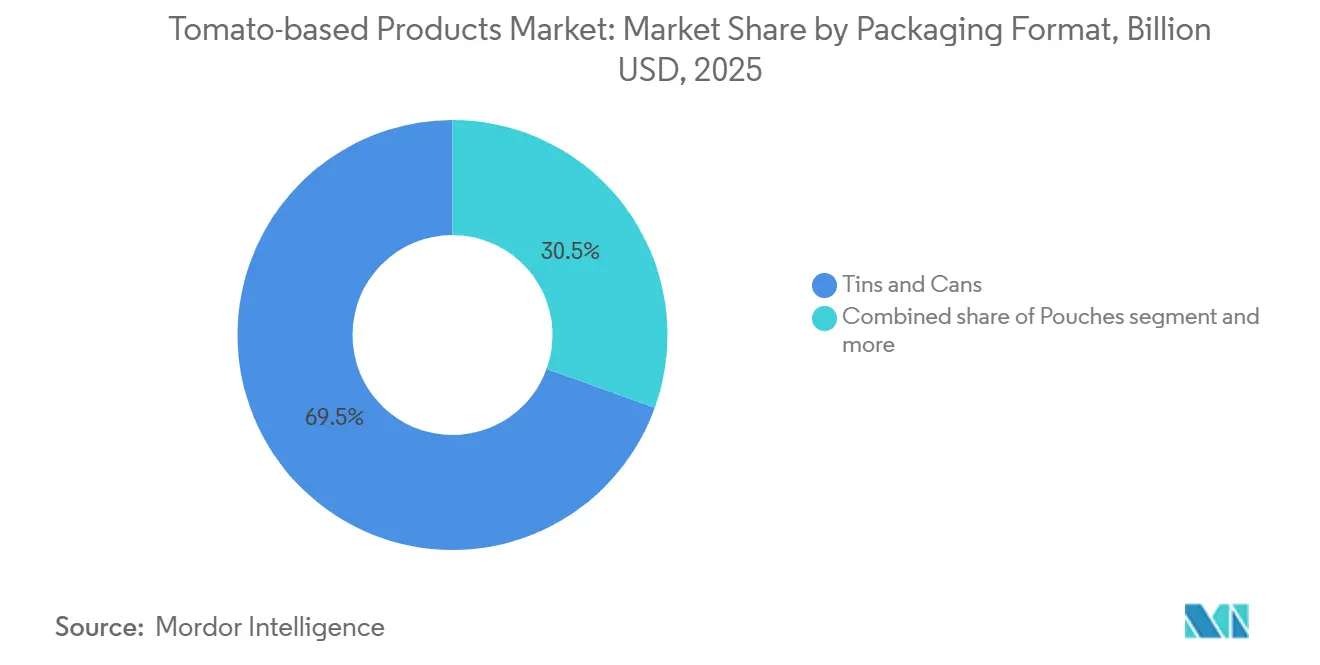
Tins and cans are projected to account for 69.51% of the global tomato-based products value in 2025, reflecting decades of investment in canning infrastructure and strong consumer familiarity across geographies and price tiers. This format remains particularly entrenched in canned whole tomatoes, paste, and soup categories, where shelf-life requirements and product integrity needs align well with the protective properties of steel. Glass jars and bottles continue to hold a strong position in premium sauce and passata lines, where product visibility supports origin and quality narratives at the retail point of sale.
The pouches segment is projected to be the fastest-growing packaging format, registering a CAGR of 5.88% during 2026–2031. Its sustainability economics remain compelling: a Life Cycle Assessment found that multilayer pouch packaging for tomato puree generates 80% less CO2 per unit than glass and reduces human toxicity by 97%. Mars/MasterFoods moved early with a recyclable Papersnap single-serve tomato sauce pouch in Australia in November 2024, reducing plastic use by 58% compared with traditional single-serve formats. Amcor also partnered with Red Gold to develop the first organic tomato paste retail pouch in the United States. These developments indicate that the pouch format is moving from standard commodity applications to premium categories, supported by its dual advantage of lower logistics weight and a lower environmental footprint compared with the heavier formats it replaces.
By Distribution Channel: Retail Holds Volume; Foodservice Outpaces on Growth
Retail is expected to remain the largest distribution channel, accounting for 57.13% of the 2025 value, with supermarkets and hypermarkets leading as the dominant sub-channel. The retail channel benefits from deep shelf penetration, expanding private-label ranges in tomato paste and canned tomato categories, and growing online retail adoption, particularly in markets where e-grocery infrastructure matured after 2020. Industrial food manufacturing, which supplies bulk paste, puree, and powder to packaged food producers, holds a significant volume share. This channel is particularly important in North America and Europe, where scaled processed food output requires consistent, large-volume procurement throughout the year.
Foodservice is expected to be the fastest-growing distribution channel, registering a CAGR of 6.51% during 2026–2031, materially above the overall market pace of 4.37%. This growth differential reflects QSR chain expansion in Asia-Pacific and the Middle East, the rise of ghost kitchens that require standardized bulk ingredients, and the scaling of delivery-only operators in urban markets. According to TomatoNews industry data (2025), global foodservice volumes of processed tomato products are expected to expand by 4.0% annually through 2030, with Asia-Pacific growing at 5.9% and Latin America at 5.0%. These trends indicate that the foodservice channel will progressively narrow retail’s dominance. For producers, the critical read-through is that foodservice growth favors product formats such as bulk paste concentrates, aseptic pouches, and large-volume Brix-standardized inputs, while retail growth requires different formats. Producers must develop deliberate, channel-specific portfolio architectures to capture both opportunities efficiently.
Geography Analysis
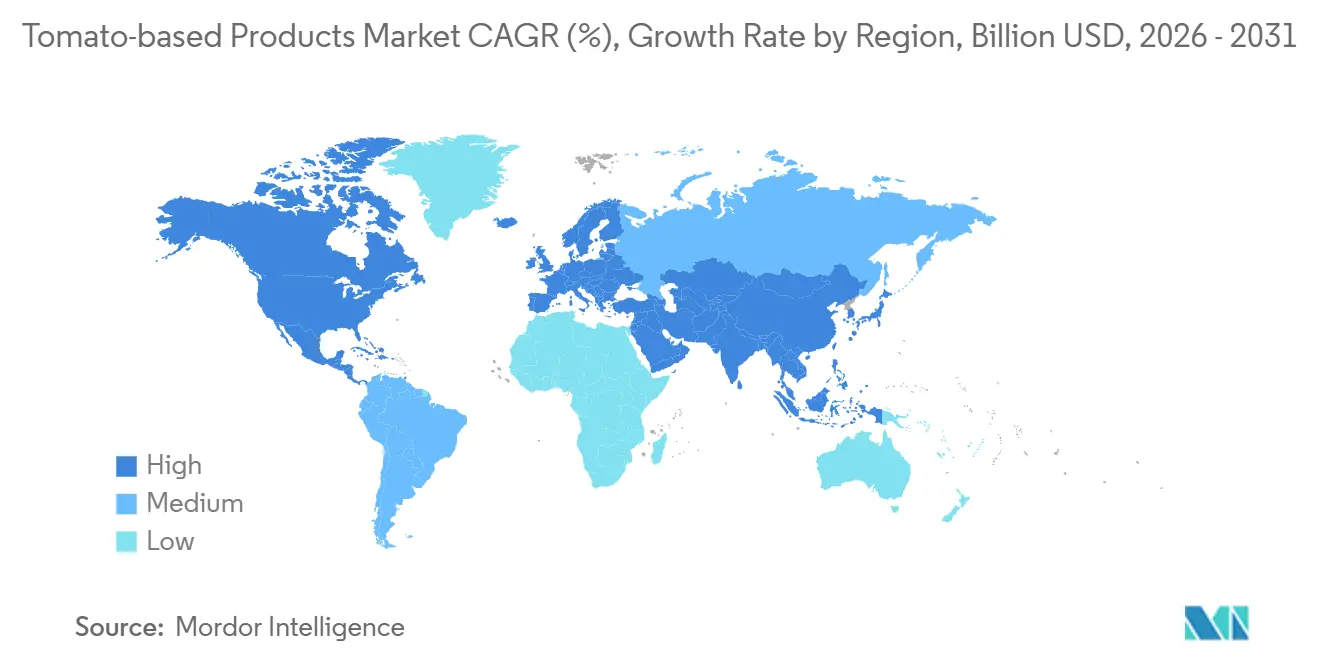
Europe is expected to account for 33.4% of the tomato-based products market size in 2025. Italy and Spain offer extensive processing capacity, while consumers in Northern and Western Europe maintain well-established purchasing habits. Italy is expected to process 5.8 million metric tons of tomatoes in 2025, up 11% from 2024, regaining its position as the second-largest processing country globally, according to Associazione Nazionale Industriali Conserve Alimentari Vegetali. The Italian sector’s turnover is expected to reach EUR 5.2 billion in 2025, equivalent to USD 5.6 billion, while exports are expected to account for EUR 2.8 billion, equivalent to USD 3.0 billion. Export value is expected to decline by 8% year on year, while volumes are expected to remain more stable at 2.2 million tonnes, according to Associazione Nazionale Industriali Conserve Alimentari Vegetali.
France has lower domestic processing output than its demand for processed tomato products. Domestic processing production ranges from 150,000 to 180,000 tonnes, while national demand approaches 1.1 million tonnes of supplied material. This gap continues to support imports from Italy and Portugal. Germany, France, the Netherlands, Spain, the United Kingdom, and Poland are major consumption markets in Europe. Premium passata, prepared sauces, and organic preserves are growing faster than basic commodity volumes in many of these countries. These factors continue to support Europe’s importance in the tomato-based products market, even as individual harvests fluctuate.
Asia-Pacific is projected to grow at a CAGR of 6% through 2031, making it the fastest-growing regional area. China, India, Japan, and Southeast Asia have varying levels of packaged tomato use and distinct product preferences. Japan is developing premium, health-oriented, and origin-specific products, as indicated by Kikkoman’s planned March 2026 launch of a multi-vegetable tomato sauce. North America remains a major processing center, led by California’s record 2025 yield of 49.9 metric tons per acre and output of 10.7 million metric tons, according to the World Processing Tomato Council. The Middle East and Africa have a smaller current base, but growing retail and foodservice demand continues to support interest in local processing.

Competitive Landscape
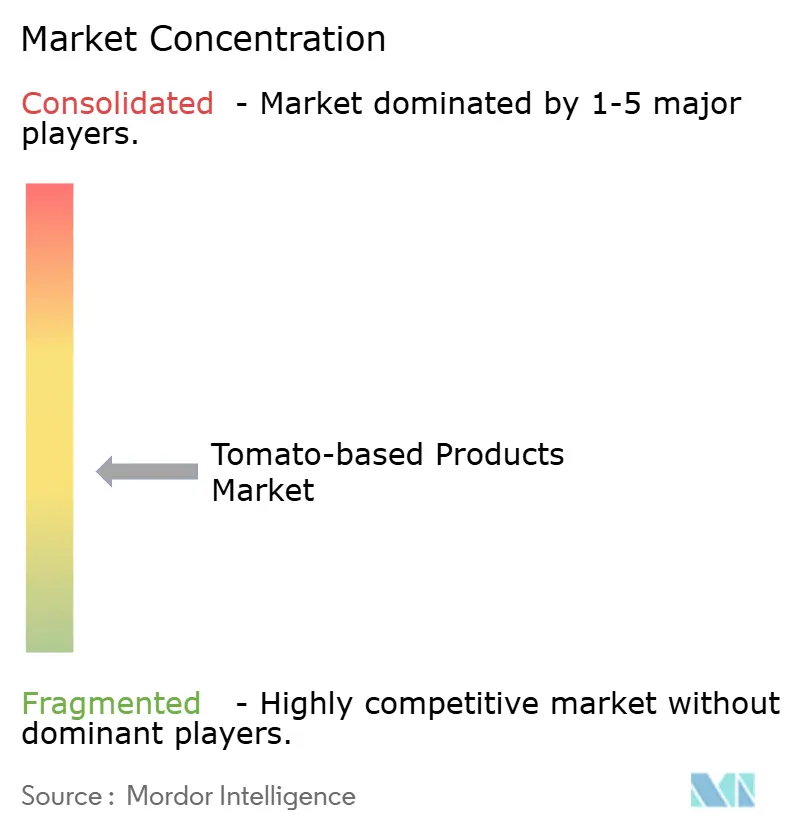
The global tomato-based products market is moderately consolidated. Large companies lead ketchup, paste, and sauces, while premium and regional categories remain more fragmented. The leading participants identified in the supplied material include The Kraft Heinz Company, Conagra Brands, Nestlé, Mutti S.p.A., and The Morning Star Company. Kraft Heinz is pursuing a large manufacturing program across its North American and European operations. According to the supplied material, the company committed USD 3 billion in May 2025 to upgrade 30 United States factories. It also completed a EUR 70 million (USD 75.6 million) expansion in Alfaro, Spain, in March 2025, increasing capacity by 50%.
The supplied material also states that Kraft Heinz announced a USD 250 million modernization project for its Montreal factory in March 2026. The company allocated USD 600 million in 2025 for marketing, sales, and research and development for its Taste Elevation portfolio. These investments highlight its focus on premium sauces and core ketchup products. According to its 2025 annual results, Mutti held a 30.7% value share in Italy and a 16.3% value share across Europe. The company plans EUR 42 million (USD 45.4 million) in 2026 capital investment for AI-based tomato quality sorting across three Italian plants. Its focus on provenance and process transparency supports differentiation in premium products.
Functional beverages, organic pouch-format paste, and sauces for gluten-free or low-sodium diets remain areas with limited product density. Regional processors in West Africa and Southeast Asia are expanding capacity, which may increase competition in lower-grade bulk paste. Aseptic processing, AI-supported sorting, and membrane filtration can improve consistency and reduce energy use. These technologies may widen the gap between larger technology-enabled processors and mid-sized producers that rely on older concentration lines. Mutti introduced its Lion Jar packaging design in 2025 and filed a related patent. The supplied material states that the design can reduce life-cycle carbon dioxide emissions by 7% to 13%.
Tomato-based Products Industry Leaders
The Kraft Heinz Company
Conagra Brands, Inc.
Nestlé S.A.
Kagome Co., Ltd.
Del Monte Foods, Inc.
- *Disclaimer: Major Players sorted in no particular order

Recent Industry Developments
- July 2026: Campbell's Company launched the Campbell's Protein Soup lineup featuring 5 varieties with 20 grams of protein per can, incorporating tomato-based broths and flavors, rolling out across the United States retail. The product repositioned tomato soup as a functional nutrition platform and marked a significant premiumization shift in the condensed soup category.
- March 2026: Kraft Heinz Canada announced a USD 250 million investment to modernize its Mont Royal factory in Montreal, upgraded key plant systems to enhance efficiency and sustainability, and introduced new production volume; the facility employed over 1,000 workers and anchored Kraft Heinz's Canadian manufacturing commitments.
- March 2026: Kikkoman Foods Inc. (Del Monte brand licensee in Japan) launched Del Monte Organic Tomato Juice (750 ml glass bottle, California-grown organic tomatoes) and the Del Monte Tomato Sauce with Half a Day's Worth of Vegetables (6 vegetables, paper-pack format) nationally in Japan, extended the Del Monte brand into organic and convenience-enriched positioning in a premium Asian market.


Global Tomato-based Products Market Report Scope
Tomato-based products are processed foods and beverages manufactured primarily from tomatoes for culinary, foodservice, and industrial applications. The global Tomato-based products market is segmented by product type, category, packaging format, distribution channel, and geography. By product type, the market is segmented into tomato sauces, tomato ketchup, tomato paste, tomato puree, canned tomatoes, tomato juice and beverages, tomato soup, and tomato powder and dehydrated tomato products. By category, the market is segmented into conventional and organic. By packaging format, the market is segmented into tins and cans, glass jars and bottles, plastic bottles, pouches, tubes, and other packaging types. By distribution channel, the market is segmented into industrial food manufacturing, foodservice, and retail. The retail segment is further sub-segmented into supermarkets/hypermarkets, convenience stores, specialty stores, online retail stores, and other distribution channels. By geography, the market is segmented into North America, Europe, Asia-Pacific, South America, and the Middle East and Africa. The market forecasts are provided in terms of value (USD).
| Tomato Sauces |
| Tomato Ketchup |
| Tomato Paste |
| Tomato Puree |
| Canned Tomatoes |
| Tomato Juice and Beverages |
| Tomato Soup |
| Tomato Powder and Dehydrated Tomato Products |
| Conventional |
| Organic |
| Tins and Cans |
| Glass Jars and Bottles |
| Plastic Bottles |
| Pouches |
| Tubes |
| Other Packaging Types |
| Industrial Food Manufacturing | |
| Foodservice | |
| Retail | Supermarkets/Hypermarkets |
| Convenience Stores | |
| Specialty Stores | |
| Online Retail Stores | |
| Other Distribution Channels |
| North America | United States |
| Canada | |
| Mexico | |
| Rest of North America | |
| Europe | United Kingdom |
| Germany | |
| France | |
| Italy | |
| Spain | |
| Sweden | |
| Belgium | |
| Poland | |
| Netherlands | |
| Rest of Europe | |
| Asia-Pacific | China |
| Japan | |
| India | |
| Thailand | |
| Singapore | |
| Indonesia | |
| South Korea | |
| Australia | |
| Rest of Asia-Pacific | |
| South America | Brazil |
| Argentina | |
| Colombia | |
| Peru | |
| Chile | |
| Rest of South America | |
| Middle East and Africa | United Arab Emirates |
| South Africa | |
| Saudi Arabia | |
| Nigeria | |
| Egypt | |
| Morocco | |
| Turkey | |
| Rest of Middle East and Africa |
| Product Type | Tomato Sauces | |
| Tomato Ketchup | ||
| Tomato Paste | ||
| Tomato Puree | ||
| Canned Tomatoes | ||
| Tomato Juice and Beverages | ||
| Tomato Soup | ||
| Tomato Powder and Dehydrated Tomato Products | ||
| Category | Conventional | |
| Organic | ||
| Packaging Format | Tins and Cans | |
| Glass Jars and Bottles | ||
| Plastic Bottles | ||
| Pouches | ||
| Tubes | ||
| Other Packaging Types | ||
| Distribution Channel | Industrial Food Manufacturing | |
| Foodservice | ||
| Retail | Supermarkets/Hypermarkets | |
| Convenience Stores | ||
| Specialty Stores | ||
| Online Retail Stores | ||
| Other Distribution Channels | ||
| Geography | North America | United States |
| Canada | ||
| Mexico | ||
| Rest of North America | ||
| Europe | United Kingdom | |
| Germany | ||
| France | ||
| Italy | ||
| Spain | ||
| Sweden | ||
| Belgium | ||
| Poland | ||
| Netherlands | ||
| Rest of Europe | ||
| Asia-Pacific | China | |
| Japan | ||
| India | ||
| Thailand | ||
| Singapore | ||
| Indonesia | ||
| South Korea | ||
| Australia | ||
| Rest of Asia-Pacific | ||
| South America | Brazil | |
| Argentina | ||
| Colombia | ||
| Peru | ||
| Chile | ||
| Rest of South America | ||
| Middle East and Africa | United Arab Emirates | |
| South Africa | ||
| Saudi Arabia | ||
| Nigeria | ||
| Egypt | ||
| Morocco | ||
| Turkey | ||
| Rest of Middle East and Africa | ||


Key Questions Answered in the Report
Which tomato product type has the largest share?
Tomato sauces led product types with 32.71% of the 2025 value because they are used in homes, restaurants, and prepared foods.
What is the fastest-growing product format?
Tomato soup is expected to grow at a 5.46% CAGR through 2031, helped by protein-enriched and functional formulations.
Why is foodservice important for processors?
Foodservice is forecast to grow at a 6.51% CAGR through 2031 and requires standardized bulk ingredients and large-volume packaging.
Which region is growing fastest for processed tomato products?
Asia-Pacific is forecast to grow at a 5.98% CAGR through 2031, supported by China, India, Japan, and Southeast Asia.
Page last updated on:





