
Stain Remover Market Size and Share
Market Overview
| Study Period | 2021 - 2031 |
|---|---|
| Market Size (2026) | USD 25.58 Billion |
| Market Size (2031) | USD 32.85 Billion |
| Growth Rate (2026 - 2031) | 5.13 % |
| Fastest Growing Market | Asia-Pacific |
| Largest Market | North America |
| Market Concentration | Medium |
Major Players *Disclaimer: Major Players sorted in no particular order Image © Mordor Intelligence. Reuse requires attribution under CC BY 4.0. | |
Stain Remover Market Analysis by Mordor Intelligence
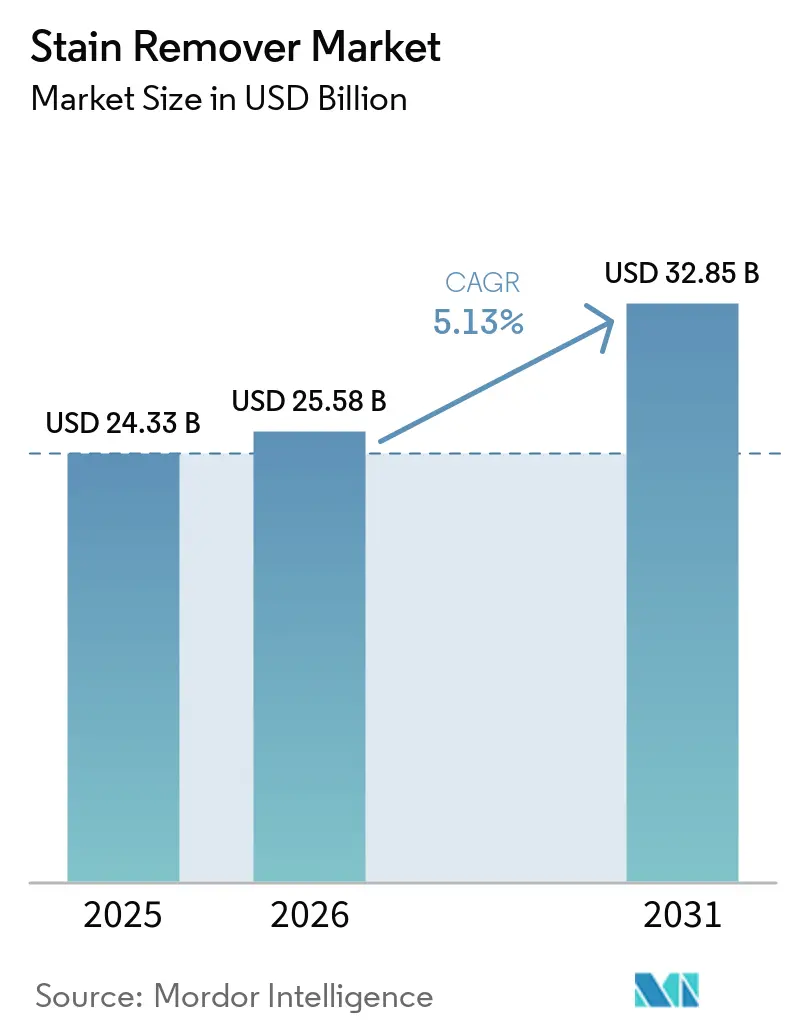
The Stain Remover Market size was valued at USD 24.33 billion in 2025 and is estimated to grow from USD 25.58 billion in 2026 to reach USD 32.85 billion by 2031, at a CAGR of 5.13% during the forecast period (2026-2031). Demand remains anchored in routine household cleaning, while premium formulations and institutional laundry needs add value to the category. Consumers are increasingly selecting products that target specific stains, protect fabric, and fit shorter laundry routines. Enzyme-based formulas, portable packs, and spray formats support higher-value purchases without replacing the need for established liquid products. Manufacturers are also balancing product performance with packaging changes and ingredient requirements, which raises the importance of formulation capability. The stain remover market continues to offer opportunities for companies that can address convenience, safety, and commercial performance within the same portfolio.
Key Report Takeaways
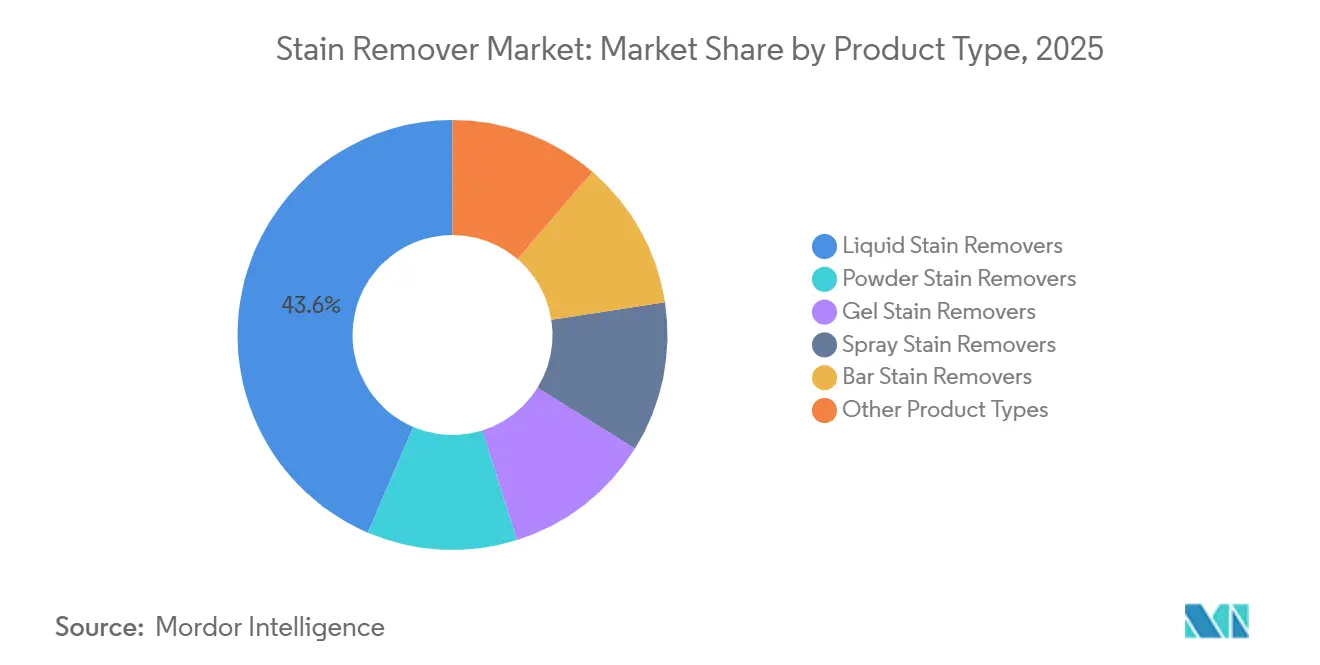
- By product type, liquid stain removers held a 43.56% of the stain remover market share in 2025, while spray stain removers are projected to advance at a 5.45% CAGR through 2031.
- By application, clothing and apparel held 52.34% of the stain remover market share in 2025 and is projected to advance at a 6.21% CAGR through 2031.
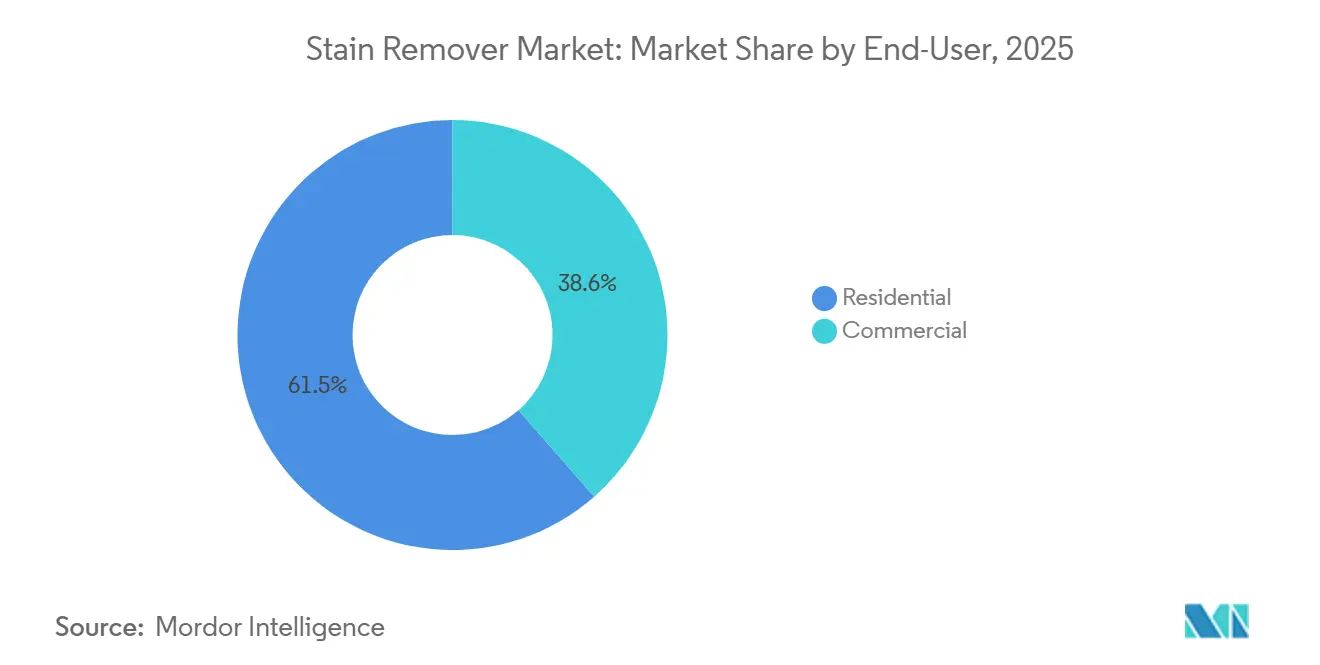
- By end-user, residential held 61.45% of the stain remover market share in 2025, while commercial is projected to advance at a 6.08% CAGR through 2031.
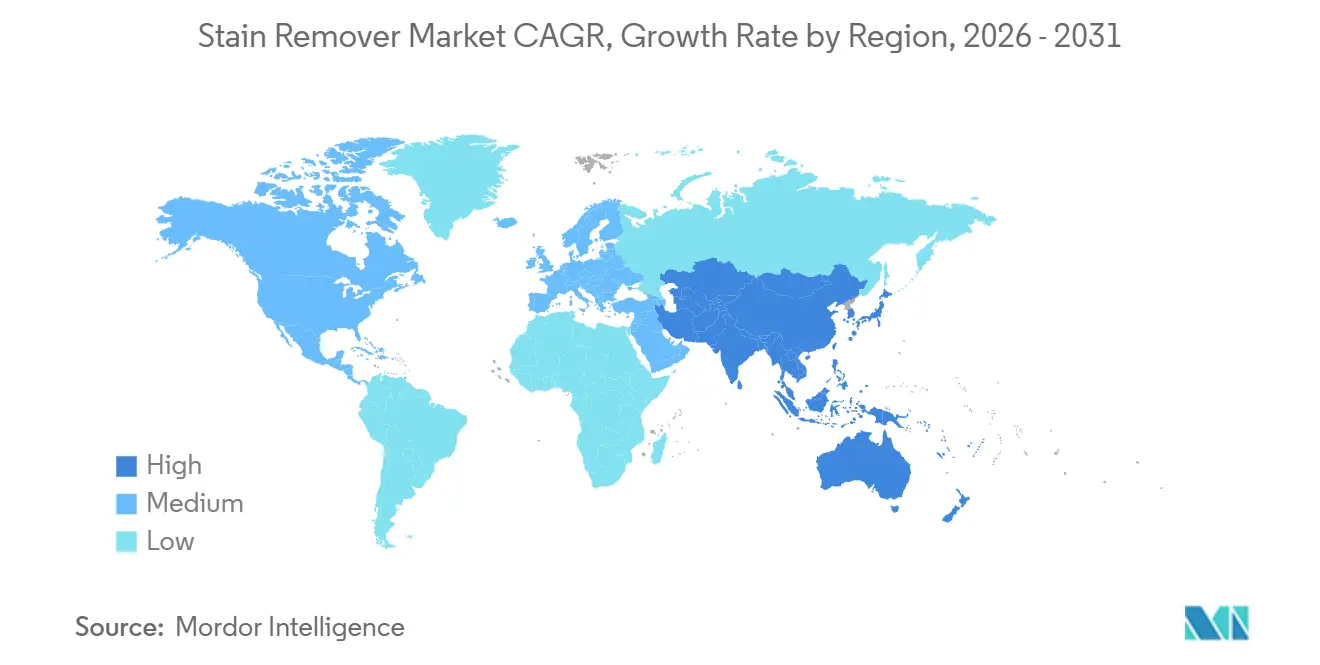
- By geography, North America held 32.17% of the stain remover market share in 2025, while Asia-Pacific is projected to advance at a 5.94% CAGR through 2031.
Note: Market size and forecast figures in this report are generated using Mordor Intelligence’s proprietary estimation framework, updated with the latest available data and insights as of January 2026.
Market Trends and Insights
Drivers Impact Analysis of Stain Remover Market*
| Driver | (~) % Impact on CAGR Forecast | Geographic Relevance | Impact Timeline |
|---|---|---|---|
| Rising Hygiene and Fabric-Care Awareness | +1.8% | Global, with concentrated uplift in APAC and MEA urban centers | Medium term (2-4 years) |
| Commercial Laundry, Hospitality, Healthcare, and Food-Service Demand | +1.2% | Global; strongest in APAC hospitality corridors, North America healthcare | Medium term (2-4 years) |
| Washing-Machine Penetration and Machine-Compatible Formulations | +0.9% | APAC core (India, Vietnam, ASEAN), spillover to MEA | Long term (≥ 4 years) |
| E-Commerce, Social Commerce, and Premium Product Discovery | +0.8% | North America, China, APAC; early-stage in South America and MEA | Short term (≤ 2 years) |
| Demand for Convenient, Rapid, and Portable Formats | +0.6% | North America, Europe, Japan; spreading to urban APAC | Short term (≤ 2 years) |
| Source: Mordor Intelligence | |||
Rising Hygiene and Fabric-Care Awareness
Post-pandemic hygiene practices have changed how many households approach fabric cleaning, particularly where frequent washing is linked to weather conditions and daily exposure to dust. Consumers in high-pollution and humid parts of South and Southeast Asia are washing more often and using pre-treatment products alongside detergent to address visible stains before a full wash. This shift is visible in tier-2 and tier-3 Indian cities, where buyers are showing greater willingness to pay for premium laundry claims and targeted care benefits. Among upper-middle-class households, concern for fabric longevity and care of higher-value textiles has made stain removal a routine pre-treatment step rather than a response to isolated spills. That change supports a broader mix of specialized products in the stain remover market and gives manufacturers a reason to differentiate products by fabric type and stain type. Novonesis launched Progress Beyond and Progress Go protease solutions in March 2025 for multi-temperature washing conditions, which supported more effective stain removal across changing household laundry habits.
Washing-Machine Penetration and Machine-Compatible Formulations
Washing-machine adoption in emerging economies is expanding demand for compatible pre-treatment products and reducing reliance on bar soap remedies that are less suitable for automated wash cycles. As households move from semi-automatic machines to fully automatic drum machines, low-sudsing and fabric-safe liquid and gel formulations become more relevant to everyday laundry practices. This shift is particularly important in India, Vietnam, and other ASEAN countries where appliance ownership is growing alongside urban housing development. Machine-based laundry routines also make products that work across wash temperatures more valuable to consumers and support broader use of liquid and gel formats in the stain remover market. In March 2026, Kao Corporation relaunched Attack ZERO in Japan with a biofilm-removal enzyme system designed to address buildup in washing-machine drums. Kao Corporation also received Japan’s first certification under the Plastic Resource Circulation Act certification system in February 2026 for Attack ZERO, EMAL, and Bioré hand wash products, setting a packaging-design reference for other APAC laundry care manufacturers.
Commercial Laundry, Hospitality, Healthcare, and Food-Service Demand
Commercial users require concentrated products that remove protein, grease, and blood stains while preserving linens through repeated wash cycles and intensive daily use. Hotels, healthcare facilities, and food-service operators have high laundering frequency, which creates recurring demand for performance-oriented pre-treatment chemistry and consistent cleaning standards. Ecolab reported that 70% of hotel laundry professionals identified stain removal as their largest operational challenge, while linen replacement represented 25% of total laundry costs for a typical 150-room hotel. Travel recovery and sustained hotel occupancy are therefore supporting procurement of specialized stain-treatment products, rather than only general laundry detergents. Hospitals and long-term care facilities also operate under hygiene requirements that favor reliable enzymatic protocols and documented cleaning processes. These conditions strengthen the role of commercial formats in the stain remover market as operators seek lower replacement costs, stable results, and procurement continuity.
E-Commerce, Social Commerce, and Premium Product Discovery
Online retail and social commerce are changing how stain remover products gain visibility and how consumers compare product benefits before purchase. Demonstrations of cleaning performance can shorten the time needed for new enzyme-based and free-from formulations to gain attention from shoppers. The Clorox Company expanded its TikTok Shop storefronts during 2025 and 2026 across Pine-Sol, Clorox, and Burt’s Bees, while Clorox PURE sold out within 10 days of its launch[1]. In China, live-streaming and short-video commerce are important channels for product discovery, format premiumization, and direct comparison of product use. Brands without credible social commerce execution may lose visibility to direct-to-consumer (D2C) entrants that are less reliant on established retail terms. Demand for convenient sprays, pens, sticks, and portable packs is reinforced by these channels because their use can be shown clearly in short product demonstrations within the stain remover market.
Restraints Impact Analysis of Stain Remover Market*
| Restraint | (~) % Impact on CAGR Forecast | Geographic Relevance | Impact Timeline |
|---|---|---|---|
| Ingredient Regulation and Reformulation Costs | -0.8% | EU, North America, APAC emerging | Long term (≥ 4 years) |
| Skin Sensitivity, Fabric Damage, and Environmental Concerns | -0.5% | North America, Europe, urban APAC | Medium term (2-4 years) |
| DIY Substitutes and Low-Cost Household Remedies | -0.3% | South America, MEA, rural APAC | Short term (≤ 2 years) |
| Source: Mordor Intelligence | |||
Ingredient Regulation and Reformulation Costs
Regulation of detergents and surfactants has become more demanding for manufacturers selling across multiple markets and managing complex product portfolios. Regulation (EU) 2026/405 entered into force on March 22, 2026, and requires surfactant biodegradability compliance, digital product passport integration, and expanded labeling of fragrance and enzyme allergens[2]. The European Parliament adopted the revised rules in February 2026 after a provisional Council-Parliament agreement in June 2025. Oxygen-based and enzyme-enhanced products may need additional assessment of organic polymer stabilizers and possible ingredient substitution, which can extend formulation timelines. These costs place greater pressure on mid-tier producers with limited research and development (R&D) capacity, while supporting consolidation in the stain remover market among companies able to fund multiyear reformulation programs.
Skin Sensitivity, Fabric Damage, and Environmental Concerns
Concerns about synthetic surfactants, optical brighteners, and bleaching ingredients are affecting purchase decisions in several established consumer markets. Regulation (EU) 2026/405 requires labeling that helps sensitive consumers identify potential irritants linked to enzymes and fragrance allergens. The requirement can increase awareness of ingredient risks among households with children, eczema-affected members, and pets that encounter treated fabrics. Manufacturers that lack clearly positioned hypoallergenic or dermatologically tested products may lose relevance with these buyers and face narrower appeal in the stain remover market. Environmental concerns around capsule films and plastic packaging also limit format flexibility for brands seeking convenience-led products. Henkel AG & Co. KGaA moved Persil bottles from polypropylene to high-density polyethylene (HDPE) with more recycled content and matching labels that improve recycling compatibility, demonstrating the incremental investment needed to maintain packaging standards in Europe.
*Our forecasts treat driver/restraint impacts as directional, not additive. The impact forecasts reflect baseline growth, mix effects, and variable interactions.
Stain Remover Market Segment Analysis
By Product Type:
Spray Stain Removers Accelerate as Enzyme Delivery Systems EvolveLiquid stain removers held 43.56% market share in 2025, supported by compatibility with top-load and front-load washing machines, familiarity among household users, and a long shelf life. Precision application and ready-to-use delivery make sprays useful for consumers who need targeted pre-treatment and for commercial users working with delicate fabrics. The stain remover market size for spray stain removers is projected to rise at a 5.45% CAGR through 2031, supported by time-constrained laundry routines and the preference for mess-free use. In China, liquid formats retained the leading product position in 2025 because of strong consumer familiarity and alignment with urban machine-wash practices.
Powder stain removers remain relevant in price-sensitive parts of South Asia and Sub-Saharan Africa, where sachets keep the per-use cost accessible for many households. Gel stain removers serve a premium niche because their thicker texture stays on stained fabric for longer and supports extended dwell time before washing. Bar stain removers continue to meet needs across the stain remover market in water-scarce areas and markets with low washing-machine penetration, where hand washing remains common. Novonesis introduced Progress Beyond and Progress Go in March 2025, and the proteases were designed to support efficient stain removal across a wide temperature range without a protease inhibitor.

By Application:
Clothing and Apparel Anchors Both Market Revenue and GrowthClothing and apparel held 52.34% of the stain remover market share in 2025 and is projected to advance at a 6.21% CAGR through 2031. The segment benefits from continued demand for athleisure, premium denim, technical outdoor apparel, and fashion-focused casualwear, which often require more deliberate care. These garments can be more sensitive to staining, which raises consumer interest in targeted pre-treatment products and appropriate fabric-care routines. Clothing and apparel also support premium formulations because consumers place value on fabric appearance, garment longevity, the avoidance of early replacement, and value creation for the stain remover market. Since 2025, Henkel AG & Co. KGaA has used an enhanced enzyme formulation in Persil that dissolves adhering bio-dirt layers and provides up to 5 times more brightness.
Carpets and upholstery benefit from home renovation activity and from more time spent in residential spaces, where visible stains can affect perceived cleanliness. Hotel lobbies, restaurant seating, and hospitality carpeting also need frequent stain treatment that protects the fiber structure during repeated cleaning. Kitchen and bathroom surfaces create an adjacent opportunity as multipurpose formats combine stain-removal and surface-cleaning functions. Unilever launched probiotic Cif Infinite Clean in the United Kingdom in April 2025 before planned rollouts in France, Poland, and Italy, positioning the product for hard and soft surfaces. Other applications, including automotive interiors, medical textiles, and institutional upholstery, remain specialized uses with higher pricing potential within the stain remover market.
By End-User:
Commercial Segment Outpaces Residential on Institutional Hygiene DemandResidential held 61.45% market share in 2025, while commercial is projected to advance at a 6.08% CAGR through 2031. The commercial segment is supported by hotels, healthcare networks, and institutional food-service facilities that handle large and recurring laundry volumes. Operators need reliable stain-removal performance because inadequate treatment can cause guest complaints, linen replacement, and infection-control concerns. Hotels and resorts require products that protect linens, towels, and uniforms through hundreds of wash cycles each year without compromising appearance. These needs give commercial buyers a distinct role in the stain remover market. The International Laundry Association documented greater adoption of automated stain-treatment systems in commercial laundries, driven by labor efficiency needs and efforts to reduce linen replacement costs.
The residential segment continues to benefit from premiumization, eco-certification, and product-format innovation that gives households more choice in pre-treatment methods. Seventh Generation Inc. and Bi-O-Kleen Industries, Inc. represent the bio-based and plant-derived residential segment, where non-toxic and skin-safe product claims are important to buyers. In the United States, the Environmental Protection Agency (EPA) Safer Choice program acts as a reference point for residential cleaning products, with certified products receiving favorable placement at large retailers and online platforms. Commercial buyers prioritize volume and performance, while residential buyers place more weight on safety, convenience, and premium product features. This distinction is leading manufacturers to develop dedicated commercial-grade lines rather than relying on one formulation for all end-users in the stain remover market.
Geography Analysis
North America Stain Remover Market
North America held 32.17% of the stain remover market share in 2025, supported by high disposable incomes, established branded cleaning habits, and broad modern retail and e-commerce coverage. The United States is moving toward enzyme-based, oxygen-activated, and waterless products that reflect demand for performance, convenient use, and targeted fabric care. Procter & Gamble launched its largest upgrade to Tide Original Liquid Detergent in 20 years in September 2025, adding advanced stain-removal chemistry without a price increase. Canada and Mexico contribute additional demand, and Mexico’s hospitality expansion supports commercial laundry activity linked to tourism recovery.
APAC Stain Remover Market
Asia-Pacific is projected to advance at a 5.94% CAGR through 2031. India is benefiting from urbanization, rising household incomes, and growing washing-machine ownership among semi-urban consumers, which broadens the addressable base for the stain remover market. China’s demand is characterized by the rapid adoption of bio-based and enzyme-enhanced formulas. E-commerce and live-streaming commerce allow new product formats to scale in China without relying only on traditional retail infrastructure. In September 2025, Kao Corporation partnered with Thailand’s CP Group to launch the enzyme-based extra liquid detergent in Thailand, using CP Group’s 15,000-store network to support market access. ASEAN countries are experiencing a washing-machine adoption inflection that supports continuing regional demand.
EMEA and South America Stain Remover Market
Europe is shaped by regulatory compliance and sustainability differentiation, with Regulation (EU) 2026/405 tightening biodegradability requirements and requiring digital product passports. In South America, Brazil provides the largest base, though economic volatility constrains spending on premium formats. Argentina’s economic instability has made demand forecasting uncertain, and coastal tourism economies support hospitality recovery and commercial laundry demand. In the Middle East and Africa, Saudi Arabia’s hospitality infrastructure and South Africa’s institutional laundry activity are supporting commercial demand in the stain remover market. Intermittent water supply and limited retail distribution continue to limit household product penetration in Sub-Saharan Africa, though established commercial laundry operators remain less affected.
Competitive Landscape
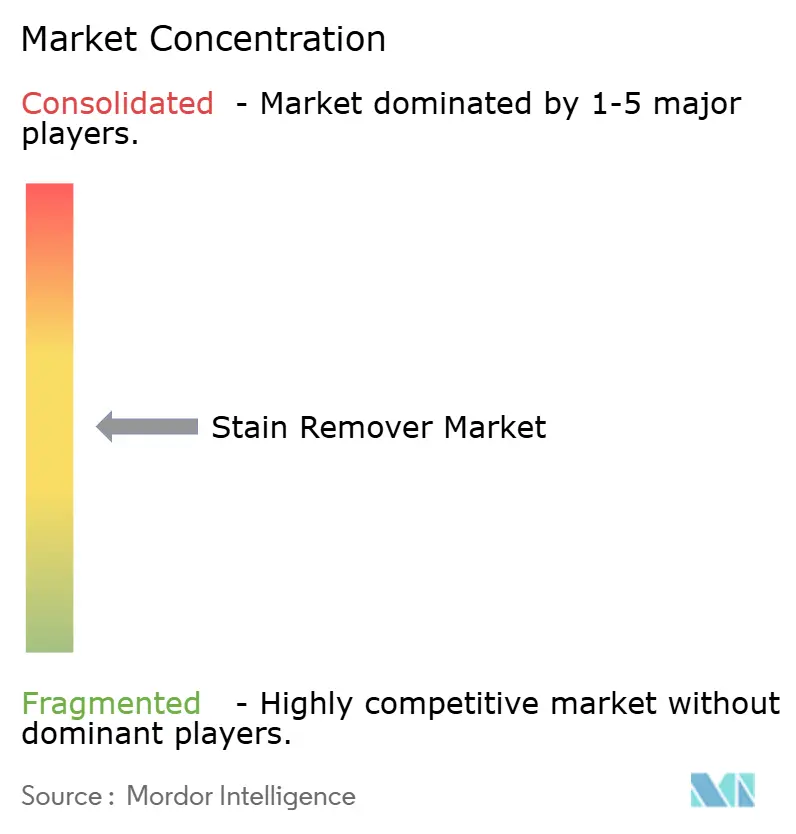
The stain remover market is moderately concentrated, with the top five players including Procter & Gamble, Reckitt, Church & Dwight Co., Inc., Unilever, and The Clorox Company. Reckitt’s Vanish brand and Procter & Gamble’s Tide portfolio compete in premium segments where consumer confidence in cleaning results and fabric care matters. Henkel AG & Co. KGaA serves European and North American customers through Persil and K2r, while Church & Dwight Co., Inc. uses OxiClean’s oxygen-activation position to address the United States mid-market. Premium hypoallergenic formats for sensitive households and concentrated products for healthcare and hospitality operators remain areas of opportunity.
Technology has become more central to competitive positioning as companies invest in enzyme engineering, biofilm removal, and sustainable surfactant chemistry. Henkel AG & Co. KGaA cited digital automation of 720 million laundry stain tests in its 2026 equity story, showing how data-driven testing can shorten formulation cycles. In April 2026, Unilever relaunched Persil capsules in the United Kingdom with Ultimate Ultra Stain Removal Non-Bio and Bio variants, alongside a relaunch of its liquid detergent portfolio. Unilever also used probiotic cleaning technology and refillable packaging for Cif Infinite Clean, where reload packs used 50% less plastic. These moves combine cleaning performance and sustainability in product platforms that can resist private-label competition in the stain remover market.
The Clorox Company launched the Clorox PURE platform in January 2026 and built distribution across major retailers and TikTok Shop. In July 2026, Henkel AG & Co. KGaA relaunched Purex in North America with concentrated liquids, 45-day long-lasting freshness, and new fragrances. Emerging plant-based D2C brands, regional Asian suppliers using cross-border e-commerce, and enzyme-supplier spinouts are adding pressure in the mid-market. Their ability to gain awareness through social commerce limits the advantage of physical distribution alone and creates more direct competition for established brands. Competitive strategies increasingly depend on formulation quality, clear positioning, and the ability to meet changing ingredient and packaging requirements across the stain remover market.
Stain Remover Industry Leaders
-
Procter & Gamble
-
Reckitt
-
Church & Dwight Co., Inc.
-
Unilever
-
The Clorox Company
- *Disclaimer: Major Players sorted in no particular order
Stain Remover Market Companies Covered in this Report
- Bi-O-Kleen Industries, Inc.
- BISSELL Inc.
- Church & Dwight Co., Inc.
- Henkel AG & Co. KGaA
- Kao Corporation
- LG Corp
- McBride
- Procter & Gamble
- Reckitt
- S.C. Johnson & Son, Inc.
- Seventh Generation Inc.
- The Clorox Company
- Unilever
- Zep Inc.
Recent Industry Developments in Stain Remover Market
- May 2026: Church & Dwight Co., Inc. signed and closed the acquisition of Miss Mouth’s Messy Eater for approximately USD 325 million, adding a fast-growing brand focused on non-toxic, on-the-spot stain removal across multiple surfaces. This expands its presence in the stain-removal category and strengthens competition in targeted, specialty stain-removal products.
- September 2025: Procter & Gamble launched its largest upgrade to Tide Original Liquid Detergent in 20 years, increasing cleaning surfactants and enhancing stain-removal performance. The upgraded formulation strengthens product performance in removing tough stains and supports continued innovation in household stain-removal solutions.
Global Stain Remover Market Report Scope
Stain removers are cleaning products formulated to break down, loosen, or lift unwanted marks and residues from fabrics and household or commercial surfaces. They are designed to target different types of stains while preserving the appearance and integrity of the treated material.
The Stain Remover Market is segmented by product type, application, end-user, and geography. By product type, the market is segmented into liquid stain removers, powder stain removers, gel stain removers, spray stain removers, bar stain removers, and other product types. By application, the market is segmented into clothing and apparel, carpets and upholstery, kitchen and bathroom surfaces, and other applications. By end-user, the market is segmented into residential and commercial. The report also covers the market size and forecasts for stain removers in 15 countries across major regions. For each segment, the market sizing and forecasts have been done on the basis of value (USD).
Segmentation Overview
| Liquid Stain Removers |
| Powder Stain Removers |
| Gel Stain Removers |
| Spray Stain Removers |
| Bar Stain Removers |
| Other Product Types |
| Clothing and Apparel |
| Carpets and Upholstery |
| Kitchen and Bathroom Surfaces |
| Other Applications |
| Residential |
| Commercial |
| Asia-Pacific | China |
| India | |
| Japan | |
| South Korea | |
| ASEAN Countries | |
| Rest of Asia-Pacific | |
| North America | United States |
| Canada | |
| Mexico | |
| Europe | Germany |
| United Kingdom | |
| France | |
| Italy | |
| NORDIC Countries | |
| Rest of Europe | |
| South America | Brazil |
| Argentina | |
| Rest of South America | |
| Middle East and Africa | Saudi Arabia |
| South Africa | |
| Rest of Middle East and Africa |
| By Product Type | Liquid Stain Removers | |
| Powder Stain Removers | ||
| Gel Stain Removers | ||
| Spray Stain Removers | ||
| Bar Stain Removers | ||
| Other Product Types | ||
| By Application | Clothing and Apparel | |
| Carpets and Upholstery | ||
| Kitchen and Bathroom Surfaces | ||
| Other Applications | ||
| By End-User | Residential | |
| Commercial | ||
| By Geography | Asia-Pacific | China |
| India | ||
| Japan | ||
| South Korea | ||
| ASEAN Countries | ||
| Rest of Asia-Pacific | ||
| North America | United States | |
| Canada | ||
| Mexico | ||
| Europe | Germany | |
| United Kingdom | ||
| France | ||
| Italy | ||
| NORDIC Countries | ||
| Rest of Europe | ||
| South America | Brazil | |
| Argentina | ||
| Rest of South America | ||
| Middle East and Africa | Saudi Arabia | |
| South Africa | ||
| Rest of Middle East and Africa | ||
Key Questions Answered in the Report
What is the size of the stain remover market?
The stain remover market stands at USD 25.58 billion in 2026 and is projected to reach USD 32.85 billion by 2031.
What is driving demand for stain removers?
Hygiene awareness, washing-machine adoption, institutional laundry demand, and online product discovery are supporting demand. These factors support household and commercial product purchases across different product formats and use settings in the stain remover market.
Which stain product type is expected to grow fastest through 2031?
Spray stain removers are projected to advance at a 5.45% CAGR through 2031 because they provide precise and convenient pre-treatment.
Which application led the market share in 2025?
Clothing and apparel held 52.34% market share in 2025.