
Spirulina Protein Market Size and Share
Market Overview
| Study Period | 2022 - 2032 |
|---|---|
| Market Size (2027) | USD 528.67 Million |
| Market Size (2032) | USD 783.46 Million |
| Growth Rate (2027 - 2032) | 8.21 % |
| Fastest Growing Market | Asia-Pacific |
| Largest Market | North America |
| Market Concentration | Medium |
Major Players *Disclaimer: Major Players sorted in no particular order Image © Mordor Intelligence. Reuse requires attribution under CC BY 4.0. | |
Spirulina Protein Market Analysis by Mordor Intelligence
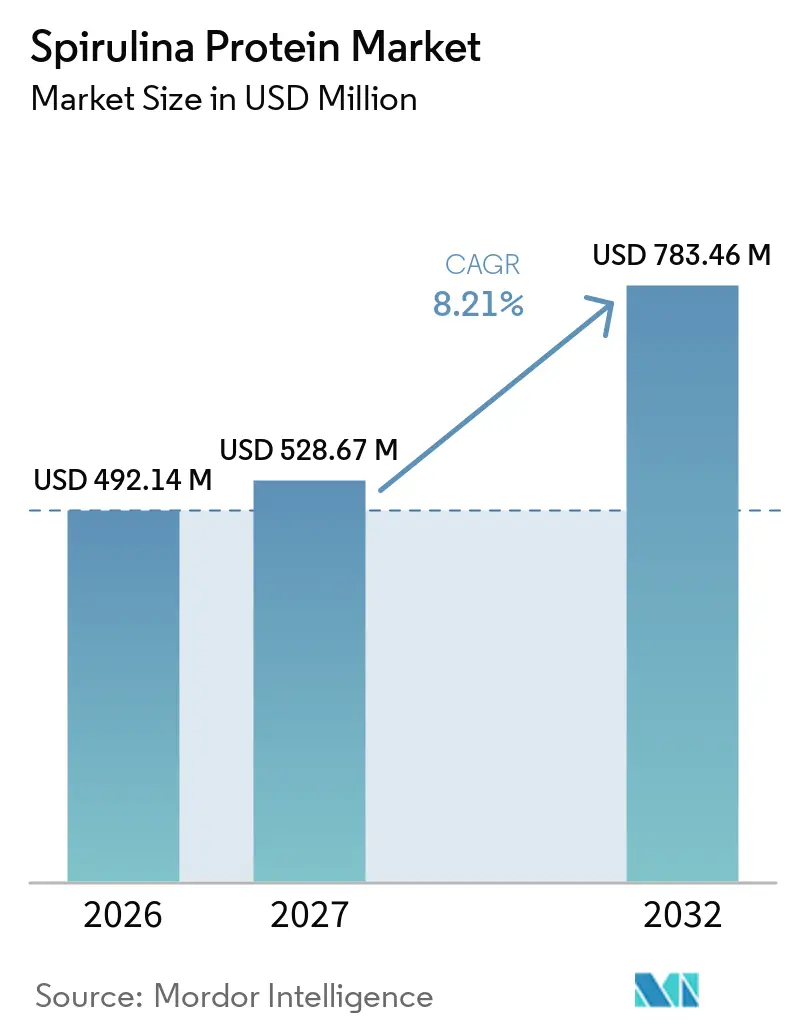
The spirulina protein market size was valued at USD 492.14 million in 2026 and is estimated to grow from USD 528.67 million in 2027 to reach USD 783.46 million by 2032, at a CAGR of 8.21% during the forecast period from 2027 to 2032. The spirulina protein market is moving beyond its established supplement base as buyers seek ingredients that combine protein, micronutrients, and natural pigmentation in products designed for clear nutrition positioning. Dried biomass contains 60–70% protein by dry weight and provides essential amino acids, which supports its use in nutraceutical, food, and personal care formulations where buyers want to combine nutritional value with a plant-based ingredient story. Demand for hydrolyzed and isolate-grade material is also increasing where formulators need defined solubility and bioactive properties that can be adapted to a specific product format or technical claim. This shift gives processors an incentive to develop higher-value products, document their properties, and reduce reliance on bulk powder sales alone. The spirulina protein market therefore has a different outlook for commodity material and specialty grades, even where the underlying cultivation base is the same and the same biomass enters more than one end-use pathway. The distinction affects processing investment, quality testing, buyer relationships, and the type of application each supplier is equipped to serve, from established supplements to advanced personal care, food, and nutrition products worldwide in practical commercial settings.
Key Report Takeaways
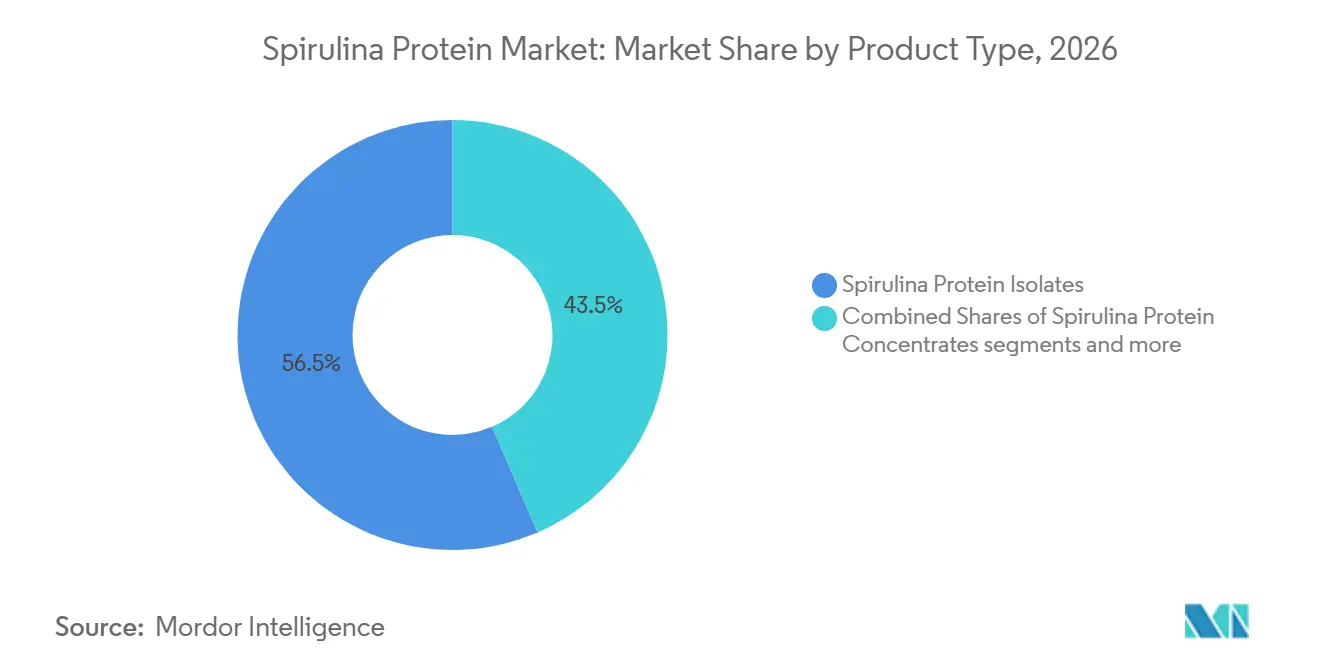
- By product type, spirulina protein isolates held a 56.48% revenue share in 2026 in spirulina protein market, while hydrolyzed spirulina protein is forecast to grow at a 9.55% CAGR through 2032.
- By form, powder held a 67.71% revenue share in 2026 in spirulina protein market in 2026 and is forecast to grow at a 9.78% CAGR through 2032.
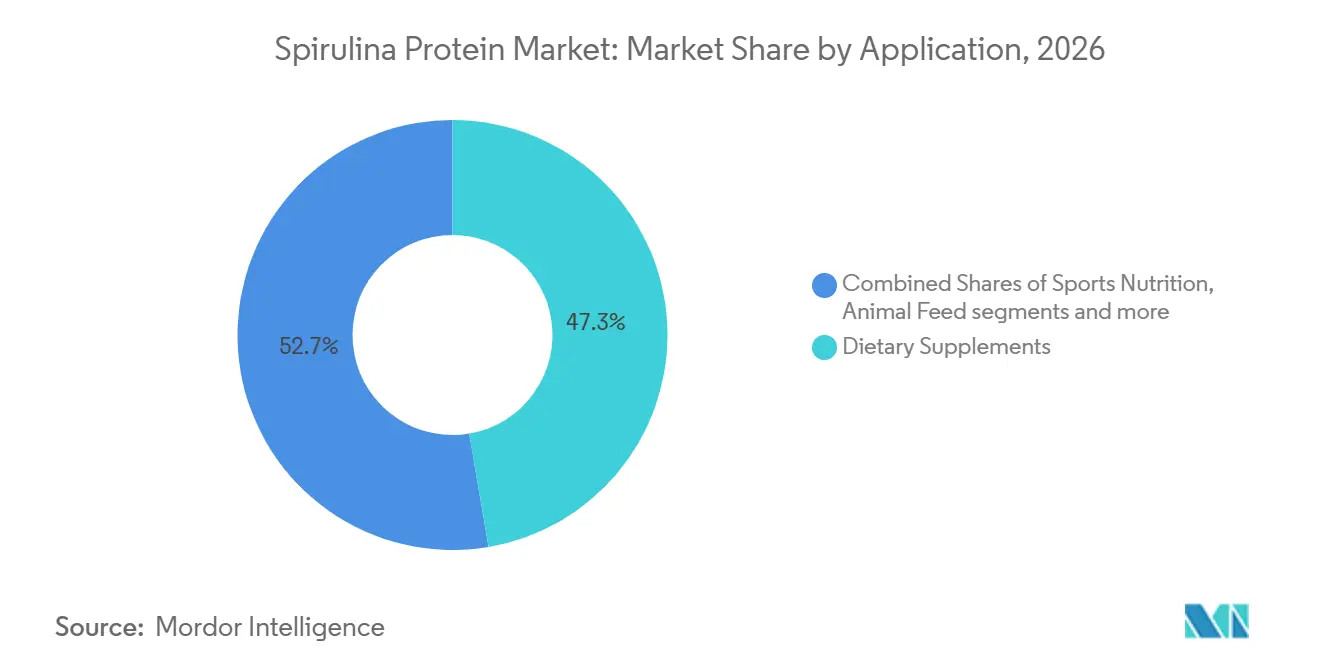
- By application, dietary supplements held a 47.32% revenue share in 2026 in spirulina protein market, while sports nutrition is forecast to grow at a 10.24% CAGR through 2032.
- By geography, North America held a 43.27% revenue share in the spirulina protein market in 2026, while Asia-Pacific is forecast to grow at a 10.04% CAGR through 2032.
Note: Market numbers in this report are based on Mordor Intelligence's proprietary estimation framework, which combines nine months of actuals with Q4 projections for base year 2026.
Global Spirulina Protein Market Trends and Insights
Drivers Impact Analysis*
| Driver | (~) % Impact on CAGR Forecasts | Geographic Relevance | Impact Timeline |
|---|---|---|---|
| Growing demand for plant-based protein ingredients | +1.8% | Global | Medium term (2-4 years) |
| Expansion of commercial spirulina cultivation and production capacity | +1.2% | APAC core, spill-over to North America and EU | Medium term (2-4 years) |
| Expanding use of spirulina in dietary supplements and sports nutrition | +1.5% | North America and Europe | Short term (≤ 2 years) |
| Technological advancements in spirulina cultivation and protein extraction | +0.9% | Global | Long term (≥ 4 years) |
| Growing use of hydrolyzed spirulina protein in personal care formulations | +0.7% | Europe and North America | Short term (≤ 2 years) |
| Rising demand for protein-fortified food and beverage products | +1.1% | North America and APAC | Medium term (2-4 years) |
| Source: Mordor Intelligence | |||
Growing Demand for Plant-Based Protein Ingredients
The spirulina protein market benefits from broader interest in protein-rich diets and plant-derived ingredients across supplements, functional foods, and other consumer health products. In the International Food Information Council’s 2025 survey, 23% of U.S. respondents reported following a high-protein diet, making it the most common dietary pattern in the survey[1]. Spirulina can offer protein, micronutrients, and a recognizable natural identity in one ingredient, which reduces the need to present several separate nutritional claims. This combination distinguishes it from protein sources chosen primarily for cost or neutral flavor, particularly where buyers need an ingredient with a clear product story. For premium products, the ingredient declaration can support both nutrition and clean-label positioning while remaining familiar to consumers who already recognize spirulina. The spirulina protein market can benefit when formulators use that combined positioning in supplements and targeted food products that do not require neutral color or flavor.
Expansion of Commercial Cultivation Capacity and Extraction Technology
Commercial capacity and technical processing are becoming more important to the spirulina protein market because buyers need dependable quality, validated procedures, and volume that can support repeat orders. DIC Corporation reported that its Earthrise Nutritionals facility in California began operating in April 2025 with centralized cultivation management, AI-based growth assessment, robotic equipment, and a zero-discharge water system. The reported investment was JPY 1.20 billion, equivalent to USD 8 million in the source material, showing the level of capital directed toward automated cultivation infrastructure. Research on bromelain-assisted hydrolysis reported 32.15% protein content and 48.51% hydrolysis efficiency, creating peptide fractions below 3 kDa. A 2026 review also reported carbon conversion efficiency of 60–64% for acetate-amended mixotrophic cultivation and CO₂ conversion efficiency of 75.10% for scalable biofilm-attached systems. These developments can help the spirulina protein market support consistent supply for applications that require tighter quality controls, defined protein characteristics, and documented production practices.
Expanding Use of Spirulina in Dietary Supplements and Sports Nutrition
Dietary supplements remain a central outlet for the spirulina protein market because consumers already understand spirulina in wellness products and recognize its role in everyday health routines. A 2025 review reported that supplementation at 2–6 g per day was associated with lower post-exercise muscle damage and blood lactate, alongside improved immune responses in athletes[2]. Results differed by athlete group and exercise protocol, so product claims still need careful clinical support, transparent wording, and evidence that reflects the intended consumer population. That evidence gap gives brands a reason to fund better trials and position their products beyond generic bulk supplements, particularly in categories where performance claims influence brand choice. The spirulina protein market can capture more value in this outlet when claims remain tied to substantiated outcomes, carefully defined serving levels, and product formats suited to active consumers.
Growing Use of Hydrolyzed Spirulina Protein in Personal Care Formulations
Hydrolyzed material gives the spirulina protein market access to personal care applications that value targeted bioactivity, ingredient traceability, and a natural source profile. A 2025 study found that selected spirulina-derived peptide fractions showed 84% elastase inhibition, 90% collagenase inhibition, and 66% tyrosinase inhibition in the reported tests[3]. A separate 2025 review reported that concentrated C-phycocyanin increased fibroblast-driven collagen production by 142% versus a control in vitro. Hydrolysis can create lower-molecular-weight fractions that are more suitable for leave-on formulations than intact protein, provided that suppliers can maintain consistent fractions from batch to batch. Cosmetic applications remain smaller than supplements in absolute demand, but they support higher-value positioning for specialized fractions with properties that can be communicated to formulation teams. The spirulina protein market can therefore gain from processing capabilities that preserve bioactivity, provide batch consistency, and give cosmetic customers a reliable technical specification.
Restraints Impact Analysis*
| Restraint | (~) % Impact on CAGR Forecasts | Geographic Relevance | Impact Timeline |
|---|---|---|---|
| Strong taste, odor, and color limitations in food formulations | -0.8% | Global | Short term (≤ 2 years) |
| Competition from established plant-based protein sources | -0.9% | North America and Europe | Medium term (2-4 years) |
| Regulatory requirements for food safety and novel food approval | -0.5% | Europe and select APAC markets | Long term (≥ 4 years) |
| Limited scalability of consistent, high-quality production | -0.7% | Global | Medium term (2-4 years) |
| Source: Mordor Intelligence | |||
Sensory Limitations and Competition from Established Plant Proteins
The spirulina protein market faces food formulation limits because its green-blue appearance, marine flavor, and algal odor are difficult to mask in products intended for broad consumer acceptance. These traits can restrict use in protein bars, ready-to-drink shakes, and baked goods where familiar color, aroma, and taste affect repeat purchase decisions. The constraint is more acute in mass retail products that need a neutral sensory profile and a stable appearance throughout distribution and shelf life. Established pea, soy, and rice ingredients also compete where buyers prioritize cost, familiarity, or neutral flavor. This keeps spirulina protein focused on premium products where nutritional density, ingredient differentiation, and natural positioning can justify a more specialized role for consumers and formulators seeking visible product distinction.
Regulatory Requirements and Consistent Production Quality
The spirulina protein market also depends on regulatory compliance and repeatable production quality because purchasers need predictable specifications for each intended end use. In Europe, spirulina is addressed under Regulation EC No 889/2008 for organic production and is listed under Marine Algae in the EU Food Catalogue, while national authorities can still influence access to individual markets. This structure can add work for suppliers selling into several countries, especially when product claims, labeling, and documentation are reviewed at national level. Open-pond systems also require close control of weather, water, and biological conditions to maintain quality. Producers that combine cultivation oversight with validated extraction and quality testing are better placed to meet the needs of supplement, cosmetic, and food buyers that require dependable records.
*Our forecasts treat driver/restraint impacts as directional, not additive. The impact forecasts reflect baseline growth, mix effects, and variable interactions.
Segment Analysis
By Product Type: Isolates Lead, Hydrolysates Support Higher-Value Uses
Spirulina protein isolates held 56.48% of the spirulina protein market share in 2026, supported by use in premium supplements and clinical nutrition products. They offer high protein purity and clean-label positioning, which remain important selection factors for formulators. Hydrolyzed spirulina protein is forecast to grow at a 9.55% CAGR from 2027 to 2032. The segment benefits from demand in personal care and specialized nutraceutical products where peptide properties matter. Research published in 2025 found that enzyme-specific hydrolysis can produce bioactive fractions with ABTS antioxidant IC₅₀ values as low as 23.44 µg/mL, giving suppliers a measurable basis for explaining performance to cosmetic and nutraceutical development teams.
Spirulina protein concentrates remain a smaller value segment and an entry point for aquaculture and animal feed applications, where simpler formulation and protein cost can matter more than specialized bioactive fractions. Concentrates generally use wet milling and spray drying, while isolates and hydrolysates require alkaline extraction, membrane filtration, or enzymatic treatment. The extra processing can raise cost while making quality control more important. Within the spirulina protein industry, these differences create separate supply models for bulk and specialty material. Suppliers with proprietary extraction methods and analytical controls can compete more effectively where customers require defined purity and performance.

By Form: Powder Retains the Broadest Commercial Role
Powder held 67.71% of the spirulina protein market size in 2026 and is forecast to grow at a 9.78% CAGR from 2027 to 2032. Its lead reflects shelf stability, flexible dosing, and established use across dietary supplements, sports nutrition, and functional food applications. In North America, powder accounted for 70.92% of spirulina extract revenue in 2025. The format remains easier to transport and incorporate into established production routines. Certification practices such as FSSC 22000 and GMP are relevant to buyers that need documented controls, while powder will remain the main commercial format because formulators favor dependable handling, efficient storage, and familiar dosing practices.
Liquid extracts serve a smaller group of applications, including functional beverages, skincare serums, and liquid supplements, where ready-to-use delivery and concentration flexibility are useful. These formats can offer flexible concentration and support products that focus on convenience or individualized dosage. They require careful management of batch-to-batch bioactivity and stability, which can challenge smaller producers without robust process controls. The spirulina protein market has room for liquid products where suppliers can provide consistent specifications, verified stability, and documentation suited to beverage and personal care customers. Companies that validate their liquid formats can address selected premium uses without displacing powder as the established volume format.
By Application: Supplements Provide the Largest Revenue Base
Dietary supplements accounted for 47.32% of revenue in 2026, supported by familiar retail channels and consumer awareness. The category also benefits from established regulatory treatment, and a 2025 scientific review noted U.S. FDA GRAS status for use up to 6 g per day in the cited context. This helps supplement makers work within a recognized ingredient framework. Sports nutrition is projected to grow at a 10.24% CAGR from 2027 to 2032. Its expansion is supported by research examining post-exercise recovery and performance-related outcomes.
Food and beverages offer a potential expansion route, but sensory issues have slowed broader adoption in products where color and taste are central to the consumer experience. Products that require neutral taste and color remain difficult applications for conventional spirulina material. Cosmetics and personal care are smaller in volume but relevant for hydrolyzed protein because of its peptide properties. Pharmaceuticals, animal feed, and other uses add demand across a wider group of applications, although each requires its own quality specifications and commercial approach. The spirulina protein market can reduce dependence on a single end use by serving these different needs, but producers must align purity, format, documentation, and quality testing with each buyer group and its intended use.
Geography Analysis
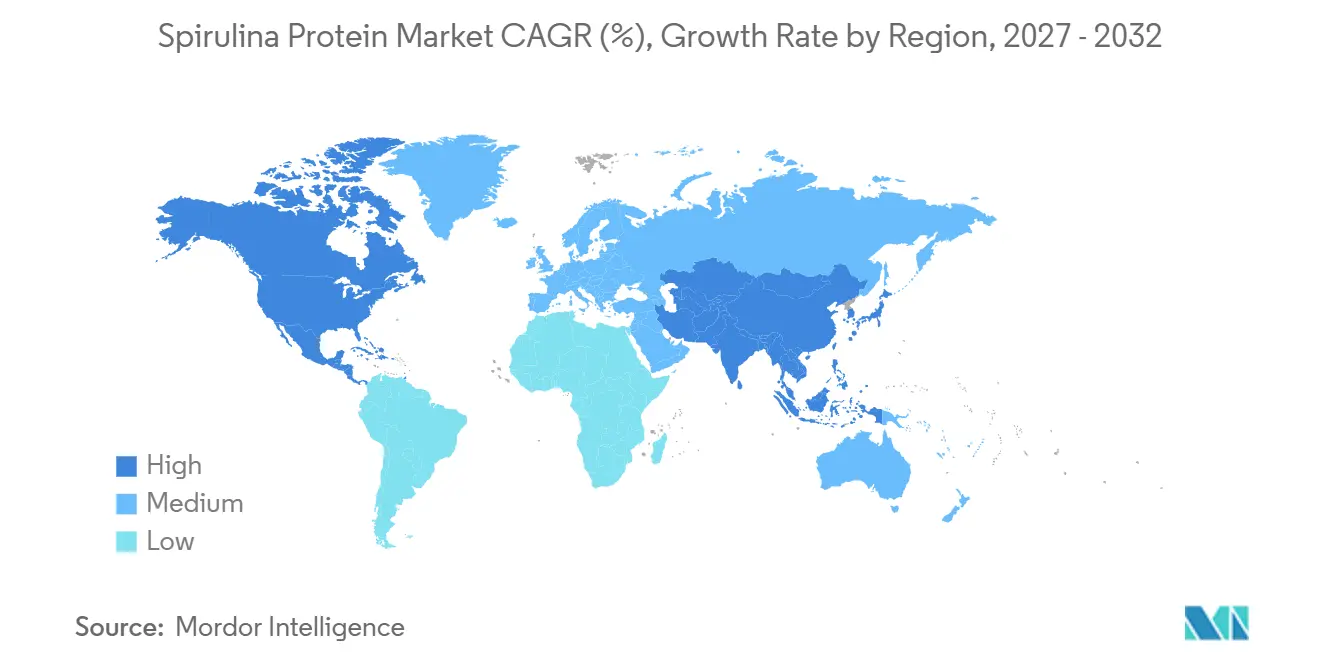
North America held 43.27% of the spirulina protein market share in 2026, supported by an established supplement channel and domestic cultivation assets. Earthrise Nutritionals operates outdoor cultivation in Calipatria, California, while Cyanotech has an operation in Kona, Hawaii. Cyanotech reported Q3 fiscal 2025 net sales of USD 6.172 million, up 10.60% year over year. The demand to contract manufacturers seeking USP-verified and GMP-certified spirulina for private-label supplements and functional food products with formal quality requirements. The FDA’s expanded 2022 colorant approval continues to support use in confections, ice cream, yogurt, and ready-to-drink beverages where manufacturers are considering alternatives to synthetic colors. Mexico is the fastest-growing North American country, with health and wellness food demand and evolving supplement standards creating a potential downstream channel for suppliers already serving the region.
Asia-Pacific is forecast to grow at a 10.04% CAGR from 2027 to 2032, the highest regional rate in the spirulina protein market. A 2026 review reported that Chinese scholars produced 55.44% of the global academic papers examined in its spirulina research assessment. The review also described work on strain optimization, CO₂ replenishment, and greenhouse raceway pond systems that can support research-led improvements in cultivation and production management. India is the other important regional production base, with export-oriented cultivation adding to the area’s wider supply role. Japan, South Korea, Vietnam, and Indonesia add demand through functional food and aquafeed uses, extending the region’s customer base beyond its largest cultivation and research centers.
Europe has a different production structure, with more than 213 producing enterprises across 15 EU countries and 62% located in France, according to the cited 2025 scientific review. Most of these enterprises are micro-farms producing less than 25 tonnes annually. European buyers place importance on organic certification, traceability, and supply-chain controls, which can favor suppliers able to provide clear documentation on cultivation and processing. This preference can favor specialized material but also sustains demand for imported bulk grades when domestic micro-farm output cannot meet larger volume needs. South America and the Middle East and Africa together represented less than 10% of the spirulina protein market in 2026. Brazil and the UAE are the principal sub-markets identified for each region, where health-focused products and functional food retail are gaining relevance as consumers consider protein-rich wellness formats.
Competitive Landscape
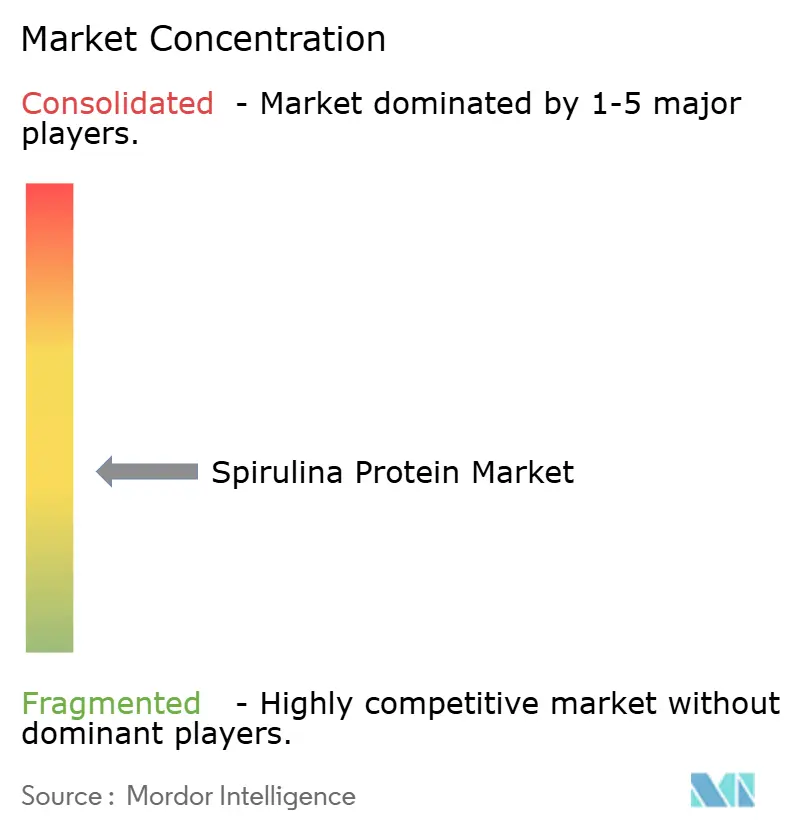
The spirulina protein market is fragmented because regional producers use varied cultivation systems, processing methods, and product specifications that serve different customer requirements. This structure allows specialists from China, India, Europe, and the United States to serve distinct customer groups with different expectations for price, certification, processing, and product format. Competitive performance depends on consistent cultivation, harvesting, drying, and extraction rather than on a single universal technology, particularly when customers require repeatable quality over multiple supply cycles. Vertical integration can help producers manage quality and protect margins by linking cultivation decisions more directly to processing requirements and customer specifications. The spirulina protein market therefore rewards companies that can deliver traceable, reliable material for specialized uses.
DIC Corporation illustrates this approach through its April 2025 opening of a new Earthrise Nutritionals cultivation facility in California. The company stated that the facility uses SCADA-based cultivation management, AI-driven growth assessment, robotic arms, and a zero-discharge water system intended to strengthen production oversight and resource management. Earthrise separately described its April 2025 harvest plant inauguration and the use of drone-based facility analysis and smart-agriculture technologies. Such investments can make supply assurance a clearer point of competition in the spirulina protein market, particularly for customers seeking long-term sourcing relationships and stable quality.
Processing technology is another competitive focus because stabilizing protein and preserving bioactivity can differentiate specialty products. Enzymatic hydrolysis offers a route to peptide fractions that suit personal care and advanced nutraceutical applications. Suppliers that can validate those properties can address customers seeking more than bulk protein content, including performance, traceability, and evidence of controlled processing. Commodity powder suppliers remain exposed to price pressure when cultivation capacity expands, particularly when buyers can compare material from several regional producers with similar basic specifications. At the same time, technically differentiated products must prove safety, consistency, and formulation performance before customers can justify their higher processing costs and specialized product claims. The spirulina protein market will remain competitive across both low-cost cultivation and higher-value processing pathways, with commercial success shaped by the ability to match product quality to a defined application.
Spirulina Protein Industry Leaders
-
DIC Corporation
-
Cyanotech Corporation
-
Sensient Technologies Corporation
-
Far East Bio-Tec Co., Ltd.
-
E.I.D. - Parry (India) Limited
- *Disclaimer: Major Players sorted in no particular order
Recent Industry Developments
- October 2026: Edonia raised EUR 15 million to scale spirulina-derived protein production. The funding will support industrial expansion of its Edo ingredient, which transforms spirulina into a tender, grain-like ingredient for food manufacturers and foodservice operators.
- May 2025: ScotBio and Queen Margaret University developed and evaluated a spirulina-derived protein ingredient for food applications. The collaboration examined its emulsifying and binding properties and tested its suitability for different food products.
- April 2025: AlgaeCore Technologies advanced spirulina-based seafood alternatives into commercial production. The company launched a full-scale industrial manufacturing line for Simplii Texture, its texturized fresh spirulina ingredient, with the capacity to increase output to hundreds of tonnes annually.
Global Spirulina Protein Market Report Scope
The spirulina protein market is segmented by product type, form, application, and geography. By product type, the market is segmented into spirulina protein concentrates, spirulina protein isolates, and hydrolyzed spirulina protein. By form, the market is categorized into powder and liquid. By application, the market is divided into food and beverages, dietary supplements, sports nutrition, pharmaceuticals, cosmetics and personal care, animal feed, and other applications. By geography, the market is segmented into North America, Europe, Asia-Pacific, South America, and the Middle East and Africa. The market sizing has been done in value terms in USD for all the abovementioned segments.
| Spirulina Protein Concentrates |
| Spirulina Protein Isolates |
| Hydrolyzed Spirulina Protein |
| Powder |
| Liquid |
| Food and Beverages |
| Dietary Supplements |
| Sports Nutrition |
| Pharmaceuticals |
| Cosmetics and Personal Care |
| Animal Feed |
| Other Applications |
| North America | United States |
| Canada | |
| Mexico | |
| Rest of North America | |
| Europe | Germany |
| United Kingdom | |
| France | |
| Italy | |
| Spain | |
| Netherlands | |
| Rest of Europe | |
| Asia-Pacific | China |
| India | |
| Japan | |
| Australia | |
| Rest of Asia-Pacific | |
| South America | Brazil |
| Argentina | |
| Rest of South America | |
| Middle East and Africa | Saudi Arabia |
| South Africa | |
| Rest of Middle East and Africa |
| Product Type | Spirulina Protein Concentrates | |
| Spirulina Protein Isolates | ||
| Hydrolyzed Spirulina Protein | ||
| Form | Powder | |
| Liquid | ||
| Application | Food and Beverages | |
| Dietary Supplements | ||
| Sports Nutrition | ||
| Pharmaceuticals | ||
| Cosmetics and Personal Care | ||
| Animal Feed | ||
| Other Applications | ||
| By Geography | North America | United States |
| Canada | ||
| Mexico | ||
| Rest of North America | ||
| Europe | Germany | |
| United Kingdom | ||
| France | ||
| Italy | ||
| Spain | ||
| Netherlands | ||
| Rest of Europe | ||
| Asia-Pacific | China | |
| India | ||
| Japan | ||
| Australia | ||
| Rest of Asia-Pacific | ||
| South America | Brazil | |
| Argentina | ||
| Rest of South America | ||
| Middle East and Africa | Saudi Arabia | |
| South Africa | ||
| Rest of Middle East and Africa | ||
Key Questions Answered in the Report
What is the projected value of the spirulina protein market by 2032?
The spirulina protein market is forecast to reach USD 783.46 million by 2032, rising at an 8.21% CAGR from 2027.
Which spirulina protein product type leads revenue?
Spirulina protein isolates lead with 56.48% revenue share in 2026, while hydrolyzed protein has the fastest product-type growth at 9.55% CAGR.
Why is sports nutrition important for spirulina protein suppliers?
Sports nutrition is forecast to grow at 10.24% CAGR through 2032, supported by research on recovery and performance-related outcomes.
Which region has the largest demand for spirulina protein?
North America held 43.27% revenue share in 2026, supported by established supplement channels and cultivation capacity.