
Spasticity Treatment Market Size and Share
Market Overview
| Study Period | 2020 - 2031 |
|---|---|
| Market Size (2026) | USD 3.30 Billion |
| Market Size (2031) | USD 4.82 Billion |
| Growth Rate (2026 - 2031) | 7.86 % |
| Fastest Growing Market | Asia-Pacific |
| Largest Market | North America |
| Market Concentration | Medium |
Major Players *Disclaimer: Major Players sorted in no particular order Image © Mordor Intelligence. Reuse requires attribution under CC BY 4.0. | |
Spasticity Treatment Market Analysis by Mordor Intelligence
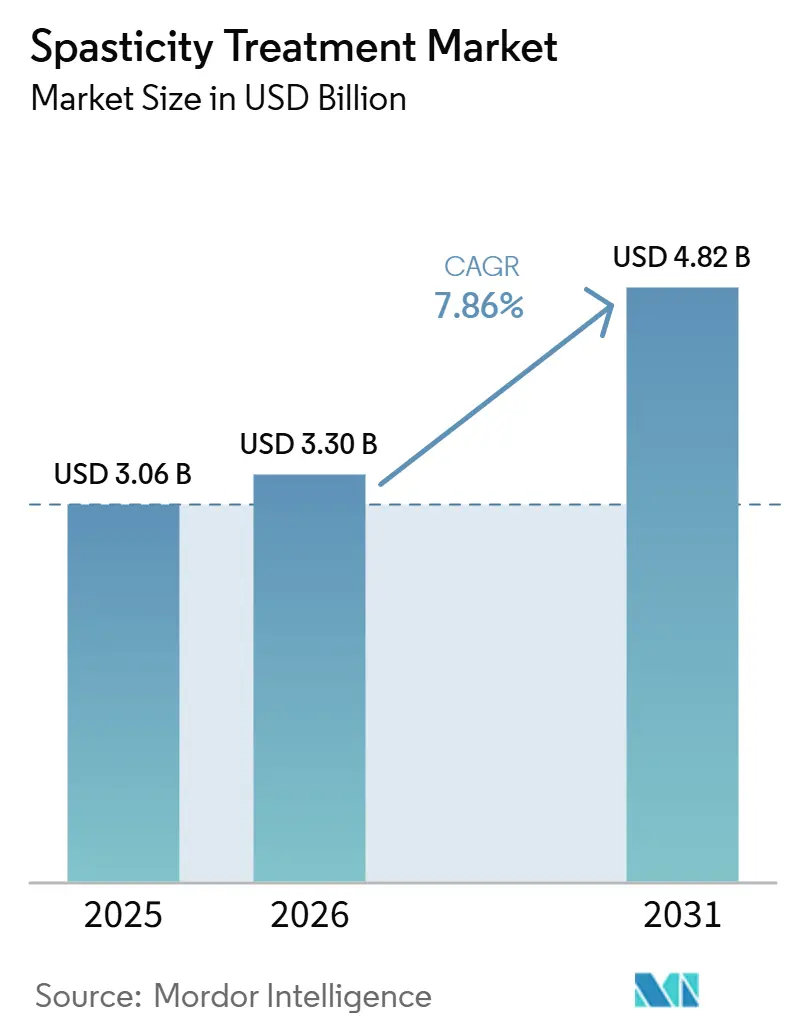
The Spasticity Treatment Market size is expected to grow from USD 3.06 billion in 2025 to USD 3.30 billion in 2026 and is forecast to reach USD 4.82 billion by 2031 at 7.86% CAGR over 2026-2031.
Demand is supported by the ongoing burden of stroke, multiple sclerosis, cerebral palsy, and spinal cord injury, all of which can cause persistent muscle spasticity. Stroke remained a key demand driver, as the World Stroke Organization reported 11.9 million new cases globally in 2024, and 1 in 4 adults was expected to experience a stroke during their lifetime.[1]World Stroke Organization, “Global Stroke Fact Sheet 2025,” Stroke and Vascular Neurology, doi.org Despite substantial clinical need, Ipsen reported that less than 1% of patients with post-stroke spasticity received botulinum toxin type A in routine care, while fewer than 30% received outpatient rehabilitation. As a result, the spasticity treatment market is shaped by an expanding patient base, care access gaps, and company initiatives focused on new clinical evidence, pediatric label expansions, longer-acting candidates, and integrated care models combining injections, medicines, and rehabilitation.
Key Report Takeaways
- By treatment modality, drug therapy held 34.55% of the share of the spasticity treatment sector in 2025, while physical therapy and rehabilitation is projected to grow at an 8.93% CAGR through 2031.
- By drug class, GABA agonists held 39.56% of the share of the spasticity treatment sector in 2025, while alpha-2 adrenergic agonists are projected to expand at a 9.67% CAGR through 2031.
- By indication, multiple sclerosis accounted for 36.77% of the share of the spasticity treatment sector in 2025, while cerebral palsy is projected to grow at a 10.35% CAGR through 2031.
- By route of administration, oral delivery held 52.88% of the share of the spasticity treatment sector in 2025, while parenteral administration is projected to grow at an 8.45% CAGR through 2031.
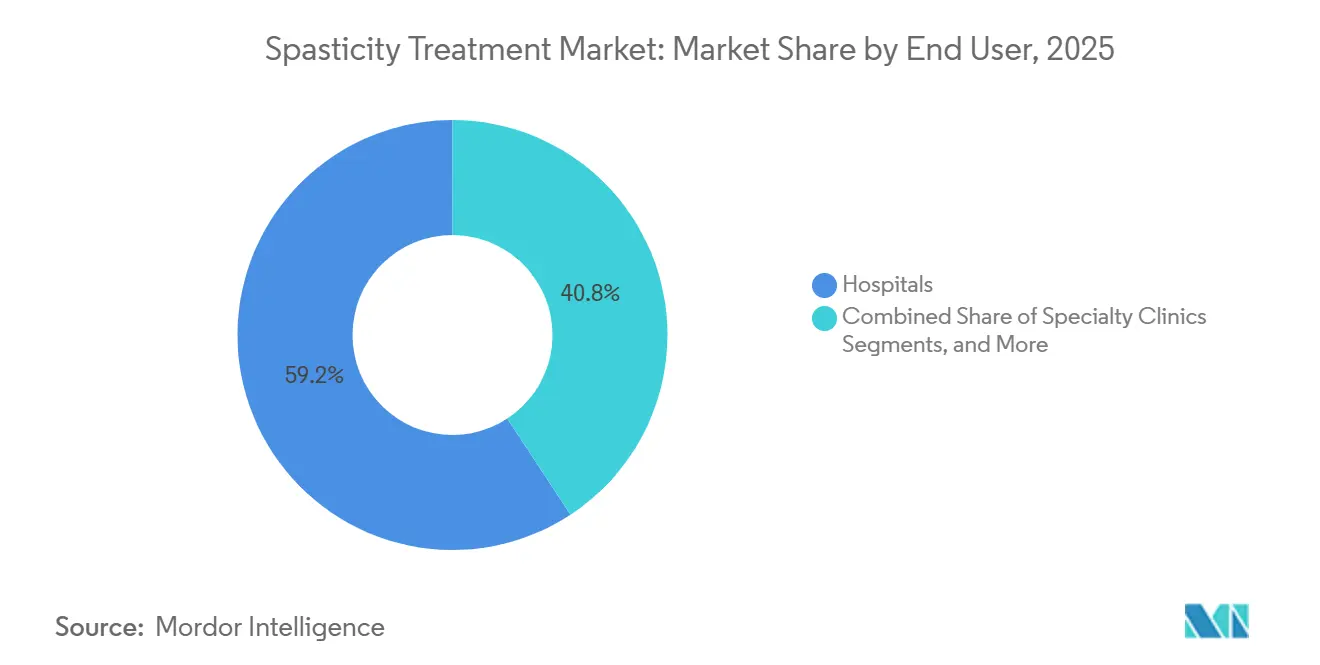
- By end user, hospitals held 59.24% of the share of the spasticity treatment sector in 2025, while specialty clinics are projected to expand at a 9.22% CAGR through 2031.
- By distribution channel, hospital pharmacies held 46.43% of the share of the spasticity treatment sector in 2025, while online pharmacies are projected to grow at an 8.77% CAGR through 2031.
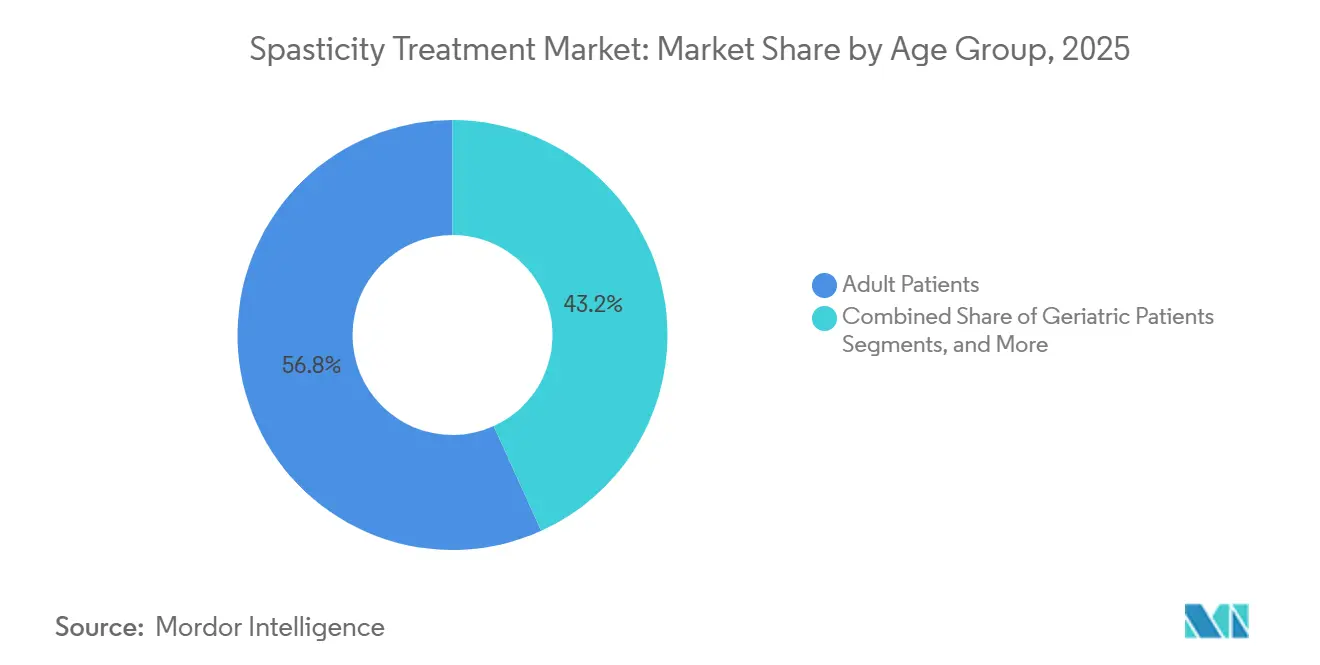
- By age group, adults held 56.77% of the share of the spasticity treatment sector in 2025, while geriatric patients are projected to expand at a 9.83% CAGR through 2031.
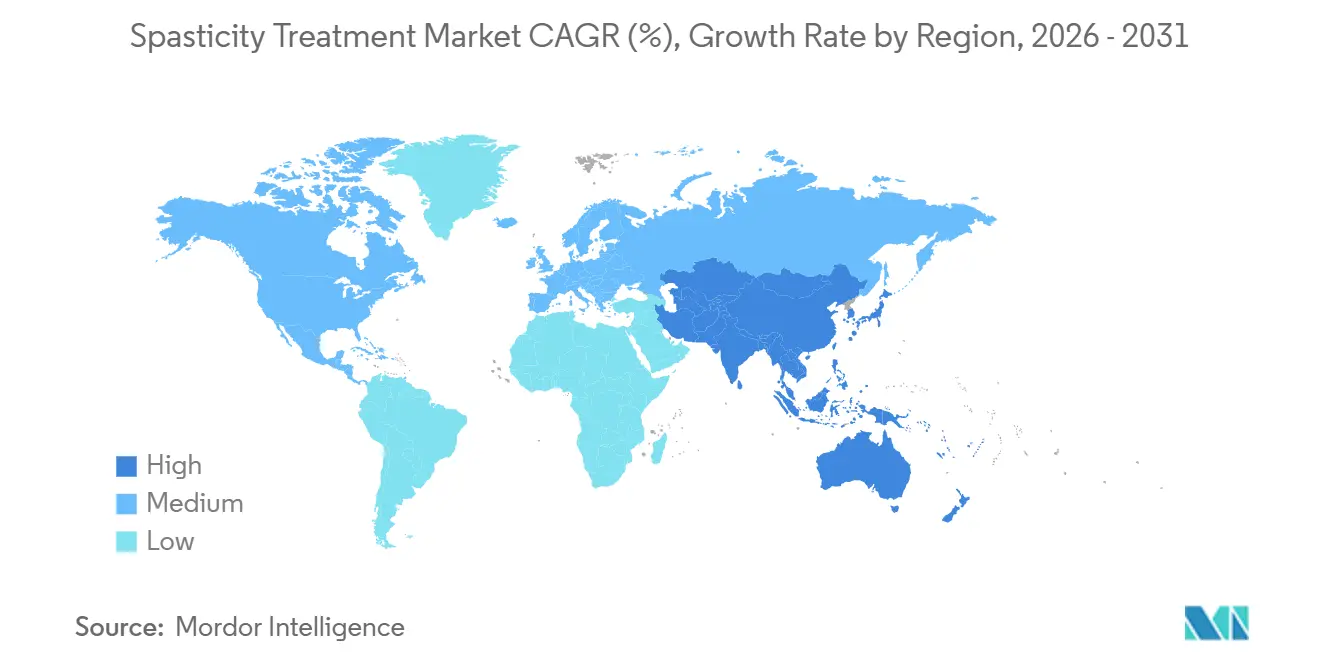
- By geography, North America held 40.84% of the share of the spasticity treatment sector in 2025, while Asia-Pacific is projected to grow at an 8.56% CAGR through 2031.
Note: Market size and forecast figures in this report are generated using Mordor Intelligence’s proprietary estimation framework, updated with the latest available data and insights as of January 2026.
Market Trends and Insights
Drivers Impact Analysis of Spasticity Treatment Market*
| DRIVER | (~) % IMPACT ON CAGR FORECAST | GEOGRAPHIC RELEVANCE | IMPACT TIMELINE |
|---|---|---|---|
| Rising burden of neurological conditions | +2.4% | Global, with peak burden in North America, Western Europe, and East Asia | Long term (≥ 4 years) |
| Adoption of botulinum toxin for focal spasticity | +1.5% | North America and Europe, with accelerating uptake in Asia-Pacific | Medium term (2-4 years) |
| Multidisciplinary rehabilitation and goal-based care | +0.9% | Global, with early gains in Europe, Australia, and high-income Asia-Pacific | Medium term (2-4 years) |
| Targeted intrathecal baclofen for refractory spasticity | +0.7% | North America and Europe, with expansion into the GCC and South Korea | Long term (≥ 4 years) |
| Standardized assessment and treatment pathways | +0.5% | North America and Europe, with early traction in Australia and Japan | Medium term (2-4 years) |
| Untreated patient pools in emerging markets | +0.8% | Asia-Pacific, with expansion into the Middle East, Africa, and South America | Long term (≥ 4 years) |
| Source: Mordor Intelligence | |||
Rising Burden of Stroke, Multiple Sclerosis, Cerebral Palsy, and Spinal Cord Injury
The spasticity treatment market is driven by neurological conditions that often require long-term care after injury or disease. The World Stroke Organization reported 11.9 million new stroke cases worldwide in 2024, and the lifetime stroke risk increased by 50% over the previous two decades. Spasticity develops in 25%-43% of stroke survivors within the first year after stroke and affects more than 90% of people with cerebral palsy and 37%-78% of people with multiple sclerosis. Cerebral palsy affected 3.1 per 1,000 children in the United States, and spinal cord injury also remains a treatment-intensive group, with 68% of 259,000 affected Americans developing some degree of spasticity.
Increasing Adoption of Botulinum Toxin for Focal Spasticity
Clinicians increasingly use botulinum toxin type A for focal spasticity because it targets affected muscles without requiring continuous systemic dosing. Ipsen presented the Phase IV DIRECTION study in May 2026, comparing Dysport and Botox in 464 adults across 72 sites in the United States, France, and Canada. The study reported treatment-emergent adverse event rates of 20.3% for Dysport and 23.0% for Botox, with durations of effect of 14.2 weeks and 13.8 weeks, respectively. A 2026 study also found that starting botulinum toxin within one year of stroke was associated with better goal attainment than delayed care, supporting market growth through stronger referral, specialist assessment, injection scheduling, and follow-up.[2]Springer Nature, “Prevalence and Co-occurring Developmental, Neurological, and Mental Health Conditions of Cerebral Palsy Among Children in the United States: 2016-2021,” Maternal and Child Health Journal, link.springer.com
Expansion of Multidisciplinary Rehabilitation and Goal-Based Care
Physical therapy and rehabilitation is the fastest-growing treatment modality, with a projected CAGR of 8.93% from 2026 to 2031. Evidence published in 2025 found that botulinum toxin combined with robot-assisted training can improve gait and upper-limb motor outcomes, particularly when training begins four weeks after injection. In April 2026, a system combining a brain-computer interface, spinal cord stimulation, and a robotic exoskeleton was clinically deployed for stroke rehabilitation in Guangxi, China. Telerehabilitation is also being incorporated into guidance for spinal cord injury care, supporting coordinated treatment plans that align injection timing, physical training, occupational therapy, and patient-defined mobility goals.
Greater Use of Targeted Intrathecal Baclofen Therapy in Refractory Generalized Spasticity
Clinicians use intrathecal baclofen when oral medicines or injections do not adequately control generalized spasticity. A 2026 study of 30 adults receiving chronic intrathecal baclofen therapy found that baclofen 40 mg/20 mL in Medtronic SynchroMed II pumps was clinically equivalent to the conventional formulation.[3]Frontiers in Pediatrics, “Alpha-2 Agonists for Refractory Neurological Symptoms in Pediatric Patients,” Frontiers in Pediatrics, frontiersin.org The therapy requires implantation, programming, refills, and specialist follow-up, making it a recurring service and device pathway. A July 2026 pilot in Switzerland introduced a regional pathway linking evaluation, implantation, and specialist follow-up for baclofen pump care, supporting more consistent use where specialist networks are expanding.
Restraints Impact Analysis of Spasticity Treatment Market*
| RESTRAINT | (~) % IMPACT ON CAGR FORECAST | GEOGRAPHIC RELEVANCE | IMPACT TIMELINE |
|---|---|---|---|
| High treatment, procedure, and monitoring costs | -1.2% | Global, most acute in emerging Asia-Pacific, the Middle East, Africa, and South America | Long term (≥ 4 years) |
| Oral drug adverse effects and dose limits | -0.8% | Global | Short term (≤ 2 years) |
| Short botulinum toxin durability and immunogenicity risk | -0.6% | North America and Europe | Medium term (2-4 years) |
| Intrathecal therapy infrastructure and withdrawal risks | -0.4% | Emerging markets, the GCC, and the rest of Asia-Pacific | Long term (≥ 4 years) |
| Source: Mordor Intelligence | |||
High Treatment, Procedure, and Long-Term Monitoring Costs
High treatment, procedure, and long-term monitoring costs limit access to premium options, particularly in healthcare systems with incomplete reimbursement. A 200-unit vial of onabotulinumtoxinA has a list price of USD 1,244; therefore, an upper-limb treatment course requiring up to 400 units could cost USD 2,488, while Medicare reimbursement for this treatment was USD 2,482.80, slightly below the product-only cost. Programmable intrathecal baclofen pump systems typically cost USD 20,000-USD 30,000 per unit, excluding implantation and ongoing management costs. Direct medical costs for stroke survivors with spasticity were four times higher in the first year than those for survivors without spasticity, constraining adoption in the spasticity treatment market as reimbursement decisions often prioritize immediate procedure and product expenses over broader disability, caregiver, and hospitalization costs.
Adverse Effects and Dose-Limiting Tolerability of Oral Antispasticity Drugs
Oral baclofen, tizanidine, and dantrolene remain important treatments, but adverse effects can limit dosage and treatment duration. Tizanidine can cause sedation, hypotension, and rare hallucinations, and patients require monitoring due to hepatotoxicity risk; baclofen can cause sedation and excessive sleepiness, while abrupt discontinuation can trigger severe withdrawal. These issues can be harder to manage in older patients, the fastest-growing age group in the spasticity treatment market. A 2025 review of alpha-2 agonists in pediatric neurological care reported that 25% of children taking clonidine discontinued treatment due to ineffectiveness or adverse effects, while dose limitations support the shift toward parenteral options, which are projected to grow at a CAGR of 8.45% from 2026 to 2031.
*Our forecasts treat driver/restraint impacts as directional, not additive. The impact forecasts reflect baseline growth, mix effects, and variable interactions.
Spasticity Treatment Market Segment Analysis
By Treatment Modality:
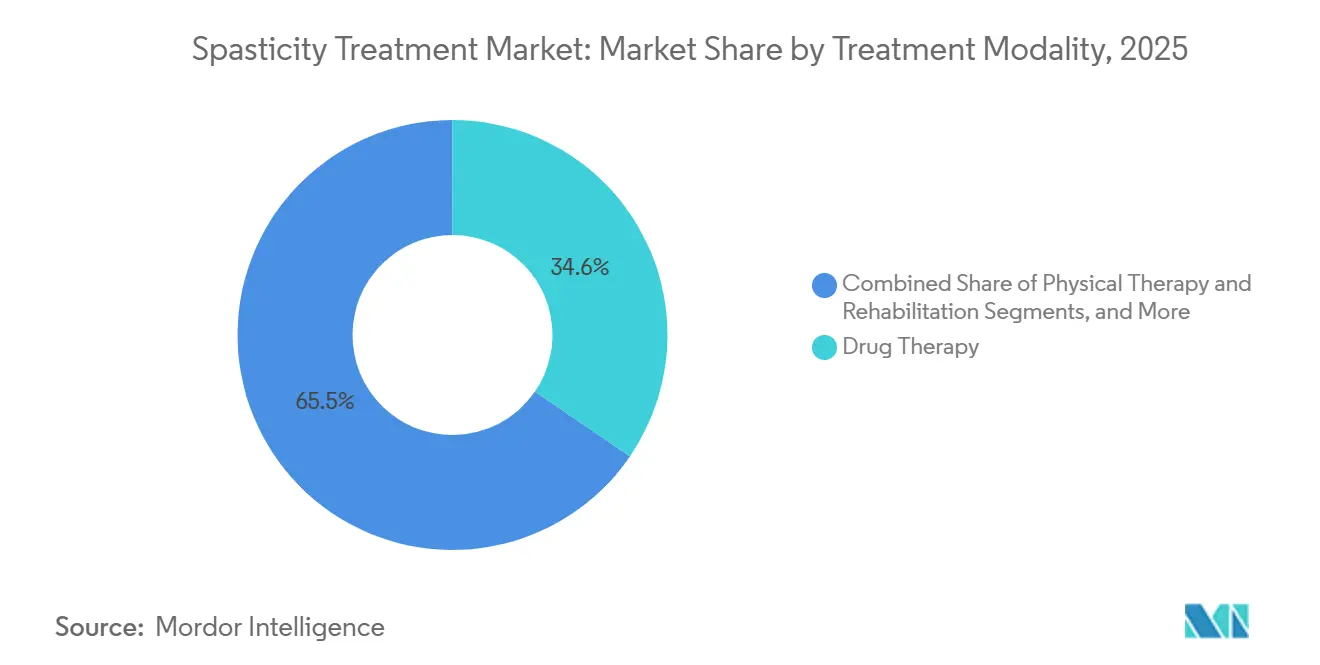
Drug Therapy Leads While Rehabilitation ExpandsDrug therapy held 34.55% of the spasticity treatment market share in 2025, supported by the continued use of oral antispasmodics and injectable botulinum toxin across major indications. Clinicians increasingly used combination care, pairing injections with closely managed oral GABA agonists when appropriate. This approach helped increase treatment intensity while allowing clinicians to adjust medication, focal injection, exercise, and supportive equipment based on functional impairment. Physical therapy and rehabilitation is projected to grow at an 8.93% CAGR from 2026 to 2031, reflecting wider use of structured rehabilitation alongside medicines and injections.
Orthoses and assistive devices continued to support treatment spending for patients with cerebral palsy and stroke, especially in North America and Europe, where reimbursement is more established. Surgical options, including selective dorsal rhizotomy and orthopedic tendon-release procedures, served patients with structural complications caused by spasticity. Botulinum toxin remained important in pediatric care, and a 2026 meta-analysis of 18 randomized trials involving 892 participants found a significant reduction in ankle spasticity in children with cerebral palsy. These findings supported the continued role of drug treatment, with rehabilitation and surgery complementing the core treatment pathway.



By Drug Class:
GABA Agonists Lead While Alpha-2 Adrenergic Agonists Gain GroundGABA agonists held 39.56% of the spasticity treatment market share in 2025, supported by the broad use of oral and intrathecal baclofen across several indications and the wide availability of generic products. Intrathecal use also created recurring demand for pump maintenance and refills. Alpha-2 adrenergic agonists are projected to grow at a 9.67% CAGR from 2026 to 2031. Clinicians increasingly used tizanidine in multidrug regimens for multiple sclerosis-related and stroke-related spasticity, although sedation, blood pressure, and liver safety monitoring continued to limit broader use.
Botulinum toxins remained a separate drug class with active branded competition, with onabotulinumtoxinA, abobotulinumtoxinA, and incobotulinumtoxinA established for adult upper-limb spasticity. In June 2026, Merz Therapeutics received an FDA label update for XEOMIN in children and adolescents aged 2 years and older with cerebral palsy-related upper-limb spasticity. Cannabinoid-based therapy remained a smaller option for multiple sclerosis-related spasticity in approved European and Canadian settings. Dantrolene continued to serve selected severe cases, but hepatotoxicity concerns and competing options limited its use.
By Indication:
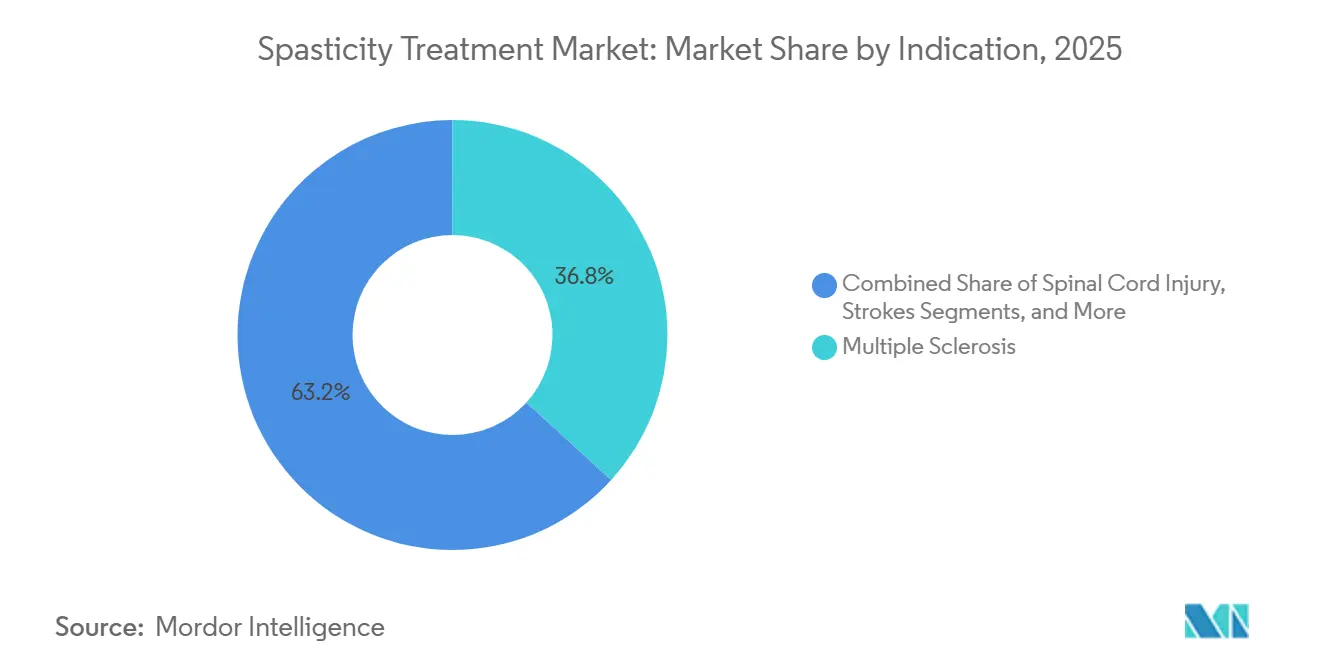
Multiple Sclerosis Leads While Cerebral Palsy Grows FastestMultiple sclerosis accounted for 36.77% of the spasticity treatment market share in 2025, driven by the high frequency of spasticity in this population and established medication pathways. Patients often required long-term management, which supported repeated prescriptions, injections, and rehabilitation. Cerebral palsy is projected to grow at a 10.35% CAGR from 2026 to 2031. Pediatric label expansions and earlier intervention supported this growth, while a 2025 study linked repeated botulinum toxin type A treatment plus intensive rehabilitation with improved gait kinematics and delayed deformity development in young children with bilateral spastic cerebral palsy.
Stroke-related spasticity remained another large indication, as stroke survivors often required ongoing care after the acute event. Spinal cord injury and traumatic brain injury also created consistent demand due to complex rehabilitation needs. Hereditary spastic paraplegia remained a smaller but distinct indication requiring long-term monitoring, with a 2025 review highlighting growing interest in telemedicine-enabled monitoring and digital biobanks, especially in Europe. This indication mix supported demand across hospital, clinic, and home-based settings.
By Route of Administration:
Oral Delivery Leads While Parenteral Use RisesOral delivery held 52.88% of the spasticity treatment market share in 2025, supported by first-line protocols, lower cost, ease of administration, and patient familiarity with medicines such as baclofen. Oral treatment remained especially important for patients receiving stable maintenance therapy in primary care. Parenteral administration is projected to grow at an 8.45% CAGR from 2026 to 2031. Botulinum toxin injections and intrathecal baclofen drove much of this growth, particularly when oral treatment did not adequately control moderate-to-severe spasticity.
Ultrasound-guided and electromyography-guided injection techniques improved the placement of focal botulinum toxin therapy, helping reduce product waste and improve dose efficiency in cost-managed reimbursement systems. Intrathecal baclofen addressed severe cases where oral medicines had limited effect or poor tolerability. A 2025 review noted that telerehabilitation-based monitoring supported oral antispasmodic dose titration after stroke. The balance between convenience and treatment precision continued to shape the spasticity treatment market as clinicians weighed oral maintenance treatment against injectable and intrathecal care.
By End User:
Hospitals Anchor Care While Specialty Clinics ScaleHospitals held 59.24% of the spasticity treatment market share in 2025, as they remained the principal setting for intrathecal baclofen implantation, high-dose botulinum toxin injection, and post-acute inpatient rehabilitation. Hospital teams integrated neurology, neurosurgery, rehabilitation medicine, and pharmacy services for complex cases. Specialty clinics are projected to grow at a 9.22% CAGR from 2026 to 2031. Outpatient injection care appealed to patients and helped reduce the operational burden linked to inpatient treatment.
Rehabilitation centers remained essential for stroke and cerebral palsy care that combined physical, occupational, and speech therapy with medication management. Ambulatory surgical centers gained a modest role in orthopedic and tendon-release procedures for selected patients. Hospitals retained an advantage when intensive monitoring or implantation was required, while specialty clinics offered more convenient care for stable patients. These complementary settings extended the spasticity treatment industry across acute referral, complex procedures, outpatient injection visits, recovery therapy, prescription renewal, and long-term functional reassessment.
By Distribution Channel:
Hospital Pharmacies Lead While Online Pharmacies ExpandHospital pharmacies accounted for 46.43% of the spasticity treatment market share in 2025, reflecting the large share of therapy delivered in hospitals and hospital-based outpatient clinics. On-site dispensing connected prescription supply with injection visits, inpatient care, and rehabilitation programs. Online pharmacies are projected to grow at an 8.77% CAGR from 2026 to 2031. Digital prescription renewal and telehealth consultations supported this channel for chronic antispasmodic medicines.
Retail pharmacies retained a stable role for oral baclofen and tizanidine, supported by generic availability, lower cost, and repeat prescriptions. Online providers needed the capability to manage regulated medicines and relevant formulation requirements. FDA 503B rules for compounded baclofen formulations and related European quality frameworks restricted entry for providers without adequate infrastructure. These requirements favored established specialty operators over smaller online entrants, while hospital pharmacies retained a central role in the spasticity treatment market.
By Age Group:
Adults Drive Use While Geriatric Patients Lead GrowthAdults held 56.77% of the spasticity treatment market share in 2025, forming the largest treatment population across multiple sclerosis, stroke, and spinal cord injury. Many adult patients required ongoing medicines, injections, rehabilitation, or pump management. Geriatric patients are projected to grow at a 9.83% CAGR from 2026 to 2031. Population aging and the incidence of post-stroke spasticity supported this expansion, and a 2025 pooled analysis found a favorable efficacy and safety profile for incobotulinumtoxinA in older patients with moderate-to-severe upper-limb spasticity.
A 2025 French study of 230,570 stroke survivors aged 65 years and older found that botulinum toxin use declined as age increased, indicating an undertreatment gap among older patients despite substantial clinical need. Pediatric patients remained a smaller segment by current volume, but their outlook improved with expanding botulinum toxin labels and greater access to early intervention. The June 2026 XEOMIN label update provided labeled dosing guidance for pediatric upper-limb spasticity related to cerebral palsy. Age-specific care pathways remained important to the spasticity treatment market.
Geography Analysis
North America and Europe Spasticity Treatment Market
North America held 40.84% of the spasticity treatment market share in 2025, supported by mature clinical protocols, payment coverage for botulinum toxin injections and intrathecal baclofen pumps, and a strong specialist base. The United States recorded 795,000 strokes annually, while an estimated 1.4 million Americans lived with stroke-related spasticity. Multiple sclerosis and cerebral palsy sustained recurring demand for medication and rehabilitation. Europe remained a key region, with Germany, France, and the United Kingdom among the larger national markets, while Sativex approvals across 29 countries strengthened cannabinoid-based treatment for multiple sclerosis-related spasticity.
APAC Spasticity Treatment Market
Asia-Pacific is projected to grow at a CAGR of 8.56% from 2026 to 2031, the fastest regional rate in the spasticity treatment market. The rising stroke burden in China and Japan, expanding cerebral palsy rehabilitation capacity in India, and specialist training in South Korea and Australia supported this growth. China deployed an integrated brain-computer interface, spinal cord stimulation, and robotic exoskeleton system for stroke rehabilitation in Guangxi in April 2026. The Chinese Medical Association published a 2025 expert consensus on spinal cord stimulation for post-stroke hemiplegia, while Australia and New Zealand issued a 2025 physiotherapy guideline for spinal cord injury management.
MEA and South America Spasticity Treatment Market
The Middle East, Africa, and South America hold smaller shares but remain important long-term growth areas. The GCC leads adoption in the Middle East through specialized rehabilitation centers and expanding pump-based therapy capacity, while South Africa and other African markets face limited specialist access and weak botulinum toxin reimbursement outside private insurance. Brazil anchors South America as public coverage for spasticity care expands, and Argentina has a growing private rehabilitation sector. Large untreated patient pools make access, workforce development, and affordable treatment models critical for expanding structured care in smaller cities and rural communities.

Competitive Landscape
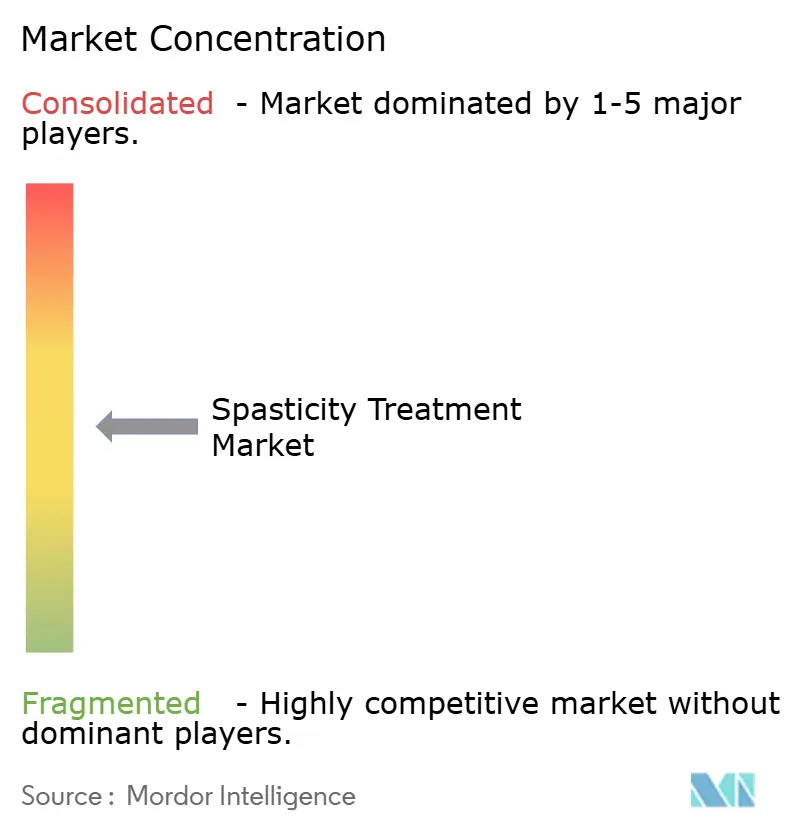
The spasticity treatment market is moderately concentrated in branded botulinum toxin therapy and fragmented in oral generic antispasmodics. AbbVie, Ipsen, and Merz Therapeutics lead serotype-A injectable therapy through Botox, Dysport, and XEOMIN. Teva, Viatris, Cipla, Lupin, Amneal, Dr. Reddy’s, and Sun Pharmaceutical compete in oral generic medicines, where price and supply reliability remain key factors. Medtronic leads intrathecal drug delivery systems through SynchroMed II, while Flowonix Medical competes with Prometra II, positioned around extended battery life and precision dosing. Piramal’s GABLOFEN and Saol Therapeutics serve the specialized intrathecal baclofen formulation segment.
Companies differentiate products by duration of effect, onset, delivery precision, and evidence for specific patient groups. In May 2026, Ipsen presented DIRECTION data comparing Dysport and Botox, reporting a 14.2-week duration of effect for Dysport and 13.8 weeks for Botox in adult upper-limb spasticity. In June 2026, Merz Therapeutics expanded XEOMIN’s US label to include upper-limb spasticity in children and adolescents aged 2 years and older with cerebral palsy. In April 2026, AbbVie received a Complete Response Letter from the FDA for trenibotulinumtoxinE, with the agency citing manufacturing process concerns and not raising safety or efficacy concerns.
Ipsen is studying IPN10200 as a long-acting botulinum neurotoxin for upper-limb spasticity, targeting the repeat-injection cycle that often occurs every 3 months. Motric Bio’s MTR-601 and Bristol Myers Squibb and Celgene’s BMS-986368 support efforts to develop novel oral options for spasticity. Regulatory obligations for botulinum toxin products, including post-marketing safety monitoring, add cost and complexity for new entrants. Established players benefit from extensive safety databases and specialist relationships, while generic competition keeps oral treatment segments more price-sensitive than injectable and pump-based segments.
Spasticity Treatment Industry Leaders
AbbVie Inc.
Medtronic plc
Merz Therapeutics GmbH
Pfizer Inc.
Novartis AG
- *Disclaimer: Major Players sorted in no particular order
Spasticity Treatment Market Companies Covered in this Report
- Abbvie
- Acorda Therapeutics
- Amneal Pharmaceuticals
- Azurity Pharmaceuticals
- Boston Scientific
- Cipla
- Dr. Reddy’s Laboratories
- Roche
- Flowonix Medical Inc.
- Hikma Pharmaceuticals
- Ipsen
- Lupin
- Medtronic
- Merz Therapeutics GmbH
- Metacel Pharmaceuticals, LLC
- Novartis
- Pfizer
- Piramal Group
- Saol Therapeutics, Inc.
- Sun Pharmaceuticals Industries
- Teva Pharmaceutical Industries
- Tricumed Medizintechnik
- Viatris
- Zydus Lifesciences Limited

Recent Industry Developments in Spasticity Treatment Market
- June 2026: Merz Therapeutics received FDA approval for a label update expanding XEOMIN (incobotulinumtoxinA) for upper limb spasticity in children and adolescents aged 2 years and older with cerebral palsy. The approval opened the US pediatric cerebral palsy market to a botulinum neurotoxin used in over 7.7 million patients across 70 countries and addressed the need for labeled pediatric dosing guidance.
- May 2026: Ipsen presented Phase IV DIRECTION trial data at the ISPRM World Congress in Vancouver, reporting that Dysport delivered longer symptom control than Botox, at 14.2 weeks versus 13.8 weeks. The treatment showed a non-inferior safety profile across 464 patients at 72 sites.
- April 2026: AbbVie received an FDA Complete Response Letter for trenibotulinumtoxinE due to manufacturing process concerns, with no safety or efficacy issues identified and no additional clinical studies requested.


Global Spasticity Treatment Market Report Scope
As per the scope of the report, spasticity treatment is a medical plan to relax tight muscles and ease painful stiffness using physical therapy, oral pills, and targeted shots. It helps people move better and feel more comfortable.
The spasticity treatment market is segmented by treatment type, drug class, indication, route of administration, end user, distribution channel, age group, and geography. By treatment type, the market includes drug therapy, physical therapy and rehabilitation, orthoses and assistive devices, surgical treatment, selective dorsal rhizotomy, orthopedic and tendon-release surgery, and other interventional treatments. By drug class, the market is segmented into GABA agonists, alpha-2 adrenergic agonists, tizanidine, botulinum toxins, dantrolene sodium, cannabinoid-based therapies, and other drug classes. By indication, the market is categorized into cerebral palsy, multiple sclerosis, stroke, spinal cord injury, traumatic brain injury, hereditary spastic paraplegia, and other neurological indications. By route of administration, the market is segmented into oral and parenteral. By end user, the market includes hospitals, specialty clinics, rehabilitation centers, ambulatory surgical centers, and others. By distribution channel, the market is segmented into hospital pharmacies, retail pharmacies, online pharmacies, and others. By age group, the market is segmented into pediatric patients, adult patients, and geriatric patients. By geography, the market is analyzed across North America, Europe, Asia-Pacific, the Middle East and Africa, and South America. The report also covers the estimated market sizes and trends for 17 countries across major regions globally. The report offers the market sizes and forecasts in terms of value (USD) for the above segments.
| Drug Therapy |
| Physical Therapy and Rehabilitation |
| Orthoses and Assistive Devices |
| Surgical Treatment |
| Selective Dorsal Rhizotomy |
| Orthopaedic and Tendon-Release Surgery |
| Other Interventional Treatments |
| GABA Agonists |
| Alpha-2 Adrenergic Agonists |
| Tizanidine |
| Botulinum Toxins |
| Dantrolene Sodium |
| Cannabinoid-Based Therapies |
| Other Drug Classes |
| Cerebral Palsy |
| Multiple Sclerosis |
| Stroke |
| Spinal Cord Injury |
| Traumatic Brain Injury |
| Hereditary Spastic Paraplegia |
| Other Neurological Indications |
| Oral |
| Parenteral |
| Hospitals |
| Specialty Clinics |
| Rehabilitation Centers |
| Ambulatory Surgical Centers |
| Others |
| Hospital Pharmacies |
| Retail Pharmacies |
| Online Pharmacies |
| Others |
| Pediatric Patients |
| Adult Patients |
| Geriatric Patients |
| North America | United States |
| Canada | |
| Mexico | |
| Europe | Germany |
| United Kingdom | |
| France | |
| Italy | |
| Spain | |
| Rest of Europe | |
| Asia-Pacific | China |
| India | |
| Japan | |
| Australia | |
| South Korea | |
| Rest of Asia-Pacific | |
| Middle East and Africa | GCC |
| South Africa | |
| Rest of Middle East and Africa | |
| South America | Brazil |
| Argentina | |
| Rest of South America |
| By Treatment Modality | Drug Therapy | |
| Physical Therapy and Rehabilitation | ||
| Orthoses and Assistive Devices | ||
| Surgical Treatment | ||
| Selective Dorsal Rhizotomy | ||
| Orthopaedic and Tendon-Release Surgery | ||
| Other Interventional Treatments | ||
| By Drug Class | GABA Agonists | |
| Alpha-2 Adrenergic Agonists | ||
| Tizanidine | ||
| Botulinum Toxins | ||
| Dantrolene Sodium | ||
| Cannabinoid-Based Therapies | ||
| Other Drug Classes | ||
| By Indication | Cerebral Palsy | |
| Multiple Sclerosis | ||
| Stroke | ||
| Spinal Cord Injury | ||
| Traumatic Brain Injury | ||
| Hereditary Spastic Paraplegia | ||
| Other Neurological Indications | ||
| By Route of Administration | Oral | |
| Parenteral | ||
| By End User | Hospitals | |
| Specialty Clinics | ||
| Rehabilitation Centers | ||
| Ambulatory Surgical Centers | ||
| Others | ||
| By Distribution Channel | Hospital Pharmacies | |
| Retail Pharmacies | ||
| Online Pharmacies | ||
| Others | ||
| By Age Group | Pediatric Patients | |
| Adult Patients | ||
| Geriatric Patients | ||
| By Geography | North America | United States |
| Canada | ||
| Mexico | ||
| Europe | Germany | |
| United Kingdom | ||
| France | ||
| Italy | ||
| Spain | ||
| Rest of Europe | ||
| Asia-Pacific | China | |
| India | ||
| Japan | ||
| Australia | ||
| South Korea | ||
| Rest of Asia-Pacific | ||
| Middle East and Africa | GCC | |
| South Africa | ||
| Rest of Middle East and Africa | ||
| South America | Brazil | |
| Argentina | ||
| Rest of South America | ||


Key Questions Answered in the Report
What is the forecast value of the spasticity treatment market by 2031?
The spasticity treatment market is projected to reach USD 4.82 billion by 2031, from USD 3.30 billion in 2026, at a 7.86% CAGR.
Which treatment modality has the largest share?
Drug therapy led with 34.55% share in 2025, supported by oral antispasmodics and injectable botulinum toxin.
Which patient indication is growing fastest?
Cerebral palsy is projected to expand at a 10.35% CAGR from 2026 to 2031, supported by earlier intervention and pediatric treatment access.
Why are specialty clinics expanding in spasticity care?
Specialty clinics are projected to grow at a 9.22% CAGR because outpatient injection and follow-up care can be more convenient than hospital-based treatment.
Which region is expected to grow fastest?
Asia-Pacific is projected to grow at an 8.56% CAGR from 2026 to 2031, supported by neurological care investment and rehabilitation capacity.
What limits access to advanced spasticity treatment?
High procedure and monitoring costs, treatment side effects, and limited specialist infrastructure can restrict access to injections and intrathecal baclofen therapy. These barriers are strongest where reimbursement, trained clinical teams, pump maintenance, and referral systems do not consistently support long-term neurological rehabilitation.
Page last updated on:





