
South America Fresh Herbs Market Size and Share
Market Overview
| Study Period | 2022 - 2032 |
|---|---|
| Forecast Data Period | 2027 - 2032 |
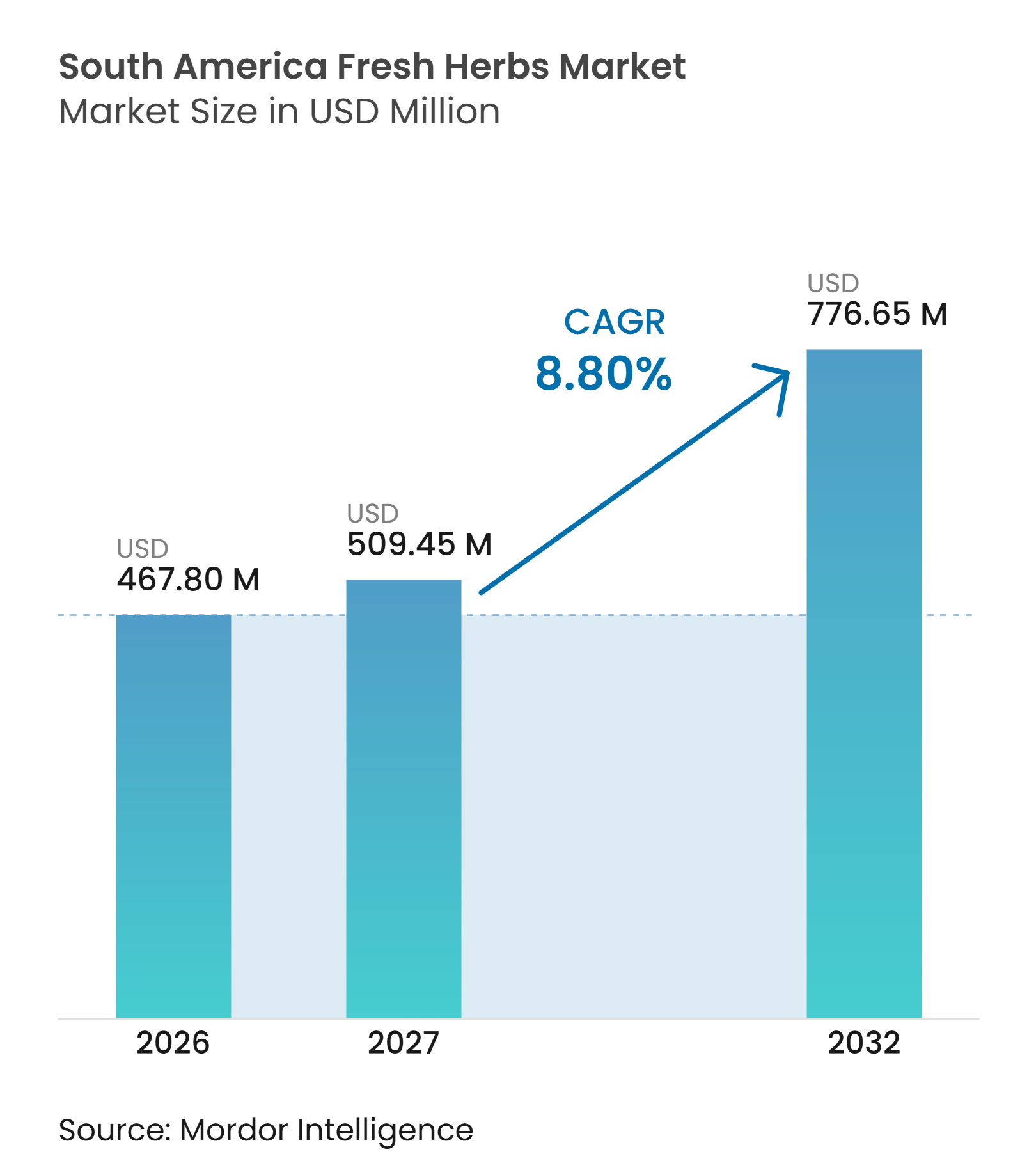
| Base Year Market Size (2026) | USD 467.80 Million |
| Market Size (2027) | USD 509.45 Million |
| Market Size (2032) | USD 776.65 Million |
| Growth Rate (2027 - 2032) | 8.80 % |
| Market Concentration | Low |
Major Players *Disclaimer: Major Players sorted in no particular order Image © Mordor Intelligence. Reuse requires attribution under CC BY 4.0. | |
South America Fresh Herbs Market Analysis by Mordor Intelligence
The South America fresh herbs market was valued at USD 467.80 million in 2026 and is projected to grow from USD 509.45 million in 2027 to USD 776.65 million by 2032, registering a CAGR of 8.80% from 2026 to 2031. South America benefits from favorable climatic conditions that enable year-round cultivation of a wide range of fresh culinary herbs, supporting both domestic consumption and export-oriented production. Rising demand from modern retail chains, foodservice establishments, and consumers seeking fresh, convenient, and high-quality ingredients is encouraging growers to improve production efficiency and product consistency. Investments in protected cultivation, postharvest handling, cold-chain infrastructure, and value-added packaging are strengthening supply reliability while reducing quality losses. Increasing emphasis on food safety standards, traceability, and export compliance is driving greater adoption of standardized cultivation and distribution practices. However, fragmented production, logistical challenges, and perishability continue to influence overall market development.
Key Report Takeaways
- By product type, basil accounted for the largest 38.3% of the South America fresh herbs market share in 2026 and is projected to grow at the fastest CAGR of 9.9% from 2027 to 2032.
- By category, conventional herbs accounted for the largest share at 84.0% in 2026, while South America fresh herbs market size for organic herbs is projected to grow at the fastest CAGR of 12.0% from 2027 to 2032.
- By cultivation method, open-field cultivation accounted for the largest share at 68.0% in 2026, while vertical indoor cultivation is projected to grow at the fastest CAGR of 15.5% from 2027 to 2032.
- By end user, food retail accounted for the largest revenue share at 42.0% in 2026, while foodservice is projected to grow at the fastest CAGR of 9.8% from 2027 to 2032.
- By geography, Brazil accounted for the largest share at 46.0% in 2026 and is projected to grow at the fastest CAGR of 10.2% from 2027 to 2032.
Note: Market numbers in this report are based on Mordor Intelligence's proprietary estimation framework, which combines nine months of actuals with Q4 projections for base year 2026.
Market Trends and Insights
Drivers Impact Analysis of South America Fresh Herbs Market*
| Driver | (~) % Impact on CAGR Forecast | Geographic Relevance | Impact Timeline |
|---|---|---|---|
| Premiumization of Fresh Culinary Herbs | 2.2% | Brazil, Argentina, Chile, and Peru urban centers | Medium term (2-4 years) |
| Expansion of Modern Grocery and Foodservice | 1.9% | Brazil, Argentina, and Chile | Short term (≤ 2 years) |
| Growth of Ready-to-Use and Convenience Produce | 1.4% | Brazil, Argentina, Chile, and Peru | Medium term (2-4 years) |
| Controlled-Environment Cultivation Near Urban Demand Centers | 0.9% | Brazil, Chile, and Argentina | Medium term (2-4 years) |
| Retail Traceability Requirements Reward Consistent Specialty Suppliers | 0.7% | Brazil and export corridors | Short term (≤ 2 years) |
| Export-Oriented Basil and Specialty Herb Clusters | 1.1% | Colombia, Peru, Brazil, and Chile | Medium term (2-4 years) |
| Source: Mordor Intelligence | |||
Premiumization of Fresh Culinary Herbs
Premiumization is driving demand for fresh culinary herbs that offer superior quality, traceability, and certified food safety across the South America fresh herbs market. Retailers, supermarkets, and foodservice operators increasingly prefer suppliers that comply with internationally recognized production and quality standards, enabling growers to secure premium contracts and expand export opportunities. According to Portafolio (2025), Colombia exported more than 11.2 million kilograms of fresh aromatic herbs, valued at USD 44.9 million, in 2025, reflecting strong international demand for premium-quality herbs. This trend is encouraging producers to invest in certification, improved postharvest handling, sustainable cultivation, and value-added packaging to strengthen competitiveness in domestic and export markets.
Expansion of Modern Grocery and Foodservice
The expansion of modern grocery retail and organized foodservice is driving stronger demand for fresh herbs across the South America fresh herbs market, as retailers and foodservice operators increasingly require products with consistent quality, traceability, and reliable year-round supply. This shift is reinforcing investments in standardized production and efficient distribution networks. The Ministry of Agriculture and Rural Development of Colombia (2026) reported that the country's agricultural exports increased by 33.5% in value and 20.1% in volume in 2025 compared with 2024[1], reflecting a stronger commercial infrastructure that benefits both export-oriented herb producers and domestic foodservice procurement. This growing integration between organized retail, hospitality, and agricultural supply chains continues to support market expansion across the region.
Growth of Ready-to-Use and Convenience Produce
The growing preference for ready-to-use, convenience-focused produce is driving demand for packaged fresh herbs across the South American fresh herbs market, particularly among urban consumers seeking products that require minimal preparation while maintaining freshness and quality. Retailers are expanding their offerings of pre-washed and portioned herbs to improve convenience, reduce food waste, and enhance product appeal. A 2024 study by the Universidade Federal Fluminense (Brazil) found that basil treated with suitable packaging and postharvest handling maintained shelf life for more than 120 hours, compared with only 24 hours for untreated basil. These findings highlight the commercial value of improved postharvest technologies, encouraging producers to invest in retail-ready packaging that enhances product quality, broadens marketability, and supports the growing convenience-produce segment.
Retail Traceability Requirements Reward Consistent Specialty Suppliers
Retail traceability requirements are increasing the preference for specialty herb suppliers capable of maintaining detailed production records, product consistency, and food safety compliance across the South America fresh herbs market. Organized retailers and export buyers increasingly require documented traceability throughout the supply chain to strengthen consumer confidence and meet regulatory standards. Brazil reinforced this regulatory environment through Decree No. 12,709, published in October 2025, which established a comprehensive inspection framework for plant-derived products, including traceability, certification, and risk-based compliance measures throughout production and distribution systems[2]. The evolving regulatory framework is encouraging growers to adopt standardized quality management practices, improving access to organized retail channels, and strengthening long-term commercial partnerships.
Restraints Impact Analysis of South America Fresh Herbs Market*
| Restraint | (~) % Impact on CAGR Forecast | Geographic Relevance | Impact Timeline |
|---|---|---|---|
| Short Shelf Life and Postharvest Shrink | -0.9% | South America, with greater exposure in tropical areas | Short term (≤ 2 years) |
| Fragmented Smallholder Production and Inconsistent Quality | -0.7% | Brazil, Peru, and Rest of South America | Long term (≥ 4 years) |
| Cold-Chain Gaps Outside Major Metropolitan Corridors | -0.5% | Brazil, Peru, and Argentina | Medium term (2-4 years) |
| Pesticide Residue, Microbial, and Import-Compliance Exposure | -0.4% | Brazil and export corridors | Short term (≤ 2 years) |
| Source: Mordor Intelligence | |||
Short Shelf Life and Postharvest Shrink
The highly perishable nature of fresh herbs remains a major challenge for the South America fresh herbs market, as quality deteriorates rapidly when products are exposed to inadequate temperature control during harvesting, transportation, and distribution. Even minor delays can lead to moisture loss, wilting, and reduced market value, increasing shrinkage across the supply chain. According to the University of California, Davis Postharvest Technology Center (2025), most fresh culinary herbs have an projected shelf life of only 2 weeks at 5°C, while basil generally lasts only 1–2 weeks due to its chilling sensitivity. This limited storage window compels growers and distributors to invest in efficient cold-chain infrastructure and rapid logistics, increasing operational costs and constraining market expansion.
Fragmented Smallholder Production and Inconsistent Quality
Fragmented smallholder production remains a significant challenge for the South America fresh herbs market. Differences in cultivation practices, harvesting methods, grading standards, and postharvest handling often result in inconsistent product quality. Many growers face difficulties implementing uniform traceability systems, food safety protocols, and standardized packaging required by organized retailers and export buyers. Limited access to technical expertise, modern production technologies, and coordinated marketing channels further restricts their ability to supply consistent volumes throughout the year. As a result, buyers frequently prefer larger, integrated suppliers that can meet stringent quality specifications and ensure reliable year-round deliveries.
*Our forecasts treat driver/restraint impacts as directional, not additive. The impact forecasts reflect baseline growth, mix effects, and variable interactions.
South America Fresh Herbs Market Segment Analysis
By Product Type:
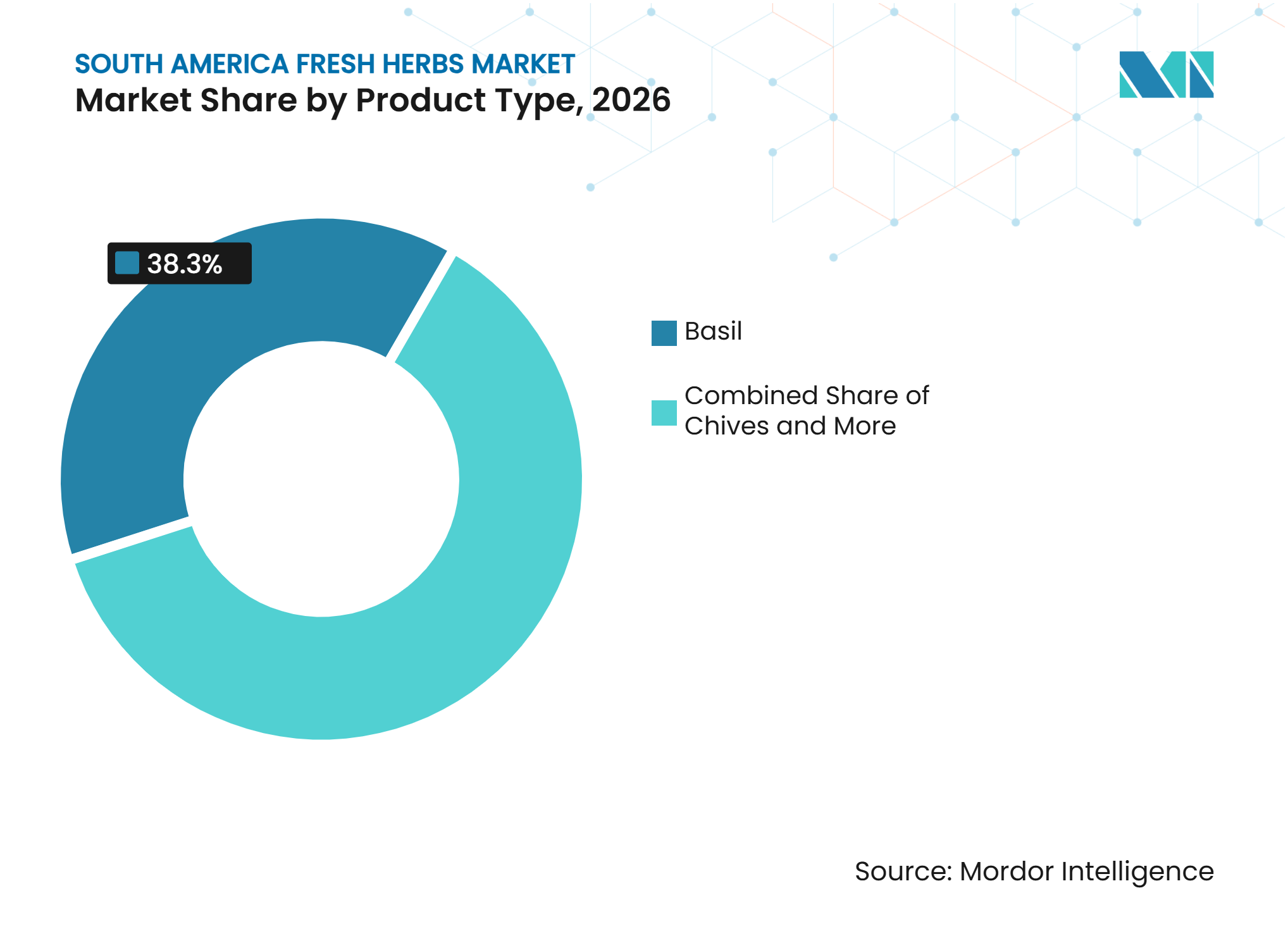
Basil Leads Demand and GrowthBasil accounted for the largest 38.3% of the South America fresh herbs market share in 2026 and is projected to grow at the fastest CAGR of 9.9% from 2027 to 2032. Its established culinary role supports demand across household cooking, foodservice, food processing, and premium retail applications. Basil is widely used in sauces, salads, prepared meals, and fresh garnishes. Its versatility across cuisines and suitability for packaged and potted formats create opportunities for suppliers to serve diverse customer groups. Year-round cultivation and improved postharvest handling can further support consistent availability across regional markets.
Cilantro and coriander remain important categories within the fresh herbs market, supported by their widespread use in traditional cuisines across Brazil, Peru, and Argentina. Their applications in sauces, marinades, salads, garnishes, and prepared dishes sustain demand from households, restaurants, and food processors. Mint, parsley, and chives also serve retail and foodservice customers, while oregano, rosemary, and thyme benefit from demand for Mediterranean and international cuisines. Tacna's shipments of oregano, rosemary, and marjoram increased by 29.7% in 2025, highlighting export opportunities for specialty herbs. These diverse culinary applications support demand across the South America fresh herbs market.



By Category:
Conventional Dominate While Organic Demand AcceleratesConventional herbs accounted for the largest 84.0% of the South America fresh herbs market share in 2026. Their dominance reflects broad availability, established cultivation practices, and accessibility across traditional markets, supermarkets, and foodservice channels. Conventional production serves diverse consumer groups and allows suppliers to offer competitive prices across commonly used herbs such as basil, cilantro, mint, parsley, and oregano. Established growing and distribution networks in countries including Brazil, Colombia, and Peru support supply to domestic buyers and export markets. These factors sustain conventional herbs' leading position in the South America fresh herbs market.
Organic herbs are projected to grow at the fastest CAGR of 12.0% from 2027 to 2032, supported by interest in certified production, traceability, and premium fresh produce. Demand from higher-income consumers, specialty retailers, and selected foodservice operators creates opportunities for certified suppliers. Export-oriented growers can also serve markets that require recognized organic certification, while unsold export-grade produce may enter domestic premium channels. However, certification, production conversion, and recurring audits can increase operating costs. Suppliers that maintain credible certification, consistent quality, and appropriate packaging can strengthen their position in the region's expanding organic fresh herbs segment.
By Cultivation Method:
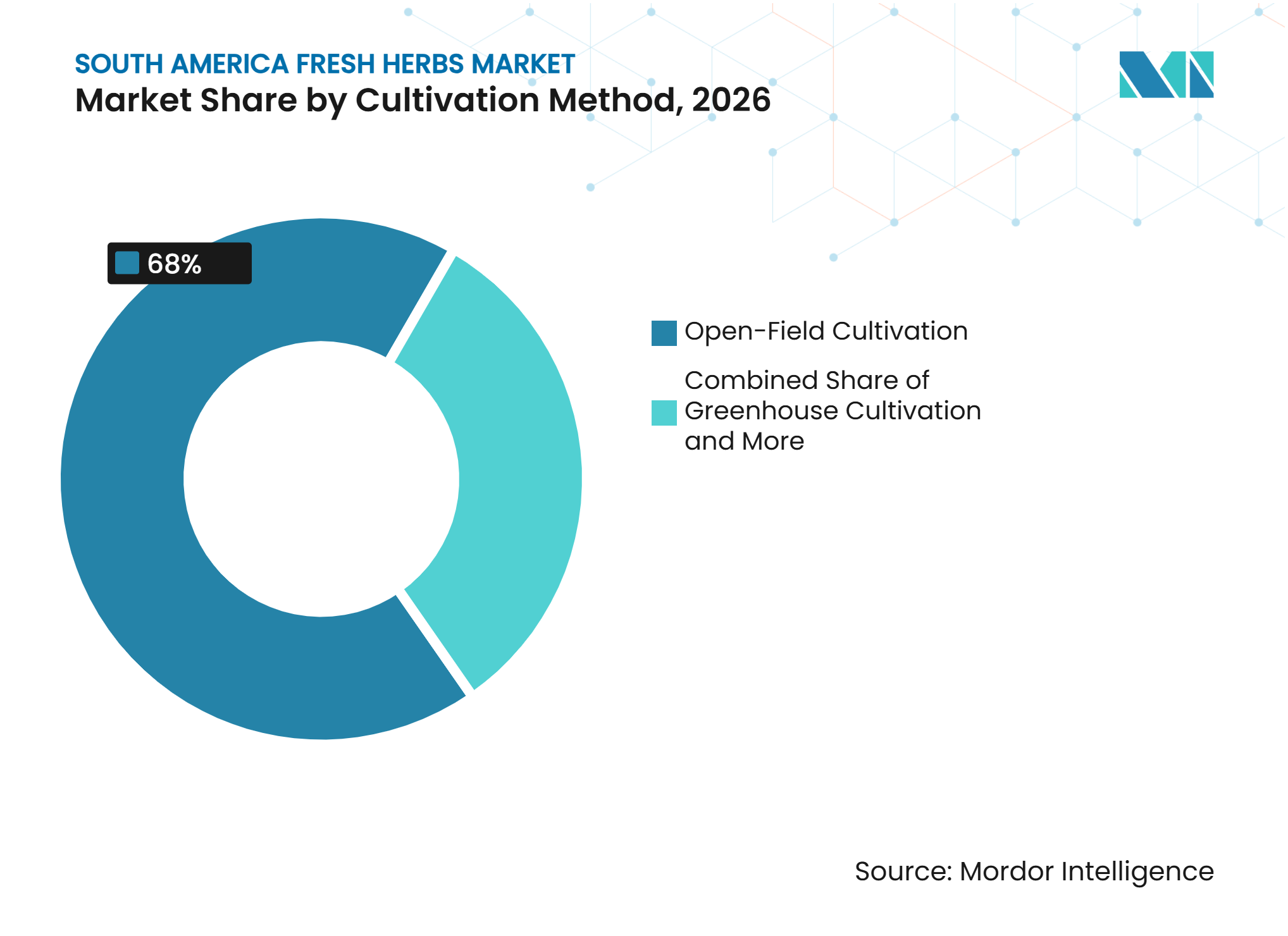
Open-Field Cultivation Leads While Vertical Indoor Cultivation ExpandsOpen-field cultivation accounted for the largest 68.0% of the South America fresh herbs market share in 2026. Its dominant position reflects relatively low infrastructure requirements, established farming practices, and suitability for commercial production in favorable growing regions. Producers in countries such as Colombia and Peru cultivate herbs outdoors where climatic conditions support crop development and export-oriented supply. Open-field production also allows growers to serve domestic markets and international buyers without the capital costs associated with controlled growing systems. These economic advantages sustain its dominance across the South America fresh herbs market, particularly for conventional herbs supplied in bulk.
Vertical indoor cultivation is projected to grow at the fastest CAGR of 15.5% from 2027 to 2032, supported by interest in year-round production, controlled growing conditions, and proximity to urban consumers. Indoor facilities can reduce exposure to adverse weather and shorten distribution distances when located near major retail and foodservice markets. Automated lighting, climate management, and nutrient delivery systems can support consistent crop quality. However, high capital investment and electricity costs can constrain commercial expansion. Operators that improve energy efficiency, maintain reliable output, and supply high-value herbs to nearby buyers are well-positioned to capitalize on opportunities in the region's growing vertical farming segment.

By End User:
Food Retail Leads While Foodservice Drives GrowthFood retail accounted for the largest revenue share of 42.0% in the South America fresh herbs market in 2026. Supermarkets, hypermarkets, and other grocery retailers provide consumers with convenient access to fresh herbs for everyday cooking. Retail demand supports a range of formats, including cut bunches, packaged herbs, and potted plants. Buyers increasingly require consistent quality, suitable packaging, dependable deliveries, and effective shelf-life management. These requirements create opportunities for organized growers and distributors with established postharvest handling and cold-chain capabilities. Food retail's broad consumer reach and established distribution networks support its leading revenue position across the region.
The foodservice segment is projected to grow at the fastest CAGR of 9.8% from 2027 to 2032, driven by demand from restaurants, hotels, catering businesses, and commercial kitchens. Fresh herbs contribute flavor, aroma, garnish, and product differentiation across traditional and international cuisines. The expansion of organized foodservice and demand for consistent ingredient supply are increasing procurement through specialized distributors and direct supplier relationships. Commercial buyers also value dependable delivery schedules, standardized product quality, and reduced preparation waste. Suppliers that offer bulk packs, reliable freshness, and year-round availability are better positioned to strengthen relationships with foodservice customers and benefit from the segment's projected growth.
Geography Analysis
Brazil accounted for the largest share at 46.0% in 2026 and is projected to grow at the fastest CAGR of 10.2% from 2027 to 2032. Its large consumer base and established retail and foodservice channels support demand for culinary herbs across household and commercial applications. Fresh herbs are used in everyday cooking, restaurant preparation, sauces, and prepared foods. Major urban markets provide distribution opportunities for packaged and premium herbs, while domestic producers supply buyers through established agricultural networks. Growing demand for convenient fresh ingredients and consistent product availability further support market expansion.
Peru and Colombia are important production and export centers within the South America fresh herbs market. Peru has established agricultural export capabilities, while Colombia has an organized fresh aromatic herb sector that supplies international buyers, particularly in North America. Producers in both countries cultivate varieties such as basil, mint, rosemary, oregano, thyme, and cilantro for domestic and export markets. Export-oriented suppliers can improve market access through food safety certification, consistent quality, and efficient cold chain logistics. Expanding regional distribution into Brazil, Chile, and Argentina could create additional opportunities for growers to diversify sales channels and reduce dependence on overseas markets.
Chile continues to strengthen its position through export-oriented horticulture supported by robust phytosanitary systems and modern production practices, while greenhouse cultivation is expanding in selected neighboring countries to improve year-round availability. According to the Office of Agricultural Studies and Policies (ODEPA, 2026), Chile's fresh vegetable exports increased by 6.1% in value during January to November 2025 compared with the same period in 2024[3], reflecting improving international competitiveness for fresh produce. The remaining South American countries continue to rely primarily on domestic consumption, with gradual investments in protected cultivation and supply chain modernization.
Competitive Landscape
Market Concentration
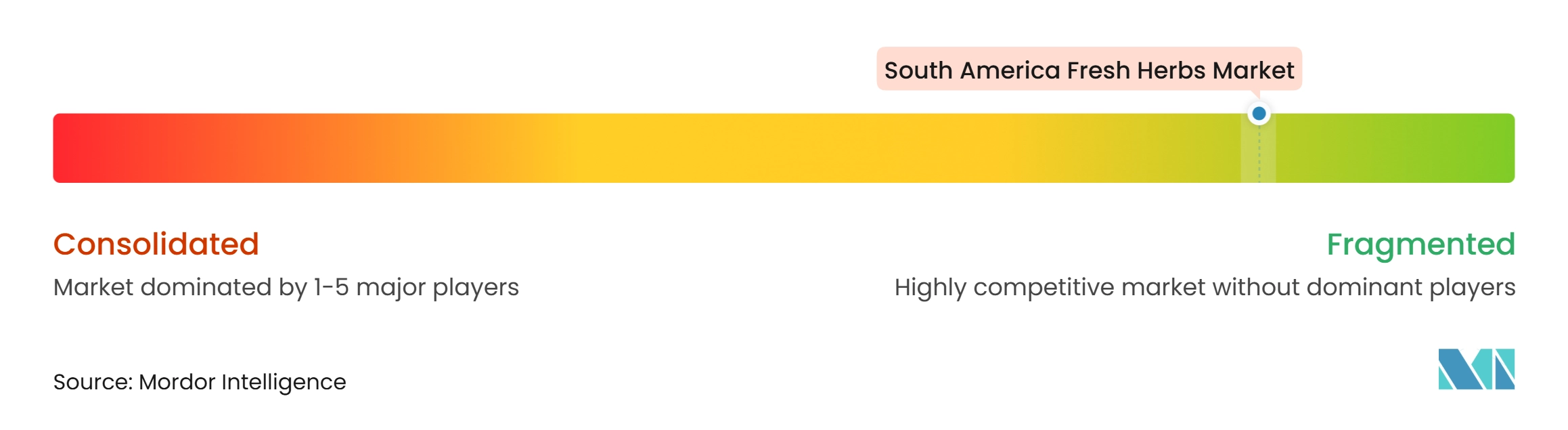
The South America fresh herbs market is fragmented in 2026, with regional growers, exporters, and specialized herb producers competing on product quality, freshness, traceability, and year-round supply reliability. Key players include ESHKOL PREMIUM S.A.S., Plantar de Colombia S.A.S., AgriFresh Herbs, SAGRA S.A.S., and La Laguna Herbs S.A.S. Competition is driven by investments in protected cultivation, postharvest handling, refrigerated logistics, and internationally recognized food safety certifications. Long-term partnerships with supermarket chains, foodservice operators, and international distributors support market access. Product diversification into premium herbs, organic varieties, and value-added packaged formats enables companies to address evolving consumer and retail requirements.
Competition is increasingly centered on export capability and compliance with phytosanitary and traceability requirements rather than production volume alone. Companies continue to expand cultivation under controlled environments while improving grading, packaging, and cold-chain management to reduce postharvest losses and extend product shelf life. Export-oriented producers are also focusing on certifications such as GlobalG.A.P. and food safety management systems to strengthen access to premium international markets. Strategic investments in logistics and integrated supply chains further improve responsiveness to demand from organized retail and foodservice throughout the region.
Regulatory compliance continues to shape the competitive landscape by favoring suppliers capable of meeting stringent export and quality standards. According to the Colombian Agricultural Institute (ICA), fresh vegetable exporters in Colombia must obtain official registration for production sites, packinghouses, and exporters through the ICA registration system before exporting fresh vegetables. This creates higher entry requirements for commercial suppliers and encourages greater standardization across the export supply chain. These regulatory requirements strengthen the position of established companies with certified production systems, advanced traceability practices, and long-standing relationships with domestic and international buyers.
South America Fresh Herbs Industry Leaders
-
ESHKOL PREMIUM S.A.S.
-
Plantar de Colombia S.A.S.
-
AgriFresh Herbs
-
SAGRA S.A.S.
-
La Laguna Herbs S.A.S.
- *Disclaimer: Major Players sorted in no particular order
South America Fresh Herbs Market Companies Covered in this Report
- ESHKOL PREMIUM S.A.S.
- SAGRA S.A.S.
- La Laguna Herbs S.A.S.
- Plantar de Colombia S.A.S.
- Natural Gloria
- AgriFresh Herbs
- THE FRESH WAY S.A.S.
- Organic Garden S.A.S.
- Messis Col S.A.S.
- Suagá Organic Herbs
- Great Herbs
- Splendor Herbs S.A.S.
Recent Industry Developments in South America Fresh Herbs Market
- February 2026: The Colombian Agricultural Institute (ICA) strengthened Systems Approach export protocols through 10 export work plans, improving phytosanitary compliance and facilitating international market access for horticultural exports, including fresh aromatic herbs.
- December 2025: Chile's Agricultural and Livestock Service (SAG) updated phytosanitary requirements for importing fresh vegetables from Peru through Resolution No. 10,178, strengthening plant health controls and reinforcing regulatory oversight for fresh produce trade.
- February 2025: Argentina approved a production protocol and Geographical Indication for San Carlos oregano, protecting its origin and quality. This recognition may strengthen market differentiation and commercial opportunities for oregano, an aromatic herb used in fresh and dried culinary applications.
South America Fresh Herbs Market Report Scope
Fresh herbs are aromatic, edible plant leaves and stems that are harvested and sold without drying. They are widely used to enhance flavor, aroma, and presentation in culinary applications, beverages, food processing, and select medicinal and nutraceutical preparations.
The South America fresh herbs market report is segmented by product type (basil, cilantro/coriander, mint, parsley, chives, oregano, rosemary, thyme, sage, dill, and other fresh herbs), by category (conventional and organic), by cultivation method (open-field cultivation, greenhouse cultivation, hydroponic cultivation, aeroponic cultivation, and vertical indoor cultivation), and by end user (foodservice, food retail, food processing, pharmaceutical and nutraceutical, and other). The market forecasts are provided in terms of value (USD).
Segmentation Overview
| Basil |
| Cilantro/Coriander |
| Mint |
| Parsley |
| Chives |
| Oregano |
| Rosemary |
| Thyme |
| Sage |
| Dill |
| Other Fresh Herbs |
| Conventional |
| Organic |
| Open-Field Cultivation |
| Greenhouse Cultivation |
| Hydroponic Cultivation |
| Aeroponic Cultivation |
| Vertical Indoor Cultivation |
| Foodservice |
| Food Retail |
| Food Processing |
| Pharmaceutical and Nutraceutical |
| Other |
| Brazil |
| Argentina |
| Chile |
| Peru |
| Rest of South America |
| By Product Type | Basil |
| Cilantro/Coriander | |
| Mint | |
| Parsley | |
| Chives | |
| Oregano | |
| Rosemary | |
| Thyme | |
| Sage | |
| Dill | |
| Other Fresh Herbs | |
| By Category | Conventional |
| Organic | |
| By Cultivation Method | Open-Field Cultivation |
| Greenhouse Cultivation | |
| Hydroponic Cultivation | |
| Aeroponic Cultivation | |
| Vertical Indoor Cultivation | |
| By End User | Foodservice |
| Food Retail | |
| Food Processing | |
| Pharmaceutical and Nutraceutical | |
| Other | |
| By Geography | Brazil |
| Argentina | |
| Chile | |
| Peru | |
| Rest of South America |
Key Questions Answered in the Report
What is the forecast for fresh herbs in South America?
The South America fresh herbs market is forecast to reach USD 776.65 million by 2032, growing at a CAGR of 8.80% from 2027 to 2032.
Which country leads fresh herb sales in South America?
Brazil led the market with the largest 46.0% share in 2026.
Which country is projected to grow fastest through 2032?
Bazil is projected to register the fastest CAGR of 10.2% from 2027 to 2032.
What is driving demand for fresh culinary herbs?
Demand is driven by formal retail expansion, restaurant demand, retail-ready packaging, traceability requirements, and production near urban centers.