
Software As A Medical Device (SaMD) For Neurology Market Size and Share
Market Overview
| Study Period | 2020 - 2031 |
|---|---|
| Market Size (2026) | USD 15.36 Billion |
| Market Size (2031) | USD 31.24 Billion |
| Growth Rate (2026 - 2031) | 15.25 % |
| Fastest Growing Market | Asia-Pacific |
| Largest Market | North America |
| Market Concentration | Medium |
Major Players *Disclaimer: Major Players sorted in no particular order Image © Mordor Intelligence. Reuse requires attribution under CC BY 4.0. | |
Software As A Medical Device (SaMD) For Neurology Market Analysis by Mordor Intelligence
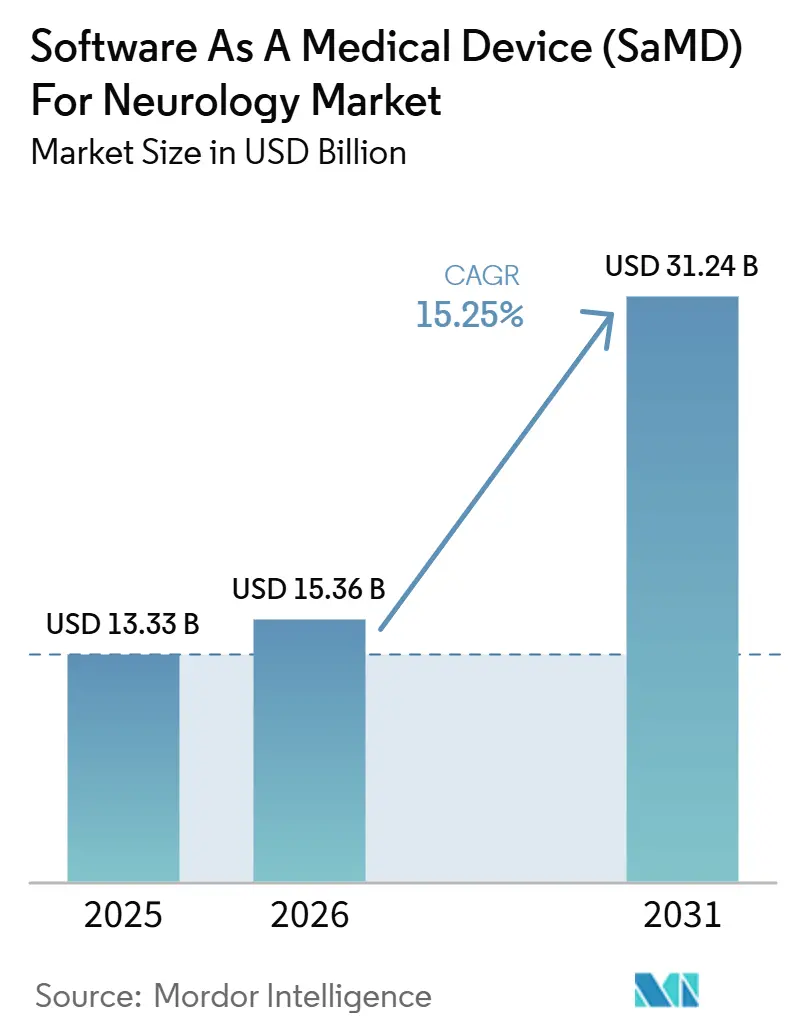
The Software as a Medical Device for Neurology Market size was valued at USD 13.33 billion in 2025 and is estimated to grow from USD 15.36 billion in 2026 to reach USD 31.24 billion by 2031, at a CAGR of 15.25% during the forecast period (2026-2031).
The Software as a Medical Device (SaMD) for Neurology market is advancing as hospitals, neurology centers, and home-based care models increasingly use software to enable faster clinical decisions, broader monitoring, and more consistent follow-up for chronic neurological conditions. Demand is rising as stroke triage tools, seizure detection software, and remote monitoring platforms become more practical in routine care settings, while reimbursement discussions and regulatory pathways are improving commercial visibility for vendors. The market is also benefiting from proprietary datasets, as stronger clinical evidence supports pricing and hospital procurement. Competitive positioning depends on workflow fit, evidence depth, integration with imaging or EEG systems, and post-deployment update support, with further growth opportunities in home care, ambulatory monitoring, and disease management pathways.
Key Report Takeaways
- By component, software held 62.34% of revenue in 2025, while services is projected to expand at an 18.93% CAGR through 2031.
- By deployment mode, cloud-based held 64.77% share in 2025, while on-premises recorded the highest projected CAGR at 17.67% through 2031.
- By application, epilepsy accounted for 28.45% of the market in 2025, while stroke is projected to grow at 18.35% CAGR through 2031.
- By end user, hospitals and neurology centers held 54.67% share in 2025, while home care settings are projected to grow at a 16.78% CAGR through 2031.
- By geography, North America held 40.56% share in 2025, while Asia-Pacific is forecast to expand at a 17.56% CAGR through 2031.
Note: Market size and forecast figures in this report are generated using Mordor Intelligence’s proprietary estimation framework, updated with the latest available data and insights as of January 2026.
Global Software As A Medical Device (SaMD) For Neurology Market Trends and Insights
Drivers Impact Analysis*
| DRIVER | (~) % IMPACT ON CAGR FORECAST | GEOGRAPHIC RELEVANCE | IMPACT TIMELINE |
|---|---|---|---|
| AI-enabled neurology triage and decision support adoption | +3.8% | Global, led by North America and Europe | Short term (≤ 2 years) |
| Remote monitoring of epilepsy and movement disorders | +3.2% | North America, Europe, APAC spill-over | Medium term (2-4 years) |
| Expansion of regulator-specific SaMD frameworks | +2.5% | North America, with EU spillover | Medium term (2-4 years) |
| Reimbursement support for digital biomarkers and remote monitoring | +1.9% | North America, with early gains in Germany and the UK | Medium term (2-4 years) |
| Cloud-native clinical data integration across EEG, imaging and EMR | +1.6% | Global, led by APAC and North America | Long term (≥ 4 years) |
| AI-driven personalization for neurorehabilitation and chronic disease management | +1.4% | North America and Europe, with APAC gaining | Long term (≥ 4 years) |
| Source: Mordor Intelligence | |||
AI-Enabled Neurology Triage and Decision Support Adoption
The Software as a Medical Device (SaMD) for Neurology market gained momentum as clinicians adopted software to identify urgent neurological events and support earlier intervention across care pathways. Hospitals increasingly treated triage software as a core component of acute neurology workflows, especially where faster imaging interpretation influenced downstream intervention decisions. RapidAI secured FDA clearance in November 2025 for five new deep clinical AI imaging modules, including Rapid LMVO and Rapid OH, expanding its role in stroke and hydrocephalus workflows. Ceribell also expanded EEG-based AI use in November 2025, when its Clarity algorithm received 510(k) clearance for neonates, making it the first AI-powered point-of-care EEG system cleared for seizure detection across all ages, from pre-term neonates to adults.
Remote Monitoring of Epilepsy and Movement Disorders
The Software as a Medical Device (SaMD) for Neurology market also expanded into remote monitoring as neurological care moved beyond conventional inpatient settings. Wearable and implant-linked software gained value by supporting continuous observation, signal classification, and event detection outside high-cost care environments. A Phase III study published in 2026 reported that EpiWatch achieved 98% overall sensitivity for tonic-clonic seizure detection across 16,189 hours of home monitoring, with a false alarm rate of 0.08 per 24 hours.[1]JW Wheless et al., “Phase III Trial of EpiWatch for Tonic-Clonic Seizure Detection,” Neurology Open Access, ovid.com Medtronic received FDA approval in February 2025 for BrainSense Adaptive deep brain stimulation, while its base of more than 40,000 Percept DBS patients worldwide supported recurring software-driven clinical engagement.
Expansion of FDA and Other Regulator-Specific SaMD Frameworks
The Software as a Medical Device (SaMD) for Neurology market benefited from a more defined regulatory environment for AI-enabled medical software. Clearer oversight helped vendors plan product updates, validation work, and commercial launches with reduced uncertainty. The FDA maintained specific oversight visibility for artificial intelligence-enabled medical devices, supporting institutional confidence in software used for diagnosis, monitoring, and decision support. Ceribell’s November 2025 neonatal clearance included an FDA-authorized predetermined change control plan, while the Congressional Research Service noted in September 2025 that the FDA sought input on best practices for AI-enabled devices.
Reimbursement Support for Digital Biomarkers and Remote Monitoring
The Software as a Medical Device (SaMD) for Neurology market was also supported by reimbursement discussions linked to remote monitoring and digital biomarker use. Payment clarity remained important because many neurology software tools showed clinical value before securing stable revenue pathways in provider settings. Comments on the CMS 2026 Physician Fee Schedule highlighted the need to treat SaMD used in remote monitoring as a direct practice expense.[2]Connected Health Initiative, “Comments on CMS Draft CY2026 PFS and QPP,” Connected Health Initiative, connectedhi.com MedPAC’s April 2025 review showed low physician fee schedule use of software-as-a-service tools, with no HCPCS code exceeding 3,600 uses or USD 0.2 million in payments during the analyzed period.[3]Medicare Payment Advisory Commission, “Tab G, Software as a Service,” MedPAC, medpac.gov
Restraints Impact Analysis*
| RESTRAINT | (~) % IMPACT ON CAGR FORECAST | GEOGRAPHIC RELEVANCE | IMPACT TIMELINE |
|---|---|---|---|
| Clinical validation burden across diverse neurological patient populations | -1.2% | Global, most acute in Europe and APAC | Medium term (2-4 years) |
| Interoperability gaps between neurology devices, imaging systems, and ehr platforms | -0.9% | Global, most critical in APAC and MEA | Long term (≥ 4 years) |
| Cybersecurity, privacy, and model governance risk | -0.7% | Europe and North America | Medium term (2-4 years) |
| Slow workflow adoption due to liability, change management, and training barriers | -0.5% | Global, most pronounced in emerging markets | Long term (≥ 4 years) |
| Source: Mordor Intelligence | |||
Clinical Validation Burden Across Diverse Neurological Patient Populations
The Software as a Medical Device (SaMD) for Neurology market continues to face a major constraint as vendors must prove consistent model performance across diverse patient groups and care settings. Neurology software can perform differently across age groups, comorbidity patterns, signal quality conditions, and imaging protocols, making broad clinical scaling more complex than initial authorization may indicate. A 2025 study noted that AI medical software required continuous monitoring and real-world evaluation of generalizability, especially in neurology, where clinical presentations varied widely across cohorts.[4]YJ Cho et al., “Long-Term Bi-Modal Wearable Monitoring for Home-Based Epilepsy Management,” Frontiers in Neurology, frontiersin.org Ceribell's neonatal clearance in November 2025 was supported by data from more than 700 patients, highlighting how population-specific evidence requirements increased development timelines and costs before wider adoption.
Interoperability Gaps Between Neurology Devices, Imaging Systems, and EHR Platforms
The Software as a Medical Device (SaMD) for Neurology market also faces adoption barriers due to uneven interoperability across EEG systems, imaging platforms, clinical records, and standalone software tools. Neurology workflows require clinicians to combine waveforms, DICOM images, medications, notes, and longitudinal patient records, but many providers still store these data in fragmented systems. A 2025 study found that long-term bi-modal wearable monitoring for home epilepsy care was technically feasible but required custom integration across sensor streams and clinical record systems. MindMaze Therapeutics reported that its deployed network generated 1.2 billion data points per month, but converting that volume into usable and billable clinical documentation still depended on structured data workflows that many health systems had not yet implemented.
*Our forecasts treat driver/restraint impacts as directional, not additive. The impact forecasts reflect baseline growth, mix effects, and variable interactions.
Segment Analysis
By Component: Software Leads Revenue While Services Gain Through Compliance and Ongoing Support
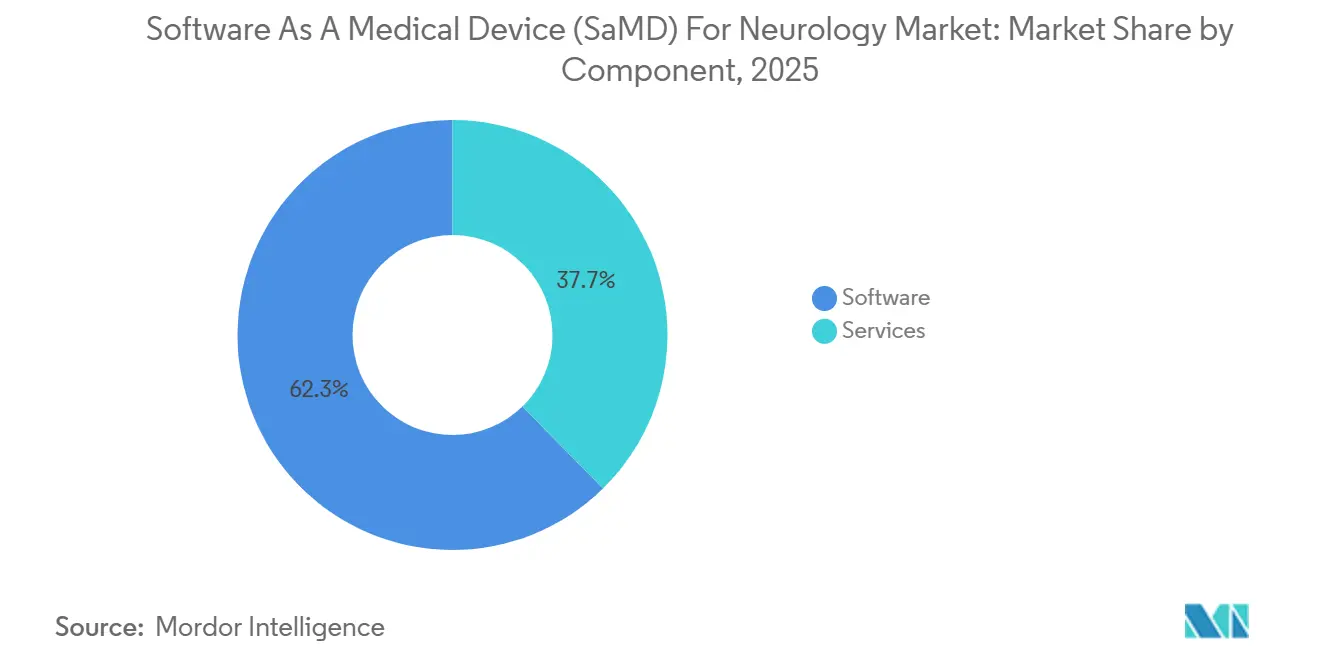
Software held a 62.34% share in 2025, showing that core clinical value in the Software as a Medical Device (SaMD) for Neurology market remained concentrated in algorithm-driven tools rather than adjacent support functions. Products that interpret EEG activity, identify stroke-related findings, or support clinical decision-making within neurology workflows continued to account for the largest revenue pool. Buyers prioritized measurable diagnostic or monitoring outputs before investing in service layers for deployment and maintenance.
Services was the fastest-growing component segment at an 18.93% CAGR, as customers increasingly sought ongoing support after initial installation. In May 2026, NeuroPace received FDA approval for ECoG Assistant, an AI-driven clinician feature for its RNS System developed from 124,450 epileptologist-labeled iEEG records. NeuroPace also submitted its next-generation patient data management system for FDA review, indicating a broader platform strategy around scalable software infrastructure and future AI-enabled workflow tools. As a result, the Software as a Medical Device (SaMD) for Neurology market shifted toward contracts covering monitoring, maintenance, post-market support, and compliance-related services.


By Deployment Mode: Cloud-Based Scale Holds the Lead While On-Premises Gains on Data Control Needs
Cloud-based deployment accounted for 64.77% of the Software as a Medical Device (SaMD) for Neurology market size in 2025, driven by the need for multi-site workflows, shared access, and centralized software management across larger provider systems. Cloud environments supported stroke alerting, cross-site imaging review, and longitudinal monitoring programs that benefited from consolidated oversight. They also helped large health systems scale software faster by reducing local infrastructure requirements across facilities.
On-premises deployment was the fastest-growing deployment segment at a 17.67% CAGR through 2031, as data sovereignty and latency remained key priorities in clinical settings. Providers managing sensitive neurological data, internal research protocols, or stricter privacy obligations favored architectures with tighter control over storage and processing. Hybrid setups also gained traction by enabling local inference while supporting centralized analytics or model improvement over time.
By Application: Epilepsy Holds the Largest Share While Stroke Delivers the Fastest Growth
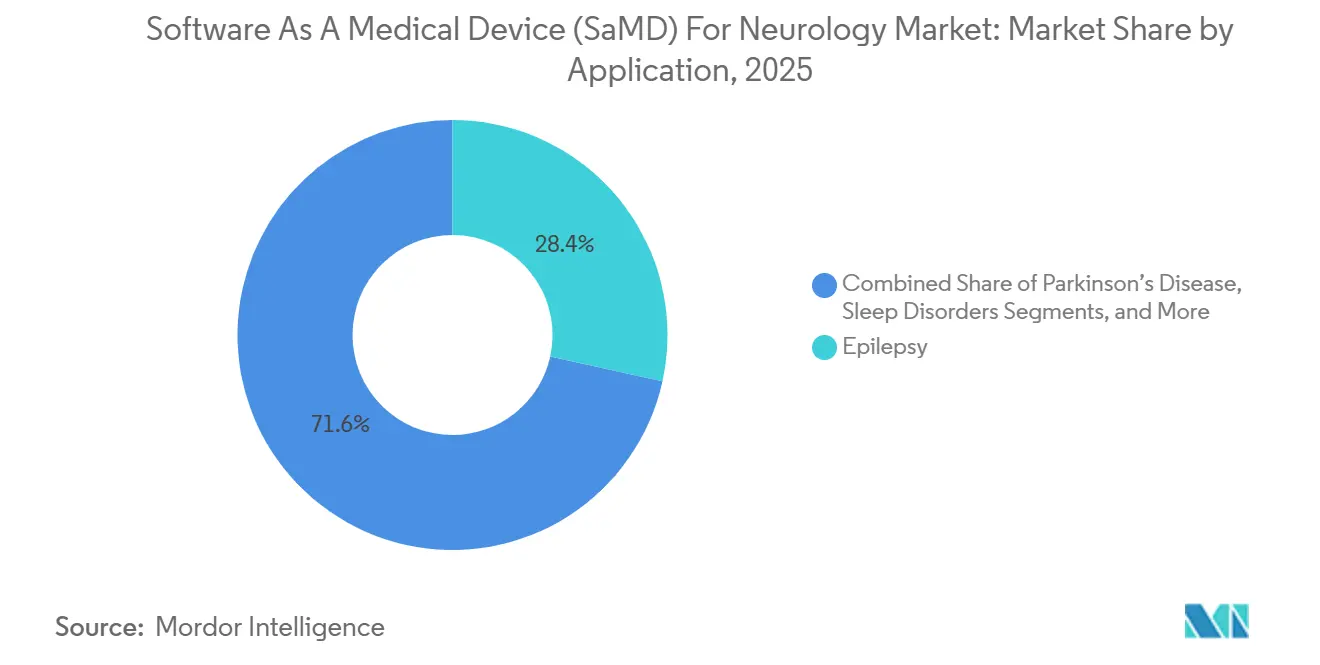
Epilepsy accounted for 28.45% of the market in 2025, making it the leading application area in the Software as a Medical Device (SaMD) for Neurology market. The segment benefited from a mature base of EEG-related software, remote seizure monitoring, and implanted or wearable systems that generated recurring data over time. Its use across hospital monitoring units, ambulatory programs, and home-based settings expanded software deployment and reimbursement opportunities.
Stroke was projected to grow at an 18.35% CAGR through 2031, making it the most commercially dynamic application area during the forecast period. A study published in the American Journal of Neuroradiology in May 2026 found that RapidAI LVO delivered 98% sensitivity for large vessel occlusion detection across 1,589 consecutive stroke alerts, compared with 73.5% for a competing platform. Parkinson’s disease and neurodegeneration pathways also gained attention as monitoring and imaging support tools improved, especially where therapy management required repeated assessment over time.

By End User: Hospitals Lead Current Revenue While Home Care Settings Expand the Fastest
Hospitals and neurology centers held 54.67% of the Software as a Medical Device (SaMD) for Neurology market size in 2025, reflecting the concentration of imaging infrastructure, EEG monitoring units, and specialist staffing in institutional care settings. These facilities remained the primary launch point for many Class II software tools due to their high-acuity neurology caseloads and established governance structures. They also supported initial validation, early physician use, and procurement of integrated platforms.
Home care settings was the fastest-growing end-user segment at a 16.78% CAGR, supported by discharge pressure, long-term disease management needs, and stronger evidence for remote neurological monitoring. The 2026 EpiWatch Phase III publication reported 98% sensitivity across 16,189 hours of home monitoring, strengthening the clinical case for seizure detection outside traditional monitored units. MindMaze Therapeutics also expanded an at-home neurorehabilitation model across more than 100 hospitals and rehabilitation facilities in Europe, showing how software remained active beyond acute care and outpatient therapy.
Geography Analysis
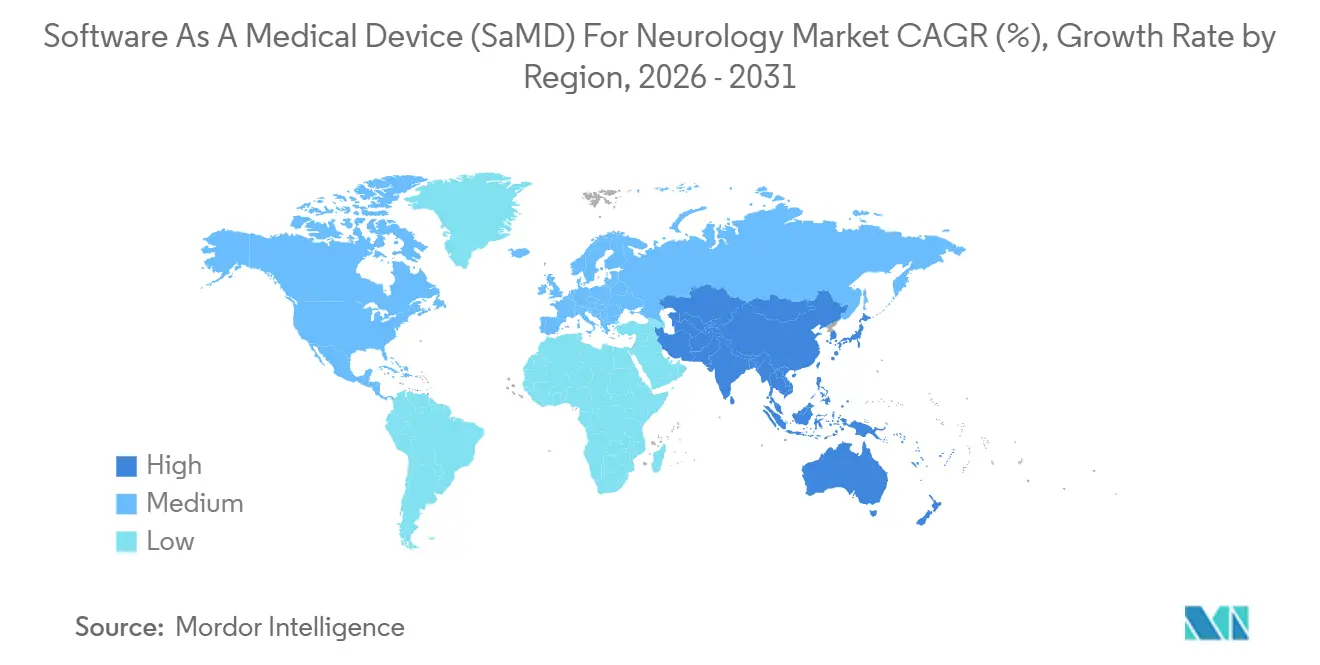
North America held 40.56% of the Software as a Medical Device (SaMD) for Neurology market share in 2025, maintaining its position as the largest regional contributor. Strong regulatory visibility, early adoption of AI-enabled medical software, and a broad base of academic medical centers supported the region’s leadership. Active reimbursement discussions around remote monitoring and digital software services further supported commercial expansion.
Asia-Pacific is forecast to grow at a CAGR of 17.56% through 2031, making it the fastest-growing regional market in this category. Large undiagnosed neurological populations, expanding specialist infrastructure, and digital health investments across China, India, Japan, South Korea, and Australia support this growth. Private hospital groups in India are using cloud-based neurology platforms to extend specialist coverage beyond major urban centers, while East Asian markets support advanced imaging and EEG software deployment. A 2026 study in BMC Biomedical Engineering confirmed the feasibility of edge-AI wearable systems for real-time epileptic seizure detection with geolocated alerting, supporting distributed care across rural and connectivity-variable settings.
Europe remains a mature adoption environment, especially in Germany, the United Kingdom, and France, where data protection and post-market surveillance obligations influence deployment decisions. These requirements support investment in locally hosted or tightly governed software environments and favor vendors with stronger compliance capabilities. The Middle East and Africa and South America remain at earlier adoption stages, with rising interest in stroke triage, remote monitoring, and digitally supported specialist access. Saudi Arabia and the United Arab Emirates are advancing national digital health programs, while Brazil and Argentina are emerging as active South American markets for software-enabled neurological diagnostics.

Competitive Landscape
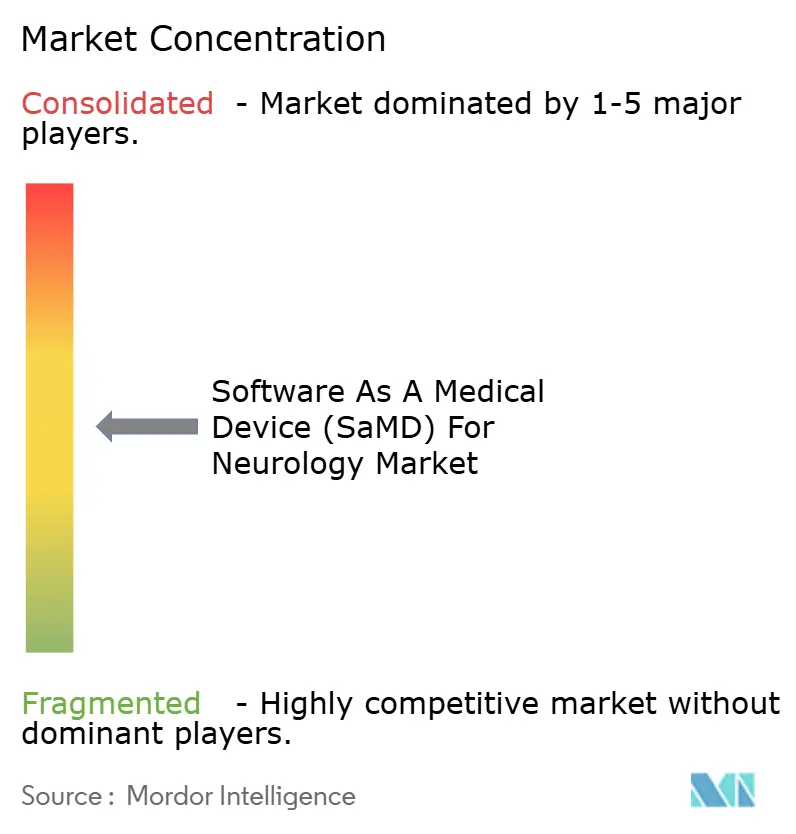
The competitive landscape of the Software as a Medical Device (SaMD) for Neurology market is moderately consolidated at the imaging platform level and more fragmented across disease-specific niches. Large diversified healthcare companies benefit from established hospital relationships, installed hardware bases, and broader imaging or monitoring ecosystems. Specialist vendors compete on clinical performance, evidence generation, and focused use cases such as seizure detection, stroke triage, or neurorehabilitation support. Scale remains important, but specialized software can gain share when it addresses a defined clinical need effectively.
Strategic activity shows that companies are deepening platform value rather than relying on one-off product launches. NeuroPace used the FDA approval of ECoG Assistant in May 2026 to expand its AI-enabled epilepsy care platform and strengthen the value of its long-term intracranial EEG dataset. Philips extended its partnership with Cortechs.ai in November 2025 to integrate NeuroQuant analytics into its Smart Reading cloud environment on Philips MR systems. Medtronic strengthened its position in implanted neuromodulation and software-linked monitoring through BrainSense Adaptive DBS, linking algorithmic signal interpretation more closely to therapy management in Parkinson's disease.
The growing value of proprietary datasets and peer-reviewed outcomes is another key market feature. Vendors with broad imaging archives, long-duration EEG records, or installed therapeutic systems are better positioned to refine models and support performance claims during procurement reviews. This is important when buyers compare similar products and require evidence across diverse patient populations. The market favors companies that combine product development with data continuity, update discipline, and measurable clinical results, while opportunities remain in neurorehabilitation software, longitudinal disease progression analytics, and software layers connecting inpatient care, outpatient follow-up, and home monitoring.
Software As A Medical Device (SaMD) For Neurology Industry Leaders
Medtronic plc
Koninklijke Philips N.V.
GE HealthCare Technologies Inc.
Siemens Healthineers AG
MindMaze Group SA
- *Disclaimer: Major Players sorted in no particular order

Recent Industry Developments
- May 2026: NeuroPace received FDA approval for ECoG Assistant, an AI-driven clinician feature for its RNS System developed from 124,450 epileptologist-labeled iEEG records.
- February 2026: Medtronic received FDA 510(k) clearance for Stealth AXiS, an AI-enabled neurosurgical navigation and robotics platform that uses deep learning to segment vertebrae from CT and CBCT images.
- November 2025: RapidAI secured FDA clearance for five deep clinical AI imaging modules: Rapid DeltaFuse, Rapid LMVO, Rapid MLS, Rapid OH, and Rapid Aortic for measurement.
- November 2025: Ceribell received FDA 510(k) clearance for its Clarity algorithm for neonates, the first AI-powered point-of-care EEG system cleared to detect electrographic seizures across all ages.
- November 2025: Royal Philips and Cortechs.ai expanded their partnership to integrate NeuroQuant AI-driven quantitative neuroimaging analytics into Philips’ Smart Reading cloud-based AI platform on Philips MR systems.


Global Software As A Medical Device (SaMD) For Neurology Market Report Scope
As per the scope of the report, Software As A Medical Device (SaMD) refers to standalone software used for medical purposes (like diagnosing or treating diseases) that runs on regular computers, mobile phones, or cloud servers without needing special physical medical hardware. In neurology, these software programs analyze brain scans, track symptoms, or act as "digital therapies" to help manage conditions like Alzheimer's, stroke, or epilepsy.
The software as a medical device (SaMD) for neurology market is segmented by component, deployment mode, application, end user, and geography. By component, the market includes software and services. By deployment mode, the market is segmented into cloud-based, on-premises, and hybrid. By application, the market is categorized into epilepsy, stroke, Parkinson’s disease, Alzheimer’s disease and dementia, sleep disorders, multiple sclerosis, traumatic brain injury, migraine, and other neurology applications. By end user, the market is segmented into hospitals and neurology centers, ambulatory care centers, home care settings, and research and academic institutes. By geography, the market is analyzed across North America, Europe, Asia-Pacific, the Middle East and Africa, and South America. The report also covers the estimated market sizes and trends for 17 countries across major regions globally. The report offers the market sizes and forecasts in terms of value (USD) for the above segments.
| Software |
| Services |
| Cloud-Based |
| On-Premises |
| Hybrid |
| Epilepsy |
| Stroke |
| Parkinson's Disease |
| Alzheimer's Disease and Dementia |
| Sleep Disorders |
| Multiple Sclerosis |
| Traumatic Brain Injury |
| Migraine |
| Other Neurology Applications |
| Hospitals and Neurology Centers |
| Ambulatory Care Centers |
| Home Care Settings |
| Research and Academic Institutes |
| North America | United States |
| Canada | |
| Mexico | |
| Europe | Germany |
| United Kingdom | |
| France | |
| Italy | |
| Spain | |
| Rest of Europe | |
| Asia-Pacific | China |
| India | |
| Japan | |
| Australia | |
| South Korea | |
| Rest of Asia-Pacific | |
| Middle East and Africa | GCC |
| South Africa | |
| Rest of Middle East and Africa | |
| South America | Brazil |
| Argentina | |
| Rest of South America |
| By Component | Software | |
| Services | ||
| By Deployment Mode | Cloud-Based | |
| On-Premises | ||
| Hybrid | ||
| By Application | Epilepsy | |
| Stroke | ||
| Parkinson's Disease | ||
| Alzheimer's Disease and Dementia | ||
| Sleep Disorders | ||
| Multiple Sclerosis | ||
| Traumatic Brain Injury | ||
| Migraine | ||
| Other Neurology Applications | ||
| By End User | Hospitals and Neurology Centers | |
| Ambulatory Care Centers | ||
| Home Care Settings | ||
| Research and Academic Institutes | ||
| By Geography | North America | United States |
| Canada | ||
| Mexico | ||
| Europe | Germany | |
| United Kingdom | ||
| France | ||
| Italy | ||
| Spain | ||
| Rest of Europe | ||
| Asia-Pacific | China | |
| India | ||
| Japan | ||
| Australia | ||
| South Korea | ||
| Rest of Asia-Pacific | ||
| Middle East and Africa | GCC | |
| South Africa | ||
| Rest of Middle East and Africa | ||
| South America | Brazil | |
| Argentina | ||
| Rest of South America | ||


Key Questions Answered in the Report
What is the current value of the Software as a Medical Device for Neurology space?
The Software as a Medical Device (SaMD) for Neurology market is valued at USD 15.36 billion in 2026 and is projected to reach USD 31.24 billion by 2031 at a 15.25% CAGR.
Which application area leads revenue in neurology SaMD?
Epilepsy leads with a 28.45% share in 2025, supported by established EEG-based software, remote seizure monitoring, and broader deployment across hospital and home settings.
Which application is growing the fastest through 2031?
Stroke is the fastest-growing application with an 18.35% CAGR, helped by the rising value of AI-assisted imaging and time-sensitive acute care workflows.
Which end-user group is driving the next wave of adoption?
Hospitals and neurology centers remain the largest end users at 54.67% share in 2025, but home care settings are growing the fastest at a 16.78% CAGR as remote monitoring becomes more practical.
Why is North America ahead in this field?
North America held 40.56% share in 2025 because it combines stronger regulatory visibility, earlier adoption, academic validation centers, and a more active reimbursement pathway for software-enabled care.
What is the biggest challenge for vendors entering this category?
The biggest challenge is proving consistent performance across diverse neurological populations and integrating software into fragmented hospital systems, which slows rollout even when clinical value is strong.
Page last updated on:





