
Sodium Bromide Market Size and Share
Market Overview
| Study Period | 2022 - 2032 |
|---|---|
| Market Size (2027) | USD 394.06 Million |
| Market Size (2032) | USD 514.29 Million |
| Growth Rate (2027 - 2032) | 5.47 % |
| Fastest Growing Market | Asia-Pacific |
| Largest Market | North America |
| Market Concentration | Medium |
Major Players *Disclaimer: Major Players sorted in no particular order Image © Mordor Intelligence. Reuse requires attribution under CC BY 4.0. | |
Sodium Bromide Market Analysis by Mordor Intelligence
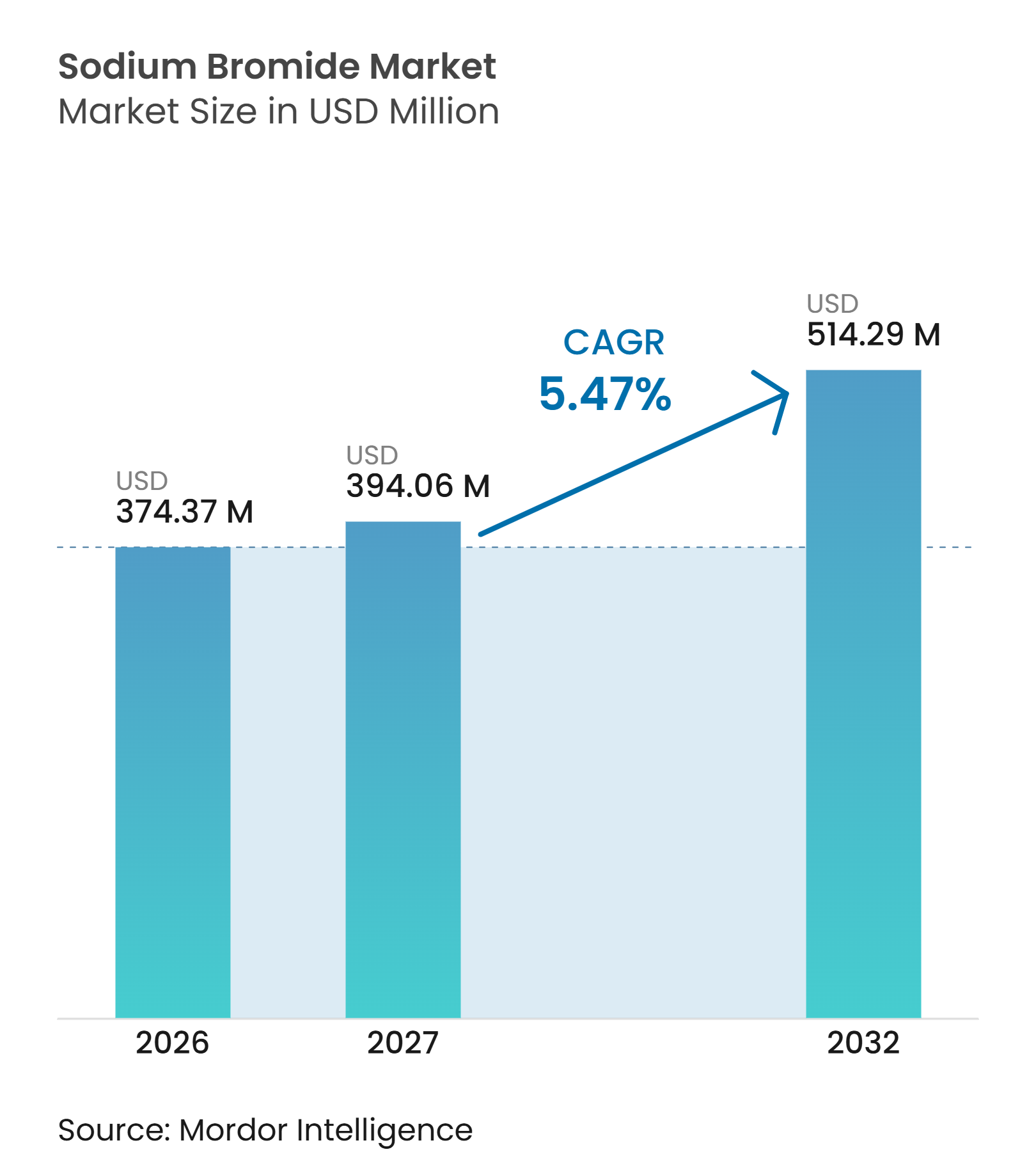
The global sodium bromide market size was valued at USD 374.37 million in 2026 and is estimated to grow from USD 394.06 million in 2027 to USD 514.29 million by 2032, at a CAGR of 5.47% during the forecast period (2027-2032). The sodium bromide market is primarily driven by oilfield chemistry, where high-density, clear-brine fluids are used in deepwater and high-pressure wells. Cooling-water biocides, pharmaceutical intermediates, and specialty chemicals provide suppliers with additional revenue streams beyond upstream activity. Demand rises quickly when drilling schedules change, as completion-fluid formulation is tied to well-spud decisions. Supply diversification remains important where production is concentrated in a limited number of locations. Desalination-brine recovery could create an additional feedstock pathway if the documented electrodialysis and nanofiltration methods are deployed at scale in the Gulf Cooperation Council region.
Key Report Takeaways
- By product type, Industrial Grade held 78.13% of the sodium bromide market share in 2026, while Medical Grade is projected to record the highest CAGR of 6.12% through 2032.
- By end-user industry, Oil and Gas held 58.56% of the sodium bromide market share in 2026, while Pharmaceuticals is projected to expand at the highest CAGR of 6.56% through 2032.
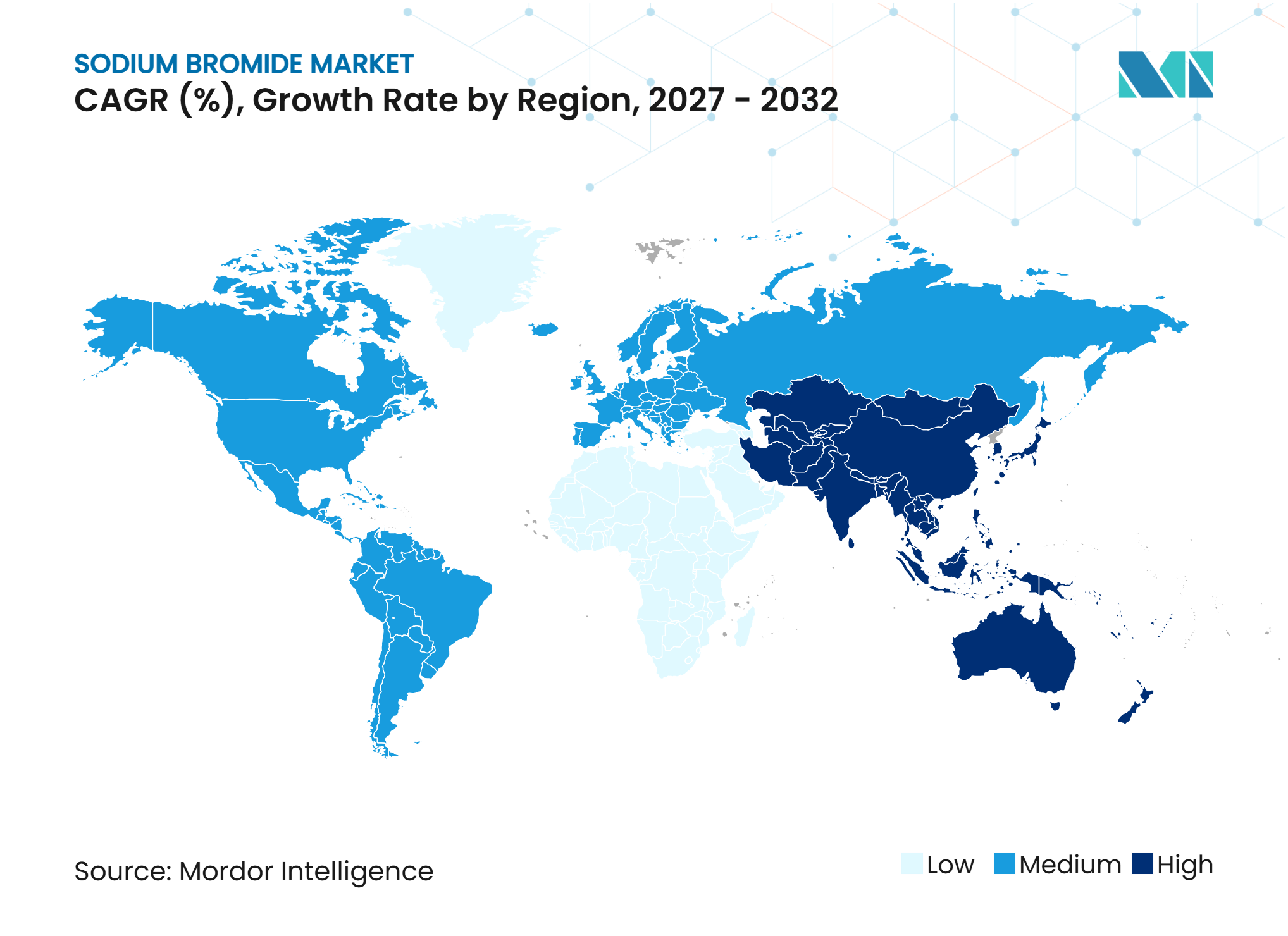
- By geography, North America accounted for 45.12% of global sodium bromide market size in 2026, while Asia-Pacific is projected to grow at the highest CAGR of 6.44% through 2032.
Note: Market numbers in this report are based on Mordor Intelligence's proprietary estimation framework, which combines nine months of actuals with Q4 projections for base year 2026.
Market Trends and Insights
Drivers Impact Analysis of Sodium Bromide Market*
| Drivers | (~) % Impact on CAGR Forecast | Geographic Relevance | Impact Timeline |
|---|---|---|---|
| Offshore and Deepwater Well Completion Activity | +1.5% | Global, concentrated in Gulf of America, pre-salt Brazil, and offshore West Africa | Short term (≤ 2 years) |
| Industrial Cooling-Water Biocide Adoption | +0.5% | North America and Europe | Medium term (2-4 years) |
| Expansion of Pharmaceutical and Specialty-Chemical Synthesis | +0.8% | Asia-Pacific (APAC) core, China and India, with spillover to Middle East and Africa (MEA) | Medium term (2-4 years) |
| High-Density Clear-Brine Requirements in Complex Wells | +1.2% | Global, with early gains in Gulf of America and pre-salt Brazil | Short term (≤ 2 years) |
| Bromine Recovery from Desalination-Brine Waste Streams | +0.3% | Middle East and Africa, with spillover to South Asia | Long term (≥ 4 years) |
| Source: Mordor Intelligence | |||
Offshore and Deepwater Well Completion Activity
Deepwater completions in the Gulf of America, Brazil's pre-salt polygon, and offshore West Africa support demand for sodium bromide clear-brine fluids. These fluids maintain wellbore pressure without solids that can damage the formation. TETRA Technologies completed three TETRA CS Neptune clear-brine fluid wells in the Gulf of America during 2025, reflecting continued demand for single-salt and blended NaBr formulations. ICL reported higher United States clear-brine fluid sales in the second quarter of 2025, with further increases in South America and Europe in the fourth quarter. Narrow pressure windows in ultra-deep formations make fluid quality and density control more important for completion planning. The sodium bromide market benefits from long development timelines, which can give suppliers clearer visibility into demand.
High-Density Clear-Brine Requirements in Complex Wells
Modern high-pressure and high-temperature wells require sodium bromide grades that meet strict density and purity specifications. An October 2025 technical paper described a 12.5 pounds-per-gallon NaBr brine used in a well designed for pressures above 25,500 psi. The completion interval consumed 31,500 barrels of fluid, illustrating the material intensity of these projects. Commodity suppliers cannot readily meet the low-solids and density-control requirements of this application, limiting competition to producers with qualified quality-management systems and established field capabilities. Development across ultra-deepwater acreage in the South Atlantic and East Mediterranean can sustain demand for high-specification products in the sodium bromide market.
Expansion of Pharmaceutical and Specialty-Chemical Synthesis
Pharmaceutical-grade sodium bromide is used as a reactive precursor in the synthesis of ambroxol hydrochloride, bromhexine, and selected anticonvulsants. Shandong Tianxin Pharma-Tech filed an environmental impact assessment in March 2025 for a 400-metric-ton-per-year ambroxol hydrochloride intermediate line in Shouguang, indicating continued expansion of pharmaceutical-linked fine-chemical production[1]. The European Food Safety Authority published a tolerable daily intake of 0.4 mg/kg of body weight for bromide in food and feed applications in January 2025. Pharmacopeial purity requirements restrict the number of qualified suppliers. India and China represent a large addressable base, as both countries are expanding active pharmaceutical ingredient production and domestic reagent supply chains.
Industrial Cooling-Water Biocide Adoption
Sodium bromide converts to hypobromous acid when activated with chlorine or sodium hypochlorite in cooling-water systems. This chemistry controls Legionella, biofilm, and algae, as neutral-to-alkaline conditions reduce the effectiveness of standalone chlorine. This can lower total halogen dosing requirements for industrial cooling systems. Data-center campuses, power plants, and petrochemical facilities apply these programs across multiple cooling towers. OSHA guidance on Legionella risk management underscores the need for effective control practices in cooling tower operations. This demand base provides the sodium bromide market with a source of consumption that is less directly tied to drilling cycles.
Restraints Impact Analysis of Sodium Bromide Market*
| Restraints | (~) % Impact on CAGR Forecast | Geographic Relevance | Impact Timeline |
|---|---|---|---|
| Bromine-Feedstock and Production-Region Concentration | -1.2% | Global, with immediate exposure in the Middle East and Europe | Medium term (2-4 years) |
| Crude-Oil Price and Upstream-Capex Volatility | -1.5% | Global | Short term (≤ 2 years) |
| Environmental Compliance for Bromide-Containing Discharge | -0.5% | North America and EU | Medium term (2-4 years) |
| Source: Mordor Intelligence | |||
Bromine-Feedstock and Production-Region Concentration
The global market faces supply risk due to the concentration of bromine feedstock production in a few regions. Israel, Jordan, and the United States are the primary production locations. ICL reported that its Dead Sea Bromine operation had an annual capacity of 280,000 metric tons and operated at 95% utilization through mid-2025. High utilization leaves little immediate capacity buffer if a production node is disrupted. The Arab Potash and Albemarle joint investment agreement, valued at JOD 576 million (USD 813 million), supports expansion at Jordan Bromine Company[2]. New desalination-brine recovery routes may reduce this geographic concentration over time, but they remain a longer-term supply option.
Crude-Oil Price and Upstream-Capex Volatility
Completion-fluid demand is directly tied to upstream capital expenditure, operator finances, and crude oil price expectations. A sustained 20% decline in oil prices would reduce drilling and completion activity in higher-cost deepwater basins. Gulf Resources reported that bromine-segment revenue rose 314.4% to USD 23 million during 2025 as oilfield activity recovered. The company also reported 19% facility utilization, illustrating the scale of idle capacity that can exist during weaker demand periods. LANXESS closed its Widnes, United Kingdom, aroma chemicals facility in 2026 and is improving efficiency at its El Dorado, Arkansas, facility, targeting EUR 50 million in annual savings by the end of 2027. Pharmaceutical and water-treatment grades can reduce, but not eliminate, exposure to an extended upstream downturn.
*Our forecasts treat driver/restraint impacts as directional, not additive. The impact forecasts reflect baseline growth, mix effects, and variable interactions.
Sodium Bromide Market Segment Analysis
By Product Type:
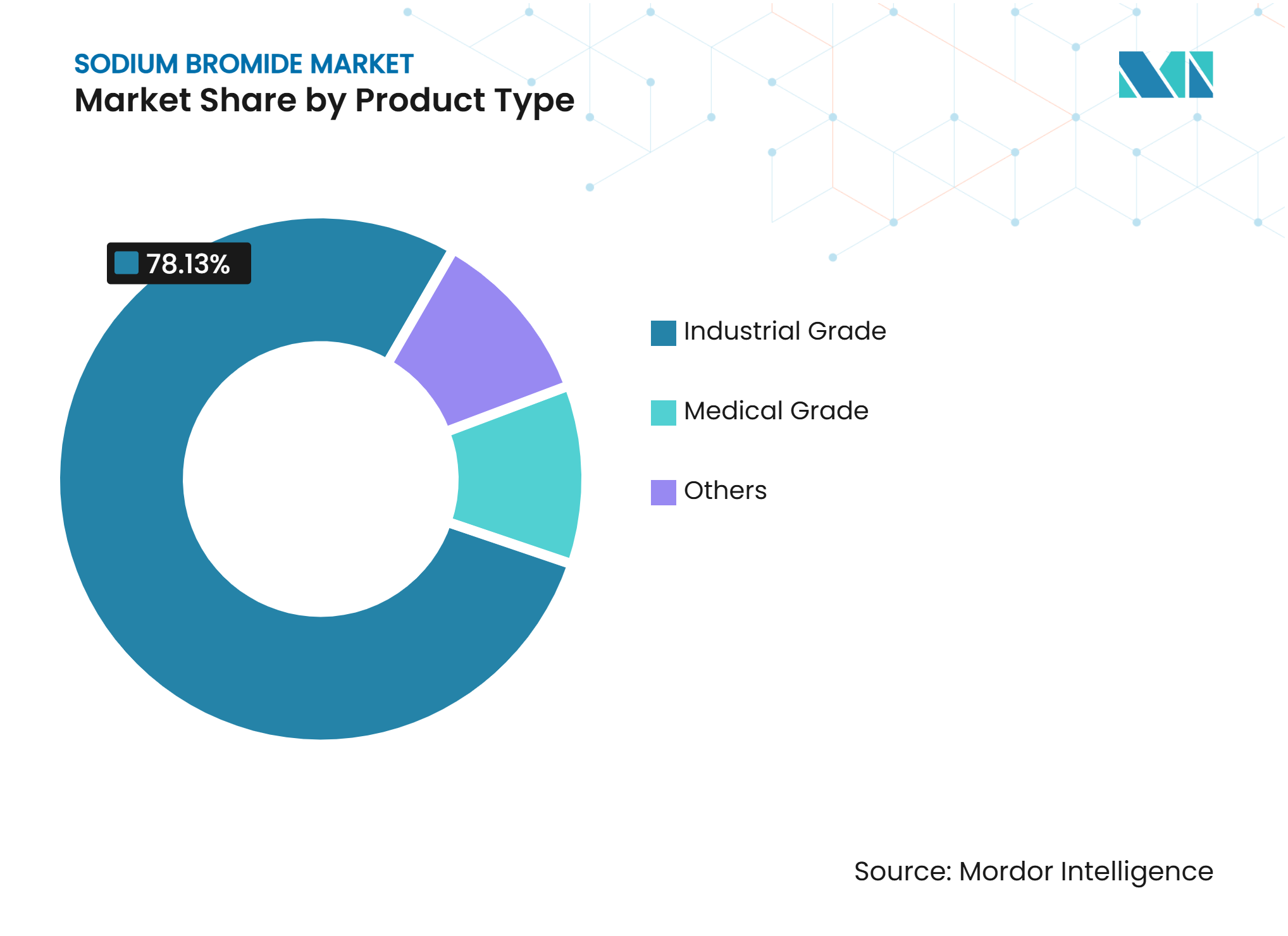
Industrial Grade Sustains Structural Pricing PowerIndustrial Grade held 78.13% of global value in 2026, reflecting the scale of oilfield fluid demand. The sodium bromide industry is closely tied to demand for clear-brine fluid in complex well completions. Industrial oilfield grades require strict control of purity and density, and these specifications support a higher-value position than basic technical material. Suppliers must consistently meet product requirements for large volumes of fluid, making the Industrial Grade closely linked to drilling schedules. National specification requirements in China are shaping domestic process-control investment. China's HG/T 3809-2023 industrial sodium bromide standard sets the national floor for specifications. This can narrow the quality gap for domestic producers serving cost-sensitive buyers and strengthen the competitive position of producers that can demonstrate repeatable process performance.
Medical Grade is projected to record a CAGR of 6.12% from 2027 to 2032, serving pharmaceutical synthesis routes that require tightly controlled impurity levels. Shandong Tianxin Pharma-Tech produces 10,000 metric tons of sodium bromide per year while expanding its pharmaceutical-intermediates capacity. Its March 2025 filing for a 400-metric-ton-per-year ambroxol-intermediates line signals investment in pharmaceutical-linked output. Pharmaceutical buyers require reliable product quality for regulated manufacturing, which distinguishes Medical Grade from larger-quantity Industrial Grade material. As this category expands, The market can achieve a more diversified product mix. The Others category includes photographic-emulsion chemicals, organic synthesis reagents, and food-industry processing aids. Digital imaging has reduced demand for some photographic applications, while specialty organic synthesis continues to consume smaller quantities for targeted reactions.



By End-User Industry:
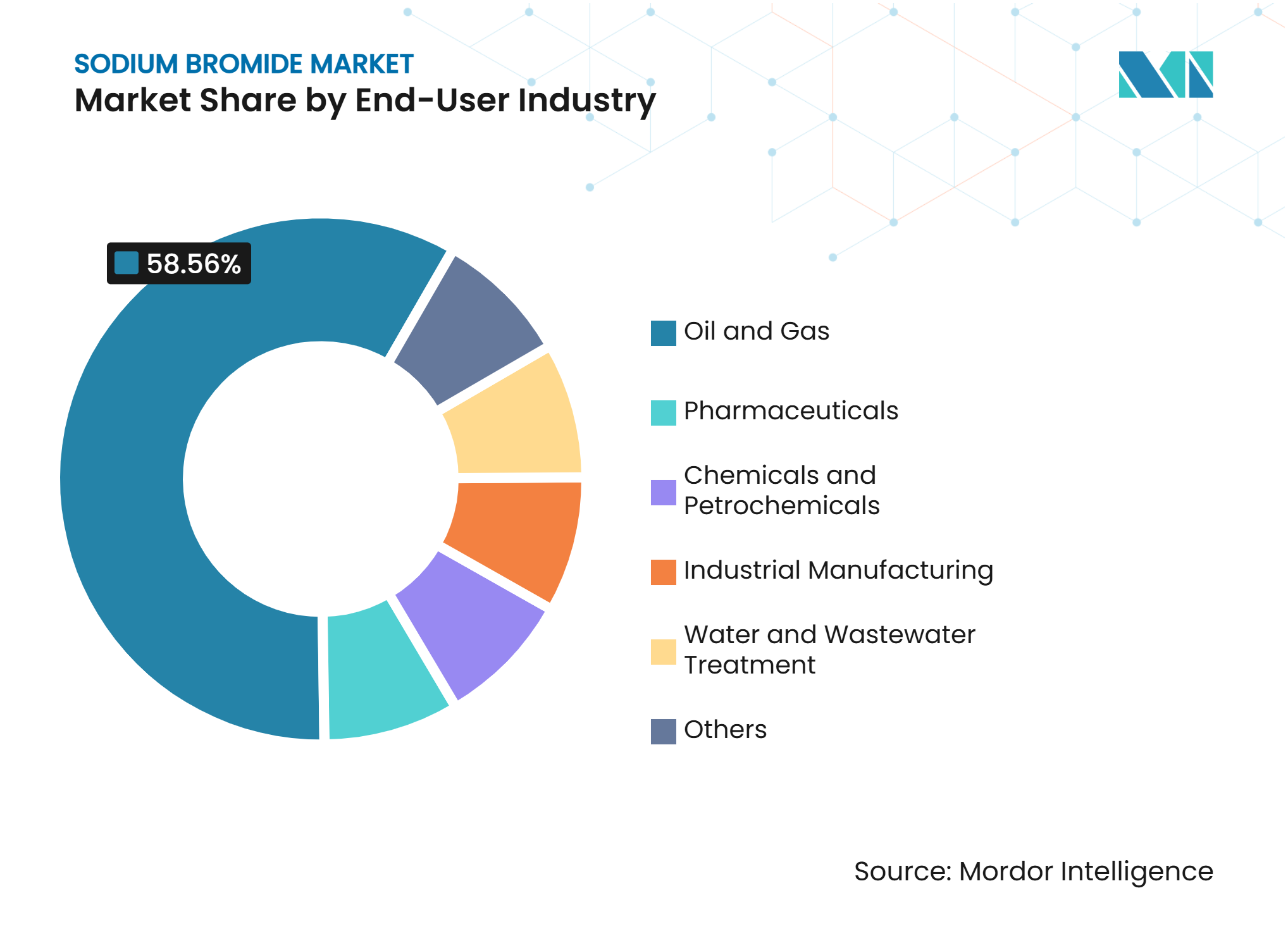
Oil and Gas Maintains Scale as Pharmaceuticals AccelerateOil and Gas accounted for 58.56% of global demand in 2026. Clear-brine completion fluids support this position in the Gulf of America, pre-salt Brazil, and offshore West Africa. TETRA operates its West Memphis, Arkansas, facility and its TETRA CS Neptune fluid platform, reporting 3 completed TETRA CS Neptune wells in the Gulf of America during 2025. The sodium bromide market depends on these oilfield applications for its largest source of demand. High-pressure well conditions make product specification a critical part of fluid selection. A shift from zinc-containing to zinc-free formulations can increase sodium bromide content per well in environmentally sensitive offshore formations. Chemicals and petrochemicals also use sodium bromide in specialty synthesis, while industrial manufacturing includes applications such as glass-fiber sizing and metal treatment, providing demand beyond the upstream cycle.
Pharmaceuticals are projected to grow at a CAGR of 6.56% through 2032, benefiting from the development of respiratory and neurological drugs. India and China are among the fastest-scaling markets for pharmaceutical-grade material. Their active pharmaceutical ingredient capacity and domestic sourcing policies support reagent demand. As this use expands, the sodium bromide industry can become less dependent on oil-price-sensitive activity. Water and wastewater treatment provides an additional outlet through cooling-tower biocide programs, serving industrial cooling systems at power, petrochemical, and data-center facilities. The pharmaceutical and water-treatment segments have distinct purchasing requirements compared with oilfield completion fluids, and their expansion can broaden the customer base over the forecast period. Consequently, the sodium bromide industry has additional avenues for demand growth beyond deepwater activity.

Geography Analysis
North America
North America accounted for 45.12% share in the global sodium bromide market for 2026. Its position is supported by the co-location of bromine production, offshore operators, and industrial consumers around the Gulf Coast and Arkansas. TETRA's West Memphis facility and LANXESS's El Dorado site form part of this supply base, while ICL reported higher United States clear-brine fluid sales in the second quarter of 2025. Pharmaceutical distribution and cooling-water biocide demand add channels beyond oilfield use. The U.S. Environmental Protection Agency lists sodium bromide as an active substance under the Toxic Substances Control Act (TSCA), establishing the baseline compliance environment for industrial use.
Asia-Pacific
Asia-Pacific is projected to grow at a CAGR of 6.44% through 2032, contributing to the expansion of the sodium bromide market size. China combines domestic production and consumption of bromine, and its producers operate under the HG/T 3809-2023 standard for industrial sodium bromide. Shandong Haiwang Chemical supplies SLB, Halliburton, and Baker Hughes from Shandong and overseas logistics nodes, according to its company materials. India's expanding pharmaceutical capacity supports medical-grade demand, while Japan and South Korea support specialty-chemical and semiconductor-process uses. Vietnam, Malaysia, and Indonesia represent a developing offshore exploration opportunity.
Diverging Trajectories Across Remaining Markets
Europe stabilized in 2025 after elevated input costs and greater regulatory scrutiny. LANXESS plans to close its Widnes facility in 2026 and target EUR 50 million in annual savings by the end of 2027. Brazil's pre-salt activity supports demand in South America, while Saudi Arabian oilfield services and South Africa's industrial base support demand in the Middle East and Africa. Research on Saudi Arabian seawater reverse osmosis brine and Shandong Tianyi's USD 32.5 million project in Egypt points to potential for local bromine recovery.
Competitive Landscape
Market Concentration
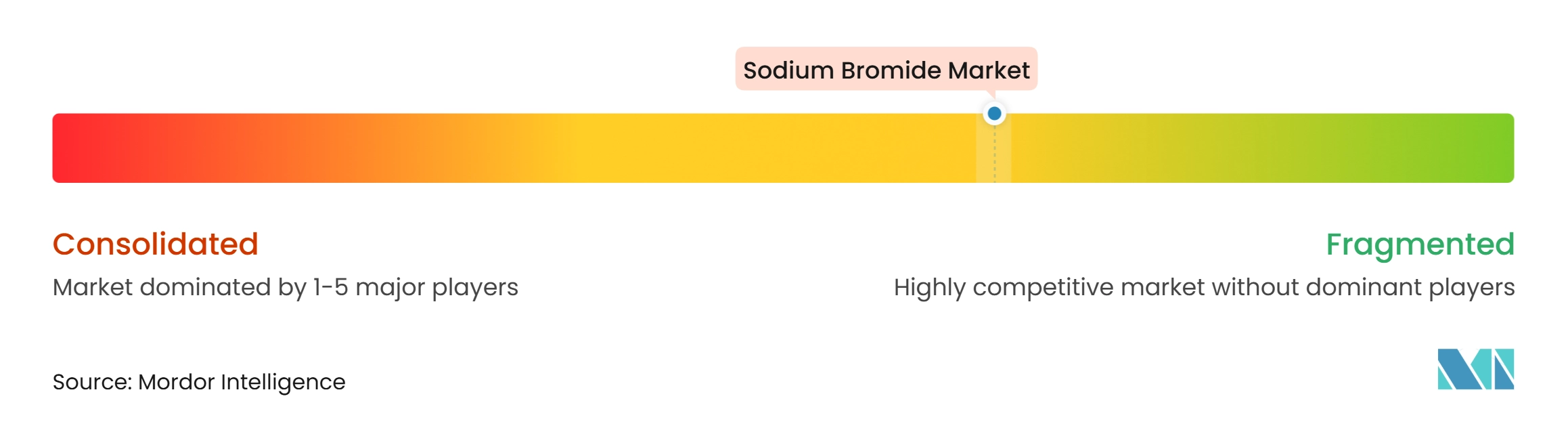
The sodium bromide market is moderately fragmented. Integrated producers compete on access to resources, processing infrastructure, and supply security. Formulated-product suppliers compete on certified purity, regulatory documentation, logistics, and reliable delivery. Albemarle reported that its NEBO process at Jordan Bromine Company converted a co-product stream into a salable product for the first time in 2025. Chinese producers are building export logistics networks and pursuing qualified-vendor positions with global oilfield-service customers.
TETRA completed Phase 1 of an Arkansas bromine processing plant in December 2025. The facility targets 75 million pounds (34,000 metric tons) of annual capacity by the end of 2027, reducing the company's reliance on third-party bromine supply. ICL reported 280,000 metric tons of annual capacity and 95% utilization at Dead Sea Bromine through mid-2025. Medical-grade supply in Asia-Pacific remains an opportunity for suppliers able to meet pharmacopoeial documentation requirements.
Research into electrodialysis and nanofiltration indicates that desalination-brine recovery is advancing as an alternative feedstock pathway. The agreement between Arab Potash and Albemarle to expand Jordan Bromine Company reflects continued investment in integrated capacity. Customers may favor multi-source procurement where available, particularly for high-quantity applications. Specialized qualifications, technical service, and location-specific feedstock resources continue to shape the sodium bromide market.
Sodium Bromide Industry Leaders
-
ICL
-
Albemarle Corporation
-
TETRA Technologies, Inc.
-
Jordan Bromine Company
-
LANXESS
- *Disclaimer: Major Players sorted in no particular order
Sodium Bromide Market Companies Covered in this Report
- Albemarle Corporation
- American Elements
- Gulf Resources, Inc.
- ICL
- Jordan Bromine Company
- LANXESS
- Merck KGaA
- Perekop Bromine
- Shandong Haiwang Chemical Co., Ltd.
- Shandong Tianxin Pharma-Tech Co., Ltd.
- Shandong Tianyi Chemical Co., Ltd.
- Tata Chemicals
- TETRA Technologies, Inc.
- Thermo Fisher Scientific Inc.
- Tokyo Chemical Industry Co., Ltd.
- Tosoh Corporation
Recent Industry Developments in Sodium Bromide Market
- December 2025: TETRA Technologies completed Phase 1 of its bromine processing plant at its Arkansas facility, including site preparation and installation of a 120-foot-tall bromine tower, on time and under budget. The plant targets an annual capacity of up to 75 million pounds (approximately 34,000 metric tons), with full operation expected by the end of 2027. This positions TETRA as a vertically integrated bromine producer, reducing its reliance on third-party supply contracts for sodium bromide production.
- November 2025: Drone strikes hit the Perekop Bromine Plant in Krasnoperekopsk, Crimea, severely disrupting its operations. The facility had served as a secondary source of bromine for Eastern European markets. Its removal from the available supply pool tightened regional spot-market conditions for sodium bromide, highlighting the risk of supply concentration within the global sodium bromide value chain.
Global Sodium Bromide Market Report Scope
Sodium bromide is an inorganic chemical compound with the formula NaBr. It is a white crystalline solid with a high melting point, similar in appearance to table salt. The compound is highly soluble in water and has a molar mass of 102.89 g/mol. It is produced by reacting hydrobromic acid with sodium hydroxide or sodium carbonate.
The sodium bromide market is segmented by product type, end-user industry, and geography. By product type, the market is segmented into industrial grade, medical grade, and others. By end-user industry, the market is segmented into oil and gas, water and wastewater treatment, pharmaceuticals, chemicals and petrochemicals, industrial manufacturing, and others. The report also covers market sizes and forecasts for sodium bromide across 15 countries in major regions. The market sizes and forecasts are provided in terms of value (USD).
Segmentation Overview
| Industrial Grade |
| Medical Grade |
| Others |
| Oil and Gas |
| Water and Wastewater Treatment |
| Pharmaceuticals |
| Chemicals and Petrochemicals |
| Industrial Manufacturing |
| Others |
| Asia-Pacific | China |
| India | |
| Japan | |
| South Korea | |
| ASEAN Countries | |
| Rest of Asia-Pacific | |
| North America | United States |
| Canada | |
| Mexico | |
| Europe | Germany |
| United Kingdom | |
| France | |
| Italy | |
| NORDIC Countries | |
| Rest of Europe | |
| South America | Brazil |
| Argentina | |
| Rest of South America | |
| Middle East and Africa | Saudi Arabia |
| South Africa | |
| Rest of Middle East and Africa |
| By Product Type | Industrial Grade | |
| Medical Grade | ||
| Others | ||
| By End-user Industry | Oil and Gas | |
| Water and Wastewater Treatment | ||
| Pharmaceuticals | ||
| Chemicals and Petrochemicals | ||
| Industrial Manufacturing | ||
| Others | ||
| By Geography | Asia-Pacific | China |
| India | ||
| Japan | ||
| South Korea | ||
| ASEAN Countries | ||
| Rest of Asia-Pacific | ||
| North America | United States | |
| Canada | ||
| Mexico | ||
| Europe | Germany | |
| United Kingdom | ||
| France | ||
| Italy | ||
| NORDIC Countries | ||
| Rest of Europe | ||
| South America | Brazil | |
| Argentina | ||
| Rest of South America | ||
| Middle East and Africa | Saudi Arabia | |
| South Africa | ||
| Rest of Middle East and Africa | ||
Key Questions Answered in the Report
What is current market size of Sodium Bromide Market?
The global sodium bromide market size was valued at USD 374.37 million in 2026 and is estimated to grow from USD 394.06 million in 2027 to USD 514.29 million by 2032, at a CAGR of 5.47% during the forecast period (2027-2032).
Which sodium bromide product category is growing the fastest?
Medical Grade is projected to grow at a CAGR of 6.12% through 2032, supported by demand for pharmaceutical synthesis. The sodium bromide market can achieve a more balanced product mix if projected increases in pharmaceutical-grade volumes materialize.
Which end-user segment has the highest demand for sodium bromide?
Oil and Gas held 58.56% market share in 2026 because high-density clear-brine fluids are used in deepwater and high-pressure well completions. These applications require precise density control and low-solids fluid specifications.
Which region will grow fastest for sodium bromide?
Asia-Pacific is forecast to expand at a CAGR of 6.44% through 2032, supported by Chinese production, Indian pharmaceutical manufacturing, and offshore activity in Southeast Asia. The sodium bromide market also has a growing regional opportunity in regulated pharmaceutical supply chains.