
Shampoo Bar Market Size and Share
Market Overview
| Study Period | 2022 - 2032 |
|---|---|
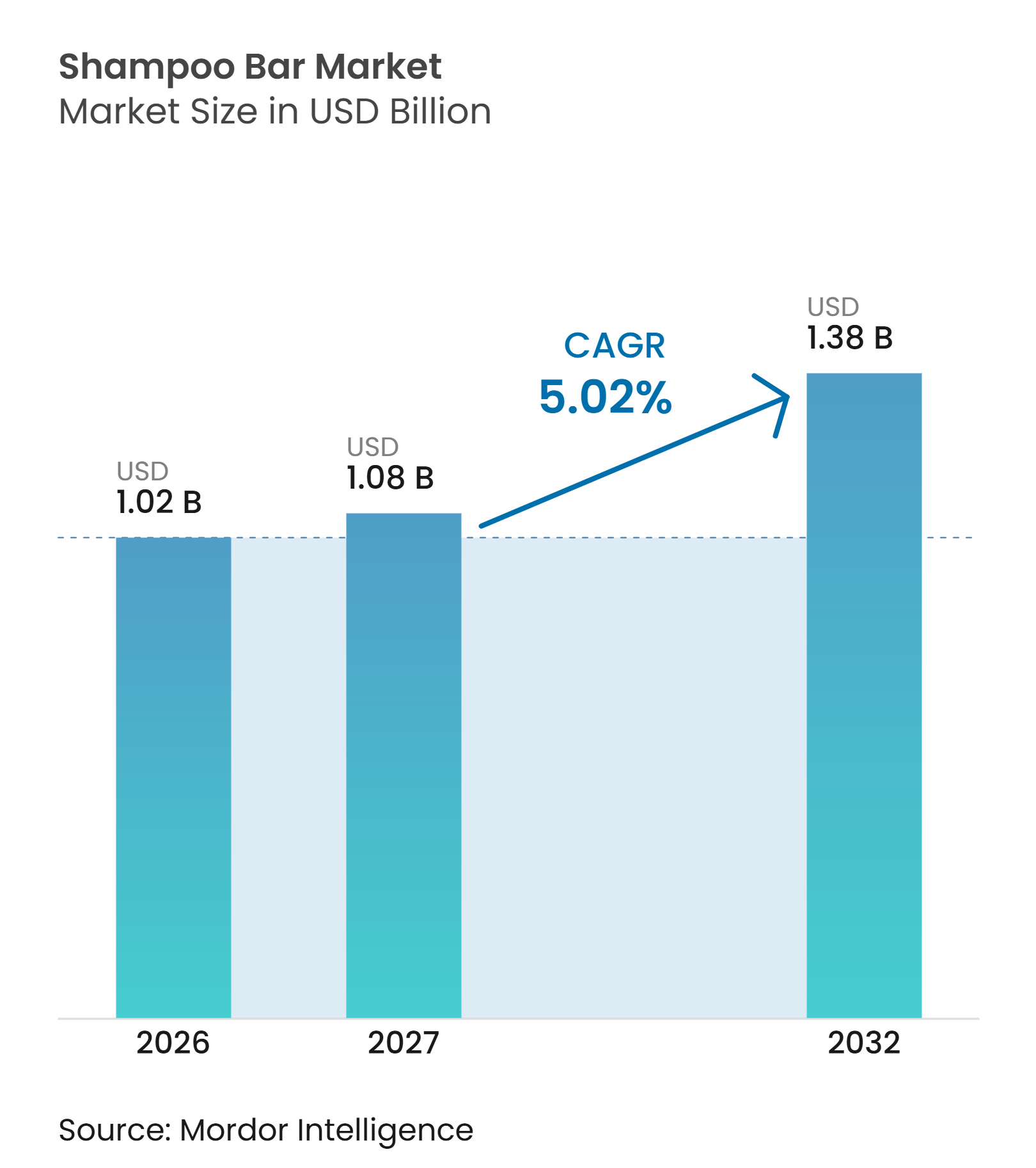
| Market Size (2027) | USD 1.08 Billion |
| Market Size (2032) | USD 1.38 Billion |
| Growth Rate (2027 - 2032) | 5.02 % |
| Fastest Growing Market | Asia-Pacific |
| Largest Market | North America |
| Market Concentration | Low |
Major Players *Disclaimer: Major Players sorted in no particular order Image © Mordor Intelligence. Reuse requires attribution under CC BY 4.0. | |
Shampoo Bar Market Analysis by Mordor Intelligence
The shampoo bar market size is expected to grow from USD 1.02 billion in 2026 to USD 1.08 billion in 2027 and is forecast to reach USD 1.38 billion by 2032 at 5.02% CAGR over 2027-2032. The market is moving from a sustainability-led niche toward a broader hair care format that must prove performance, ease of use, and value. Solid products avoid the water and packaging demands of liquid formats, while packaging rules in Europe are giving retailers and hospitality buyers a clearer reason to consider format changes. The market also benefits from the portability of compact products, especially among travelers and consumers who prefer lighter personal care items. Larger consumer goods companies can apply their scale in retail and product development, while specialist brands retain credibility around ingredients and low-waste formats.
Key Report Takeaways
-
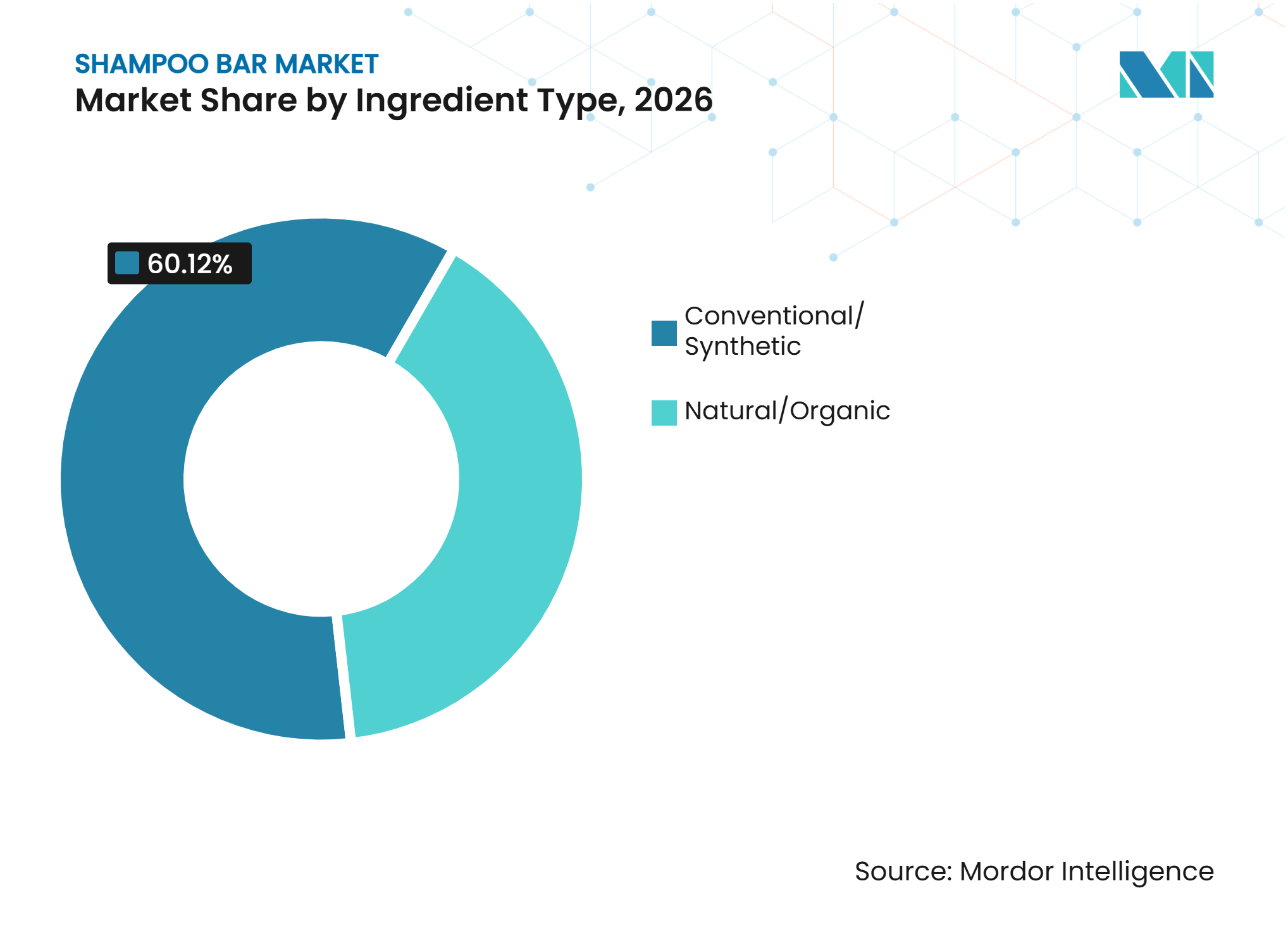
By ingredient type, conventional/synthetic held 60.12% of shampoo bar market share in 2026, while natural/organic is forecast to grow at a 6.38% CAGR through 2032.
-
By category, mass held 65.31% of shampoo bar market share in 2026, while premium is forecast to grow at a 6.12% CAGR through 2032.
-
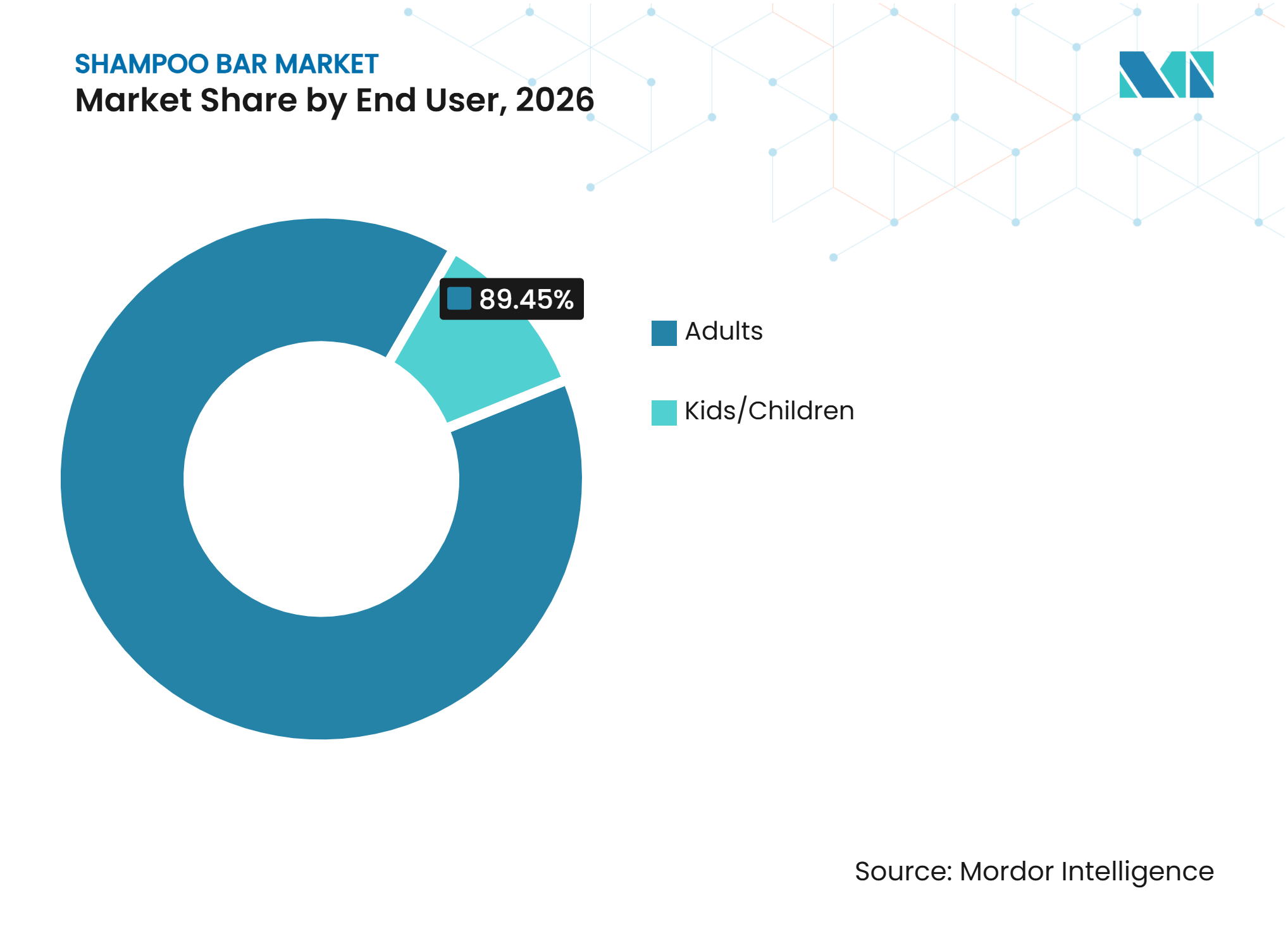
By end user, adults held 89.45% of shampoo bar market share in 2026, while kids/children is forecast to grow at a 6.27% CAGR through 2032.
-
By distribution channel, health and beauty stores held 28.25% of shampoo bar market share in 2026, while online retail stores is forecast to grow at a 6.89% CAGR through 2032.
-
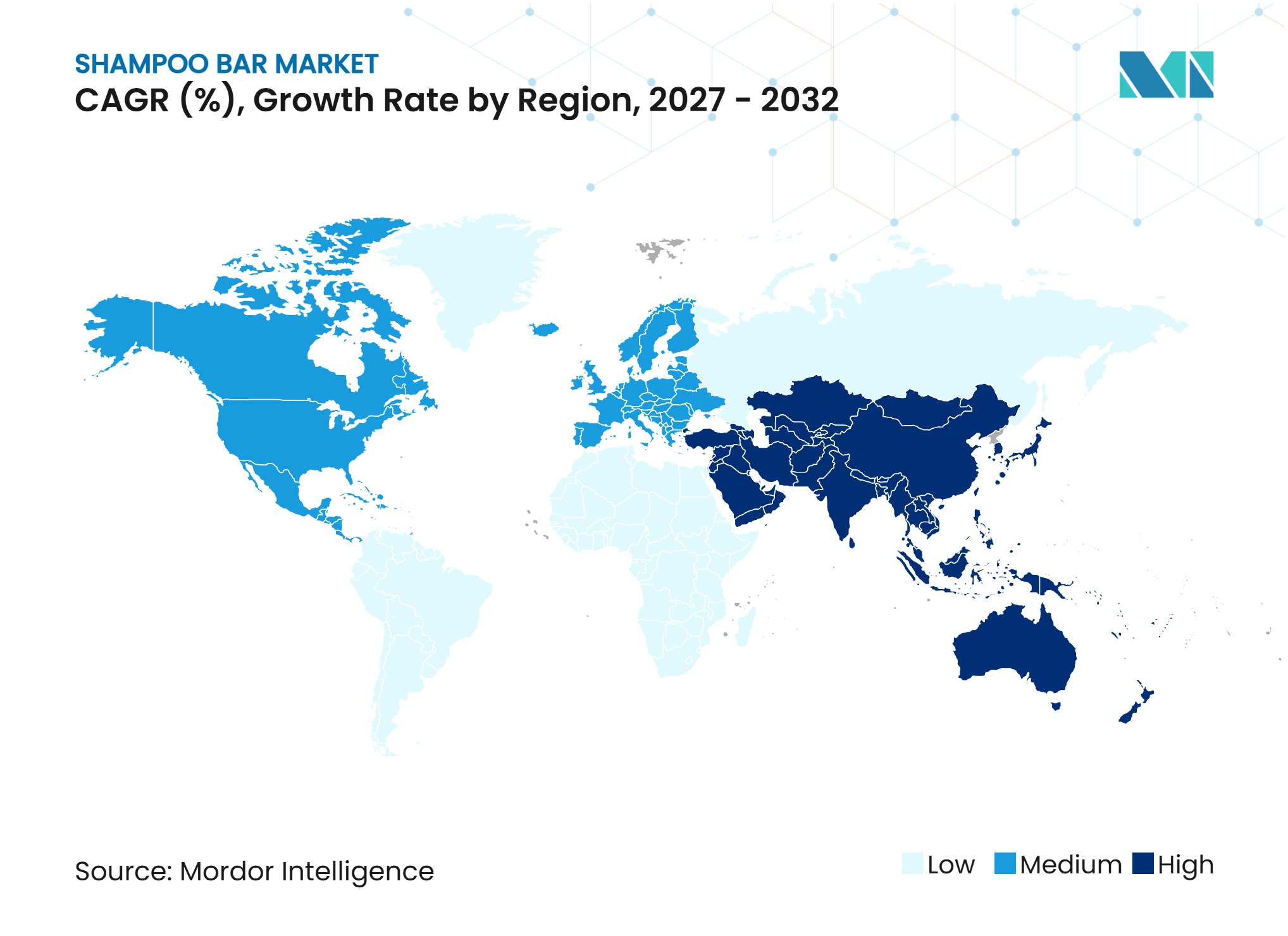
By geography, North America held 45.43% of shampoo bar market share in 2026, while Asia-Pacific is forecast to grow at a 5.94% CAGR through 2032.
Note: Market numbers in this report are based on Mordor Intelligence's proprietary estimation framework, which combines nine months of actuals with Q4 projections for base year 2026.
Market Trends and Insights
Drivers Impact Analysis of Shampoo Bar Market*
| Driver | (~) % Impact on CAGR Forecast | Geographic Relevance | Impact Timeline |
|---|---|---|---|
| Growing consumer preference for sustainable and plastic-free personal care products | +1.2% | Global, with highest intensity in North America and Western Europe | Short term (≤ 2 years) |
| Increasing awareness of the environmental impact of conventional liquid shampoo packaging | +1.0% | North America, EU, with spillover to urban Asia-Pacific markets | Short term (≤ 2 years) |
| Rising demand for travel-friendly and lightweight hair care products | +0.7% | Global, led by North American and Asia-Pacific travelers | Medium term (2-4 years) |
| Growing adoption of waterless and concentrated personal care formulations | +0.8% | North America, EU, and Asia-Pacific premium segments | Medium term (2-4 years) |
| Increasing consumer interest in natural, organic, and plant-based hair care ingredients | +0.7% | India, Japan, South Korea, and North America | Medium term (2-4 years) |
| Rising demand for multifunctional shampoo bars targeting specific hair and scalp concerns | +0.5% | North America and Europe, with growth in Asia-Pacific premium channels | Long term (≥ 4 years) |
| Source: Mordor Intelligence | |||
Growing Consumer Preference for Sustainable and Plastic-free Personal Care Products
Growing environmental concerns surrounding plastic pollution and packaging waste are encouraging consumers to shift towards sustainable personal care alternatives. According to the United Nations Environment Programme (UNEP), replacing liquid products with dry alternatives can help reduce plastic use and simplify packaging requirements. Shampoo bars align with this shift by offering concentrated cleansing formulations that generally require less packaging than conventional liquid shampoos. Consequently, consumers are increasingly considering solid haircare products that reduce dependence on plastic bottles and support lower-packaging consumption. Manufacturers are capitalizing on this demand by introducing shampoo bars with plant-derived ingredients, biodegradable formulations, and plastic-free packaging. These developments are strengthening the adoption of shampoo bars as a sustainable alternative within the global haircare market.
Increasing Awareness of the Environmental Impact of Conventional Liquid Shampoo Packaging
Increasing awareness of the environmental consequences of plastic packaging is encouraging consumers to reconsider conventional liquid shampoo products, which are commonly sold in plastic bottles. According to Our World in Data (November 2024), packaging accounted for approximately 40% of global plastic waste[1]. Conventional shampoo bottles also contribute to packaging waste, particularly when discarded after a relatively short product-use cycle. Growing concerns regarding landfill accumulation, marine pollution, and the limited recycling of plastic packaging are strengthening consumer interest in alternative haircare formats. Shampoo bars offer an alternative by eliminating the need for conventional liquid shampoo bottles and allowing products to be packaged in paper, cardboard, or other reduced-plastic materials.
Increasing Consumer Interest in Natural, Organic, and Plant-based Hair Care Ingredients
Growing consumer awareness of ingredient safety, scalp health, and product transparency is encouraging demand for natural, organic, and plant-based haircare formulations. The Nutrition Business Journal (2024) reported that 62% of consumers who purchase natural and organic personal care products consistently buy natural or organic haircare products[2]. This shift is encouraging manufacturers to incorporate botanical extracts, plant-derived surfactants, essential oils, herbal ingredients, and naturally sourced conditioning agents into shampoo bar formulations. Consumers are also showing greater interest in products positioned without certain synthetic additives, including sulfates and parabens. Consequently, manufacturers are expanding their natural and plant-based shampoo bar portfolios to address evolving ingredient preferences and strengthen their clean beauty positioning.
Rising Demand for Multifunctional Shampoo Bars Targeting Specific Hair and Scalp Concerns
Consumers are increasingly seeking haircare products that address multiple hair and scalp concerns through a single formulation, encouraging demand for multifunctional shampoo bars. According to a February 2024 consumer study conducted by The Benchmarking Company, 56% of US female consumers experienced frizzy hair, 54% reported dryness, and 23% experienced dry scalp issues. Furthermore, 97% of respondents looked for specific benefit statements on shampoo and conditioner products to address their existing haircare concerns[3]. Formulations incorporating ingredients such as tea tree oil, aloe vera, coconut oil, shea butter, and botanical extracts are being positioned to address specific hair and scalp requirements. Additionally, the development of specialized variants for damaged, dry, oily, and sensitive scalps is helping manufacturers differentiate their product portfolios. These innovations are strengthening the appeal of shampoo bars beyond basic cleansing applications.
Restraints Impact Analysis of Shampoo Bar Market*
| Restraint | (~) % Impact on CAGR Forecast | Geographic Relevance | Impact Timeline |
|---|---|---|---|
| Limited consumer awareness and familiarity with shampoo bars | -0.5% | Global, most pronounced in South America, Middle East and Africa, and rural Asia-Pacific | Medium term (2-4 years) |
| Concerns regarding lather formation and cleansing effectiveness | -0.4% | Global, particularly markets accustomed to sulfate-rich liquid shampoos | Short term (≤ 2 years) |
| Product softening and mushiness due to moisture exposure | -0.2% | Humid subtropical markets in Southeast Asia and South America | Medium term (2-4 years) |
| Higher prices of premium shampoo bars compared to liquid shampoos | -0.3% | Price-sensitive segments in South and Southeast Asia, Middle East and Africa, and South America | Long term (≥ 4 years) |
| Source: Mordor Intelligence | |||
Limited Consumer Awareness and Familiarity with Shampoo Bars
Limited consumer awareness and familiarity with shampoo bars continue to restrict their adoption across the global haircare market. Many consumers remain accustomed to conventional liquid shampoos and are less familiar with the application methods and performance characteristics of solid shampoo formulations. Uncertainty regarding product selection, lather generation, storage requirements, and suitability for different hair types can discourage first-time purchases. Additionally, some consumers perceive shampoo bars as less convenient or effective than traditional liquid alternatives, particularly when they have specific hair or scalp concerns. The limited availability of product demonstrations and consumer education further affects awareness, particularly in markets where shampoo bars have relatively low penetration.
Concerns Regarding Lather Formation and Cleansing Effectiveness
Consumer concerns regarding lather formation and cleansing effectiveness can hinder the wider adoption of shampoo bars in the global haircare market. Many consumers associate rich foam with effective cleansing and may perceive shampoo bars as less efficient than conventional liquid shampoos when they produce comparatively limited lather. Additionally, differences in water hardness, hair type, and formulation composition can influence the foaming and rinsing performance of solid shampoo products. Consumers unfamiliar with proper application techniques may also experience difficulty generating sufficient lather or distributing the product evenly across the scalp. Concerns regarding product residue, buildup, and hair manageability after washing can further discourage repeat purchases.
*Our forecasts treat driver/restraint impacts as directional, not additive. The impact forecasts reflect baseline growth, mix effects, and variable interactions.
Shampoo Bar Market Segment Analysis
By Ingredient Type:
Conventional Formulations Lead While Natural Products Grow FasterConventional/synthetic ingredients dominated the shampoo bar market, accounting for 60.12% of the market share in 2026. Their leading position is primarily supported by their established use in commercial shampoo formulations and widespread availability of raw materials. These ingredients offer manufacturers greater formulation flexibility, enabling the development of shampoo bars with consistent cleansing performance, lather generation, fragrance retention, and product stability. Their comparatively established manufacturing processes also support large-scale production and cost efficiency. Additionally, conventional ingredients allow manufacturers to maintain competitive product pricing while catering to mass-market consumer demand.
Natural/organic ingredients are projected to register the fastest growth in the shampoo bar market, with a CAGR of 6.38% through 2032. This growth is driven by increasing consumer preference for personal care products formulated with naturally derived and plant-based ingredients. Growing awareness of ingredient transparency and concerns regarding certain synthetic chemicals are encouraging consumers to explore natural and organic shampoo bar alternatives. Manufacturers are responding by incorporating plant-derived surfactants, botanical extracts, natural oils, and organic ingredients into their formulations. Furthermore, the growing popularity of sustainable and environmentally conscious personal care products is supporting demand for naturally formulated shampoo bars.



By Category:
Mass Products Provide Scale While Premium Products Build Performance ClaimsThe mass category dominated the shampoo bar market, accounting for 65.31% of the market share in 2026. Its leading position is primarily supported by the affordability and accessibility of mass-market personal care products. Shampoo bars in this category appeal to a broad consumer base by offering essential hair-cleansing benefits at relatively competitive prices. Their availability across supermarkets, hypermarkets, convenience stores, and online retail platforms further supports widespread adoption. Additionally, established personal care manufacturers leverage large-scale production and extensive distribution networks to maintain competitive pricing and product availability.
The premium category is projected to register the fastest growth in the shampoo bar market, with a CAGR of 6.12% through 2032. This growth is supported by increasing consumer interest in specialized haircare products that offer targeted benefits beyond basic cleansing. Premium shampoo bars often incorporate higher-value ingredients, including botanical extracts, natural oils, specialty surfactants, and conditioning agents. Growing awareness of hair and scalp health is encouraging consumers to explore formulations designed for specific concerns, such as dryness, frizz, damage, and sensitive scalps.
By End User:
Adults Account for Most Demand While Kids Products Offer Unserved NeedsThe adults segment dominated the shampoo bar market, accounting for 89.45% of the market share in 2026. Its leading position is primarily driven by the widespread adoption of solid haircare products among adult consumers. Adults represent a broad consumer base with diverse haircare requirements, including cleansing, moisturization, damage repair, dandruff control, and scalp care. Growing awareness of sustainable personal care alternatives is encouraging adult consumers to switch from conventional liquid shampoos to shampoo bars. Additionally, the availability of products targeting different hair types and specific hair concerns strengthens adoption across this demographic.
The kids/children segment is projected to register the fastest growth in the shampoo bar market, with a CAGR of 6.27% through 2032. This growth is supported by increasing parental awareness of children's personal care and haircare requirements. Parents are increasingly exploring gentle cleansing formulations designed to suit children's sensitive scalps and delicate hair. Manufacturers are responding by introducing child-focused shampoo bars with mild cleansing agents, skin-friendly ingredients, and formulations that minimize irritation.

By Distribution Channel:
Stores Support Discovery While Online Retail Supports Repeat PurchaseHealth and beauty stores dominated the shampoo bar market, accounting for 28.25% of the market share in 2026. Their leading position is supported by their specialized focus on personal care and beauty products, providing consumers with access to a wide range of shampoo bar formulations. These stores allow consumers to compare different brands, ingredients, fragrances, and product benefits before making purchasing decisions. Additionally, the availability of knowledgeable retail staff helps consumers identify suitable products based on their hair types and specific haircare requirements. The presence of established personal care brands and specialized natural beauty retailers further strengthens the distribution of shampoo bars through this channel.
Online retail stores are projected to register the fastest growth in the shampoo bar market, with a CAGR of 6.89% through 2032. This growth is driven by the increasing adoption of e-commerce platforms for purchasing personal care and beauty products. Online channels provide consumers with access to a broader selection of shampoo bar brands, formulations, and price ranges beyond the products available in physical retail stores. The availability of product descriptions, ingredient information, customer reviews, and ratings also helps consumers compare alternatives and make informed purchasing decisions.
Geography Analysis
North America
North America dominated the shampoo bar market, accounting for 45.43% of the market share in 2026. The region's leading position is supported by growing consumer awareness of sustainable personal care products and environmentally conscious purchasing habits. Consumers across the United States and Canada are increasingly exploring shampoo bars as alternatives to conventional liquid shampoos to reduce plastic packaging waste. The presence of established personal care manufacturers and specialized natural beauty brands further strengthens regional market development. Additionally, the widespread availability of shampoo bars through health and beauty stores, supermarkets, specialty retailers, and e-commerce platforms supports product accessibility.
Asia-pacific
Asia-Pacific is projected to register the fastest growth in the shampoo bar market, with a CAGR of 5.94% through 2032. This growth is supported by increasing consumer awareness of sustainable personal care products and growing interest in alternatives to conventional liquid shampoos. Rising disposable incomes and expanding middle-class populations across countries such as China, India, Japan, and South Korea are supporting demand for diverse haircare products. Additionally, the region's expanding e-commerce sector is improving access to international and locally manufactured shampoo bar brands. Growing interest in natural and plant-based personal care formulations is encouraging manufacturers to introduce products containing botanical extracts, herbal ingredients, and natural oils.
Europe, South America and Middle East and Africa
Europe, South America, and the Middle East and Africa are also contributing to the shampoo bar market, supported by growing awareness of sustainable personal care products, increasing interest in natural and organic haircare formulations, and expanding availability through specialty beauty retailers and online distribution channels. Europe benefits from established demand for environmentally conscious personal care products, while South America and the Middle East and Africa offer growth opportunities through expanding beauty and personal care markets and rising consumer awareness of plastic-free alternatives.
Competitive Landscape
Market Concentration
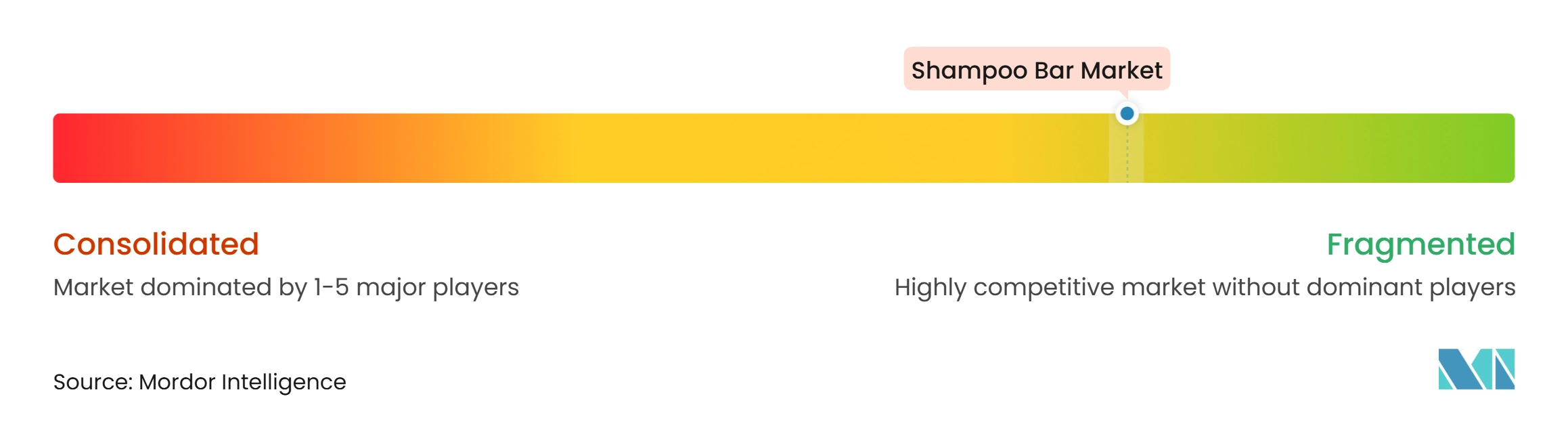
The Shampoo bar market remains fragmented, with large consumer goods companies competing alongside specialist solid-format brands. L'Oréal, Procter & Gamble, Unilever, Henkel, and Kao have advantages in supply networks, retail access, product development resources, and the ability to place products across several national markets. Specialist brands can differentiate through transparent ingredient stories, a narrow product focus, and stronger associations with low-waste hair care. No single company currently combines scale and specialist credibility across every channel. This leaves the market open to competition based on formulation quality, price, consumer education, and the ability to make a solid product easy to adopt.
Procter & Gamble's July 2025 Gemz launch through Target is a strategic move into waterless hair care that extends competition beyond traditional shampoo bars. HiBAR's August 2025 Soothe Shampoo Bar added scalp care and hair-growth preparation to its solid-format portfolio. Lush continues to use its reported packaging reduction record to support the environmental value of its shampoo bars. These moves show that established and specialist companies are pursuing different routes to differentiation, including new formats, scalp-related performance, and packaging reduction. The practical contest is between proven function, retail reach, credible sustainability claims, and the ability to generate repeat purchase after initial trial.
Competition also comes from concentrated formats that are not traditional bars, including powder-to-lather and refillable products, so bar brands cannot rely only on reduced packaging to keep a distinct position. Companies that make application easier and prove hair care benefits are better placed to improve repeat purchase, especially when consumers compare solid products with familiar liquid alternatives and want visible evidence that the alternative is practical in daily routines. Products aimed at scalp care, kids, and travel can address needs that standard cleansing bars do not fully serve, while hotel and airline amenity uses can provide another route for solid formats where packaging reduction is relevant.
Shampoo Bar Industry Leaders
-
Lush Retail Ltd.
-
L'Oréal S.A.
-
The Procter & Gamble Company
-
Ethique Limited
-
Unilever PLC
- *Disclaimer: Major Players sorted in no particular order
Shampoo Bar Market Companies Covered in this Report
- L'Oréal S.A.
- The Procter & Gamble Company
- Ethique Limited
- Lush Retail Ltd.
- Unilever PLC
- L'OCCITANE International S.A.
- Davines S.p.A.
- Grüum Europe Ltd.
- Shiseido Company, Limited
- HiBAR LLC
- J.R. Liggett, Ltd.
- Henkel AG & Co. KGaA
- Kao Corporation
- The Earthling Co. LLC
- The Yellow Bird LLC
- Beauty and the Bees Pty Ltd.
- Friendly Soap Ltd.
- Chagrin Valley Soap & Salve Co.
- Plaine Products LLC
- Kitsch LLC
Recent Industry Developments in Shampoo Bar Market
- July 2026: Lush launched a shampoo bar designed to provide a fuller-looking hair appearance and an invigorating scalp-care experience. The formulation incorporates cinnamon leaf, peppermint, and clove to deliver a warming and tingling sensation while cleansing the hair. The product targets consumers seeking additional volume and body, extending the application of shampoo bars beyond conventional cleansing and sustainability benefits.
- April 2026: Babo Botanicals introduced three solid shampoo bars, including Mango & Hibiscus Nourishing, Baobab & Rosehip Defining, and Tea Tree & Grapefruit Volumizing Shampoo Bar for additional haircare needs. The products incorporate plant-based ingredients and are formulated without sulfates, silicones, parabens, and phthalates. The launch also emphasizes targeted benefits for dry, color-treated, and frizz-prone hair while eliminating plastic packaging.
- January 2026: Chagrin Valley Soap & Salve introduced an unscented, coconut oil-free shampoo bar designed for all hair types. The formulation focuses on gentle cleansing while providing rich lather and improved hair manageability, targeting consumers seeking fragrance-free and alternative cleansing formulations.
Global Shampoo Bar Market Report Scope
Shampoo bar is a solid-form hair cleansing product formulated with surfactants, conditioning agents, oils, fragrances, and other functional ingredients to cleanse the hair and scalp. The shampoo bar market is segmented by ingredient type, category, age group, distribution channel and geography. Based on ingredient type, the market is segmented into conventional/synthetic and natural/organic. Based on category, the market is segmented into mass and premium. Based on end user, the market is segmented into adults, kids/children. Based on distribution channel, the market is segmented into supermarkets/hypermarkets, health and beauty stores, online retail stores and other distribution channels. By geography, the market is segmented into North America, Europe, Asia-Pacific, South America, and Middle-East and Africa. For each segment, the market sizing and forecasting have been done in value terms (USD billion).
Segmentation Overview
| Conventional/Synthetic |
| Natural/Organic |
| Mass |
| Premium |
| Kids/Children |
| Adults |
| Supermarkets/Hypermarkets |
| Health and Beauty Stores |
| Online Retail Stores |
| Other Distribution Channels |
| North America | United States |
| Canada | |
| Mexico | |
| Rest of North America | |
| Europe | United Kingdom |
| Germany | |
| France | |
| Italy | |
| Spain | |
| Netherlands | |
| Poland | |
| Belgium | |
| Sweden | |
| Rest of Europe | |
| Asia-Pacific | China |
| Japan | |
| India | |
| Australia | |
| Indonesia | |
| South Korea | |
| Thailand | |
| Singapore | |
| Rest of Asia-Pacific | |
| South America | Brazil |
| Argentina | |
| Colombia | |
| Chile | |
| Peru | |
| Rest of South America | |
| Middle East and Africa | South Africa |
| Saudi Arabia | |
| United Arab Emirates | |
| Nigeria | |
| Egypt | |
| Morocco | |
| Turkey | |
| Rest of Middle East and Africa |
| By Ingredient Type | Conventional/Synthetic | |
| Natural/Organic | ||
| By Category | Mass | |
| Premium | ||
| By End User | Kids/Children | |
| Adults | ||
| By Distribution Channel | Supermarkets/Hypermarkets | |
| Health and Beauty Stores | ||
| Online Retail Stores | ||
| Other Distribution Channels | ||
| By Geography | North America | United States |
| Canada | ||
| Mexico | ||
| Rest of North America | ||
| Europe | United Kingdom | |
| Germany | ||
| France | ||
| Italy | ||
| Spain | ||
| Netherlands | ||
| Poland | ||
| Belgium | ||
| Sweden | ||
| Rest of Europe | ||
| Asia-Pacific | China | |
| Japan | ||
| India | ||
| Australia | ||
| Indonesia | ||
| South Korea | ||
| Thailand | ||
| Singapore | ||
| Rest of Asia-Pacific | ||
| South America | Brazil | |
| Argentina | ||
| Colombia | ||
| Chile | ||
| Peru | ||
| Rest of South America | ||
| Middle East and Africa | South Africa | |
| Saudi Arabia | ||
| United Arab Emirates | ||
| Nigeria | ||
| Egypt | ||
| Morocco | ||
| Turkey | ||
| Rest of Middle East and Africa | ||
Key Questions Answered in the Report
What is the forecast for shampoo bars through 2032?
The category is forecast to grow from USD 1.02 billion in 2026 to USD 1.38 billion by 2032 at a 5.02% CAGR. Growth depends on greater consumer acceptance of solid formats and their demonstrated performance.
Which shampoo bar ingredient type is growing fastest?
Natural/Organic formulations are forecast to grow at a 6.38% CAGR through 2032.
Why are solid hair care products gaining demand?
Plastic reduction, waterless product design, travel convenience, and targeted hair and scalp benefits are supporting demand. European packaging rules also create a clear compliance factor for hospitality buyers.
Which sales channel is growing fastest for shampoo bars?
Online Retail Stores is forecast to expand at a 6.89% CAGR through 2032, supported by repeat purchase and digital product education.