
Seborrheic Keratosis Treatment Market Size and Share
Market Overview
| Study Period | 2021 - 2032 |
|---|---|
| Market Size (2027) | USD 2.91 Billion |
| Market Size (2032) | USD 3.88 Billion |
| Growth Rate (2026 - 2032) | 5.93 % |
| Fastest Growing Market | Asia-Pacific |
| Largest Market | North America |
| Market Concentration | Medium |
Major Players *Disclaimer: Major Players sorted in no particular order Image © Mordor Intelligence. Reuse requires attribution under CC BY 4.0. | |
Seborrheic Keratosis Treatment Market Analysis by Mordor Intelligence
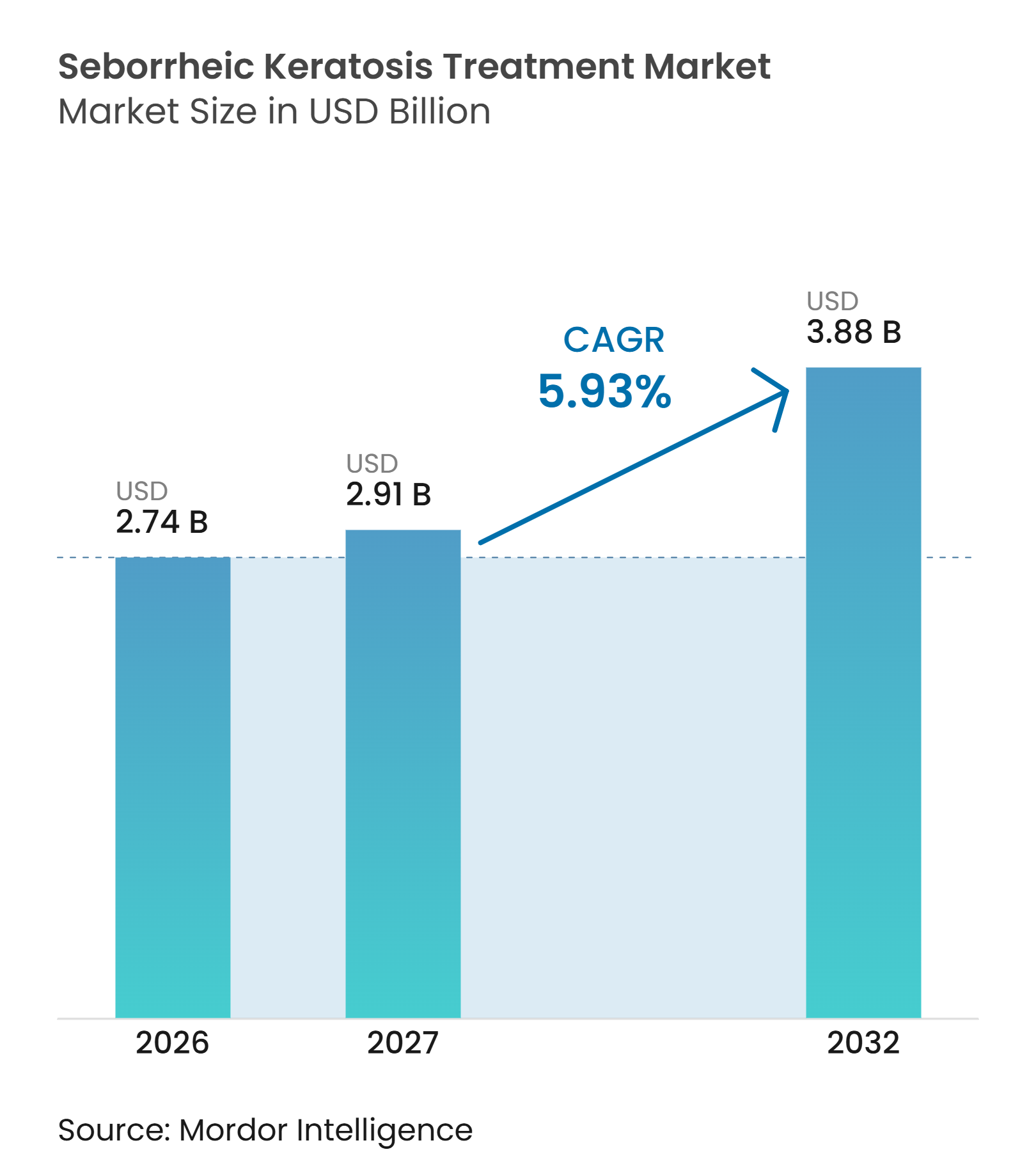
The Seborrheic Keratosis Treatment market size is projected to expand from USD 2.74 billion in 2026 to USD 3.88 billion by 2032, registering a CAGR of 5.93% between 2027 and 2032. The seborrheic keratosis treatment market is supported by a large and aging population with lesion burdens that often require repeated treatment. Cosmetic concerns are broadening demand beyond medically necessary removal, particularly in settings where patients can pay directly for care. Providers are placing greater value on treatments that shorten sessions, reduce discomfort, and provide acceptable cosmetic results for patients with several lesions. Device suppliers are responding with broader laser platforms, training programs, and evidence designed to support physician adoption. Reimbursement limits and the cost of advanced procedures continue to divide demand between medically necessary and cash-pay care.
Key Report Takeaways
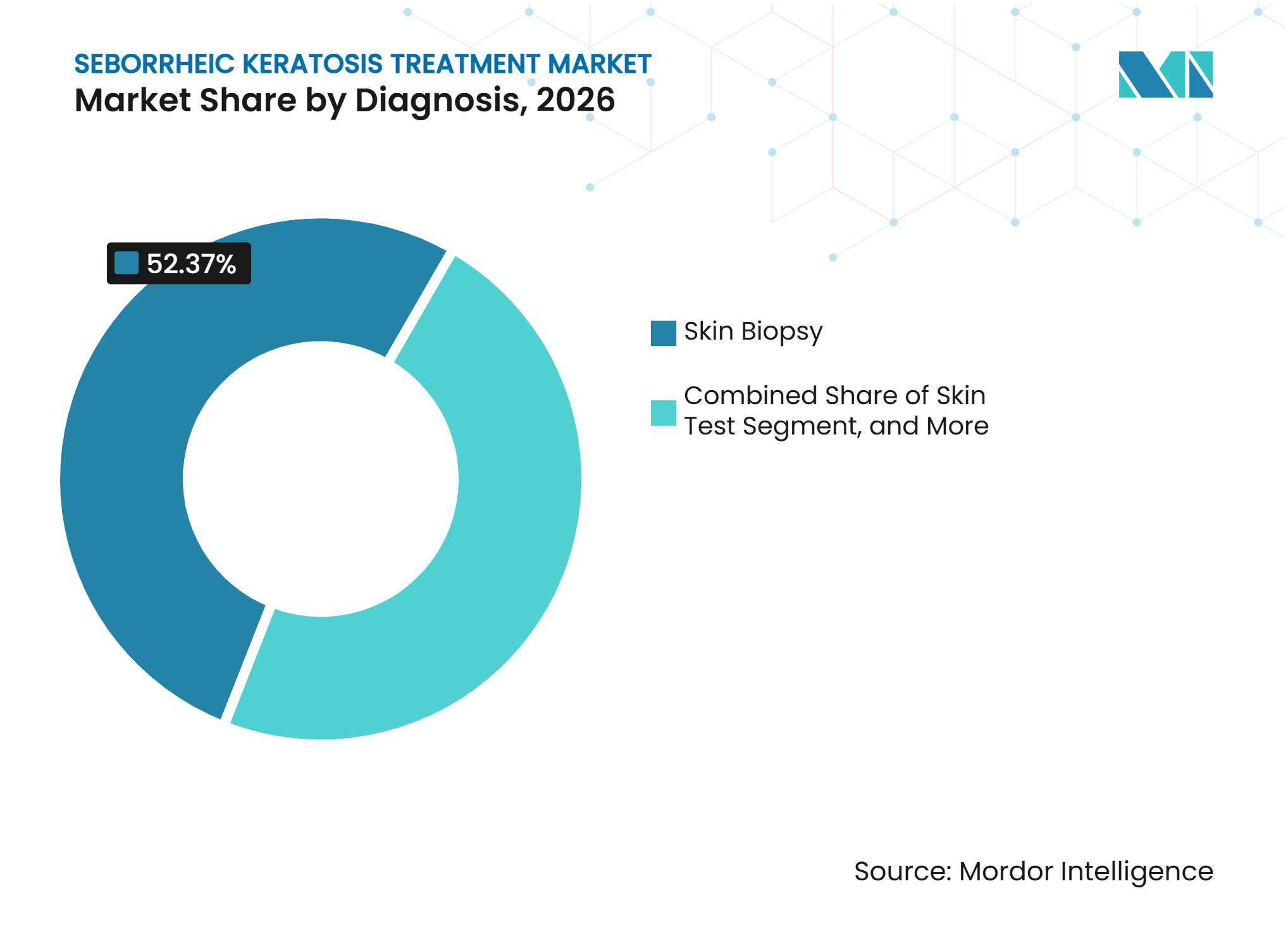
- By diagnosis, skin biopsy held 52.37% of the seborrheic keratosis treatment market share in 2026, while skin tests are forecast to grow at a 6.51% CAGR through 2032.
- By treatment type, cryotherapy held 33.48% of the seborrheic keratosis treatment market share in 2026, while ablative laser surgery is forecast to grow at a 6.82% CAGR through 2032.
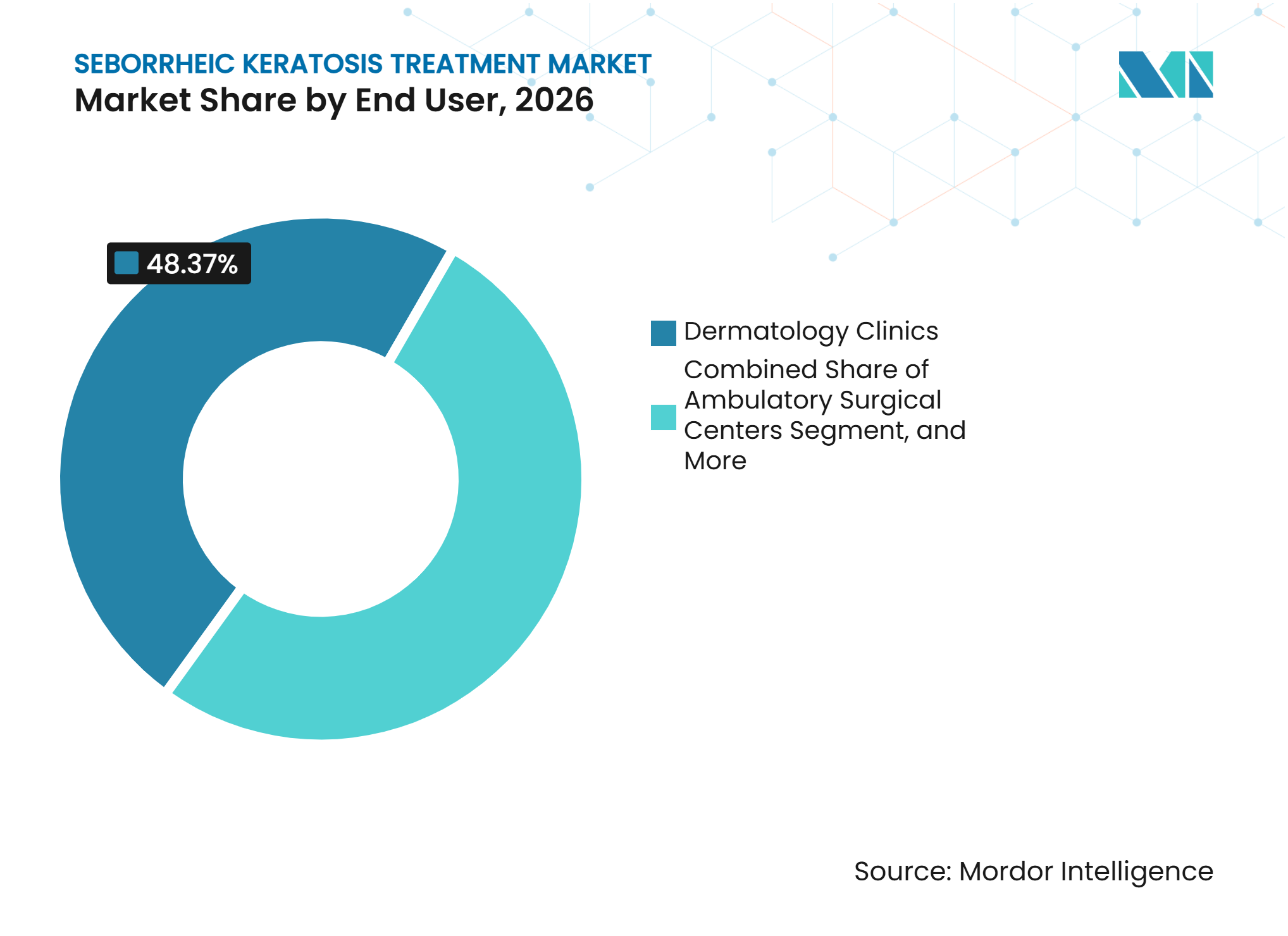
- By end user, dermatology clinics held 48.37% of the seborrheic keratosis treatment market share in 2026, while ambulatory surgical centers are forecast to grow at a 7.24% CAGR through 2032.
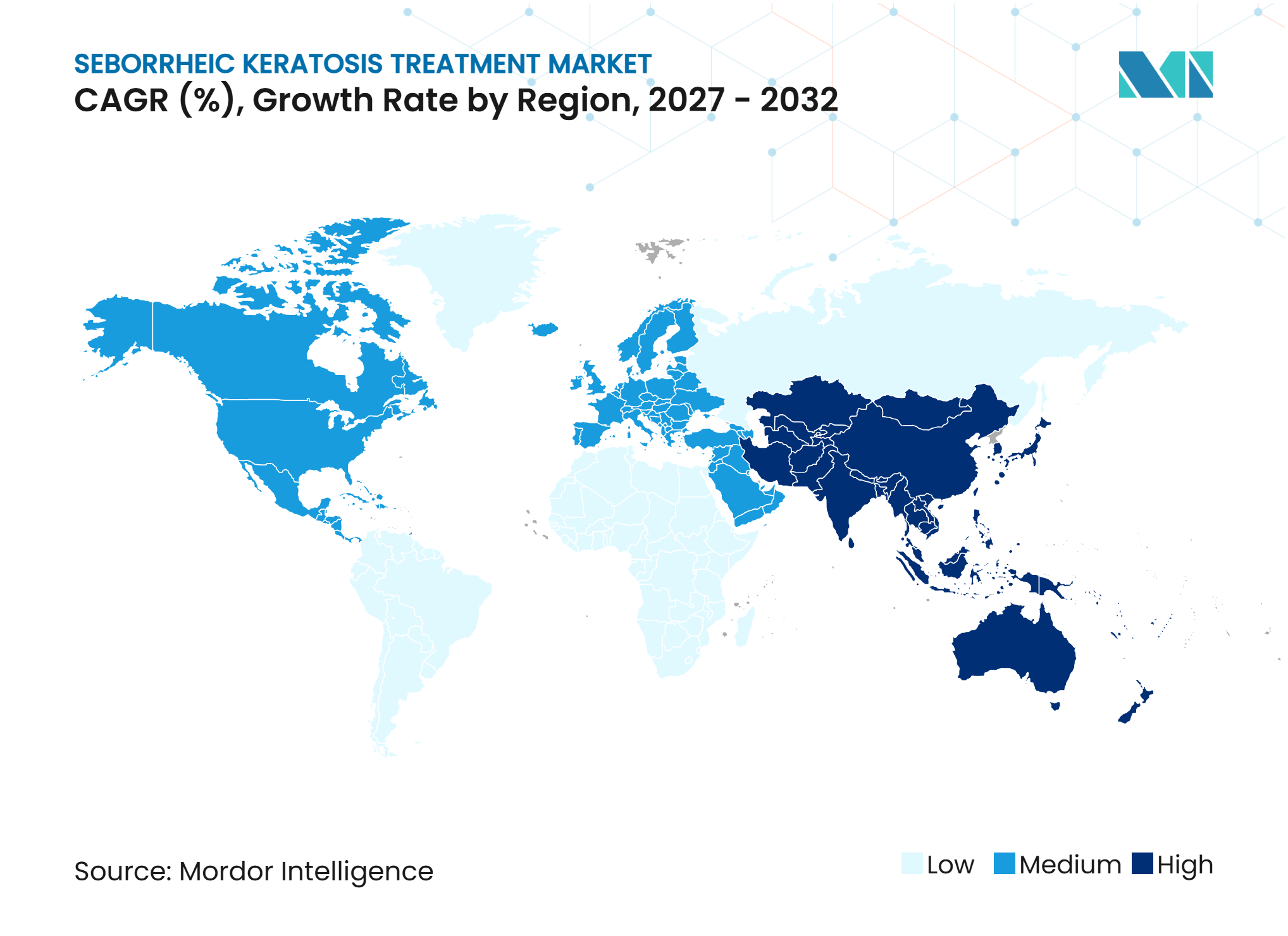
- By geography, North America held 39.27% of the seborrheic keratosis treatment market share in 2026, while Asia-Pacific is forecast to grow at an 8.53% CAGR through 2032.
Note: Market numbers in this report are based on Mordor Intelligence's proprietary estimation framework, which combines nine months of actuals with Q4 projections for base year 2026.
Market Trends and Insights
Drivers Impact Analysis of Seborrheic Keratosis Treatment Market*
| Driver | (~) % Impact on CAGR Forecast | Geographic Relevance | Impact Timeline |
|---|---|---|---|
| Rising Seborrheic Keratosis Prevalence in Aging Populations | +1.8% | Global | Long term (≥ 4 years) |
| Growing Preference for Cosmetic and Aesthetic Lesion Removal | +1.4% | North America and Europe | Medium term (2-4 years) |
| Wider Availability of Dermatology and Ambulatory Care Services | +0.8% | Global, with accelerated gains in Asia-Pacific | Medium term (2-4 years) |
| Adoption of Minimally Invasive and Office-Based Procedures | +1.1% | North America, Europe, and Asia-Pacific core markets | Short term (≤ 2 years) |
| AI-Assisted Lesion Triage and Diagnostic Confidence | +0.6% | North America and the European Union | Long term (≥ 4 years) |
| Demand for Lower-Burden Treatment of Multiple Lesions | +0.5% | North America and Europe | Medium term (2-4 years) |
| Source: Mordor Intelligence | |||
Rising Prevalence of Seborrheic Keratosis in Aging Populations
The seborrheic keratosis treatment market draws support from the high frequency of lesions among older adults. Published epidemiological evidence reports that seborrheic keratosis can occur in virtually all adults older than 50 years, while median lesion counts rise from 6 among people aged 15 to 25 years to 69 among those older than 75 years. A 2025 population-based study found benign skin tumors in up to 78.7% of adults aged 70 to 93 years, with seborrheic keratosis as the most common lesion type and more than 50 lesions in 15.6% of cases. A 2025 review of 1,169 cases also linked rising incidence with population aging and greater public awareness, while the 40 to 59 age group had the highest concentration of diagnoses. This pattern makes midlife patients commercially important because they may have both cosmetic motivation and a lower reluctance to undergo a procedure. Practices need efficient multiple-lesion workflows because lesion count can lengthen the visit, increase discomfort, and raise the cost of a cosmetic session.
Growing Preference for Cosmetic and Aesthetic Lesion Removal
The seborrheic keratosis treatment market also benefits from demand that is not tied to payer approval. Cosmetic removal gives dermatology practices a direct-pay revenue stream when a lesion does not meet medical necessity criteria. Schweiger Dermatology Group reported more than 2.5 million patient visits in 2025, showing the scale of demand for in-office dermatology services. This demand supports the inclusion of seborrheic keratosis removal in treatment programs that also address resurfacing and pigment correction. Such programs can increase revenue per visit and help justify investment in multimodality equipment. The model is most established in higher-income urban areas, where cash-pay aesthetic care is more accessible.
Adoption of Minimally Invasive and Office-Based Procedures
Minimally invasive procedures are gaining use because patients value tolerability, limited downtime, and cosmetic outcomes. A 2025 prospective study found that 67% of patients preferred laser treatment for future procedures, despite curettage producing higher objective clearance of 87.5% compared with 55% for laser treatment. The preference reflected limited bleeding and the lack of a need for post-procedure dressings. Dermatology clinics and ambulatory surgical centers can extend access by combining removal with cosmetic or resurfacing procedures in outpatient settings. FDA 510(k) clearance remains an important compliance factor for device adoption in the United States.[1] Office-based methods can also reduce the burden of treating multiple lesions in a single session.
AI-Assisted Lesion Triage and Diagnostic Confidence
AI-supported analysis can reduce uncertainty before a provider selects a destructive treatment. A confident benign classification can move an appropriate patient away from biopsy and toward same-visit treatment. In 2025, NICE granted conditional approval for the DERM system from Skin Analytics. It stated that early evidence suggested it could halve referrals within the urgent skin cancer pathway compared with teledermatology alone. A 2025 study reported an AUROC of 0.9668 for distinguishing malignant from benign lesions through 3D total-body photography and machine learning. These tools do not replace clinical review, but they may make the care pathway more efficient. The seborrheic keratosis treatment market may therefore gain when triage reduces delays between assessment and treatment.
Restraints Impact Analysis of Seborrheic Keratosis Treatment Market*
| Restraint | (~) % Impact on CAGR Forecast | Geographic Relevance | Impact Timeline |
|---|---|---|---|
| Limited Reimbursement for Cosmetic or Non-Medically Necessary Removal | -1.4% | North America and Western Europe | Long term (≥ 4 years) |
| High Out-of-Pocket Cost of Advanced Energy-Based Treatments | -0.9% | Global, with higher severity in emerging markets | Medium term (2-4 years) |
| Pigmentary Changes, Scarring, Pain, and Recurrence Risk | -0.6% | Global, with elevated concern in Asia-Pacific and the Middle East and Africa | Medium term (2-4 years) |
| Limited Long-Term Evidence for Emerging Topical and Energy-Based Therapies | -0.5% | Global | Long term (≥ 4 years) |
| Source: Mordor Intelligence | |||
Limited Reimbursement for Cosmetic or Non-Medically Necessary Removal
Reimbursement remains a sustained constraint on the seborrheic keratosis treatment market. Medicare coverage depends on medical necessity, and the applicable local coverage framework requires documentation when removal is performed for symptoms or diagnostic uncertainty. Cosmetic requests are generally not reimbursed, which leaves many patients to fund care directly. Similar coverage approaches are used by major private carriers, separating cash-pay cosmetic care from treatment that meets medical criteria. Documentation and Advance Beneficiary Notice requirements can add administrative work when coverage is uncertain. These limits restrict treatment volumes among price-sensitive patients and favor higher-income urban patient groups.
High Out-of-Pocket Cost of Advanced Energy-Based Treatments
Advanced energy-based procedures can be difficult to afford when insurance does not contribute to treatment costs. The draft cited Japanese private-clinic pricing of JPY 8,800 for lesions under 4 mm, JPY 30,000 for larger lesions, and JPY 132,000 to JPY 550,000 for full-face treatment. These prices position advanced laser treatment as a premium aesthetic service. The cost rises sharply when a patient has 20 to 50 lesions and requires more than 1 session. This can limit uptake in price-sensitive parts of Asia-Pacific and the Middle East and Africa. Lower-cost, rapid-treatment platforms may provide device suppliers with access to a broader patient base.
*Our forecasts treat driver/restraint impacts as directional, not additive. The impact forecasts reflect baseline growth, mix effects, and variable interactions.
Seborrheic Keratosis Treatment Market Segment Analysis
By Diagnosis:
Biopsy Retains Its Central Role in Ambiguous LesionsSkin biopsy accounted for 52.37% of the seborrheic keratosis treatment market size within diagnosis in 2026. Its position reflects continued reliance on histopathological confirmation when lesion morphology raises concern about malignancy. Most markets do not yet have a broadly adopted and reimbursed noninvasive diagnostic standard for seborrheic keratosis. Biopsy can therefore remain necessary before a destructive procedure when the diagnosis is uncertain. This clinical caution supports its large share of diagnostic activity.
Within the seborrheic keratosis treatment market, skin tests are forecast to expand at a 6.51% CAGR through 2032. These tests include dermoscopy and AI-supported image assessment, which are being incorporated into dermatology workflows. A 2026 review found that dermoscopy, reflectance confocal microscopy, and optical coherence tomography improve differentiation between seborrheic keratosis and malignant lesions.[2] Better noninvasive assessment can reduce biopsies for selected lesions and allow same-session destructive treatment. Clinical visual inspection without instrumental assistance is losing relative relevance, particularly for sun-exposed facial lesions where lentigo maligna must be considered.


By Treatment Type:
Cryotherapy Leads While Ablative Lasers Gain GroundCryotherapy held 33.48% of the seborrheic keratosis treatment market size within treatment type in 2026. Its use is supported by low capital requirements, physician familiarity, and possible reimbursement when the removal is medically necessary. The method remains practical for many routine lesions. Its limitations are more evident in cosmetic care, where hypopigmentation can be a concern. The concern is particularly relevant for darker skin types and exposed treatment sites.
Within the seborrheic keratosis treatment market, ablative laser surgery is projected to expand at a 6.82% CAGR through 2032. The 2025 review of 22 studies and 1,492 patients found that ablative CO₂ and Er: YAG devices achieved single-session clearance in up to 90% of lesions.[3] Curettage and shave excision remain useful for thick hyperkeratotic lesions or cases that need histopathological confirmation. Electrosurgery and electrocautery offer a cost-effective middle option, although scarring risk can affect their use on facial areas. Chemical peels and topical agents remain under investigation, and SM-020 gel may provide a future alternative for patients who are not suited to office procedures.
By End User:
Dermatology Clinics Hold the Largest PositionDermatology clinics accounted for 48.37% of the seborrheic keratosis treatment market share by end user in 2026. These clinics are the primary care setting for both cosmetic and medically necessary removal. Most procedures are outpatient and match the clinical capabilities of a dermatology practice. Clinics can combine physician expertise with in-office devices and follow-up care. Their role also makes them a natural setting for direct-pay aesthetic procedures.
Within the seborrheic keratosis treatment market, ambulatory surgical centers are projected to grow at a 7.24% CAGR through 2032. Their growth reflects the opportunity to combine seborrheic keratosis removal with resurfacing and other cosmetic visits. This model can increase revenue per patient while supporting efficient throughput. Hospitals retain a role for complex lesions, diagnostic uncertainty, and patients with several comorbidities. Routine cases are increasingly suited to lower-cost outpatient settings. The seborrheic keratosis treatment market is therefore likely to remain clinic-led while outpatient centers expand their share of selected procedures.

Geography Analysis
North America: Infrastructure and Direct-Pay Demand Support Regional Leadership
North America held 39.27% of the seborrheic keratosis treatment market share in 2026. High skin-health awareness, dense dermatology coverage, and direct-pay demand for cosmetic care support the regional position. The United States has more than 6,400 Medicare-certified ambulatory surgical centers, alongside additional cash-pay centers focused on plastic surgery and aesthetic dermatology. Medicare's 2025 Part B deductible was USD 257, after which Medicare covers 80% of medically necessary dermatology services. FDA 510(k) clearance acts as an important compliance filter for device adoption in this setting.
Asia-Pacific: Private Aesthetic Care and Digital Triage Expand Access
Asia-Pacific is forecast to expand at an 8.53% CAGR from 2027 to 2032. Japan, South Korea, and Australia have established dermatology systems and patients willing to pay for laser-based aesthetic treatment. In Japan, cryotherapy can be eligible under public coverage, while CO₂ and picosecond laser protocols used by private aesthetic clinics are self-funded. In South Korea, a 2025 study reported sensitivity of 78.2% and specificity of 88% for AI skin lesion classification in real-world hospital deployment. China and India offer volume potential, although rural recognition and the concentration of specialist care in Tier 1 cities limit access.
Europe, Middle East and Africa, and Latin America: Different Access Models Shape Demand
Europe is a mature but varied part of the seborrheic keratosis treatment market. Germany, the United Kingdom, and France have advanced dermatology infrastructure and widespread use of dermoscopy. NICE's conditional approval of AI-supported lesion triage may improve differentiation of seborrheic keratosis from suspected skin cancer in United Kingdom teledermatology services. GCC countries support premium laser procedures, while access is limited in much of sub-Saharan Africa and North Africa and cosmetic reimbursement is fragmented in South Africa and Brazil.
Competitive Landscape
Market Concentration
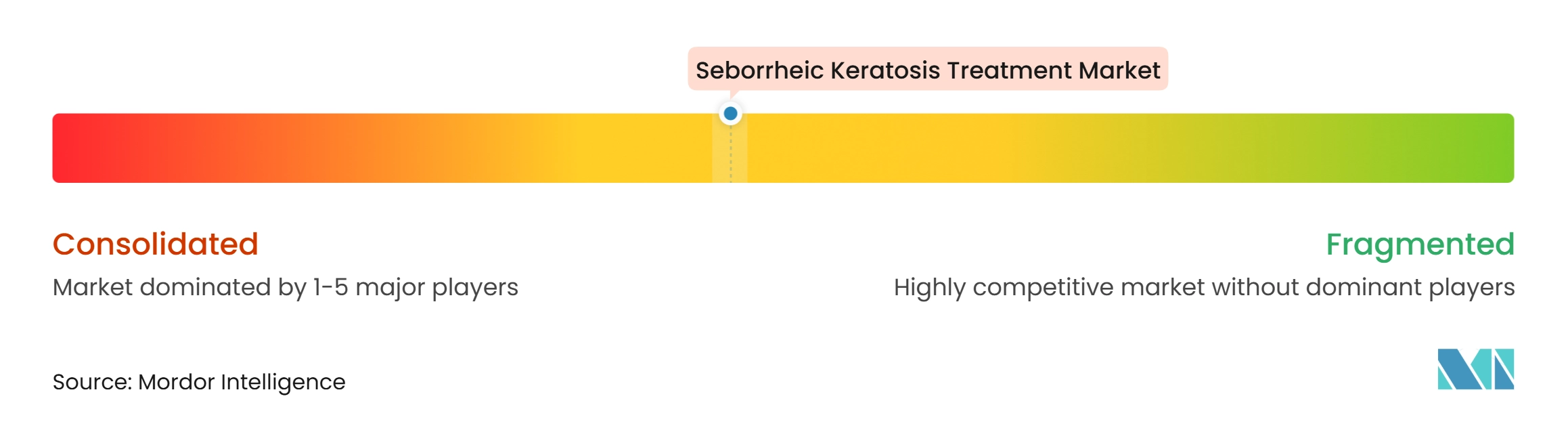
The seborrheic keratosis treatment market has 2 principal competitive groups: energy-based device manufacturers and topical therapy developers. Candela Medical, Lumenis, Cynosure Lutronic, Alma Lasers Ltd, Sciton, and Cutera offer broader aesthetic platforms where seborrheic keratosis removal is 1 application. This model supports investment through several clinical uses, while competition centers on device versatility, clinical evidence, and physician training. Brymill Cryogenic Systems, Metrum Cryoflex, and Wallach Surgical Devices compete in cryotherapy on reliability and liquid nitrogen delivery precision. No company-level combined share is provided, so a market concentration score cannot be assigned under the stated criteria.
Candela launched Vbeam Pro in April 2025, combining a 595 nm pulsed-dye laser with a 1,064 nm Nd: YAG platform. The company cited 20% improved lesion clearance, 50% faster treatment times, and 20% lower patient-reported discomfort than prior-generation systems. Candela also introduced the Glacē solution in March 2025 for skin preparation workflows that can complement ablative treatment and resurfacing. Cynosure Lutronic introduced the eCO₂ 3D fractional CO₂ platform in October 2025 with 120 μm, 300 μm, and 500 μm interchangeable tips in a 40-watt system. The launch reflects demand for equipment that covers lower-downtime resurfacing and deeper ablative procedures.
The leading pharmaceutical opportunity is treatment for patients with multiple lesions. ESKATA's withdrawal left a gap not filled by an approved topical alternative. DermBiont's Phase 2 SM-020 gel is the most advanced candidate noted in the supplied evidence. If approved, it could establish a separate option for patients who are poor candidates for office procedures. Erbe Elektromedizin retains a position in electrosurgery because of low capital costs and widespread outpatient use.
Seborrheic Keratosis Treatment Industry Leaders
-
Alma Lasers Ltd
-
Bausch Health Companies Inc.
-
Cynosure, LLC
-
Galderma SA
- *Disclaimer: Major Players sorted in no particular order
Seborrheic Keratosis Treatment Market Companies Covered in this Report
- Aclaris Therapeutics
- Alma Lasers
- Bausch Health
- Brymill Cryogenic Systems
- Candela Medical
- Cutera
- Cynosure LLC
- Erbe Elektromedizin
- Galderma
- Lumenis
- Metrum Cryoflex Sp. z o.o.
- Quanta System SpA
- Sciton
- Sebela Pharmaceuticals Inc.
- Wallach Surgical Devices Inc.
Recent Industry Developments in Seborrheic Keratosis Treatment Market
- June 2026: Candela Medical published the first in vivo human evidence that its Nordlys 1940 nm non-ablative fractional laser reverses age-associated DNA methylation, with brown-spot counts on treated skin falling by a median of 38% at 1 month after treatment in a 22-adult split-face study published in Scientific Reports. The findings extend the clinical rationale for laser-based skin treatment beyond surface removal to molecular-level epigenetic remodeling, with implications for multi-indication positioning of Candela platforms used in seborrheic keratosis and pigment management.
- April 2025: Candela launched Vbeam Pro at the 2025 ASLMS Annual Meeting in Orlando, combining a 595 nm pulsed-dye laser with a 1,064 nm Nd: YAG in a single platform cleared for pediatric and adult patients. Clinical data cited 20% improved lesion clearance, 50% faster treatment times, and 20% less patient-reported discomfort compared with prior-generation systems.
- February 2025: DermBiont's Phase 2 trial of SM-020 Gel 1.0% entered active recruitment with a target of 60 participants. SM-020 is a topical AKT-pathway inhibitor and a potential prescription option following the commercial exit of ESKATA.
Global Seborrheic Keratosis Treatment Market Report Scope
As per the report scope, seborrheic keratosis treatment refers to the medical and cosmetic management of seborrheic keratosis, a common non-cancerous skin growth that typically occurs in older adults. Treatment aims to remove or reduce lesions using procedures such as cryotherapy, curettage, electrosurgery, laser therapy, or topical medications. It is primarily performed to alleviate irritation, improve appearance, or rule out malignant skin conditions through diagnostic evaluation.
The seborrheic keratosis treatment market is segmented by diagnosis, treatment type, end user, and geography. By diagnosis, the market is segmented into skin biopsy, skin test, and others. By treatment type, the market is segmented into cryotherapy, curettage and shave excision, electrosurgery and electrocautery, ablative laser surgery, focal chemical peel, and others. By end user, the market is segmented into hospitals, dermatology clinics, ambulatory surgical centers, and others. By geography, the market is segmented into North America, Europe, Asia-Pacific, the Middle East and Africa, and South America. The market report also covers estimated market sizes and market trends for 17 countries across major regions worldwide. The report offers market value (in USD) for the above segments.
Segmentation Overview
| Skin Biopsy |
| Skin Test |
| Others |
| Cryotherapy |
| Curettage and Shave Excision |
| Electrosurgery and Electrocautery |
| Ablative Laser Surgery |
| Focal Chemical Peel |
| Others |
| Hospitals |
| Dermatology Clinics |
| Ambulatory Surgical Centers |
| Others |
| North America | United States |
| Canada | |
| Mexico | |
| Europe | Germany |
| United Kingdom | |
| France | |
| Italy | |
| Spain | |
| Rest of Europe | |
| Asia-Pacific | China |
| India | |
| Japan | |
| Australia | |
| South Korea | |
| Rest of Asia-Pacific | |
| Middle East and Africa | GCC |
| South Africa | |
| Rest of Middle East and Africa | |
| South America | Brazil |
| Argentina | |
| Rest of South America |
| By Diagnosis | Skin Biopsy | |
| Skin Test | ||
| Others | ||
| By Treatment Type | Cryotherapy | |
| Curettage and Shave Excision | ||
| Electrosurgery and Electrocautery | ||
| Ablative Laser Surgery | ||
| Focal Chemical Peel | ||
| Others | ||
| By End User | Hospitals | |
| Dermatology Clinics | ||
| Ambulatory Surgical Centers | ||
| Others | ||
| By Geography | North America | United States |
| Canada | ||
| Mexico | ||
| Europe | Germany | |
| United Kingdom | ||
| France | ||
| Italy | ||
| Spain | ||
| Rest of Europe | ||
| Asia-Pacific | China | |
| India | ||
| Japan | ||
| Australia | ||
| South Korea | ||
| Rest of Asia-Pacific | ||
| Middle East and Africa | GCC | |
| South Africa | ||
| Rest of Middle East and Africa | ||
| South America | Brazil | |
| Argentina | ||
| Rest of South America | ||
Key Questions Answered in the Report
What is driving demand for seborrheic keratosis treatment?
Demand is supported by the high prevalence of lesions among older adults, cosmetic interest, and the practical need to manage multiple lesions efficiently. The 2025 older-adult study found more than 50 lesions in 15.6% of observed cases, which can increase the need for treatment plans that reduce procedure time and discomfort.
Which diagnosis approach has the largest share?
Skin biopsy held 52.37% of diagnosis activity in 2026 because it remains important when lesion appearance creates diagnostic uncertainty. Noninvasive skin tests are projected to grow at a 6.51% CAGR through 2032 as dermoscopy and AI-supported assessment become more widely used.
Which treatment type is growing the fastest?
Ablative laser surgery is forecast to grow at a 6.82% CAGR through 2032, supported by demand for cosmetic outcomes and lower treatment burden. Cryotherapy remained the largest treatment type at 33.48% in 2026 because it is familiar, practical, and can be reimbursed for medically necessary removal.
Why do patients pay out of pocket for seborrheic keratosis removal?
Cosmetic removal often does not meet medical necessity conditions used by public and private payers, so patients fund many procedures directly. This is a material access constraint for advanced energy-based procedures, especially for patients with multiple lesions requiring more than 1 session.
Which care setting is expanding fastest?
Ambulatory surgical centers are forecast to grow at a 7.24% CAGR through 2032 as providers combine removal with outpatient cosmetic services. Dermatology clinics still held the largest end-user share at 48.37% in 2026 because they provide diagnosis, treatment, and follow-up in 1 setting.
Which region is expected to grow the fastest?
Asia-Pacific is forecast to expand at an 8.53% CAGR through 2032, supported by private aesthetic care and wider use of digital lesion assessment. North America led with a 39.5% share in 2026 because of established dermatology infrastructure and direct-pay cosmetic demand.27