
Rotomolding Market Size and Share
Market Overview
| Study Period | 2021 - 2031 |
|---|---|
| Market Size (2026) | USD 5.76 Billion |
| Market Size (2031) | USD 7.40 Billion |
| Growth Rate (2026 - 2031) | 5.14 % |
| Fastest Growing Market | Asia-Pacific |
| Largest Market | Asia-Pacific |
| Market Concentration | Medium |
Major Players *Disclaimer: Major Players sorted in no particular order Image © Mordor Intelligence. Reuse requires attribution under CC BY 4.0. | |
Rotomolding Market Analysis by Mordor Intelligence
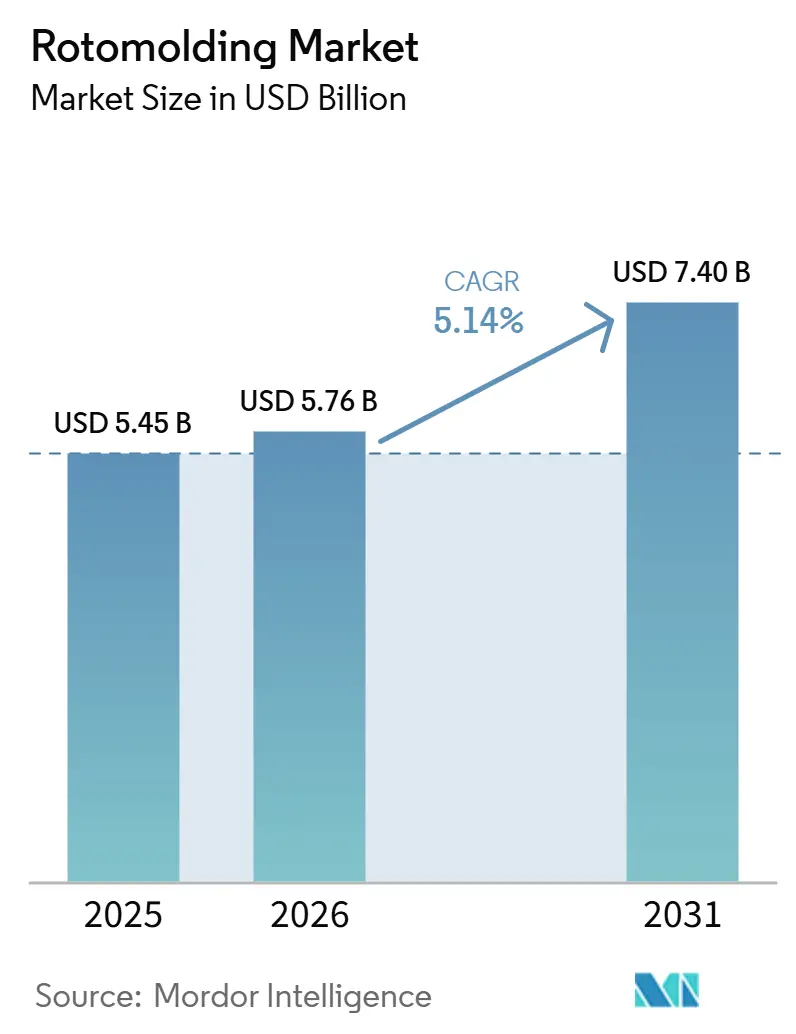
The Rotomolding Market size was valued at USD 5.45 billion in 2025 and is estimated to grow from USD 5.76 billion in 2026 to reach USD 7.40 billion by 2031, at a CAGR of 5.14% during the forecast period (2026-2031). The rotomolding market is growing because the process remains cost-effective for large hollow parts, particularly where buyers require durable products in low-to-medium production volumes and want to avoid the higher tooling costs associated with other plastic forming methods. Demand is further supported by corrosion-resistant polymer products in water storage, agriculture, and industrial logistics, where seamless construction and low material waste improve long-term operating value. The market is also benefiting from the substitution of steel and fiberglass with lighter polymers in equipment applications, which is expanding the use cases for molded tanks, containers, and functional components. Asia-Pacific remains central to this expansion, combining the largest installed demand base with the fastest forecast growth, which is concentrating new investment, capacity additions, and supplier activity in the region. Raw material volatility remains a near-term pressure point for the market; however, the shift toward recycled and bio-based polyethylene is creating a clearer path for processors that can secure feedstock flexibility and meet rising sustainability expectations from buyers and regulators.
Key Report Takeaways
- By material, polyethylene led with 72.83% share in 2025, while polypropylene is forecast to expand at a 6.27% CAGR through 2031.
- By form, powder held 84.71% of the rotomolding market size in 2025 and is forecast to expand at a 5.29% CAGR through 2031.
- By application, tanks accounted for 36.57% of the rotomolding market size in 2025, while material handling is projected to grow at a 6.03% CAGR through 2031.
- By end-user industry, agriculture held 26.93% of the rotomolding market share in 2025, while building and construction is expected to record the highest CAGR at 5.94% through 2031.
- By geography, Asia-Pacific held 39.62% of the rotomolding market share in 2025 and is projected to grow at a 6.02% CAGR through 2031.
Note: Market size and forecast figures in this report are generated using Mordor Intelligence’s proprietary estimation framework, updated with the latest available data and insights as of January 2026.
Market Trends and Insights
Drivers Impact Analysis of Rotomolding Market*
| Drivers | (~) % Impact on CAGR Forecast | Geographic Relevance | Impact Timeline |
|---|---|---|---|
| Increasing Replacement Demand for Aging Storage and Infrastructure Assets | +1.5% | Global, concentrated in Asia-Pacific, the Middle East and Africa, and Latin America | Medium term (2-4 years) |
| Lower Tooling Costs Over Alternative Plastic Forming Processes | +1.2% | Global, high relevance in North America and Europe for small and medium-sized enterprise (SME) converters | Long term (≥ 4 years) |
| Rising Adoption of Recyclable and Recycled Polymer Materials | +0.8% | EU-led, with spillover to North America and progressive Asian markets | Medium term (2-4 years) |
| Growing Demand for Complex, Hollow, and Custom-Geometry Products | +0.9% | Global, concentrated in North America, Europe, and China | Long term (≥ 4 years) |
| Increasing Adoption of Rotomolded Components in Automotive and Industrial Segments | +0.7% | North America, Europe, and East Asia | Medium term (2-4 years) |
| Source: Mordor Intelligence | |||
Increasing Replacement Demand for Aging Storage and Infrastructure Assets
The rotomolding market is gaining steady support from the replacement of aging water storage tanks, septic systems, and industrial chemical vessels across North America, Europe, and the Middle East. Many of these installed assets are reaching the end of their useful lives, creating a recurring replacement cycle rather than a one-time construction-driven purchase pattern. Rotomolded polyethylene tanks remain relevant in this context because they offer a long service life, low maintenance requirements, corrosion resistance, and simpler installation than steel or concrete alternatives in many field applications. Replacement activity is also moving beyond one-for-one substitution, as buyers use refresh cycles to shift toward newer product formats, such as vertical water tanks, that improve space utilization and site flexibility. Elkhart Plastics, Inc.'s May 2025 launch of a new vertical water storage tank range illustrates how suppliers are responding to this shift in buying behavior with products tied directly to replacement-led demand[1]Myers Industries, “Elkhart Plastics, A Myers Industries Company, Introduces Vertical Water Tanks to Help Protect People, Property, and Resources,” Myers Industries Investor Relations, investor.myersindustries.com.
Lower Tooling Costs Over Alternative Plastic Forming Processes
The rotomolding market continues to benefit from a lower tooling burden than many competing plastic-forming methods, which is especially important for converters serving shorter production runs and frequent design changes. This cost structure allows processors to develop large hollow products, custom housings, and specialized shapes without incurring the higher up-front mold costs common in other processes. The advantage becomes more significant when buyers require design revisions, limited-volume production, or geometry changes across multiple end uses such as agriculture, recreation, and equipment housings. Persico Group's direct tool heating SMART technology also demonstrates how the process is moving beyond its traditional cost position by reducing cycle time and energy intensity while preserving the flexibility that makes rotational molding relevant. This combination of lower entry costs and improved machine efficiency is expanding the addressable space for the rotomolding market in product categories that rely on large, hollow, and seamless parts.
Rising Adoption of Recyclable and Recycled Polymer Materials
The rotomolding market is also being shaped by sustainability requirements that are changing feedstock selection across tanks, containers, and other molded products. Research published in 2025 showed that commercial linear low-density polyethylene (LLDPE) grades could retain recycled content across multiple processing cycles while maintaining acceptable mechanical and thermal properties, supporting broader use in production settings. ExxonMobil Chemical's case work with Polinter also demonstrated that metallocene polyethylene grades can increase post-consumer and post-industrial recycled content in large rotomolded tanks without a clear performance tradeoff, which is relevant for buyers that require both sustainability claims and dependable product quality. This is creating a clearer commercial divide within the rotomolding market, as processors that can certify recycled content are better positioned to qualify for procurement programs influenced by circularity requirements and corporate sourcing mandates. LyondellBasell's continued investment in MoReTec's chemical recycling capacity indicates that resin suppliers are also repositioning to serve this demand more directly.
Growing Demand for Complex, Hollow, and Custom-Geometry Products
The rotomolding market is expanding into more technically demanding product categories because the process can form seamless, hollow parts in shapes that are difficult to produce through other plastic processes. Persico Group's SMART H2 machine illustrates this direction, as it was developed to produce hollow seamless liners for Type IV and Type V hydrogen storage tanks using high-performance thermoplastics. Arkema's Rilsan Roto 11 powder grades also support this transition by enabling rotomolded fuel and coolant tank applications that require barrier performance, cold-impact resistance, and compliance with demanding automotive standards. A 2026 life cycle assessment study reinforced the case for these advanced applications by showing that eco-design optimization in rotational molding can materially reduce material and energy use per part, strengthening the process from both a design and sustainability standpoint. As product complexity increases, the rotomolding market has room to move beyond its historical concentration in tanks and basic containers into more specialized components where product performance is as important as scale.
Restraints Impact Analysis of Rotomolding Market*
| Restraints | (~) % Impact on CAGR Forecast | Geographic Relevance | Impact Timeline |
|---|---|---|---|
| Limited Availability of Specialty Grade Raw Materials | -1.2% | Global, most acute in Europe and Asia-Pacific, amid the 2026 Middle East supply disruption | Short term (≤ 2 years) |
| High Energy Consumption of the Rotational Molding Process | -0.8% | EU, with strong relevance in North America | Medium term (2-4 years) |
| Limited Capability for High-Volume, High-Precision Production Runs | -0.5% | Global, particularly relevant in automotive and consumer electronics | Long term (≥ 4 years) |
| Source: Mordor Intelligence | |||
Limited Availability of Specialty Grade Raw Materials
The rotomolding market remains exposed to feedstock concentration risk, as polyethylene accounts for the majority of material consumption and many applications rely on a narrow set of qualified grades. This dependence intensifies when supply conditions tighten, as processors require specific melt indices, additive packages, UV resistance, and environmental stress crack resistance that cannot be readily substituted with alternative resins. Specialty Linear Low-Density Polyethylene (LLDPE) grades suited to rotational molding are produced by a limited number of suppliers, and the pool narrows further when buyers require validated formulations for water, chemical, or outdoor applications. This structure places spot-market buyers under margin pressure during supply disruptions, while processors with longer-term contracts gain stability but lose flexibility to switch grades as demand patterns shift. The result is a persistent operating constraint for the rotomolding market, particularly in regions with greater dependence on imported resin and less stable procurement conditions[2]LyondellBasell Industries, “Rotomolding,” LyondellBasell, lyondellbasell.com.
High Energy Consumption of the Rotational Molding Process
The rotomolding market faces a structural operating challenge, as the molding cycle requires extended oven heating, controlled cooling, and longer cycle times compared to many high-throughput plastics processes. Energy therefore remains one of the highest variable costs for processors, particularly where older gas-fired carousel machines are still widely used and where cycle variation contributes to operating waste. This issue is relevant in Europe and North America, where energy-efficiency regulations, carbon exposure, and customer sustainability requirements are making equipment performance more visible in procurement decisions. Processors that invest in insulation, variable-frequency drives, waste heat recovery, and improved process control can strengthen their cost position, but the required capital outlay remains a challenge for smaller operators. This leaves a portion of the rotomolding market caught between rising operating costs and the need to modernize equipment to remain competitive in efficiency-linked supply chains.
*Our forecasts treat driver/restraint impacts as directional, not additive. The impact forecasts reflect baseline growth, mix effects, and variable interactions.
Rotomolding Market Segment Analysis
By Material:
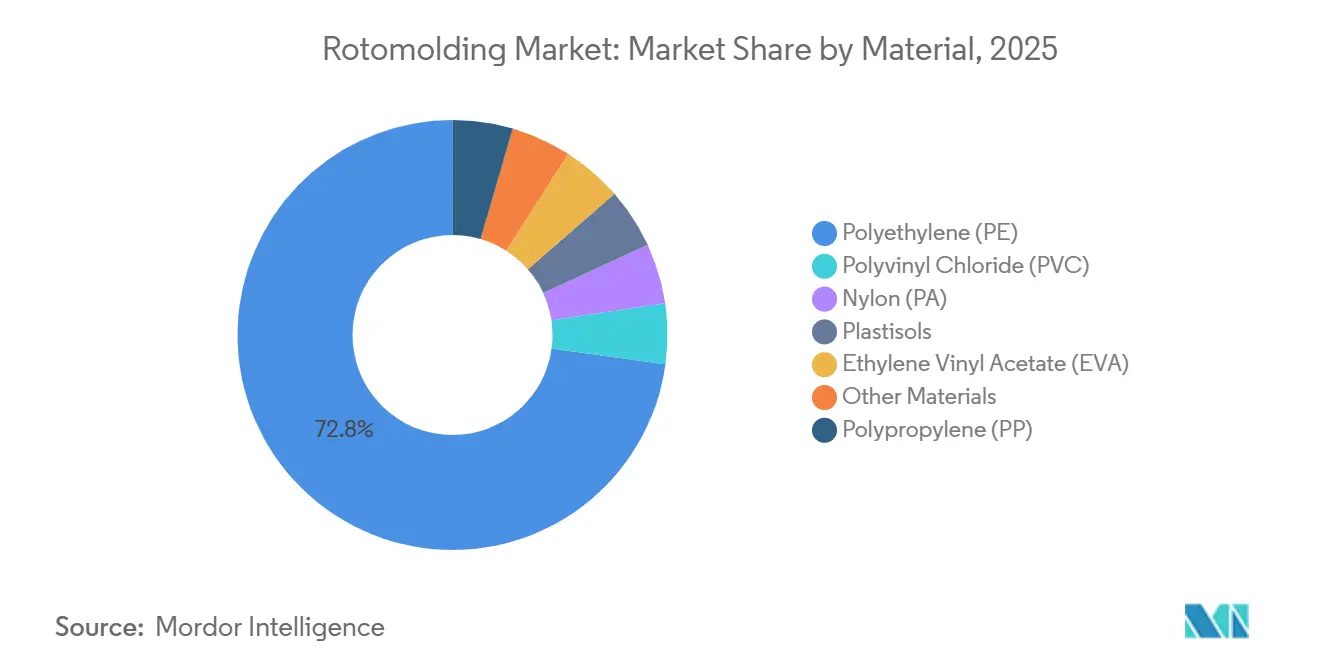
PE Dominance Sustained as PP Reshapes the Growth NarrativePolyethylene (PE) accounted for 72.83% of the rotomolding market in 2025, remaining well ahead of other materials used in the process. This position reflects long-standing optimization around High-Density Polyethylene (HDPE) and Linear Low-Density Polyethylene (LLDPE) grades that deliver environmental stress crack resistance, low-temperature impact strength, UV stability, and favorable economics for tanks, drums, and agricultural containers. LyondellBasell's Microthene and Petrothene grades illustrate PE's deep integration in the value chain, as these resin families are designed for rotational molding and support the performance requirements of large hollow outdoor products. PE remains the default choice when buyers prioritize cost discipline, process reliability, and access to a broad supplier base, keeping it central to the rotomolding market even as new materials gain attention. The installed mold base, certification history, and resin expertise built around tanks and outdoor storage products continue to reinforce this PE platform.
Polypropylene is the fastest-growing material, with a 6.27% CAGR through 2031, driven by demand from automotive and industrial applications that require higher thermal resistance and greater rigidity than PE can consistently provide. The material is gaining traction in fuel tanks, coolant reservoirs, and underbody protection components where operating temperature and stiffness are key specification factors. Nylon serves higher-value niches where chemical resistance or additional performance is required, and Arkema's Rilsan Roto 11 powder grades demonstrate how Polyamide 11 (PA11) is being positioned for fuel and coolant tank applications with demanding performance requirements. PVC in plastisol form remains relevant for decorative, toy, and soft-surface products, while EVA and other materials occupy narrower use cases in flexible outdoor goods and specialty bilayer systems. Research published in 2024 also broadened the outlook for PE by showing that recycled polyethylene can be upcycled or blended at meaningful levels without unacceptable loss of performance, further reinforcing polyethylene's position even as the material mix slowly diversifies. The growth story in the rotomolding market is therefore not a straightforward shift away from PE, but rather a selective expansion of PP and engineering polymers into applications where higher performance justifies a different material choice. The rotomolding industry is moving toward a broader resin mix, while PE remains the largest-volume material.



By Form:
Powder Processing Underpins the Value Chain Across ApplicationsPowder accounted for 84.71% of the rotomolding market in 2025, reflecting the fundamental reliance of rotational molding on powder loading, controlled heating, and even melt distribution within a rotating mold. This dominance is structural rather than temporary, as particle size consistency, melt behavior, and flow stability directly affect wall uniformity, cycle performance, and final product quality. Powder is also the fastest-growing form, with a 5.29% CAGR through 2031, supported by improvements in grinding technology and resin formulations that enable thinner, more uniform wall sections. These process improvements lower material consumption per part, improve part consistency, and expand the design space for both standard storage products and more specialized molded components. As a result, powder remains central to the rotomolding market in both current value and forward growth.
Advances in resin and powder preparation are also making the form segment increasingly relevant for sustainability and processing efficiency. Recycled and bio-based PE adoption is entering the process through blending and re-grinding at the pellet and powder stage, allowing processors to adjust feedstock strategy without reworking core molding lines. This lowers the barrier to sustainability adoption in the rotomolding market by enabling converters to change material composition while keeping existing equipment largely intact. Powder also benefits from the long certification history of established HDPE grades in food, water, and chemical storage applications, where specifiers typically prefer familiar, validated material systems. Liquid form remains a durable niche for PVC plastisol products such as soft decorative items, some toy components, and certain medical or lined applications, but does not challenge powder's central role in the value chain. The form split therefore reflects a market where most innovation continues to pass through powder processing, even when the end change is driven by recycled content, lighter wall designs, or improved impact resistance.
By Application:
Tanks Lead While Material Handling Records Faster GrowthTanks led with 36.57% of the rotomolding market share in 2025, confirming that storage remains the core application segment. This segment covers water storage, agricultural chemicals, fuels, and industrial liquids, all of which benefit from seamless construction, corrosion resistance, and large-format molding capability that rotational molding provides. The demand base is broad and recurring, as tanks serve households, farms, municipal infrastructure, and industrial operations across both developed and emerging economies. That breadth keeps tanks central to the rotomolding market even as higher-growth applications expand from a smaller base. Containers also remain a major application group, particularly in food processing, chemical distribution, and agricultural input storage, where compliance, durability, and transport safety are essential requirements.
Material handling is forecast to record the fastest CAGR at 6.03% through 2031, driven by warehouse automation, e-commerce fulfillment, and a shift from single-use formats toward reusable molded handling solutions. Elkhart Plastics' May 2025 expansion of its TUFF Intermediate Bulk Container (IBC) line through the E-Series is a direct example of product development aimed at improving liquid handling security in reusable IBCs. Toys and recreational products maintain a stable demand base, as rotational molding supports low tooling costs, durable walls, and impact-resistant parts across kayaks, playground items, footballs, and coolers. Construction products and road safety items also benefit from infrastructure spending in Asia-Pacific, the Middle East and Africa, and South America, while medical products remain smaller in volume but higher in value due to regulatory and material requirements. Other applications, including marine products, agricultural housings, and emerging hydrogen tank liners, indicate that the rotomolding market continues to expand its application base without weakening the dominant role of tanks. This application mix keeps legacy volume concentrated in storage while directing newer growth toward logistics, reusable handling, and more specialized molded formats.
By End-User Industry:
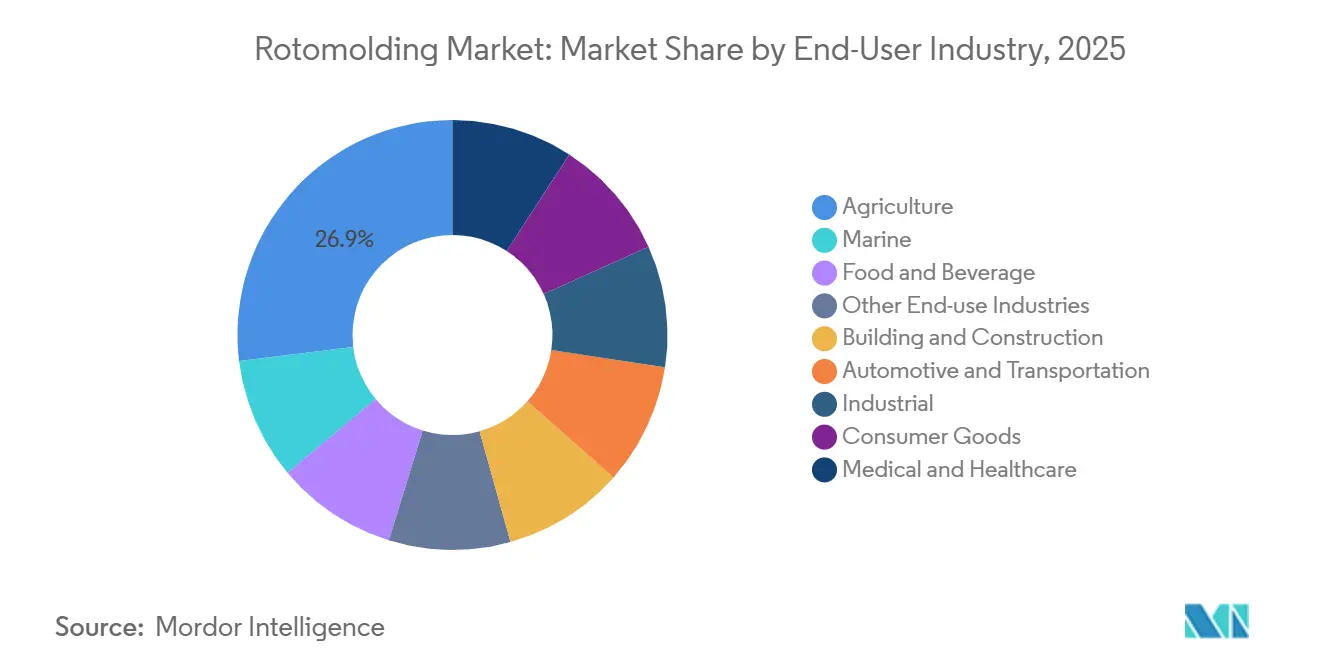
Agriculture Commands Share as Construction AcceleratesAgriculture accounted for 26.93% of the rotomolding market in 2025, making it the largest end-user industry in the reported segmentation. This position reflects the range of farm-linked products produced through the process, including irrigation tanks, livestock watering systems, feed containers, chemical storage vessels, and equipment housings that must withstand outdoor and field conditions. Rotomolded products meet agricultural buying requirements by combining UV stability, chemical compatibility, and seamless construction with manageable production economics across a broad range of product sizes. The agricultural segment also provides the rotomolding market with durable volume support, as water storage and handling needs remain ongoing rather than discretionary in many operating environments. This segment ties the market closely to rural infrastructure needs, replacement demand, and the steady expansion of polymer-based storage solutions in farming systems.
Building and construction is expected to grow at a 5.94% CAGR through 2031, supported by public works spending and wider use of molded drainage systems, septic tanks, potable water storage, and road safety products across Asia-Pacific, the Middle East, and Africa. Construction-linked demand is driving rotational molding into infrastructure projects, where product durability, transport practicality, and installation ease directly influence procurement decisions. Automotive and transportation also remain strategically important, as OEMs are using rotomolded fuel tanks, coolant reservoirs, plenums, and underbody shields in applications where the process now offers improved polypropylene (PP) capability. Industrial end users continue to specify tanks and containers for chemical resistance and impact performance, while consumer goods, marine, medical, and food and beverage each contribute narrower but steady demand tied to certification and product specialization. The rotomolding market rests on a broad end-user base, with forward momentum supported by the overlap of agriculture and construction demand in fast-developing regions. This mix supports growth without making the market dependent on a single downstream sector, even though agriculture remains the largest current volume contributor.
Geography Analysis
APAC Rotomolding Market
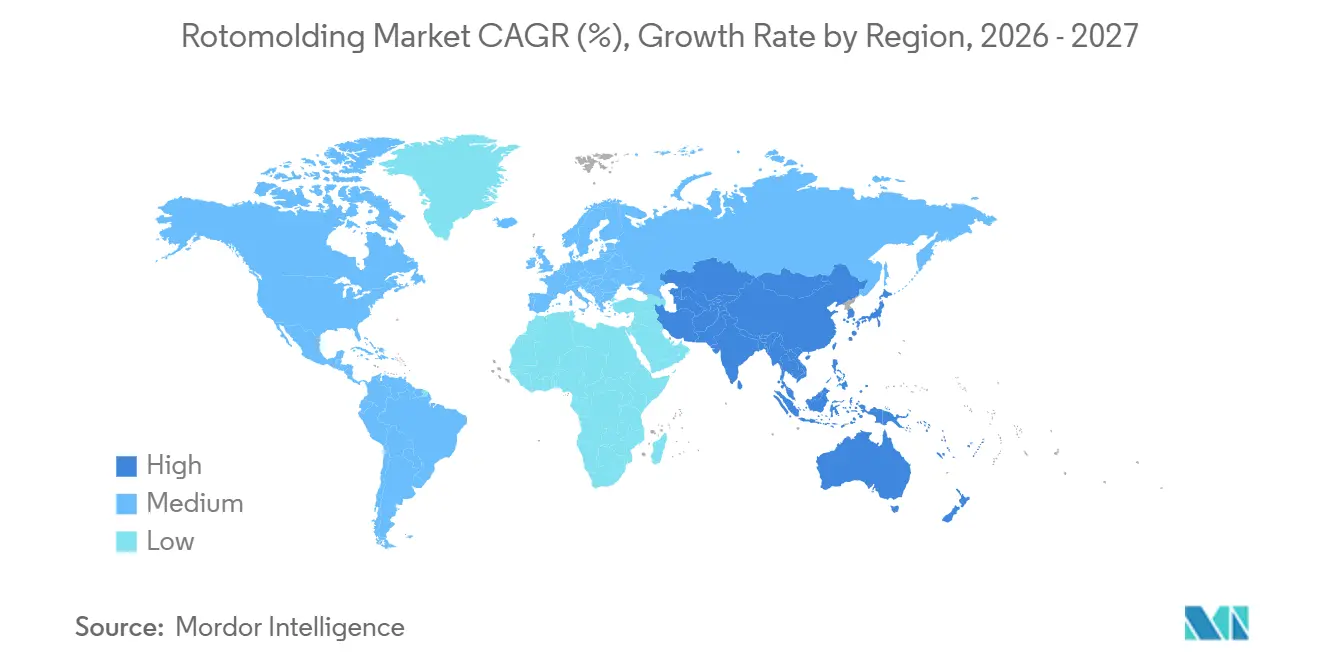
Asia-Pacific accounted for 39.62% of the rotomolding market in 2025 and is forecast to expand at a 6.02% CAGR through 2031. This makes the region both the largest and the fastest-growing geography in the rotomolding market, indicating where capacity additions and supplier attention are likely to remain concentrated. Demand is supported by agricultural modernization, water storage needs, infrastructure development, and cost-competitive manufacturing bases across emerging Asian economies. Japan and South Korea represent more mature demand pockets focused on higher-specification automotive and industrial components, while Vietnam, Indonesia, and Thailand are strengthening their roles as export-oriented processing locations. This regional structure gives Asia-Pacific both current scale and a broad spread of end-use drivers, which is why it remains central to the market outlook.
North America Rotomolding Market
North America is a structurally important region with a dense base of large custom rotomolders serving agriculture, industrial, and recreational applications with large-format tanks and containers. The United States benefits from strong polyethylene availability linked to Gulf Coast petrochemical capacity, which gives local processors a more favorable supply position than many overseas competitors. The regional market also includes established players such as Centro Incorporated, Snyder Industries, Elkhart Plastics, and Granger Plastics Company, giving North America a deeper installed processing base than many other regions. Mexico is adding demand through expanding industrial and agricultural activity, supporting local consumption of tanks, containers, and related molded products. Canada contributes stable demand through mining, municipal water infrastructure, and recreational manufacturing, keeping the broader regional picture balanced across several end uses.
EMEA and South America Rotomolding Market
Europe is a mature market where sustainability compliance plays a stronger role in feedstock and equipment decisions than in many other regions. Registration, Evaluation, Authorisation and Restriction of Chemicals (REACH)-related constraints, circular economy priorities, and energy efficiency rules are raising operating requirements for processors and driving faster adoption of recycled polyethylene and upgraded machinery. France and Italy remain relevant in specialty recreational and consumer products, while Russia's position has weakened due to logistics and procurement complications. South America is seeing stronger demand for agricultural tanks, chemical containers, and water storage solutions, with Grupo Rotoplas reporting 15.7% revenue growth and an EBITDA margin above 22% in its Other Countries segment in Q1 2026. The Middle East and Africa are emerging as a growth corridor, where water infrastructure programs, Saudi Arabia's construction agenda, and agricultural development projects are increasing demand for molded tanks and related storage products. Across these regions, the rotomolding market is shaped by a mix of water stress, agricultural infrastructure needs, regulation, and localized manufacturing capacity rather than a single universal demand pattern.

Competitive Landscape
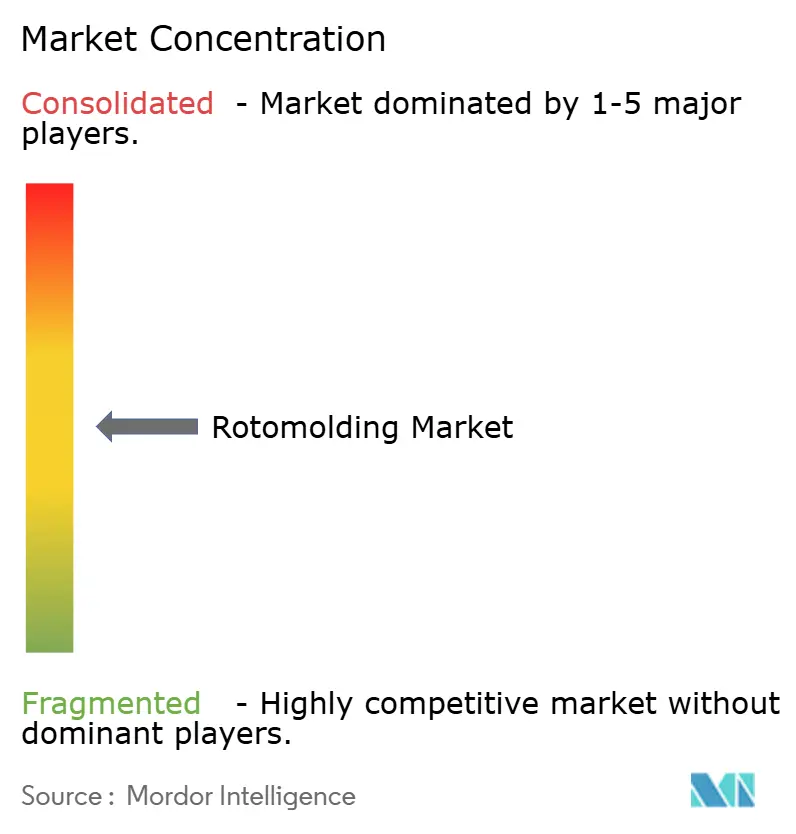
The rotomolding market is moderately fragmented, with competition spread across resin suppliers, specialized custom molders, and regional processors rather than being controlled by a small number of global product manufacturers. This structure enables regional strength, certification-led differentiation, and application specialization, as scale alone does not guarantee dominance across every product category or geography. LyondellBasell and Arkema compete at the resin and specialty polymer level, while companies such as Centro Incorporated, Snyder Industries, Elkhart Plastics, and Rotovia compete more directly in finished molded product supply. As a result, both upstream material positioning and downstream fabrication capability are important, but neither side fully controls the commercial landscape across all end uses.
Strategic moves in 2025 and 2026 indicate that leading participants are focused on expanding product breadth and securing higher-value positioning rather than pursuing volume growth alone. In May 2025, Elkhart Plastics expanded its offerings with the E-Series TUFF Intermediate Bulk Container (IBC) line and a new vertical water storage tank range, reflecting active product line extension in liquid handling and storage. LyondellBasell continued to prioritize MoReTec-1 in 2026, indicating that resin suppliers view chemical recycling and circular polyethylene as competitive requirements rather than secondary initiatives. In January 2026, Arkema started up a new transparent polyamide Rilsan Clear production unit in Singapore, reinforcing its specialty polymer platform and its ability to support demanding molded applications.
Competition is increasingly being shaped by technical capability and qualification barriers rather than commodity scale alone. Opportunities remain in engineering thermoplastic applications, circular-economy-certified products, and automated precision manufacturing for automotive supply chains, where many current processors still lack full capability. Standards and certifications continue to be important, as potable water, food-contact, and chemical storage applications favor companies that can maintain validated material systems and documented compliance across multiple end markets. Grupo Rotoplas has also been expanding its product line and digital services platform, reflecting how downstream players are seeking to capture value through service offerings rather than solely through molded product sales. The rotomolding market remains open enough for specialist players to gain share, but stronger positions are increasingly held by companies that combine product breadth, materials access, and certification credibility.
Rotomolding Industry Leaders
Centro Incorporated
Elkhart Plastics
Rototek Limited
Rotovia
LyondellBasell Industries Holdings B.V.
- *Disclaimer: Major Players sorted in no particular order
Rotomolding Market Companies Covered in this Report
- Arkema
- Centro Incorporated
- DuraCast Products
- Elkhart Plastics
- Formed Plastics
- Granger Plastics Company
- Inpress Precision Ltd
- K. K. Nag Private Limited
- LyondellBasell Industries Holdings B.V.
- Persico S.p.A.
- Roto Dynamics
- Rotoplas
- Rototek Limited
- Rotovia
- Seljan Company
- Snyder Industries

Recent Industry Developments in Rotomolding Market
- January 2026: LyondellBasell announced USD 1.2 billion in capital expenditures for 2026, prioritizing safe operations and continuing construction of MoReTec-1, its first commercial chemical recycling unit. The unit is expected to increase circular PE supply for downstream rotomolding and packaging applications.
- January 2026: Arkema started up its new transparent polyamide Rilsan Clear production unit in Singapore, expanding its specialty polymer presence and increasing high-performance Polyamide 11 (PA11) capacity for rotomolded applications, including hydrogen tank liners and chemical-resistant vessels.


Global Rotomolding Market Report Scope
Rotomolding is a high-temperature, low-pressure plastic-forming process that uses heat and multi-axis rotation to produce seamless, hollow parts. It is used for manufacturing large, durable, one-piece items such as water tanks, kayaks, traffic barriers, and heavy-duty coolers.
The rotomolding market is segmented by material, form, application, end-user industry, and geography. By material, the market is segmented into polyethylene (PE), polypropylene (PP), polyvinyl Chloride (PVC), nylon (PA), plastisols, ethylene vinyl acetate (EVA), and other materials. By form, the market is segmented into liquid and powder. By application, the market is segmented into tanks, containers, material handling products, toys and recreational products, road safety and traffic products, medical products, construction products, and other applications. By end-user industry, the market is segmented into agriculture, building and construction, automotive and transportation, industrial, consumer goods, medical and healthcare, marine, food and beverage, and other end-use industries. The report also covers market size and forecasts for rotomolding across 16 countries in major regions. The market sizes and forecasts are provided in terms of value (USD).
| Polyethylene (PE) |
| Polypropylene (PP) |
| Polyvinyl Chloride (PVC) |
| Nylon (PA) |
| Plastisols |
| Ethylene Vinyl Acetate (EVA) |
| Other Materials |
| Liquid |
| Powder |
| Tanks |
| Containers |
| Material Handling Products |
| Toys and Recreational Products |
| Road Safety and Traffic Products |
| Medical Products |
| Construction Products |
| Other Applications |
| Agriculture |
| Building and Construction |
| Automotive and Transportation |
| Industrial |
| Consumer Goods |
| Medical and Healthcare |
| Marine |
| Food and Beverage |
| Other End-use Industries |
| Asia-Pacific | China |
| India | |
| Japan | |
| South Korea | |
| Rest of Asia-Pacific | |
| North America | United States |
| Canada | |
| Mexico | |
| Europe | Germany |
| United Kingdom | |
| France | |
| Italy | |
| Russia | |
| Rest of Europe | |
| South America | Brazil |
| Argentina | |
| Rest of South America | |
| Middle-East and Africa | Saudi Arabia |
| South Africa | |
| Rest of Middle-East and Africa |
| By Material | Polyethylene (PE) | |
| Polypropylene (PP) | ||
| Polyvinyl Chloride (PVC) | ||
| Nylon (PA) | ||
| Plastisols | ||
| Ethylene Vinyl Acetate (EVA) | ||
| Other Materials | ||
| By Form | Liquid | |
| Powder | ||
| By Application | Tanks | |
| Containers | ||
| Material Handling Products | ||
| Toys and Recreational Products | ||
| Road Safety and Traffic Products | ||
| Medical Products | ||
| Construction Products | ||
| Other Applications | ||
| By End-User Industry | Agriculture | |
| Building and Construction | ||
| Automotive and Transportation | ||
| Industrial | ||
| Consumer Goods | ||
| Medical and Healthcare | ||
| Marine | ||
| Food and Beverage | ||
| Other End-use Industries | ||
| By Geography | Asia-Pacific | China |
| India | ||
| Japan | ||
| South Korea | ||
| Rest of Asia-Pacific | ||
| North America | United States | |
| Canada | ||
| Mexico | ||
| Europe | Germany | |
| United Kingdom | ||
| France | ||
| Italy | ||
| Russia | ||
| Rest of Europe | ||
| South America | Brazil | |
| Argentina | ||
| Rest of South America | ||
| Middle-East and Africa | Saudi Arabia | |
| South Africa | ||
| Rest of Middle-East and Africa | ||


Key Questions Answered in the Report
What is current market size of Rotomolding Market?
The Rotomolding Market size was valued at USD 5.45 billion in 2025 and is estimated to grow from USD 5.76 billion in 2026 to reach USD 7.40 billion by 2031, at a CAGR of 5.14% during the forecast period (2026-2031).
Which material leads to the rotomolding demand today?
Polyethylene leads by a wide margin, holding a 72.83% share in 2025, because it combines process compatibility, durability, and cost-effectiveness across tanks and containers.
Which rotomolding application is growing the fastest?
Material handling is the fastest-growing application, with a 6.03% CAGR through 2031, supported by warehouse automation and the shift to reusable handling formats.
Why is Asia-Pacific so important for rotomolding demand?
Asia-Pacific held a 39.62% share in 2025 and is also the fastest-growing region, with a 6.02% CAGR, driven by agriculture, water infrastructure, and cost-competitive processing capacity.
Page last updated on:





