
Protocatechuic Acid Market Size and Share
Market Overview
| Study Period | 2022 - 2032 |
|---|---|
| Market Size (2027) | USD 17.17 Million |
| Market Size (2032) | USD 26.58 Million |
| Growth Rate (2027 - 2032) | 9.13 % |
| Fastest Growing Market | Asia-Pacific |
| Largest Market | Asia-Pacific |
| Market Concentration | Low |
Major Players *Disclaimer: Major Players sorted in no particular order Image © Mordor Intelligence. Reuse requires attribution under CC BY 4.0. | |
Protocatechuic Acid Market Analysis by Mordor Intelligence
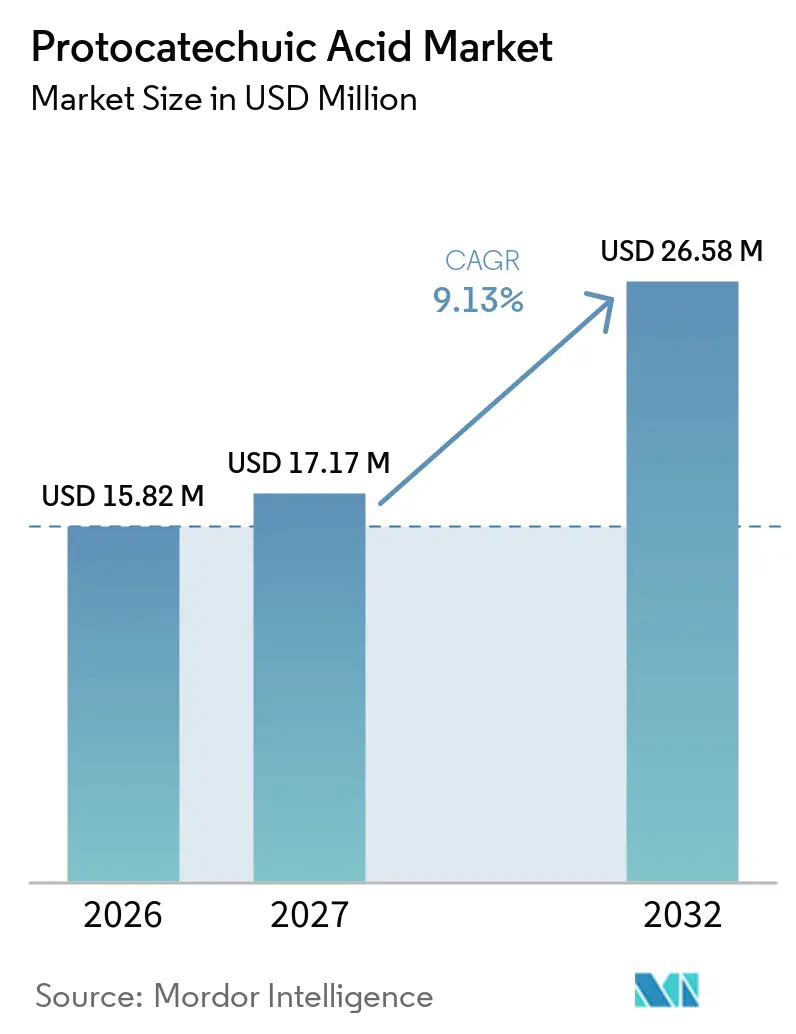
The protocatechuic acid market size was valued at USD 15.82 million in 2026 and is estimated to grow from USD 17.17 million in 2027 to USD 26.58 million by 2032, at a CAGR of 9.13% during the forecast period (2027-2032). The protocatechuic acid market is supported by demand for plant-derived bioactives in pharmaceutical research, food preservation, and personal care formulations. Producers are responding to demand for traceable, high-purity materials that meet pharmaceutical and analytical requirements. Chemical synthesis remains important as it offers consistent purity and reproducible batches. At the same time, fermentation research is strengthening the case for bio-based supply in China and India. The market remains constrained by limited human clinical evidence and the cost of downstream purification.
Key Report Takeaways
- By grade, Ultra-High Purity Grade held 46.17% of the protocatechuic acid market share in 2026 and is forecast to grow at a CAGR of 9.83% through 2032.
- By production route, chemical synthesis held 56.54% of the protocatechuic acid market share in 2026 and is projected to grow at a CAGR of 10.04% through 2032.
- By form, Powder/Crystalline held 68.11% of the protocatechuic acid market share in 2026, while Liquid Protocatechuic Acid (PCA) is projected to grow at a CAGR of 10.17% through 2032.
- By application, chemical intermediates accounted for 31.42% of the protocatechuic acid market share in 2026 and are forecast to grow at a 10.56% CAGR through 2032.
- By end-user industry, the pharmaceuticals sector held 38.77% of the protocatechuic acid market share in 2026 and is forecast to grow at a CAGR of 11.42% through 2032.
- By geography, Asia-Pacific held 32.89% of the protocatechuic acid market share in 2026 and is projected to grow at a CAGR of 11.05% through 2032.
Note: Market numbers in this report are based on Mordor Intelligence's proprietary estimation framework, which combines nine months of actuals with Q4 projections for base year 2026.
Market Trends and Insights
Drivers Impact Analysis of Protocatechuic Acid Market*
| Drivers | (~) % Impact on CAGR Forecast | Geographic Relevance | Impact Timeline |
|---|---|---|---|
| Demand for Ultra-High-Purity Bioactive Inputs | +2.5% | Global, concentrated in North America and Europe | Short term (≤ 2 years) |
| Clean-Label Antioxidant and Preservation Formulation | +1.4% | Global, strongest in North America and Western Europe | Medium term (2-4 years) |
| Pharmaceutical Intermediate and Drug-Discovery Demand | +2.1% | Global, dominant in North America, Europe, and East Asia | Medium term (2-4 years) |
| China and India Bio-Based Production Expansion | +1.6% | Asia-Pacific core, with spillover to the Middle East, Africa, and South America | Medium term (2-4 years) |
| Continuous Fermentation Reducing PCA Toxicity Bottlenecks | +1.0% | Asia-Pacific, with early commercial gains in China | Long term (≥ 4 years) |
| Source: Mordor Intelligence | |||
Demand for Ultra-High-Purity Bioactive Inputs
Demand for ultra-high-purity protocatechuic acid (PCA) is rising as pharmaceutical developers seek plant-derived compounds with known antioxidant and anti-inflammatory activity. This segment of the protocatechuic acid market requires materials with purity above 99.5% for pharmaceutical applications. Drug master file requirements also make consistent specifications important for new suppliers. Chemical synthesis remains the most established route for supplying batches with repeatable purity. Producers with validated purification, documentation, and analytical controls, therefore, command a premium in the protocatechuic acid market.
A 2025 review noted that PCA showed activity in several cancer models, while its limited solubility and rapid metabolism continue to restrict its therapeutic use[1]. These limitations create demand for well-characterized materials in nanocarrier research and formulation work. Demand for material with purity above 99.9% is also rising in analytical and research settings. Lower-specification batches can introduce variation into measurements and formulation development. Certified testing and quality systems are therefore becoming more important competitive requirements in the protocatechuic acid market.
Pharmaceutical Intermediate and Drug-Discovery Demand
PCA is used as a building block for aromatic derivatives such as vanillin, gallic acid, adipic acid, and 2-pyranone-4,6-dicarboxylic acid. These derivatives link the protocatechuic acid market to flavoring, tanning, pharmaceutical synthesis, and biodegradable polymer value chains. Its role as an intermediate is significant because demand does not depend solely on direct therapeutic use. A 2025 rat study found that PCA improved electrocardiogram patterns and reduced lipid peroxide levels in a doxorubicin cardiotoxicity model, supporting continued interest in PCA as a potential co-therapeutic compound.
Separate 2025 research reported reduced inflammation and oxidative stress in a COPD model through the AHR/CYP1A1/CYP1A2 pathway. Such findings broaden the therapeutic questions being explored around PCA. Research pipelines in China, Japan, and South Korea are particularly relevant, as these markets already work with phenolic bioactives. The commercial impact remains tied to the conversion of preclinical work into regulated development programs. The protocatechuic acid market benefits when this research increases demand for traceable, high-purity intermediate supply.
Clean-Label Antioxidant and Preservation Formulation
Food and cosmetic formulators are moving away from certain synthetic preservatives and antioxidants. PCA is relevant in this context because its catechol structure can provide both antioxidant and antimicrobial effects in a single ingredient. A 2025 study found that PCA methyl ester in a modified polysaccharide coating improved antifungal and antioxidant performance for cherry tomatoes, supporting its use in active packaging and preservation research. The protocatechuic acid market can benefit when such formulation studies translate into commercially acceptable food applications.
PCA is permitted by the U.S. Food and Drug Administration for use as a food flavoring substance, which can lower formulation barriers for relevant food applications. This regulatory status supports its use in clean-label dietary supplements and personal care products. Formulators still need to verify stability, permitted use levels, and claims in each jurisdiction. These requirements keep quality documentation central to adoption in the protocatechuic acid market.
China and India Bio-Based Production Expansion
China is expanding its role in bio-based PCA production through academic and industrial fermentation research. A June 2025 study reported 63.22 g/L PCA at the 5 L scale and 52.77 g/L at the 100 L pilot scale following metabolic engineering of Corynebacterium glutamicum. These results demonstrate a possible route from laboratory work to pilot-scale output and support the case for a lower-impact supply model where fermentation can be scaled efficiently. The protocatechuic acid market could face stronger competition from Chinese bio-based producers if these results are scaled to commercial facilities.
A separate January 2025 study reported 21.68 g/L PCA and a 0.54 g/g glucose yield from an engineered Bacillus licheniformis strain, indicating continued progress in strain engineering and conversion efficiency. India has a strong opportunity in natural extraction for PCA in nutraceutical and phytocosmetic products, where botanical origin is valued by buyers seeking Ayurveda-adjacent positioning and documented natural provenance. Supply growth in both countries broadens the production base of the protocatechuic acid market.
Restraints Impact Analysis of Protocatechuic Acid Market*
| Restraints | (~) % Impact on CAGR Forecast | Geographic Relevance | Impact Timeline |
|---|---|---|---|
| Limited Human Clinical and Regulatory Evidence | -0.6% | Global, most acute in North America and Europe | Medium term (2-4 years) |
| High Purification Cost and Small-Lot Economics | -0.8% | Global, most severe in developing markets with high price sensitivity | Medium term (2-4 years) |
| PCA Cytotoxicity at Fermentation-Relevant Titers | -0.4% | Asia-Pacific, as the primary bio-based production hub | Long term (≥ 4 years) |
| Source: Mordor Intelligence | |||
High Purification Cost and Small-Lot Economics
Downstream purification remains a significant cost challenge for bio-based PCA, accounting for nearly half of the total production cost of fermentation-derived material. Although reactive solvent extraction using tributyl phosphate is one reported approach for PCA recovery, it does not eliminate the need for efficient downstream processing. Plant-extracted, pharmaceutical-grade PCA may require multiple processing steps and yield less than 5%, making a high-grade supply expensive for price-sensitive applications.
Plant-extracted, pharmaceutical-grade PCA costs USD 120-180 per kilogram. Small custom batches also incur setup and analytical costs that cannot be distributed across large production runs. Consequently, smaller nutraceutical and cosmetic companies may face challenges in sourcing pharmaceutical-grade material. Large pharmaceutical buyers are better positioned because they already use qualified active pharmaceutical ingredient supply chains. Unless extraction scale-up or crystallization efficiency improves, this cost structure will continue to constrain the protocatechuic acid market in lower-value applications.
Limited Human Clinical and Regulatory Evidence
Protocatechuic acid (PCA) has a broad preclinical record in antioxidant, anti-inflammatory, anticancer, cardioprotective, and neuroprotective research. However, human clinical evidence has not developed at the same pace. A 2025 review identified low water solubility, low bioavailability, and rapid metabolism as barriers to clinical use. These issues complicate the design of regulated therapeutic development programs and slow the adoption of drug formulations compared with supplements and research applications.
Oncology development involving botanical products requires chemistry, manufacturing, and controls documentation comparable to that expected for synthetic active pharmaceutical ingredients[2]. European qualification routes create similar analytical and clinical demands. Producers without a complete quality dossier may not be able to support these submissions. Well-powered human trials with meaningful clinical endpoints would strengthen the evidence base. Until then, the protocatechuic acid market will remain more established in intermediates, research, and selected consumer applications than in approved drug products.
*Our forecasts treat driver/restraint impacts as directional, not additive. The impact forecasts reflect baseline growth, mix effects, and variable interactions.
Protocatechuic Acid Market Segment Analysis
By Grade:
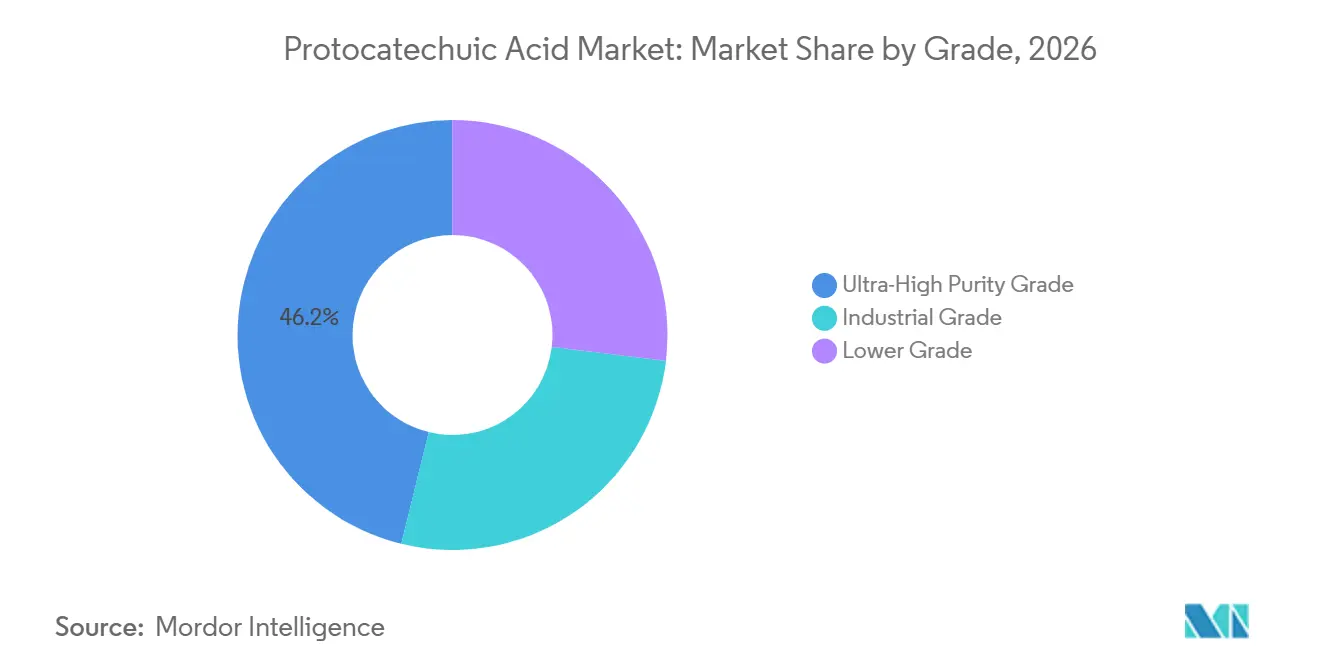
Ultra-High Purity Supports Regulated Pharmaceutical and Research DemandUltra-High Purity Grade held 46.17% of the protocatechuic acid market share in 2026 and is forecast to grow at a CAGR of 9.83% through 2032. This grade is used in pharmaceutical, advanced nutraceutical, and analytical reference applications. Demand reflects requirements for material purity above 99.5% in regulated applications. Once a specification is included in a drug master file, subsequent suppliers must meet the same standard. This creates a durable preference for verified purity and documented batch consistency.
Research published in 2025 also supports demand for high-quality PCA in nanocarrier development. Industrial Grade PCA serves chemical intermediates and cost-sensitive cosmetic applications. Lower-grade PCA is more relevant to agricultural and feed uses, where specification requirements are less demanding. Those lower grades are more exposed to feedstock costs and price competition. Residual-solvent guidance and quality management requirements further favor producers that can document their testing and production controls.

By Production Route:
Chemical Synthesis Retains a Lead While Bio-Based Supply DevelopsChemical synthesis accounted for 56.54% of the protocatechuic acid market share in 2026 and is projected to grow at a 10.04% CAGR through 2032. It is favored for pharmaceutical supply because it offers consistent purity and batch-to-batch reproducibility. It also has established qualification records with pharmaceutical manufacturers. These strengths support chemical synthesis in uses that require good manufacturing practice controls. The protocatechuic acid market continues to rely on this route, where consistency is more important than natural-origin positioning.
Natural extraction and bio-based production are gaining attention as fermentation yields and sustainability profiles improve. The 2025 Bacillus licheniformis study reported 21.68 g/L PCA at a 0.54 g/g glucose yield. The 2025 Corynebacterium glutamicum (C. glutamicum) work also reached 52.77 g/L at 100 L pilot scale. Natural-extraction material can command a premium in botanical cosmetics and clean-label food products. Its wider use will depend on whether purification costs can approach the economics of chemical synthesis.
By Form:
Powder Remains the Standard While Liquid PCA ExpandsPowder/Crystalline PCA held 68.11% of the protocatechuic acid market share in 2026. This form fits existing logistics, storage, testing, and bulk-supply practices. Powder is compatible with chemical synthesis and pharmaceutical supply chains. It is also suitable for ambient-temperature storage and compendial testing. These practical benefits keep it as the established form in the protocatechuic acid market.
Liquid PCA is forecast to grow at a CAGR of 10.17% through 2032. Solution-phase material can provide dosing precision in selected pharmaceutical and cosmetic formulations. It may also support nanocarrier fabrication, serums, spray mists, and emulsion-based actives. A 2025 review identified polymeric nanoparticles, lipid carriers, and metal nanostructures as key PCA delivery systems. Granules retain a role in mixing and tableting for nutraceutical and feed applications, where fine-powder handling can be difficult.
By Application:
Chemical Intermediates Lead and Polymer Uses Add DemandChemical intermediates represented 31.42% of the protocatechuic acid market share in 2026 and are projected to grow at a CAGR of 10.56% through 2032. Protocatechuic acid (PCA) is an established precursor to vanillin, gallic acid, adipic acid, and cis,cis-muconate. These links connect it to fragrance, pharmaceutical synthesis, and sustainable polymer supply chains. Intermediate demand also provides an outlet beyond direct consumer formulations. This segment remains important to the protocatechuic acid market because it connects multiple downstream uses.
A 2025 study reported a PCA-based benzoxazine resin with strong thermal stability and flame-retardant properties. Another 2025 study described the use of PCA in bio-based phenolization for packaging bioplastics with antioxidant and antibacterial properties. These studies support possible growth in performance polymers and packaging materials. Preservatives and antioxidants remain important in food, personal care, and animal nutrition. Dyes and rust inhibitors remain mature and price-sensitive uses, while feed additives and nutraceuticals are supported by interest in natural antioxidants.
By End-User Industry:
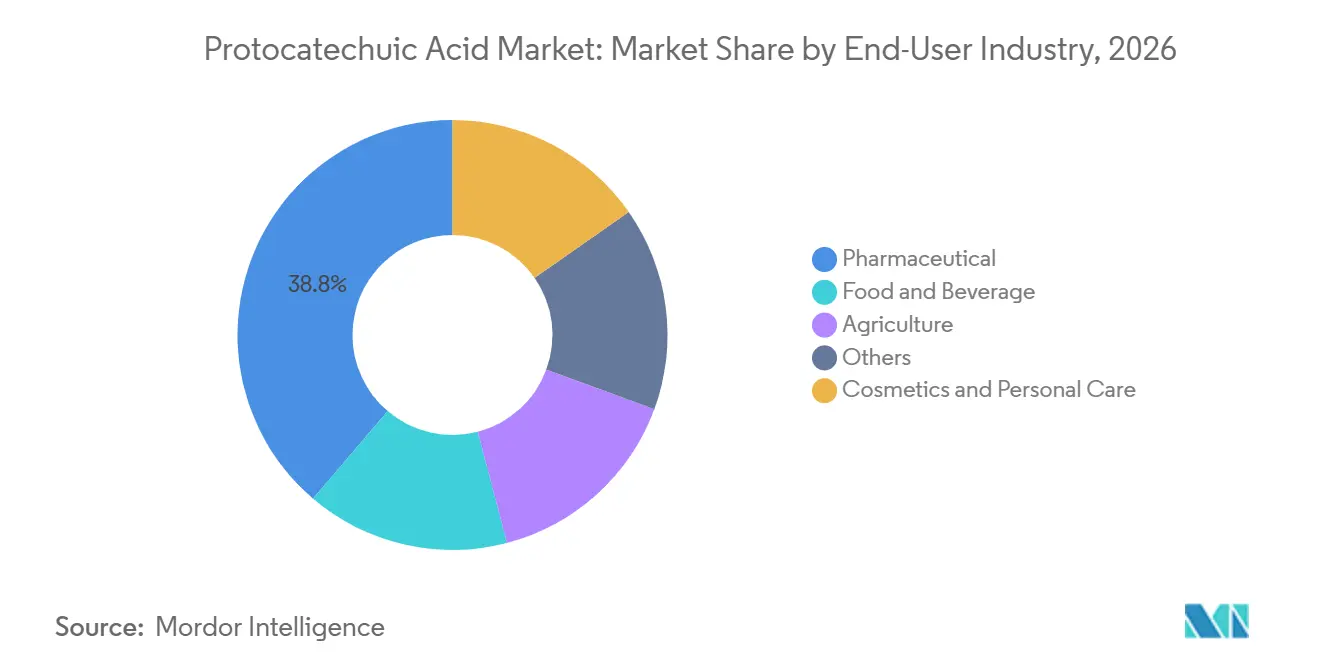
Pharmaceutical Demand Has the Highest Growth RatePharmaceuticals held 38.77% of the protocatechuic acid market share in 2026 and are forecast to grow at a CAGR of 11.42% through 2032, the highest projected growth rate among the listed end-user categories. Areas of interest include oncology, cardiology, neurology, respiratory conditions, and research tools. Pharmaceutical demand also favors suppliers with traceability, quality systems, and application support. These requirements raise the value of high-purity supply in the protocatechuic acid market.
A 2025 review reported that PCA at a 0.02% concentration increased collagen synthesis 2.7-fold in ex vivo skin explants and reduced UVA-related Matrix Metalloproteinase-1 (MMP-1) expression. Food and beverage applications are more numerous but remain sensitive to price and regulatory requirements. Agriculture uses PCA in crop protection and soil treatment formulations. Research on ferroptosis and 5-fluorouracil-related renal and hepatic injury continues to broaden the research base for future pharmaceutical uses.
Geography Analysis
APAC Protocatechuic Acid Market
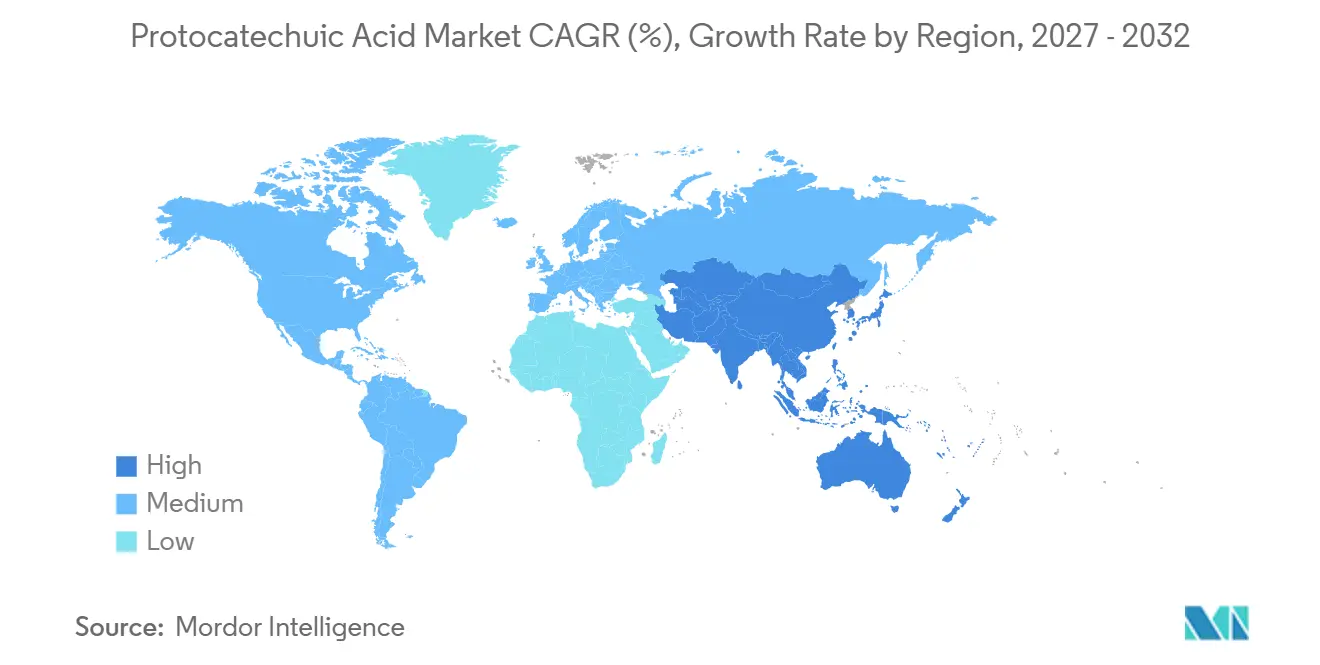
Asia-Pacific accounted for 32.89% of the protocatechuic acid market share in 2026 and is projected to grow at a CAGR of 11.05% through 2032. China is the region's primary center of supply and demand. Jiangsu Province has substantial capacity for chemical synthesis of PCA, and China also has large pharmaceutical and nutraceutical manufacturing sectors. These factors make Asia-Pacific central to the protocatechuic acid market.
China, India and South Korea Protocatechuic Acid Market
Chinese researchers reported a PCA yield of 52.77 g/L at a 100 L pilot scale in 2025, supporting the region's bio-based production potential. India is becoming more relevant as generic drug manufacturers source PCA as a pharmaceutical intermediate, and the country also has potential in natural extraction for nutraceutical and phytocosmetic applications. South Korea contributes to the demand for premium ingredients used in beauty products, and its stringent ingredient specifications support imports of high-purity PCA with validated test documentation.
The Americas and EMEA Protocatechuic Acid Market
North America and Europe remain high-value consumption regions for pharmaceutical and cosmetic-grade PCA. The United States is relevant to research-grade supply chains and clean-label nutraceutical formulations, while Europe's regulatory requirements favor well-characterized, audited material. South America, the Middle East, and Africa are primarily emerging demand corridors rather than major production centers. Brazil's functional food and nutraceutical activity, Argentina's generics sector, Saudi Arabia's pharmaceutical manufacturing expansion, and South Africa's cosmetics demand create select downstream opportunities. Growth across these regions will depend more on local pharmaceutical manufacturing activity than on broad shifts in consumer demand.
Competitive Landscape
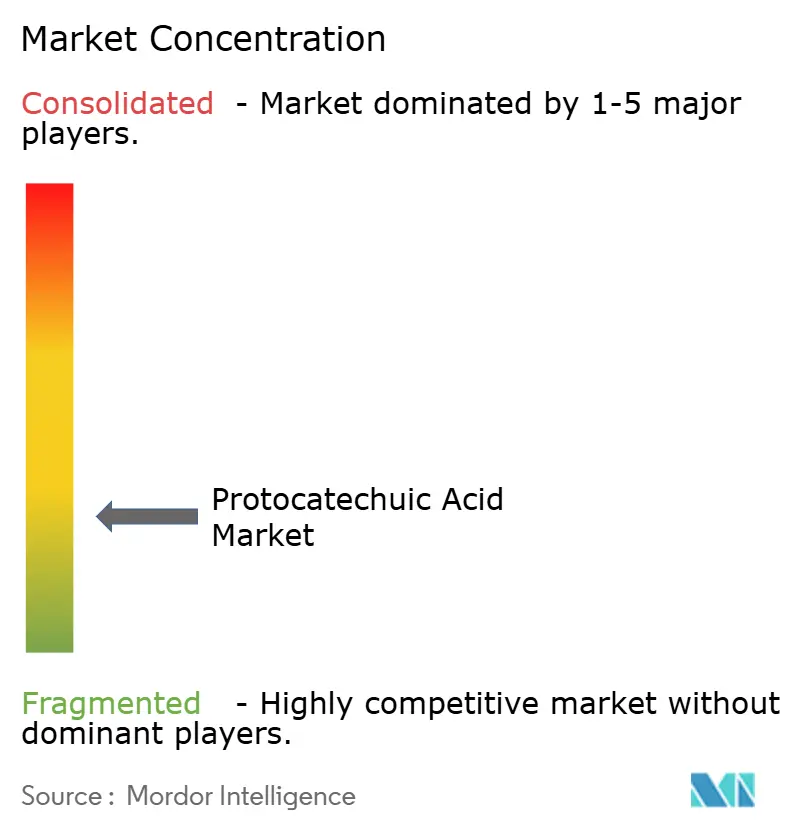
The protocatechuic acid market is fragmented, with no single producer holding sufficient market share to control pricing across all grades and regions. Chinese companies such as Taizhou Zhongda Chemical, Vertexyn Bioworks, and Viablife Biotech compete in commodity and industrial-grade supply through cost and scale. Merck KGaA and Thermo Fisher Scientific serve pharmaceutical and research channels with traceability, quality systems, and regulatory support services. Natural-extraction specialists such as Nanjing NutriHerb BioTech and Shaanxi LonierHerb Bio-Technology compete on botanical provenance and standardized extracts. This mix of business models sustains competition across price, quality, and origin.
A significant opportunity exists in GMP-certified bio-based PCA supply. Fermentation economics and quality documentation will determine which companies can address this gap. In 2025, Viablife Biotech announced U.S. FDA No Objection status for biosynthesized hydroxytyrosol developed with REJIMUS, INC. This development suggests a possible regulatory path for related bio-based phenolic ingredients, though it does not establish approval for PCA.
Biosynth, Cayman Chemical, and Tokyo Chemical Industry focus on catalog breadth, certificates of analysis, and delivery speed for research customers. Patent activity in China is increasing in the field of metabolic engineering of C. glutamicum and B. licheniformis. Proprietary strain libraries may support licensing or joint ventures with established active pharmaceutical ingredient manufacturers. Chinese pharmaceutical companies are also increasingly evaluating domestic reagent suppliers, which may intensify competitive pressure within China.
Protocatechuic Acid Industry Leaders
-
Taizhou Zhongda Chemical Co., Ltd.
-
Vertexyn Bioworks Co., Ltd.
-
Green Chemicals Co., Ltd.
-
Cayman Chemical
-
Merck KGaA
- *Disclaimer: Major Players sorted in no particular order
Protocatechuic Acid Market Companies Covered in this Report
- Biosynth Ltd.
- BOC Sciences
- Cayman Chemical
- Central Drug House
- ChemFaces
- Green Chemicals Co., Ltd.
- Merck KGaA
- Nanjing NutriHerb BioTech Co., Ltd.
- Shaanxi LonierHerb Bio-Technology Co., Ltd.
- SimSon Pharma Limited
- Taizhou Zhongda Chemical Co., Ltd.
- Thermo Fisher Scientific Inc.
- Tokyo Chemical Industry Co., Ltd.
- Vertexyn Bioworks Co., Ltd.
- Viablife Biotech Co., Ltd.
Recent Industry Developments in Protocatechuic Acid Market
- June 2025: A Chinese academic-industry research group published pilot-scale fermentation data in Bioresource Technology, achieving 63.22 g/L Protocatechuic Acid at a 5 L scale and 52.77 g/L at a 100 L bioreactor scale, the highest reported industrial-scale protocatechuic acid fermentation titers recorded. The findings provide a blueprint for the commercial production of bio-based Protocatechuic Acid.
- March 2025: Viablife Biotech Co., Ltd. announced US FDA No Objection status for its biosynthesized hydroxytyrosol, developed in collaboration with REJIMUS, INC. This established a regulatory pathway precedent for bio-based phenolic acids, including protocatechuic acid, supporting Viablife's intent to build an FDA-auditable portfolio of bio-based pharmaceutical ingredients.
Global Protocatechuic Acid Market Report Scope
Protocatechuic acid (PCA) is a natural phenolic acid found in edible plants such as green tea, brown rice, onions, and fruits. In addition to direct dietary intake, it is the primary human metabolic breakdown product of complex antioxidants such as anthocyanins. PCA has been extensively researched for its therapeutic properties, demonstrating antioxidant, anti-inflammatory, neuroprotective, and anticancer activities in preclinical models.
The protocatechuic acid market is segmented by grade, production route, form, application, end-user industry, and geography. By grade, the market is segmented into ultra-high purity grade, industrial grade, and lower grade. By production route, the market is segmented into chemical synthesis, natural extraction/bio-based production, and others. By form, the market is segmented into powder/crystalline, liquid, granules, and others. By application, the market is segmented into preservatives and antioxidants, chemical intermediates, polymers, dyes, feed additives and nutraceuticals, rust inhibitors, and others. By end-user industry, the market is segmented into pharmaceutical, cosmetics and personal care, food and beverage, agriculture, and others. The report also covers market sizes and forecasts for protocatechuic acid across 15 countries in major regions. The market sizes and forecasts are provided in terms of value (USD).
Segmentation Overview
| Ultra-High Purity Grade |
| Industrial Grade |
| Lower Grade |
| Chemical Synthesis |
| Natural Extraction/Bio-Based Production |
| Others |
| Powder/Crystalline |
| Liquid |
| Granules |
| Others |
| Preservatives and Antioxidants |
| Chemical Intermediates |
| Polymers |
| Dyes |
| Feed Additives and Nutraceuticals |
| Rust Inhibitors |
| Others |
| Pharmaceutical |
| Cosmetics and Personal Care |
| Food and Beverage |
| Agriculture |
| Others |
| Asia-Pacific | China |
| India | |
| Japan | |
| South Korea | |
| ASEAN Countries | |
| Rest of Asia-Pacific | |
| North America | United States |
| Canada | |
| Mexico | |
| Europe | Germany |
| United Kingdom | |
| France | |
| Italy | |
| NORDIC Countries | |
| Rest of Europe | |
| South America | Brazil |
| Argentina | |
| Rest of South America | |
| Middle East and Africa | Saudi Arabia |
| South Africa | |
| Rest of Middle East and Africa |
| By Grade | Ultra-High Purity Grade | |
| Industrial Grade | ||
| Lower Grade | ||
| By Production Route | Chemical Synthesis | |
| Natural Extraction/Bio-Based Production | ||
| Others | ||
| By Form | Powder/Crystalline | |
| Liquid | ||
| Granules | ||
| Others | ||
| By Application | Preservatives and Antioxidants | |
| Chemical Intermediates | ||
| Polymers | ||
| Dyes | ||
| Feed Additives and Nutraceuticals | ||
| Rust Inhibitors | ||
| Others | ||
| By End-User Industry | Pharmaceutical | |
| Cosmetics and Personal Care | ||
| Food and Beverage | ||
| Agriculture | ||
| Others | ||
| By Geography | Asia-Pacific | China |
| India | ||
| Japan | ||
| South Korea | ||
| ASEAN Countries | ||
| Rest of Asia-Pacific | ||
| North America | United States | |
| Canada | ||
| Mexico | ||
| Europe | Germany | |
| United Kingdom | ||
| France | ||
| Italy | ||
| NORDIC Countries | ||
| Rest of Europe | ||
| South America | Brazil | |
| Argentina | ||
| Rest of South America | ||
| Middle East and Africa | Saudi Arabia | |
| South Africa | ||
| Rest of Middle East and Africa | ||
Key Questions Answered in the Report
What is current market size of Protocatechuic Acid Market?
The protocatechuic acid market size was valued at USD 15.82 million in 2026 and is estimated to grow from USD 17.17 million in 2027 to USD 26.58 million by 2032, at a CAGR of 9.13% during the forecast period (2027-2032).
Which production route has the largest share?
Chemical synthesis held a 56.54% share in 2026 and is projected to grow at a 10.04% CAGR through 2032.
Which region grows fastest for protocatechuic acid?
Asia-Pacific held a 32.89% share in 2026 and is forecast to grow at a CAGR of 11.05% through 2032.
What limits the wider use of protocatechuic acid?
Limited human clinical evidence and high purification costs remain the main barriers to broader adoption.