
Premature Rupture Of Membranes Testing Market Size and Share
Market Overview
| Study Period | 2021 - 2032 |
|---|---|
| Market Size (2027) | USD 3.75 Billion |
| Market Size (2032) | USD 5.37 Billion |
| Growth Rate (2027 - 2032) | 7.45 % |
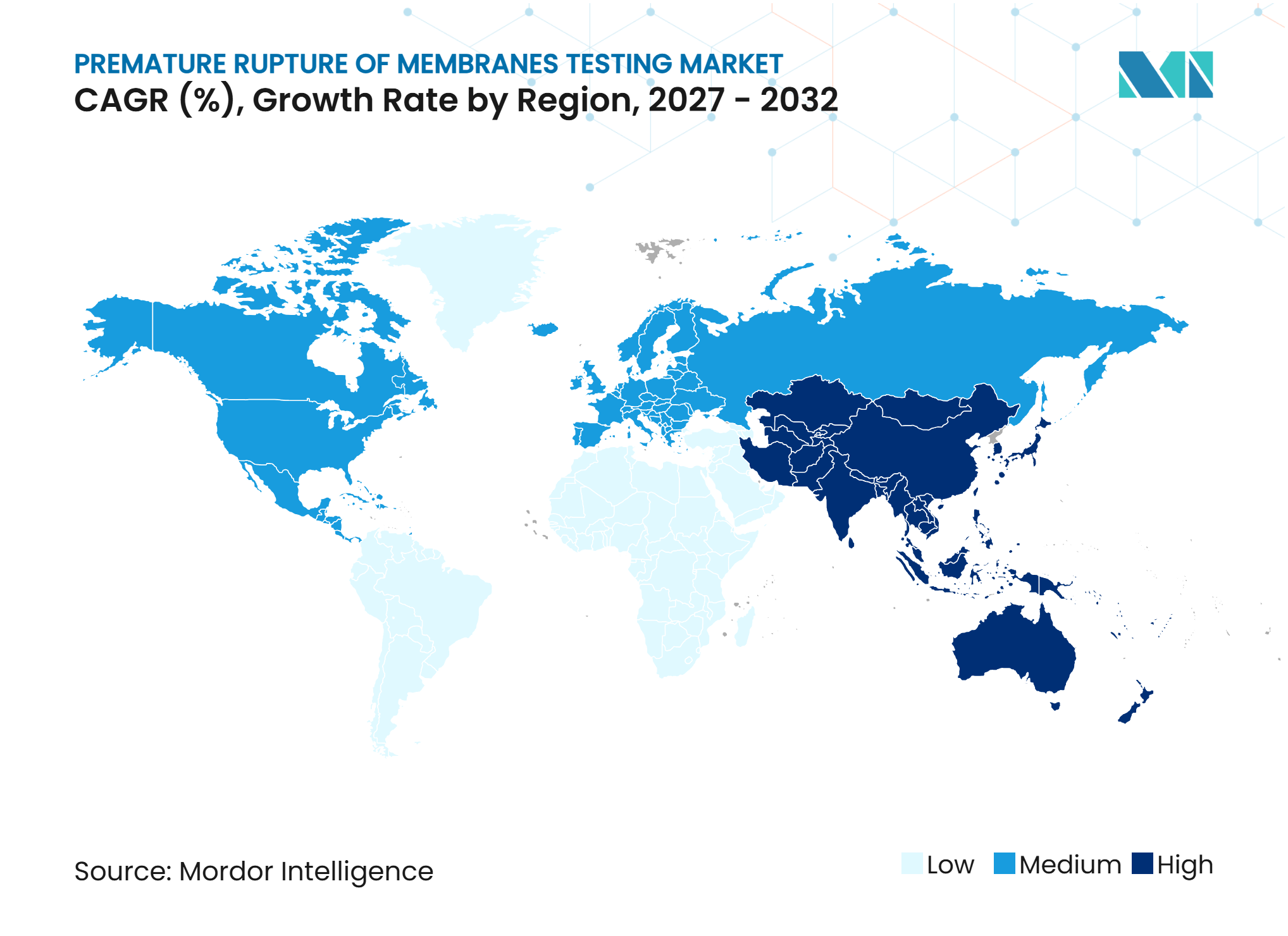
| Fastest Growing Market | Asia-Pacific |
| Largest Market | North America |
| Market Concentration | Medium |
Major Players *Disclaimer: Major Players sorted in no particular order Image © Mordor Intelligence. Reuse requires attribution under CC BY 4.0. | |
Premature Rupture Of Membranes Testing Market Analysis by Mordor Intelligence
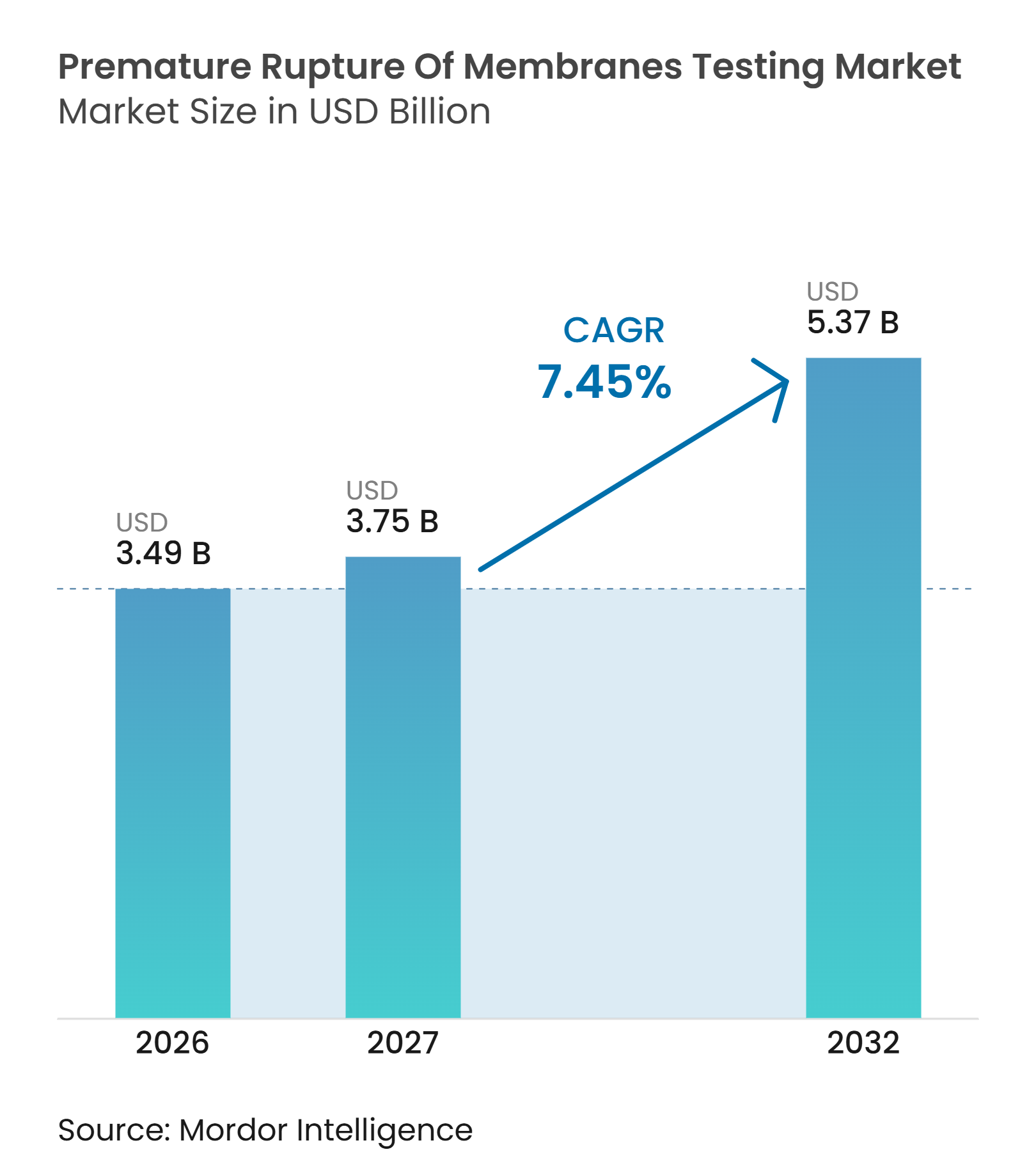
The Premature Rupture Of Membranes Testing Market size is expected to grow from USD 3.49 billion in 2026 to USD 3.75 billion in 2027 and is forecast to reach USD 5.37 billion by 2032 at 7.45% CAGR over 2027-2032.
The premature rupture of membranes testing market is supported by the continuing burden of preterm birth, which affects an estimated 15 million babies each year worldwide. Preterm birth complications remain a leading cause of death among children under 5 years, which keeps timely obstetric assessment central to maternal care pathways. Demand is shifting toward biomarker tests that can support clinical assessment when conventional methods do not provide a clear answer. Coverage decisions, clinical evidence requirements, and the ability to integrate results into obstetric workflows will shape which products gain routine use. The premature rupture of membranes testing market also has room to expand as prenatal care capacity and diagnostic access improve across lower-resource settings.
Key Report Takeaways
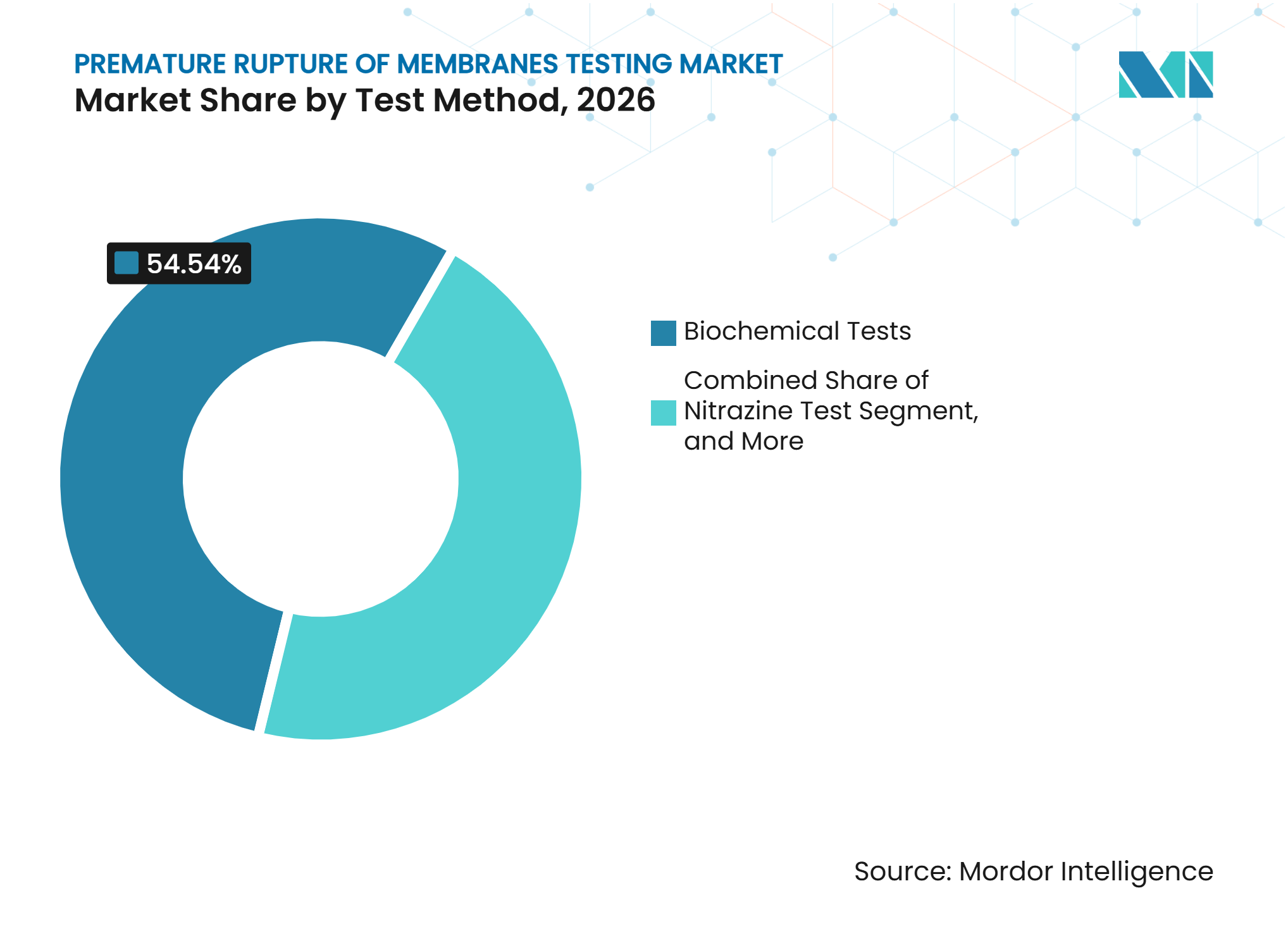
- By test method, biochemical tests held 54.5% of the premature rupture of membranes testing market share in 2026, while ultrasound tests are projected to grow at a 9.6% CAGR through 2032.
- By product format, rapid test kits held 58.7% of the premature rupture of membranes testing market share in 2026, while reagents and extraction buffers are projected to grow at a 9.9% CAGR through 2032.
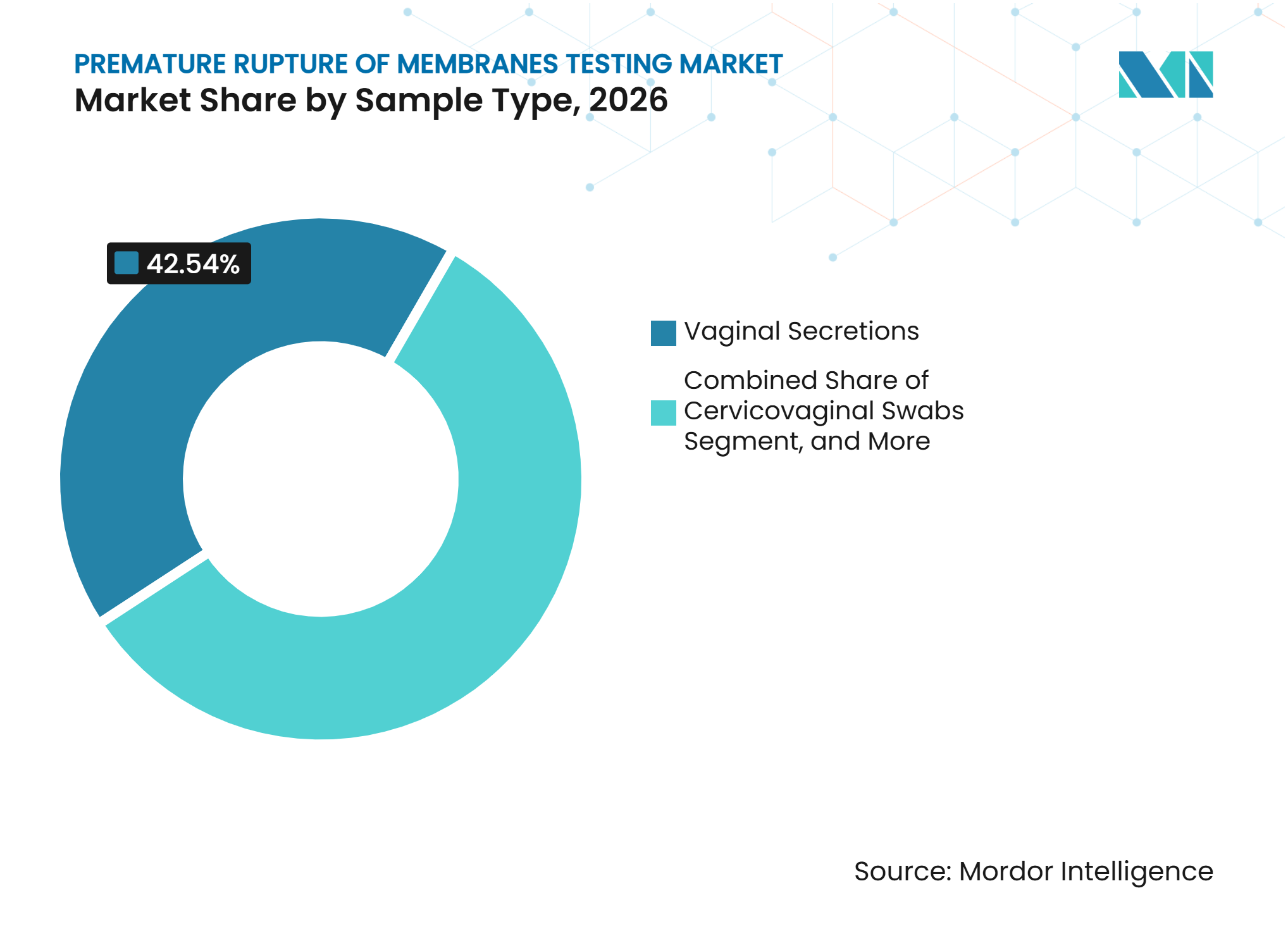
- By sample type, vaginal secretions held a 42.5% share in 2026, while cervicovaginal swabs are projected to grow at a 10.3% CAGR through 2032.
- By end user, hospitals held a 44.7% share in 2026, while diagnostic laboratories are projected to grow at a 10.5% CAGR through 2032.
- By geography, North America held a 42.7% share in 2026, while Asia-Pacific is projected to grow at an 8.5% CAGR through 2032.
Note: Market numbers in this report are based on Mordor Intelligence's proprietary estimation framework, which combines nine months of actuals with Q4 projections for base year 2026.
Market Trends and Insights
Drivers Impact Analysis of Premature Rupture Of Membranes Testing Market*
| Driver | (~) % Impact on CAGR Forecast | Geographic Relevance | Impact Timeline |
|---|---|---|---|
| Rising Incidence of Preterm Birth and PROM | +2.00% | Global, with a high burden in South Asia and Sub-Saharan Africa | Long term (≥ 4 years) |
| Wider Adoption of Biomarker-Based PROM Tests | +1.80% | Global, with strongest use in North America and Europe and rising adoption in Asia-Pacific | Medium term (2-4 years) |
| Growing Demand for Rapid Point-of-Care Diagnosis | +1.50% | North America and Europe, with hospital-led demand in Asia-Pacific and the Middle East and Africa | Short term (≤ 2 years) |
| Expansion of Prenatal and Maternal Healthcare Access | +1.20% | Asia-Pacific, particularly India, China, and Indonesia, with secondary gains in the Middle East and Africa | Long term (≥ 4 years) |
| Blood-Tolerant Testing for Clinically Ambiguous Cases | +1.00% | Global, with greater relevance in hospital triage settings in North America and Europe | Medium term (2-4 years) |
| Integration of PROM Results Into Obstetric Workflow Software | +0.70% | North America and Europe, followed by large hospital networks in Asia-Pacific | Medium term (2-4 years) |
| Source: Mordor Intelligence | |||
Rising Incidence of Preterm Birth and PROM Sustains Structural Demand
Preterm birth remains a persistent global maternal and newborn health challenge, with 1 in 10 babies born before 37 weeks of gestation. The premature rupture of membranes testing market therefore benefits from an enduring clinical need for dependable assessment during pregnancies at risk of early delivery. South Asia and Sub-Saharan Africa carry a substantial preterm birth burden, which gives greater importance to accessible maternal diagnostic services. This concentration means that expanded access to prenatal and obstetric services in high-burden countries can translate into greater test volumes. The lack of a measurable decline in global preterm birth over the past decade also indicates that diagnostics will remain relevant even as preventive and therapeutic approaches advance.
Wider Adoption of Biomarker-Based PROM Tests Displaces Conventional Methods
Biomarker assays based on IGFBP-1 and PAMG-1 are gaining use when conventional examination or pH-based methods leave uncertainty. A 2025 study across 19 Indonesian centers reported 100% sensitivity for an IGFBP-1 immunoassay, compared with 75% for nitrazine testing, in the evaluated sample. A separate Kenyan hospital study reported 98% sensitivity and 98% specificity for the NADAL PROM test. The premature rupture of membranes testing market is responding to the operational benefit of tests that can be used without a speculum examination in appropriate care settings. Product uptake will remain dependent on clinical protocols that position biomarker results alongside, rather than apart from, clinical assessment.
Growing Demand for Rapid Point-of-Care Diagnosis
Rapid testing supports clinical decisions in labor and delivery units where care teams require timely information. Point-of-care formats can reduce dependence on centralized laboratory workflows and may extend testing to clinics with limited specialist coverage. The premature rupture of membranes testing market benefits when nurses and midwives can use approved collection methods within defined clinical protocols. BGI Genomics launched a 10-minute, instrument-free LUM + fFN dual-biomarker rapid test in September 2026 for preterm birth risk assessment. This launch shows how manufacturers are adapting rapid formats for the needs of hospital and diagnostic laboratory users in Asia-Pacific.
Expansion of Prenatal and Maternal Healthcare Access Opens High-Volume Emerging Markets
Maternal health investment can widen the clinical settings in which PROM assessment is available. The Gates Foundation committed USD 749,000 to GE Healthcare FZE in November 2025 to expand AI-assisted ultrasound diagnostics in Nigeria, Ethiopia, and India[1]. The premature rupture of membranes testing market can benefit as referral networks, hospital capacity, and prenatal diagnostic access improve in these countries. ACOG updated its advisory on previable and periviable preterm prelabor rupture of membranes in 2025, underscoring the need for timely diagnosis before management choices are made[2]. Wider access is most likely to increase use where providers can pair testing with counseling, follow-up, and referral pathways.
Restraints Impact Analysis of Premature Rupture Of Membranes Testing Market*
| Restraint | (~) % Impact on CAGR Forecast | Geographic Relevance | Impact Timeline |
|---|---|---|---|
| High Cost of Advanced Immunoassay Tests | -1.80% | Global, with a pronounced effect in South Asia, Sub-Saharan Africa, Latin America, and reimbursement-sensitive settings in North America | Long term (≥ 4 years) |
| False-Positive and False-Negative Results | -1.00% | Global, with close scrutiny in North America and Europe | Medium term (2-4 years) |
| Uneven Reimbursement and Clinical Adoption | -1.20% | North America and Europe, with implications for other reimbursement-led markets | Medium term (2-4 years) |
| Pre-Analytical Interference From Blood and Vaginal Contaminants | -0.80% | Global, particularly in hospital triage and clinically complex presentations | Medium term (2-4 years) |
| Source: Mordor Intelligence | |||
High Cost of Advanced Immunoassay Tests Constrains Uptake in Price-Sensitive Markets
Advanced immunoassays can face adoption limits when their cost exceeds local procurement budgets or patient affordability. This issue is more acute in lower-resource settings, where national guidelines and reimbursement arrangements may not support routine use. The premature rupture of membranes testing market can therefore see different product mixes across public hospitals, private clinics, and reference laboratories. In the United States, coverage policies may narrow the use of some assays when payers judge the available evidence insufficient. Simply Healthcare Plans classified cervicovaginal PAMG-1 testing as not medically necessary in its 2025 policy, illustrating this reimbursement risk.
False-Positive and False-Negative Results Erode Clinical Confidence and Limit Guideline Adoption
Test performance concerns can reduce clinician confidence when results do not align with patient symptoms or examination findings. The 2025 policy review from Simply Healthcare Plans cited false-positive rates of 19% to 30% in patients with clinically intact membranes who presented with labor symptoms. A review in Clinical Chemistry stated that commercial immunoassays should be used for equivocal cases rather than as unrestricted first-line tests. The premature rupture of membranes testing market will depend on providers using test results with clinical findings and established care pathways. Quality procedures under CLIA and ISO 15189 remain relevant to the deployment of laboratory-based methods and point-of-care testing.
*Our forecasts treat driver/restraint impacts as directional, not additive. The impact forecasts reflect baseline growth, mix effects, and variable interactions.
Premature Rupture Of Membranes Testing Market Segment Analysis
By Test Method:
Biochemical Tests Retain the Broadest Clinical BaseBiochemical tests held 54.5% of the premature rupture of membranes testing market size in 2026. Their position reflects the use of PAMG-1 and IGFBP-1 assays in hospital triage, where clinicians need support in cases with uncertain membrane status. These tests address limitations of conventional nitrazine, ferning, and pooling methods that can be affected by sample conditions or unclear presentation. The clinical role is strongest where an immunoassay result is reviewed together with patient history and physical examination. The premature rupture of membranes testing market continues to favor methods that fit existing obstetric protocols without creating additional workflow steps.
Ultrasound tests are projected to record a 9.6% CAGR through 2032. Ultrasound can support the broader assessment of pregnancy risk and may guide the decision to use further diagnostic testing. It does not replace every biochemical method, because the tests answer different clinical questions. The segment gains from expanding maternal imaging capacity and the use of structured prenatal monitoring in hospitals and specialty clinics. Conventional methods are likely to retain a role in lower-resource facilities and in situations where they remain clinically suitable.



By Product Format:
Rapid Test Kits Lead While Reagents Build Laboratory DemandRapid test kits accounted for 58.7% of the premature rupture of membranes testing market size in 2026. Their lead reflects the need for results during labor and delivery triage, when clinicians must make timely decisions about treatment, observation, and referral. A 2025 study of an iGFBP-1 rapid test cassette reported 98% sensitivity, 97.7% specificity, and 97.8% accuracy in the evaluated specimens. Test strips and cassettes remain closely related formats, with procurement and workflow preferences influencing the choice. Reader systems can also create recurring demand for compatible consumables and quality-control materials.
Reagents and extraction buffers are projected to expand at a 9.9% CAGR through 2032. This pattern points to increased testing through diagnostic laboratories and hospital reference laboratories rather than only at the bedside. Replenishment demand can give suppliers more predictable procurement cycles when laboratories process higher sample volumes. Integrated offerings that combine reagents, quality controls, readers, and connectivity features may have an advantage in institutional contracts. ISO 15189 accreditation requirements and CLIA quality standards also support attention to analytical control in laboratory-based testing.
By Sample Type:
Vaginal Secretions Remain Established While Swabs Support Wider AccessVaginal secretions held 42.5% of the premature rupture of membranes testing market in 2026. They are the established collection medium for conventional tests and many immunoassay-based methods used in clinical assessment. This consistency supports familiar workflows in hospital labor units and obstetric clinics. Amniotic fluid and cervical mucus continue to have roles in more specialized or equivocal diagnostic situations. The segment reflects the importance of collection procedures that clinicians can perform reliably within standard maternal care routines.
Cervicovaginal swabs are projected to grow at a 10.3% CAGR through 2032. Swab-based collection can reduce the need for speculum use and make testing more feasible for trained nurses, midwives, and community health workers. The Indonesian multicenter study supports the clinical potential of IGFBP-1 testing from swab-collected specimens[3]. This format can be especially relevant in settings that need to expand maternal diagnostic access without parallel investment in complex infrastructure. Growth will still depend on training, referral systems, and clear rules for acting on a positive or negative result.

By End User:
Hospitals Lead While Diagnostic Laboratories Gain MomentumHospitals held 44.7% of the premature rupture of membranes testing market size in 2026. Hospital labor and delivery units manage many high-acuity cases where PROM assessment can affect antibiotic use, corticosteroid decisions, observation, and delivery planning. These settings have the clinical oversight needed to interpret results alongside maternal and fetal findings. Maternity clinics, birthing centers, and obstetric practices provide an additional user base in areas with more distributed care delivery. The premature rupture of membranes testing market remains closely linked to the organization of local maternity services.
Diagnostic laboratories are projected to grow at a 10.5% CAGR through 2032. Their growth reflects demand for confirmatory testing from community clinics and broader use of prenatal biomarker panels. Illinois enacted Public Act 104-0470 in June 2026, requiring Medicaid coverage for proteomic preterm birth risk tests. Although these tests are distinct from PROM diagnosis, the policy shows a reimbursement pathway for laboratory-based obstetric risk assessment. Laboratories with validated workflows, quality systems, and links to obstetric providers may be well placed to serve this demand.
Geography Analysis
North America
North America held 42.7% share in 2026. The region benefits from organized obstetric services, access to regulated diagnostic products, and clinical protocols that support prompt assessment when membrane rupture is suspected. The United States remains an important revenue base because it combines a significant preterm birth burden with established obstetric care infrastructure. ACOG’s 2025 advisory on previable and periviable PPROM reinforces the importance of timely diagnosis before counseling and treatment decisions. FDA regulatory review and payer coverage policies influence which tests can achieve broader clinical use. The 2025 Simply Healthcare Plans policy illustrates how reimbursement decisions can constrain the routine use of PAMG-1 testing.
Asia-Pacific
The Asia-Pacific premature rupture of membranes testing market is projected to grow at an 8.5% CAGR through 2032. The region combines a large preterm birth burden with a rising need for accessible maternal diagnostics. South Asia’s substantial preterm birth burden supports demand for earlier and more accessible maternal assessment pathways. BGI Genomics introduced its LUM + fFN dual-biomarker rapid test in September 2026, providing a locally developed, 10-minute instrument-free option for preterm birth risk assessment. Investments in imaging, hospital capacity, and prenatal referral networks can support broader diagnostic access across the region. Japan and South Korea remain higher-value settings where adoption is shaped by established care systems and technology use. Regulatory compliance, provider training, and reimbursement will determine how rapidly new formats move from launch to routine care.
Europe, the Middle East and Africa, and South America
Europe is shaped by CE-IVD requirements and national health service protocols, which place compliance factors at the center of product adoption. The region’s hospitals and laboratories can support established biomarker testing, but suppliers must demonstrate clinical utility and fit local reimbursement requirements. In the Middle East and Africa, public health investment in Gulf Cooperation Council countries supports higher-value diagnostics, while South Africa remains an important sub-Saharan adoption base. The Gates Foundation’s 2025 commitment for AI-assisted ultrasound diagnostics in Nigeria, Ethiopia, and India demonstrates the focus on expanding maternal diagnostic capacity in underserved settings. South America, led by Brazil, has private-sector interest in rapid PROM testing, although public procurement limitations can slow wider adoption. The overall testing opportunity across these mixed geographies will be shaped by whether diagnostic access develops alongside care pathways that can act on the result. Manufacturers that offer simple collection methods, training, and evidence suited to public procurement will have a practical advantage.
Competitive Landscape
Market Concentration
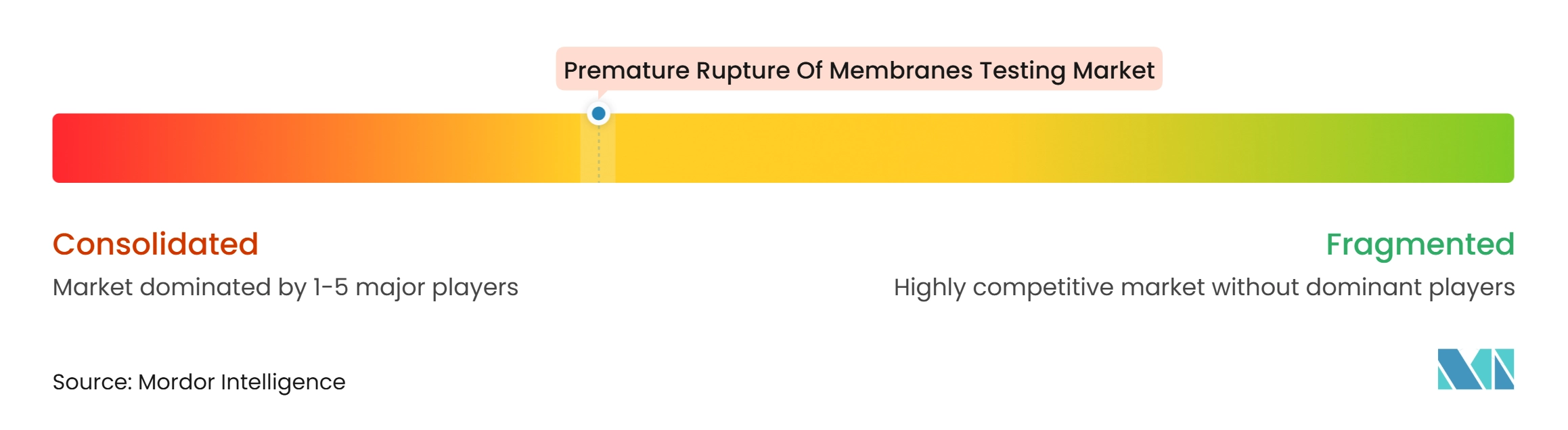
The premature rupture of membranes testing market contains specialized maternal health diagnostic suppliers alongside larger diagnostics companies with related assay and rapid-testing capabilities. QIAGEN offers AmniSure and PartoSure, while Hologic distributes Actim PROM in the United States and CooperSurgical supports Actim PROM in international markets. Clinical Innovations competes with ROM Plus, a dual-marker format using AFP and PAMG-1. Competition depends on biomarker intellectual property, clinical evidence, regulatory clearance, and reliable distribution. A market concentration score of 4 out of 10 reflects a fragmented field in which the supplied material identifies multiple specialized participants but provides no combined share data for the leading companies.
QIAGEN and EQT Private Equity announced a recommended voluntary all-cash takeover offer in October 2026, valuing QIAGEN at USD 12.1 billion in enterprise value. This transaction could influence investment priorities across QIAGEN’s diagnostics portfolio, including its obstetric products. CooperCompanies completed its strategic review in September 2026 and decided to retain CooperSurgical, keeping its women’s health business within the group. Lumos Diagnostics expanded its development work with Hologic in 2025 on a next-generation fFN system with hardware and connectivity features. These moves show that established suppliers are combining portfolio ownership, product development, and connected testing platforms to defend clinical relationships.
Sera Prognostics is pursuing payer-supported adoption for its PreTRM blood test, which is separate from PROM diagnosis but relevant to the wider preterm birth testing pathway. Its January 2026 report on the PRIME trial described 56% fewer births before 32 weeks and 20% fewer neonatal intensive care unit admissions among the reported study outcomes. Mid-tier suppliers such as Medix Biochemica, BIOSYNEX, and IQ Products compete through standardized immunoassay formats for hospital and laboratory procurement. The premature rupture of membranes testing market favors companies that can offer validated tests, consistent supply, quality documentation, and practical support for clinical implementation.
Premature Rupture Of Membranes Testing Industry Leaders
-
QIAGEN N.V.
-
Hologic, Inc.
-
CooperSurgical, Inc.
-
Medix Biochemica
-
Abbott Laboratories
- *Disclaimer: Major Players sorted in no particular order
Premature Rupture Of Membranes Testing Market Companies Covered in this Report
- Abbott Laboratories
- QIAGEN
- Hologic
- The Cooper Companies
- Medix Biochemica
- BIOSYNEX S.A.
- Clinical Innovations
- Sera Prognostics, Inc.
- NX Prenatal
- IQ Products
- Roche
- Siemens Healthineers
- Thermo Fisher Scientific
- Beckton Dickinson
- QuidelOrtho
- Sekisui Diagnostics
- Bio-Rad Laboratories
- PerkinElmer
- Acon Laboratories
Recent Industry Developments in Premature Rupture Of Membranes Testing Market
- September 2026: CooperCompanies completed its strategic review and decided to retain CooperSurgical. The decision preserved CooperSurgical’s PROM testing portfolio within the women’s health group.
- September 2026: BGI Genomics launched the LUM + fFN Dual-Biomarker Rapid Test for preterm birth risk assessment in Asia. The product is a 10-minute instrument-free lateral flow assay using colloidal gold detection.
- August 2026: Sera Prognostics launched its fourth payer partnership program for PreTRM Test-guided care. The company reported active discussions involving more than 20 payer opportunities across more than 20 U.S. states.
Global Premature Rupture Of Membranes Testing Market Report Scope
According to the report’s scope, premature rupture of membranes (PROM) testing checks whether the amniotic sac has ruptured before labor begins. It helps clinicians confirm membrane leakage and guide appropriate care for the pregnant patient and baby.
The premature rupture of membranes testing market is segmented into test method, product format, sample type, end user, and geography. By test method, the market is segmented into biochemical tests, nitrazine test, ferning test, pooling test, amnio-dye test, and ultrasound test. The Biochemical tests are segmented into PAMG-1 immunoassay, IGFBP-1 test, combined AFP and IGFBP-1 test, and fetal fibronectin test. By product format, the market is segmented into rapid test kits, test strips and cassettes, reagents and extraction buffers, instruments and readers, and quality-control materials. By sample type, the market is segmented into vaginal secretions, cervicovaginal swabs, amniotic fluid, and cervical mucus. By end user, the market is segmented into hospitals, diagnostic laboratories, maternity clinics and birthing centers, obstetric and gynecology clinics, and other end users. By geography, the market is segmented into North America, Europe, Asia-Pacific, the Middle East and Africa, and South America. The report also covers the estimated market sizes and trends for 17 countries across major regions globally. The report offers values (USD) for all the above segments.
Segmentation Overview
| Biochemical Tests | PAMG-1 Immunoassay |
| IGFBP-1 Test | |
| Combined AFP and IGFBP-1 Test | |
| Fetal Fibronectin Test | |
| Nitrazine Test | |
| Ferning Test | |
| Pooling Test | |
| Amnio-Dye Test | |
| Ultrasound Test |
| Rapid Test Kits |
| Test Strips and Cassettes |
| Reagents and Extraction Buffers |
| Instruments and Readers |
| Quality-Control Materials |
| Vaginal Secretions |
| Cervicovaginal Swabs |
| Amniotic Fluid |
| Cervical Mucus |
| Hospitals |
| Diagnostic Laboratories |
| Maternity Clinics and Birthing Centers |
| Obstetric and Gynecology Clinics |
| Other End Users |
| North America | United States |
| Canada | |
| Mexico | |
| Europe | Germany |
| United Kingdom | |
| France | |
| Italy | |
| Spain | |
| Rest of Europe | |
| Asia-Pacific | China |
| Japan | |
| India | |
| Australia | |
| South Korea | |
| Rest of Asia-Pacific | |
| Middle East and Africa | GCC |
| South Africa | |
| Rest of Middle East and Africa | |
| South America | Brazil |
| Argentina | |
| Rest of South America |
| By Test Method | Biochemical Tests | PAMG-1 Immunoassay |
| IGFBP-1 Test | ||
| Combined AFP and IGFBP-1 Test | ||
| Fetal Fibronectin Test | ||
| Nitrazine Test | ||
| Ferning Test | ||
| Pooling Test | ||
| Amnio-Dye Test | ||
| Ultrasound Test | ||
| By Product Format | Rapid Test Kits | |
| Test Strips and Cassettes | ||
| Reagents and Extraction Buffers | ||
| Instruments and Readers | ||
| Quality-Control Materials | ||
| By Sample Type | Vaginal Secretions | |
| Cervicovaginal Swabs | ||
| Amniotic Fluid | ||
| Cervical Mucus | ||
| By End User | Hospitals | |
| Diagnostic Laboratories | ||
| Maternity Clinics and Birthing Centers | ||
| Obstetric and Gynecology Clinics | ||
| Other End Users | ||
| Geography | North America | United States |
| Canada | ||
| Mexico | ||
| Europe | Germany | |
| United Kingdom | ||
| France | ||
| Italy | ||
| Spain | ||
| Rest of Europe | ||
| Asia-Pacific | China | |
| Japan | ||
| India | ||
| Australia | ||
| South Korea | ||
| Rest of Asia-Pacific | ||
| Middle East and Africa | GCC | |
| South Africa | ||
| Rest of Middle East and Africa | ||
| South America | Brazil | |
| Argentina | ||
| Rest of South America | ||
Key Questions Answered in the Report
What is the projected value of the premature rupture of membranes testing market by 2032?
The market is projected to reach USD 5.37 billion by 2032, up from USD 3.75 billion in 2027, at a 7.4% CAGR. This outlook reflects demand for diagnostic support in maternal care settings that manage suspected membrane rupture and preterm birth risk. It also reflects the continuing need to distinguish uncertain presentations from confirmed membrane rupture before teams decide on monitoring, treatment, transfer, or delivery planning. The estimate does not suggest that each clinical setting will adopt the same test format or follow the same procurement model.
Which test method leads premature rupture of membranes testing?
Biochemical tests lead with 54.5% share in 2026, supported by use of PAMG-1 and IGFBP-1 assays in obstetric triage. Their role is most relevant when symptoms, examination, and conventional methods do not give clinicians a clear answer. Biochemical assays are generally incorporated into care through local protocols, which can differ by hospital resources, clinical staffing, payer rules, and the availability of supporting laboratory services. Their leading share does not remove the continuing clinical role of ultrasound and conventional approaches.
Why are PROM biomarker tests gaining adoption?
Biomarker tests can support clinical assessment when conventional testing is unclear, and selected studies reported strong diagnostic performance for IGFBP-1 assays. Routine use still depends on clinical protocols, reimbursement decisions, and careful interpretation with patient findings. In practice, a test format that reduces collection complexity can be useful where trained staff need to assess patients rapidly, but this benefit depends on whether a positive or negative result leads to an agreed next step. That relationship between test access and care pathways is central to sustained adoption.
Which product format is growing fastest for PROM testing?
Reagents and extraction buffers are projected to grow at a 9.9% CAGR through 2032 as laboratory immunoassay workflows expand. The shift suggests recurring laboratory procurement demand as hospital reference laboratories and diagnostic providers handle more samples. Laboratory adoption also places emphasis on verification procedures, compatible readers, reagent supply continuity, and documented quality processes. These requirements can favor vendors that serve established laboratory workflows rather than suppliers offering only a single consumable product.
Which region will grow fastest through 2032?
Asia-Pacific is projected to grow at an 8.5% CAGR, supported by maternal healthcare investment and a large preterm birth burden. Product formats that work with simple collection procedures and existing referral systems are positioned to benefit from this expansion. The commercial opportunity may be strongest where increases in prenatal visits, hospital referrals, and diagnostic capacity occur together. Product introduction alone is unlikely to expand access if facilities lack training, follow-up services, or clear protocols for managing suspected PROM.
What limits adoption of advanced PROM immunoassays?
Test cost, reimbursement scrutiny, and concerns about false-positive or false-negative results can limit routine clinical adoption. Providers and suppliers must therefore balance faster access to results with evidence, quality assurance, and clinical oversight. This includes selecting the right patient pathway, training users in specimen collection, documenting quality controls, and retaining clinician review when results conflict with the wider clinical picture. These practical requirements can slow widespread routine use, but they are needed to support safe and reliable implementation.