
Pituitary Cancer Market Size and Share
Market Overview
| Study Period | 2020 - 2031 |
|---|---|
| Market Size (2026) | USD 1.06 Billion |
| Market Size (2031) | USD 1.65 Billion |
| Growth Rate (2026 - 2031) | 9.21 % |
| Fastest Growing Market | Asia-Pacific |
| Largest Market | North America |
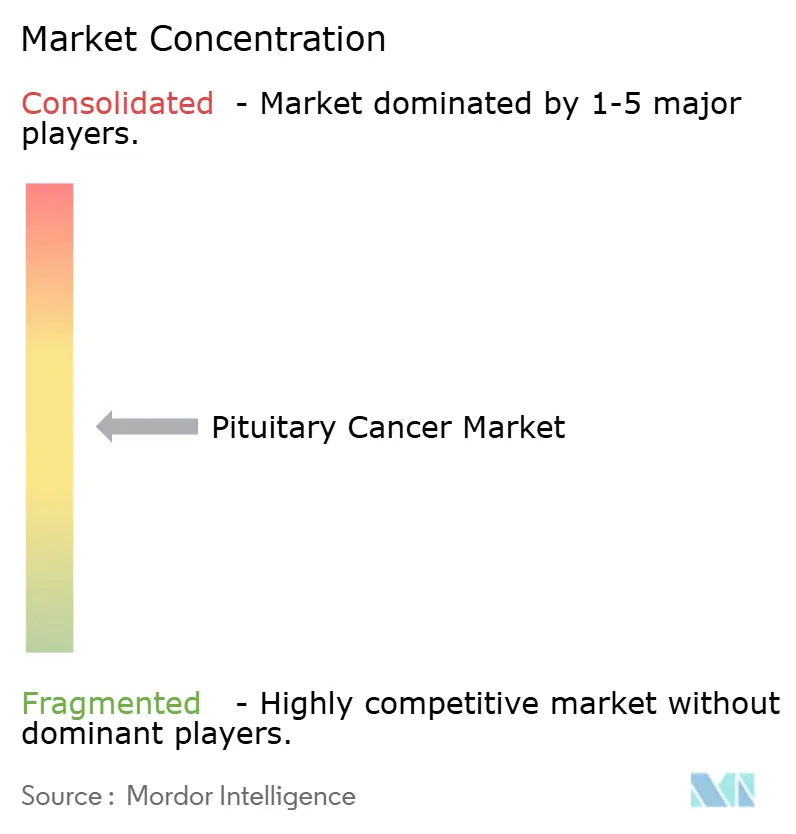
| Market Concentration | Medium |
Major Players *Disclaimer: Major Players sorted in no particular order Image © Mordor Intelligence. Reuse requires attribution under CC BY 4.0. | |
Pituitary Cancer Market Analysis by Mordor Intelligence
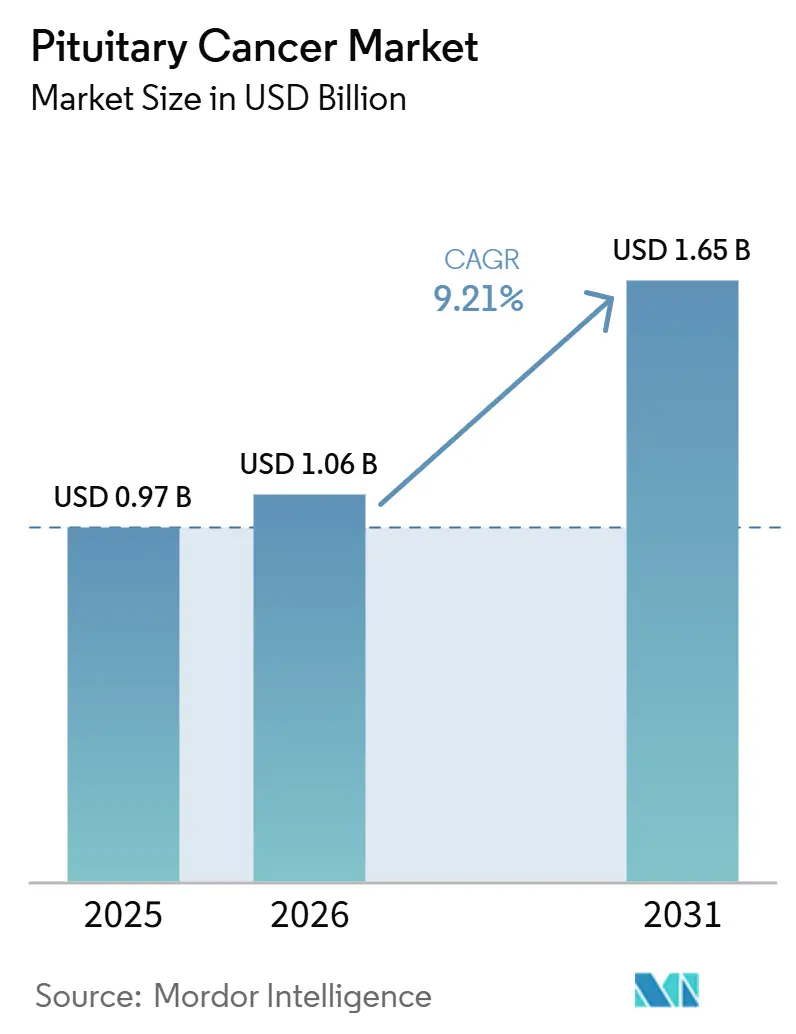
The Pituitary Cancer Market size is projected to expand from USD 0.97 billion in 2025 and USD 1.06 billion in 2026 to USD 1.65 billion by 2031, registering a CAGR of 9.21% between 2026 to 2031.
The Pituitary cancer market is being shaped by a larger number of tumors entering formal clinical pathways after incidental detection on imaging. Oral therapies and long-acting formulations are changing treatment delivery by reducing reliance on frequent injections. Advanced MRI, functional imaging, and molecular workups are increasing the number and complexity of diagnostic services. Dedicated pituitary centers are consolidating surgery, endocrine care, drug treatment, and follow-up imaging in one care pathway. The Pituitary cancer market also faces limits from the exceptional rarity of carcinoma, uneven specialist access, and the lack of validated markers for malignant transformation.
Key Report Takeaways
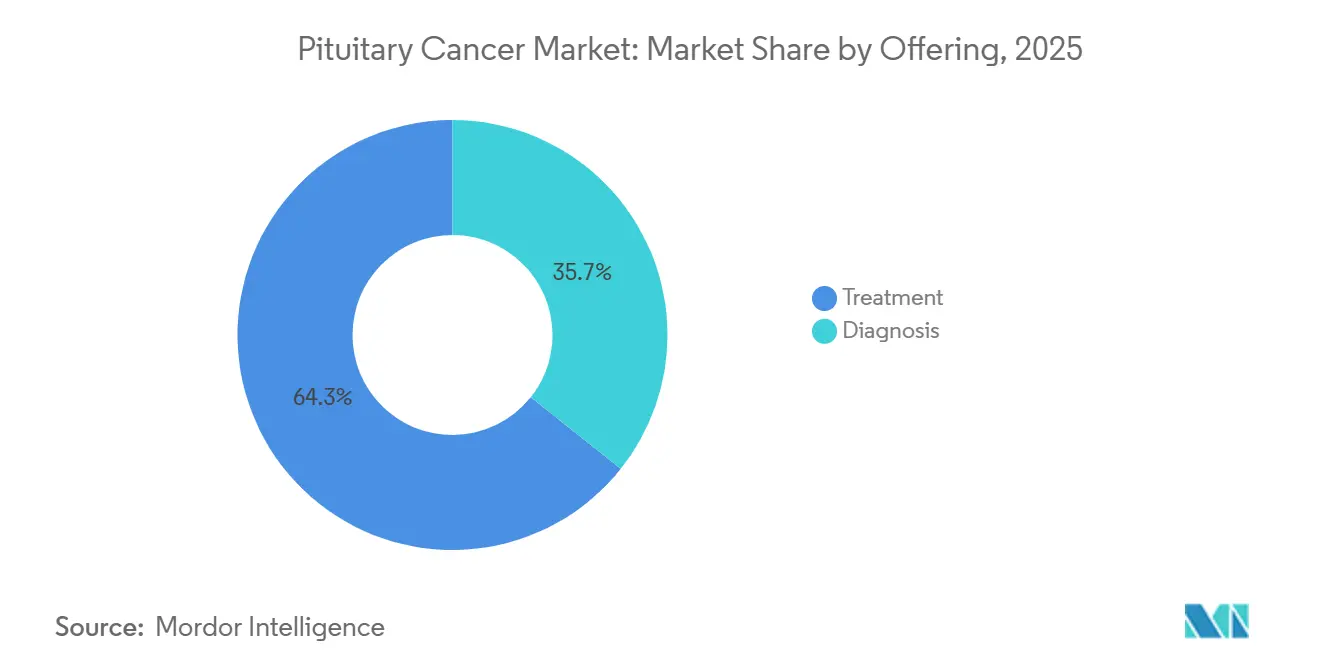
- By offering, treatment held 64.31% revenue share in 2025, while diagnosis is forecast to expand at a 10.58% CAGR through 2031.
- By cancer type, functioning pituitary adenoma held 63.44% revenue share in 2025, while pituitary carcinoma is forecast to expand at a 10.52% CAGR through 2031.
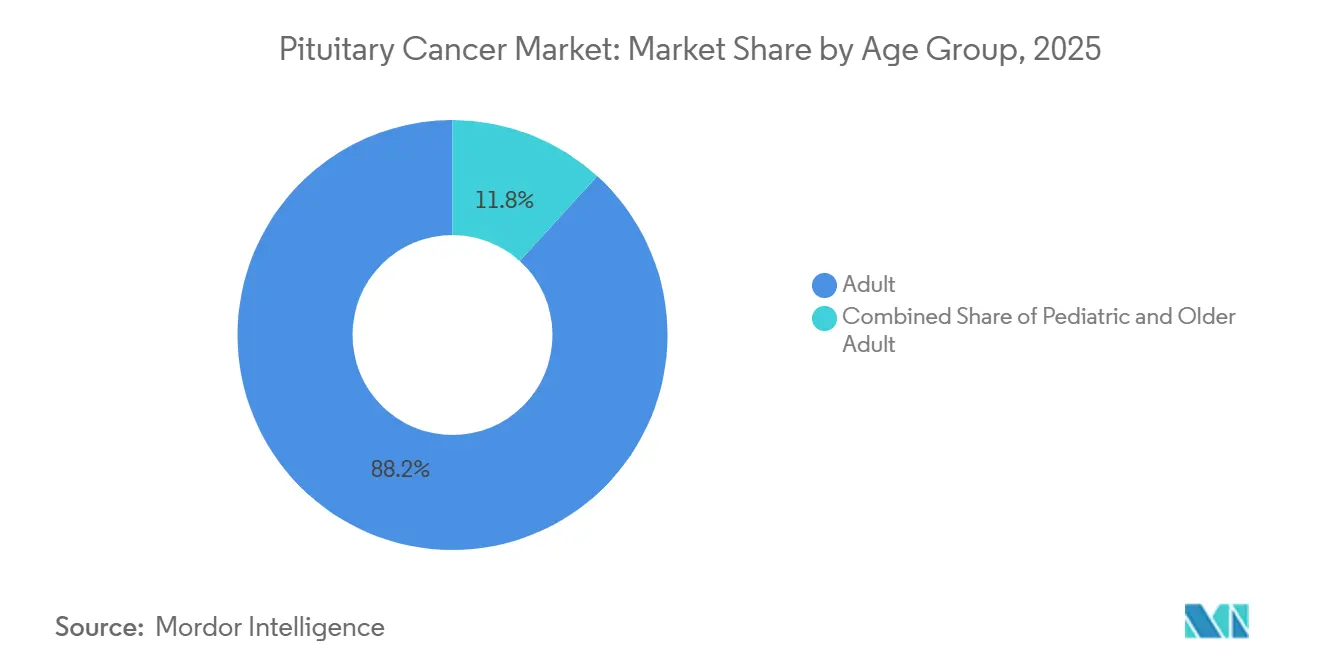
- By age group, adults held 88.24% revenue share in 2025 and are forecast to expand at a 10.22% CAGR through 2031.
- By end user, hospitals held 55.56% revenue share in 2025, while specialty clinics are forecast to expand at a 10.95% CAGR through 2031.
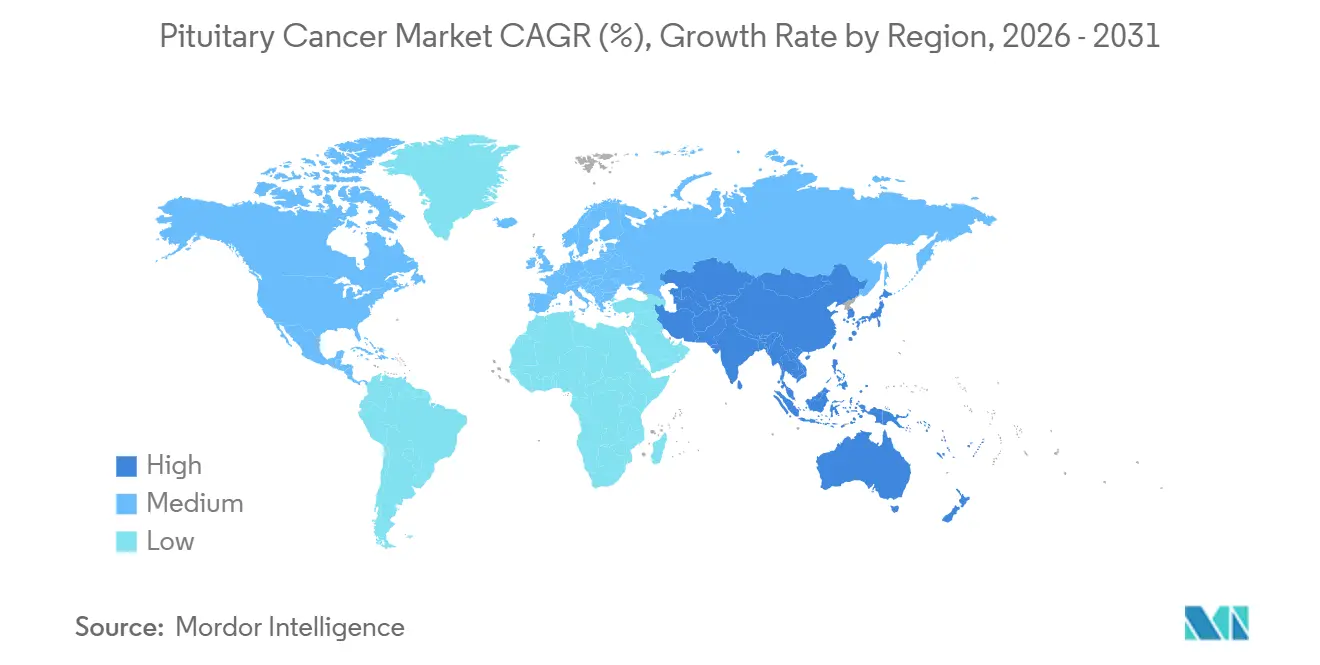
- By geography, North America held 38.61% revenue share in 2025, while Asia-Pacific is forecast to expand at a 10.85% CAGR through 2031.
Note: Market size and forecast figures in this report are generated using Mordor Intelligence’s proprietary estimation framework, updated with the latest available data and insights as of January 2026.
Market Trends and Insights
Drivers Impact Analysis of Pituitary Cancer Market*
| Driver | (~) % Impact on CAGR Forecast | Geographic Relevance | Impact Timeline |
|---|---|---|---|
| Rising Detection of Previously Undiagnosed Pituitary Tumors | +1.8% | Global, pronounced in North America and Western Europe | Medium term (2-4 years) |
| Greater Use of High-Resolution MRI and Functional Imaging | +1.5% | North America and EU, early gains in Japan and Australia | Short term (≤ 2 years) |
| Expansion of Endocrine and Neuro-Oncology Referral Networks | +0.9% | Global, with early gains in APAC tertiary centers | Medium term (2-4 years) |
| Increasing Investment in Rare Tumor Drug Development | +1.4% | North America, EU, Japan | Medium term (2-4 years) |
| Improved Molecular Stratification of Aggressive Pituitary Neuroendocrine Tumors | +1.1% | North America and EU leading, spill-over to APAC | Long term (≥ 4 years) |
| Oral and Long-Acting Formulations Improving Treatment Persistence | +1.7% | Global, immediate impact in North America and EU | Short term (≤ 2 years) |
| Source: Mordor Intelligence | |||
Oral and Long-Acting Formulations Improving Treatment Persistence
The September 2025 FDA approval of paltusotine marked a change in acromegaly treatment because it was the first once-daily oral SST2 agonist for adults. The medicine offers an alternative to monthly intramuscular or subcutaneous injections, which some patients had discontinued. Two-year open-label data from PATHFNDR-1 and PATHFNDR-2, presented in 2026, reported mean IGF-1 levels of 0.81× the upper limit of normal in patients previously using injectables. The untreated group showed a progressive decline toward 0.96× the upper limit of normal, while tumor volume remained stable or declined in the pooled cohort. The Pituitary cancer market benefits when treatment persistence improves because patients can remain on hormone-control therapy for longer periods.
The availability of oral and self-administered options can reduce the number of clinical encounters needed to provide treatment. This shifts part of treatment delivery from hospital outpatient units toward specialty pharmacies. Pharmaceutical manufacturers and specialty pharmacy networks may capture a larger share of recurring treatment activity under this model. Hospitals remain essential for surgery, complex disease, and acute care, but their role in routine drug administration may decline. The Pituitary cancer market therefore gains a more flexible treatment channel without removing the need for specialized supervision.
Rising Detection of Previously Undiagnosed Pituitary Tumors
Pituitary incidentalomas are increasingly identified when brain MRI is ordered for headache, trauma, or cognitive symptoms. Radiographic and autopsy studies have reported pituitary tumors in 10-25% of cases, whereas the number of diagnosed and treated cases remains much lower. This difference shows that many tumors have not yet entered an active management pathway. The Pituitary cancer market can therefore gain volume as more lesions are identified and clinically assessed. The relationship between biological prevalence and treated incidence remains important because not every incidental finding requires intervention.
A detected lesion generally leads to an endocrine assessment rather than an imaging encounter alone. Testing can include IGF-1, prolactin, ACTH stimulation, and broader pituitary function panels. This creates diagnostic activity before a decision on surgery or drug treatment is made. Non-functioning PitNETs are frequently identified through incidental imaging, and endoscopic endonasal surgery is used as a first-line approach in appropriate cases. The Pituitary cancer market gains demand across imaging, laboratory testing, specialist consultations, and treatment planning as detection becomes more common.
Greater Use of High-Resolution MRI and Functional Imaging
High-resolution imaging is changing the diagnostic pathway for pituitary tumors, particularly for small functional lesions. A 2026 study reported that artificial intelligence-assisted acceleration and radial dynamic contrast enhancement improved detection of pituitary microadenomas in Cushing disease. The approach improved spatial resolution without extending scan time. This is relevant where conventional 3T MRI sequences do not clearly show a lesion. The Pituitary cancer market gains from more capable imaging because earlier localization can lead to more complete clinical assessment and treatment planning.
A 2026 review identified 7T MRI and amino-acid PET as complementary options for MRI-occult functional microadenomas. The review also noted that standardized protocols and cost-effectiveness evidence are still needed before broader adoption. Separate research described a contrast-enhanced T2-weighted STIR sequence that increases adenoma visibility without extra contrast dosing. These developments can support capital spending on MRI upgrades and post-processing software at radiology departments. The Pituitary cancer market therefore includes both recurring diagnostic demand and selective investment in imaging infrastructure[1]Nathan Levin et al., “A Potential Adjunctive Role of 7T MRI and Amino-Acid PET in Localizing MRI-Occult Functional Pituitary Microadenomas,” American Journal of Neuroradiology, ajnr.org..
Expansion of Endocrine and Neuro-Oncology Referral Networks
Pituitary care requires coordination among endocrinology, neurosurgery, neuroradiology, ophthalmology, and radiation oncology. Referral networks help patients reach these services with fewer handoffs. A coordinated pathway can shorten the time between detection, diagnosis, and specialist treatment. This is especially important for functioning tumors, where hormone excess can require timely medical control. The Pituitary cancer market benefits when tertiary centers can receive patients from community settings and maintain follow-up care.
The 2025 European Society of Endocrinology guideline recommended management of aggressive PitNETs and pituitary carcinomas through pituitary tumor centers of excellence. Such centers bring diagnosis, surgery, pharmacotherapy, and follow-up imaging into a defined care structure. They can improve access to clinicians who manage rare and complex disease. Referral growth is most relevant where tertiary networks are expanding, including parts of Asia-Pacific. The Pituitary cancer market is supported by these networks because specialist coordination converts fragmented care into continuing treatment activity.
Restraints Impact Analysis of Pituitary Cancer Market*
| Restraint | (~) % Impact on CAGR Forecast | Geographic Relevance | Impact Timeline |
|---|---|---|---|
| Extreme Rarity of Pituitary Carcinoma Limiting Clinical Trial Recruitment | -0.8% | Global | Long term (≥ 4 years) |
| Delayed Diagnosis and Misclassification of Functioning Tumors | -0.7% | Emerging markets, APAC, MEA, South America | Medium term (2-4 years) |
| Limited Predictive Biomarkers for Malignant Transformation | -0.6% | Global | Long term (≥ 4 years) |
| Fragmented Specialist Access and Reimbursement for Multimodal Care | -0.9% | MEA, South America, parts of APAC | Medium term (2-4 years) |
| Source: Mordor Intelligence | |||
Extreme Rarity of Pituitary Carcinoma Limiting Clinical Trial Recruitment
Pituitary carcinoma has an estimated prevalence of 1 per 1,000,000 people and represents fewer than 0.01% of anterior pituitary tumors. It is defined by craniospinal or systemic metastasis, which can appear 5-7.5 years after the initial tumor detection. This low incidence makes prospective randomized trials difficult to conduct at individual institutions. A 2024 review found that fewer than 300 cases had been described globally across 3 decades. The Pituitary cancer market has limited trial throughput for carcinoma-specific treatments because the available patient pool is exceptionally small.
The limited evidence base can discourage development of a carcinoma-specific label. Patients may instead receive temozolomide off label or experimental PRRT where appropriate. This restricts the evidence available for regulatory expansion and premium pricing in late-line therapy. Multi-center registries and consistent pathology reporting would improve the available clinical evidence over time. The Pituitary cancer market remains constrained in this area because the clinical evidence needed for targeted approvals develops slowly.
Fragmented Specialist Access and Reimbursement for Multimodal Care
Pituitary disease requires care from several clinical disciplines, which is easier to coordinate in academic centers than in community settings. The German AWMF guideline published in 2025 states that patients with a new or known pituitary tumor should be diagnosed and managed by an experienced interdisciplinary team. This model is increasingly reflected in center-of-excellence programs in high-income European settings. Where this infrastructure is absent, patients can move through primary care and general endocrinology before reaching subspecialist services. The Pituitary cancer market is limited when delayed referral reduces timely access to surgery, endocrine management, and advanced imaging.
Multiple specialist authorizations can add administrative friction for a single disease episode. This burden can be more difficult for ambulatory surgical centers and specialty clinics without dedicated coordinators. Access gaps are particularly material in parts of the Middle East and Africa, South America, and Asia-Pacific. Patients who reach specialist care later may have progressed disease or irreversible hormone damage. The Pituitary cancer market therefore depends on referral networks and reimbursement pathways as much as on treatment availability[2]Deutsche Gesellschaft für Endokrinologie and AWMF, “S2k-Leitlinie: Diagnostik und Therapie Klinisch Hormoninaktiver Hypophysentumoren,” AWMF Register, register.awmf.org..
*Our forecasts treat driver/restraint impacts as directional, not additive. The impact forecasts reflect baseline growth, mix effects, and variable interactions.
Pituitary Cancer Market Segment Analysis
By Offering:
Diagnosis Is Growing Faster While Treatment Retains the Largest BaseTreatment held 64.31% of the Pituitary cancer market share in 2025 within the offering segmentation. Its position reflects sustained prescription revenue from somatostatin analogs, dopamine agonists, and cortisol-synthesis inhibitors. Surgery adds procedure-based revenue for eligible patients, while radiation therapy adds later demand for residual disease or cavernous sinus involvement. The treatment base has been built over decades around medicines with high annual cost per patient.
Diagnosis is forecast to grow at a 10.58% CAGR through 2031, faster than treatment. MRI upgrades, artificial intelligence-enhanced sequences, functional PET imaging, and molecular workups support this pace. Hormone and biochemical testing has a high order frequency because functioning tumors need continuing monitoring. Histopathology, immunohistochemistry, Ki-67 assessment, MGMT testing, and MMR status can add value as pre-treatment requirements become more routine. Vision and ophthalmic assessment remains necessary for surgical planning, while tailored contrast protocols can increase the value of diagnostic work. The Pituitary cancer industry is supported by services that link imaging to laboratory assessment, pathology, specialist review, and treatment planning.


By Cancer Type:
Functioning Adenomas Lead While Carcinoma Grows From a Small BaseFunctioning pituitary adenoma accounted for 63.44% of the Pituitary cancer market share in 2025 within the cancer-type segmentation. Its scale is linked to its higher prevalence and the continuing pharmacotherapy needed to control hormone excess. Prolactinomas account for 40% of all pituitary tumors. Acromegaly-related adenomas have a lower prevalence but can create higher revenue per patient because long-term somatostatin analogs or GH-receptor antagonists may be required. Functioning tumors therefore generate repeat activity across drug therapy, endocrine testing, and specialist follow-up.
Non-functioning pituitary adenoma generates much of its revenue through surgery and follow-up imaging, while the absence of a hormone-directed therapy leaves an unmet need. Pituitary carcinoma is forecast to grow at a 10.52% CAGR through 2031, reflecting high management costs and limited treatment choices rather than large patient numbers. Published case material on 177Lu-DOTATATE for SSTR-positive metastatic PitNETs indicates a defined high-cost treatment setting. The move from pituitary adenoma to PitNET, formalized in a 2025 Japanese guideline update, can bring borderline-aggressive cases into more intensive protocols. Growth in the carcinoma category can therefore partly reflect reclassification rather than new disease incidence. The Pituitary cancer industry needs to distinguish this coding effect from underlying demand growth.
By Age Group:
Adults Provide the Largest and Fastest-Growing Patient BaseAdults held 88.24% of the age-group segment in 2025 and are forecast to grow at a 10.22% CAGR through 2031. This concentration reflects the incidence of functioning pituitary adenomas in the 3rd through 5th decades of life. Improved biochemical surveillance among working-age populations also supports diagnosis. The median age at pituitary carcinoma diagnosis is 44-45 years, which sits within the adult category. Adult patients therefore account for both a large treated base and continuing care demand.
Older adults can have non-functioning incidentalomas found during imaging for neurodegenerative assessment. These cases can create imaging, ophthalmology, and endocrine management activity without leading to surgery. Pediatric tumors represent a smaller portion of patient volume but require a different diagnostic approach because corticotroph adenomas can present atypically. Adults and older adults more often use hospitals and specialty clinics, while pediatric cases are concentrated in specialized children’s treatment centers. The segmentation therefore shapes both service needs and the care setting used by patients. It also reinforces the need for multidisciplinary pituitary and pediatric oncology expertise.

By End User:
Hospitals Lead Current Revenue While Specialty Clinics Expand FasterHospitals held 55.56% of revenue in 2025, reflecting their role in transsphenoidal surgery, inpatient radiosurgery, and acute pituitary apoplexy management. High-field MRI, neurosurgical suites, intensive care, and on-call endocrinology create a durable hospital role for complex cases. These capabilities are difficult to replicate outside larger facilities. Hospitals remain central when surgery or high-acuity management is required. Their care model also supports multidisciplinary decisions for aggressive disease.
Specialty clinics are forecast to grow at a 10.95% CAGR through 2031 as dedicated pituitary tumor centers concentrate follow-up pharmacotherapy, imaging review, and outpatient dose adjustment. The 2025 ESE guideline supports care at such centers for aggressive PitNETs and pituitary carcinomas. Cancer treatment centers gain activity as PRRT and radiation referrals rise, while ambulatory surgical centers can treat selected smaller adenomas. This can reduce hospital revenue per non-surgical case while increasing the number of patients receiving formal follow-up. The Pituitary cancer market is divided between hospital-based high-acuity care and specialist-led continuing care. Both settings remain necessary within the broader treatment pathway.
Geography Analysis
North America Pituitary Cancer Market
North America held 38.61% of revenue in 2025, the largest geographic contribution to the Pituitary cancer market. The United States has a dense network of academic pituitary programs, high drug spending for acromegaly and Cushing disease, and active drug development. FDA approval of paltusotine in September 2025 added an oral option for adults with acromegaly. The treatment is relevant for patients with inadequate control on injectable somatostatin analogs and those seeking an alternative to monthly injections. Existing diagnosed patients can therefore enter more intensive or more convenient treatment sequences.
APAC, MEA and South America Pituitary Cancer Market
Asia-Pacific is forecast to grow at a 10.85% CAGR through 2031, the fastest regional rate in the Pituitary cancer market. Japan has established pituitary surgery infrastructure and is adopting more advanced endoscopic approaches, while China is expanding tertiary hospitals that can identify previously undiagnosed tumors. India and South Korea are developing dedicated neurosurgery and endocrinology programs. The Middle East and Africa and South America remain early-stage areas, with elite care concentrated in major urban academic hospitals and underdiagnosis outside them. Referral network expansion is likely to have a greater effect than new technology alone in improving access.

Competitive Landscape
The pituitary cancer market has different competitive structures in diagnostics and treatment. Ipsen’s lanreotide and Recordati’s portfolio form part of the established pharmacotherapy base for acromegaly and Cushing disease. Recordati’s ISTURISA received an expanded FDA indication in April 2025 for all forms of Cushing’s syndrome. Vertex announced its USD 10.00 billion acquisition of Crinetics Pharmaceuticals in July 2026, including oral paltusotine and late-stage atumelnant. The deal places these assets within a company with broader commercial resources. The Pituitary cancer market may see stronger commercialization capacity for newer oral therapies following this move[3]Vertex Pharmaceuticals Incorporated, “Vertex to Acquire Crinetics Pharmaceuticals,” Vertex Pharmaceuticals, news.vrtx.com..
Non-functioning pituitary adenoma pharmacotherapy, treatment after temozolomide failure, and PRRT for SSTR-positive aggressive PitNETs remain areas of unmet need. A 2025 systematic review and meta-analysis evaluated CyberKnife radio-neurosurgery for secreting pituitary adenomas. Device providers compete through platform performance, planning capability, clinical evidence, and installed-base relationships. The Pituitary cancer market is not controlled by a single type of supplier because drugs, imaging, surgery, and radiosurgery serve different parts of care.
Pituitary Cancer Industry Leaders
Novartis AG
Pfizer Inc.
Ipsen Biopharmaceuticals, Inc.
Recordati S.p.A.
Camurus AB
- *Disclaimer: Major Players sorted in no particular order
Pituitary Cancer Market Companies Covered in this Report
- Accuray
- Amgen
- AstraZeneca
- Bayer
- Camurus AB
- Corcept Therapeutics Incorporated
- Crinetics Pharmaceuticals, Inc.
- Debiopharm International SA
- Elekta
- Eli Lilly and Company
- Roche
- Ion Beam Applications SA
- Ipsen
- Merck
- Novartis
- Pfizer
- RaySearch Laboratories
- Recordati S.p.A.
- Siemens Healthineers
- Takeda Pharmaceuticals

Recent Industry Developments in Pituitary Cancer Market
- May 2026: Researchers at the University of Cincinnati Gardner Neuroscience Institute’s Brain Tumor Center reported a global first by achieving complete remission of a rare pituitary cancer through a novel immunotherapy treatment.
- January 2026: Ernakulam General Hospital marked a key milestone by successfully performing the second transsphenoidal pituitary surgery under Kerala Health Services.


Global Pituitary Cancer Market Report Scope
As per the scope of the report, pituitary cancer is a rare malignant tumor that originates in the pituitary gland, a small pea-sized gland located at the base of the brain responsible for hormone production. Unlike benign pituitary adenomas, which are more common, pituitary cancer (also called pituitary carcinoma) is characterized by malignant features such as the ability to invade surrounding tissues and spread (metastasize) to other parts of the body.
The pituitary cancer market is segmented by offering, cancer type, age group, end user, and geography. By offering, the market is segmented into diagnosis and treatment. The diagnosis segment includes magnetic resonance imaging, computed tomography, positron emission tomography and molecular imaging, hormone and biochemical testing, vision and ophthalmic testing, histopathology and immunohistochemistry, and molecular and genetic testing. The treatment segment includes surgery, radiation therapy, medications, peptide receptor radionuclide therapy, and active surveillance and supportive care. By cancer type, the market is segmented into functioning pituitary adenoma, non-functioning pituitary adenoma, and pituitary carcinoma. By age group, the market is segmented into pediatric, adult, and older adult. By end user, the market is segmented into hospitals, specialty clinics, cancer treatment centers, ambulatory surgical centers, and other end users. By geography, the market is segmented into North America, Europe, Asia-Pacific, Middle East and Africa, and South America. The market report also covers the estimated market sizes and trends for 17 countries across major regions globally. For each segment, the market size and forecast are provided in terms of value (USD).
| Diagnosis | Magnetic Resonance Imaging |
| Computed Tomography | |
| Positron Emission Tomography and Molecular Imaging | |
| Hormone and Biochemical Testing | |
| Vision and Ophthalmic Testing | |
| Histopathology and Immunohistochemistry | |
| Molecular and Genetic Testing | |
| Treatment | Surgery |
| Radiation Therapy | |
| Medications | |
| Peptide Receptor Radionuclide Therapy | |
| Active Surveillance and Supportive Care |
| Functioning Pituitary Adenoma |
| Non-Functioning Pituitary Adenoma |
| Pituitary Carcinoma |
| Pediatric |
| Adult |
| Older Adult |
| Hospitals |
| Specialty Clinics |
| Cancer Treatment Centers |
| Ambulatory Surgical Centers |
| Other End Users |
| North America | United States |
| Canada | |
| Mexico | |
| Europe | Germany |
| United Kingdom | |
| France | |
| Italy | |
| Spain | |
| Rest of Europe | |
| Asia-Pacific | China |
| Japan | |
| India | |
| Australia | |
| South Korea | |
| Rest of Asia-Pacific | |
| Middle East and Africa | GCC |
| South Africa | |
| Rest of Middle East and Africa | |
| South America | Brazil |
| Argentina | |
| Rest of South America |
| By Offering | Diagnosis | Magnetic Resonance Imaging |
| Computed Tomography | ||
| Positron Emission Tomography and Molecular Imaging | ||
| Hormone and Biochemical Testing | ||
| Vision and Ophthalmic Testing | ||
| Histopathology and Immunohistochemistry | ||
| Molecular and Genetic Testing | ||
| Treatment | Surgery | |
| Radiation Therapy | ||
| Medications | ||
| Peptide Receptor Radionuclide Therapy | ||
| Active Surveillance and Supportive Care | ||
| By Cancer Type | Functioning Pituitary Adenoma | |
| Non-Functioning Pituitary Adenoma | ||
| Pituitary Carcinoma | ||
| By Age Group | Pediatric | |
| Adult | ||
| Older Adult | ||
| By End User | Hospitals | |
| Specialty Clinics | ||
| Cancer Treatment Centers | ||
| Ambulatory Surgical Centers | ||
| Other End Users | ||
| By Geography | North America | United States |
| Canada | ||
| Mexico | ||
| Europe | Germany | |
| United Kingdom | ||
| France | ||
| Italy | ||
| Spain | ||
| Rest of Europe | ||
| Asia-Pacific | China | |
| Japan | ||
| India | ||
| Australia | ||
| South Korea | ||
| Rest of Asia-Pacific | ||
| Middle East and Africa | GCC | |
| South Africa | ||
| Rest of Middle East and Africa | ||
| South America | Brazil | |
| Argentina | ||
| Rest of South America | ||


Key Questions Answered in the Report
What is the 2026 value of the pituitary cancer market?
The value is USD 1.06 billion in 2026 and is forecast to reach USD 1.65 billion by 2031 at a 9.21% CAGR.
Which offering has the largest revenue base?
Treatment led the offering segmentation with 64.31% revenue share in 2025, supported by recurring drug treatment, surgery, and radiation care.
Why is diagnosis growing faster than treatment?
Diagnosis is forecast to grow at a 10.58% CAGR because high-resolution MRI, functional imaging, endocrine testing, and molecular workups are expanding.
Which patient group accounts for the largest demand?
Adults held 88.24% of the age-group segment in 2025 and are forecast to grow at a 10.22% CAGR through 2031.
Which region is growing fastest?
Asia-Pacific is forecast to grow at a 10.85% CAGR through 2031, supported by tertiary-care expansion and stronger specialist capacity.
How are specialty clinics changing pituitary care?
Specialty clinics are forecast to grow at a 10.95% CAGR through 2031 as dedicated centers coordinate follow-up drug management, imaging review, and outpatient care.
Page last updated on:





