
Pericardium Diseases Market Size and Share
Market Overview
| Study Period | 2020 - 2031 |
|---|---|
| Market Size (2026) | USD 3.41 Billion |
| Market Size (2031) | USD 4.67 Billion |
| Growth Rate (2026 - 2031) | 6.50 % |
| Fastest Growing Market | Asia-Pacific |
| Largest Market | North America |
| Market Concentration | High |
Major Players *Disclaimer: Major Players sorted in no particular order Image © Mordor Intelligence. Reuse requires attribution under CC BY 4.0. | |
Pericardium Diseases Market Analysis by Mordor Intelligence
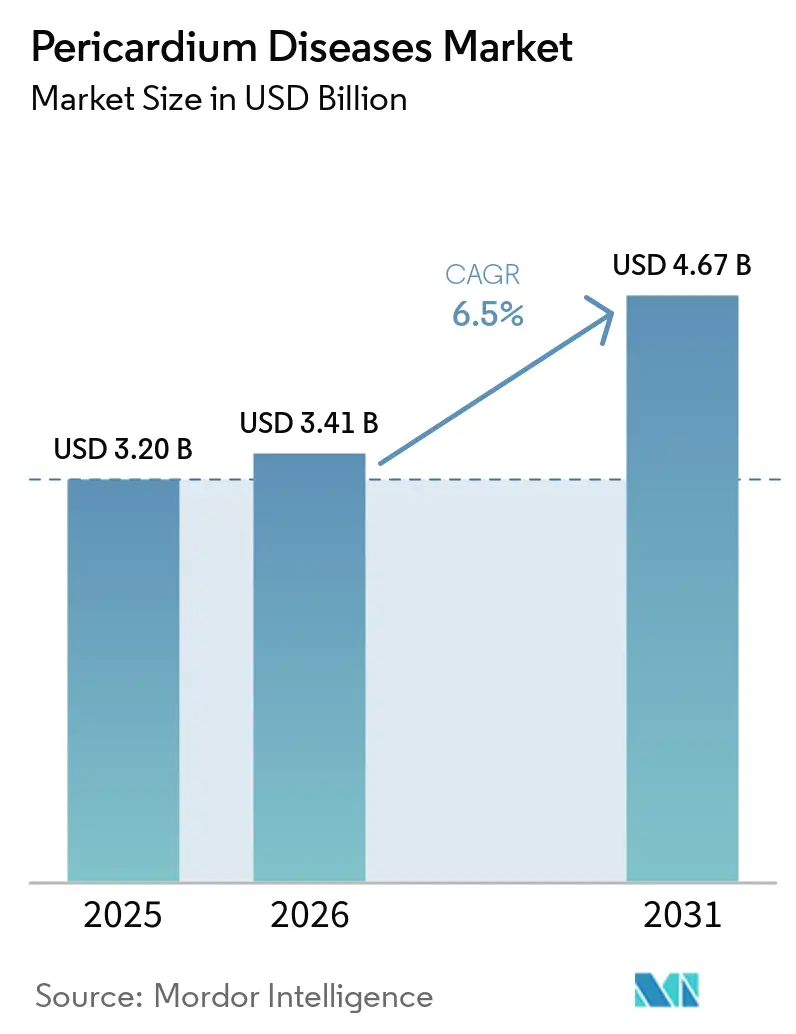
The Pericardium Diseases Market size is projected to expand from USD 3.20 billion in 2025 and USD 3.41 billion in 2026 to USD 4.67 billion by 2031, registering a CAGR of 6.5% between 2026 to 2031.
The pericardium diseases market combines a broad base of low-cost NSAIDs, colchicine, and corticosteroids with a smaller specialty tier led by IL-1 inhibition. That split changes revenue even when treatment volumes remain centered on conventional therapy. The 2025 European guidance placed cardiac magnetic resonance at the center of complex diagnostic assessment and supported earlier IL-1 inhibitor use for eligible recurrent disease, which links diagnostic capability with access to advanced treatment. Kiniksa’s 2026 guidance for ARCALYST shows that specialty products can expand within a measured overall growth profile. Access rules, clinical referral patterns, and imaging availability will therefore shape the value created by the pericardium diseases market through 2031.
Key Report Takeaways
- By offering, Drug Class held 53.21% of the Pericardium diseases market size in 2025, while Diagnostic Modality is forecast to grow at a 9.20% CAGR through 2031.
- By disease type, Acute Pericarditis held 51.73% of the Pericardium diseases market share in 2025, while Recurrent Pericarditis is forecast to grow at an 8.40% CAGR through 2031.
- By end user, Hospitals held 58.30% revenue share in 2025, while Specialty Clinics are forecast to grow at an 8.20% CAGR through 2031.
- By geography, North America captured 43.51% share in 2025, while the Asia-Pacific is projected to expand at the fastest CAGR of 8.32% through 2031.
Note: Market size and forecast figures in this report are generated using Mordor Intelligence’s proprietary estimation framework, updated with the latest available data and insights as of January 2026.
Market Trends and Insights
Drivers Impact Analysis of Pericardium Diseases Market*
| Driver | (~) % Impact on CAGR Forecast | Geographic Relevance | Impact Timeline |
|---|---|---|---|
| Rising Detection Through Multimodality Imaging | +0.5% | Global, with highest concentration in North America and Western Europe | Short term (≤ 2 years) |
| Expansion of Guideline-Based Colchicine and Combination Therapy | +0.5% | Global | Short term (≤ 2 years) |
| Regulatory Validation of IL-1 Inhibition for Recurrent Pericarditis | +0.8% | North America and Europe, extending progressively to APAC | Medium term (2-4 years) |
| Growth of Cardiac Centers and Image-Guided Pericardial Procedures | +0.3% | North America, Western Europe, APAC core markets | Medium term (2-4 years) |
| Increasing Autoimmune, Infectious, and Post-Cardiac Injury Case Burden | +0.4% | Global, with acute impact in aging populations of North America, Europe, and East Asia | Long term (≥ 4 years) |
| Precision Stratification of Autoinflammatory Phenotypes | +0.2% | North America and EU, with early gains in advanced APAC clinical centers | Long term (≥ 4 years) |
| Source: Mordor Intelligence | |||
Regulatory Validation of Interleukin-1 Inhibition for Recurrent Pericarditis
Rilonacept had become the first approved therapy for recurrent pericarditis in 2021, establishing a clinical basis for IL-1 pathway inhibition. The change in 2025 was the stronger guideline support behind that mechanism. The ESC guideline and the ACC clinical guidance supported IL-1 inhibitors for patients with recurrent disease, elevated C-reactive protein, and inadequate response to colchicine.[1] This approach moves eligible patients toward biologics before a prolonged corticosteroid pathway. Kiniksa received FDA Orphan Drug Designation for KPL-387 in October 2025, and the company expects Phase 2 data from its Phase 2/3 study in the second half of 2026. The Pericardium diseases market can therefore gain specialty prescribing volume where formulary access and specialist referral support these recommendations.
Rising Detection of Pericardial Inflammation Through Multimodality Imaging
Better detection expands the pool of patients who receive a defined pericarditis diagnosis. A 2024 international position statement described complementary roles for echocardiography, cardiac CT, and CMR across acute, chronic, and constrictive presentations. The 2025 ESC guideline described CMR as decisive in complex evaluation, risk assessment, and monitoring.[2]
Imaging can identify persistent inflammation in patients whose symptoms alone do not clearly distinguish active disease. This supports more timely escalation when conventional treatment does not control inflammation. The Pericardium diseases market benefits as regional hospitals expand access to CMR and move complicated cases toward more structured follow-up.
Expansion of Guideline-Based Colchicine and Combination Therapy
The 2025 ESC guideline retained NSAID and colchicine combination therapy as a first-line approach and supported a 3-6 month treatment period for newly diagnosed patients. It also treated colchicine as the final medicine to discontinue after sustained remission. This sequence reduces early reliance on corticosteroids, which are associated with a higher risk of recurrence in the cited clinical literature.[3]
Conventional agents remain important because they serve the highest-volume part of care. Patients who fail this pathway form the group most likely to require specialist assessment. The Pericardium diseases market thus retains its generic base while creating a clearer route to advanced therapy for refractory disease.
Increasing Autoimmune, Infectious, and Post-Cardiac Injury Case Burden
Pericarditis demand is also shaped by disease causes that need longer and more specialized management. A 2025 review reported that post-cardiac injury syndrome was increasing with the growing cardiac surgery population and that pericarditis was its main presentation.[4]Autoimmune-associated disease can recur more often than idiopathic or viral presentations and often requires coordination between cardiology and rheumatology teams. Post-infectious disease and autoimmune conditions add patients with different diagnostic and treatment requirements. These cases can require immunosuppressive medicines or IL-1 inhibition under specialist care. The Pericardium diseases market is supported by this broader clinical mix, although access to advanced medicines remains uneven.
Restraints Impact Analysis of Pericardium Diseases Market*
| Restraint | (~) % Impact on CAGR Forecast | Geographic Relevance | Impact Timeline |
|---|---|---|---|
| High Cost and Payer Friction for Biologic Therapy | -0.5% | North America, with growing relevance in Western Europe | Medium term (2-4 years) |
| Diagnostic Misclassification and Delayed Etiology Identification | -0.3% | Global, with highest impact in MEA and South America | Long term (≥ 4 years) |
| Procedure-Related Bleeding, Arrhythmia, and Organ-Injury Risk | -0.2% | Global | Medium term (2-4 years) |
| Limited Disease-Specific Evidence Outside Specialist Centers | -0.2% | APAC non-core, MEA, South America | Long term (≥ 4 years) |
| Source: Mordor Intelligence | |||
High Cost and Payer Friction for Biologic Therapy
Payer requirements limit how quickly guideline recommendations translate into biologic use. Kiniksa reported that ARCALYST treated 18% of an estimated 14,000 United States patients with multiple-recurrence pericarditis at the end of 2025. The remaining untreated group shows the difference between clinical eligibility and funded access. The cited ACC guidance discussed hospital costs associated with recurrent disease, but coverage policies have not broadly shifted to hospitalization-offset models.
Specialty treatment also requires authorization processes and supporting clinical documentation. These factors constrain biologic uptake in the Pericardium diseases market, even when patients have recurrent inflammatory disease. Cost pressure remains most visible in the United States and can become more important as European reimbursement reviews consider advanced treatments.
Diagnostic Misclassification and Delayed Etiology Identification
Pericarditis can resemble other causes of chest pain, shortness of breath, and pericardial effusion. The diagnostic challenge becomes greater when patients cannot access CMR or a specialist service. The ESC guideline emphasizes assessment of disease features and inflammatory activity when guiding management. In settings with a high tuberculosis burden, distinguishing tuberculous disease from idiopathic disease may require invasive testing and targeted laboratory work. Delays can postpone appropriate antitubercular, anti-inflammatory, or immunosuppressive treatment. The Pericardium diseases market remains limited in such settings because delayed referral can increase chronicity before patients reach specialized care.
*Our forecasts treat driver/restraint impacts as directional, not additive. The impact forecasts reflect baseline growth, mix effects, and variable interactions.
Pericardium Diseases Market Segment Analysis
By Offering:
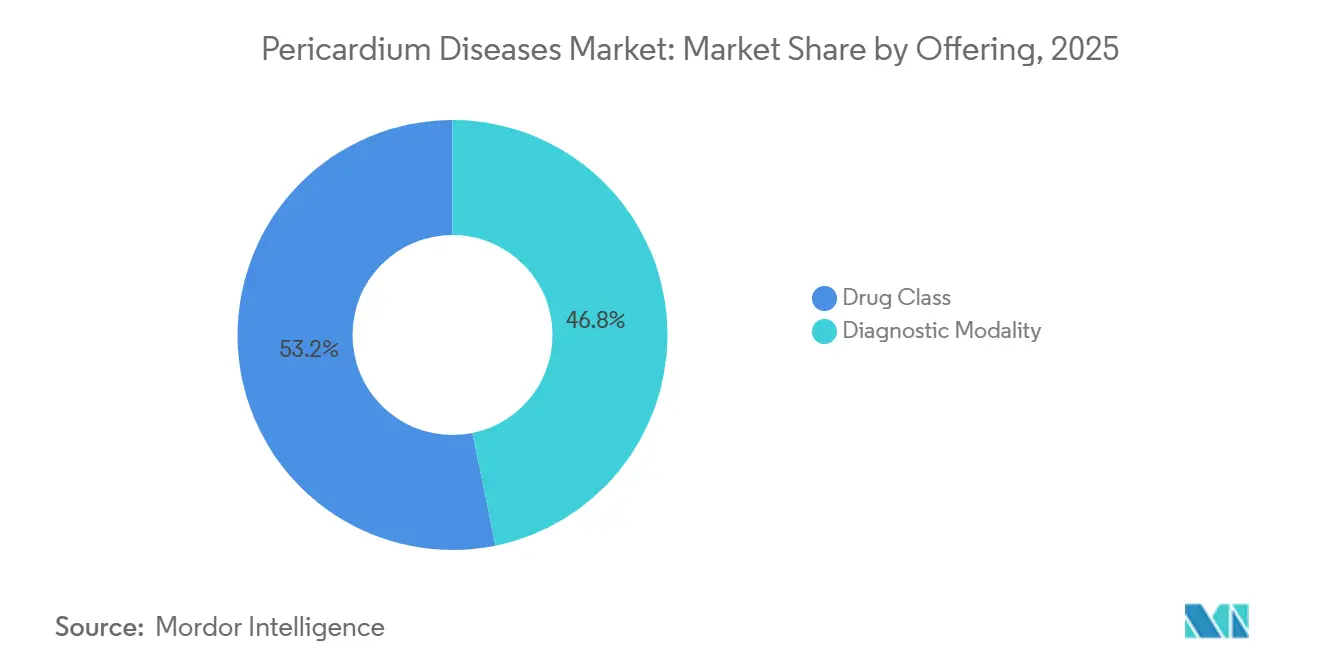
Pharmacotherapy Leads, but Diagnostics AccelerateDrug Class held 53.21% of the Pericardium diseases market size in 2025, reflecting the dominance of pharmacological therapies in managing acute and recurrent pericarditis. NSAIDs and colchicine remain the frontline treatments, widely prescribed in emergency and general hospital settings due to their accessibility and cost-effectiveness. Corticosteroids are used in refractory cases, though their long-term side effects limit broader adoption. Interleukin‑1 inhibitors, such as rilonacept and anakinra, are gaining traction for recurrent pericarditis, supported by FDA approvals and clinical guideline endorsements. Their higher cost per patient drives revenue growth despite smaller patient volumes. Overall, the drug class segment benefits from established clinical pathways, large patient volumes, and increasing biologic penetration, positioning it as the largest revenue contributor in the offering landscape.
Diagnostic Modality is forecast to grow at a 9.20% CAGR through 2031, driven by advancements in imaging technologies and the rising need for precise disease characterization. Echocardiography remains the most widely used modality, offering rapid, non‑invasive assessment of pericardial effusion and inflammation. Computed tomography (CT) and chest X‑ray provide complementary insights, particularly in emergency settings. At the same time, cardiac magnetic resonance (CMR) is increasingly adopted for its superior tissue characterization and ability to differentiate constrictive pericarditis from restrictive cardiomyopathy. The growth of diagnostic modalities is supported by expanding access to advanced imaging in emerging markets, integration of AI‑based interpretation tools, and guideline‑driven recommendations for recurrent and complex pericarditis cases.
By Disease Type:
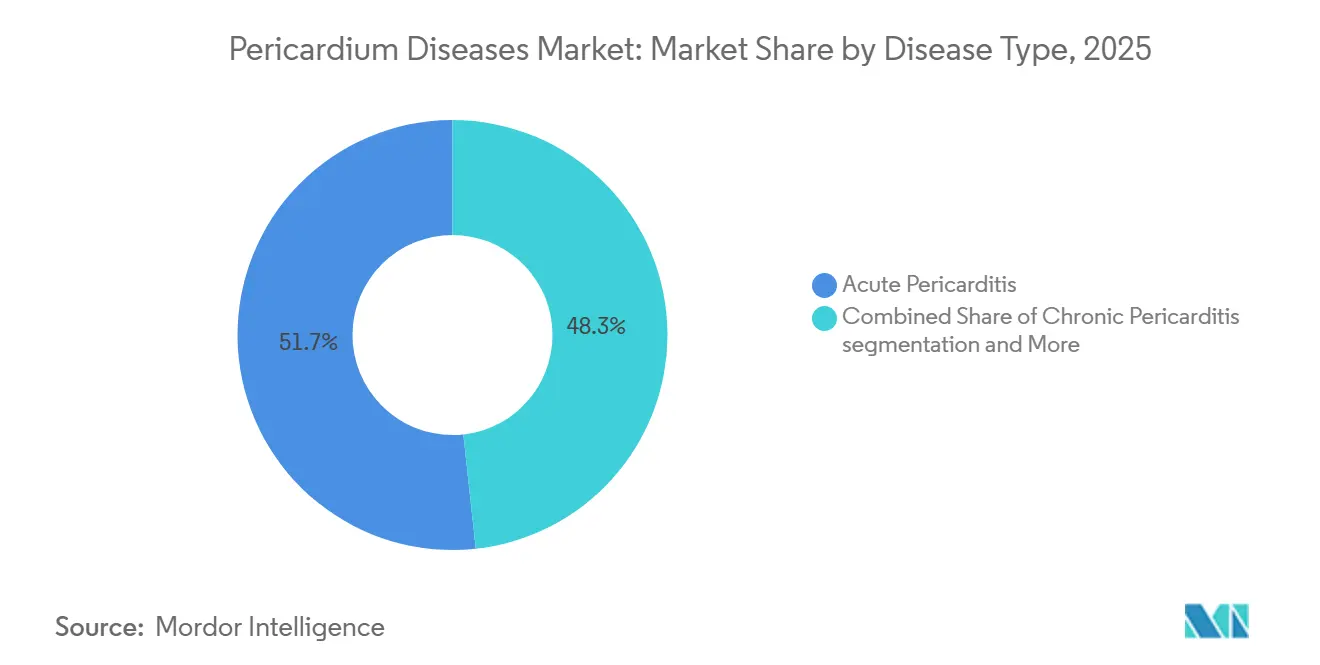
Recurrent and Autoimmune Subtypes Diverge from Acute MajorityAcute Pericarditis held 51.73% revenue share in 2025, reflecting the high number of first presentations managed through emergency departments and general hospitals. These patients generally receive NSAID and colchicine treatment rather than specialty therapy. Their volume is large, but their revenue per patient is lower than that of recurrent disease. Recurrent Pericarditis is projected to grow at an 8.40% CAGR through 2031. The Pericardium diseases market size for this segment rises with disease complexity, repeated care episodes, and the use of biologic treatment. Cardiol Therapeutics stated that 40,000 United States patients experience at least 1 recurrence each year and that 60% of patients with multiple recurrences remain active for more than 2 years. This chronic pattern creates continued demand for diagnosis, monitoring, and therapy. The ACC guidance supports referral to a specialized pericardial disease center for confirmed recurrent cases.
Chronic Pericarditis represents patients with persistent symptoms or inflammation who may require extended assessment and treatment. Tuberculous Pericarditis has greater importance in high-burden areas of sub-Saharan Africa and South Asia. In those settings, antitubercular medicines are central to care, and biologic access remains limited. The Other category includes incessant and idiopathic disease with varied clinical pathways. Autoimmune-associated pericarditis affects patients with systemic lupus erythematosus, rheumatoid arthritis, and related connective tissue conditions.

By End User:
Hospitals Anchor Volume but Specialty Clinics Lead GrowthHospitals held 58.30% revenue share in 2025 because acute presentations and complex inpatient procedures are concentrated there. Pericardiocentesis, drainage, and initiation of biologic therapy may require hospital monitoring. Hospitals also manage patients with large effusions, unstable symptoms, or unclear diagnoses. Specialty Clinics are projected to grow at an 8.20% CAGR through 2031. The pericardium disease market share held by specialty clinics rises as recurrent cases are referred to dedicated disease centers. The ACC and ESC guidance support referral for confirmed recurrent disease, large effusions, and constrictive disease. These clinics can coordinate imaging, inflammatory testing, specialist review, and treatment follow-up. The cited ACC guidance noted that specialized centers can reduce emergency visits and rehospitalizations for priority cases.
Ambulatory Surgical Centers are a smaller end-user group for pericardiocentesis and pericardioscopy. Their relevance is strongest where outpatient procedures move from hospital operating rooms to lower-intensity settings. Research Institutes support clinical studies and specialist evaluation of rare or refractory disease. Homecare Centers become more relevant when established patients self-administer subcutaneous biologics. Home administration can reduce the number of treatment visits after a patient is stabilized. It does not remove the need for specialist monitoring of disease activity.
Geography Analysis
North America Pericardium Diseases Market
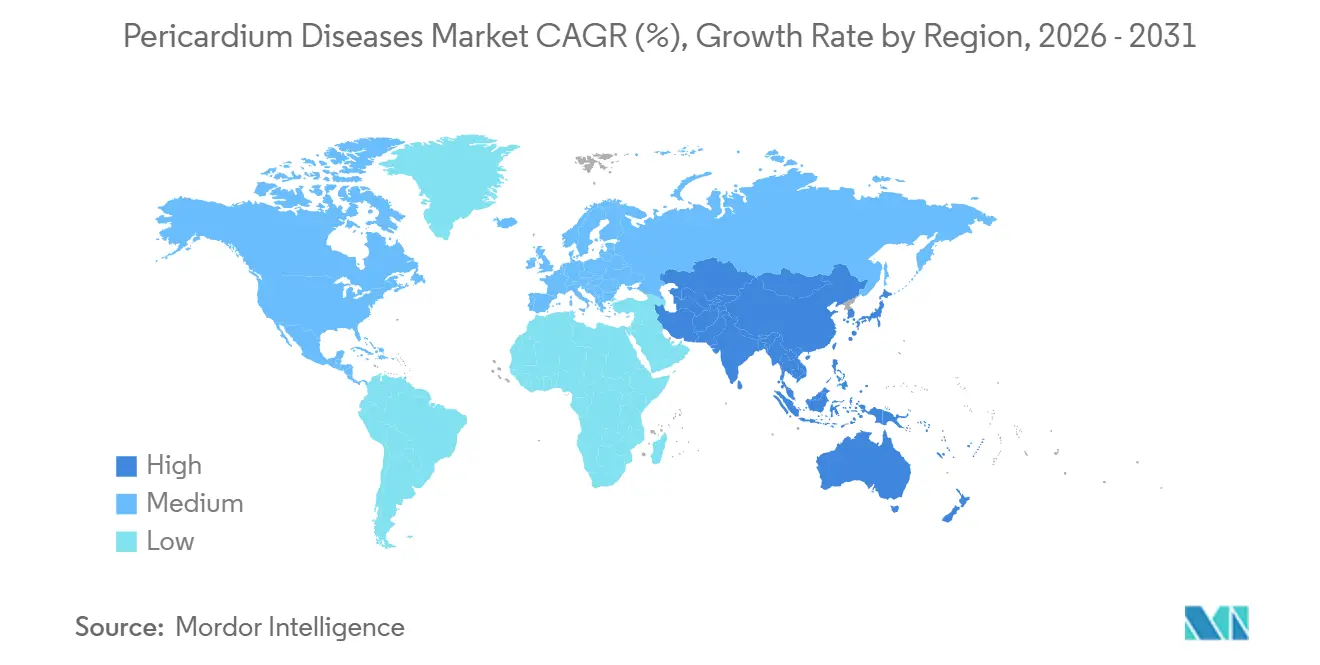
North America held 43.51% of the pericardium disease market share in 2025, supported mainly by the United States. The region’s position reflects commercial access to ARCALYST, a large insured population, and a dense specialty cardiology network. Kiniksa reported more than 4,150 active prescribers since launch as of full-year 2025. ARCALYST net product revenue rose 62% to USD 677.6 million in 2025, and 2026 guidance is USD 900-920 million. Canada supports specialty biologic use through its reimbursement environment. Mexico remains less developed because formulary access and specialist density are lower. Payer step therapy remains the leading access constraint in the region.
Europe Pericardium Diseases Market
Europe is the second-largest region, with Germany, France, Italy, and the United Kingdom contributing most revenue. The 2025 ESC guideline is central to regional clinical practice because it supports IL-1 inhibitors in C-reactive-protein-positive recurrent disease. Italy and Spain have strong clinical research experience in colchicine treatment. That experience can support earlier adoption of structured escalation pathways. ARCALYST provides a framework for reimbursement discussions. Diagnostic and treatment access will therefore remain uneven across European countries.
APAC Pericardium Diseases Market
Asia-Pacific is forecast to grow at an 8.32% CAGR through 2031, making it the fastest-growing region. Rising cardiovascular disease burden, additional cardiac centers, and attention to rare cardiovascular conditions support demand across the Pericardium diseases market. India’s expanding specialty hospital network can raise diagnosis volumes. Japan’s Sakigake pathway can support innovative therapies for rare conditions with unmet need. South Korea and Australia have more mature imaging capacity and reimbursement frameworks.
Competitive Landscape
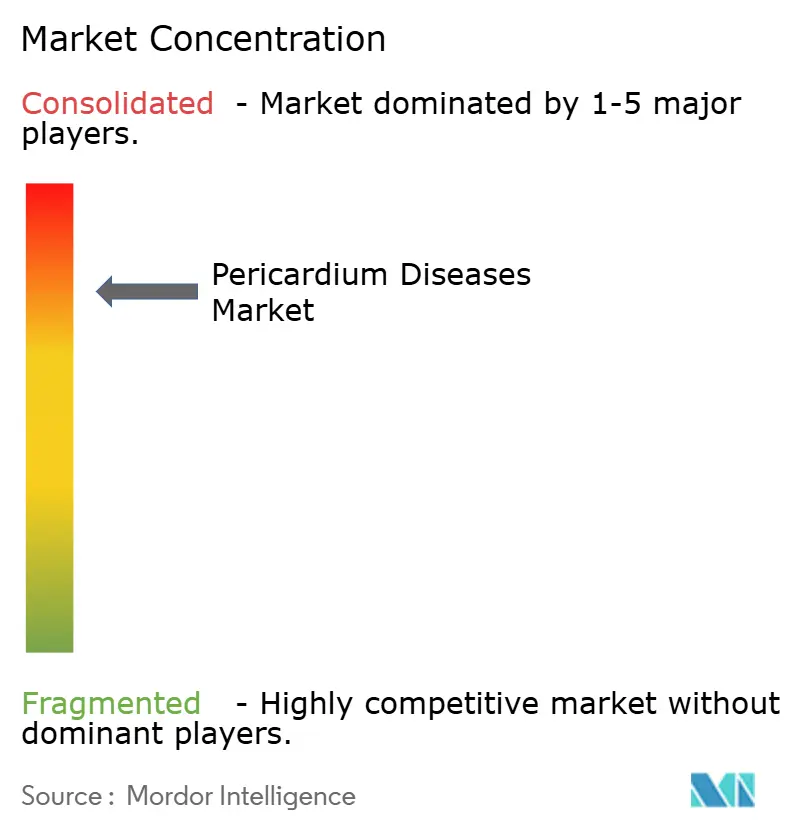
The Pericardium Diseases market is consolidated. The Pericardium diseases market has a split competitive structure. Generic manufacturers compete in NSAIDs, colchicine, and corticosteroids on supply reliability and price. Aurobindo Pharma, Teva Pharmaceutical, Sun Pharmaceutical, Hikma, and Zydus Lifesciences participate in this conventional treatment layer. Their products serve the largest number of patients but generally have lower margins. Imaging suppliers also contribute to the broader care pathway. Koninklijke Philips provides integrated imaging platforms that align with the multimodality workflows described in current clinical guidance.
Kiniksa is strengthening its position through lifecycle development. The company initiated the Phase 2/3 study of KPL-387 in recurrent pericarditis and expects Phase 2 data in the second half of 2026. KPL-387 targets a monthly dosing profile, while KPL-1161 remains a preclinical candidate intended to explore quarterly dosing. These programs seek to reduce the burden of weekly administration. Kiniksa reported plans to begin a Phase 1 first-in-human study of KPL-1161 by the end of 2026.
Pericardium Diseases Industry Leaders
-
Kiniksa Pharmaceuticals, Ltd.
-
Pfizer Inc.
-
Novartis AG
-
Teva Pharmaceutical Industries Ltd.
-
Cardiol Therapeutics Inc.
- *Disclaimer: Major Players sorted in no particular order
Pericardium Diseases Market Companies Covered in this Report
- Abbvie
- Amgen
- AstraZeneca
- Aurobindo Pharma
- Bayer
- Boston Scientific
- Bristol-Myers Squibb
- Cardiol Therapeutics Inc.
- Hikma Pharmaceuticals
- Kiniksa Pharmaceuticals, Ltd.
- Koninklijke Philips
- Novartis
- Pfizer
- Regeneron Pharmaceuticals
- Sanofi
- Sun Pharmaceuticals Industries
- Swedish Orphan Biovitrum AB
- Takeda Pharmaceuticals
- Teva Pharmaceutical Industries
- Zydus Lifesciences Limited
Recent Industry Developments in Pericardium Diseases Market
- July 2026: Cardiol Therapeutics announced the publication of Phase II MAvERIC study results in the Journal of the American Heart Association, demonstrating rapid and sustained reductions in pericarditis pain and inflammation in patients with high baseline disease burden, specifically due to CardiolRx, a pharmaceutically manufactured oral solution of cannabidiol (CBD).
- April 2026: Cardiol Therapeutics expanded the US MAVERIC Phase III trial network by up to 7 additional clinical sites, bringing the total to 25 centers across the United States, Canada, and Europe, with full enrollment anticipated by the end of Q2 2026, due to the growing patient enrollment interest in the pivotal MAVERIC program of CardiolRx for recurrent pericarditis.
- August 2025: The European Society of Cardiology published the 2025 ESC Guidelines for the Management of Myocarditis and Pericarditis in the European Heart Journal, introducing IL-1 inhibitors as Class I A therapy for C-reactive-protein-positive recurrent pericarditis, the first major guideline update since 2015.
Global Pericardium Diseases Market Report Scope
As per the scope of the market, the pericardium diseases market refers to the global healthcare segment focused on the diagnosis, treatment, and management of disorders affecting the pericardium, the thin sac surrounding the heart.
The pericardium diseases market report segments the market by offerings, including drug class and diagnostic modality. It also categorizes the market by drug class, covering NSAIDs, colchicine, and others. The diagnostic modality segment includes echocardiography, computed tomography, and others. The disease type includes acute pericarditis, recurrent pericarditis, chronic pericarditis, and others. By end user, the market is segmented into hospitals, specialty clinics, ambulatory surgical centers, and other end users, including research institutes, homecare centers, and others. Geographically, the market is segmented into North America, Europe, Asia-Pacific, the Middle East & Africa, and South America. The market report also covers the estimated market sizes and trends for 17 countries across major regions globally. For each segment, the market size and forecast are provided in terms of value (USD).
Segmentation Overview
| By Drug Class | NSAIDs |
| Colchicine | |
| Corticosteroids | |
| Interleukin-1 Inhibitors | |
| Other Drug Class (Immunosuppressive Agents and Analgesics, among others) | |
| By Diagnostic Modality | Echocardiography |
| Computed Tomography | |
| Chest X-Ray | |
| Cardiac Magnetic Resonance | |
| Other Diagnostic Modality (Pericaridial Fluid Analysis and Pericardial Biopsy) |
| Acute Pericarditis |
| Recurrent Pericarditis |
| Chronic Pericarditis |
| Tuberculous Pericarditis |
| Other Disease Type (Incessant Pericarditis and Idiopathic Pericarditis, among others) |
| Hospitals |
| Specialty Clinics |
| Ambulatory Surgical Centers |
| Other End User (Research Institutes and Homecare Centers, among others) |
| North America | United States |
| Canada | |
| Mexico | |
| Europe | Germany |
| United Kingdom | |
| France | |
| Italy | |
| Spain | |
| Rest of Europe | |
| Asia-Pacific | China |
| India | |
| Japan | |
| Australia | |
| South Korea | |
| Rest of Asia-Pacific | |
| Middle East and Africa | GCC |
| South Africa | |
| Rest of Middle East and Africa | |
| South America | Brazil |
| Argentina | |
| Rest of South America |
| By Offering | By Drug Class | NSAIDs |
| Colchicine | ||
| Corticosteroids | ||
| Interleukin-1 Inhibitors | ||
| Other Drug Class (Immunosuppressive Agents and Analgesics, among others) | ||
| By Diagnostic Modality | Echocardiography | |
| Computed Tomography | ||
| Chest X-Ray | ||
| Cardiac Magnetic Resonance | ||
| Other Diagnostic Modality (Pericaridial Fluid Analysis and Pericardial Biopsy) | ||
| By Disease Type | Acute Pericarditis | |
| Recurrent Pericarditis | ||
| Chronic Pericarditis | ||
| Tuberculous Pericarditis | ||
| Other Disease Type (Incessant Pericarditis and Idiopathic Pericarditis, among others) | ||
| By End User | Hospitals | |
| Specialty Clinics | ||
| Ambulatory Surgical Centers | ||
| Other End User (Research Institutes and Homecare Centers, among others) | ||
| By Geography | North America | United States |
| Canada | ||
| Mexico | ||
| Europe | Germany | |
| United Kingdom | ||
| France | ||
| Italy | ||
| Spain | ||
| Rest of Europe | ||
| Asia-Pacific | China | |
| India | ||
| Japan | ||
| Australia | ||
| South Korea | ||
| Rest of Asia-Pacific | ||
| Middle East and Africa | GCC | |
| South Africa | ||
| Rest of Middle East and Africa | ||
| South America | Brazil | |
| Argentina | ||
| Rest of South America | ||
Key Questions Answered in the Report
What is the outlook for pericardium diseases through 2031?
The Pericardium diseases market is projected to reach USD 4.67 billion by 2031, growing at a 6.50% CAGR from 2026.
Why are IL-1 inhibitors important in recurrent pericarditis care?
The 2025 ESC and ACC guidance supported IL-1 inhibitors for selected patients with inflammatory recurrent disease and inadequate response to colchicine.
Which healthcare setting leads treatment revenue?
Hospitals held 58.30% revenue share in 2025 because they manage acute presentations, invasive procedures, and complex inpatient care.
What limits biologic use for pericarditis?
Payer authorization requirements and the cost of specialty treatment limit access, despite stronger clinical guidance for eligible recurrent cases.