
Passivation Chemicals Market Size and Share
Market Overview
| Study Period | 2021 - 2031 |
|---|---|
| Market Size (2026) | USD 1.83 Billion |
| Market Size (2031) | USD 2.36 Billion |
| Growth Rate (2026 - 2031) | 5.22 % |
| Fastest Growing Market | Asia-Pacific |
| Largest Market | Asia-Pacific |
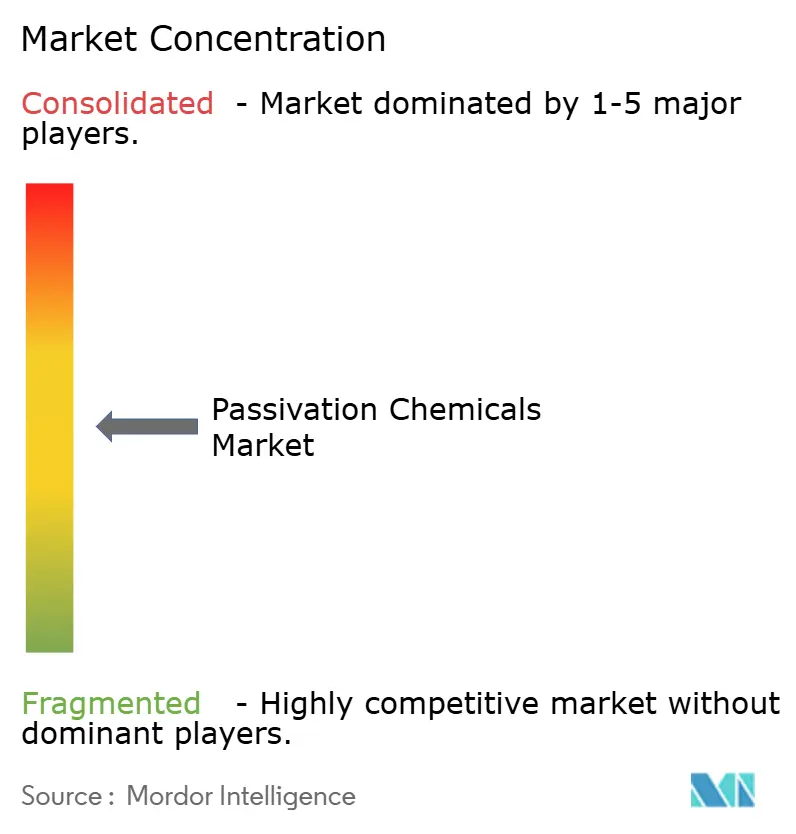
| Market Concentration | Medium |
Major Players *Disclaimer: Major Players sorted in no particular order Image © Mordor Intelligence. Reuse requires attribution under CC BY 4.0. | |
Passivation Chemicals Market Analysis by Mordor Intelligence
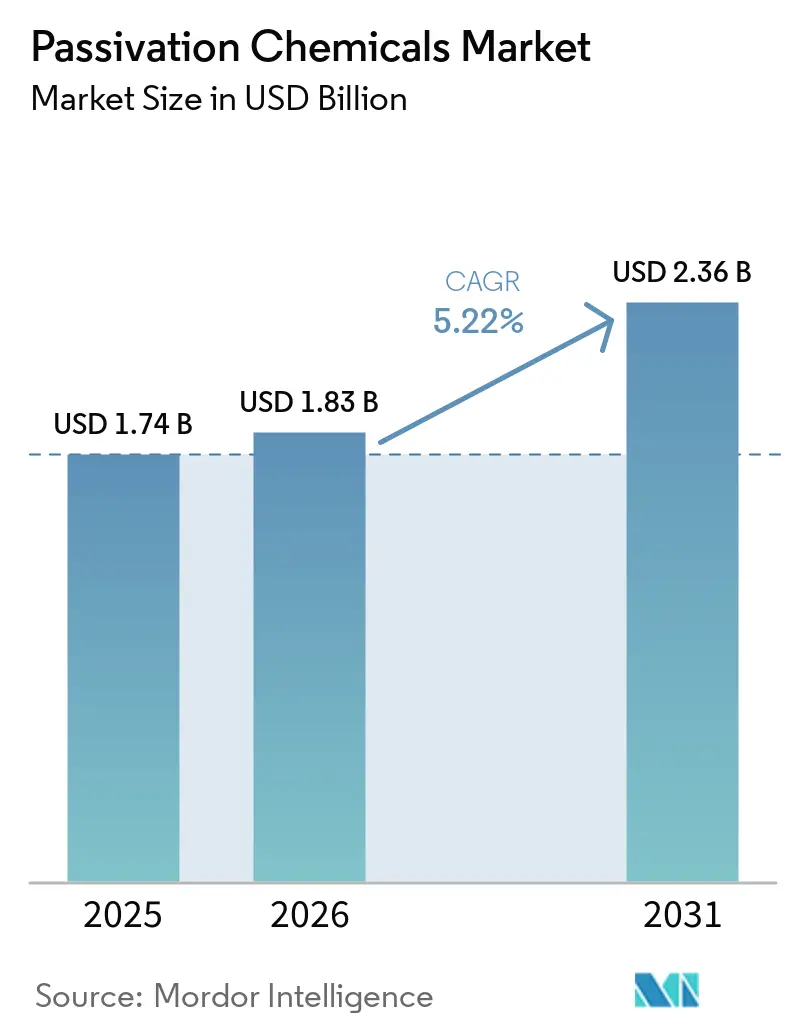
The Passivation Chemicals Market size was valued at USD 1.74 billion in 2025 and is estimated to grow from USD 1.83 billion in 2026 to reach USD 2.36 billion by 2031, at a CAGR of 5.22% during the forecast period (2026-2031). The passivation chemicals market covers nitric acid, citric acid, phosphoric acid, and other chemical solutions used to remove surface contaminants and restore a corrosion-resistant oxide layer on metal components. Demand is supported by metal fabrication activity and by compliance requirements in automotive, aerospace, medical device, and electronics supply chains. Electric vehicle production is increasing the need for treatments suited to aluminum battery enclosures, which require different process controls from established stainless steel applications. Environmental discharge limits and wastewater obligations are also encouraging interest in lower-waste chemistries. Suppliers are responding through qualified formulations, certification support, technical documentation, and regional manufacturing investments.
Key Report Takeaways
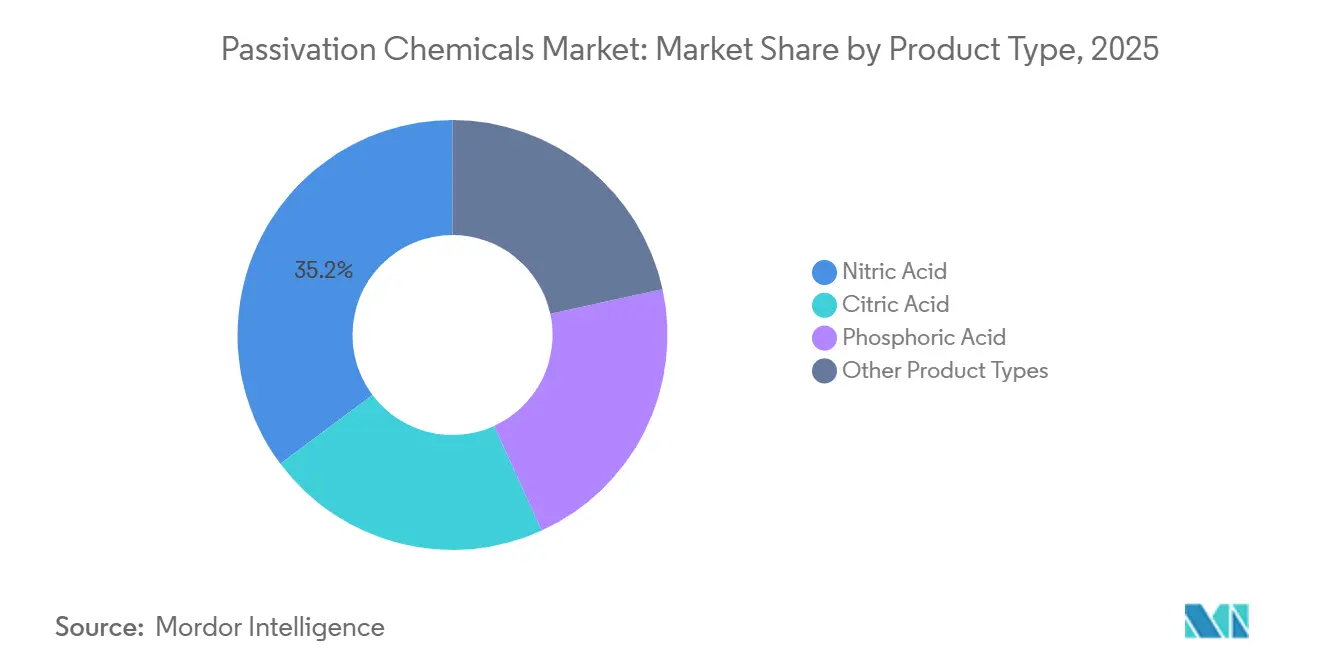
- By product type, nitric acid held 35.23% of the passivation chemicals market share in 2025, while citric acid is projected to advance at a 6.34% CAGR through 2031.
- By application material, stainless steel held 38.14% of the passivation chemicals market share in 2025, while aluminum is projected to advance at a 6.52% CAGR through 2031.
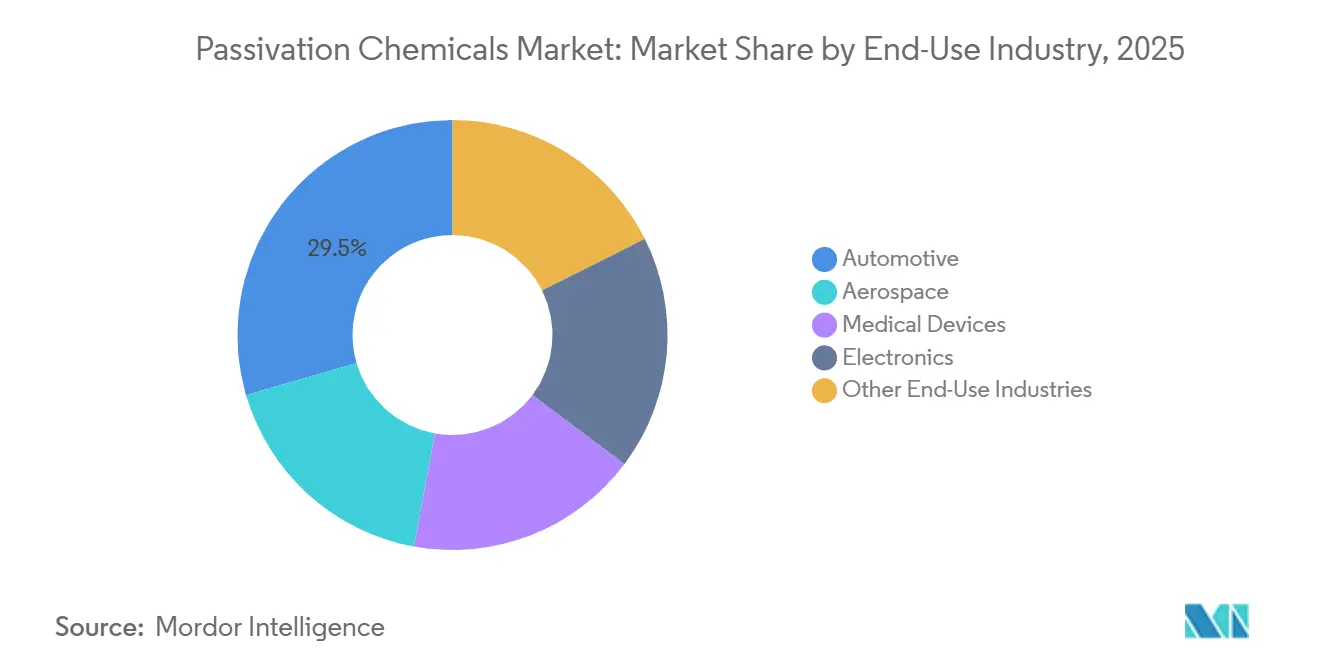
- By end-use industry, automotive held 29.52% of the passivation chemicals market share in 2025, while medical devices are projected to advance at a 6.76% CAGR through 2031.
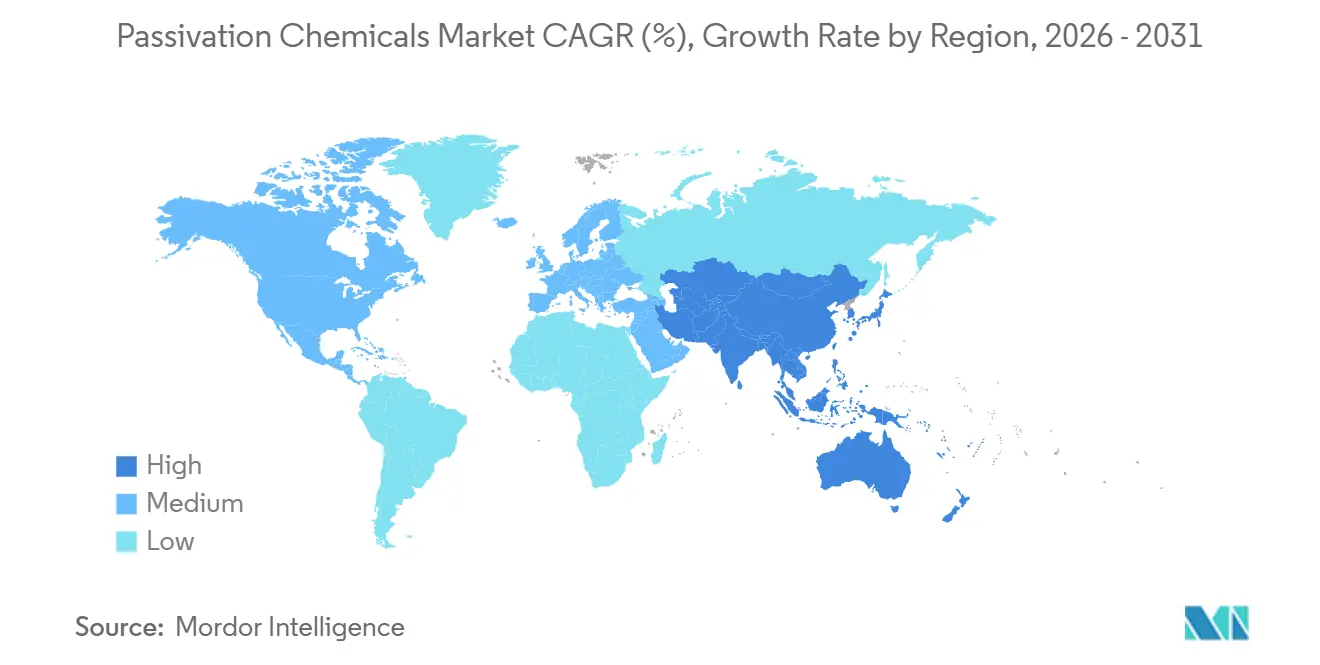
- By geography, Asia-Pacific held 39.71% of the passivation chemicals market share in 2025 and is projected to advance at a 6.48% CAGR through 2031.
Note: Market size and forecast figures in this report are generated using Mordor Intelligence’s proprietary estimation framework, updated with the latest available data and insights as of January 2026.
Market Trends and Insights
Drivers Impact Analysis of Passivation Chemicals Market*
| Driver | (~) % Impact on CAGR Forecast | Geographic Relevance | Impact Timeline |
|---|---|---|---|
| Corrosion-Control Requirements for Stainless Steel and Alloy Components | +1.4% | Global | Long term (≥ 4 years) |
| EV Lightweighting and Battery-Enclosure Protection | +1.2% | Asia-Pacific, Europe, North America | Medium term (2–4 years) |
| Medical-Device Biocompatibility and Implantable-Alloy Demand | +1.0% | North America, Europe, Asia-Pacific | Long term (≥ 4 years) |
| Aerospace Production, MRO and Certified Surface Treatment | +0.8% | North America & Europe, spill-over to APAC | Medium term (2–4 years) |
| Electronics Miniaturization and High-Purity Metal Processing | +0.5% | APAC core, spill-over to North America & Europe | Long term (≥ 4 years) |
| Source: Mordor Intelligence | |||
Corrosion-Control Requirements for Stainless Steel and Alloy Components
Stainless steel remains important in food-grade, pharmaceutical, and industrial equipment, which places passivation within supplier qualification requirements across the component lifecycle. American Society for Testing and Materials (ASTM) A967, updated in its 2025 edition, sets out 10 treatment methods, including 5 nitric acid and 5 citric acid methods. The standard also requires verification through tests such as copper sulfate, salt spray, and high-humidity exposure. These controls make surface treatment performance relevant to buyers who need predictable corrosion resistance in demanding service environments. Food processing, pharmaceutical production, and oil and gas infrastructure continue to use stainless steel equipment with long service-life requirements. This gives the passivation chemicals market a stable base of demand while the chemistry mix shifts toward formulations that reduce waste and meet customer specifications. The shift does not remove the need for established verification methods, because buyers still need treatments that fit their material grades, operating conditions, and documented quality requirements.
EV Lightweighting and Battery-Enclosure Protection
Electric vehicle battery packs use aluminum enclosures because aluminum combines low density, thermal conductivity, and corrosion resistance. Aluminum enclosures can weigh up to 50% less than comparable steel enclosures, supporting vehicle-range objectives. Battery packs also contain dissimilar-metal joints, including busbars, cooling plates, and fasteners, where galvanic corrosion requires treatments validated for electrochemical conditions. BASF, through Chemetall, introduced a chromium-free and fluoride-free passivation solution for electric vehicle copper foils in October 2025. The company reported that batteries treated with Gardolene D achieved up to 6% longer life after 1,000 cycles at 25 °C than hexavalent chromium treatments. Expanding electric vehicle output in China, Europe, and North America, therefore, supports demand for aluminum-compatible treatments in the passivation chemicals market, and suppliers must also demonstrate that these treatments work across the varied alloys, joints, and operational conditions found in battery assemblies.
Medical-Device Biocompatibility and Implantable-Alloy Demand
ISO 10993-1:2025, published in November 2025, introduced a risk-based framework for biological evaluation that makes manufacturing process variables relevant to device safety documentation. The revised framework makes passivation chemistry an important consideration for manufacturers of implantable alloy devices. The U.S. Food and Drug Administration issued draft guidance on chemical analysis for biocompatibility in September 2024, which strengthened the focus on chemistry traceability in medical device development. Citric acid is used in implant manufacturing because it avoids nitrogen oxide fumes and can simplify documentation in validated cleanroom environments. ASTM F86 and ASTM B600 remain relevant to surface preparation for metallic surgical implants and titanium descaling. These requirements support demand for suppliers that can provide chemistry information, process documentation, and qualification support in the passivation chemicals market, and that documentation is relevant when device makers assess manufacturing changes alongside the biological safety of materials used in implantable products.
Aerospace Production, MRO and Certified Surface Treatment
Aerospace demand depends on certification requirements that make chemistry changes slow and expensive for qualified suppliers. SAE International released Aerospace Material Specification (AMS) 2700G in May 2025, which refined solution chemistry controls and acceptance requirements for corrosion-resistant steels used in aerospace applications. ISO 8075:2025 also addressed surface treatment procedures for hardenable stainless steel parts used in aerospace systems. These specifications are relevant to materials used in landing gear, actuation systems, structural assemblies, and propulsion components. National Aerospace and Defense Contractors Accreditation Program (NADCAP) certification under AC7108/12 remains an important qualification for passivation service providers. India’s commercial maintenance, repair, and overhaul (MRO) sector is building AMS 2700-compliant capability, which supports domestic treatment capacity and reduces reliance on overseas providers, and this capability can help aircraft component suppliers align local treatment processes with the qualification expectations of international aerospace customers.
Restraints Impact Analysis of Passivation Chemicals Market*
| Restraint | (~) % Impact on CAGR Forecast | Geographic Relevance | Impact Timeline |
|---|---|---|---|
| Hazardous-Acid Handling and Wastewater Compliance Costs | -0.9% | Global, concentrated in North America & EU | Medium term (2–4 years) |
| Qualification Time for Substituting Established Chemistries | -0.7% | Global, concentrated in North America, Europe, APAC aerospace hubs | Long term (≥ 4 years) |
| Raw-Material Price Volatility and Supply Disruption | -0.6% | Global, intensified in import-dependent APAC and South America | Short term (≤ 2 years) |
| Source: Mordor Intelligence | |||
Hazardous-Acid Handling and Wastewater Compliance Costs
Nitric acid passivation can generate nitrogen oxide fumes, which require dedicated ventilation and controlled handling. Spent treatment baths can also contain dissolved metals that require treatment before discharge under U.S. Environmental Protection Agency (EPA) requirements. The EPA’s proposed 2026 Multi-Sector General Permit addressed industrial stormwater discharges and related compliance obligations[1]. The Occupational Safety and Health Administration Hazard Communication Standard adds requirements for hazard communication, personal protective equipment, and worker training. Citric acid can reduce disposal burdens where process requalification is feasible, but existing nitric acid lines may require capital investment and new approvals. These costs can limit the pace at which smaller metal fabricators adopt alternative chemistries within the passivation chemicals market, and the burden is particularly relevant where existing customer drawings specify nitric acid treatment and a different process needs fresh customer approval.
Qualification Time for Substituting Established Chemistries
Changing a passivation chemistry in aerospace and medical device supply chains requires process validation rather than a simple purchasing change. Qualification can require coupon testing, corrosion verification, customer engineering approval, and documentation for safety-critical components. The process can take 18–36 months, which can delay a supplier’s transition to a new formulation. Early adopters in medical device manufacturing and selected aerospace MRO operations have requalified citric acid processes. Many automotive and general industrial customers continue to use established nitric acid products because their drawings and approved processes specify those treatments. This creates switching costs that support incumbent suppliers even when new formulations offer measurable environmental or technical benefits, and it also means that replacement decisions depend on customer engineering reviews, documented performance results, and the cost of changing an approved production process.
*Our forecasts treat driver/restraint impacts as directional, not additive. The impact forecasts reflect baseline growth, mix effects, and variable interactions.
Passivation Chemicals Market Segment Analysis
By Product Type:
Citric Acid Advances Against Nitric Acid IncumbencyNitric acid held 35.23% of the passivation chemicals market share in 2025. Its position reflected established aerospace qualification documents, legacy industrial drawings, and original equipment manufacturer (OEM) process standards. AMS 2700G, issued by SAE International in May 2025, listed nitric acid as Method 1 for relevant aerospace passivation procedures. Phosphoric acid serves specialized aluminum and softer-alloy applications where lower acidity helps avoid substrate attack. Other product types include proprietary oxidizing blends and chromate-free systems used in electric vehicle battery and electronics applications. The product mix is therefore changing gradually, while established chemistries retain a role in certified applications.
Citric acid is projected to advance at a 6.34% CAGR from 2026 to 2031. Its adoption reflects performance characteristics as well as environmental considerations. Citric acid treatment can provide a higher chromium-to-iron surface ratio than nitric acid treatment under ASTM A967 test conditions. This relationship is relevant in chloride-exposed uses such as food equipment, marine hardware, and pharmaceutical processing. Citric acid is also used in implant manufacturing because it avoids nitrogen oxide fumes and supports cleanroom documentation. Large manufacturers with Scope 3 emissions commitments are placing greater attention on formulations that reduce waste streams.

By Application Material:
Stainless Steel Leads While Aluminum Accelerates on EV DemandStainless steel accounted for 38.14% of the passivation chemicals market size in 2025. Its wide use in pharmaceutical equipment, food-grade machinery, surgical instruments, and automotive exhaust systems supported this position. ASTM A967 specifies verification procedures that include copper sulfate, salt spray, high-humidity, and potassium ferricyanide-nitric acid tests. These requirements make technical qualification and service support important competitive factors. Nickel superalloys, cobalt-chromium alloys, and precipitation-hardening steels serve high-temperature aerospace and defense uses under specialized passivation protocols. Suppliers addressing these materials compete through certification breadth and technical service rather than through price alone.
Aluminum is projected to advance at a 6.52% CAGR from 2026 to 2031. Aluminum is widely used in electric vehicle battery enclosure designs because it supports lower component weight. Its use requires treatments that differ from stainless steel processing methods. Chromium-free and fluoride-free systems are being developed for electric vehicle copper foil and aluminum treatment to meet environmental and performance requirements. Titanium remains strategically important in aerospace structures and orthopedic implants. ASTM F86 and ASTM B600 remain relevant to cleaning, surface preparation, and descaling for these materials.
By End-Use Industry:
Automotive Anchors Revenue, While Medical Devices Set the PaceAutomotive held 29.52% of the passivation chemicals market share in 2025. Demand covered engine components, fasteners, brake systems, and aluminum enclosures used in electric vehicles. Aerospace demand is supported by AMS 2700G and NADCAP requirements, which connect procurement to long-term qualified supplier relationships. The electronics industry uses passivation to manage surface contamination in miniaturized interconnects and advanced semiconductor packaging. Oil and gas, food processing, and construction also provide recurring demand tied to infrastructure maintenance and equipment replacement. Together, these applications give the passivation chemicals industry a broad group of end users with distinct material and compliance needs.
Medical devices are projected to advance at a 6.76% CAGR from 2026 to 2031. Growth is linked to implantable device demand, new alloy platforms, and tighter documentation expectations for biocompatibility. ISO 10993-1:2025 made the biological evaluation more directly connected to manufacturing process variables. The Food and Drug Administration’s September 2024 draft guidance also placed greater attention on chemical analysis in device biocompatibility assessments. ASTM F86 and ASTM A967 guide surface treatment expectations for materials such as stainless steel, titanium, and cobalt-chromium. Suppliers that provide complete regulatory documentation can be better placed to support device makers’ qualification processes.
Geography Analysis
APAC Passivation Chemicals Market
Asia-Pacific held 39.71% of the passivation chemicals market size in 2025 and is projected to advance at a 6.48% CAGR through 2031. China’s Yangtze River Delta, Pearl River Delta, and Bohai Economic Rim contain concentrations of automotive, electronics, and aerospace component manufacturing. India is driving demand because automotive component expansion under the Production-Linked Incentive scheme is attracting Tier-1 surface treatment investment. India’s commercial MRO sector is also building AMS 2700-compliant passivation capability. Japan and South Korea contribute to semiconductor-grade processing and advanced electronics interconnects.
ASEAN, North America and Europe Passivation Chemicals Market
Southeast Asian countries, including Vietnam, Thailand, and Indonesia, are becoming additional manufacturing locations for electronics and automotive components. Foreign direct investment in these activities adds incremental demand for surface treatment processes. North America and Europe are more compliance-intensive areas of the passivation chemicals market because of their established aerospace and medical device production bases. North American aerospace suppliers use AMS 2700G-certified chemistry, while medical device manufacturers are strengthening chemistry traceability in response to Food and Drug Administration guidance. The EPA’s proposed 2026 Multi-Sector General Permit supports greater attention to industrial wastewater management in the United States.
EMEA and South America Passivation Chemicals Market
European requirements under Registration, Evaluation, Authorisation and Restriction of Chemicals (REACH) and Restriction of Hazardous Substances (RoHS) have supported the phaseout of hexavalent chromium. Germany, France, and Italy form a core European consumption base, where automotive OEM qualification relationships influence chemistry selection. South America, and Middle East and Africa are expanding demand bases tied to automotive assembly, oil and gas infrastructure, and metal fabrication. Brazil supports South American demand through vehicle assembly, agribusiness equipment, and industrial manufacturing in São Paulo and Minas Gerais. South Africa is the most industrially diversified market in its sub-region, with vehicle assembly demand aligned with international OEM quality standards.
Competitive Landscape
The passivation chemicals market is moderately concentrated. Competition centers on certification coverage, technical documentation, formulation performance, and the ability to reduce customer requalification risk. Aerospace and medical device customers value suppliers that can support AMS 2700G, ASTM A967, and NADCAP-related requirements. Nihon Parkerizing Co., Ltd. received U.S. Patent 12540248 for a metal surface-treating agent that forms corrosion-resistant and hydrophilic films[2]. This type of intellectual property can differentiate established companies from suppliers of standard formulations. Wastewater and material-handling rules also support interest in chrome-free and acid-reduction technologies.
Quaker Houghton completed its acquisition of Dipsol Chemicals Co., Ltd. in April 2025 for JPY 23 billion (approximately USD 153 million). Dipsol recorded USD 82 million in revenue in 2024 and served mainly automotive and industrial applications in the Asia-Pacific region. The transaction expanded Quaker Houghton’s surface treatment presence in Asia-Pacific automotive applications. BASF, through Chemetall, launched Gardolene D in October 2025 as a chromium-free and fluoride-free solution for electric vehicle battery copper foils. Chemetall and Londian Wason signed a strategic partnership in October 2025 to commercialize Gardolene D globally. These moves show how product development and partnerships can extend geographic reach and address new battery-material requirements.
Specialist suppliers, including JAYCO Chemical Solutions, Asterion LLC, and Poligrat GmbH, serve aerospace and implantable-device applications where technical depth and regulatory documentation are important. Henkel AG & Co. KGaA introduced Bonderite C-AD 20202 in February 2026 as a low-temperature dip-degreasing surfactant for automotive, agricultural machinery, and metalworking customers. The product operates at 35 °C–40 °C and supports energy and carbon dioxide savings before passivation steps.
Passivation Chemicals Industry Leaders
-
BASF
-
Henkel AG & Co. KGaA
-
Element Solutions Inc
-
MKS Inc.
-
Nihon Parkerizing Co., Ltd.
- *Disclaimer: Major Players sorted in no particular order
Passivation Chemicals Market Companies Covered in this Report
- Asterion LLC
- BASF
- Birchwood Laboratories LLC
- Brulin
- Delmet srl
- Element Solutions Inc
- Henkel AG & Co. KGaA
- Hubbard-Hall Inc.
- JAYCO Chemical Solutions
- MKS Inc.
- Nihon Parkerizing Co., Ltd.
- Poligrat GmbH
- Quaker Houghton
- TIB Chemicals AG
Recent Industry Developments in Passivation Chemicals Market
- August 2026: STERIS plc’s USD 600 million investment in a new formulated-chemistries manufacturing and distribution center expanded U.S. production capacity for specialty chemical formulations. This strengthened the supply base for metal-treatment and surface-treatment chemistries, supporting the broader passivation chemicals supply chain.
- February 2026: Henkel AG & Co. KGaA launched Bonderite C-AD 20202, a low-temperature dip-degreasing surfactant designed for use before passivation in automotive, agricultural machinery, and metalworking applications. Its lower operating temperature supports more energy-efficient pre-passivation cleaning, encouraging adoption of integrated cleaning and passivation chemical solutions.
Global Passivation Chemicals Market Report Scope
Passivation chemicals are used to chemically treat metal surfaces to remove free iron and other contaminants while promoting the formation of a protective passive layer. They help improve corrosion resistance and surface stability, particularly for metal components exposed to demanding operating and environmental conditions.
The Passivation Chemicals Market is segmented by product type, application material, end-use industry, and geography. By product type, the market is segmented into nitric acid, citric acid, phosphoric acid, and other product types. By application material, the market is segmented into stainless steel, aluminum, titanium, and other application materials. By end-use industry, the market is segmented into automotive, aerospace, medical devices, electronics, and other end-use industries. The report also covers the market size and forecasts for passivation chemicals in 16 countries across major regions. For each segment, the market sizing and forecasts have been done on the basis of value (USD).
Segmentation Overview
| Nitric Acid |
| Citric Acid |
| Phosphoric Acid |
| Other Product Types |
| Stainless Steel |
| Aluminum |
| Titanium |
| Other Application Materials |
| Automotive |
| Aerospace |
| Medical Devices |
| Electronics |
| Other End-Use Industries |
| Asia-Pacific | China |
| India | |
| Japan | |
| South Korea | |
| ASEAN Countries | |
| Rest of Asia-Pacific | |
| North America | United States |
| Canada | |
| Mexico | |
| Europe | Germany |
| United Kingdom | |
| France | |
| Italy | |
| NORDIC Countries | |
| Rest of Europe | |
| South America | Brazil |
| Argentina | |
| Rest of South America | |
| Middle East and Africa | Saudi Arabia |
| South Africa | |
| Rest of Middle East and Africa |
| By Product Type | Nitric Acid | |
| Citric Acid | ||
| Phosphoric Acid | ||
| Other Product Types | ||
| By Application Material | Stainless Steel | |
| Aluminum | ||
| Titanium | ||
| Other Application Materials | ||
| By End-Use Industry | Automotive | |
| Aerospace | ||
| Medical Devices | ||
| Electronics | ||
| Other End-Use Industries | ||
| By Geography | Asia-Pacific | China |
| India | ||
| Japan | ||
| South Korea | ||
| ASEAN Countries | ||
| Rest of Asia-Pacific | ||
| North America | United States | |
| Canada | ||
| Mexico | ||
| Europe | Germany | |
| United Kingdom | ||
| France | ||
| Italy | ||
| NORDIC Countries | ||
| Rest of Europe | ||
| South America | Brazil | |
| Argentina | ||
| Rest of South America | ||
| Middle East and Africa | Saudi Arabia | |
| South Africa | ||
| Rest of Middle East and Africa | ||
Key Questions Answered in the Report
What is the size of the passivation chemicals market?
The passivation chemicals market stands at USD 1.83 billion in 2026 and is projected to reach USD 2.36 billion by 2031.
What is driving demand for passivation chemicals?
Metal fabrication, corrosion-control requirements, electric vehicle battery enclosures, aerospace certification, and medical device documentation requirements support demand. Wastewater requirements also encourage interest in lower-waste formulations where customers can requalify their processes.
Which product type led the market demand in 2025?
Nitric acid held 35.23% of revenue in 2025.
Which application material is expected to grow fastest through 2031?
Aluminum is projected to advance at a 6.52% CAGR through 2031, supported by its use in electric vehicle battery enclosures.