
Ornamental Fish Feed Market Size and Share
Market Overview
| Study Period | 2022 - 2032 |
|---|---|
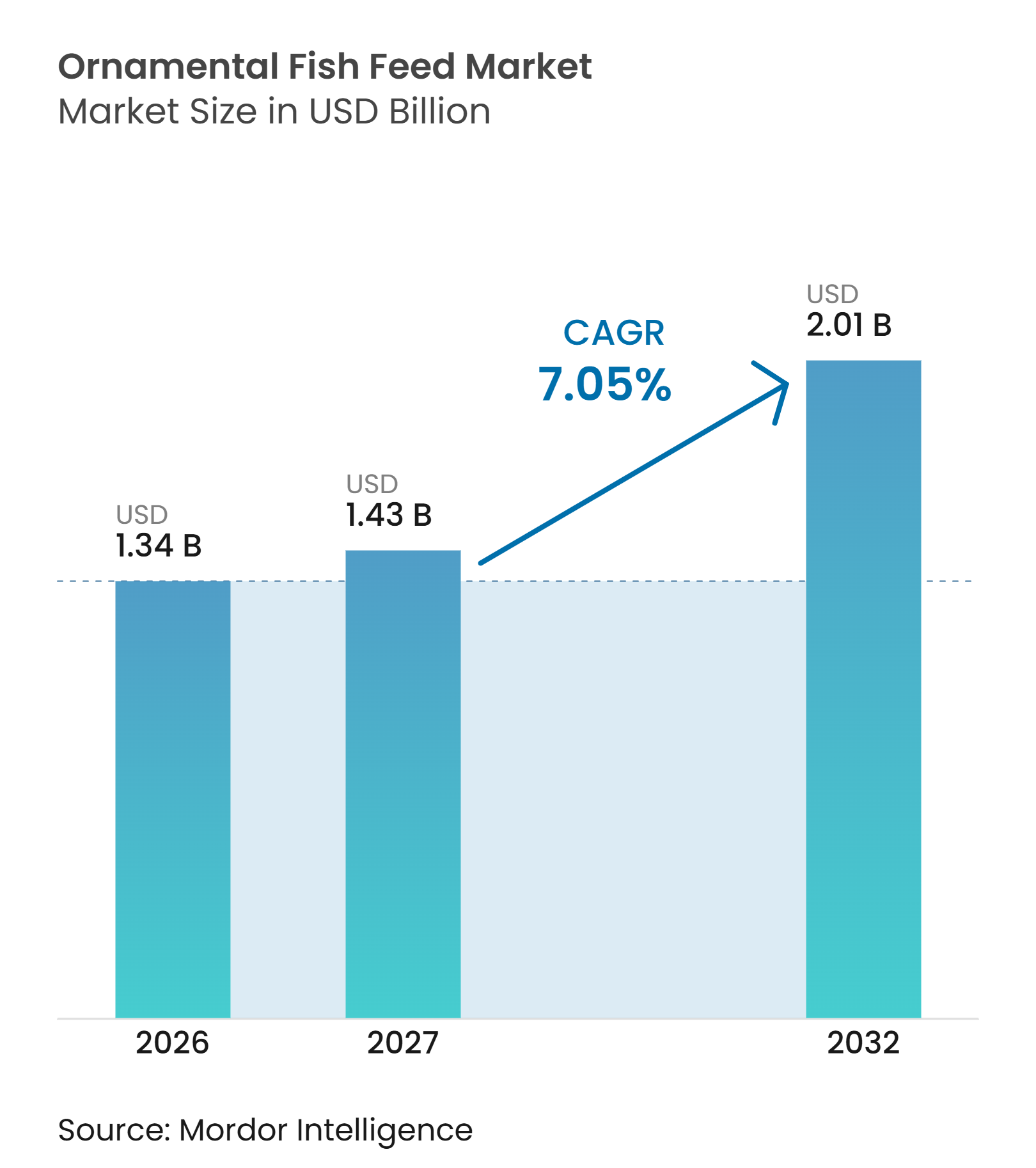
| Market Size (2027) | USD 1.43 Billion |
| Market Size (2032) | USD 2.01 Billion |
| Growth Rate (2027 - 2032) | 7.05 % |
| Fastest Growing Market | Asia-Pacific |
| Largest Market | North America |
| Market Concentration | Low |
Major Players *Disclaimer: Major Players sorted in no particular order Image © Mordor Intelligence. Reuse requires attribution under CC BY 4.0. | |
Ornamental Fish Feed Market Analysis by Mordor Intelligence
The ornamental fish feed market size was valued at USD 1.34 billion in 2026 and is forecast to grow from USD 1.43 billion in 2027 to USD 2.01 billion by 2032, at a CAGR of 7.05% from 2027 to 2032. This growth reflects a shift from general flake food toward diets tailored to species, feeding needs, and aquarium conditions, including options for breeding, coloration, and sensitive marine environments. Functional claims related to color enhancement, digestion, and breeding are increasing the value of formulated products, particularly among experienced hobbyists seeking more predictable results from their feeding routines. Digital retail is broadening access to specialized products and simplifying repeat purchasing through direct ordering, product education, and replenishment options. Competitive positions are shaped by formulation credibility, ingredient sourcing, distribution coverage, and the ability to build trust with hobbyist communities across physical and digital channels. The market offers room for both established global brands and focused regional suppliers, even as basic flake products remain an important price reference.
Key Report Takeaways
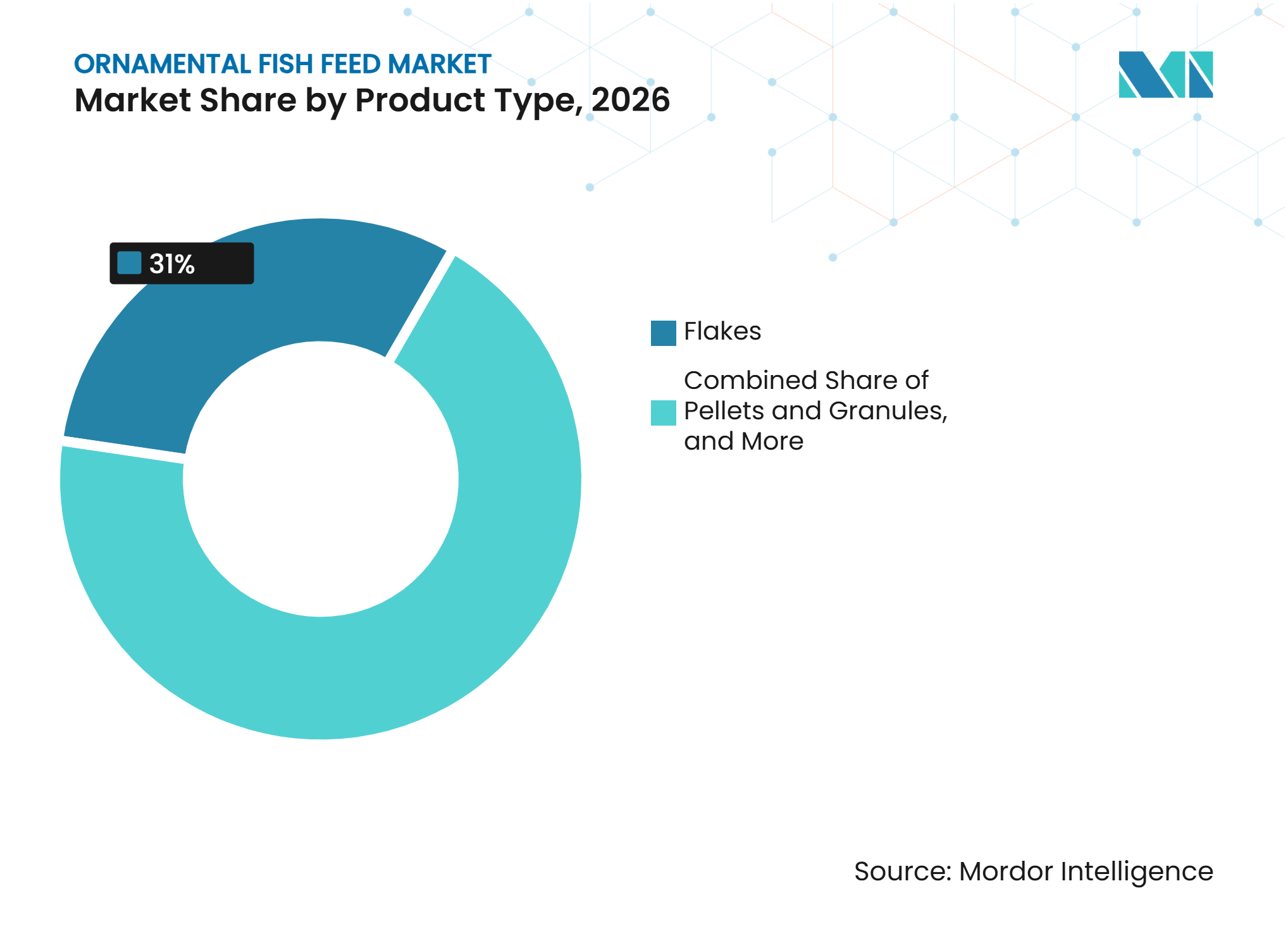
- By product type, flakes accounted for 31% of the ornamental fish feed market share in 2026, while pellets and granules are forecast to grow at a CAGR of 8.6% from 2027 to 2032.
- By fish type, tropical fishes accounted for 61.4% of the ornamental fish feed market size in 2026, while marine ornamental fish are forecast to grow at a CAGR of 8.1% from 2027 to 2032.
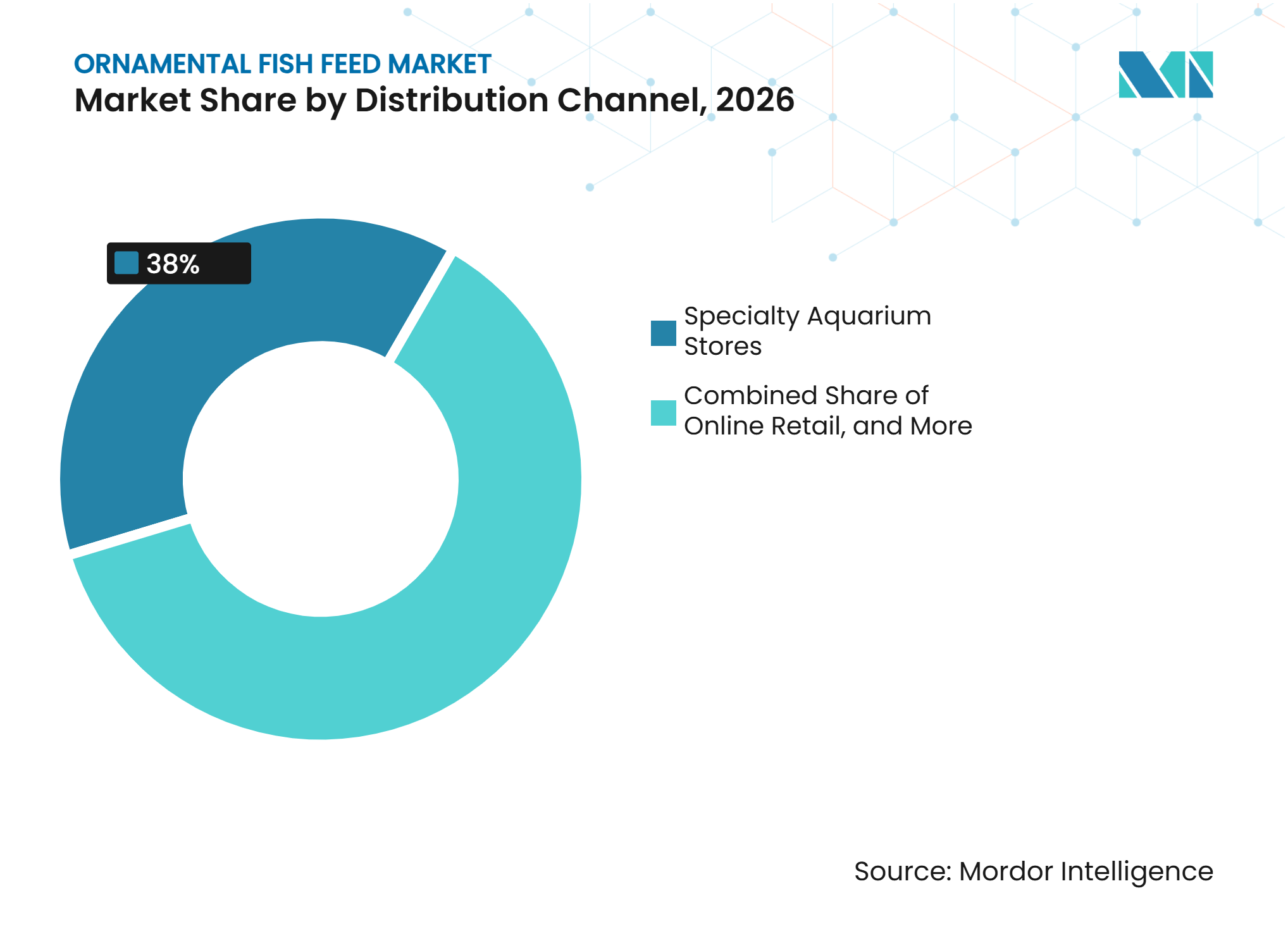
- By distribution channel, specialty aquarium stores accounted for 38% of the market share in 2026, while online retail is forecast to grow at a CAGR of 9.3% from 2027 to 2032.
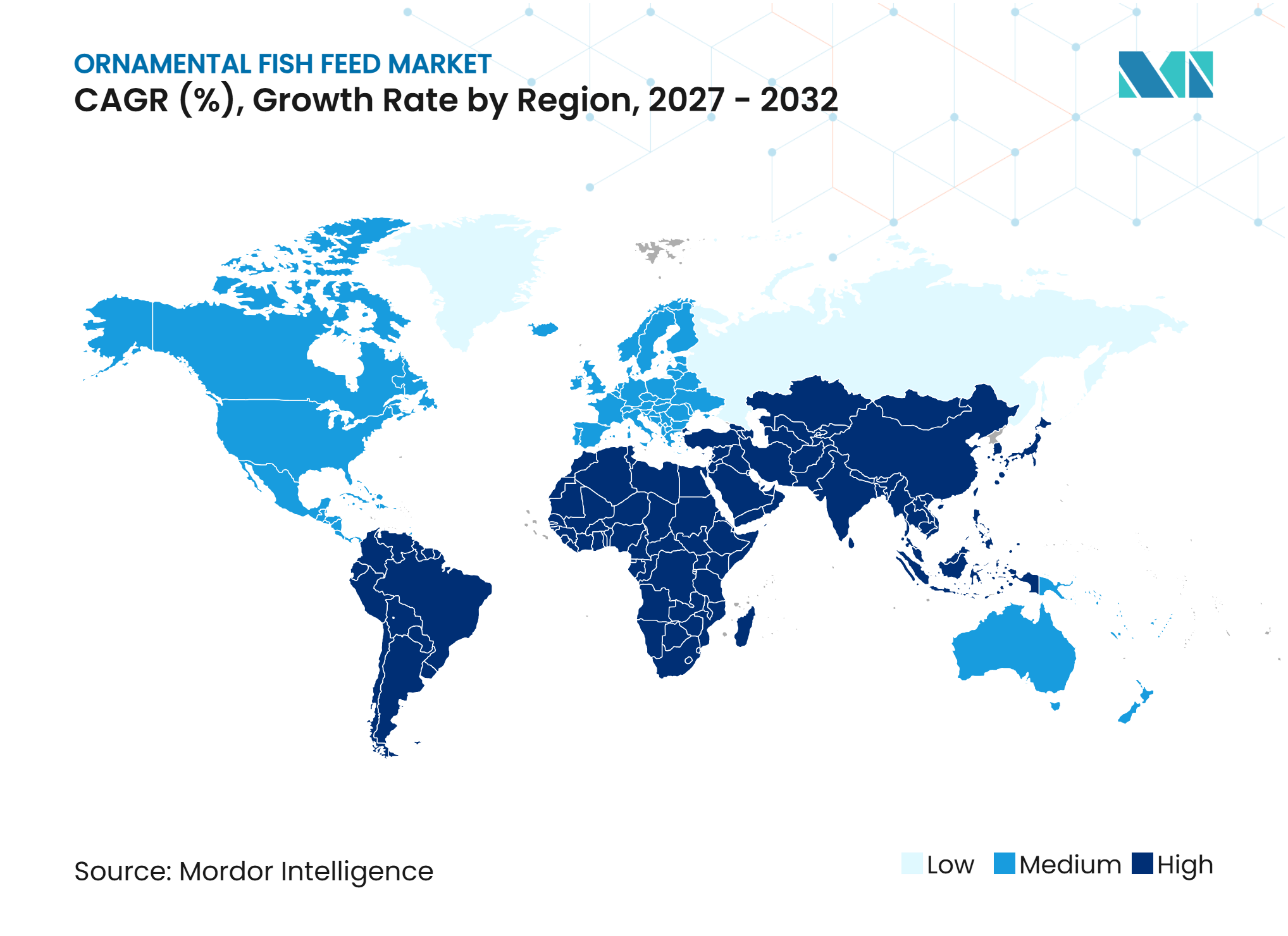
- By geography, North America accounted for 40% of the market share in 2026, while Asia-Pacific is forecast to grow at a CAGR of 8.2% from 2027 to 2032.
Note: Market numbers in this report are based on Mordor Intelligence's proprietary estimation framework, which combines nine months of actuals with Q4 projections for base year 2026.
Market Trends and Insights
Drivers Impact Analysis of Ornamental Fish Feed Market*
| Driver | (~) % Impact on CAGR Forecast | Geographic Relevance | Impact Timeline |
|---|---|---|---|
| Premiumization of Species-Specific Diets | +1.5% | Global, strongest in North America and Europe | Medium term (2-4 years) |
| Expansion of E-Commerce and Direct-to-Consumer Aquarium Feed Sales | +1.3% | Global, highest in North America, Asia-Pacific, and South America | Short term (≤ 2 years) |
| Growing Demand for Color-Enhancing and Functional Ornamental Fish Feed | +1.1% | Global, particularly Europe and North America | Short term (≤ 2 years) |
| Growth in Ornamental Fish Ownership and Urban Aquarium Keeping | +0.9% | Asia-Pacific and North America, with growth in the Middle East and Africa | Medium term (2-4 years) |
| Digital Hobbyist Communities Increasing Product Discovery and Repeat Purchase | +0.8% | Global, particularly North America and Asia-Pacific | Short term (≤ 2 years) |
| Lower-Waste Feed Formulations for Small-Volume Aquariums | +0.7% | North America, Europe, and urban Asia-Pacific | Medium term (2-4 years) |
| Source: Mordor Intelligence | |||
Premiumization of Species-Specific Diets
Hobbyists are increasingly willing to pay for diets tailored to the nutritional requirements and feeding needs of specific fish species. These formulations address requirements ranging from the protein needs of cichlids to color enhancement in koi and water-quality considerations in marine aquariums. JBL GmbH & Co. KG's PRONOVO range, for example, includes species-specific feeds such as PRONOVO NEON for small tetra species and PRONOVO BOTIA for loaches, helping aquarium owners select diets suited to their fish. This growing preference for specialized nutrition supports demand for premium flakes, granules, and pellets, while everyday feed formats continue to serve routine feeding needs. As species-specific diets become a more regular part of aquarium care, manufacturers gain opportunities to differentiate their products and strengthen premium feed sales.
Expansion of E-Commerce and Direct-to-Consumer Aquarium Feed Sales
Online retail is extending the reach of ornamental fish feed beyond the product ranges available at local specialty stores. Digital storefronts allow established and smaller brands to offer a wider selection of pack sizes, formulations, and species-specific products. Brazil illustrates this shift, with AliExpress reporting a 150% increase in sales of fish-related supplies in June 2025 compared with May 2025. On Shopee, pet-category sales increased by more than 180% in June 2025 compared with the same month in 2024, while searches for pet products rose by more than 300%. Direct-to-consumer channels also facilitate convenient replenishment, supporting more regular purchases of feed. By reducing dependence on physical shelf space, online retail enables manufacturers to introduce specialized formulations to a wider customer base and gain better insights into consumer preferences and repeat purchasing patterns.
Growing Demand for Color-Enhancing and Functional Ornamental Fish Feed
Color enhancement is an important purchasing consideration for ornamental fish owners, supporting demand for feeds containing pigments and functional ingredients. A 2025 study published in the journal Blue Biotechnology found that natural astaxanthin derived from Haematococcus pluvialis produced significantly redder coloration in juvenile clownfish than synthetic astaxanthin over a 60-day feeding trial [1]. Under European Union regulations, astaxanthin is authorized as a feed additive for ornamental fish at a maximum content of 100 mg/kg of complete feed, providing a regulatory reference for manufacturers formulating color-enhancing diets. sera GmbH also offers feeds incorporating ingredients such as astaxanthin, krill, and spirulina. Manufacturers are increasingly combining color-enhancing ingredients with nutritional components in formulated feeds, allowing products to address both appearance and routine dietary requirements. This supports product differentiation and demand for premium ornamental fish diets.
Growth in Ornamental Fish Ownership and Urban Aquarium Keeping
Urban households are increasingly adopting aquariums as companion-pet environments and decorative features in their homes. According to the American Pet Products Association's (APPA) 2025 Fish and Reptile Report, 77% of fish-owning households in the United States kept two or more fish [2]. Millennials accounted for 46% of saltwater fish owners and 38% of freshwater fish owners, underscoring their significant presence in the aquarium-keeping population. Households maintaining multiple fish and curated aquariums require regular feed purchases, thereby supporting recurring demand for ornamental fish feed. As aquarium keeping becomes more established among urban consumers, demand for convenient feed formats and products that simplify routine fish care is also increasing.
Restraints Impact Analysis of Ornamental Fish Feed Market*
| Restraint | (~) % Impact on CAGR Forecast | Geographic Relevance | Impact Timeline |
|---|---|---|---|
| Competition from Homemade and Alternative Fish Diets | -1.0% | Global, especially North America, Europe, and Asia-Pacific | Long term (≥ 4 years) |
| Water-Quality Risks Associated with Overfeeding | -0.8% | Global, especially Asia-Pacific, Europe, and the Middle East | Medium term (2-4 years) |
| Consumer Price Sensitivity and Pressure on Feed Purchase Volumes | -0.6% | Global, strongest in North America and Europe | Short term (≤ 2 years) |
| Fragmented Distribution and Counterfeit or Informal Products | -0.5% | Asia-Pacific, Africa, and South America, with spillover to the Middle East | Long term (≥ 4 years) |
| Source: Mordor Intelligence | |||
Competition from Homemade and Alternative Fish Diets
Commercially formulated ornamental fish feeds face competition from homemade diets prepared by experienced hobbyists and breeders. These consumers may prefer self-prepared formulations because they can select ingredients and adjust the nutritional composition to meet species-specific feeding requirements. Live feed also remains important in specialized breeding applications. Research presented at the World Aquaculture Society's 2025 conference identified live Artemia nauplii as a commonly used first feed for freshwater ornamental fish larvae. Preliminary results for rainbow shark larvae showed that fish fed exclusively on liquid diets were shorter than those receiving live Artemia [3]. Such feeding practices can limit reliance on commercially packaged formulations, particularly among experienced breeders. Although manufacturers can strengthen their offerings through convenience, consistent nutritional composition, and specialized formulations, replacing established alternative feeding practices remains a challenge.
Water-Quality Risks Associated with Overfeeding
Overfeeding can rapidly degrade water quality in small aquariums, contributing to algae growth, elevated ammonia levels, and fish mortality. These risks can discourage beginner aquarium owners from continuing to maintain fish and purchasing commercial feeds. Standard package sizes may also be unsuitable for smaller aquariums holding 10 to 20 liters, where feed requirements are relatively low. Although low-waste formulations can help minimize uneaten feed and maintain water quality, their adoption remains limited among some casual hobbyists. Clear feeding instructions and appropriately sized packages can help manufacturers address these concerns and improve consumer confidence in formulated feeds.
*Our forecasts treat driver/restraint impacts as directional, not additive. The impact forecasts reflect baseline growth, mix effects, and variable interactions.
Ornamental Fish Feed Market Segment Analysis
By Product Type:
Flakes Lead, While Pellets and Granules Grow FastestFlakes accounted for 31% of the ornamental fish feed market share in 2026, supported by their familiarity, broad compatibility across species, and availability at various price points. Pellets and granules are forecast to grow at a CAGR of 8.6% from 2027 to 2032, the strongest rate within the product type segment. Their water stability and range of particle sizes suit more targeted feeding. These formats also work well with automated dispensers used by owners of marine and tropical fish. Demand for products that enable more controlled, less wasteful feeding is driving the ornamental fish feed market size for pellets and granules.
Live feed remains important to breeders and specialist marine hobbyists because freshly hatched Artemia offers high palatability and established nutritional value. Freeze-dried and frozen feeds, including bloodworms, mysis, and daphnia, are also used alongside formulated diets to meet the dietary requirements of different ornamental fish species. The availability of these feeding options allows manufacturers to cater to diverse nutritional needs, supporting demand across both mainstream household aquariums and specialized fish-keeping applications.



By Fish Type:
Tropical Fishes Lead, While Marine Ornamental Fish Grow FastestTropical fishes accounted for 61.4% of the market share in 2026, reflecting the broad base of freshwater community aquariums. Tetras, cichlids, guppies, and livebearers accept many flake and granule diets, giving manufacturers a large and diverse customer base across general and species-specific products. Tropical aquarium owners can choose from familiar formats while gradually transitioning to premium formulas. This scale makes tropical fish central to distribution planning across the ornamental fish feed market.
Marine ornamental fish are forecast to grow at a CAGR of 8.1% from 2027 to 2032 as owners invest in more sophisticated systems and higher-value nutrition. In 2025, 44% of saltwater fish owners in the United States had tanks with capacities of 56 to 125 gallons, while 34% had tanks holding 126 gallons or more, according to the American Pet Products Association (APPA). Larger tanks increase per-household feed use and underscore the importance of water-stable diets. Goldfish and koi form another specialist area where feed affects appearance and breeding performance.
By Distribution Channel:
Specialty Aquarium Stores Lead, While Online Retail Grows FastestSpecialty aquarium stores accounted for 38% of the market share in 2026, as they remain trusted sources of product advice. In 2025, 64% of fish owners in the United States relied on retailers for information about fish availability, according to the American Pet Products Association (APPA). This support is valuable for new aquarium owners and for hobbyists managing complex marine systems. Stores also provide physical access to products that require explanation or careful handling. The ornamental fish feed market benefits when store staff can explain feeding routines and suitable product formats.
Online retail is forecast to grow at a CAGR of 9.3% from 2027 to 2032, driven by wider product assortment, recurring delivery options, and direct consumer engagement. Digital channels allow manufacturers to reach customers outside cities with established specialty retail. Mass merchandisers and pet superstores remain relevant for price-conscious and convenience-focused shoppers. Central Garden & Pet Company launched the BlueIQ smart aquarium application for its Aqueon brand in June 2024, illustrating how digital engagement can connect aquarium management with branded product relationships. These connected services can support long-term participation in the ornamental fish feed market.

Geography Analysis
North America: Premium Feed Demand Anchors the Largest Regional Market
North America accounted for 40% of the ornamental fish feed market in 2026, with nearly 10 million freshwater fish households and 2 million saltwater fish households in the United States. Saltwater owners are upgrading aquarium capacity, with 34% using tanks of 126 gallons or more in 2025, up 17% from 2023. These larger aquarium systems support demand for water-stable and species-specific diets. Specialty stores remain important sources of product guidance, while online channels provide access to specialized feeds and convenient replenishment.
Asia-Pacific: Urban Aquarium Culture Supports Fast Regional Growth
Asia-Pacific is forecast to grow at a CAGR of 8.2% from 2027 to 2032, the fastest rate among the regions. China, Japan, India, and Southeast Asia combine established ornamental fish markets with growing urban demand and wider digital access to specialized products. Southeast Asian countries are also developing domestic demand among hobbyists, alongside their established role as suppliers of ornamental fish. In Australia, sera Group established an exclusive partnership with Aquarium Industries in 2025, while its Axolotl Wafers received a Best New Product award in the Aquarium and Fish category. These developments highlight the role of product innovation and local distribution in expanding regional market access.
Regional Dynamics: Divergent Growth Paths Across Smaller Markets
Europe benefits from well-established aquarium-keeping practices and demand for premium feeds, while South America offers opportunities as branded retail and e-commerce channels develop. In Africa, urban pet ownership and the expansion of modern retail are supporting market development, although demand remains concentrated in a smaller base. The Middle East also presents opportunities through specialty retail development and interest in marine aquarium keeping. Across these regions, market development depends on household purchasing power, access to specialized products, and the maturity of distribution networks.
Competitive Landscape
Market Concentration
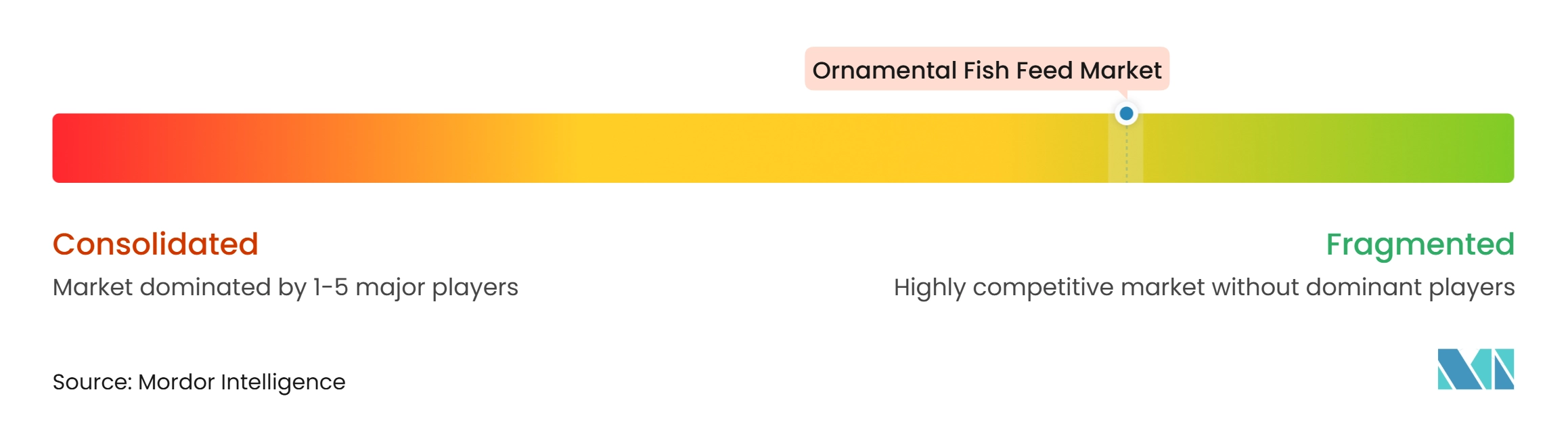
The ornamental fish feed market was fragmented in 2026, with companies competing on product breadth, species-specific formulations, distribution networks, and ingredient innovation. Tetra GmbH, JBL GmbH & Co. KG, and Hikari Sales USA, Inc. differentiate their offerings through diets designed for various ornamental fish, including tropical fish, goldfish, koi, and marine species. JBL GmbH & Co. KG has developed its PRONOVO range around species-specific nutrition, while Hikari Sales USA, Inc. maintains products across tropical, goldfish, koi, marine, and freeze-dried feed categories. Product quality and credibility remain important competitive factors, as experienced hobbyists consider ingredient composition, water stability, and fish health when selecting feeds.
Distribution expansion and production partnerships are also shaping competition. sera Group entered an exclusive distribution partnership with Aquarium Industries in Australia in March 2025, expanding the availability of its aquarium food and care products through the distributor's retail network. These developments highlight the importance of connecting product development and manufacturing capabilities with regional distribution networks.
Regional suppliers and specialized brands also contribute to the competitive landscape by addressing specific consumer requirements and local market needs. Opportunities remain for accessible species-specific diets in Africa, South America, and Southeast Asia. Low-leaching formulations also cater to nano and reef aquarium owners who require feeds that help maintain water quality. Competition therefore extends beyond product availability to include formulation quality, specialized feeding requirements, and access to hobbyist markets.
Ornamental Fish Feed Industry Leaders
-
Tetra GmbH (Spectrum Brands Holdings, Inc.)
-
Hikari Sales USA, Inc.
-
sera GmbH
-
Ocean Nutrition Europe
-
JBL GmbH and Co. KG
- *Disclaimer: Major Players sorted in no particular order
Ornamental Fish Feed Market Companies Covered in this Report
- Tetra GmbH (Spectrum Brands Holdings, Inc.)
- Hikari Sales USA, Inc.
- sera GmbH
- Ocean Nutrition Europe
- Zeigler Bros., Inc.
- Aller Aqua A/S
- Alltech Coppens B.V.
- Growel Feeds Private Limited
- NorthFin Fish Food Inc.
- Central Garden and Pet Company
- JBL GmbH & Co. KG
- TROPICAL Tadeusz Ogrodnik
- Mars, Incorporated
- AQUAEL Janusz Jankiewicz Sp. z o.o.
- OASE GmbH
Recent Industry Developments in Ornamental Fish Feed Market
- December 2025: JBL GmbH & Co. KG integrated its PlanktonPur product into the PRONOVO range as JBL PRONOVO PLANKTON, featuring freshly caught Arctic zooplankton comprising small crustaceans and molluscs. The product is intended for freshwater and saltwater fish, including specialist plankton-feeding species.
- May 2025: Great Salt Lake Artemia (GSLA) acquired Torqx Capital Partners' majority stake in Ocean Nutrition Europe and Marine Nutrition Thailand, collectively known as Ocean Nutrition. Headquartered in Essen, Belgium, with a production facility in Thailand, the company supplies premium nutrition products to the ornamental fish and aquaculture industries.
- February 2025: Insectika Biotech introduced YuM ToM, an insect protein-based feed for aquarium fish, developed in collaboration with the ICAR-Central Institute of Brackishwater Aquaculture (ICAR-CIBA). The formulation uses black soldier fly larvae protein and was unveiled at the Shrimp Farmers' Conclave 2025 in Balasore, Odisha, adding an alternative protein-based formulation to India's ornamental fish feed market.
Global Ornamental Fish Feed Market Report Scope
Ornamental fish feed consists of prepared and natural food products formulated to support the dietary requirements of fish kept for ornamental purposes. Product formulations vary according to fish type, feeding habits, and nutritional needs, supporting growth, coloration, and overall fish health.
The ornamental fish feed market report is segmented by product type (flakes, pellets and granules, live feed, freeze-dried and frozen feeds, and other product types), by fish type (tropical fishes, goldfish, koi, marine ornamental fish, and other fish types), by distribution channel (specialty aquarium stores, mass merchandisers and pet superstores, online retail, and other channels), and by geography (North America, South America, Europe, Asia-Pacific, Middle East, and Africa). The market forecasts are provided in terms of value (USD).
Segmentation Overview
| Flakes |
| Pellets and Granules |
| Live Feed |
| Freeze-Dried and Frozen Feeds |
| Other Product Types |
| Tropical Fishes |
| Goldfish |
| Koi |
| Marine Ornamental Fish |
| Other Fish Types |
| Specialty Aquarium Stores |
| Mass Merchandisers and Pet Superstores |
| Online Retail |
| Other Channels |
| North America | United States |
| Canada | |
| Mexico | |
| Rest of North America | |
| South America | Brazil |
| Argentina | |
| Colombia | |
| Rest of South America | |
| Europe | Germany |
| France | |
| United Kingdom | |
| Italy | |
| Netherlands | |
| Russia | |
| Rest of Europe | |
| Asia-Pacific | China |
| Japan | |
| India | |
| Southeast Asia | |
| Australia | |
| Rest of Asia-Pacific | |
| Middle East | Turkey |
| Saudi Arabia | |
| United Arab Emirates | |
| Rest of Middle East | |
| Africa | Egypt |
| South Africa | |
| Nigeria | |
| Rest of Africa |
| By Product Type | Flakes | |
| Pellets and Granules | ||
| Live Feed | ||
| Freeze-Dried and Frozen Feeds | ||
| Other Product Types | ||
| By Fish Type | Tropical Fishes | |
| Goldfish | ||
| Koi | ||
| Marine Ornamental Fish | ||
| Other Fish Types | ||
| By Distribution Channel | Specialty Aquarium Stores | |
| Mass Merchandisers and Pet Superstores | ||
| Online Retail | ||
| Other Channels | ||
| By Geography | North America | United States |
| Canada | ||
| Mexico | ||
| Rest of North America | ||
| South America | Brazil | |
| Argentina | ||
| Colombia | ||
| Rest of South America | ||
| Europe | Germany | |
| France | ||
| United Kingdom | ||
| Italy | ||
| Netherlands | ||
| Russia | ||
| Rest of Europe | ||
| Asia-Pacific | China | |
| Japan | ||
| India | ||
| Southeast Asia | ||
| Australia | ||
| Rest of Asia-Pacific | ||
| Middle East | Turkey | |
| Saudi Arabia | ||
| United Arab Emirates | ||
| Rest of Middle East | ||
| Africa | Egypt | |
| South Africa | ||
| Nigeria | ||
| Rest of Africa | ||
Key Questions Answered in the Report
What is the value of the ornamental fish feed market by 2032?
The ornamental fish feed market is forecast to reach USD 2.01 billion by 2032, at a CAGR of 7.05% from 2027 to 2032.
Which product type is growing fastest in the ornamental fish feed market?
Pellets and granules are forecast to grow at a CAGR of 8.6% from 2027 to 2032.
Which fish type accounts for the largest share of the ornamental fish feed market?
Tropical fishes accounted for 61.4% of the ornamental fish feed market share in 2026, supported by their widespread presence in freshwater community aquariums.
Why is demand for marine ornamental fish feed growing?
Marine ornamental fish feed is forecast to grow at a CAGR of 8.1% from 2027 to 2032. Demand is driven by interest in larger marine aquariums and specialized diets that address fish coloration, nutritional requirements, and water quality.
Which region is growing fastest in the ornamental fish feed market?
Asia-Pacific is forecast to grow at a CAGR of 8.2% from 2027 to 2032.