
Organic Rice Market Size and Share
Market Overview
| Study Period | 2022 - 2032 |
|---|---|
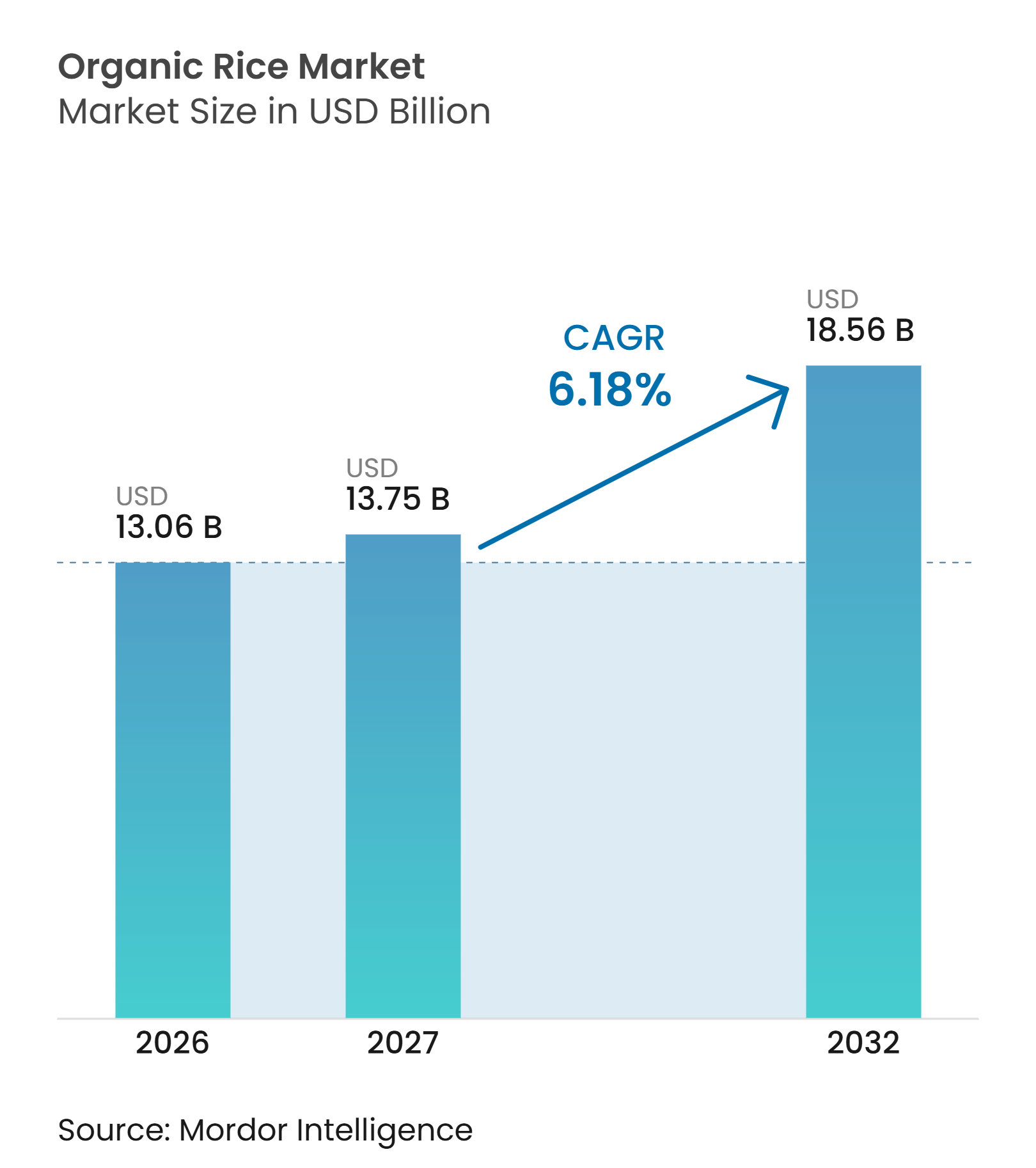
| Market Size (2027) | USD 13.75 Billion |
| Market Size (2032) | USD 18.56 Billion |
| Growth Rate (2027 - 2032) | 6.18 % |
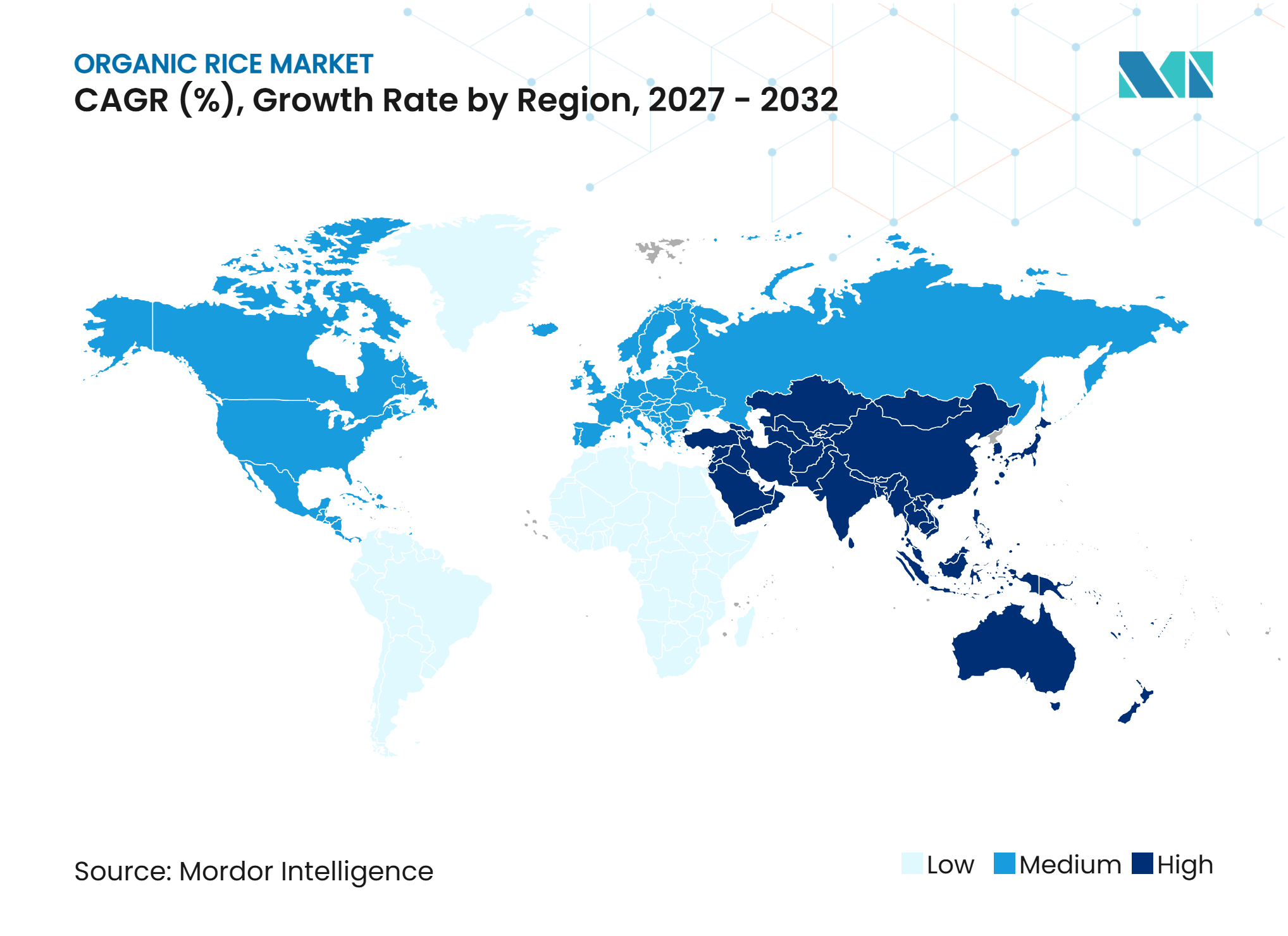
| Fastest Growing Market | Asia-Pacific |
| Largest Market | Asia-Pacific |
| Market Concentration | Medium |
Major Players *Disclaimer: Major Players sorted in no particular order Image © Mordor Intelligence. Reuse requires attribution under CC BY 4.0. | |
Organic Rice Market Analysis by Mordor Intelligence
The organic rice market size is USD 13.06 billion in 2026 and is forecast to reach USD 18.56 billion by 2032, growing at a CAGR of 6.18% during 2027-2032. Demand is expanding as shoppers place more weight on food production methods, residue concerns, and the nutritional profile of staple foods [1]. Public support for farm conversion and export rules is improving the supply base, although certification requirements still favor established producers [2]. The organic rice market also benefits from consumer interest in whole grains and lower-glycemic food choices, which gives brands room to position selected varieties around health needs. Supply remains exposed to lower yields, seasonal availability, and the cost of maintaining credible certification, which limits access for smaller growers. Competition therefore centers on certified sourcing, traceability, branded retail access, and product development rather than price alone
Key Report Takeaways
-
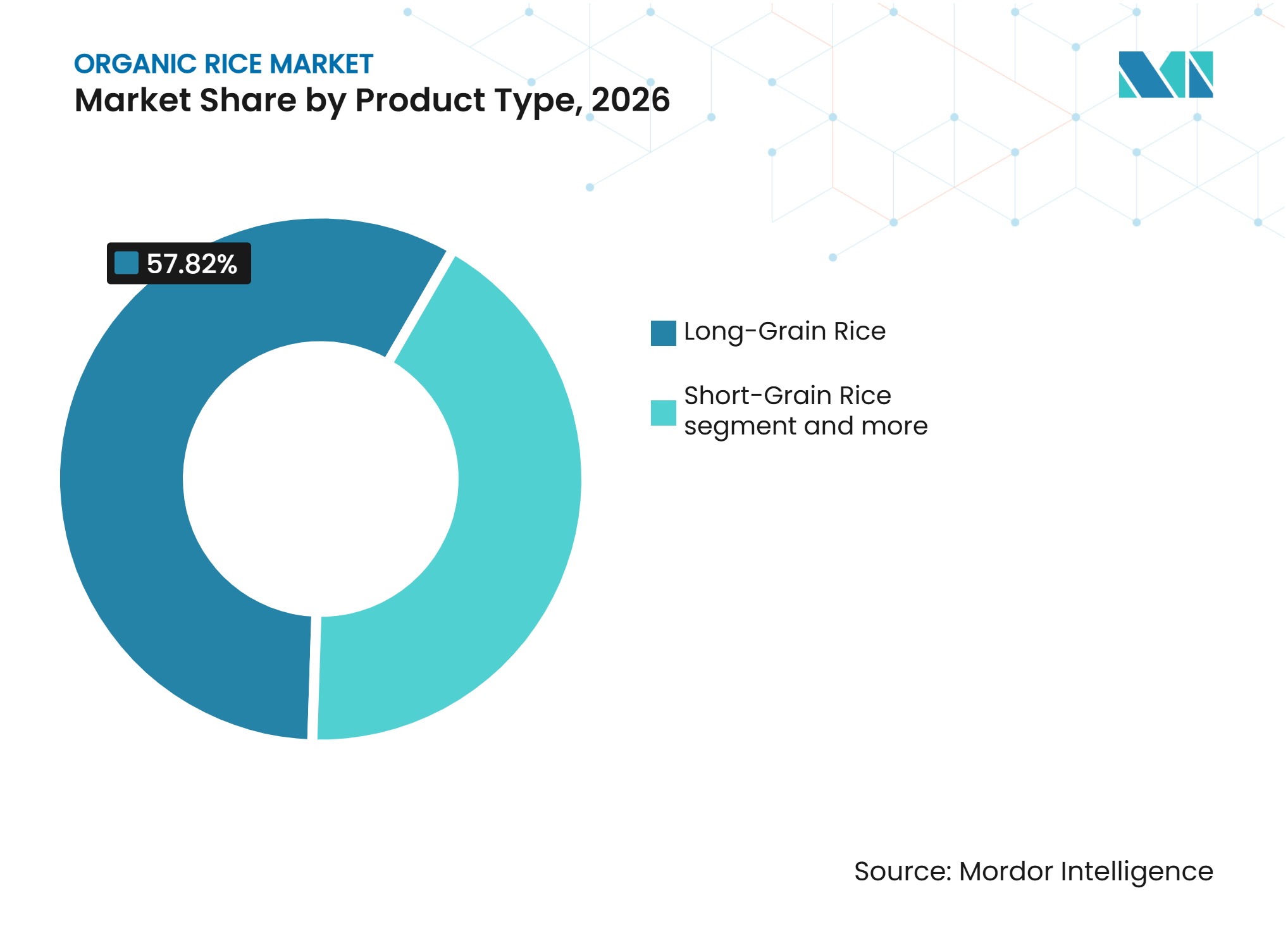
By product type, Long-Grain Rice held 57.82% of the organic rice market share in 2026, while Short-Grain Rice is forecast to grow at a 6.53% CAGR through 2032.
-
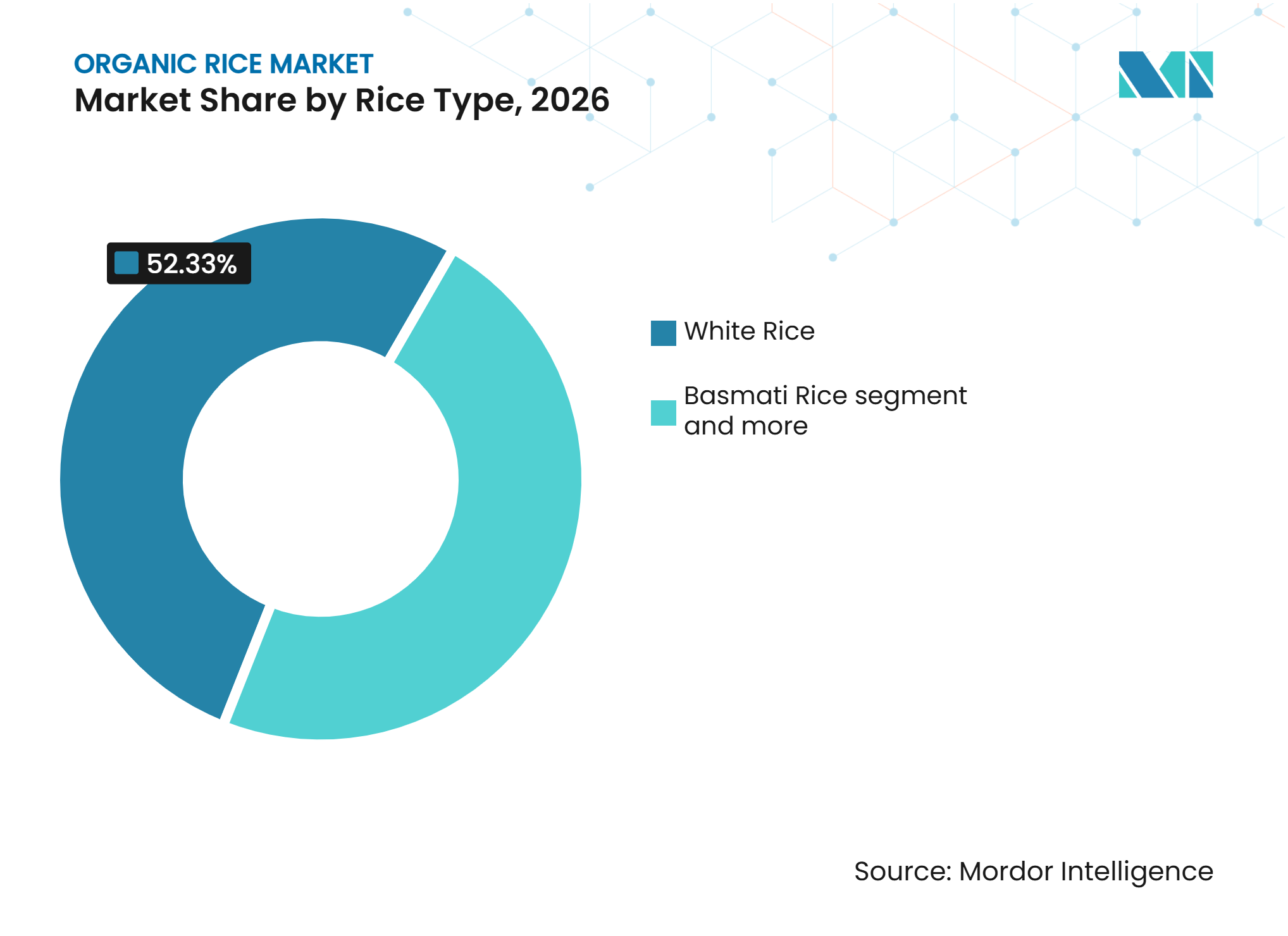
By rice type, White Rice accounted for 52.33% in 2026, while Basmati Rice is forecast to expand at a 6.89% CAGR through 2032.
-
By distribution channel, Off-Trade held 70.04% in 2026, while On-Trade is projected to advance at a 7.21% CAGR through 2032.
-
By geography, Asia-Pacific accounted for 47.21% of the organic rice market share in 2026 and is forecast to grow at a 6.78% CAGR through 2032.
Note: Market numbers in this report are based on Mordor Intelligence's proprietary estimation framework, which combines nine months of actuals with Q4 projections for base year 2026.
Market Trends and Insights
Rising Consumer Preference for Organic Food
Concern about pesticide residues is moving some urban households from occasional purchases to regular organic buying, particularly in Asia and North America. In China, 67.3% of respondents said organic food tastes better, 60.3% regarded it as more nutritious, and 51.1% cited the absence of pesticide residues as a reason to buy, according to BIOFACH China. China recorded CNY 152.2 billion in organic product sales in 2025, a 22% increase from the preceding year, according to the State Administration for Market Regulation (SAMR), China. This demand profile gives the organic rice market a clearer route into mainstream grocery channels in high-income urban areas. It also makes reliable certification and understandable package claims more important because consumers need a simple basis for paying more for a staple food
Growing Demand for Healthy Dietary Alternatives
Health-related food choices are broadening the role of organic rice beyond a narrow food-safety purchase. More than 57% of U.S. consumers chose whole-grain options at least half the time they shopped in the 2025 survey cited by USA Rice, while nearly 72% wanted to eat more whole grains, according to USA Rice. Demand for packaging that clearly identifies whole-grain content rose 10% in 1 year, which supports clearer communication around brown and specialty varieties. Adult obesity rose from 12.1% in 2012 to 15.8% in 2022, keeping dietary quality high on the public-health agenda [3]. The organic rice market can therefore attract households seeking whole-grain, high-fiber, or lower-glycemic options, provided claims are clear and consistent with product characteristics
Growing Government Support for Organic Agriculture
Government programs are increasing the financial support available for conversion, certification, and organic land management. The European Union allocated EUR 19 billion to organic farming through current Common Agricultural Policy Strategic Plans. The region had more than 381,000 organic farmers working nearly 17 million hectares in 2025, showing that support has reached a scale that can affect agricultural supply. India’s Paramparagat Krishi Vikas Yojana provides INR 31,500 per hectare over 3 years for farmers adopting organic methods. South Korea’s 2026-2030 eco-friendly agriculture plan seeks to double certified organic area to 5% of agricultural land, supported by changes to direct-payment coverage. These programs can improve the depth of certified supply available to the organic rice market, although the timing of conversion means their full effects will emerge gradually
Rising International Trade in Organic Rice
Trade arrangements and certification recognition can lower duplication in exporter compliance processes and make overseas sales more practical. Export planning becomes more reliable when buyers and suppliers can use compatible certification records across destination markets. Wider acceptance of organic standards can help farmers connect harvest planning with contractual demand rather than relying on occasional premium orders. It can also support investment in separate storage, processing, and traceability systems that organic supply chains require. The organic rice market gains when exporters can align certification, logistics, and buyer specifications rather than treating each destination as a separate compliance exercise
Restraints Impact Analysis of Organic Rice Market*
| Restraint | (~) % Impact on CAGR Forecast | Geographic Relevance | Impact Timeline |
|---|---|---|---|
| Storage Challenges in Maintaining Organic Rice Quality | -0.4% | Global | Long term (≥ 4 years) |
| Higher Prices Compared to Conventional Rice | -0.6% | Global, with intensity in price-sensitive markets of South and Southeast Asia and Middle East and Africa | Medium term (2-4 years) |
| Complex Organic Certification and Compliance Requirements | -0.4% | Asia-Pacific, South America, Middle East and Africa | Long term (≥ 4 years) |
| Inconsistent Organic Rice Supply Throughout Seasons | -0.3% | Asia-Pacific, South America | Medium term (2-4 years) |
| Source: Mordor Intelligence | |||
Higher Prices Compared to Conventional Rice
The premium charged for organic rice limits regular purchases among households facing tighter food budgets. A 2025 assessment across 9 cities found that organic rice cost 2.5 times conventional rice in Brazil, 1.9 times in the United Kingdom, and 1.8 times in India, according to Frontiersin.org. Lower organic yields, labor-intensive pest management, and recurring audit costs help explain why the difference persists. The premium narrows the organic rice market’s reachable consumer base even where awareness of organic production is high. Brands that reduce distribution costs or sell convenient formats may make repeat purchase more achievable, but they still need to protect farmer returns and certification integrity
Complex Organic Certification and Compliance Requirements
Certification remains difficult when exporters must meet separate rules in each destination market. Regulation (EU) 2018/848 ended the equivalence pathway for most third-country organic imports from January 2025, increasing the need for direct conformity with European Union standards. Smallholders and mid-sized processors can face high administrative and audit costs when multiple frameworks apply to the same shipment. This favors suppliers with established documentation systems and broad market access, while smaller origins may struggle to scale certified exports. In the organic rice market, certification alignment can therefore shape who reaches premium buyers as much as farm output does
*Our forecasts treat driver/restraint impacts as directional, not additive. The impact forecasts reflect baseline growth, mix effects, and variable interactions.
Organic Rice Market Segment Analysis
By Product Type:
Long-Grain Dominance with Short-Grain AcceleratingLong-Grain Rice held 57.82% of category sales in 2026, supported by its position as a widely used staple across major rice-consuming regions. Jasmine, basmati, and North American long-grain white rice fit familiar household cooking practices and established exporter supply chains. This foundation helps long-grain products retain broad retail relevance across Asia-Pacific, the Middle East, and North America, where the grain works in both daily meals and larger food-service formats. Certified cultivation networks in key producing countries also give buyers more dependable options for bulk supply, branded packs, and recurring retail programs. The segment benefits from consumer recognition, which reduces the need to introduce shoppers to a new grain format before communicating its organic credentials.
Short-Grain Rice is forecast to grow at a 6.53% CAGR through 2032 in the organic rice market. Demand is supported by the spread of sushi culture in North America, Europe, and the Middle East, along with interest in Arborio-style products for premium home cooking. Lundberg Family Farms introduced organically bred Arborio and Black Pearl varieties in 2025, and stated that Black Pearl delivered a 25% higher yield per acre after 12 years of breeding work. This work addresses a core supply constraint by improving production performance without moving away from organic production, which can make supply planning easier for specialized buyers. Medium-Grain Rice continues to serve narrower culinary uses, including dishes where texture and starch content guide the purchase decision.



By Rice Type:
White Rice Leads as Basmati Outpaces the CategoryWhite Rice accounted for 52.33% of category sales in 2026, reflecting its convenience, storage characteristics, and place in regular household meals. It remains the default rice format across much of Asia-Pacific, the Middle East, and Latin America. Supermarkets, specialty stores, and online sellers can stock white rice in familiar pack sizes and price points, helping it hold a central role in off-trade sales. Its established use also allows organic brands to focus their communication on farming standards, traceability, and available grades rather than basic meal occasions. This makes White Rice the practical entry point for consumers trying certified rice for the first time.
Basmati Rice is projected to expand at a 6.89% CAGR through 2032, the fastest rate among rice types in the organic rice market. Its aromatic profile and premium origin associations support demand among diaspora consumers in North America, Europe, and Gulf Cooperation Council countries. The variety gives exporters a recognizable product format for premium retail and food-service accounts. Brown Rice is gaining relevance as consumers seek whole-grain choices, and more than 95% of surveyed U.S. consumers had heard of it, while nearly 90% had eaten it, according to USA Rice. Pigmented and specialty varieties remain a smaller part of the portfolio, but they offer brands a route to address interest in distinctive flavors, visual appeal, and functional nutrition.

By Distribution Channel:
Off-Trade Anchors Volume, On-Trade Leads GrowthOff-Trade held 70.04% of category value in 2026, based on the reach of supermarkets, hypermarkets, specialty shops, and online sellers. These channels can move larger volumes, which is important when certified supply must be absorbed consistently and sold before quality declines. They also let consumers compare pack sizes, origin claims, certification marks, and grain varieties before purchasing. Online retail has a useful role for specialty varieties because it can connect smaller brands with buyers outside major physical-store networks. In China, digital retail and direct-to-consumer formats provide a route to reach consumers beyond the most mature urban centers.
On-Trade is forecast to grow at a 7.21% CAGR through 2032, making it the fastest-growing distribution channel in the organic rice market. Restaurants, hotel operators, and institutional caterers can use certified rice to differentiate menus and support sustainability commitments that their guests and clients can see. Their procurement processes often demand lot-level traceability and farm-level documentation, raising the quality threshold for suppliers. This can support broader adoption of transparent sourcing practices across the category and make certification records commercially useful beyond compliance. Food-service buyers also create an opportunity for specialized short-grain, aromatic, and premium varieties that are harder to explain in conventional retail settings.
Geography Analysis
Asia-Pacific
Asia-Pacific accounted for 47.21% of the organic rice market size in 2026 and is projected to record a 6.78% CAGR through 2032. China’s organic crop planting area reached 3.696 million hectares, with a 6% CAGR over 2021-2025, while its organic product sales reached CNY 152.2 billion in 2025, according to the State Administration for Market Regulation. India’s farm-support program (Ministry of Agriculture & Farmers Welfare) helps growers convert to organic cultivation, South Korea’s plan seeks to expand certified land, and Japan had 154 Organic Village municipalities by late 2025. These conditions give the organic rice market a large home base for both cultivation and consumer demand. The region’s combination of consumption, production, and policy support means more supply may be retained for domestic buyers instead of moving into export channels.
Europe
Europe’s organic food demand is shaped by a mature regulatory framework and well-developed premium retail channels, with European Union retail organic sales exceeding EUR 45 billion in 2025. Regulation (EU) 2018/848 has applied a more direct compliance standard to most third-country organic imports since January 2025, making complete documentation and trusted certification more important to importers. Germany, Italy, France, the United Kingdom, and the Netherlands remain important destinations, while Italy supports demand for domestic organic Arborio and imported Asian varieties. The organic rice market must meet European documentation requirements consistently if suppliers want to retain access to high-value retail channels. This makes regulatory readiness a commercial requirement as well as a compliance task.
Regional Diversity Shapes a Multipolar Organic Trade Map
North America remains a major destination for imported organic rice, supported by a U.S. consumer base in which more than 57% chose whole-grain products at least half the time they shopped. South America combines emerging supply potential with urban demand for certified products, although organic rice carried a 2.5 times price multiple over conventional rice in Brazil in the 2025 assessment. Gulf Cooperation Council markets provide an outlet for premium basmati imports, while organic demand across much of sub-Saharan Africa is still at an early stage. This mix makes trade relationships, local purchasing power, and certification acceptance central to geographic expansion in the organic rice market.
Competitive Landscape
Market Concentration
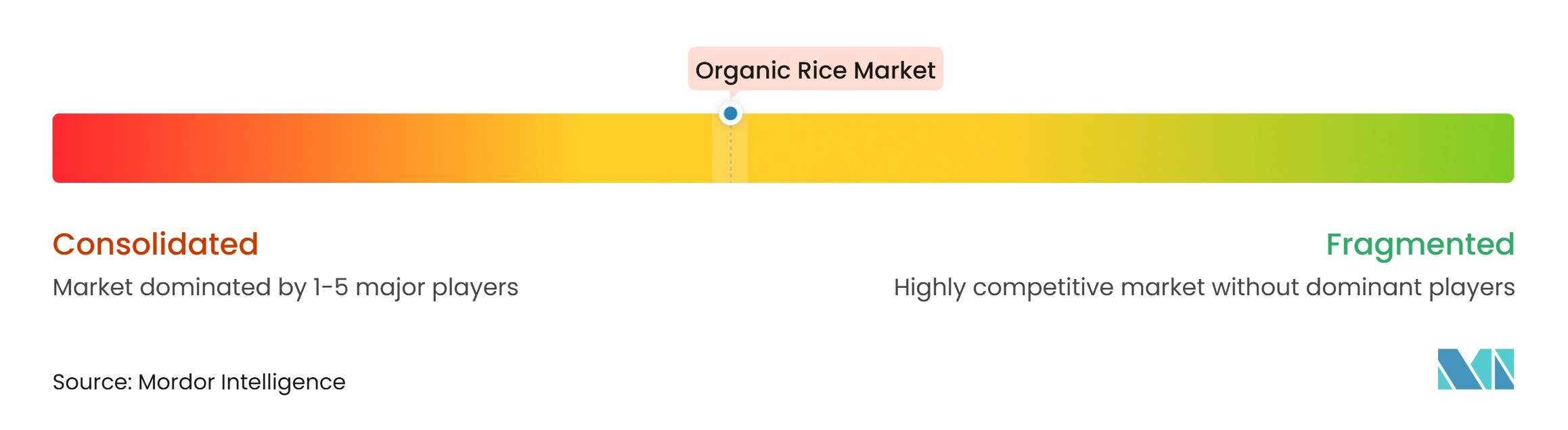
The organic rice market includes established, vertically integrated brands as well as regional and specialty producers globally. Larger suppliers compete through farm-to-retail control, recognizable certification, and access to premium retail channels, while regional producers compete through origin, specialty varieties, and direct relationships with buyers. Certification standards shape retailer acceptance and consumer trust, giving branded suppliers an advantage in handling audit, processing, packaging, inventory control, and customer-facing product documentation. The structure still leaves room for differentiated producers with credible traceability, stable milling partners, and suitable access to export buyers.
Lundberg Family Farms completed the transition of its 19,000 managed acres to Regenerative Organic Certified status in 2026 and reported 14% year-over-year brand growth with 19% growth in packaged rice after the certification. The company also expanded research on organically bred Black Pearl, Red Jasmine, and Arborio varieties, linking product differentiation with production resilience. These actions show how leading suppliers are addressing both market access and product differentiation. They also show that verified farming practices can support brand strategy when they are matched with product development and steady channel execution. This combination raises the operating standard for companies that want to compete in premium branded rice.
The organic rice market offers room for specialization in food service, where traceability and sourcing documentation influence procurement decisions. Short-grain varieties are another opportunity because supply certification remains less established than for widely traded long-grain products. Health-oriented ranges can broaden demand when they are supported by clear product information and credible certifications. Companies also need to manage the tension between premium positioning and the price barrier that limits wider adoption. In the organic rice market, brands must also balance variety availability with consistent grain quality across seasons, while keeping product specifications, pack information, and certification details clear for retailers, food-service buyers, and consumers who compare premium options. Supply agreements and dependable quality remain important because premium retailers need predictable replenishment, verified claims, and enough range to serve recurring shoppers.
Organic Rice Industry Leaders
-
KRBL Limited
-
LT Foods Limited
-
Ebro Foods, S.A.
-
Lundberg Family Farms
-
Gulf Pacific Rice Milling
- *Disclaimer: Major Players sorted in no particular order
Organic Rice Market Companies Covered in this Report
- Sponge Enterprises Private Limited
- KRBL Limited
- LT Foods Limited
- Ebro Foods, S.A.
- Lundberg Family Farms
- Doguet's Rice Milling Company
- Gulf Pacific Rice Milling
- Berglund Natural Foods
- Sage V Foods
- Sun Valley Rice Company
- Farmers Rice Milling Company
- Nature Bio Foods
- Excel Rice & Products Co., Ltd.
- Lotus Rice Co., Ltd.
- Riseria Provera
- WBT (Well Being Trade)
- Agricola Lodigiana S.r.l.
- Raitong Organics Farm Co., Ltd.
- Urmatt Ltd.
- Plai Organic Farm Co., Ltd.
Recent Industry Developments in Organic Rice Market
- March 2026: Lundberg Family Farms completed the full transition of its 19,000-acre organic estate to Regenerative Organic Certified (ROC) status, beating its stated 2027 target. The brand delivered 14% YoY overall growth and 19% growth in packaged rice since ROC products launched in April 2024. Ready-to-heat rice expanded 107% in the natural channel at no price increase
- January 2026: LT Foods launched the DAAWAT I’m Organic range in India, introducing organic basmati rice and organic Sona Masoori rice. The products feature QR-code-based traceability covering cultivation locations, land testing, certification, processing and packaging. The range is supported by USDA Organic, India Organic, OneCert and other certifications and is available through e-commerce and quick-commerce platforms.
- January 2026: Farmers Rice Milling Company introduced Magnolia Farms, a new USDA-certified organic rice brand featuring two organic rice varieties. The launch marked the company's expansion from bulk exports and co-packing into branded retail products. The range initially entered Rouses Markets stores across Louisiana, Mississippi and Alabama, with plans for further retail distribution.
Global Organic Rice Market Report Scope
The organic rice market comprises rice produced using certified organic farming practices without synthetic pesticides, chemical fertilizers, or genetically modified seeds. The organic rice report is segmented by product type (short-grain rice, medium-grain rice, and long-grain rice), rice type (white rice, brown rice, and basmati rice), distribution channel (on-trade and off-trade), and geography (North America, Europe, Asia-Pacific, South America, and the Middle East and Africa). The market forecasts are provided in terms of value (USD).
Segmentation Overview
| Short-Grain Rice |
| Medium-Grain Rice |
| Long-Grain Rice |
| White Rice |
| Brown Rice |
| Basmati Rice |
| Other Rice Type |
| On-Trade | |
| Off-Trade | Supermarkets and Hypermarkets |
| Convenience/Grocery Stores | |
| Specialty Stores | |
| Online Retail Stores | |
| Other Distribution Channels |
| North America | United States |
| Canada | |
| Mexico | |
| Rest of North America | |
| Europe | Germany |
| United Kingdom | |
| Italy | |
| France | |
| Spain | |
| Netherlands | |
| Poland | |
| Belgium | |
| Sweden | |
| Rest of Europe | |
| Asia-Pacific | China |
| India | |
| Japan | |
| Australia | |
| Indonesia | |
| South Korea | |
| Thailand | |
| Singapore | |
| Rest of Asia-Pacific | |
| South America | Brazil |
| Argentina | |
| Colombia | |
| Chile | |
| Peru | |
| Rest of South America | |
| Middle East and Africa | South Africa |
| Saudi Arabia | |
| United Arab Emirates | |
| Nigeria | |
| Egypt | |
| Morocco | |
| Turkey | |
| Rest of Middle East and Africa |
| By Product Type | Short-Grain Rice | |
| Medium-Grain Rice | ||
| Long-Grain Rice | ||
| By Rice Type | White Rice | |
| Brown Rice | ||
| Basmati Rice | ||
| Other Rice Type | ||
| By Distribution Channel | On-Trade | |
| Off-Trade | Supermarkets and Hypermarkets | |
| Convenience/Grocery Stores | ||
| Specialty Stores | ||
| Online Retail Stores | ||
| Other Distribution Channels | ||
| By Geography | North America | United States |
| Canada | ||
| Mexico | ||
| Rest of North America | ||
| Europe | Germany | |
| United Kingdom | ||
| Italy | ||
| France | ||
| Spain | ||
| Netherlands | ||
| Poland | ||
| Belgium | ||
| Sweden | ||
| Rest of Europe | ||
| Asia-Pacific | China | |
| India | ||
| Japan | ||
| Australia | ||
| Indonesia | ||
| South Korea | ||
| Thailand | ||
| Singapore | ||
| Rest of Asia-Pacific | ||
| South America | Brazil | |
| Argentina | ||
| Colombia | ||
| Chile | ||
| Peru | ||
| Rest of South America | ||
| Middle East and Africa | South Africa | |
| Saudi Arabia | ||
| United Arab Emirates | ||
| Nigeria | ||
| Egypt | ||
| Morocco | ||
| Turkey | ||
| Rest of Middle East and Africa | ||
Key Questions Answered in the Report
What is the forecast growth rate for organic rice?
The organic rice market is forecast to grow at a CAGR of 6.18% during 2027-2032 and reach USD 18.56 billion by 2032
Which product type leads organic rice sales?
Long-Grain Rice leads with 57.82% share in 2026, supported by its widespread use as a staple food
Which rice type is growing the fastest?
Basmati Rice is forecast to grow at a 6.89% CAGR through 2032, supported by demand for premium aromatic varieties
Which sales channel is expanding fastest?
On-Trade is projected to grow at a 7.21% CAGR through 2032 as restaurants and hotels seek certified, traceable sourcing