
Orange Juice Market Size and Share
Market Overview
| Study Period | 2022 - 2032 |
|---|---|
| Market Size (2027) | USD 43.98 Billion |
| Market Size (2032) | USD 53.82 Billion |
| Growth Rate (2027 - 2032) | 4.12 % |
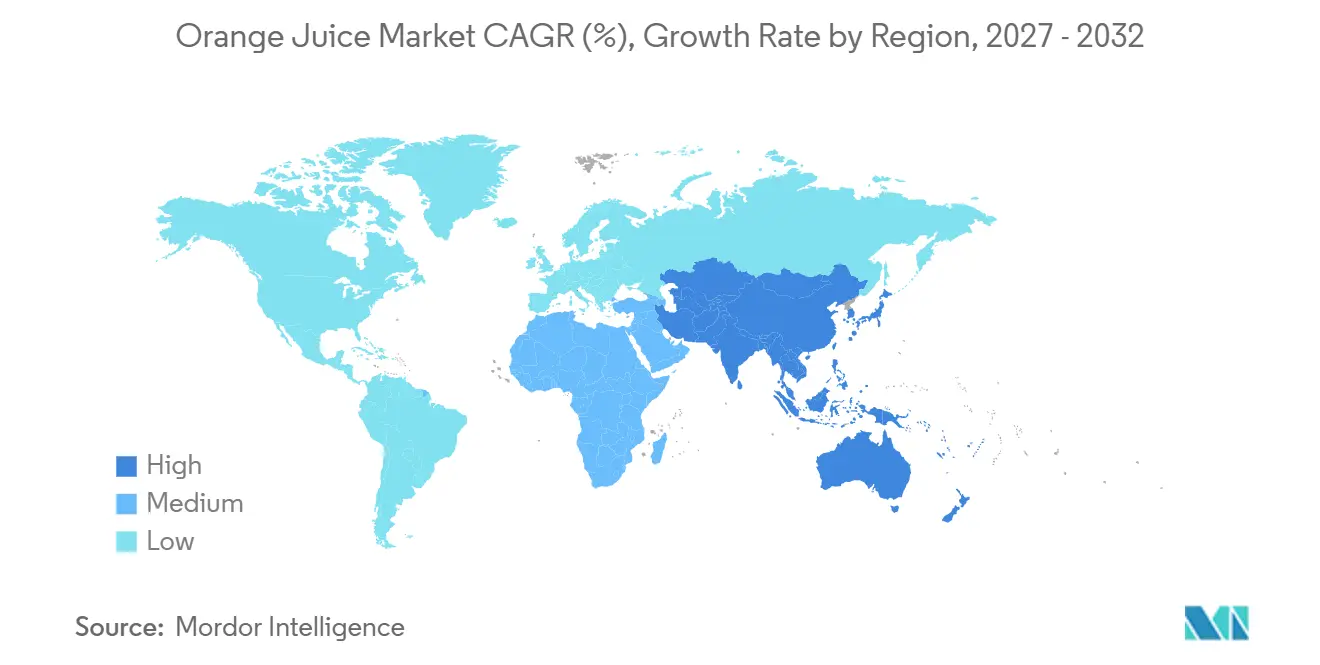
| Fastest Growing Market | Asia-Pacific |
| Largest Market | North America |
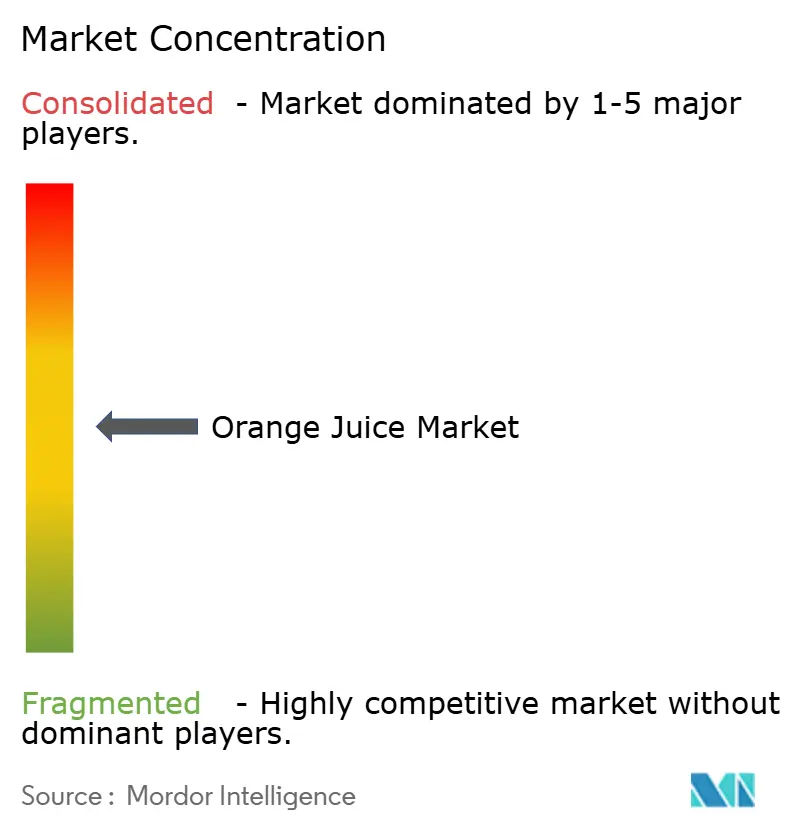
| Market Concentration | Medium |
Major Players *Disclaimer: Major Players sorted in no particular order Image © Mordor Intelligence. Reuse requires attribution under CC BY 4.0. | |
Orange Juice Market Analysis by Mordor Intelligence
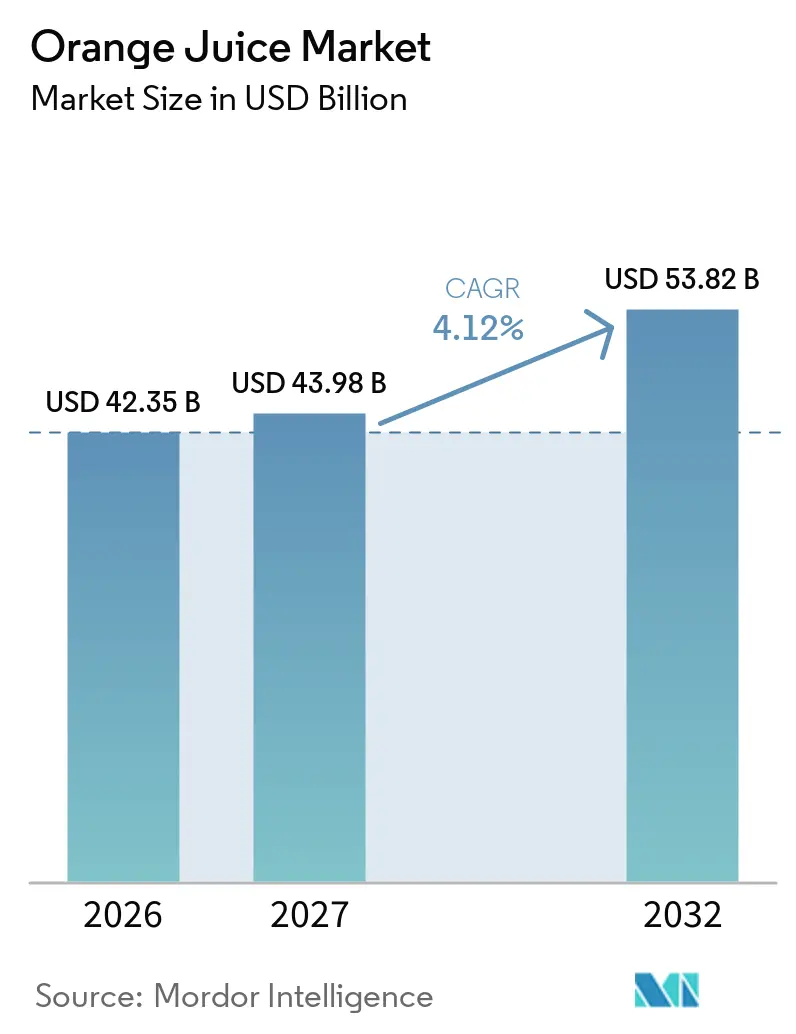
The orange juice market size is expected to grow from USD 42.35 billion in 2026 to USD 43.98 billion in 2027 and is forecast to reach USD 53.82 billion by 2032 at 4.12% CAGR over 2027-2032. The orange juice market is moving toward higher-value products as households balance price concerns with demand for recognizable ingredients and nutritional value. Better supply conditions in Brazil support availability, while disease exposure in major growing areas keeps supply planning central to the category. Premium not-from-concentrate products, functional formulations, and shelf-stable packs give suppliers several ways to serve different buying occasions. The orange juice market also benefits when foodservice operators and retailers offer more convenient formats, although retail price pressure still limits volume in mature countries.
Key Report Takeaways
- By product type, juice drinks with up to 24% juice held a 48.39% share of the orange juice market in 2026, while 100% juice is forecast at a CAGR of 6.15% over 2027-2032.
- By nature, conventional orange juice held a 86.15% of the orange juice market share in 2026, while organic orange juice is forecast to grow at a CAGR of 6.41% over 2027-2032.
- By packaging type, PET bottles held a 39.11% of the orange juice market in 2026, while aseptic packages are forecast to grow at a CAGR of 5.74% over 2027-2032.
- By distribution channel, off-trade held a 79.22% of the orange juice market in 2026, while on-trade is forecast to grow at a CAGR of 5.95% over 2027-2032.
- By geography, North America held a 37.96% of the orange juice market in 2026, while Asia-Pacific is forecast to grow at a CAGR of 6.57% over 2027-2032.
Note: Market numbers in this report are based on Mordor Intelligence's proprietary estimation framework, which combines nine months of actuals with Q4 projections for base year 2026.
Market Trends and Insights
Drivers Impact Analysis of Orange Juice Market*
| Driver | (~) % Impact on CAGR Forecast | Geographic Relevance | Impact Timeline |
|---|---|---|---|
| Advancements in citrus processing technology and yield optimization | +0.7% | Global, concentrated in Brazil and Florida production hubs | Medium term (2-4 years) |
| Increasing demand for healthier beverages and 100% fruit juice | +0.6% | North America and Europe | Short term (≤ 2 years) |
| Growing consumer preference for premium not-from-Concentrate orange juice | +0.5% | Asia-Pacific core, with spillover to the Middle East and Africa | Medium term (2-4 years) |
| Convenient formats and foodservice expansion | +0.8% | Global | Long term (≥ 4 years) |
| Expanding orange juice consumption through foodservice and hospitality channels | +0.6% | North America, Europe, and Asia-Pacific tier-1 cities | Medium term (2-4 years) |
| Increasing adoption of orange juice in blended beverages, smoothies, and functional drink formulations | +0.4% | North America and Europe, with emerging traction in Asia-Pacific | Medium term (2-4 years) |
| Source: Mordor Intelligence | |||
Advancements in Citrus Processing Technology and Yield Optimization
Technological improvements in citrus processing are enabling manufacturers to improve extraction efficiency, maximise juice recovery, and maintain consistent product quality. Automated fruit sorting, precision extraction systems, and advanced filtration and concentration technologies help reduce processing losses and improve operational productivity. According to the Food and Agriculture Organization (FAO), modern citrus extraction systems using the whole-fruit extraction principle account for more than 75% of global citrus juice production[1]. These technologies also facilitate the recovery of valuable by-products, including citrus oils and peel-derived ingredients, supporting resource efficiency. Improvements in processing and yield optimisation help manufacturers manage raw material costs, strengthen supply reliability, and meet growing demand for orange juice products.
Increasing Demand for Healthier Beverages and 100% Fruit Juice
Growing consumer interest in healthier beverage options is supporting demand for 100% orange juice, particularly products without added sugars, artificial colours, or preservatives. Consumers increasingly seek beverages that provide essential nutrients, including vitamin C, potassium, and other bioactive compounds. According to the World Health Organization (WHO), adults and children over 10 years should consume at least 400 grams of fruits and vegetables daily, highlighting the importance of fruit consumption in balanced diets[2]. Although whole fruits remain preferable for dietary fibre, 100% orange juice offers a convenient source of selected nutrients. Manufacturers are responding through clean-label formulations, premium juice variants, and transparent ingredient labelling, supporting product differentiation and market growth.
Growing Consumer Preference for Premium not-from-Concentrate Orange Juice
Growing consumer preference for premium, minimally processed beverages is supporting demand for not-from-concentrate (NFC) orange juice, which retains its natural juice strength without undergoing concentration and reconstitution. Consumers often associate NFC products with fresher taste, higher quality, and fewer processing steps, creating opportunities for premium product positioning. According to a University of Florida study published in 2026, NFC orange juice accounted for approximately 63% of total U.S. orange juice grocery-store volume sales in the 2023/24 season, highlighting its strong market position[3]. Manufacturers are expanding chilled juice ranges and premium offerings to capitalise on these preferences. However, higher production, packaging, and transportation costs can result in premium retail prices, potentially limiting adoption among price-sensitive consumers.
Expanding Orange Juice Consumption Through Foodservice and Hospitality Channels
The expansion of foodservice and hospitality establishments is creating additional demand for orange juice across hotels, restaurants, cafés, catering services, and quick-service restaurants. Orange juice is widely offered as a breakfast beverage, refreshment option, and ingredient in mocktails and blended drinks. The recovery of tourism and growth in hotel occupancy are further supporting beverage consumption across hospitality settings. Foodservice operators are increasingly sourcing packaged, chilled, and ready-to-serve orange juice to improve serving efficiency and ensure consistent quality. The availability of bulk packaging and frozen orange juice concentrates also helps businesses manage costs and streamline beverage preparation.
Restraints Impact Analysis of Orange Juice Market*
| Restraint | (~) % Impact on CAGR Forecast | Geographic Relevance | Impact Timeline |
|---|---|---|---|
| Citrus greening disease and agricultural supply volatility | -0.9% | Global, concentrated in Brazil and Florida | Long term (≥ 4 years) |
| Competition from alternative beverages and other fruit juices | -0.7% | North America and Europe | Medium term (2-4 years) |
| High refrigeration, storage and distribution costs for chilled orange juice | -0.4% | Asia-Pacific emerging markets, Middle East and Africa, and South America | Medium term (2-4 years) |
| Volatility in orange prices and rising raw material procurement costs | -0.5% | Global | Short term (≤ 2 years) |
| Source: Mordor Intelligence | |||
Citrus Greening Disease and Agricultural Supply Volatility
Citrus greening disease, also known as Huanglongbing (HLB), poses a significant challenge to orange juice production by reducing fruit quality, lowering yields, and weakening citrus trees. The disease has affected orange-growing regions, particularly in major producing countries such as Brazil and the United States, contributing to uncertainty in orange availability. Infected trees may produce smaller, misshapen, and bitter fruit, reducing the volume of oranges suitable for juice processing. In addition, adverse weather conditions, droughts, and fluctuating agricultural input costs can further disrupt citrus production and harvesting schedules. These factors contribute to volatility in orange prices and increase procurement costs for juice manufacturers. Supply shortages can also constrain processing capacity, disrupt production planning, and place upward pressure on orange juice prices.
Competition from Alternative Beverages and Other Fruit Juices
The orange juice market faces competition from alternative beverages, including apple juice, mixed fruit juices, smoothies, functional drinks, and plant-based beverages. Consumers seeking variety, lower-sugar options, or additional functional benefits may shift toward these alternatives, limiting demand for orange juice. Other fruit juices can also attract price-sensitive consumers when they are available at lower prices or offered through promotional discounts. In addition, growing awareness of the natural sugar content of fruit juices may encourage some consumers to choose water, low-calorie beverages, or reduced-sugar drinks. Product innovation and aggressive marketing by competing beverage manufacturers further intensify competition across retail and foodservice channels.
*Our forecasts treat driver/restraint impacts as directional, not additive. The impact forecasts reflect baseline growth, mix effects, and variable interactions.
Orange Juice Market Segment Analysis
By Product Type:
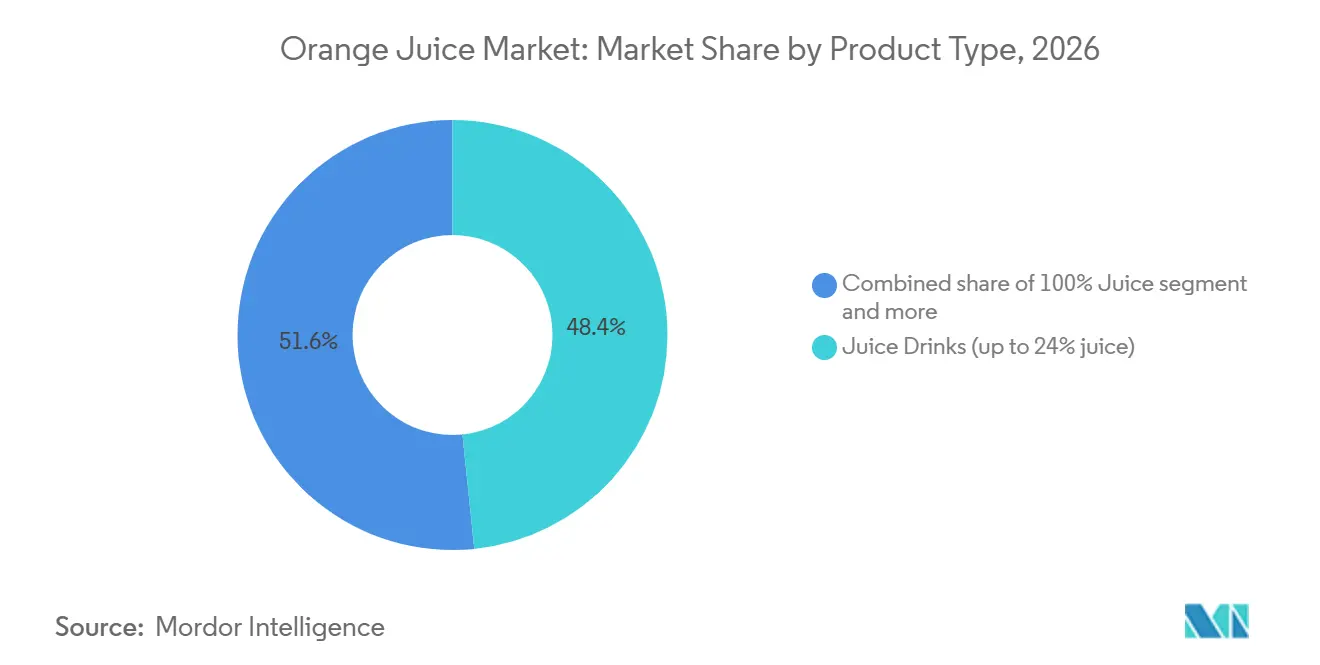
Pure Juice Leads Value-Led GrowthJuice drinks with up to 24% juice accounted for 48.39% of the orange juice market in 2026. Their position is supported by lower prices amid elevated fruit and retail costs, helping retain price-sensitive consumers. Established distribution through supermarkets, convenience stores, and foodservice channels further supports demand. Concentrates offer easier distribution, while nectars remain relevant in parts of Europe, the Middle East and Africa. These affordable formats help sustain orange juice market volumes when premium products become less accessible.
The 100% juice segment is the fastest-growing segment, with a forecast CAGR of 6.15% over 2027-2032. Growth is supported by demand for higher juice content, simple ingredients, and added nutritional benefits. Not-from-concentrate (NFC) juices help brands emphasize freshness and quality, while functional formulations expand consumption beyond breakfast. These offerings help brands appeal to health-conscious consumers, differentiate their products, and remain competitive with alternative beverages in the orange juice market.

By Nature:
Conventional Supply Remains CentralConventional orange juice accounted for 86.15% of the orange juice market share in 2026. Conventional orange juice maintains its leading position due to broad retail distribution, established supply chains, and competitive pricing. Its capacity to meet high-volume demand from supermarkets and foodservice operators ensures consistent availability across developed and emerging markets. Well-established sourcing, processing, and logistics networks further strengthen the segment, positioning conventional products as the primary volume driver in the orange juice market.
The organic orange juice segment is the fastest-growing segment, with a forecast CAGR of 6.41% over 2027-2032. The organic segment benefits from growing demand for premium quality and transparent production practices. Wider availability through premium grocers, natural retailers, and online platforms is expanding consumer access. Growing interest in organic products across North America and Europe creates further opportunities for brands, while improved sourcing and distribution networks can support wider adoption and long-term growth in the orange juice market.
By Packaging Type:
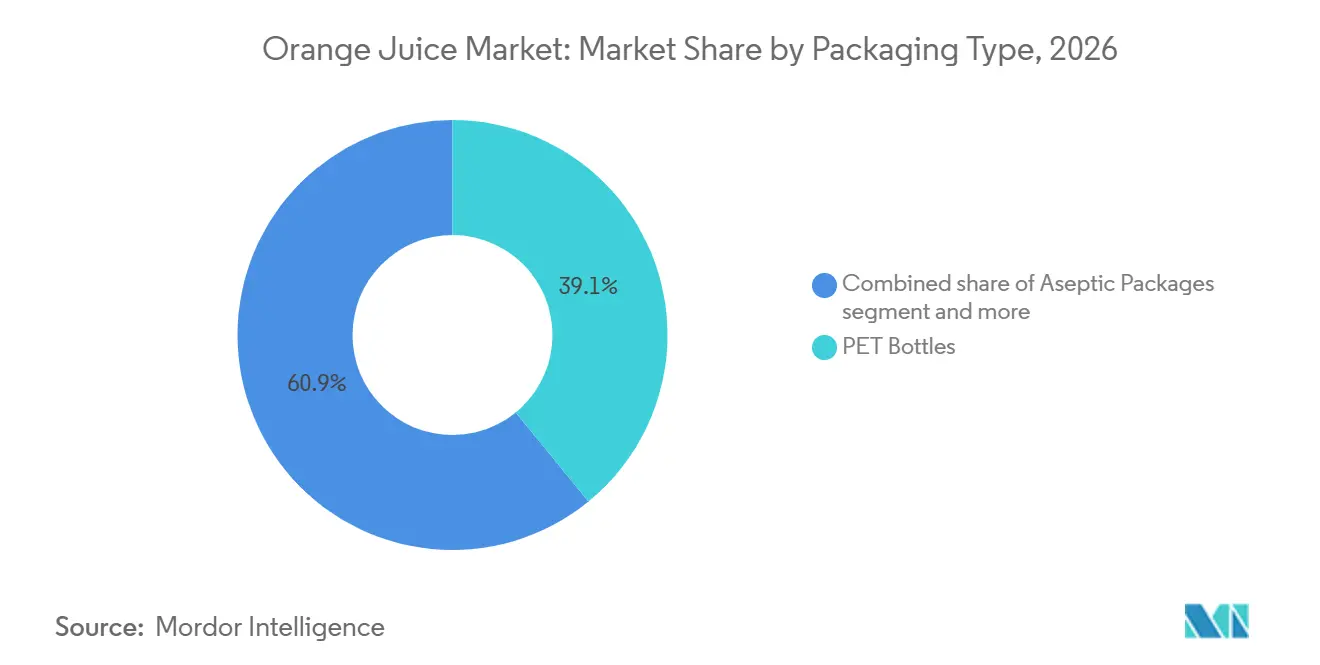
Shelf-Stable Cartons Gain ImportancePET bottles accounted for 39.11% of the orange juice market in 2026. PET bottles maintain a strong position due to their widespread use across ambient and refrigerated retail channels, particularly in North America and Europe. Their availability across different price points, lightweight design, and suitability for standard household pack sizes support consumer convenience. Established retail infrastructure and consumer familiarity further strengthen their shelf presence, making PET bottles an important packaging format in the orange juice market.
The aseptic packages segment is the fastest-growing segment, with a forecast CAGR of 5.74% over 2027-2032. Aseptic cartons support market expansion by offering long shelf life and reducing reliance on cold-chain distribution, making them suitable for emerging markets and rural areas. Single-serve packs also cater to hotels, airlines, schools, and convenience-focused consumers. Meanwhile, glass bottles serve the premium segment, while cans and pouches address specific convenience needs. Growing attention to sustainable packaging further encourages manufacturers to improve packaging solutions and distribution efficiency in the orange juice market.
By Distribution Channel:
Foodservice Supports Premium OccasionsOff-trade accounted for 79.22% of the orange juice market in 2026. Supermarkets and hypermarkets lead distribution due to their wide product assortments and strong reach among household consumers. They allow shoppers to compare conventional, organic, concentrate, and premium not-from-concentrate products in one place. Convenience stores support single-serve purchases, while online retail expands access to premium and organic juices through convenient ordering and repeat purchases. Together, these channels strengthen the orange juice market’s retail reach and accessibility.
The on-trade segment is the fastest-growing segment, with a forecast CAGR of 5.95% over 2027-2032. Hotel breakfast menus, quick-service restaurants, and airline catering are expanding orange juice consumption beyond households. Growing hospitality activity, particularly in the Asia-Pacific region, creates opportunities for premium and not-from-concentrate (NFC) products. Larger cartons suit institutional needs, while single-serve packs support travel and convenience-focused settings. These channels help producers reach new customers, expand sales of value-added products, and diversify beyond traditional retail formats.
Geography Analysis
North America Orange Juice Market
North America accounted for 37.96% of the global orange juice market in 2026, supported by established consumption patterns and a well-developed retail distribution network. The region benefits from widespread availability of packaged orange juice across supermarkets, convenience stores, and online channels. Consumer demand for convenient breakfast beverages and fruit-based drinks contributes to market development. Manufacturers are expanding their offerings through premium, organic, and not-from-concentrate products. However, concerns regarding sugar content and fluctuations in orange prices may influence purchasing patterns.
APAC Orange Juice Market
Asia-Pacific is projected to record a CAGR of 6.57% through 2032, making it a key growth region for the orange juice market. Rising disposable incomes, rapid urbanisation, and changing dietary preferences are supporting demand for packaged fruit beverages. The expansion of supermarkets, convenience stores, and e-commerce platforms is improving product accessibility. Growing interest in convenient, ready-to-drink beverages is creating opportunities for manufacturers. Product innovation, diverse pack sizes, and affordable offerings are expected to support market penetration across emerging economies.
EMEA and South America Orange Juice Market
Europe represents an established market, supported by consumer demand for fruit-based beverages and premium juice products. South America benefits from its strong citrus production base, particularly in Brazil, which supports orange juice processing and export activities. However, climatic variability and citrus disease can affect regional production and supply. In the Middle East and Africa, urbanisation, expanding modern retail infrastructure, and rising demand for convenient packaged beverages are creating growth opportunities. Across these regions, product affordability, changing consumer preferences, and supply-chain conditions will influence market development through the forecast period.
Competitive Landscape
The orange juice market is characterized by medium level of concentration, with established processors maintaining strong positions through robust citrus sourcing capabilities, extensive processing infrastructure, recognized brands, and well-developed international distribution networks. These companies benefit from economies of scale, established relationships with citrus growers, and broad retail presence across key markets. Competition remains active, as larger players compete with smaller organic and cold-pressed producers through product differentiation, premium positioning, product innovation, and packaging solutions. Smaller producers increasingly target health-conscious consumers by emphasizing natural ingredients, minimal processing, organic certifications, and premium product attributes, while larger companies expand their portfolios to address evolving consumer preferences.
The Coca-Cola Company and Tropicana Brands Group compete in the orange juice market through strong brand recognition, established chilled distribution networks, and continuous product and marketing innovation. Leading orange juice brands are increasingly broadening their positioning beyond traditional breakfast consumption through targeted marketing and product innovation. Recent campaigns have sought to strengthen engagement with younger consumers across digital, social, audio,and retail channels while creating greater relevance for juice in everyday occasions. The introduction of functional and hydration-oriented juice products further demonstrates the shift toward beverages that address evolving wellness and lifestyle preferences.
Smaller organic and cold-pressed producers are strengthening their competitive positions through certification, ingredient transparency, processing quality and premium product attributes that appeal to health-conscious consumers and specialty retailers. Packaging innovation is also becoming increasingly important as advances in barrier performance, shelf life, material efficiency and recyclability enhance distribution capabilities and support compliance with evolving regulations. Paper-based barrier packs and aluminum-free aseptic cartons provide beverage manufacturers with additional packaging options while supporting sustainability objectives. Regional players can further differentiate themselves through strong local brands, established distribution networks and frequent product innovation tailored to regional consumer preferences.
Orange Juice Industry Leaders
-
The Coca-Cola Company
-
Tropicana Brands Group
-
Cutrale Group
-
Citrosuco S.A.
-
Louis Dreyfus Company B.V.
- *Disclaimer: Major Players sorted in no particular order
Orange Juice Market Companies Covered in this Report
- The Coca-Cola Company
- Tropicana Brands Group
- Cutrale Group
- Citrosuco S.A.
- Louis Dreyfus Company B.V.
- Lassonde Industries Inc.
- Eckes-Granini Group GmbH
- Britvic Limited
- Florida's Natural Growers, Inc.
- Princes Group plc
- Bega Cheese Limited
- Wm. Bolthouse Farms, Inc.
- Evolution Fresh, LLC
- Naked Juice Co. of Glendora, Inc.
- Welch's
- Lakewood Organic
- DM2
- Orange Bowl
- SUNTOP
- Sumo Brasil
Recent Industry Developments in Orange Juice Market
- June 2026: Tropicana Brands Group launched “Give Life Some Juice,” a masterbrand campaign that extended across connected television, digital video, Spotify, Meta, TikTok and NBCU integrations.
- May 2026: AUSTRIA JUICE launched a fermentation technology that reduces sugar and calories in 100% fruit juice including orange juice concentrates, by at least 30%.
- March 2026: Unifrutti Group in partnership with Sam's Club China launched a premium NFC blood orange juice made from 100% Sicilian blood oranges. The company positioned the product around its distinctive flavor, natural ingredients, vitamin C content, antioxidants and wellness attributes.
- March 2025: BlueTree Technologies and Priniv launched a reduced-sugar orange juice in Israel that uses proprietary sugar-reduction technology to remove naturally occurring sugars while maintaining the juice's taste, texture, vitamins and minerals.
Global Orange Juice Market Report Scope
The market is segmented by product type, nature, packaging type., distribution channel and geography. Based on product type, the market is segmented into 100% juice, juice drinks with up to 24% juice, juice concentrates and nectars. By nature the market is segmented into conventional and organic orange juice. By packaging type, the market is segmented into PET bottles, aseptic packages, glass bottles, metal cans, disposable cups and pouches. Distribution is analyzed across off-trade and on-trade channels covering retail and foodservice consumption. By geography, the market is segmented into North America, Europe, Asia-Pacific, South America, and Middle-East and Africa. For each segment, the market sizing and forecasting have been done in value terms (USD billion).
Segmentation Overview
| 100% Juice |
| Juice Drinks (up To 24% Juice) |
| Juice Concentrates |
| Nectars |
| Conventional Orange Juice |
| Organic Orange Juice |
| PET Bottles |
| Aseptic Packages |
| Glass Bottles |
| Metal Can |
| Disposable Cups |
| Pouches |
| Off-Trade | Supermarkets/Hypermarkets |
| Convenience Stores | |
| Online Retail Stores | |
| Other Distribution Channels | |
| On-Trade |
| North America | United States |
| Canada | |
| Mexico | |
| Rest of North America | |
| Europe | Germany |
| United Kingdom | |
| Italy | |
| France | |
| Spain | |
| Netherlands | |
| Poland | |
| Belgium | |
| Sweden | |
| Rest of Europe | |
| Asia-Pacific | China |
| India | |
| Japan | |
| Australia | |
| Indonesia | |
| South Korea | |
| Thailand | |
| Singapore | |
| Rest of Asia-Pacific | |
| South America | Brazil |
| Argentina | |
| Colombia | |
| Chile | |
| Peru | |
| Rest of South America | |
| Middle East and Africa | South Africa |
| Saudi Arabia | |
| United Arab Emirates | |
| Nigeria | |
| Egypt | |
| Morocco | |
| Turjey | |
| Rest of Middle Africa and Africa |
| By Product Type | 100% Juice | |
| Juice Drinks (up To 24% Juice) | ||
| Juice Concentrates | ||
| Nectars | ||
| By Nature | Conventional Orange Juice | |
| Organic Orange Juice | ||
| By Packaging Type | PET Bottles | |
| Aseptic Packages | ||
| Glass Bottles | ||
| Metal Can | ||
| Disposable Cups | ||
| Pouches | ||
| By Distribution Channel | Off-Trade | Supermarkets/Hypermarkets |
| Convenience Stores | ||
| Online Retail Stores | ||
| Other Distribution Channels | ||
| On-Trade | ||
| By Geography | North America | United States |
| Canada | ||
| Mexico | ||
| Rest of North America | ||
| Europe | Germany | |
| United Kingdom | ||
| Italy | ||
| France | ||
| Spain | ||
| Netherlands | ||
| Poland | ||
| Belgium | ||
| Sweden | ||
| Rest of Europe | ||
| Asia-Pacific | China | |
| India | ||
| Japan | ||
| Australia | ||
| Indonesia | ||
| South Korea | ||
| Thailand | ||
| Singapore | ||
| Rest of Asia-Pacific | ||
| South America | Brazil | |
| Argentina | ||
| Colombia | ||
| Chile | ||
| Peru | ||
| Rest of South America | ||
| Middle East and Africa | South Africa | |
| Saudi Arabia | ||
| United Arab Emirates | ||
| Nigeria | ||
| Egypt | ||
| Morocco | ||
| Turjey | ||
| Rest of Middle Africa and Africa | ||
Key Questions Answered in the Report
What is the projected value of the orange juice market by 2032?
The orange juice market is projected to reach USD 53.82 billion by 2032.
Which orange juice product is expected to grow the fastest?
100% juice is forecast to grow at a 6.15% CAGR through 2032, ahead of the overall category.
What is the CAGR for the orange juice market through 2032?
The orange juice market is forecasted to grow at a 4.12% CAGR through 2032.
Which region is forecast to grow fastest for orange juice?
Asia-Pacific is forecast to grow at a 6.57% CAGR through 2032 supported by imports, modern retail and e-commerce