
Oat-Based Beverages Market Size and Share
Market Overview
| Study Period | 2021 - 2031 |
|---|---|
| Market Size (2026) | USD 2.05 Billion |
| Market Size (2031) | USD 4.01 Billion |
| Growth Rate (2026 - 2031) | 8.01 % |
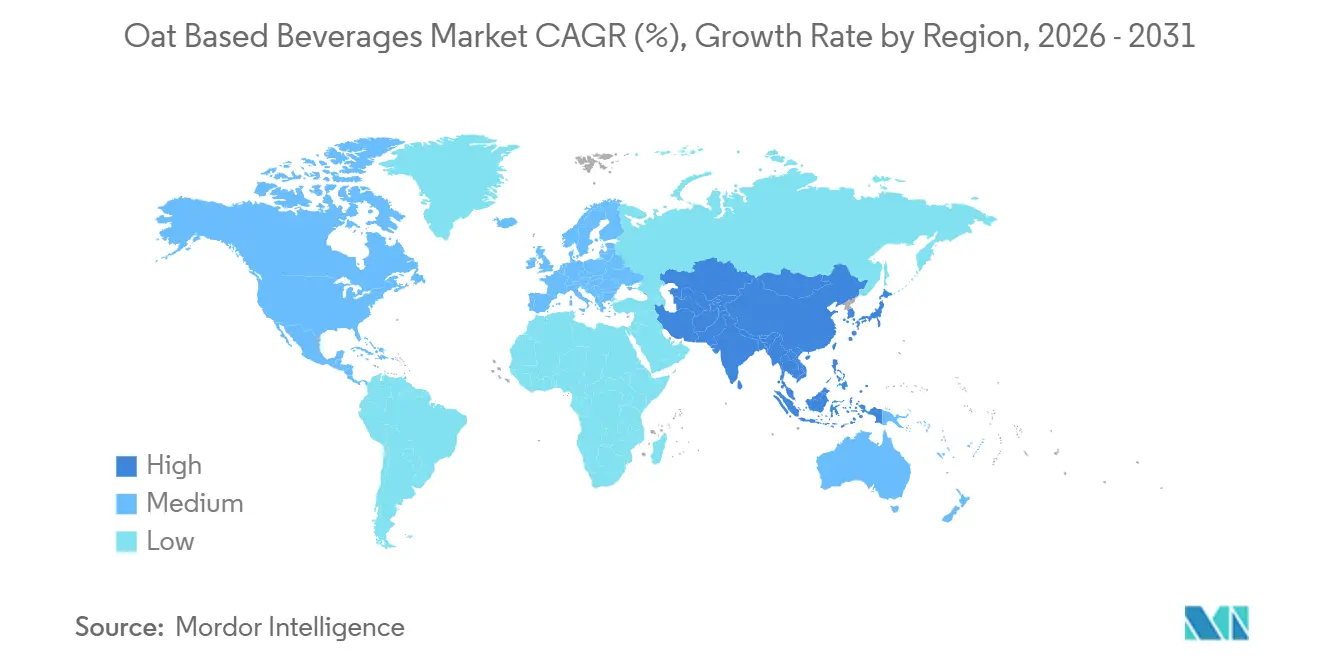
| Fastest Growing Market | Asia-Pacific |
| Largest Market | Europe |
| Market Concentration | Medium |
Major Players *Disclaimer: Major Players sorted in no particular order Image © Mordor Intelligence. Reuse requires attribution under CC BY 4.0. | |
Oat-Based Beverages Market Analysis by Mordor Intelligence
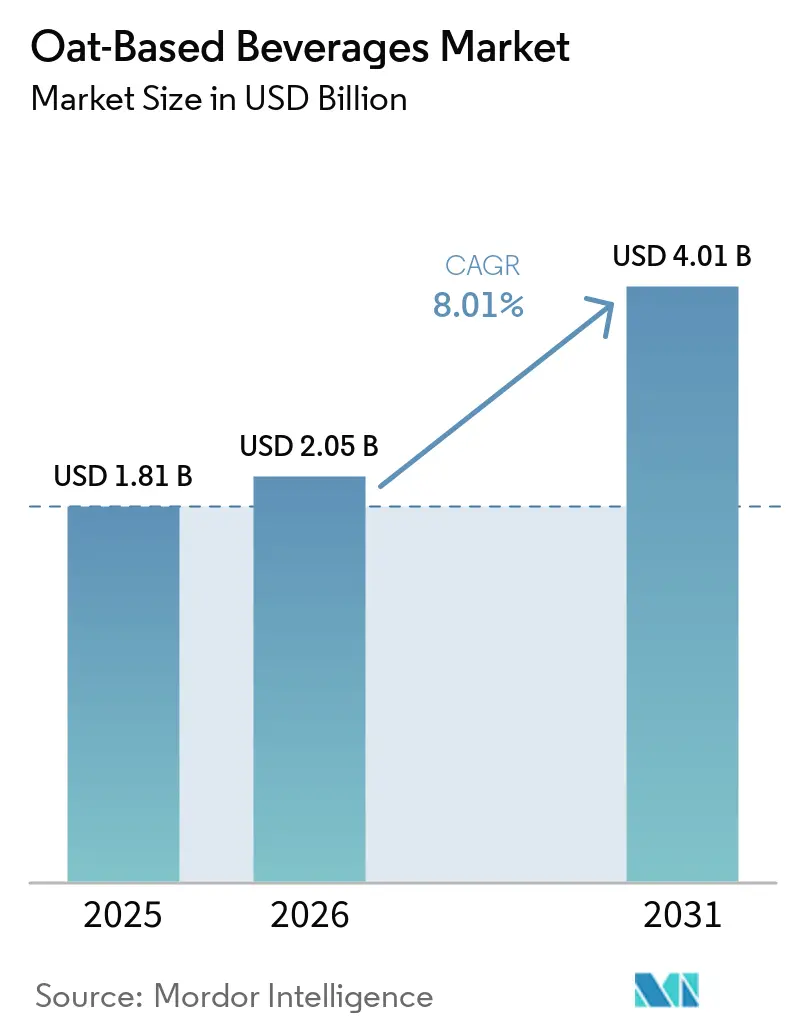
The oat-based beverages market is poised for strong growth, expanding from USD 1.81 billion in 2025 to approximately USD 4.01 billion by 2031, at a CAGR of 8.01% during the 2026–2031 forecast period. Europe remained the largest regional market in 2025, while Asia-Pacific is projected to record the fastest growth through 2031, driven by the increasing adoption of plant-based beverage options. Ready-to-drink oat milk accounts for the majority of category sales, while protein-enriched beverages, flavored formats, and foodservice applications are expanding consumption opportunities. Growing consumer interest in dairy-free and plant-based alternatives continues to support market growth, complemented by advancements in oat sourcing, product formulation, and aseptic processing capabilities.
Key Report Takeaways
- By product type, ready-to-drink oat milk held 63.01% of the oat-based beverages market share in 2025, while oat protein beverages are expected to grow at a 10.70% CAGR through 2031.
- By flavor profile, unflavored oat beverages held 68.96% of value in 2025, while flavored products are forecasted to advance at a 12.40% CAGR through 2031.
- By nature, conventional products accounted for 85.98% of the value in 2025, while organic oat beverages are forecasted to grow at an 11.80% CAGR through 2031.
- By packaging type, aseptic cartons accounted for 48.05% of value in 2025, while plastic bottles are forecast to grow at a 10.06% CAGR through 2031.
- By distribution channel, off-trade outlets accounted for 93.06% of value in 2025, while on-trade sales are projected to expand at a 11.06% CAGR through 2031.
- By geography, Europe held 37.69% of the value in 2025, while Asia-Pacific is forecast to grow at an 11.60% CAGR through 2031.
Note: Market size and forecast figures in this report are generated using Mordor Intelligence’s proprietary estimation framework, updated with the latest available data and insights as of January 2026.
Market Trends and Insights
Drivers Impact Analysis of Oat-Based Beverages Market*
| Driver | (~) % Impact on CAGR Forecast | Geographic Relevance | Impact Timeline |
|---|---|---|---|
| Expansion of Plant-Based and Flexitarian Consumption | +2.0% | Global, concentrated in Europe and North America | Long term (≥ 4 years) |
| Growth in Barista and Specialty Coffee Applications | +1.8% | Europe, North America, Asia-Pacific, and Southeast Asia | Medium term (2-4 years) |
| Rising Awareness of Lactose Intolerance and Dairy Sensitivities | +1.2% | Asia-Pacific, Middle East and Africa, and South America | Long term (≥ 4 years) |
| Growing Demand for Clean-Label and Naturally Positioned Oat Beverages | +0.8% | North America and Europe | Medium term (2-4 years) |
| Rising Demand for Convenient Ready-to-Drink Beverage Options | +1.0% | Global, strongest in Asia-Pacific and North America | Medium term (2-4 years) |
| Aseptic Formats Supporting Wider Oat Beverage Distribution | +0.7% | Asia-Pacific, South America, and Middle East and Africa | Long term (≥ 4 years) |
| Source: Mordor Intelligence | |||
Expansion of plant-based and flexitarian consumption
Plant-based and flexitarian eating patterns are expanding the consumer base for oat-based beverages, as shoppers increasingly alternate between dairy and plant-based options across various consumption occasions. This behavior reflects growing interest in dietary flexibility, with consumers seeking products that meet their health, sustainability, and taste preferences while allowing them to retain familiar dairy products in their routines. Oat-based beverages benefit from this shift, as consumers can use them in coffee, breakfast, smoothies, and everyday drinking occasions without fully eliminating dairy from their diets. Their neutral taste, creamy texture, and versatility support both at-home and foodservice applications.
Growth in barista and specialty coffee applications
Oat-based beverages are gaining traction for their consistency in texture, reliable foaming performance, and neutral flavor profile, making them well-suited for coffee preparation and compatible with a range of coffee styles, including espresso-based drinks, lattes, and cappuccinos. These attributes enable foodservice operators to offer plant-based alternatives that meet consumer demand for dairy-free options without compromising beverage quality or preparation efficiency. Products such as Oatly Baristamatic, designed for automated coffee machines, are further expanding the use of oat-based beverages beyond traditional barista-led service and supporting their adoption in self-service and high-volume coffee environments [1].
Rising awareness of lactose intolerance and dairy sensitivities
Growing awareness of lactose intolerance is driving demand for dairy-free beverage alternatives, particularly in regions with a high prevalence of lactose malabsorption. Consumers experiencing digestive discomfort after consuming conventional dairy products are increasingly choosing plant-based and other lactose-free beverages that better meet their dietary needs. Greater access to health information through healthcare professionals, digital platforms, and product labeling also helps consumers identify lactose-related digestive issues and evaluate suitable alternatives. The growing focus on digestive health and personalized nutrition further supports the shift toward dairy-free beverages. According to the National Institutes of Health, approximately 65% of the global population has a reduced ability to digest lactose after infancy, creating a broad consumer base for dairy-free options [2].
Growing demand for clean-label and naturally positioned oat beverages
Clean-label expectations are increasingly shaping consumer evaluations of plant-based beverages, particularly in developed retail markets. Ingredient transparency, recognizable ingredients, and limited use of additives have become key purchasing considerations. Oat-based beverages typically feature simple formulations of oats and water, and enzymatic processing produces maltose, which provides natural sweetness without relying heavily on added sugars. This approach enables manufacturers to achieve the desired flavor profile while supporting clean-label positioning. As consumers scrutinize ingredient lists, processing methods, and product positioning more closely, manufacturers are prioritizing simpler formulations without compromising the taste, texture, shelf stability, and foaming performance expected from oat-based beverages.
Restraints Impact Analysis of Oat-Based Beverages Market*
| Restraint | (~) % Impact on CAGR Forecast | Geographic Relevance | Impact Timeline |
|---|---|---|---|
| Higher Production Costs Compared with Conventional Dairy | -1.5% | Global | Long term (≥ 4 years) |
| Oat Harvest Volatility and Limited Food-Grade Oat Availability | -0.9% | North America and Europe | Medium term (2-4 years) |
| Gluten Cross-Contact Risks and Mycotoxin-Control Requirements | -0.5% | Europe and North America | Medium term (2-4 years) |
| Dependence on Aseptic Packaging and Filling Capacity | -0.4% | Asia-Pacific and South America | Short term (≤ 2 years) |
| Source: Mordor Intelligence | |||
Higher production costs compared with conventional dairy
Higher production costs can reduce the price competitiveness of oat beverages relative to conventional dairy milk. Barista formulations often require additional processing, specialized ingredients, and strict formulation controls to ensure consistent foaming, texture, and stability, which further increases production costs. Manufacturers may also face higher expenses for oat sourcing, product fortification, quality control, packaging, and production scaling. These costs can lead to higher retail prices for oat beverages, particularly premium and barista-oriented products. Price differentials may be more pronounced in markets where conventional dairy milk benefits from established supply chains, large-scale production, and lower distribution costs.
Oat harvest volatility and limited food-grade oat availability
Oat-based beverage manufacturers remain exposed to fluctuations in oat production, acreage, yields, and availability across key sourcing regions. Canada, one of the world’s leading oat suppliers, illustrates this exposure, as weather conditions, planting decisions, harvest outcomes, and regional logistics constraints can affect supply volumes, quality, and pricing. Variability in oat availability may increase procurement costs and create challenges in maintaining stable production schedules, particularly when supply conditions tighten in major producing regions. Consequently, manufacturers increasingly rely on diversified sourcing strategies, long-term procurement agreements, and proactive supply planning to ensure consistent availability of raw materials, mitigate disruption risks, manage input cost volatility, and support uninterrupted product supply.
*Our forecasts treat driver/restraint impacts as directional, not additive. The impact forecasts reflect baseline growth, mix effects, and variable interactions.
Oat-Based Beverages Market Segment Analysis
By Product Type:
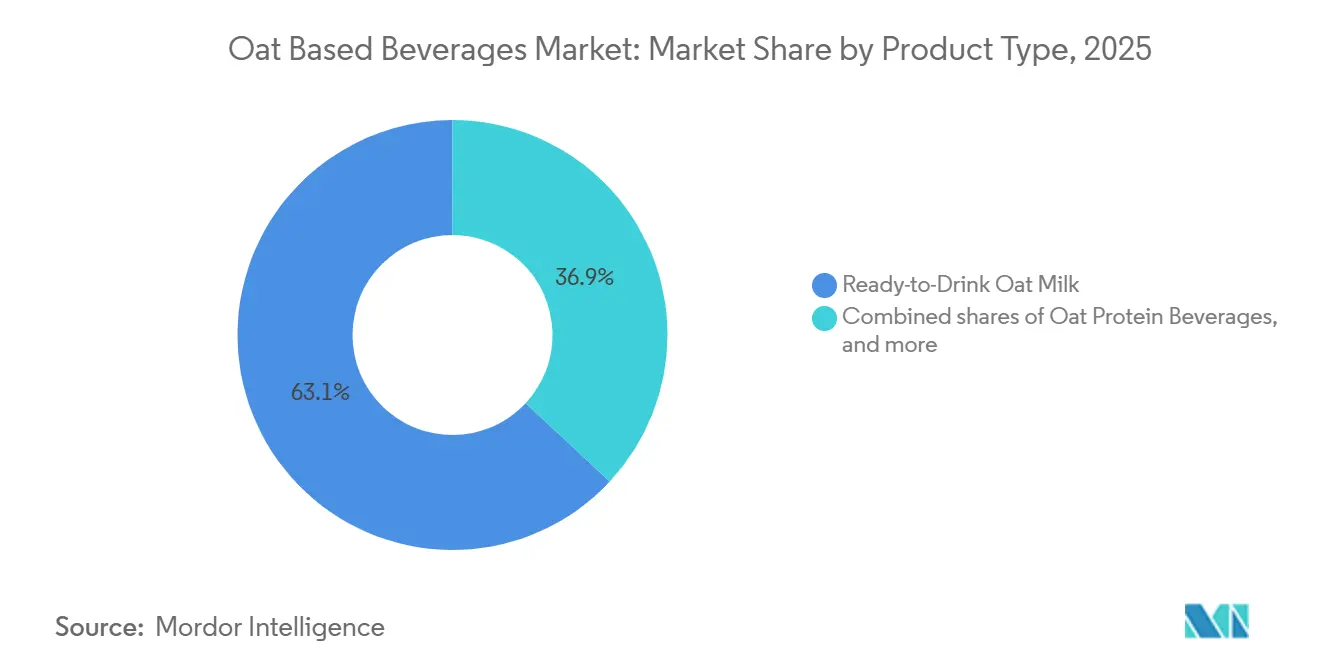
Ready-to-Drink Milk Leads While Protein Builds a Premium PositionReady-to-drink oat milk accounted for the largest share of the oat-based beverages market by product value, representing 63.01% in 2025. Its strong position is supported by broad availability in ambient cartons, an established presence in supermarkets, and consumer familiarity across cereal, coffee, cooking, and direct consumption occasions. Oat protein beverages are projected to be the fastest-growing product segment, registering a 10.70% CAGR from 2026 to 2031. Growth is driven by increasing interest in plant-based functional nutrition and convenient protein formats. Expanding availability through mainstream retail channels is further enhancing product visibility and supporting adoption among consumers seeking alternatives to conventional dairy-based protein drinks.
Oat-based creamers and other oat beverage formats are expanding the category beyond traditional oat milk by addressing a broader range of consumption occasions and consumer preferences. Oat-based creamers are gaining traction in at-home coffee preparation, particularly among consumers seeking dairy-free alternatives that provide a creamy texture, smooth mouthfeel, and flavor profiles that complement coffee. These formats also support product differentiation as brands expand their oat beverage portfolios across grocery, café, and convenience channels. They appeal to everyday users, coffee enthusiasts, and consumers seeking premium or functional beverage options, including products with added vitamins, protein, or reduced sugar content.

By Flavor Profile:
Unflavored Products Hold the Base While Flavor Adds New OccasionsUnflavored products accounted for 68.96% of the oat-based beverage market by flavor profile in 2025. Their leading position stems from their broad use as dairy substitutes in coffee, cereal, baking, and cooking. A neutral flavor appeals to households and foodservice operators that require a single product for multiple applications. This versatility also supports higher-volume purchases by cafés and restaurants. Suppliers continue to develop specialized coffee applications within the unflavored and barista product ranges, reflecting the importance of texture and frothing performance in coffee service. Unflavored beverages are likely to remain the foundation of the oat beverages market because they offer broader applications than single-flavor products. Their scale also provides manufacturers with a more reliable base for production planning and shelf placement.
Flavored oat-based beverages are projected to grow at a CAGR of 12.40% from 2026 to 2031. Vanilla, chocolate, cocoa, matcha, and barista-inspired flavors can attract consumers to the category through familiar taste profiles. Flavor innovation increasingly reflects coffeehouse menus and consumer demand for recognizable beverage options. These products align with café menus and social media trends while creating distinct retail consumption occasions. For example, consumers may choose an unflavored oat beverage at breakfast and a flavored option as an afternoon drink. The oat-based beverages industry can benefit from these incremental purchase occasions if companies manage sugar content and maintain clear product positioning.
By Nature:
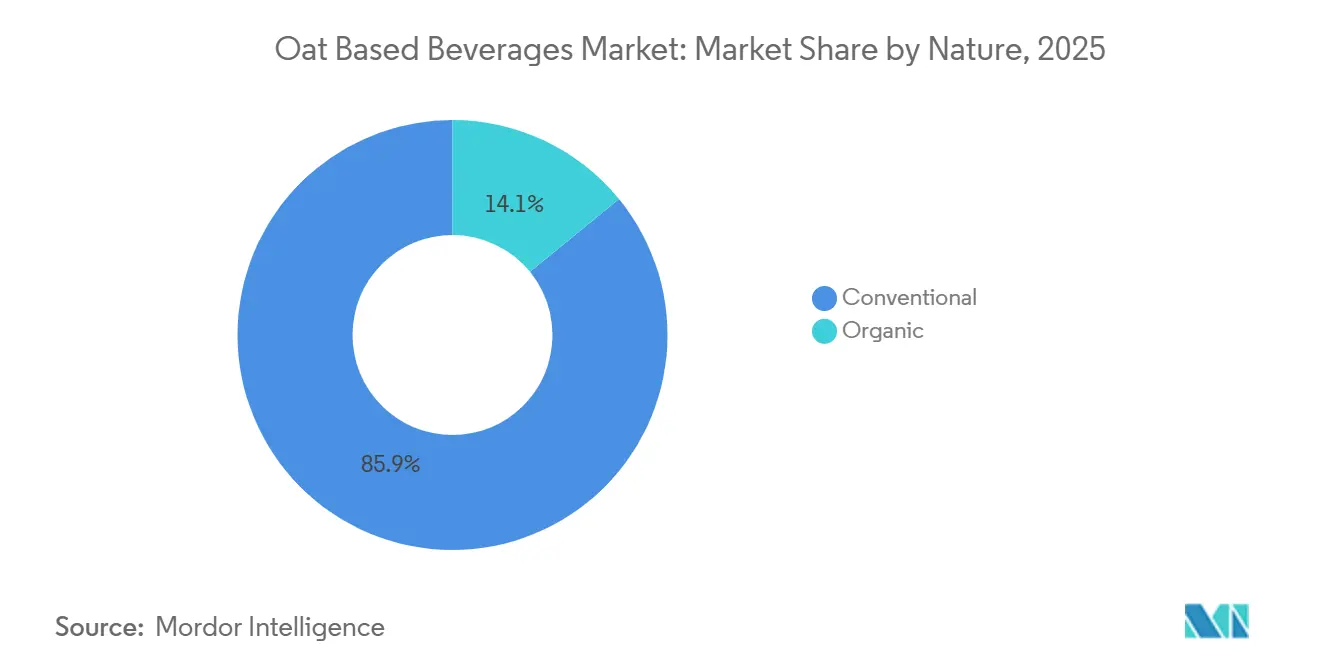
Conventional Products Lead While Organic Builds a Higher-Value NicheConventional oat-based beverages accounted for 85.98% of global value in 2025, supported by lower shelf prices and broader availability across mainstream grocery and foodservice channels. In price-sensitive regions, conventional formats often serve as the most practical entry point for new consumers. Organic products can remain unaffordable for many households, with prices typically 40% to 60% higher than conventional alternatives. Within the conventional tier, local sourcing can enhance value by improving traceability and reducing the distance between farms and production facilities. This approach enables companies to address consumer interest in ingredient origin without requiring an organic price premium.
Organic oat-based beverages, projected to expand at a CAGR of 11.80% through 2031, are driving the growth of differentiated oat beverage formats. Product launches, such as Organic Valley’s Original in September 2025, demonstrate manufacturers’ efforts to differentiate products through texture, formulation, and application [3]. The Creamy variant contains organic MCT oil to enhance creaminess and frothiness in lattes and specialty drinks. Both variants are suitable for use in cereal, baking, smoothies, and direct consumption. Organic Valley’s oat-based creamers and other specialized formats are also expanding the category beyond traditional oat milk by addressing diverse consumption occasions and consumer preferences.
By Packaging Type:
Aseptic Cartons Provide Scale While Bottles Support ConvenienceAseptic cartons accounted for the largest share of global packaging value in 2025, at 48.05%, driven by their ability to extend shelf life without continuous refrigeration. Aseptic processing and packaging are particularly suitable for oat-based beverages distributed across regions with varying cold-chain infrastructure. They also support broader distribution through supermarkets and smaller retailers. Plastic bottles, meanwhile, are projected to grow at a 10.06% CAGR through 2031, driven by demand for chilled, single-serve, and ready-to-drink oat-based beverages. Their suitability for convenience-oriented consumption also creates opportunities for coffee, protein, and functional beverage formats. As packaging regulations evolve, manufacturers must balance recyclability and recycled-content requirements with packaging performance and cost.
Glass bottles and other packaging formats continue to serve specific premium and specialty applications in the oat-based beverages market. Glass bottles support premium positioning, product presentation, and brand differentiation in foodservice establishments, cafés, and specialty retail outlets. These formats can enhance the perceived quality of oat-based beverages, particularly for artisanal, organic, and limited-edition product offerings. Other packaging formats provide manufacturers with additional options to differentiate products, offer varied portion sizes, and address specific consumption occasions, such as on-the-go consumption or single-serve purchases. These targeted applications complement the large-scale use of aseptic cartons and plastic bottles across mainstream retail channels.
By Distribution Channel:
Grocery Remains Essential While Foodservice Builds DemandOff-trade outlets are projected to account for 93.06% of global value in 2025. Supermarkets, hypermarkets, convenience stores, and natural-product retailers remain the primary sales channels for household oat-based beverage purchases. Supermarkets offer broad product assortments, frequent promotions, and high customer traffic, all of which support repeat purchases. Specialist retailers enable consumers to trial premium, organic, and innovative products before they gain wider distribution in grocery stores. Fresh oat milk can expand beyond niche listings when it demonstrates strong sales rates. Online grocery platforms can further enhance off-trade access, particularly for products that benefit from repeat ordering. The oat-based beverages market will remain highly dependent on grocery availability, even as other channels expand.
On-trade sales are forecast to grow at a CAGR of 11.06% through 2031. Cafés, restaurants, hotels, and institutional foodservice providers can introduce oat-based beverages to consumers who do not yet purchase them through retail channels. This exposure can encourage consumers to transition from café orders to at-home consumption. Menu design and products tailored for automatic espresso machines can support high-volume service environments and reflect operators’ growing use of oat drinks as a regular menu offering. Foodservice suppliers must meet stringent requirements for product reliability, foam quality, and cost per serving. The oat-based beverages industry benefits when café adoption stimulates subsequent retail demand without placing unsustainable pressure on margins.
Geography Analysis
Europe and APAC Oat-Based Beverages Market
Europe held the largest share of the oat-based beverage market, accounting for 37.69% in 2025. Asia-Pacific is projected to be the fastest-growing region, registering a CAGR of 11.60% during the forecast period through 2031. Europe’s leading position reflects the widespread adoption of oat-based beverages across grocery, coffee, and foodservice channels, supported by well-developed retail networks, high consumer familiarity, and growing demand for plant-based alternatives. Sweden, Germany, the Netherlands, and the United Kingdom have established oat beverage markets, leading manufacturers, and well-developed specialty coffee cultures. The increasing availability of barista-style oat-based beverages and broader product offerings across retail and foodservice outlets further support regional market growth.
North America Oat-Based Beverages Market
North America remains a key market for oat-based beverages, with the United States leading regional demand. Established consumption of plant-based beverages, extensive grocery distribution networks, and strong adoption of specialty coffee drive demand in the country. The increasing availability of oat-based beverages across supermarkets, convenience stores, foodservice outlets, and online retail channels further supports market expansion. Canada also has a mature consumer base for oat-based beverages, driven by growing interest in dairy alternatives and health-focused beverage options. Mexico and the rest of North America offer additional growth opportunities as modern retail channels, cafés, and convenient ready-to-drink beverage formats continue to expand.
South America and MEA Oat-Based Beverages Market
South America and the Middle East and Africa present promising growth opportunities for oat-based beverages, with Brazil, Argentina, Colombia, Chile, Peru, South Africa, Saudi Arabia, the United Arab Emirates, Nigeria, Egypt, Morocco, and Turkey emerging as key markets. The expansion of modern retail formats, specialty coffee outlets, and e-commerce platforms, along with growing consumer interest in dairy-free products, is improving product accessibility and creating new consumption occasions. Shelf-stable and aseptic formats, local partnerships, and accessible price points can further support market penetration, enabling manufacturers to expand oat beverages beyond premium and foodservice channels into mainstream household consumption.
Competitive Landscape
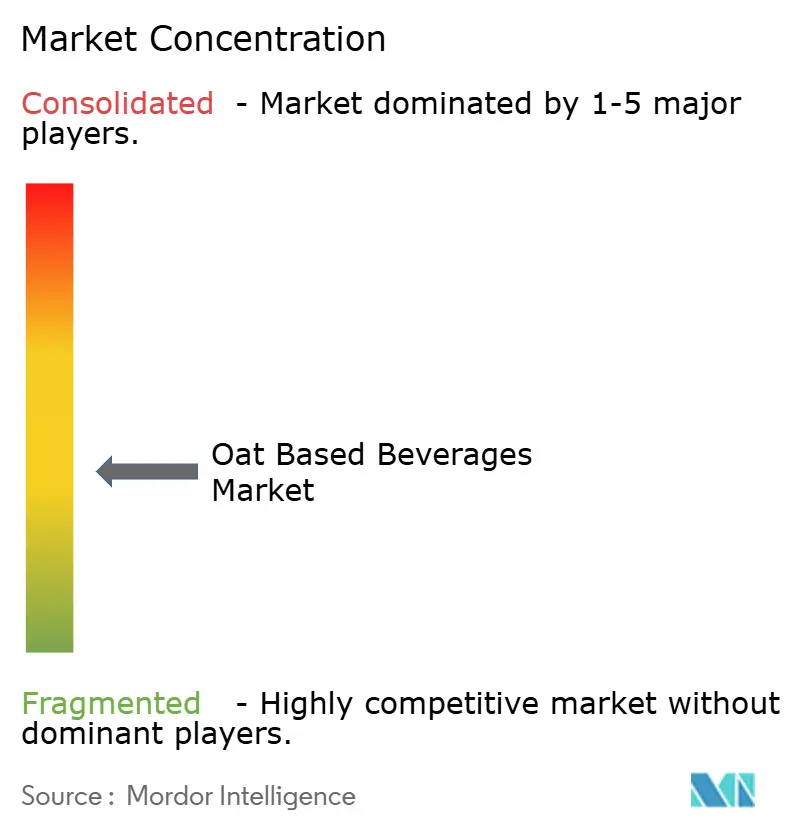
The oat-based beverages market is moderately fragmented, with international brands competing alongside regional specialists and private-label suppliers. Oatly, Danone (through Alpro), SunOpta, HP Hood (through Planet Oat), and Califia Farms hold significant positions in their respective markets. Oatly’s strategy includes reducing capital-intensive expansion plans in Peterborough, Dallas–Fort Worth, and Singapore while directing investments toward brand-building and barista-channel activities. These strategies indicate that distribution scale alone does not define competition in the oat-based beverages market. Brand trust, consistent café performance, local ingredient positioning, and cost control also influence a company’s ability to retain shelf space. Retailer food safety requirements further increase the costs and technical complexity of scaling operations.
Leading companies do not compete on a single attribute. Companies with strong brand recognition may still lose shelf space if their pricing, service levels, or barista performance does not meet the expectations of retailers and foodservice operators. This dynamic creates opportunities for regional suppliers that understand local retail conditions. At the same time, established companies benefit from spreading formulation, compliance, and marketing costs across multiple markets. As a result, scale remains important but does not guarantee success unless products meet local channel requirements. Technology and product formulation increasingly differentiate established brands from smaller entrants. Oatly’s enzymatic hydrolysis process creates its characteristic sweetness while reducing reliance on added sugar (OATLY). Private-label producers may struggle to replicate this process consistently at high volumes.
Minor Figures and Elmhurst 1925 compete through specialized formulations and premium positioning in specialty retail. Naturli’ Foods and Valio’s Oddlygood leverage dairy-sector infrastructure and agricultural relationships to strengthen sourcing and production capabilities. Regional brands also maintain established positions in plant-based retail markets. Product launches remain important in this crowded category. Companies must balance portfolio diversification with manufacturing and inventory efficiency. The strongest market positions will likely combine innovation with operational consistency. Smaller brands can compete by addressing targeted needs, such as allergen management, local oat sourcing, or specific coffee applications. Partnerships with retailers, foodservice operators, ingredient suppliers, and co-packers can be as important as consumer advertising.
Oat-Based Beverages Industry Leaders
-
Oatly Group AB
-
Danone S.A.
-
Campbell Soup Company (Pacific Foods)
-
HP Hood LLC
-
Califia Farms, LLC
- *Disclaimer: Major Players sorted in no particular order
Oat-Based Beverages Market Companies Covered in this Report
- Oatly Group AB
- Danone S.A.
- Califia Farms, LLC
- SunOpta Inc.
- Oat Milk Goodness
- Campbell Soup Company (Pacific Foods)
- HP Hood LLC
- Minor Figures Ltd.
- Elmhurst 1925
- Earth's Own Food Company Inc.
- Sanitarium Health Food Company
- Oddlygood
- Naturli' Foods
- Rude Health Foods Ltd.
- Vitasoy International Holdings Ltd.
- Isola Bio / Isola della Natura S.r.l.
- The Bridge S.R.L.
- Mooala Brands
- Three Trees Foods
- Pureharvest
Recent Industry Developments in Oat-Based Beverages Market
- July 2026: PepsiCo, through its Quaker Oats brand, launched Quaker Oat Shake & Go, a whole-grain oat-based shake with 15 grams of protein, 16 grams of whole grains, and 3 grams of fiber per serving, supporting innovation in the market.
- June 2025: HRX and Curefoods launched plant-based oat milk protein shakes with 25 g of protein per 200 ml serving and no processed sugar, supporting innovation in functional oat-based beverages.
- June 2025: Country Delight launched its Oats Beverage, priced at Rs. 40 for a 400 ml pack and initially available through its app, expanding its portfolio beyond dairy products amid growing urban demand for plant-based and allergen-free beverages.
Global Oat-Based Beverages Market Report Scope
The oat-based beverages market includes products made primarily from oats for direct consumption, coffee applications, functional nutrition, and other beverage uses. It is segmented by product type, flavor profile, nature, packaging type, distribution channel, and geography. Product types include ready-to-drink oat milk, oat-based creamers, oat protein beverages, and other formats. The market covers unflavored and flavored products, conventional and organic variants, and packaging formats such as aseptic cartons, plastic bottles, and glass bottles. Distribution channels include on-trade and off-trade outlets. The report analyzes North America, Europe, Asia-Pacific, South America, and the Middle East and Africa, with country-level coverage of specified major markets.
Segmentation Overview
| Ready-to-Drink Oat Milk |
| Oat-Based Creamers |
| Oat Protein Beverages |
| Others |
| Unflavored | |
| Flavored | Vanilla |
| Chocolate and Cocoa | |
| Barista | |
| Others |
| Conventional |
| Organic |
| Aseptic Cartons |
| Plastic Bottles |
| Glass Bottles |
| Others |
| On-Trade | |
| Off-Trade | Supermarkets and Hypermarkets |
| Convenience Stores | |
| Specialist and Natural Product Retailers | |
| Others |
| North America | United States |
| Canada | |
| Mexico | |
| Rest of North America | |
| Europe | United Kingdom |
| Germany | |
| France | |
| Italy | |
| Spain | |
| Netherlands | |
| Poland | |
| Belgium | |
| Sweden | |
| Rest of Europe | |
| Asia-Pacific | China |
| Japan | |
| India | |
| Australia | |
| Indonesia | |
| South Korea | |
| Thailand | |
| Singapore | |
| Rest of Asia-Pacific | |
| South America | Brazil |
| Argentina | |
| Colombia | |
| Chile | |
| Peru | |
| Rest of South America | |
| Middle East and Africa | South Africa |
| Saudi Arabia | |
| United Arab Emirates | |
| Nigeria | |
| Egypt | |
| Morocco | |
| Turkey | |
| Rest of Middle East and Africa |
| By Product Type | Ready-to-Drink Oat Milk | |
| Oat-Based Creamers | ||
| Oat Protein Beverages | ||
| Others | ||
| By Flavor Profile | Unflavored | |
| Flavored | Vanilla | |
| Chocolate and Cocoa | ||
| Barista | ||
| Others | ||
| By Nature | Conventional | |
| Organic | ||
| By Packaging Type | Aseptic Cartons | |
| Plastic Bottles | ||
| Glass Bottles | ||
| Others | ||
| By Distribution Channel | On-Trade | |
| Off-Trade | Supermarkets and Hypermarkets | |
| Convenience Stores | ||
| Specialist and Natural Product Retailers | ||
| Others | ||
| By Geography | North America | United States |
| Canada | ||
| Mexico | ||
| Rest of North America | ||
| Europe | United Kingdom | |
| Germany | ||
| France | ||
| Italy | ||
| Spain | ||
| Netherlands | ||
| Poland | ||
| Belgium | ||
| Sweden | ||
| Rest of Europe | ||
| Asia-Pacific | China | |
| Japan | ||
| India | ||
| Australia | ||
| Indonesia | ||
| South Korea | ||
| Thailand | ||
| Singapore | ||
| Rest of Asia-Pacific | ||
| South America | Brazil | |
| Argentina | ||
| Colombia | ||
| Chile | ||
| Peru | ||
| Rest of South America | ||
| Middle East and Africa | South Africa | |
| Saudi Arabia | ||
| United Arab Emirates | ||
| Nigeria | ||
| Egypt | ||
| Morocco | ||
| Turkey | ||
| Rest of Middle East and Africa | ||
Key Questions Answered in the Report
What is driving demand for oat-based beverages?
Dairy-free demand, flexitarian purchasing, specialty coffee use, lactose intolerance awareness, and clean-label preferences are supporting uptake.
Which region has the strongest growth outlook for oat-based beverages?
Asia-Pacific is projected to expand at an 11.60% CAGR between 2026 and 2031
What challenges do oat-based beverage producers face?
Higher production costs, food-grade oat supply risk, compliance requirements, and dependence on aseptic filling capacity remain important challenges.
Which channel is forecasted to grow fastest for oat-based beverages?
On-trade sales through cafés, restaurants, hotels, and foodservice are projected to grow at an 11.06% CAGR through 2031.